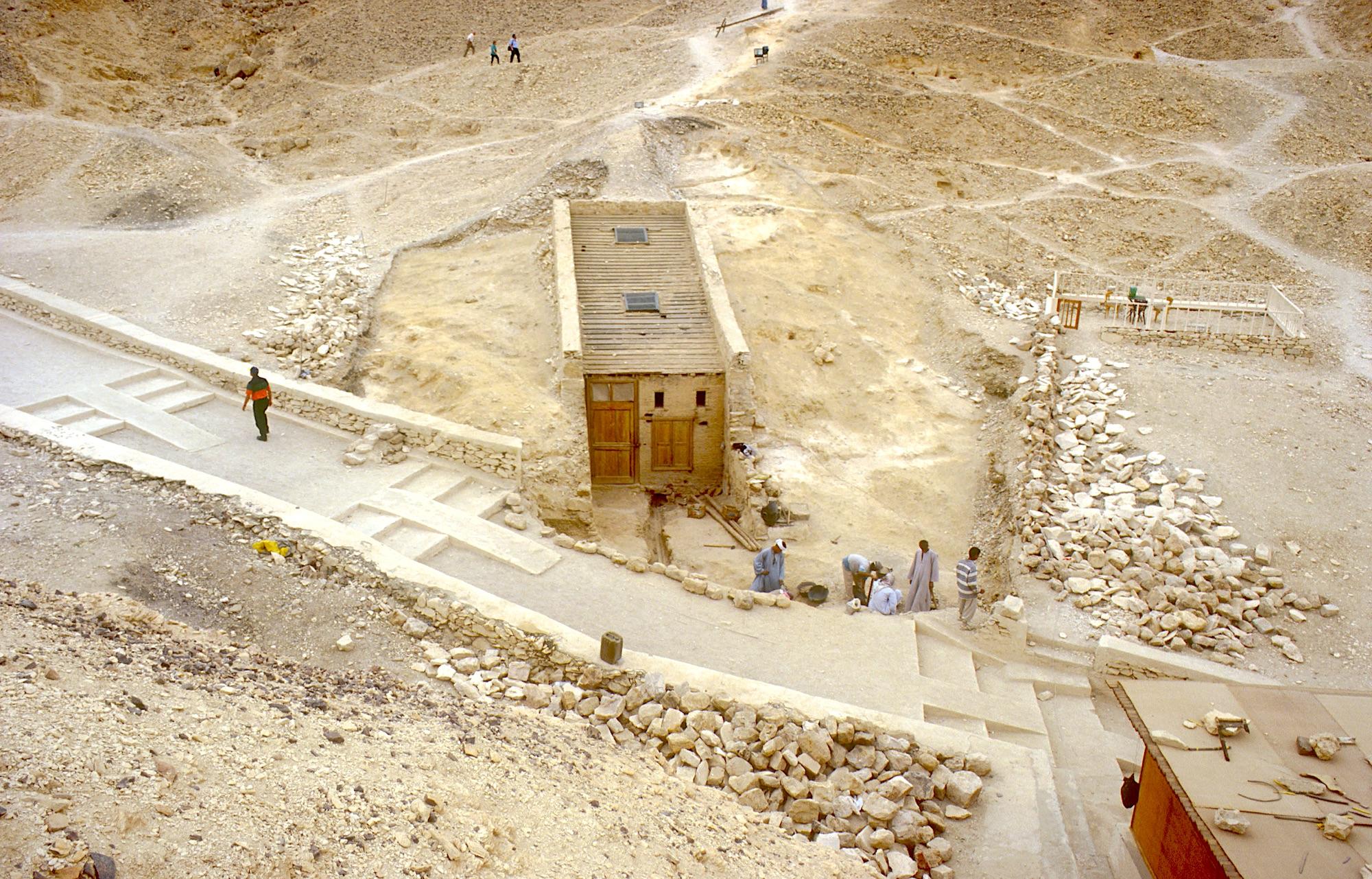
KV 17
Sety I
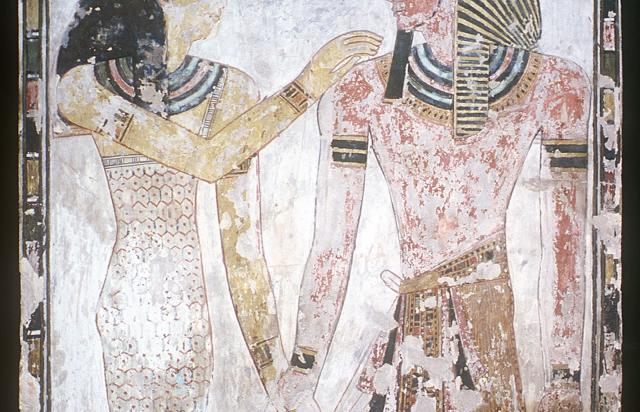
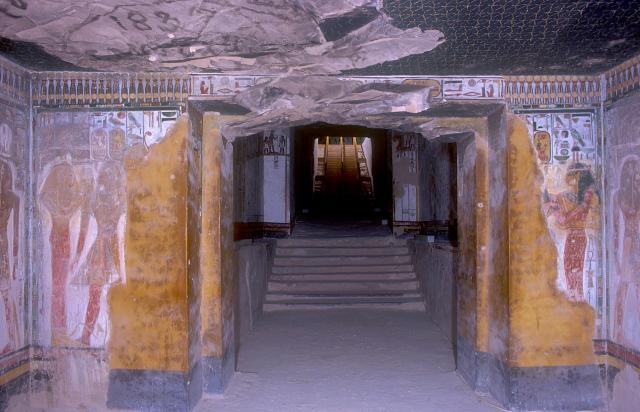
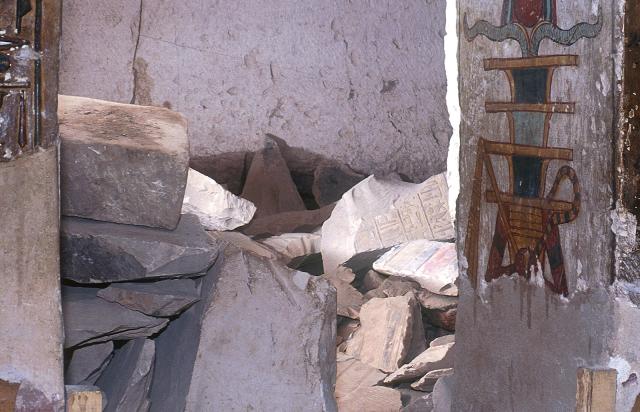
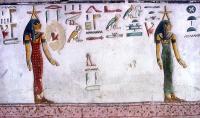
Sety I with two forms of Hathor, and Carter's repairs in brick of damaged walls; stairs leading in the direction of tomb entrance.

Entryway A
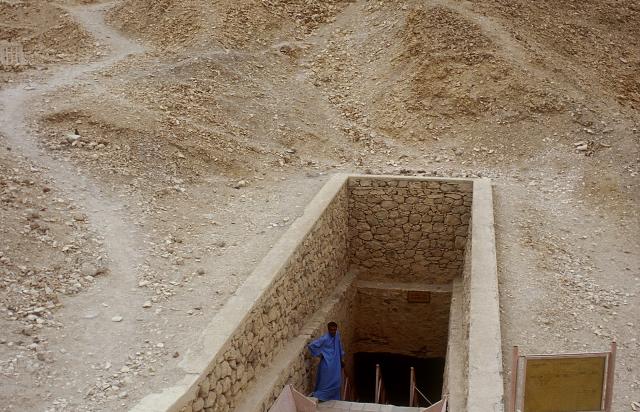
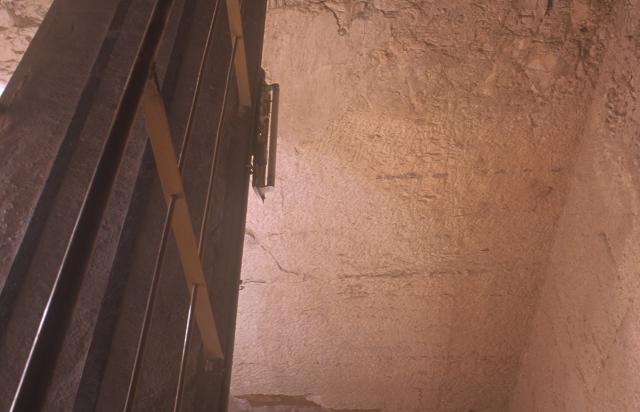
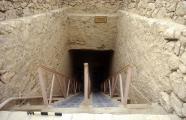
See entire tombModern steps and a landing with benches precede twenty-six ancient steps leading to the beginning of corridor B. Modern retaining walls surround the entryway.
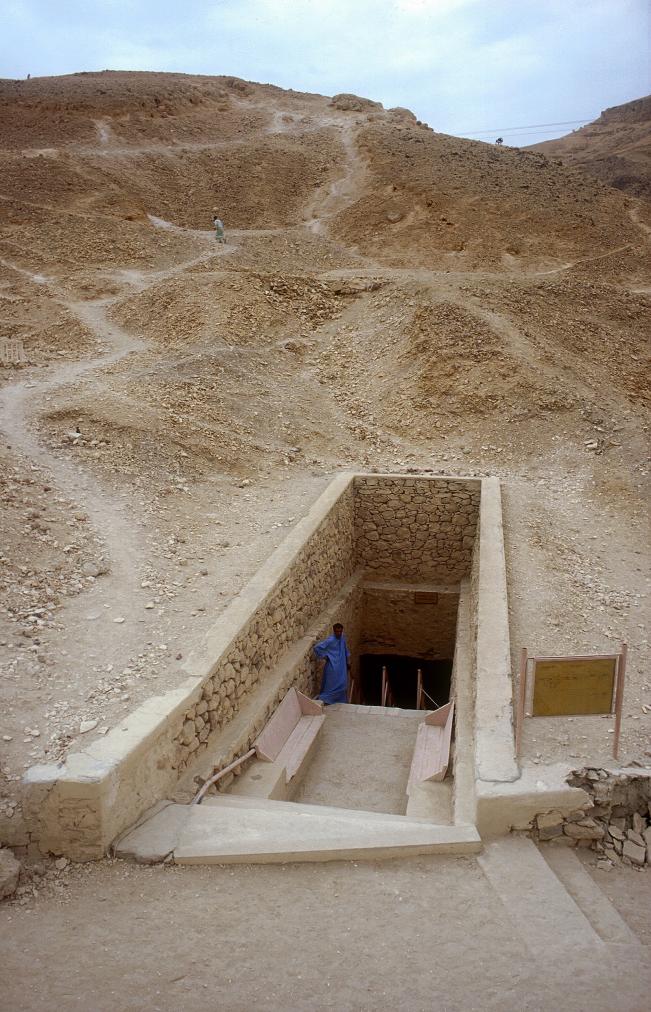
Tomb entrance with modern retaining walls.
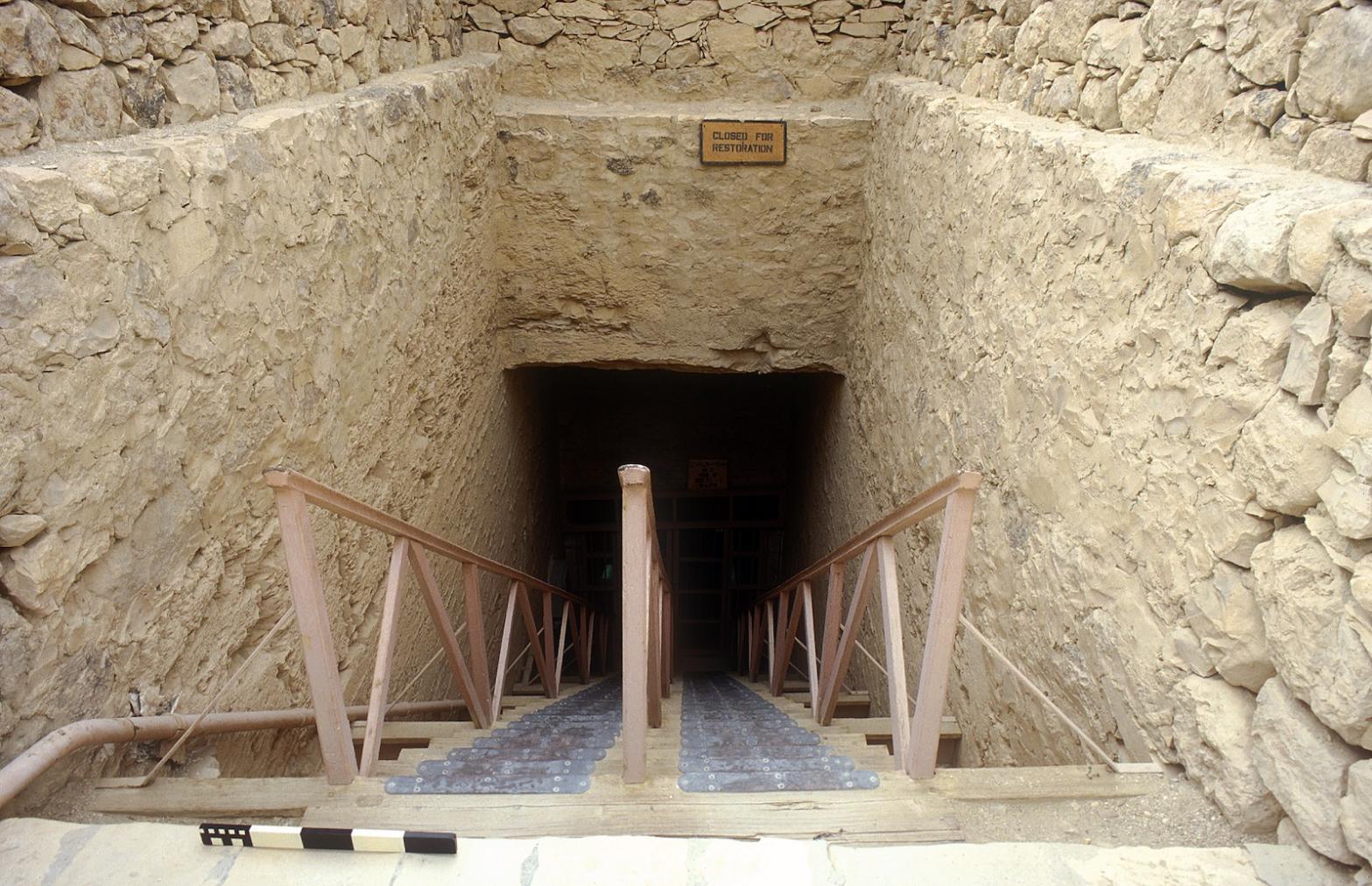
Tomb entrance with modern stairs.
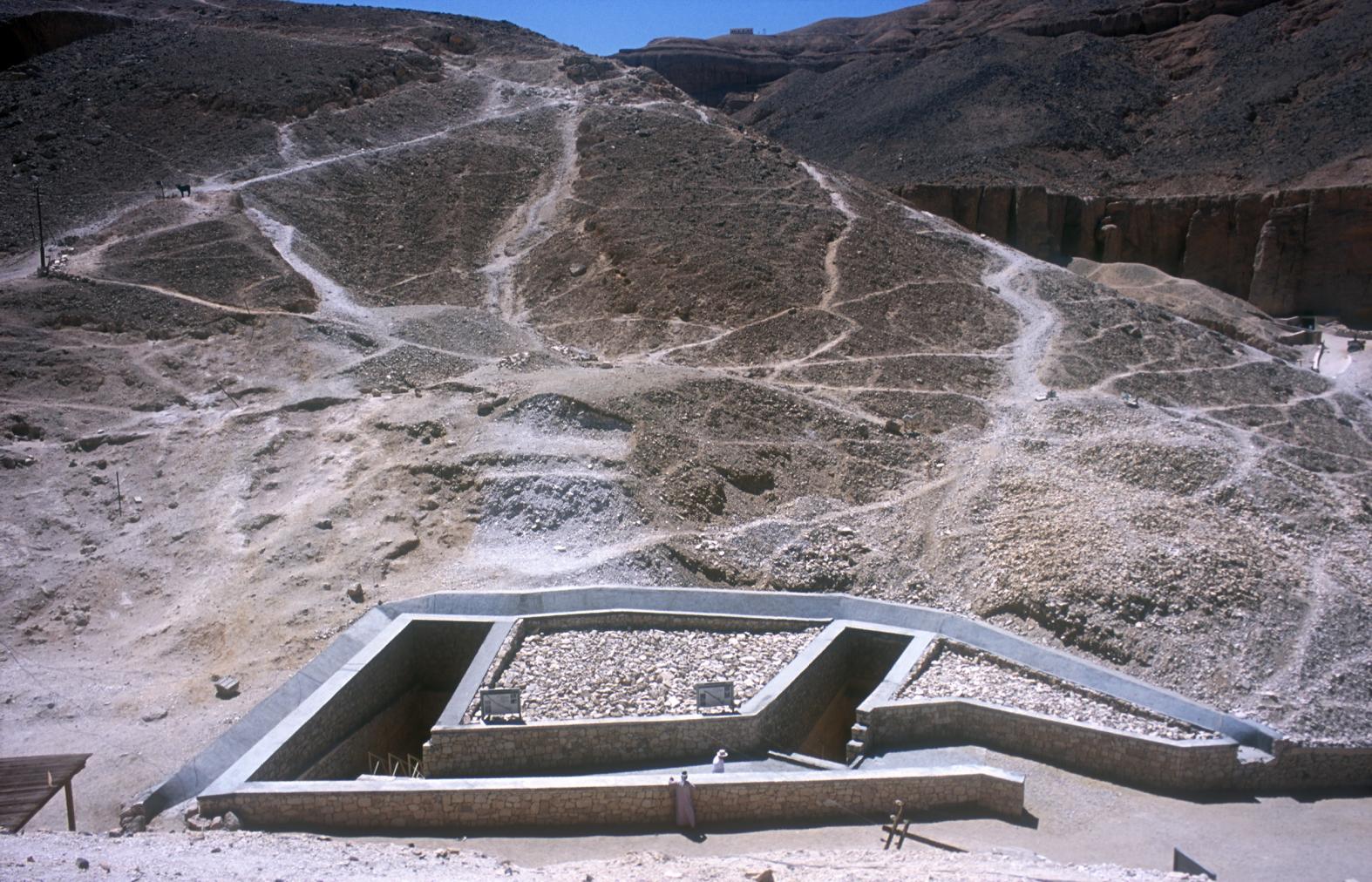
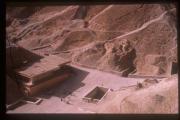
KV16 and KV17 tomb entrances.
Gate B
See entire tombThere is a column of text on the left (southeast) return giving the king's names and epithets.
Porter and Moss designation:
Corridor B
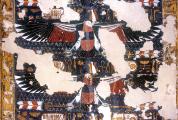
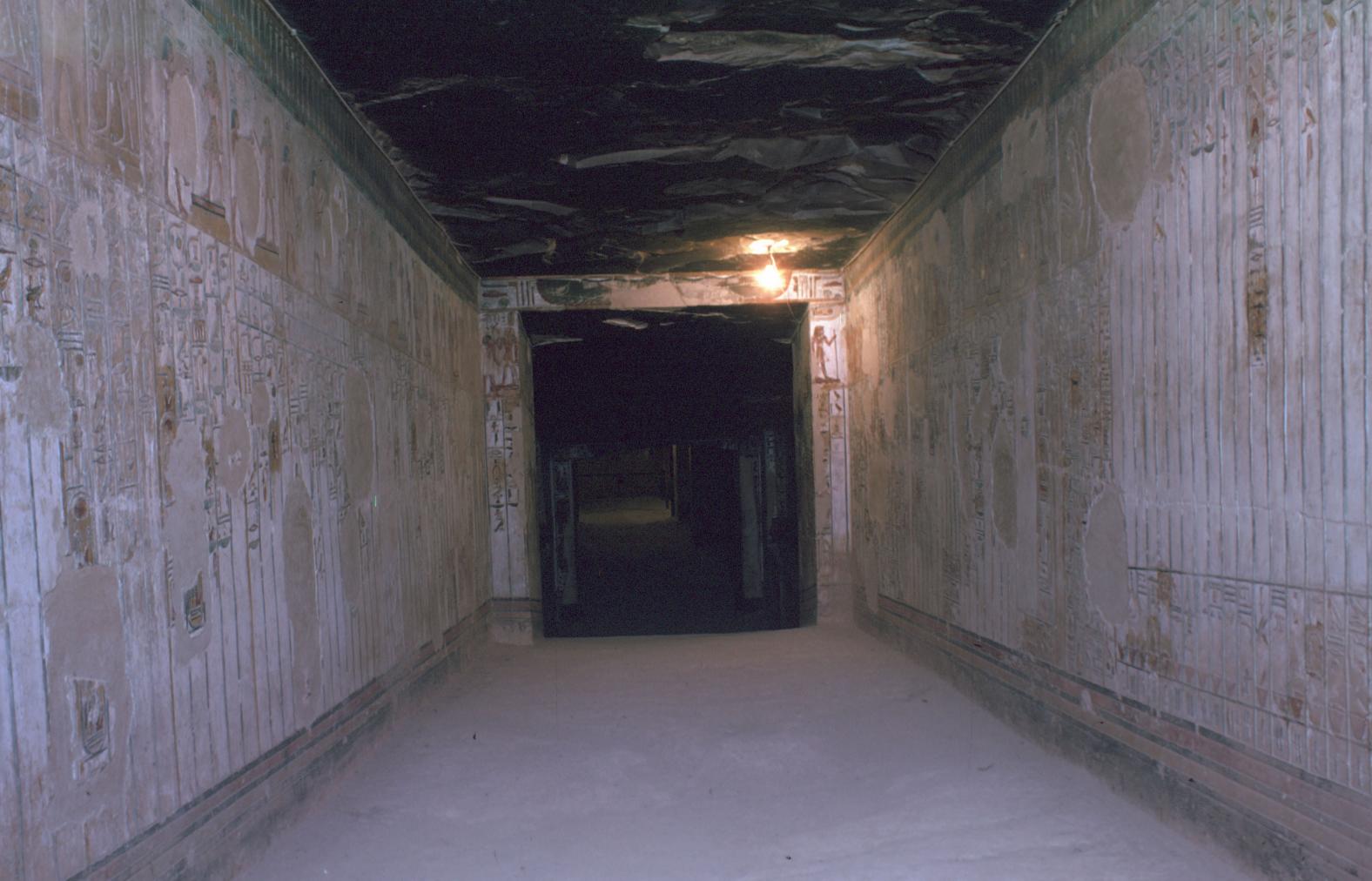
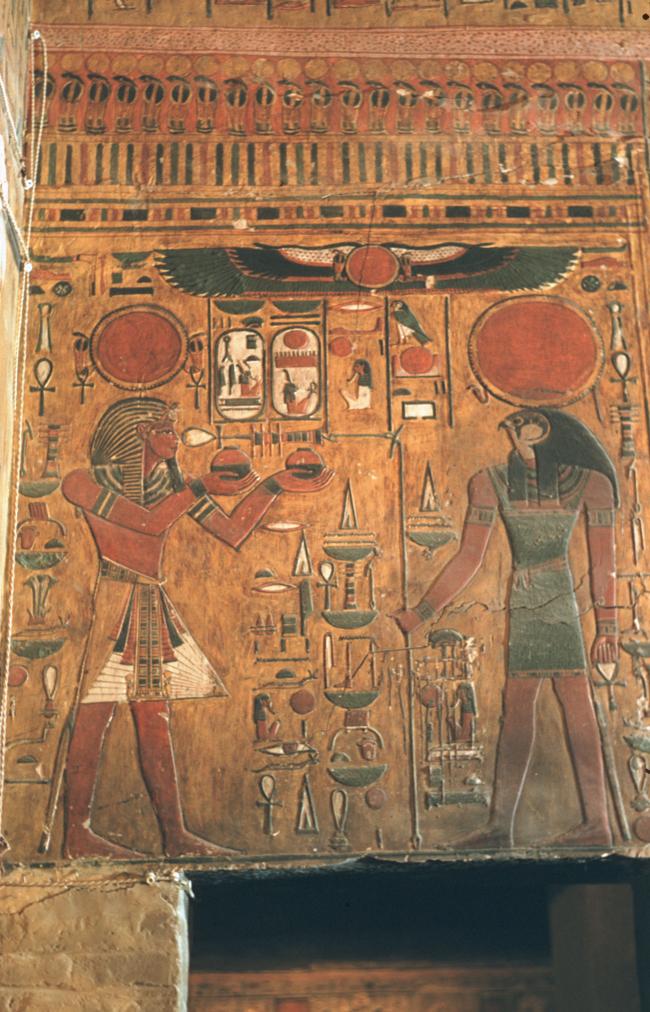
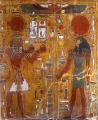
See entire tombThis sloping corridor is decorated in raised relief. The left (southeast) wall shows Sety I before Ra-Horakhty, followed by the opening scene of the Litany of Ra and the opening text of this composition. The opening scene of the Litany appears for the first time in a royal tomb. The right (northwest) wall continues the text of the Litany of Ra and the ceiling is decorated with vultures, every other one cobra-headed. These alternate with texts giving the names of Sety I, and columns of texts run along the edges of the ceiling. A pair of holes for a wooden beam were cut in the walls toward the rear (southwest) end of this corridor. The right (northwest) hole was filled with plaster over which the columns of text were carved.
Porter and Moss designation:
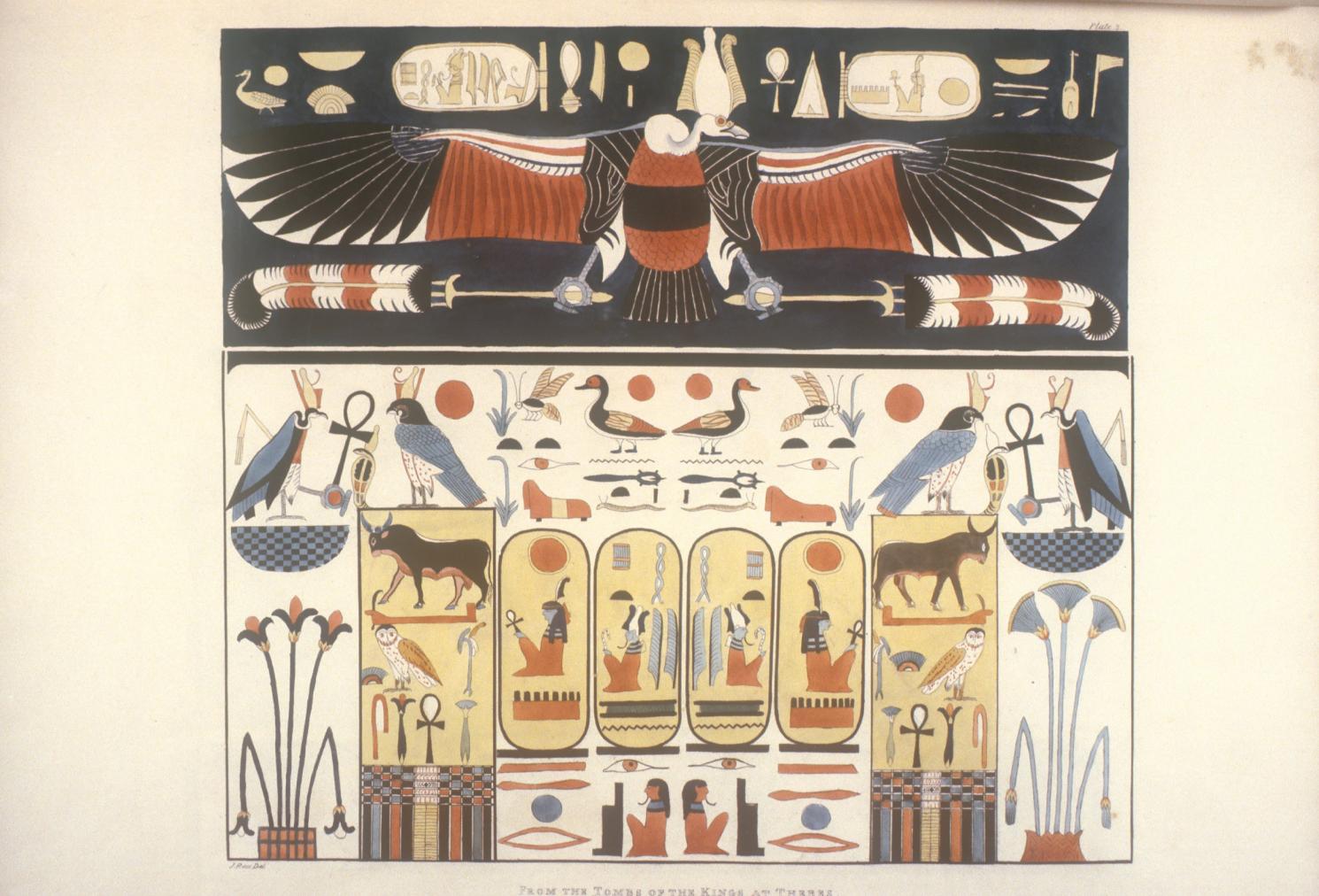
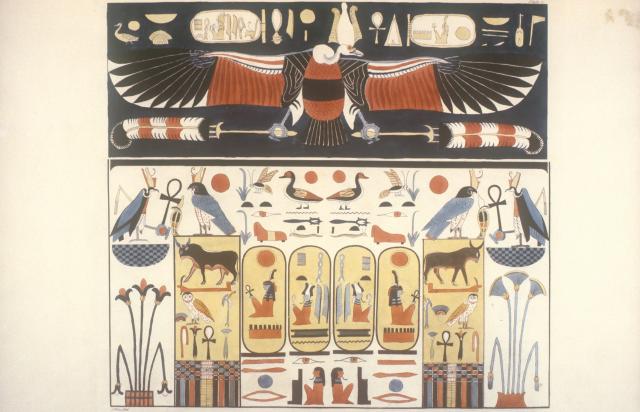
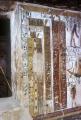
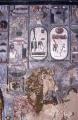
Names and epithets of Sety I; flying vulture holding fans.
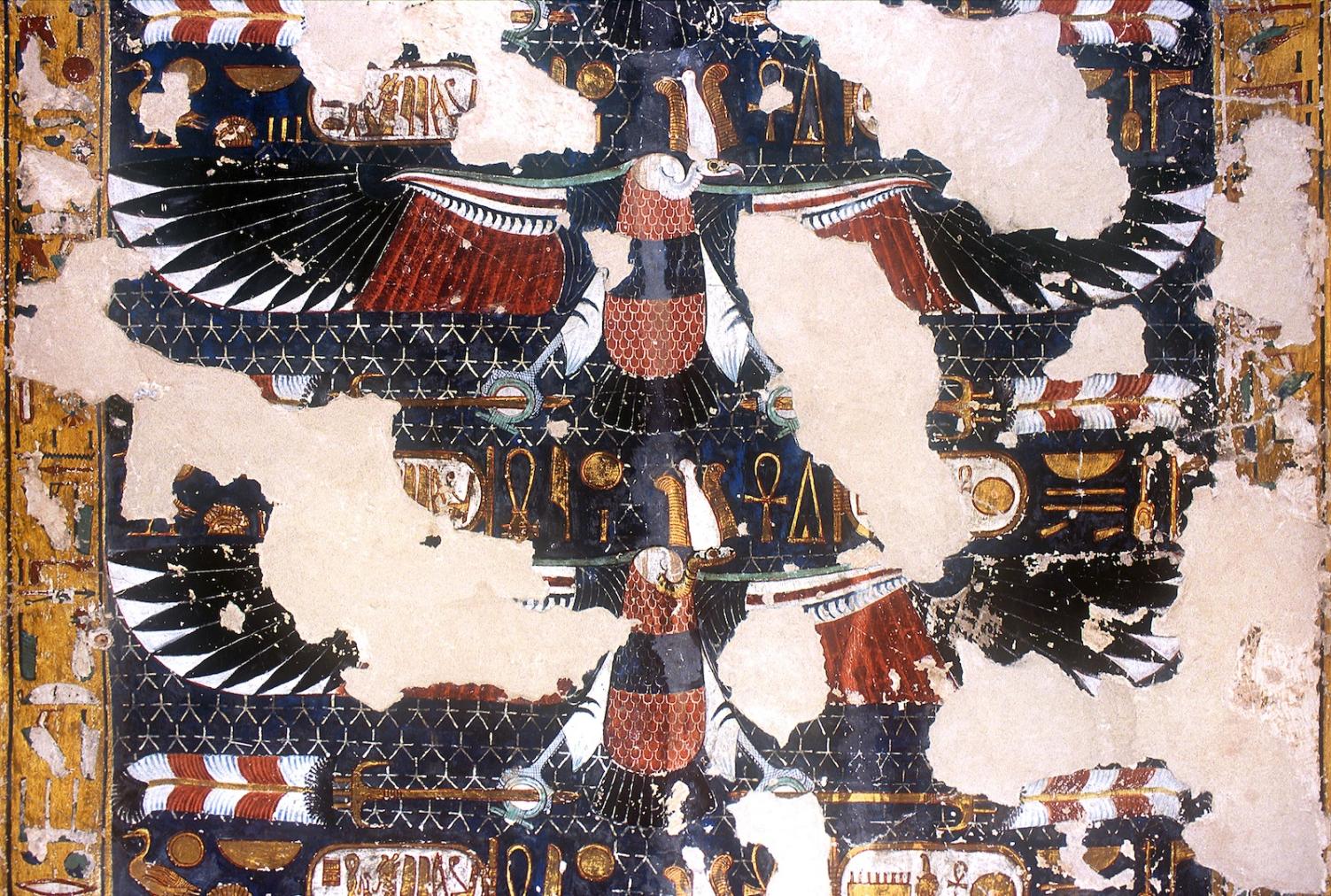
Flying vultures and Sety I's names.
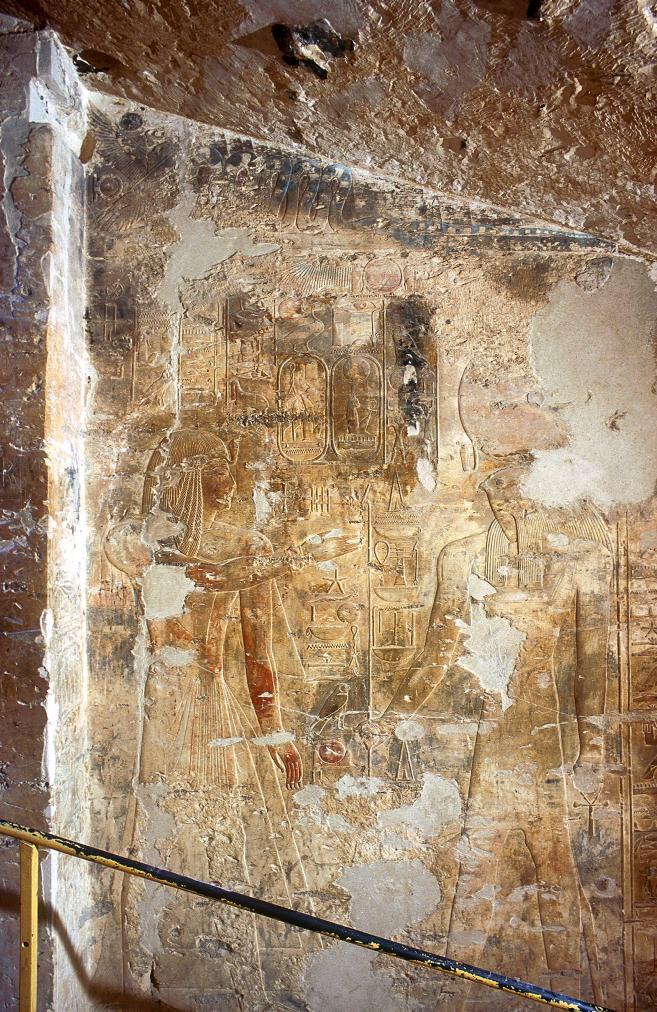
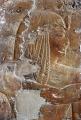
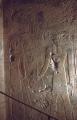
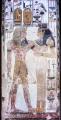
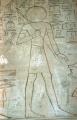
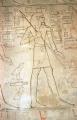
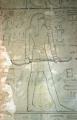
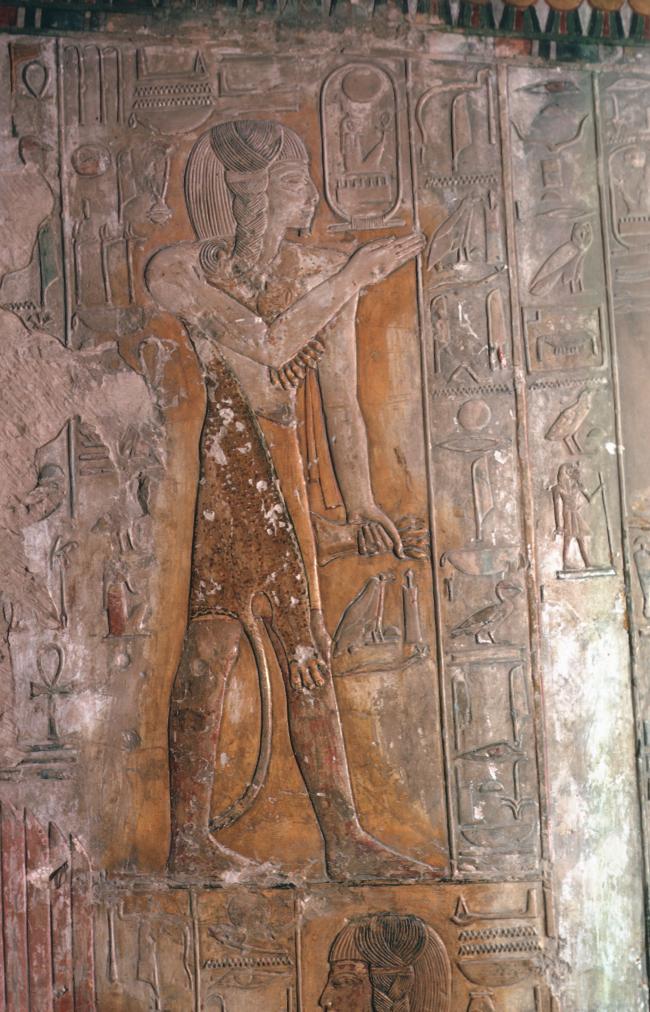
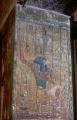
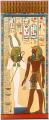
Sety I with Ra-Horakhty.
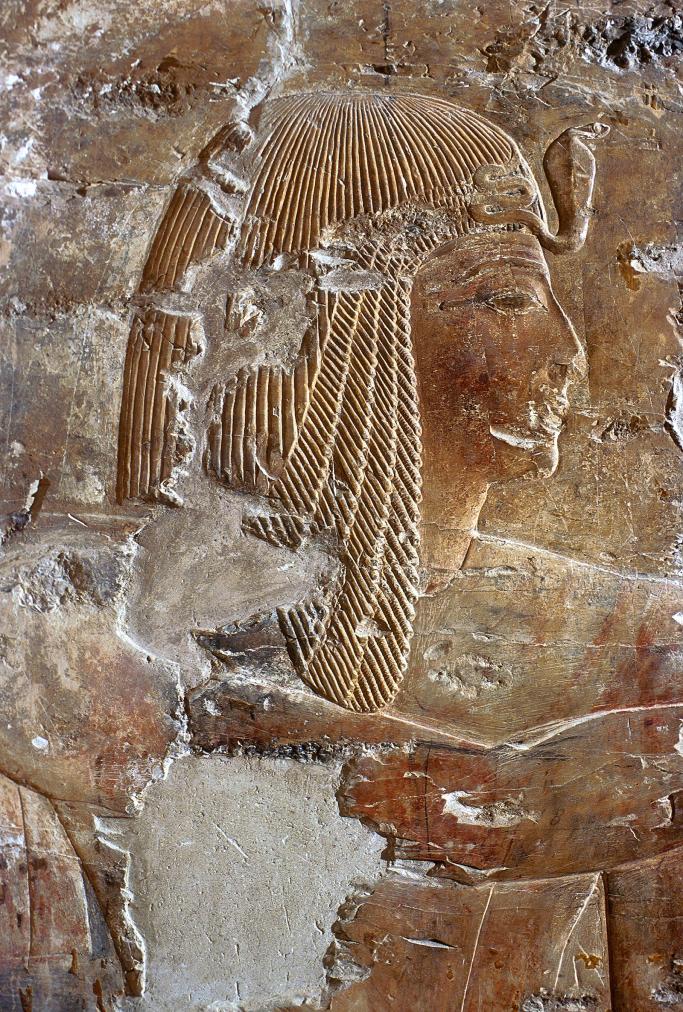
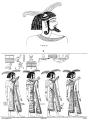
Sety I [before Ra-Horakhty]: Sety's head adorned with unusual wig (detail).
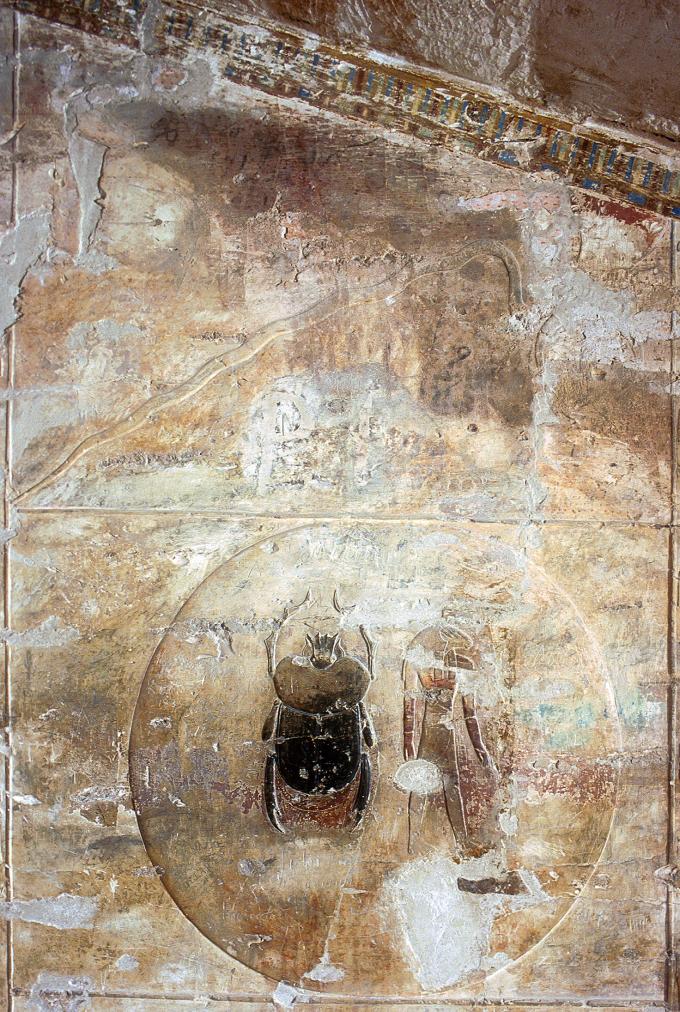
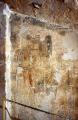
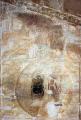
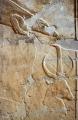
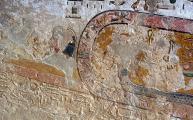
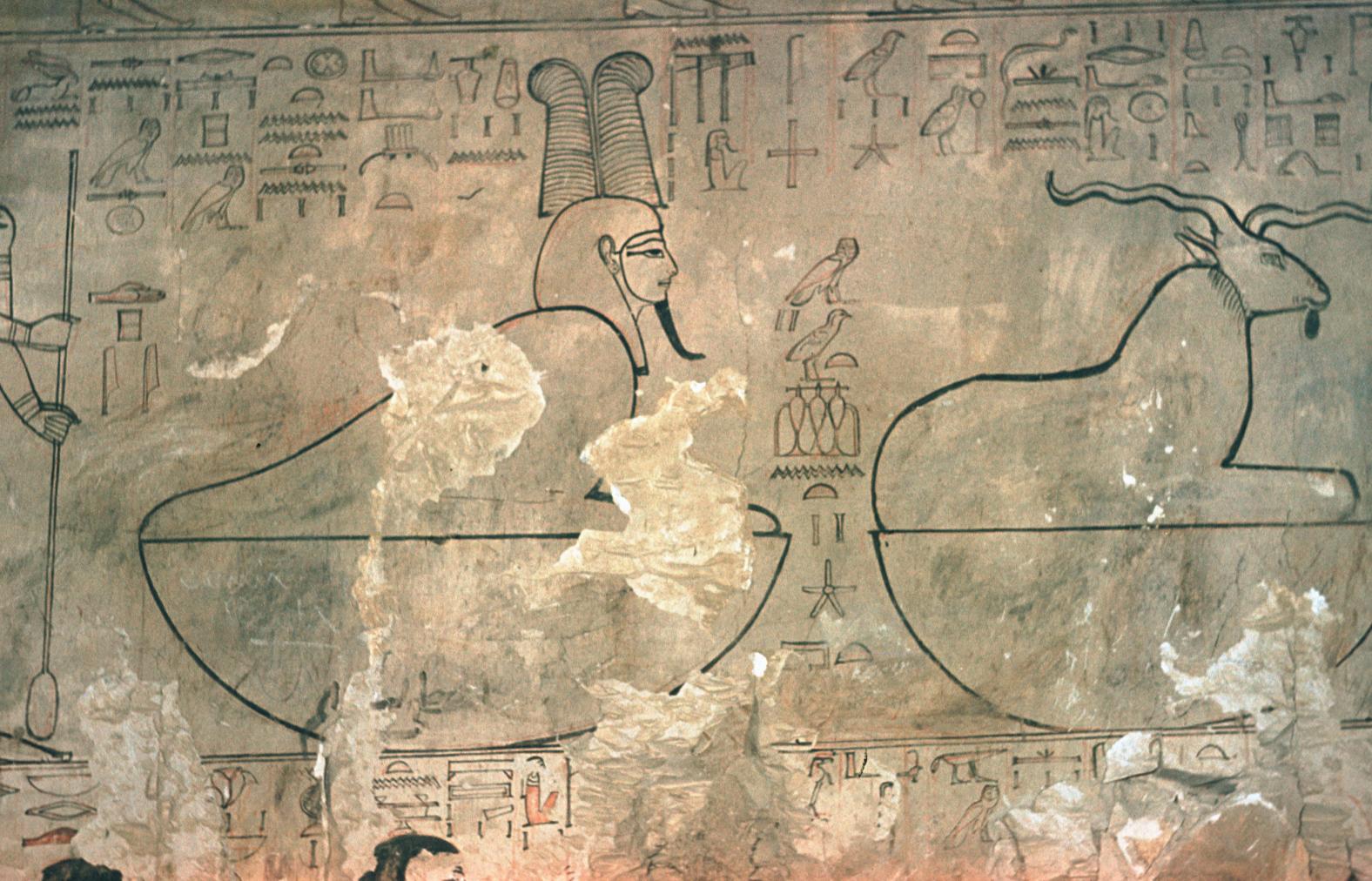
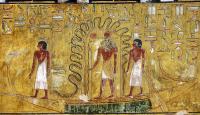
Litany of Ra, opening scene: serpent above sun disk enclosing scarab and ram-headed man.
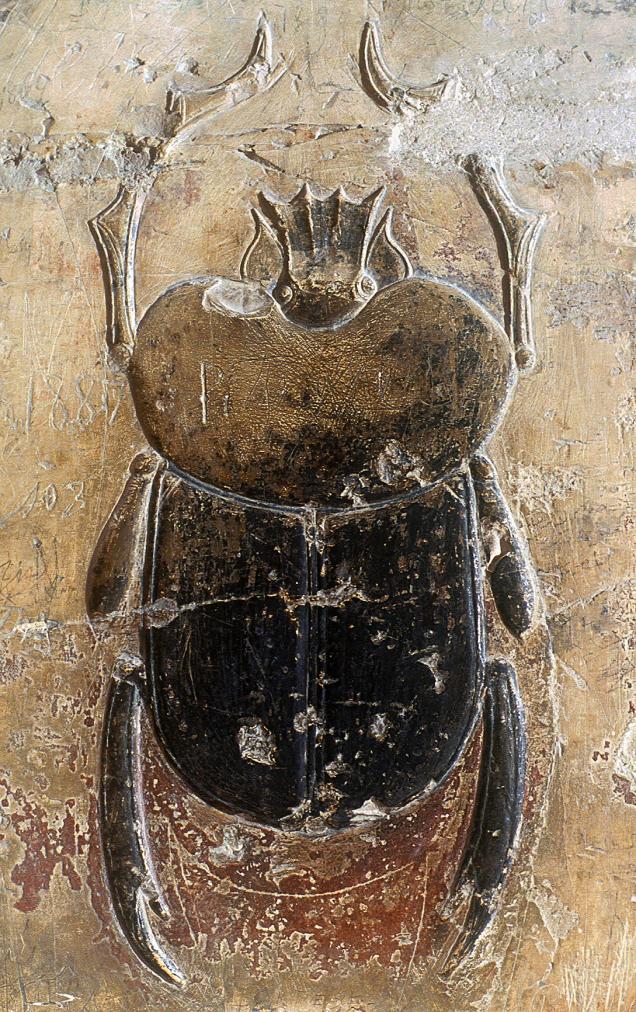
Litany of Ra, opening scene: scarab inside sun disk (detail).
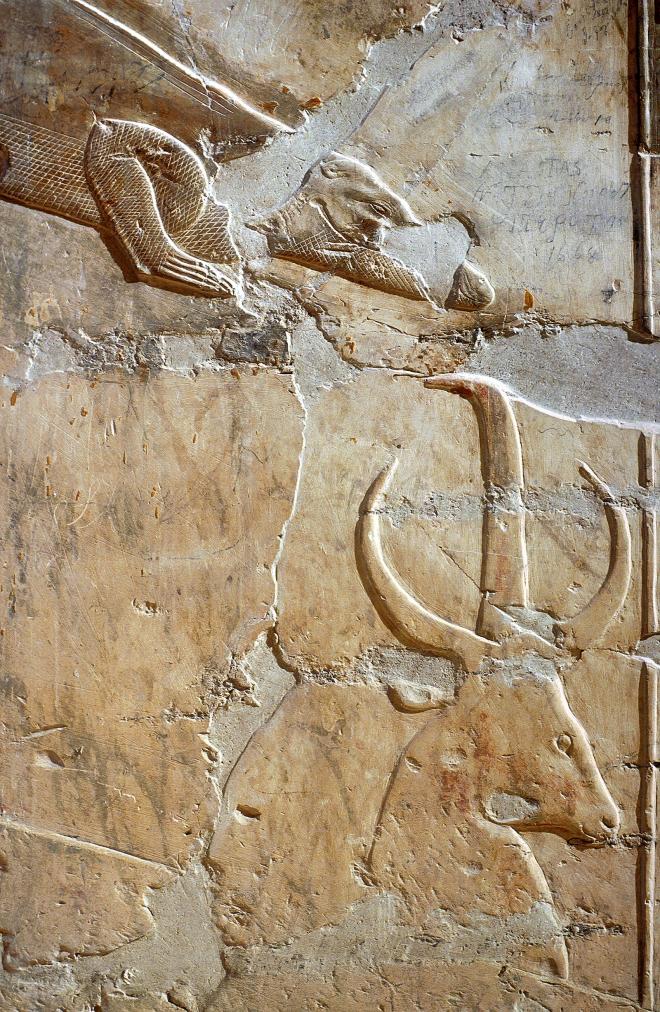
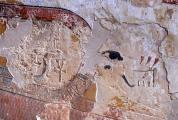
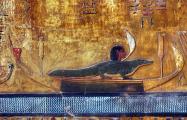
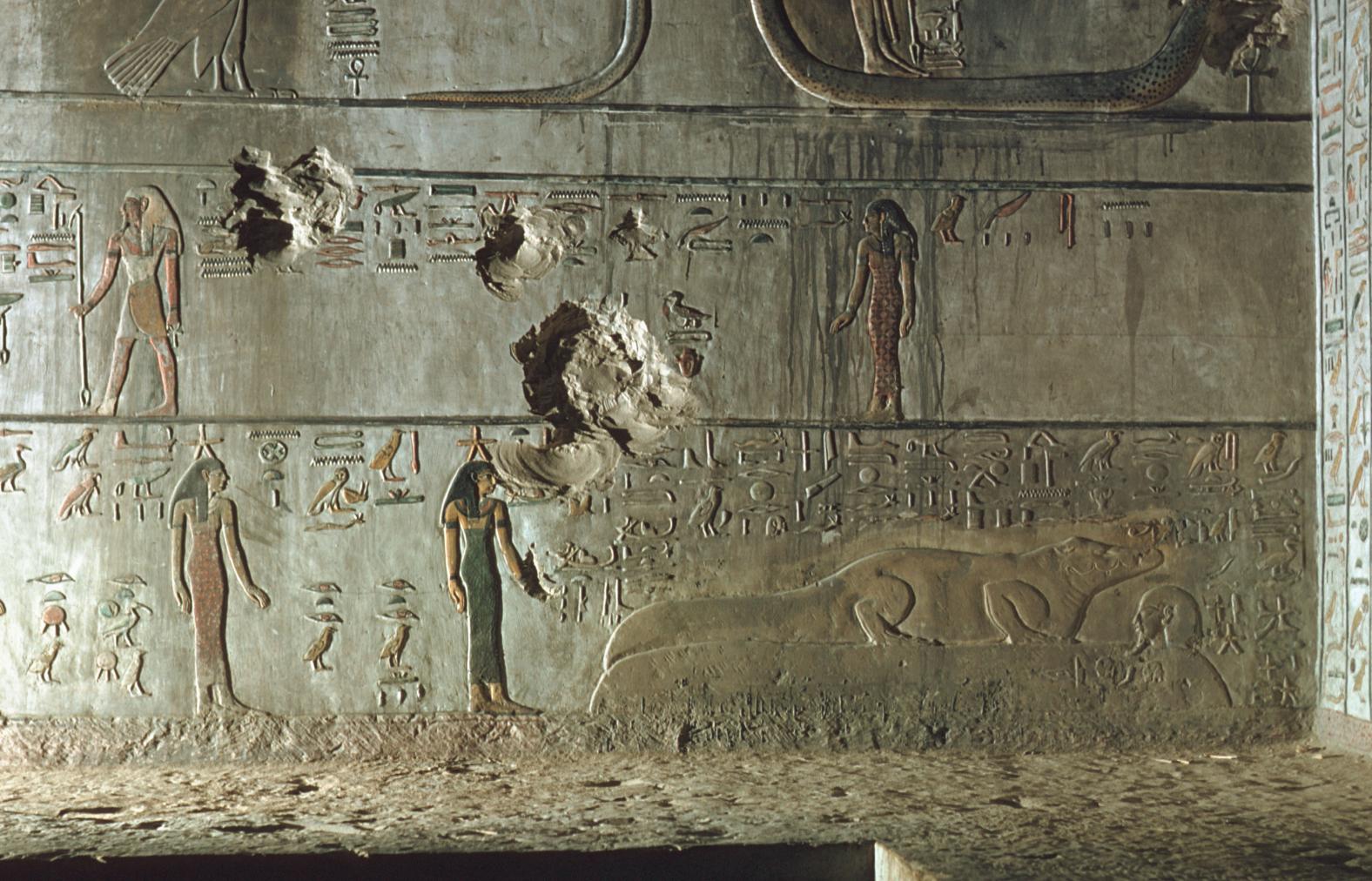
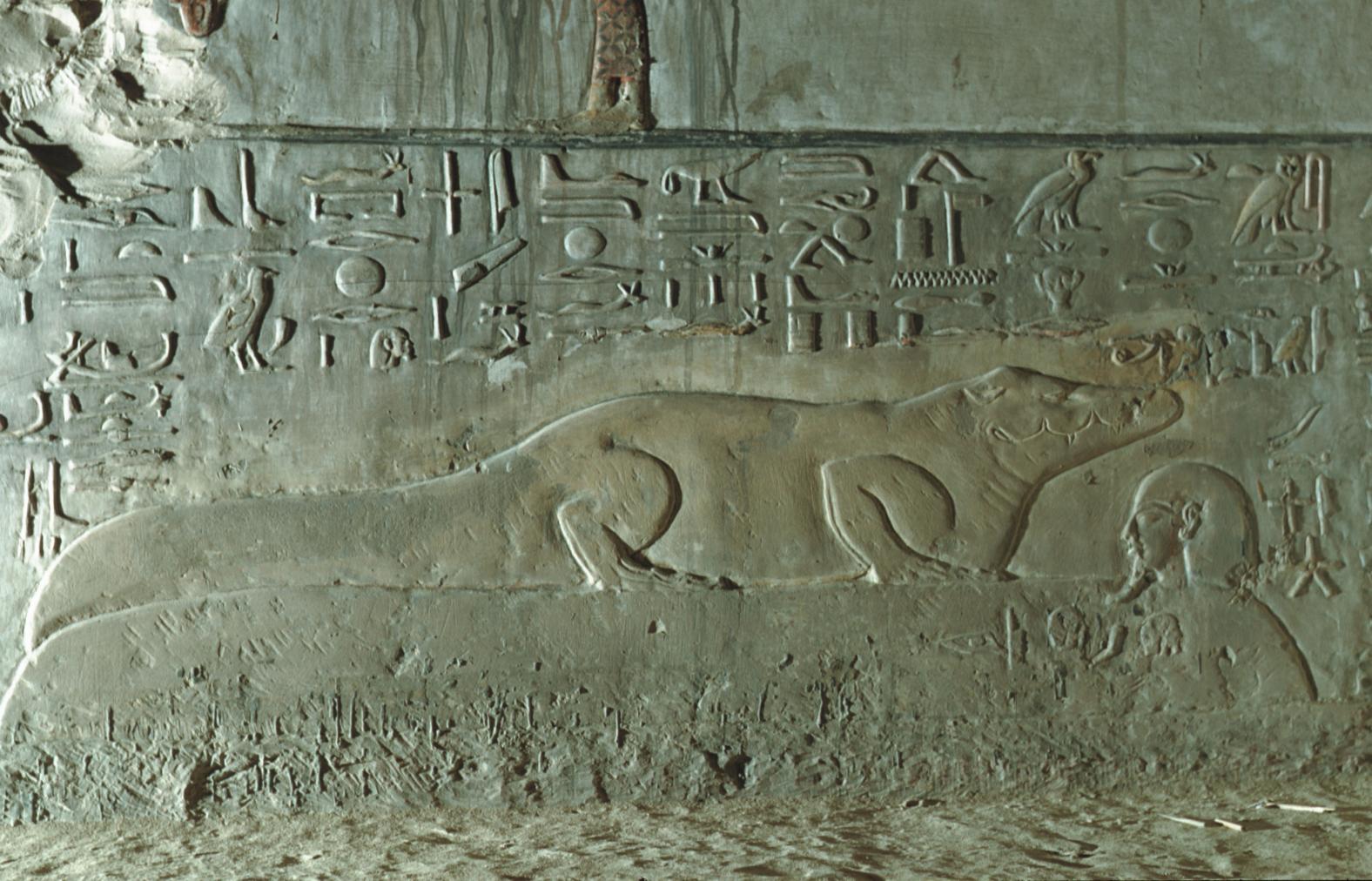
Litany of Ra, opening scene: crocodile and antelope head (detail).
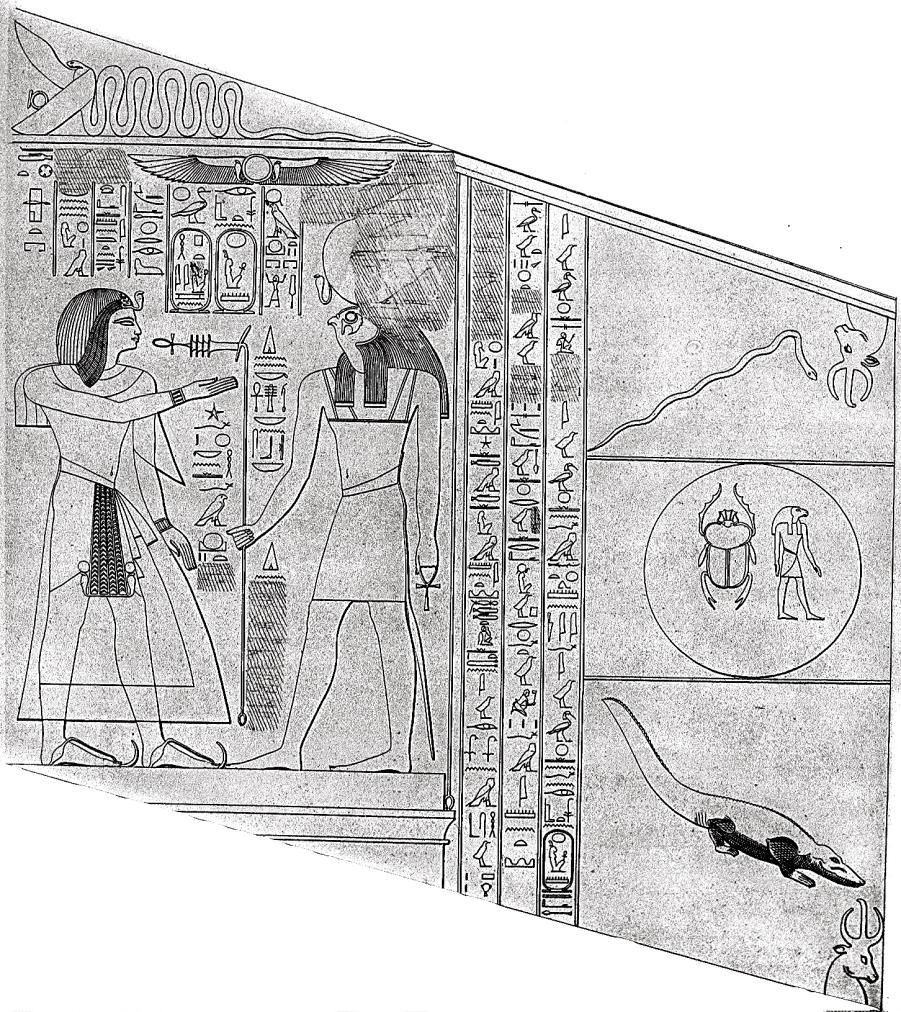
Sety I and Ra-Horakhty; Litany of Ra, opening scene (reconstruction).
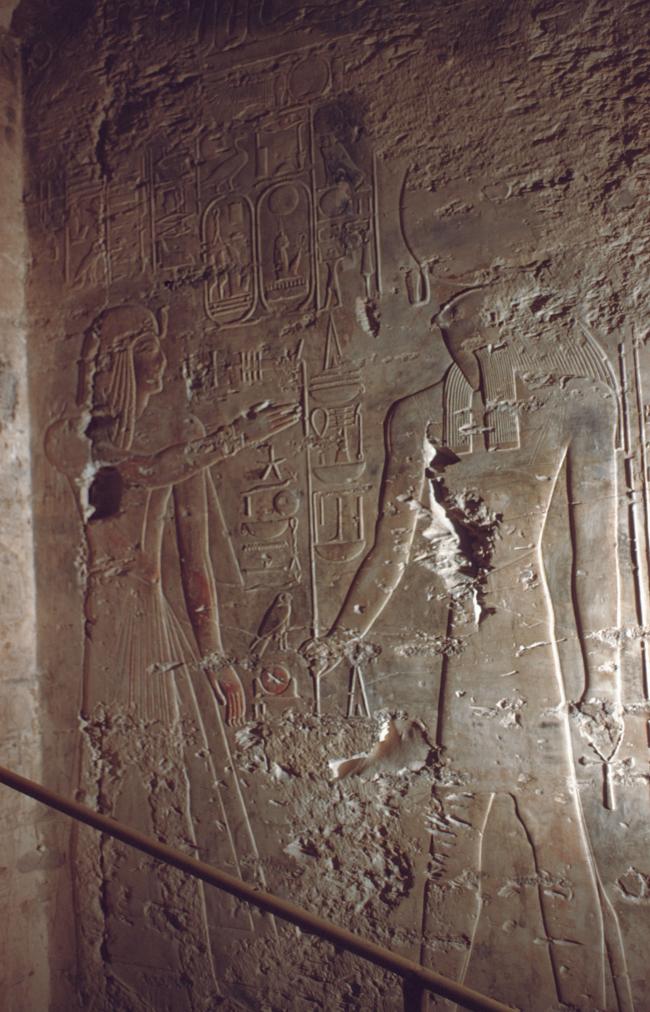
Sety I with Ra-Horakhty. Courtesy of Uni Dia Verlag; Uni Dia Image Nr. 35701.
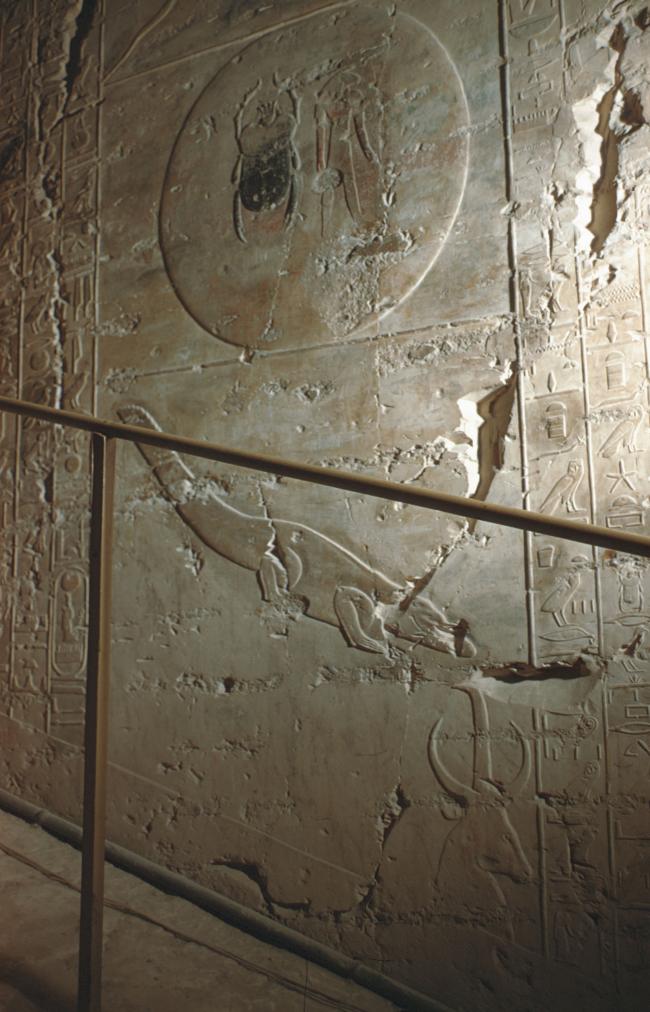
Litany of Ra, opening scene: serpent above sun disk enclosing scarab and ram-headed man. Courtesy of Uni Dia Verlag; Uni Dia Image Nr. 35702.
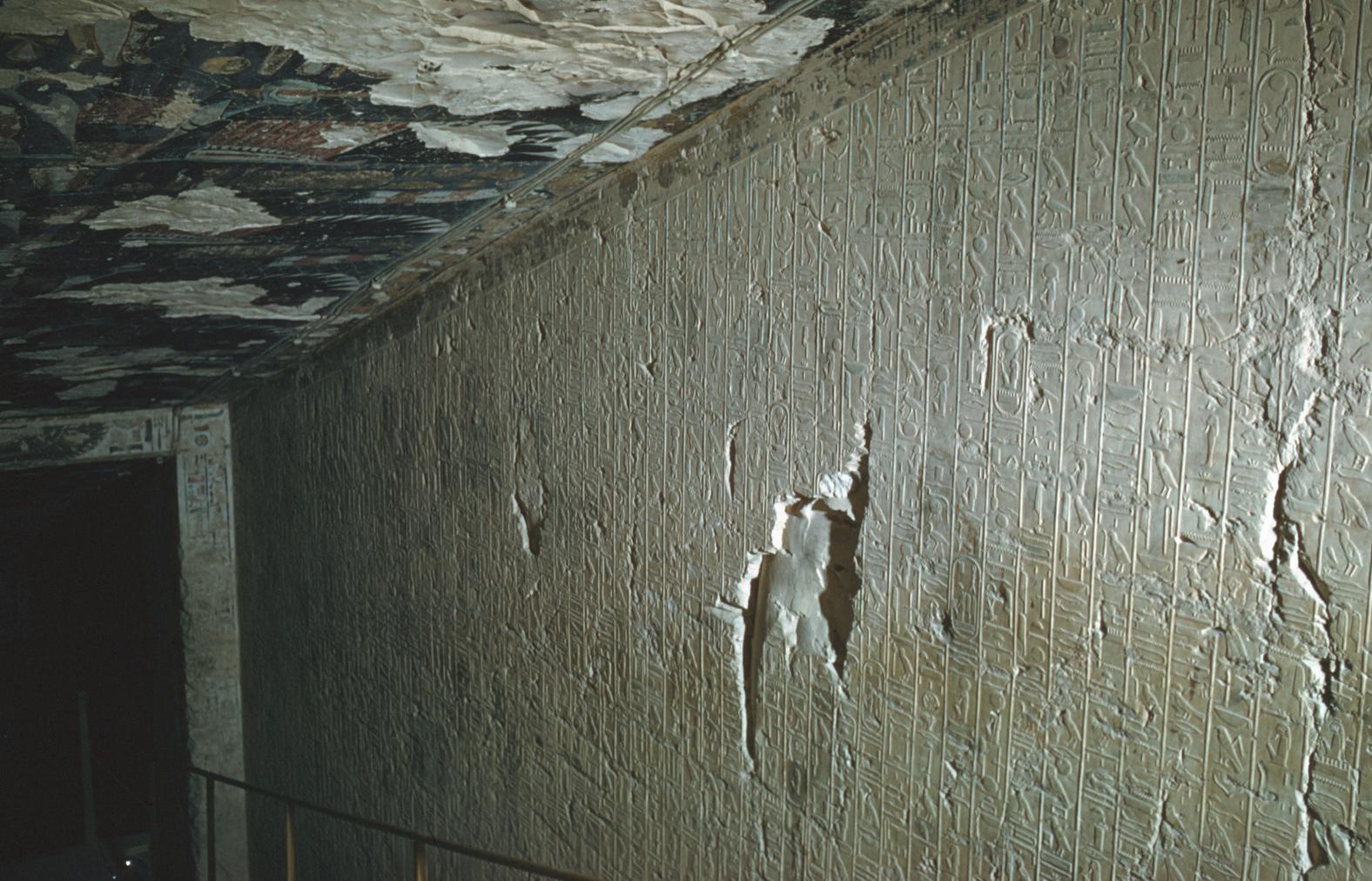
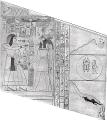
Litany of Ra. Courtesy of Uni Dia Verlag; Uni Dia Image Nr. 35703
Gate C
See entire tombThe outer lintel is decorated with a winged sun disk. The reveals and thicknesses are covered with texts of the Litany of Ra.
Porter and Moss designation:
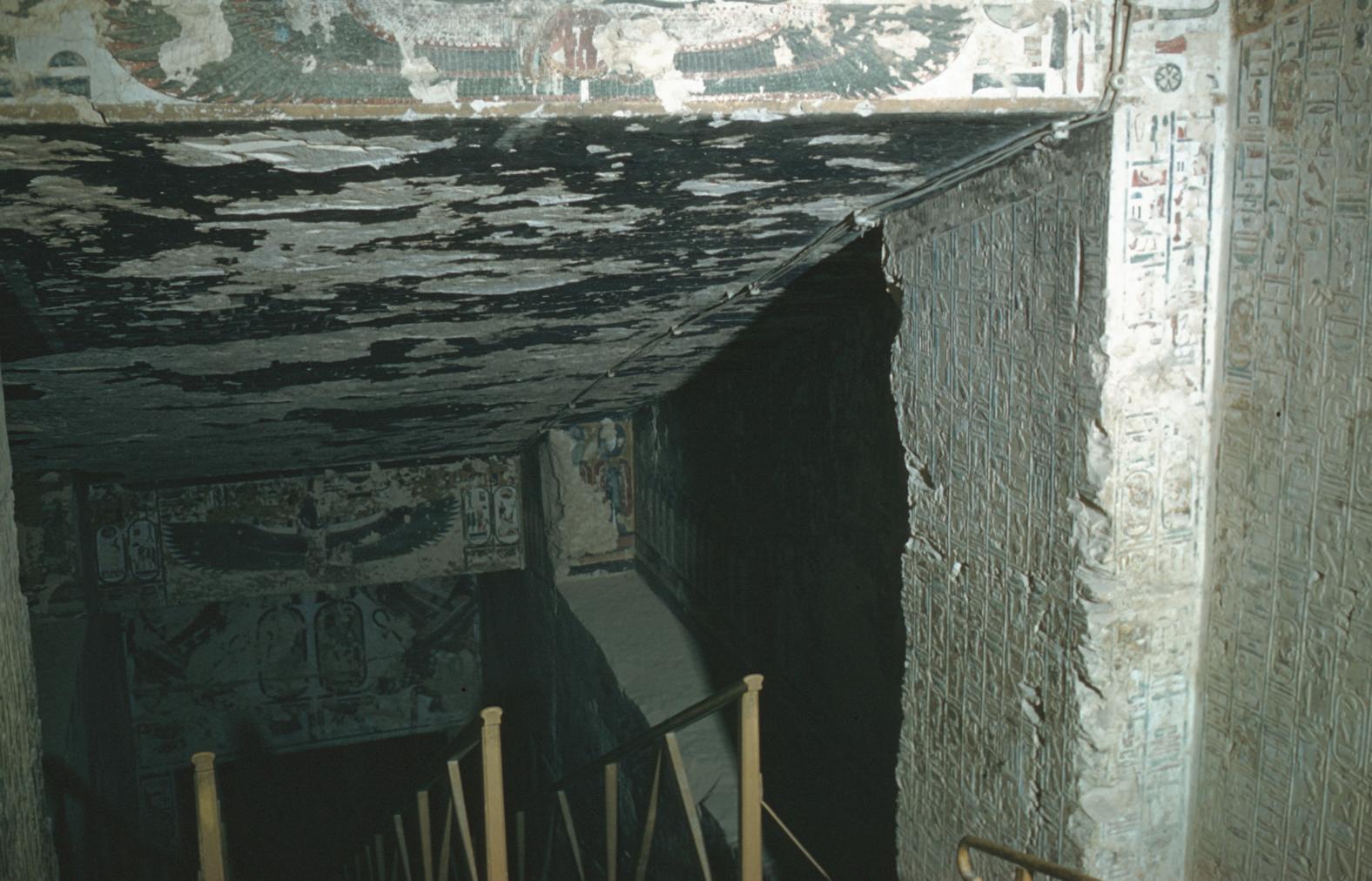
View of right part of Gate C. Courtesy of Uni Dia Verlag; Uni Dia Image Nr. 35704.
Stairwell C
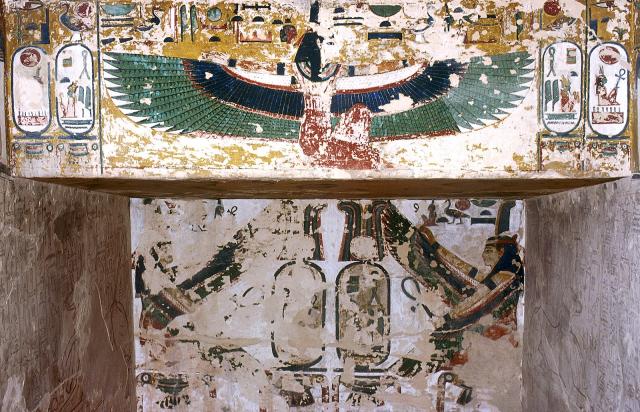
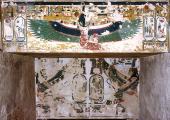
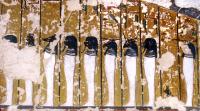
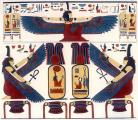
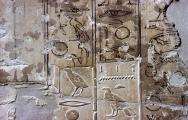
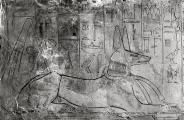
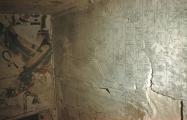
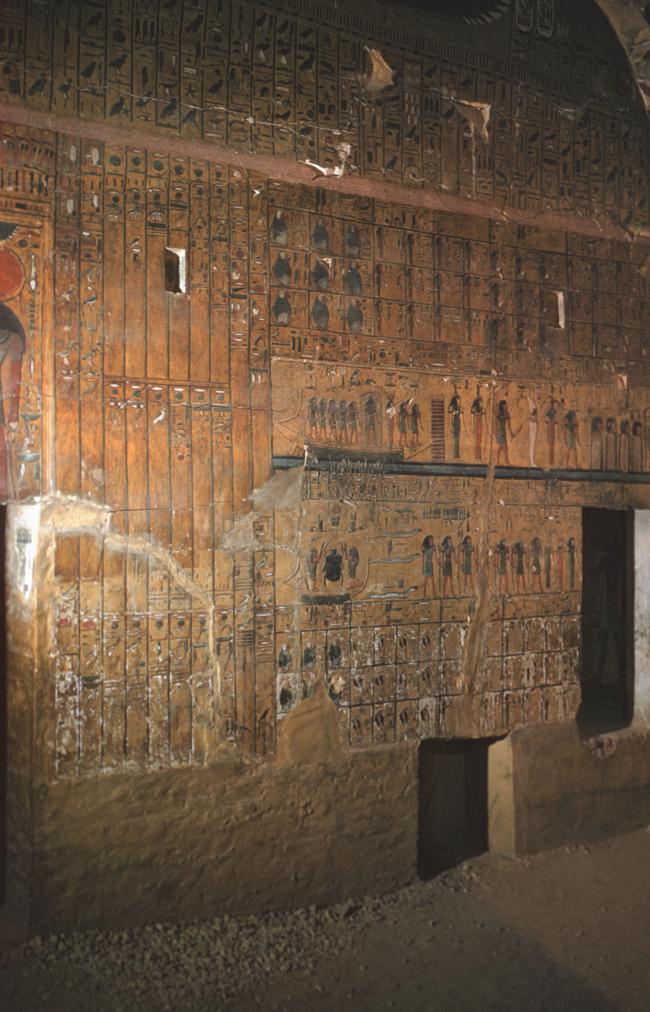
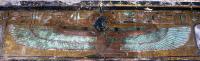
See entire tombThe steps descend at a steep thirty degree angle. Trapezoidal recesses are cut at the tops of the walls. Both walls at the top of the stairwell are decorated with the various manifestations of Ra from the Litany of Ra, both in the recesses and for almost the full length of the stairwell. Almost identical versions of the third hour of the Imydwat cover the left (southeast) and right (northwest) walls for the rest of the corridor, but these were left unfinished with only a part of the text carved in relief and the remainder simply drawn in outline. At the end of this corridor, on both walls is a drawing of Anubis. Under him on the southeast wall is Isis. She is replaced by Nephthys on the northwest wall. The ceiling is painted with a continuation of the Litany of Ra. A kneeling figure of Ma'at with outspread wings, flanked by cartouches of Sety I, decorated the vertical face of the overhang near the rear of this stairwell's ceiling.
Porter and Moss designation:
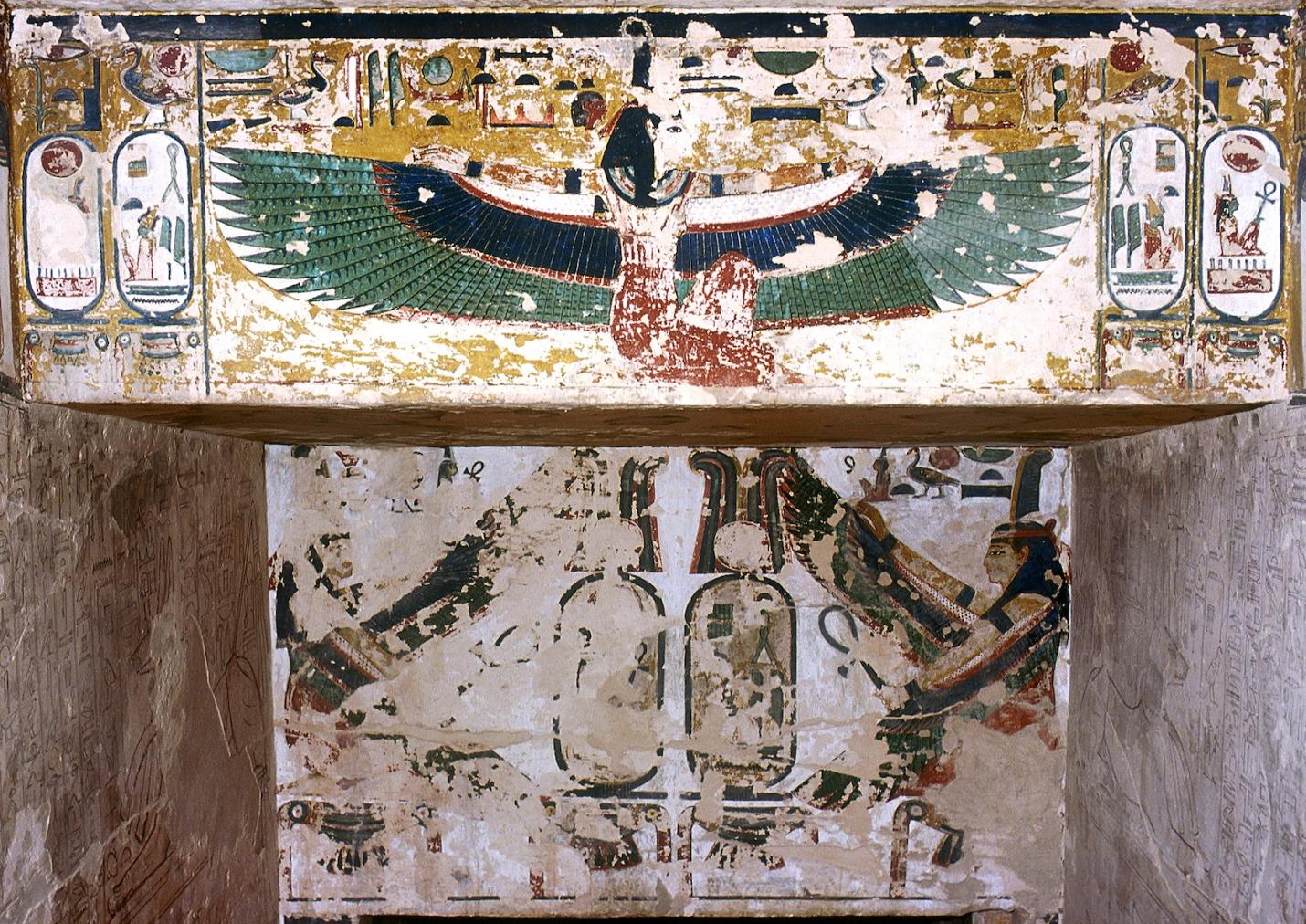
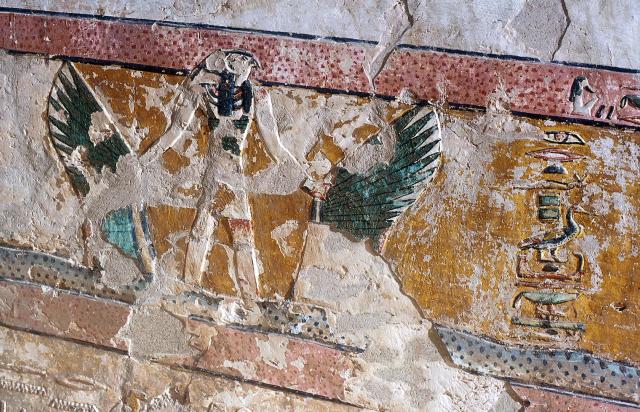
Winged Ma'at flanked by Sety I's cartouches; kneeling winged Ma'at figures and Sety I's cartouches.
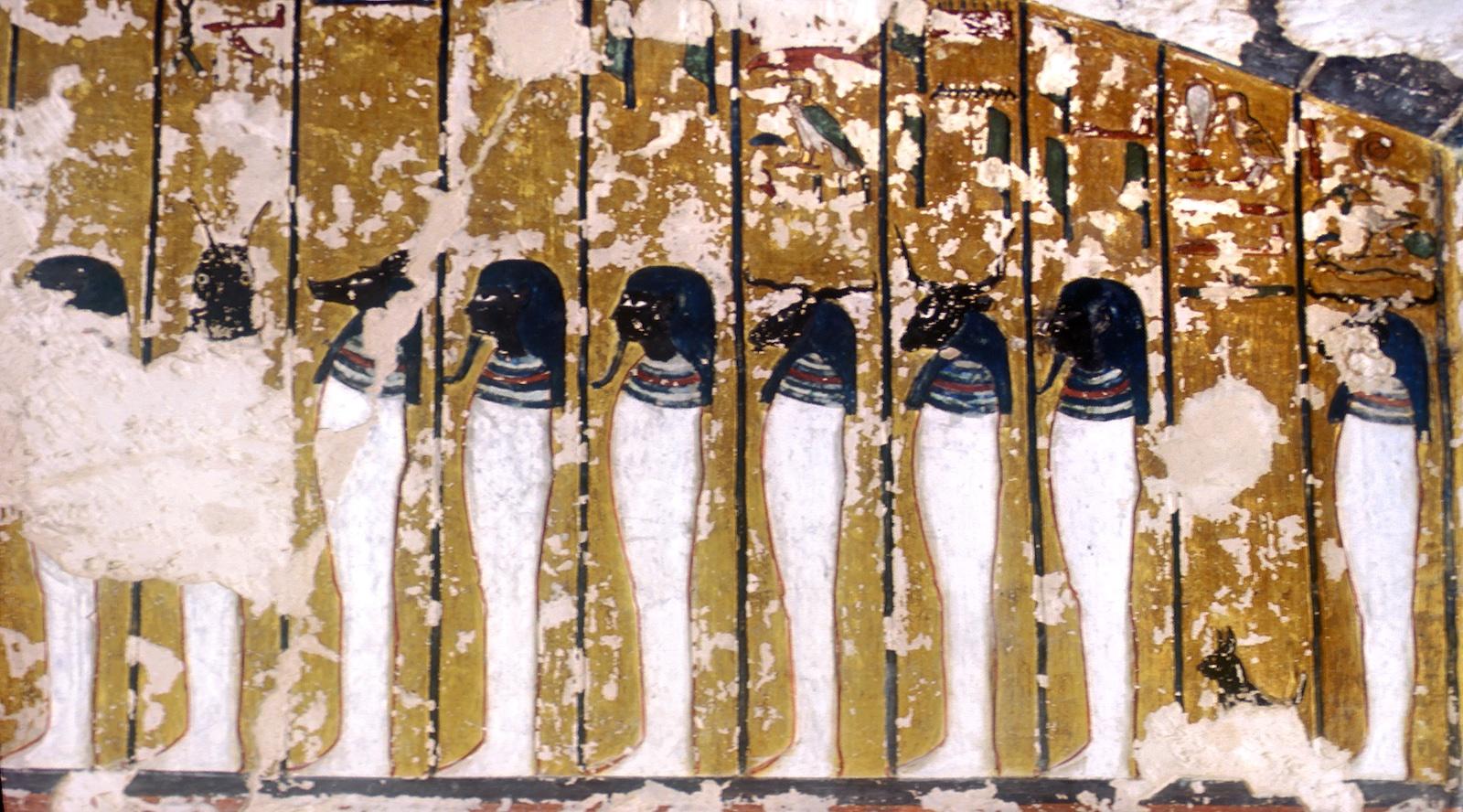
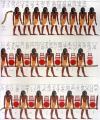
Litany of Ra: forms of Ra.
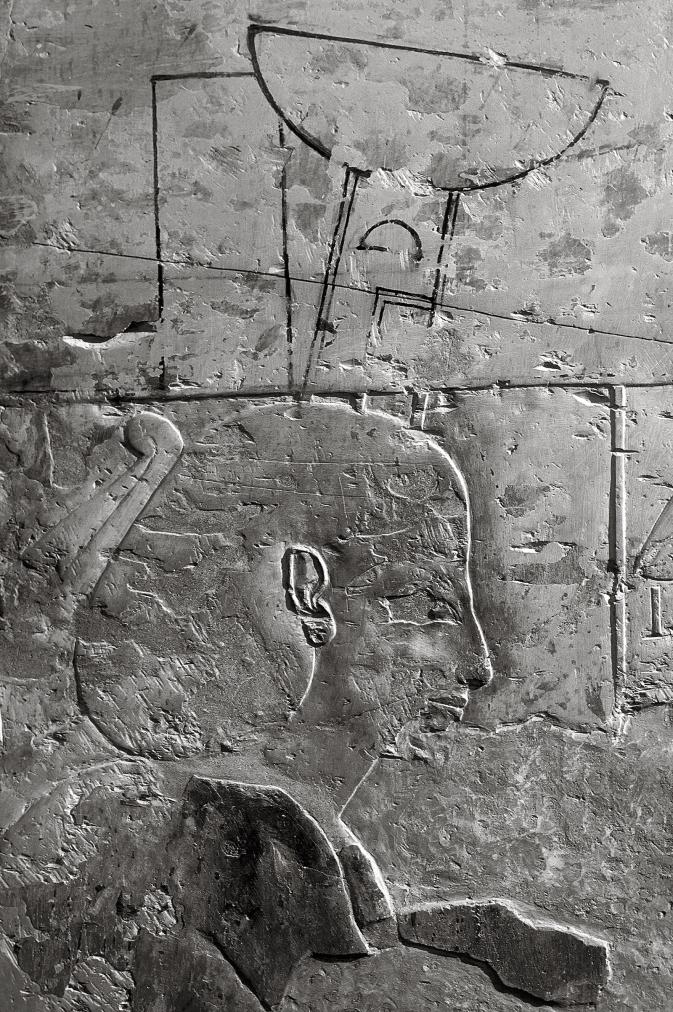
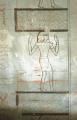
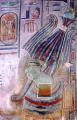
Book of the Dead, spell 151: head of Nephthys, partly rendered as preliminary sketch and partly carved as raised relief (detail).
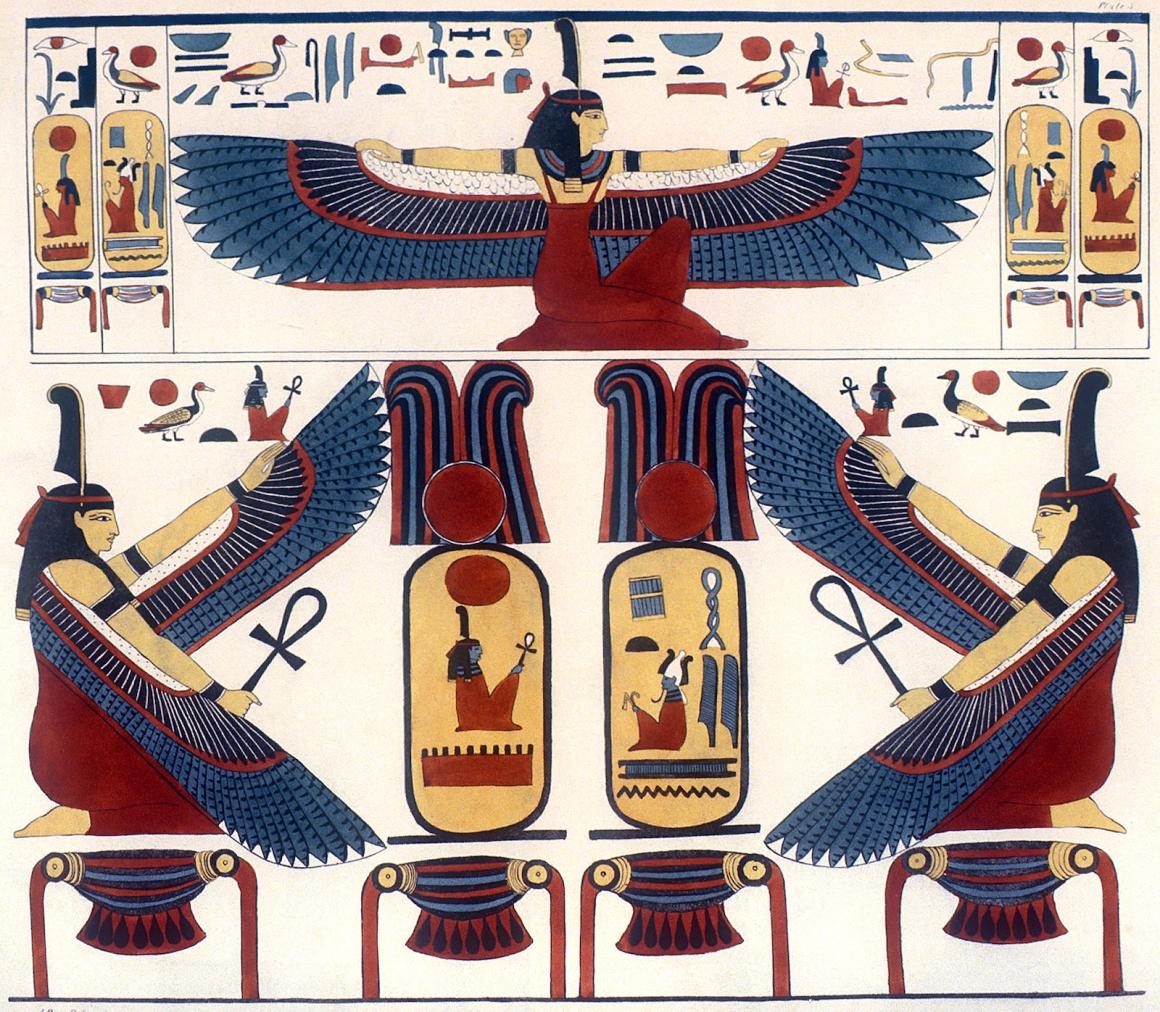
Kneeling winged figures of Ma'at protecting the cartouches of Sety I (reconstruction).
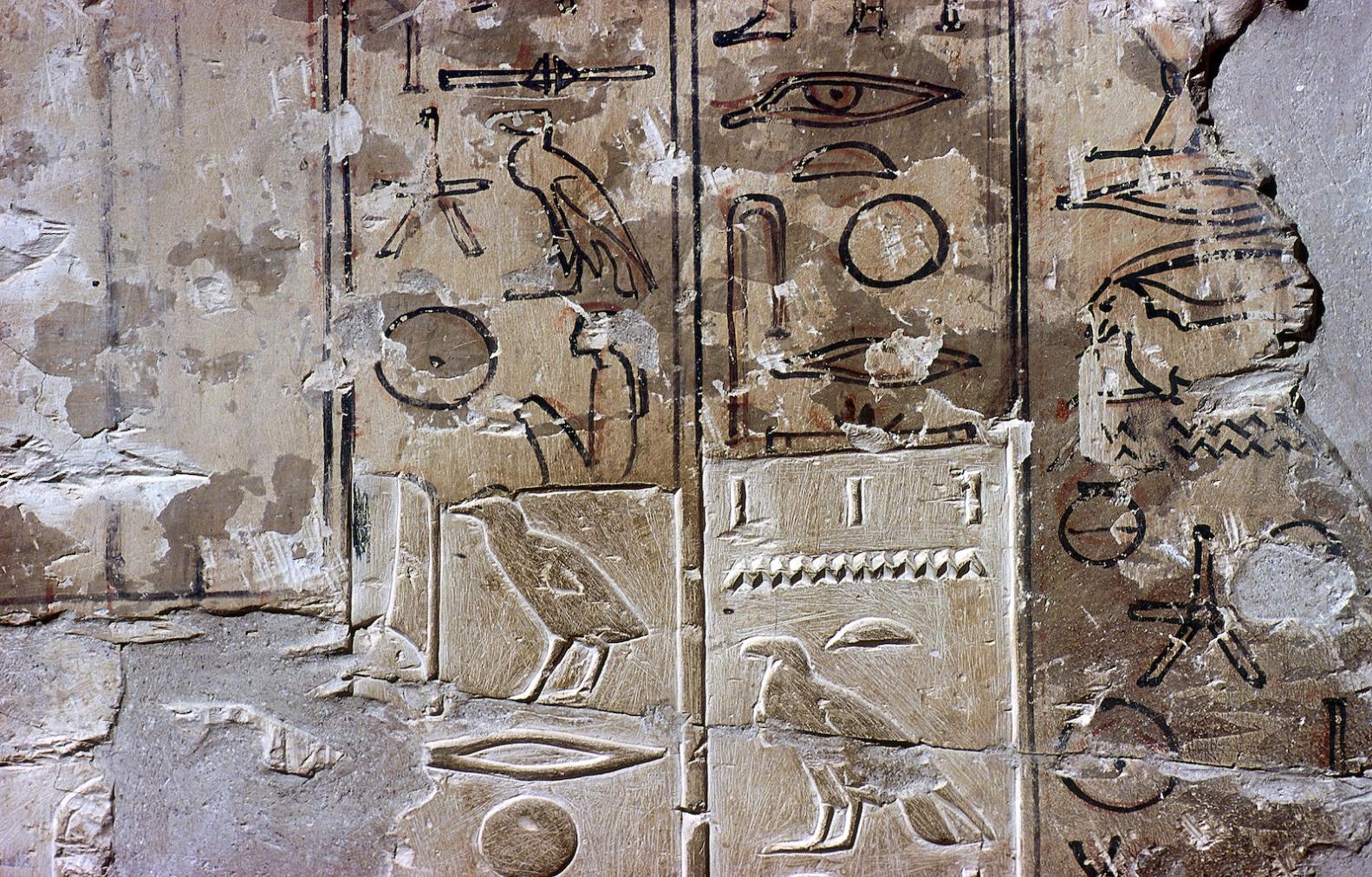
Imydwat, third hour: some hieroglyphs as preliminary sketch and others carved in relief (detail).
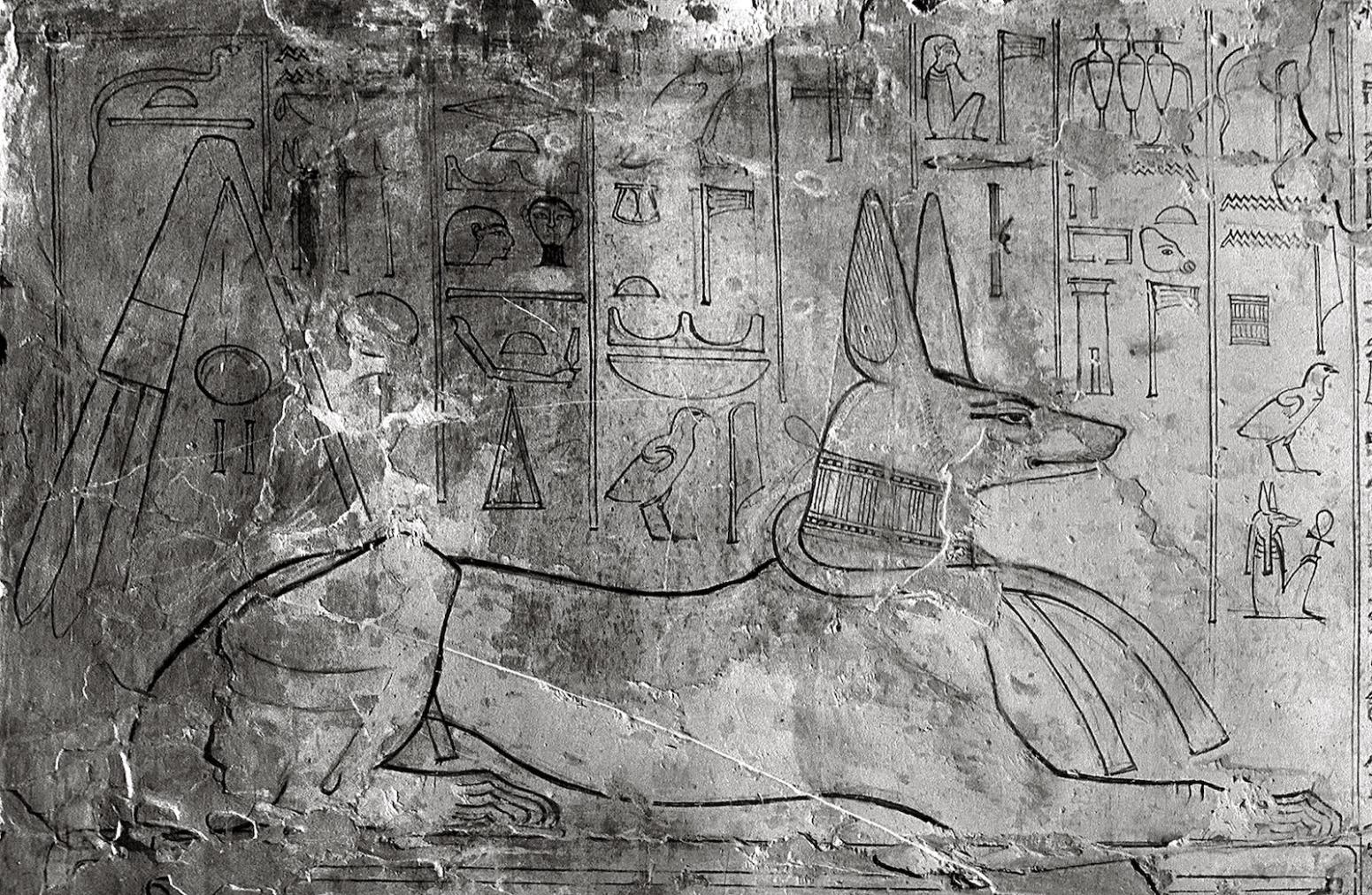
Book of the Dead, spell 151: preliminary sketch of Anubis jackal on shrine (detail).
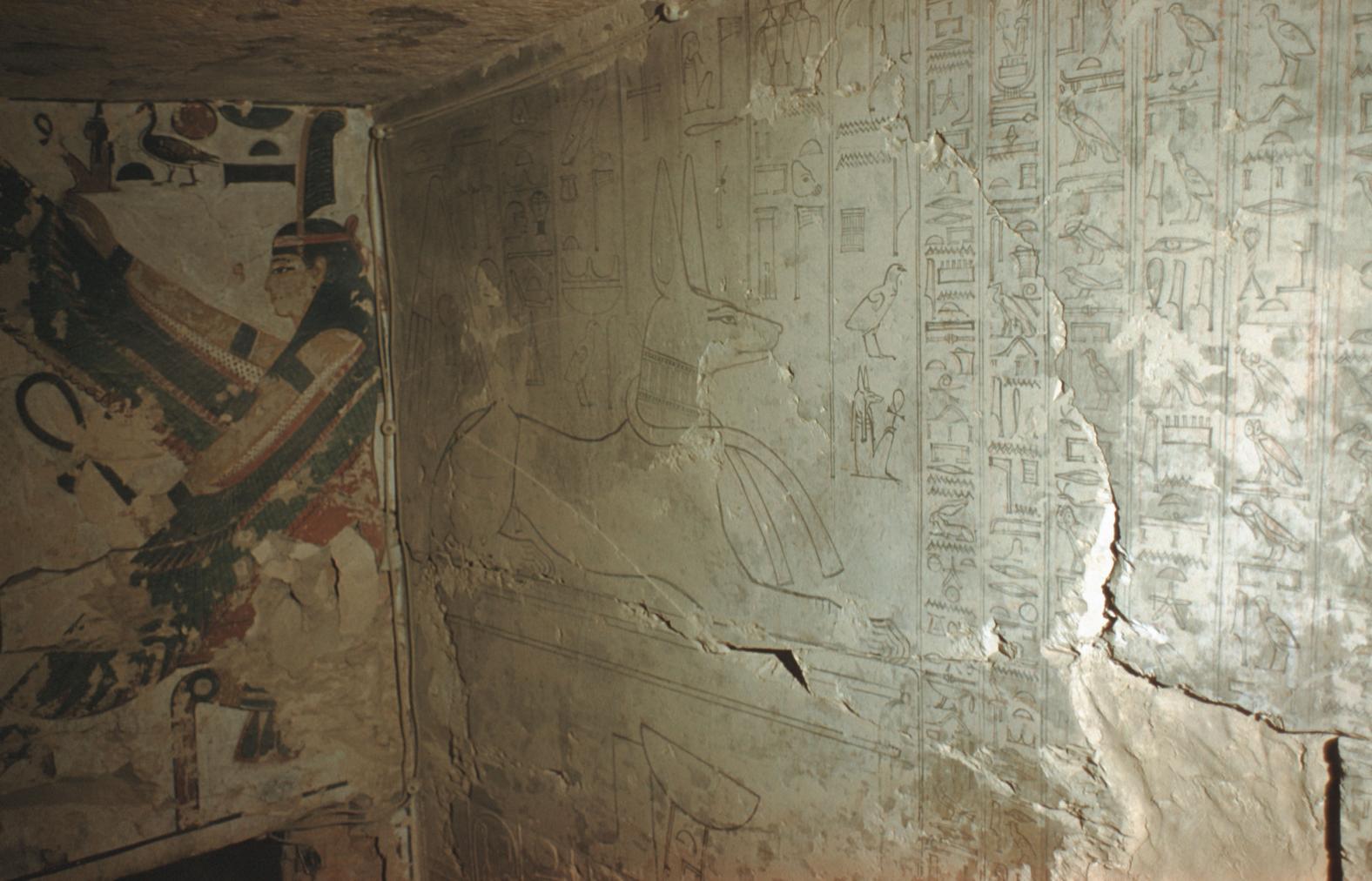
Book of the Dead, spell 151: preliminary sketch of Anubis jackal on shrine (detail) and partial view of Gate D. Courtesy of Uni Dia Verlag; Uni Dia Image Nr. 35705.
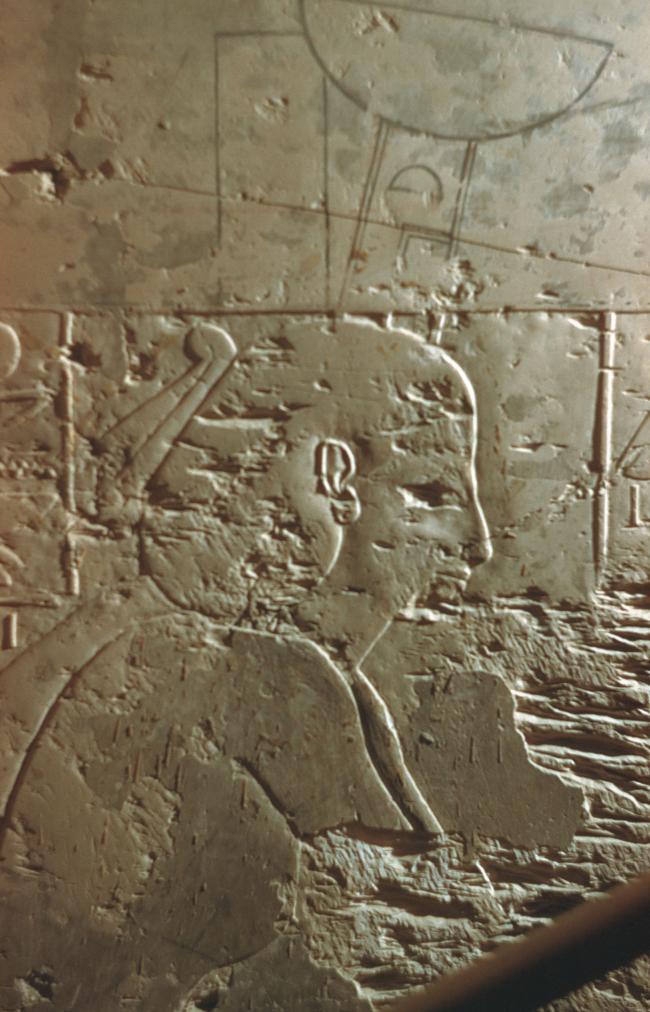
Book of the Dead, spell 151: head of Nephthys, partly rendered as preliminary sketch and partly carved as raised relief (detail). Courtesy of Uni Dia Verlag; Uni Dia Image Nr. 35706.
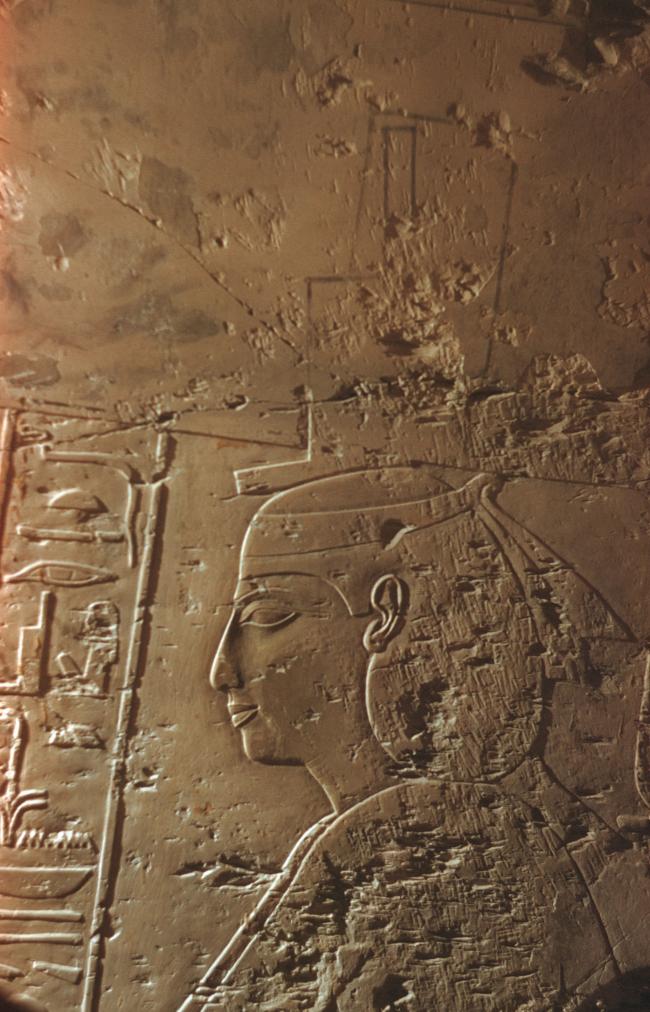
Book of the Dead, spell 151: head of Isis, partly rendered as preliminary sketch and partly carved as raised relief (detail). Courtesy of Uni Dia Verlag; Uni Dia Image Nr. 35707.
Gate D
See entire tombTwo kneeling figures of winged goddesses flank the cartouches of Sety I on the lintel, and the kings' names and titles appear on the outer faces of the reveals. On the right thickness are traces of two baboons, perhaps from the beginning of the upper register of the third hour of the Imydwat.
Porter and Moss designation:
Winged Ma'at flanked by Sety I's cartouches; kneeling winged Ma'at figures and Sety I's cartouches.
Kneeling winged figures of Ma'at protecting the cartouches of Sety I (reconstruction).
Corridor D
See entire tombThis sloping corridor is decorated with the fourth and fifth hours of the Imydwat on the right (northwest) and left (southeast) walls, respectively. Near the lower ends of these walls are outlines in black for what in later tombs are a pair of rectangular recesses.
Porter and Moss designation:
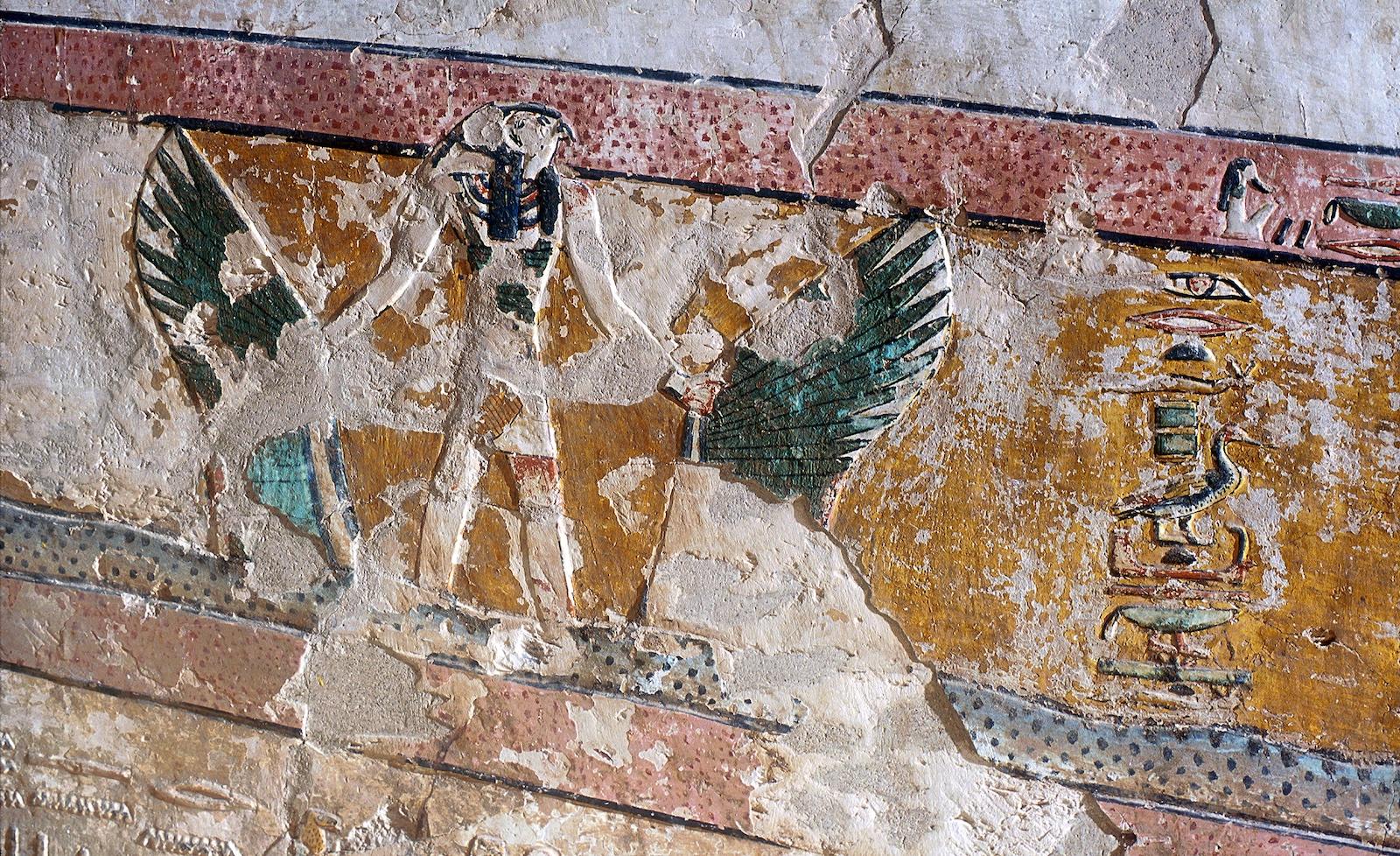
Imydwat, fifth hour: Sokar.
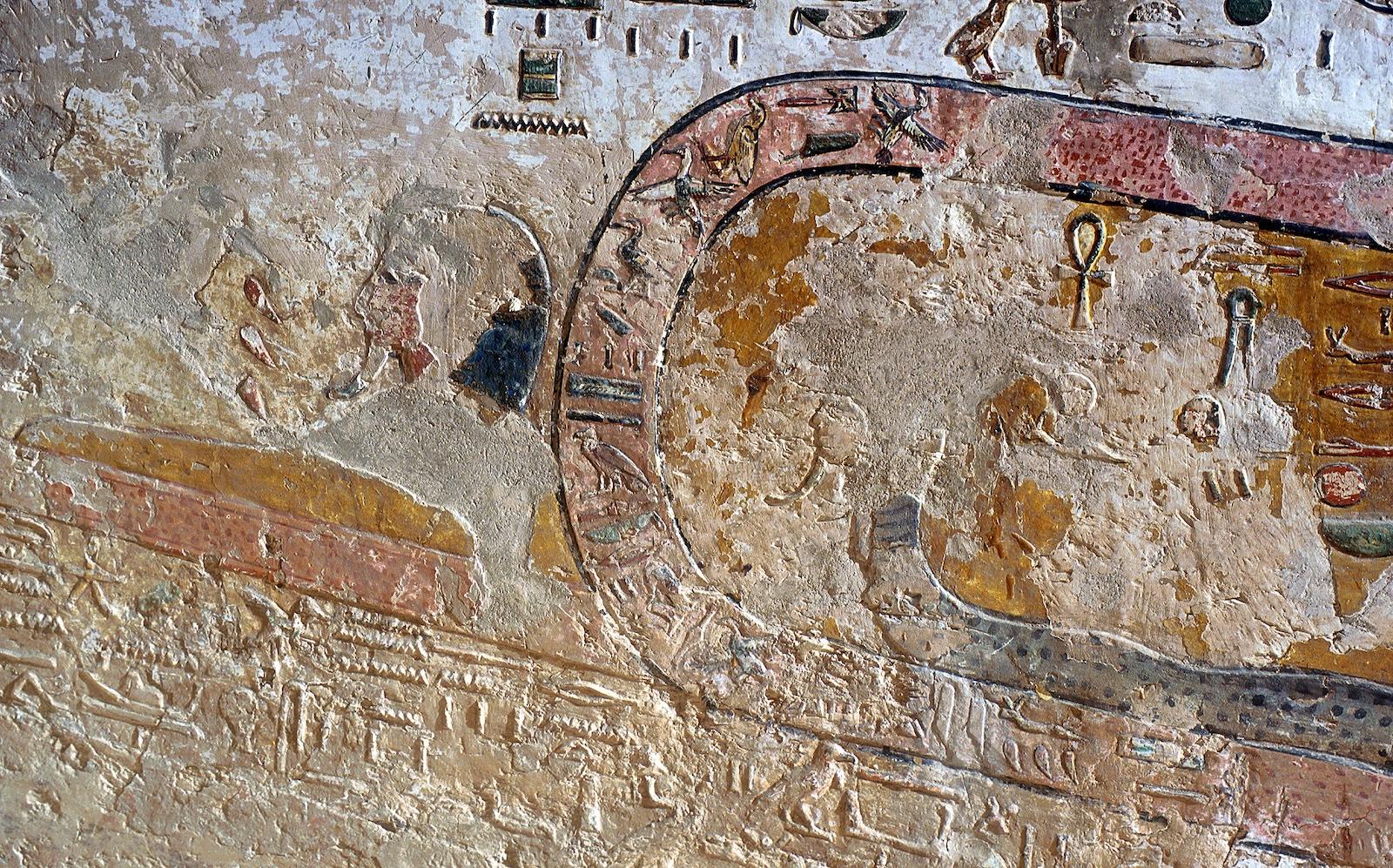
Imydwat, fifth hour: part of Aker figure guarding the cavern of Sokar (detail).
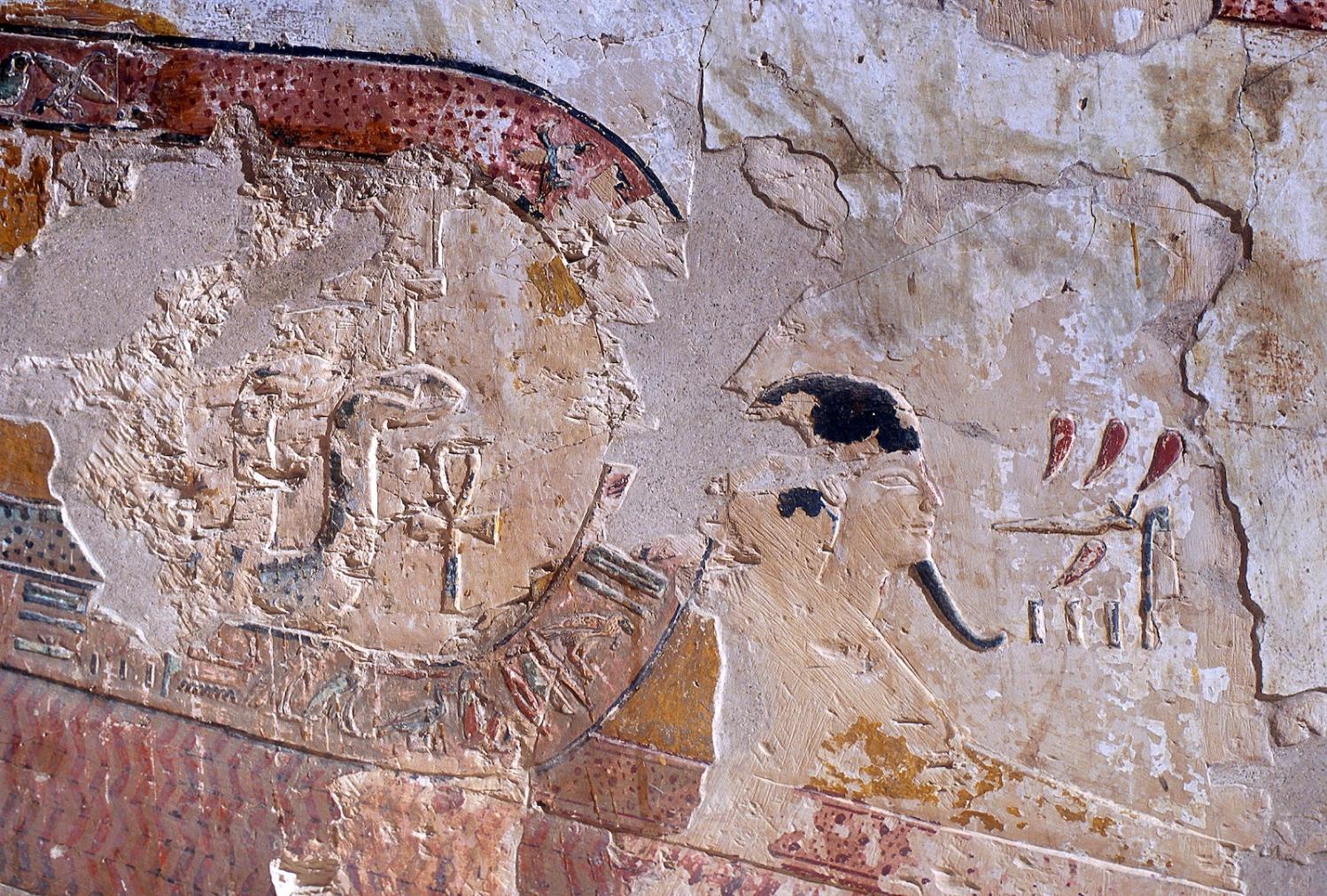
Imydwat, fifth hour: Aker figure guarding cavern of Sokar (detail).
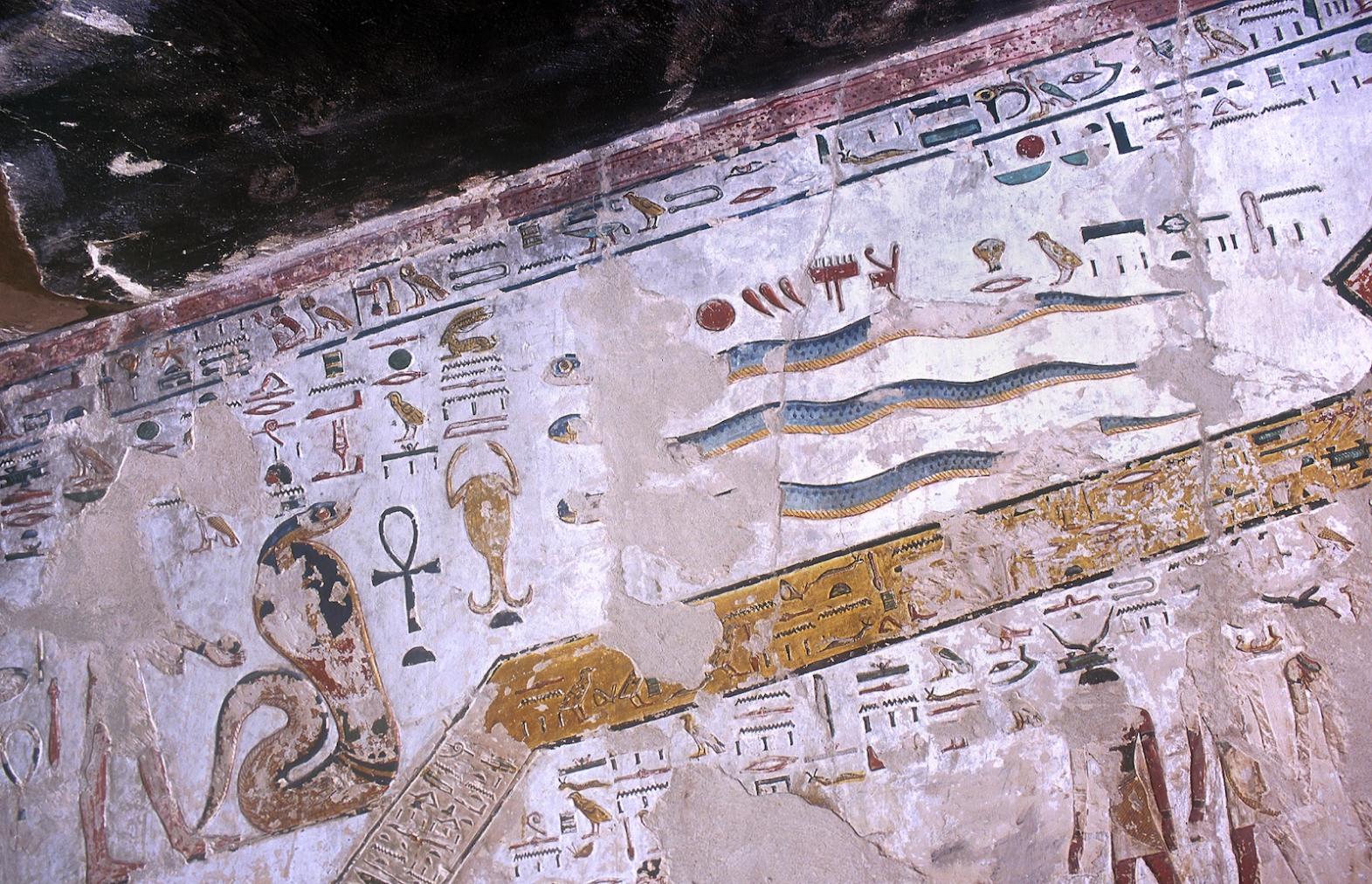
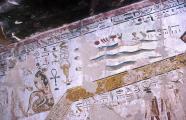
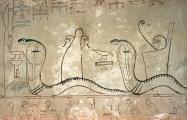
Imydwat, fourth hour, figures 284, 283, 280-282: Serqet as cobra, three serpents guarding the paths of Ro-Setau.
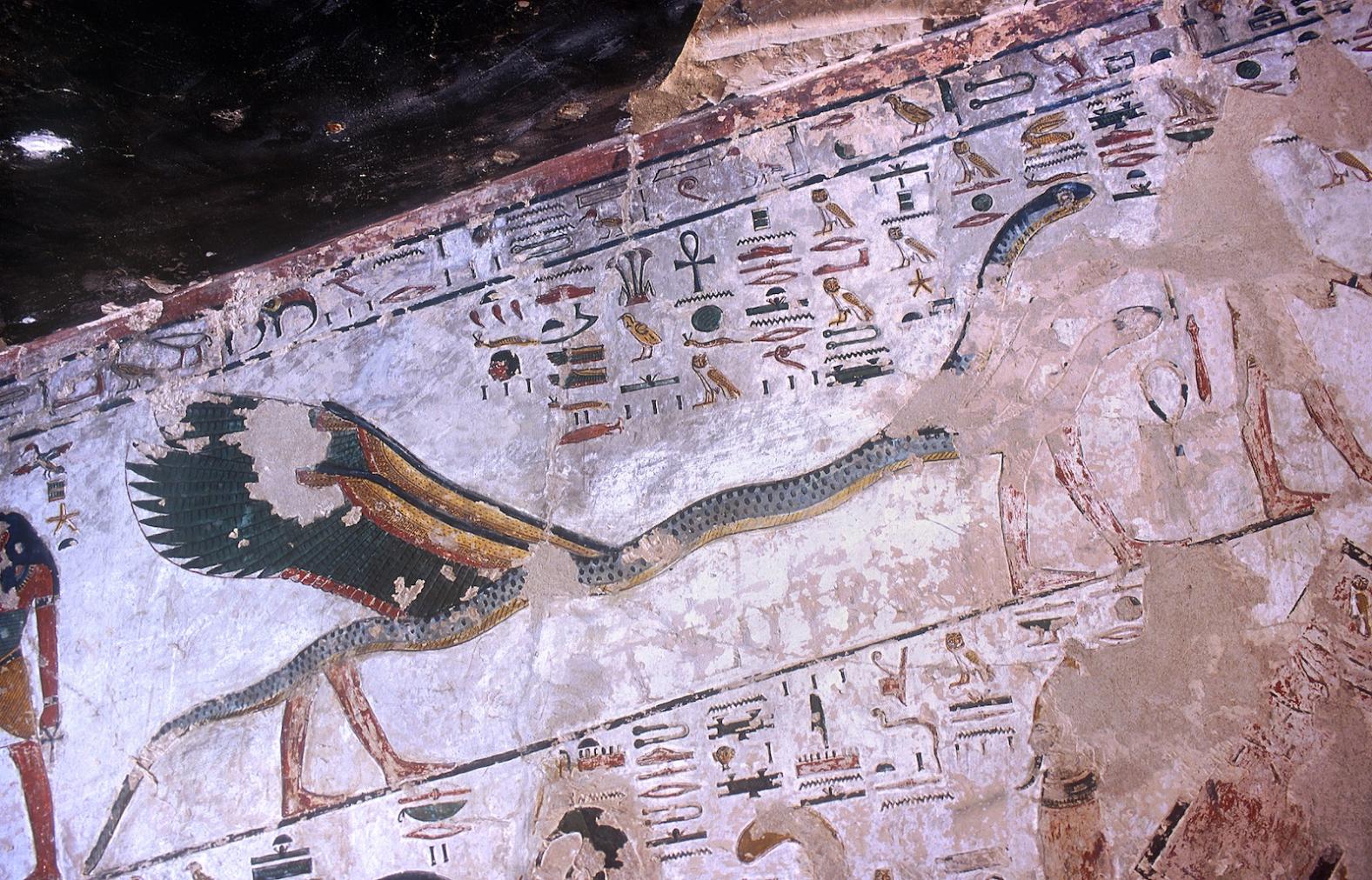
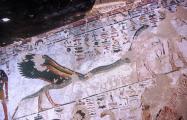
Imydwat, fourth hour, figure 285: winged guardian serpent called "the great god."
Gate E
See entire tombThe outer lintel is decorated with a winged sun disk and the reveals with the names of Sety I.
Porter and Moss designation:
Well chamber E
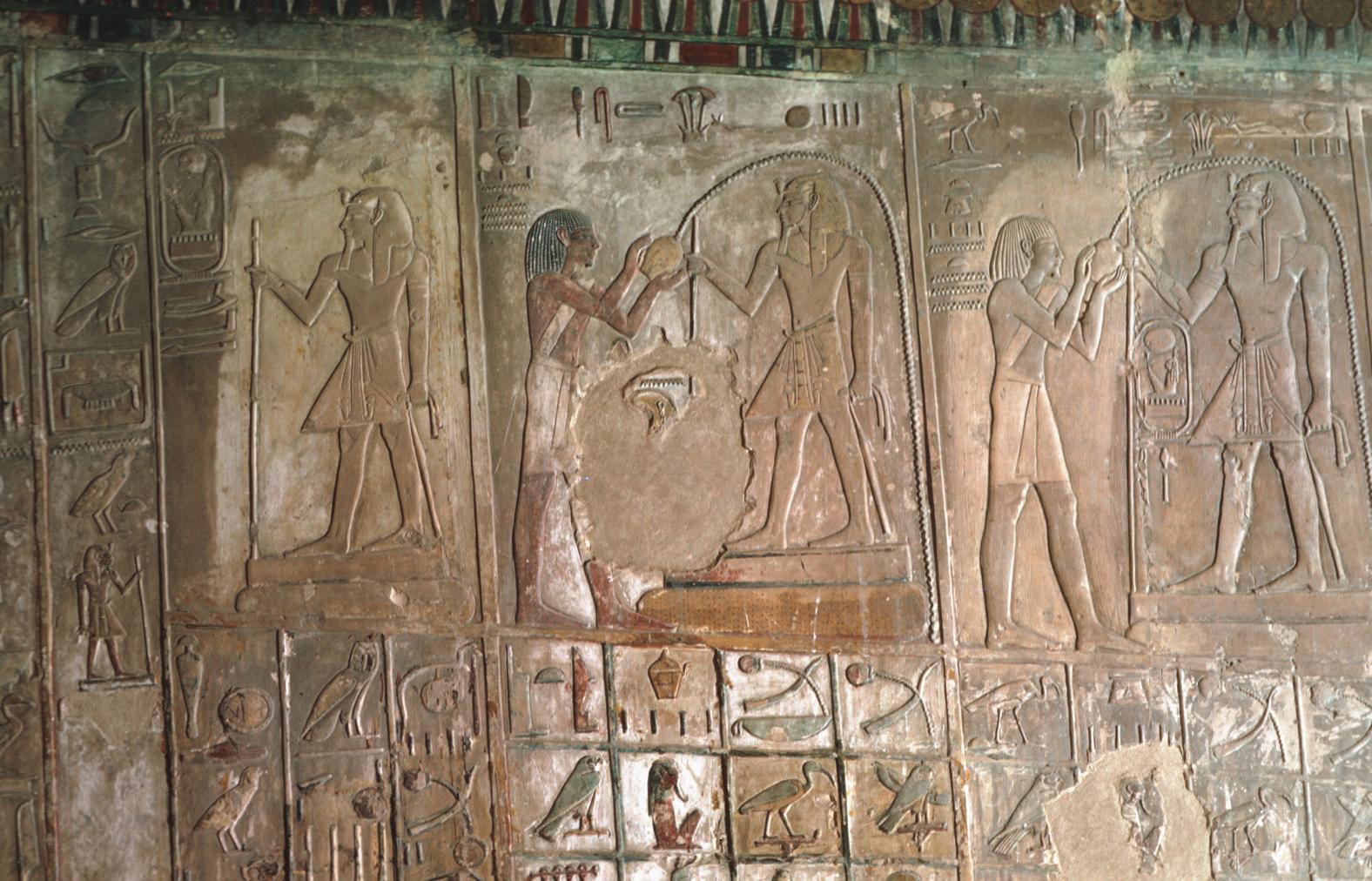
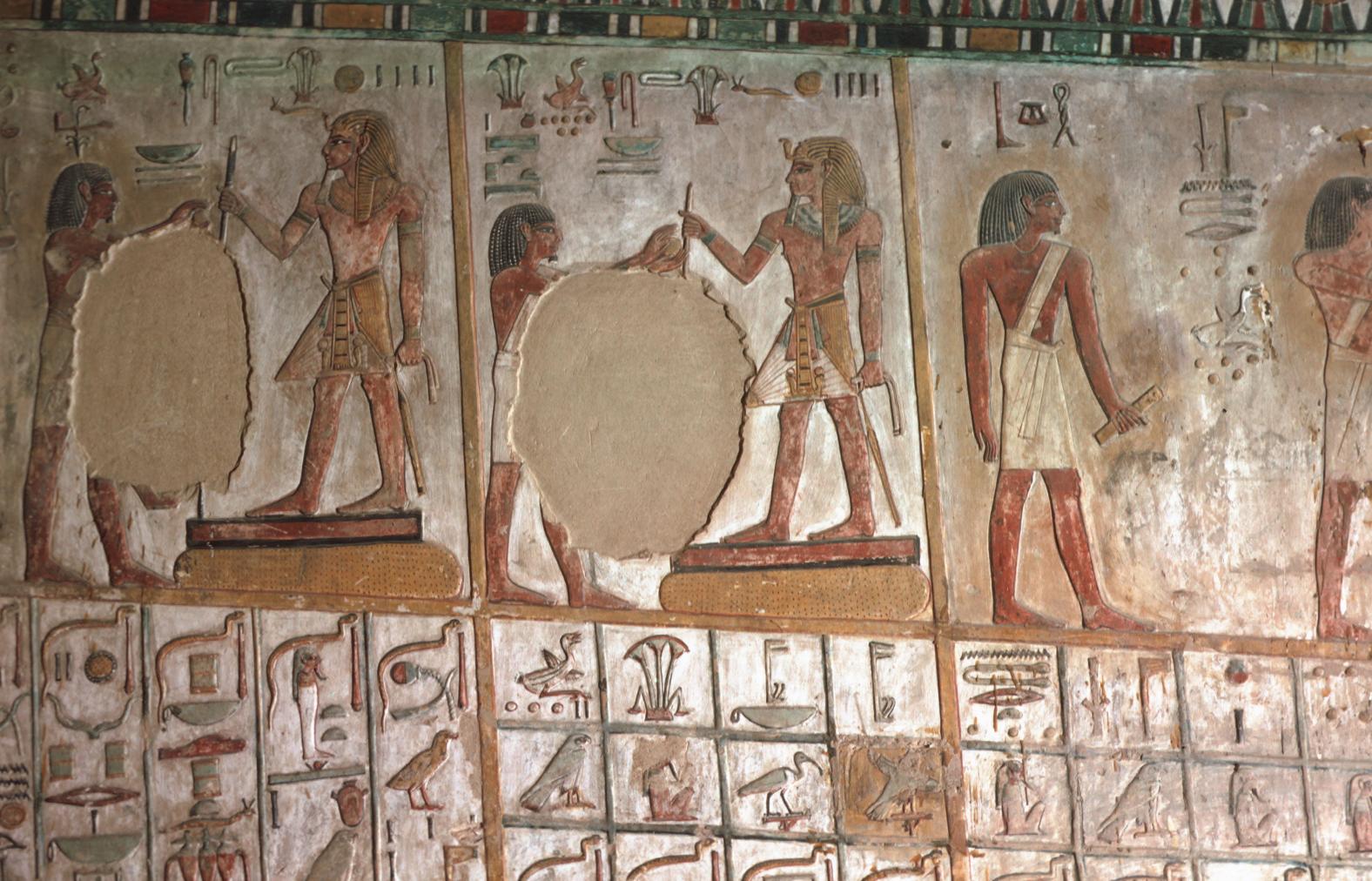
See entire tombA shaft has been cut through the floor of this chamber. The five scenes on the left (southeast) side of the chamber show jackal-headed Anubis, Sety I being led by Horus to Isis, the king offering wine to Hathor, the king before Osiris, and finally the Western Goddess. On the right (northwest) side, the king is shown led by Horus to Hathor and to Isis, offering wine to Hathor, before Osiris, and there are also depictions of Osiris seated, and Anubis and Horus. The ceiling is painted with yellow stars on a blue background. It cannot be determined if the widening of the bottom of the shaft was intentional. The shaft has not yet been fully cleared.
Porter and Moss designation:
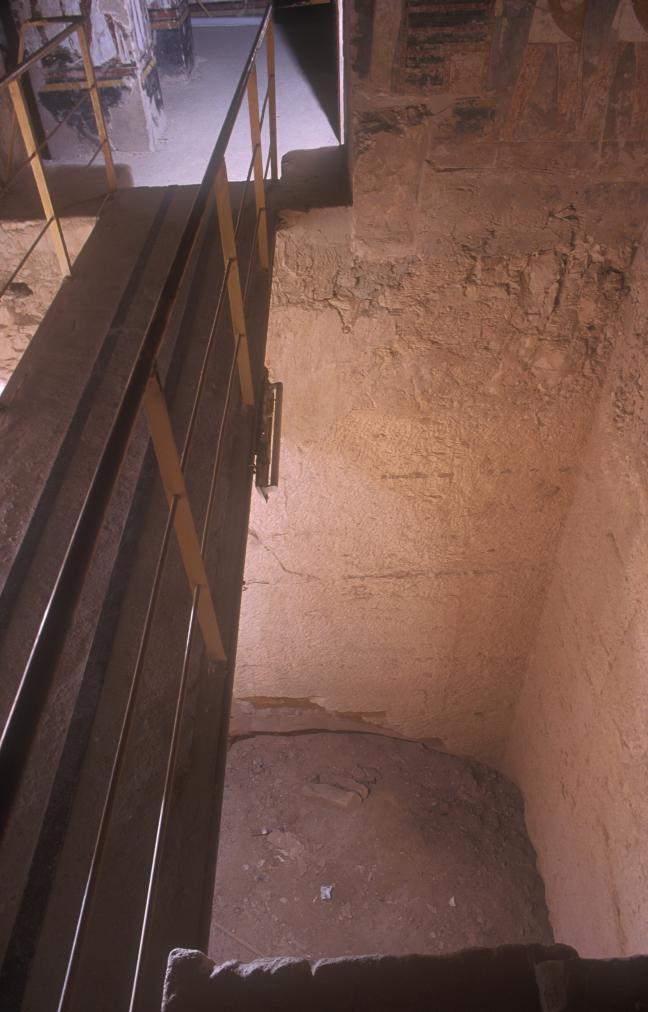
Well shaft crossed by modern bridge.
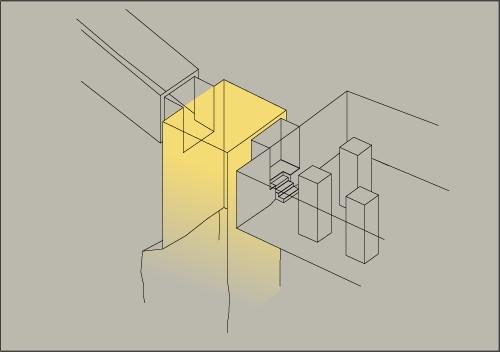
Well chamber and its shaft.
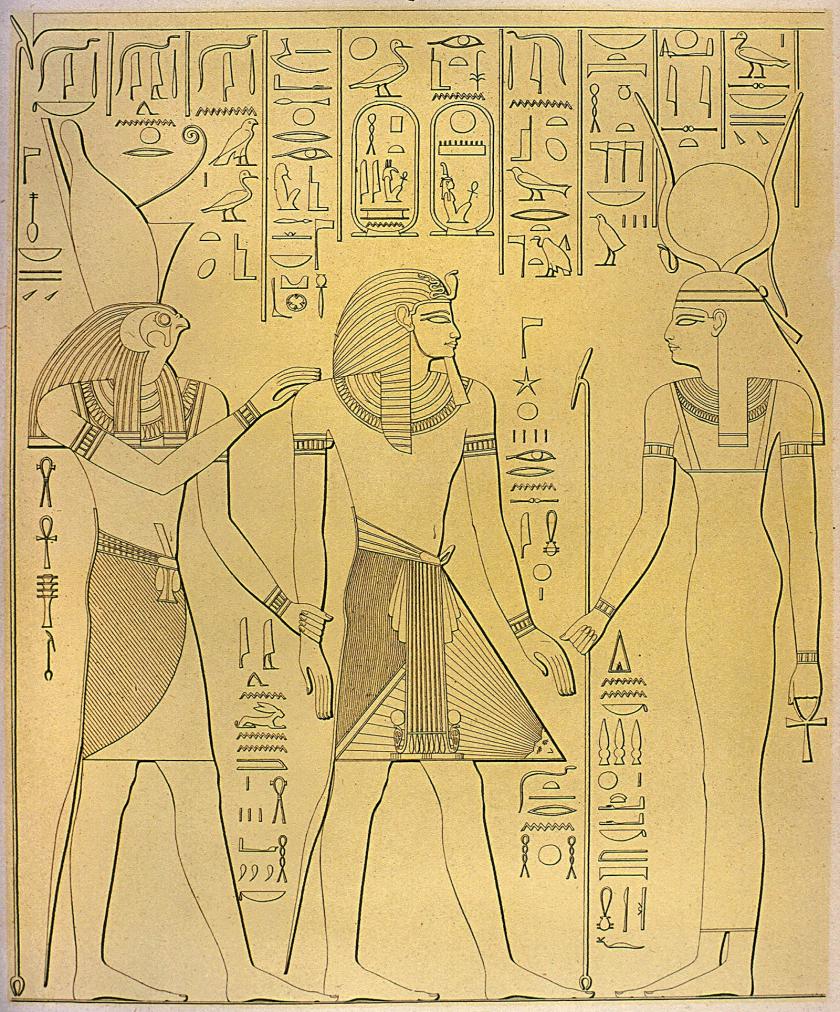
Horus leading Sety I to Isis. (KV17)
Gate F
See entire tombThe gate is undecorated.
Porter and Moss designation:
Pillared chamber F
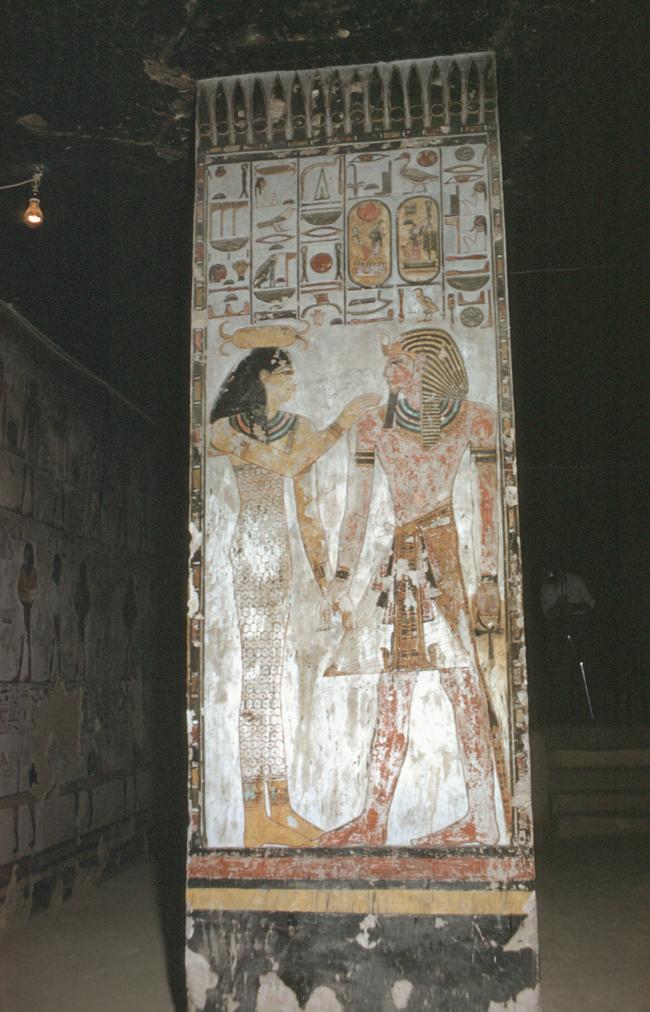
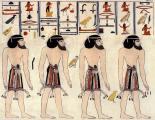
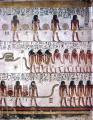
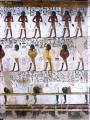
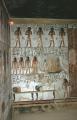
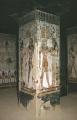
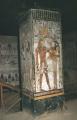
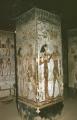
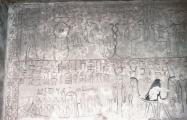
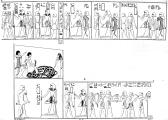
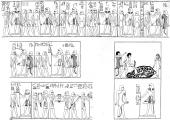
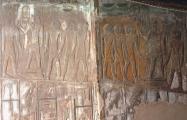
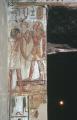
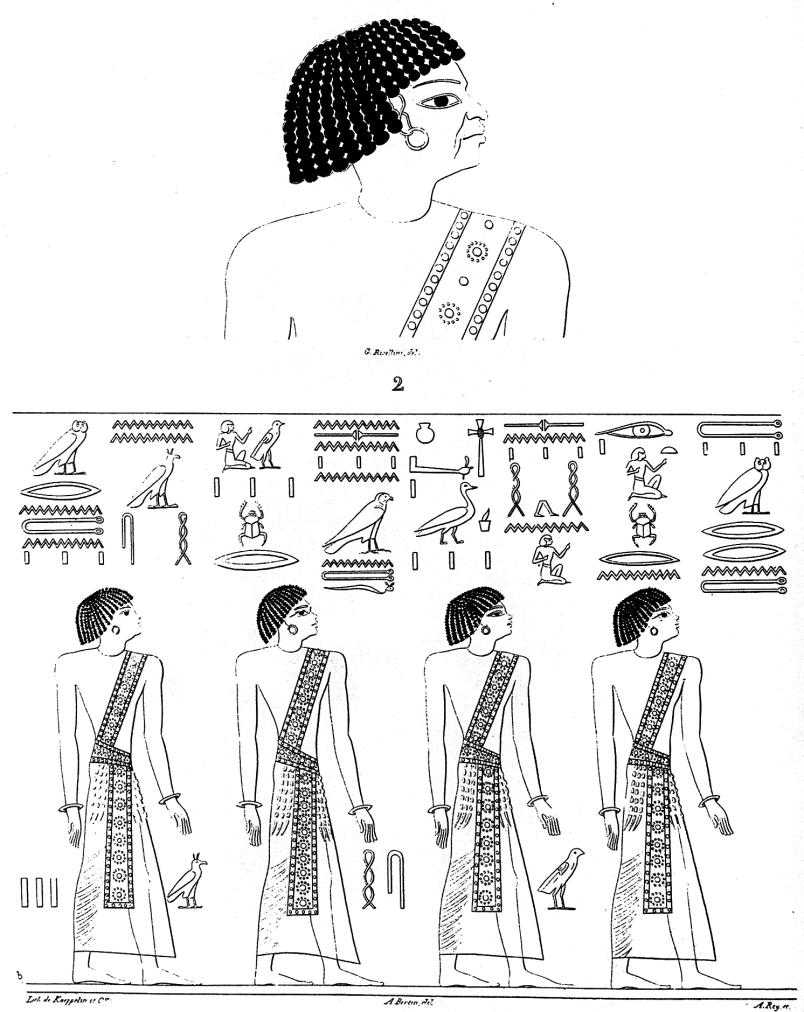
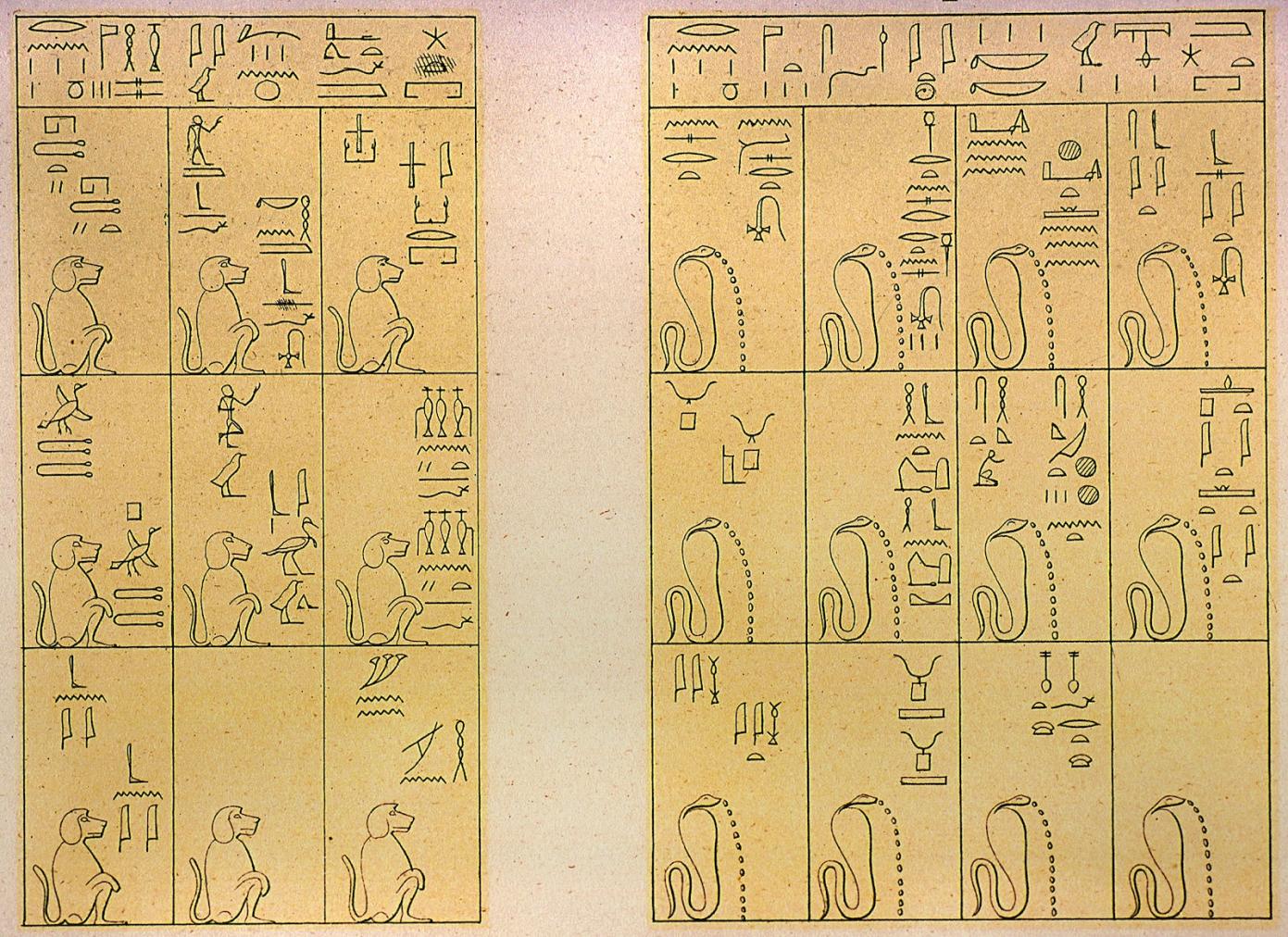
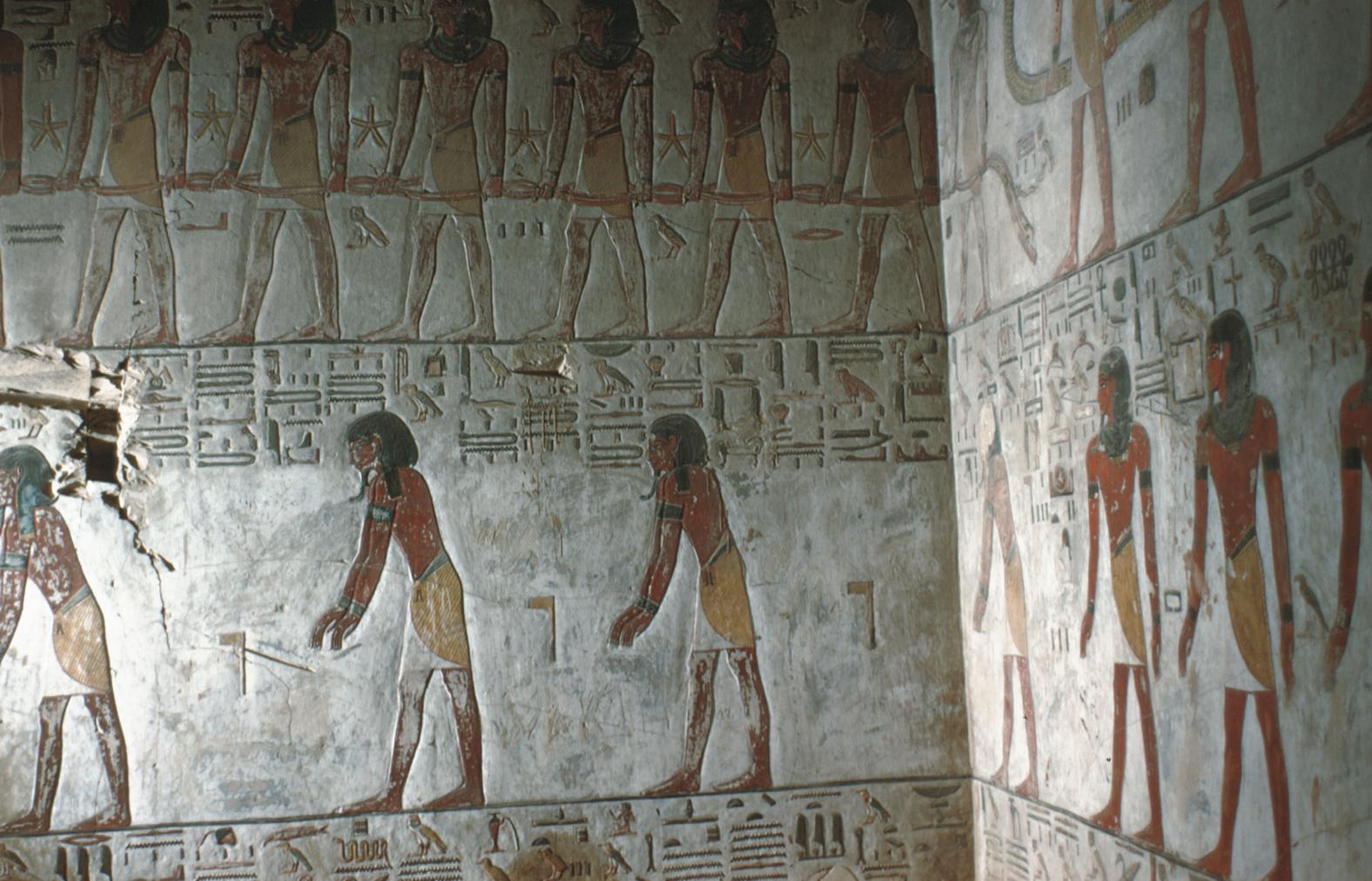
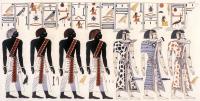
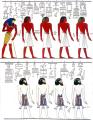
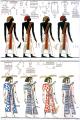
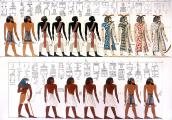
See entire tombThis is a roughly square chamber with two rows of two pillars flanking the central axis. From the descent, the central tomb axis is displaced to the left (southeast). The left (southeast) side of the chamber is divided into three registers decorated with the fourth division (P)/fifth hour (H) of the Book of Gates. One scene represents the four "races" of mankind, for the first time in this composition differentiated by their physical characteristics. The right (northwest) side of the chamber is similarly divided into three registers and is decorated with the fifth division (P)/sixth hour (H) of the Book of Gates. On the rear (southwest) wall, the king is presented to Osiris and Hathor by Horus.
Porter and Moss designation:
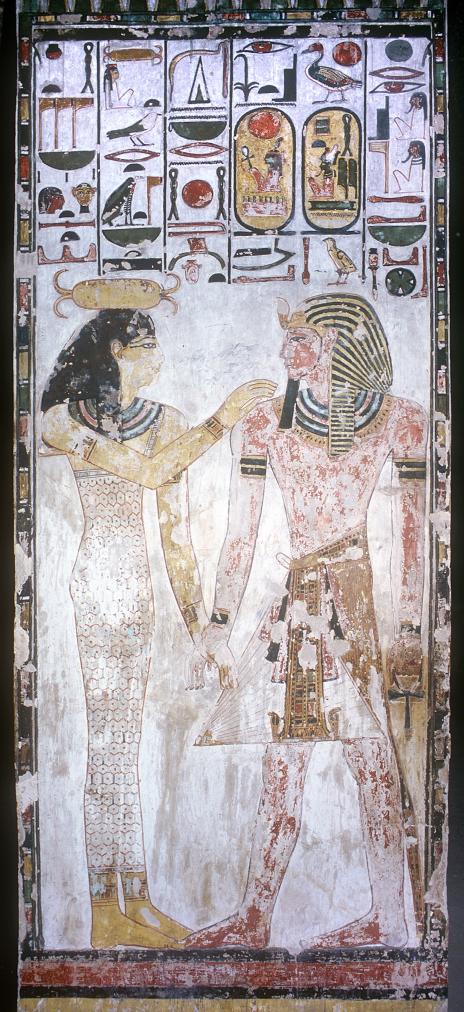
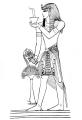
Sety I with Neit.
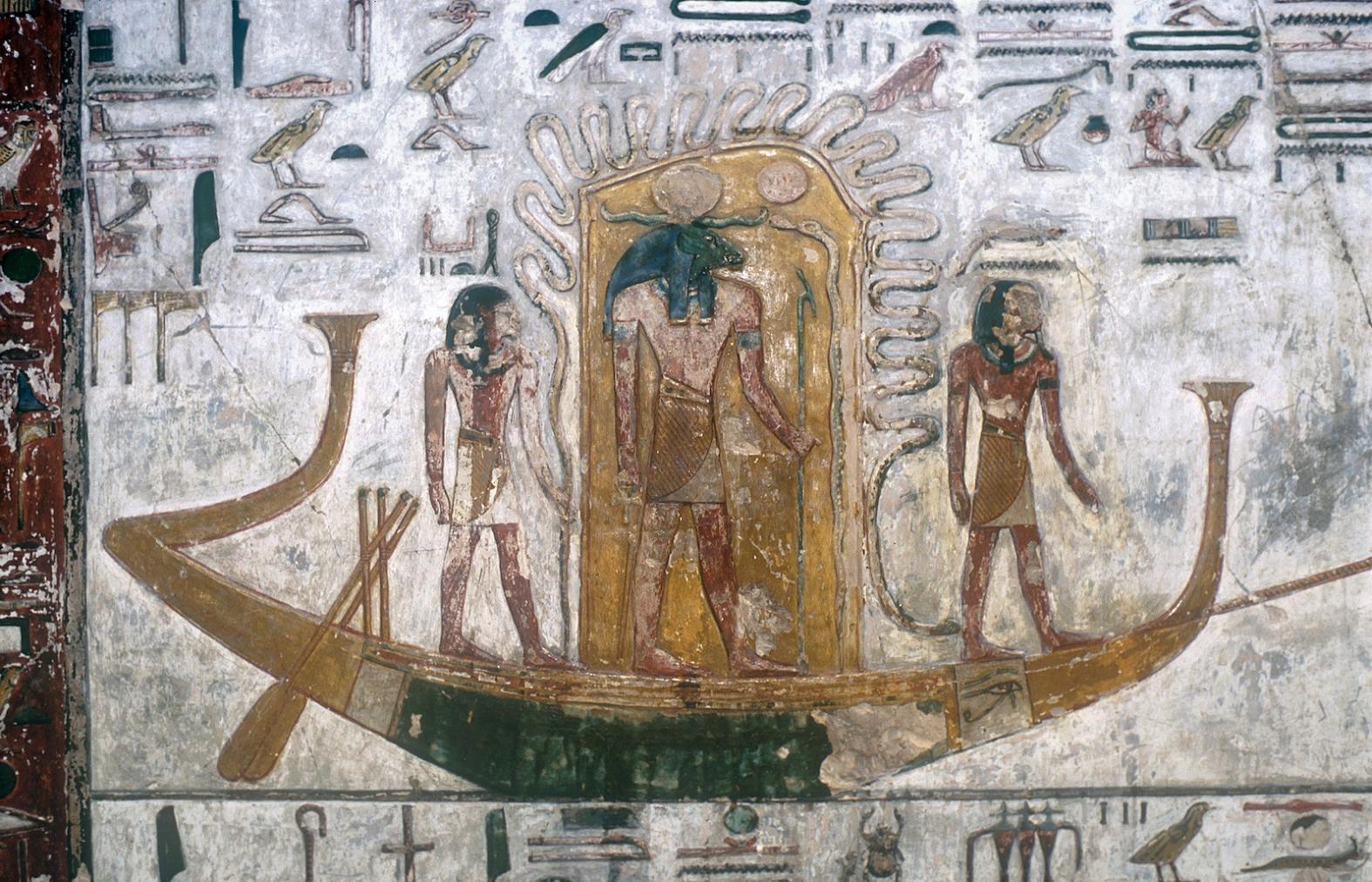
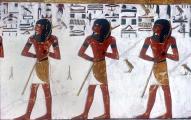
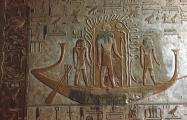
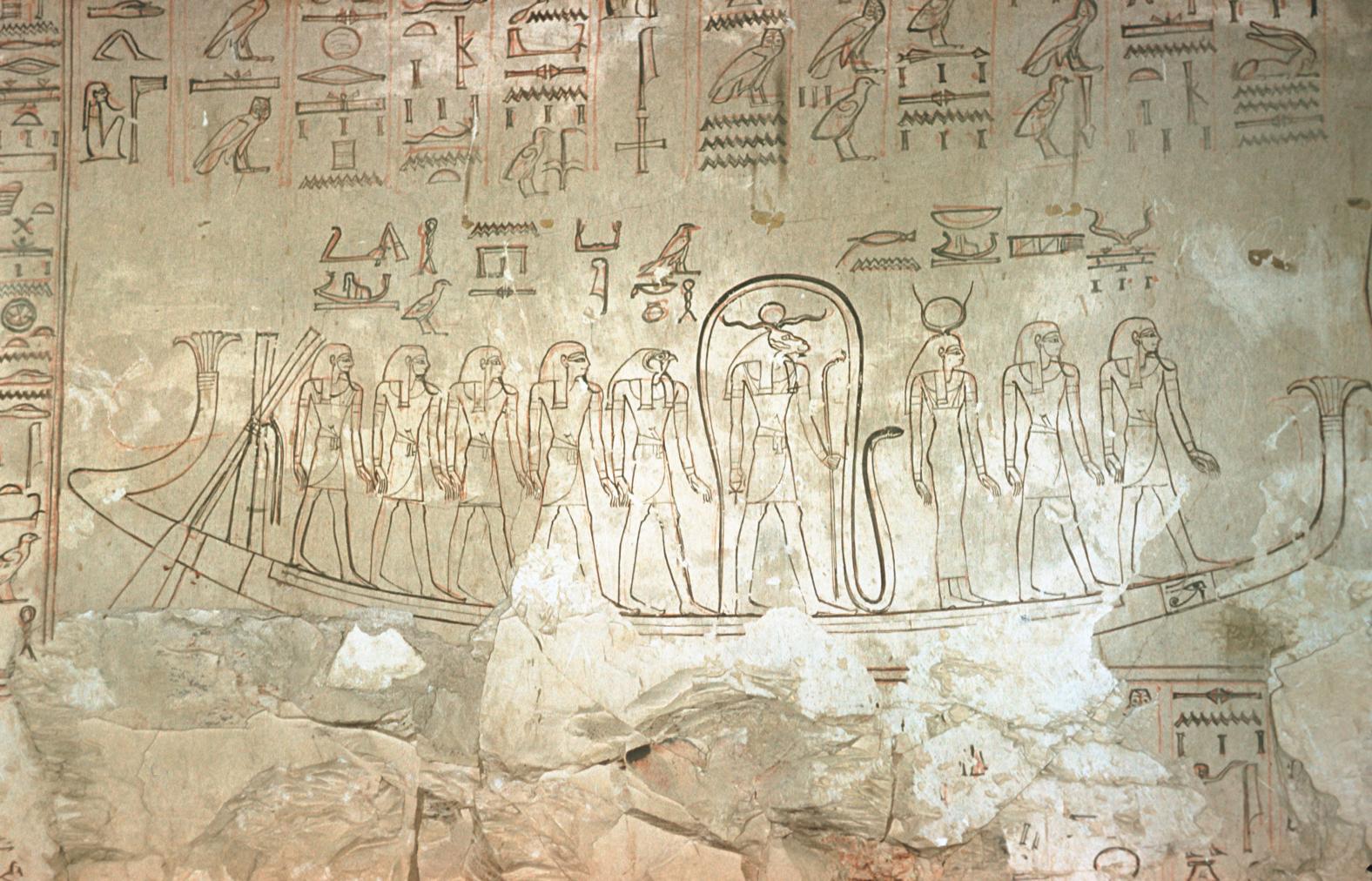
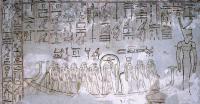
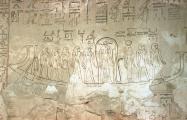
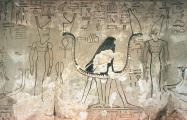
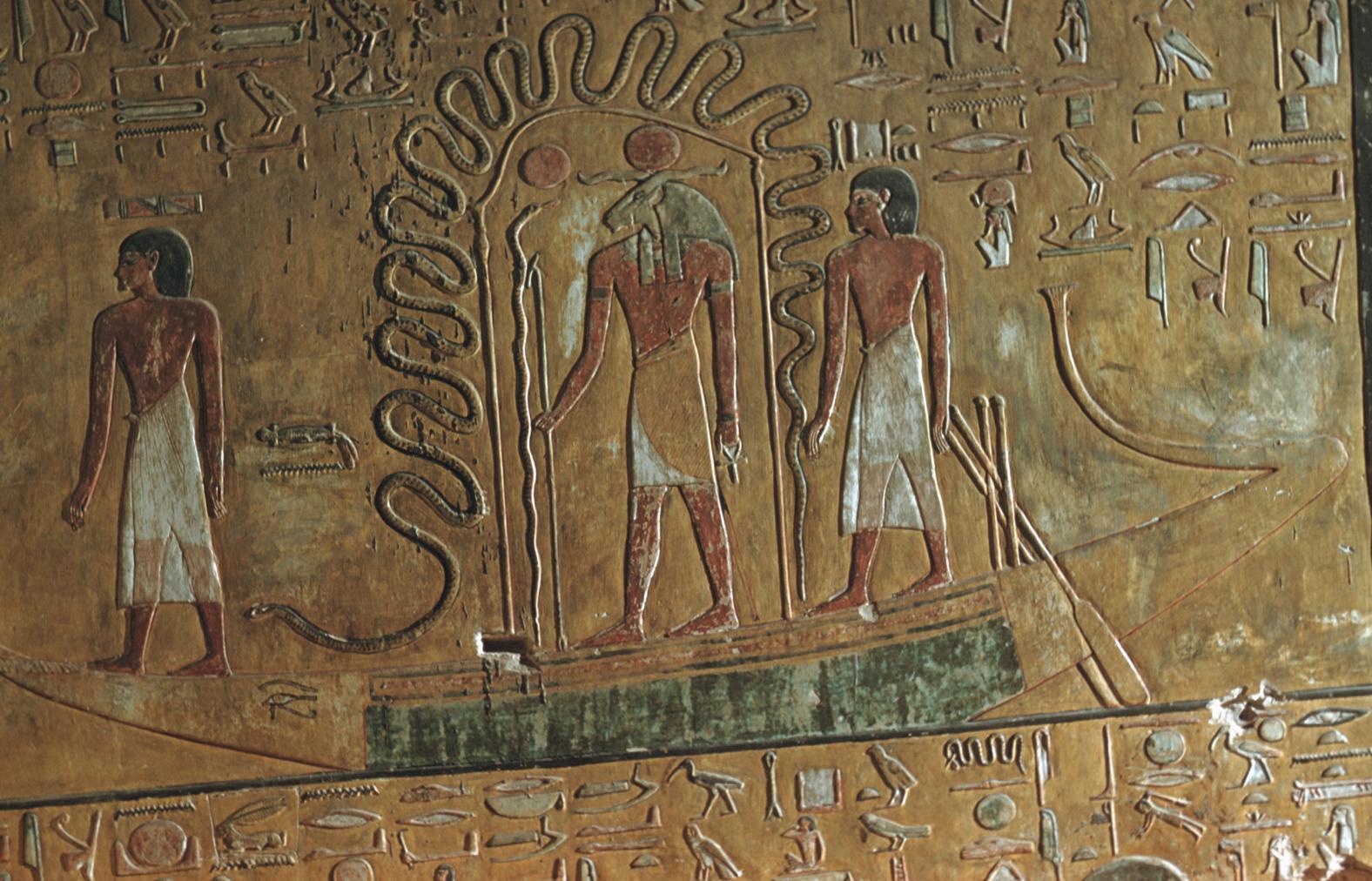
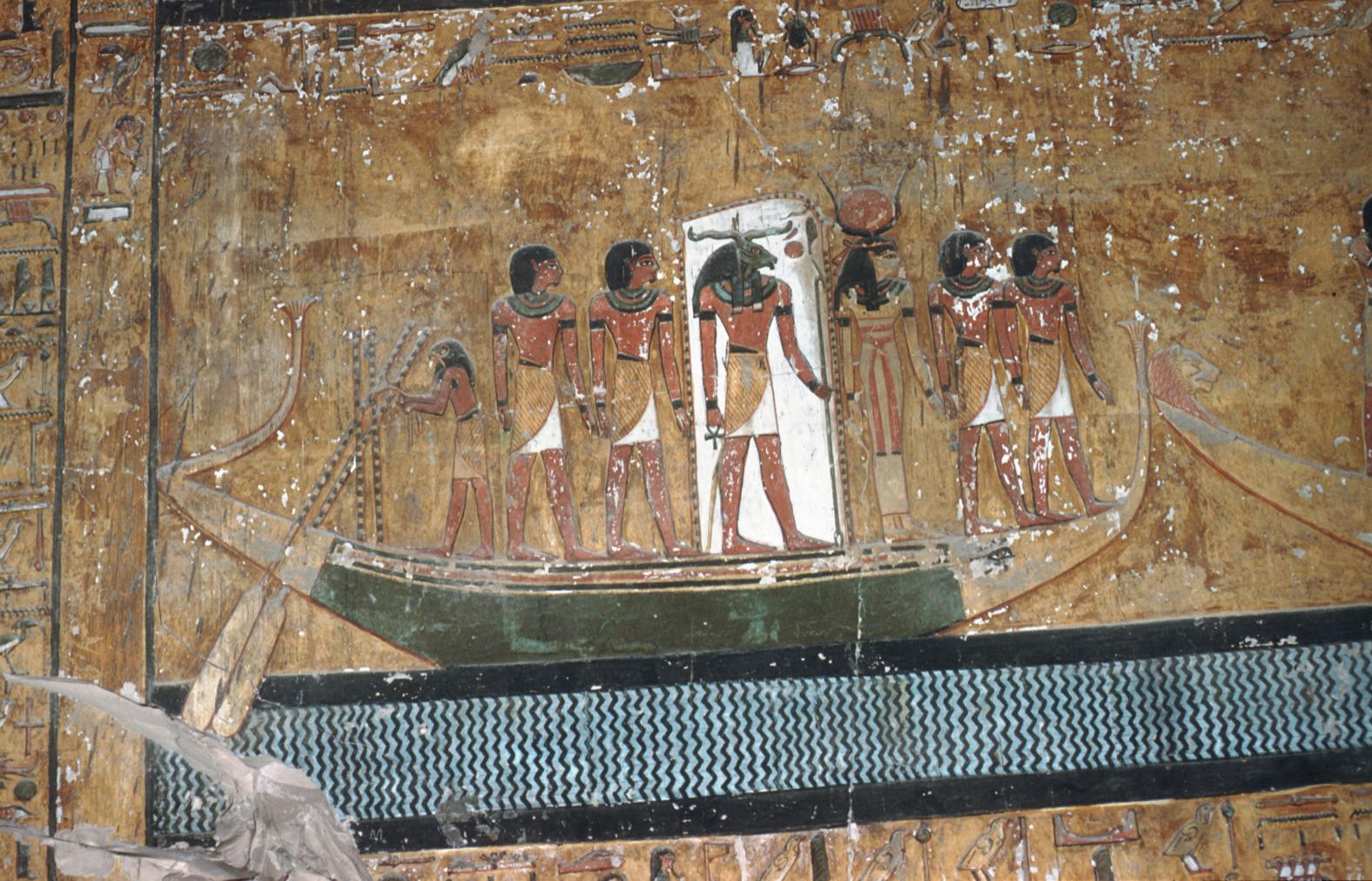
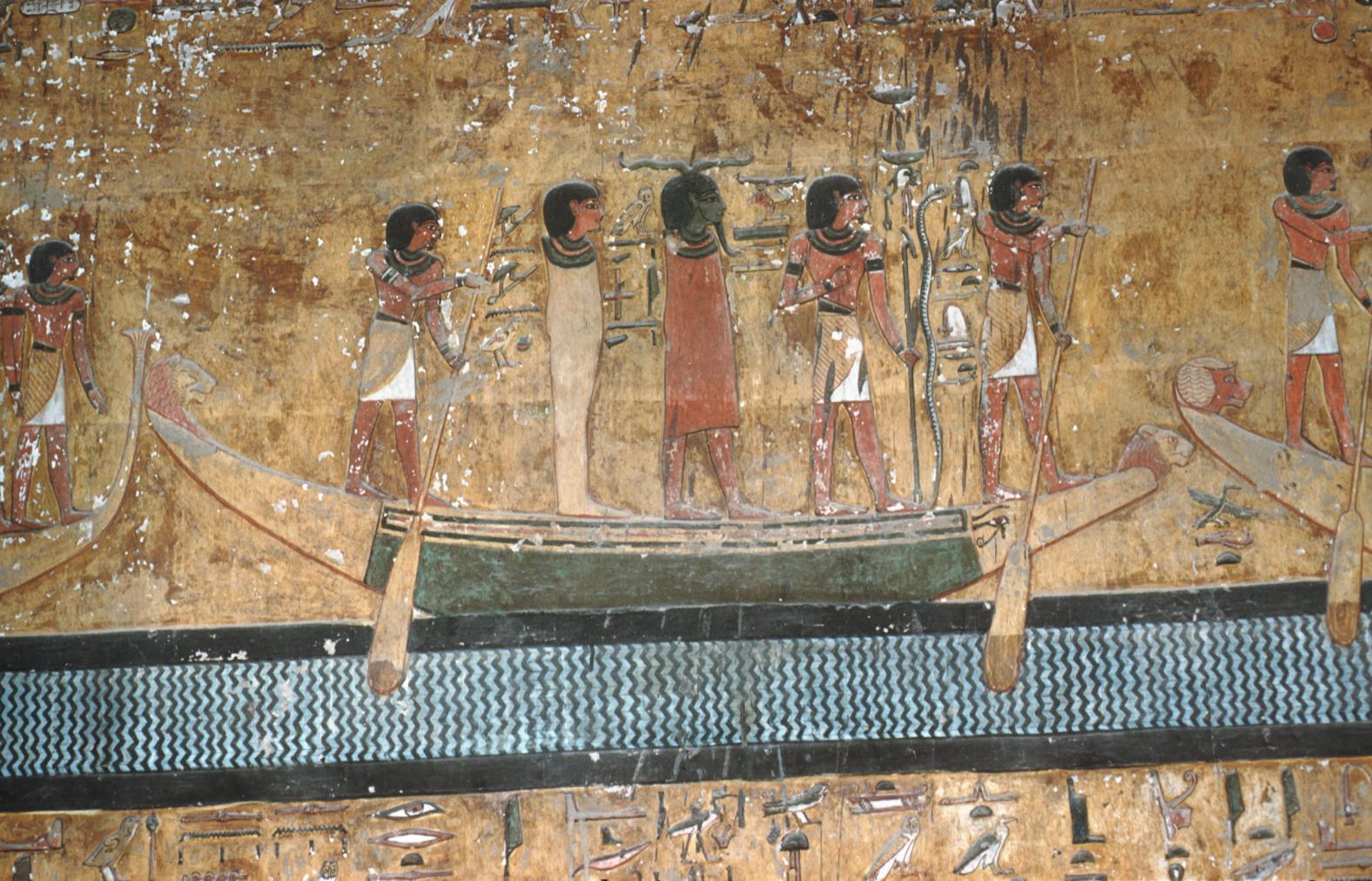
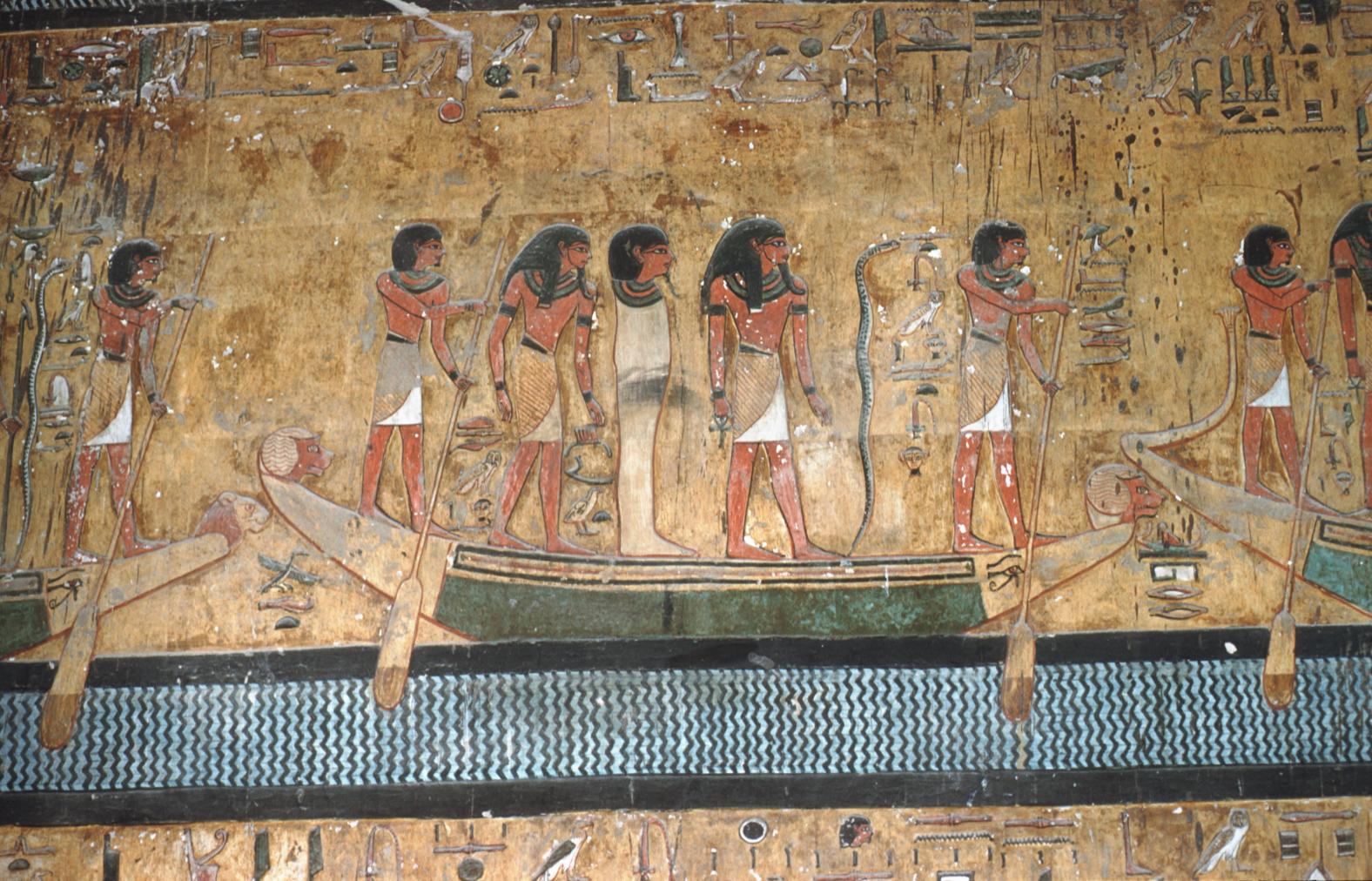
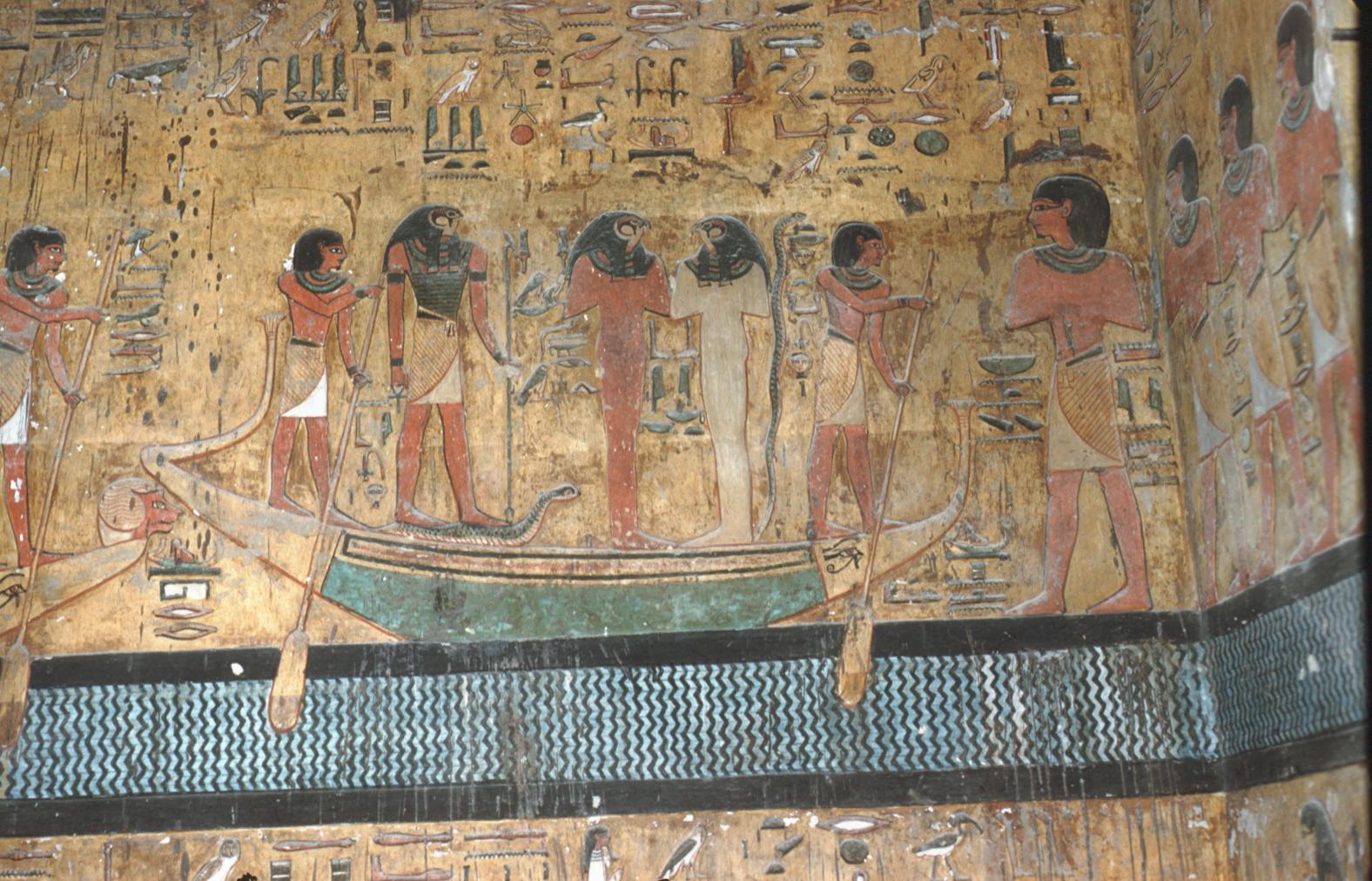
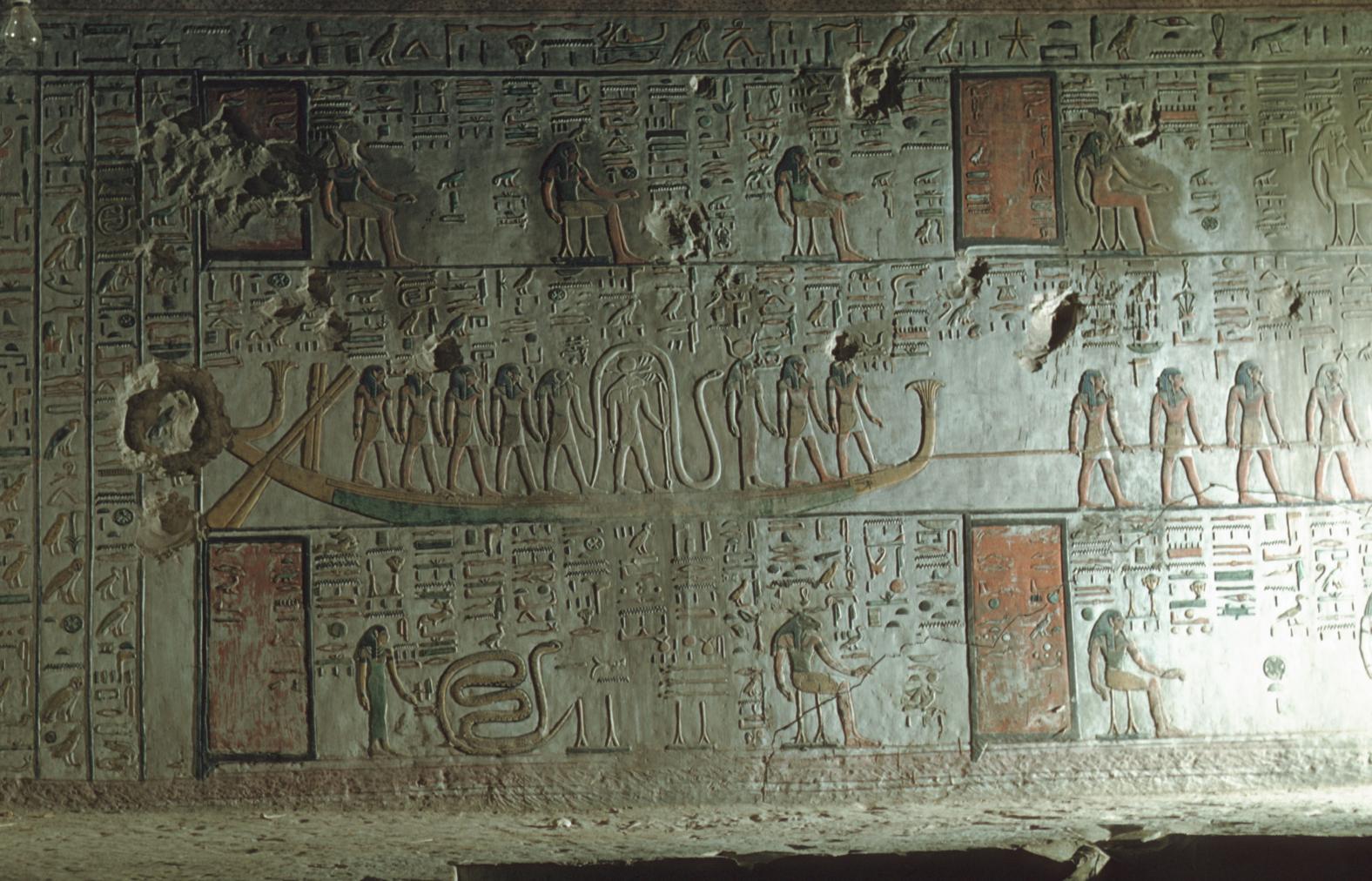
Book of Gates, fourth division (P)/fifth hour (H), scene 26: sun god Ra with crew in boat.
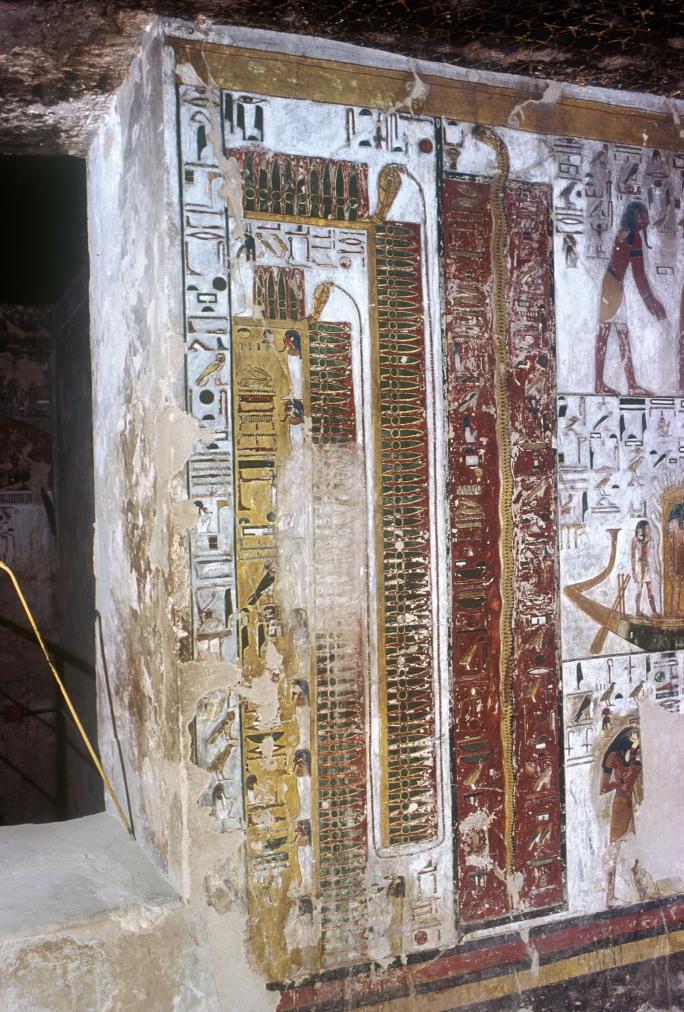
Book of Gates, fourth gate.
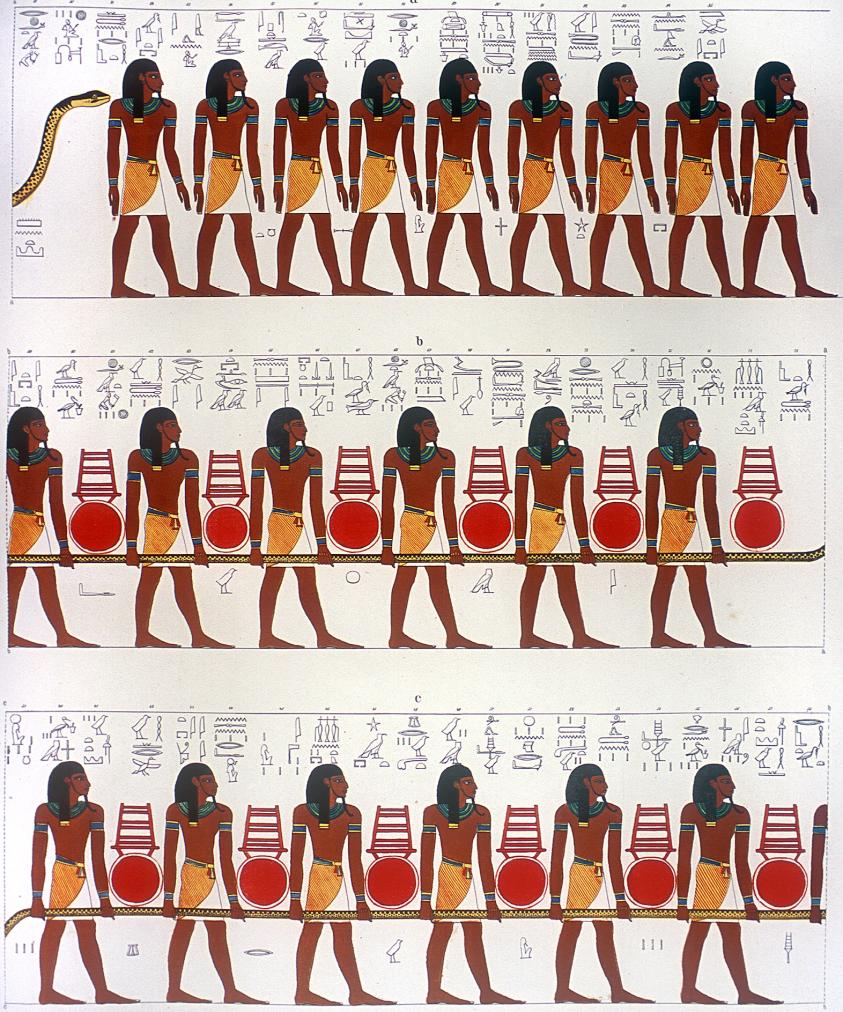
Book of Gates, fourth division (P)/fifth hour (H): detail (reconstruction).
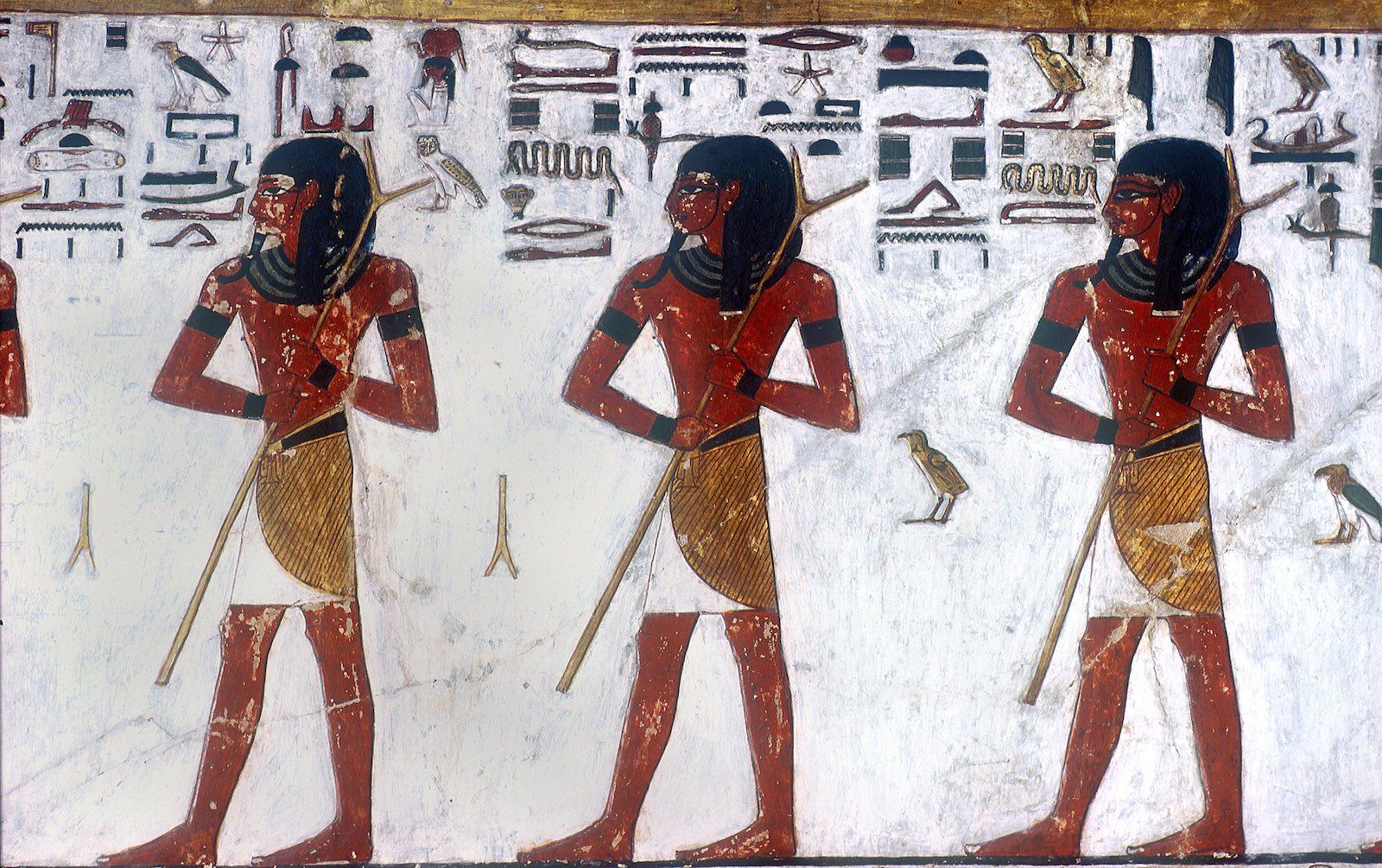
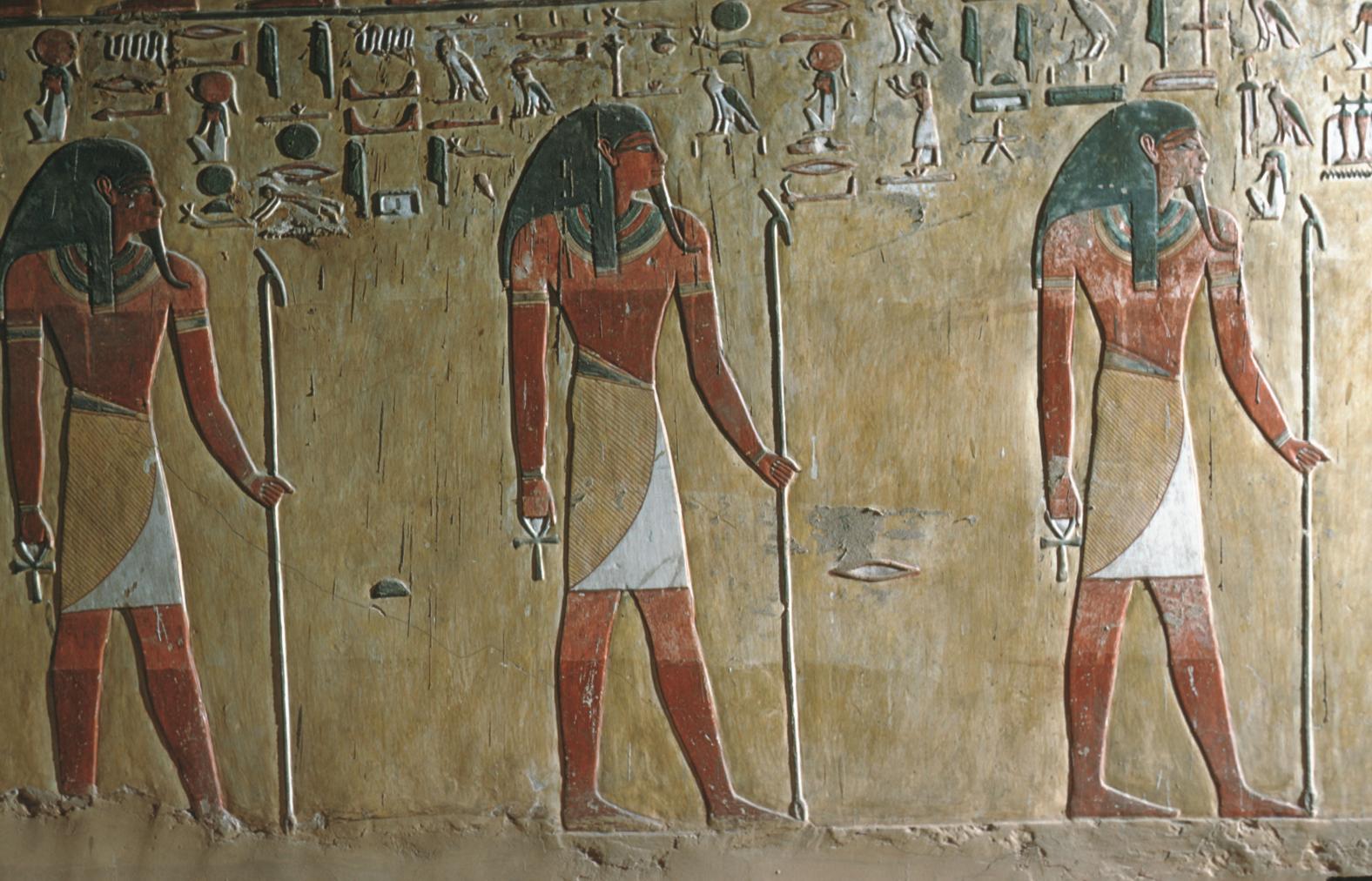
Book of Gates, fifth division (P)/sixth hour (H): gods with forked staffs to subdue Apophis.
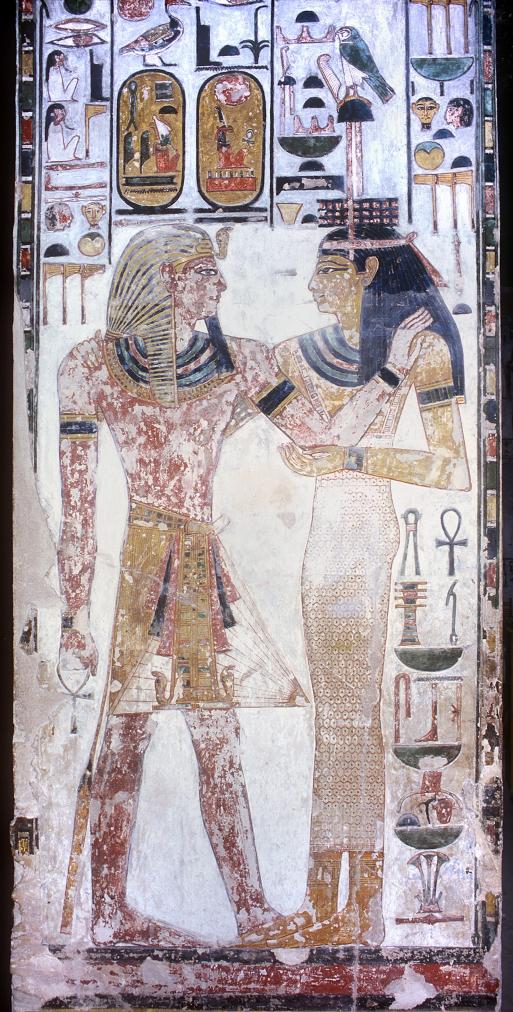
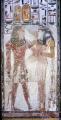
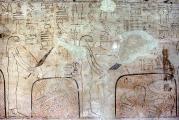
Sety I embraced by Hathor as Western Goddess.
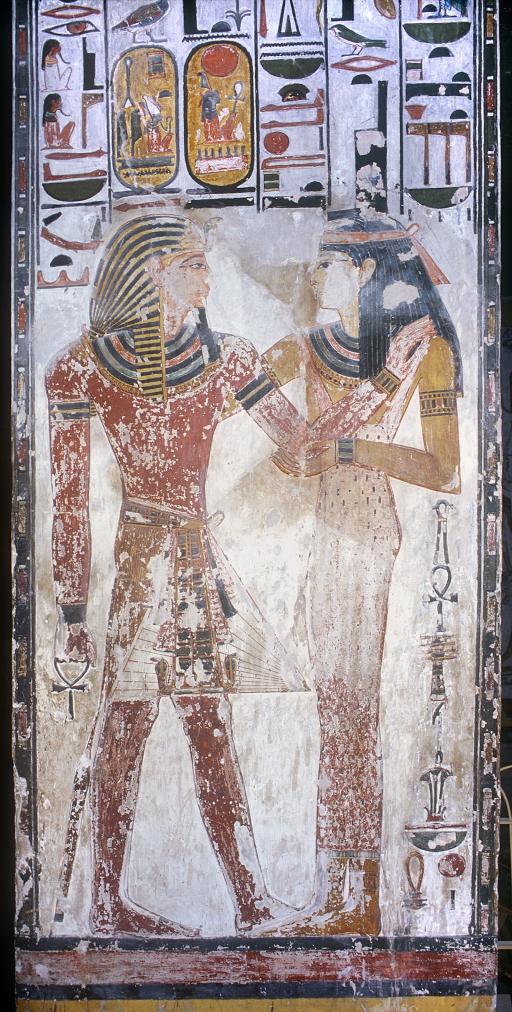
Sety I embraced by Isis.
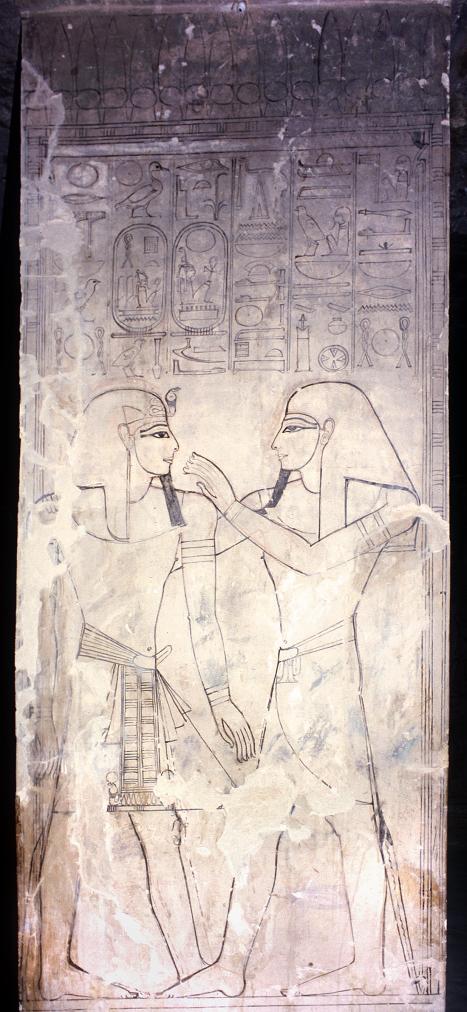
Sety I with Atum.
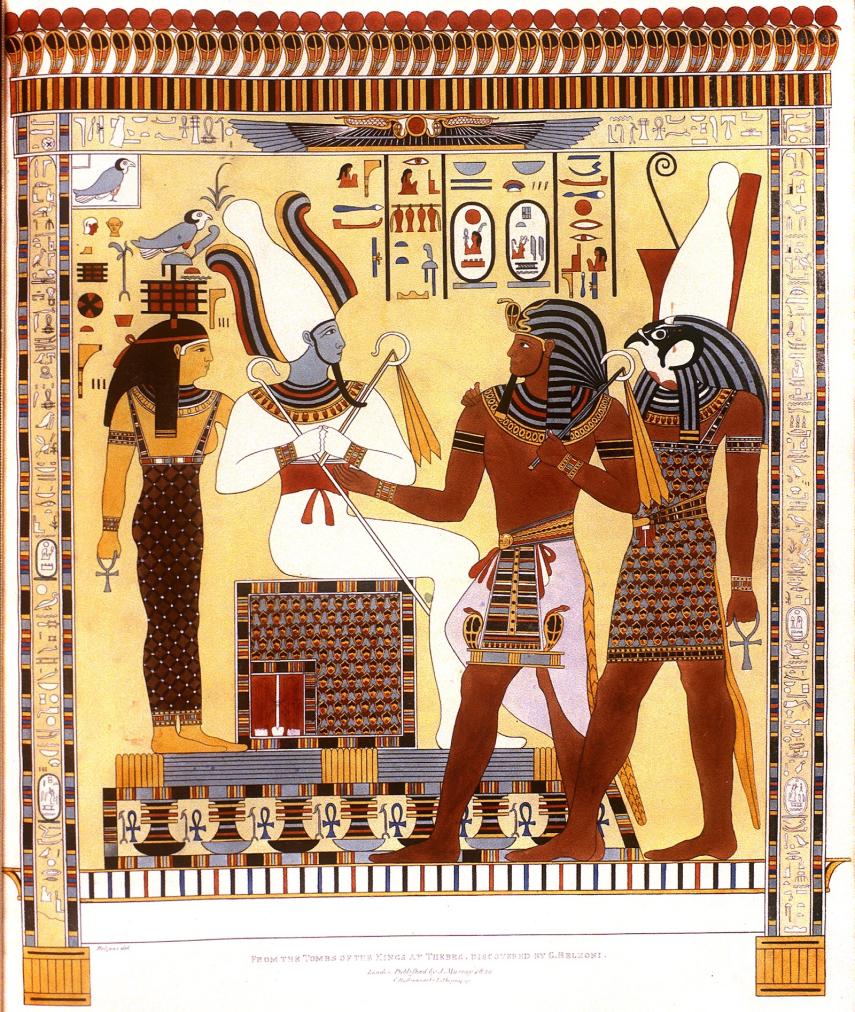
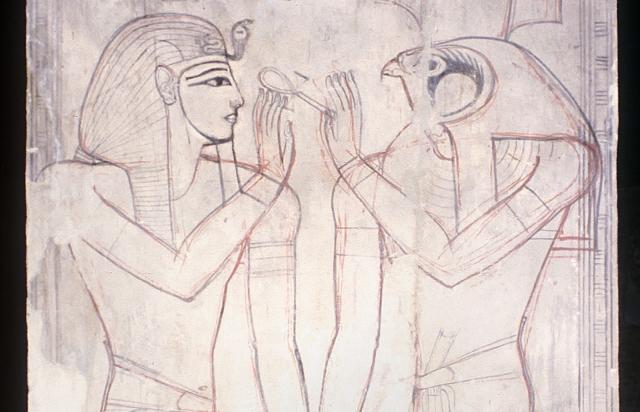
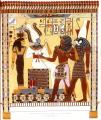
Sety I led by Horus to Osiris and Hathor.
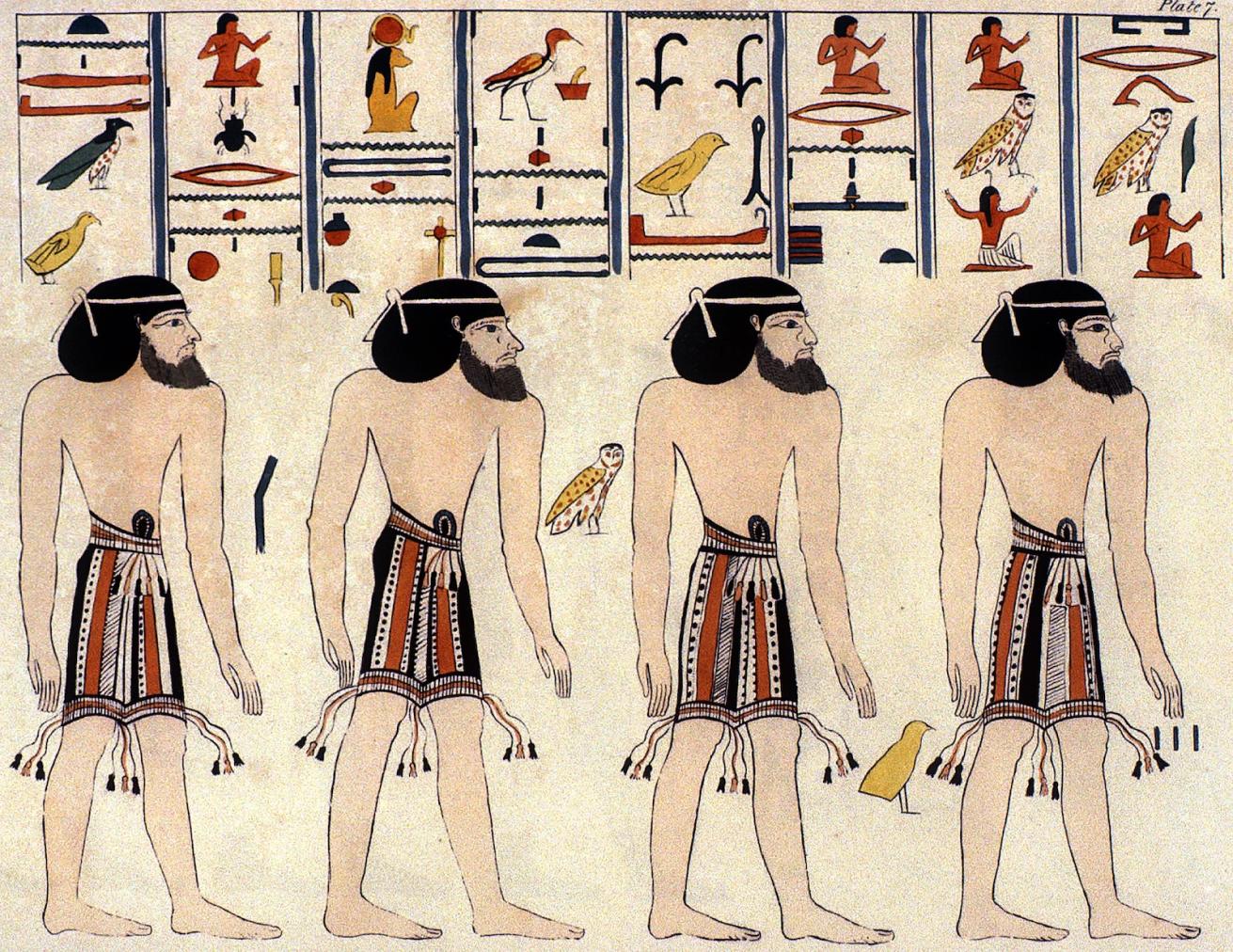
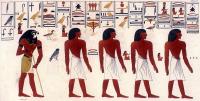
Book of Gates, fourth division (P)/fifth hour (H), scene 30: Asiatics, one of the "four races of mankind" (reconstruction).
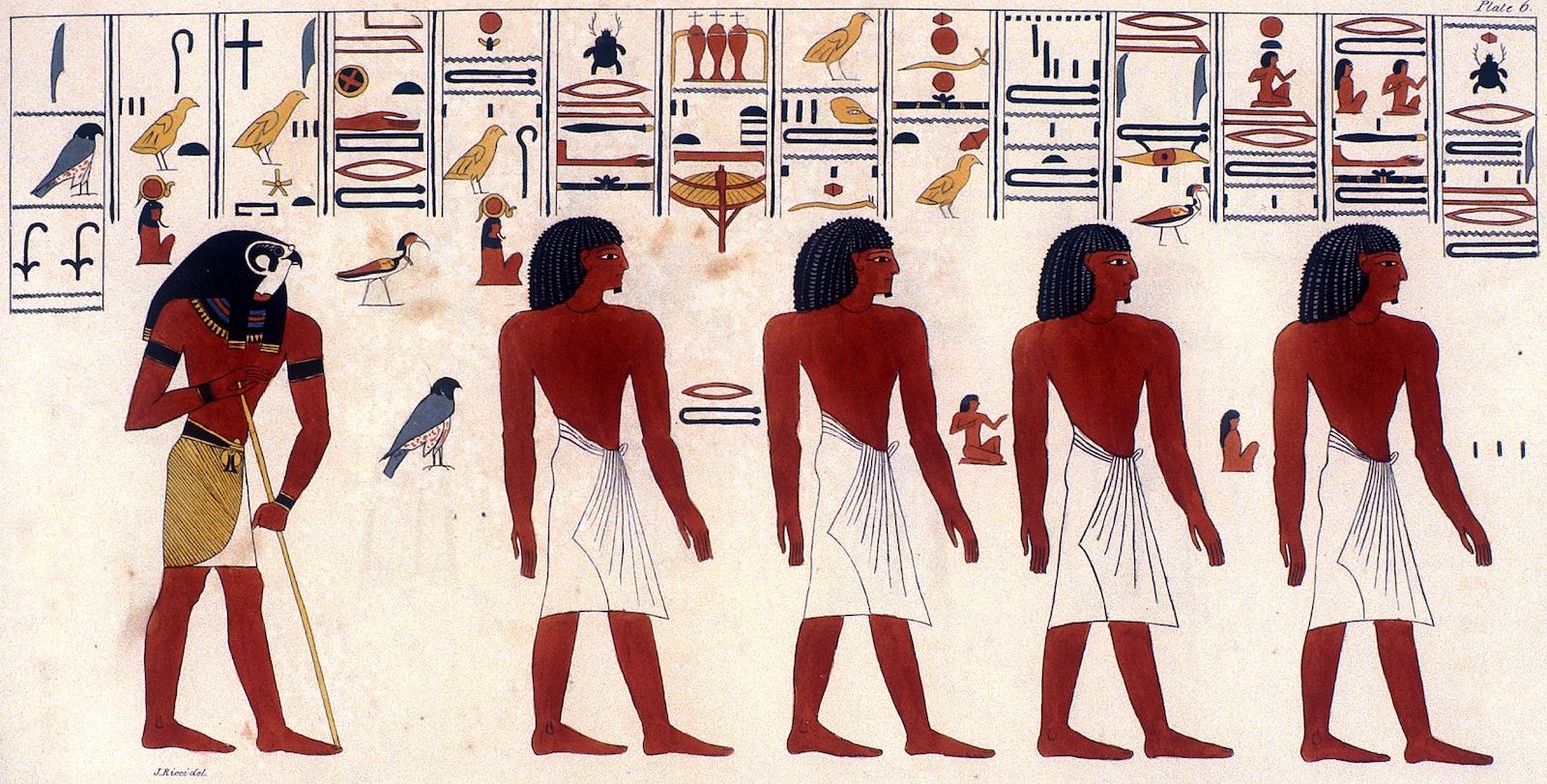
Book of Gates, fourth division (P)/fifth hour (H), scene 30: Horus and four Egyptians as one of the " four races of mankind" (reconstruction)
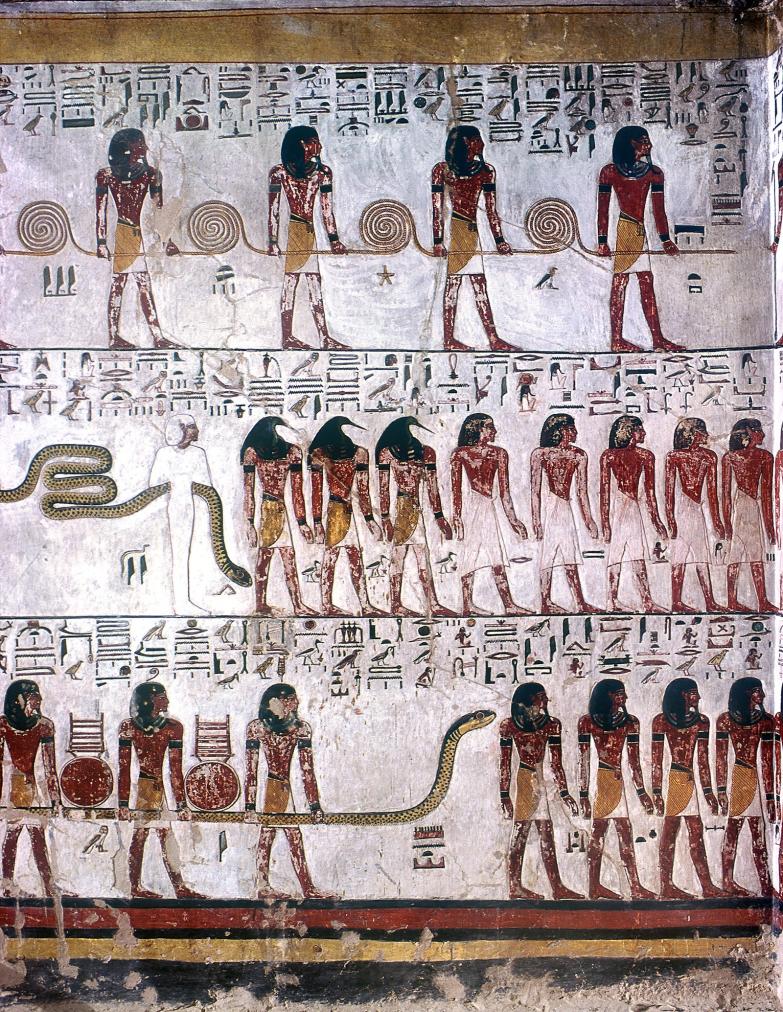
Book of Gates, fourth division (P)/fifth hour (H), end.
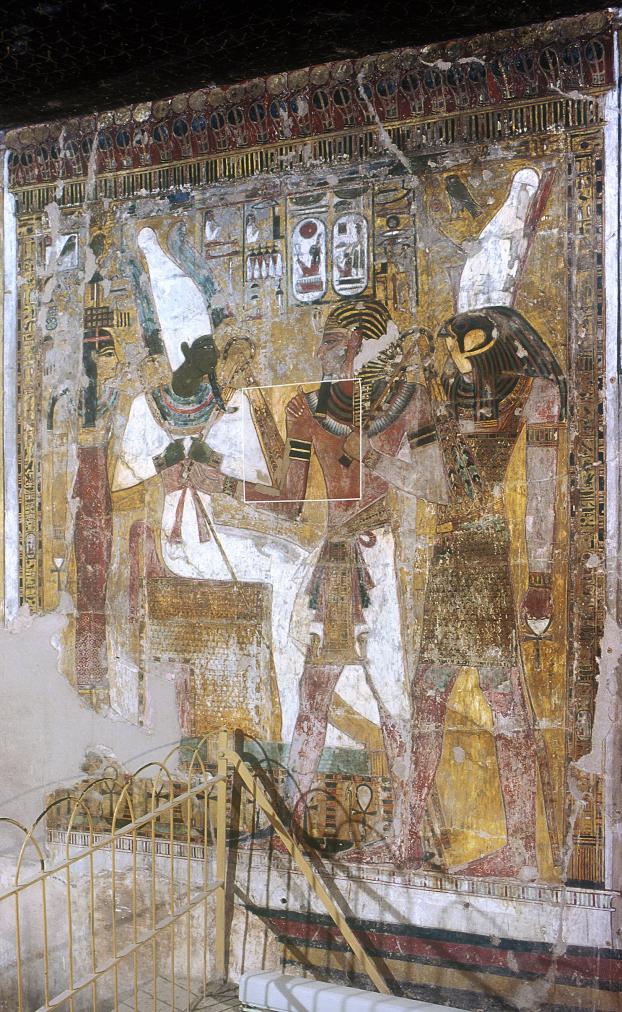
Sety I escorted by Horus to Osiris and Hathor, with area of test cleaning outlined.
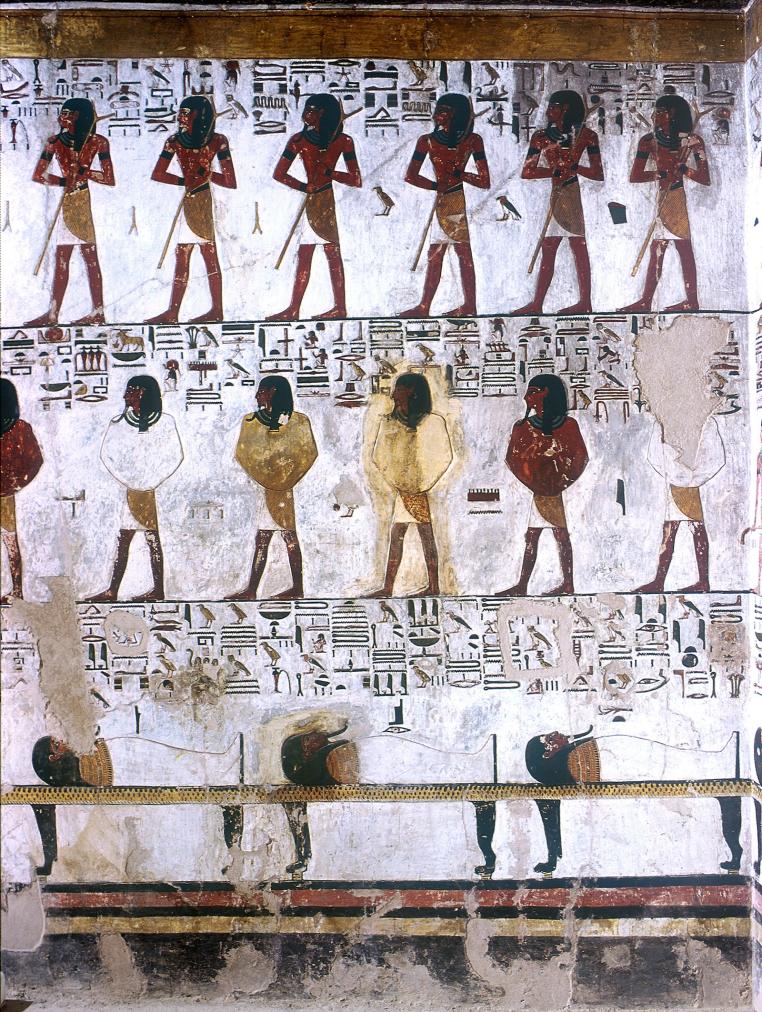
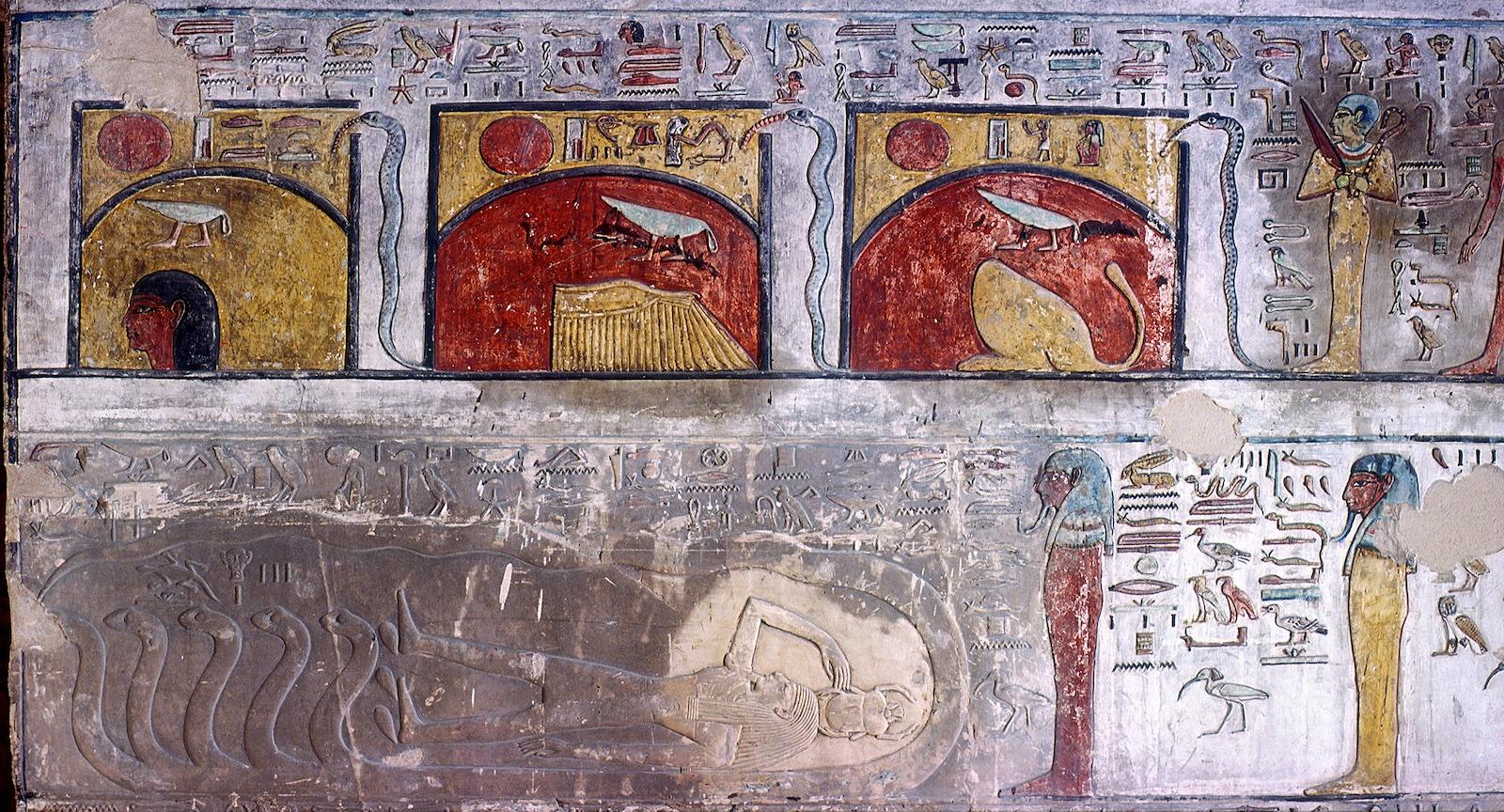
Book of Gates, fifth division (P)/sixth hour (H) (detail).
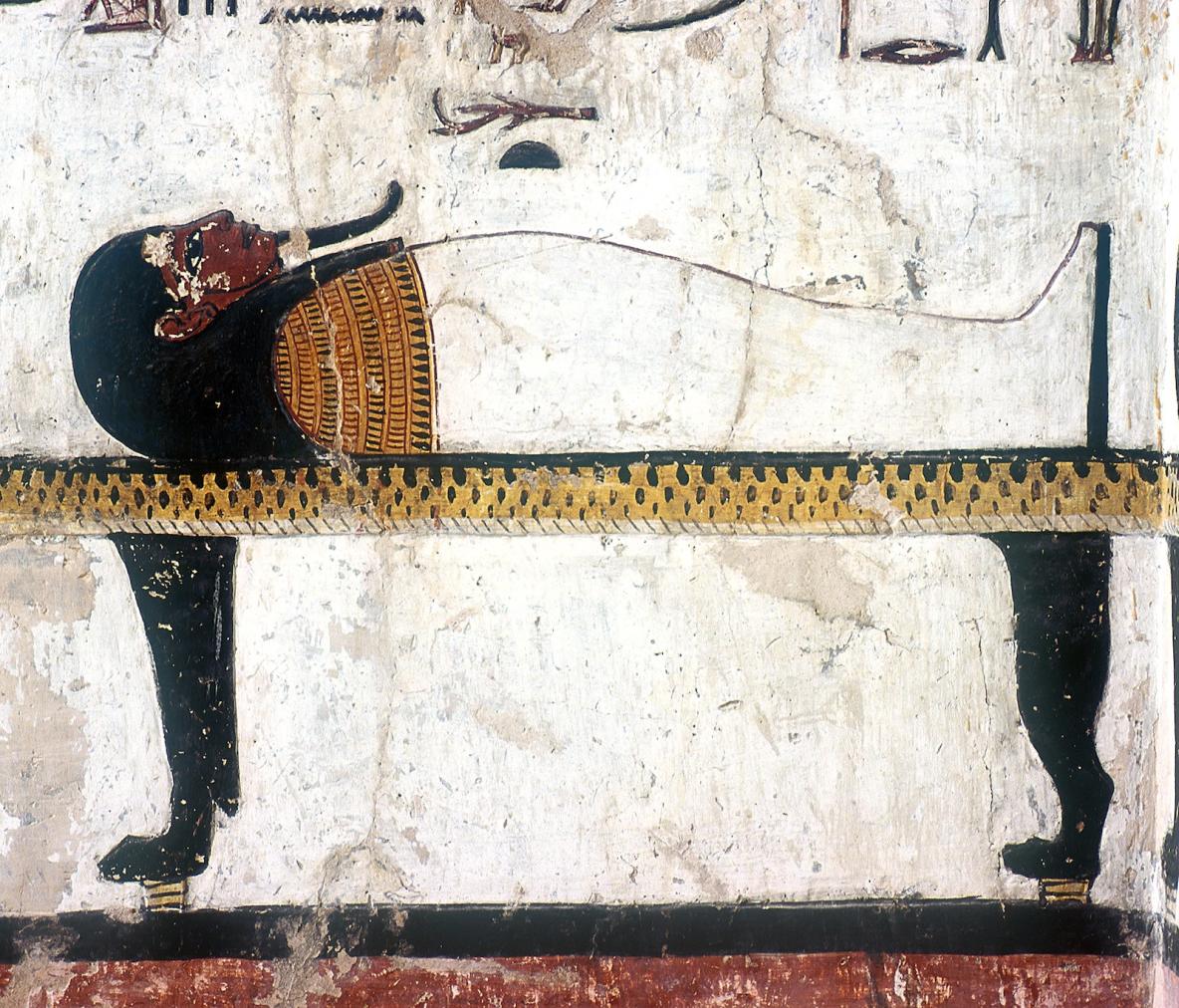
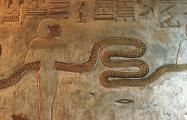
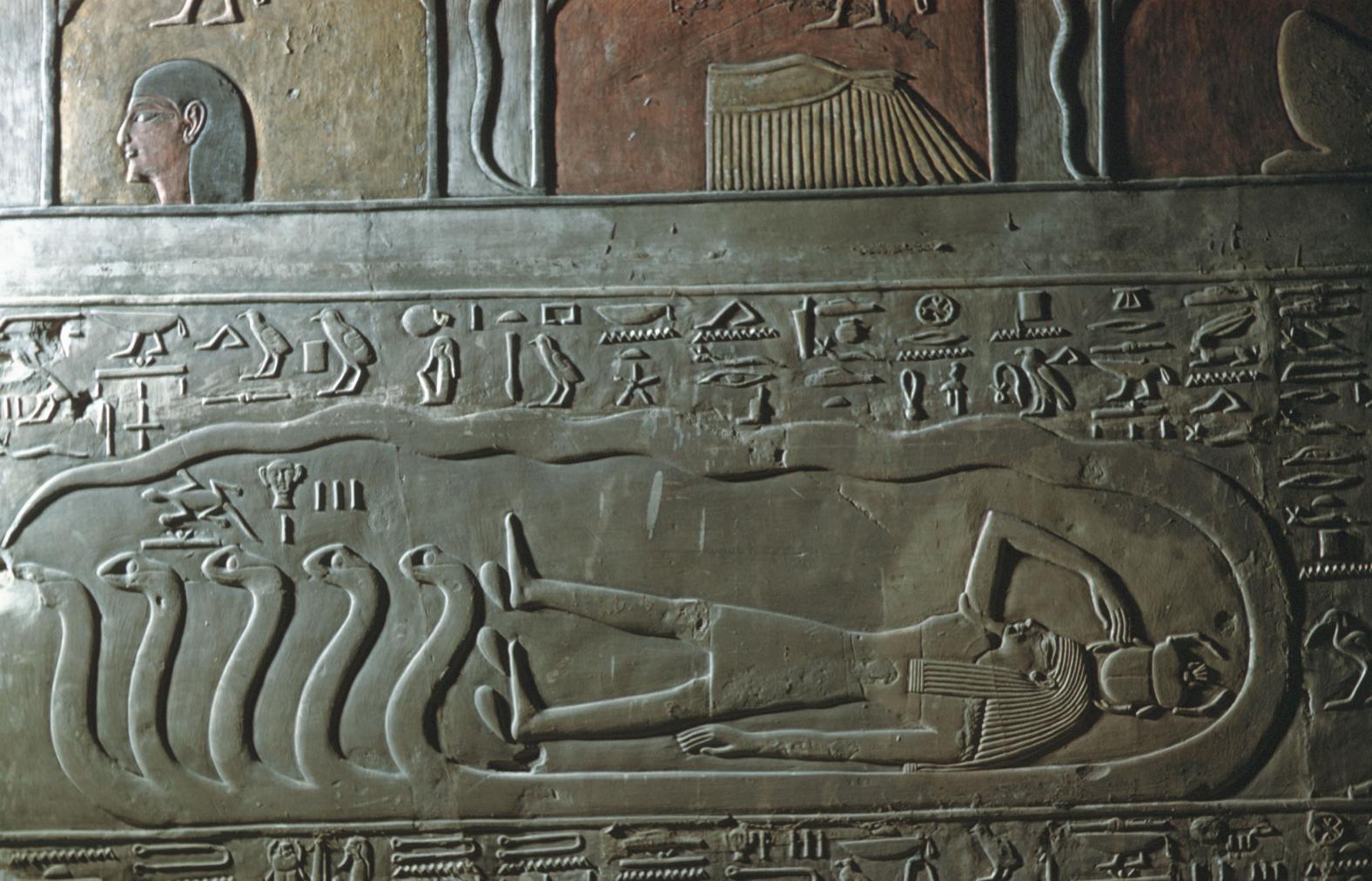
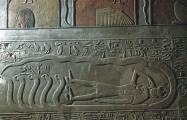
Book of Gates, fifth division (P)/sixth hour (H): mummy on serpent bed (detail).
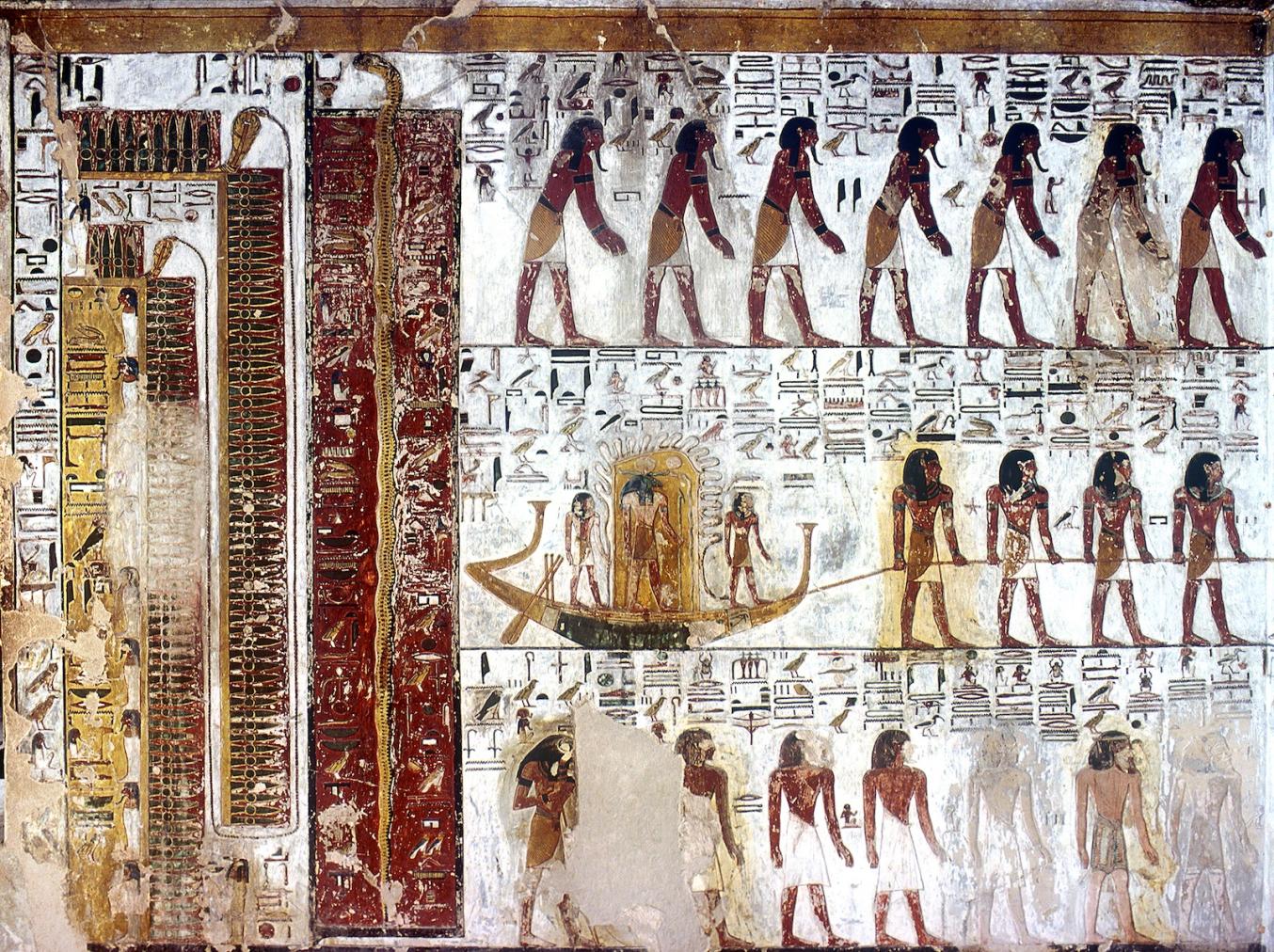
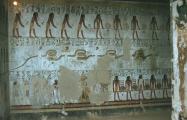
Book of Gates, fourth division (P)/fifth hour (H), beginning.
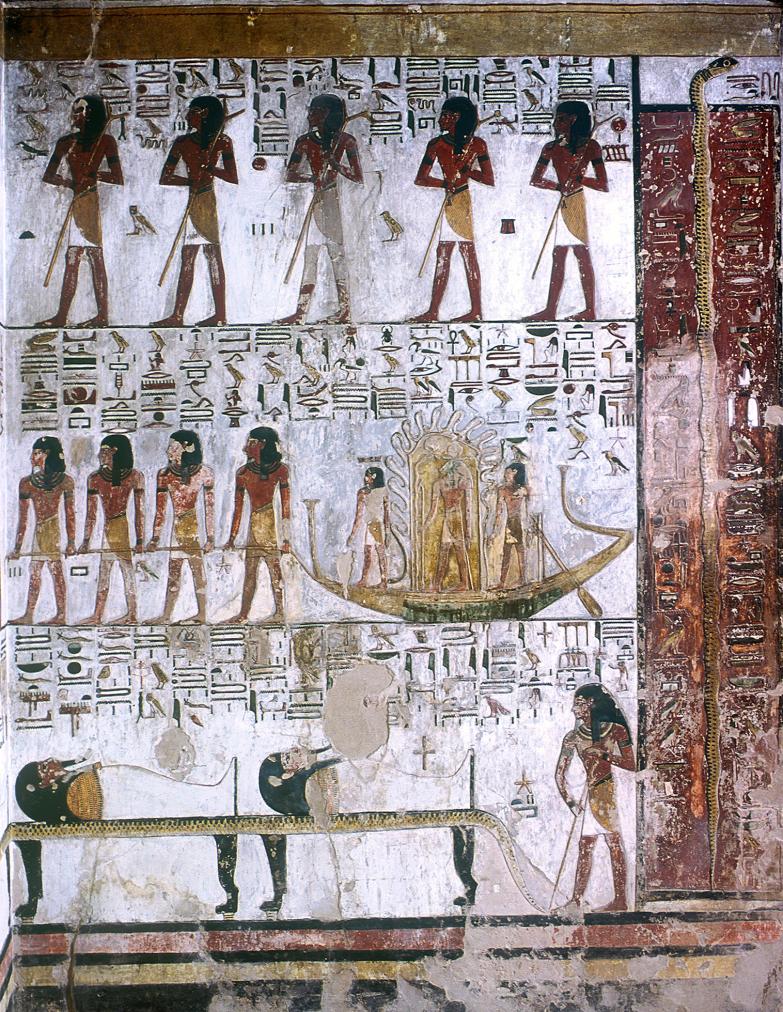
Book of Gates, fifth division (P)/sixth hour (H), beginning.
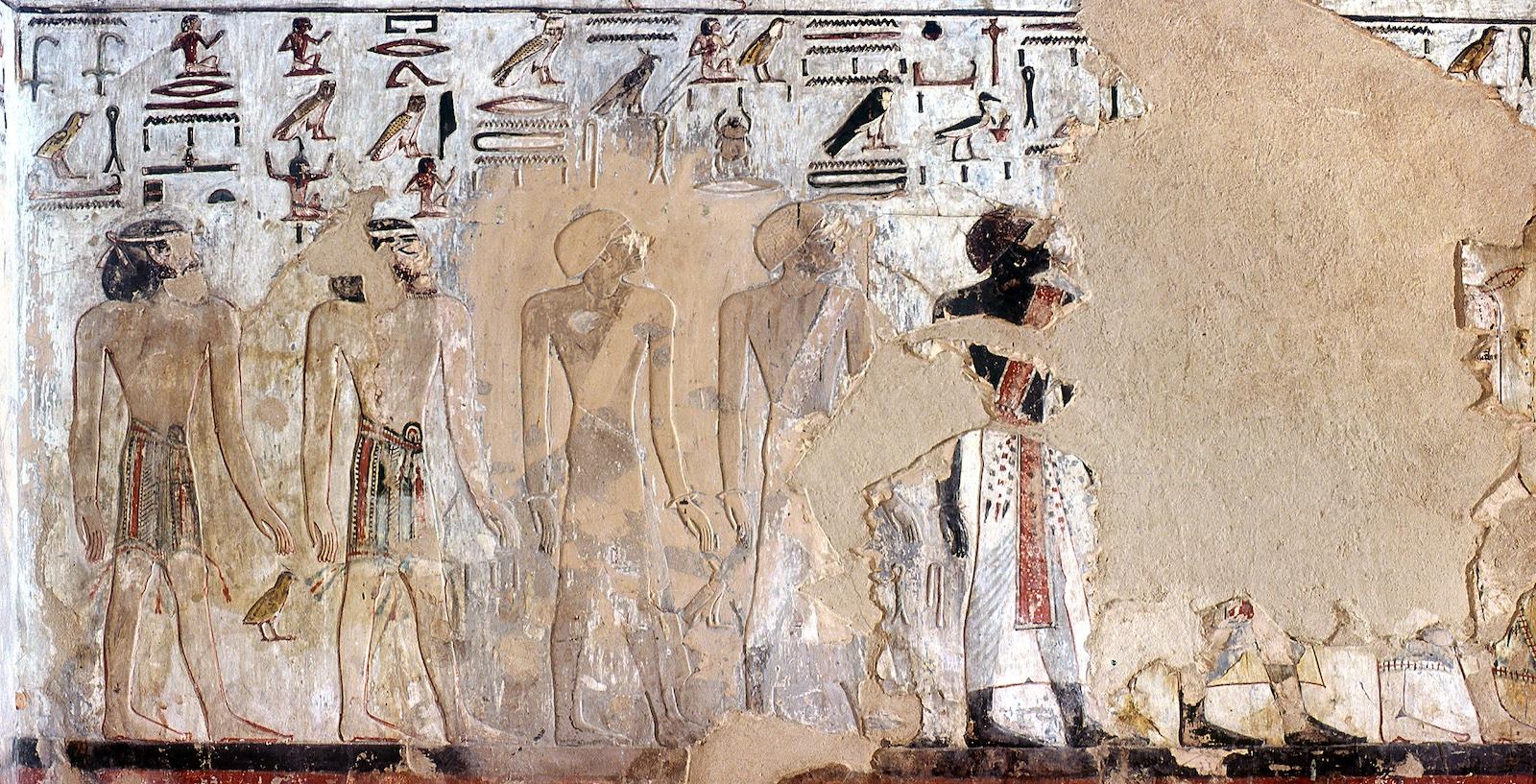
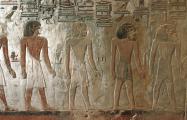
Book of Gates, fourth division (P)/fifth hour (H): "four races of mankind."
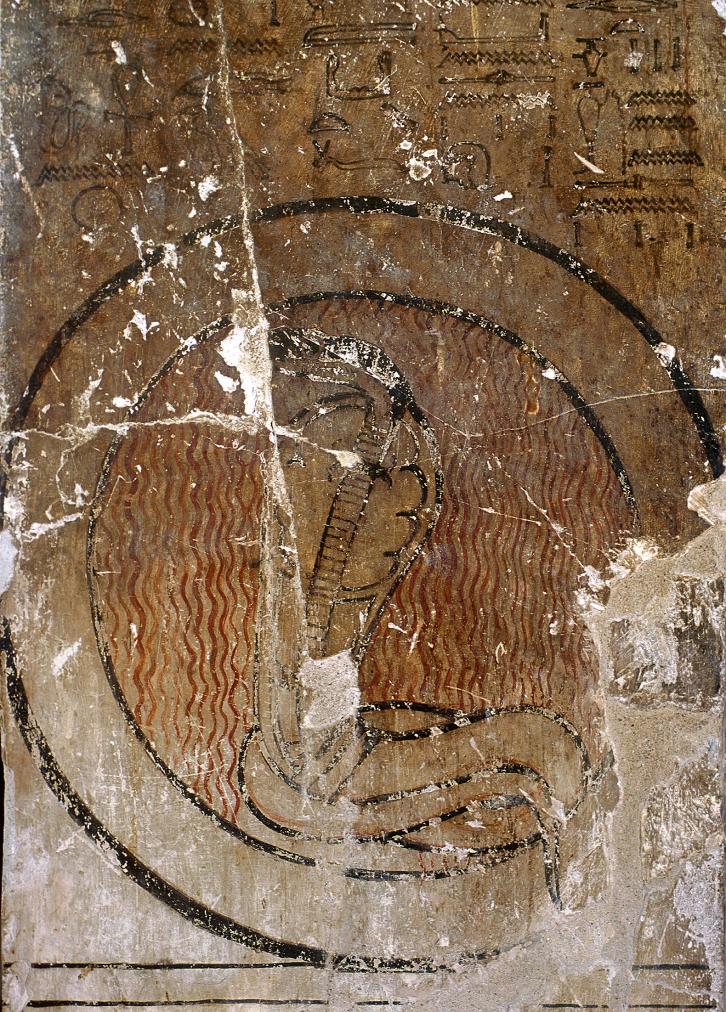
Book of Gates, fifth division (P)/sixth hour (H), scene 41: uraeus in Lake of Fire (preliminary sketch).
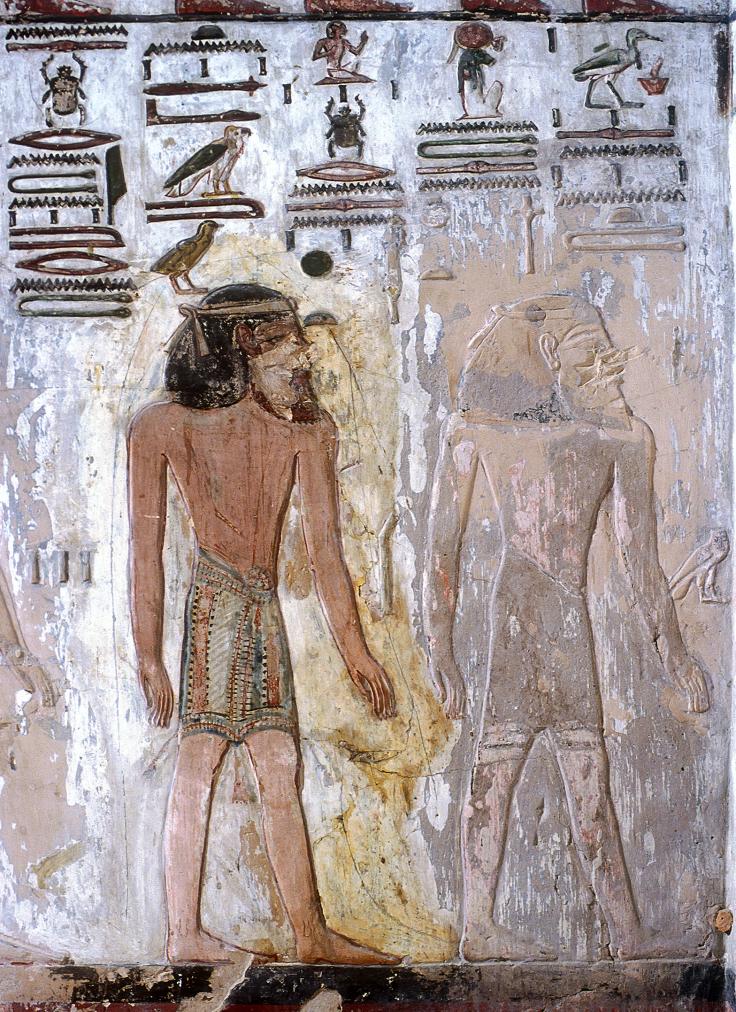
Book of Gates, fourth division (P)/fifth hour (H), scene 30: two "Asiatics," one of the "four races of mankind," with loss of color from nineteenth century wet squeezes (detail).
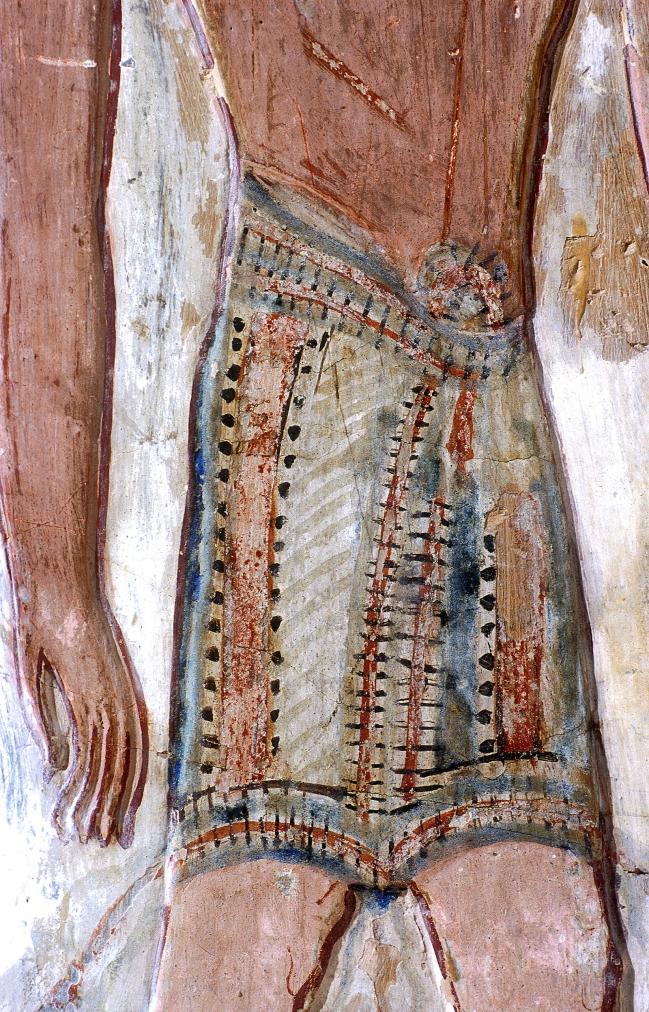
Book of Gates, fourth division (P)/fifth hour (H), scene 30: detail of kilt worn by " Asiatic," one of the "four races of mankind."
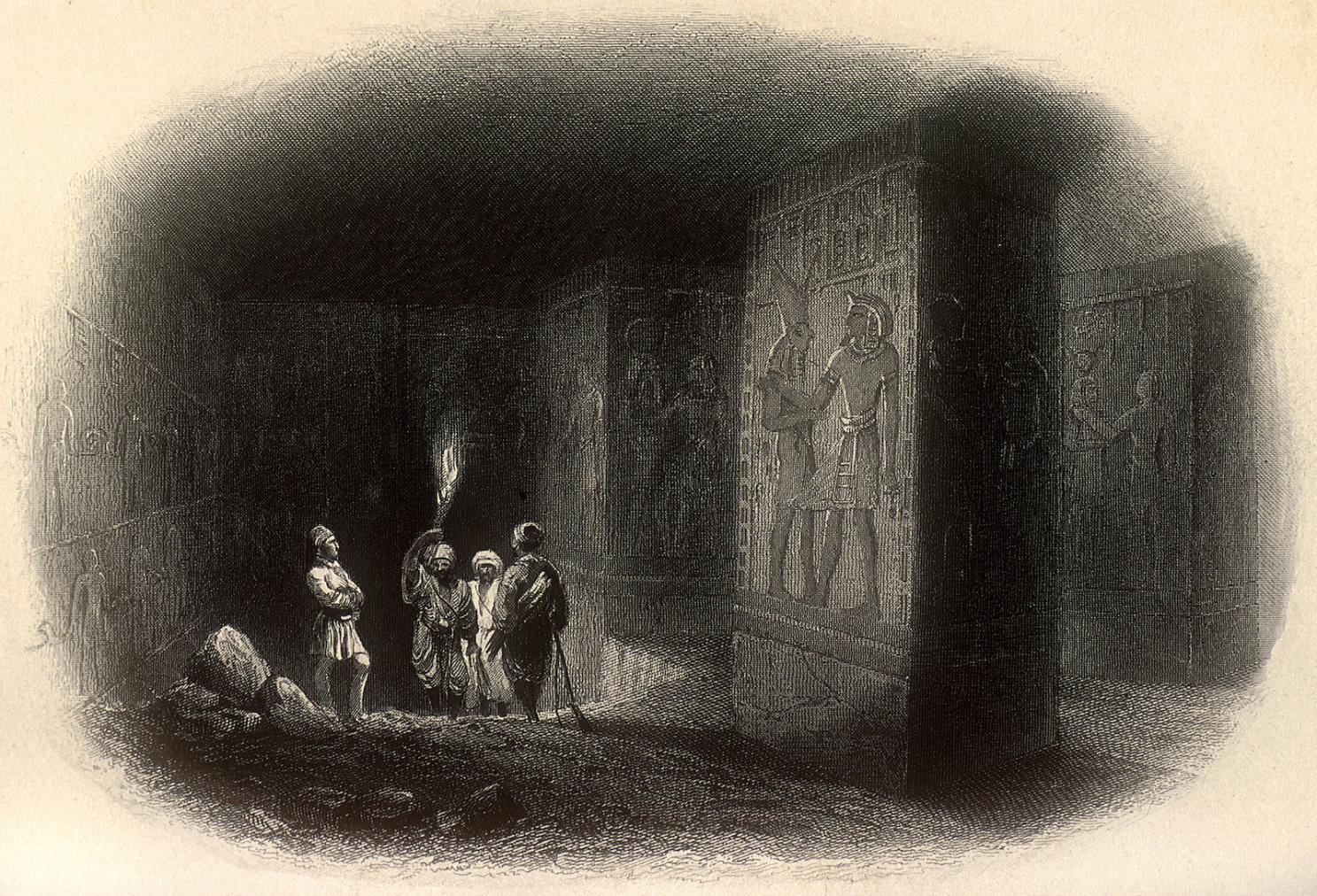
View of pillared chamber F looking into corridor G (reconstruction).
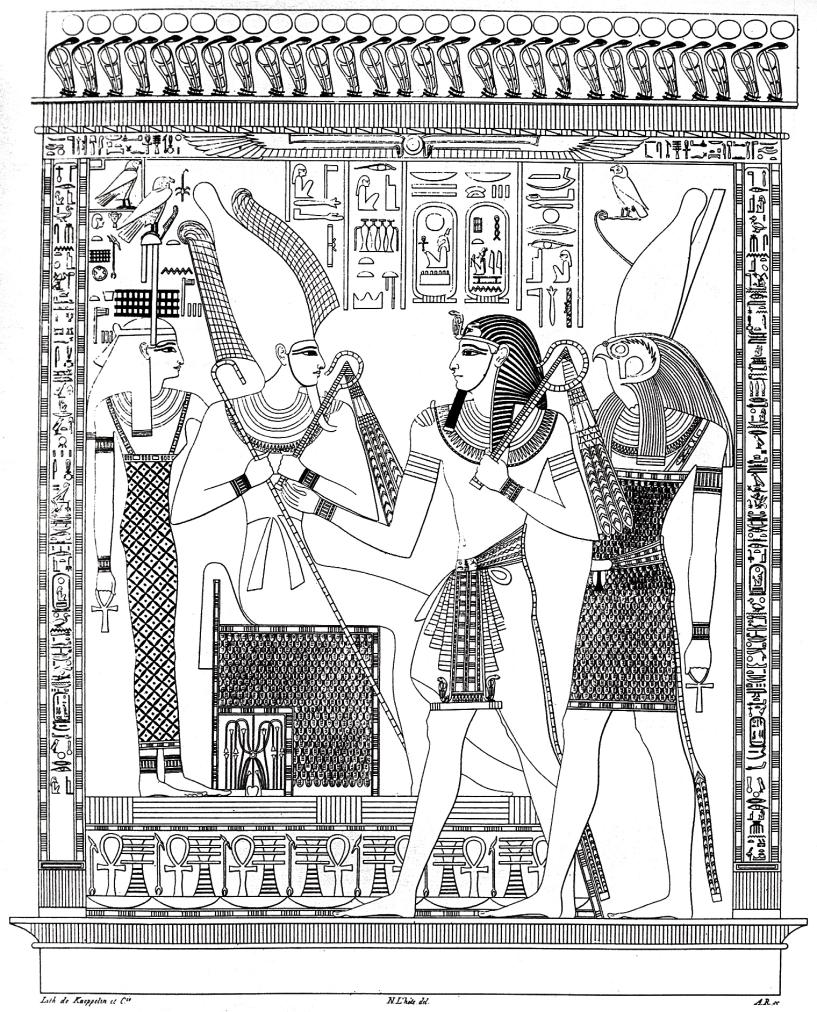
Sety I led by Horus to Osiris and Hathor (reconstruction).
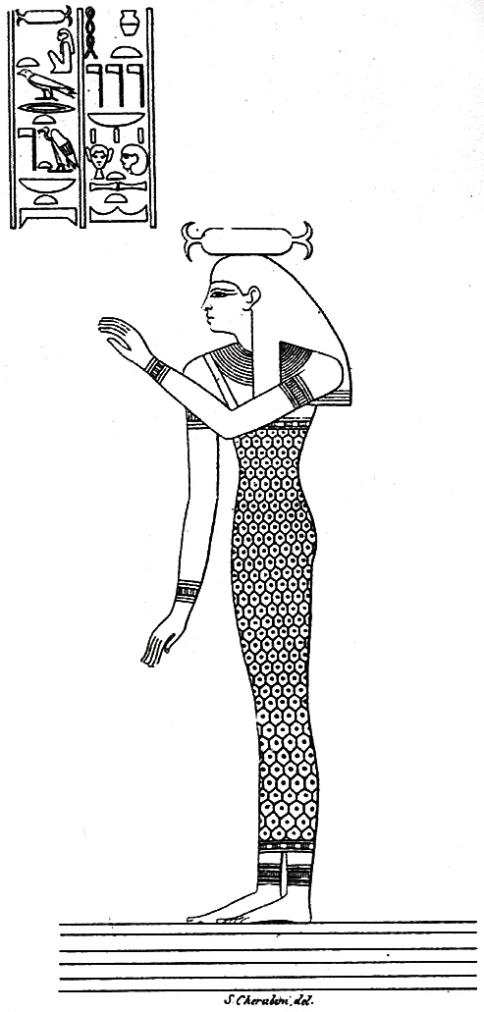
Neit [embracing Sety I] (position of the near hand of the goddess has been changed and her orientation has been reversed from the original) (reconstruction).
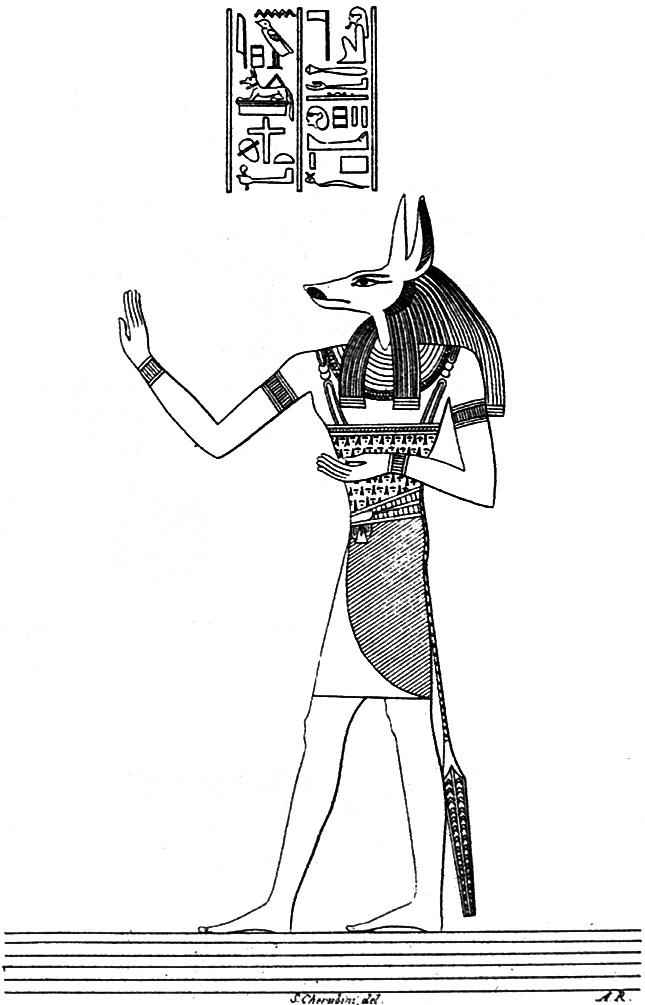
Anubis [with Sety I] (position of the god's forward hand has been altered from the original) (reconstruction).
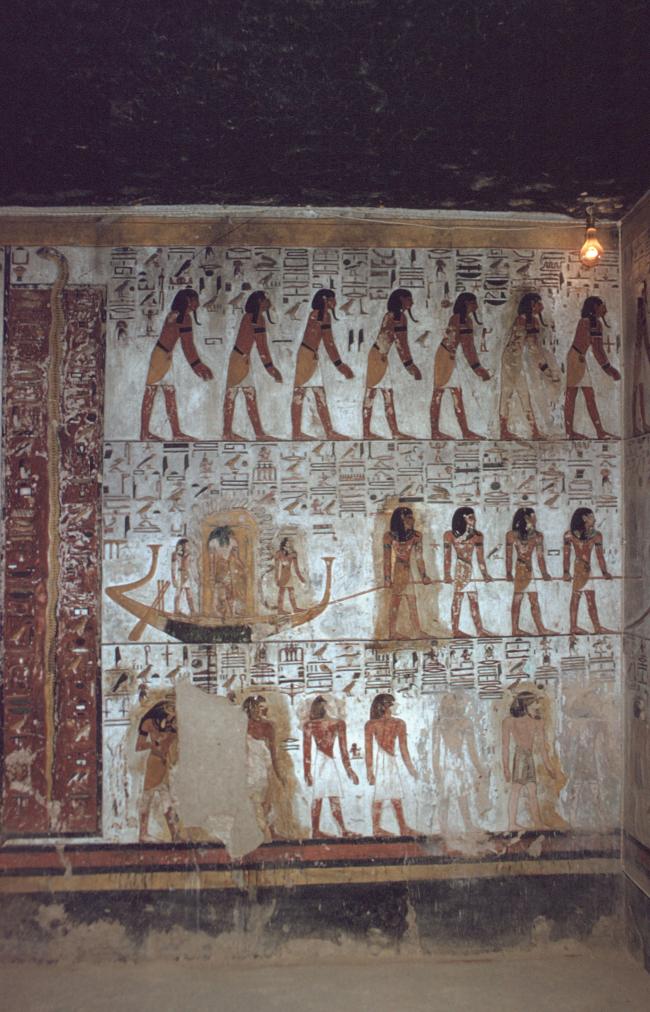
Book of Gates, fourth division (P)/fifth hour (H). Courtesy of Uni Dia Verlag; Uni Dia Image Nr. 35708.
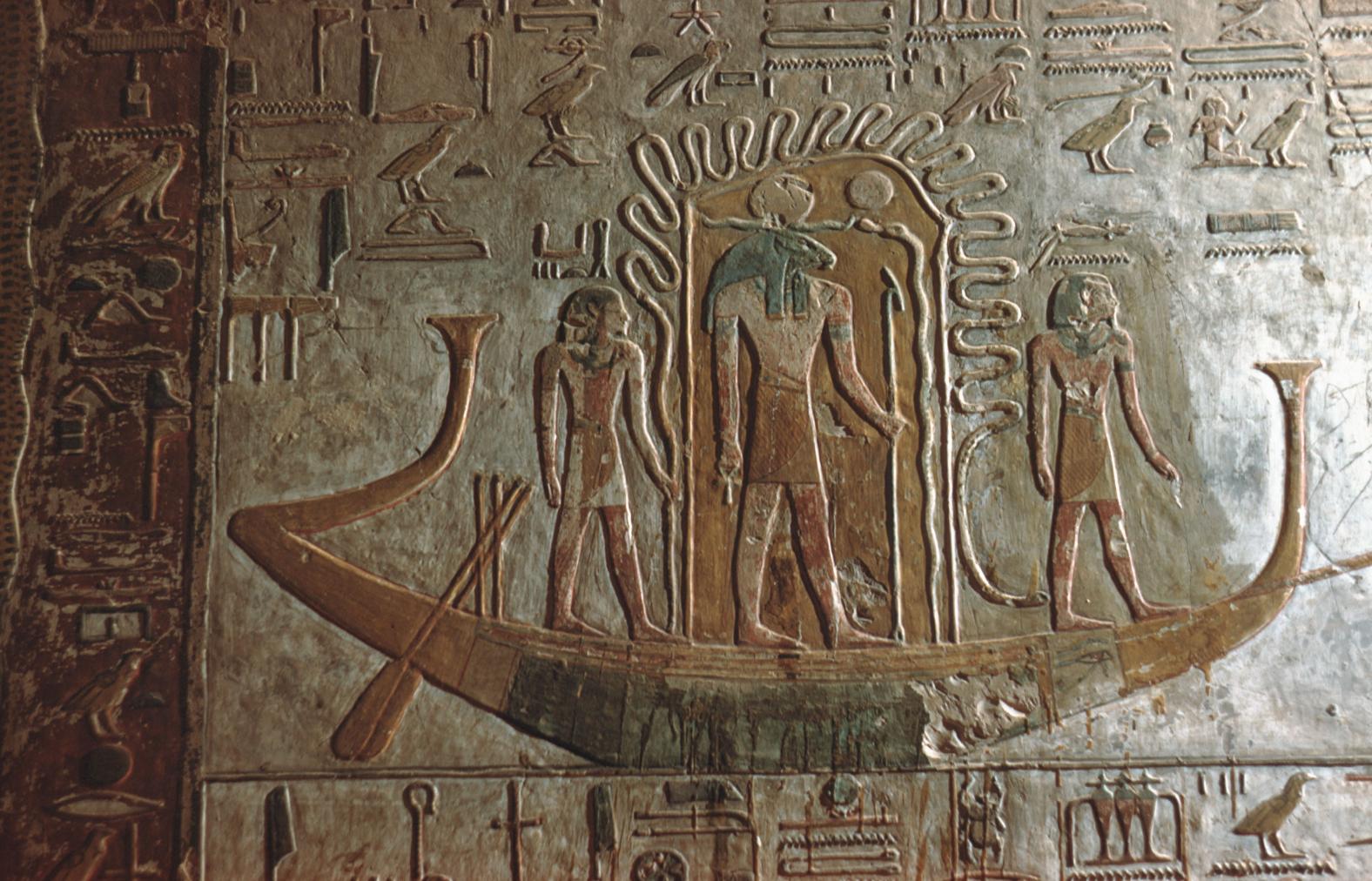
Book of Gates, fourth division (P)/fifth hour (H), scene 26: sun god Ra with crew in boat. Courtesy of Uni Dia Verlag; Uni Dia Image Nr. 35709.
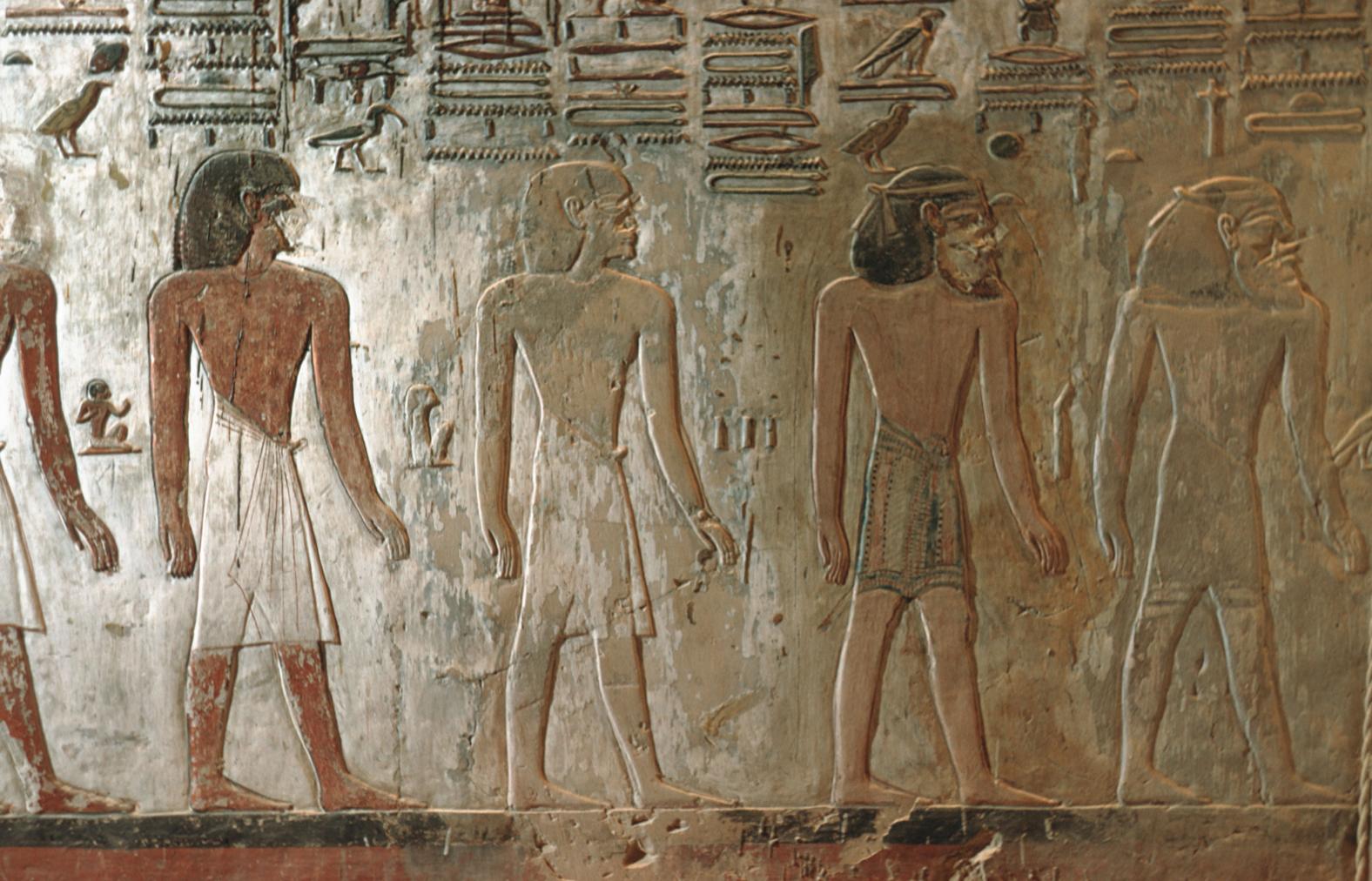
Book of Gates, fourth division (P)/fifth hour (H), Egyptians and Asiatics with loss of color from nineteenth century wet squeezes (detail). Courtesy of Uni Dia Verlag; Uni Dia Image Nr. 35710.
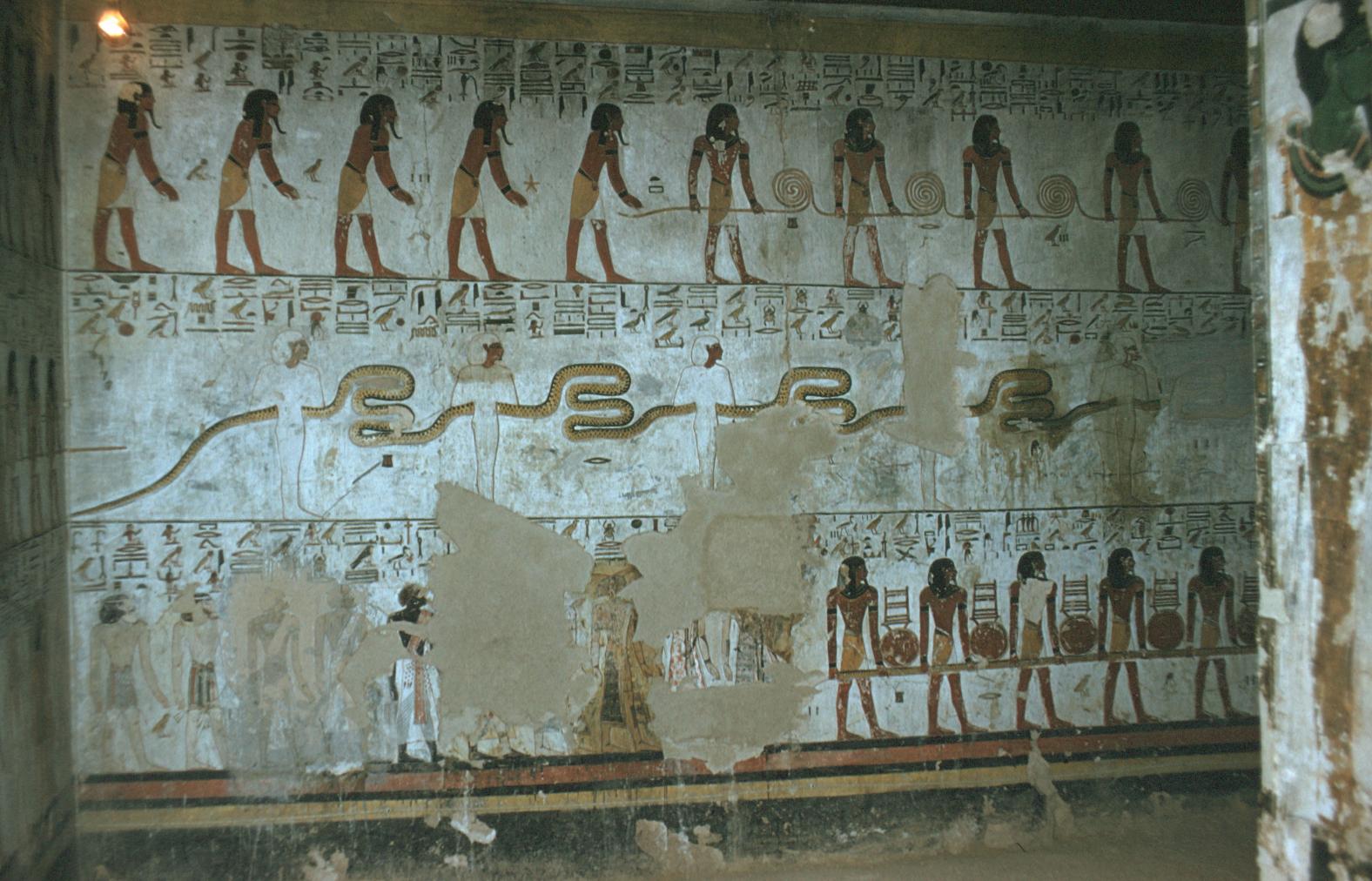
Book of Gates, fourth division (P)/fifth hour (H), end. Courtesy of Uni Dia Verlag; Uni Dia Image Nr. 35711.
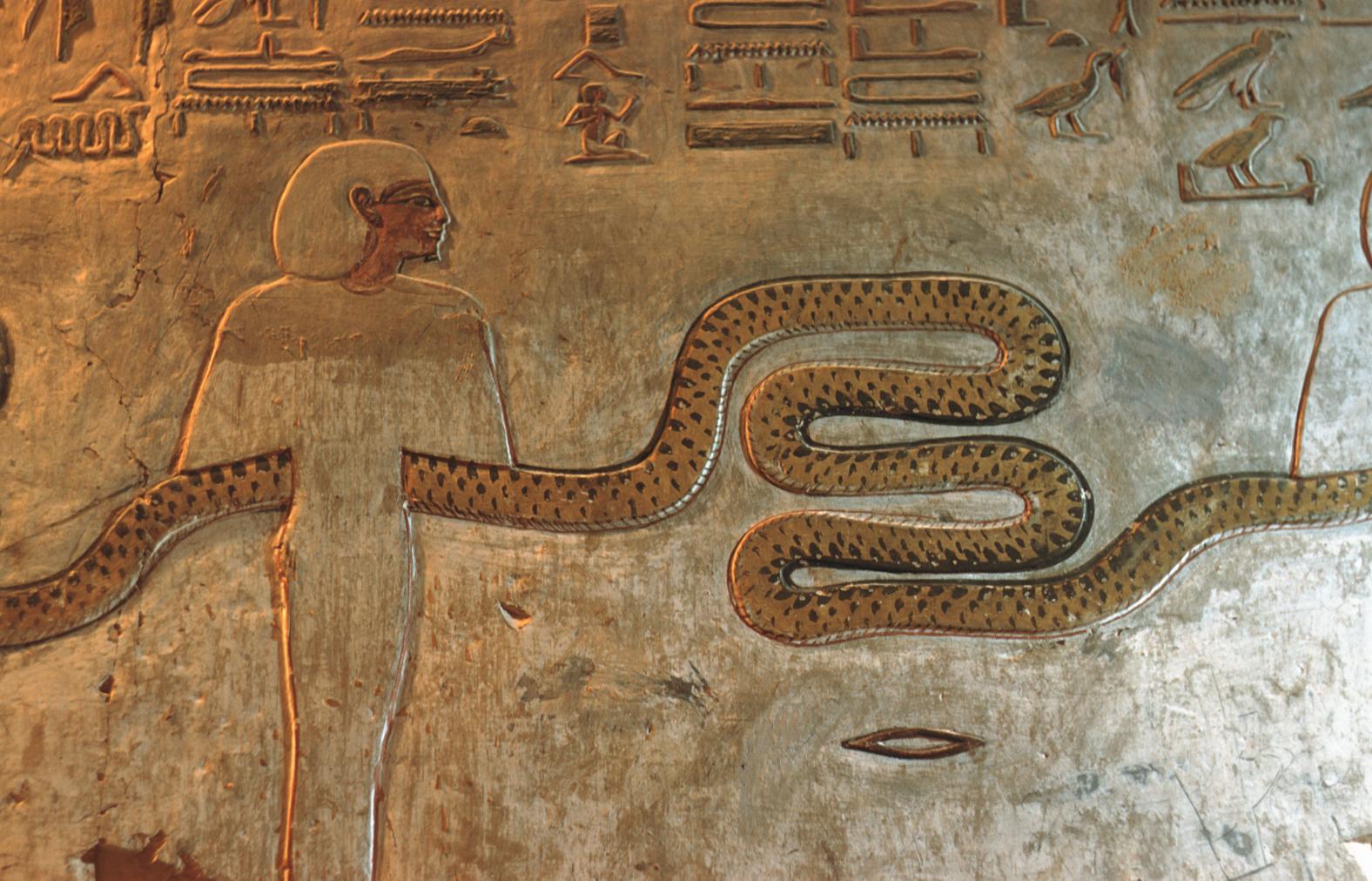
Detail of Book of Gates, fourth division (P)/fifth hour (H), end. Courtesy of Uni Dia Verlag; Uni Dia Image Nr. 35712.
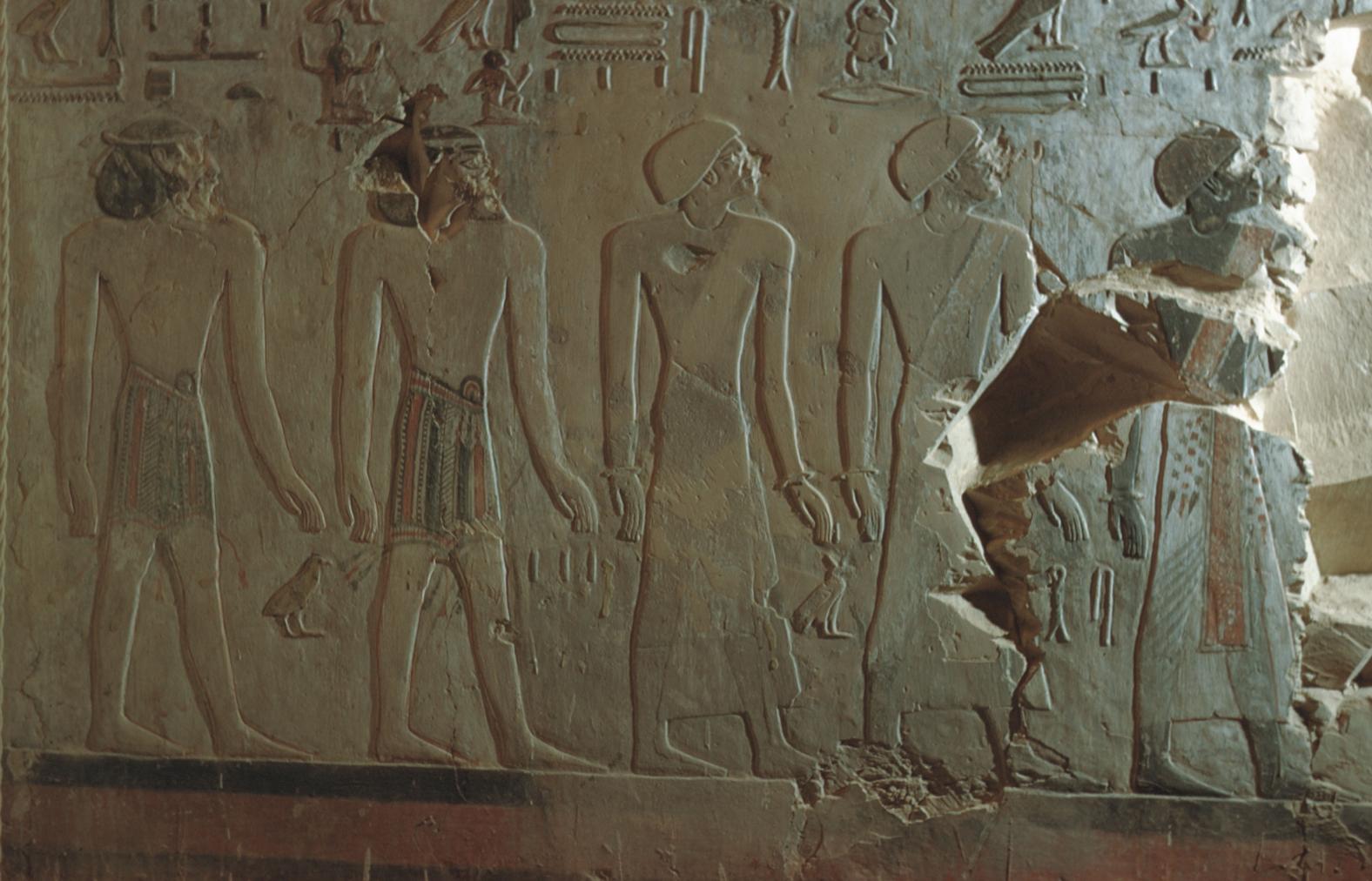
Book of Gates, fourth division (P)/fifth hour (H): "four races of mankind." Courtesy of Uni Dia Verlag; Uni Dia Image Nr. 35713.
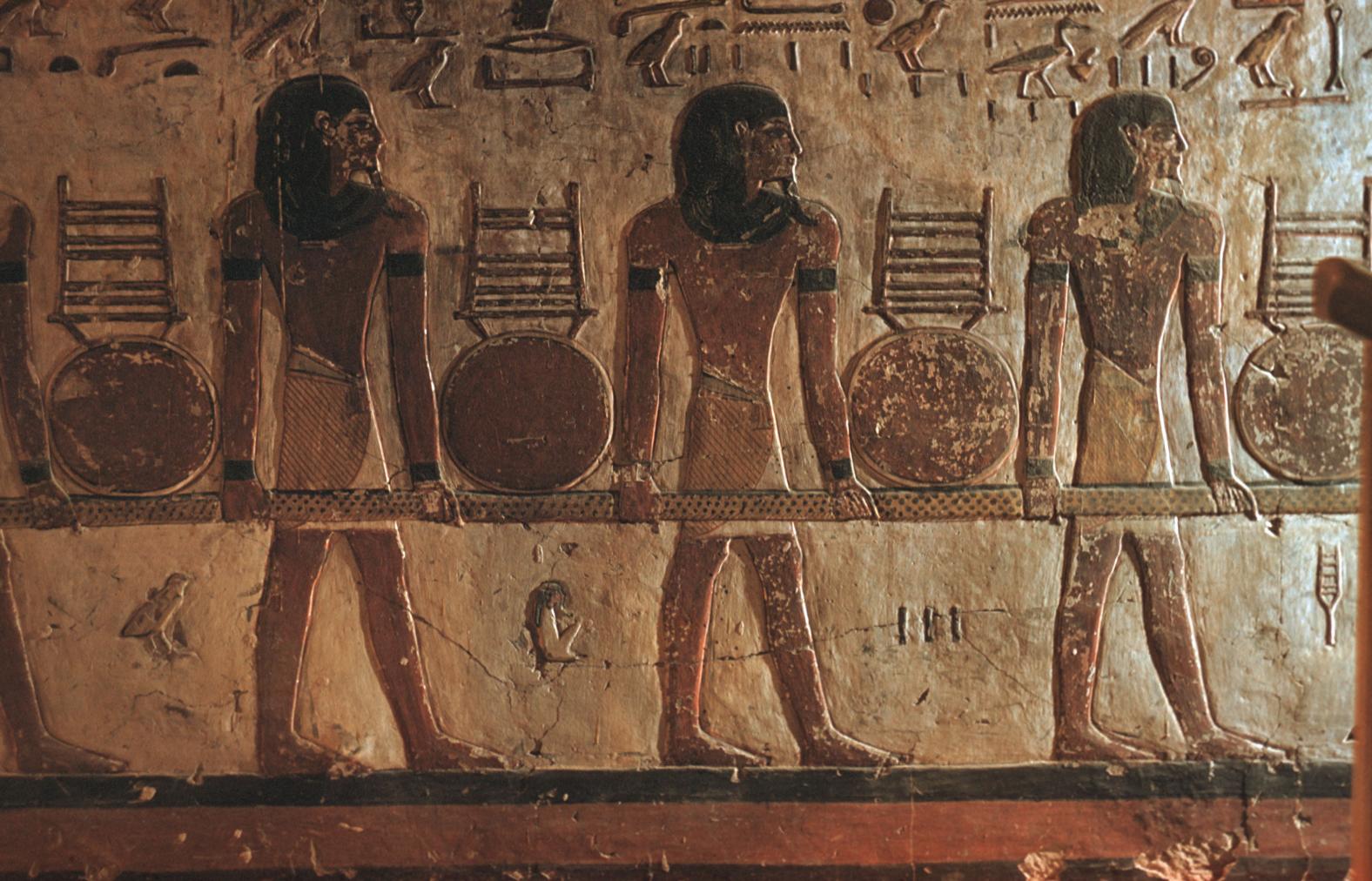
Detail from Book of Gates, fourth division (P)/fifth hour (H), end. Courtesy of Uni Dia Verlag; Uni Dia Image Nr. 35714.
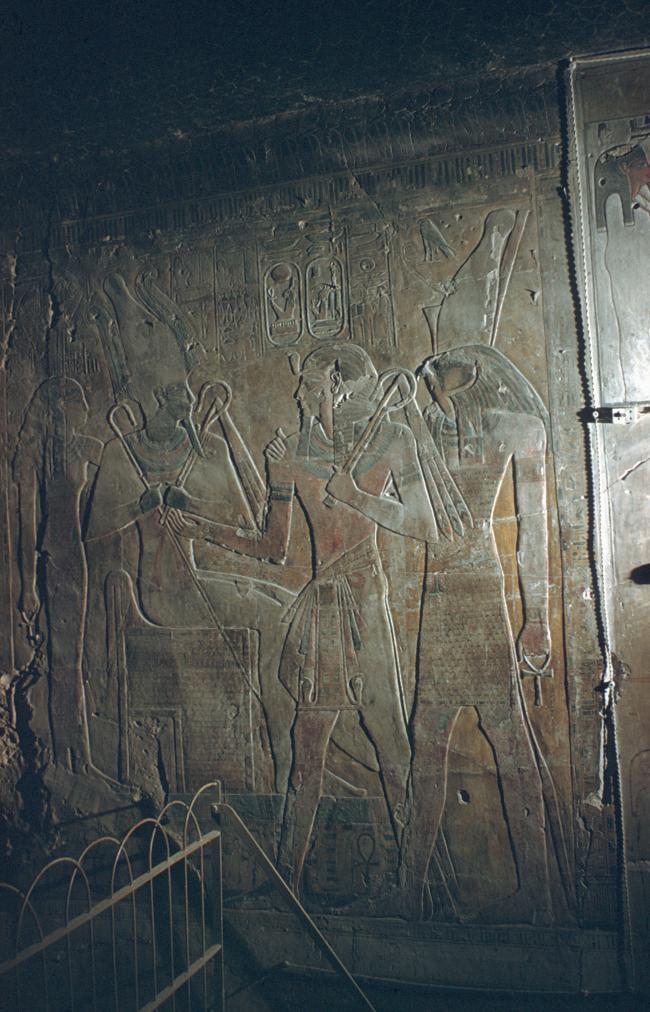
Sety I led by Horus to Osiris and Hathor. Courtesy of Uni Dia Verlag; Uni Dia Image Nr. 35715.
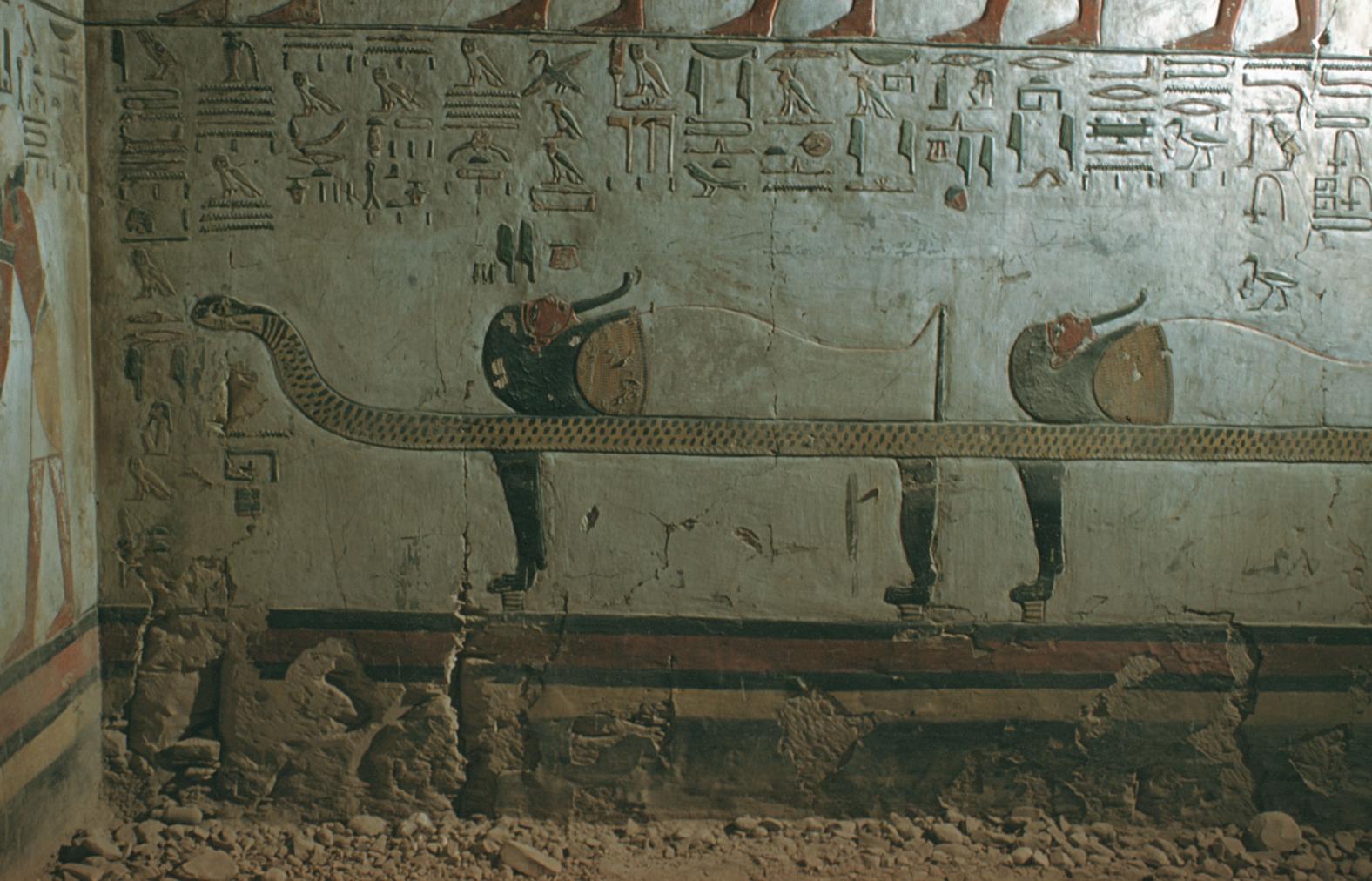
Detail of Book of Gates, fifth division (P)/sixth hour (H). Courtesy of Uni Dia Verlag; Uni Dia Image Nr. 35716.
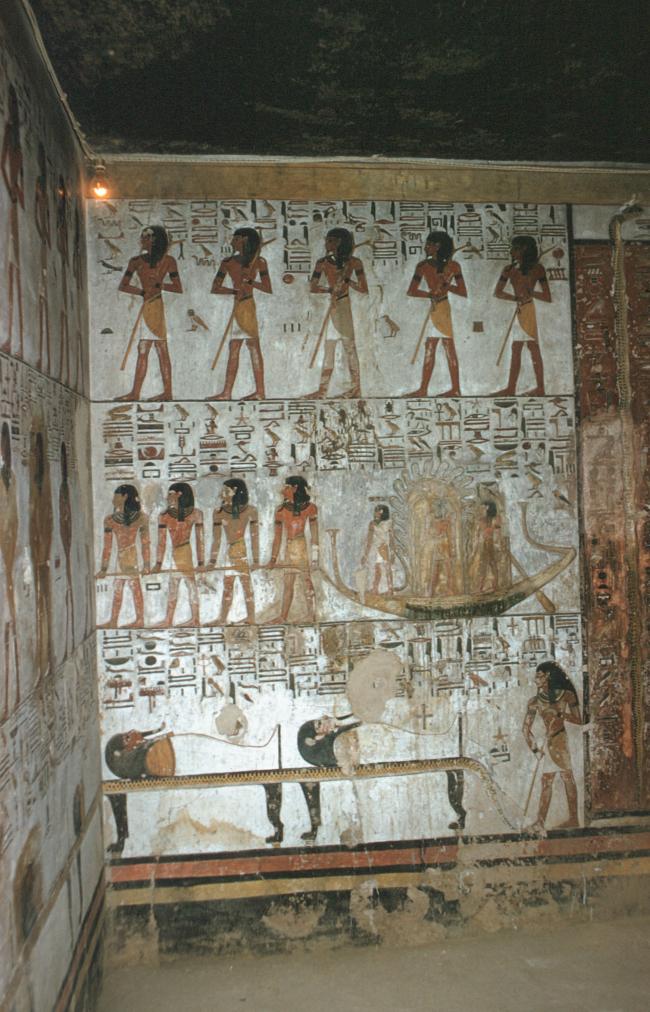
Book of Gates, fifth division (P)/sixth hour (H), beginning. Courtesy of Uni Dia Verlag; Uni Dia Image Nr. 35717.
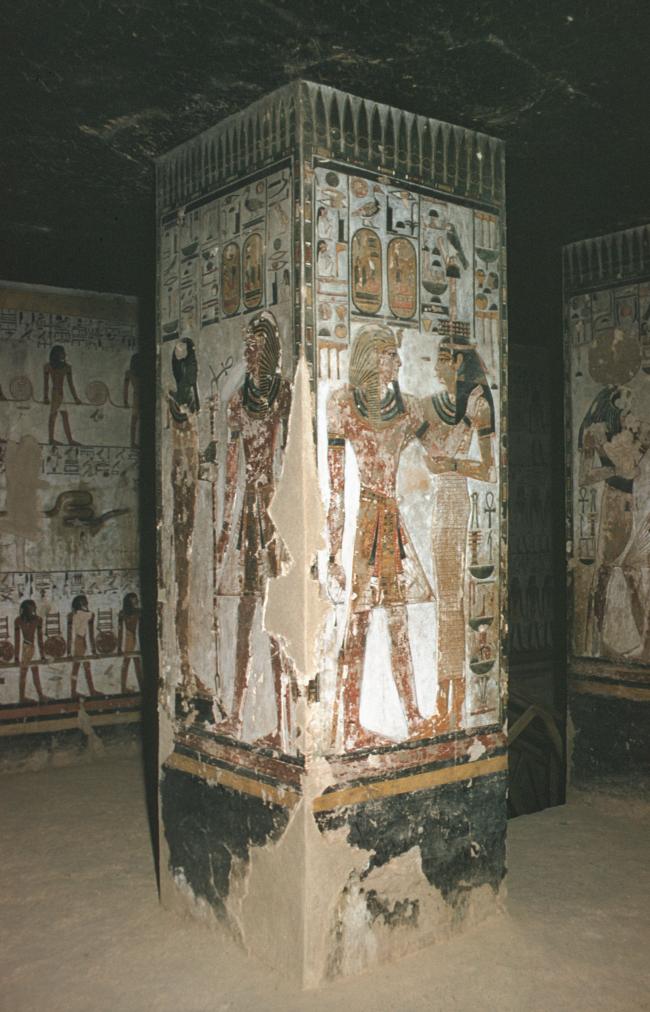
Sety I embraced by Hathor as Western Goddess; Sety before Ptah; right pillar 1. Courtesy of Uni Dia Verlag; Uni Dia Image Nr. 35718.
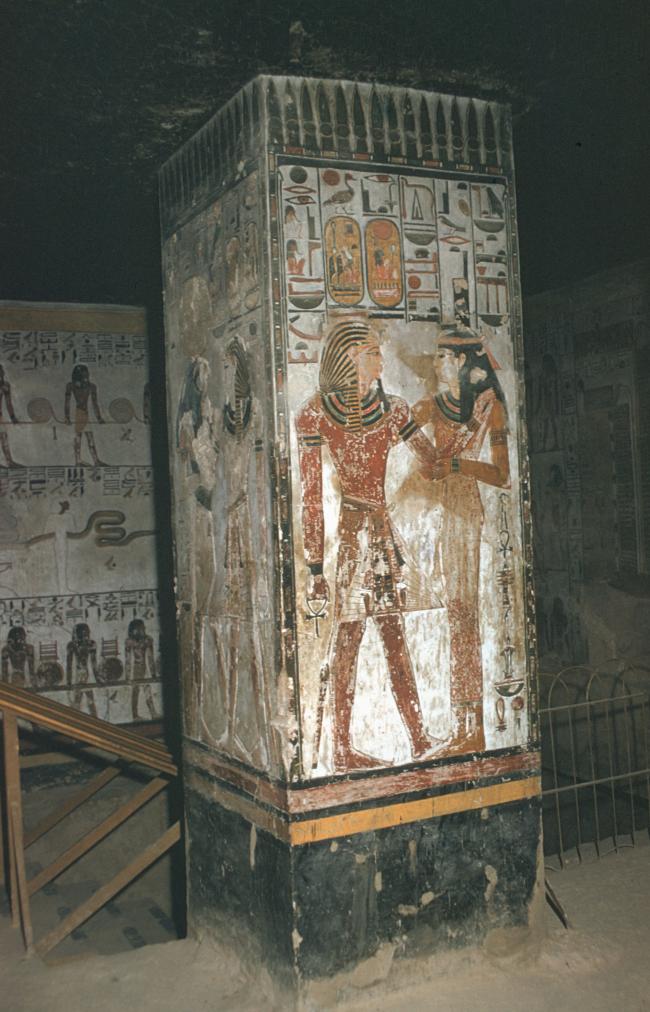
Sety I embraced by Isis, right pillar 2. Courtesy of Uni Dia Verlag; Uni Dia Image Nr. 35719.
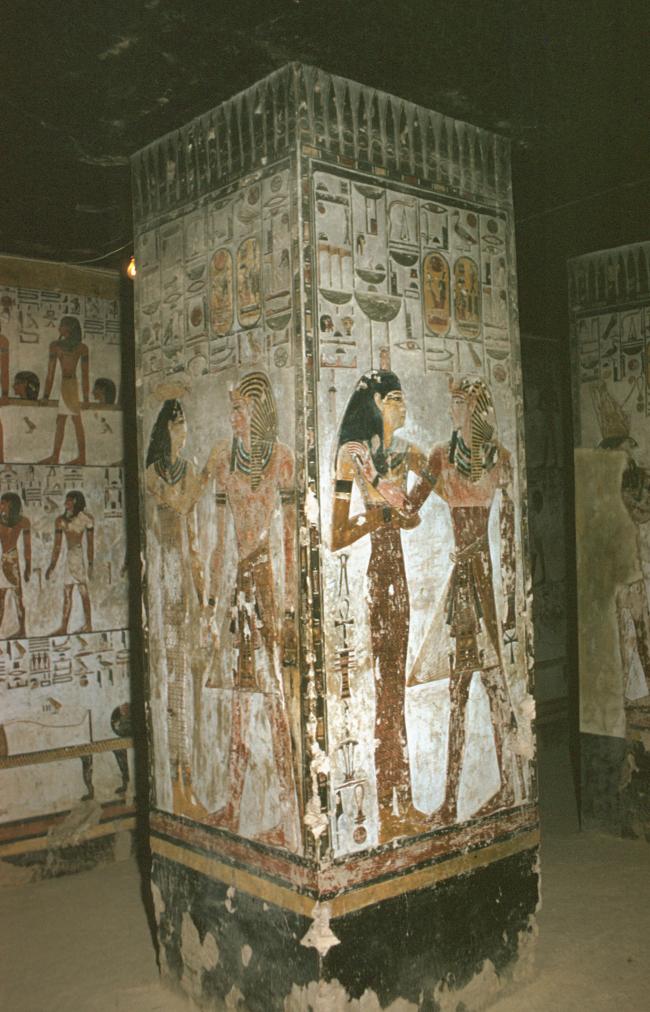
Sety I embraced by Nephthys and Sety I embraced by Neith. Courtesy of Uni Dia Verlag; Uni Dia Image Nr. 35720.
Sety I embraced by Neit. Courtesy of Uni Dia Verlag; Uni Dia Image Nr. 35721.
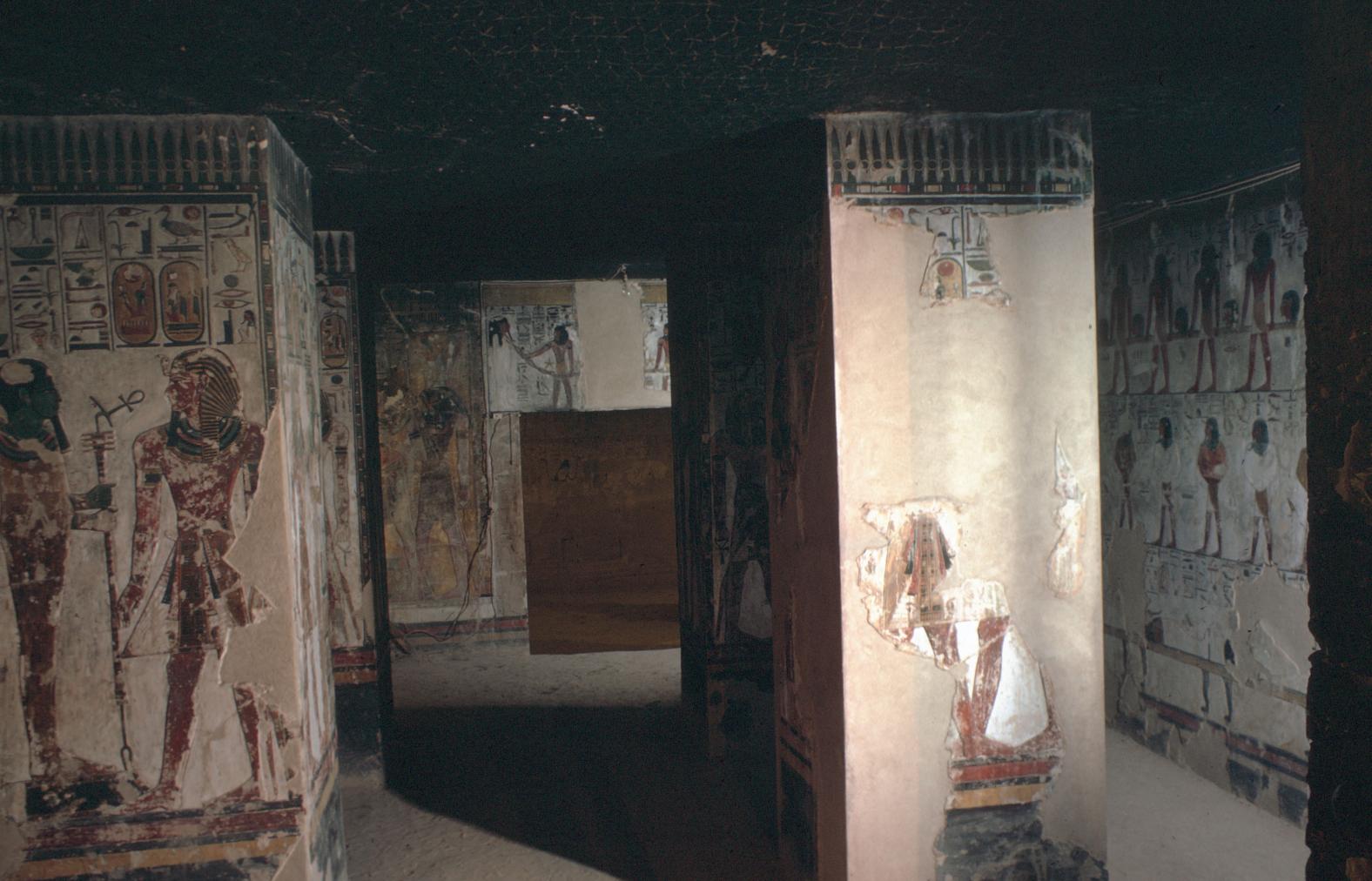
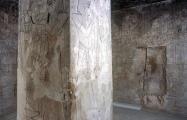
View of pillared chamber F. Courtesy of Uni Dia Verlag; Uni Dia Image Nr. 35850.
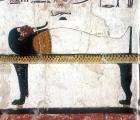
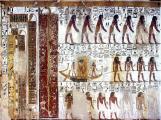
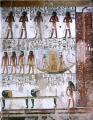
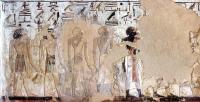
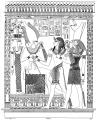
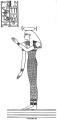
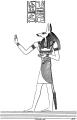
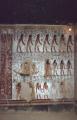
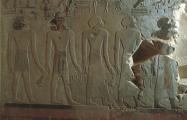
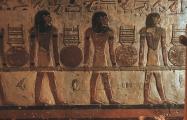
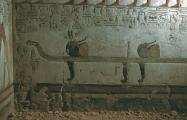
Descent F
See entire tombThe descent is situated to the rear in the southern corner of pillared chamber F.
Porter and Moss designation:
Side chamber Fa
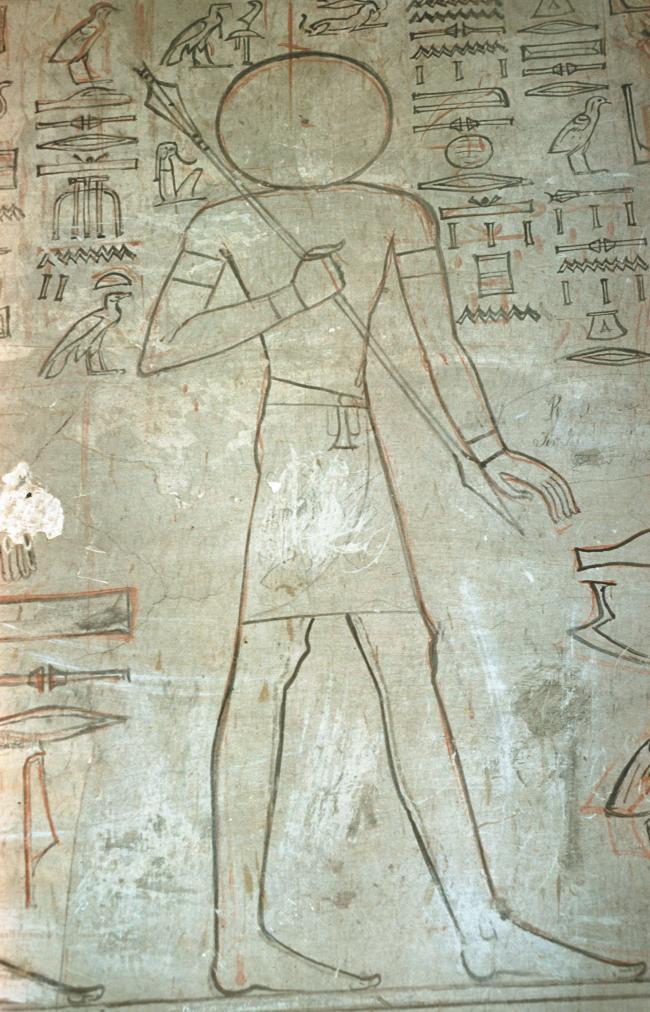
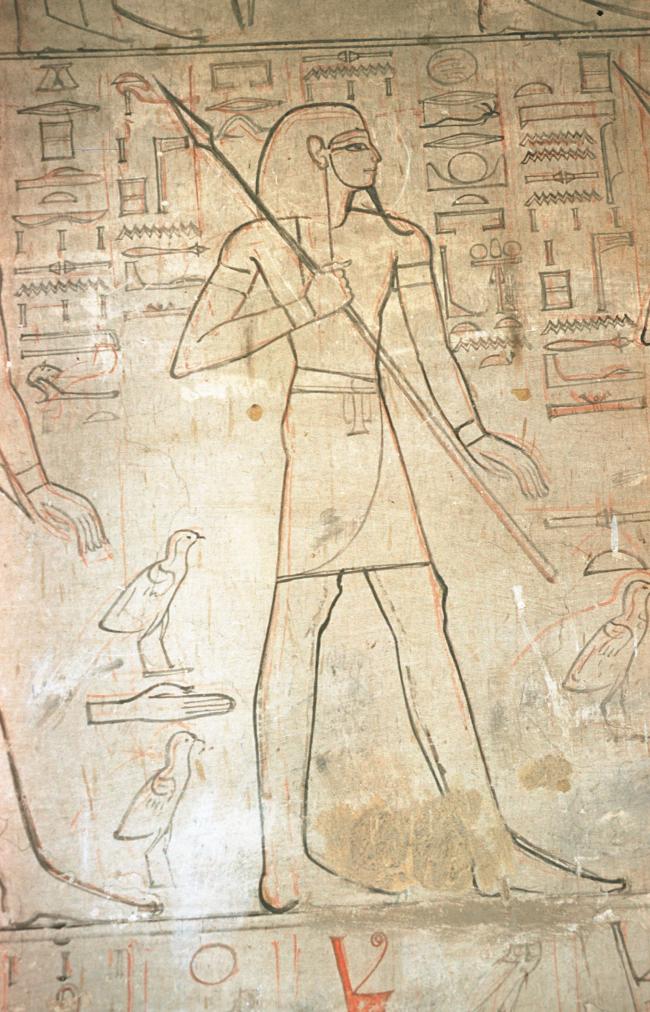
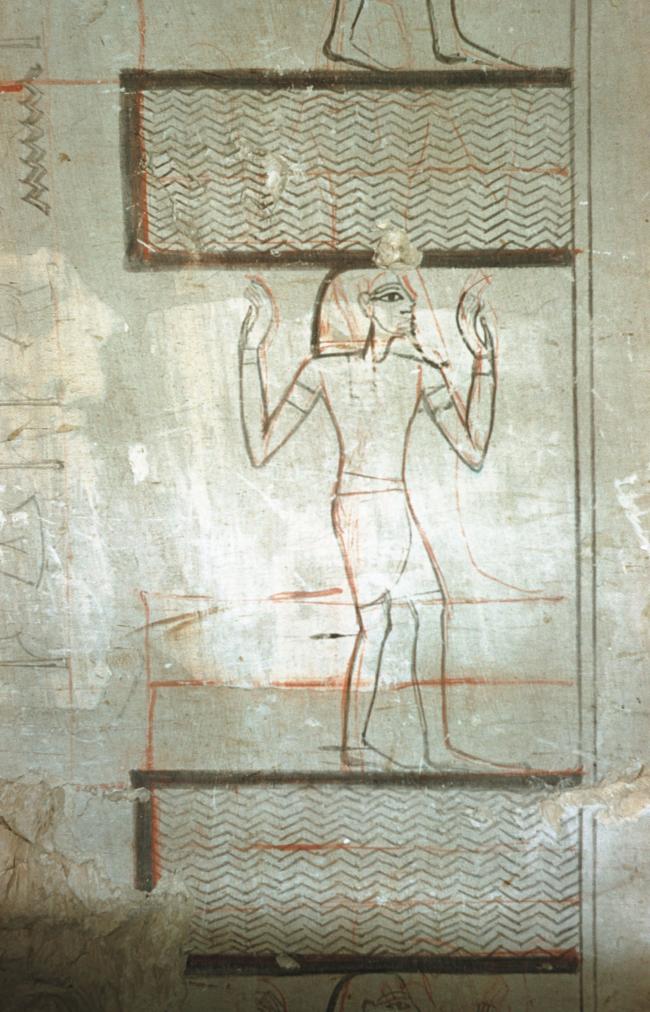
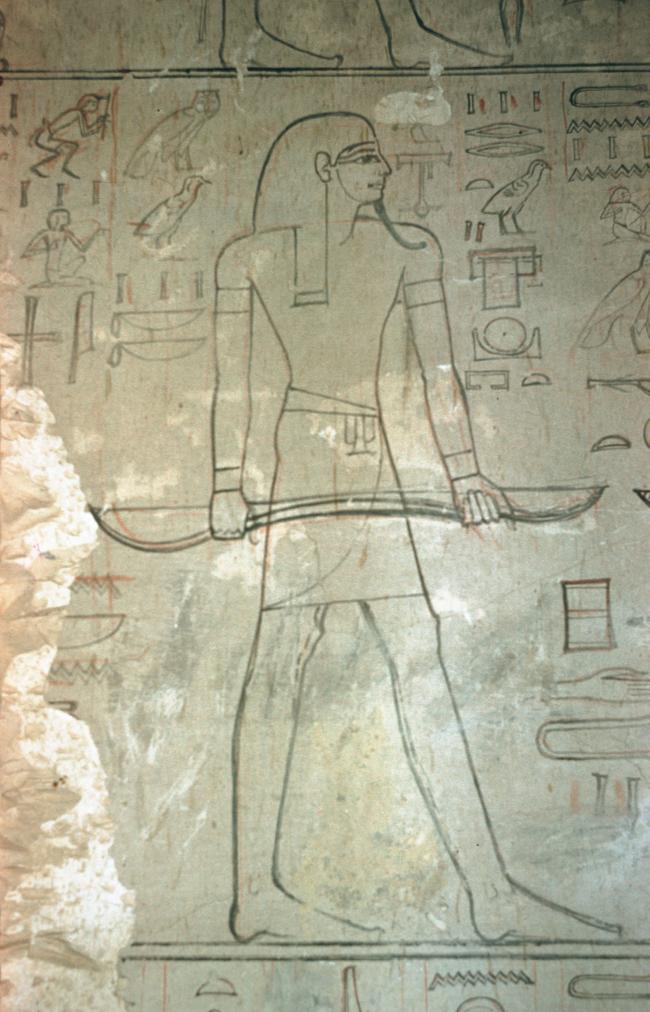
See entire tombThe floor of side chamber Fa is several steps lower than pillared chamber F and has two pillars. On the left (southeast) wall and the left (northwest) part of the front (northeast) wall is the ninth hour of the Imydwat. The tenth and eleventh hours cover the right (southeast) part of the front wall, the right (northwest) wall, and the rear (southwest) wall. All the decoration is drawn in black outline only. There is a break in the bottom of the left wall into corridor G. On the pillars, the king is shown with several deities.
Porter and Moss designation:
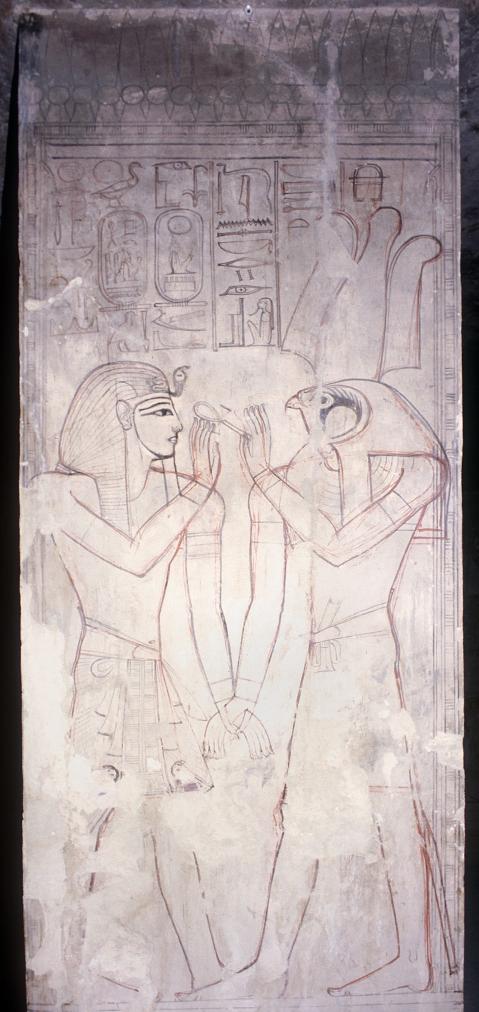
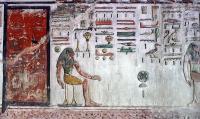
Preliminary sketch of Sety I with Sokar-Osiris.
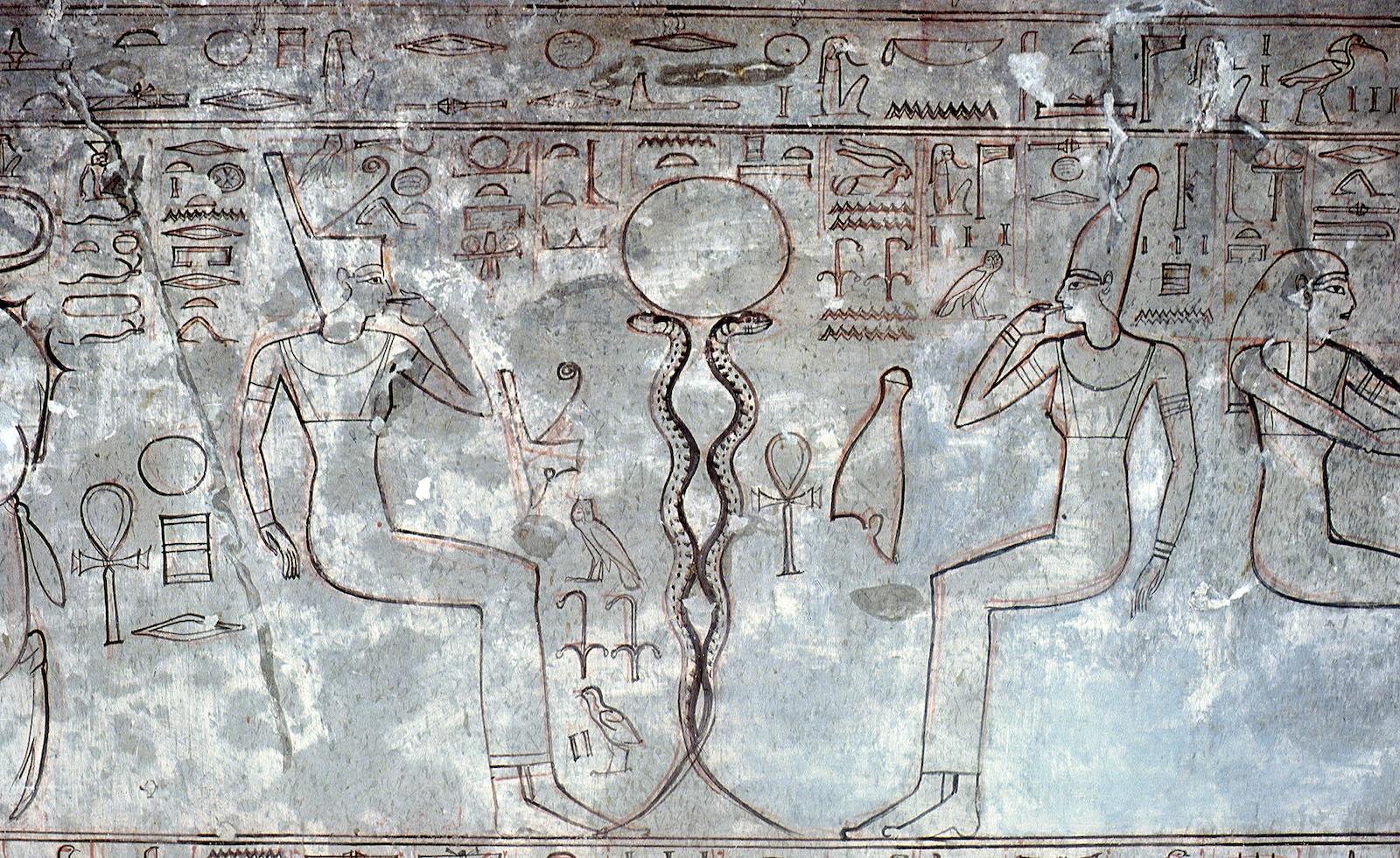
Imydwat, tenth hour: corrected preliminary sketch.
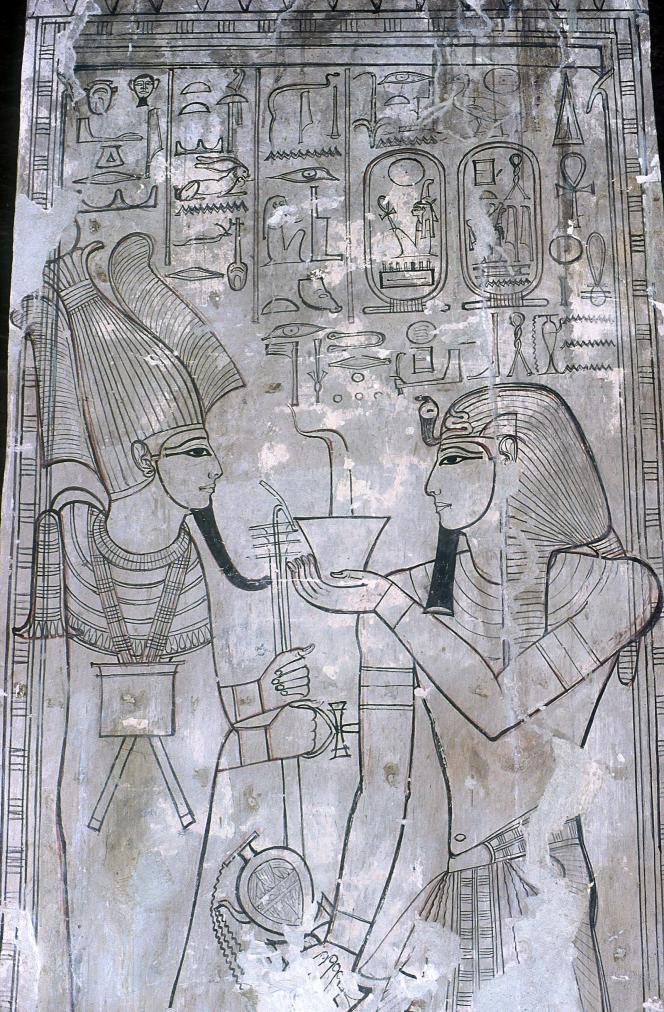
Preliminary sketch of Sety I offering incense and libation to Osiris (detail)
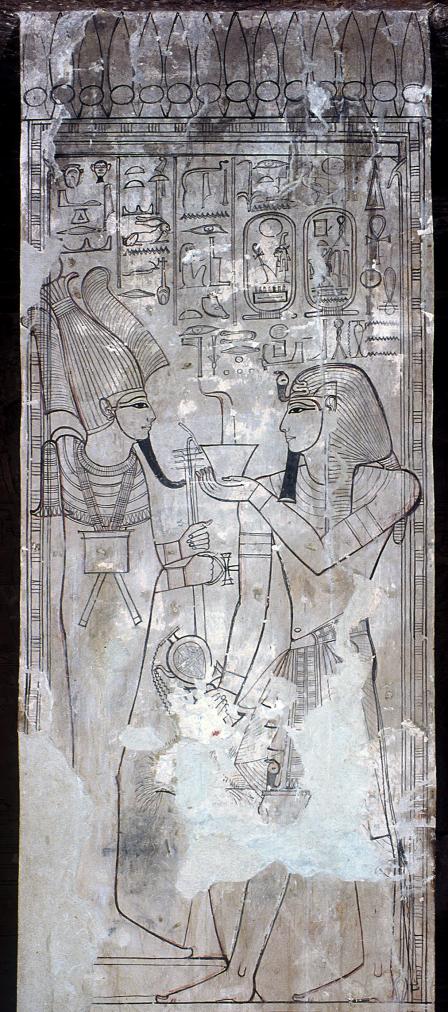
Preliminary sketch of Sety I offering incense and libation to Osiris.
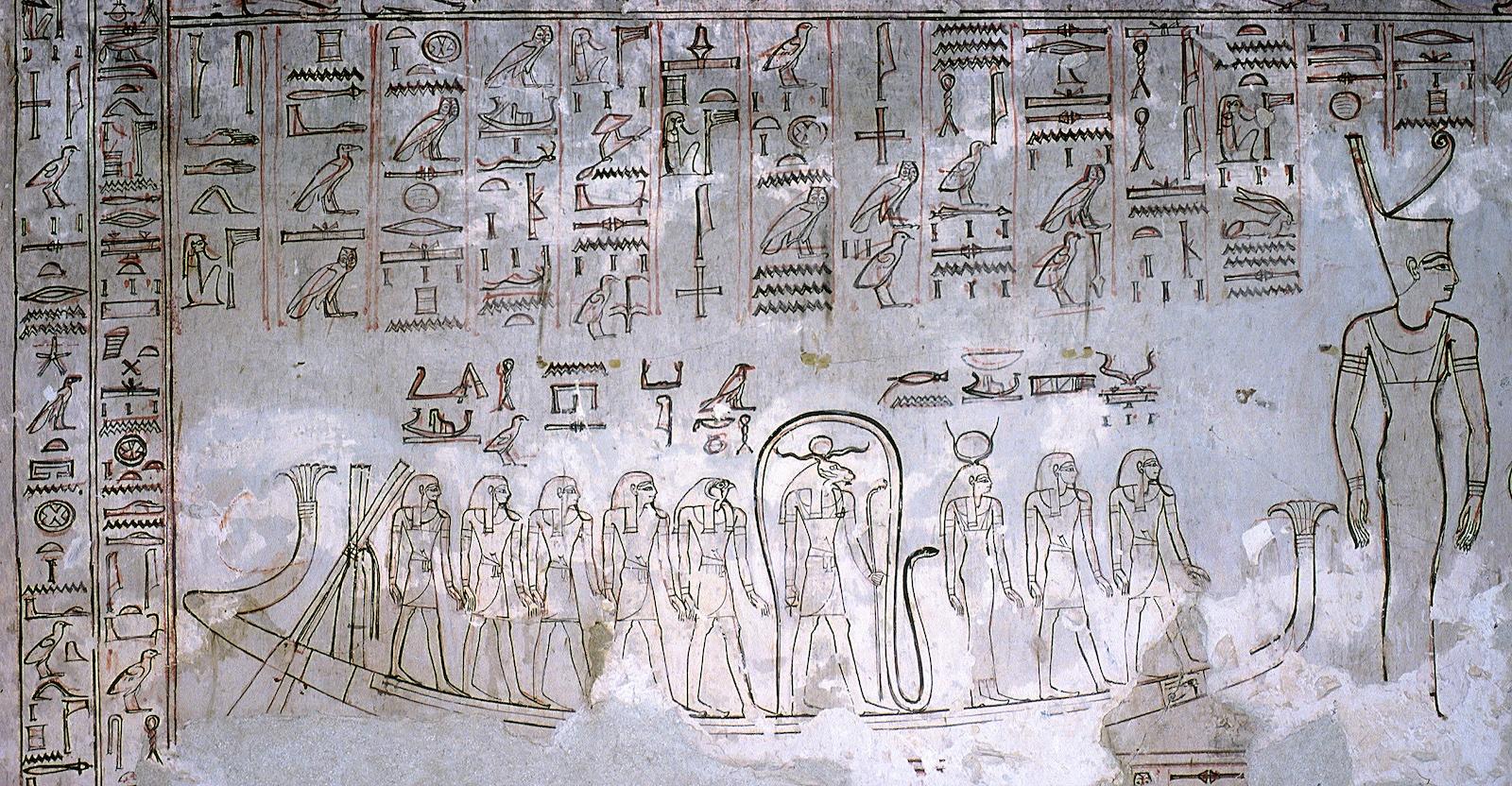
Imydwat, tenth hour: preliminary sketch of solar boat.
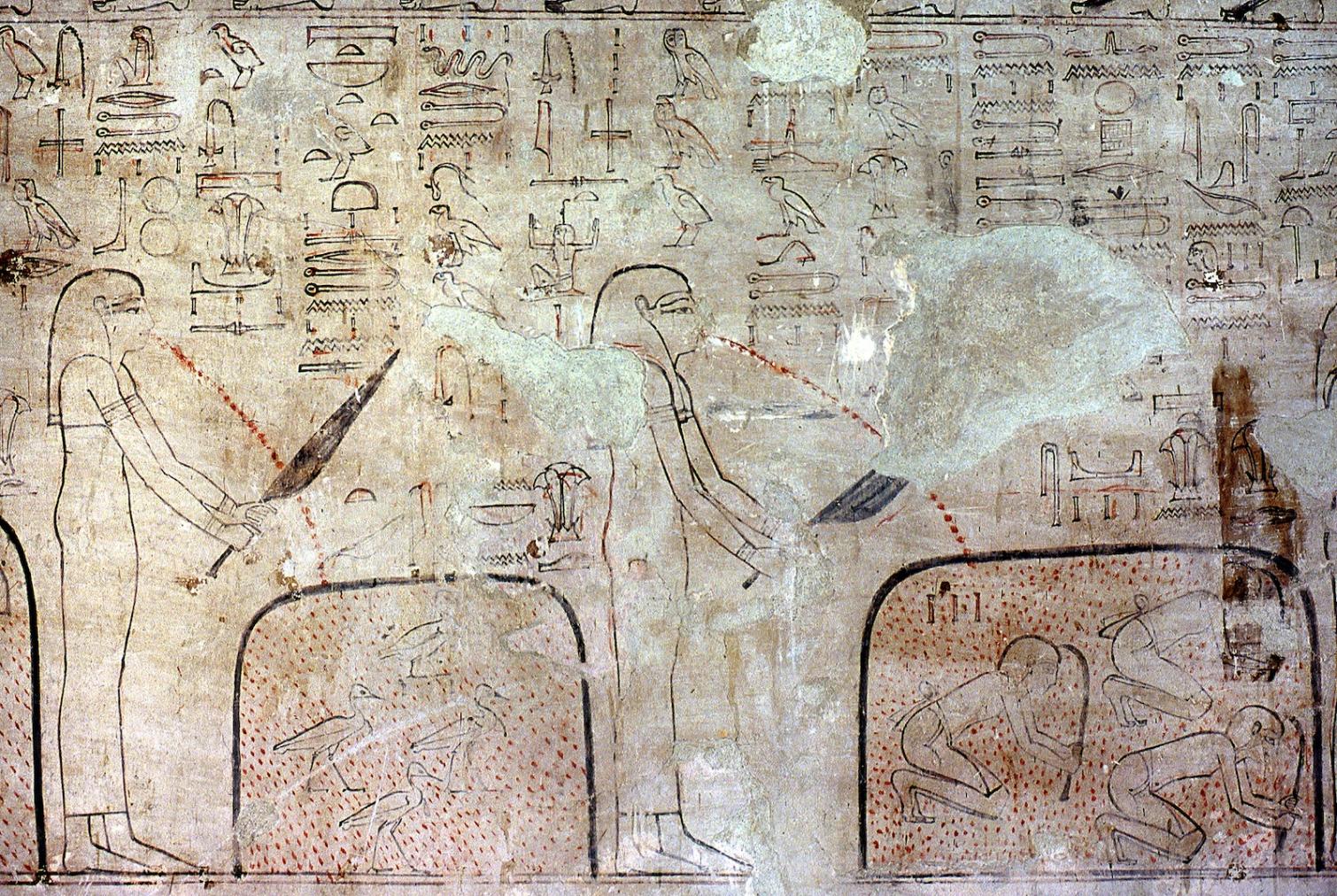
Imydwat, eleventh hour: preliminary sketch of goddesses destroying enemies in furnaces.
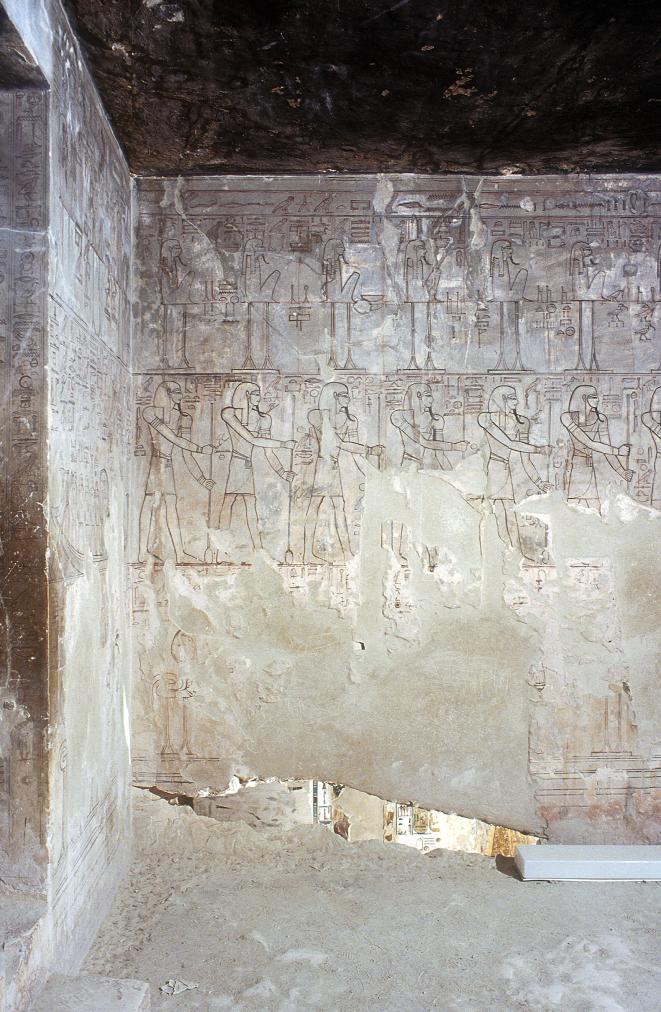
Imydwat, ninth hour; break at bottom of wall into adjacent corridor.
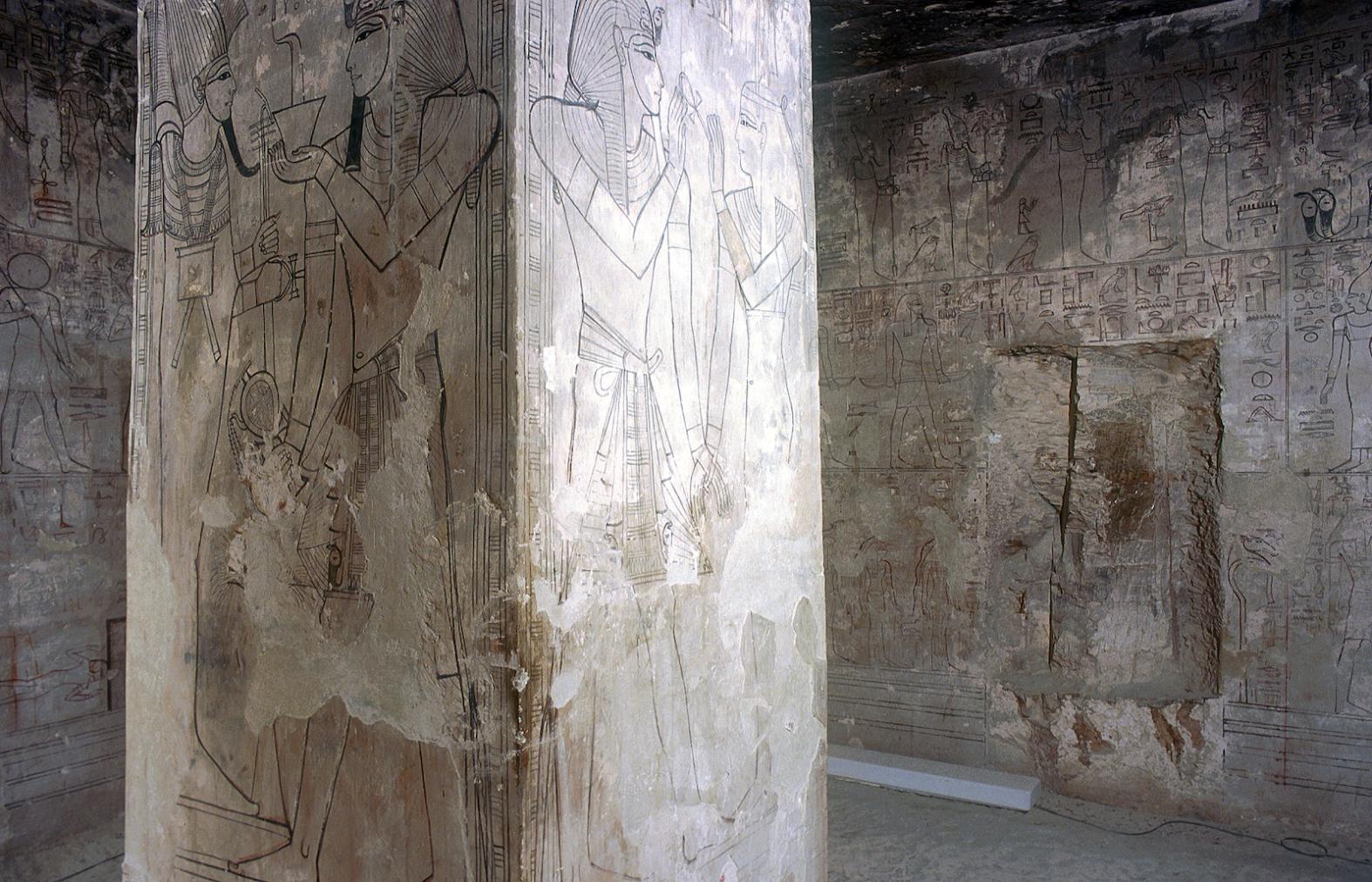
Sety I with Osiris and Ma'at; unfinished cutting in the wall interrupts the sketched decoration of the Imydwat, tenth hour.
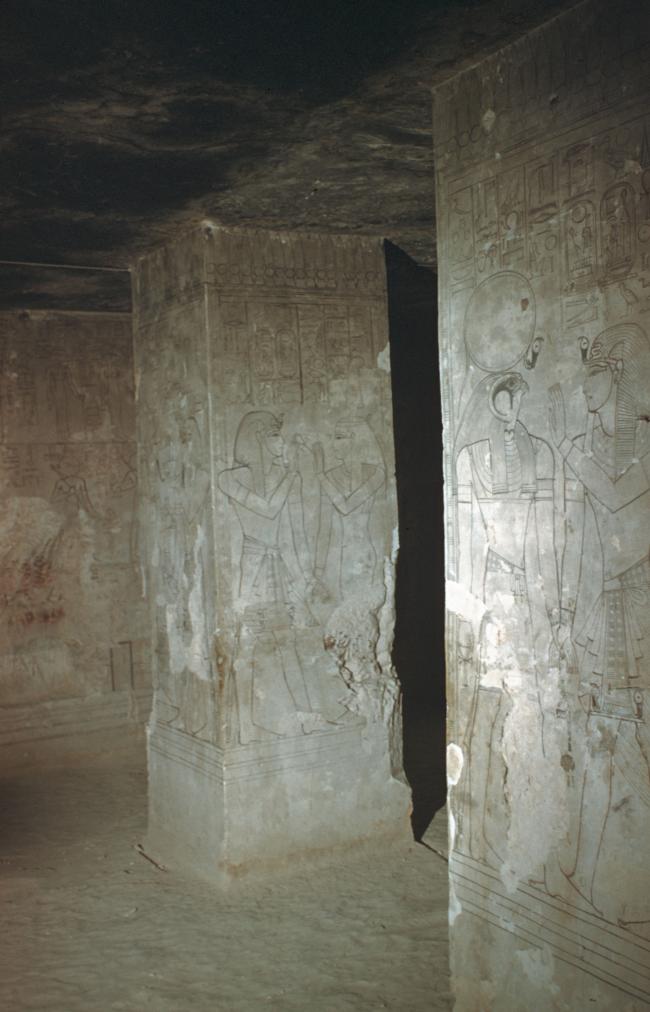
View of incomplete pillars in Side chamber Fa. Courtesy of Uni Dia Verlag; Uni Dia Image Nr. 35722.
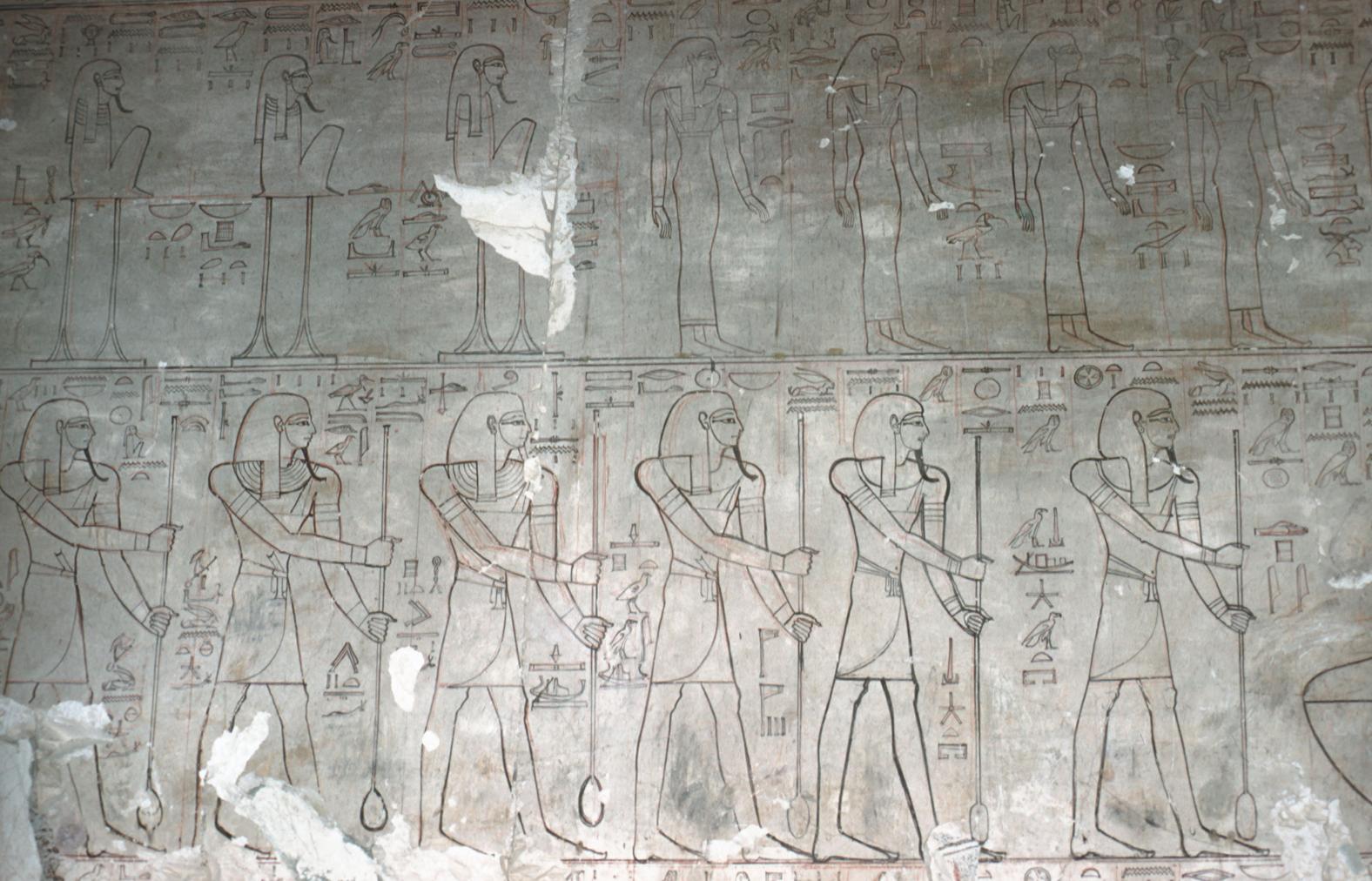
Imydwat ninth hour. Courtesy of Uni Dia Verlag; Uni Dia Image Nr. 35723.
Detail of Imydwat ninth hour. Courtesy of Uni Dia Verlag; Uni Dia Image Nr. 35724.
Detail of Imydwat ninth hour. Courtesy of Uni Dia Verlag; Uni Dia Image Nr. 35725.
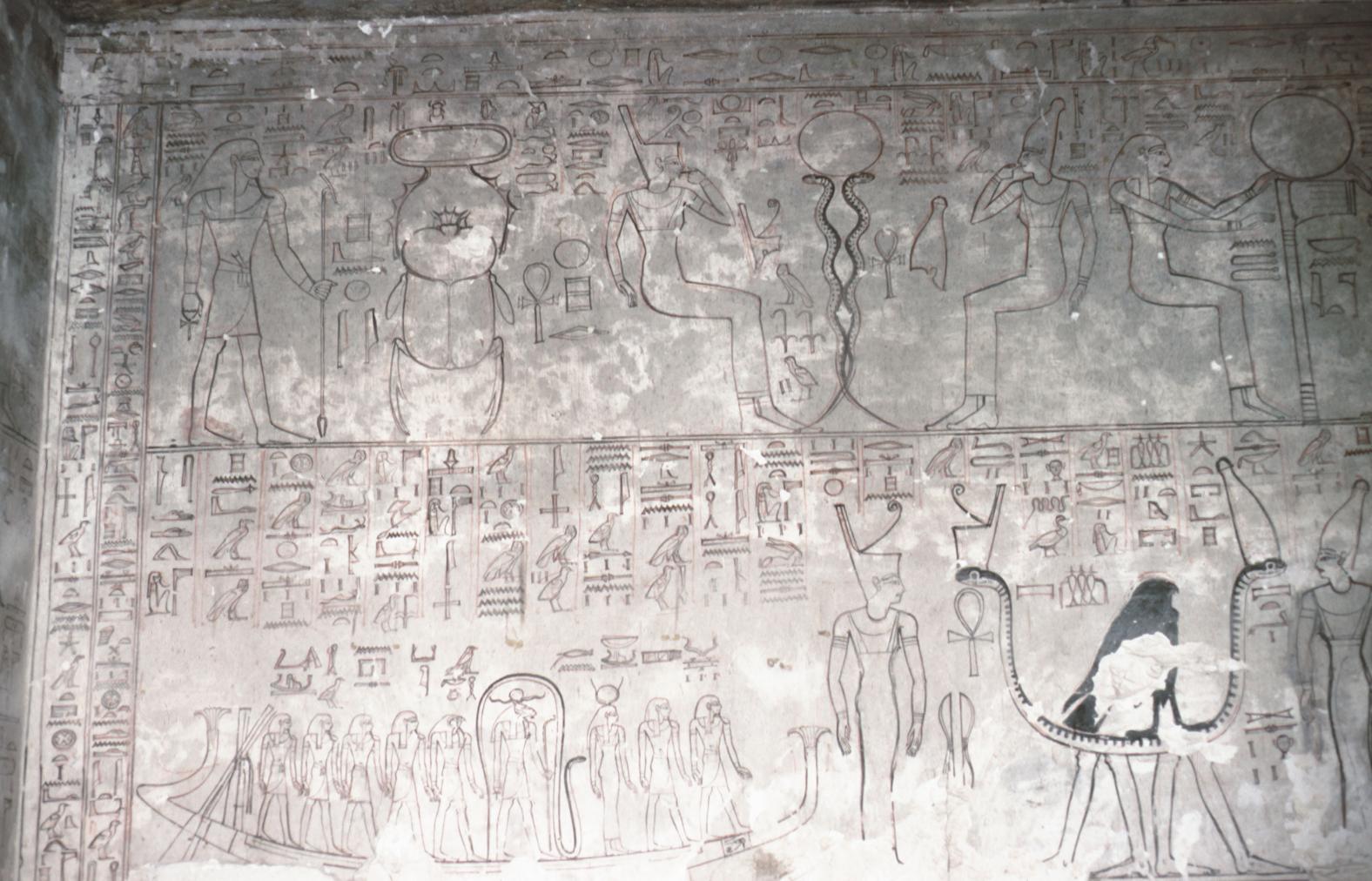
Imydwat, tenth hour: corrected preliminary sketches. Courtesy of Uni Dia Verlag; Uni Dia Image Nr. 35726.
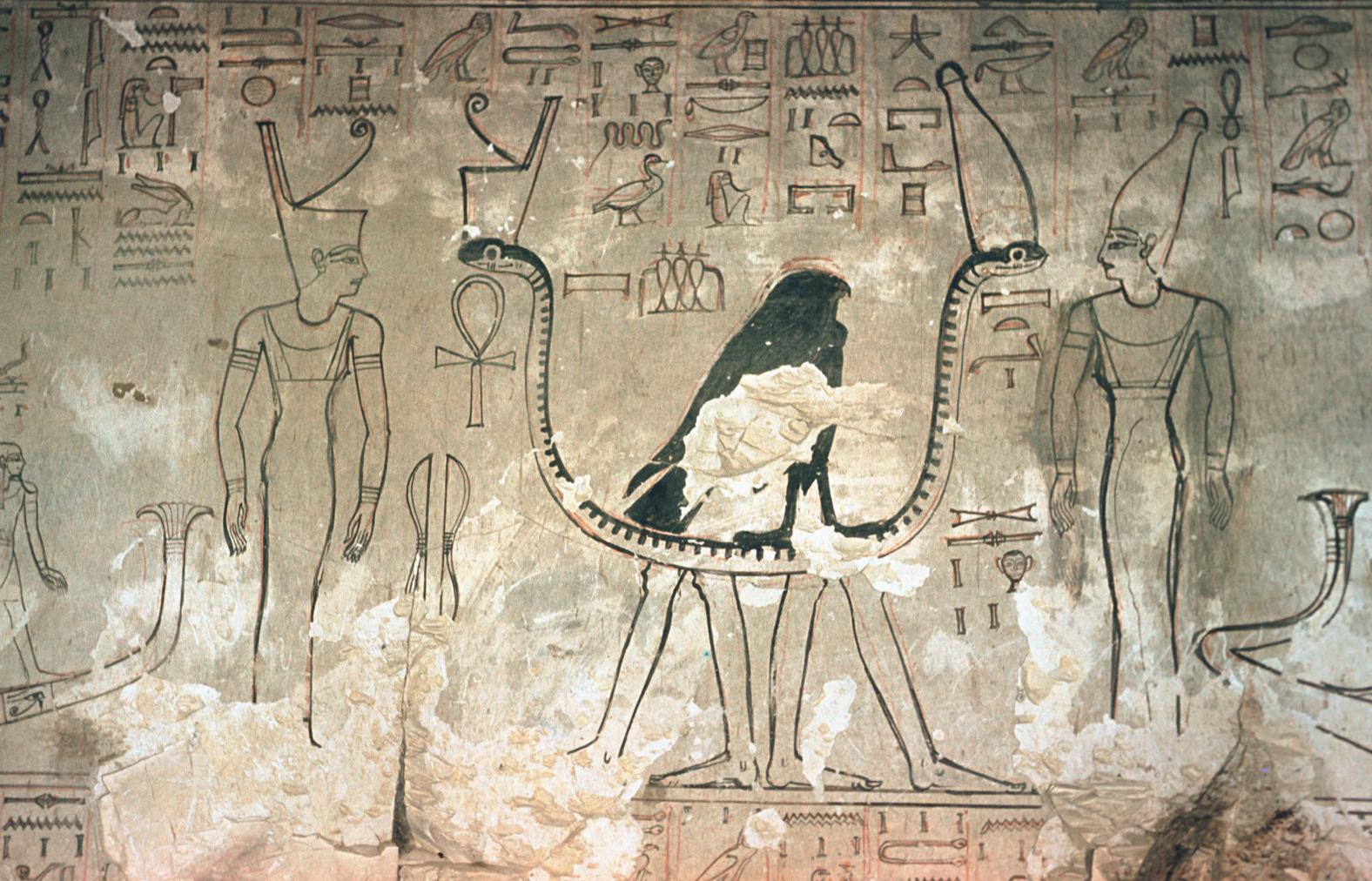
Detail of Imydwat, tenth hour: corrected preliminary sketches. Courtesy of Uni Dia Verlag; Uni Dia Image Nr. 35727.
Detail of Imydwat, tenth hour: corrected preliminary sketches. Courtesy of Uni Dia Verlag; Uni Dia Image Nr. 35728.
Detail of Imydwat, tenth hour: corrected preliminary sketches. Courtesy of Uni Dia Verlag; Uni Dia Image Nr. 35729.
Detail of Imydwat, tenth hour: corrected preliminary sketches. Courtesy of Uni Dia Verlag; Uni Dia Image Nr. 35730.
Detail of Imydwat, tenth hour: corrected preliminary sketches. Courtesy of Uni Dia Verlag; Uni Dia Image Nr. 35731.
Detail of Imydwat tenth hour, eleventh hour. Courtesy of Uni Dia Verlag; Uni Dia Image Nr. 35732.
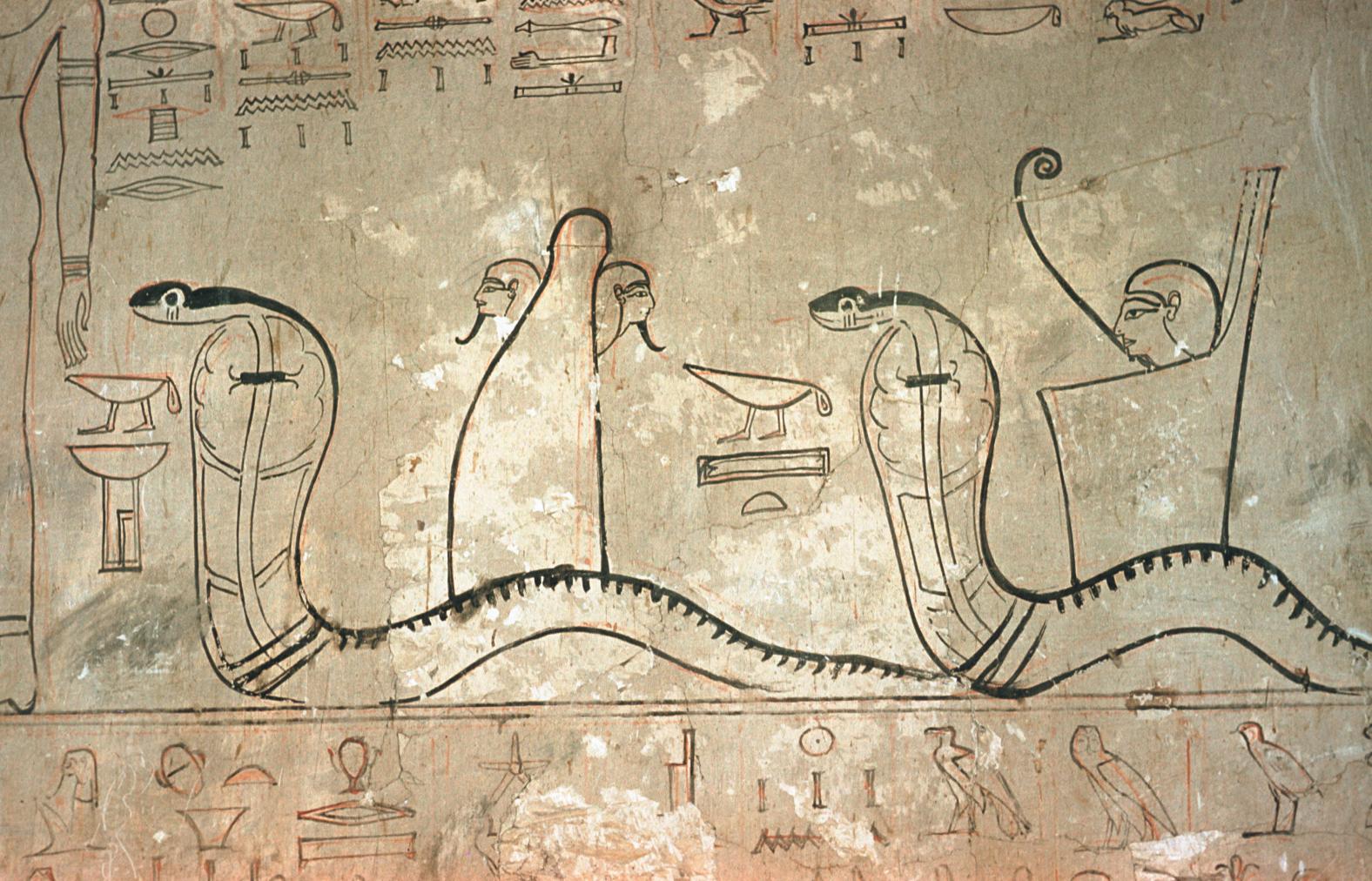
Detail of Imydwat tenth hour, eleventh hour. Courtesy of Uni Dia Verlag; Uni Dia Image Nr. 35733.
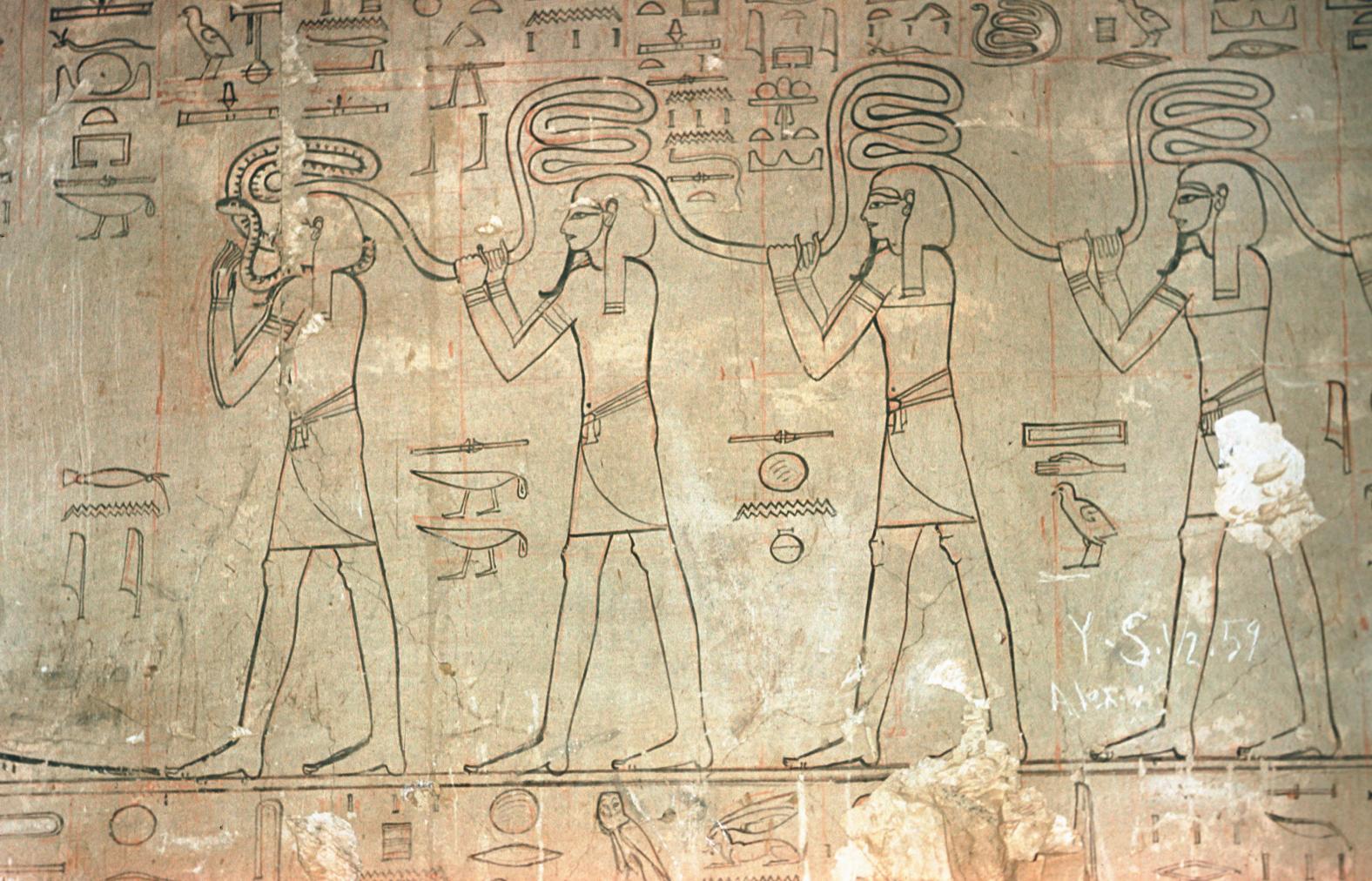
Detail of Imydwat tenth hour, eleventh hour. Courtesy of Uni Dia Verlag; Uni Dia Image Nr. 35734.
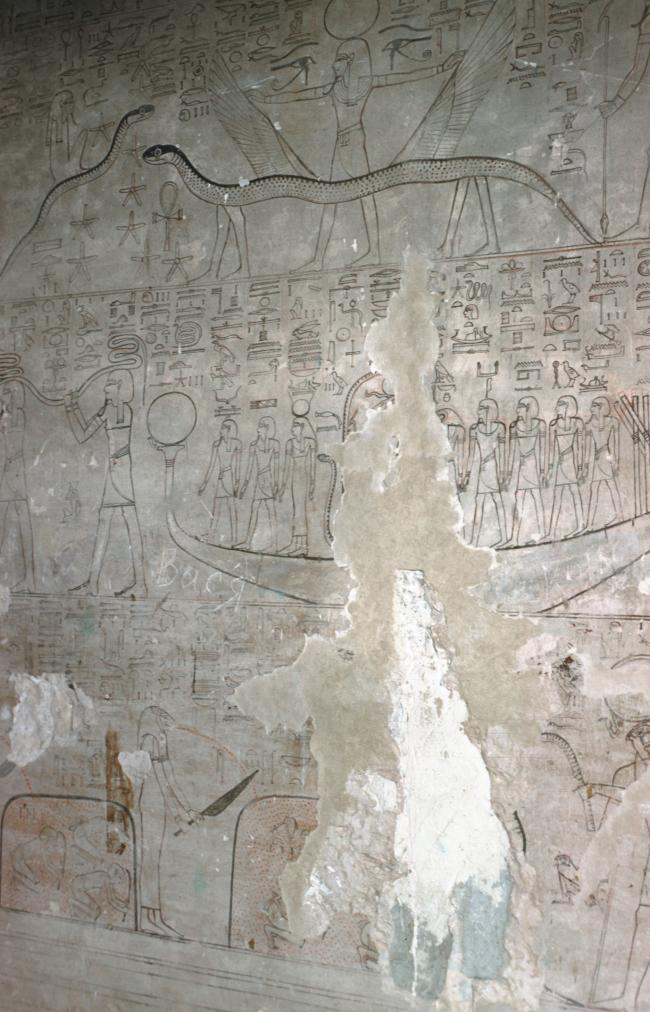
Imydwat, eleventh hour: preliminary sketches. Courtesy of Uni Dia Verlag; Uni Dia Image Nr. 35735.
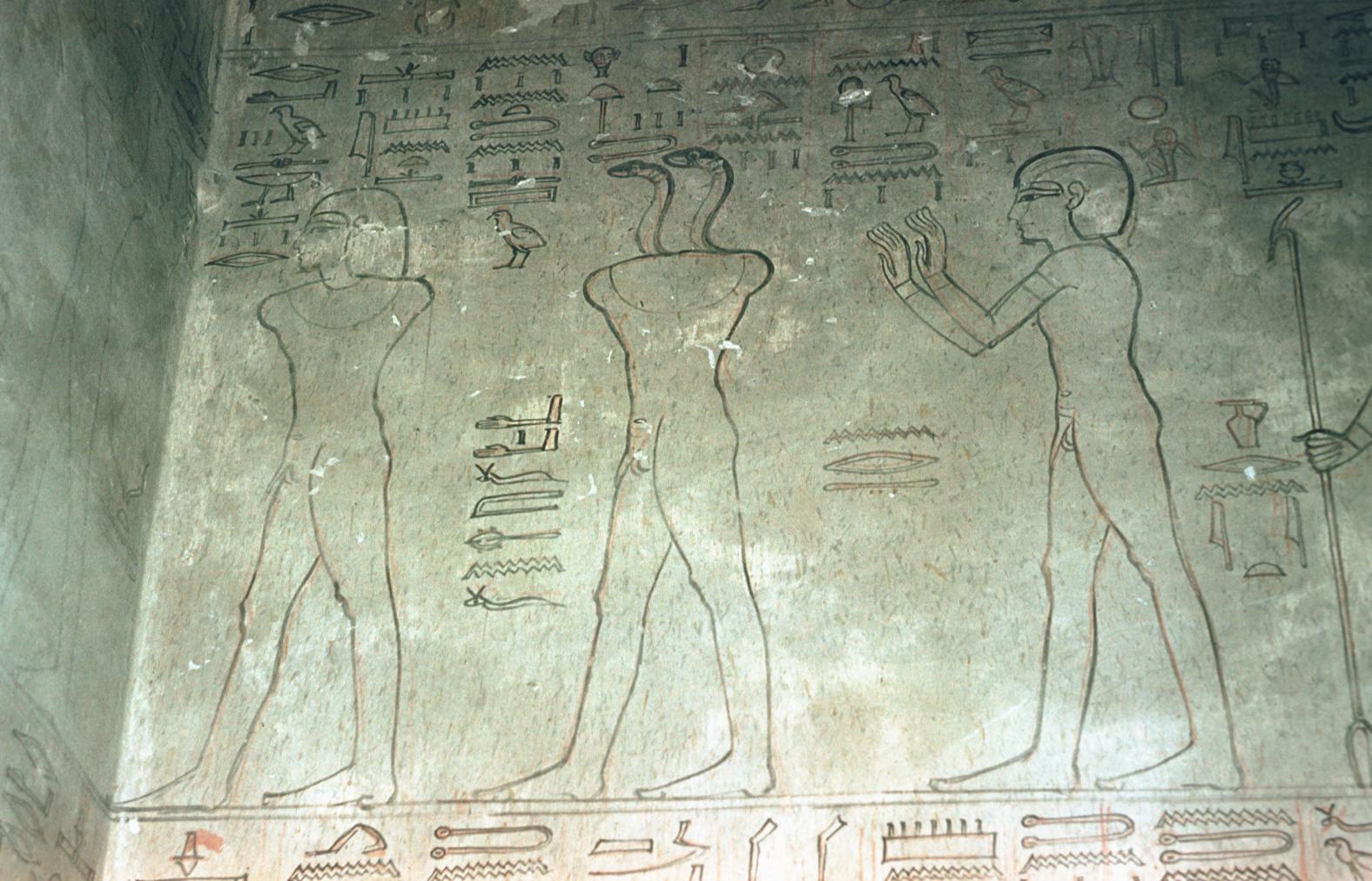
Detail of Imydwat, eleventh hour: preliminary sketches. Courtesy of Uni Dia Verlag; Uni Dia Image Nr. 35736.
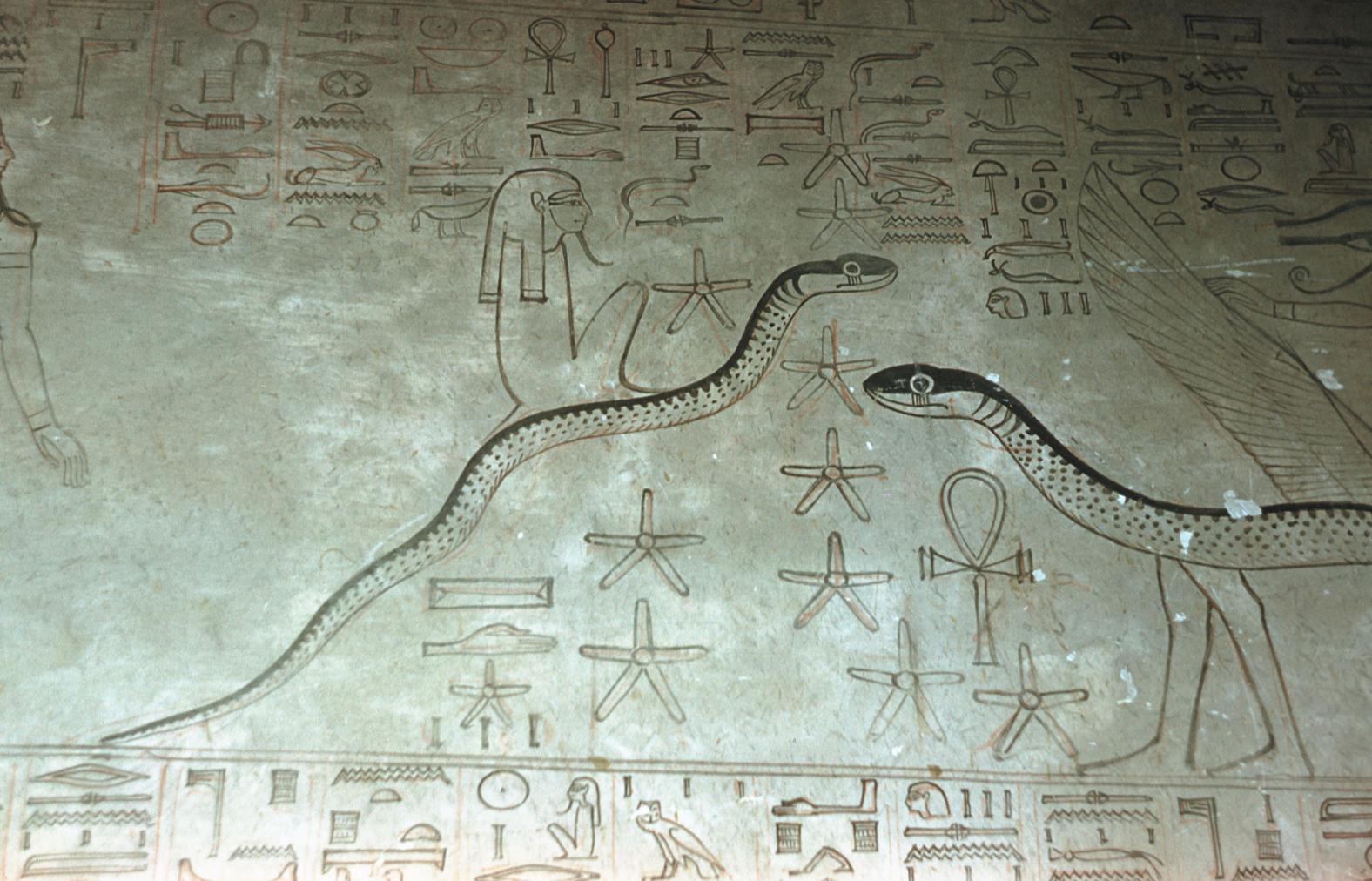
Detail of Imydwat, eleventh hour: preliminary sketches. Courtesy of Uni Dia Verlag; Uni Dia Image Nr. 35737.
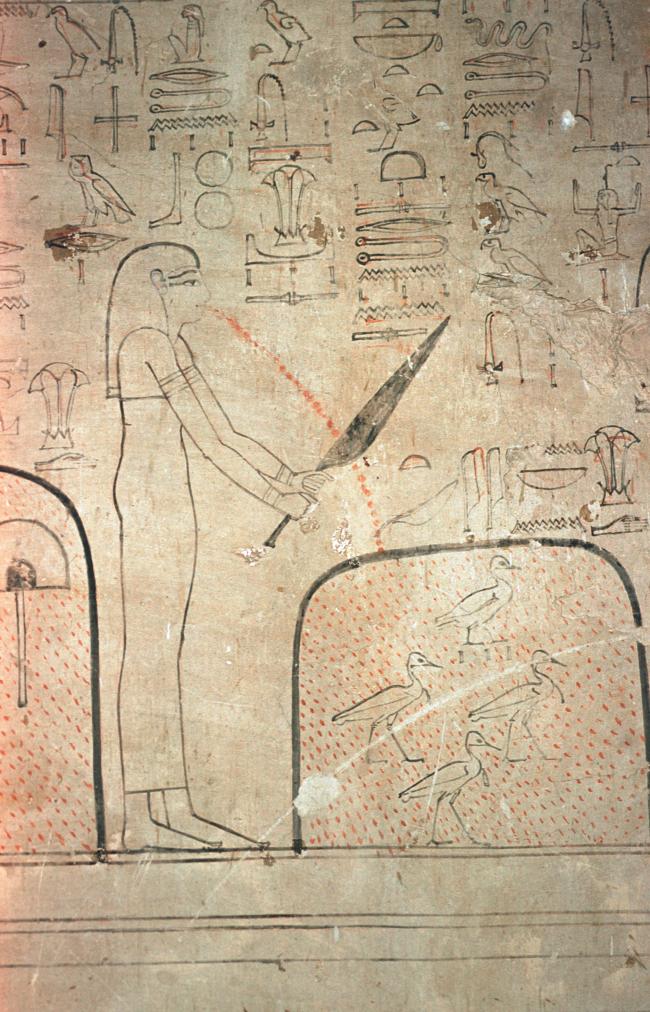
Detail of Imydwat, eleventh hour: preliminary sketches. Courtesy of Uni Dia Verlag; Uni Dia Image Nr. 35738.
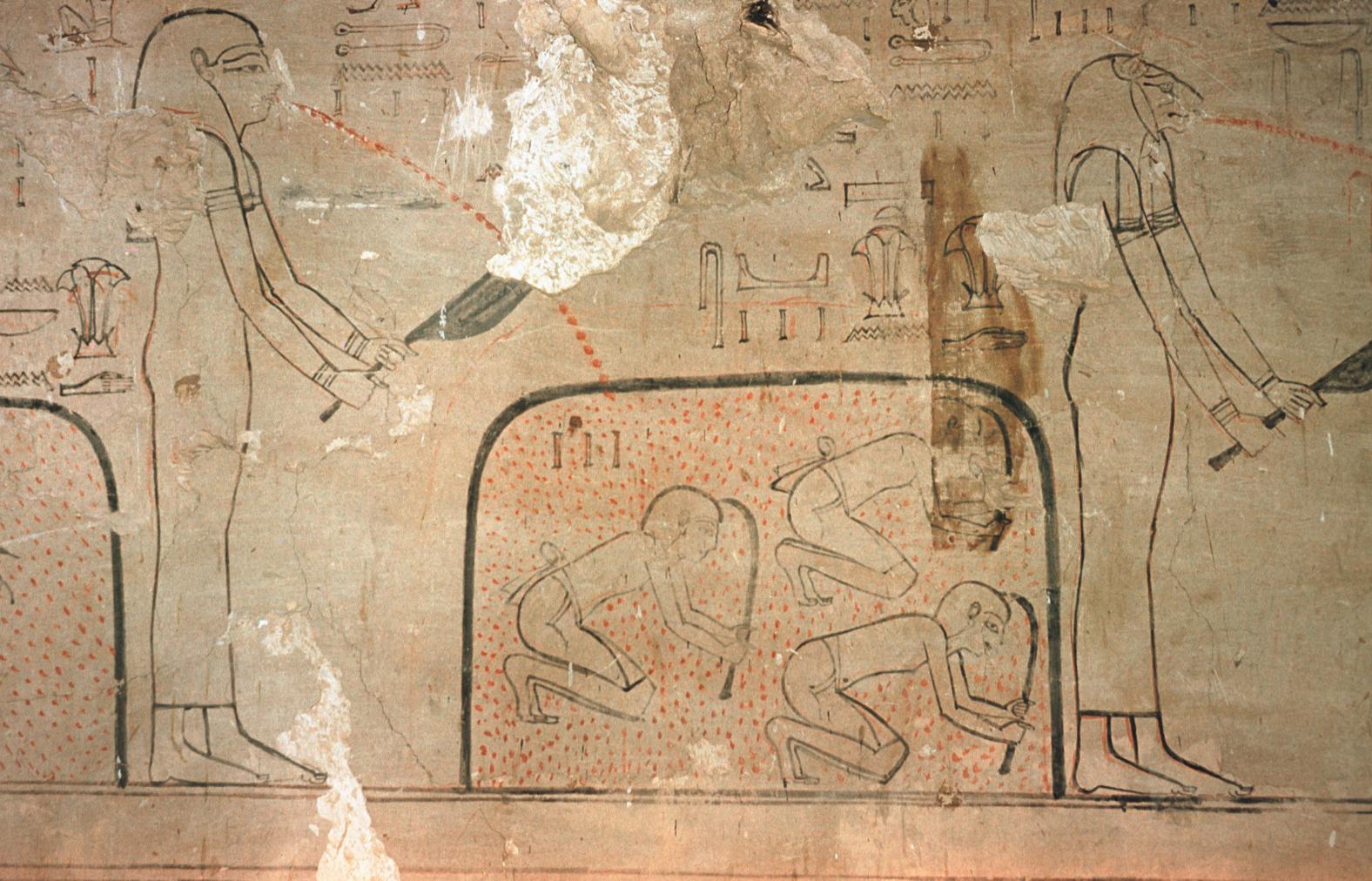
Detail of Imydwat, eleventh hour: preliminary sketches. Courtesy of Uni Dia Verlag; Uni Dia Image Nr. 35739.
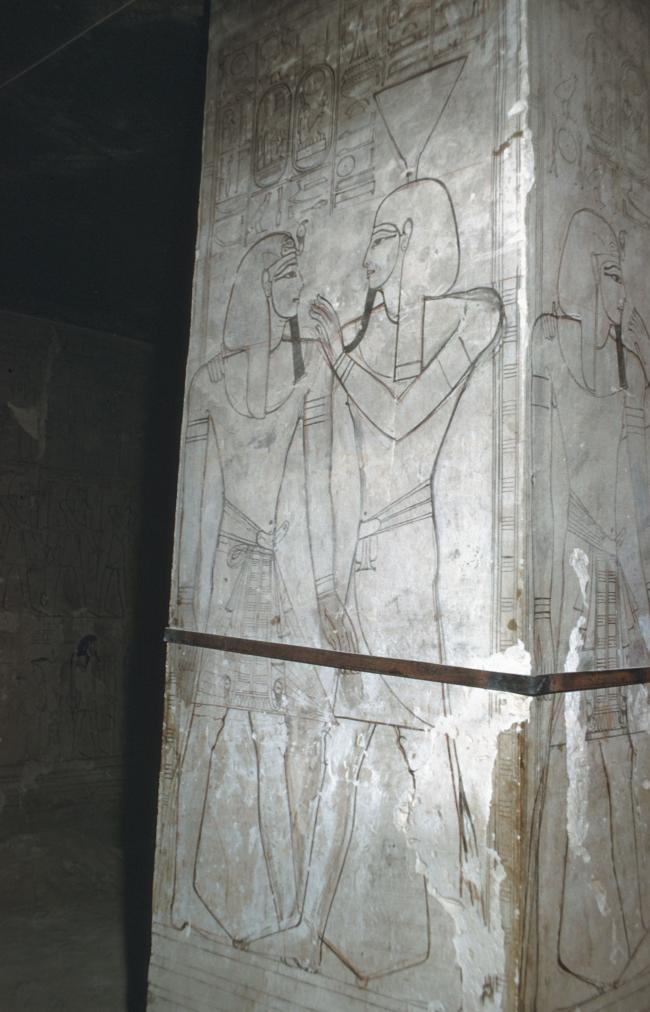
Deceased with Nefertem, Side chamber Fa. Courtesy of Uni Dia Verlag; Uni Dia Image Nr. 35740.
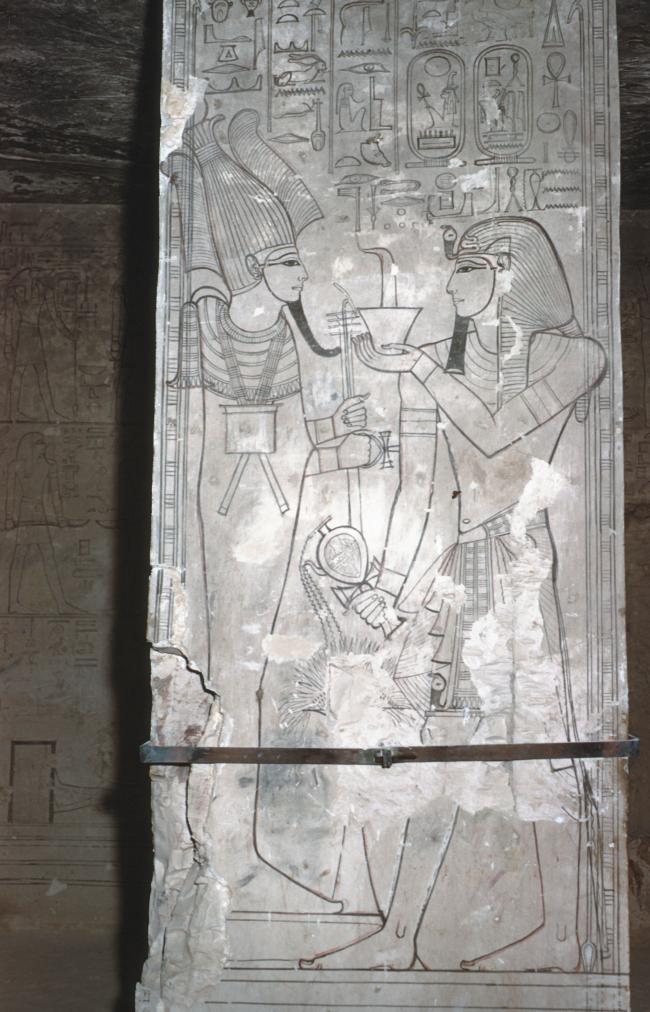
Deceased offering incense and libating before Osiris. Courtesy of Uni Dia Verlag; Uni Dia Image Nr. 35741.
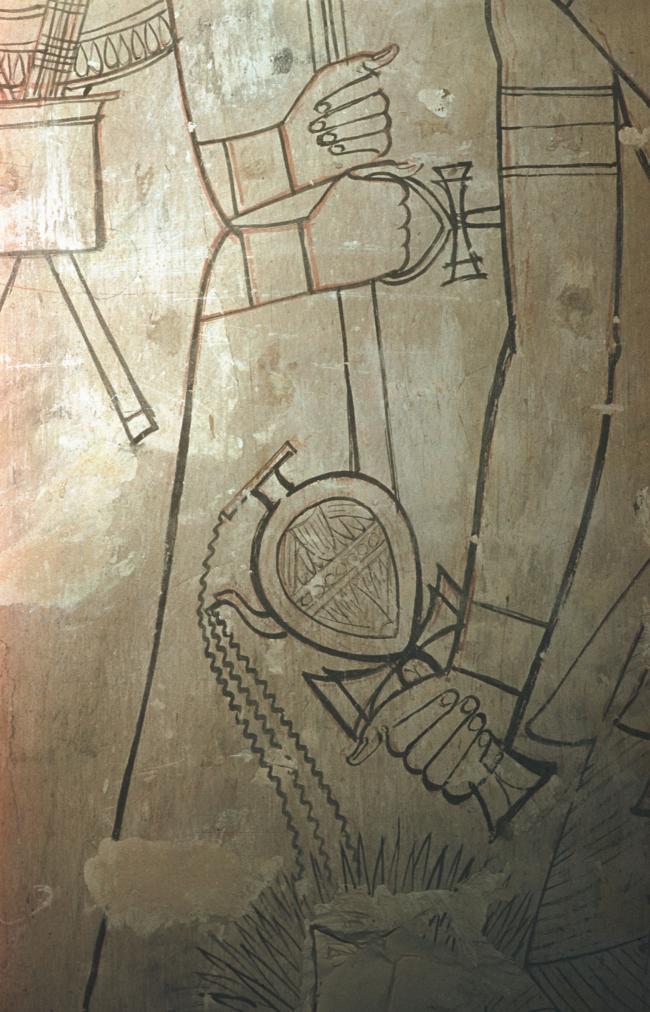
Detail of hand libating before Osiris. Courtesy of Uni Dia Verlag; Uni Dia Image Nr. 35742.
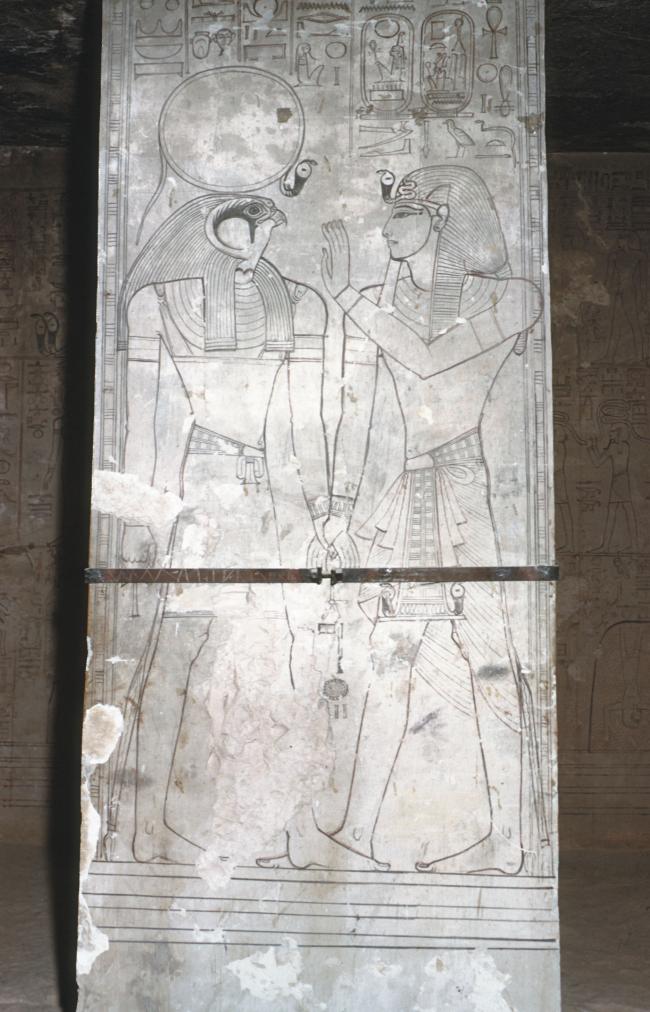
Deceased with Ra-Horakhty. Courtesy of Uni Dia Verlag; Uni Dia Image Nr. 35743.
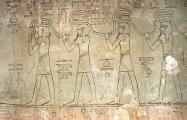
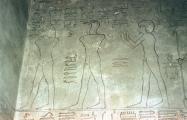
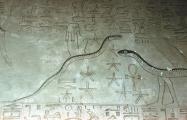
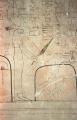
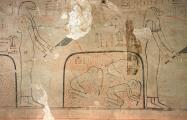
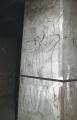
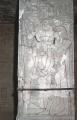
Gate Fa
See entire tombThe outer thicknesses are decorated with texts and figures from the fifth division (P)/sixth hour (H) of the Book of Gates. On the inner thicknesses are texts from the beginning of the ninth and eleventh hours of the Imydwat.
Porter and Moss designation:
Gate G
See entire tombThe top of this gate is damaged. On the thicknesses, Hathor holds a menat necklace up to the king. These reliefs were removed by Champollion and Rosellini and are now in the Louvre and Florence.
Porter and Moss designation:
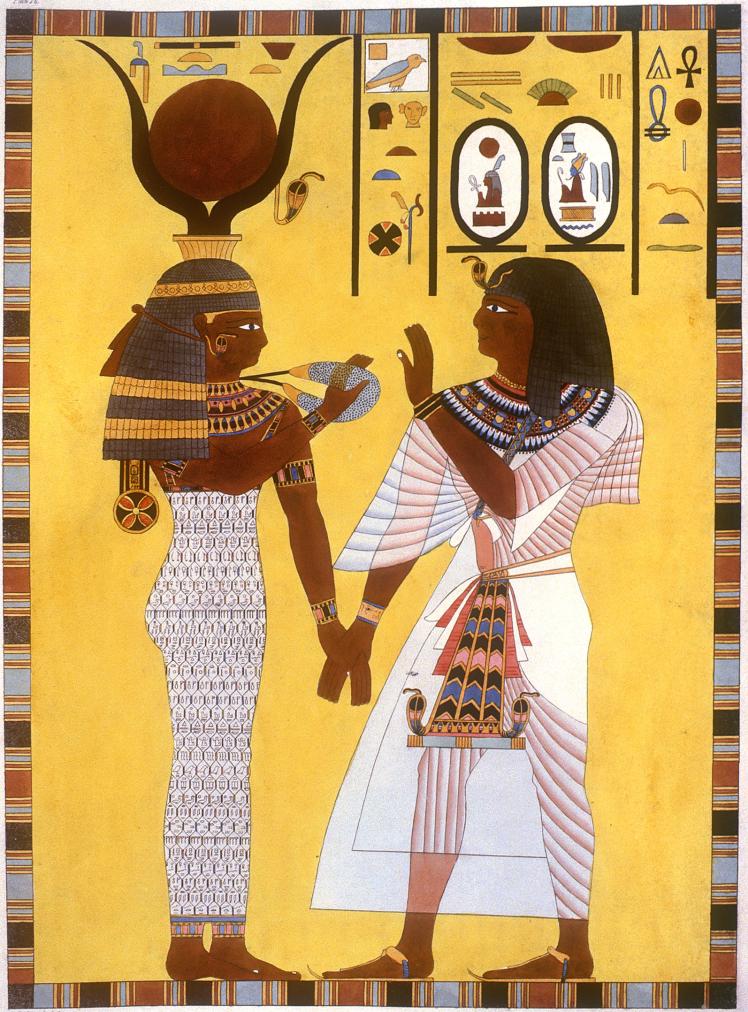
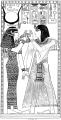
Hathor presenting menat to Sety I (scene removed by the Franco-Tuscan expedition and now in the Louvre, Paris).
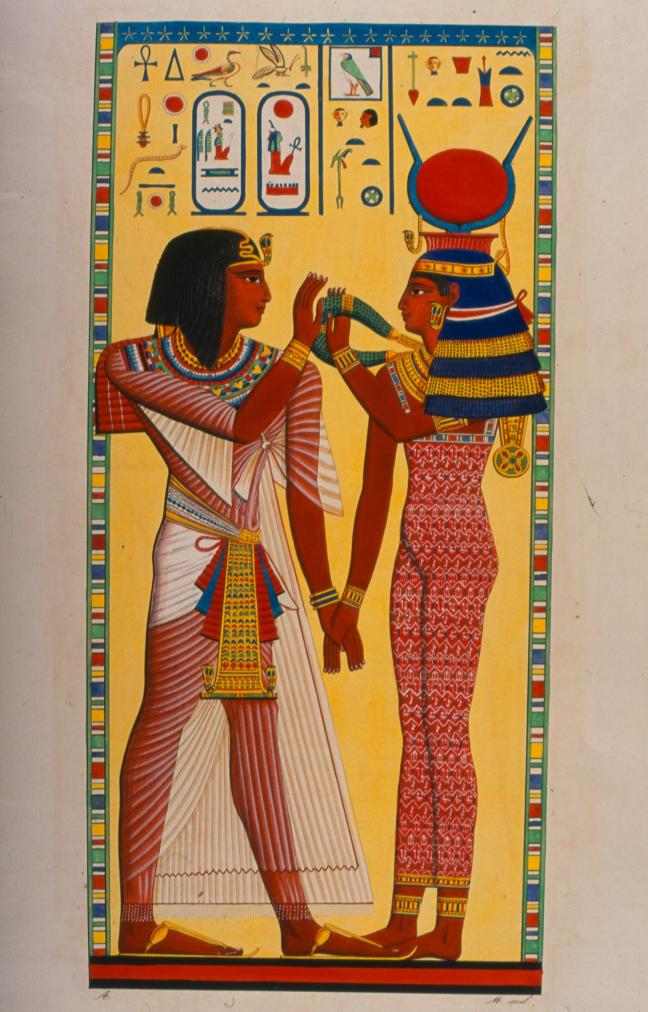
Sety I and Hathor (scene removed by Franco-Tuscan expedition and now in Florence, no. 2468).
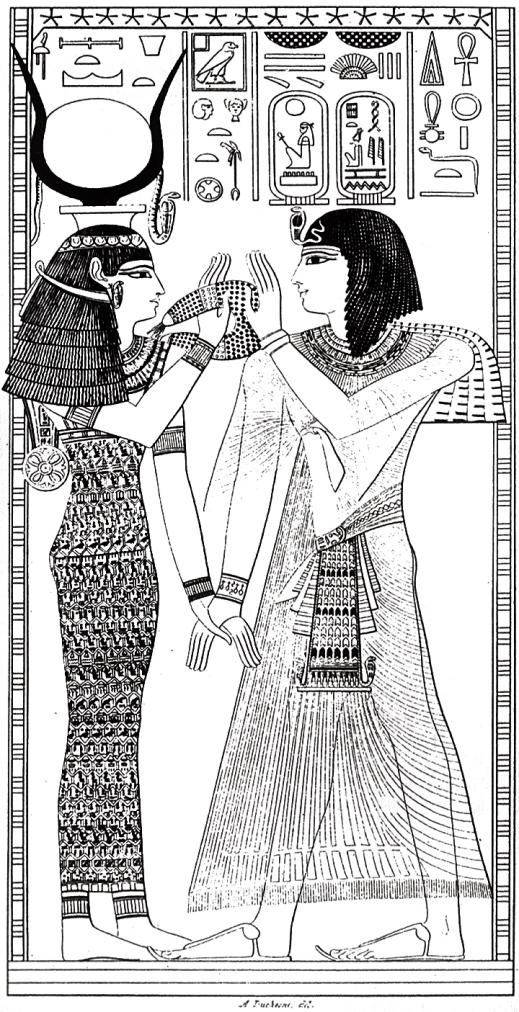
Hathor presenting menat to Sety I (scene removed by Franco-Tuscan expedition and now in the Louvre, Paris) (reconstruction).
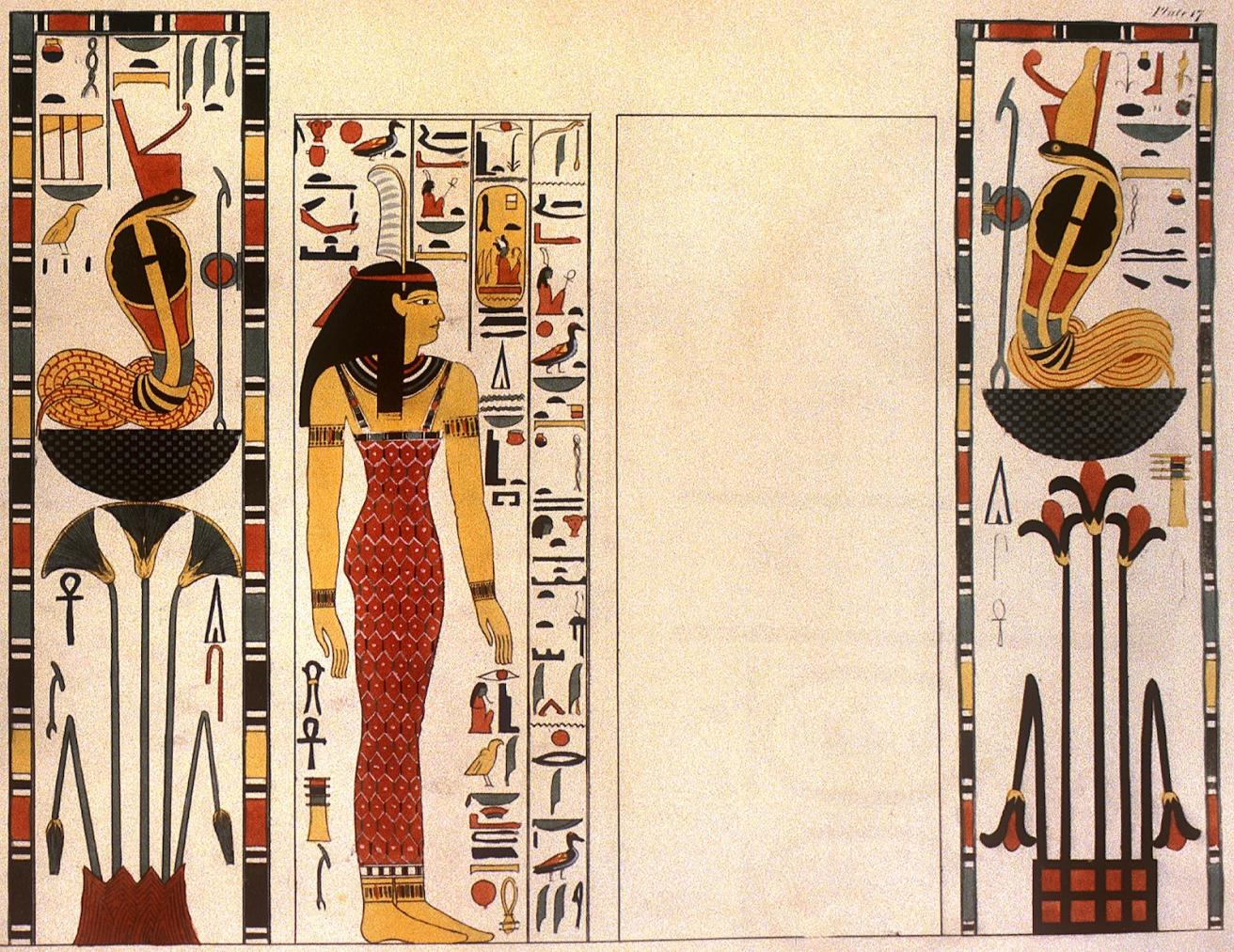
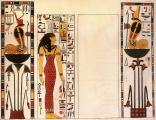
Wadjet and Nekhbet, the goddesses of Lower and Upper Egypt, as cobras, together with Ma'at (companion image of Ma'at to the right of center was removed by the Franco-Tuscan expedition and is now in Florence; the figures of Wadjet and of Ma'at are now missing as well) (reconstruction).
Corridor G
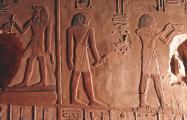
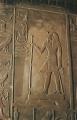
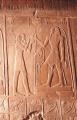
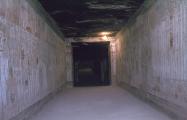
See entire tombThe continuation of the tomb bends slightly right (northwest) of the previous tomb axis. The walls are decorated with texts and scenes from the Opening of the Mouth ritual. There are many instances where vandals have cut out the king's cartouches, texts and figures.
Porter and Moss designation:
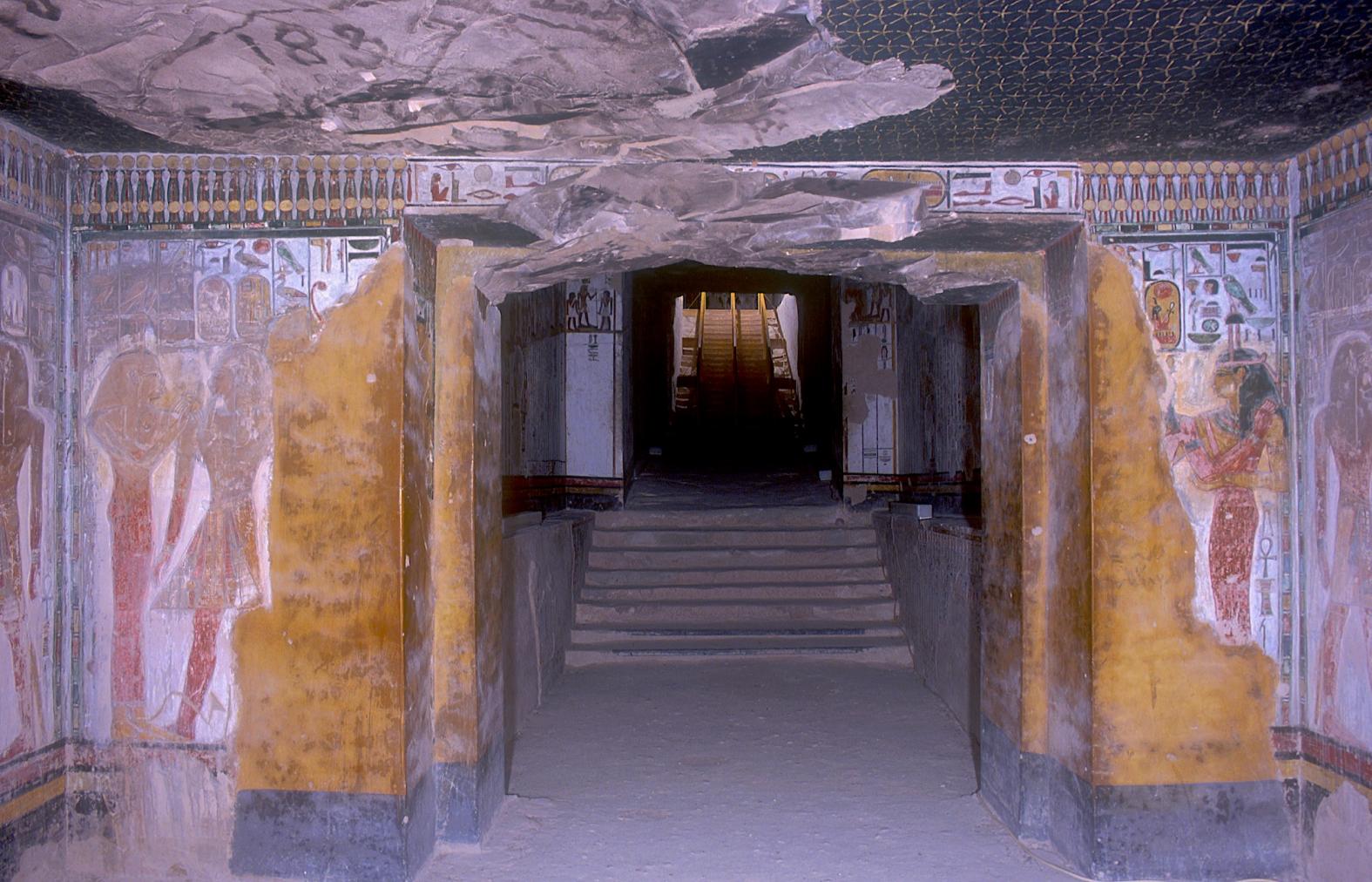
Sety I with two forms of Hathor, and Carter's repairs in brick of damaged walls; stairs leading in the direction of tomb entrance.
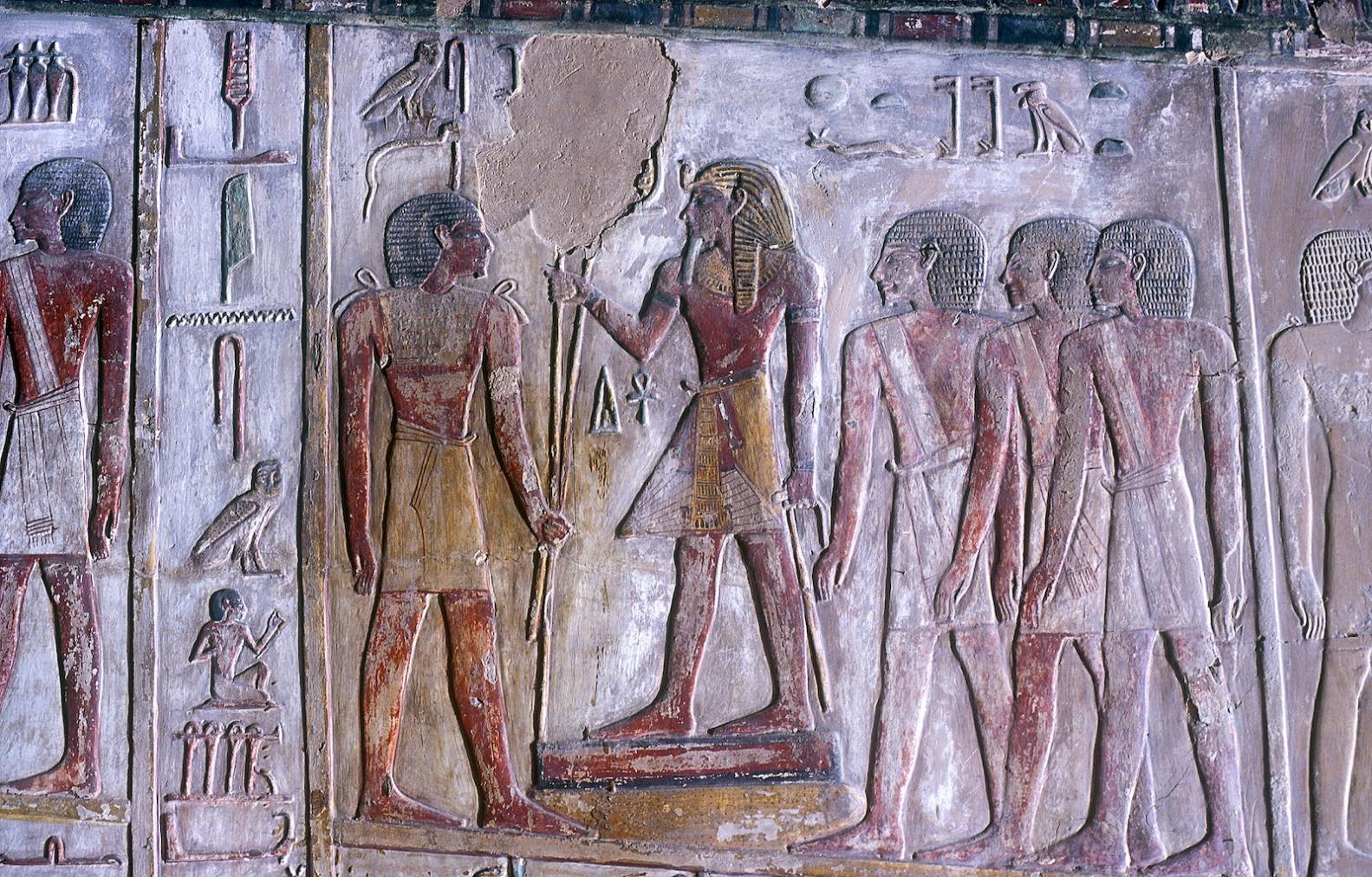
Opening of the Mouth ritual, scenes 11 and 12 (detail).
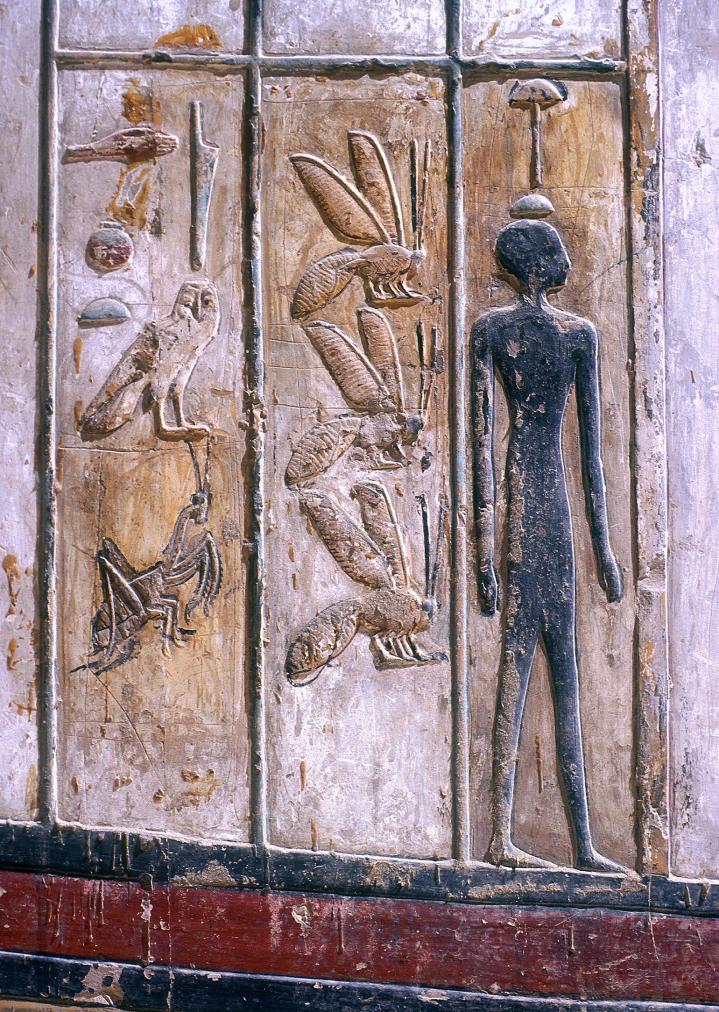
Opening of the Mouth ritual, scene 10: shadow of dead.
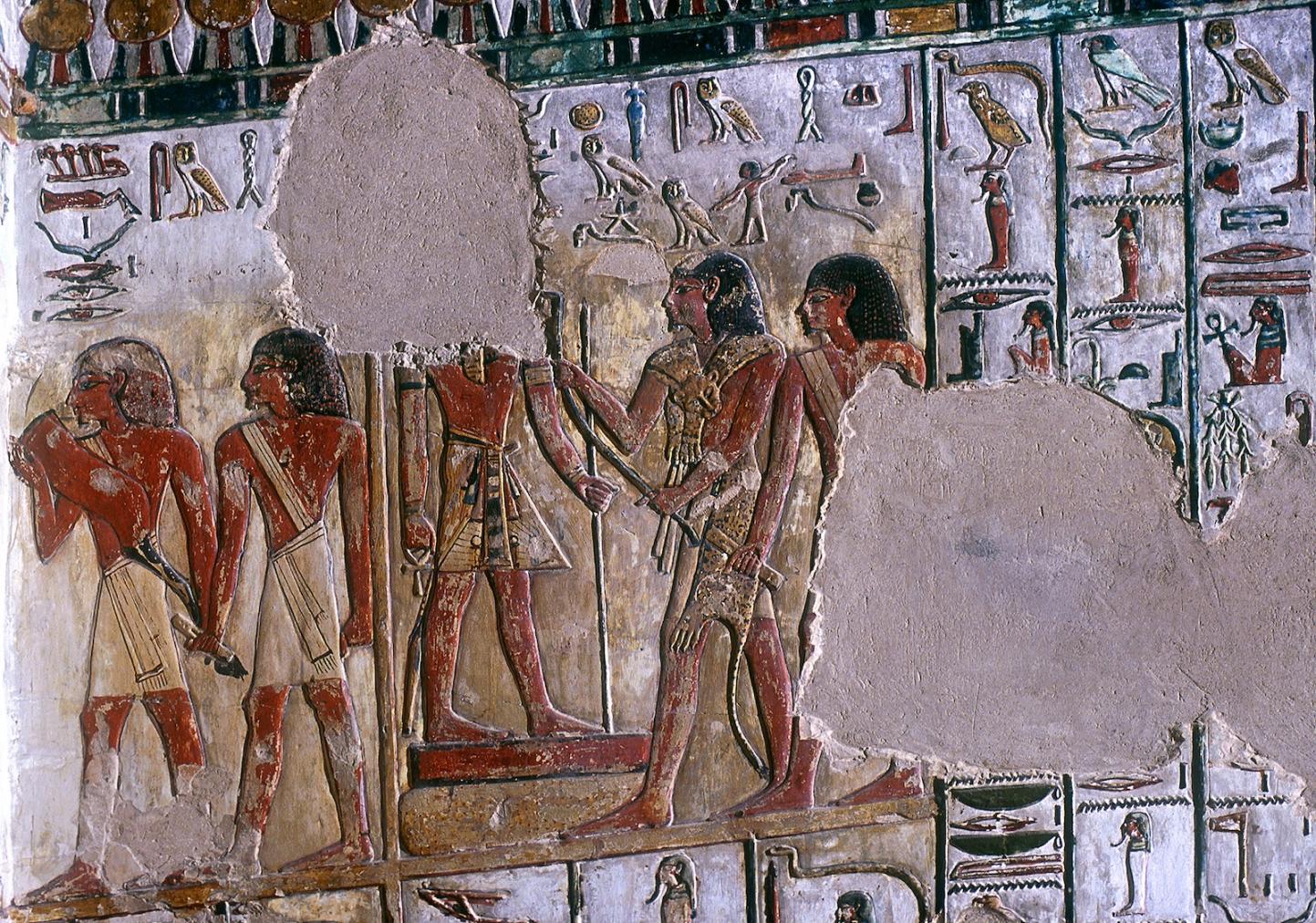
Opening of the Mouth ritual: scenes 45 and 46 (detail).
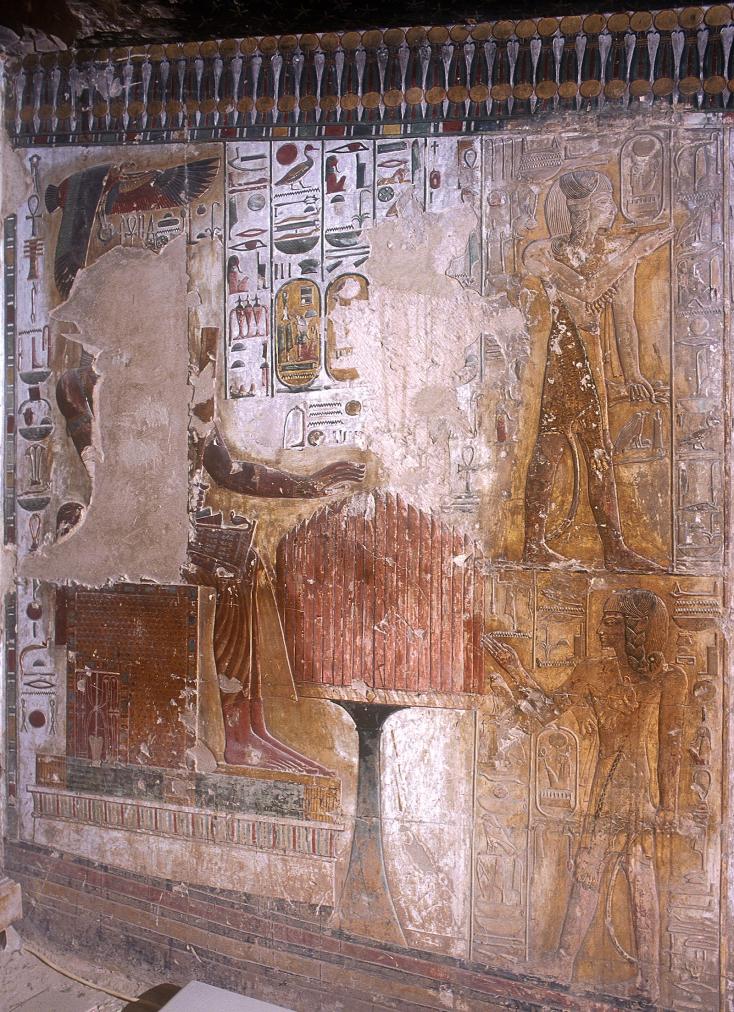
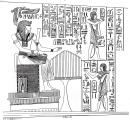
Opening of the Mouth ritual: Sety I seated at offering table and Iwnmutef priests, with loss of part of figure of king.
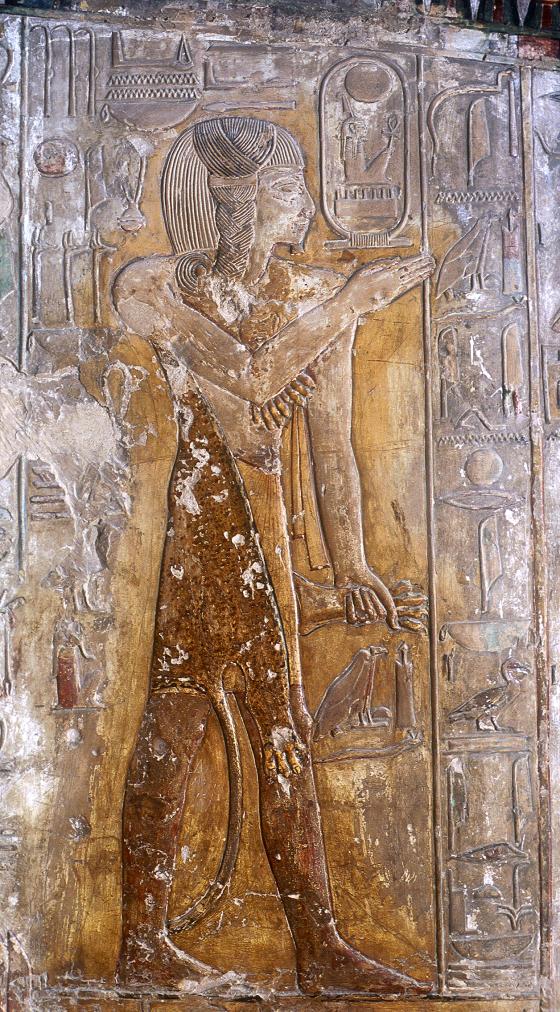
Opening of the Mouth ritual: Iwnmutef priest reciting (detail).
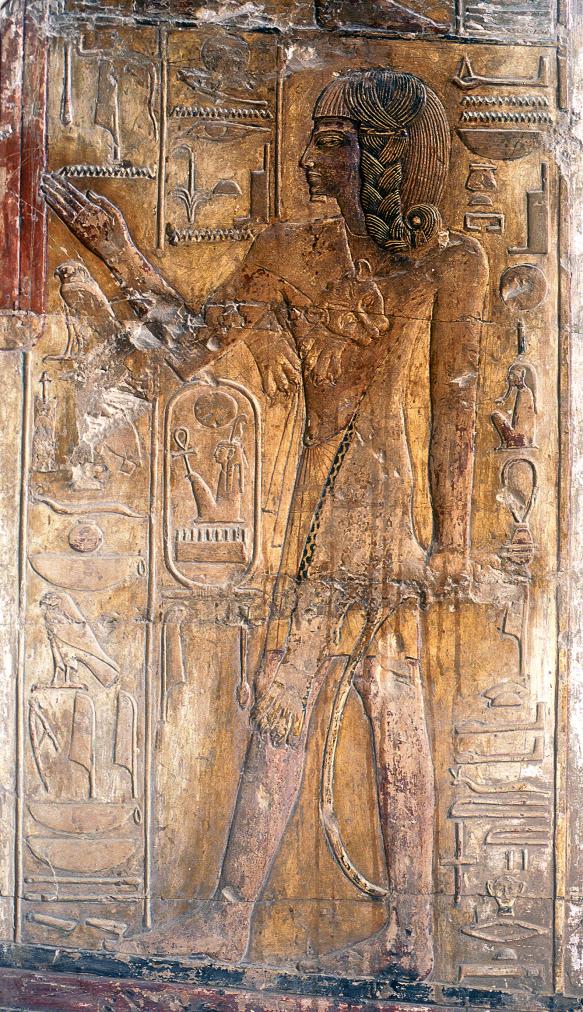
Opening of the Mouth ritual: Iwnmutef priest addressing Sety I (detail).
View of pillared chamber F looking into corridor G (reconstruction).
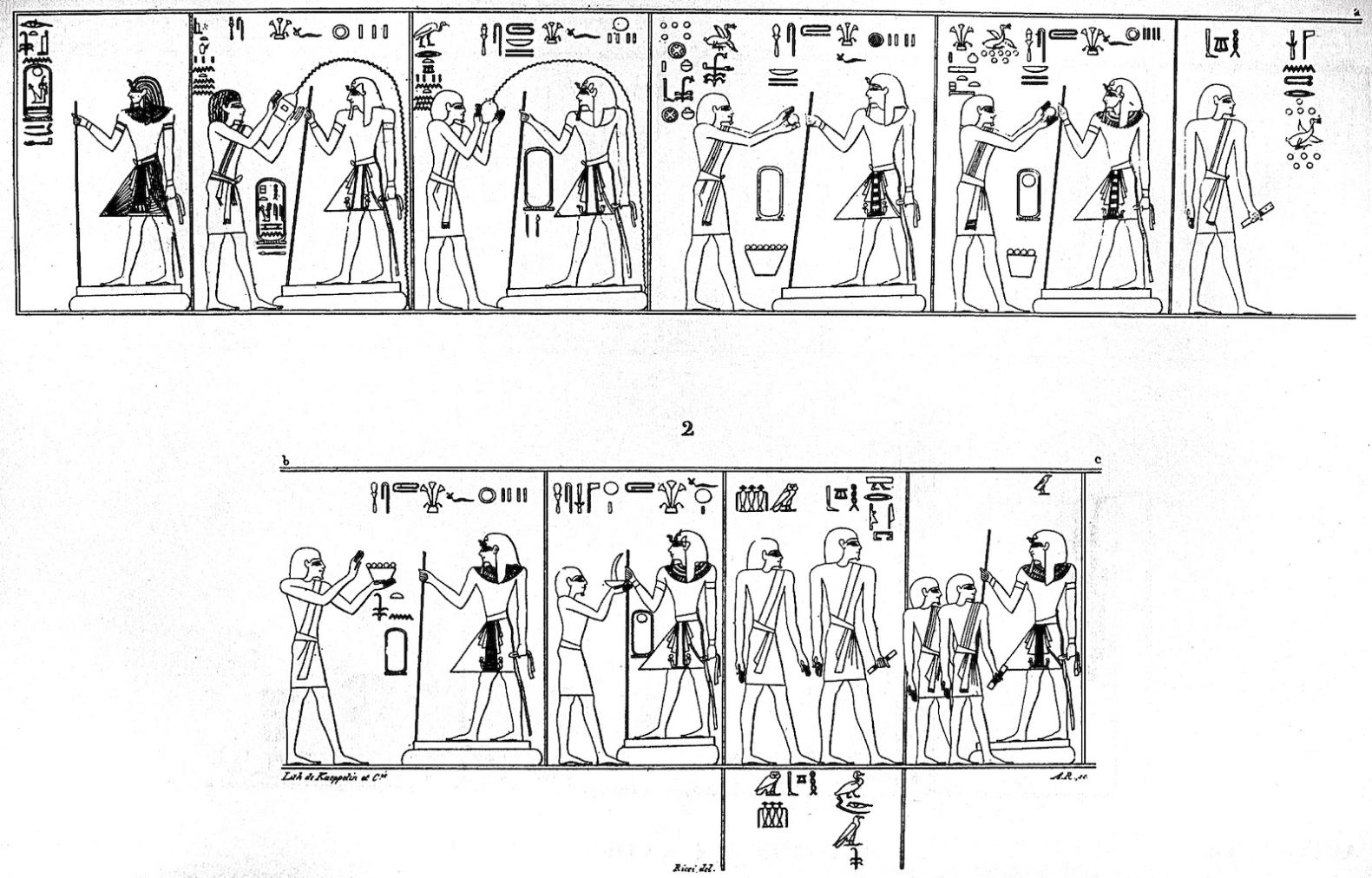
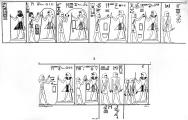
Opening of the Mouth ritual, scenes 1-8 (reconstruction).
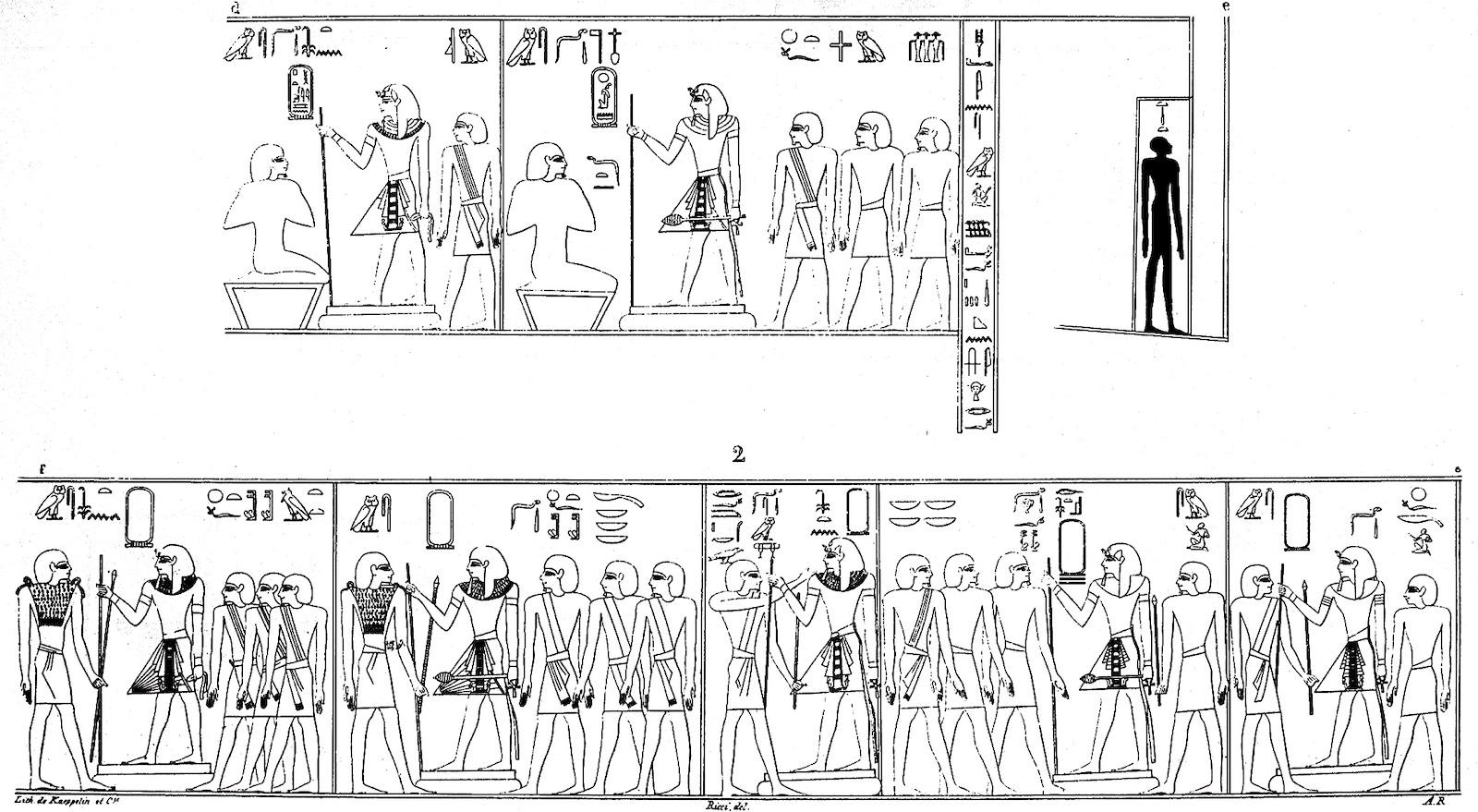
Opening of the Mouth ritual, scenes 9-16 (reconstruction).
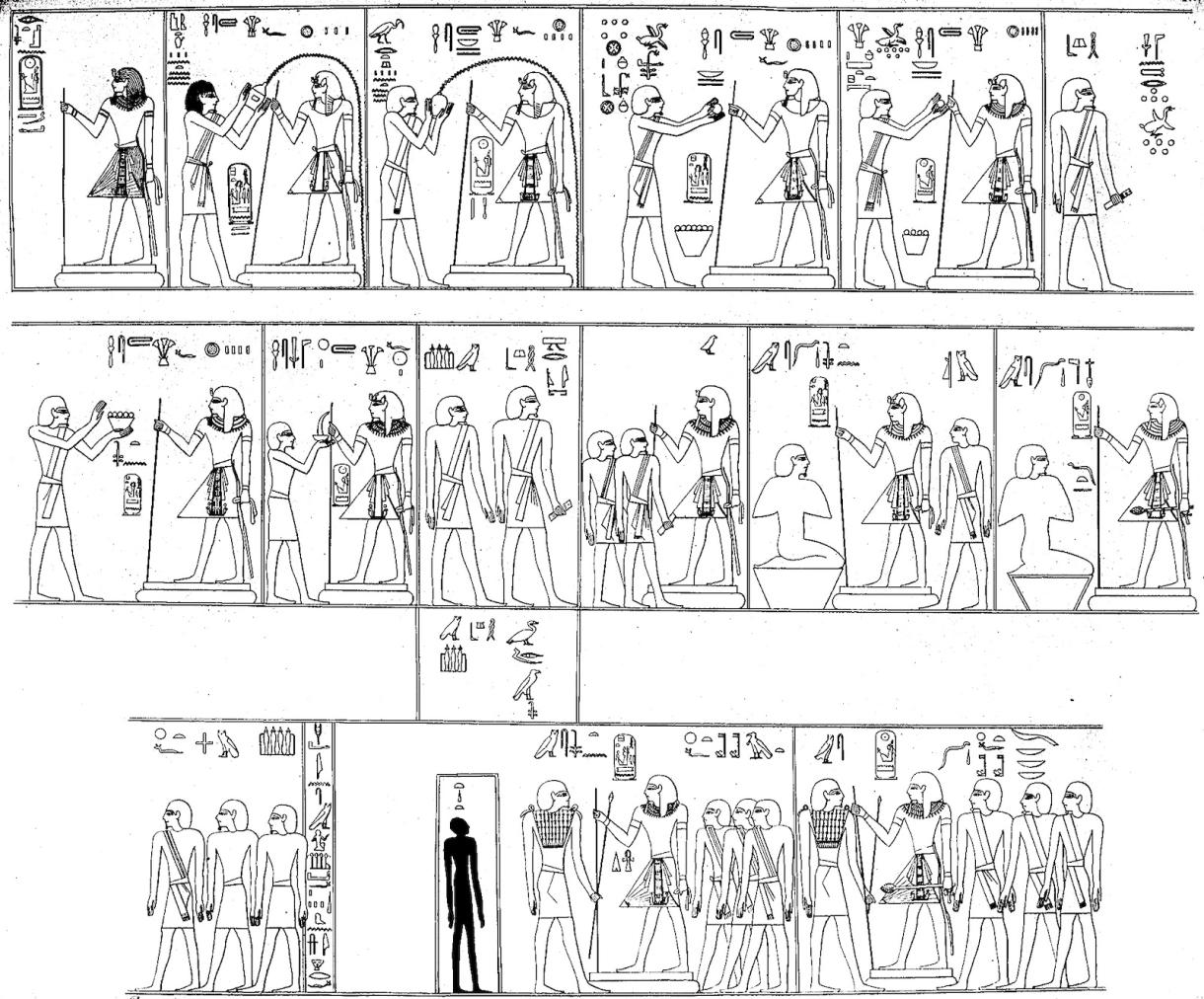
Opening of the Mouth ritual, scenes 1-13 (reconstruction).
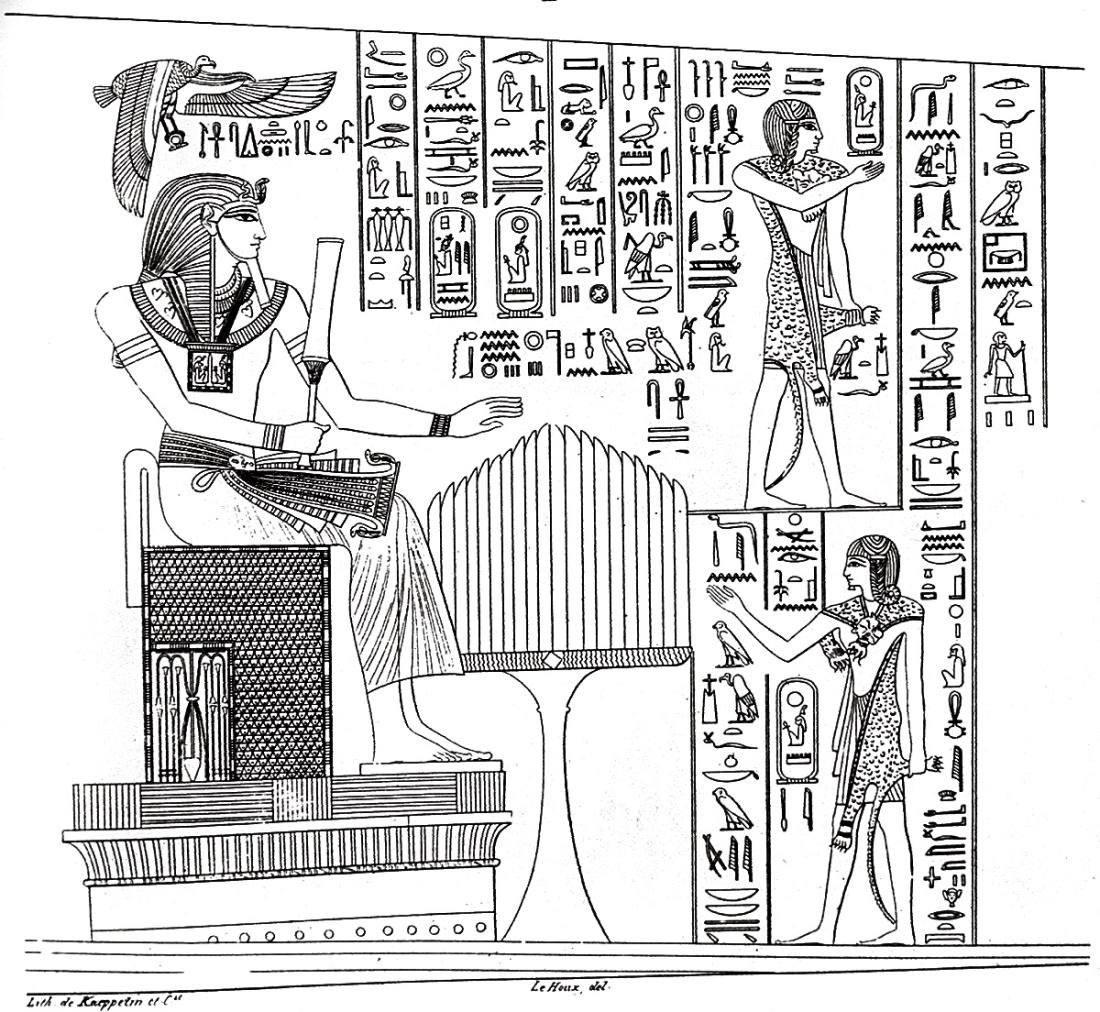
Opening of the Mouth ritual, opening scene: Sety I before offering table with Iwnmutef priests (reconstruction).
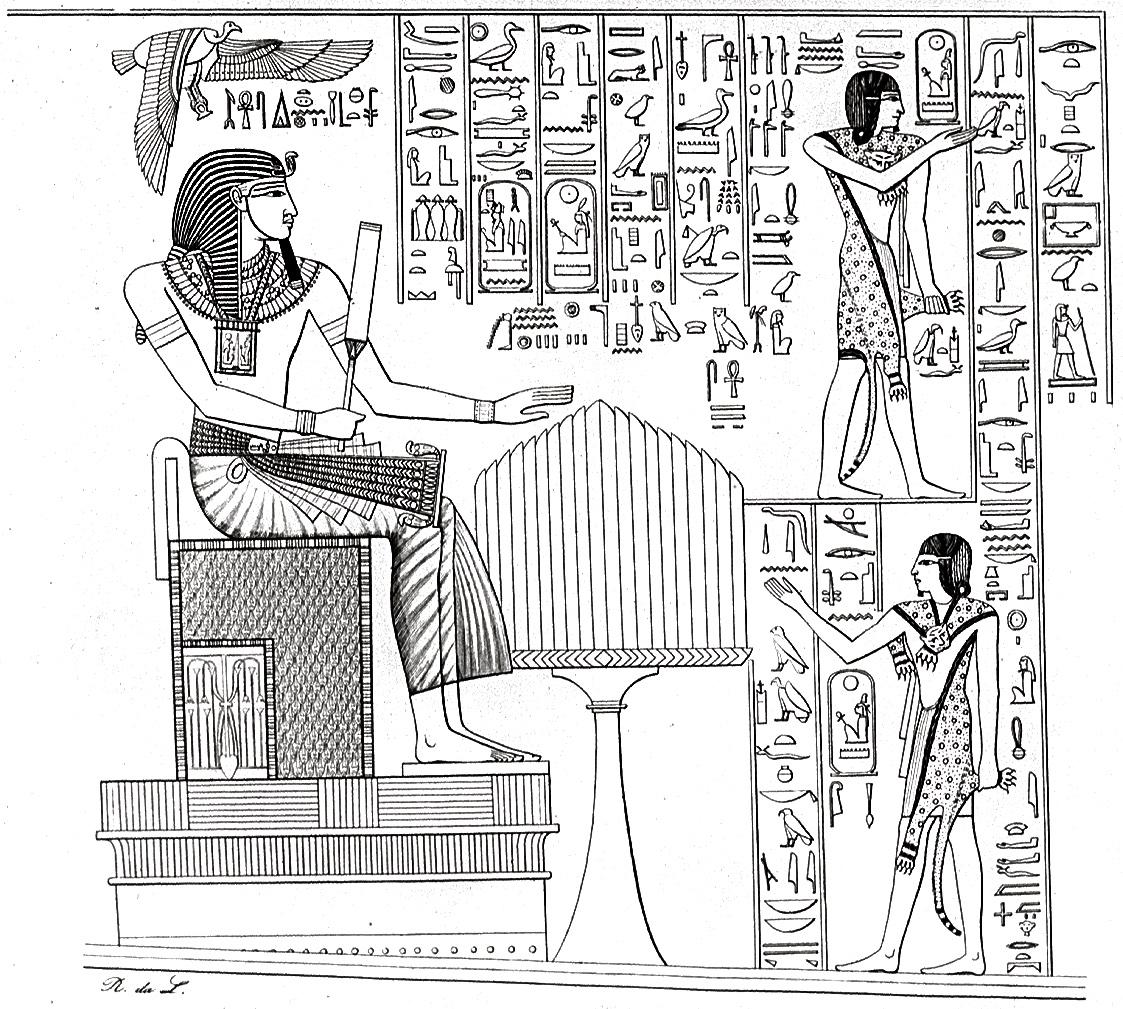
Opening of the Mouth ritual, opening scene: Sety I seated before offering table and two Iwnmutef priests (reconstruction).
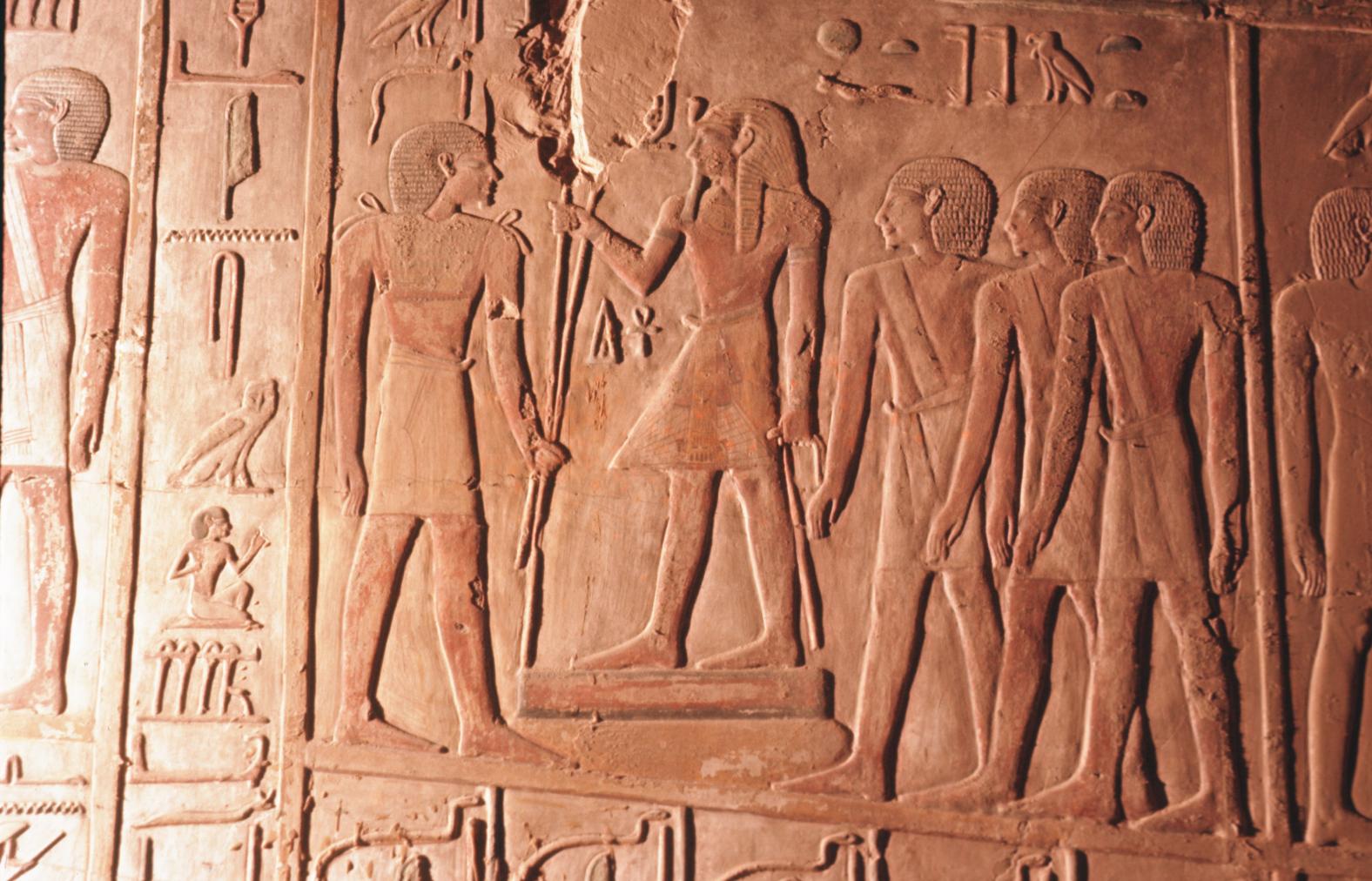
Opening of the Mouth ritual; Sem-priest and the three sculptors in front of the statue of the king standing on a sand heap. Courtesy of Uni Dia Verlag; Uni Dia Image Nr. 35744.
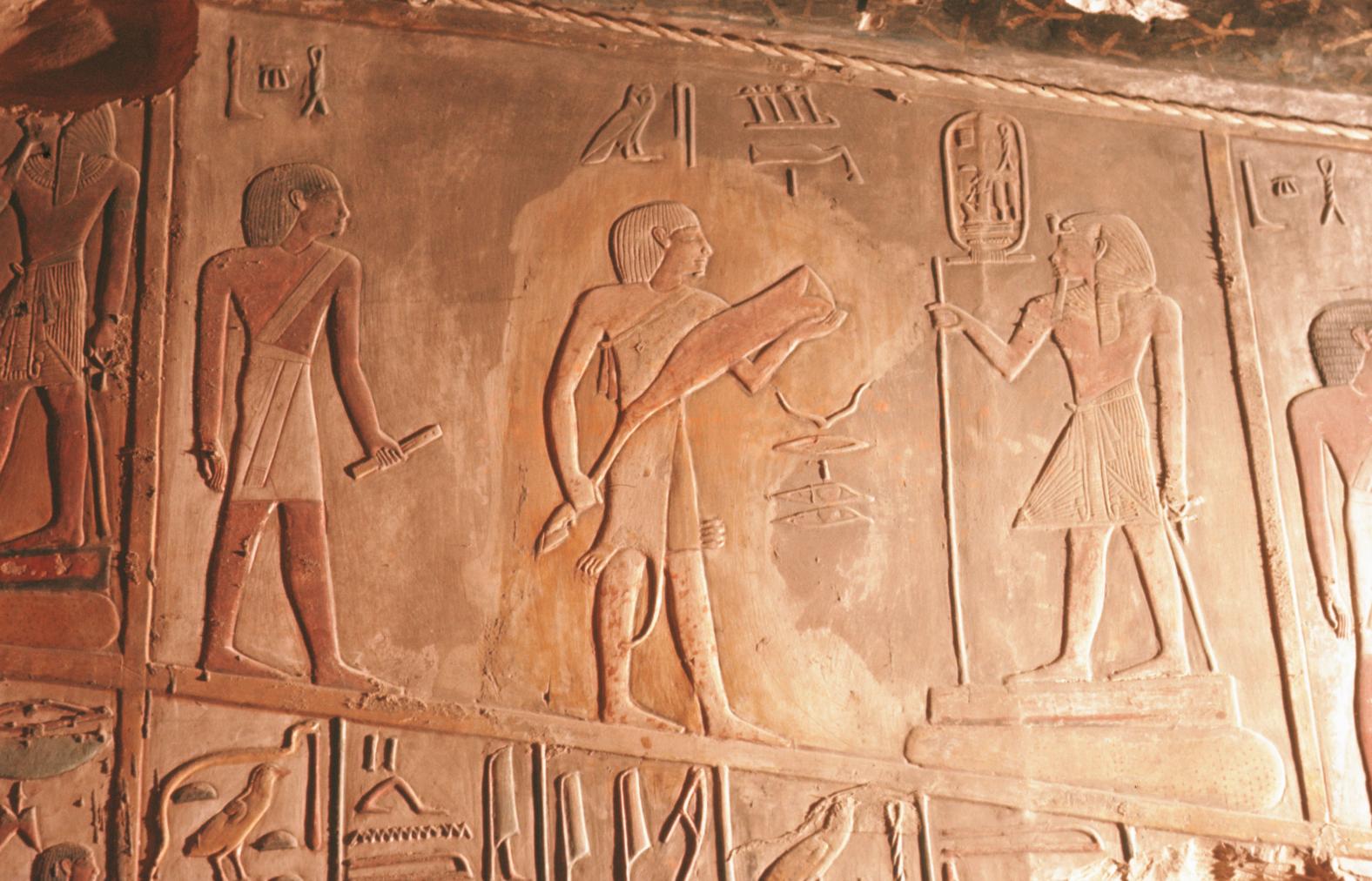
Opening of the Mouth scene, scenes 1-13; the Sem-priest offering a bull leg. Courtesy of Uni Dia Verlag; Uni Dia Image Nr. 35745.
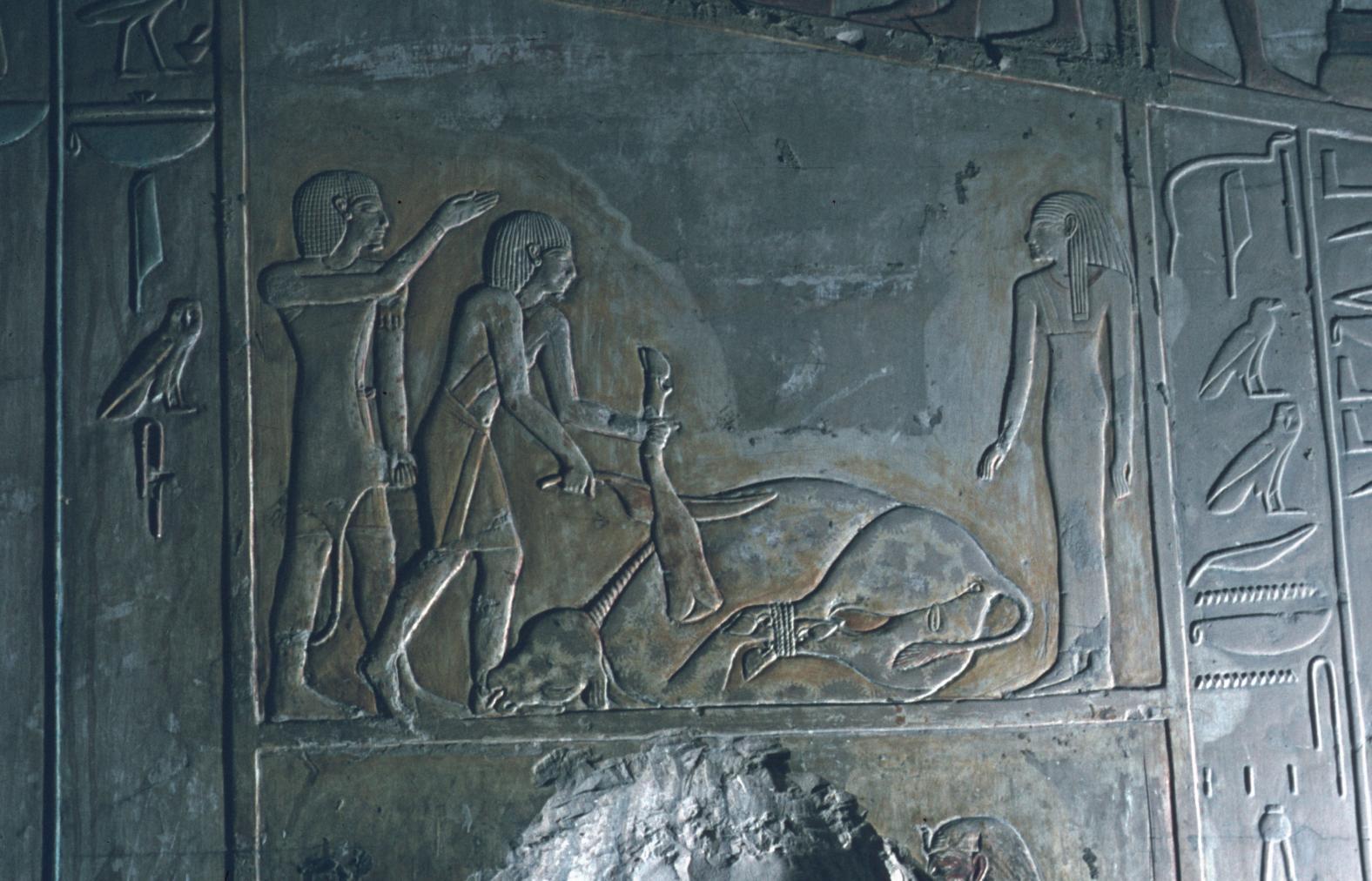
Opening of the Mouth ritual, scenes 1-13; Sem-priest supervising the slaughter. Courtesy of Uni Dia Verlag; Uni Dia Image Nr. 35746.
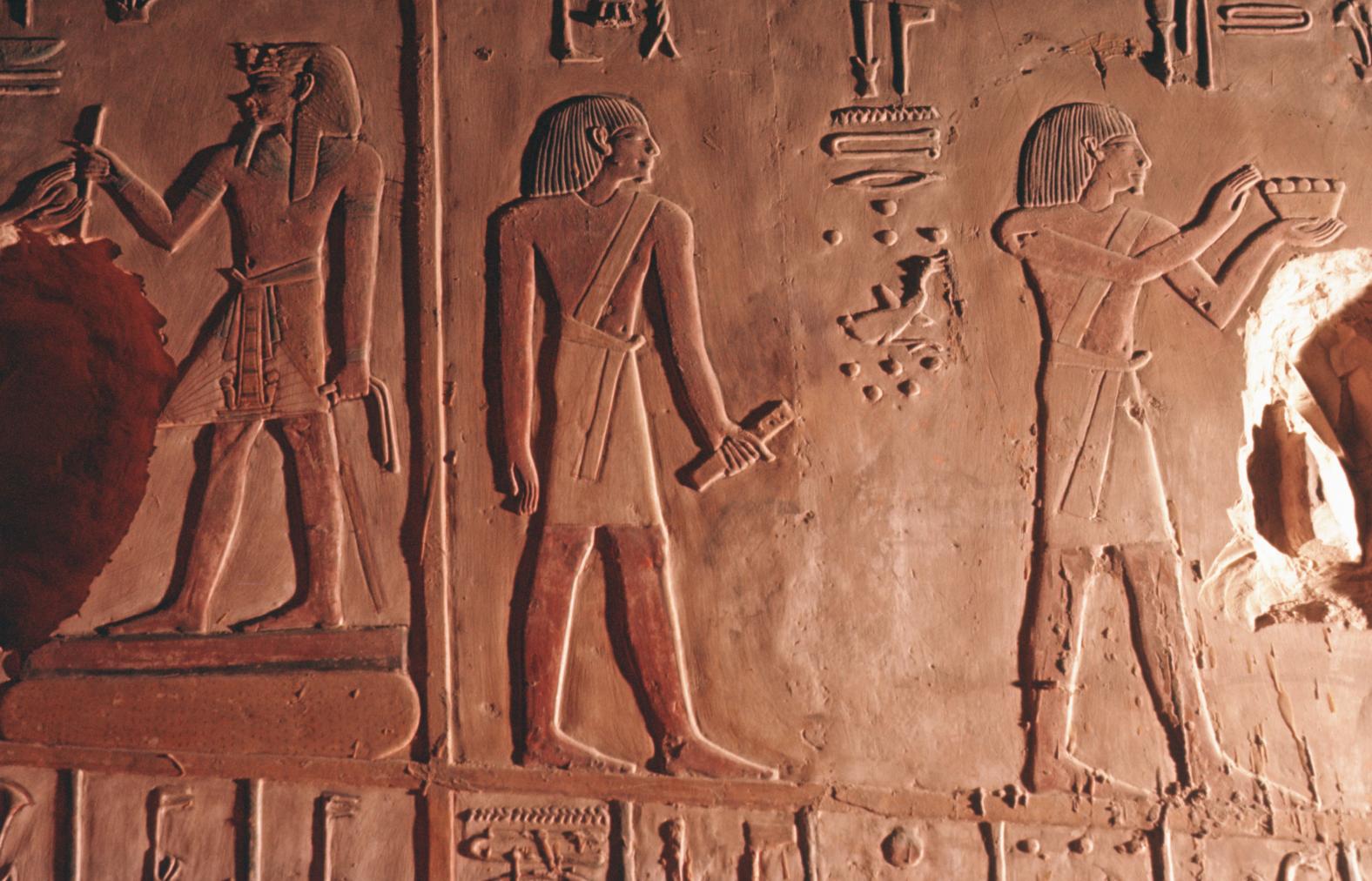
Opening of the Mouth ritual, scenes 1-13; lector priest and Sem-priest with incense grains. Courtesy of Uni Dia Verlag; Uni Dia Image Nr. 35747.
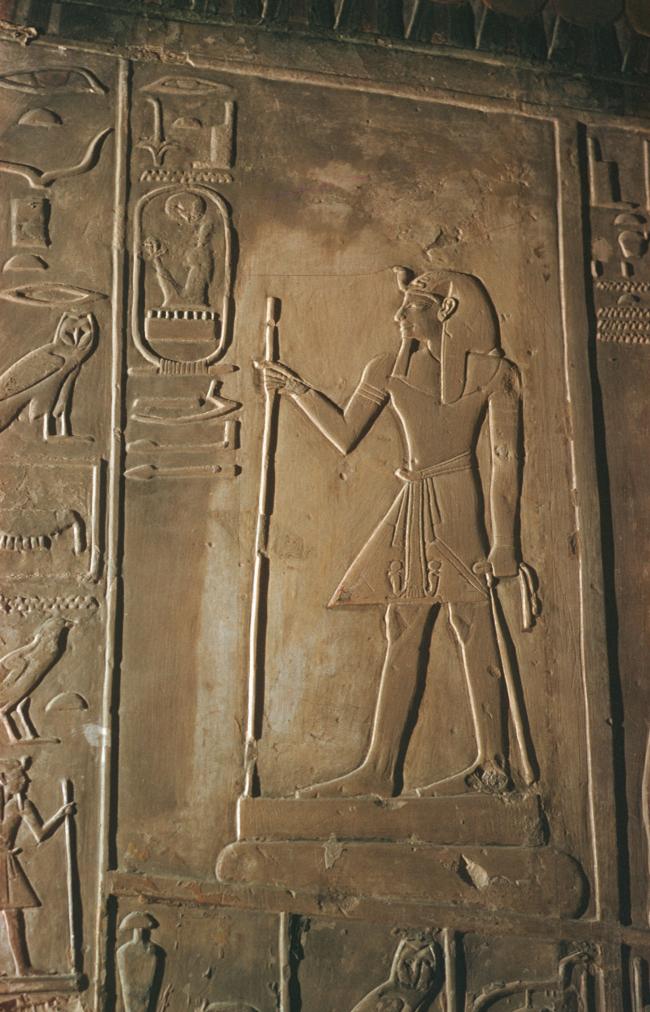
Opening of the Mouth ritual, scenes 1-13; statue of Sety l on the sand heap. Courtesy of Uni Dia Verlag; Uni Dia Image Nr. 35748.
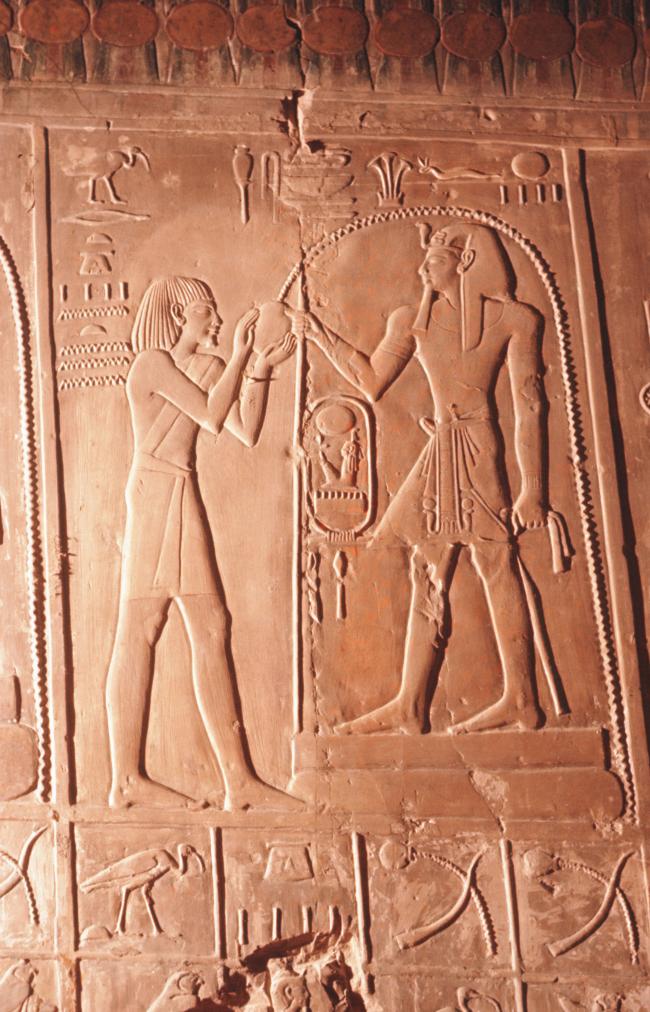
Opening of the Mouth ritual, scenes 1-13; ritual cleansing of the statue. Courtesy of Uni Dia Verlag; Uni Dia Image Nr. 35749.
View of Corridor G. Courtesy of Uni Dia Verlag; Uni Dia Image Nr. 35831.
Opening of the Mouth ritual opening scene, scenes 1-13. Courtesy of Uni Dia Verlag; Uni Dia Image Nr. 35832.
Opening of the Mouth ritual opening scene, scenes 1-13. Courtesy of Uni Dia Verlag; Uni Dia Image Nr. 35833.
Opening of the Mouth ritual opening scene, scenes 1-13. Courtesy of Uni Dia Verlag; Uni Dia Image Nr. 35834.
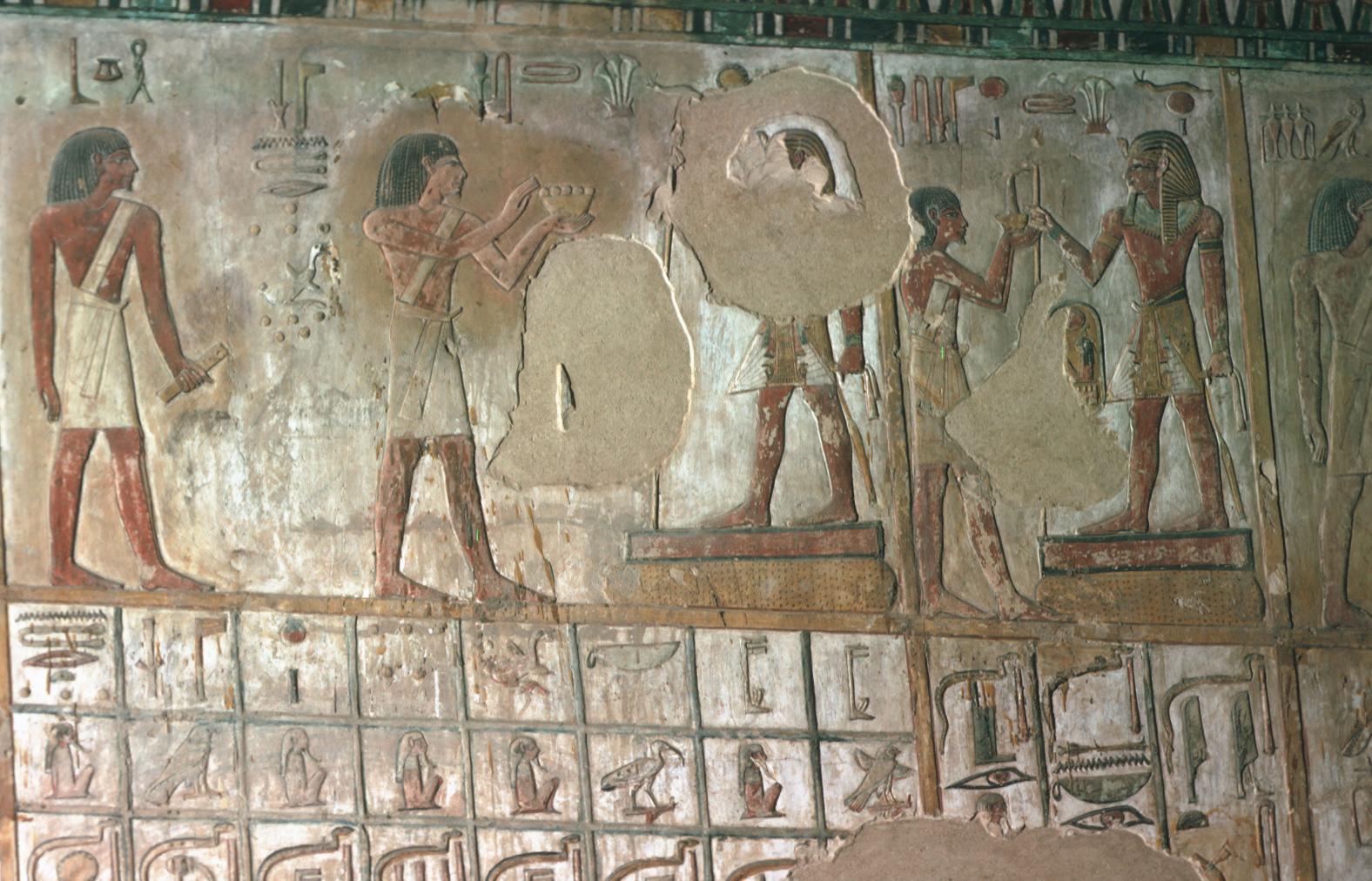
Opening of the Mouth ritual opening scene, scenes 1-13. Courtesy of Uni Dia Verlag; Uni Dia Image Nr. 35835.
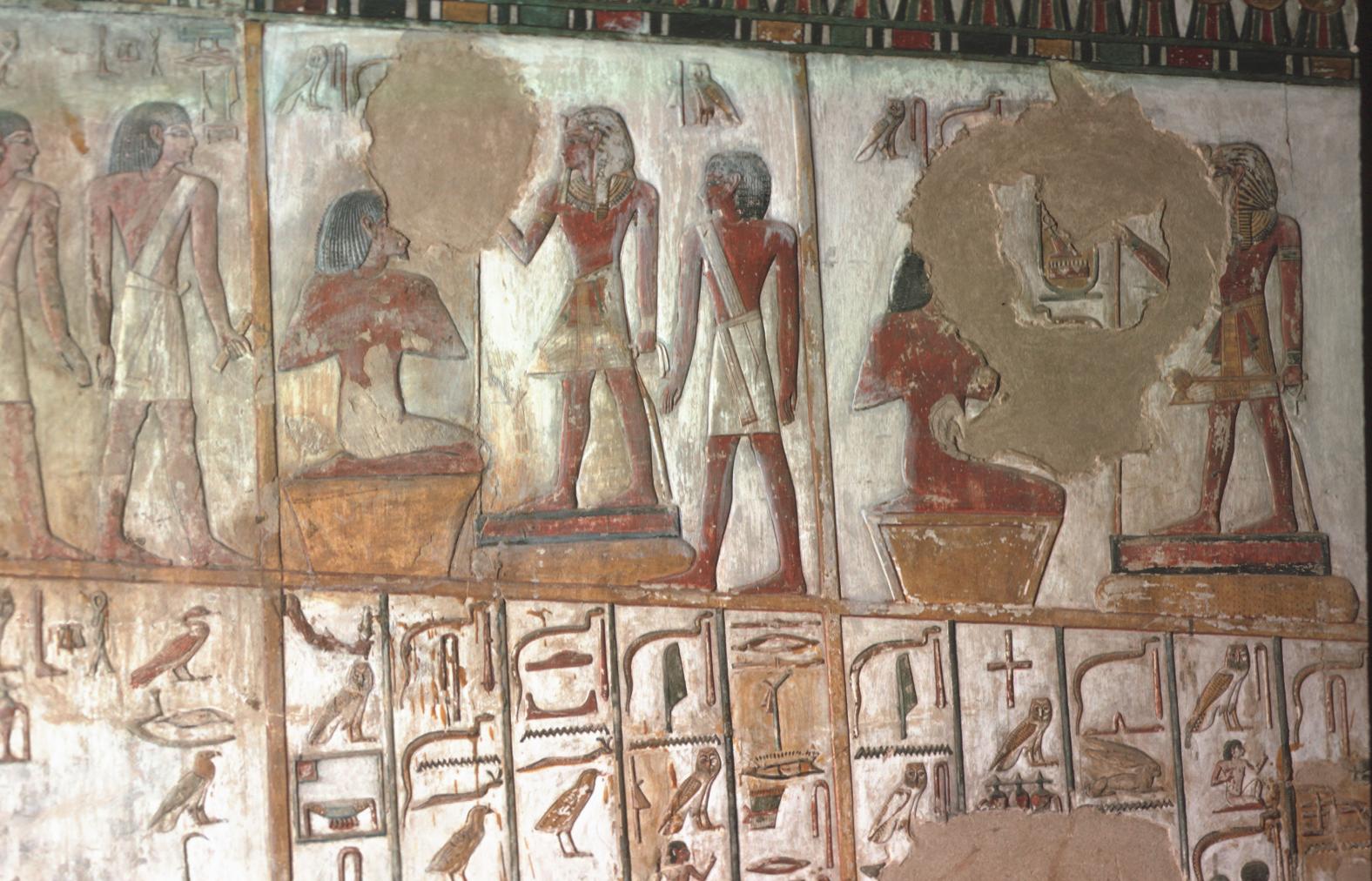
Opening of the Mouth ritual opening scene, scenes 1-13. Courtesy of Uni Dia Verlag; Uni Dia Image Nr. 35836.
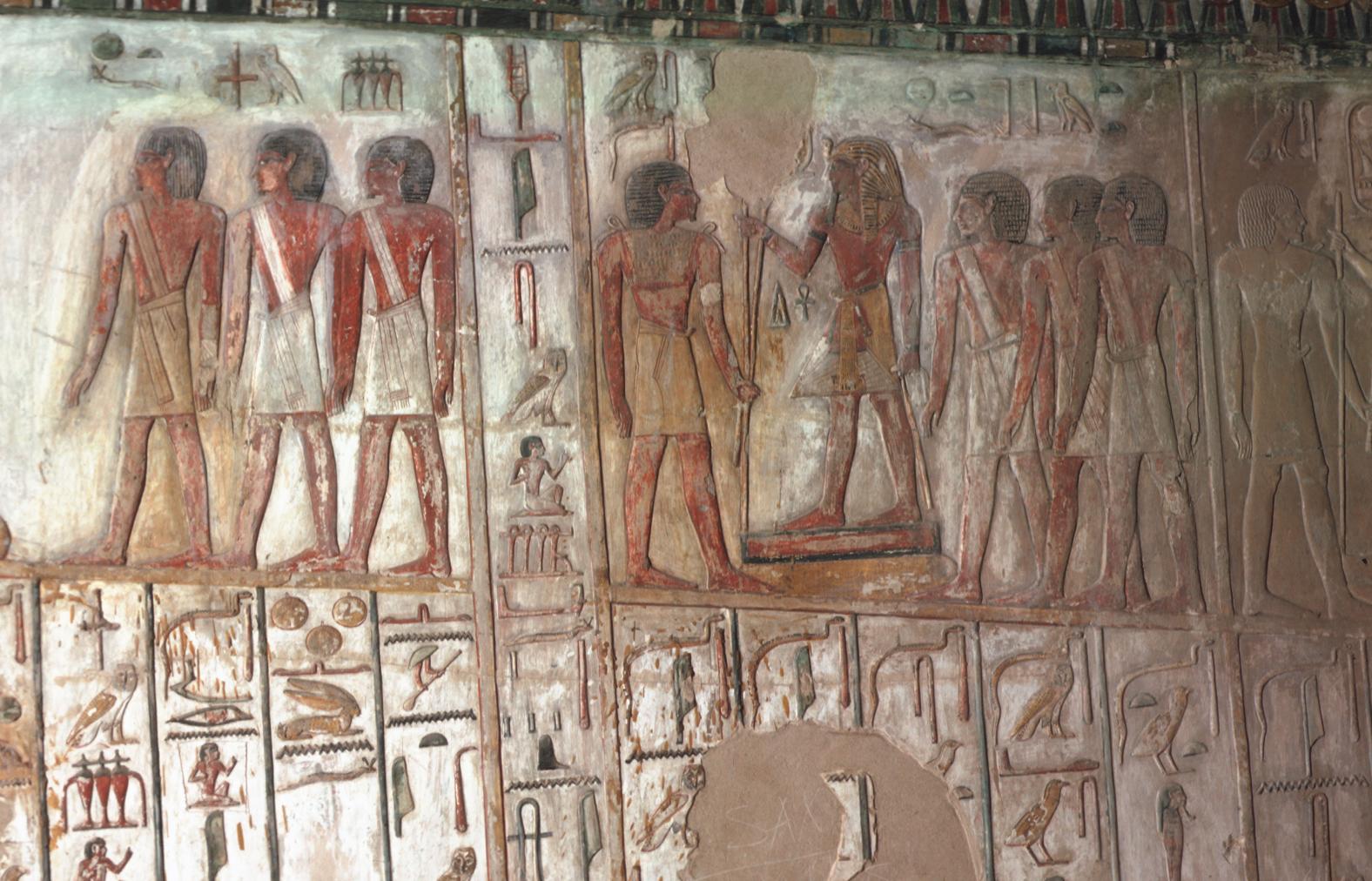
Opening of the Mouth ritual opening scene, scenes 1-13. Courtesy of Uni Dia Verlag; Uni Dia Image Nr. 35837.
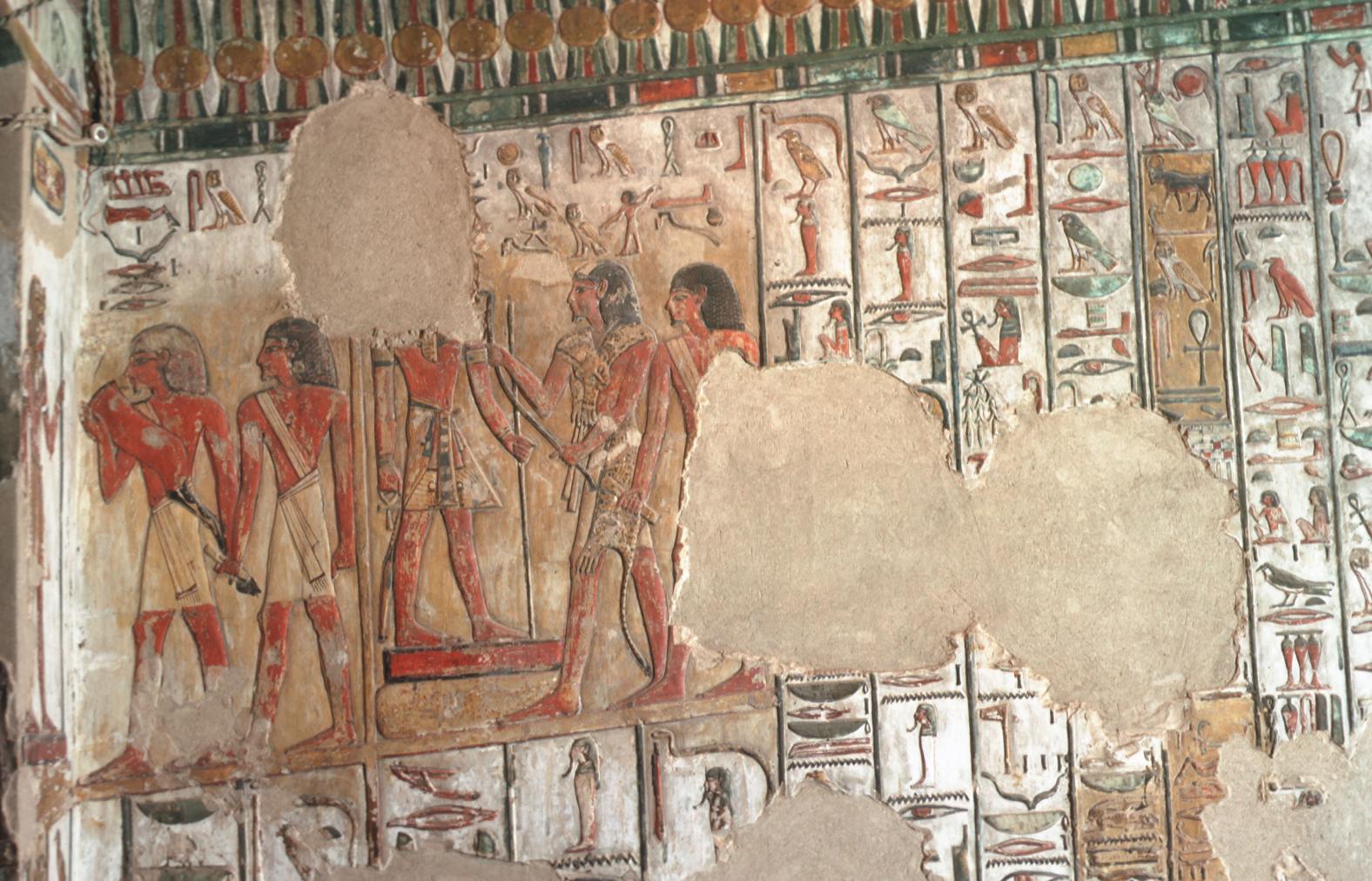
Opening of the Mouth ritual scenes 46-48, 50, 55, 57. Courtesy of Uni Dia Verlag; Uni Dia Image Nr. 35848.
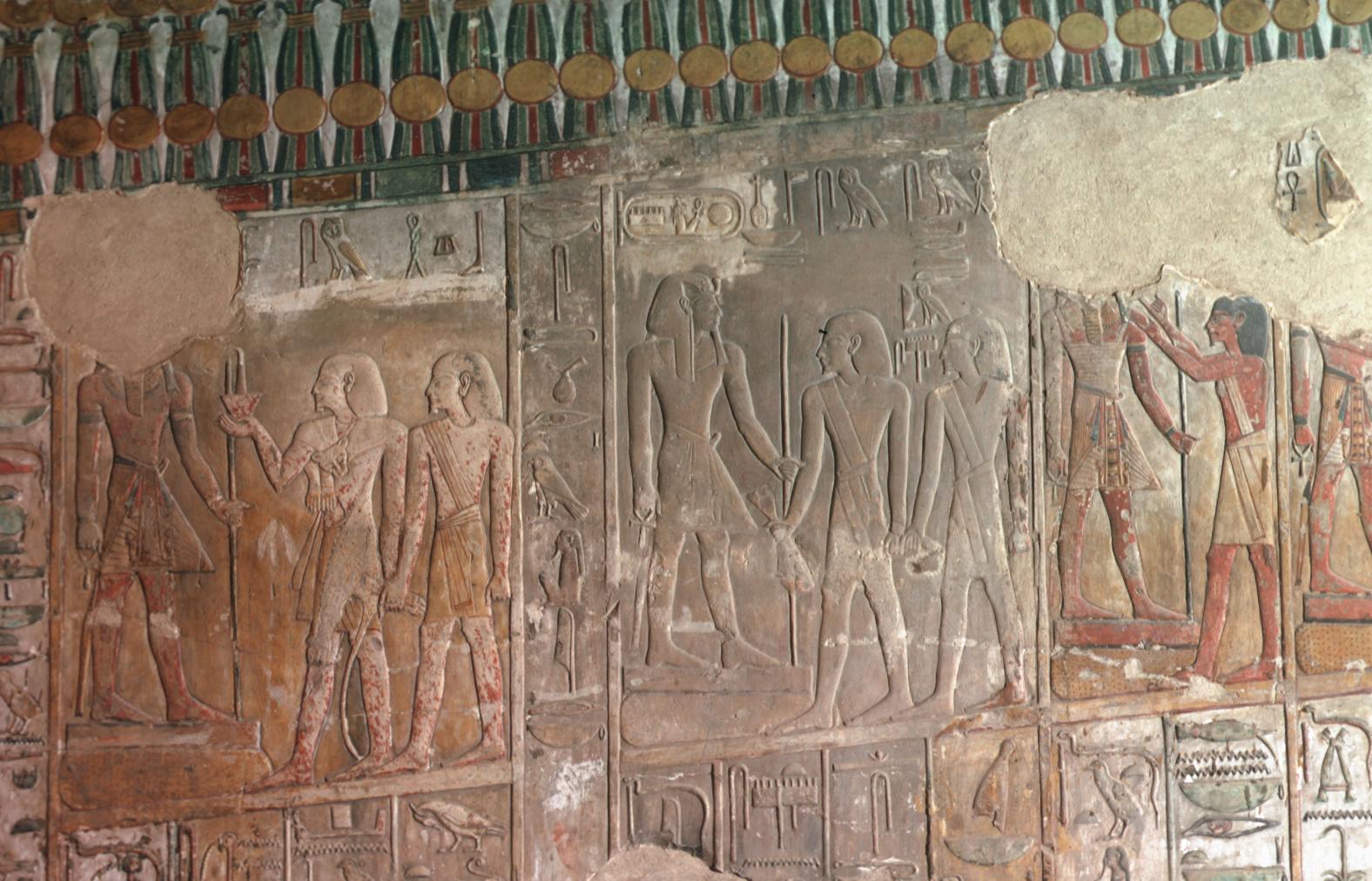
Opening of the Mouth ritual scenes 46-48, 50, 55, 57. Courtesy of Uni Dia Verlag; Uni Dia Image Nr. 35849.
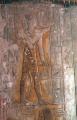
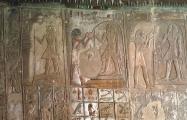
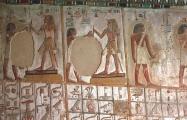
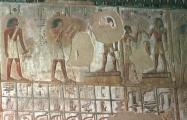
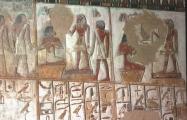
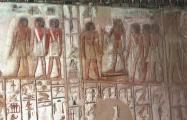
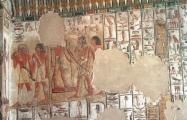
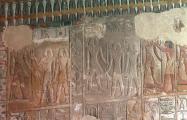
Gate H
See entire tombScenes from the Opening of the Mouth ritual are represented on the jambs.
Porter and Moss designation:
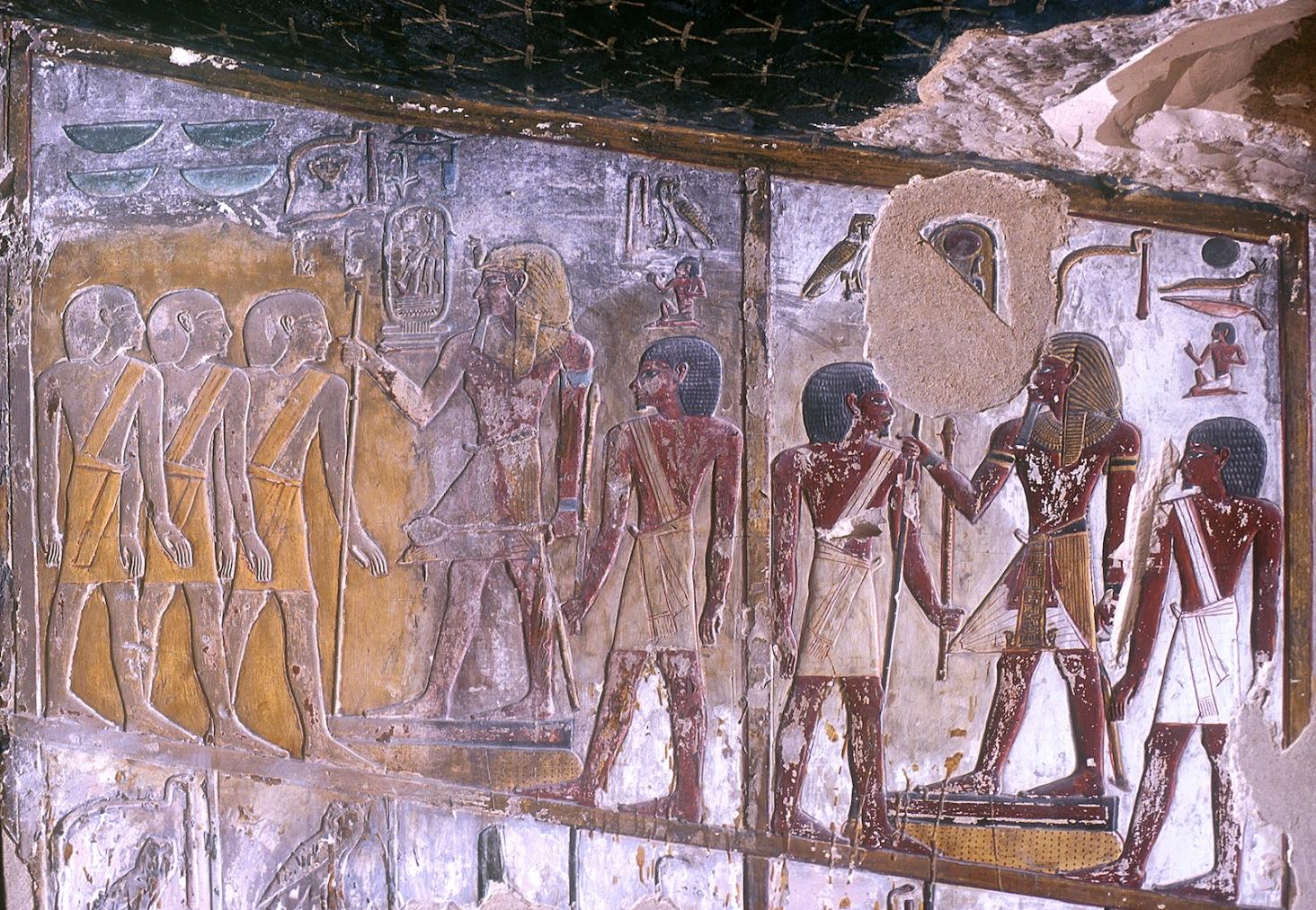
Opening of the Mouth ritual, scenes 15 and 16 (detail).
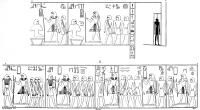
Opening of the Mouth ritual, scenes 9-16 (reconstruction).
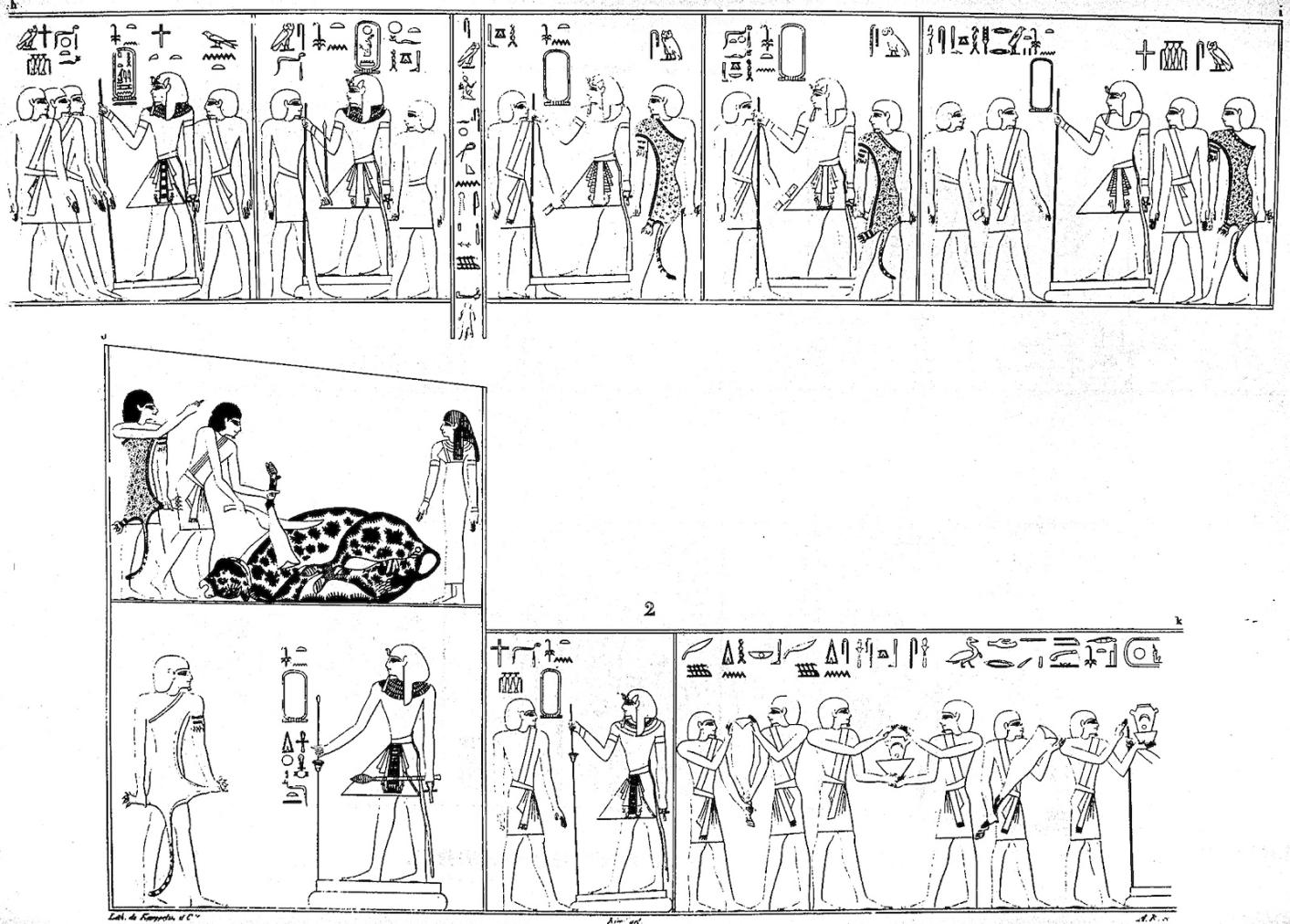
Opening of the Mouth ritual, scenes 17-24 (reconstruction).
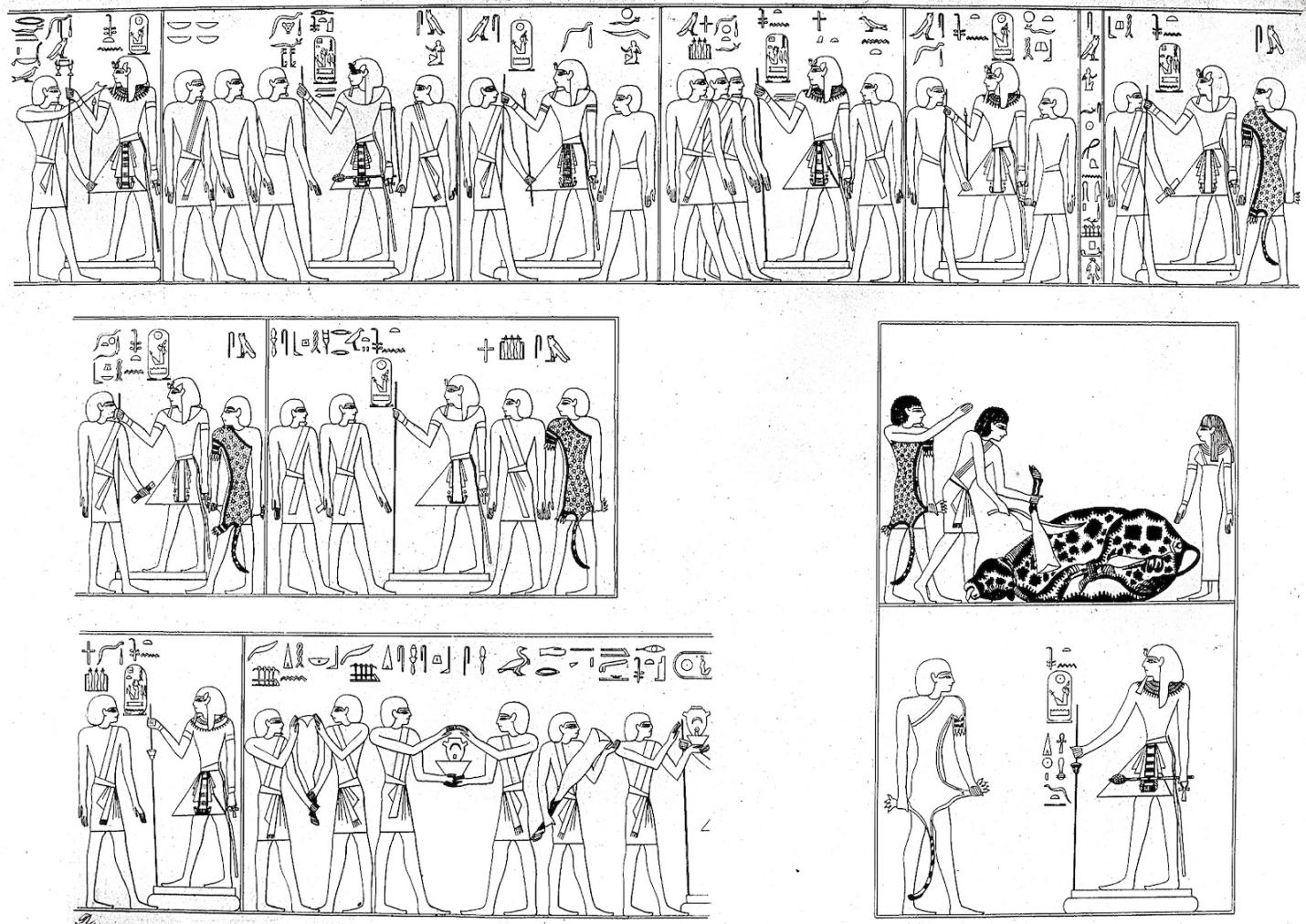
Opening of the Mouth ritual, scenes 14-24 (reconstruction).
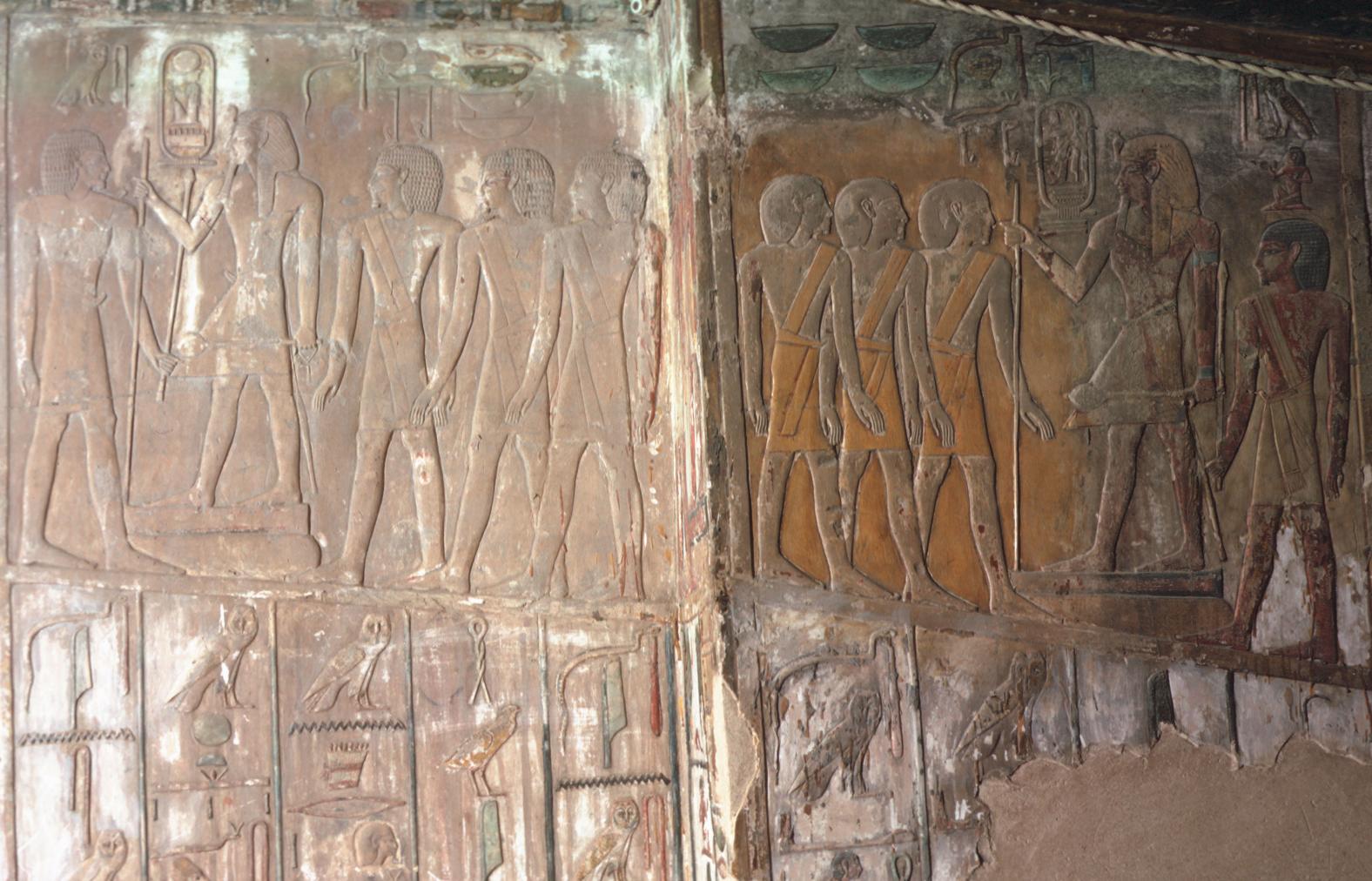
Opening of the Mouth ritual scenes 15-16. Courtesy of Uni Dia Verlag; Uni Dia Image Nr. 35838.
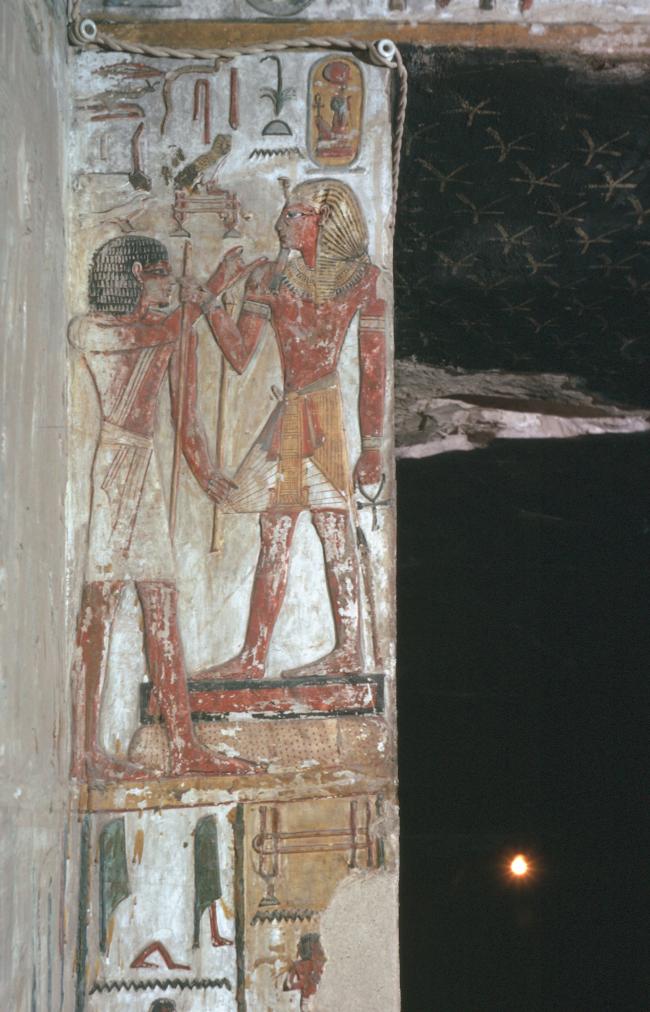
Opening of the Mouth ritual scene 14. Courtesy of Uni Dia Verlag; Uni Dia Image Nr. 35839.
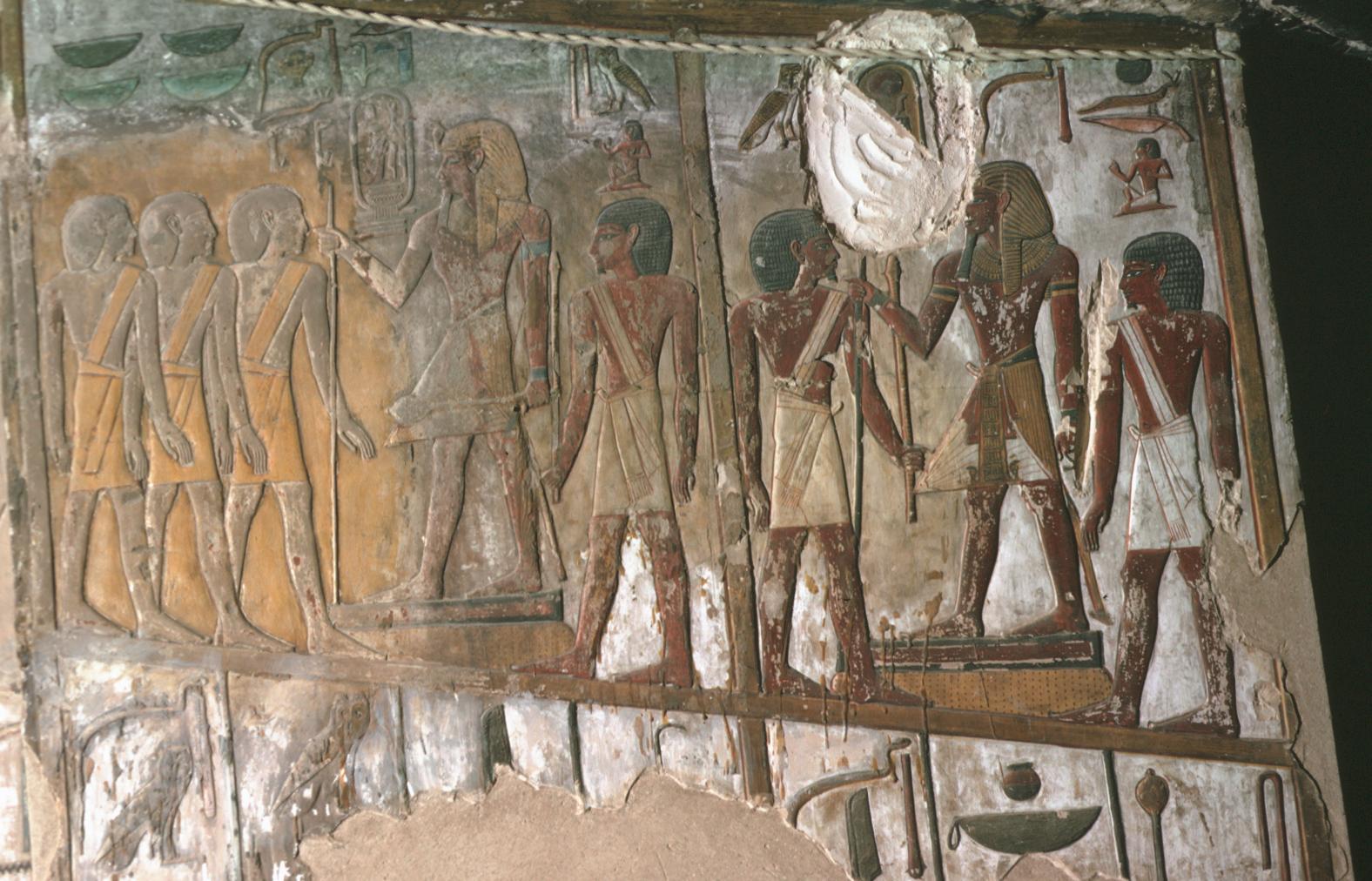
Opening of the Mouth ritual scenes 15-16. Courtesy of Uni Dia Verlag; Uni Dia Image Nr. 35840.
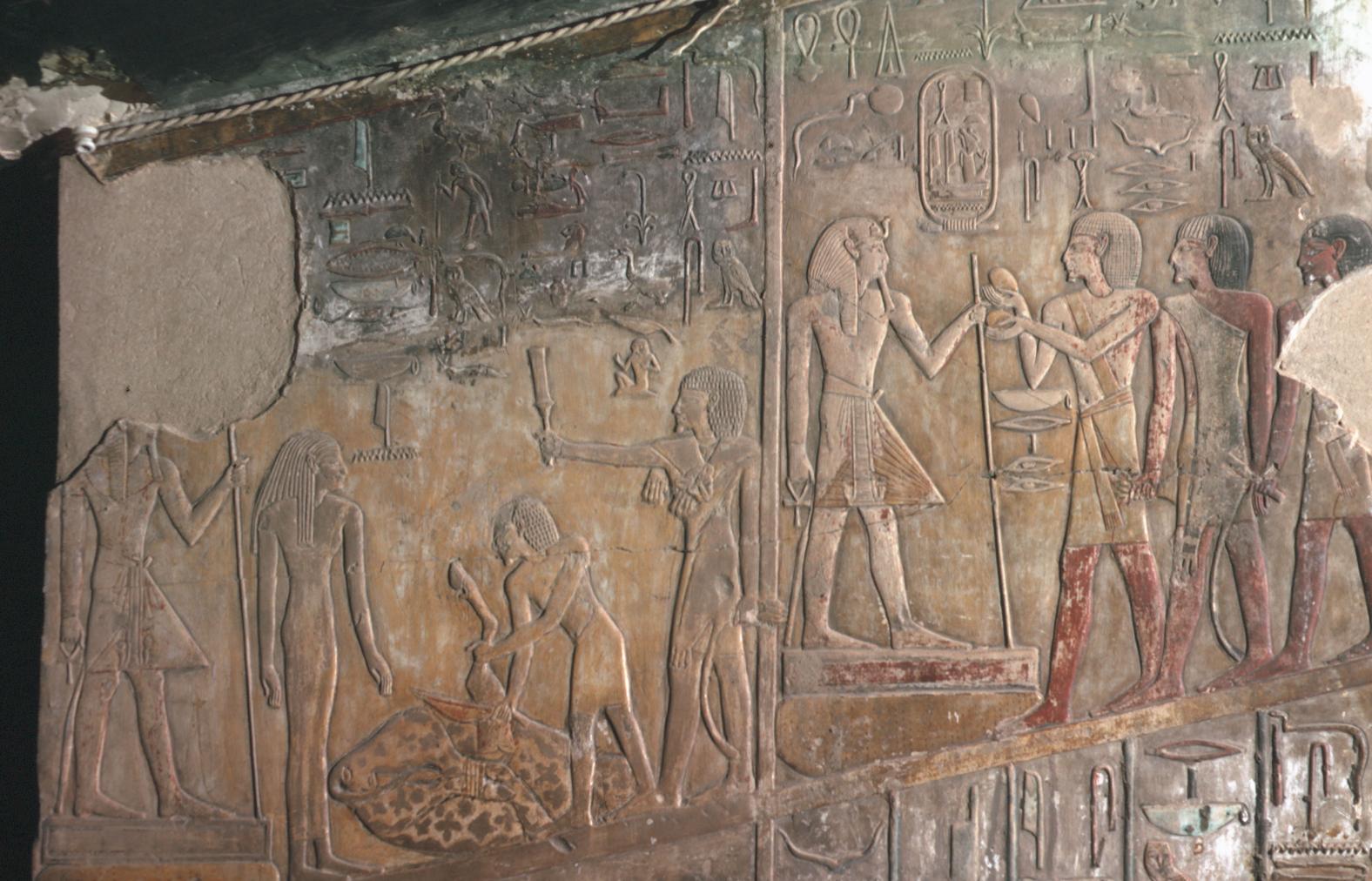
Opening of the Mouth ritual scenes 36, 42-44. Courtesy of Uni Dia Verlag; Uni Dia Image Nr. 35847.
Corridor H
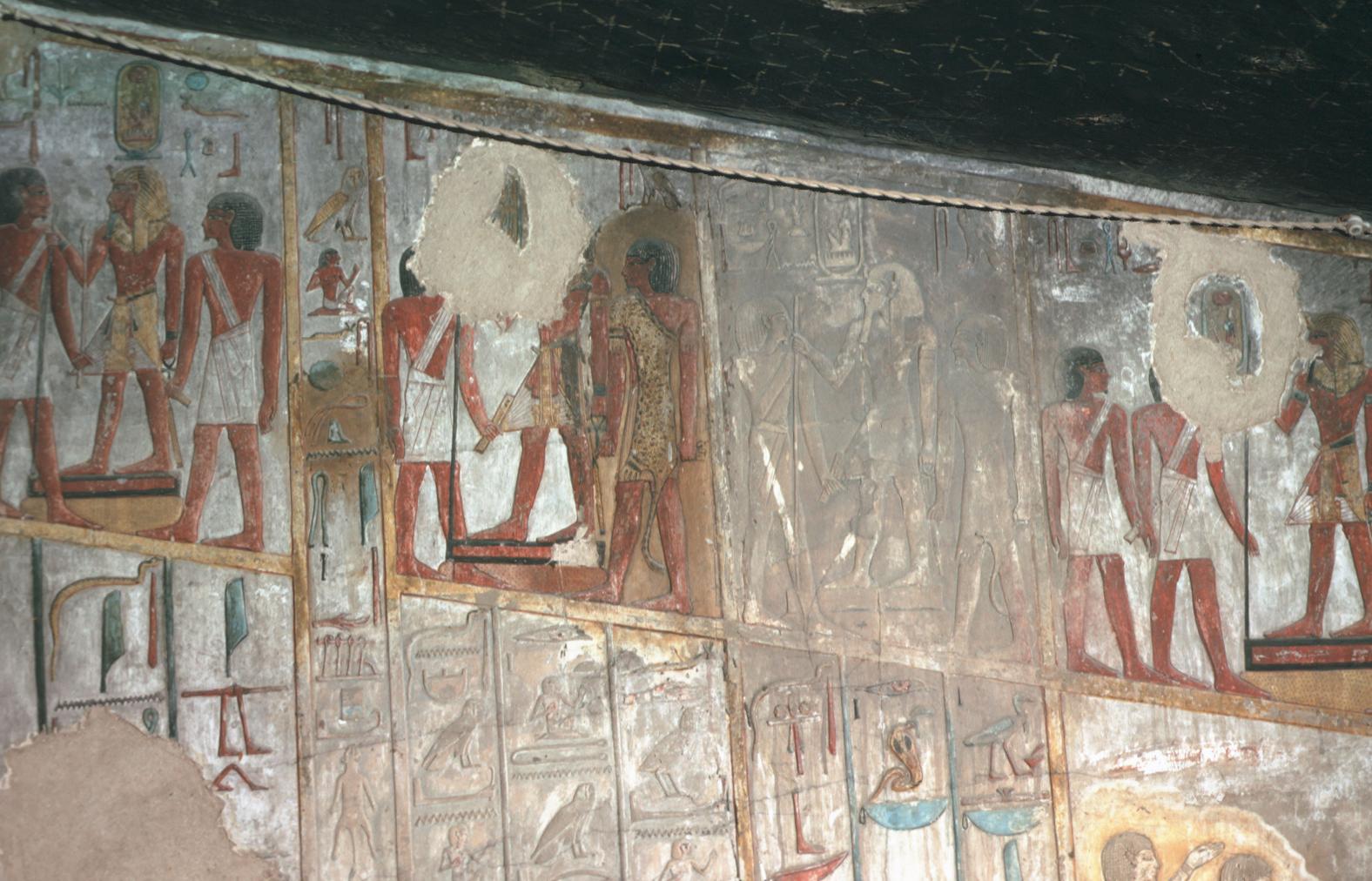
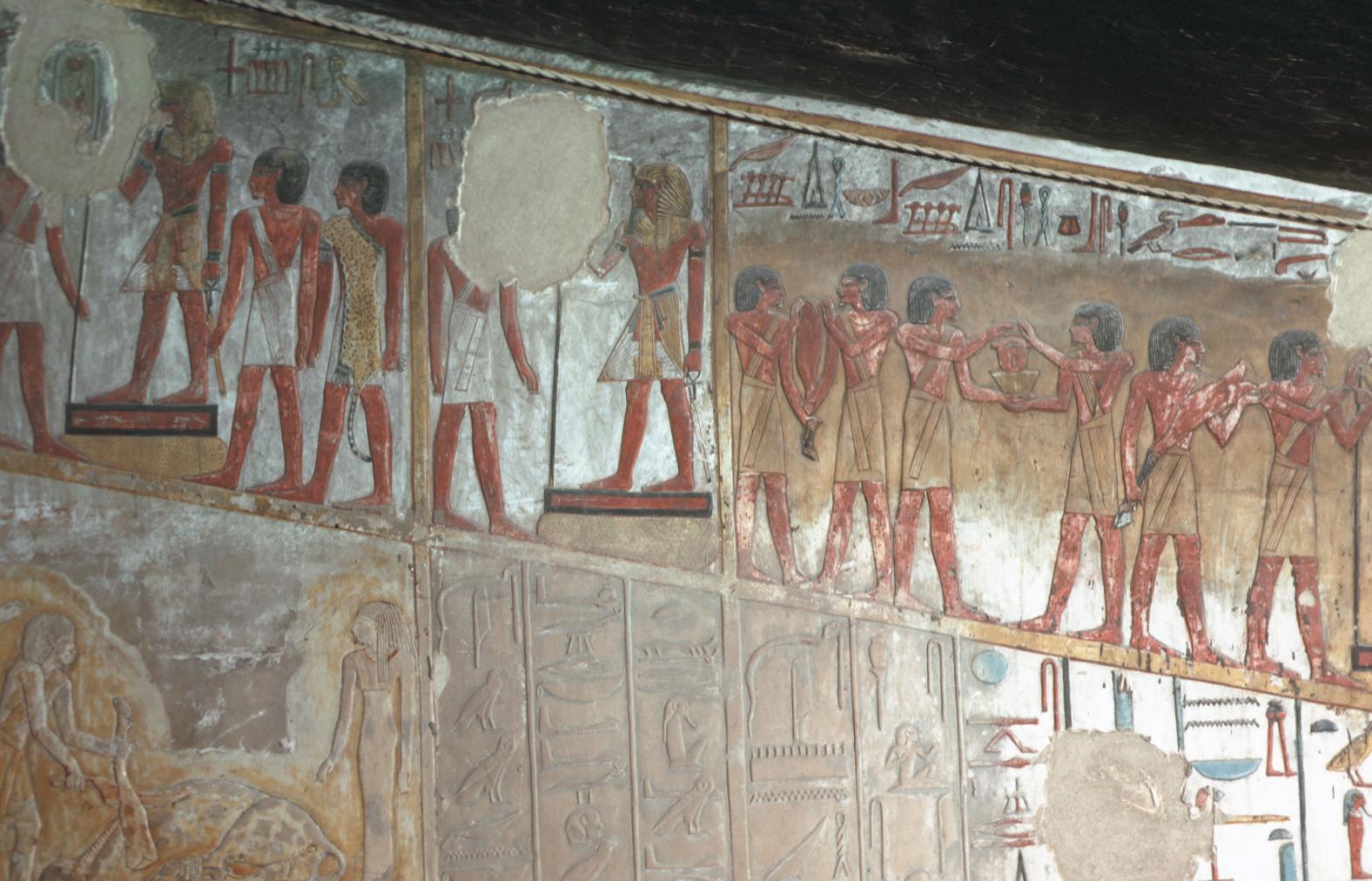
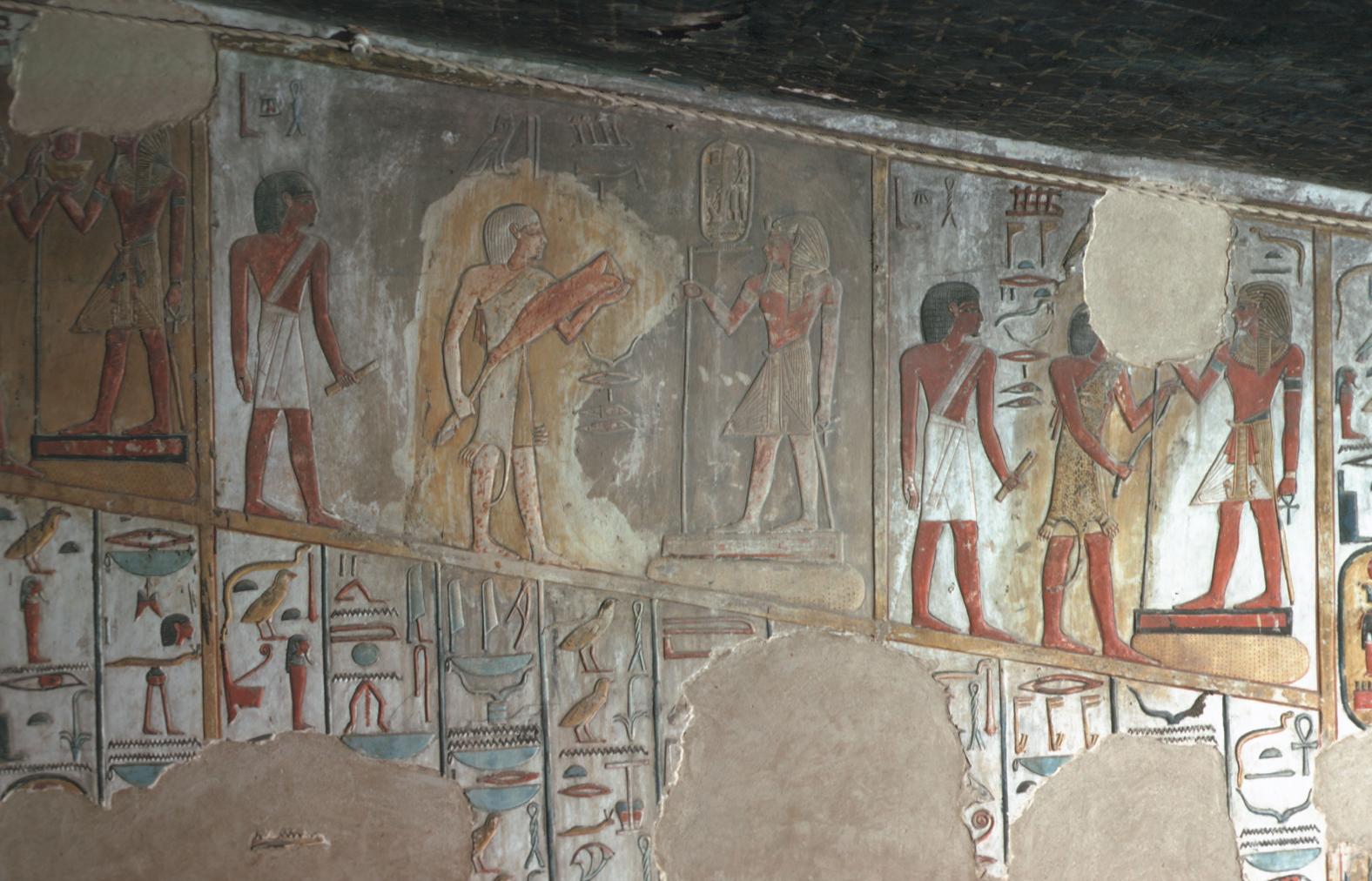
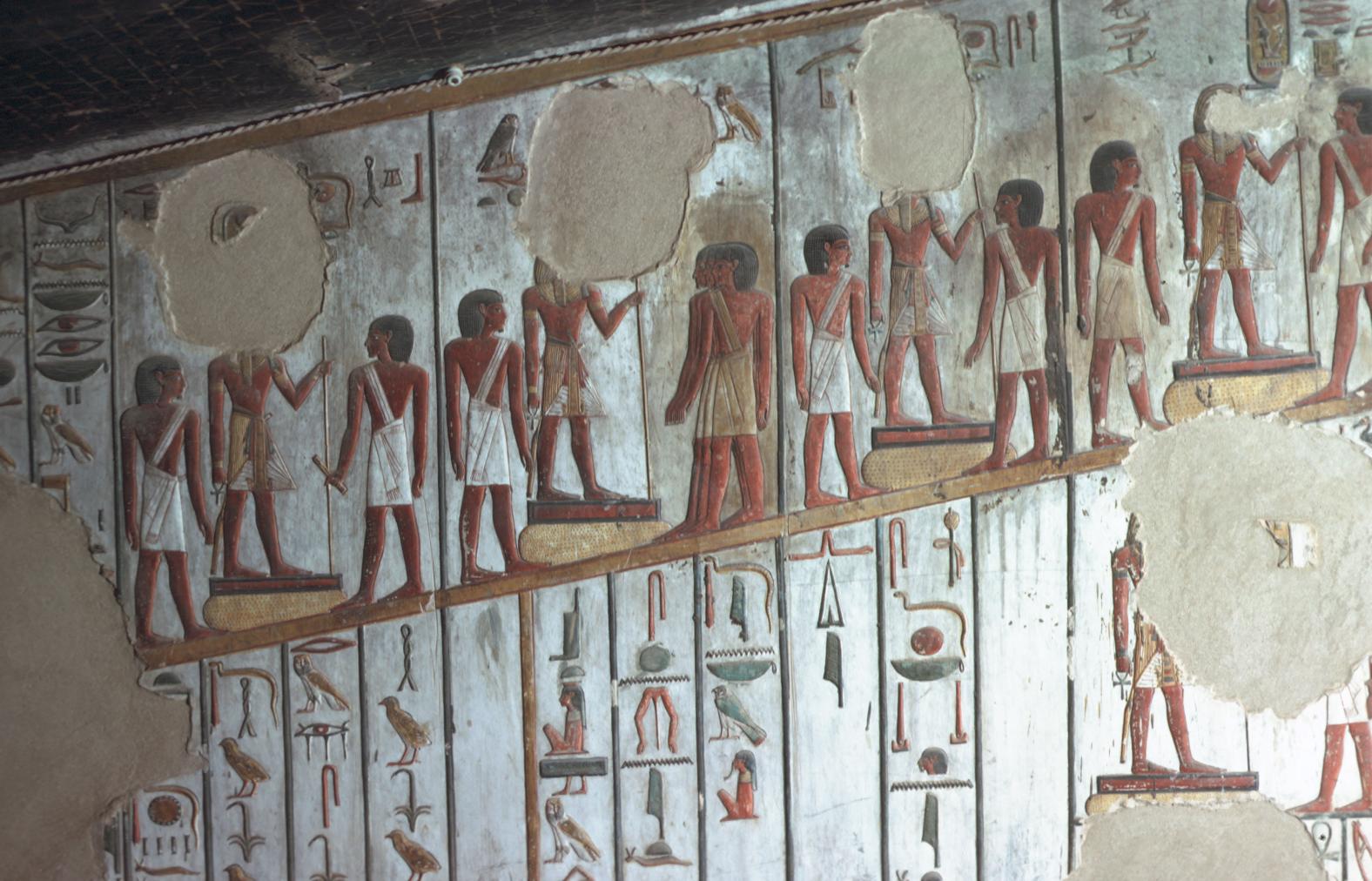
See entire tombFive steps lead into corridor H. The upper part of the side walls were cut back to form a recess along each side. In these recesses are scenes from the Opening of the Mouth ritual. Below them, decoration on both walls is dominated by part of the Litany of the Eye of Horus, a composition originally derived from the Pyramid Texts. The ceiling is decorated with yellow stars on a blue background. Again, vandals have been at work here, cutting out texts, figures, and cartouches.
Porter and Moss designation:
Sety I with two forms of Hathor, and Carter's repairs in brick of damaged walls; stairs leading in the direction of tomb entrance.
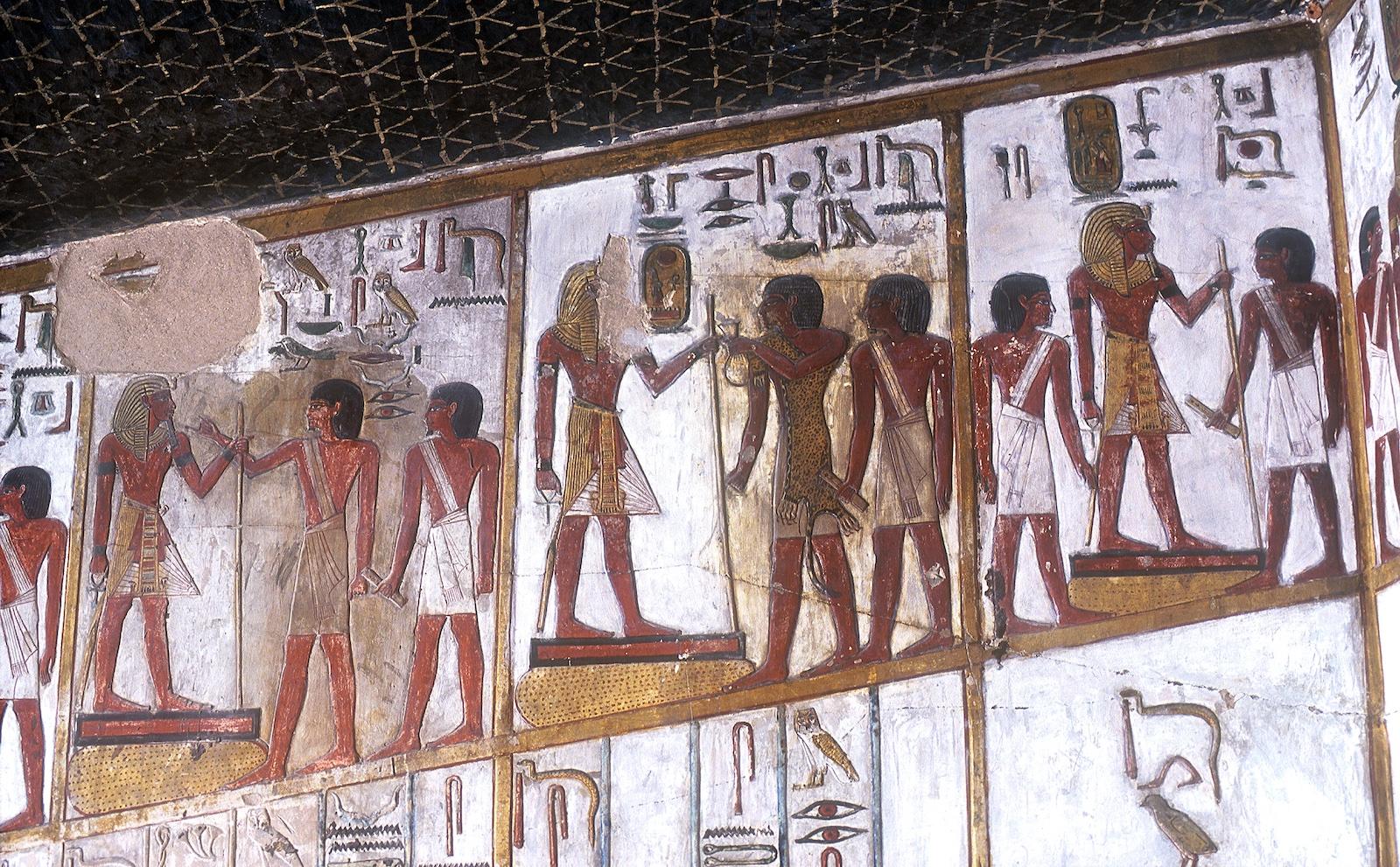
Star pattern; Opening of the Mouth ritual, scenes 33-35.
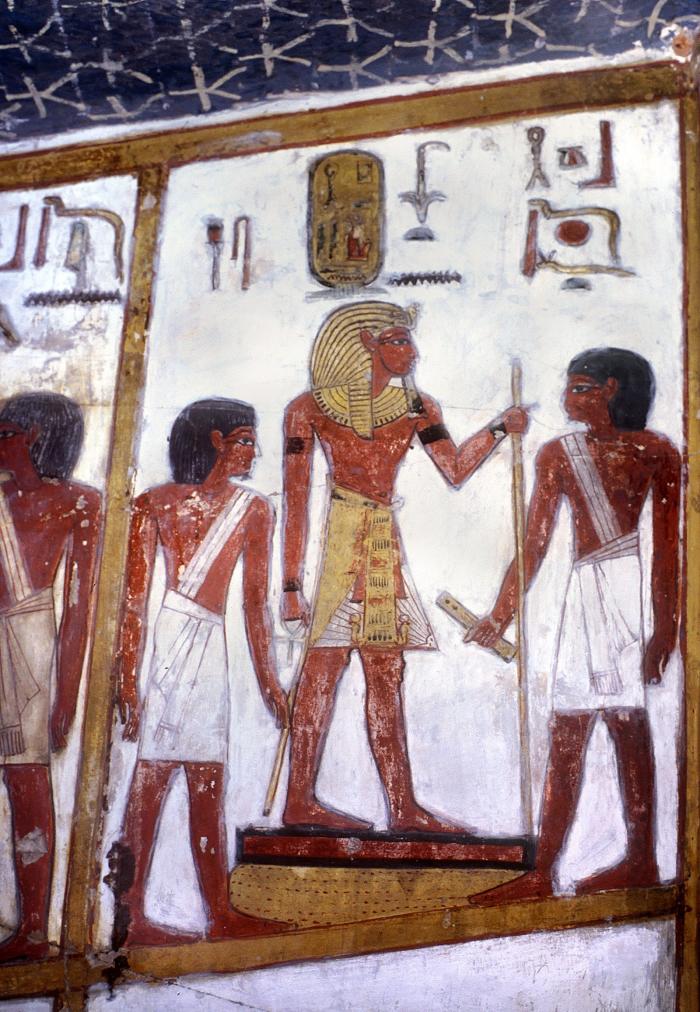
Opening of the Mouth ritual, scene 35 (detail)
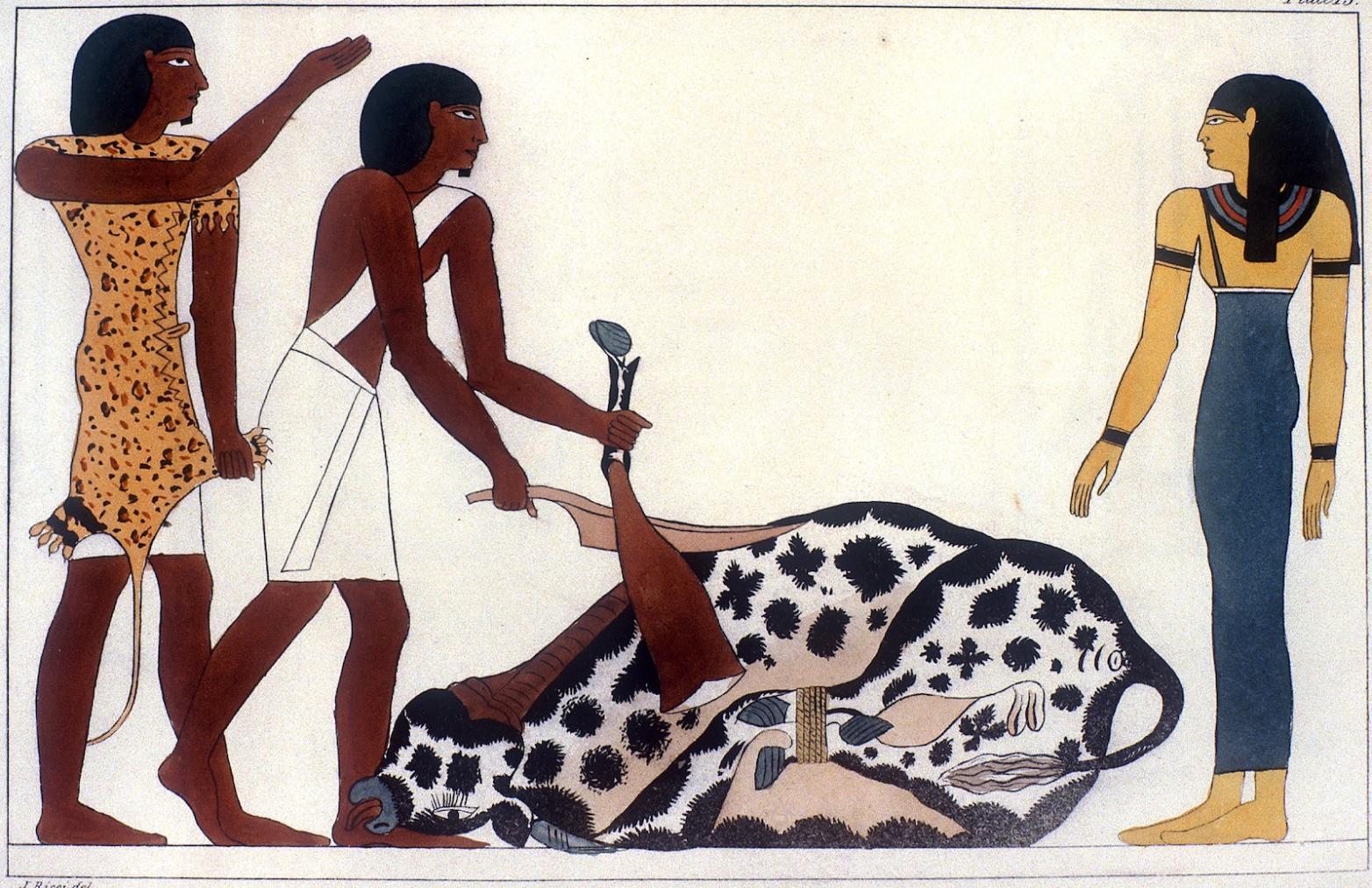
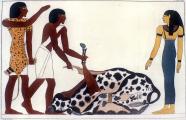
Opening of the Mouth ritual, scene 22: butchering a bull (reconstruction).
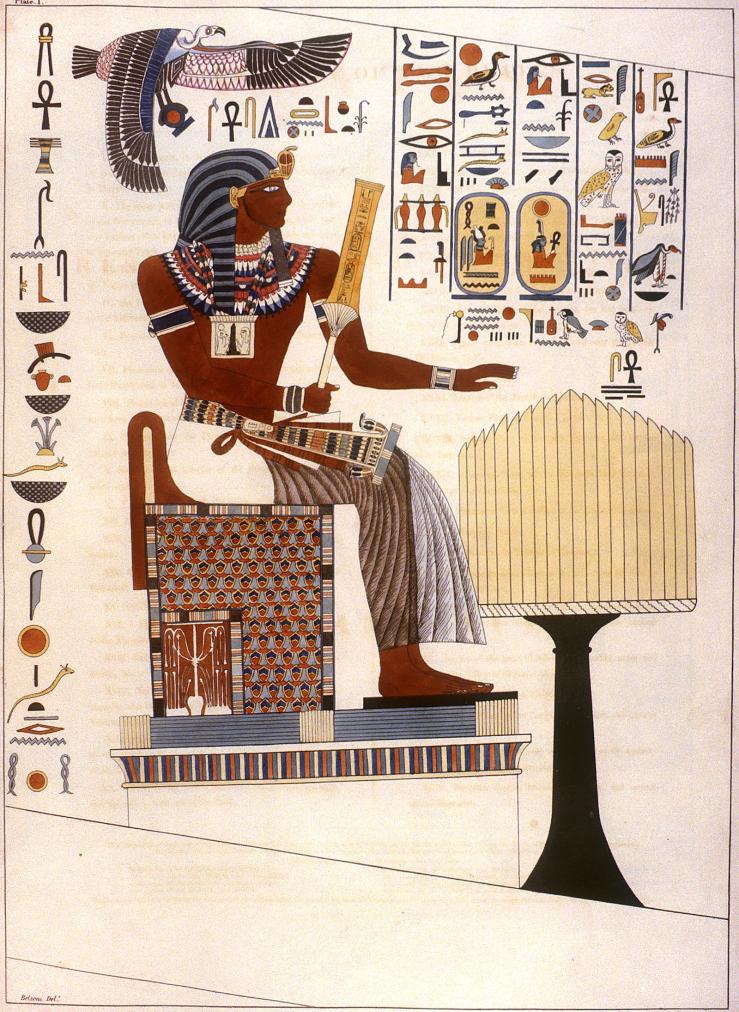
Opening of the Mouth ritual: Sety I seated before an offering table.
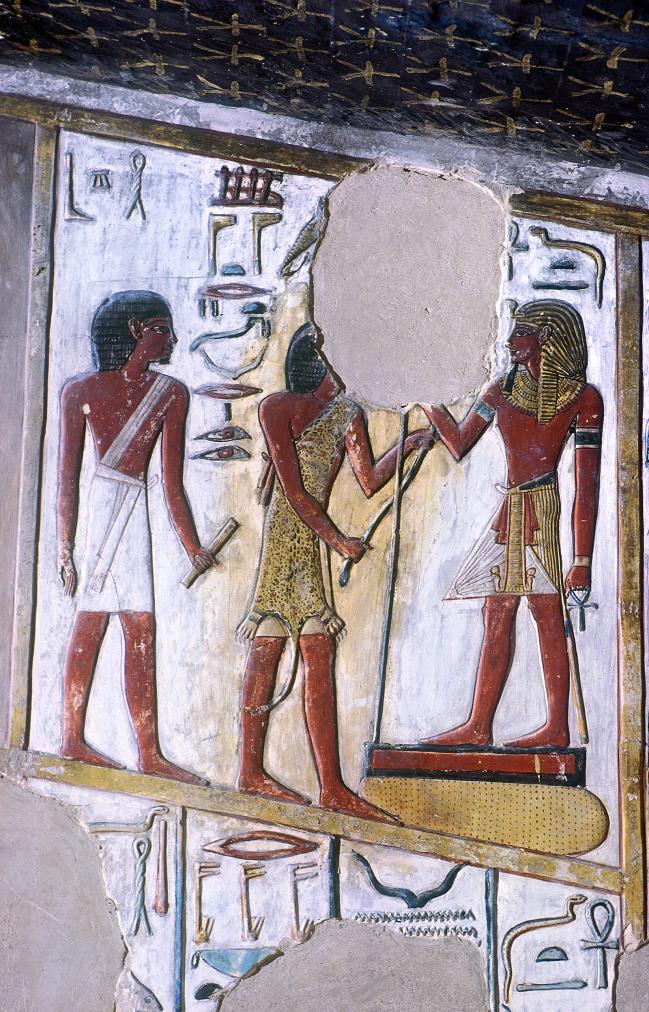
Opening of the Mouth ritual, scene 26.
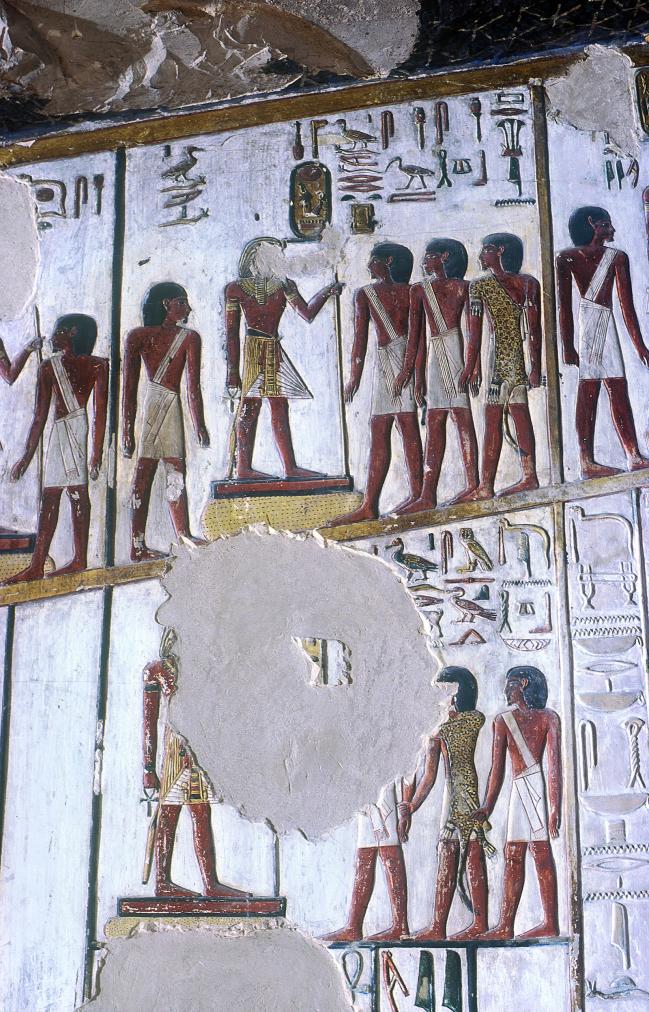
Opening of the Mouth ritual, scene 31.
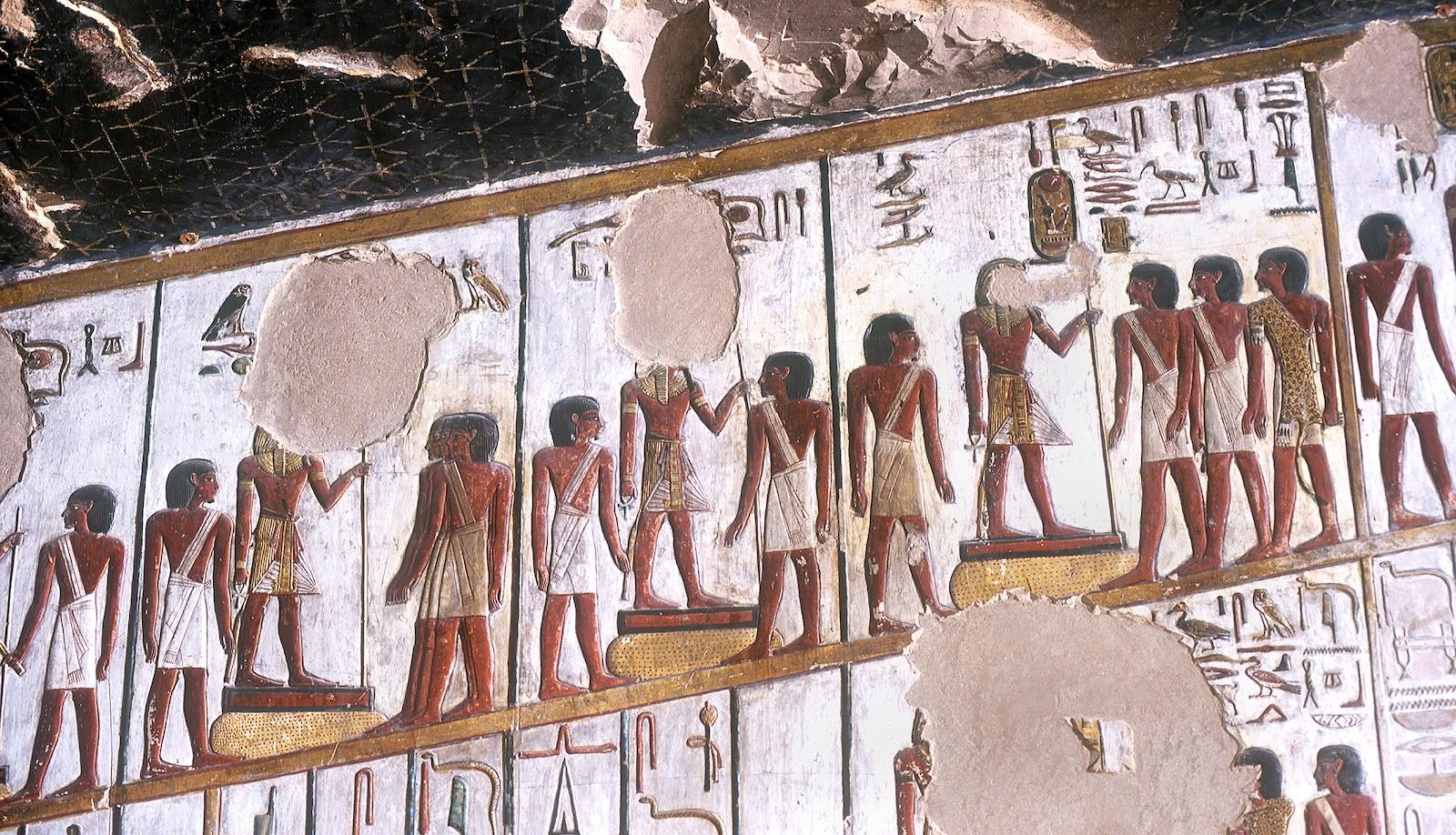
Opening of the Mouth ritual, scenes 29-31.
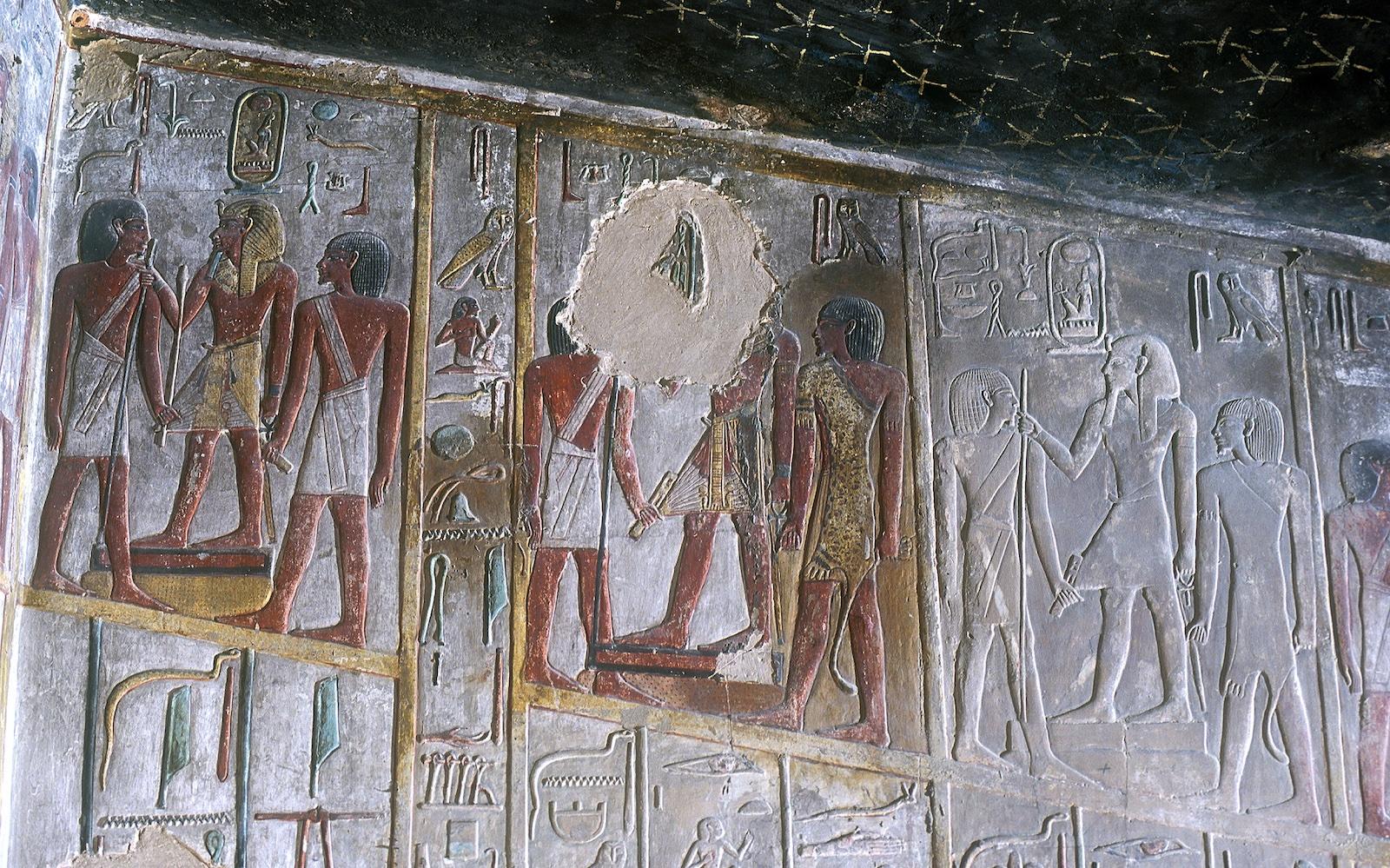
Opening of the Mouth ritual, scenes 18-20.
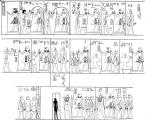
Opening of the Mouth ritual, scenes 17-24 (reconstruction).
Opening of the Mouth ritual, scenes 14-24 (reconstruction).
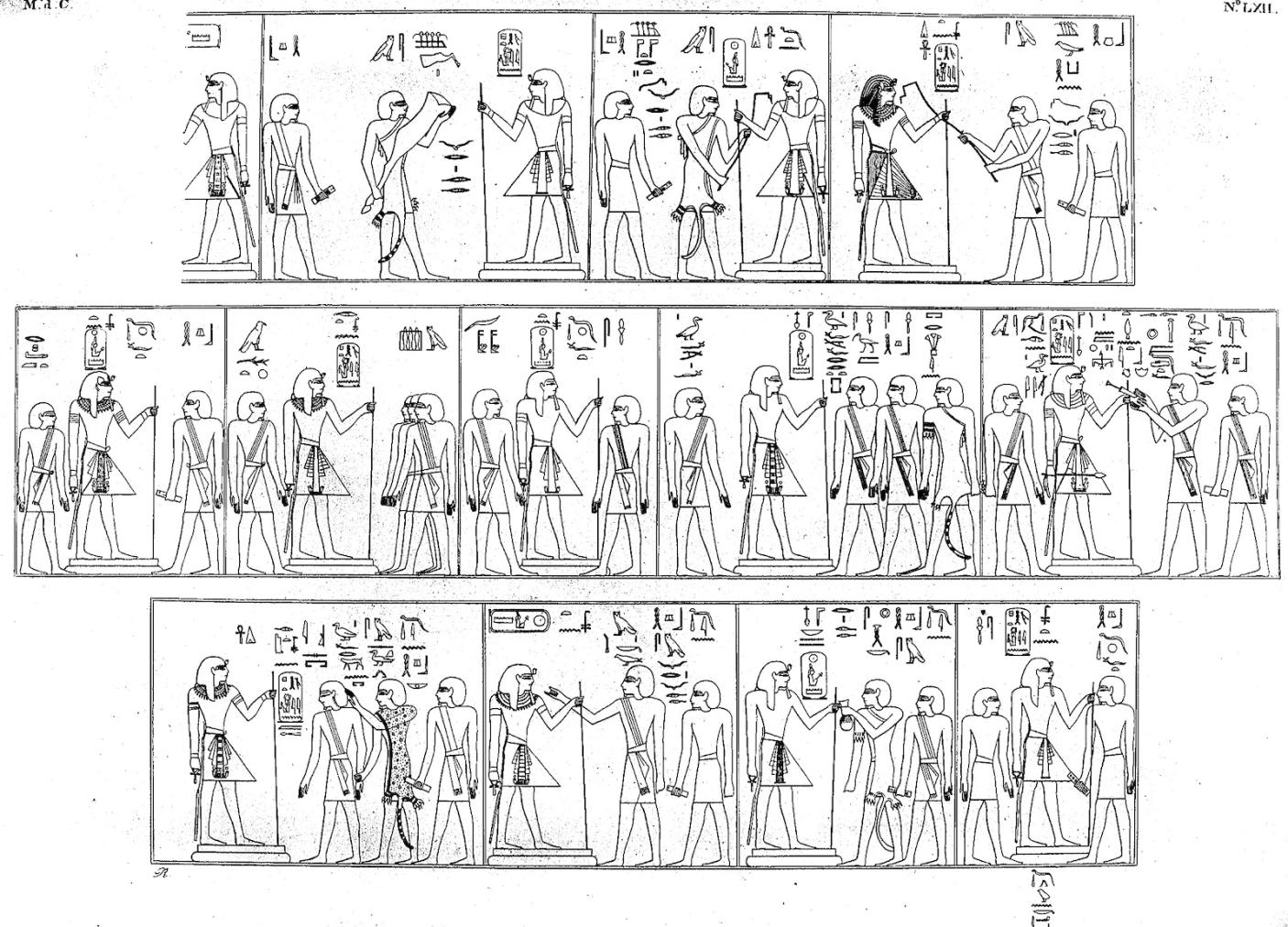
Opening of the Mouth ritual, scenes 24-34 (reconstruction).
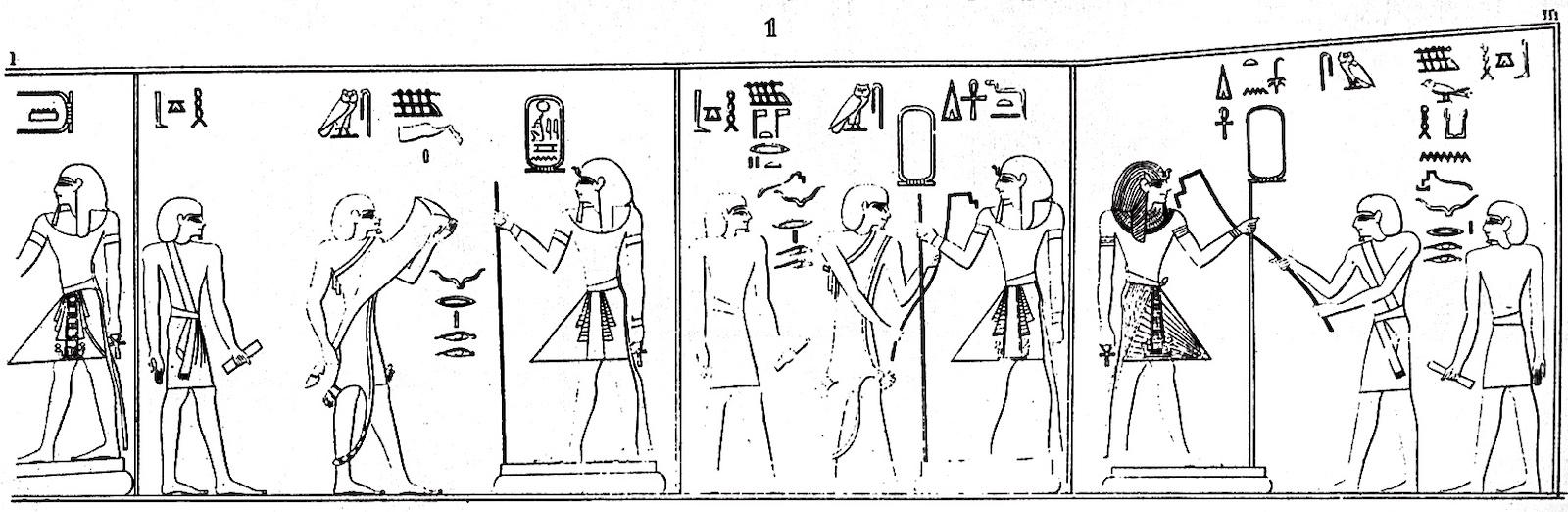
Opening of the Mouth ritual, scenes 24-27 (reconstruction).
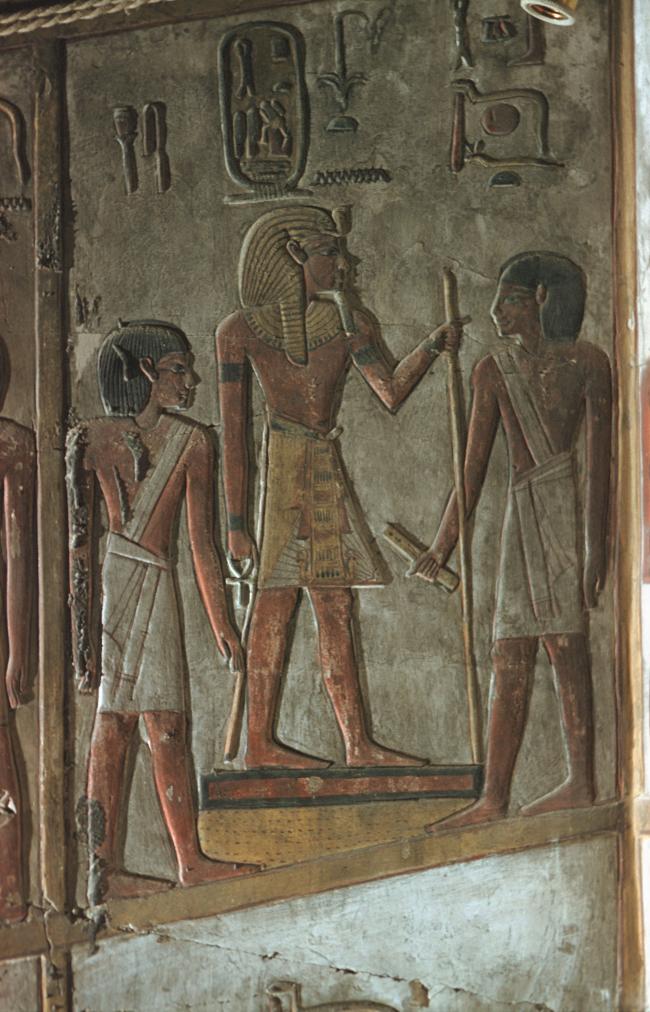
Opening of the Mouth ritual, scenes 33-35; lector priest and Sem-priest at the statue. Courtesy of Uni Dia Verlag; Uni Dia Image Nr. 35750.
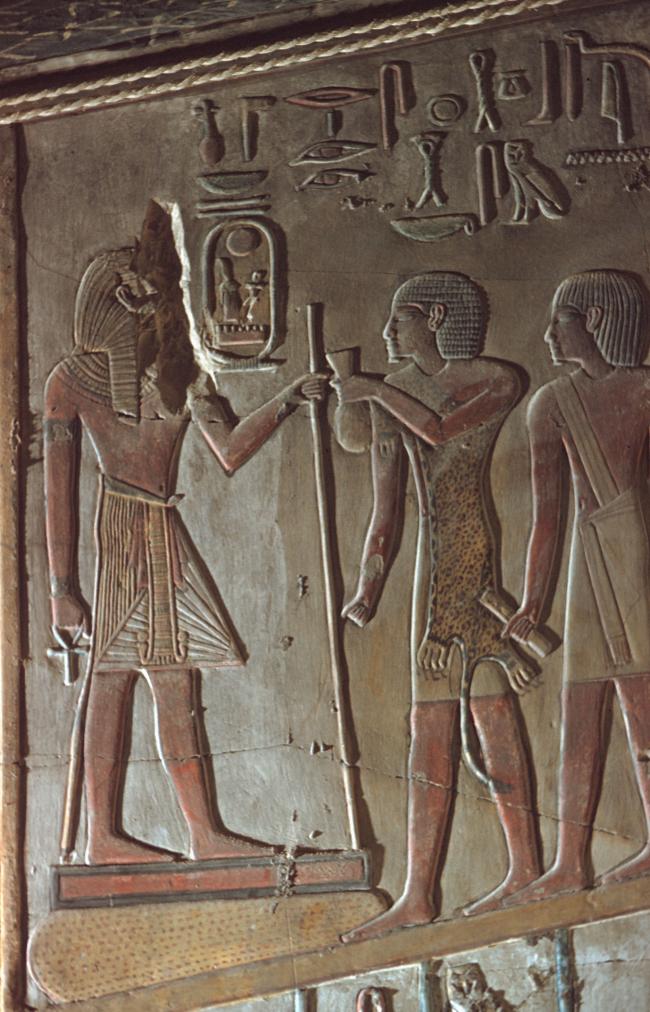
Opening of the Mouth ritual, scenes 33-35; a bag of red powder being handed to the statue. Courtesy of Uni Dia Verlag; Uni Dia Image Nr. 35751.
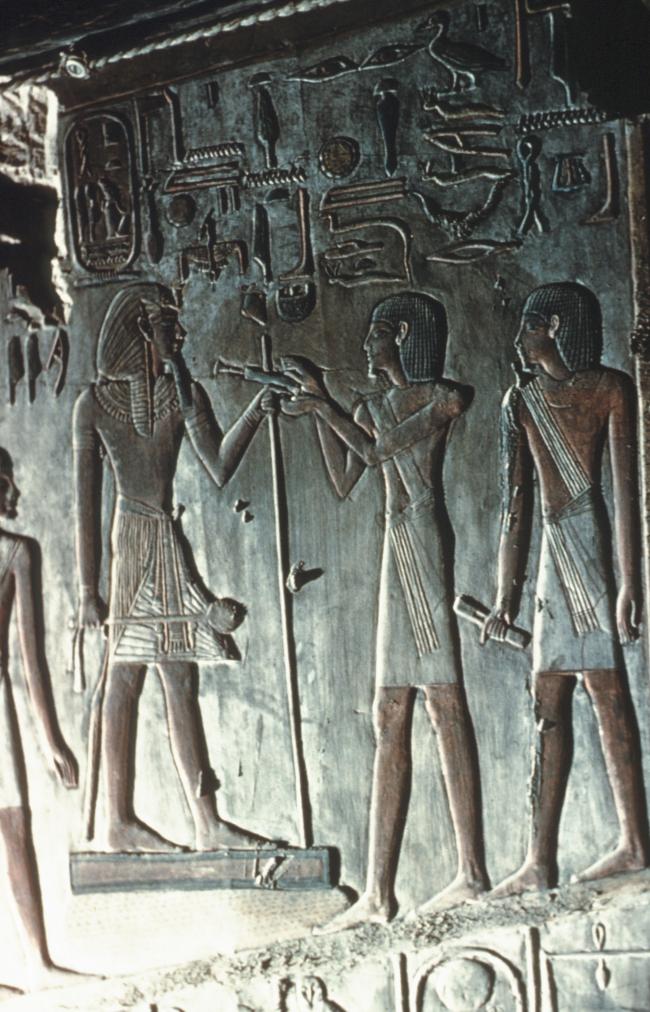
Opening of the Mouth ritual, scenes 24-34; lector priest and Sem-priest "opening mouth and eyes". Courtesy of Uni Dia Verlag; Uni Dia Image Nr. 35752.
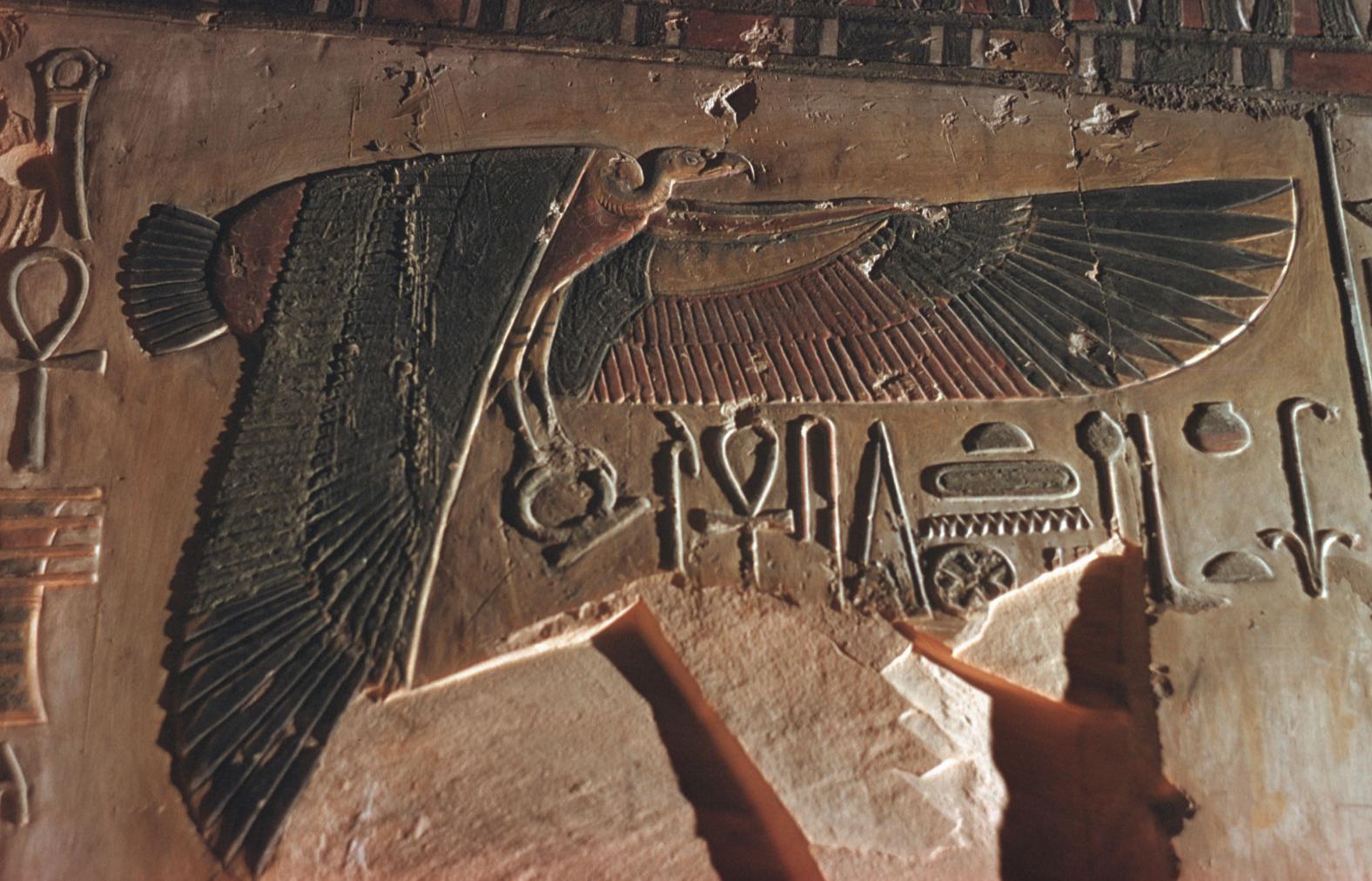
Vulture above Sety I seated before an offering table. Courtesy of Uni Dia Verlag; Uni Dia Image Nr. 35757.
Opening of the Mouth ritual scenes 18-26. Courtesy of Uni Dia Verlag; Uni Dia Image Nr. 35841.
Opening of the Mouth ritual scenes 18-26. Courtesy of Uni Dia Verlag; Uni Dia Image Nr. 35842.
Opening of the Mouth ritual scenes 18-26. Courtesy of Uni Dia Verlag; Uni Dia Image Nr. 35843.
Opening of the Mouth ritual scenes 46-48, 50, 55, 57. Courtesy of Uni Dia Verlag; Uni Dia Image Nr. 35844.
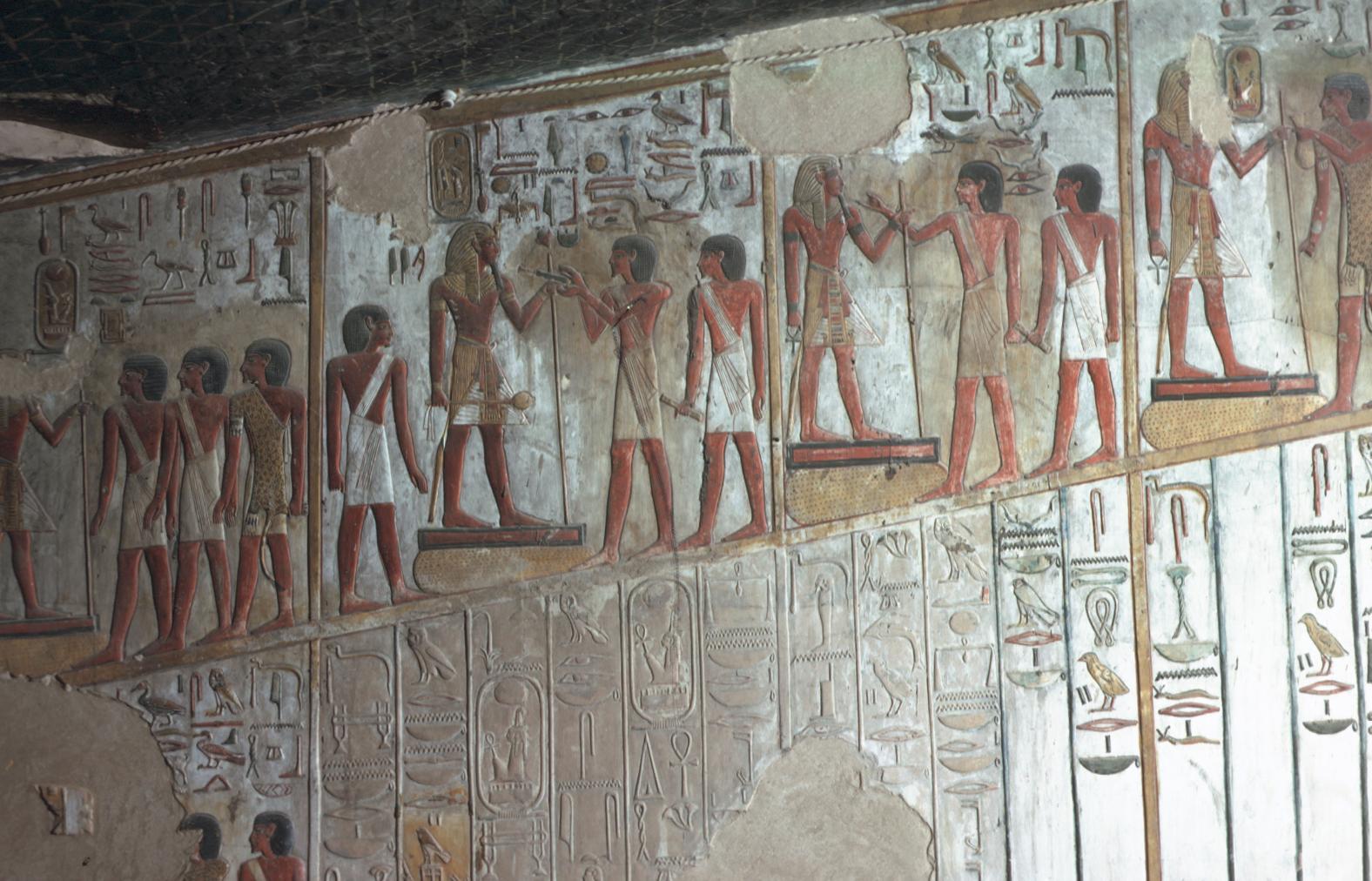
Opening of the Mouth ritual scenes 46-48, 50, 55, 57. Courtesy of Uni Dia Verlag; Uni Dia Image Nr. 35845.
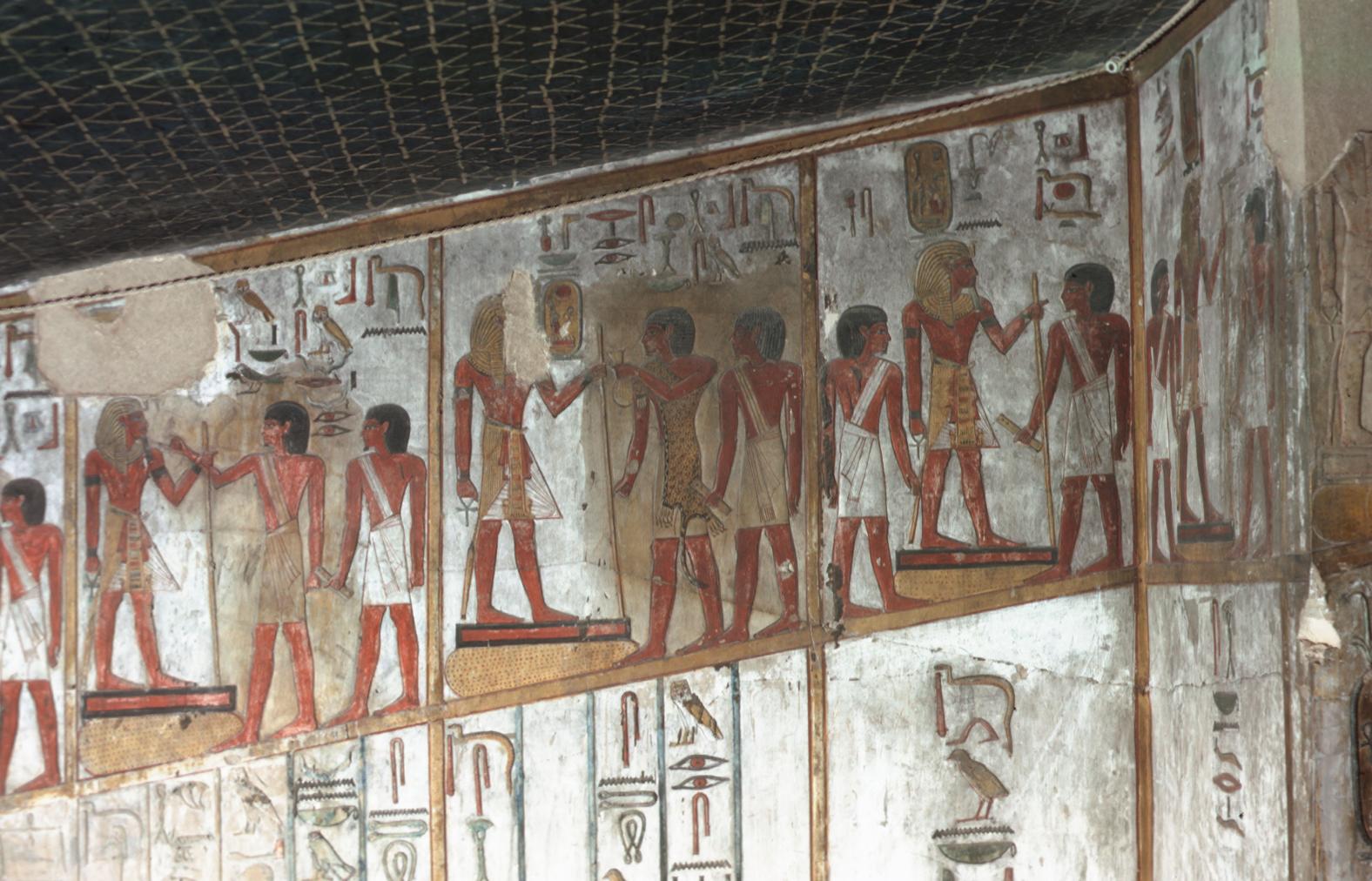
Opening of the Mouth ritual scenes 46-48, 50, 55, 57. Courtesy of Uni Dia Verlag; Uni Dia Image Nr. 35846.
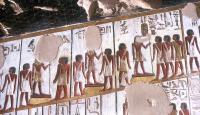
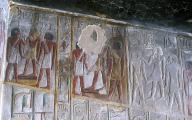
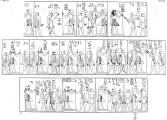
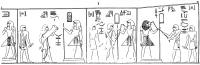
Gate I
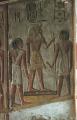
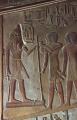
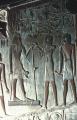
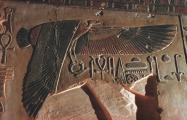
See entire tombA winged disk decorates the outer lintel, and the reveals are decorated with the king's names. There are two cobras on the thicknesses, one representing Nekhbet (on the southeast) and Wadjet (on the northwest).
Porter and Moss designation:
Chamber I
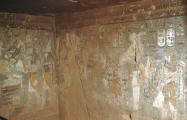
See entire tombSqueezes taken of scenes in this chamber in the nineteenth century caused considerable loss of color. The king is shown with various deities. The ceiling is painted with stars.
Porter and Moss designation:
Sety I with two forms of Hathor, and Carter's repairs in brick of damaged walls; stairs leading in the direction of tomb entrance.
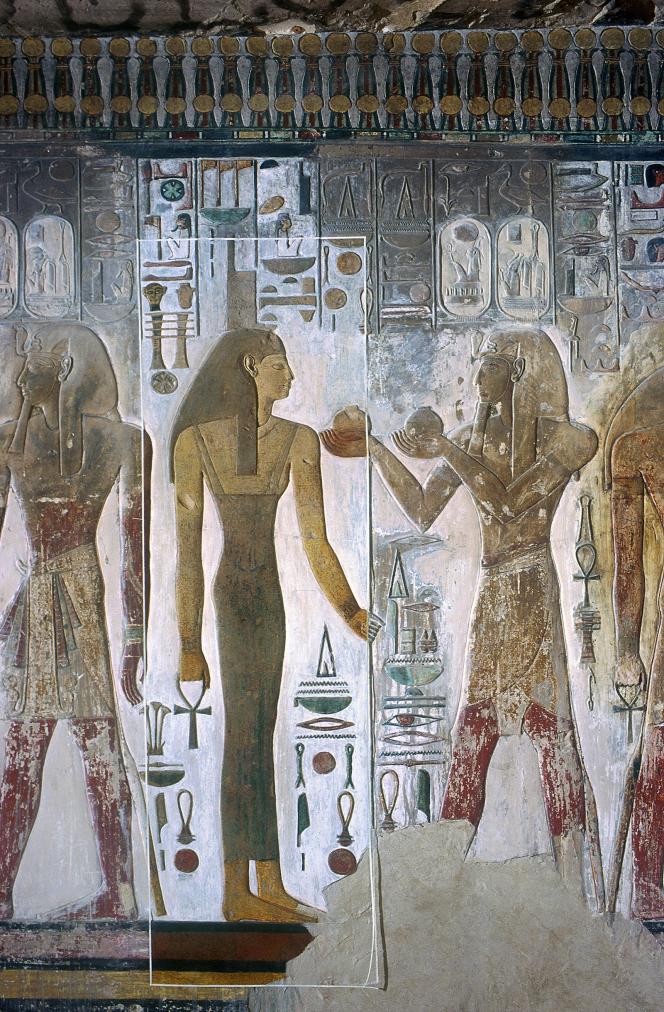
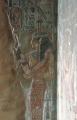
Sety I offering wine to Isis, showing test cleaning of Isis figure.
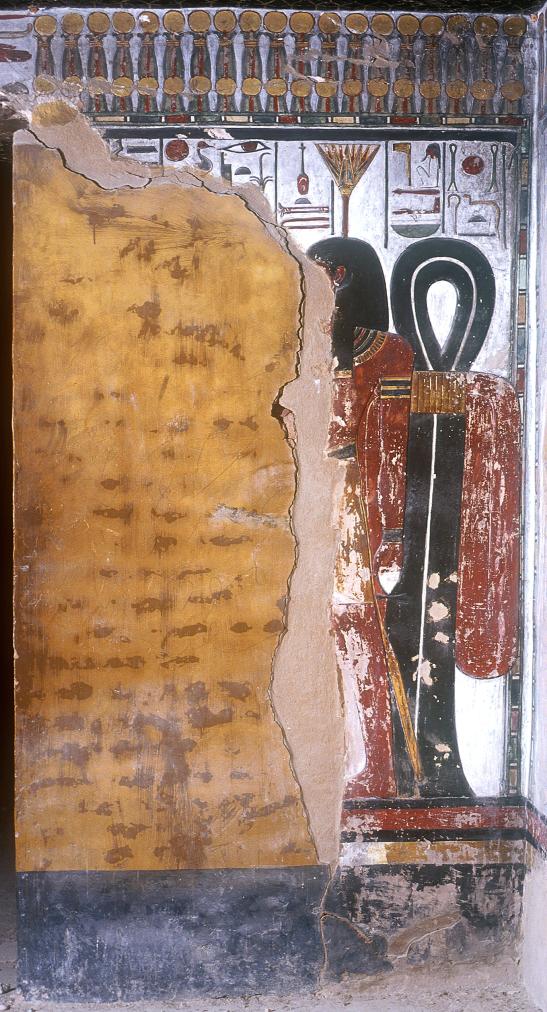
[Sety I with] Nefertem and tyet-knot, with Carter's repairs in brick where figure of Sety I used to be.
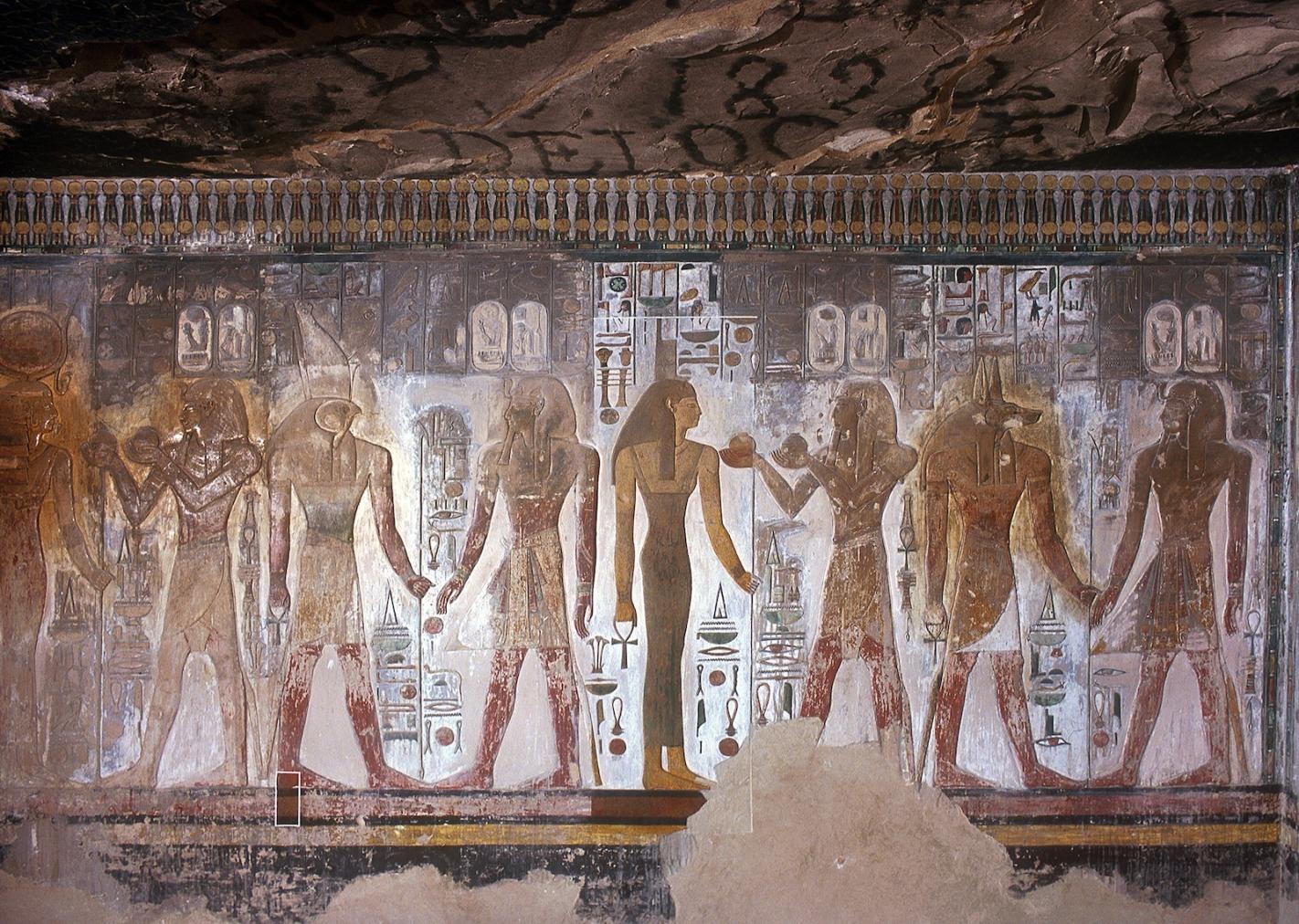
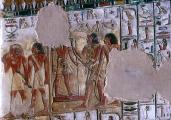
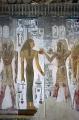
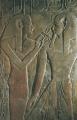
Graffiti; Sety I with Hathor, Horus, Isis, and Anubis.
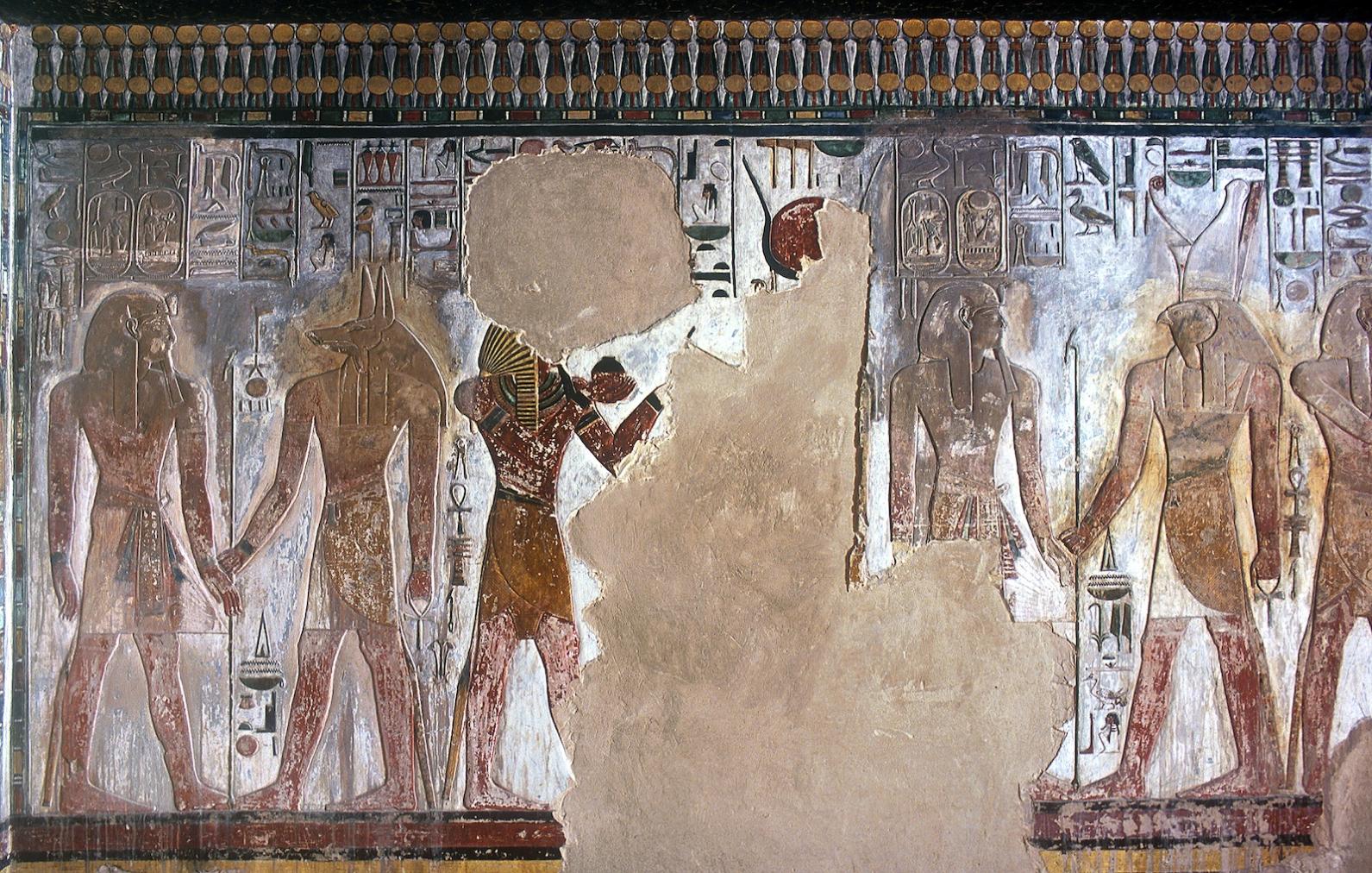
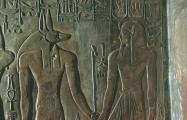
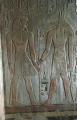
Sety I with Anubis, Isis and Horus.
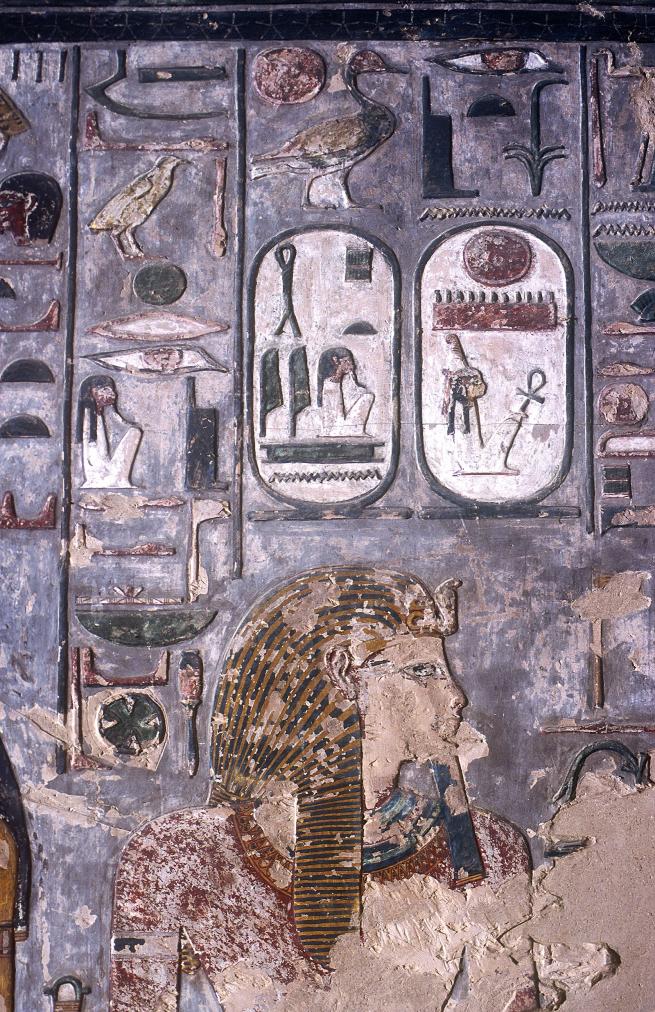
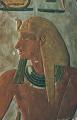
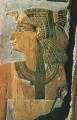
Sety I: head and cartouches (detail).
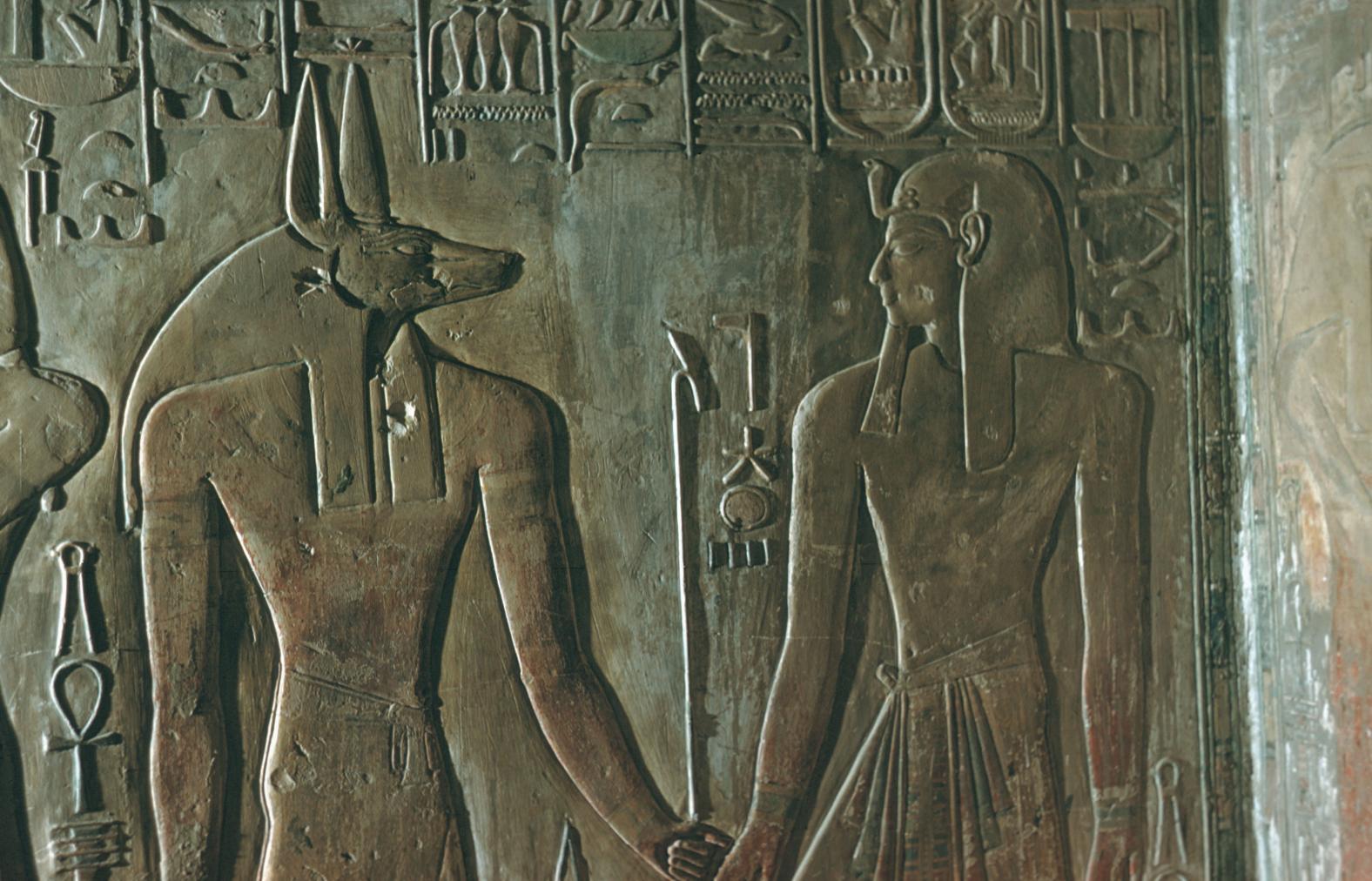
Sety I with Anubis . Courtesy of Uni Dia Verlag; Uni Dia Image Nr. 35753.
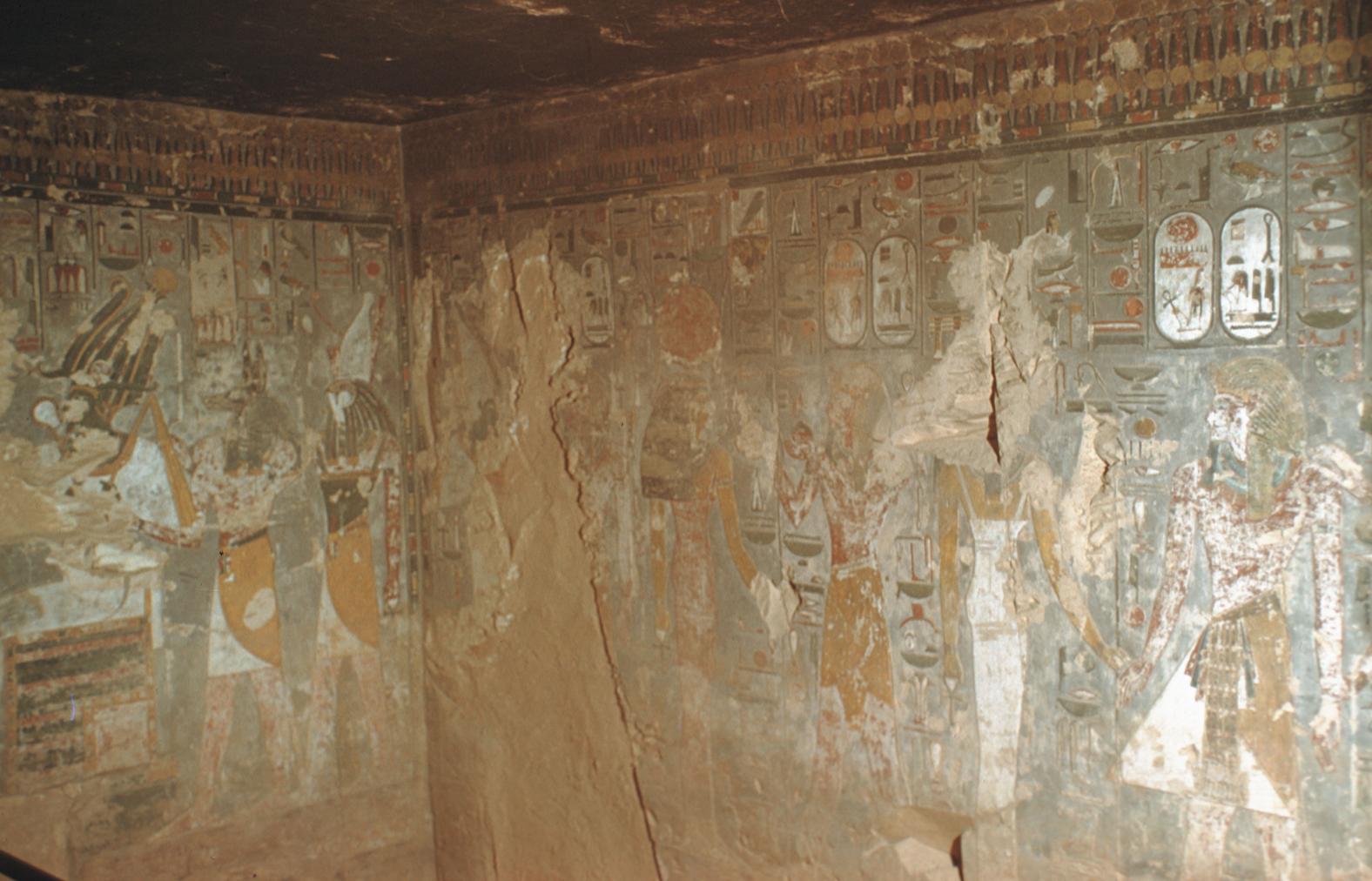
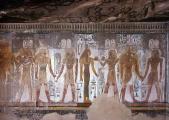
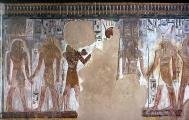
The king in front of various gods (heavily destroyed). Courtesy of Uni Dia Verlag; Uni Dia Image Nr. 35754.
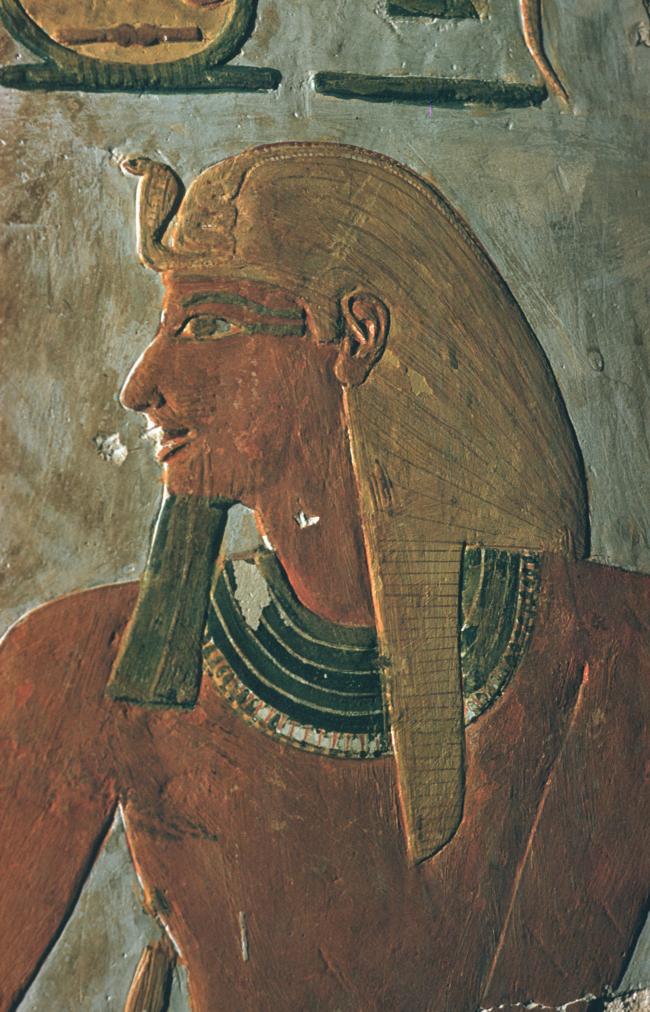
Head of the king. Courtesy of Uni Dia Verlag; Uni Dia Image Nr. 35755.
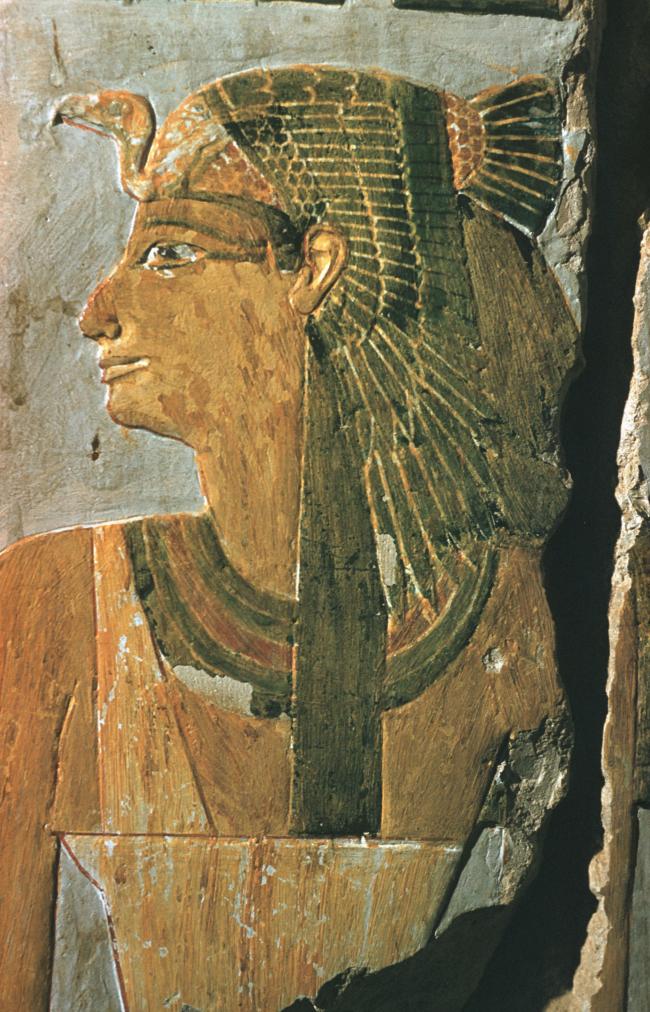
Head of the queen. Courtesy of Uni Dia Verlag; Uni Dia Image Nr. 35756.
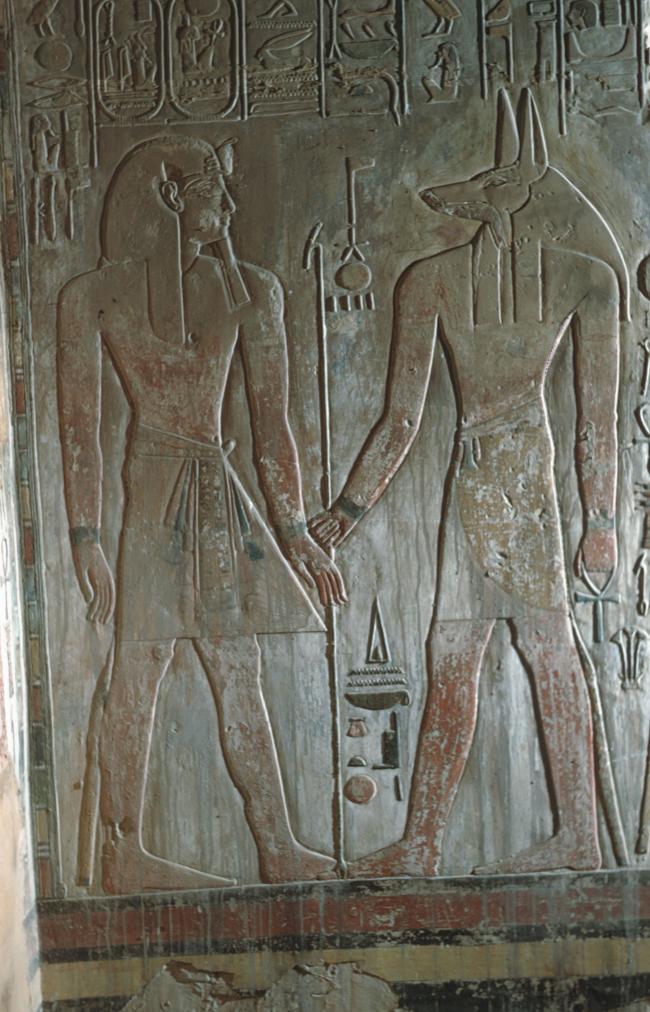
Sety I with Anubis. Courtesy of Uni Dia Verlag; Uni Dia Image Nr. 35758.
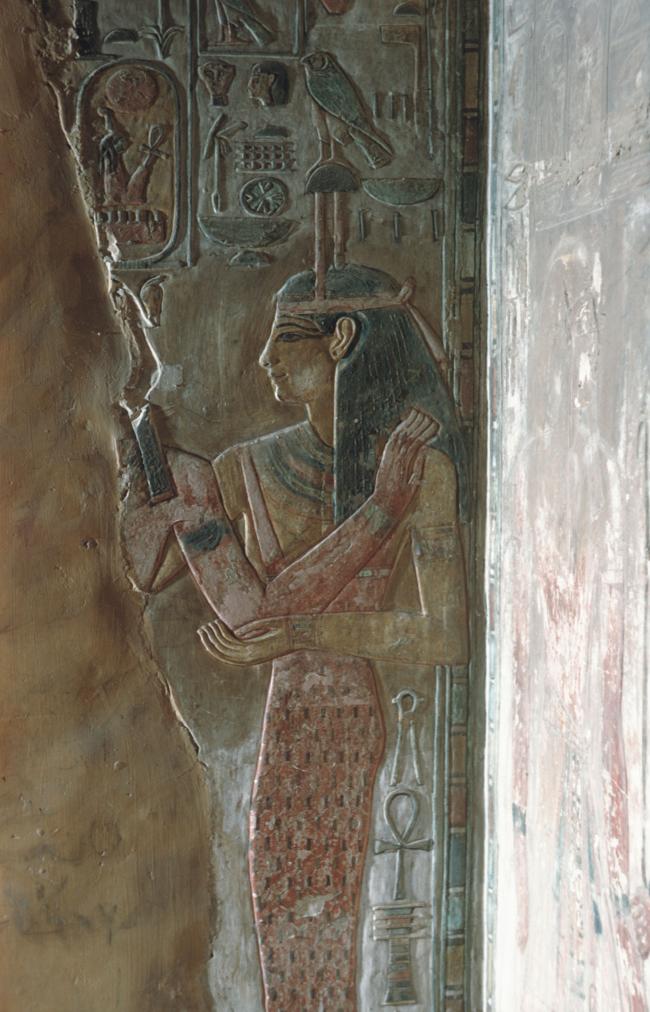
Sety I with Hathor, and Carter's repairs in brick of damaged walls. Courtesy of Uni Dia Verlag; Uni Dia Image Nr. 35759.
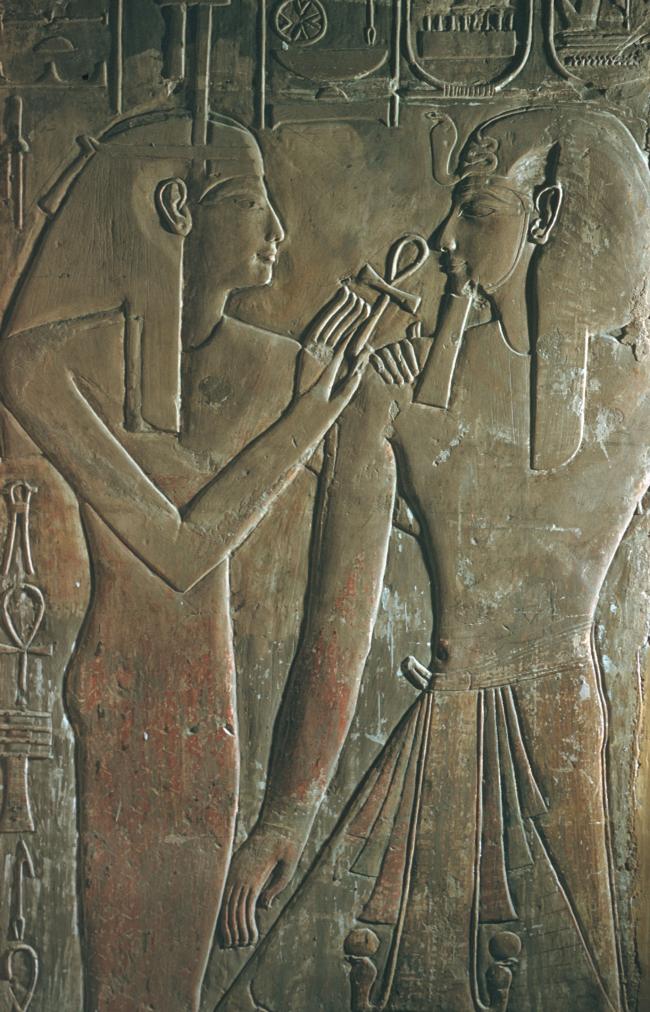
Sety I with Hathor, and Carter's repairs in brick of damaged walls. Courtesy of Uni Dia Verlag; Uni Dia Image Nr. 35760.
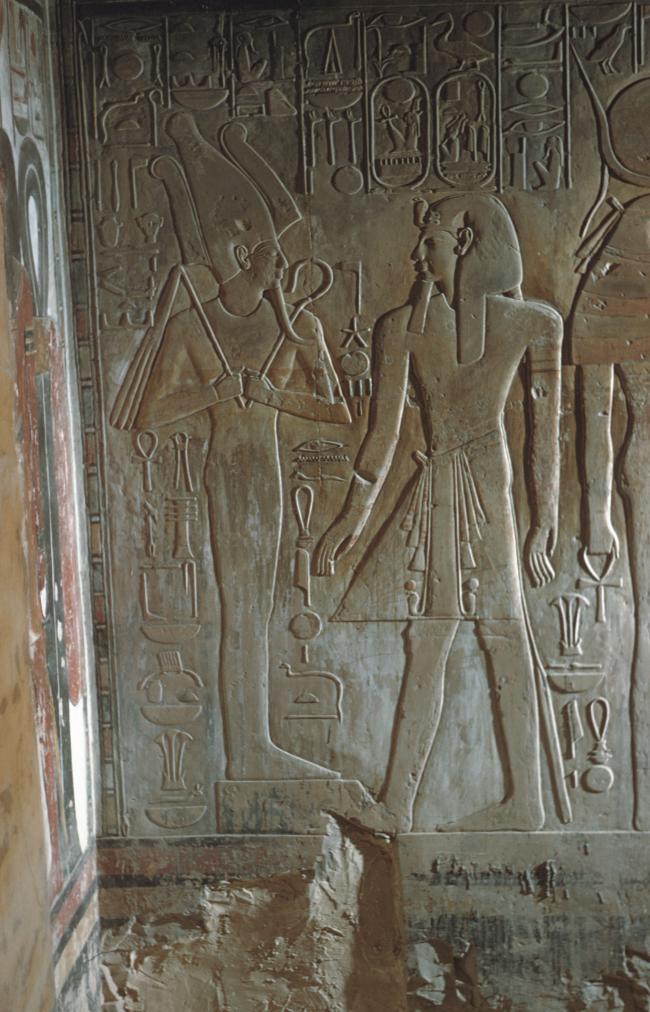
King before Osiris-Wennefer. Courtesy of Uni Dia Verlag; Uni Dia Image Nr. 35761.
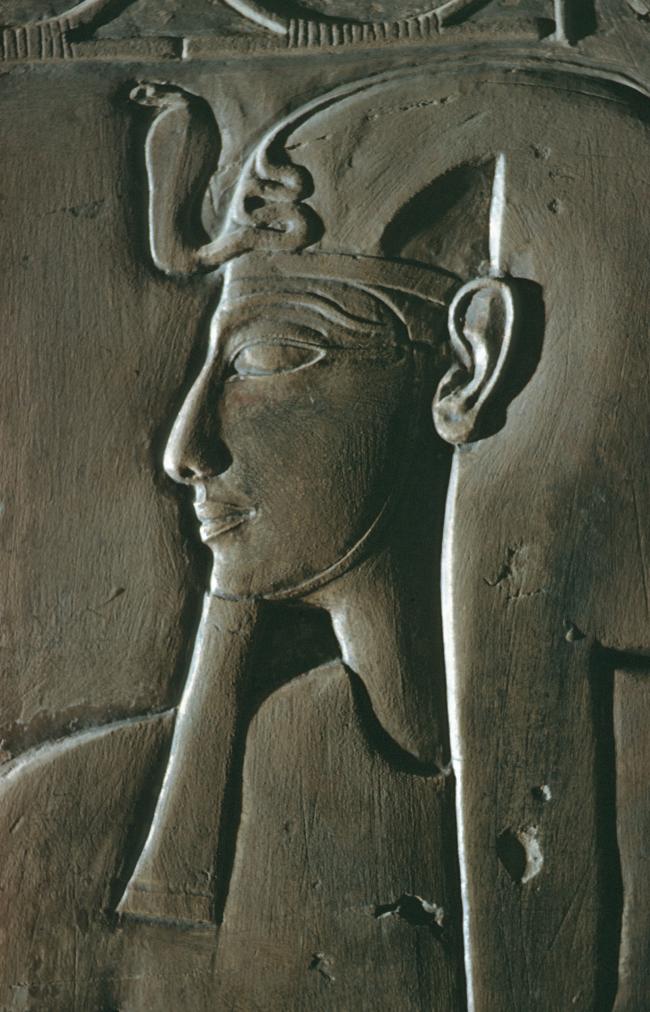
Detail of King before Osiris-Wennefer. Courtesy of Uni Dia Verlag; Uni Dia Image Nr. 35762.
Gate J
See entire tombOn the outer lintel is a winged sun disk. The thicknesses were decorated with the cobra goddesses Nekhbet and Wadjet.
Porter and Moss designation:
Burial chamber J
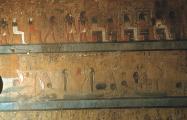
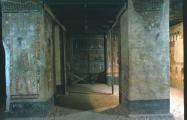
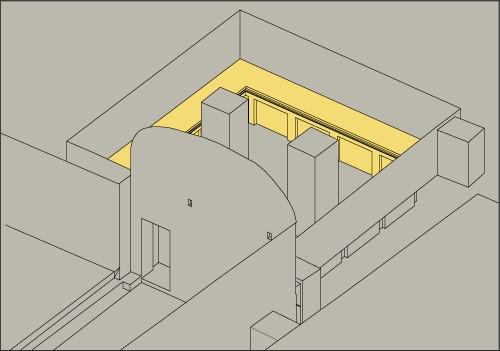
See entire tombThe burial chamber J is divided into two parts. An initial raised section contains two rows of three pillars arranged along the central axis. Two subsidiary chambers (Ja, Je) lead off from the left (southeast) and right (northwest) walls of this pillared section. Three stepped descents on either side and between the last pair of pillars (3 and 6) lead to the sunken rear part of the burial chamber which has a vaulted ceiling. A rectangular pit is situated at the northwest end of the chamber, giving access to the beginning of corridor K. Gates in the left and right walls lead to subsidiary chambers (Jb) and (Jd), respectively, and a gate at the left (southeast) end of the right wall leads to side chamber Jc. Recesses are located at floor level in the left and right walls, and there are pairs of magical brick niches higher up in these walls.
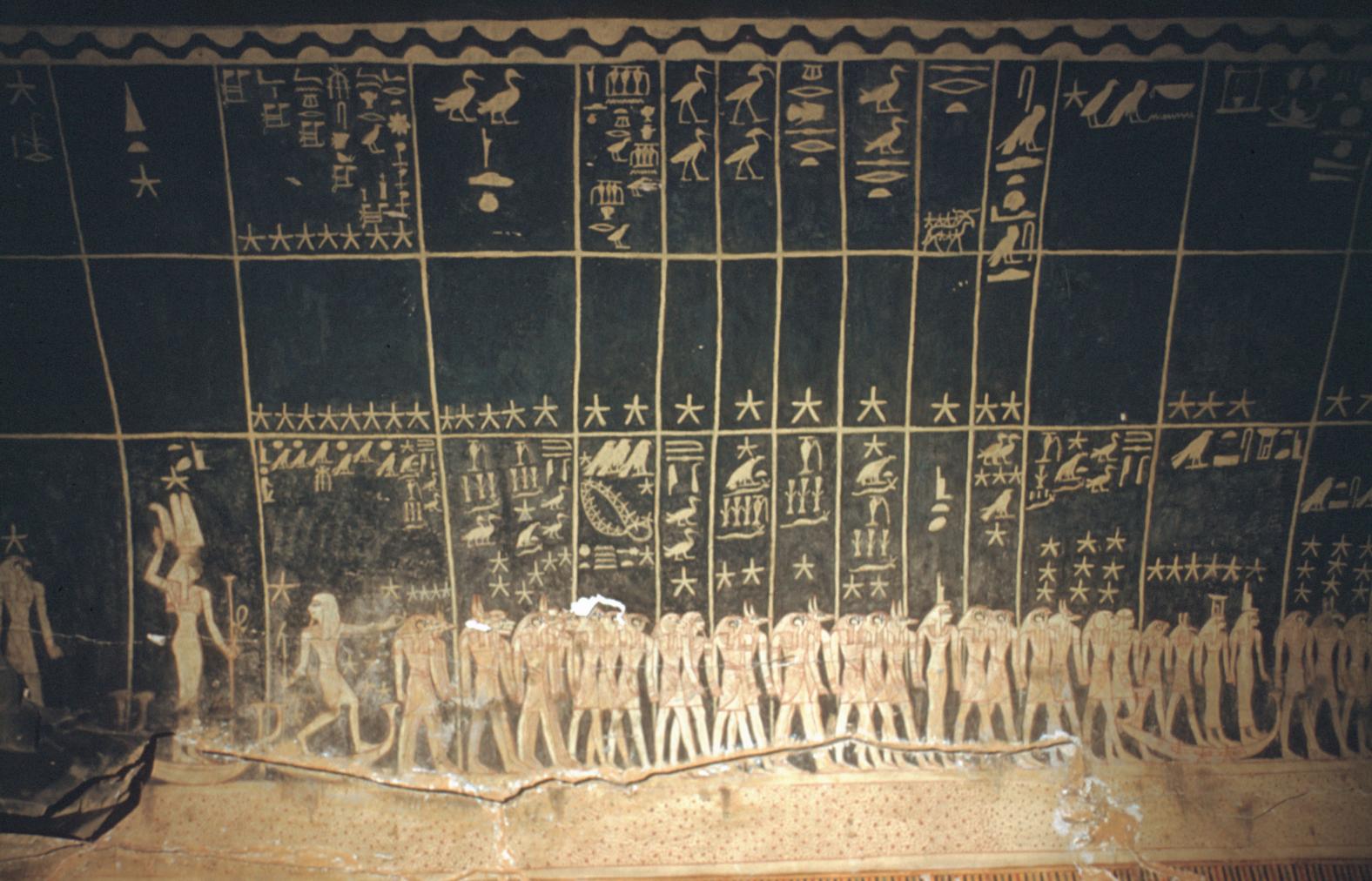
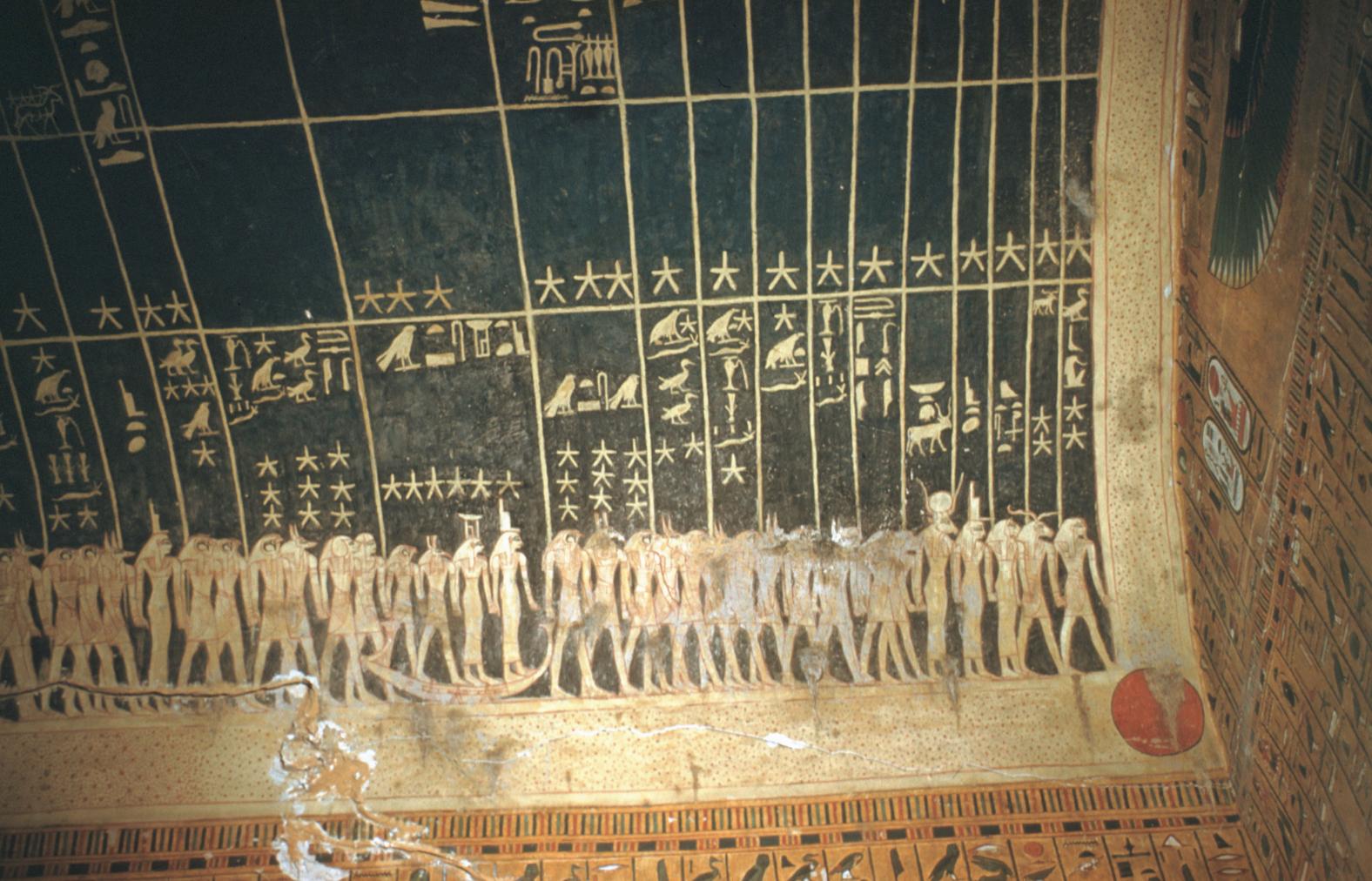
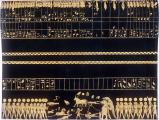
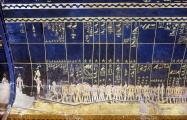
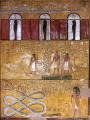
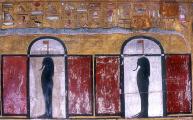
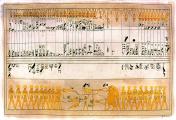
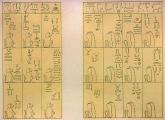
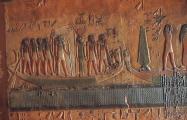
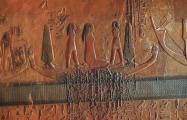
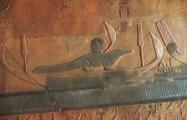
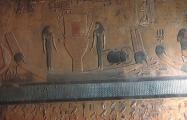
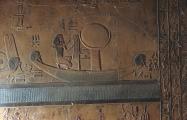
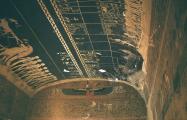
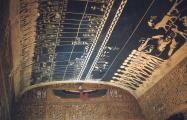
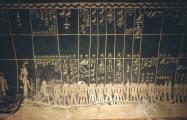
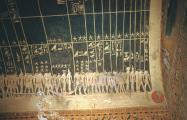
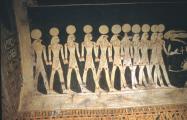
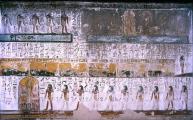
The walls of the sunken end of the chamber are covered with three hours from the Imydwat, and the walls of the preceding pillared area are decorated with the first, second and fourth divisions (P)/second, third and fifth hours (H) of the Book of Gates. Large winged kneeling figures of Isis and Nephthys are located at the tops of the left and right walls respectively below the vault of the ceiling. On the ceiling itself are astronomical figures. Pillar 2 has suffered structural damage. The face of its mirroring pillar, pillar 5, across the central axis, was removed by Lepsius. On the remaining pillar faces are representations of deities and compositions of the king before various deities. To the southeast there is a recess which served as a small shrine, perhaps for the canopic chest. Its decoration shows the four sons of Horus on the left (northeast) wall, Osiris on the rear (southeast) wall, and Anubis opening the mouth of Osiris, on the right (southwest) wall.
Chamber plan:
RectangularRelationship to main tomb axis:
ParallelChamber layout:
Pillared front upper level, sunken rear lower levelFloor:
Two levelsCeiling:
Vaulted
Porter and Moss designation:
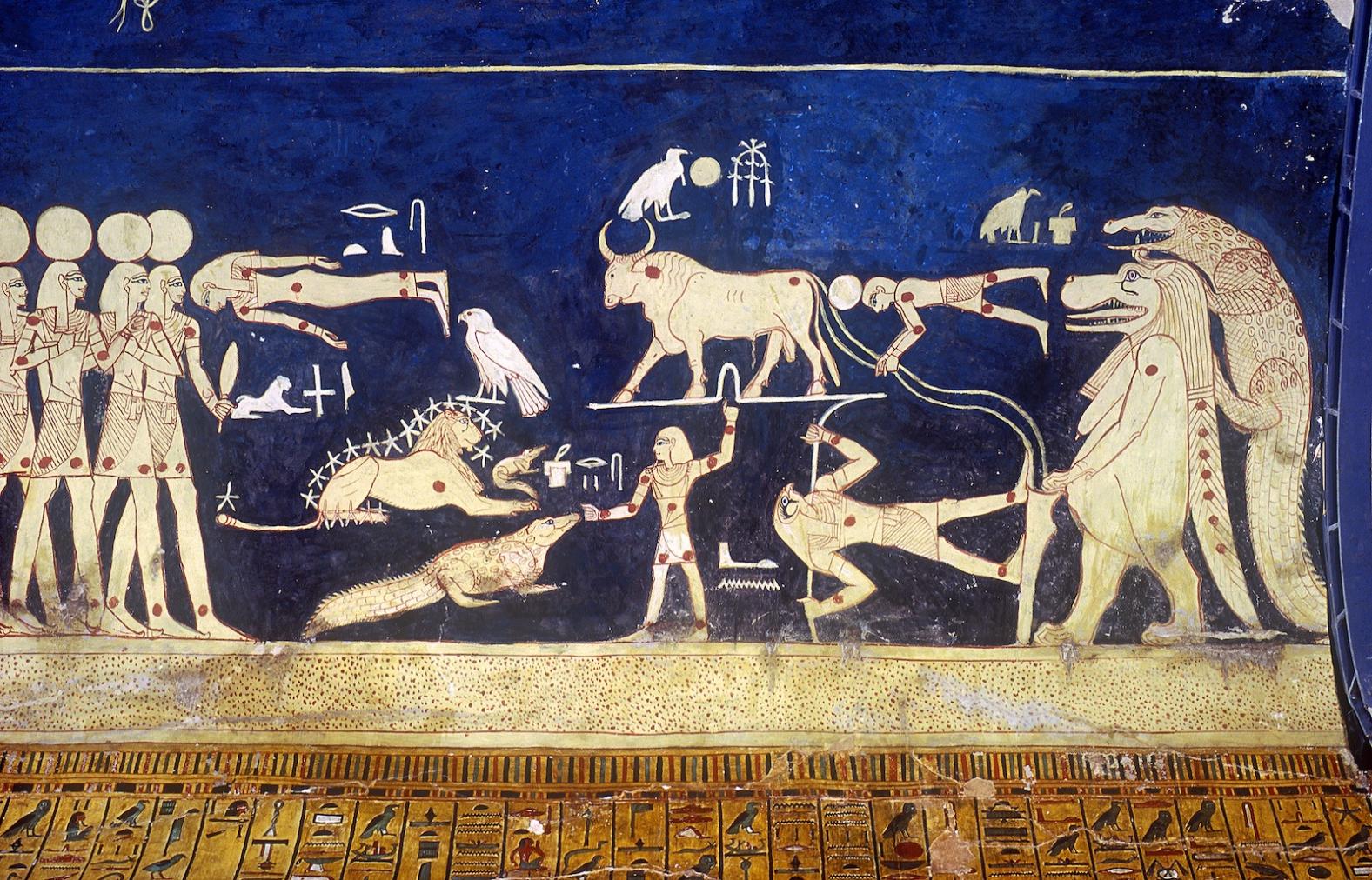
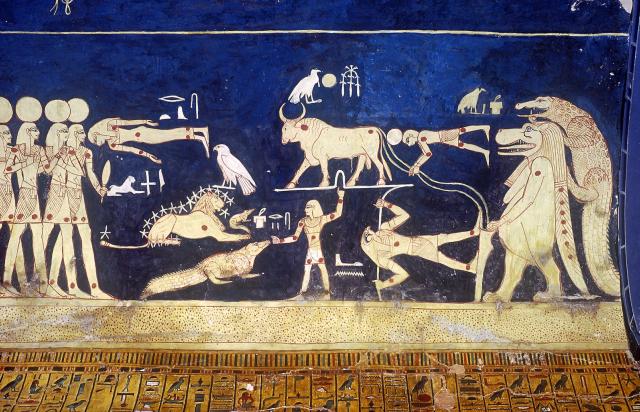
Circumpolar stars.
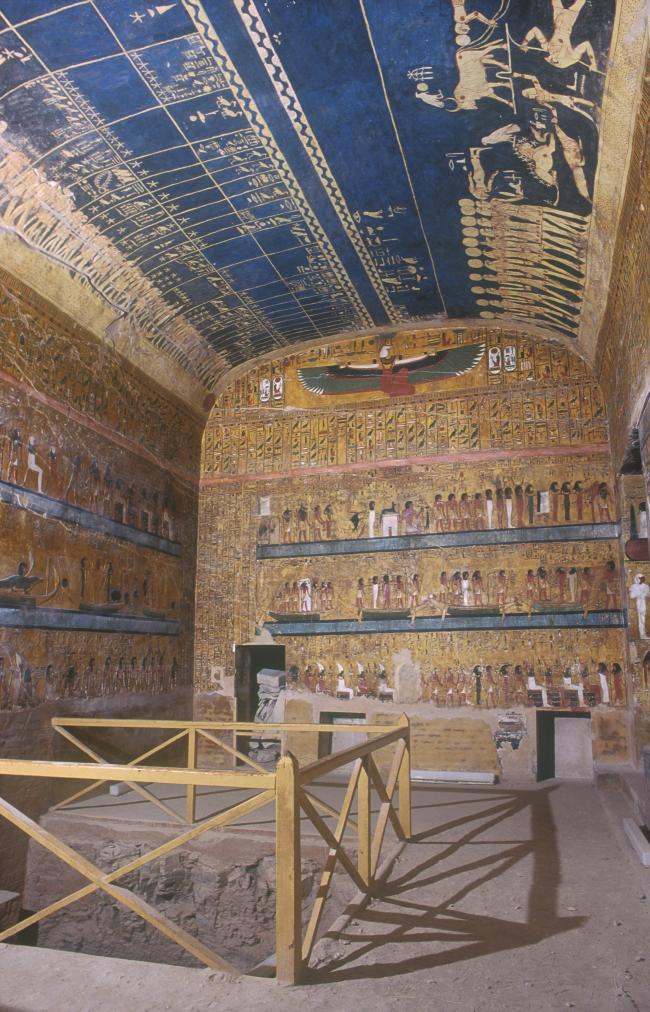
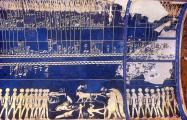
Astronomical scenes; Imydwat, second hour; Imydwat, third hour; railing surrounding descent to chamber K in foreground.
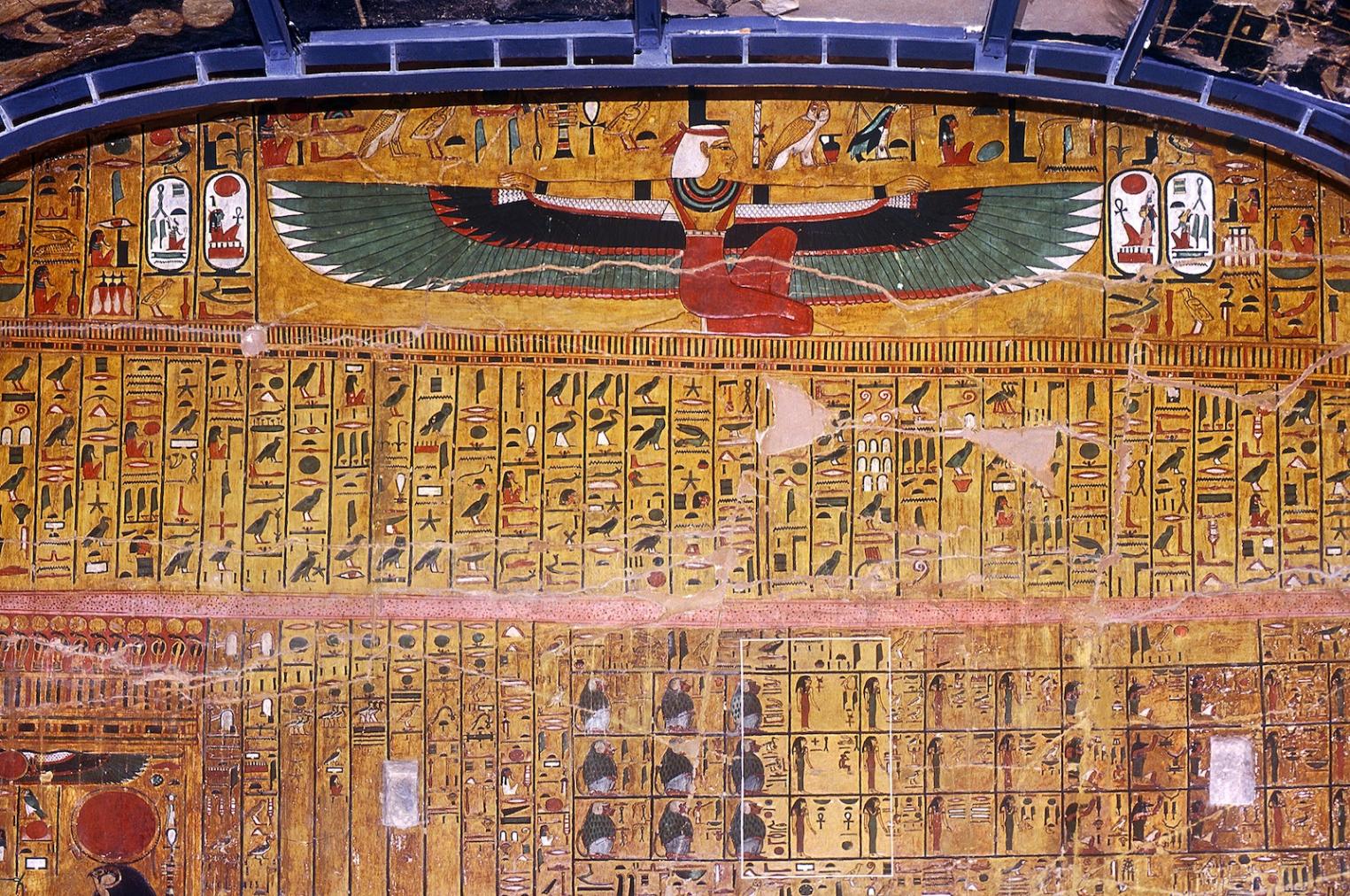
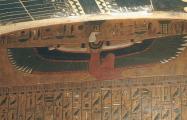
Winged Isis; Imydwat, abbreviated version and first hour; pair of white rectangles are magical brick niches.
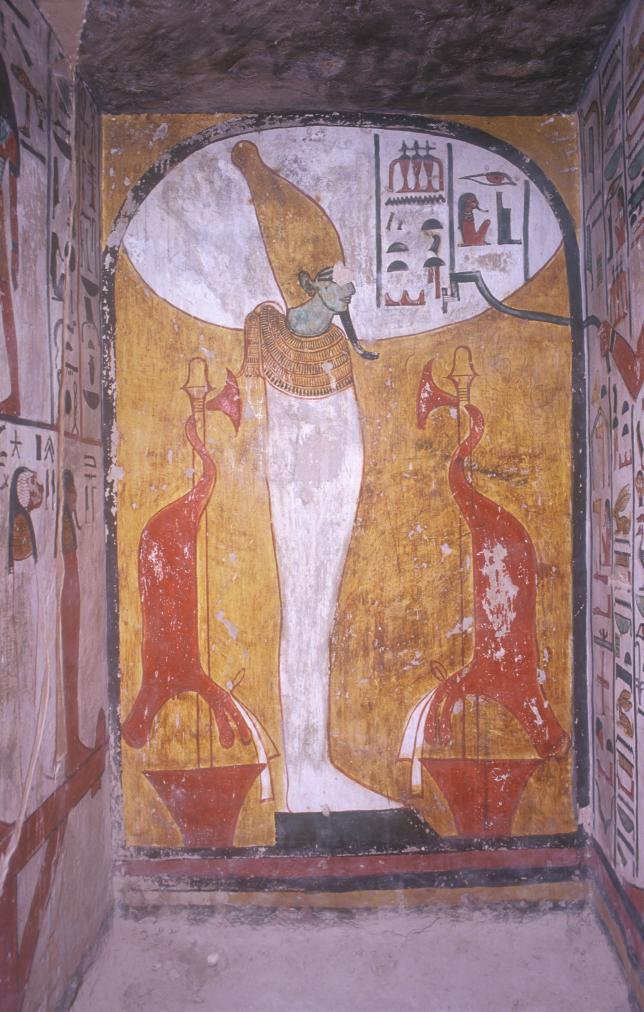
Osiris having his mouth opened [by Anubis].
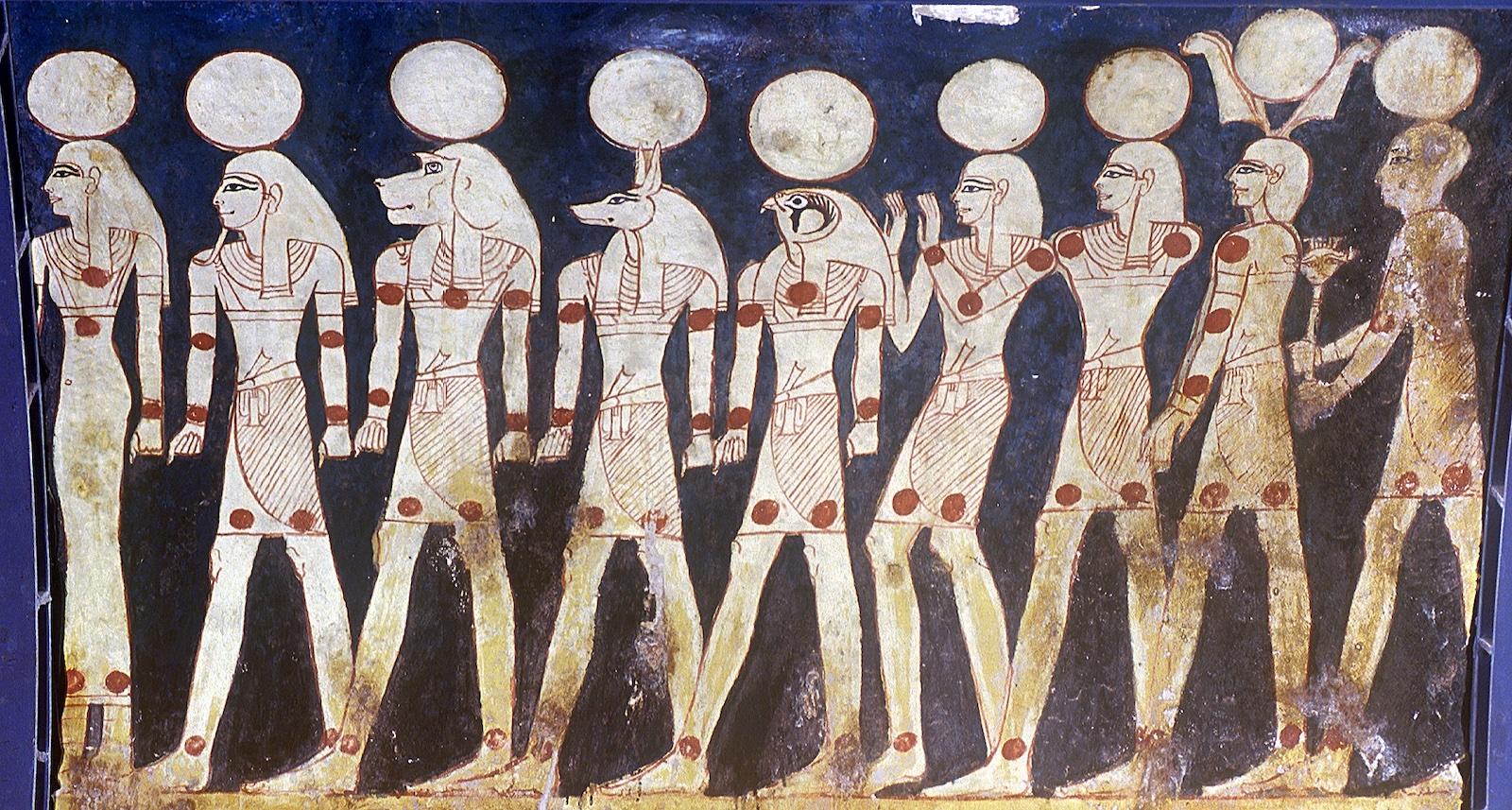
Circumpolar stars and decans.
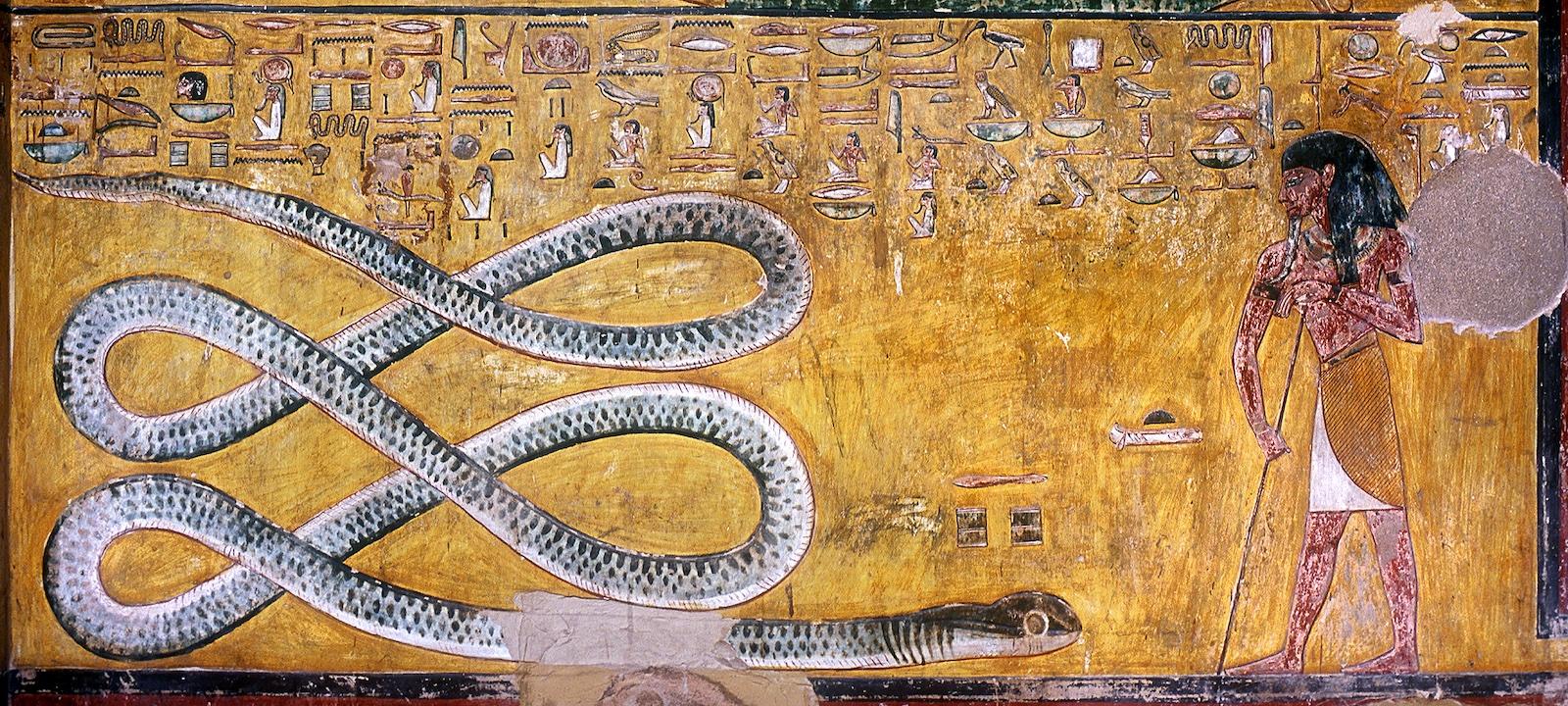
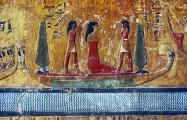
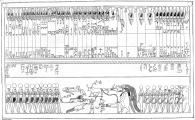
Book of Gates, second division (P)/third hour (H), scene 13: Atum subduing Apophis.
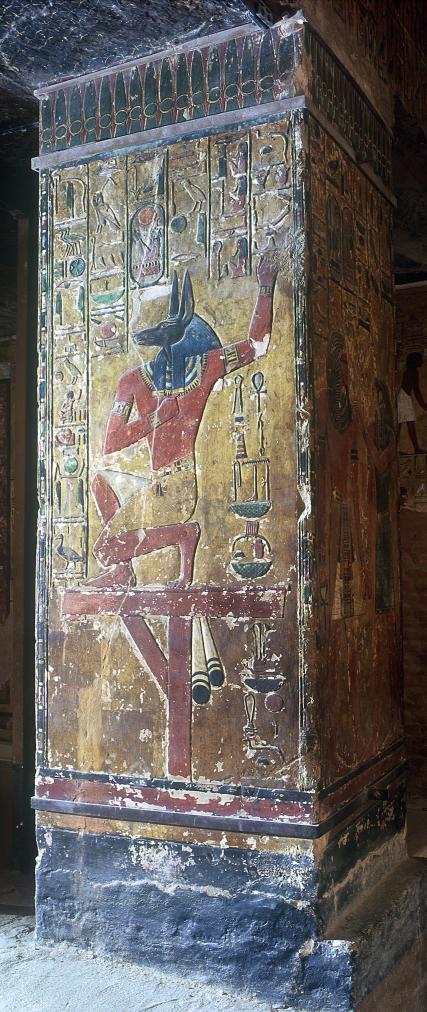
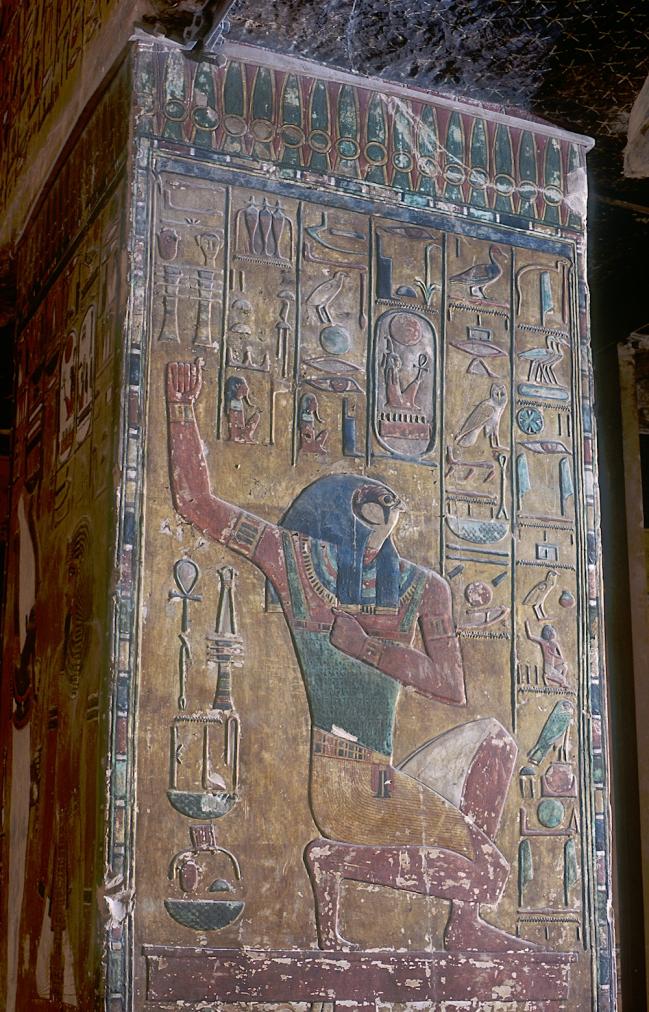
Soul of Pe; Sety I and Horus.
Soul of Nekhen.
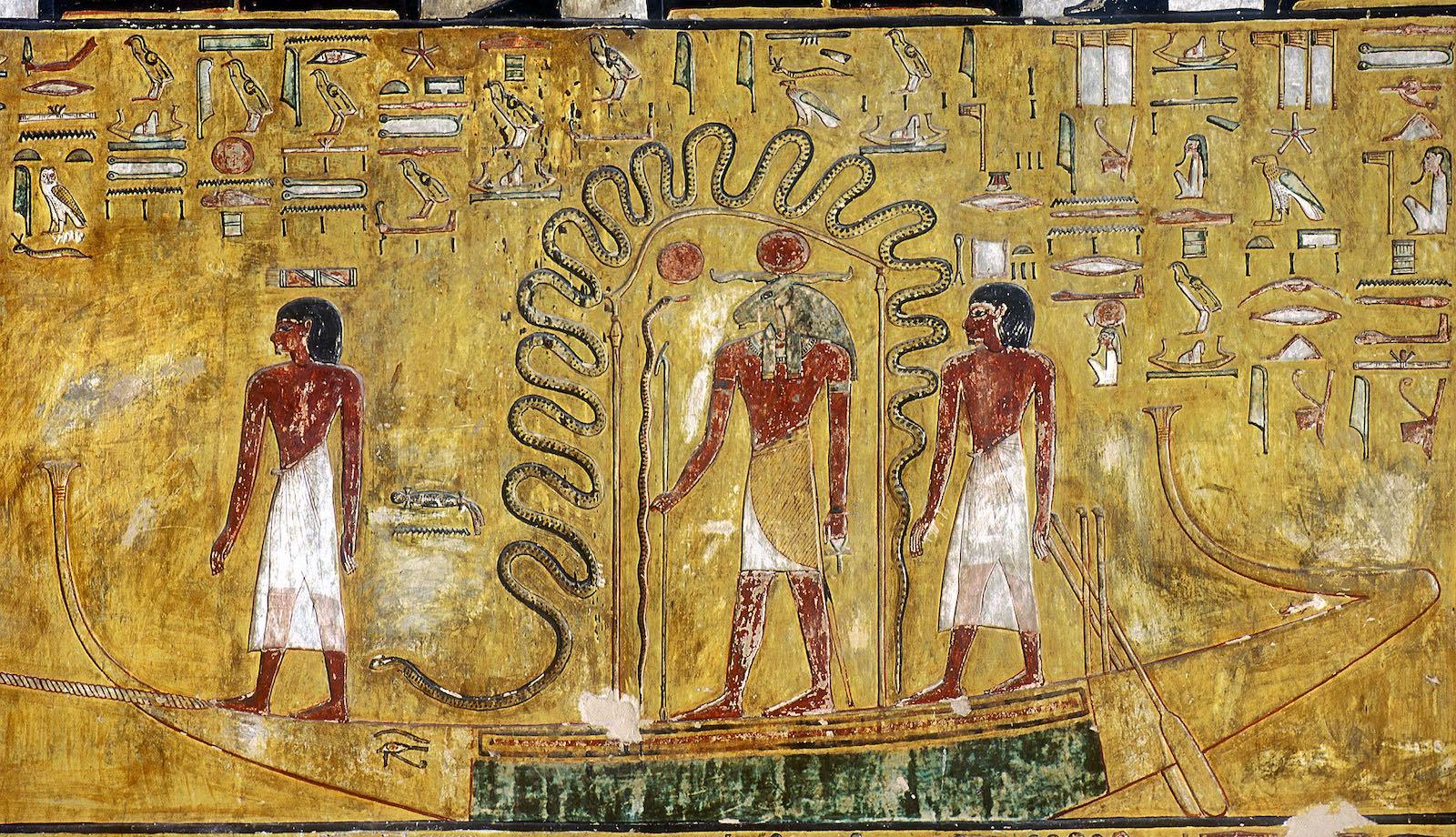
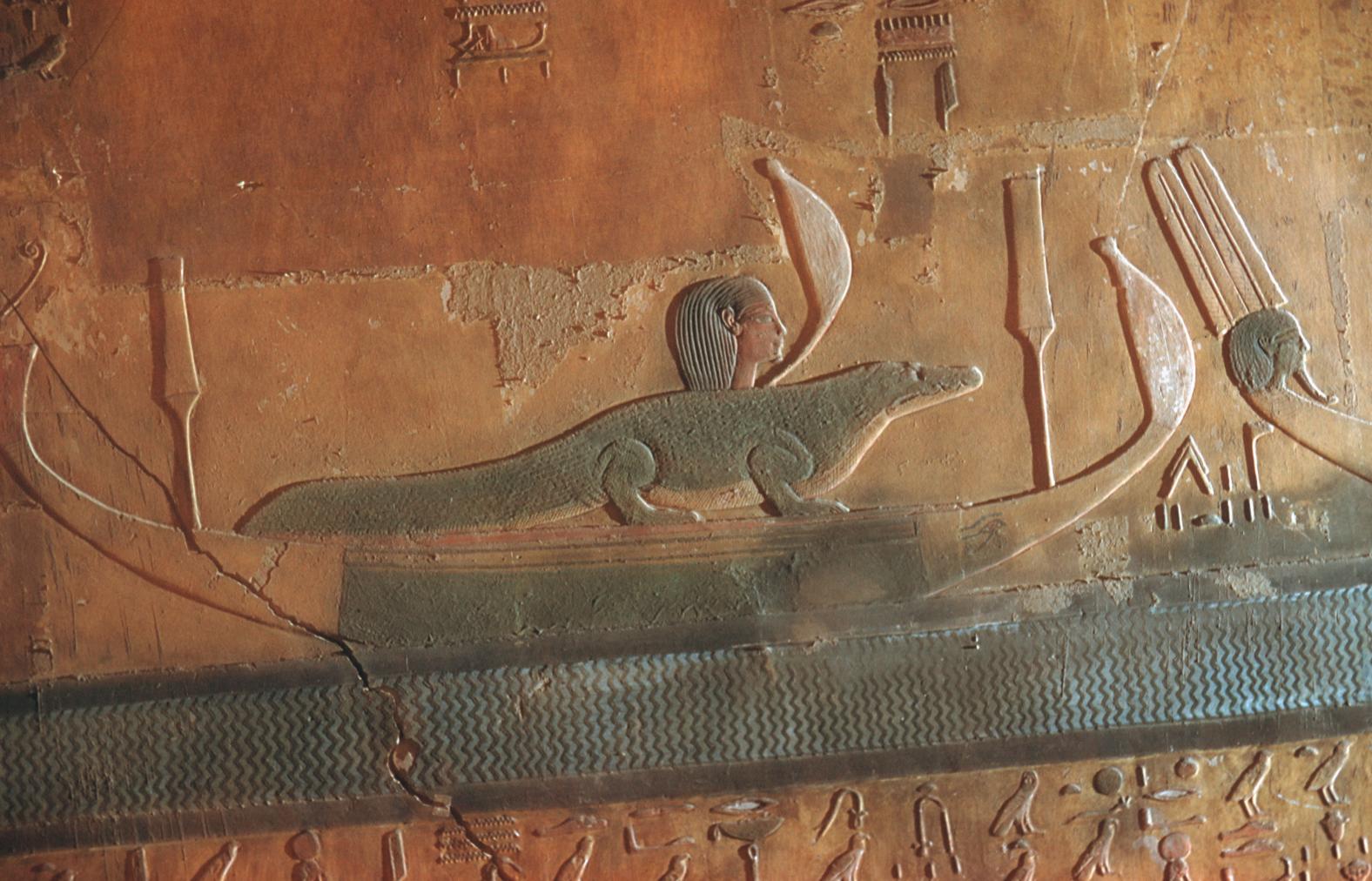
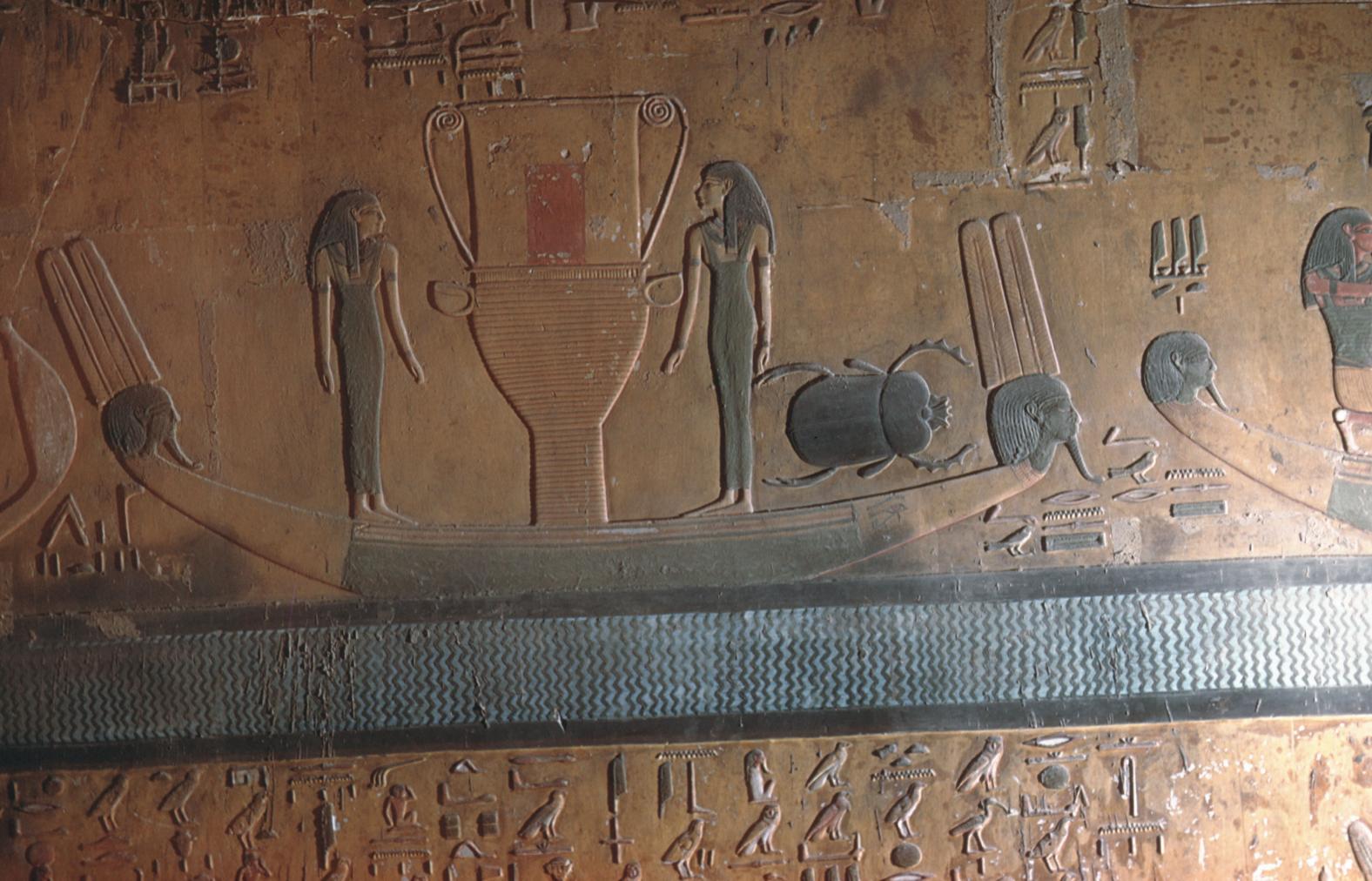
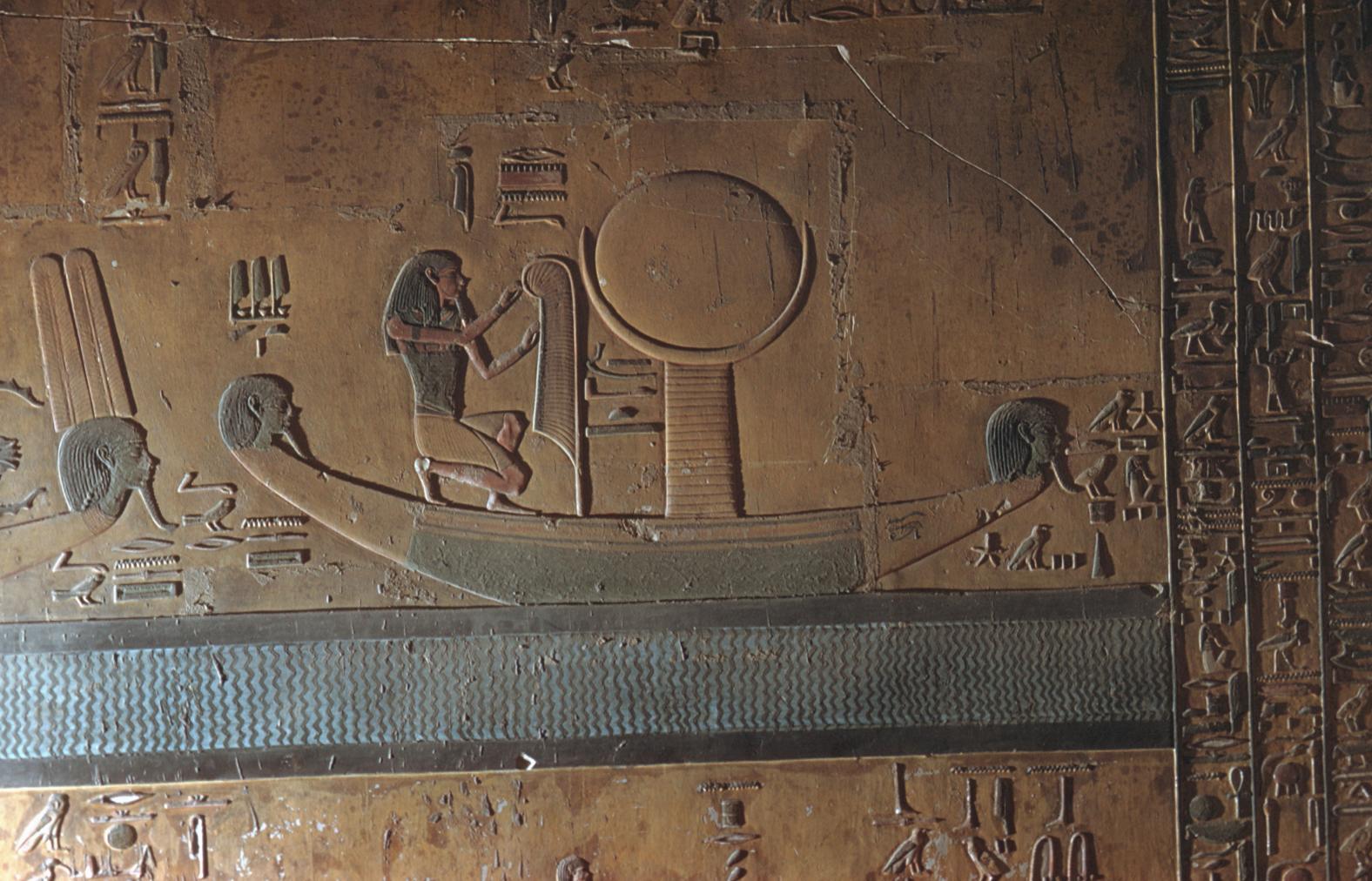
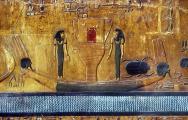
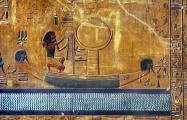
Book of Gates, second division (P)/third hour (H): solar bark.
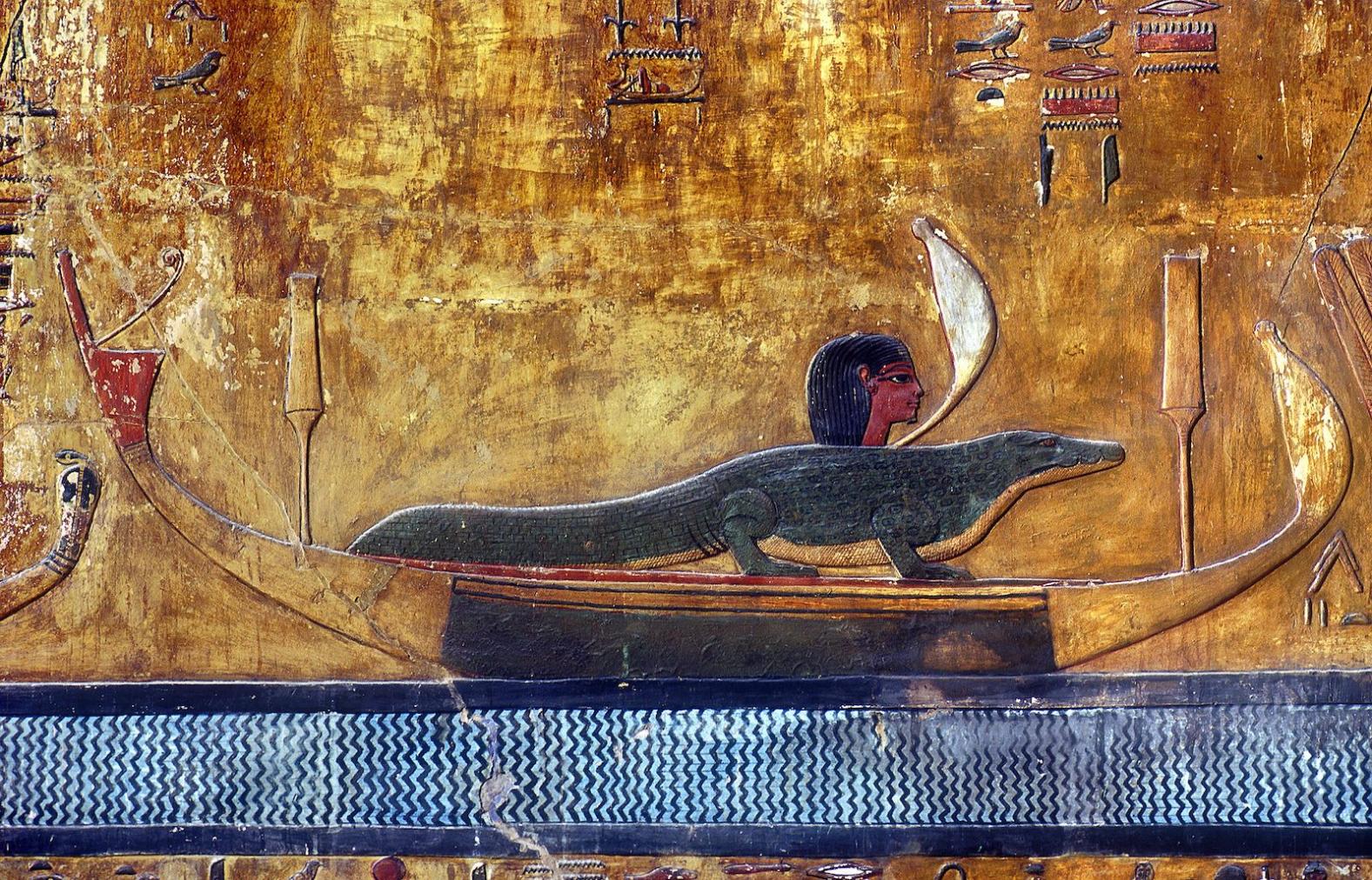
Imydwat, second hour (detail)
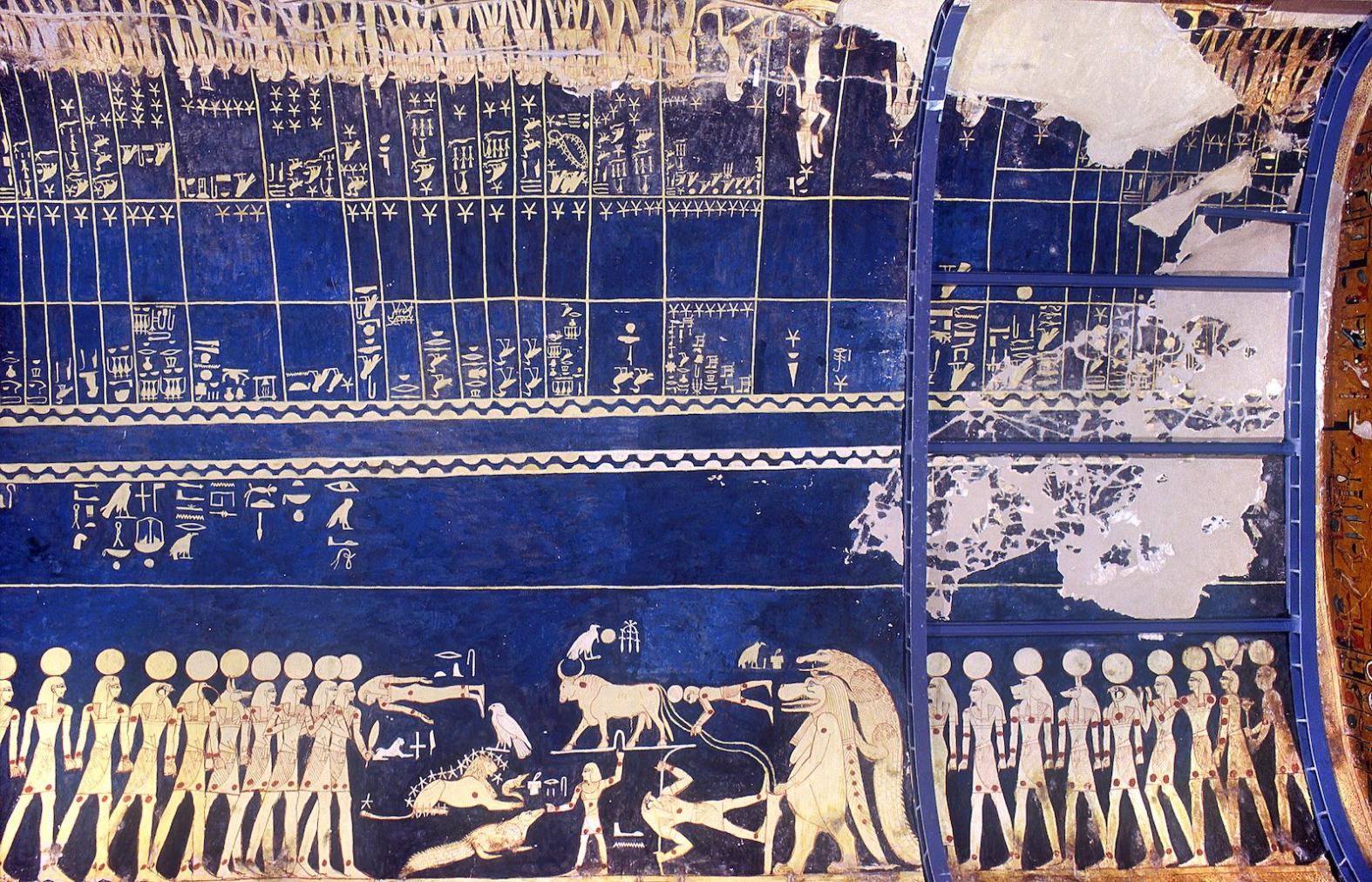
Astronomical figures; modern reinforcing beams supporting ceiling.
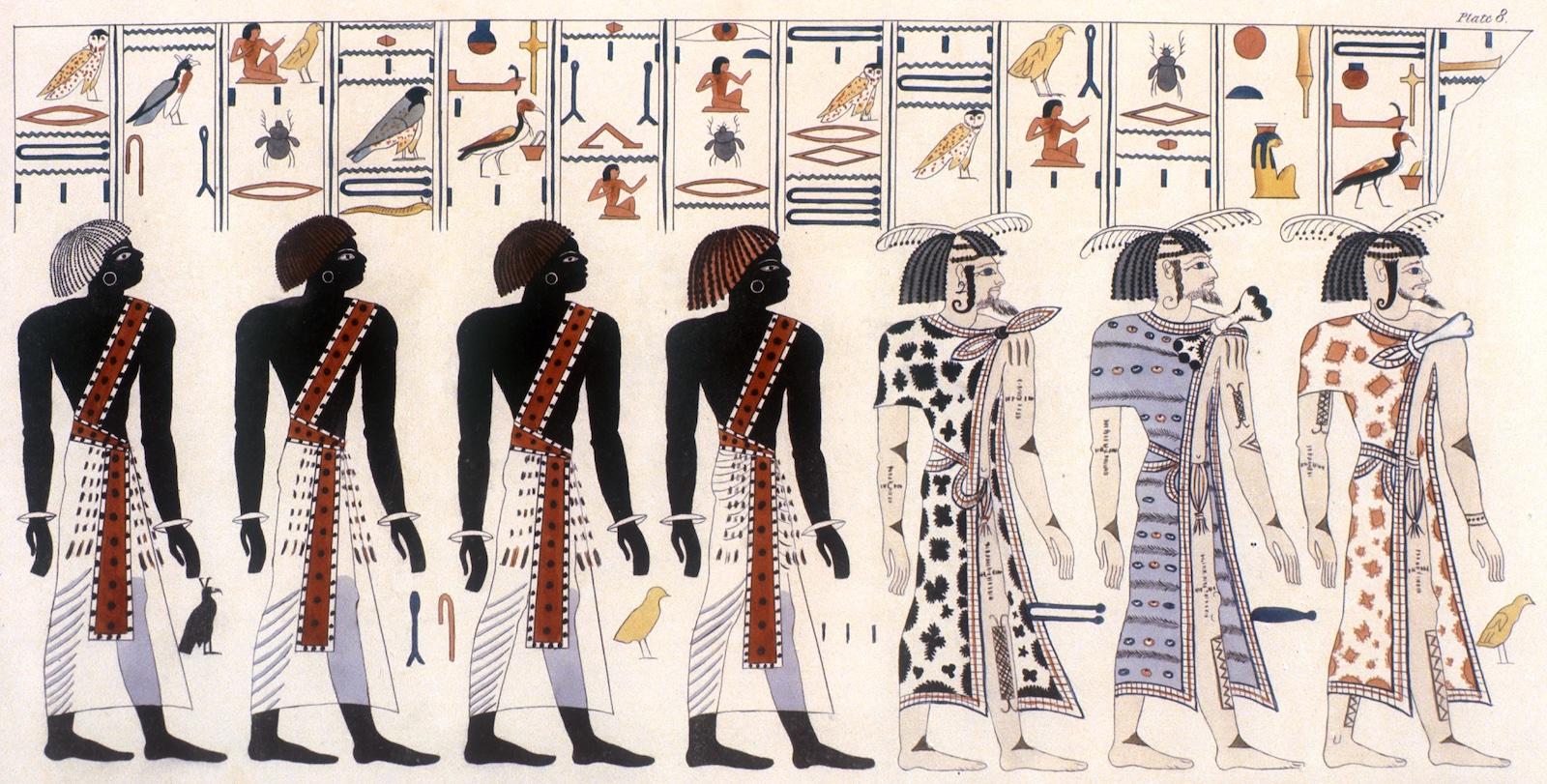
Book of Gates, fourth division (P)/fifth hour (H), scene 30: Nubians and Libyans, two of the "four races of mankind" (reconstruction).
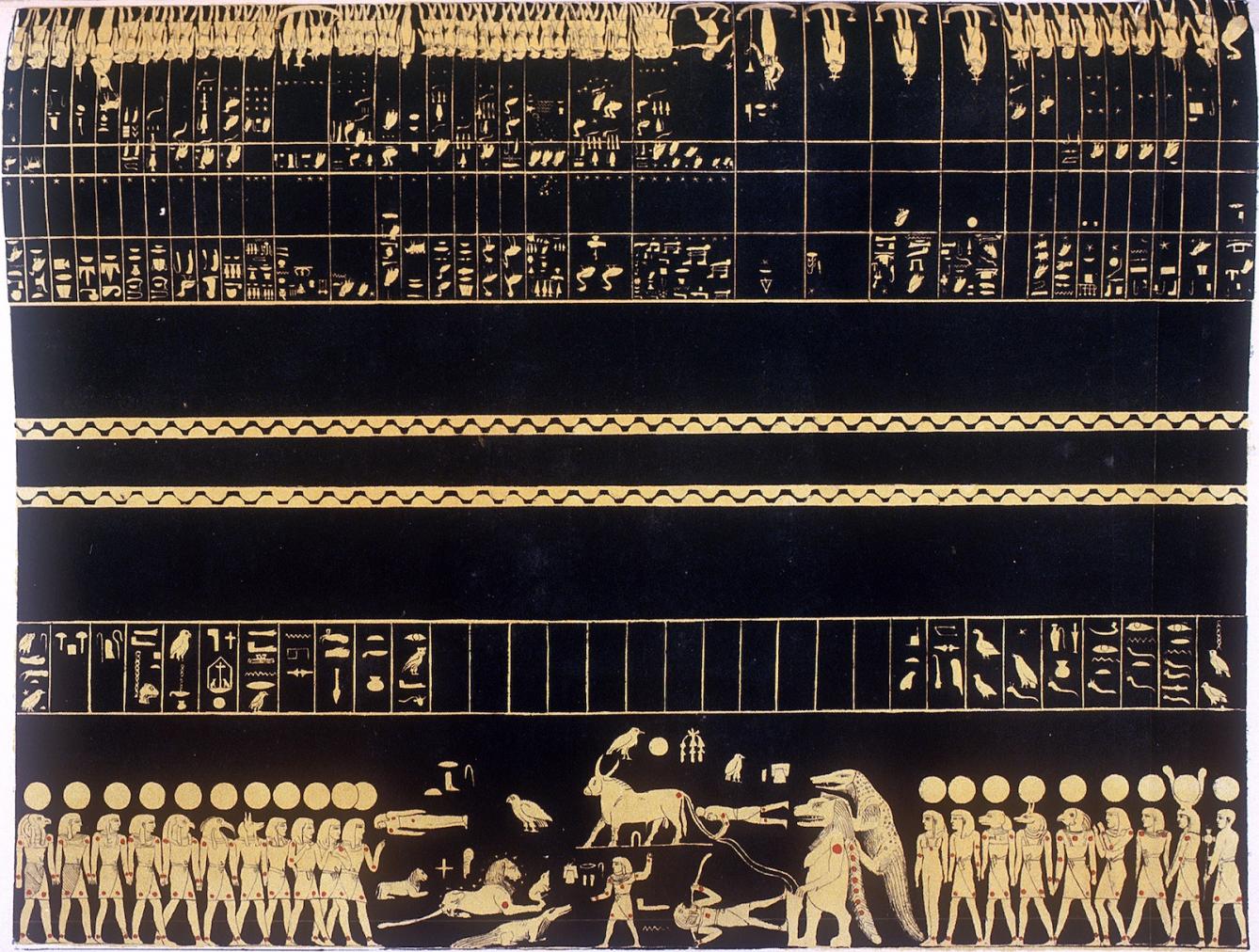
Circumpolar stars, decans, and constellations of the southern sky (reconstruction).
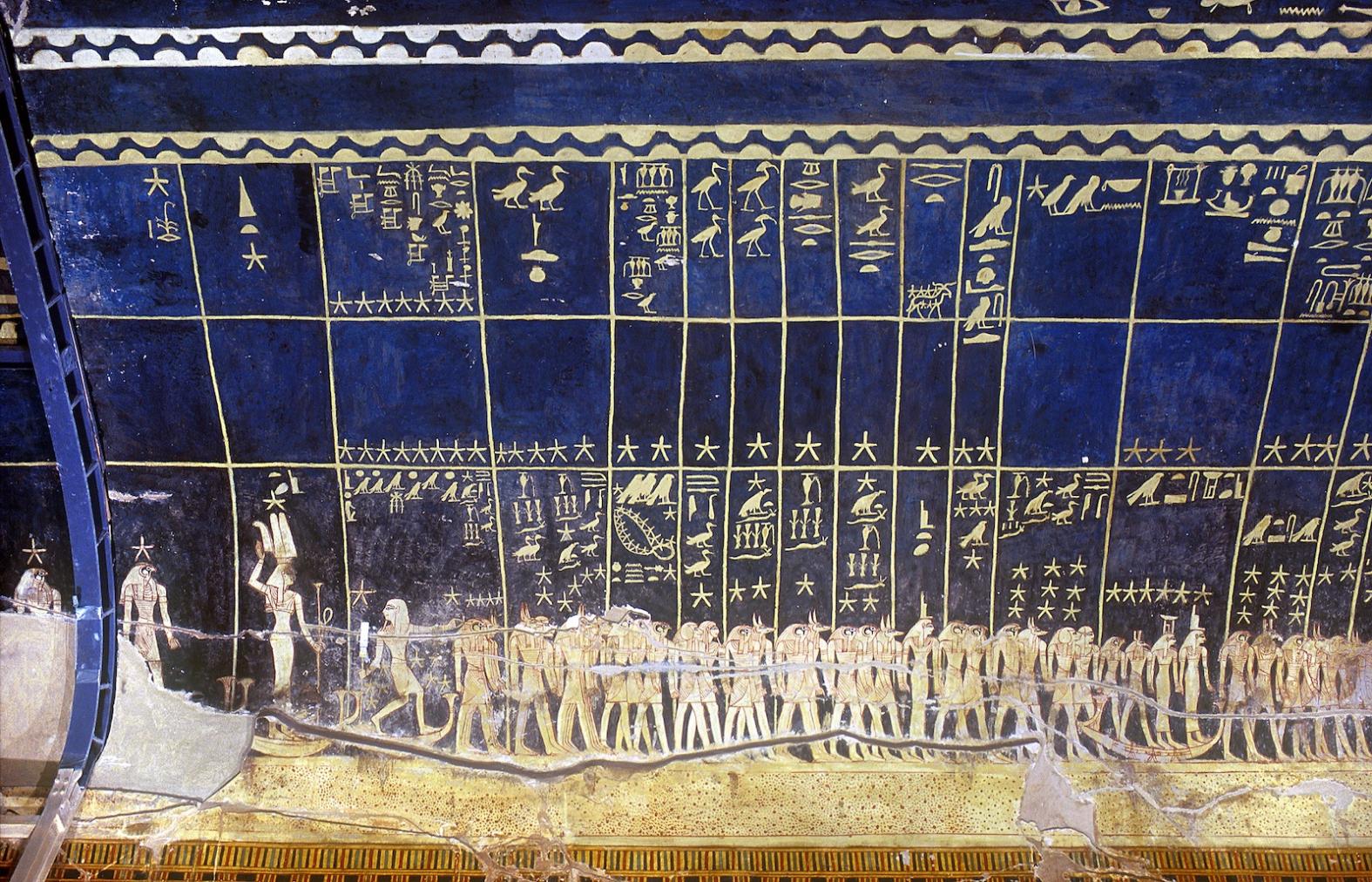
Southern stars.
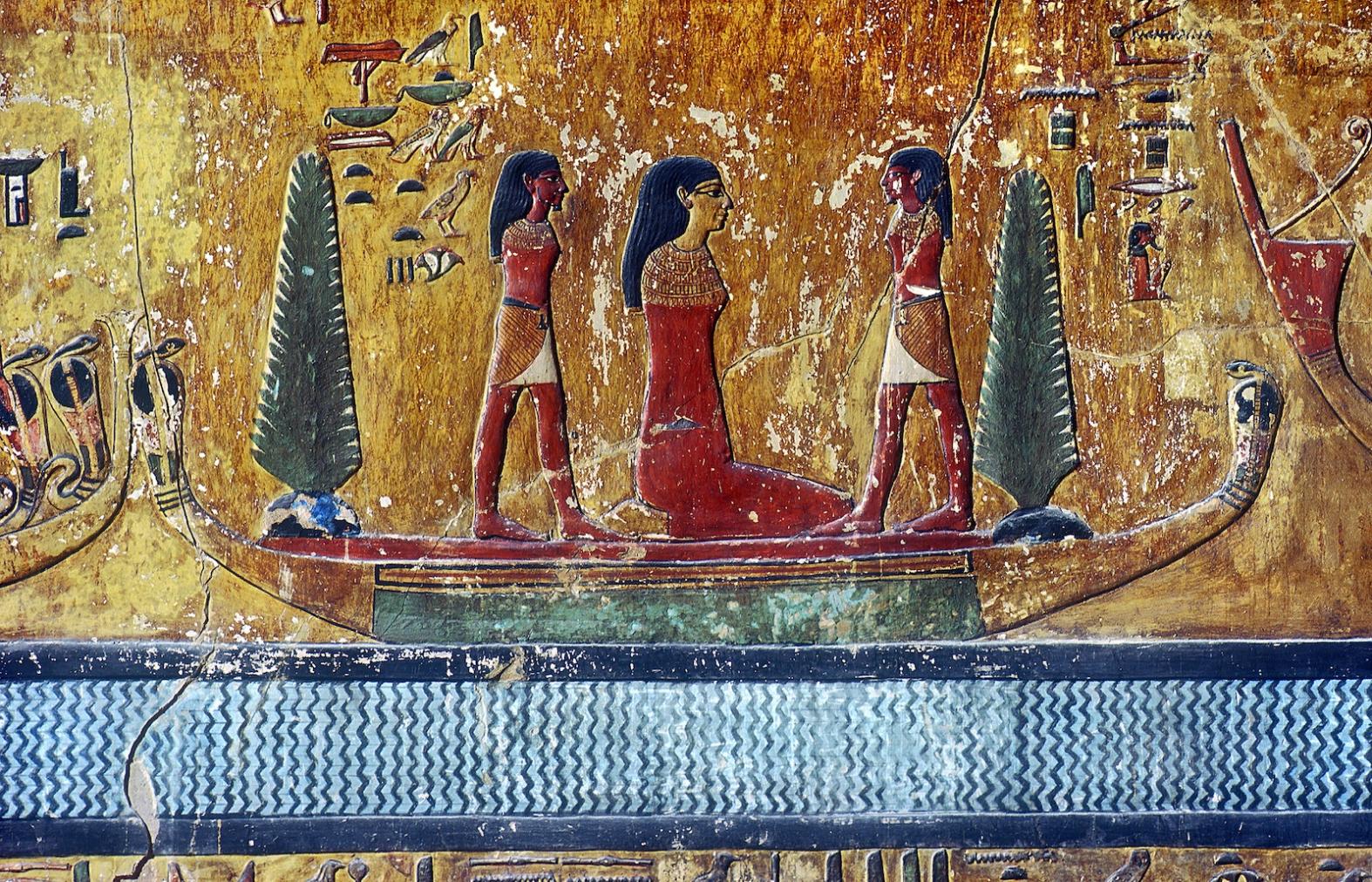
Imydwat, second hour (detail).
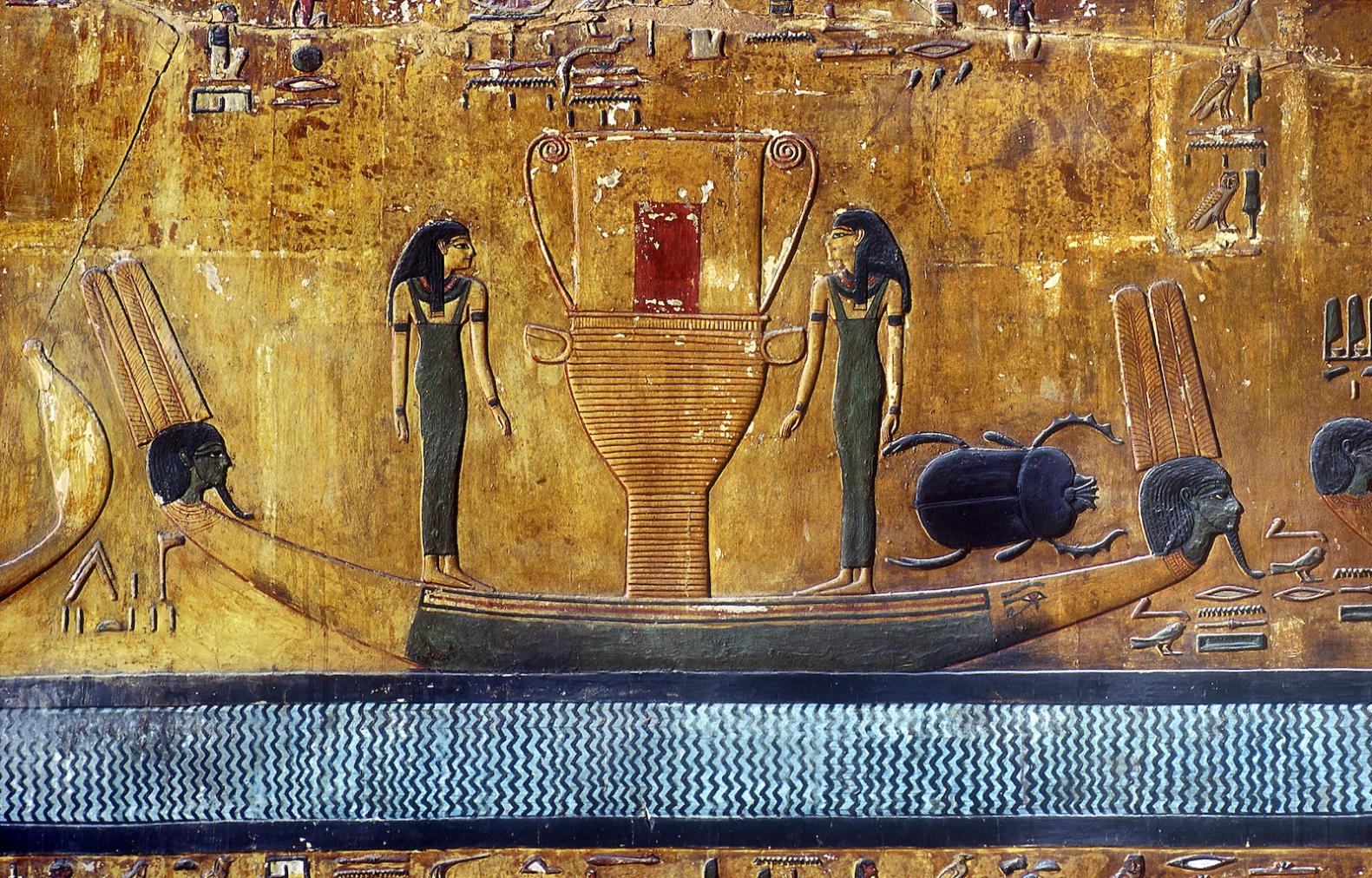
Imydwat, second hour (detail).
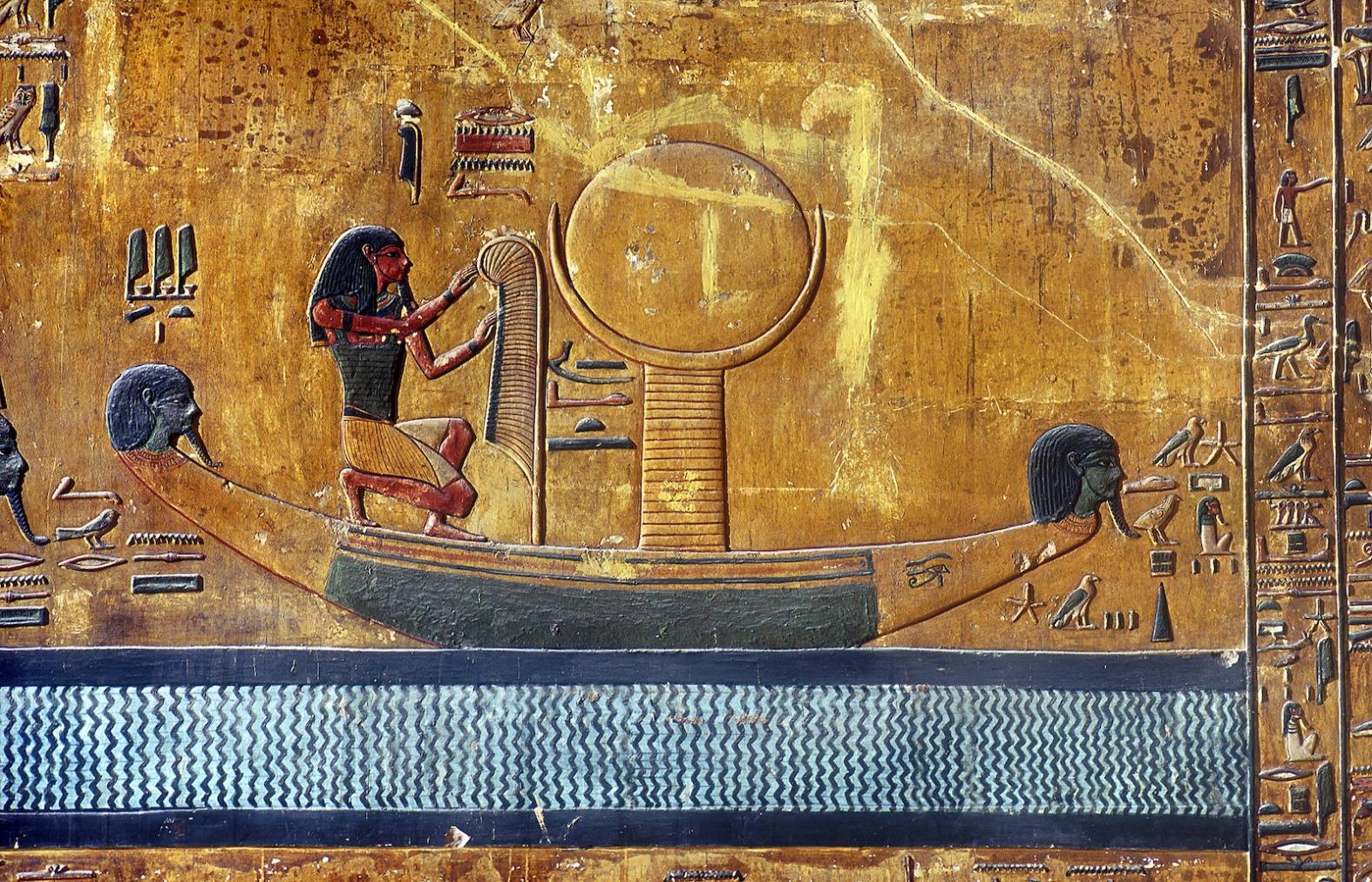
Imydwat, second hour (detail).
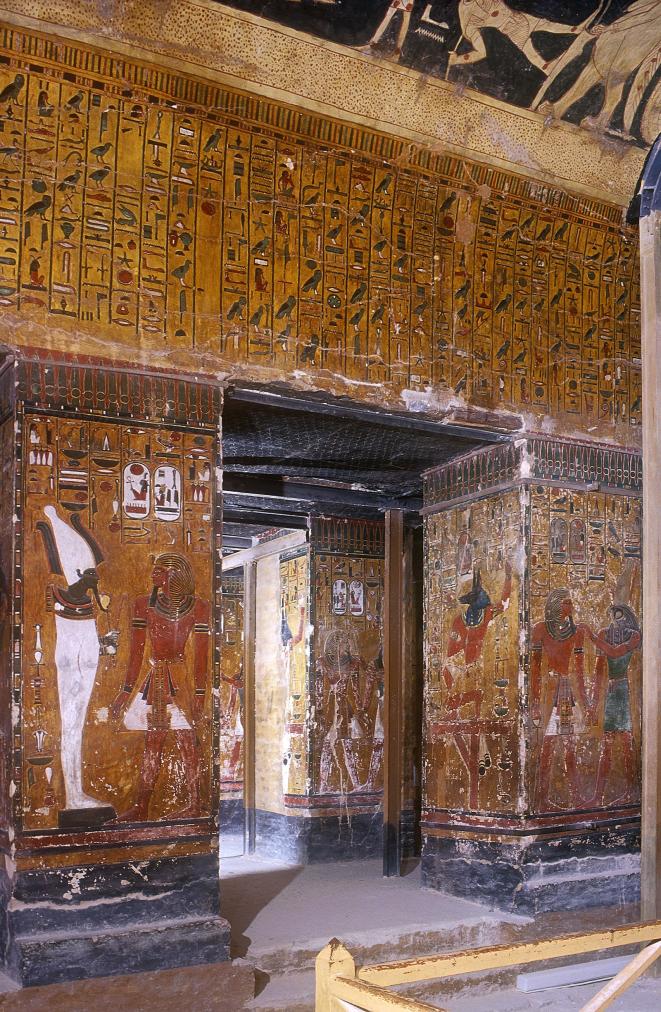
Osiris and Sety I; Soul of Pe; Kheperi; Soul of Pe; Sety I and Horus; text of Imydwat, abbreviated version.
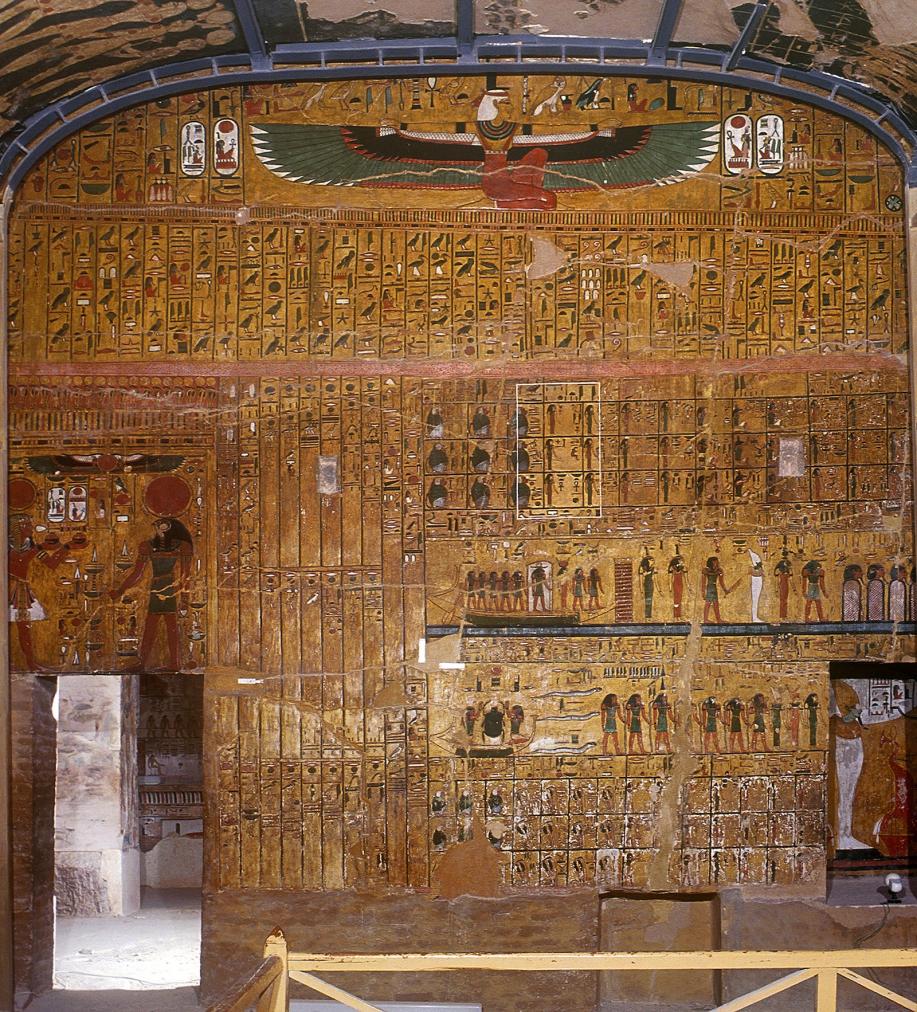
Astronomical figures; winged Isis; Imydwat, abbreviated version and first hour; Sety I and Ra-Horakhty; Osiris [having his mouth opened by Anubis]. White square showing cleaned wall painting.
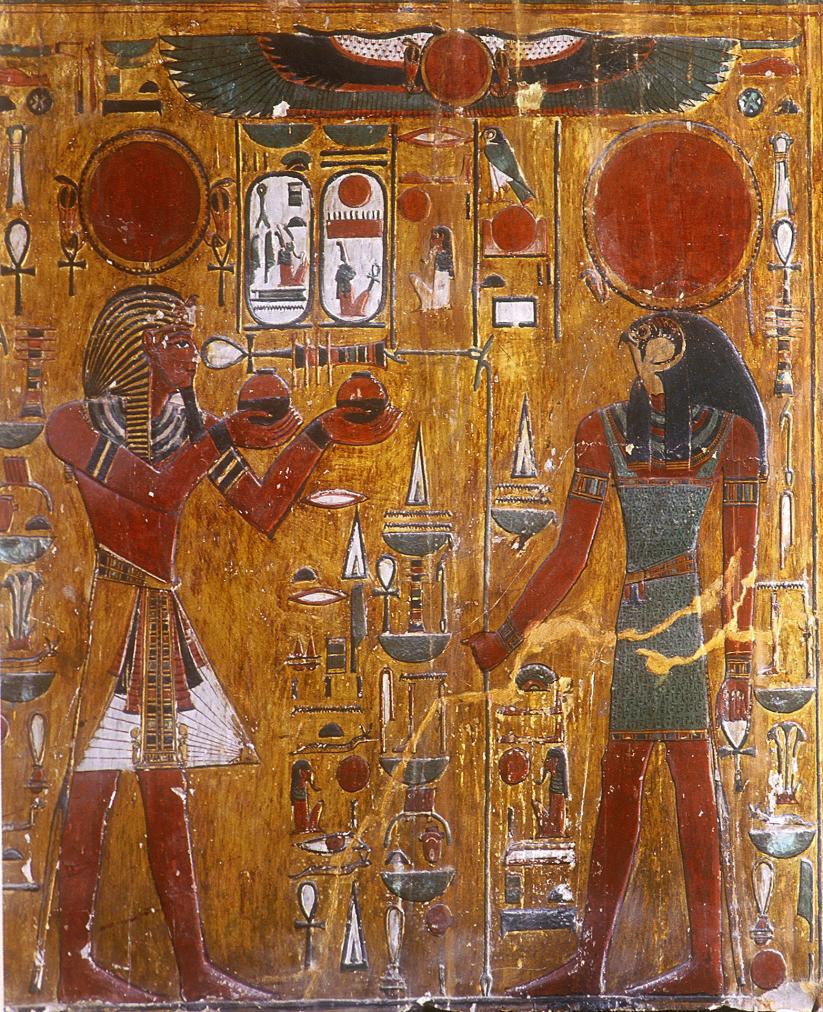
Sety I offering wine to Ra-Horakhty.
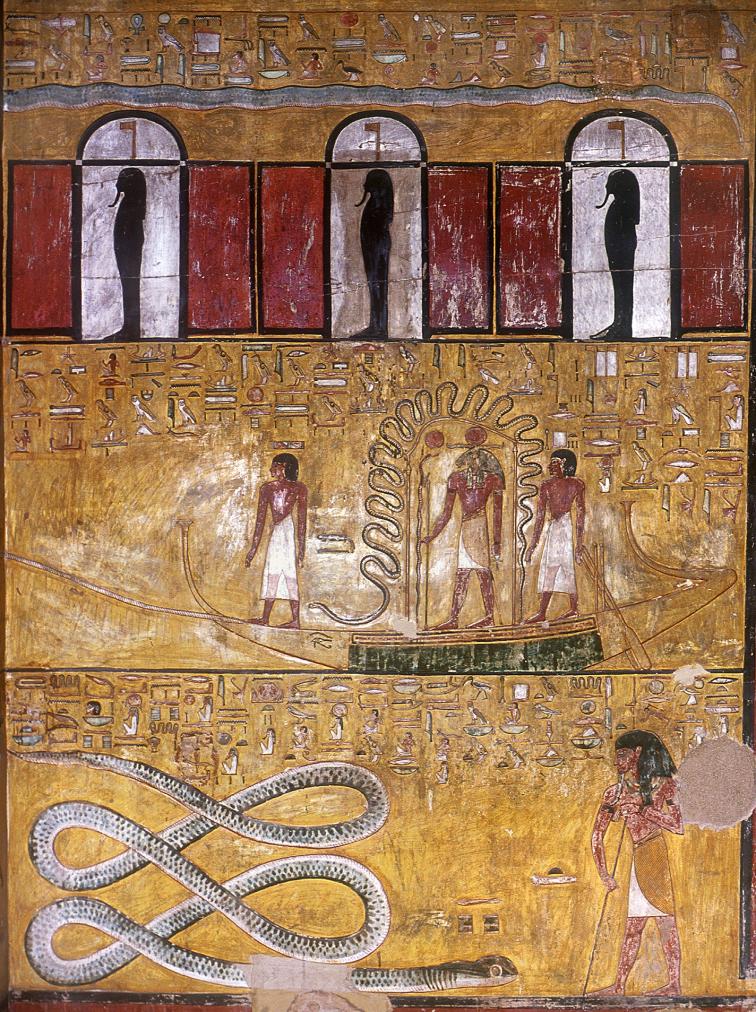
Book of Gates, second division (P)/third hour (H), scenes 9, 11, 13: gods in shrines, solar bark, Atum subduing Apophis.
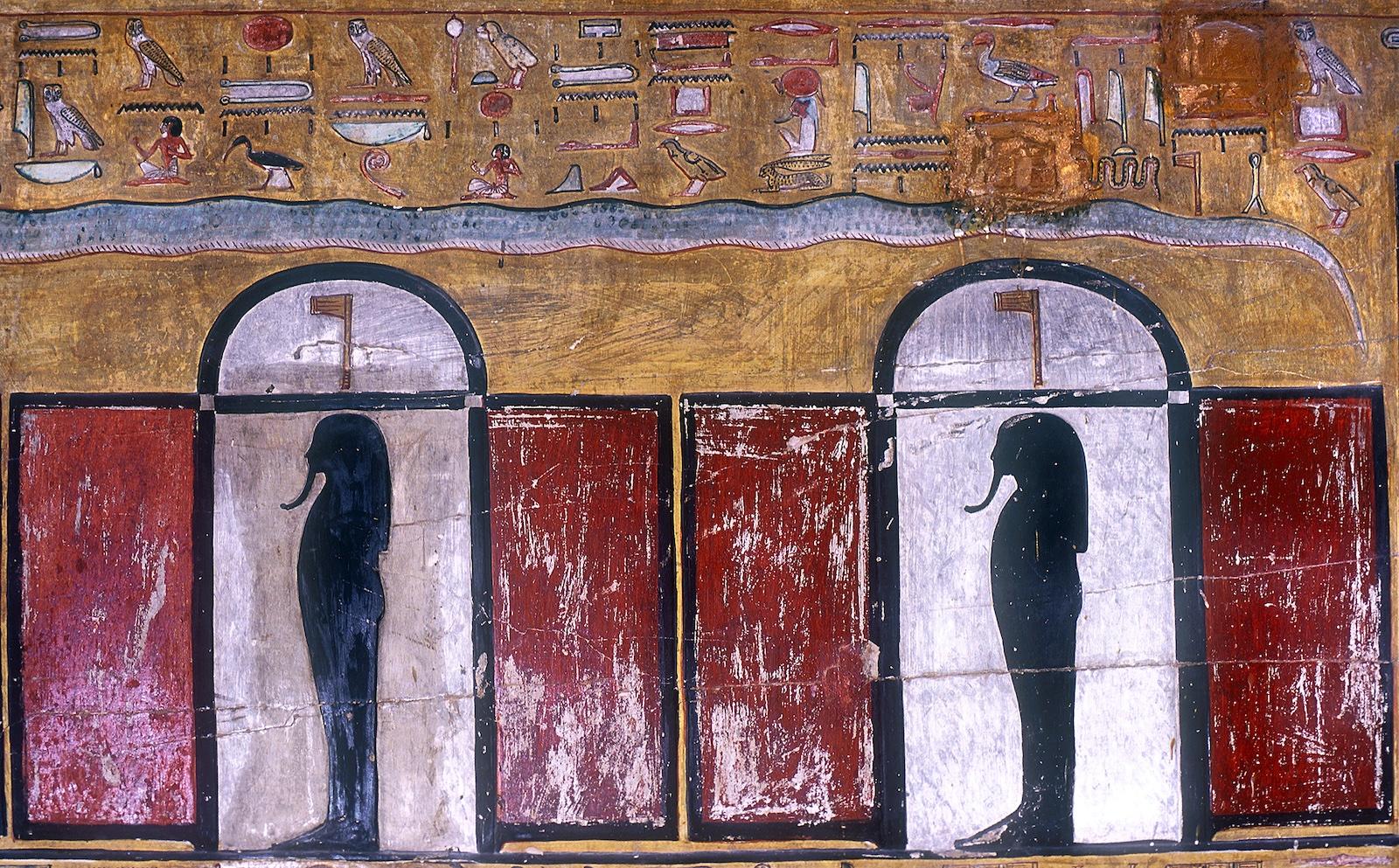
Book of Gates, second division (P)/third hour (H), scene 9: gods in shrine (detail).
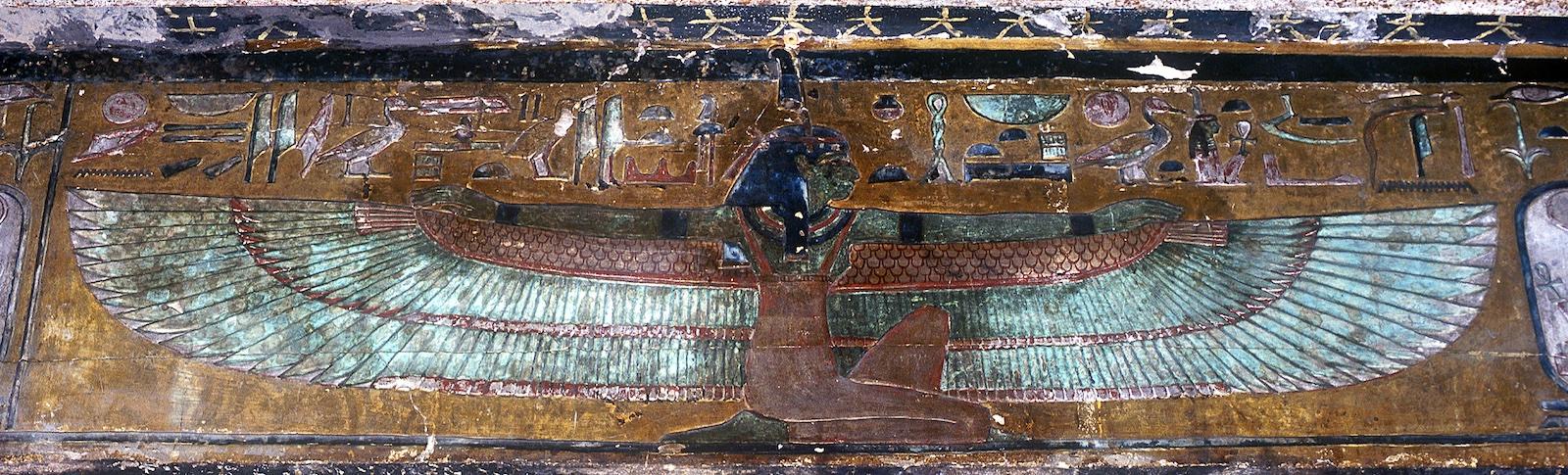
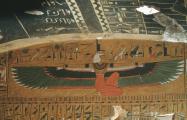
Kneeling winged Ma'at; star pattern.
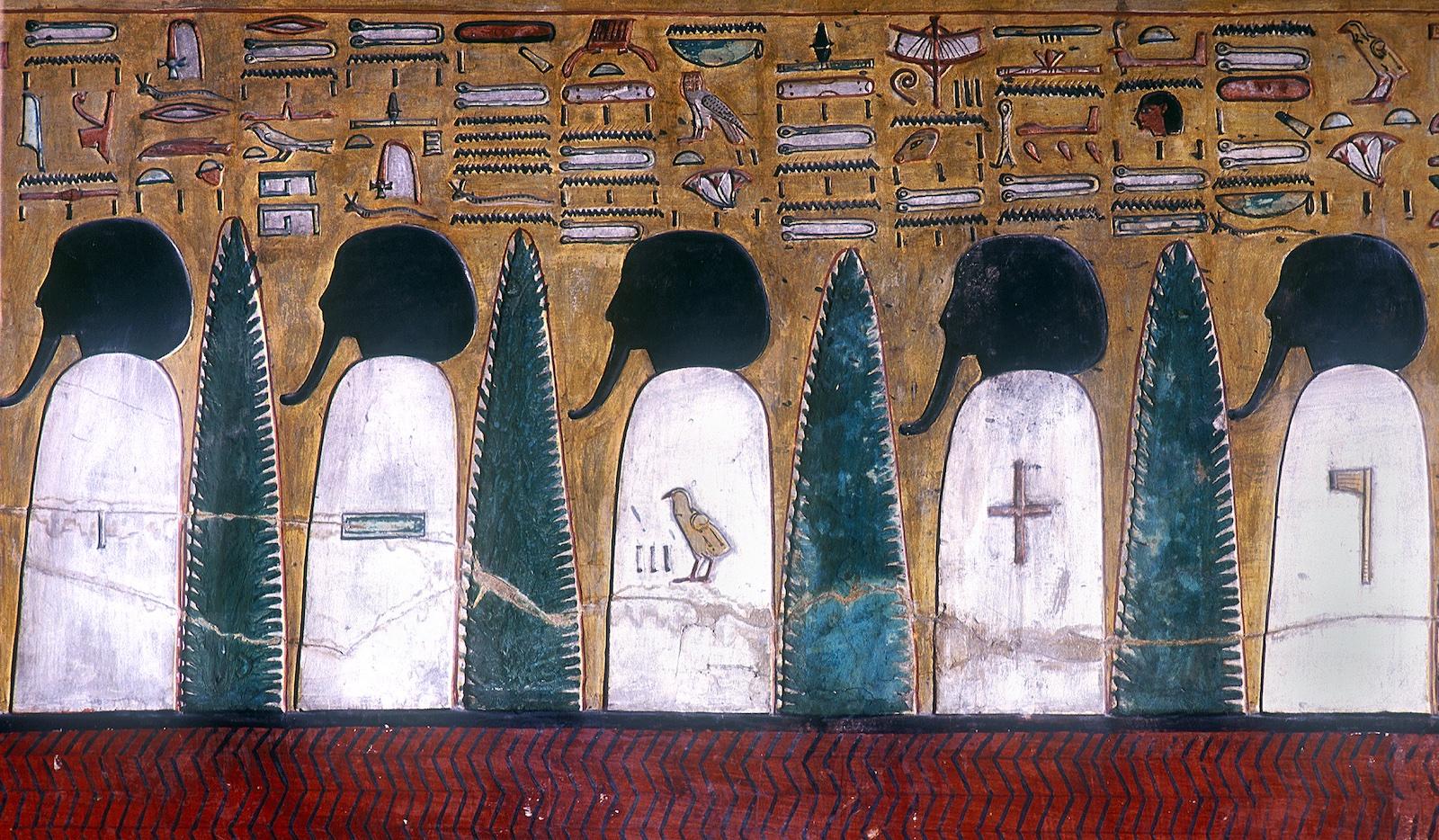
Book of Gates, second division (P)/third hour (H), scene 10: gods in the Lake of Fire (detail).
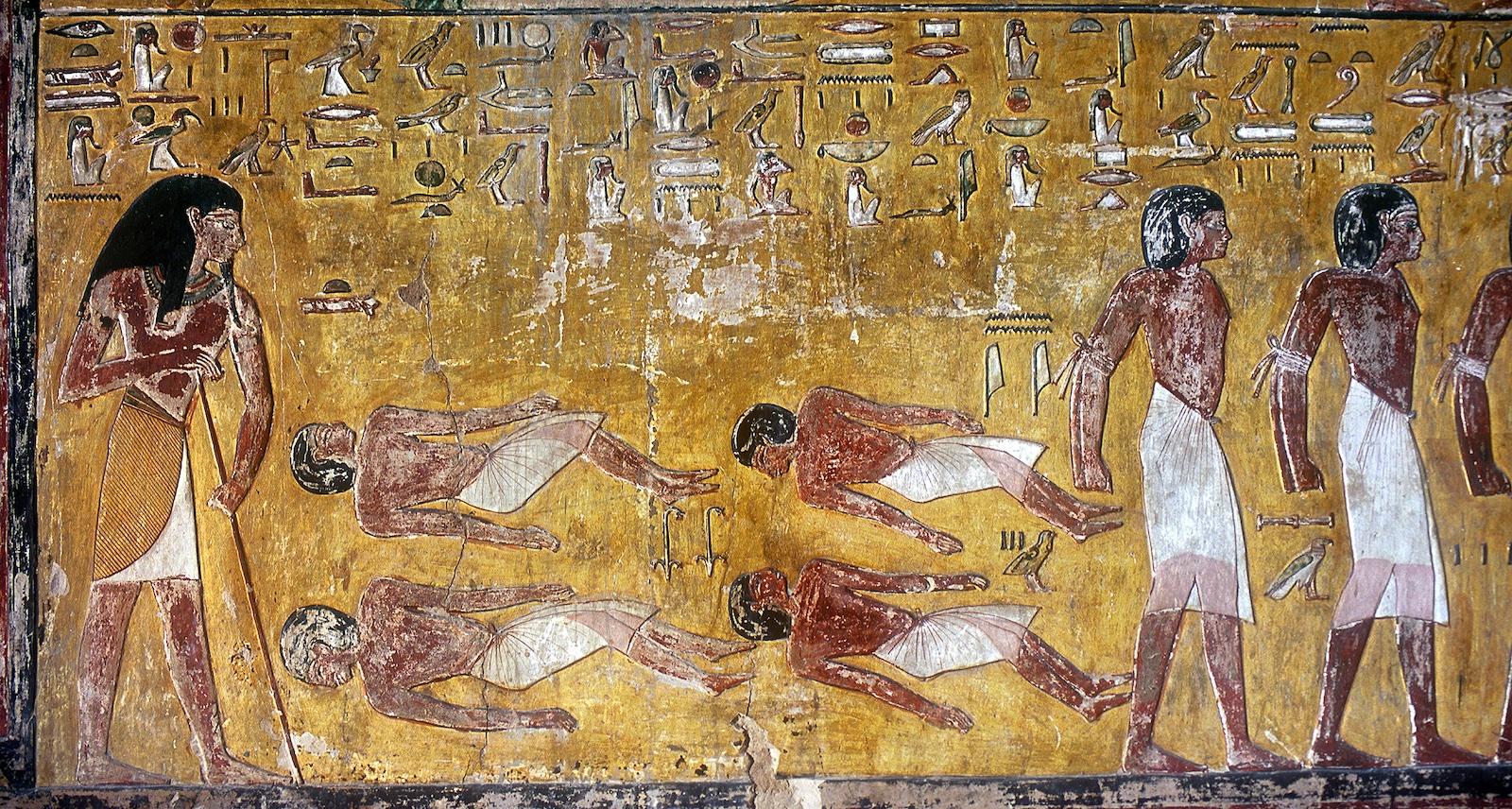
Book of Gates, first division (P)/second hour (H), scene 8: Atum and the "Weary Ones."
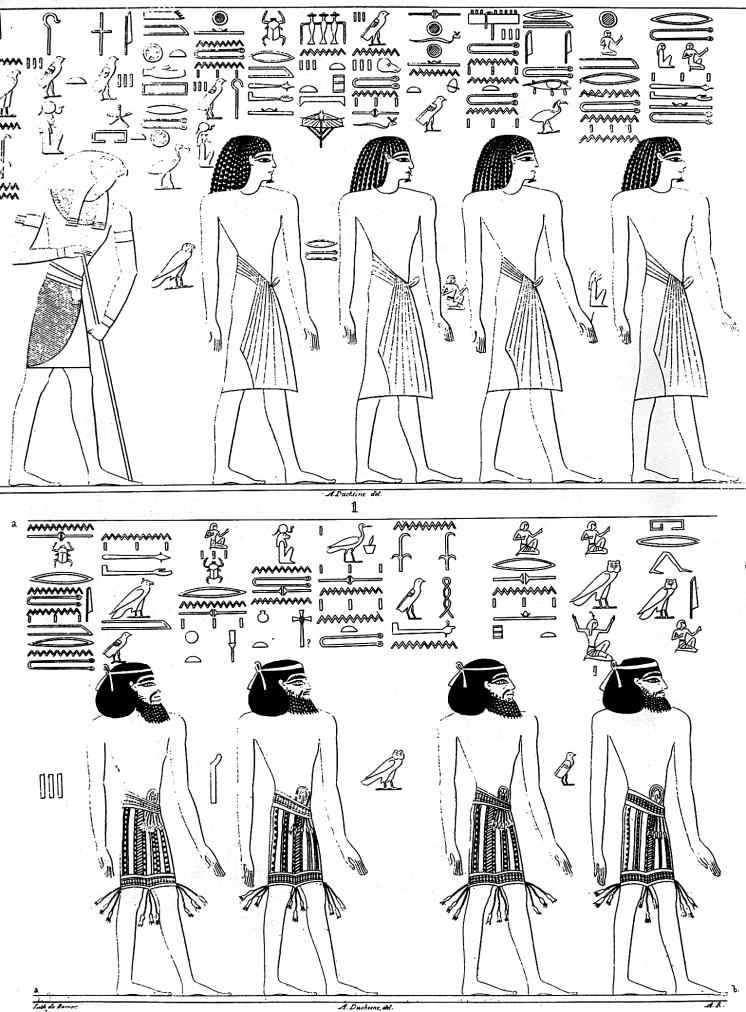
Book of Gates, fourth division (P)/fifth hour (H), scene 30: Egyptians and "Asiatics," two of the "four races of mankind" (reconstruction).
Book of Gates, fourth division (P)/fifth hour (H), scene 30: Nubians, one of the "four races of mankind" (reconstruction).
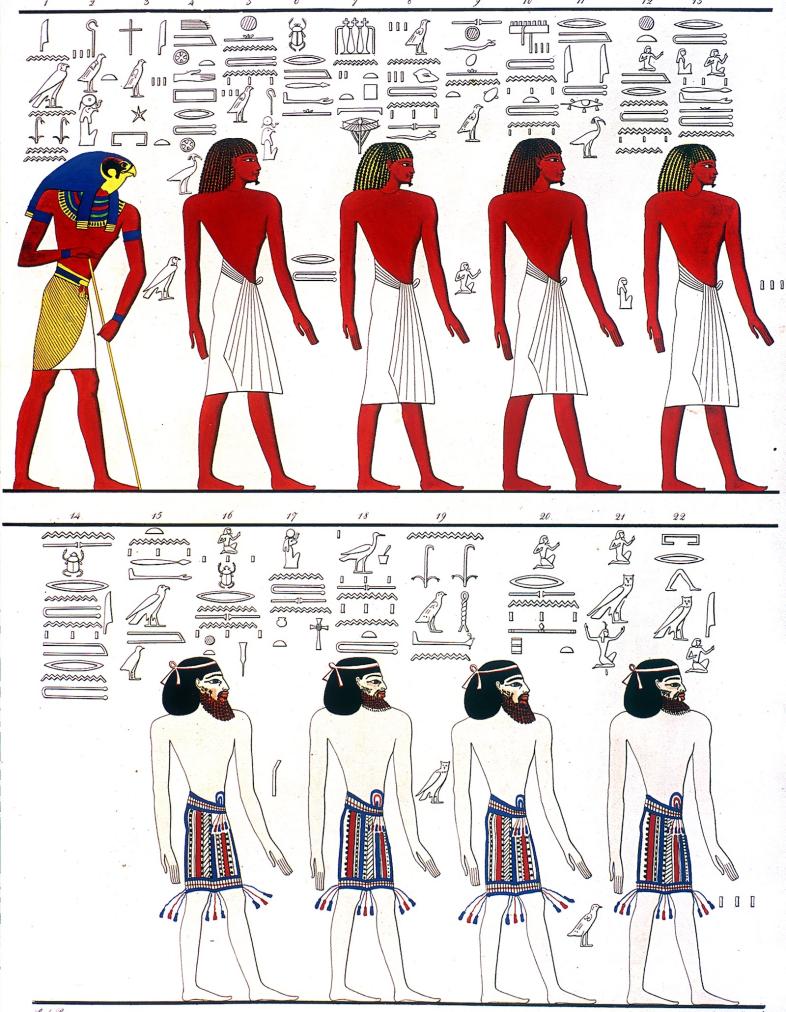
Book of Gates, fourth division (P)/fifth hour (H), scene 30: Horus with Egyptians and "Asiatics," two of the "four races of mankind" (reconstruction).
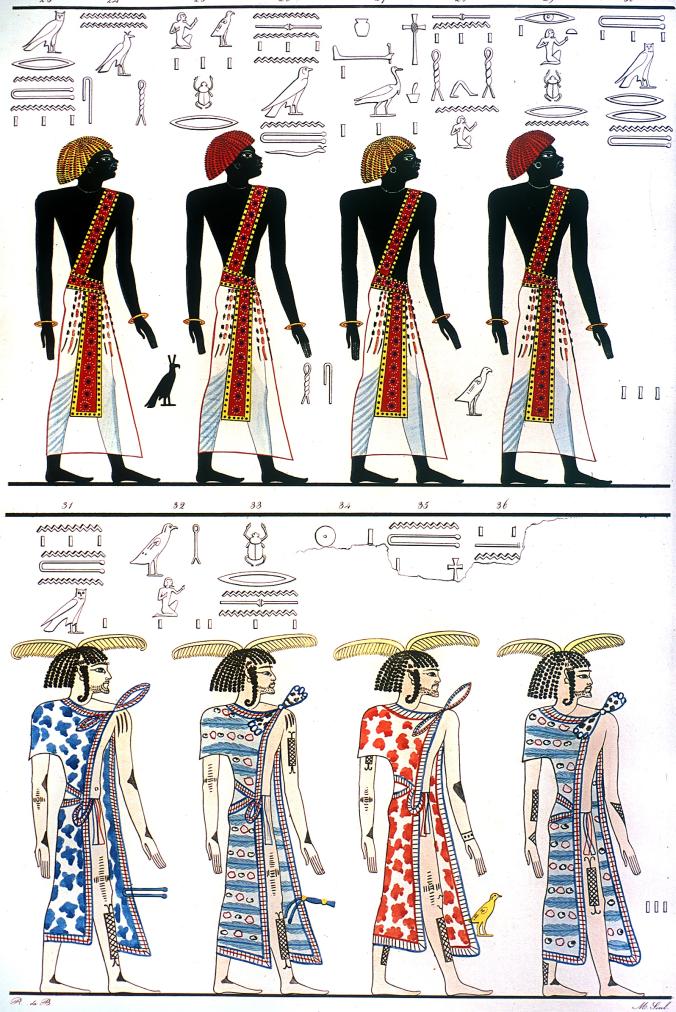
Book of Gates, fourth division (P)/fifth hour (H), scene 30: Nubians and Libyans, two of the "four races of mankind" (reconstruction).
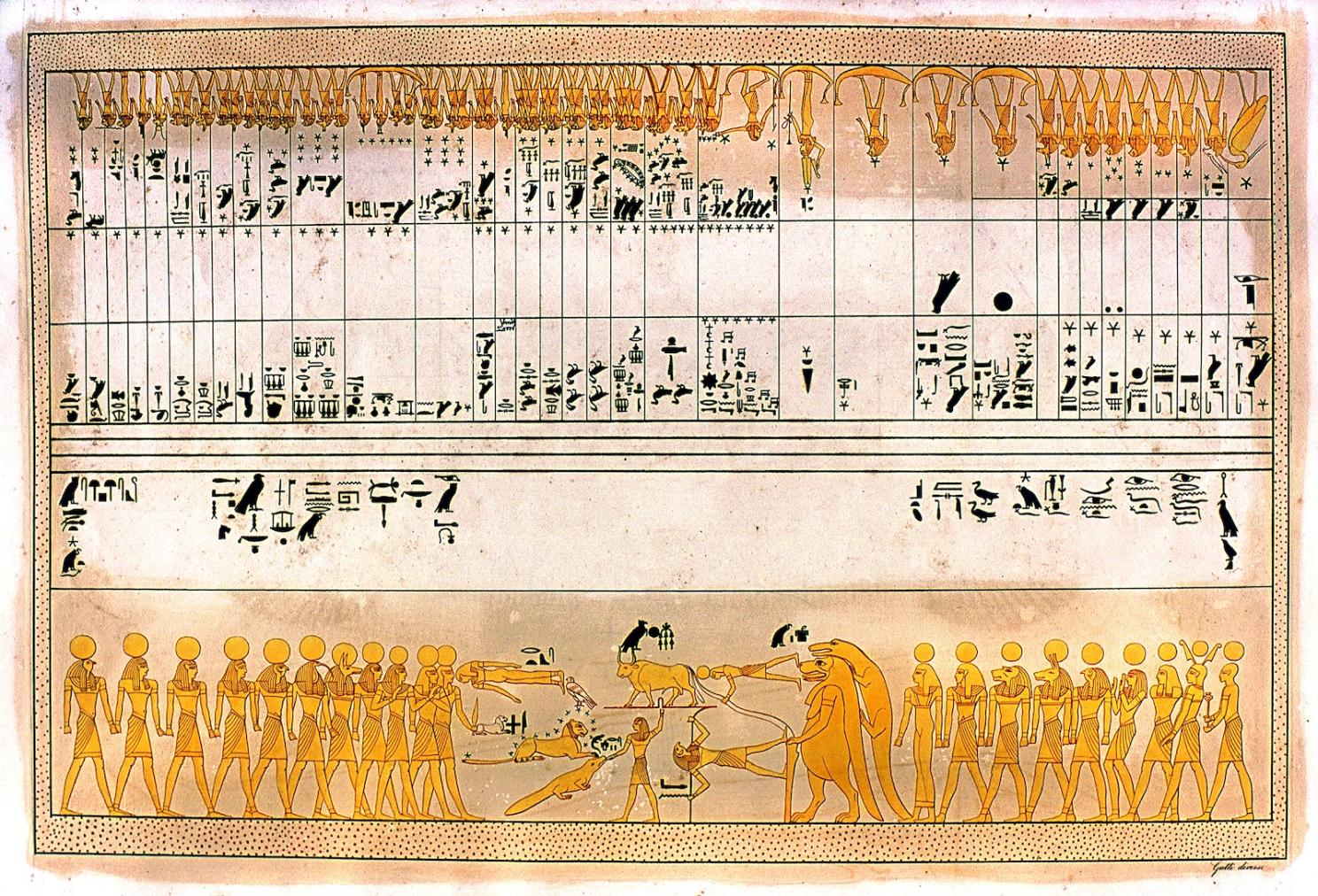
Decans, circumpolar stars, and constellations of the southern sky (reconstruction).
Imydwat, first hour: detail (reconstruction).
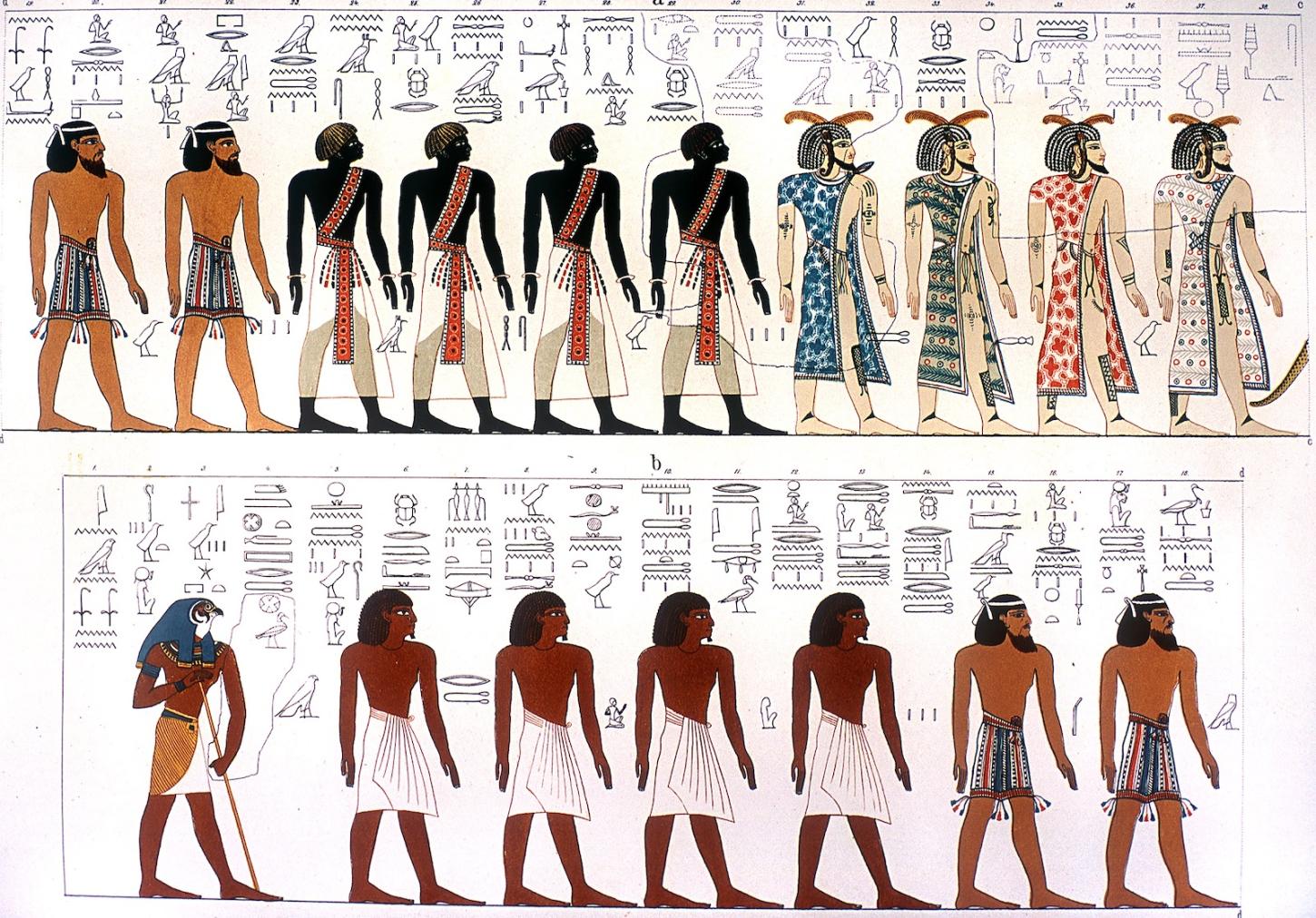
Book of Gates, fourth division (P)/fifth hour (H), scene 30: "four races of mankind" (reconstruction).
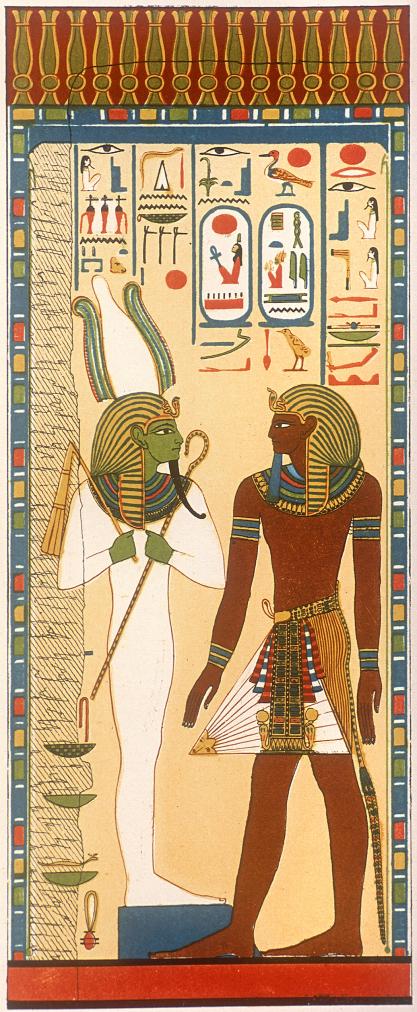
Osiris and Sety I (original removed, now Berlin Museum 2058) (reconstruction).
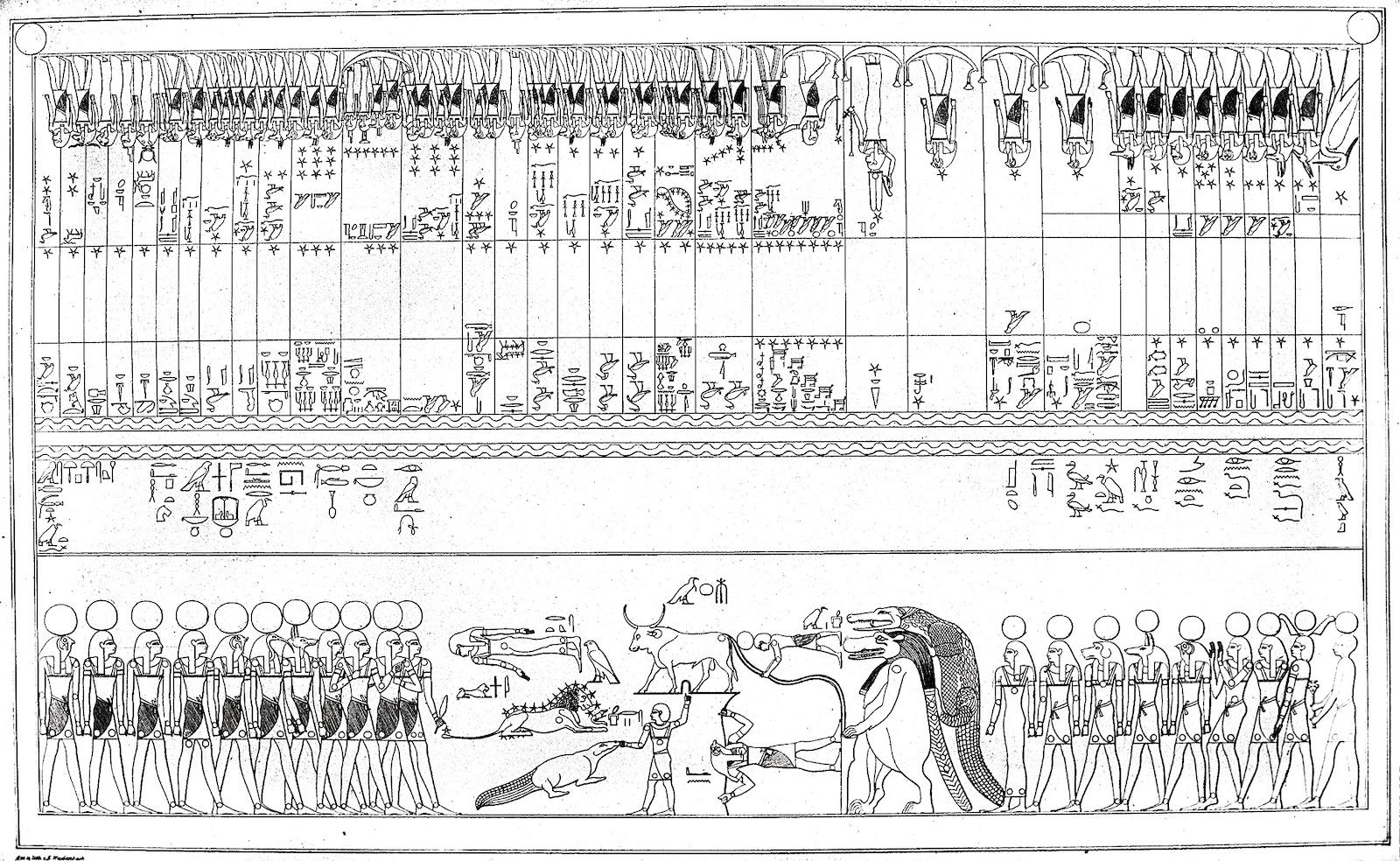
Decans, circumpolar stars and constellations of the southern sky (reconstruction).
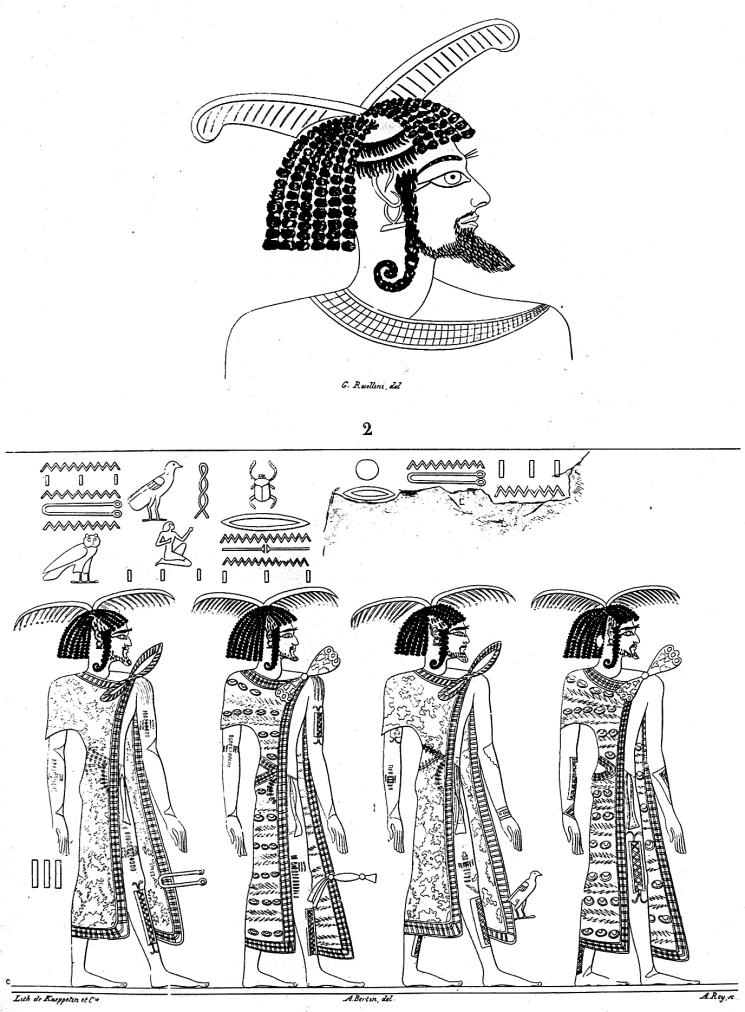
Book of Gates, fourth division (P)/fifth hour (H), scene 30: Libyans, one of the "four races of mankind."
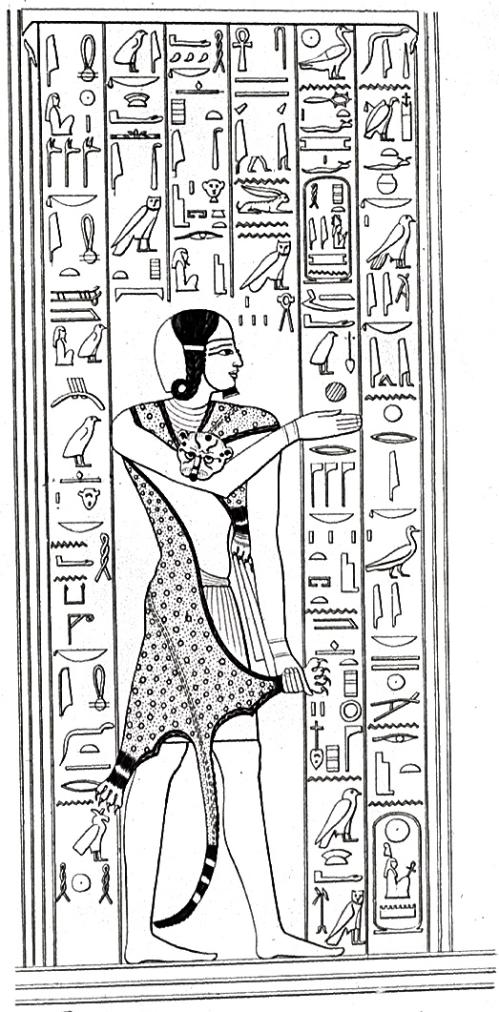
Opening of the Mouth ritual: Iwnmutef priest (reconstruction).
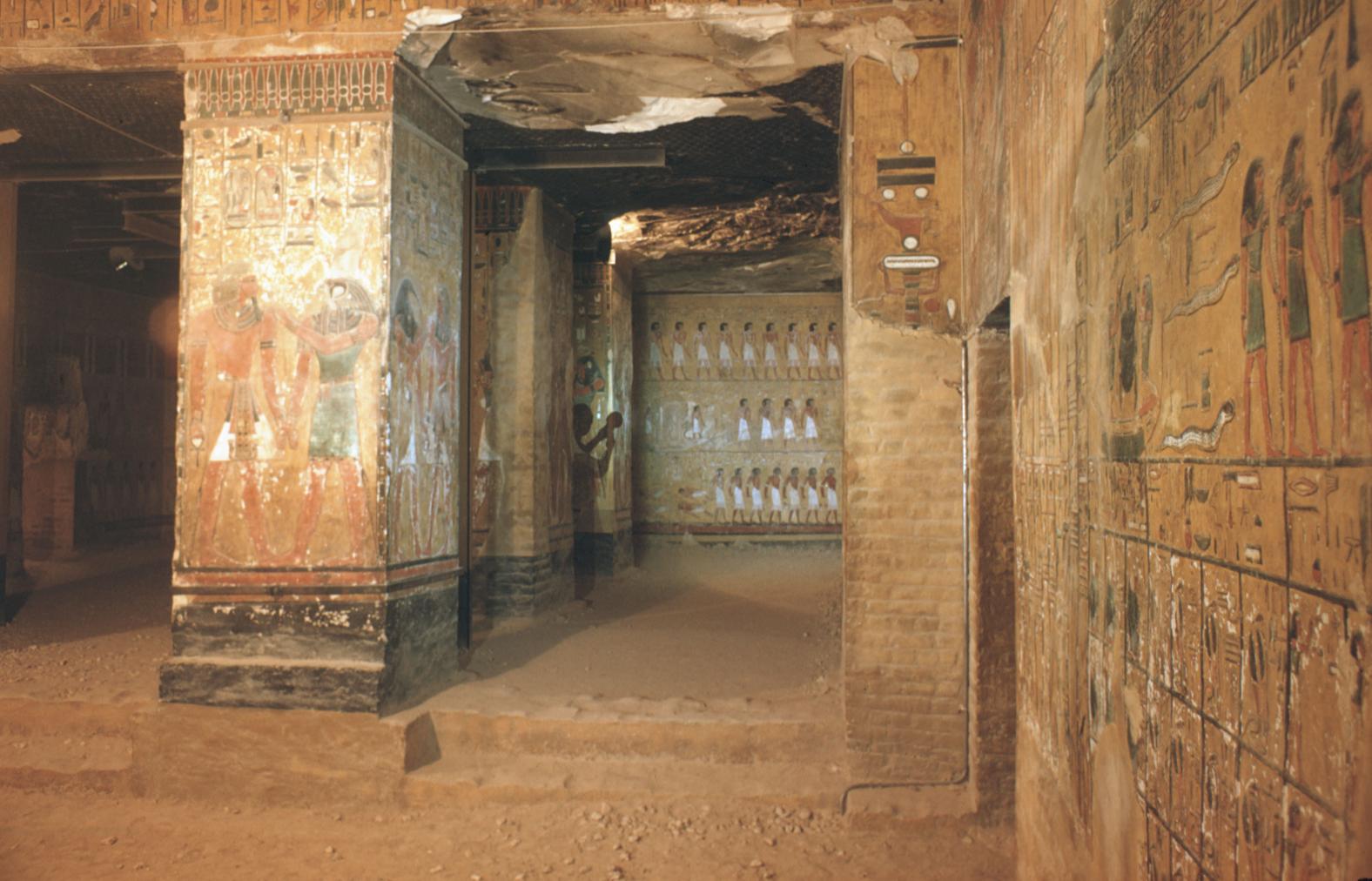
View down northeastern side of Burial Chamber J from lower level. Courtesy of Uni Dia Verlag; Uni Dia Image Nr. 35763.
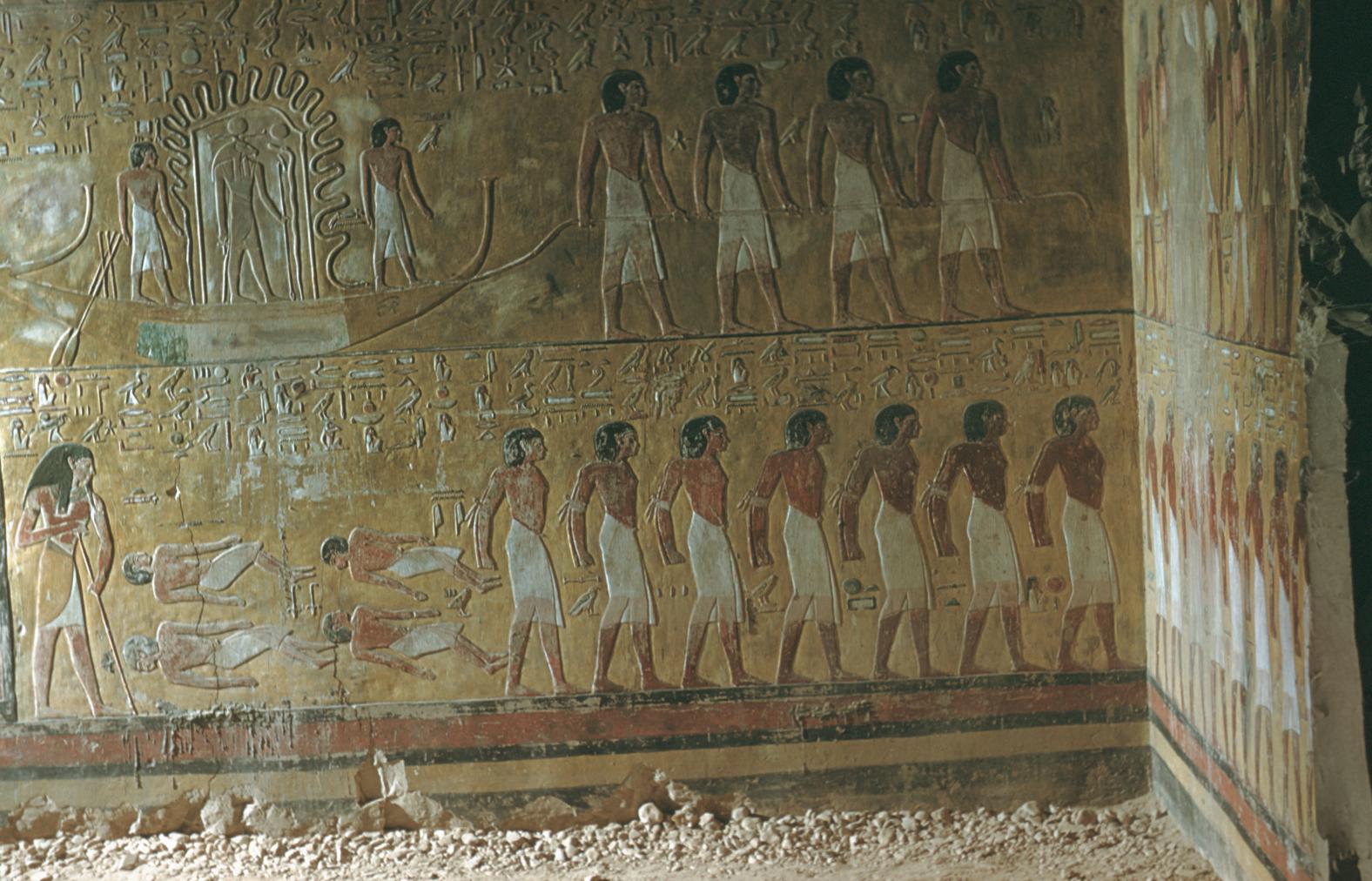
Book of Gates, first division (P)/second hour (H). Courtesy of Uni Dia Verlag; Uni Dia Image Nr. 35764.
Book of Gates, second division (P)/third hour (H): solar bark. Courtesy of Uni Dia Verlag; Uni Dia Image Nr. 35766.
Underworld gods in the Book of Gates. Courtesy of Uni Dia Verlag; Uni Dia Image Nr. 35767.
Book of Gates second division (P)/third hour (H). Courtesy of Uni Dia Verlag; Uni Dia Image Nr. 35768.
Book of Gates second division (P)/third hour (H). Courtesy of Uni Dia Verlag; Uni Dia Image Nr. 35769.
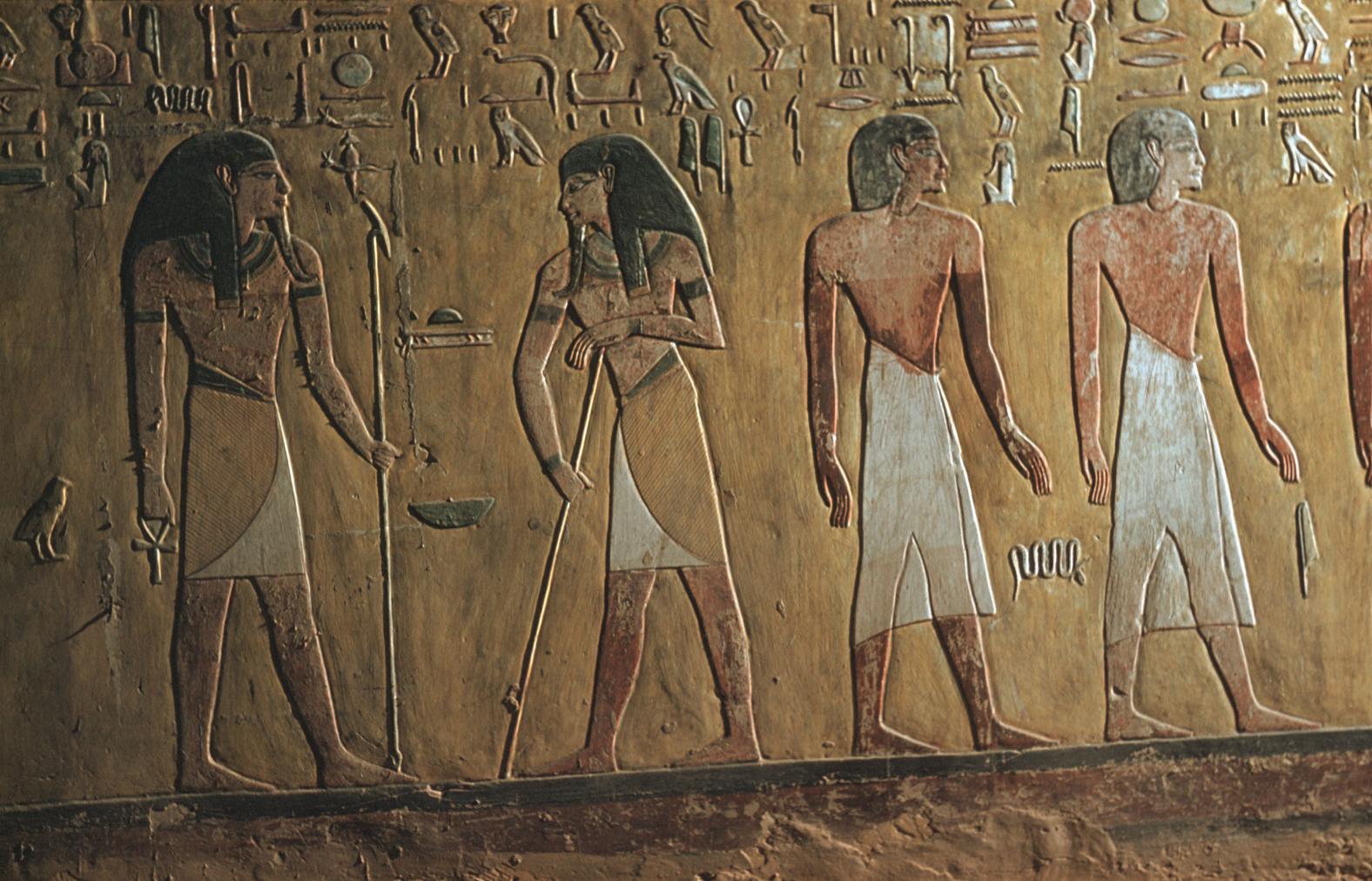
Book of Gates second division (P)/third hour (H). Courtesy of Uni Dia Verlag; Uni Dia Image Nr. 35770.
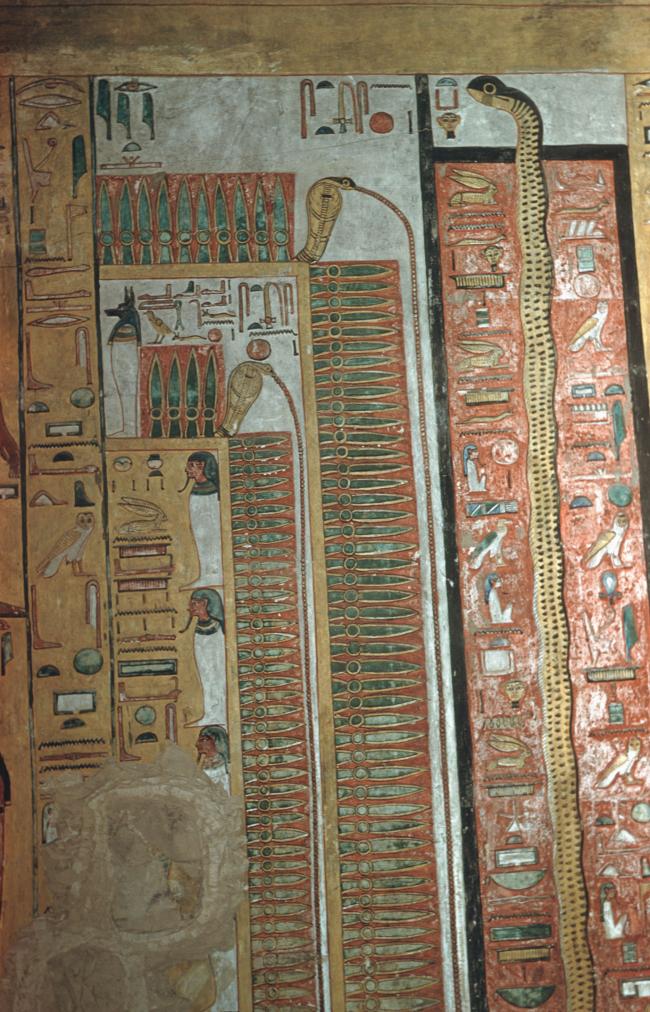
Book of Gates first and fourth divisions (P)/second and fifth hours (H). Courtesy of Uni Dia Verlag; Uni Dia Image Nr. 35771.
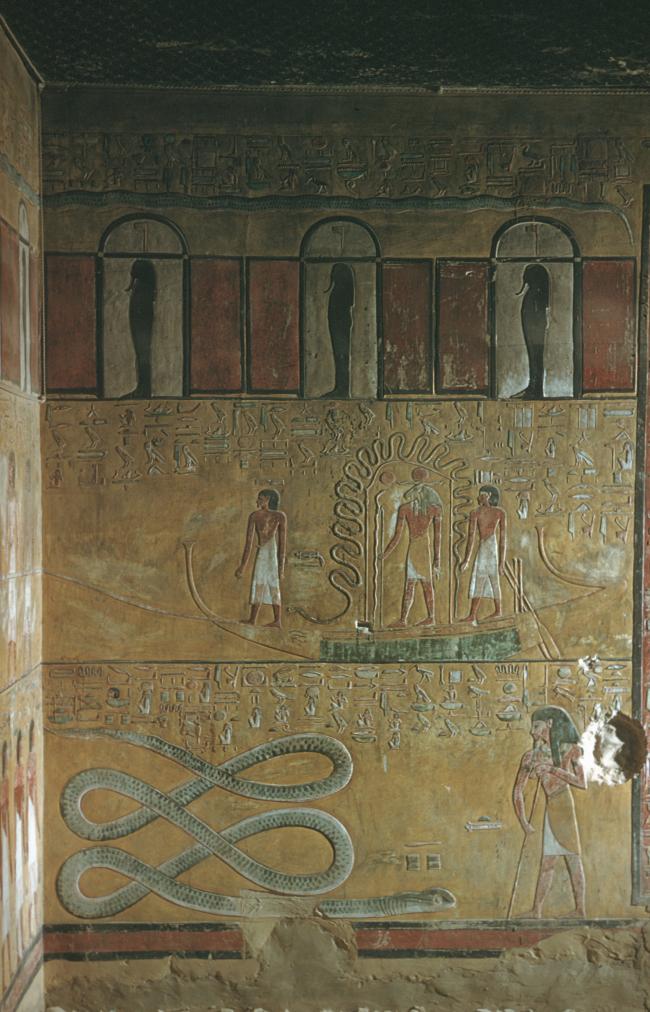
Book of Gates, second division (P)/third hour (H). Courtesy of Uni Dia Verlag; Uni Dia Image Nr. 35772.
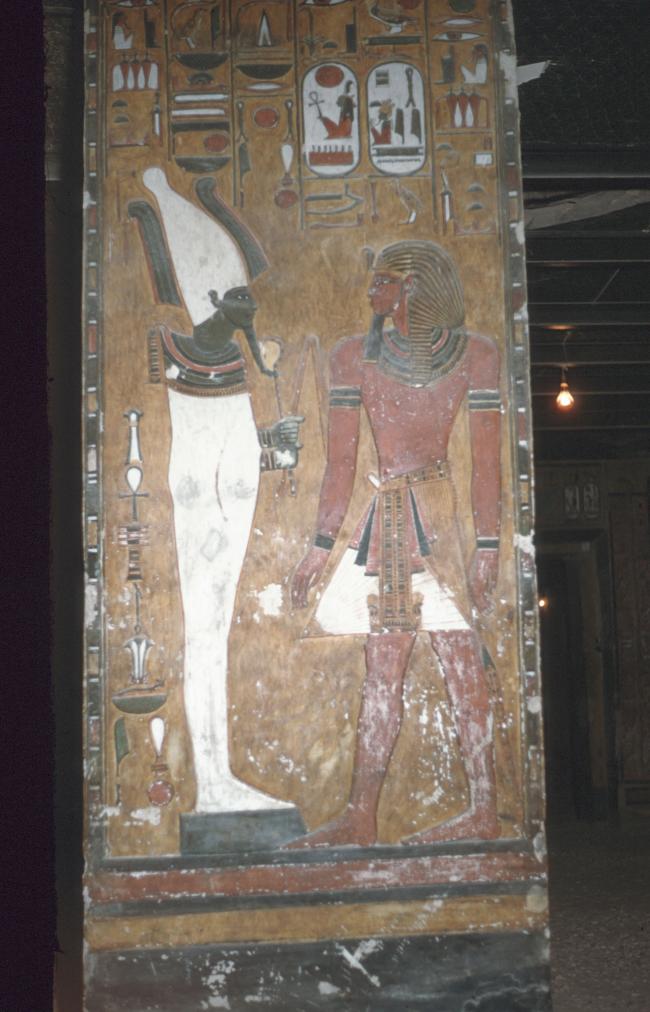
Deceased with Osiris. Courtesy of Uni Dia Verlag; Uni Dia Image Nr. 35773.
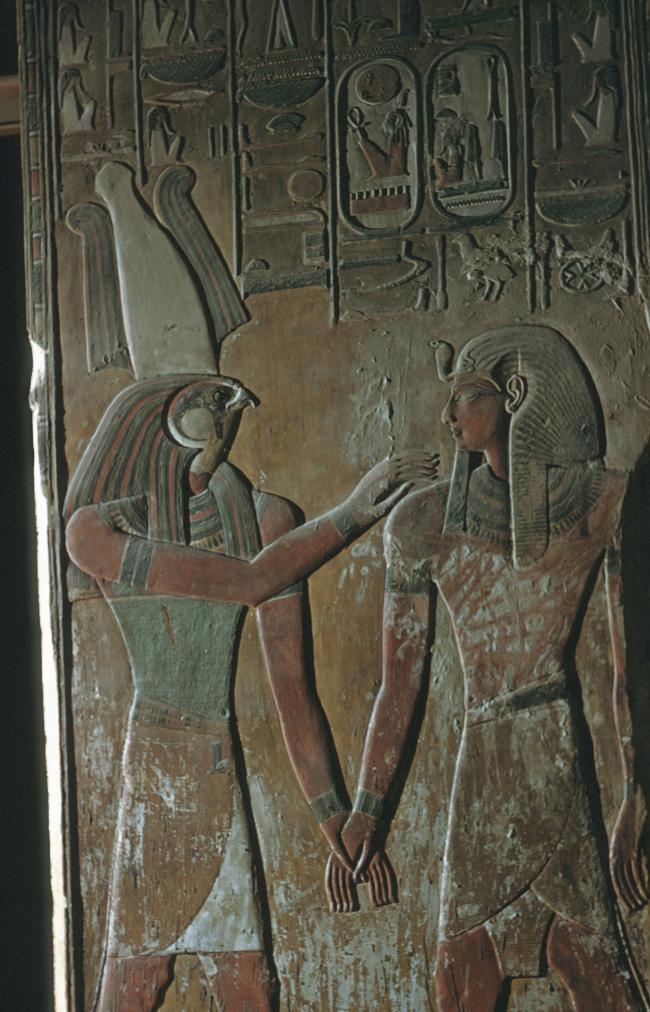
Deceased with Horus. Courtesy of Uni Dia Verlag; Uni Dia Image Nr. 35774.
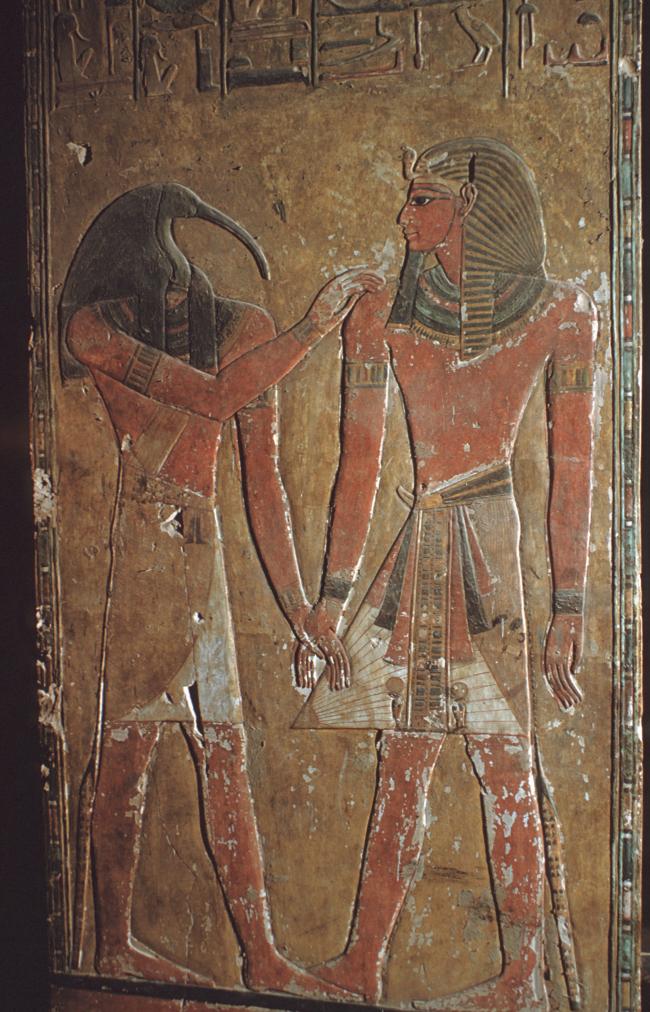
Deceased with Thoth. Courtesy of Uni Dia Verlag; Uni Dia Image Nr. 35775.
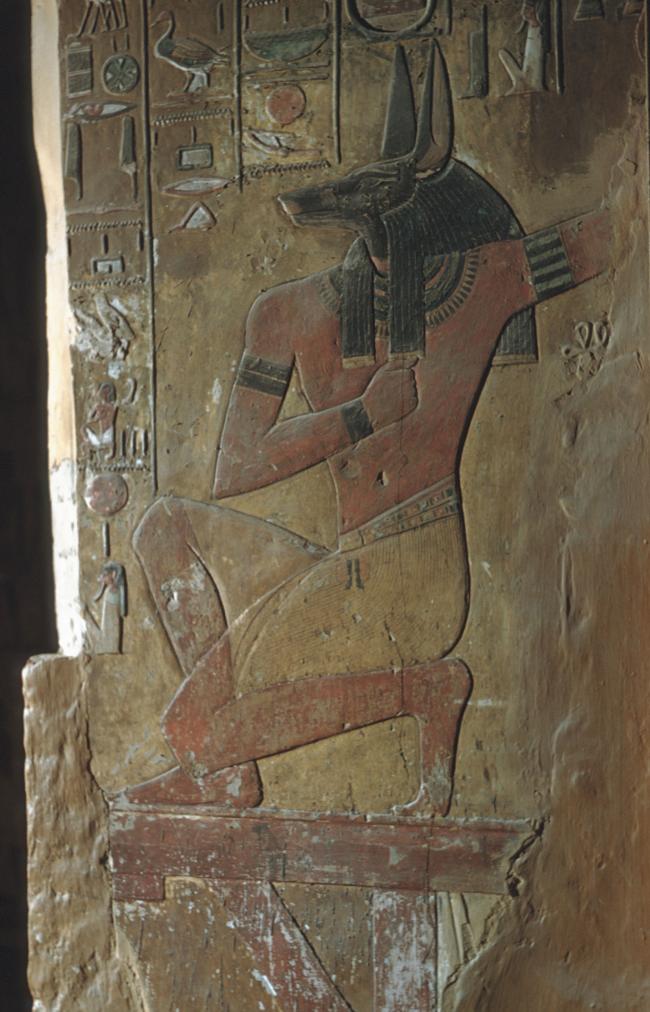
Soul of Nekhen. Courtesy of Uni Dia Verlag; Uni Dia Image Nr. 35776.
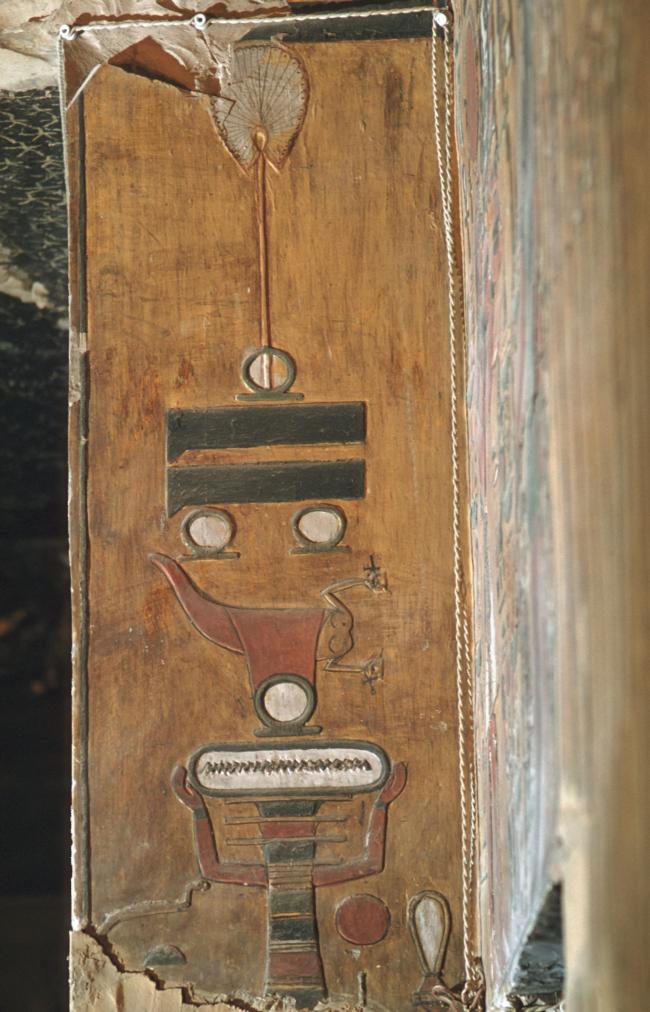
Text on wall between upper and lower sections of burial chamber J. Courtesy of Uni Dia Verlag; Uni Dia Image Nr. 35777.
The king offering to Re-Horakhty. Courtesy of Uni Dia Verlag; Uni Dia Image Nr. 35778.
Imydwat abridged version (lower level). Courtesy of Uni Dia Verlag; Uni Dia Image Nr. 35779.
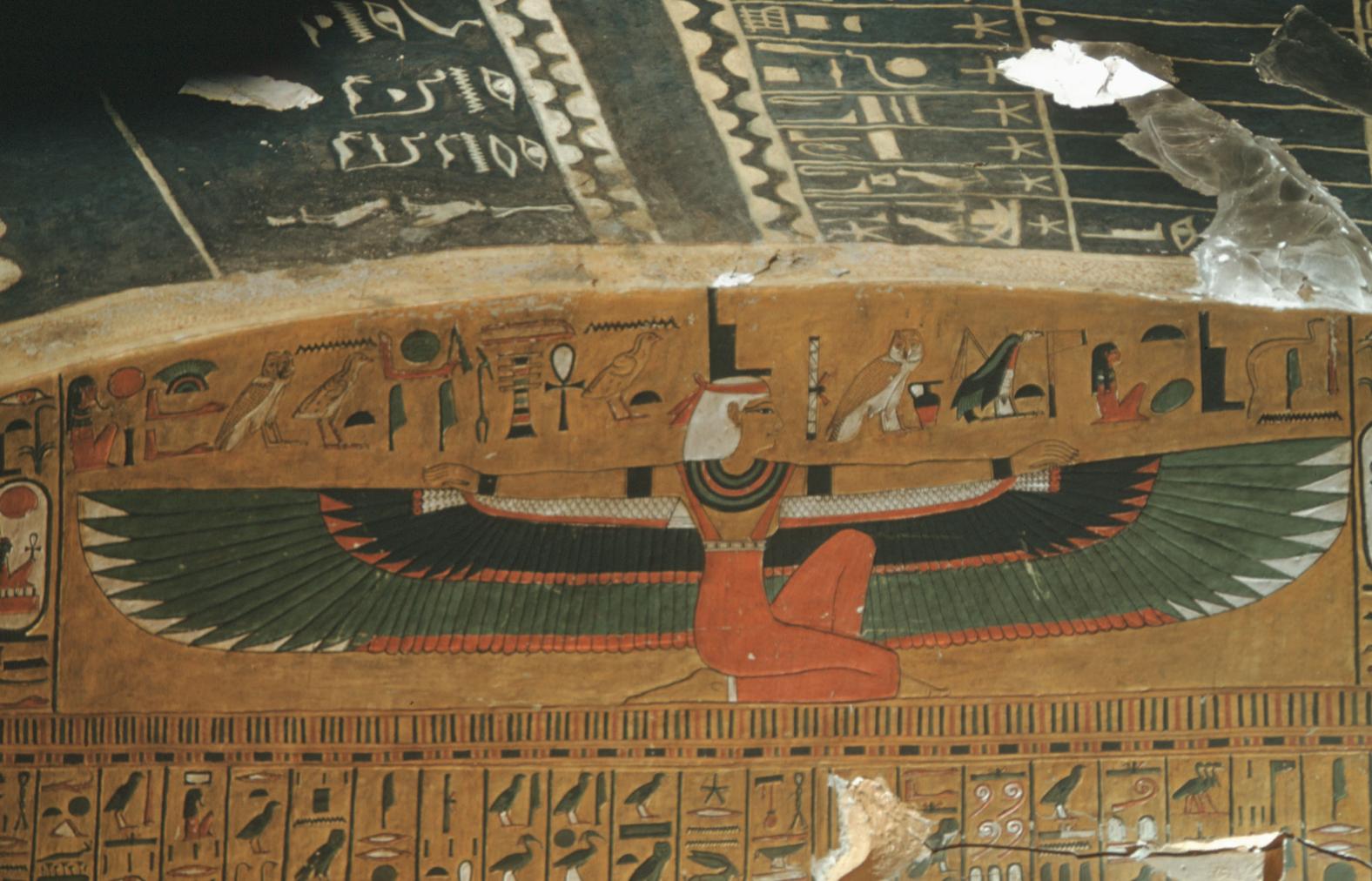
Winged Isis (lower level). Courtesy of Uni Dia Verlag; Uni Dia Image Nr. 35780.
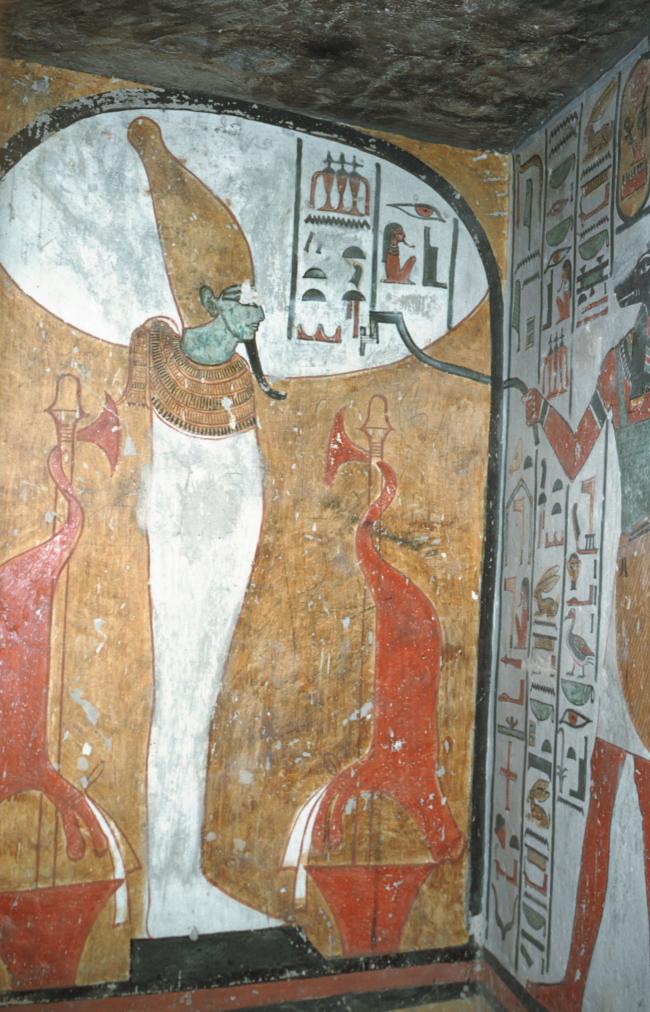
Opening of the mouth of Osiris by Anubis (lower level). Courtesy of Uni Dia Verlag; Uni Dia Image Nr. 35781.
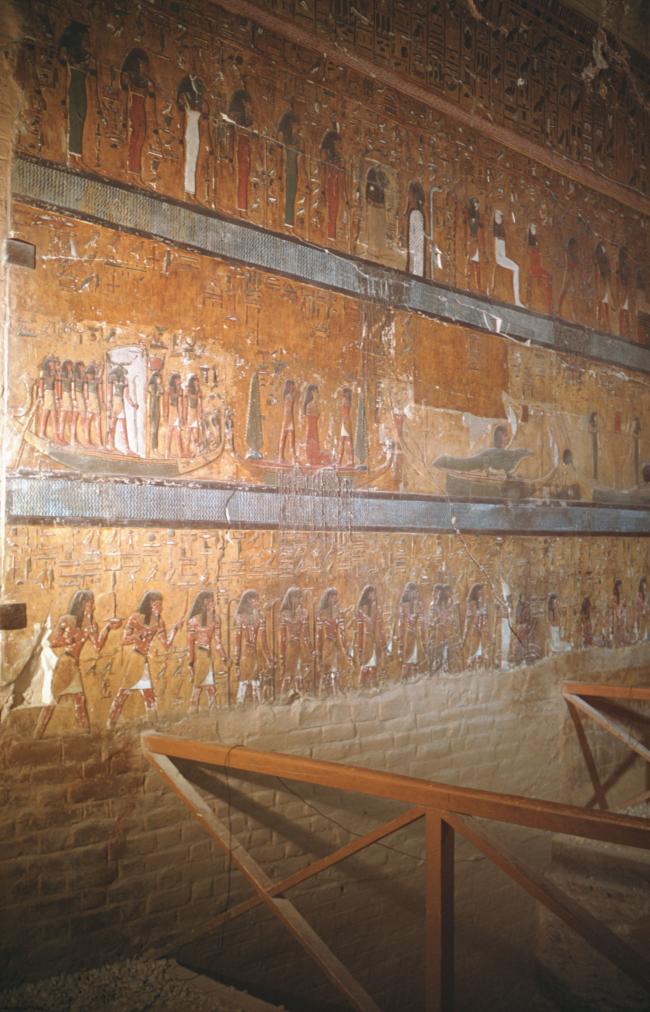
Imydwat abridged version. Courtesy of Uni Dia Verlag; Uni Dia Image Nr. 35782.
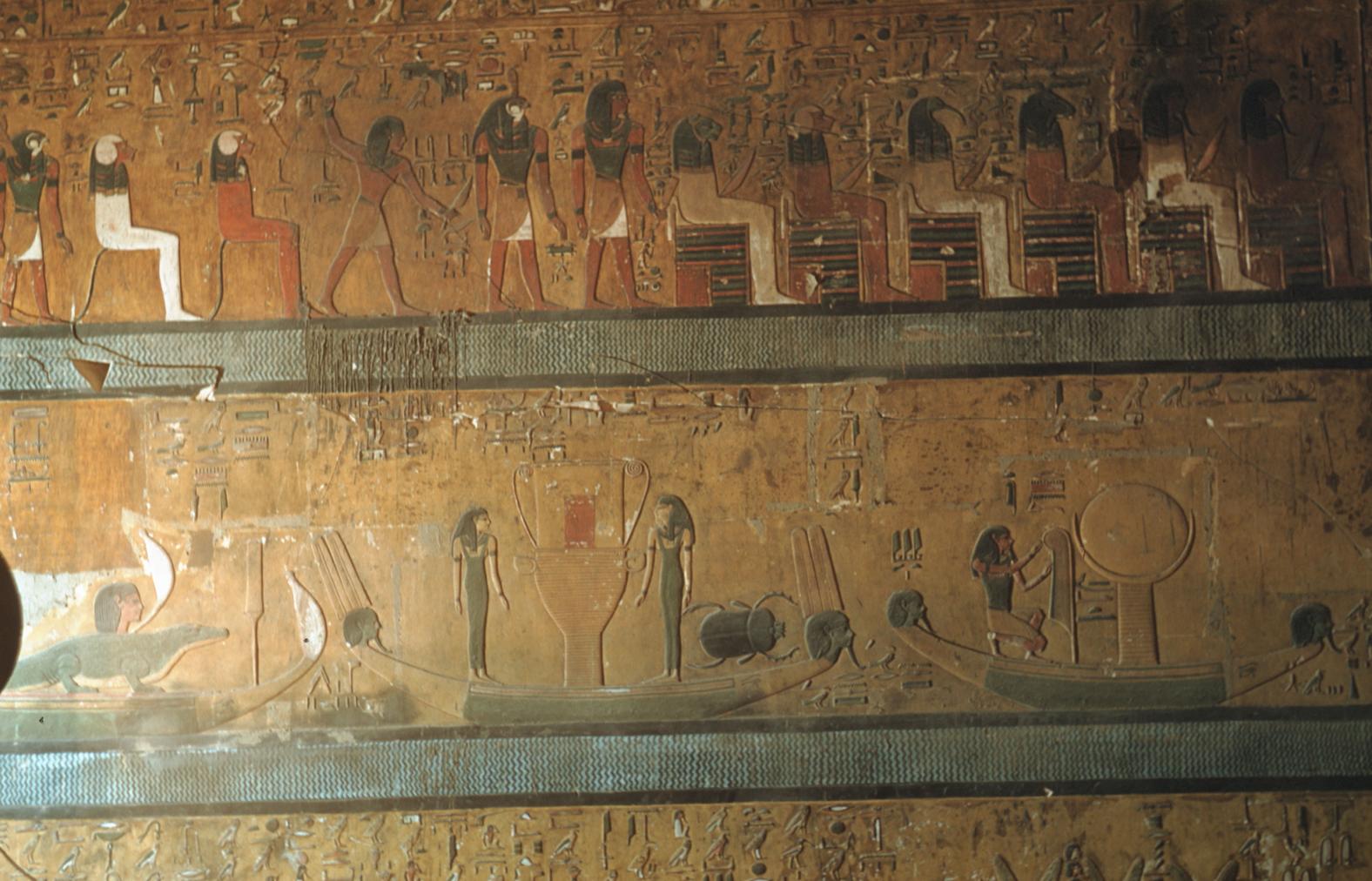
Detail of Imydwat abridged version. Courtesy of Uni Dia Verlag; Uni Dia Image Nr. 35783.
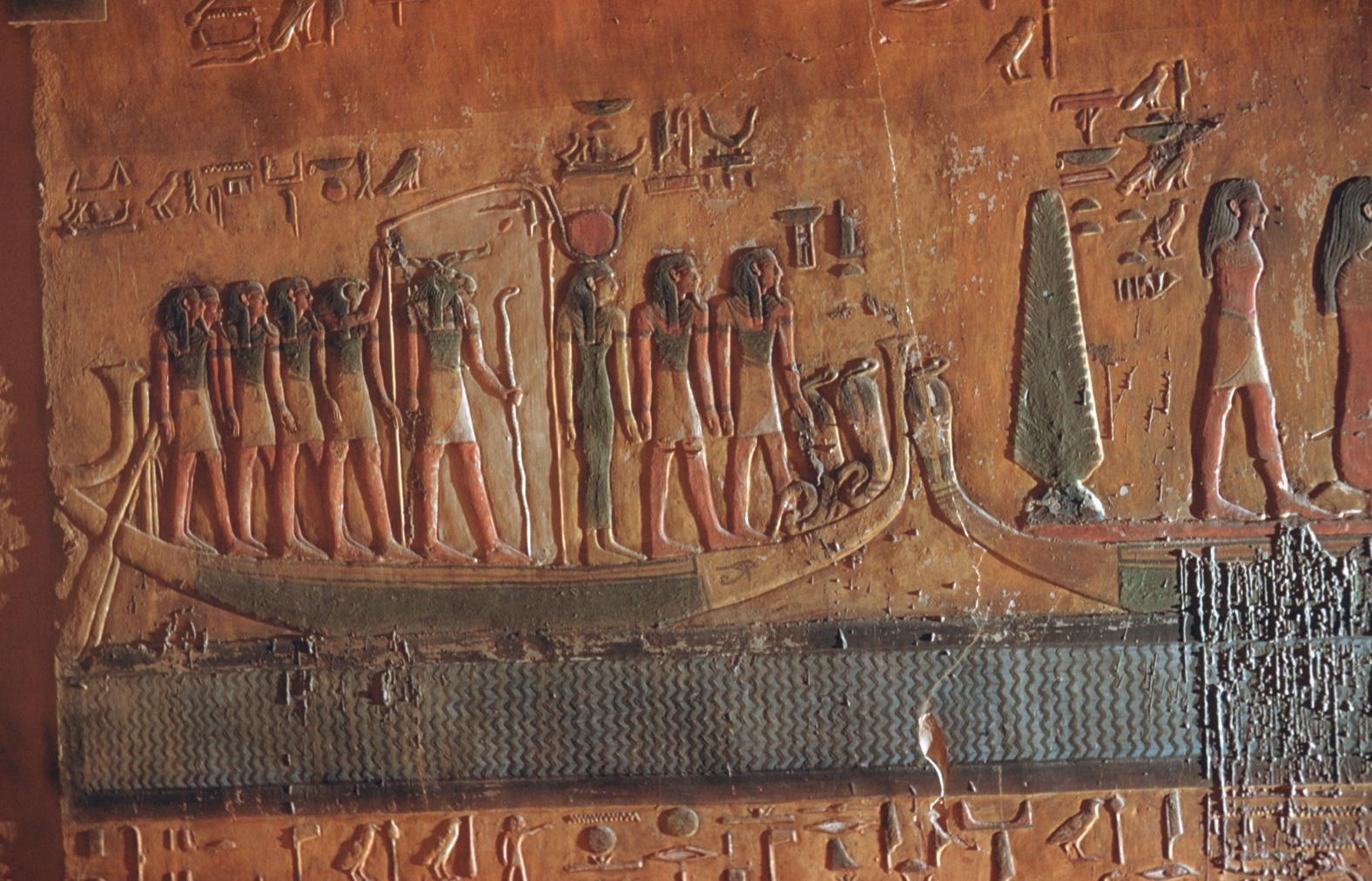
Detail of Imydwat abridged version. Courtesy of Uni Dia Verlag; Uni Dia Image Nr. 35784.
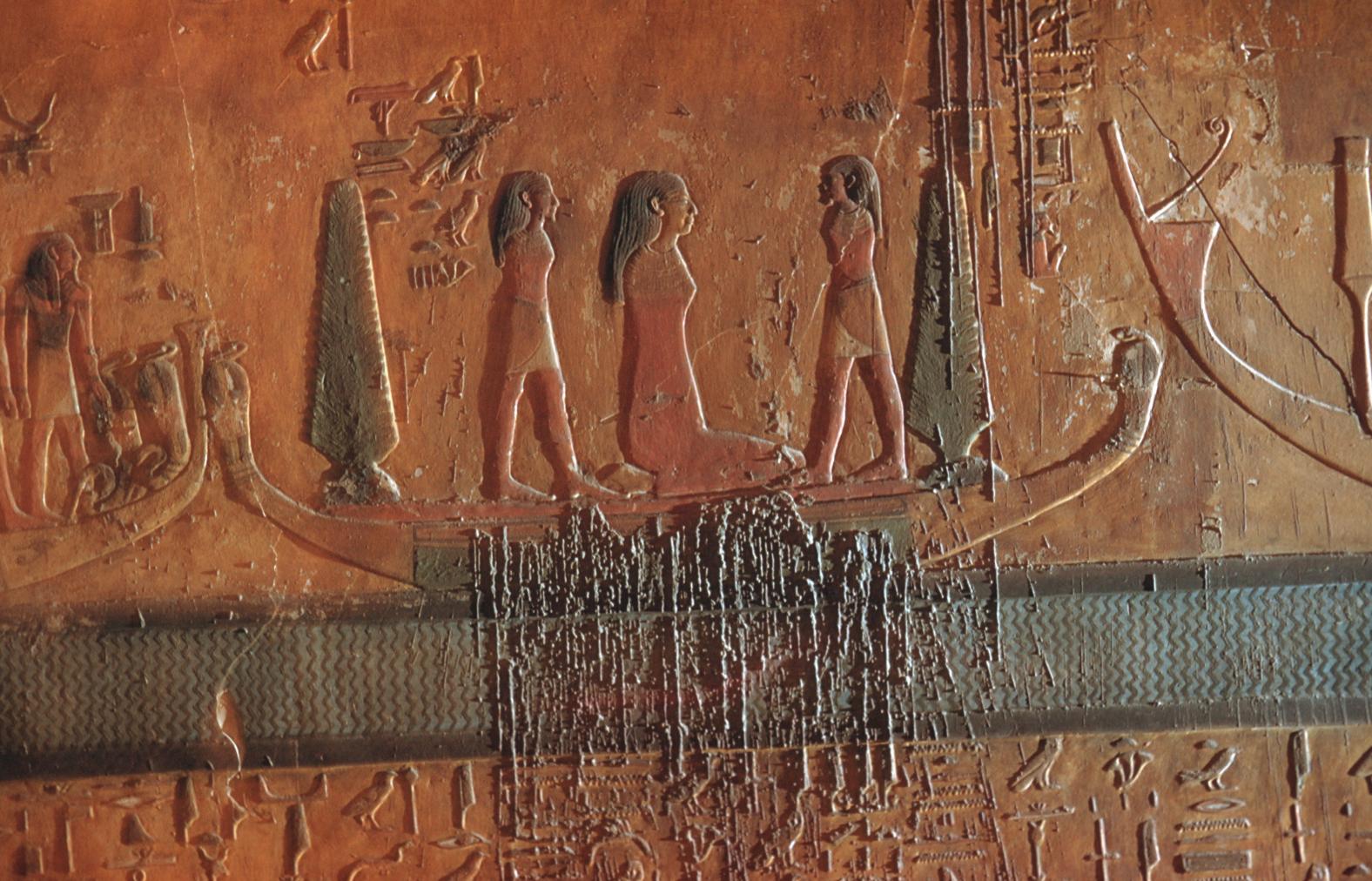
Detail of Imydwat abridged version. Courtesy of Uni Dia Verlag; Uni Dia Image Nr. 35785.
Detail of Imydwat abridged version. Courtesy of Uni Dia Verlag; Uni Dia Image Nr. 35786.
Detail of Imydwat abridged version. Courtesy of Uni Dia Verlag; Uni Dia Image Nr. 35787.
Detail of Imydwat abridged version. Courtesy of Uni Dia Verlag; Uni Dia Image Nr. 35788.
Detail of Imydwat abridged version. Courtesy of Uni Dia Verlag; Uni Dia Image Nr. 35789.
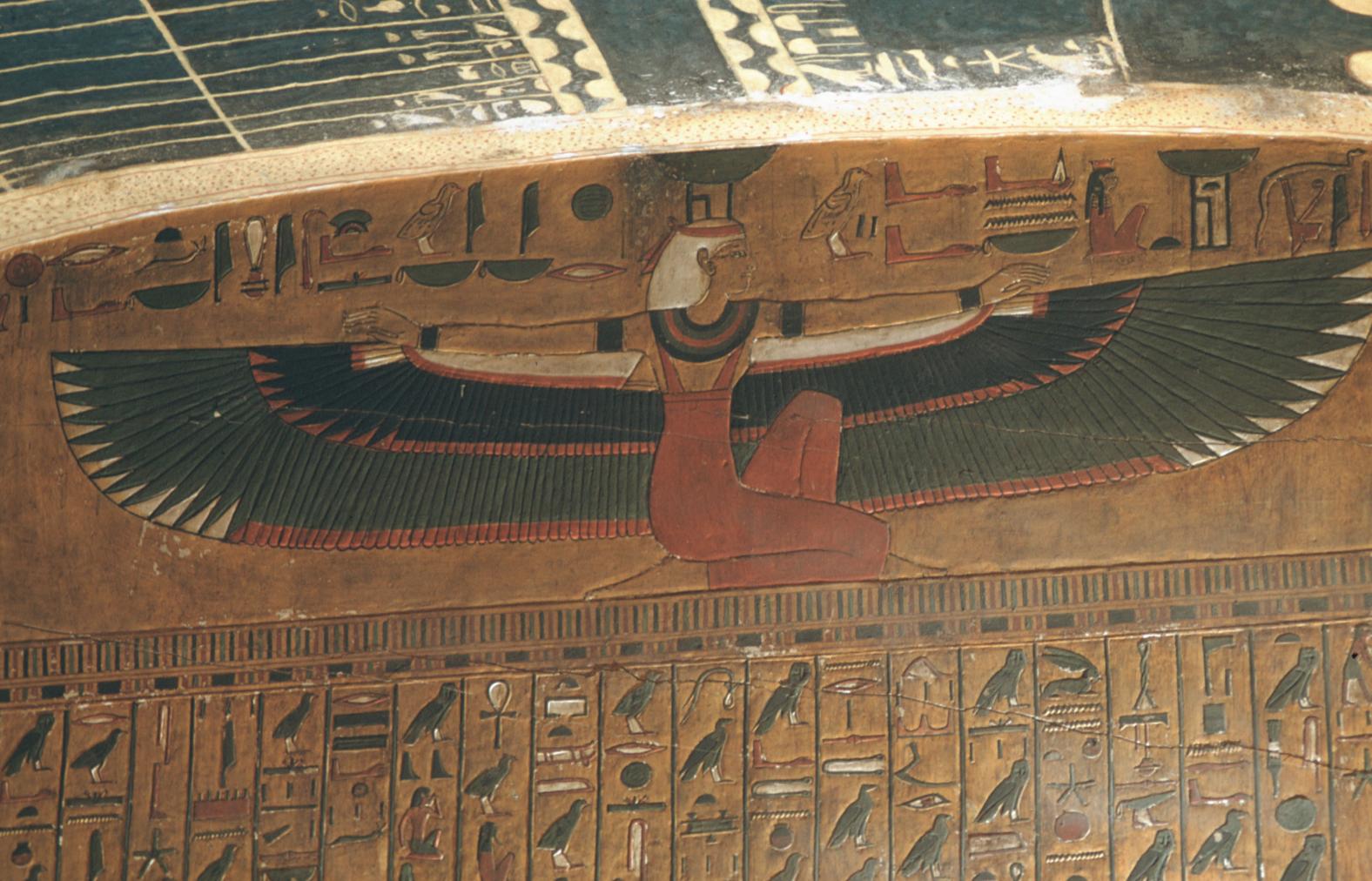
Winged kneeling Nephthys. Courtesy of Uni Dia Verlag; Uni Dia Image Nr. 35790.
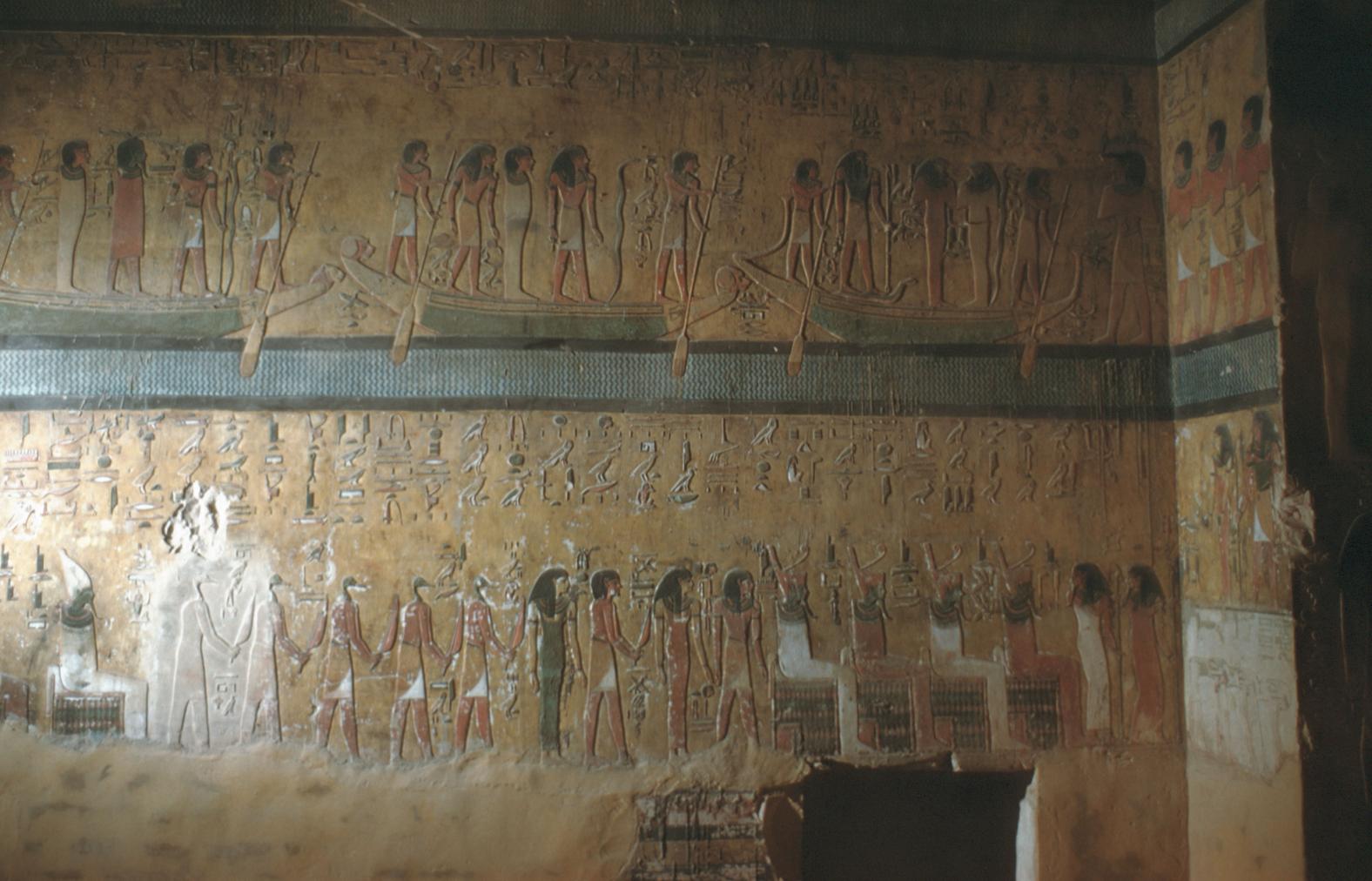
Imydwat abridged version. Courtesy of Uni Dia Verlag; Uni Dia Image Nr. 35791.
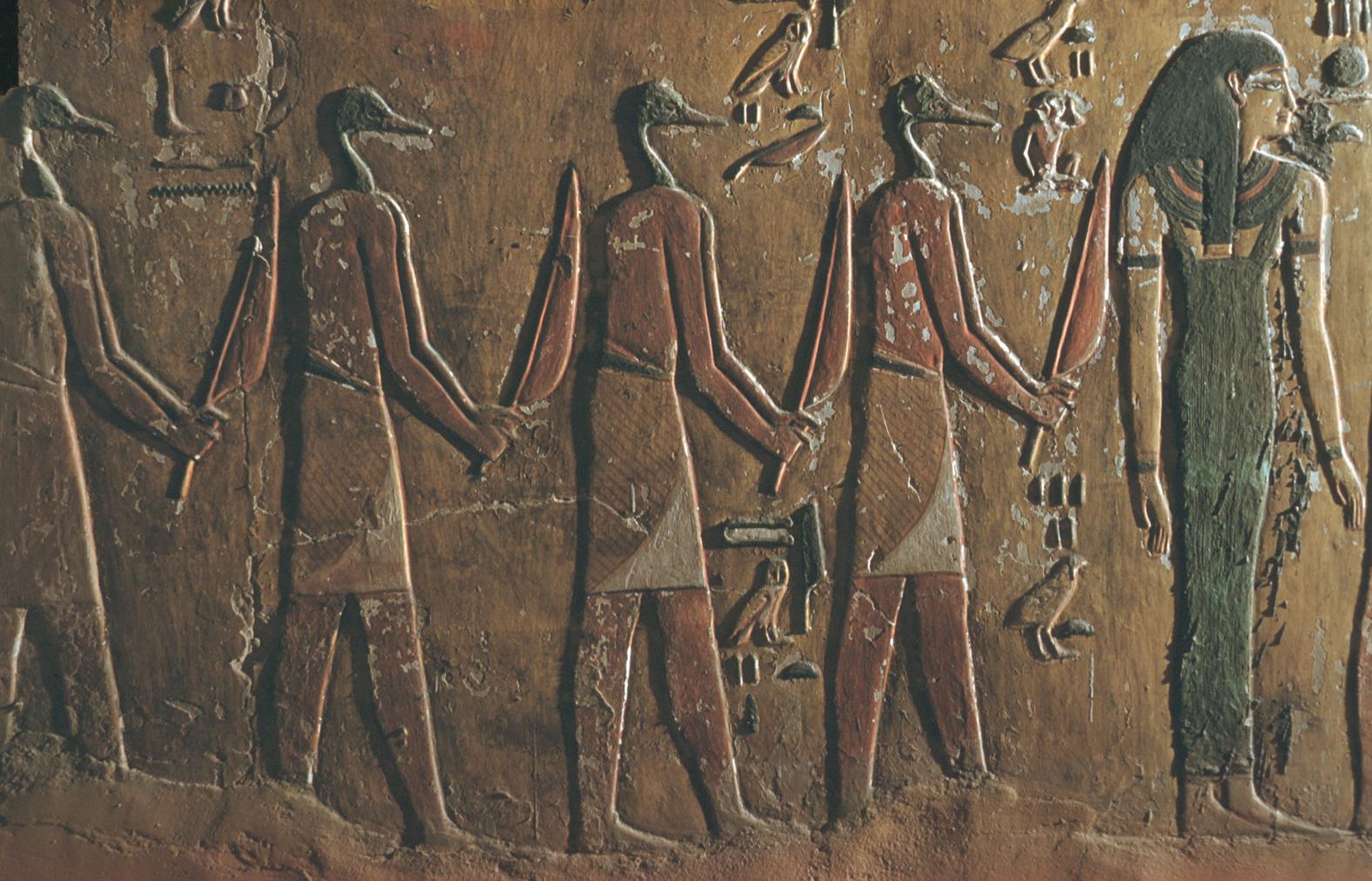
Detail from Imydwat abridged version (lower level). Courtesy of Uni Dia Verlag; Uni Dia Image Nr. 35792.
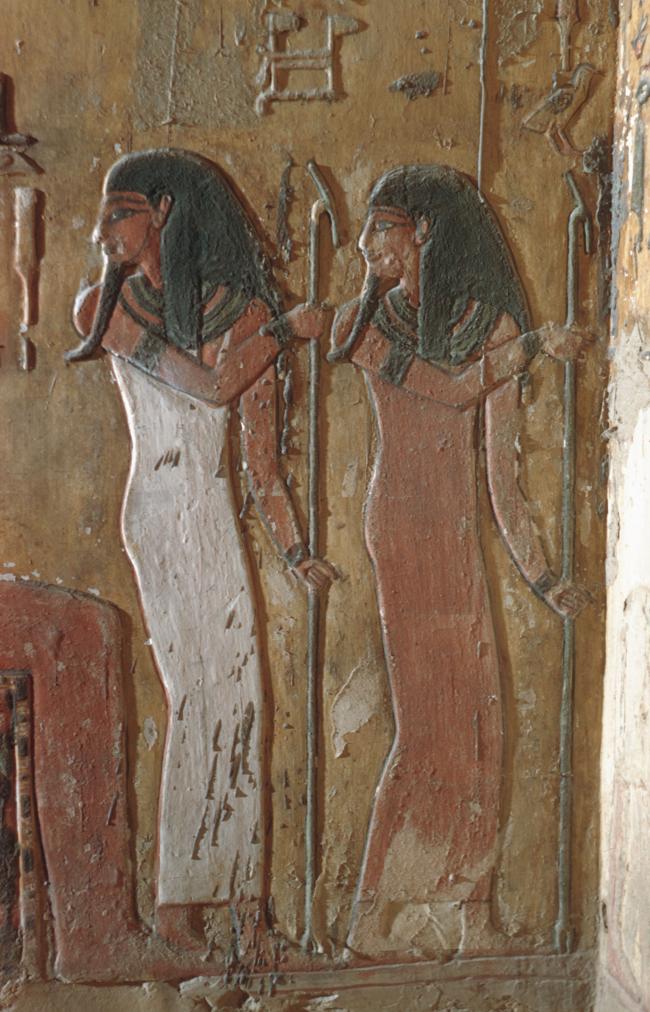
Detail from Imydwat abridged version (lower level). Courtesy of Uni Dia Verlag; Uni Dia Image Nr. 35793.
Detail from Imydwat abridged version (lower level). Courtesy of Uni Dia Verlag; Uni Dia Image Nr. 35794.
Detail from Imydwat abridged version (lower level). Courtesy of Uni Dia Verlag; Uni Dia Image Nr. 35795.
Detail from Imydwat abridged version (lower level). Courtesy of Uni Dia Verlag; Uni Dia Image Nr. 35796.
Detail from Imydwat abridged version (lower level). Courtesy of Uni Dia Verlag; Uni Dia Image Nr. 35797.
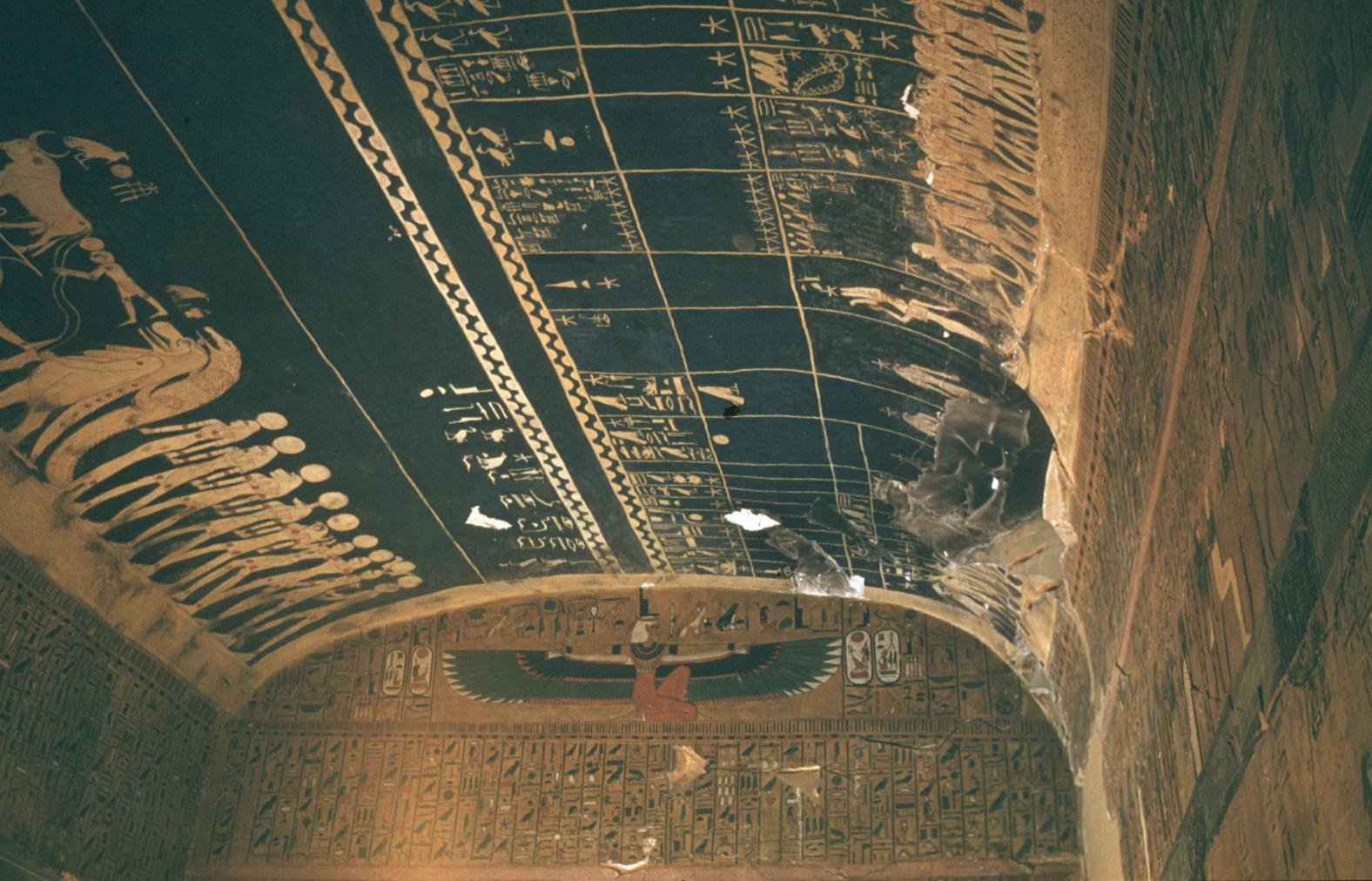
View of Burial Chamber J ceiling, lower level. Courtesy of Uni Dia Verlag; Uni Dia Image Nr. 35798.
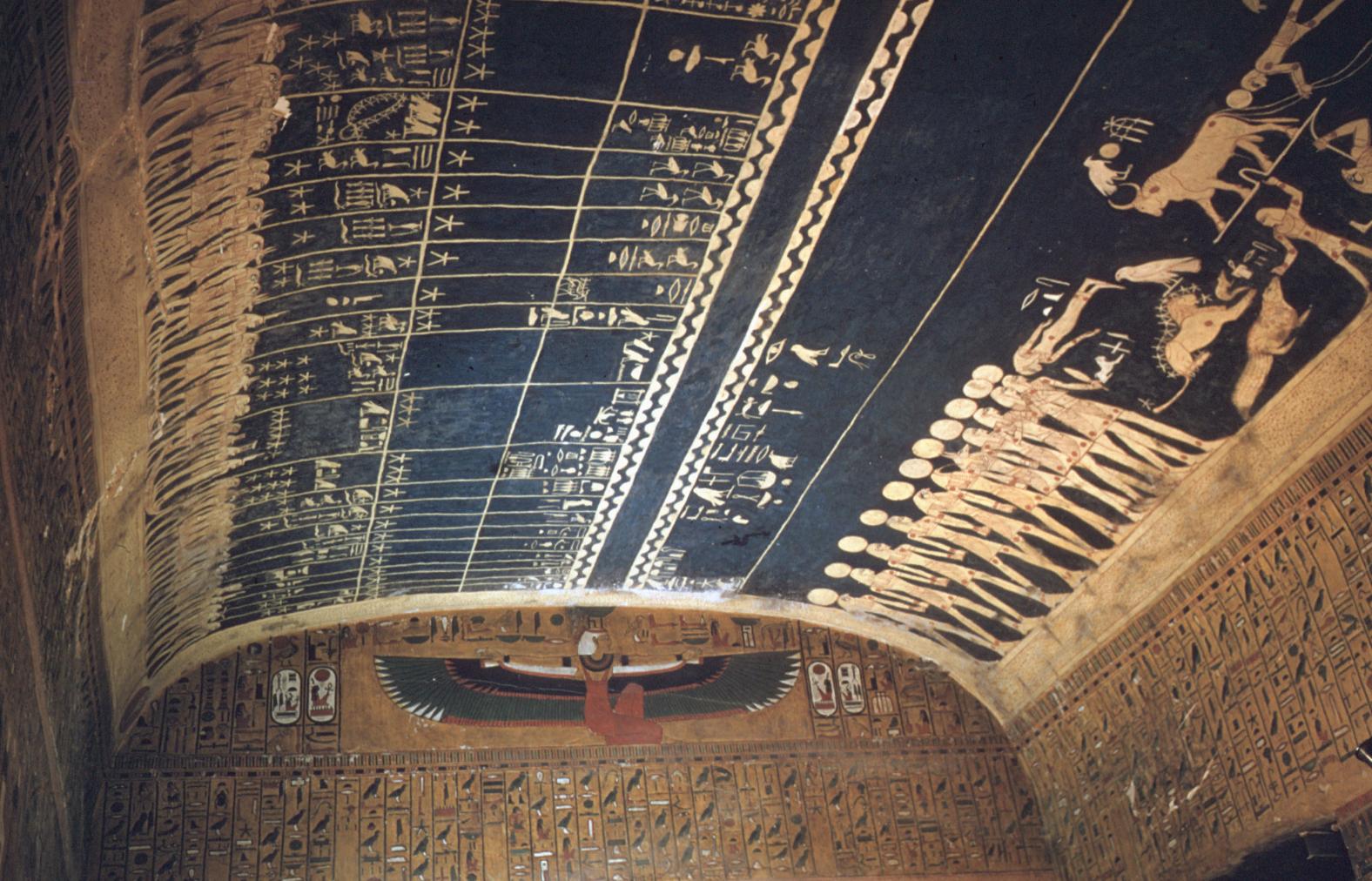
View of Burial Chamber J ceiling, lower level. Courtesy of Uni Dia Verlag; Uni Dia Image Nr. 35799.
Astronomical ceiling. Courtesy of Uni Dia Verlag; Uni Dia Image Nr. 35800.
Astronomical ceiling. Courtesy of Uni Dia Verlag; Uni Dia Image Nr. 35801.
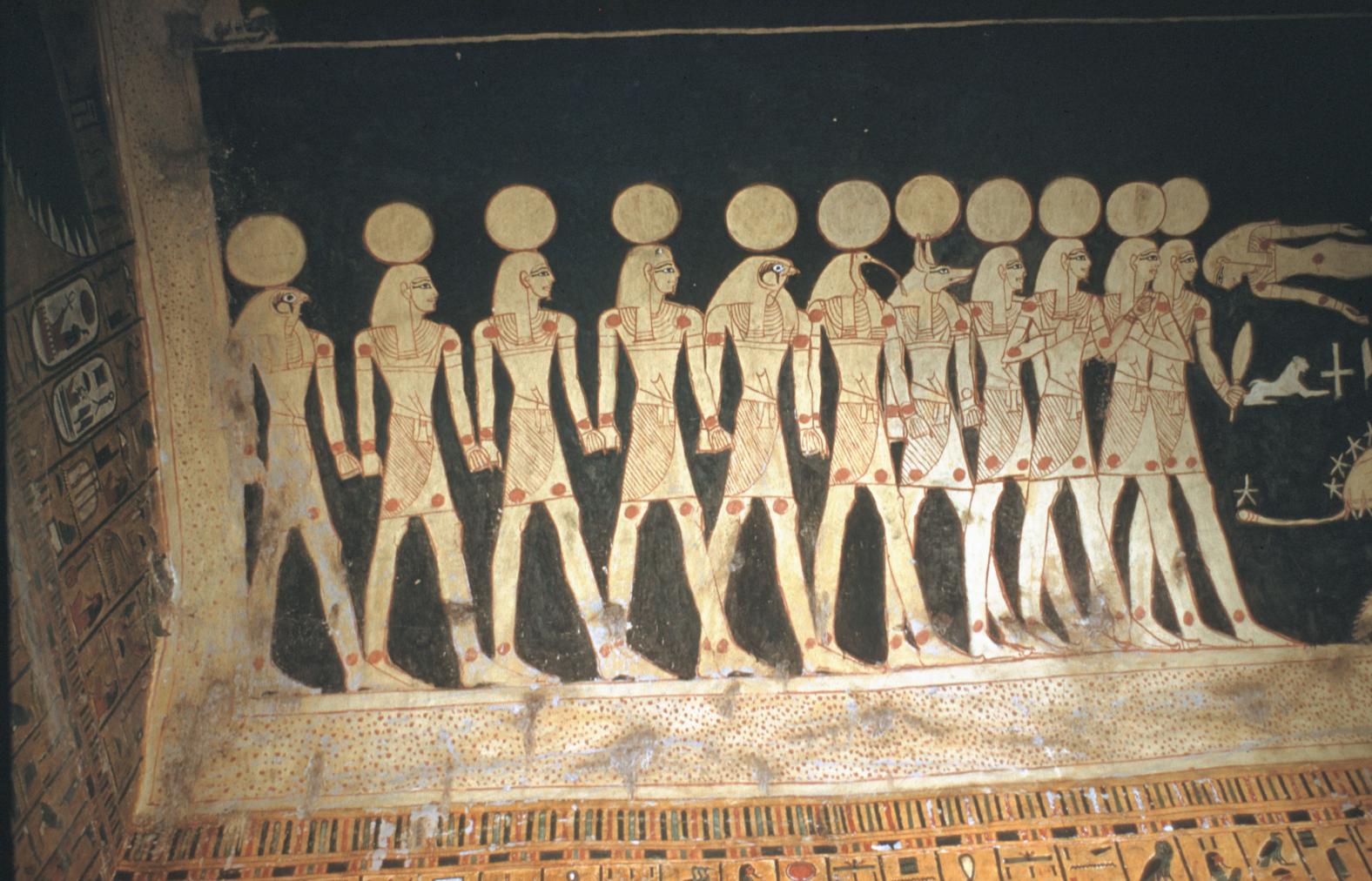
Detail of Astronomical ceiling. Courtesy of Uni Dia Verlag; Uni Dia Image Nr. 35802.
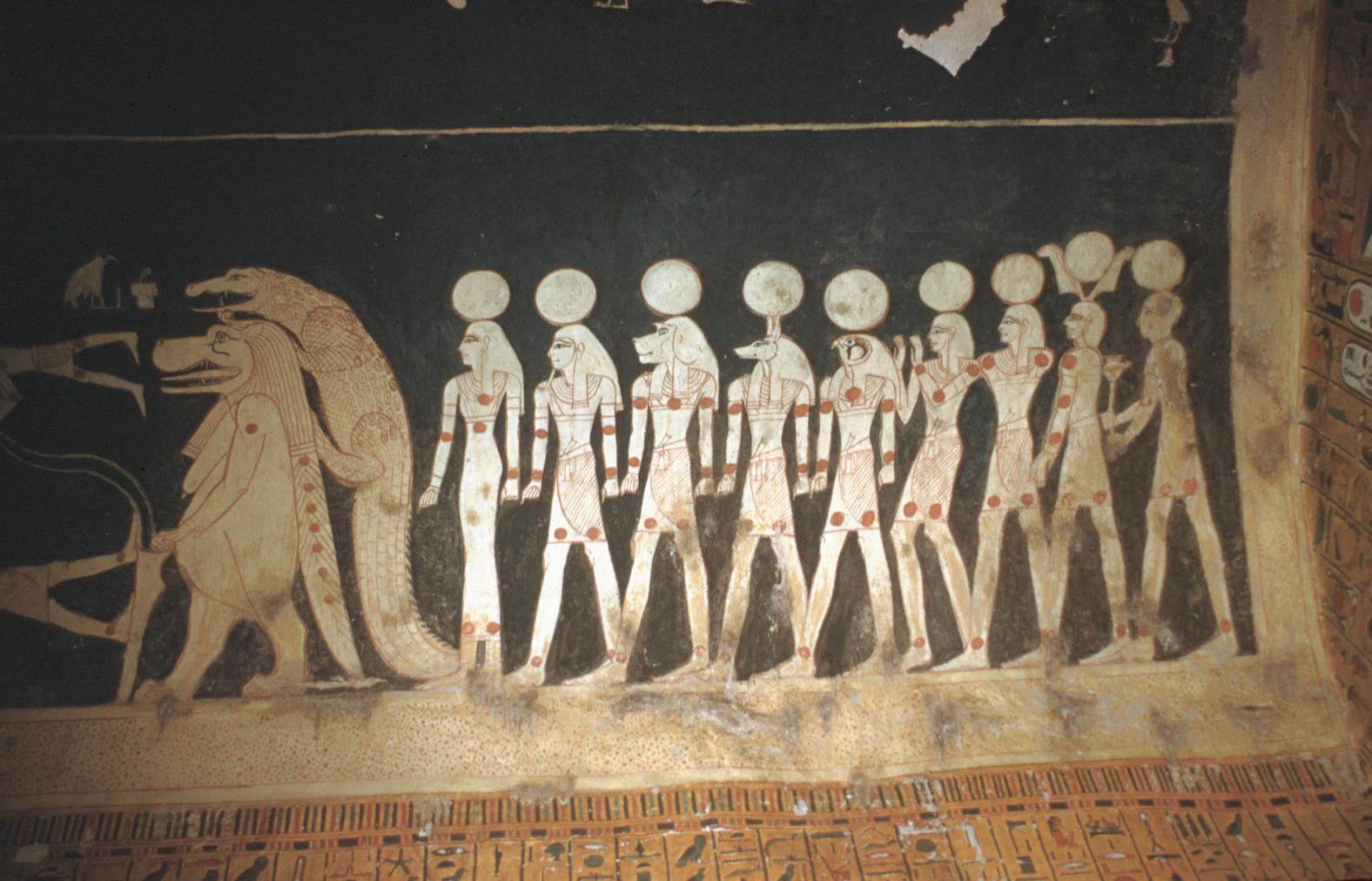
Detail of Astronomical ceiling. Courtesy of Uni Dia Verlag; Uni Dia Image Nr. 35803.
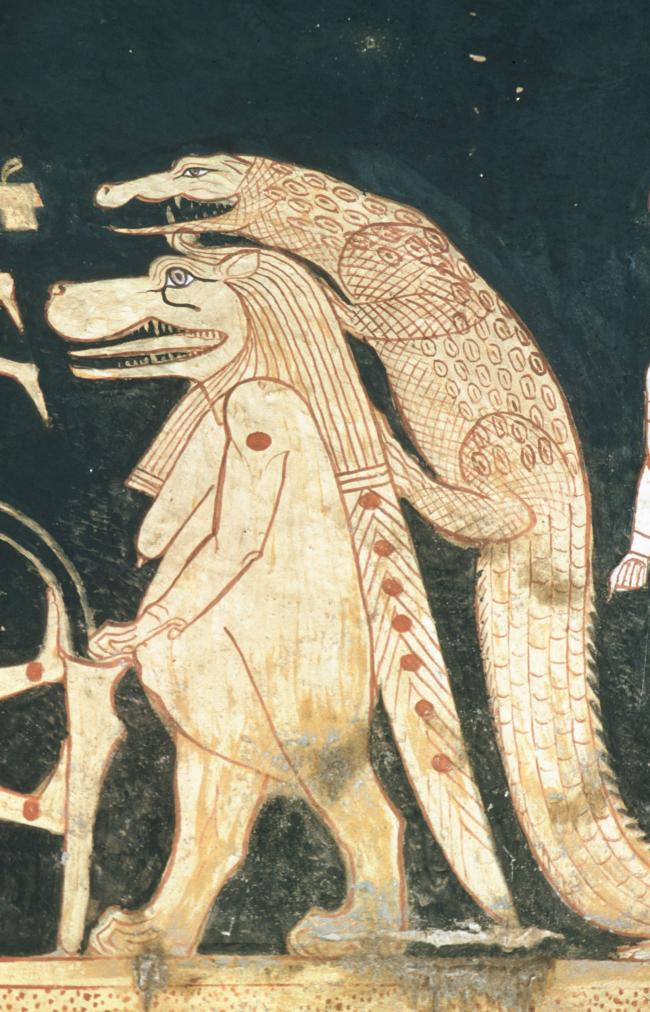
Detail of Astronomical ceiling. Courtesy of Uni Dia Verlag; Uni Dia Image Nr. 35804.
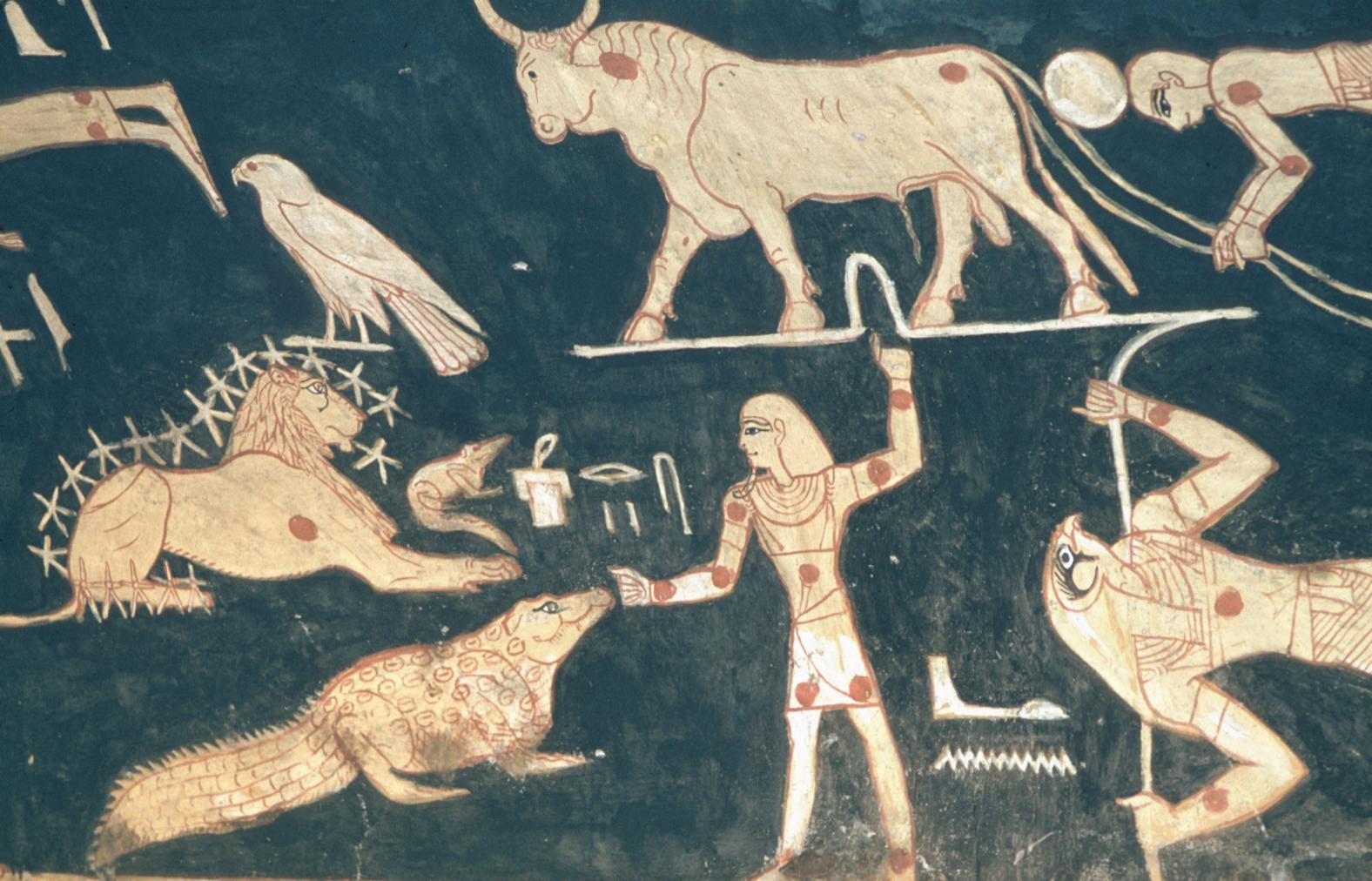
Detail of Astronomical ceiling. Courtesy of Uni Dia Verlag; Uni Dia Image Nr. 35805.
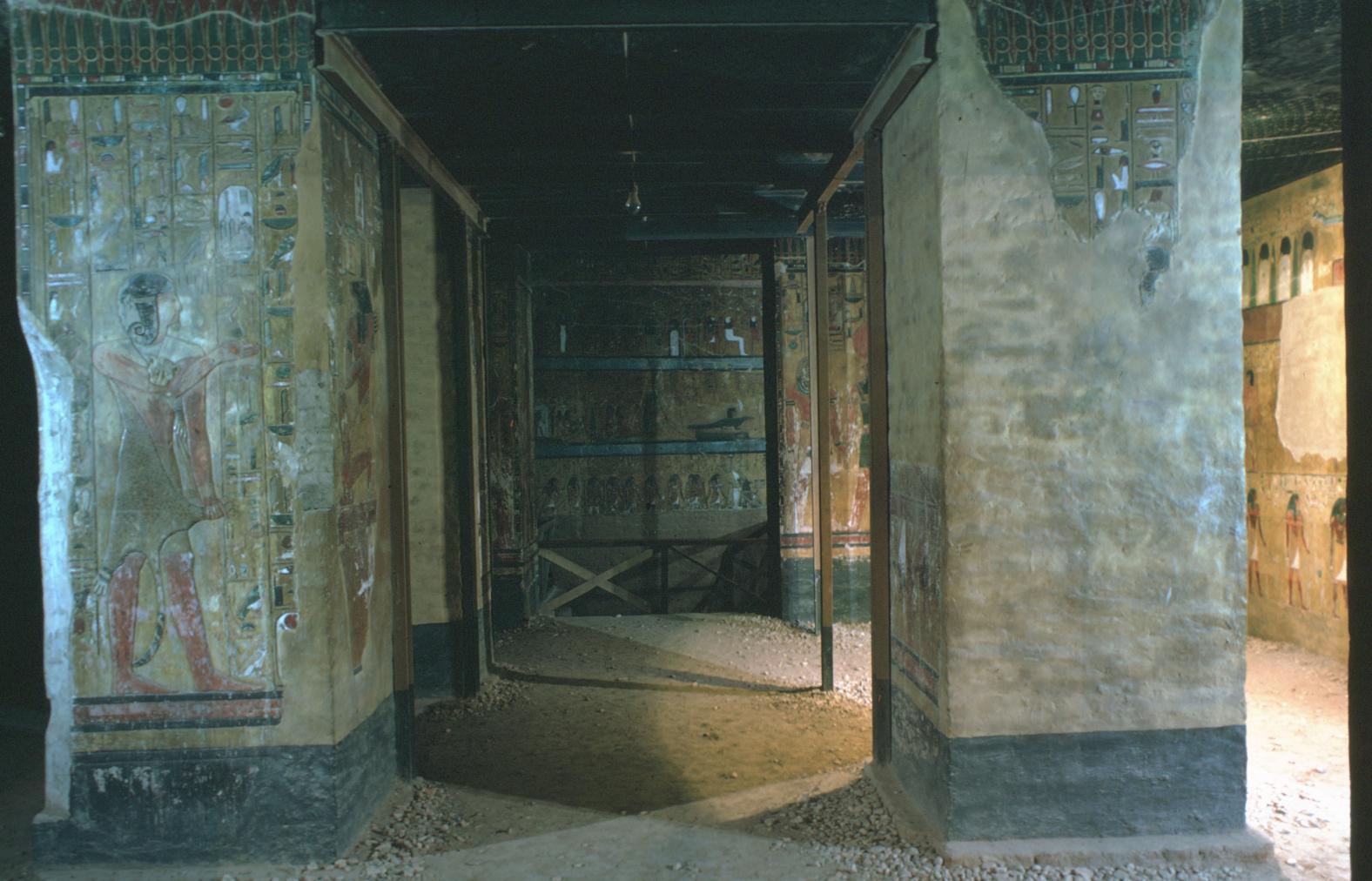
View of Burial Chamber J from upper section between pillars. Courtesy of Uni Dia Verlag; Uni Dia Image Nr. 35851.
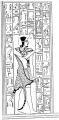
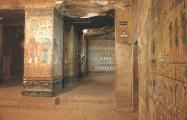
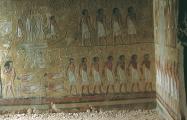
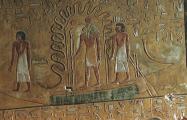
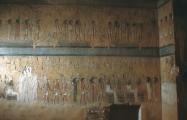
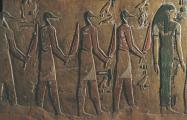
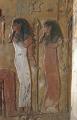
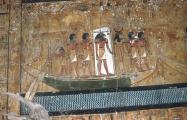
Gate Ja
See entire tombOn the thicknesses of the gate the king and his ka offer ointment.
Porter and Moss designation:
Side chamber Ja
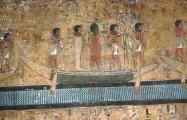
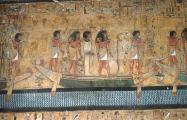
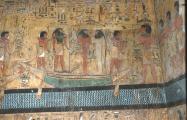
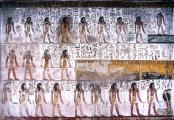
See entire tombThe walls of this subsidiary chamber off the left (southeast) wall of the upper chamber of the burial chamber are decorated with the third division (P)/fourth hour (H) of the Book of Gates.
Porter and Moss designation:
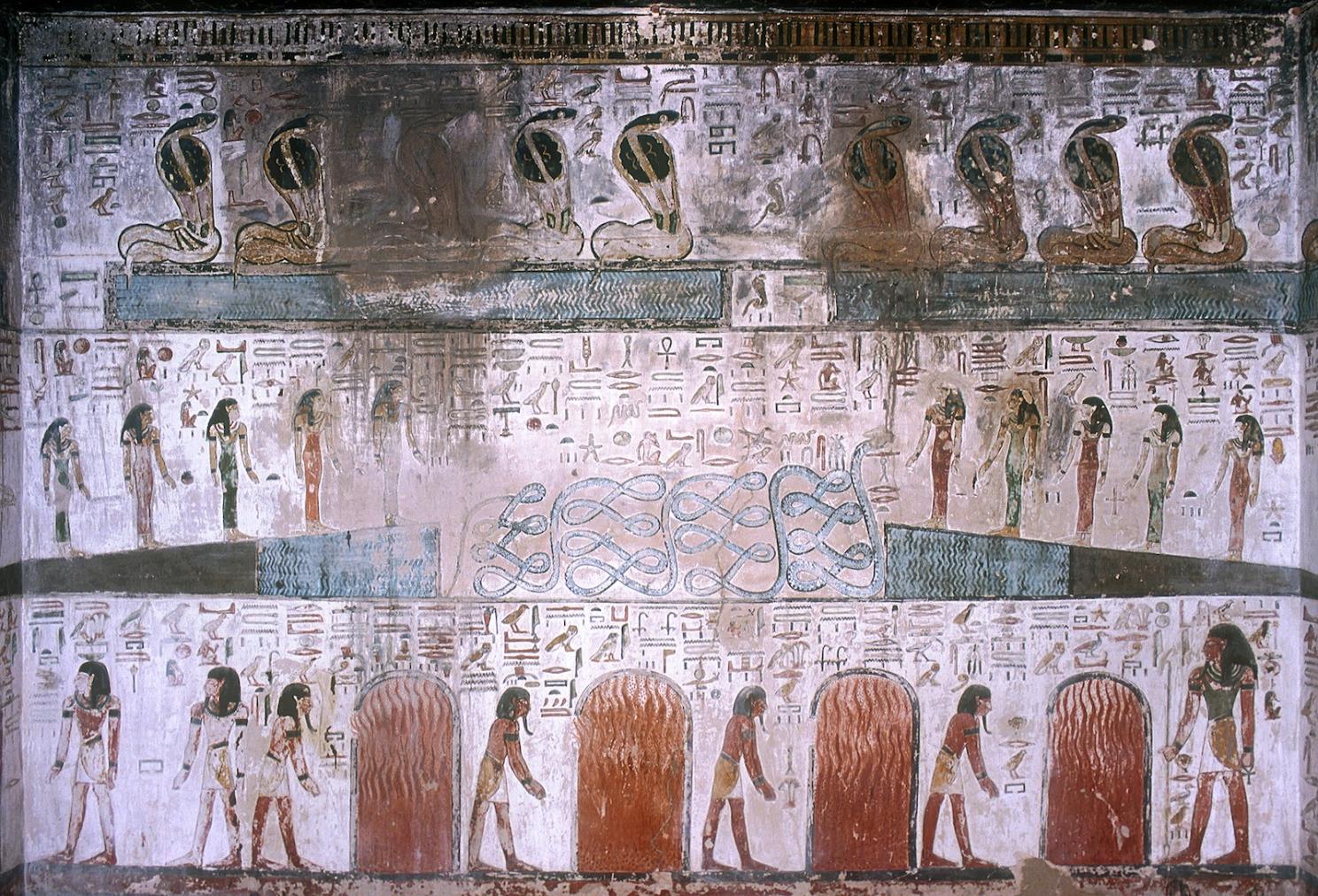
Book of Gates, third division (P)/fourth hour (H).
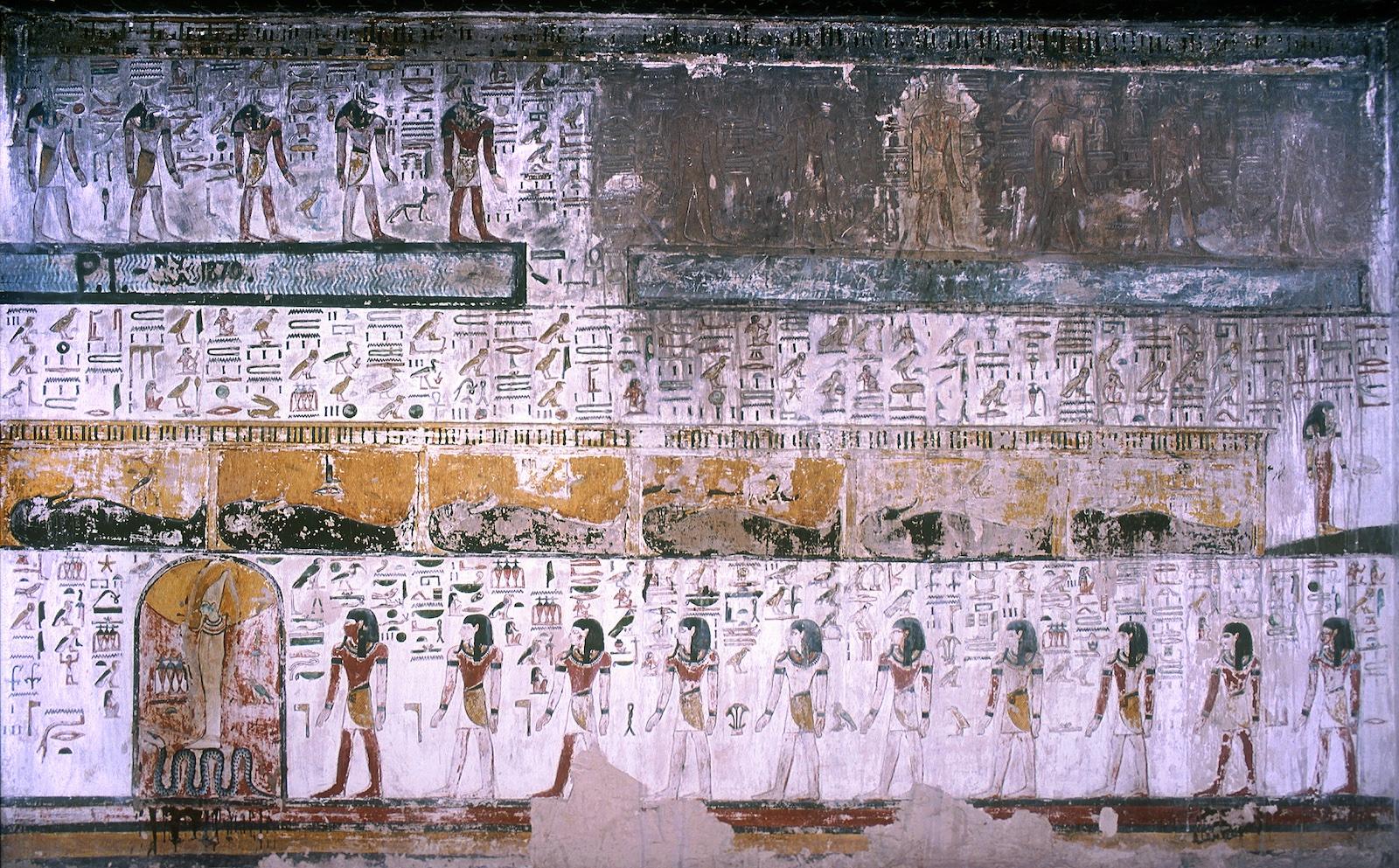
Book of Gates, third division (P)/fourth hour (H).
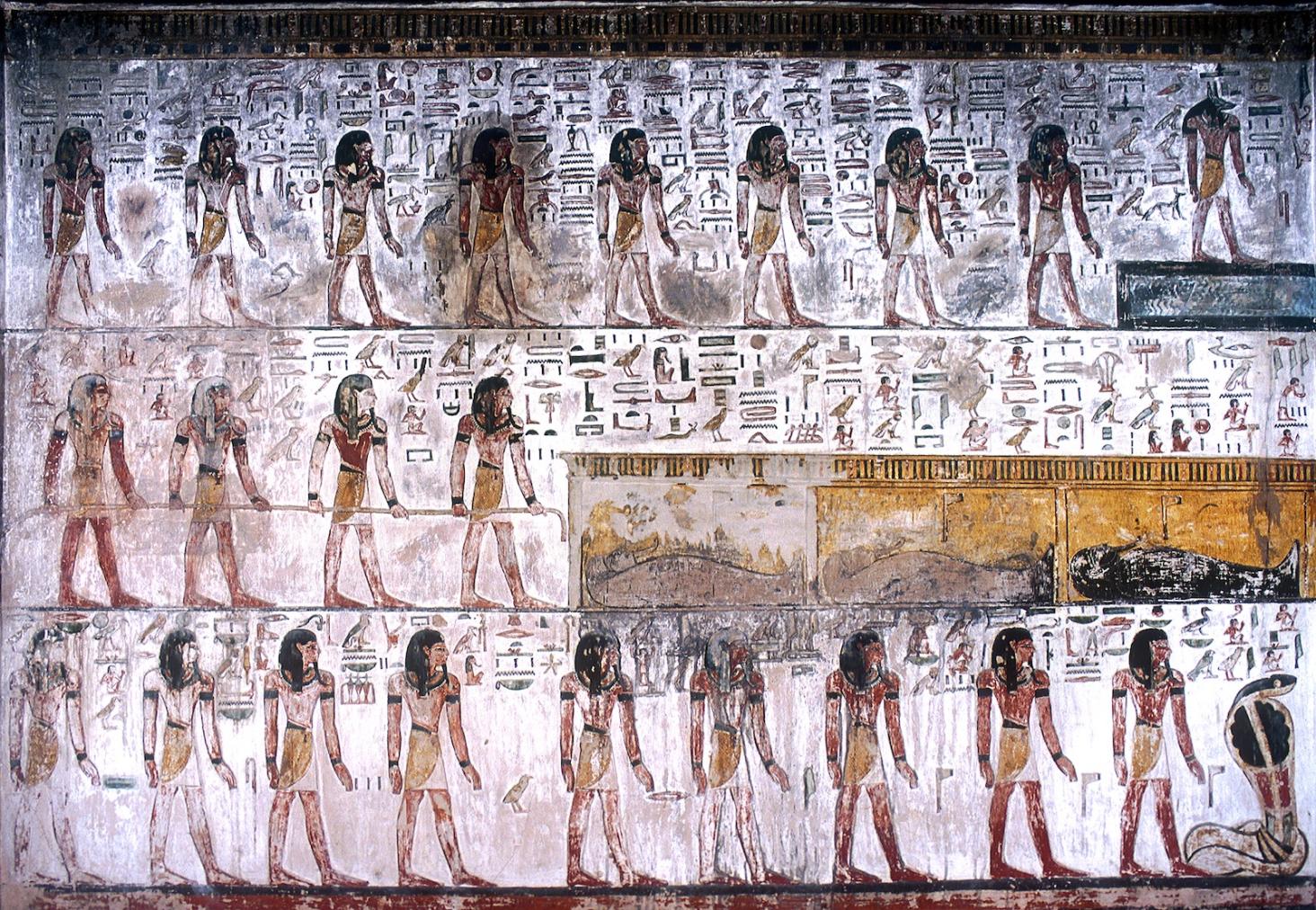
Book of Gates, third division (P)/fourth hour (H).
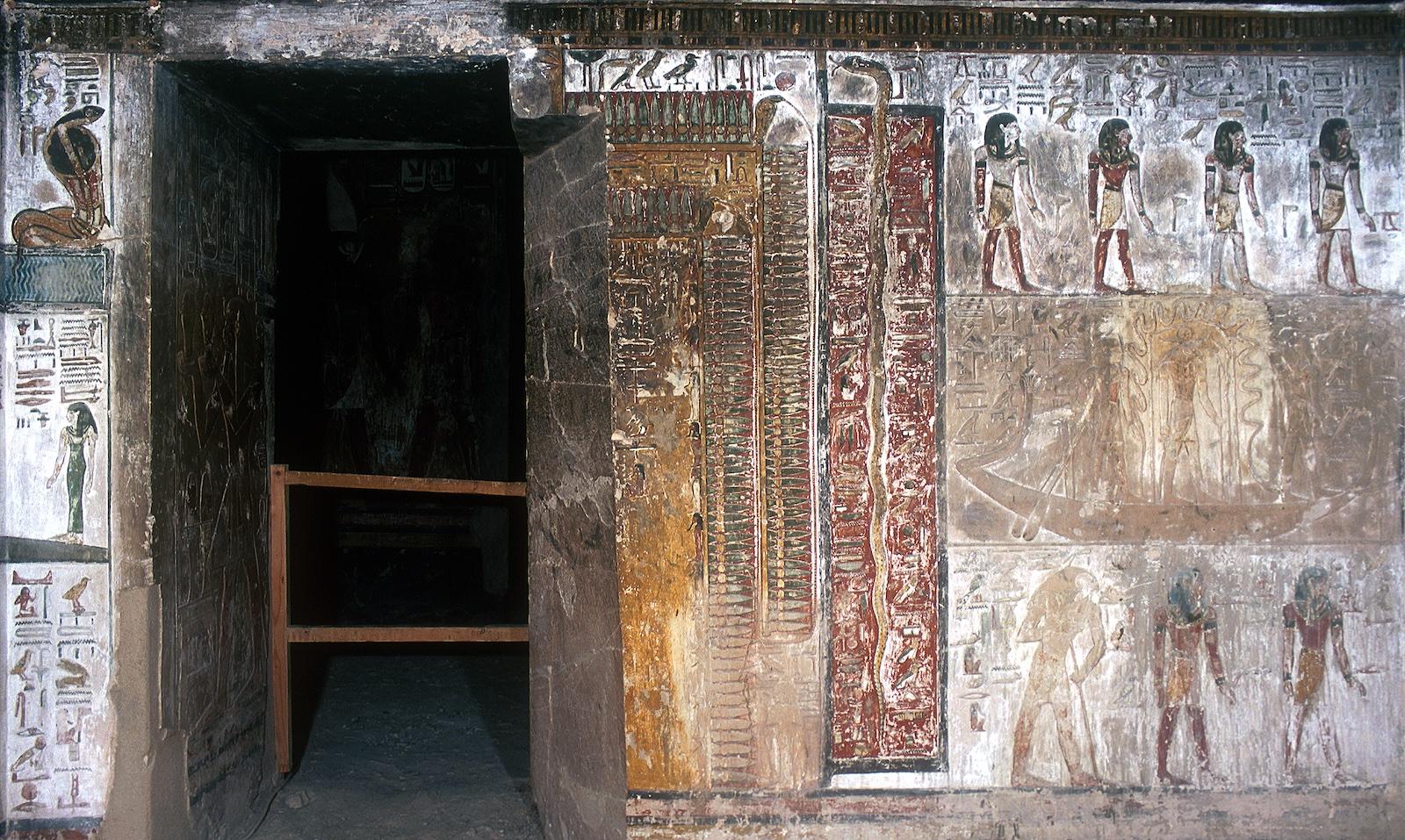
Book of Gates, third gate, and third division (P)/fourth hour (H).
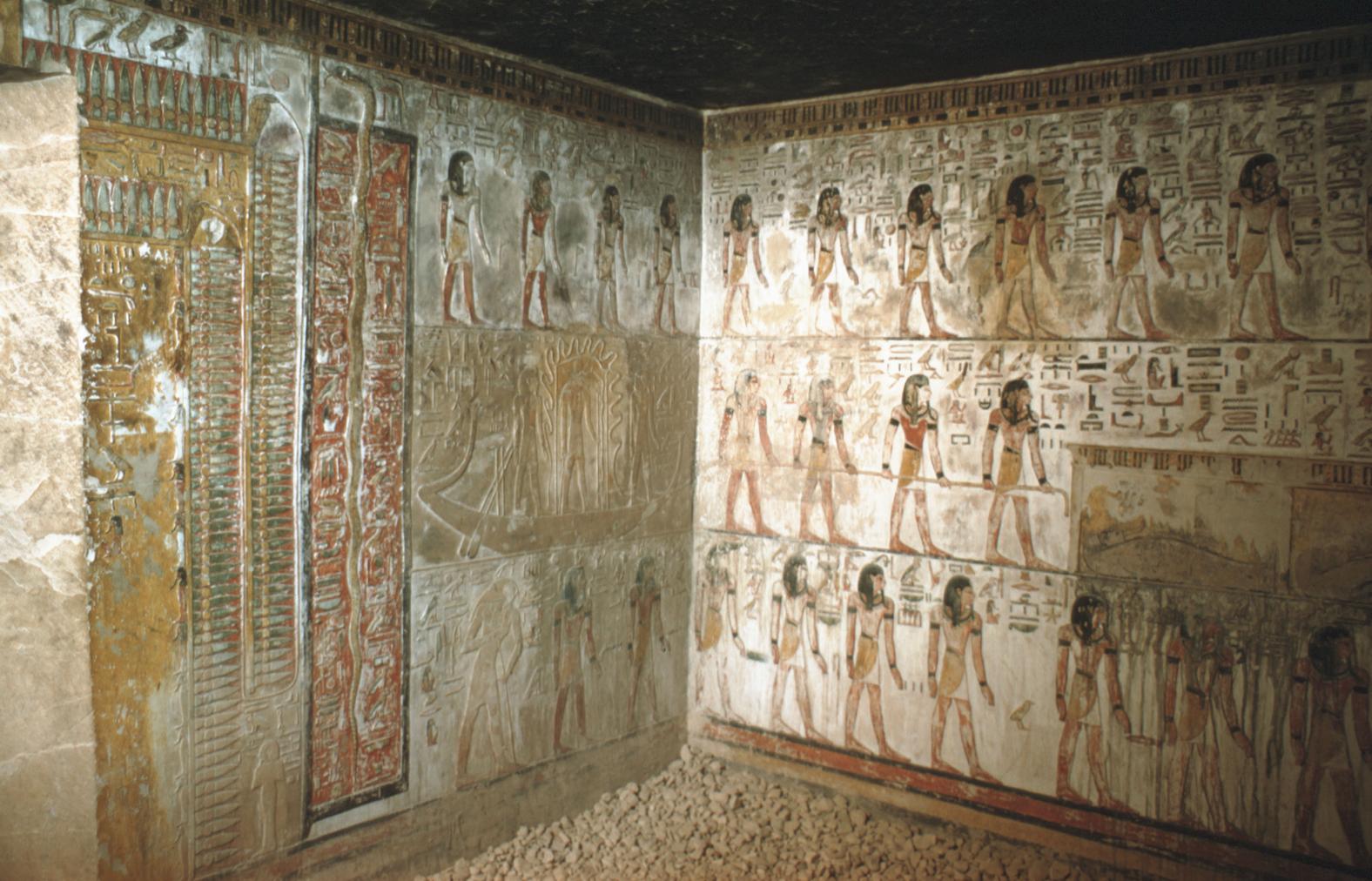
Book of Gates, third division (P)/fourth hour (H). Courtesy of Uni Dia Verlag; Uni Dia Image Nr. 35765.
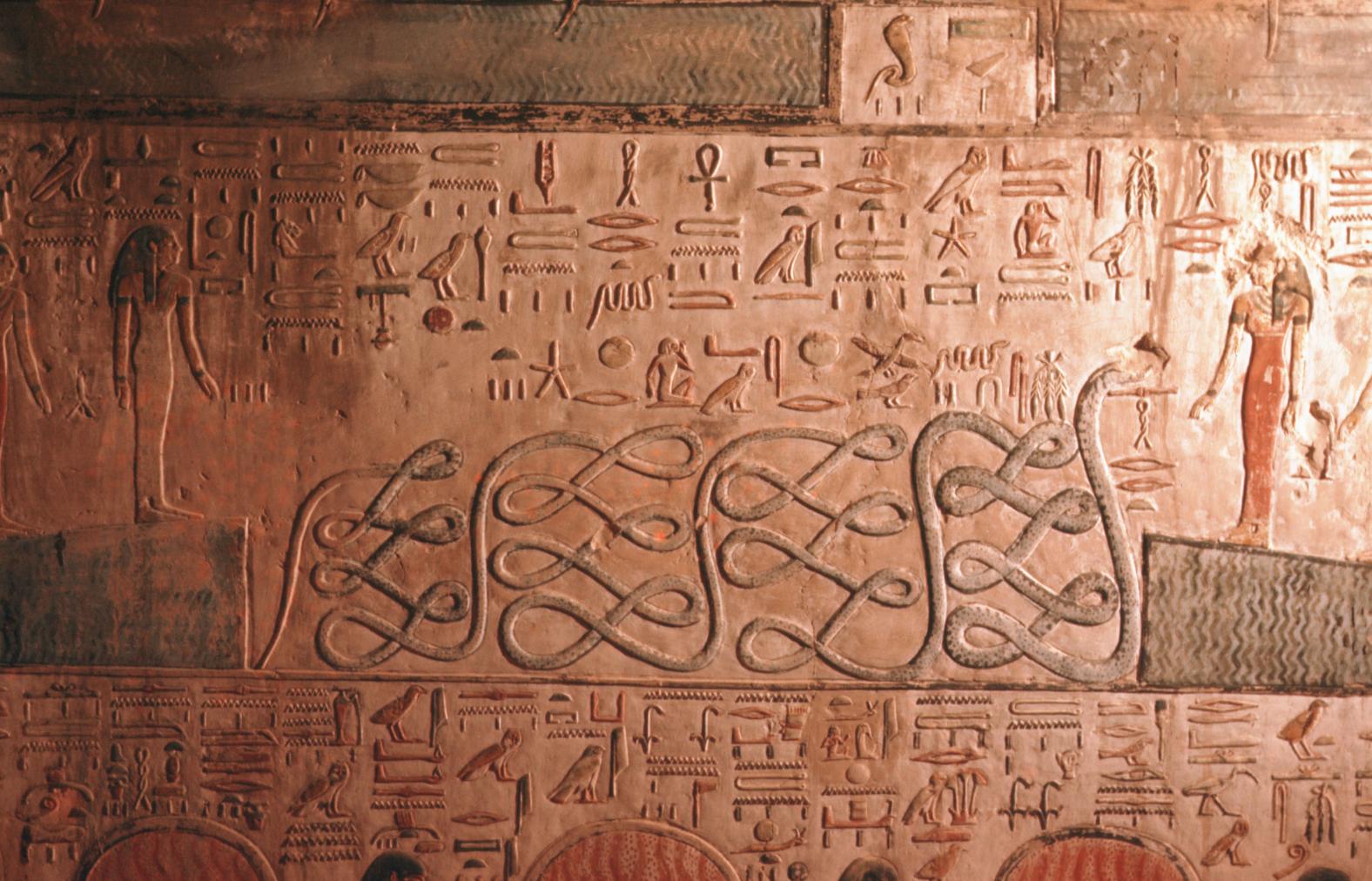
Book of Gates third division (P)/fourth hour (H). Courtesy of Uni Dia Verlag; Uni Dia Image Nr. 35806.
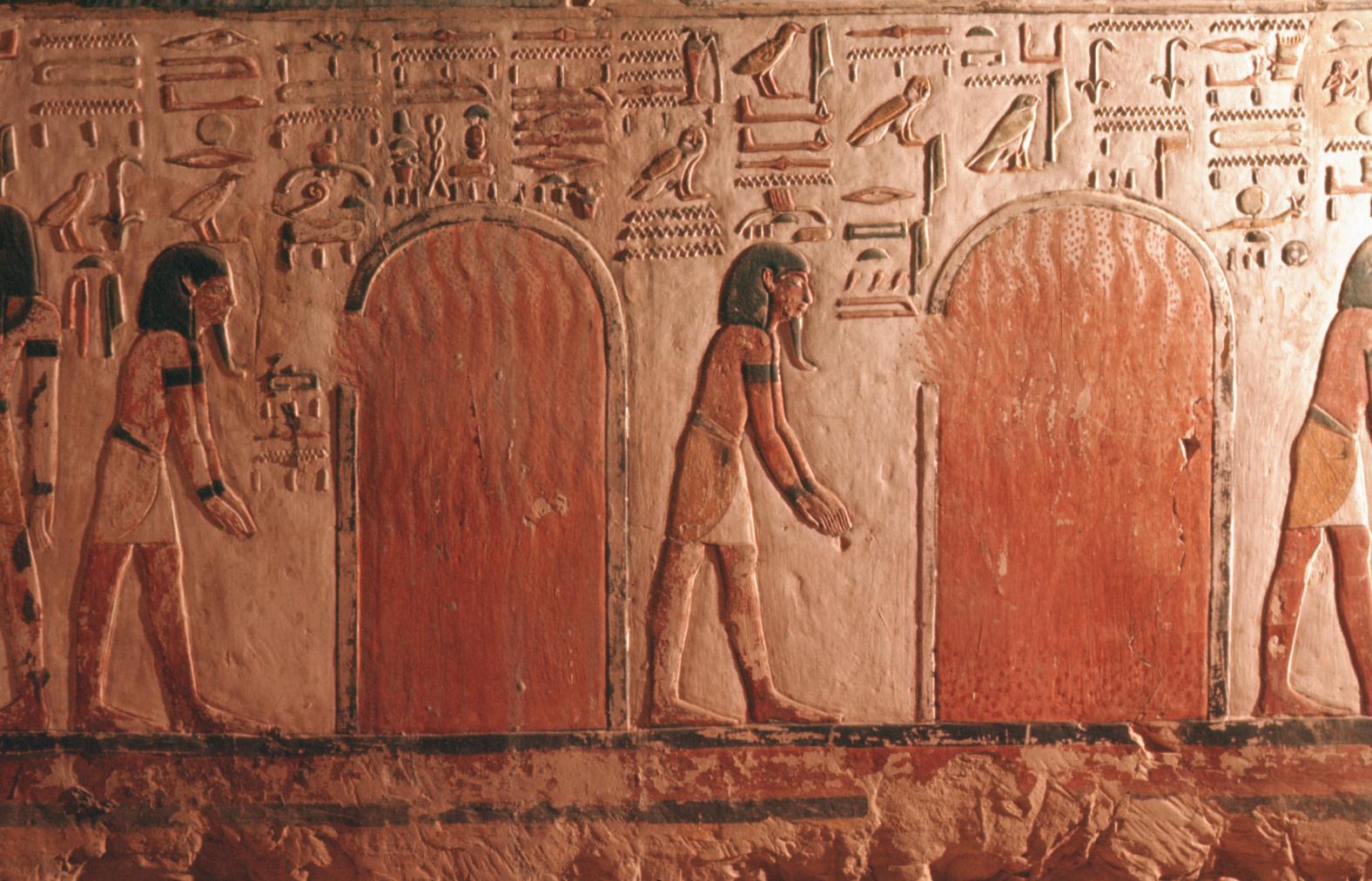
Detail of Book of Gates third division (P)/fourth hour (H). Courtesy of Uni Dia Verlag; Uni Dia Image Nr. 35807.
Gate Jb
See entire tombThe inner thicknesses bear representations of Nekhbet and Wadjet as cobras over the plants of Upper and Lower Egypt. The outer thicknesses, which have been partly cut away, had representations of the goddess Hathor.
Porter and Moss designation:
Side chamber Jb
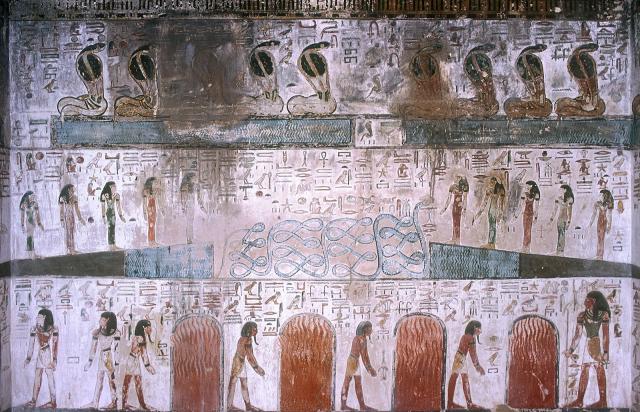
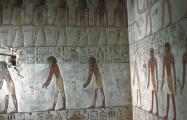
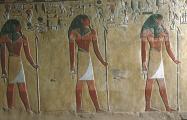
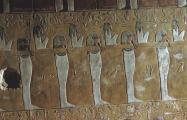
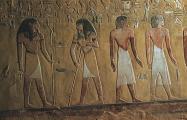
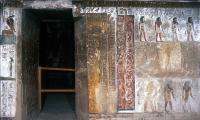
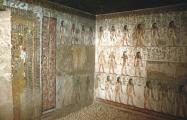
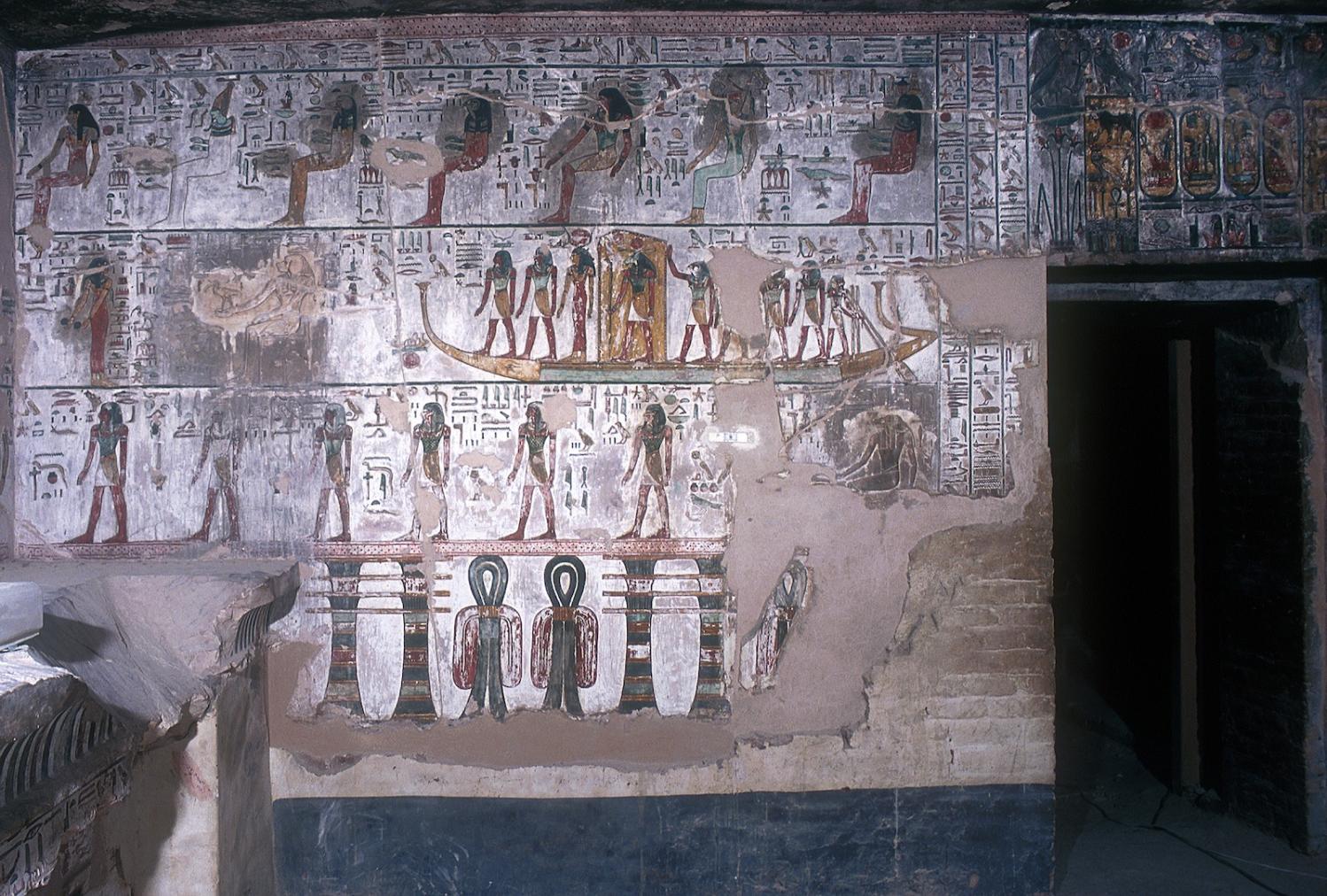
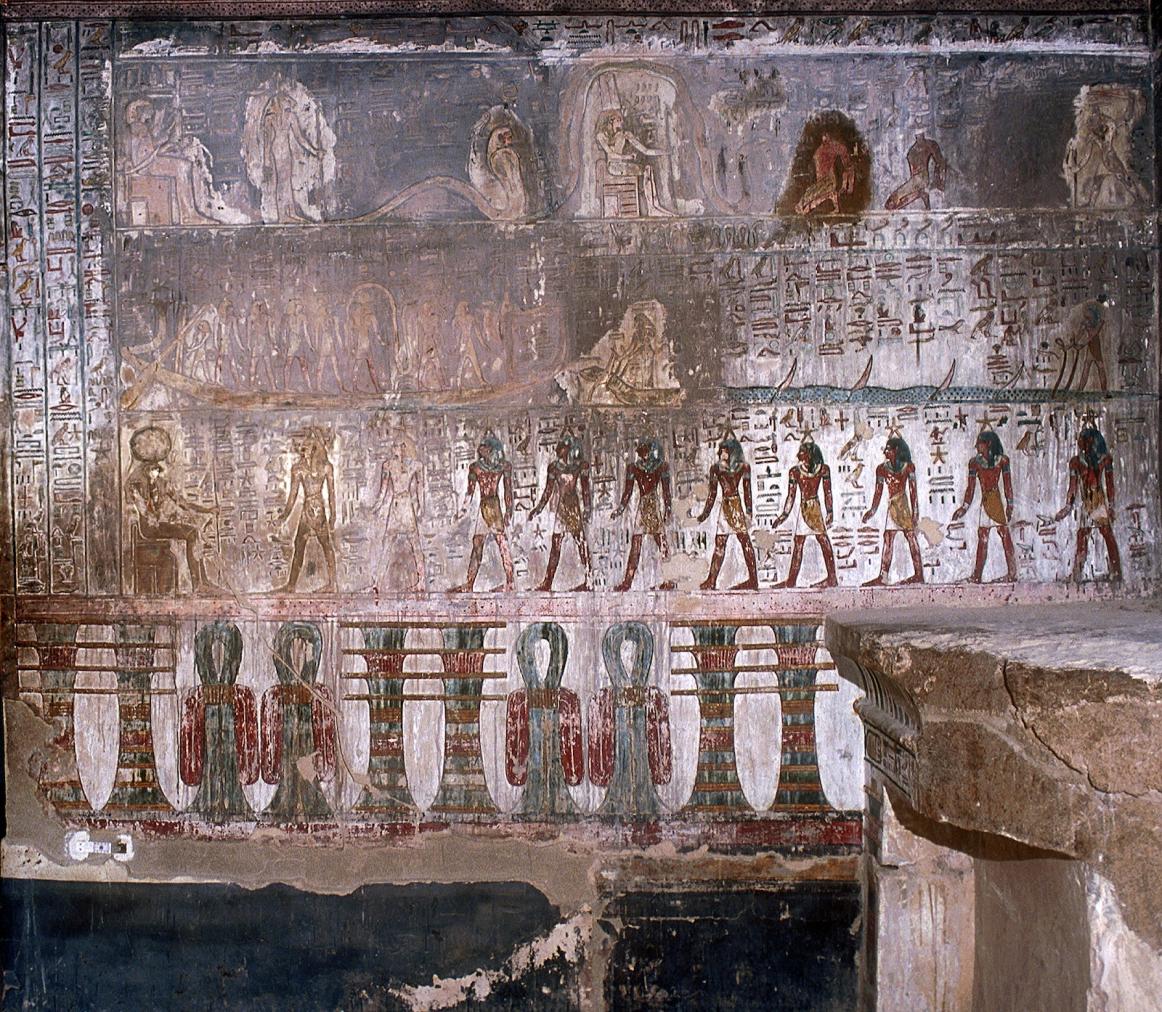
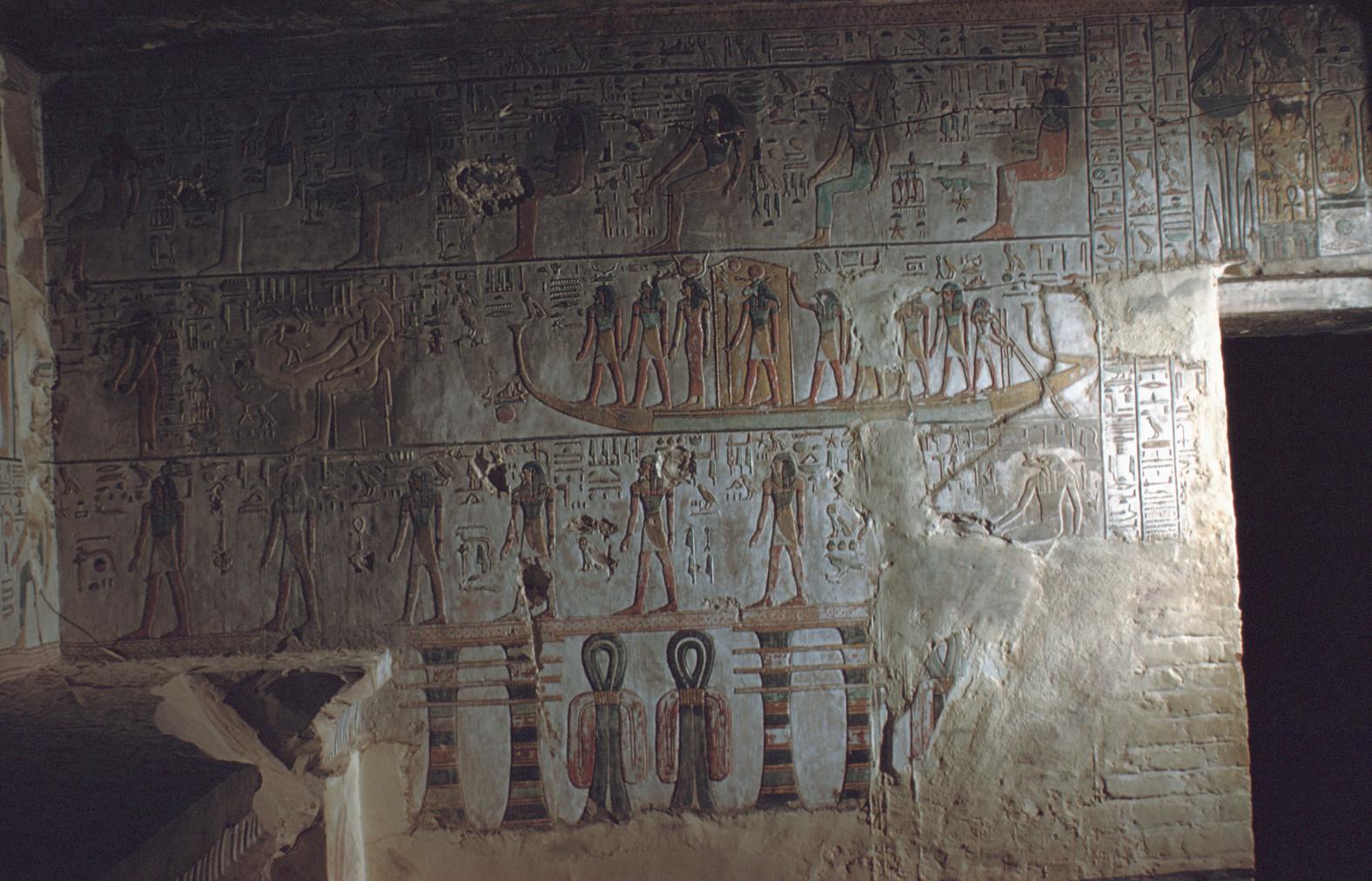
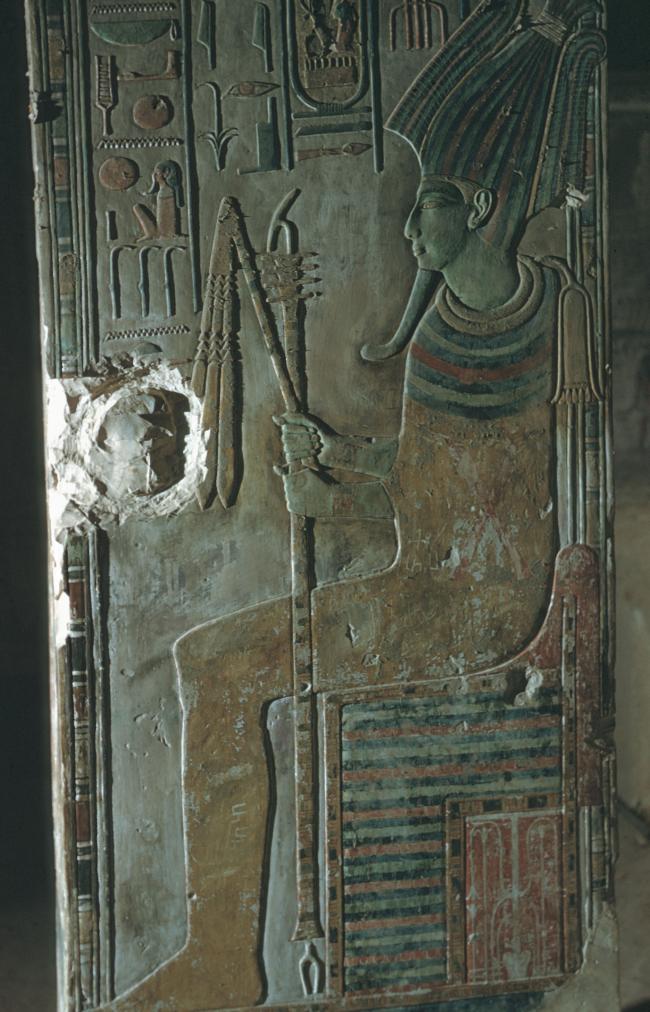
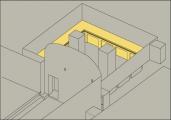
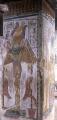
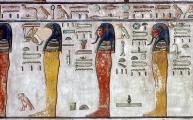
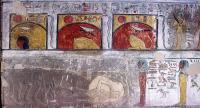
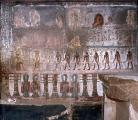
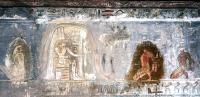
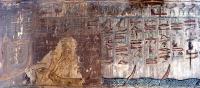
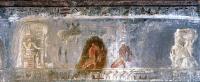
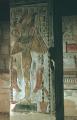
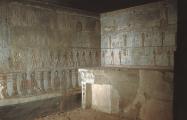
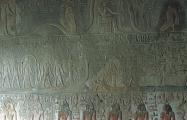
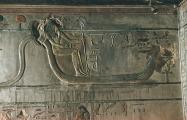
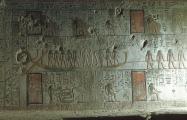
See entire tombChamber Jb has two pillars and wide benches midway up the left (northeast), right (southwest) and rear (southeast) walls. There are four shallow recesses in each of the vertical faces below decorated with depictions of funerary objects, such as animal-headed beds, chests, and shrines. The walls above the benches are decorated with the sixth, seventh and eighth hours of the Imydwat. Depictions of Osiris are found on the pillars, although the front (northwest) faces have been damaged. The left (northwest) end of the left bench has also been broken. A recess has been cut in the left (southeast) end of the right wall above the bench. A panel above the gate gives the king's names protected by Wadjet and Nekhbet and a dado pattern of pairs of djed pillars and tyet knots is located on the front (northwest) wall.
Porter and Moss designation:
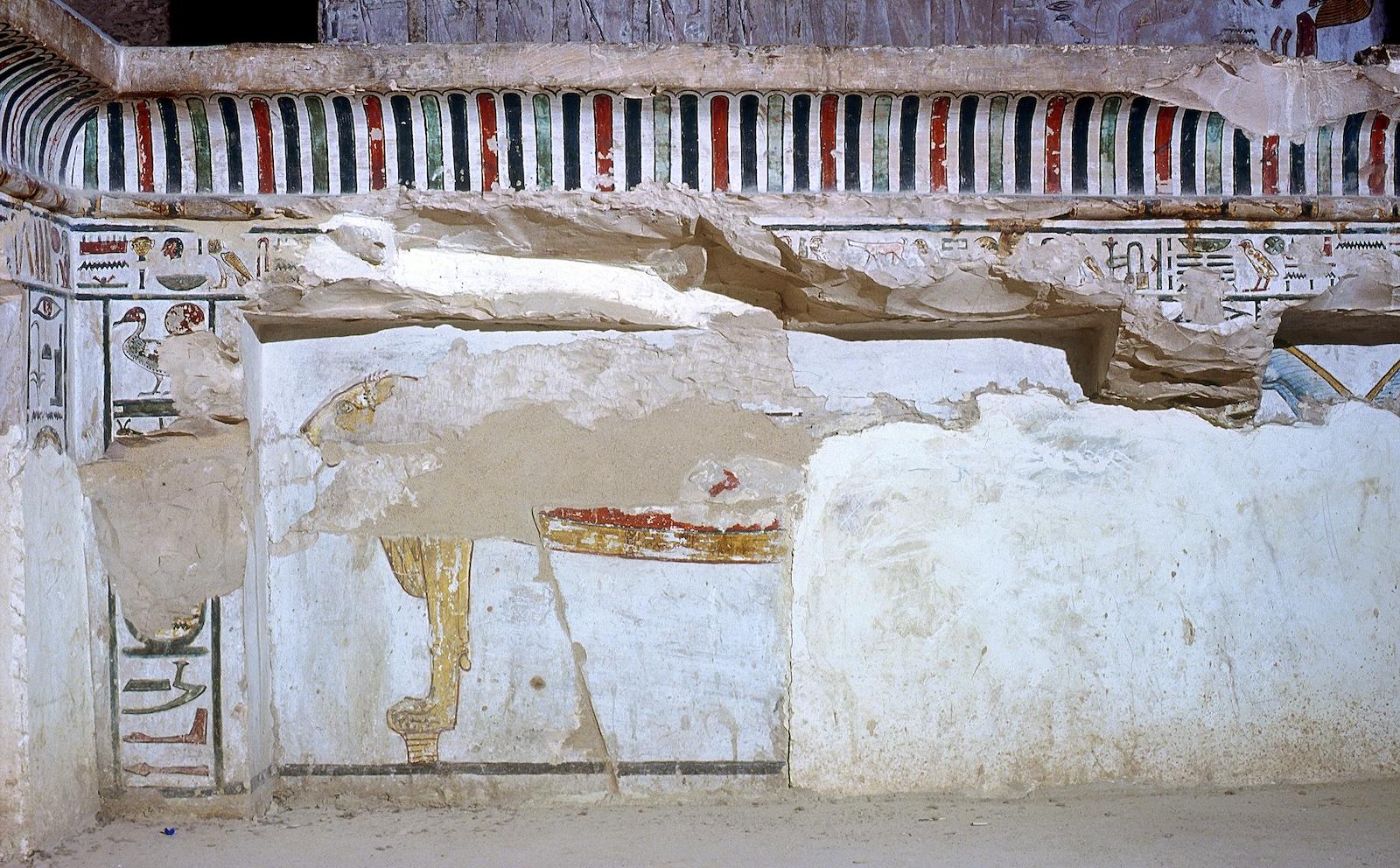
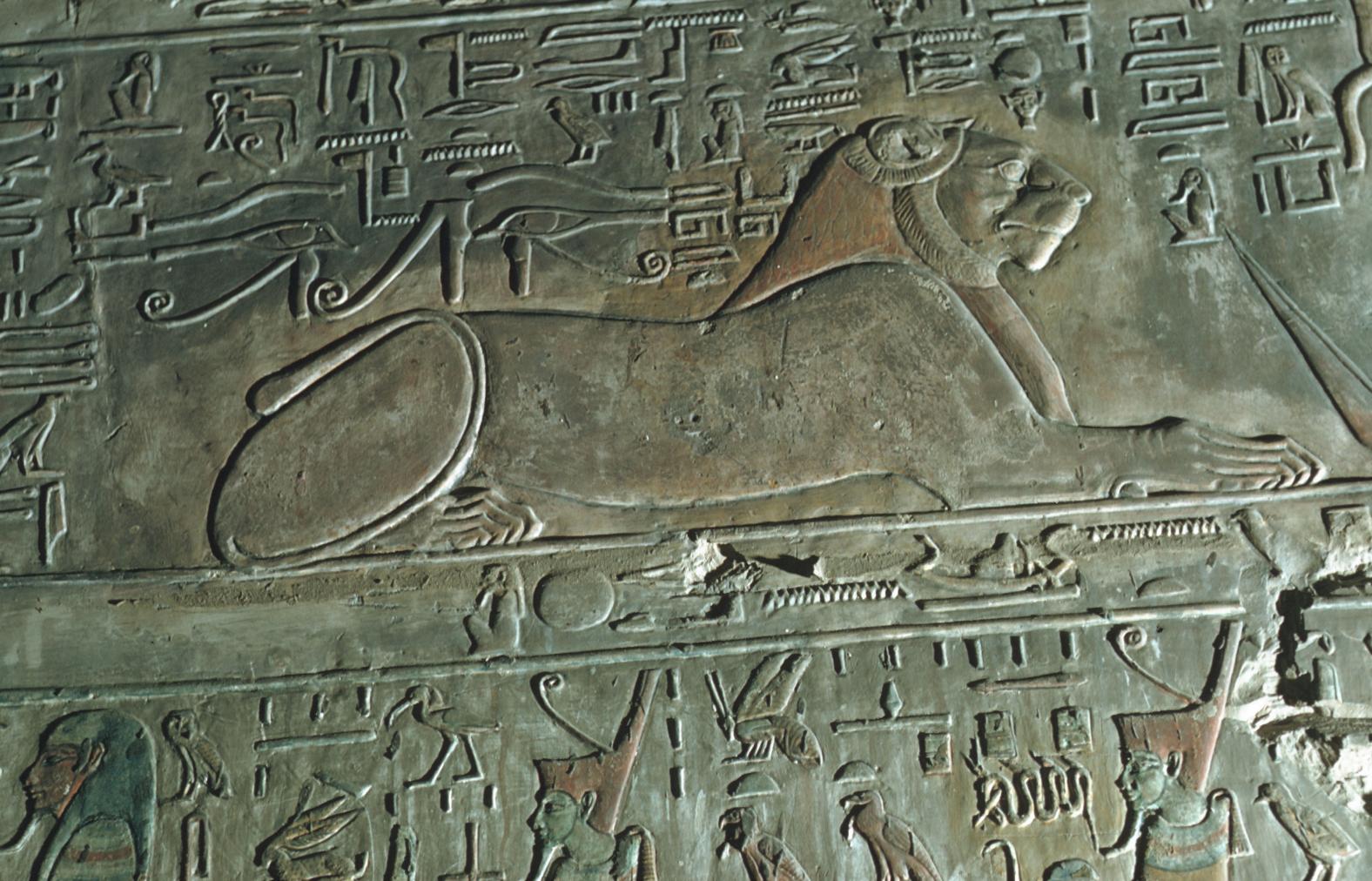
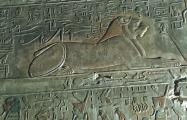
Lion bed (detail).
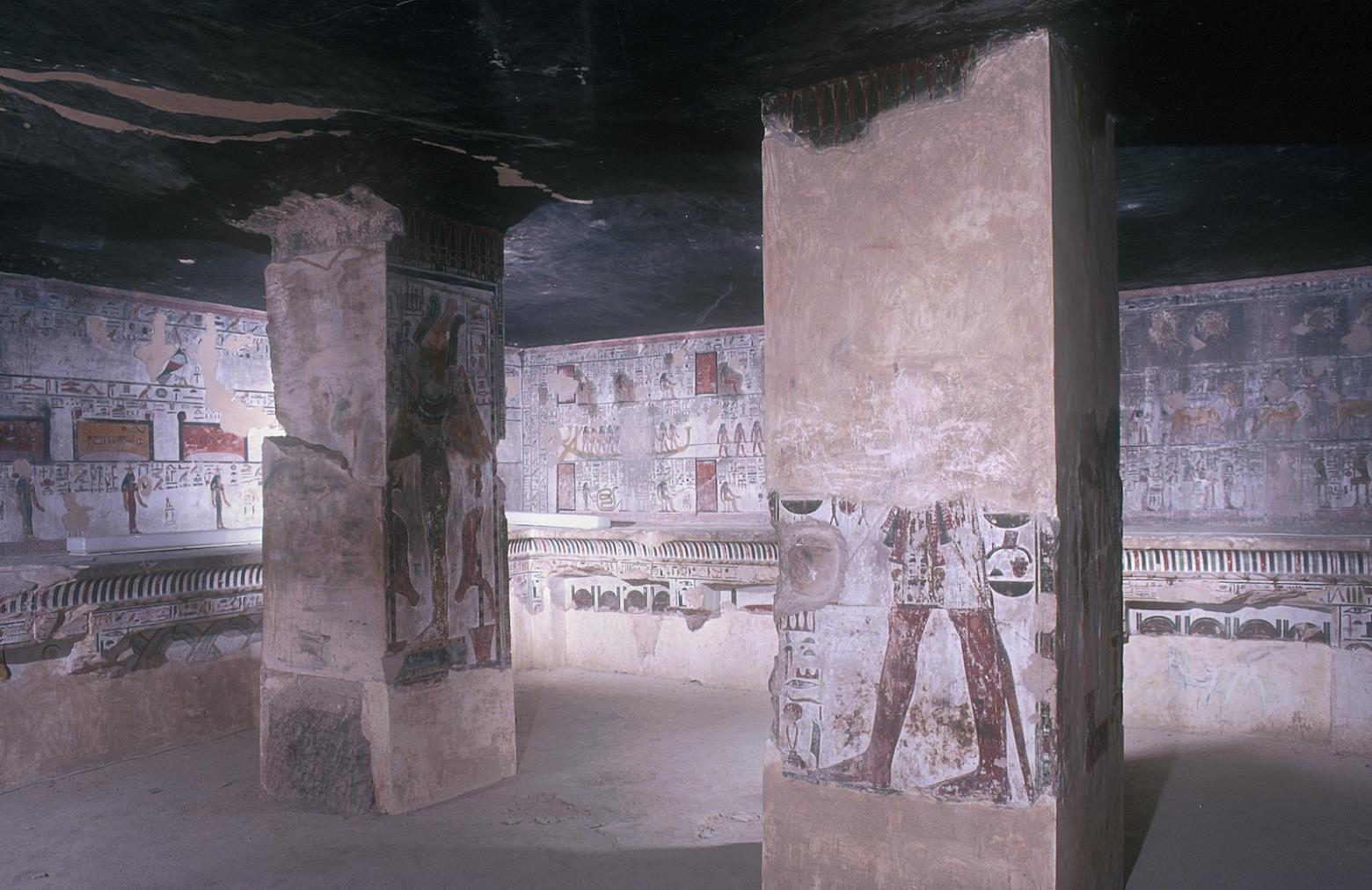
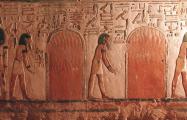
Imydwat, seventh and eighth hours; funerary objects; Osiris; Sety I.
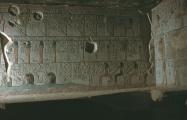
Benches.
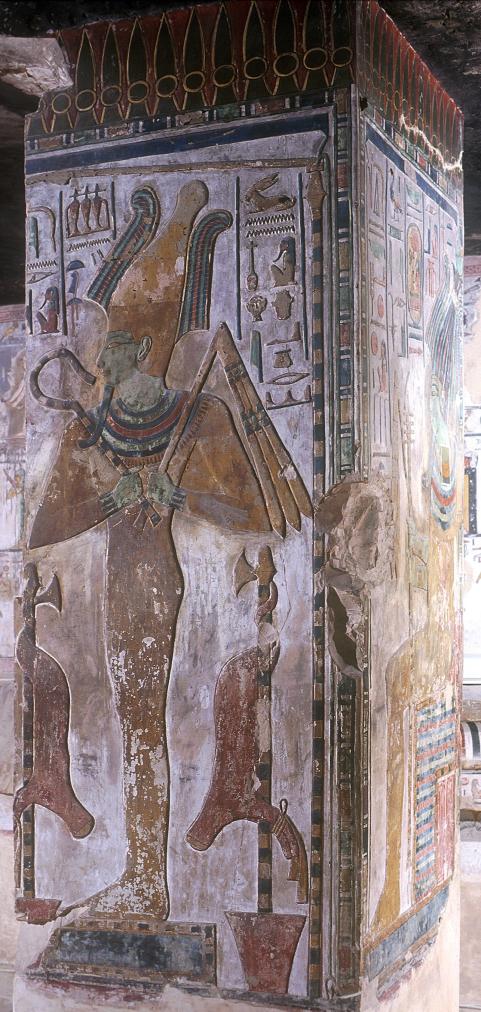
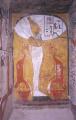
Osiris between imyut-emblems.
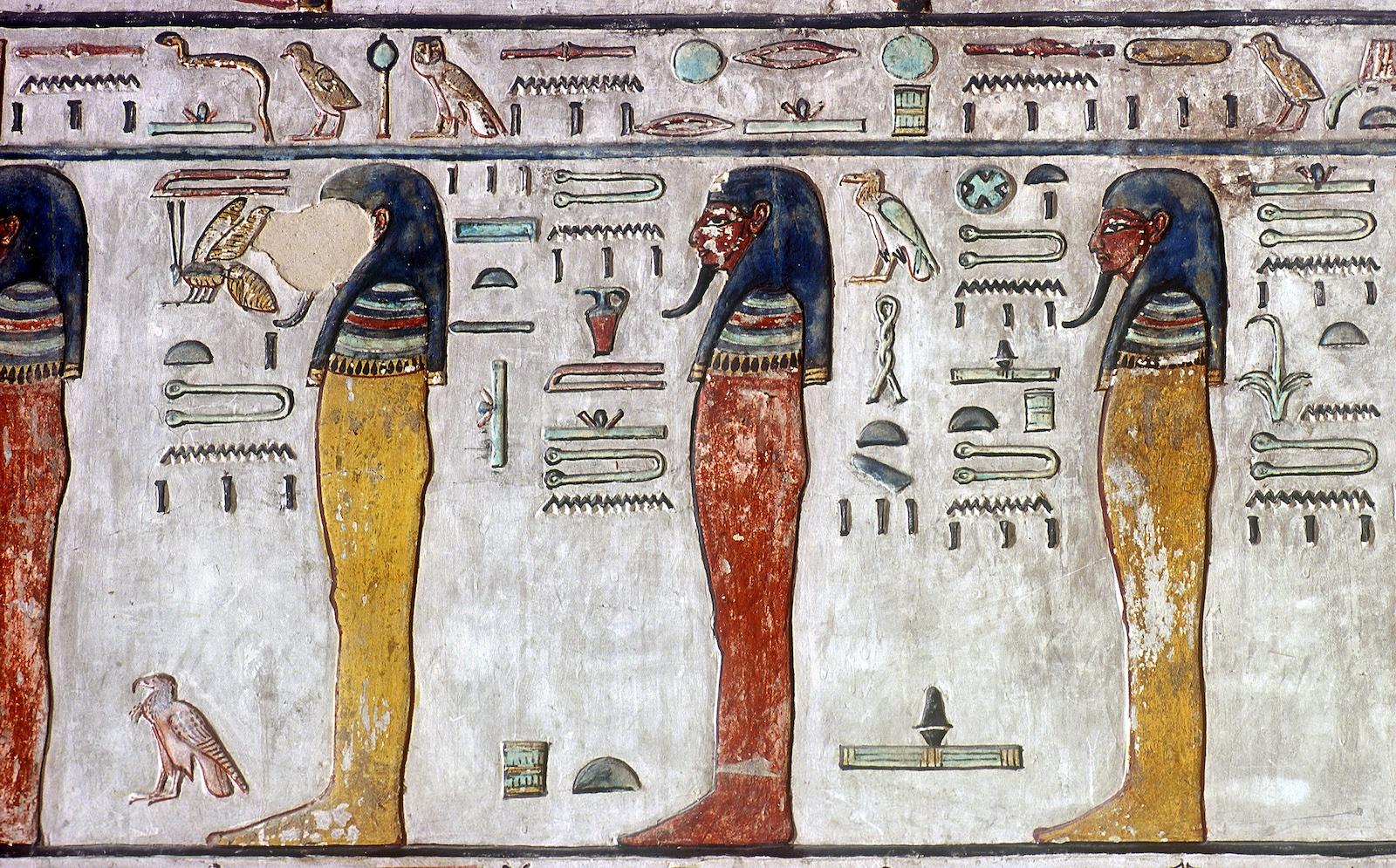
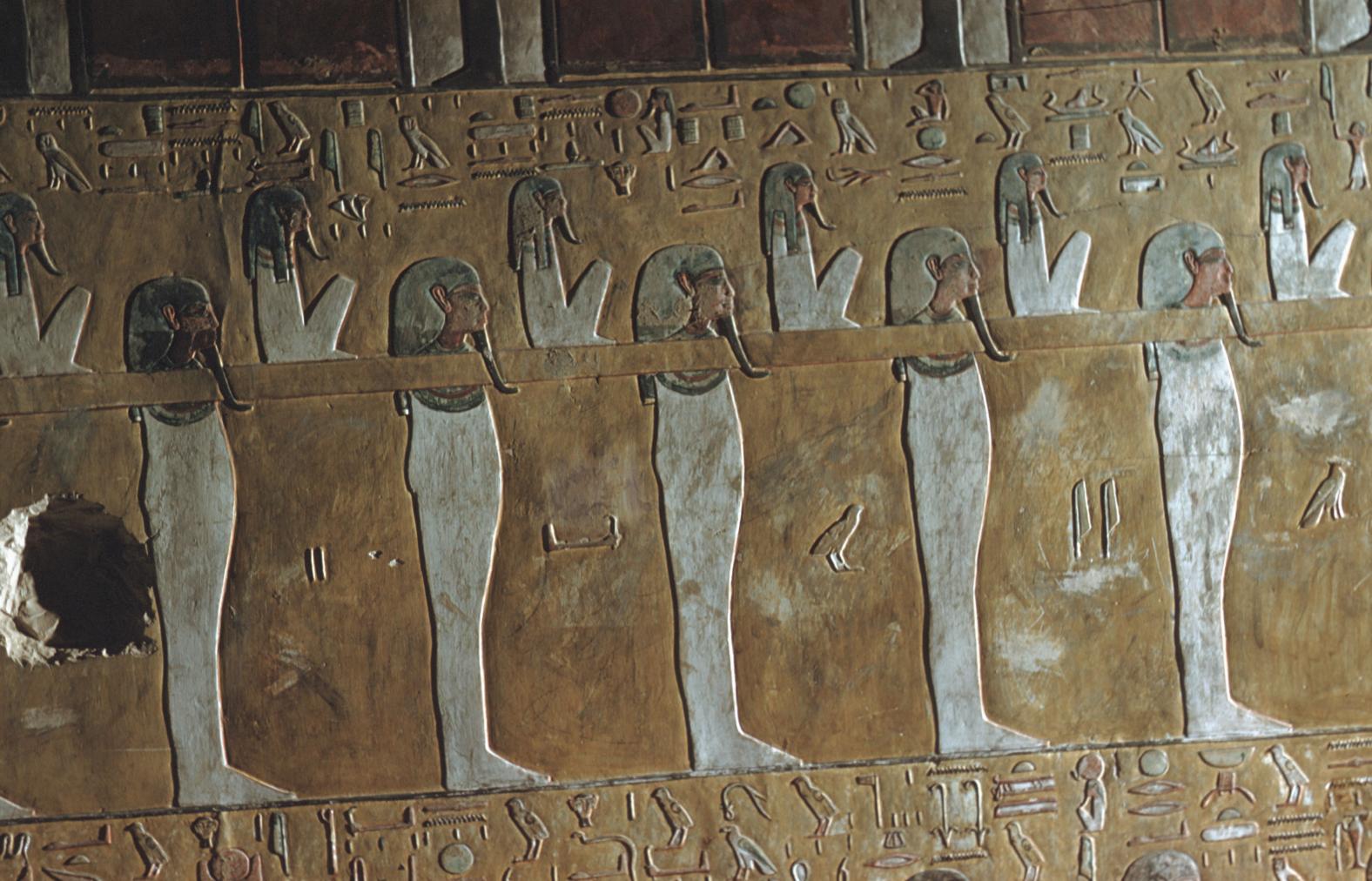
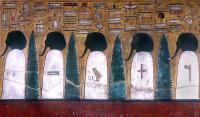
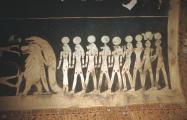
Imydwat, sixth hour: mummiform figures labeled "those who are in peace" (detail).
Imydwat, sixth hour (detail).
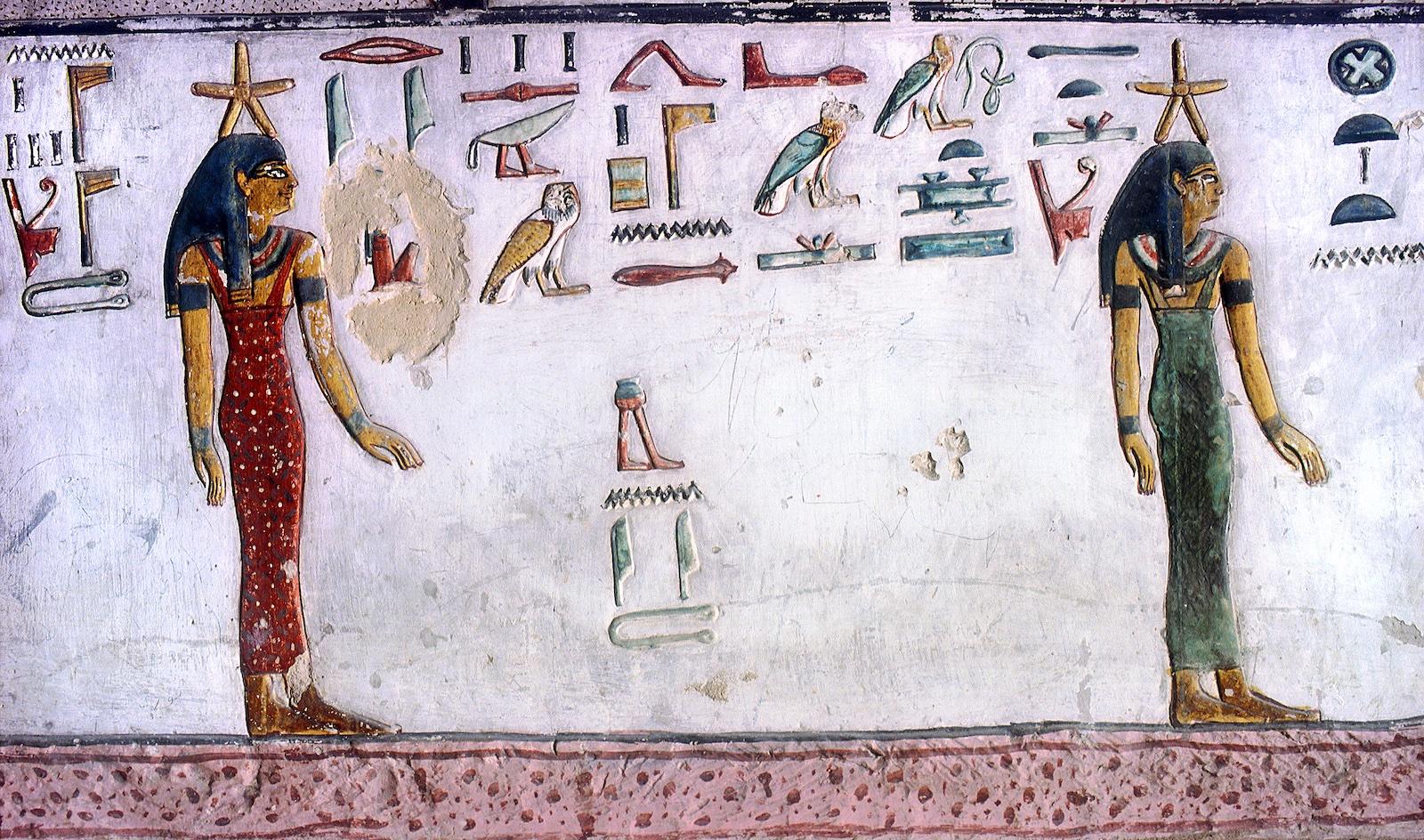
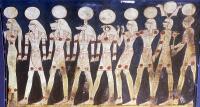
Imydwat, seventh hour: goddesses with stars on their heads representing hours.
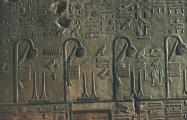
Imydwat, sixth hour, beginning; djed-pillars and tyet-knots.
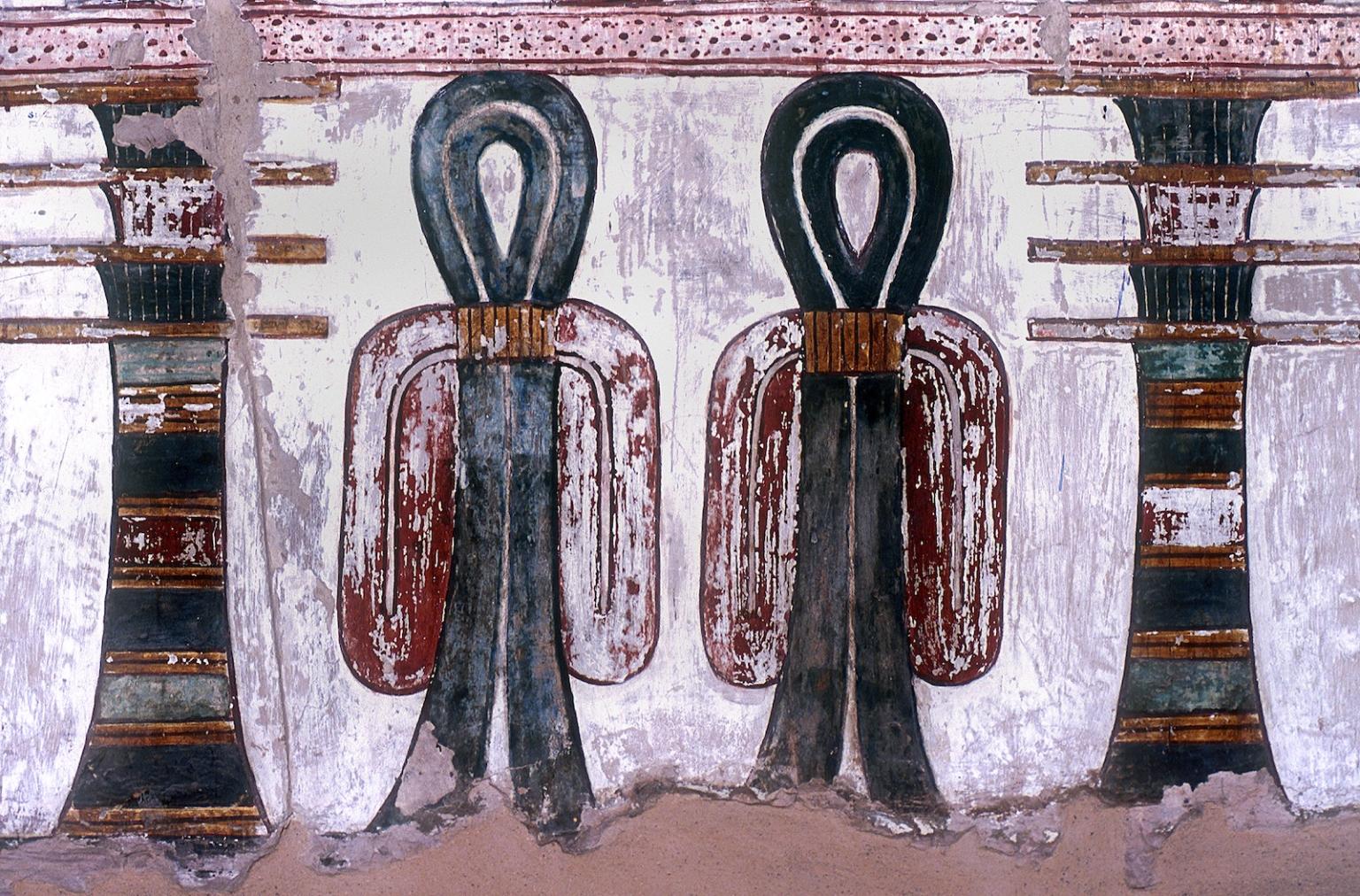
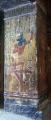
Pairs of djed-pillars and tyet-knots, symbolic of Osiris and Isis (detail).
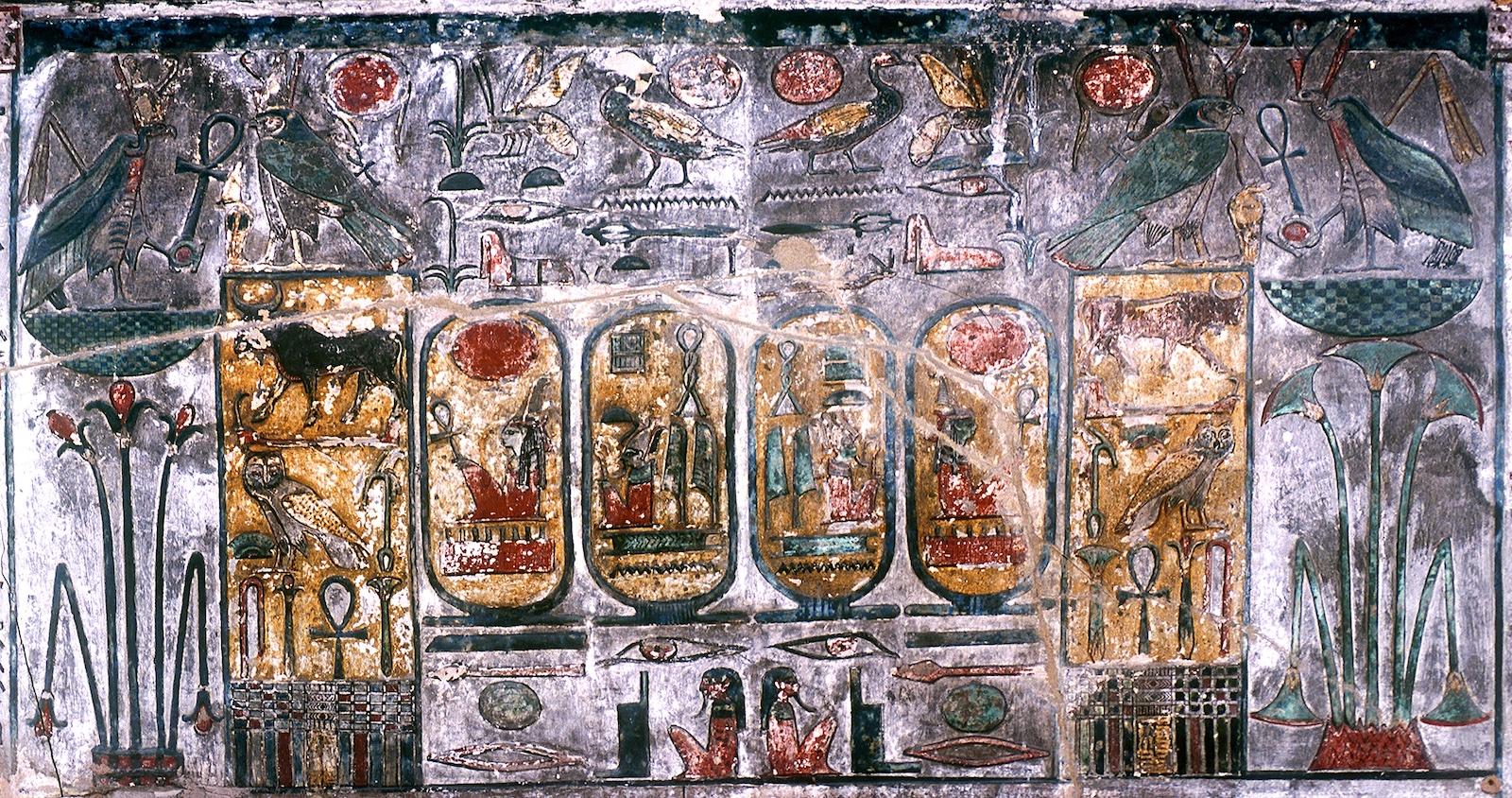
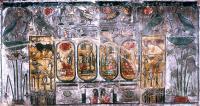
Sety I's names flanked by Nekhbet vulture and Wadjet cobra, symbolic of Upper and Lower Egypt.
Imydwat, seventh hour, beginning.
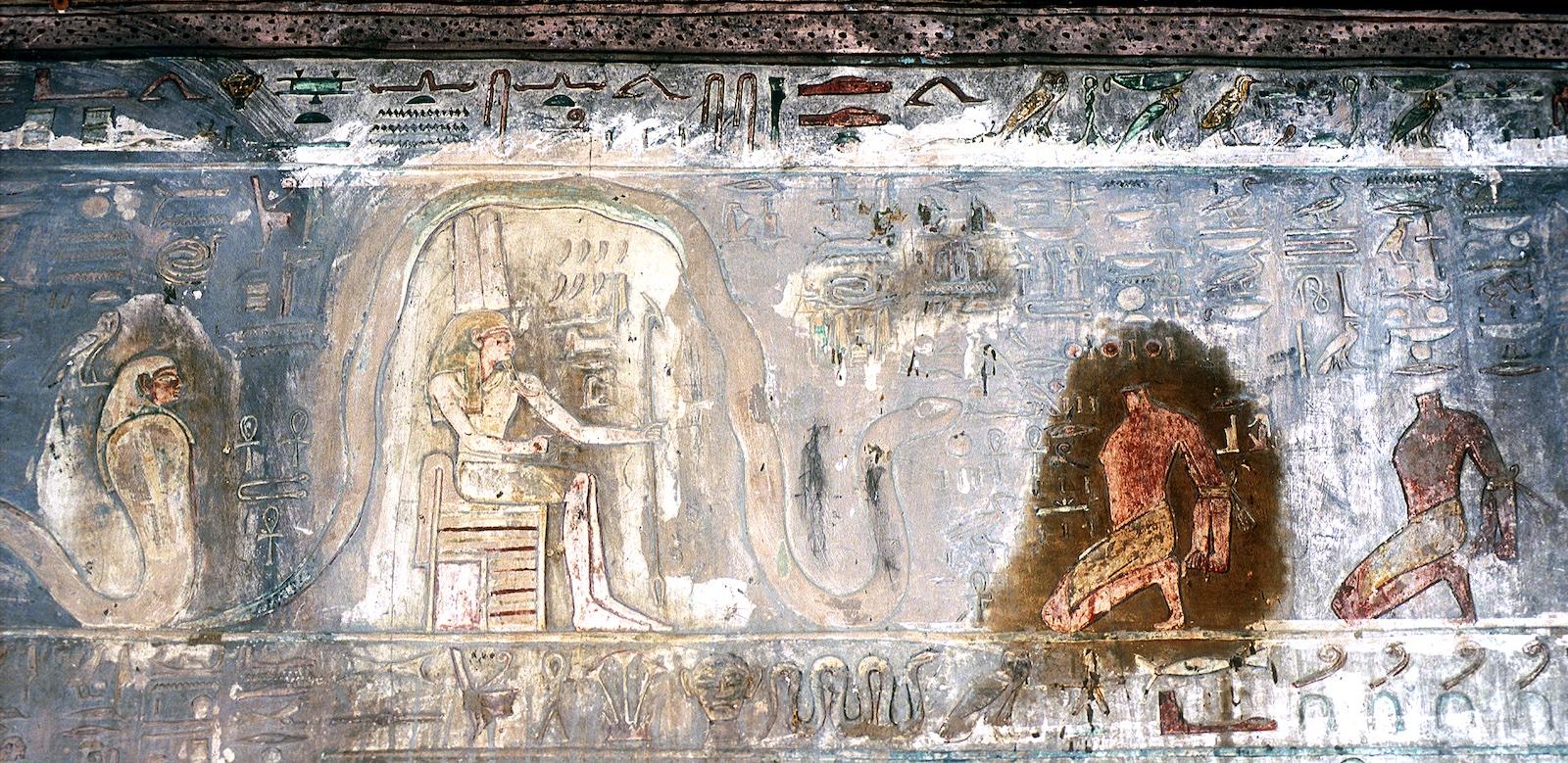
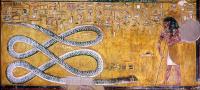
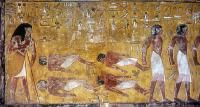
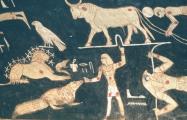
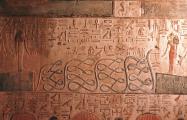
Imydwat, seventh hour, scenes 1, 2, figures 489, 490-493: decapitated enemies before Osiris enclosed by Mehen-serpent.
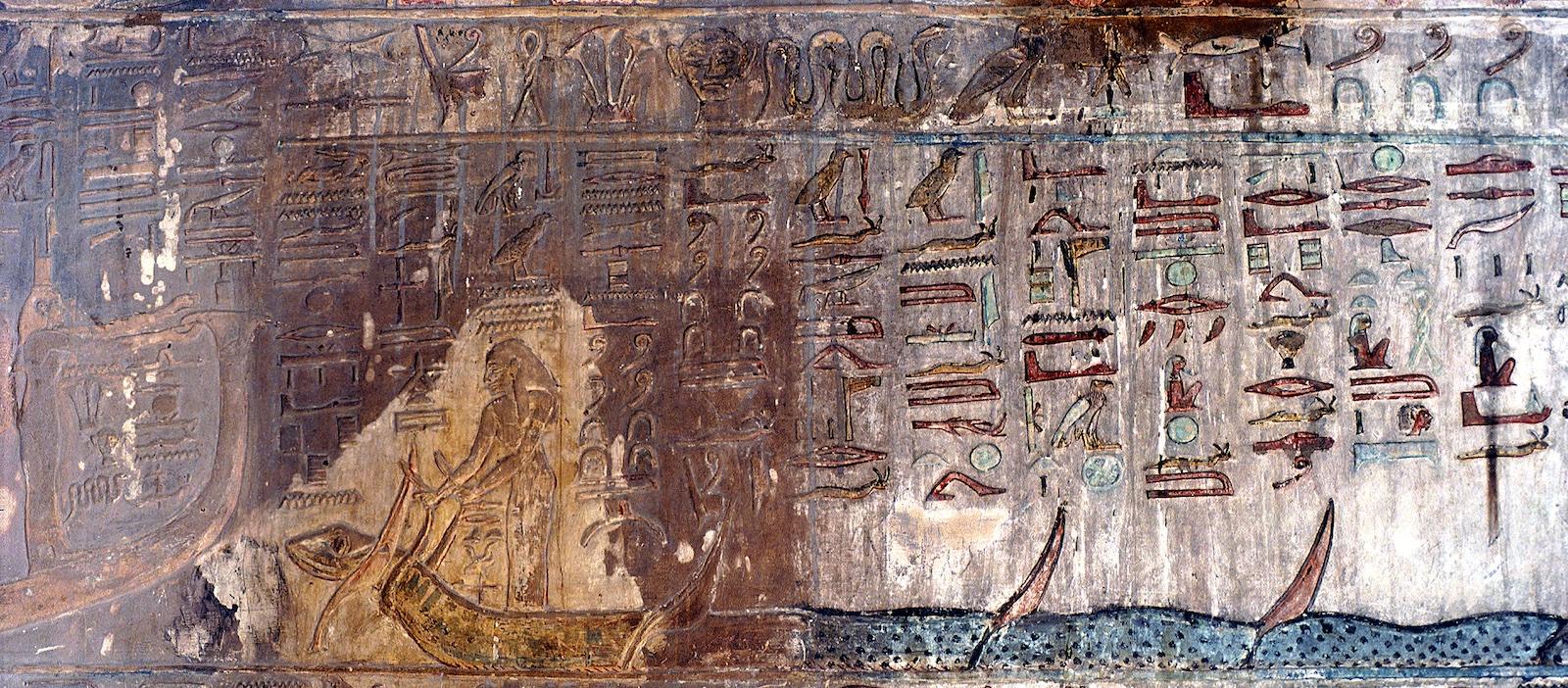
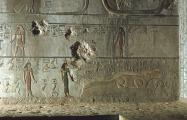
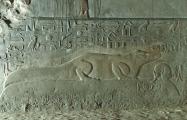
Imydwat, seventh hour, scene 6, figures 515-516: Apophis serpent slain before solar bark, with loss of color from nineteenth century squeezes. (KV17)
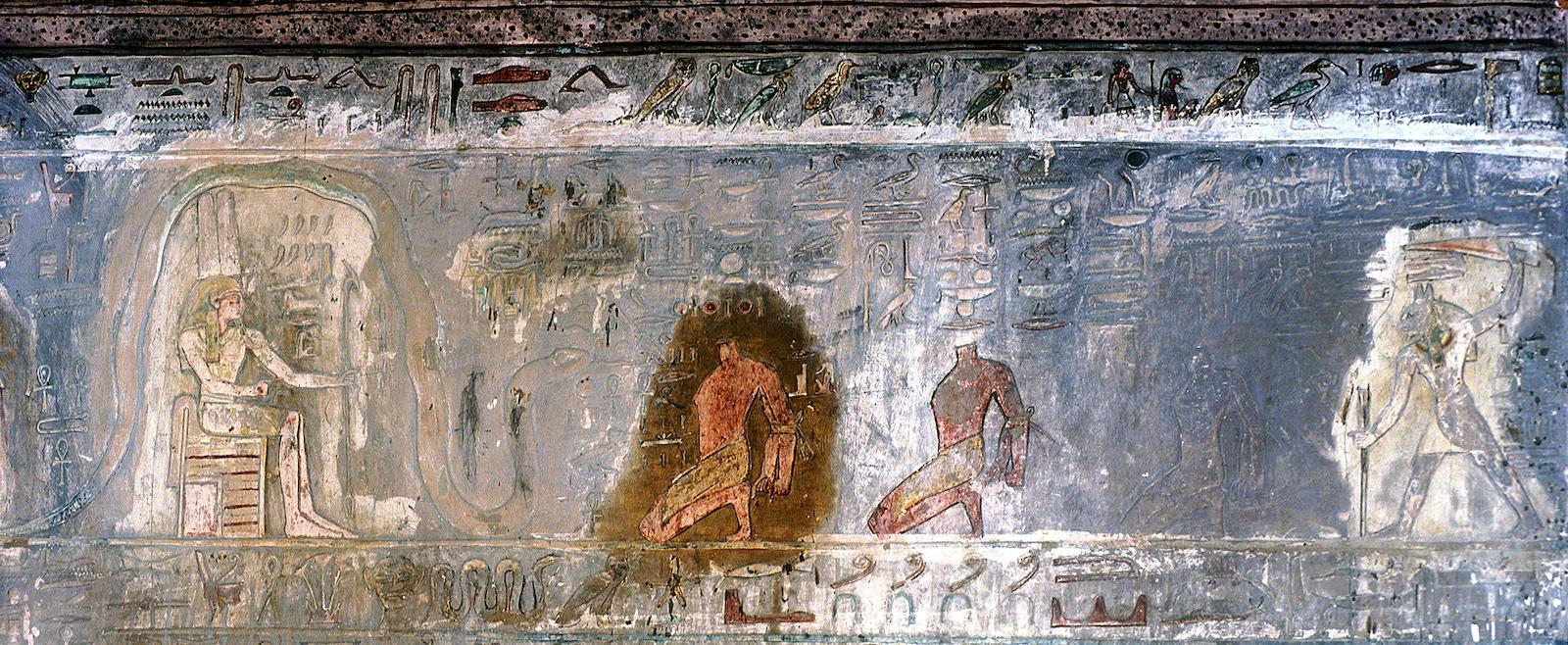
Imydwat, seventh hour, scene 2, figures 490-495: Osiris facing decapitated enemies and a lion-headed Horus, their slayer, with loss of color from nineteenth century squeezes.
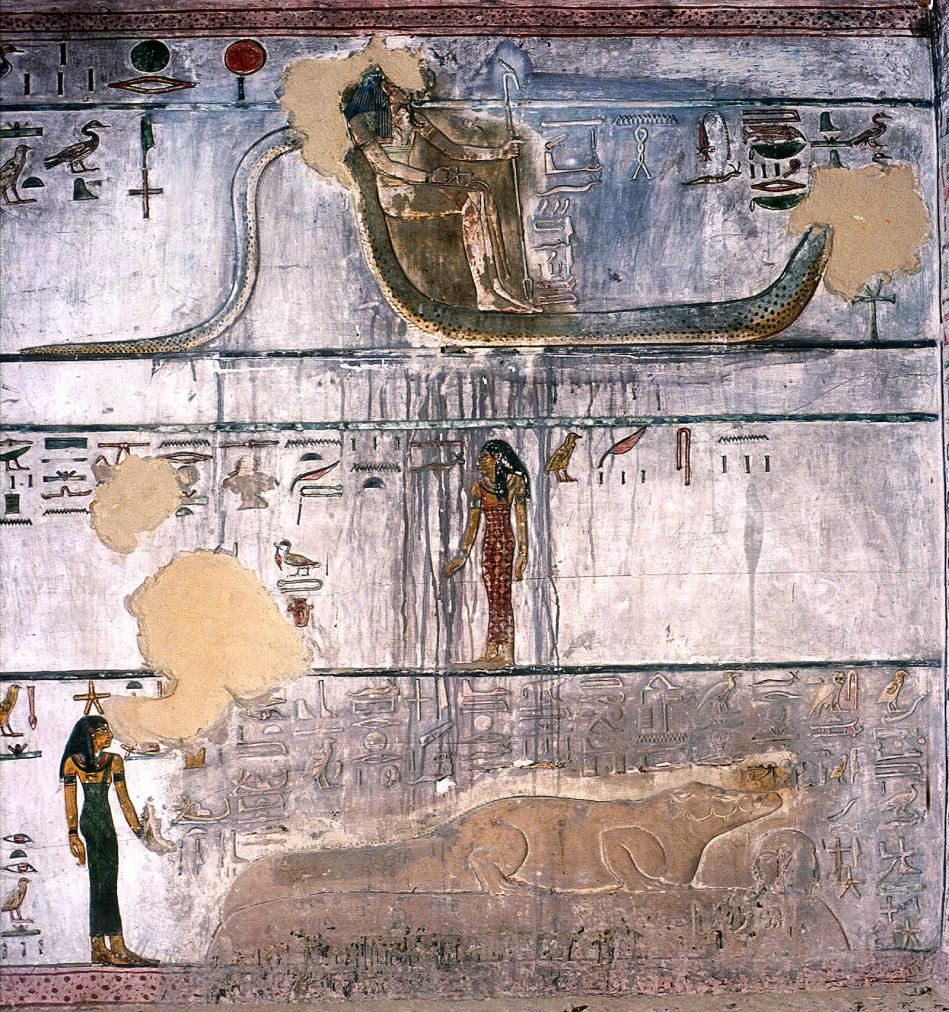
Imydwat, seventh hour, scenes 4, 7, 10.
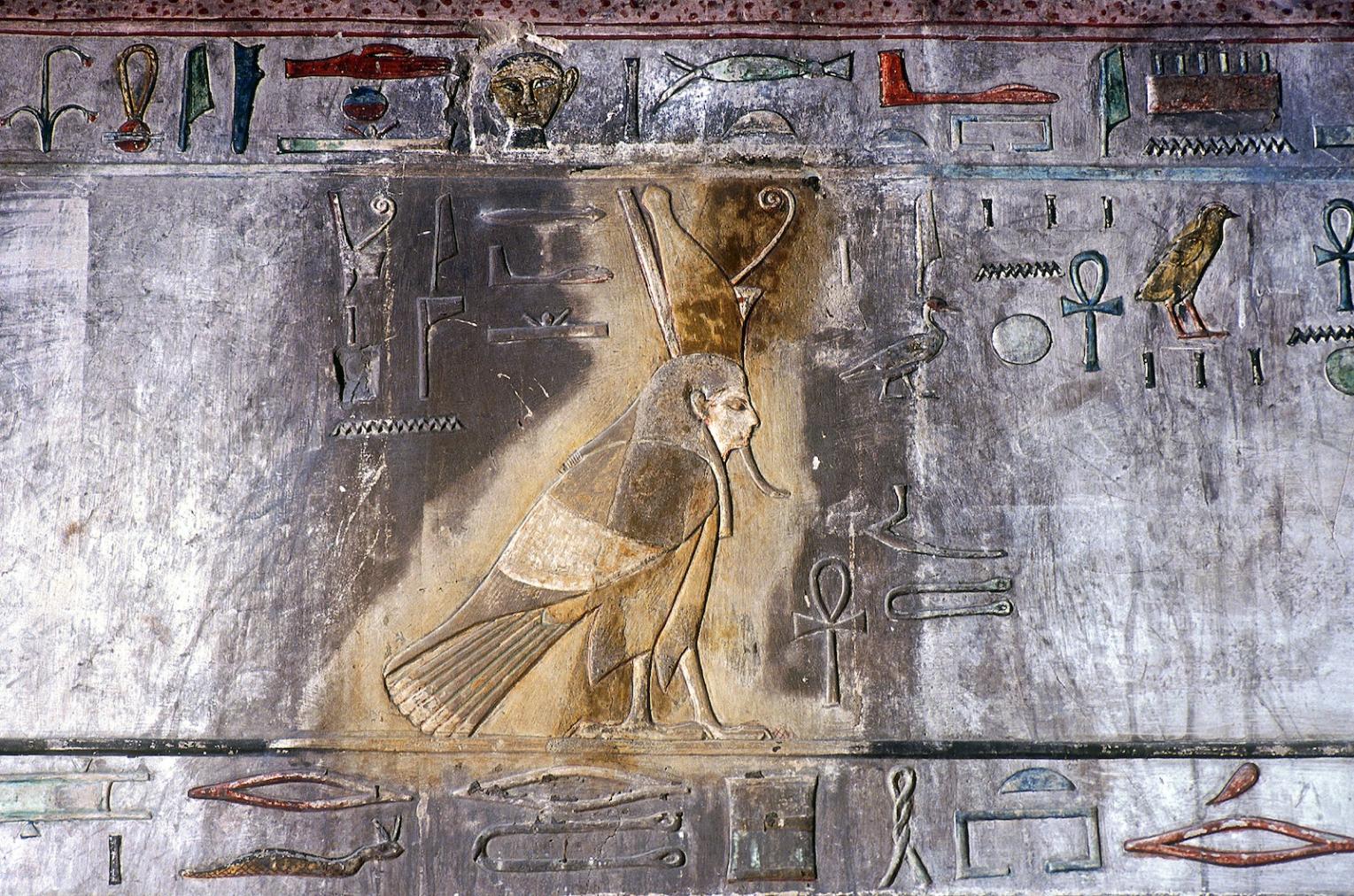
Imydwat, seventh hour, scene 4: ba bird wearing crowns of Upper and Lower Egypt, with loss of color from nineteenth century squeezes (detail).
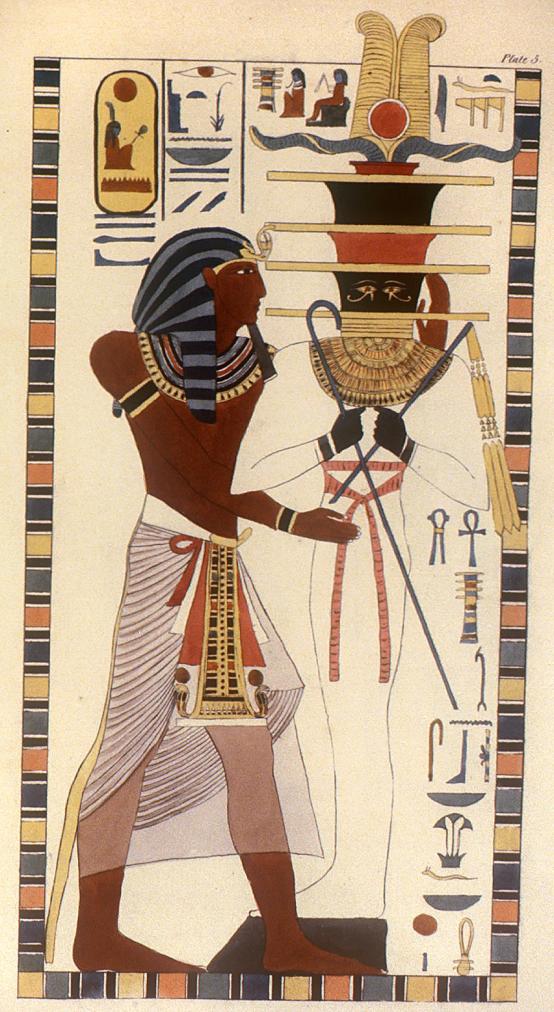
Sety I embraces Osiris as djed-pillar (half of this scene is now missing) (reconstruction).
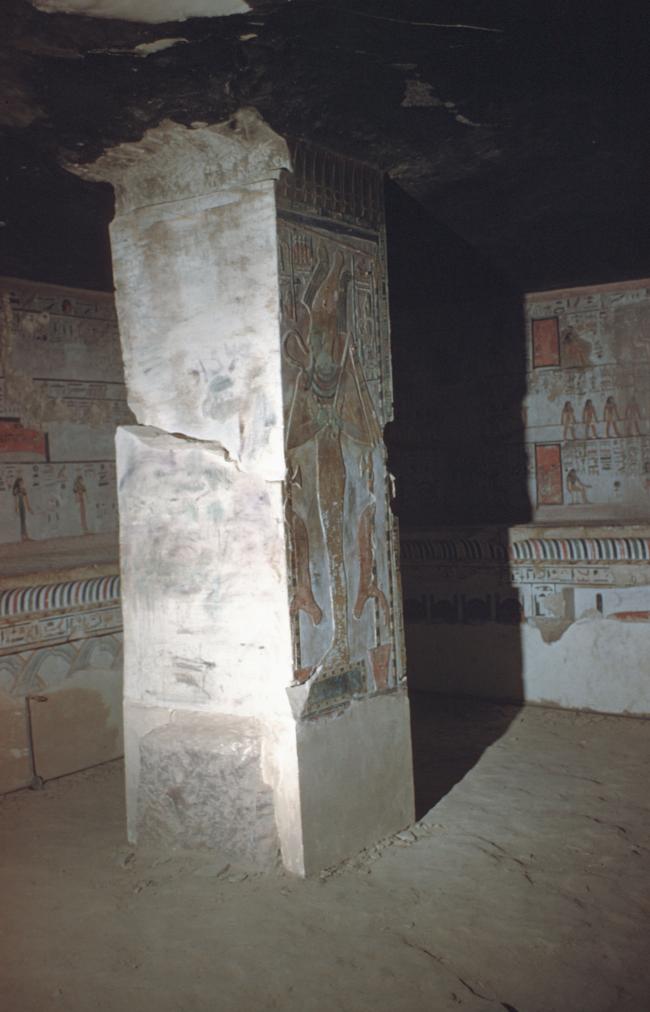
View of northeastern corner and left pillar. Courtesy of Uni Dia Verlag; Uni Dia Image Nr. 35808.
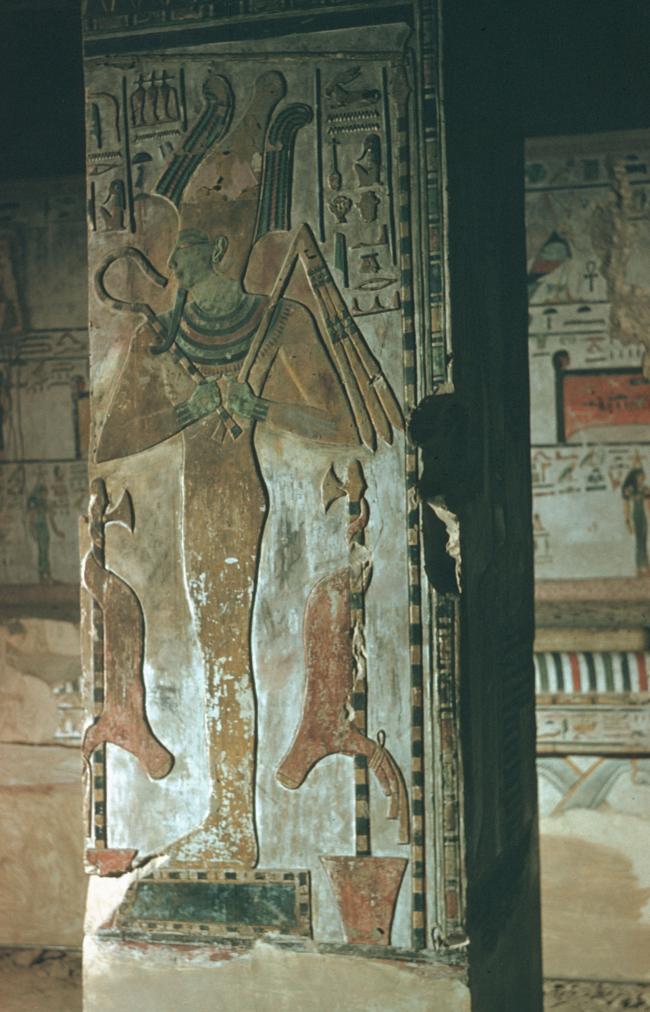
Osiris. Courtesy of Uni Dia Verlag; Uni Dia Image Nr. 35809.
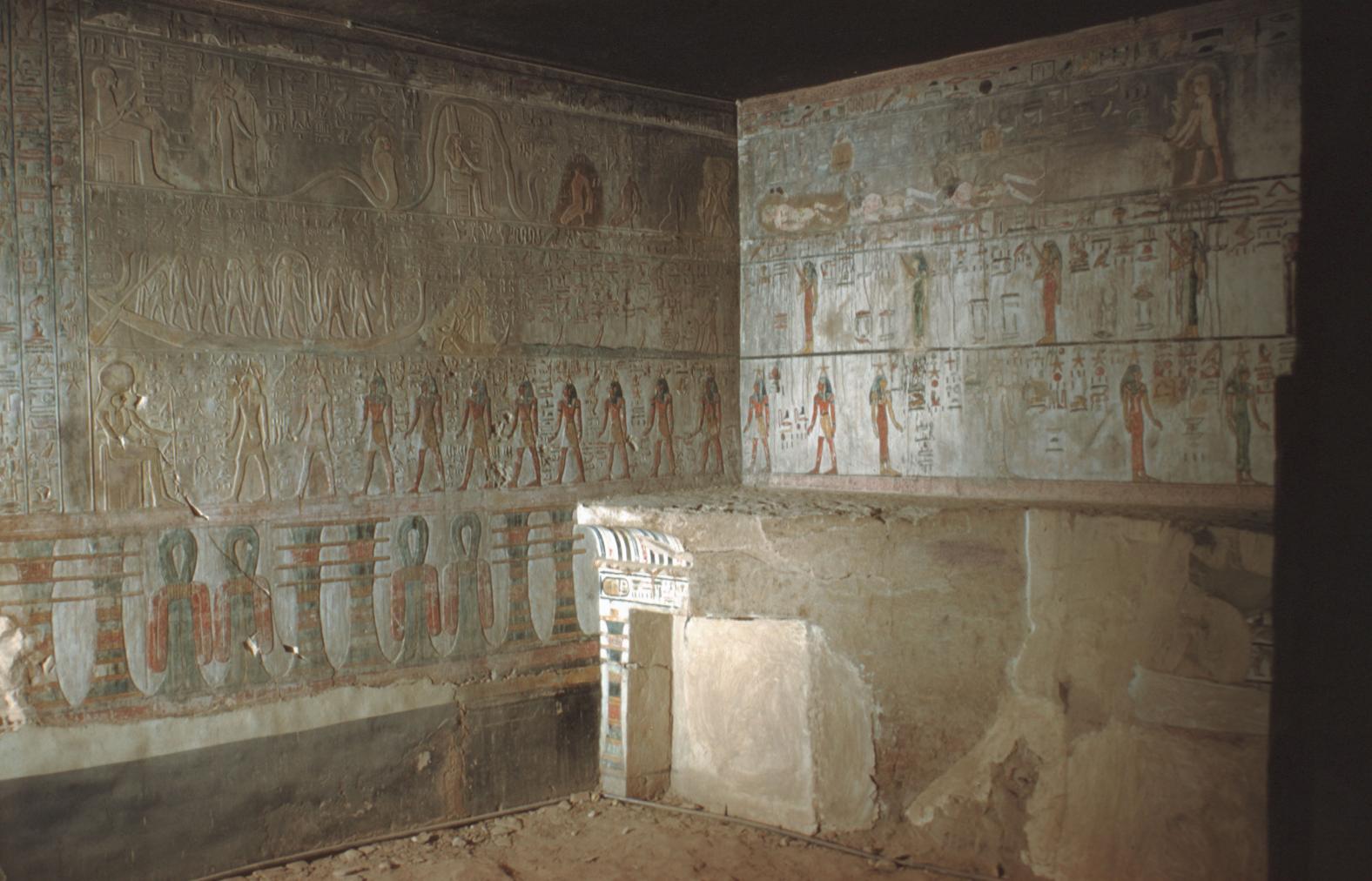
View of northwest corner. Courtesy of Uni Dia Verlag; Uni Dia Image Nr. 35810.
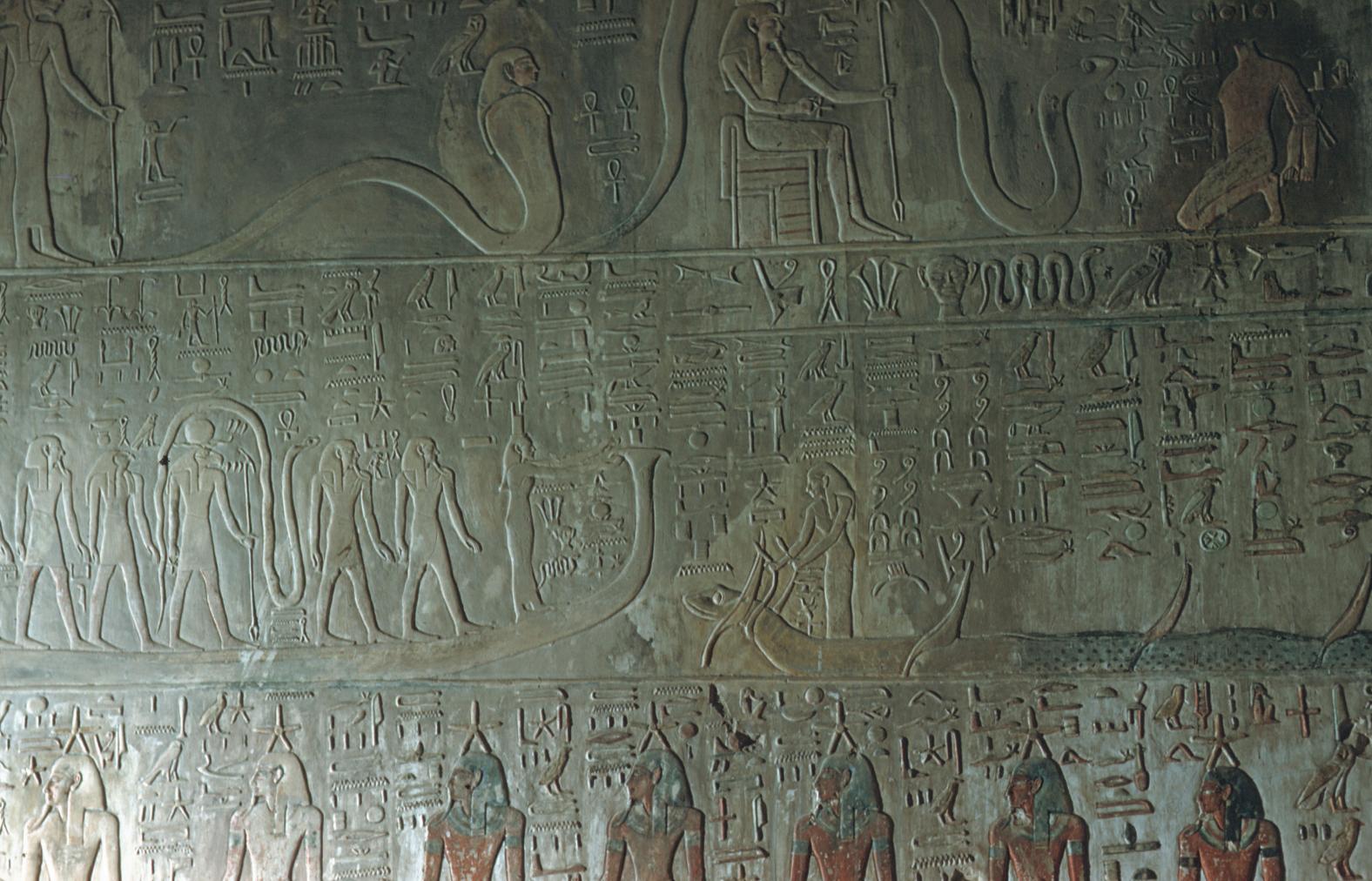
Detail of Imydwat seventh hour. Courtesy of Uni Dia Verlag; Uni Dia Image Nr. 35811.
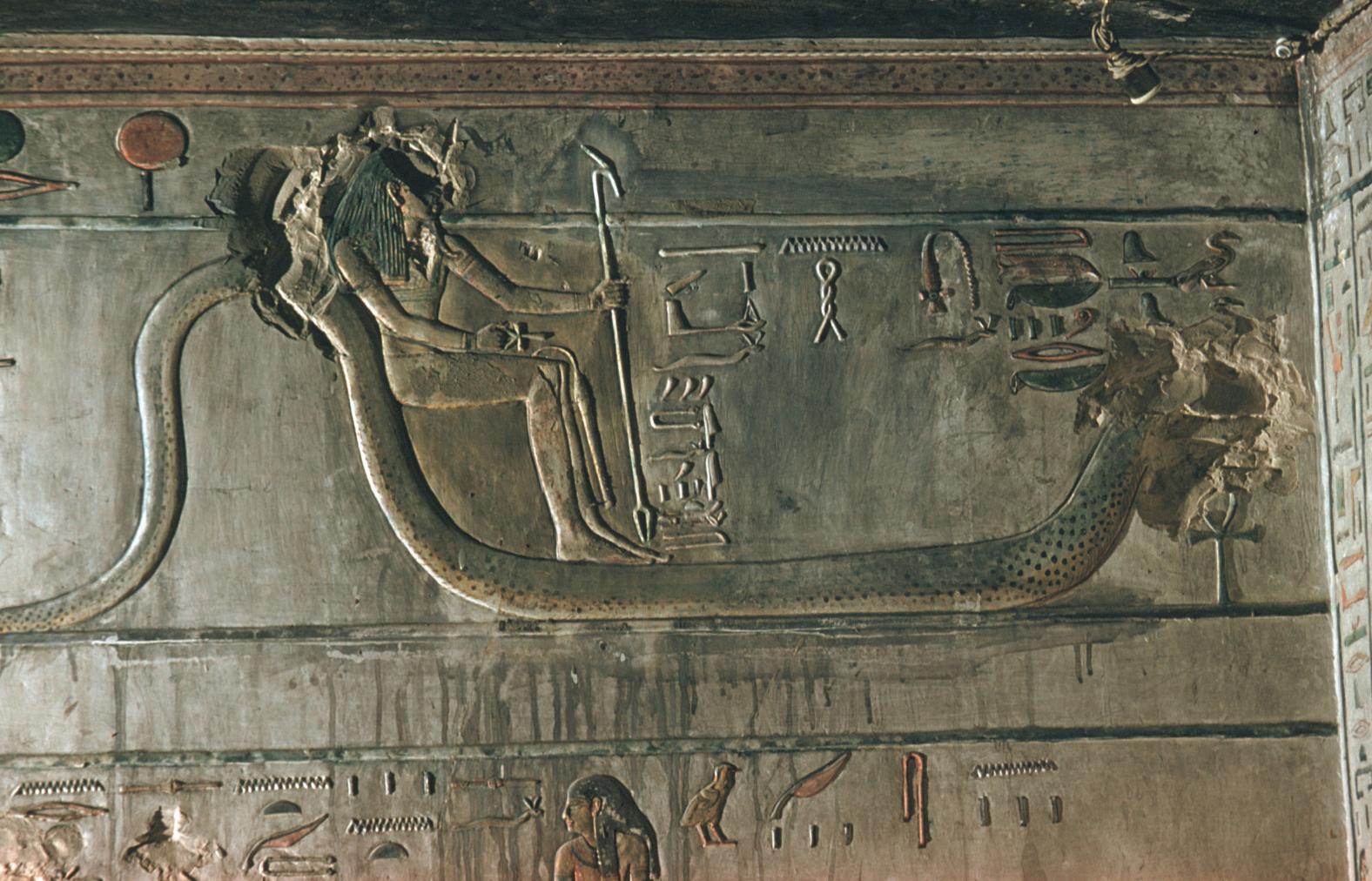
Detail of Imydwat seventh hour. Courtesy of Uni Dia Verlag; Uni Dia Image Nr. 35812.
Detail of Imydwat seventh hour. Courtesy of Uni Dia Verlag; Uni Dia Image Nr. 35813.
Detail of Imydwat seventh hour. Courtesy of Uni Dia Verlag; Uni Dia Image Nr. 35814.
Imydwat end of sixth hour, seventh hour. Courtesy of Uni Dia Verlag; Uni Dia Image Nr. 35815.
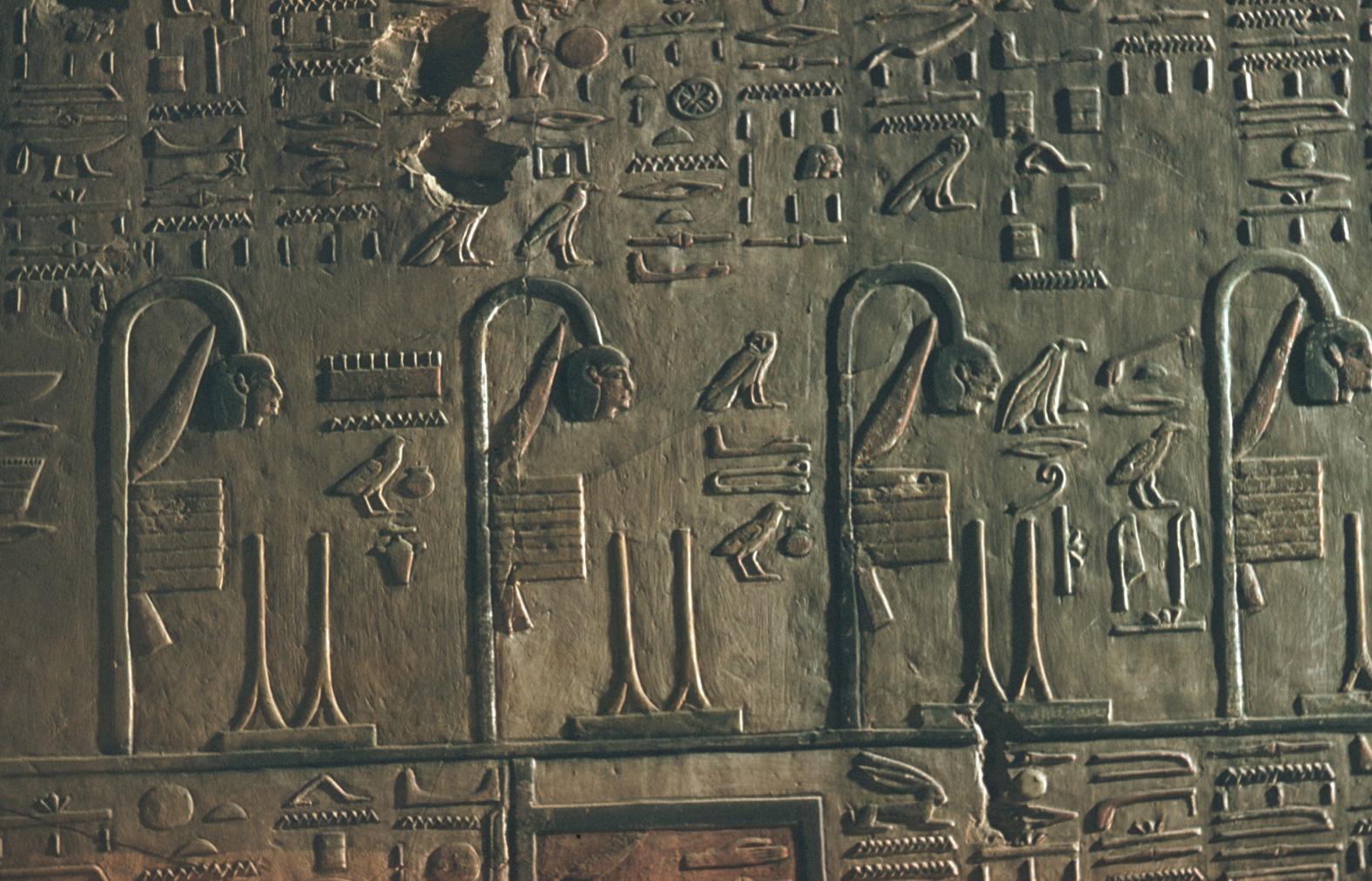
Imydwat end of sixth hour, seventh hour. Courtesy of Uni Dia Verlag; Uni Dia Image Nr. 35816.
Imydwat end of sixth hour, seventh hour. Courtesy of Uni Dia Verlag; Uni Dia Image Nr. 35817.
Detail of the Imydwat sixth hour. Courtesy of Uni Dia Verlag; Uni Dia Image Nr. 35818.
Detail of the Imydwat sixth hour. Courtesy of Uni Dia Verlag; Uni Dia Image Nr. 35819.
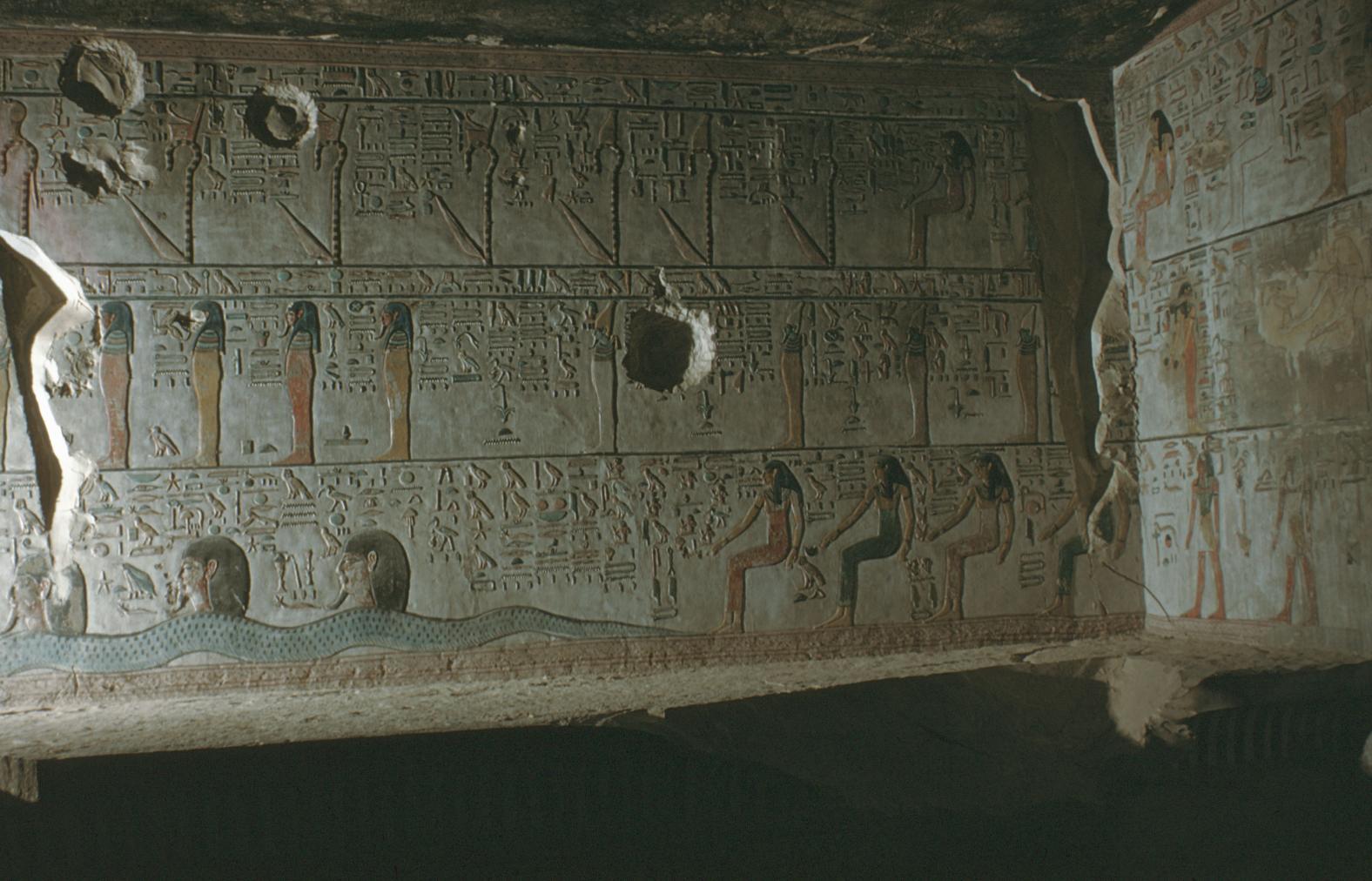
Detail of the Imydwat sixth hour. Courtesy of Uni Dia Verlag; Uni Dia Image Nr. 35820.
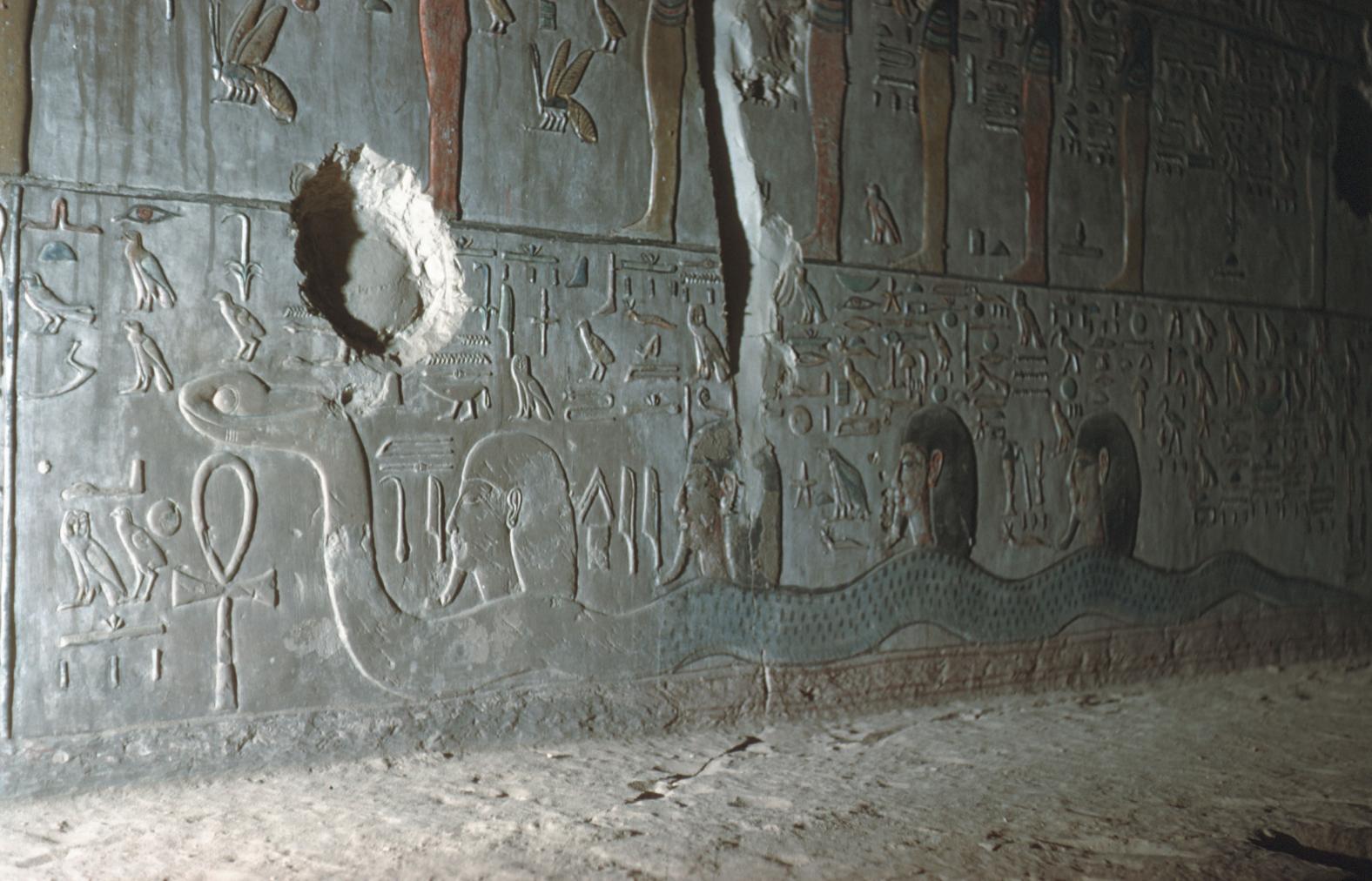
Detail of the Imydwat sixth hour. Courtesy of Uni Dia Verlag; Uni Dia Image Nr. 35821.
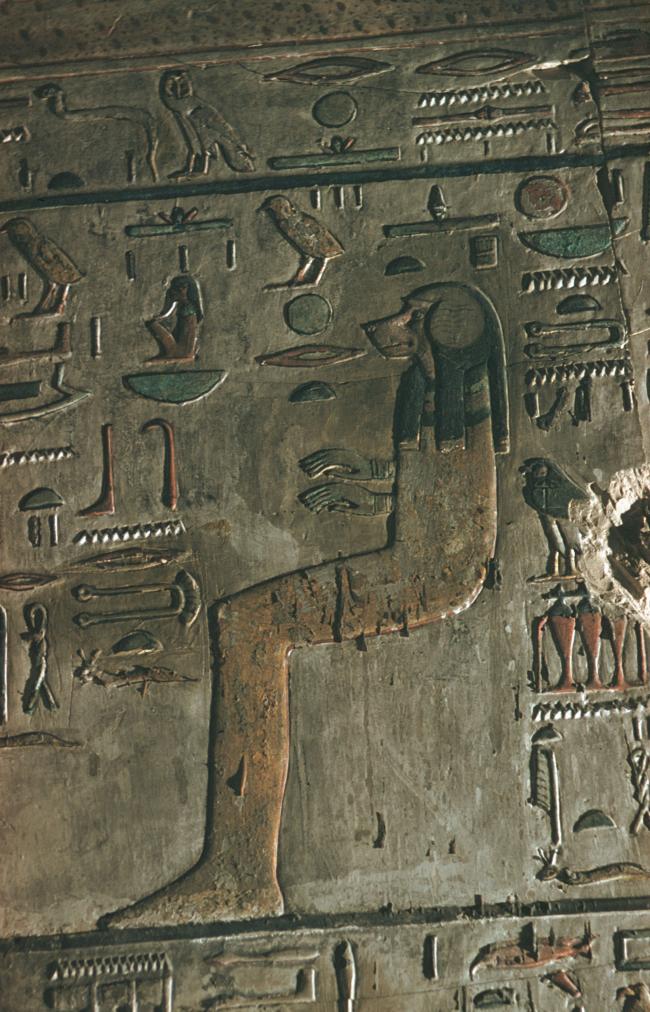
Detail of Imydwat sixth hour (left of gate). Courtesy of Uni Dia Verlag; Uni Dia Image Nr. 35822.
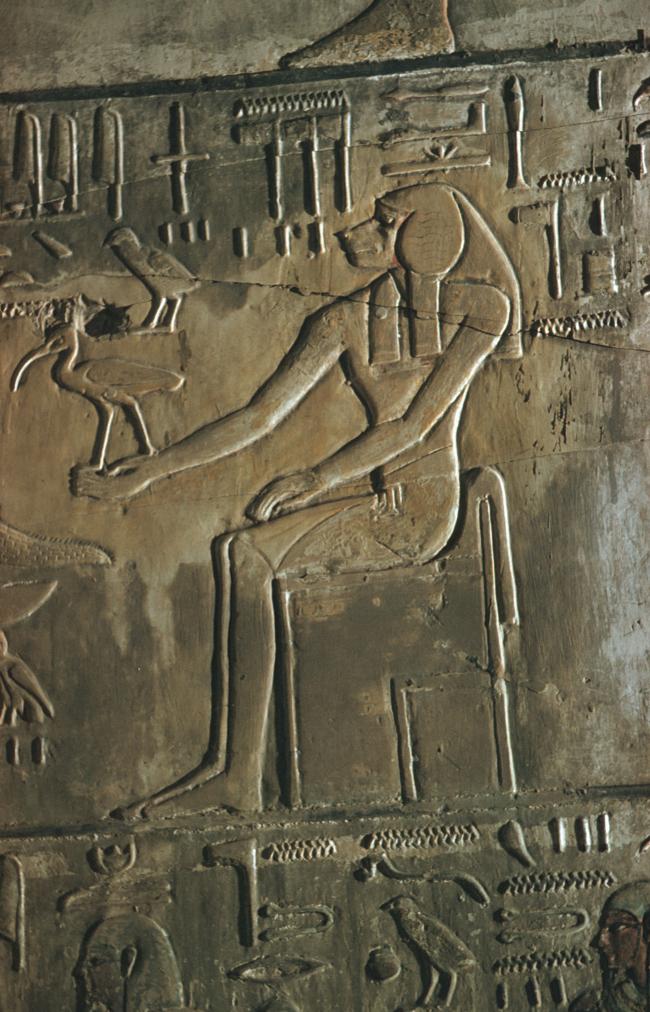
Detail of Imydwat sixth hour (left of gate). Courtesy of Uni Dia Verlag; Uni Dia Image Nr. 35823.
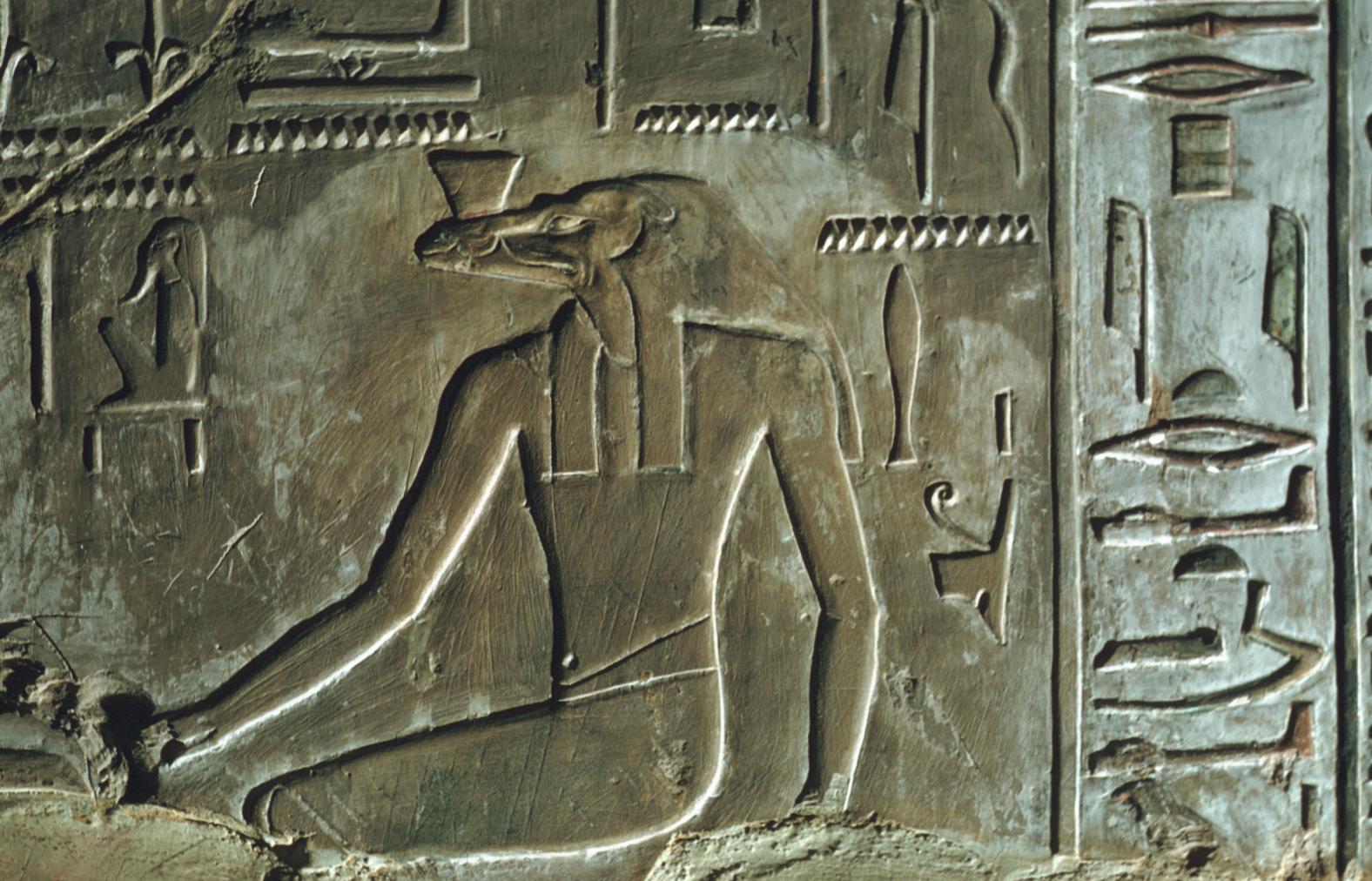
Detail of Imydwat sixth hour (left of gate). Courtesy of Uni Dia Verlag; Uni Dia Image Nr. 35824.
Imydwat sixth hour (left of gate). Courtesy of Uni Dia Verlag; Uni Dia Image Nr. 35825.
Sety I as Osiris. Courtesy of Uni Dia Verlag; Uni Dia Image Nr. 35826.
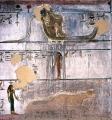
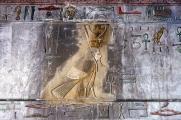
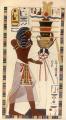
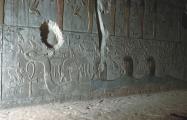
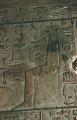
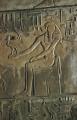
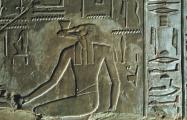
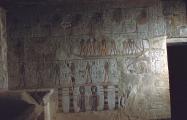
Side chamber Jc
See entire tombA passage at the rear of the burial chamber leads to this unfinished, undecorated chamber. Four pillars stand in a row on a southeast/northwest axis and have suffered damage from rock movement, particularly pillars 3 and 4, over corridor K.
Gate Jc
See entire tombCarter completely rebuilt this gate in the left (southeast) end of the rear (southwest) wall of burial chamber J in brick masonry, topped with an arch, to repair substantial damage to this wall due to collapse brought about by weakening of the stone at the base of the wall over corridor K. The gate is unusually thick and may originally have had compound jambs.
Gate Jd
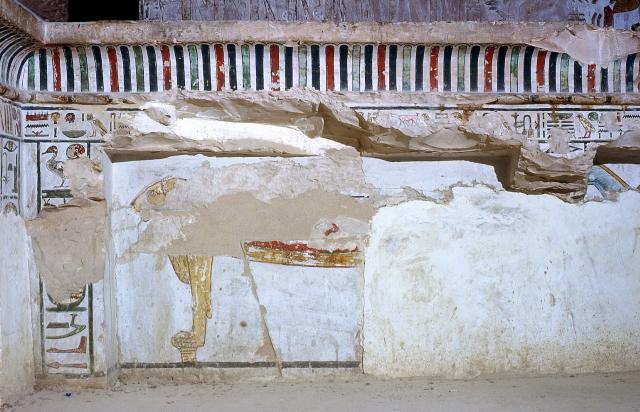
See entire tombThis gate in the left (northwest) end of the right (northwest) wall of the lower part of the burial chamber has traces of anthropomorphized djed pillars painted on the thicknesses.
Porter and Moss designation:
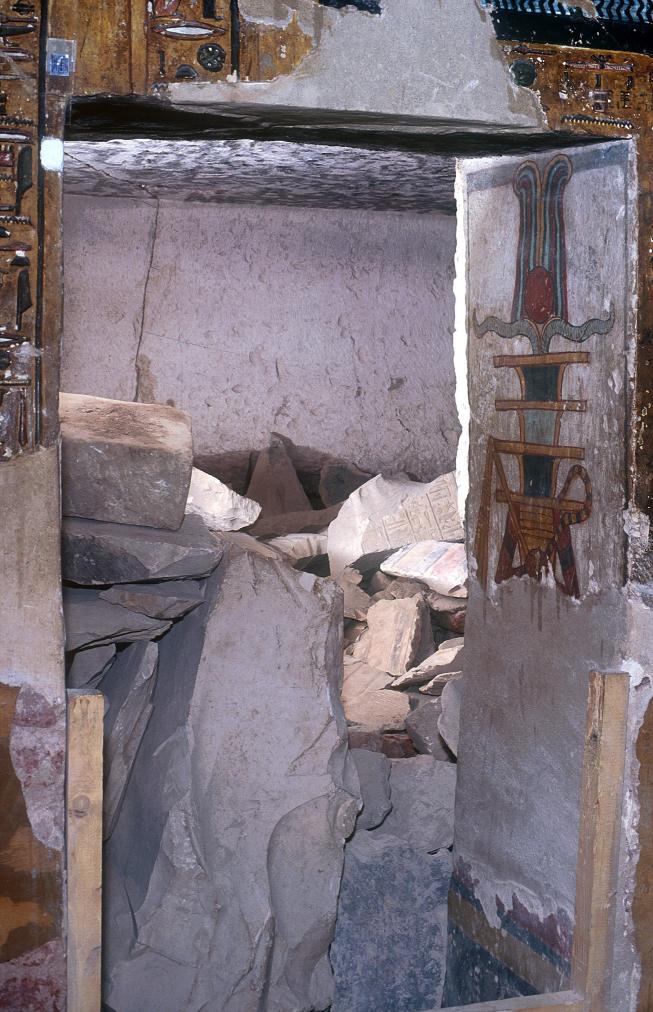
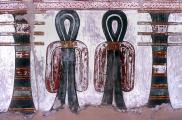
Anthropomorphized djed-pillar; view into side chamber Jd, now filled with relief fragments.
Side chamber Jd
See entire tombThis undecorated chamber is located to the southwest of burial chamber J
Porter and Moss designation:
Anthropomorphized djed-pillar; view into side chamber Jd, now filled with relief fragments.
Gate Je
See entire tombThis gate is cut in the right (northwest) wall of the front raised part of the burial chamber J. The right (northeast) thickness shows Sety I offering boxes of colored cloth.
Porter and Moss designation:
Side chamber Je
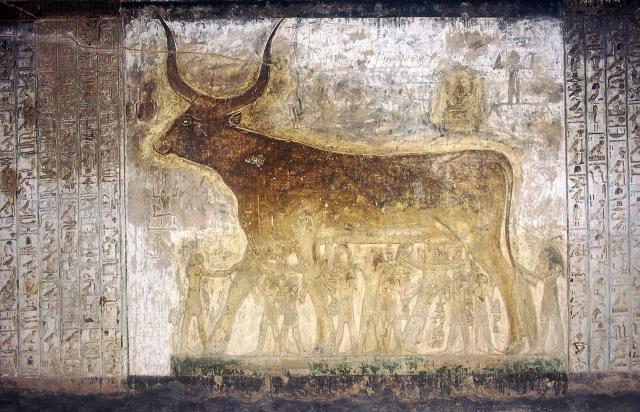
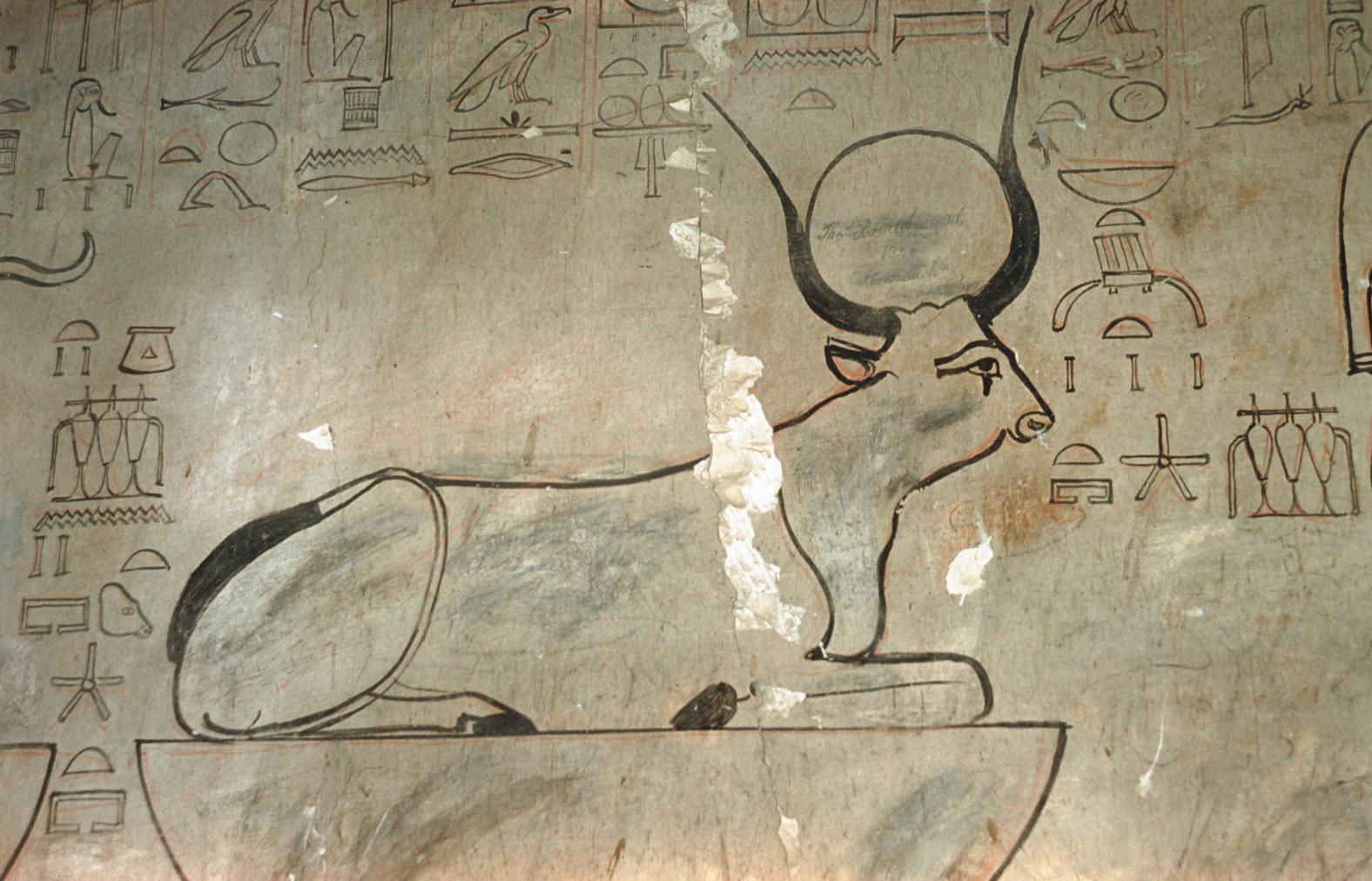
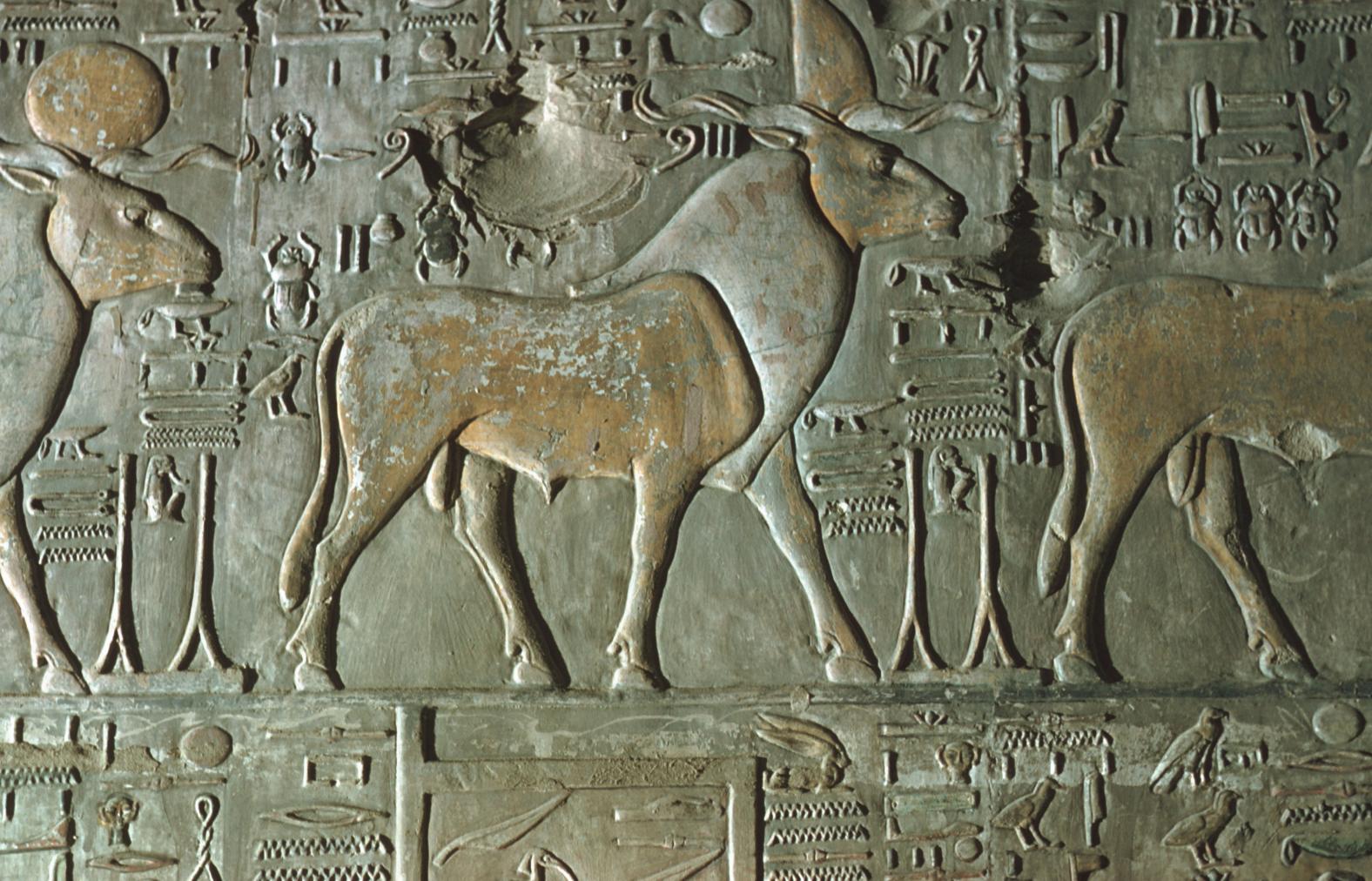
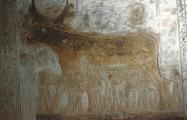
See entire tombThe walls are decorated with the Book of the Heavenly Cow. The figure of the cow depicted on the rear (northwest) wall has suffered loss of color due to squeezes taken in the nineteenth century. Other walls have suffered acts of vandalism.
Porter and Moss designation:
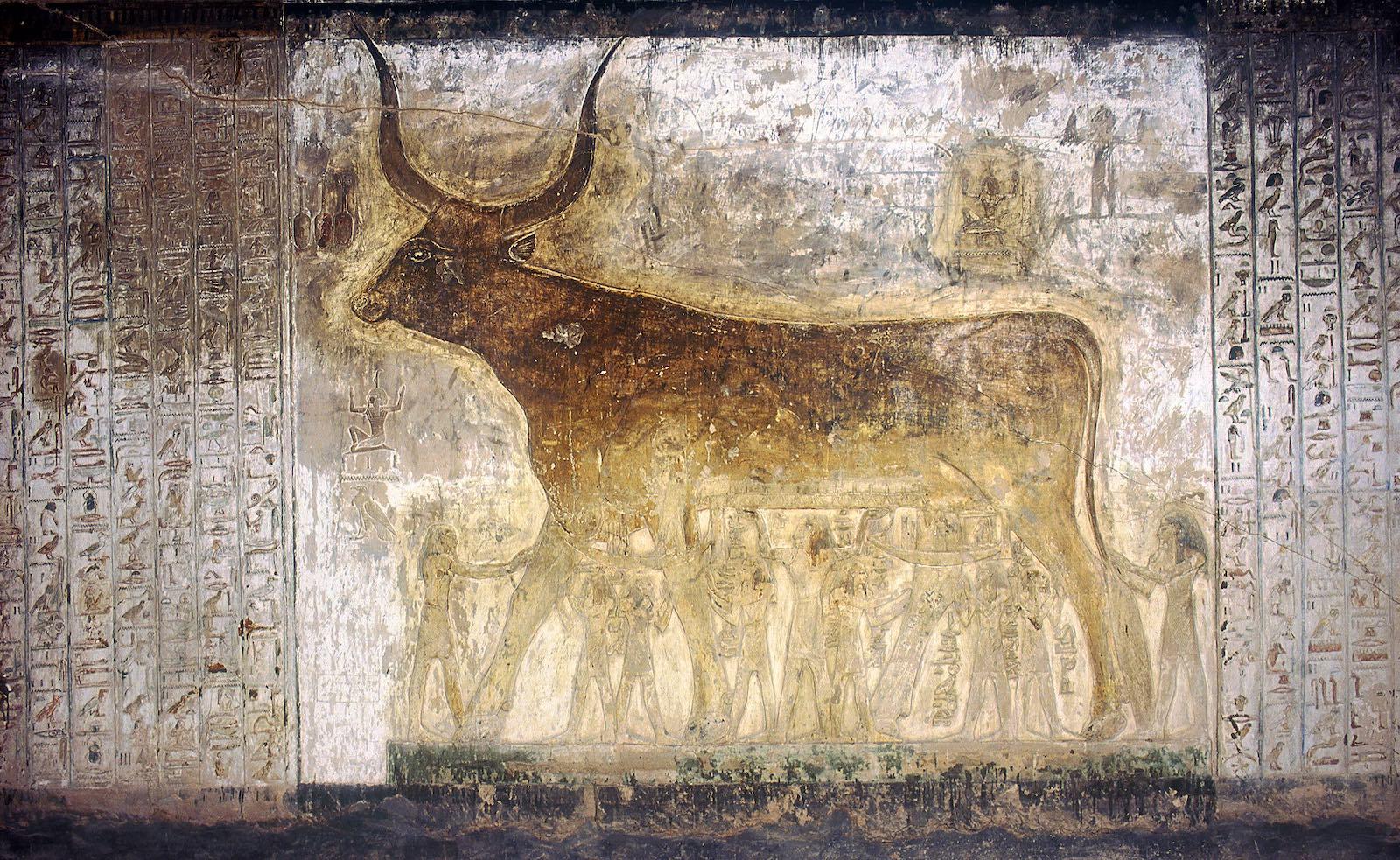
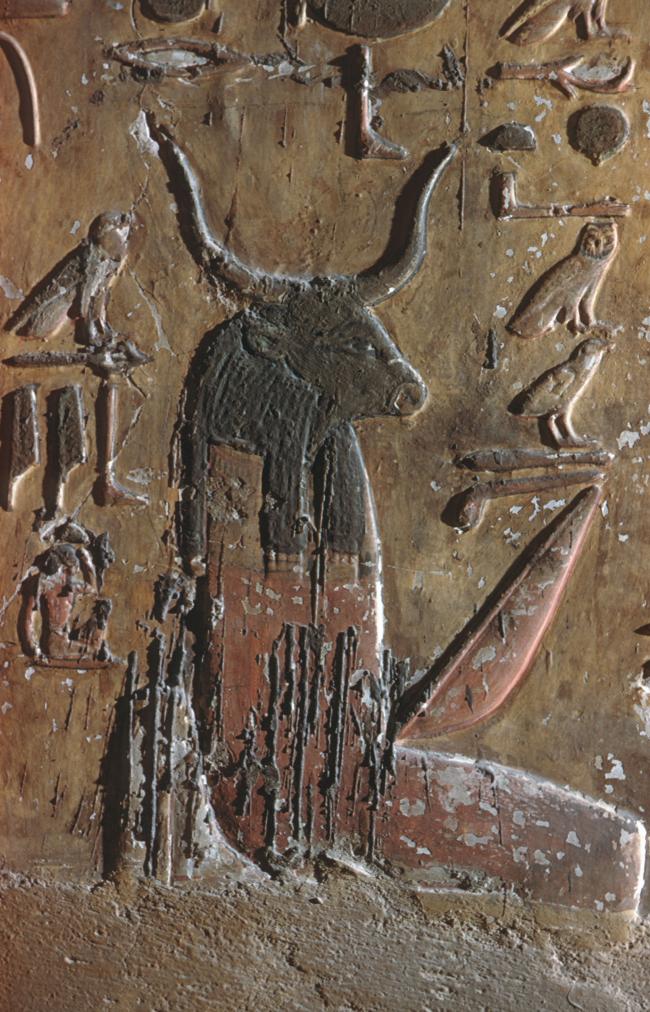
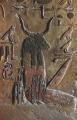
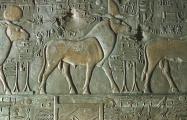
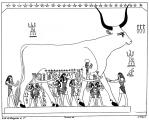
Book of the Heavenly Cow: Hathor as the Heavenly Cow.
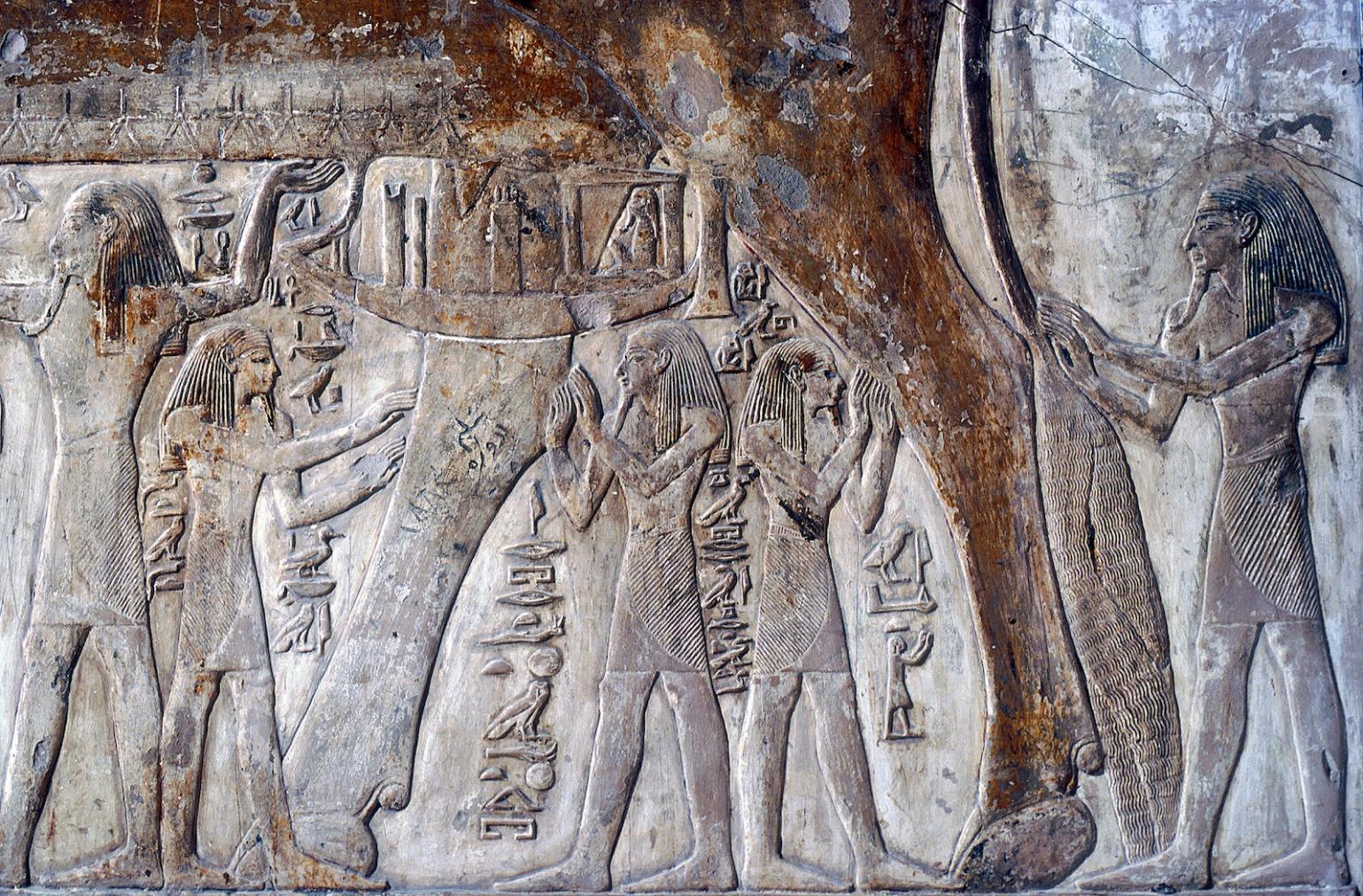
Book of the Heavenly Cow: Shu and other gods supporting Hathor as a cow, with solar boat (detail); Arabic graffito.
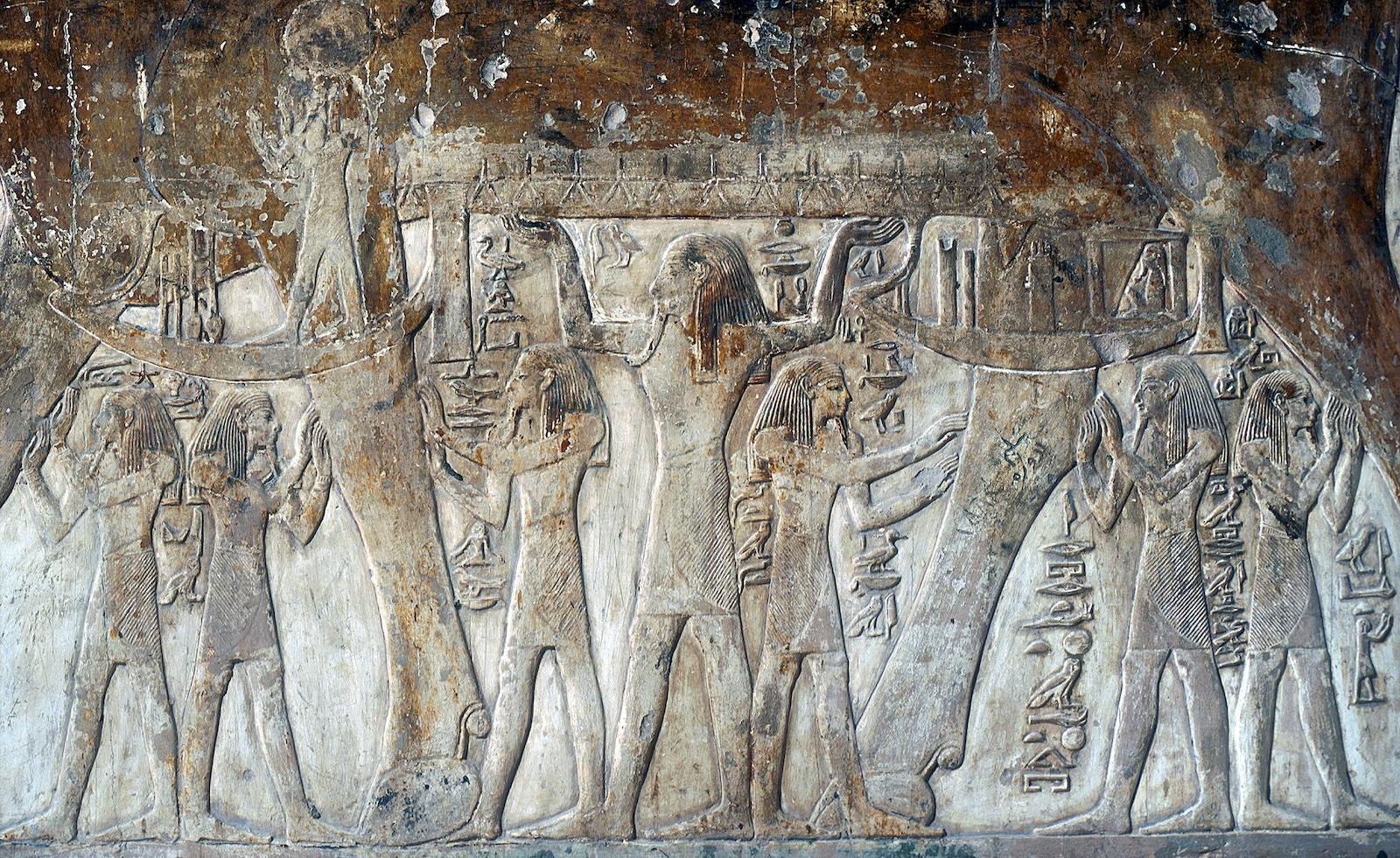
Book of the Heavenly Cow: Shu and other gods supporting Hathor as a cow, with solar boats (detail).
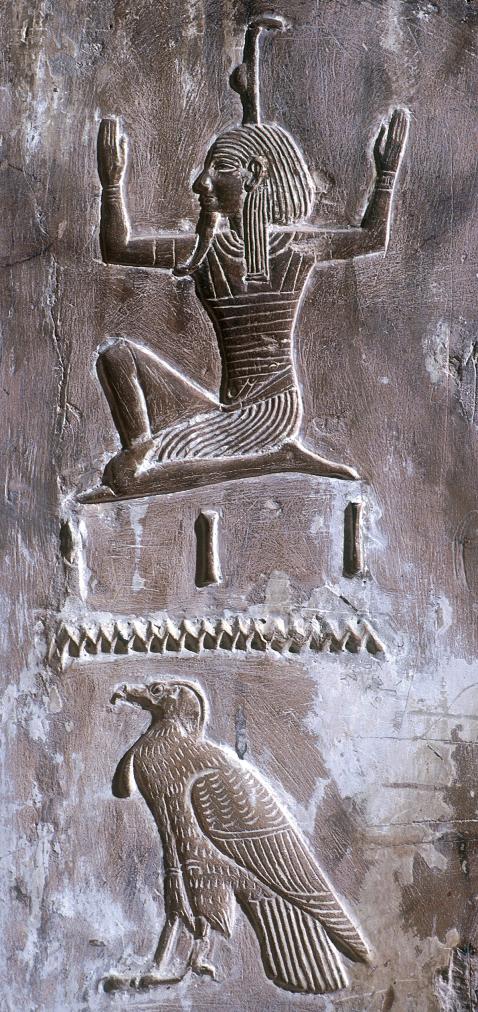
Book of the Heavenly Cow: hieroglyphs [beneath cow's head] (detail).
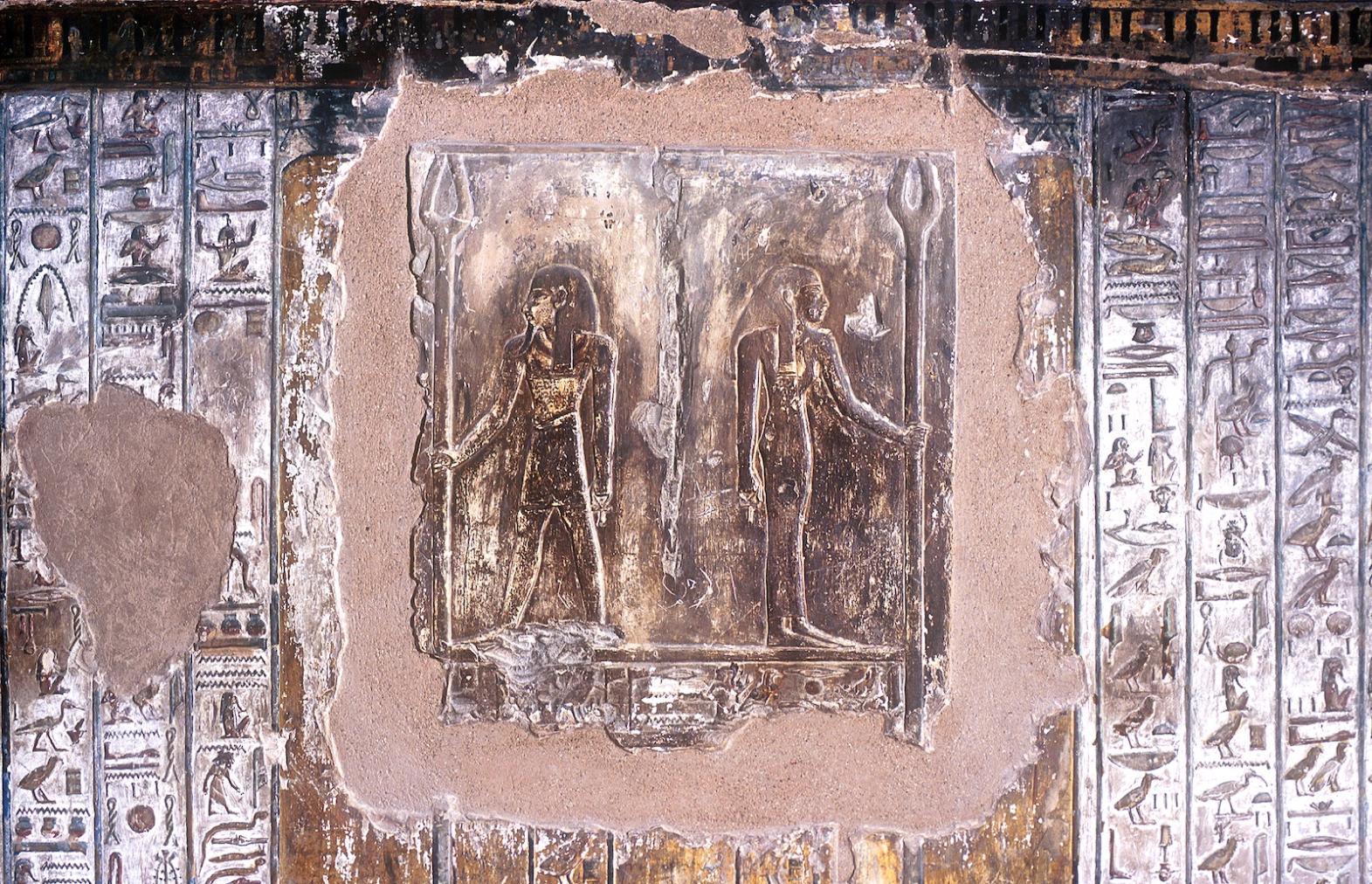
Book of the Heavenly Cow: god and goddess holding supports of heaven, damaged in an attempt to cut these figures from the wall, and repaired with plaster (detail).
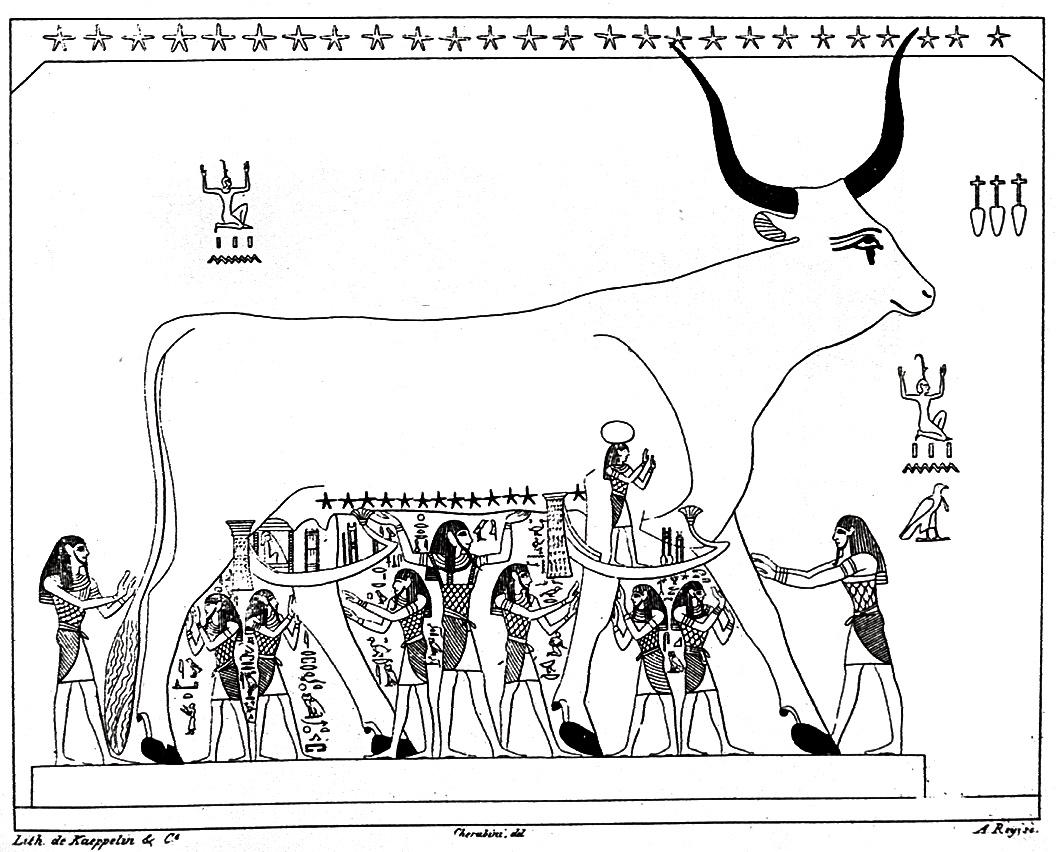
Book of the Heavenly Cow (copy reversed from orientation of the original) (reconstruction).
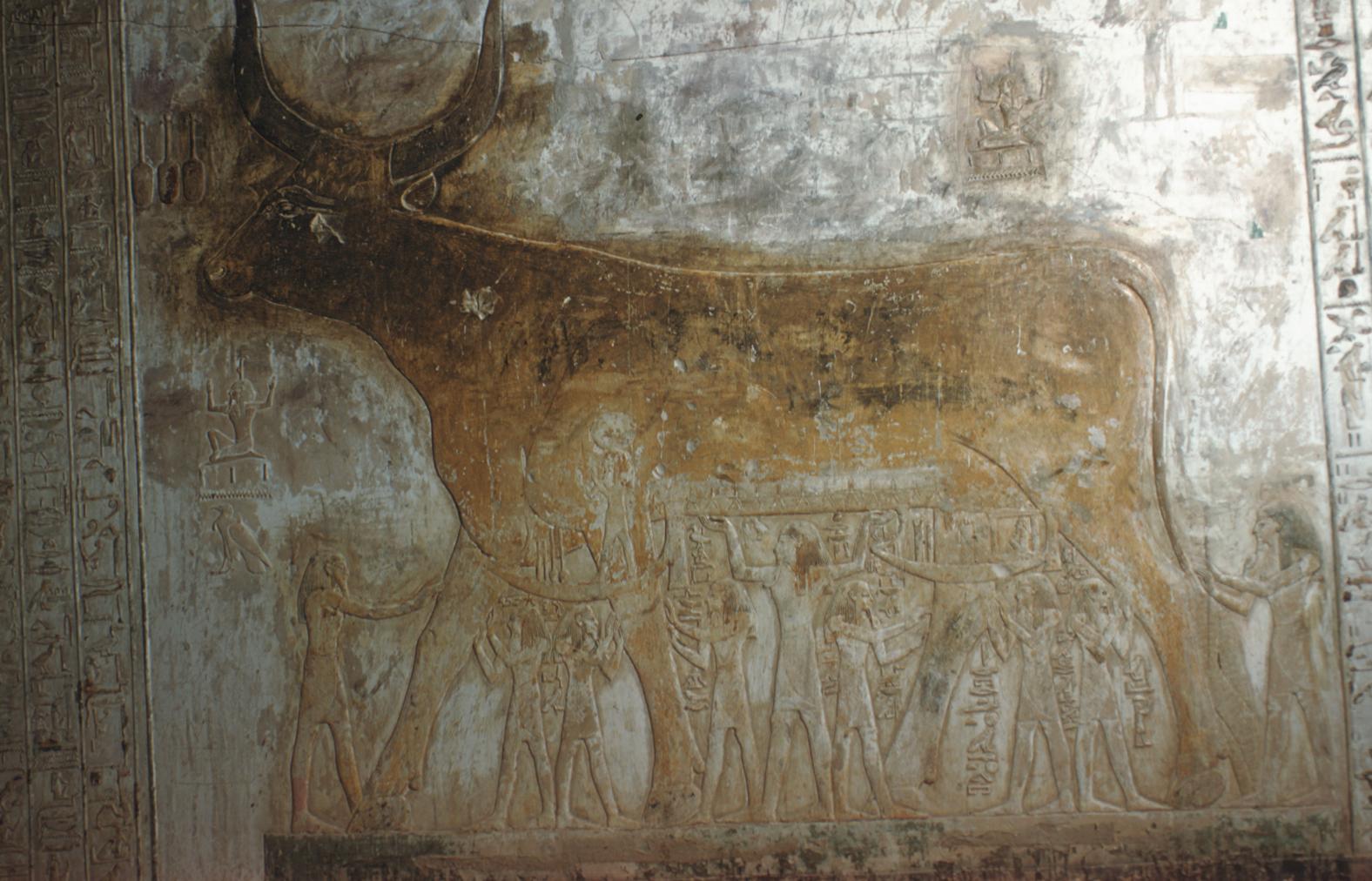
Book of the Heavenly Cow. Courtesy of Uni Dia Verlag; Uni Dia Image Nr. 35827.
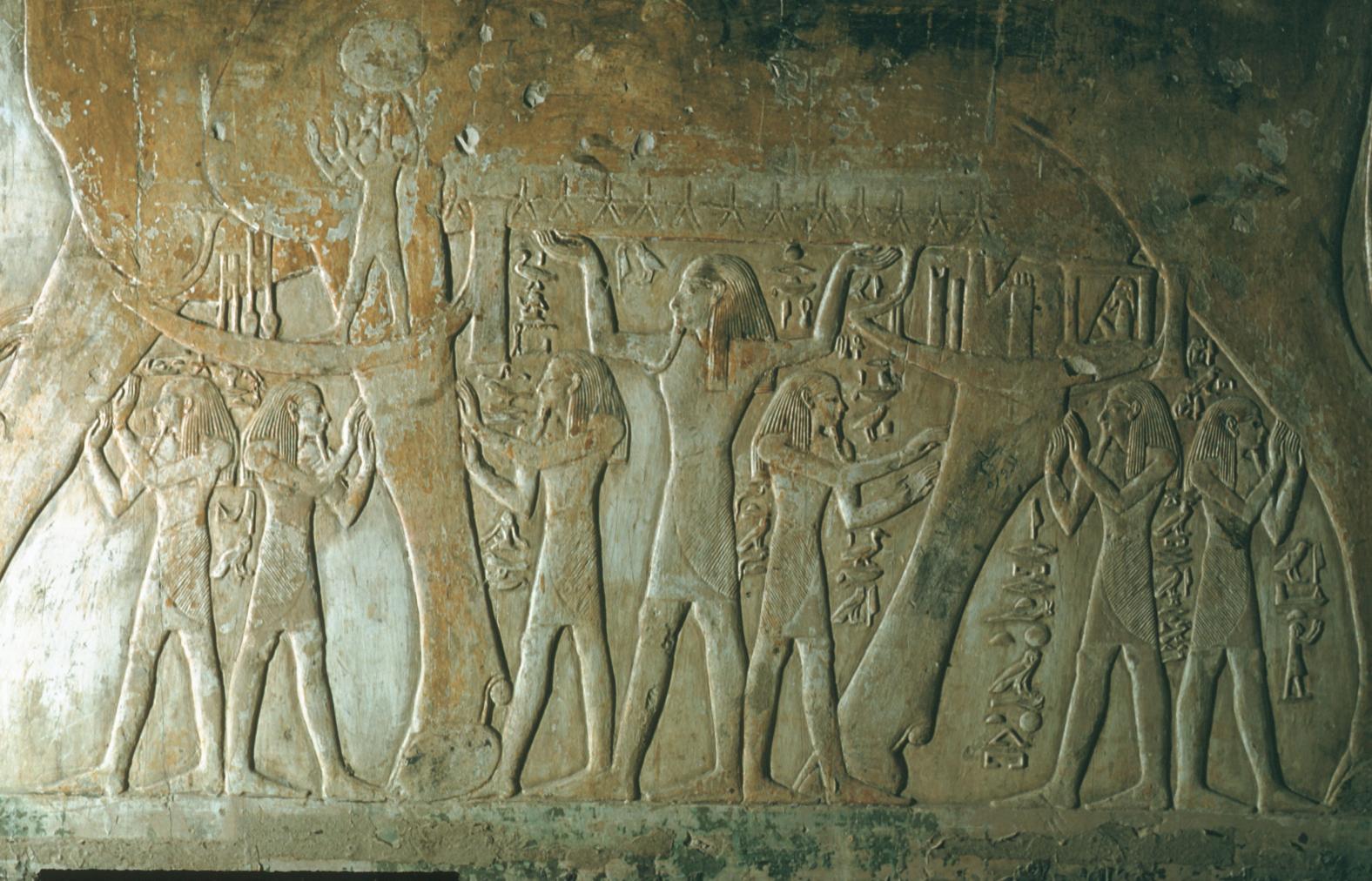
Book of the Heavenly Cow. Courtesy of Uni Dia Verlag; Uni Dia Image Nr. 35828.
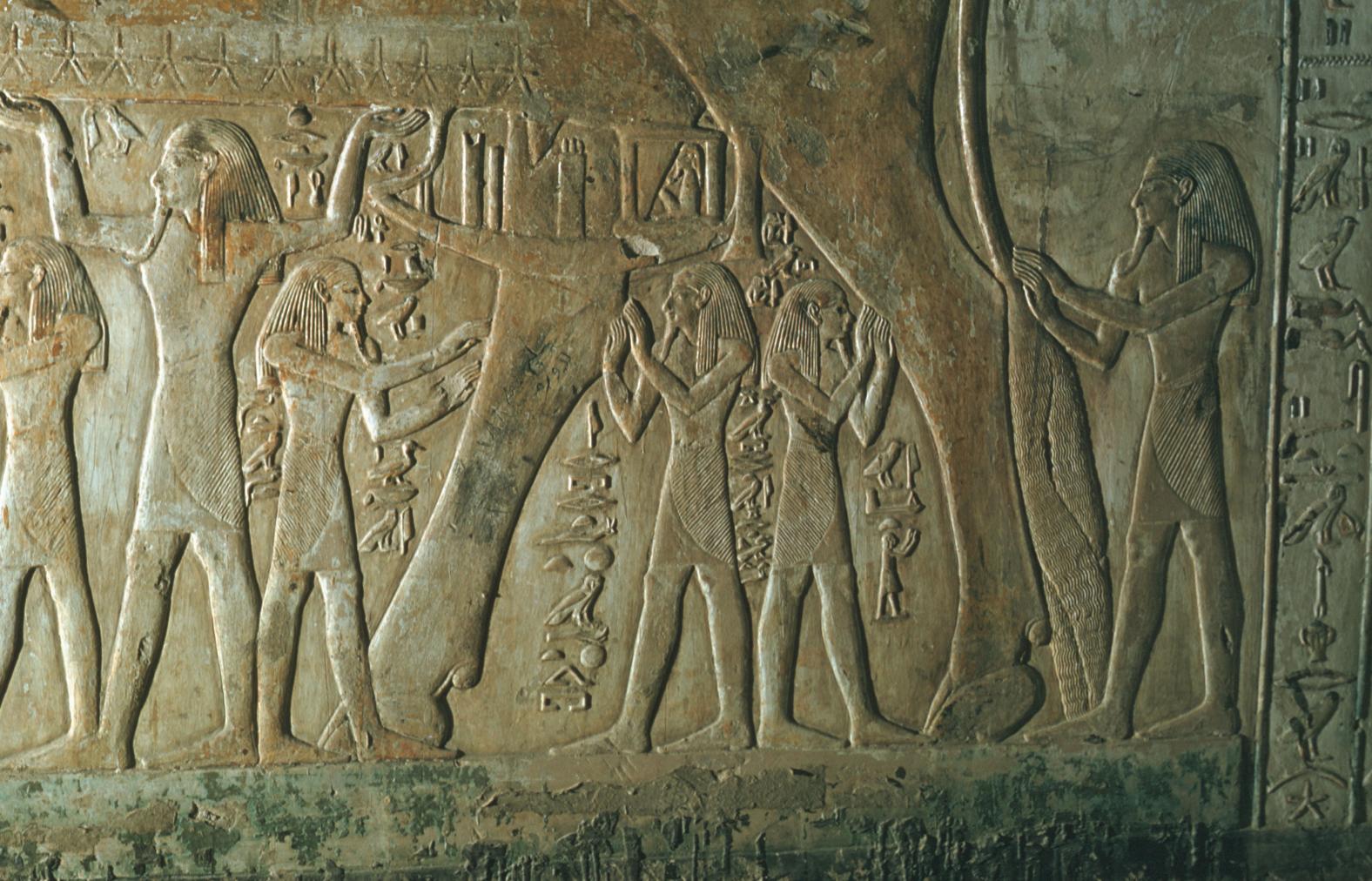
Book of the Heavenly Cow. Courtesy of Uni Dia Verlag; Uni Dia Image Nr. 35829.
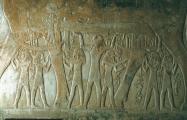
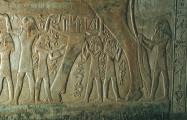
Corridor K
See entire tombThe entrance to the corridor is reached through the floor at the rear of the burial chamber J. Belzoni found the sarcophagus of Sety I, now in Soane's Museum, London, atop the entrance to this tunnel. At least the first part of the tunnel consisted of a divided stairway. The tunnel has not been properly excavated. In places, probes throughout the debris indicated that the walls were smooth and well carved. The floor consisted of a divided stairway and the ceilings were smooth and sloped down regularly, although at the beginning of the corridor a series of stepped red brick arches constructed by Carter covers the original ceiling. Gates appear to have been placed at intervals down the length of the tunnel, the first of which is visible on the Theban Mapping Project plan of the tomb. In 2001, a project to geophysically explore the corridor was approved by the Supreme Council of Antiquities. No results have yet been published.
About
About
KV 17, located in the southeast branch of the Wadi, is the longest and deepest of all the tombs in the Valley of the Kings. It is the first tomb to be decorated with a complete program of religious texts. The tomb is decorated with the Litany of Ra (corridor B, gate C, stairwell C), Book of the Dead (stairwell C), Imydwat (stairwell C, corridor D, gate Fa, side chamber Fa, side chamber Jb, burial chamber J), Book of Gates (pillared chamber F, gate Fa, side chamber Ja, burial chamber J), Opening of the Mouth ritual (corridor G, corridor H, gate H), Book of the Heavenly Cow (side chamber Je), astronomical scenes (burial chamber J), Sety I with deities (corridor B, well chamber E, pillared chamber F, chamber I, side chamber Fa, burial chamber J, gate G), deities (stairwell C, gate D, gate J, gate Jb, gate Jd, side chamber Jb, burial chamber J), and representations of the king alone (gate Ja, gate Je).
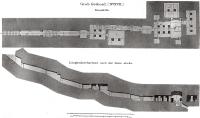
It is also the first tomb to have a vaulted burial chamber. The tomb of Sety I consists of a total of seven corridors and ten chambers, decorated with painted, raised relief (with the exception of Fa). Three sloping corridors (B, C, D), lead to a well chamber (E) and pillared chamber (F) with side chamber (Fa). A side descent and two sloping corridors (G, H) lead to a chamber (I) beyond which lies burial chamber J. This has five side chambers (Ja-Je), and a long passage (K) at the rear.
For a virtual tour of the tomb, see Factum Arte's 3D Virtual Tour
Noteworthy features:
KV 17 is one of the most completely decorated tombs in the Valley of the Kings, with painted raised relief decoration of the highest quality. There is an unusually long descending passage (K) in the floor of the burial chamber J. Recesses were cut in the benches of Jb.
Site History
After Sety I's burial the tomb was used as a temporary cache for other royal mummies including Rameses I and Rameses II. These mummies were all subsequently moved to TT 320.
Dating
This site was used during the following period(s):
Exploration
Conservation
Conservation History
In 1825, Burton finished building protective dykes around the tomb entryway to prevent flood waters from entering the tomb. Carter did a large amount of consolidation work in 1902-1903, particularly in the burial chamber J, making extensive use of brick masonry to support gate J, the lower portions of the walls and gate Jd, as well as the upper part of corridor K. In 2001, work was begun to change the modern walls around the tomb's entrance to reduce potential flood damage.
Site Condition
In the year following the opening of the tomb, flood waters from rains entered the lower chambers. Belzoni had filled the shaft in well chamber E with debris, but had failed to complete the construction of protective dykes outside the tomb entrance. As a result of the expansion and contraction of the stone and loosening of the plaster, large pieces of the walls and ceiling fell. James Burton completed Belzoni's dykes and cleared well E of debris; the tomb has not flooded since.
As a part of his conservation work, Carter repaired damage to the walls, but cracks have reappeared and the condition of the walls continues to worsen. The tomb has also suffered at the hands of vandals who have hacked away at its walls searching for hidden chambers or trying to remove painted relief. For several reasons, the once bright colors of the painted reliefs have faded. Some painted reliefs, such as the walls from chamber I, faded because of the wet squeezes taken by Belzoni, Wilkinson and other Egyptologists; others have faded simply as a result of time. The smoke from candles and torches used by early visitors to the tomb has blackened the walls and left soot deposits on the painted reliefs.
Hieroglyphs
Sety I
 King of Upper and Lower Egypt, Eternal is the Justice of Ra, Son of Ra, He who Belongs to Seth, Beloved of Ptah
niswt-bity mn-mAat-Raw sA-Raw tit(w)-4tX mry-n-PtH
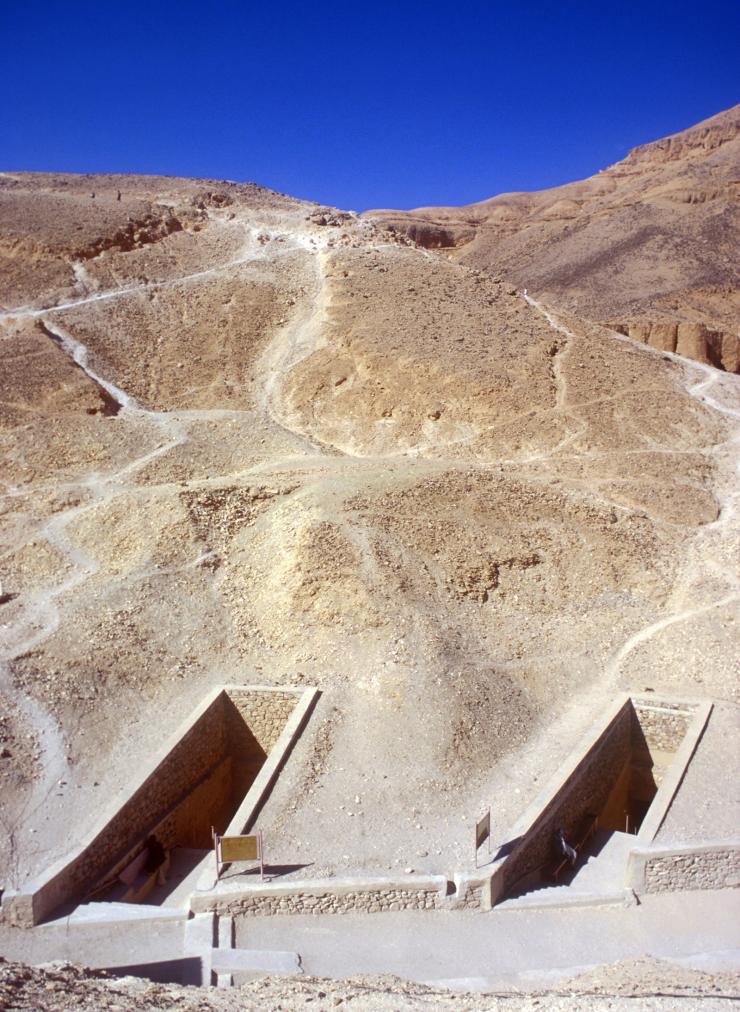
Tomb entrances before construction of flood diversion walls.
Sety I with Neit.
Book of Gates, fourth division (P)/fifth hour (H), scene 26: sun god Ra with crew in boat.
Preliminary sketch of Sety I with Sokar-Osiris.
Tomb entrance with modern retaining walls.
Hathor presenting menat to Sety I (scene removed by the Franco-Tuscan expedition and now in the Louvre, Paris).
Names and epithets of Sety I; flying vulture holding fans.
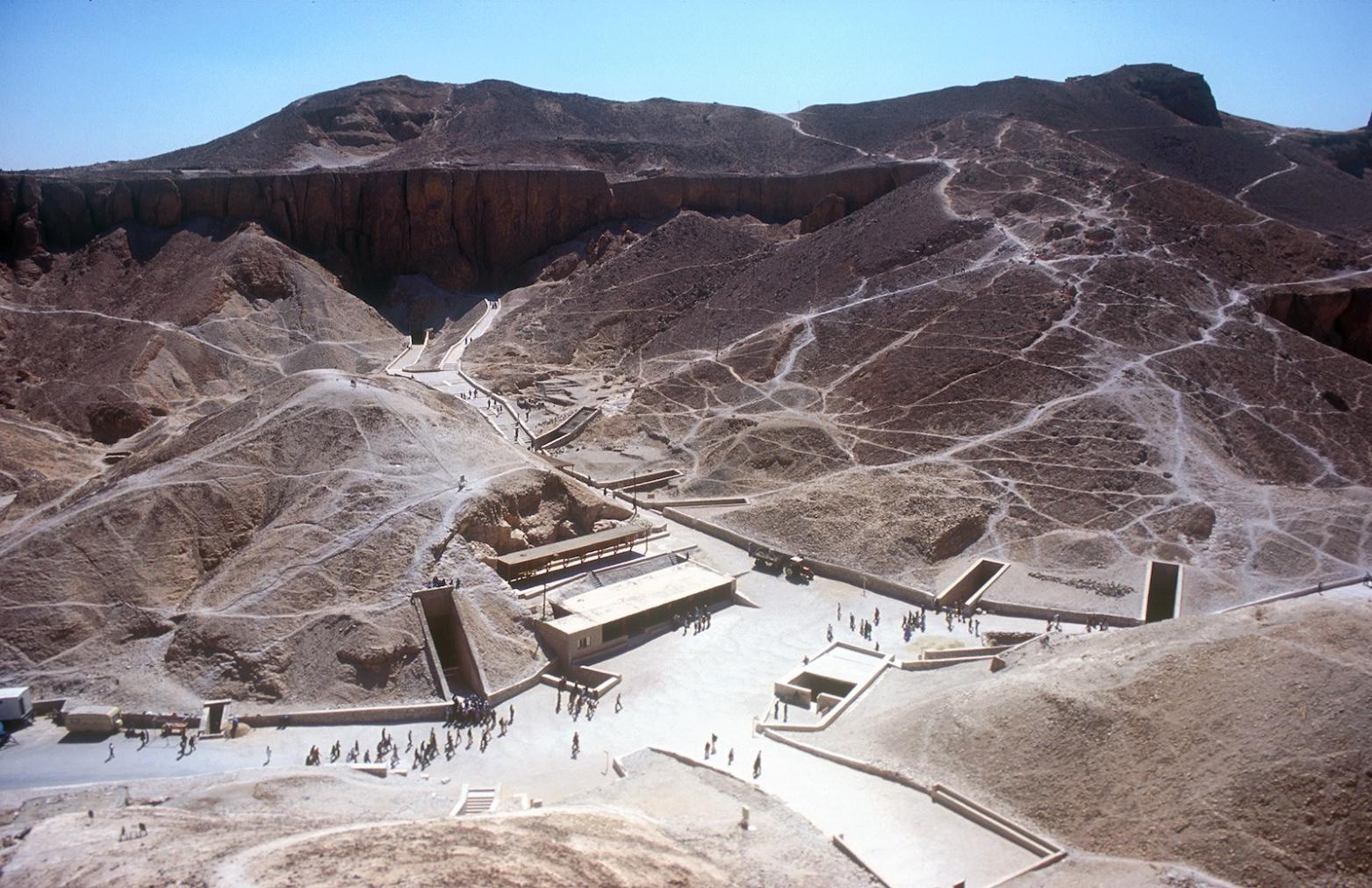
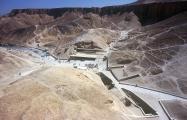
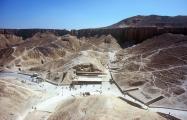
Tomb entrances and tourist shelter.
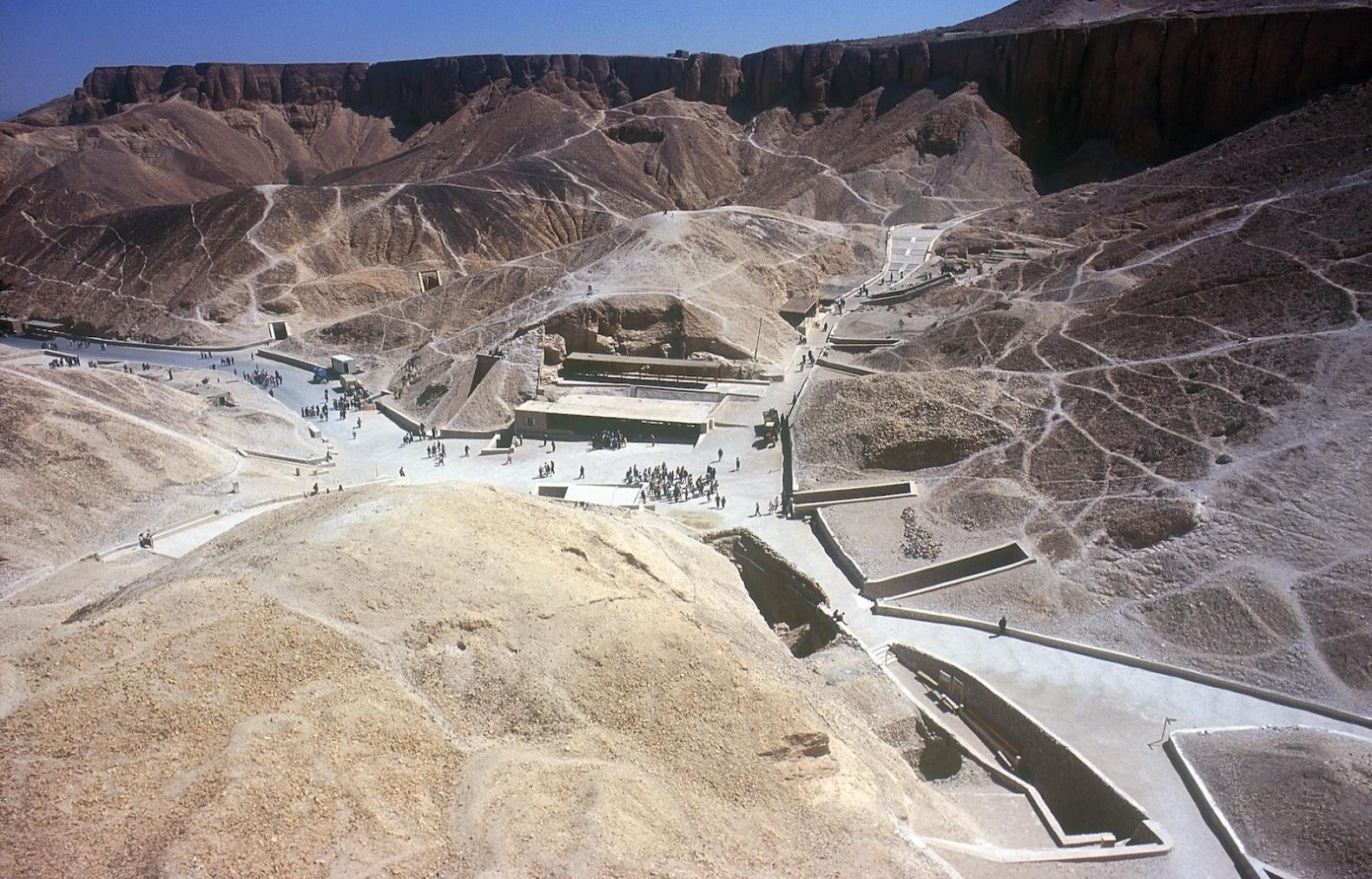
Tomb entrances and tourist shelter in the central part of the Valley of the Kings.
Circumpolar stars.
Book of the Heavenly Cow: Hathor as the Heavenly Cow.
Lion bed (detail).
Astronomical scenes; Imydwat, second hour; Imydwat, third hour; railing surrounding descent to chamber K in foreground.
Imydwat, tenth hour: corrected preliminary sketch.
Book of Gates, fourth gate.
Winged Ma'at flanked by Sety I's cartouches; kneeling winged Ma'at figures and Sety I's cartouches.
Litany of Ra: forms of Ra.
Anthropomorphized djed-pillar; view into side chamber Jd, now filled with relief fragments.
Winged Isis; Imydwat, abbreviated version and first hour; pair of white rectangles are magical brick niches.
Osiris having his mouth opened [by Anubis].
Circumpolar stars and decans.
Sety I with two forms of Hathor, and Carter's repairs in brick of damaged walls; stairs leading in the direction of tomb entrance.
Star pattern; Opening of the Mouth ritual, scenes 33-35.
Well shaft crossed by modern bridge.
Imydwat, fifth hour: Sokar.
Imydwat, fifth hour: part of Aker figure guarding the cavern of Sokar (detail).
Book of the Dead, spell 151: head of Nephthys, partly rendered as preliminary sketch and partly carved as raised relief (detail).
Sety I and Hathor (scene removed by Franco-Tuscan expedition and now in Florence, no. 2468).
Book of Gates, fourth division (P)/fifth hour (H): detail (reconstruction).
Imydwat, seventh and eighth hours; funerary objects; Osiris; Sety I.
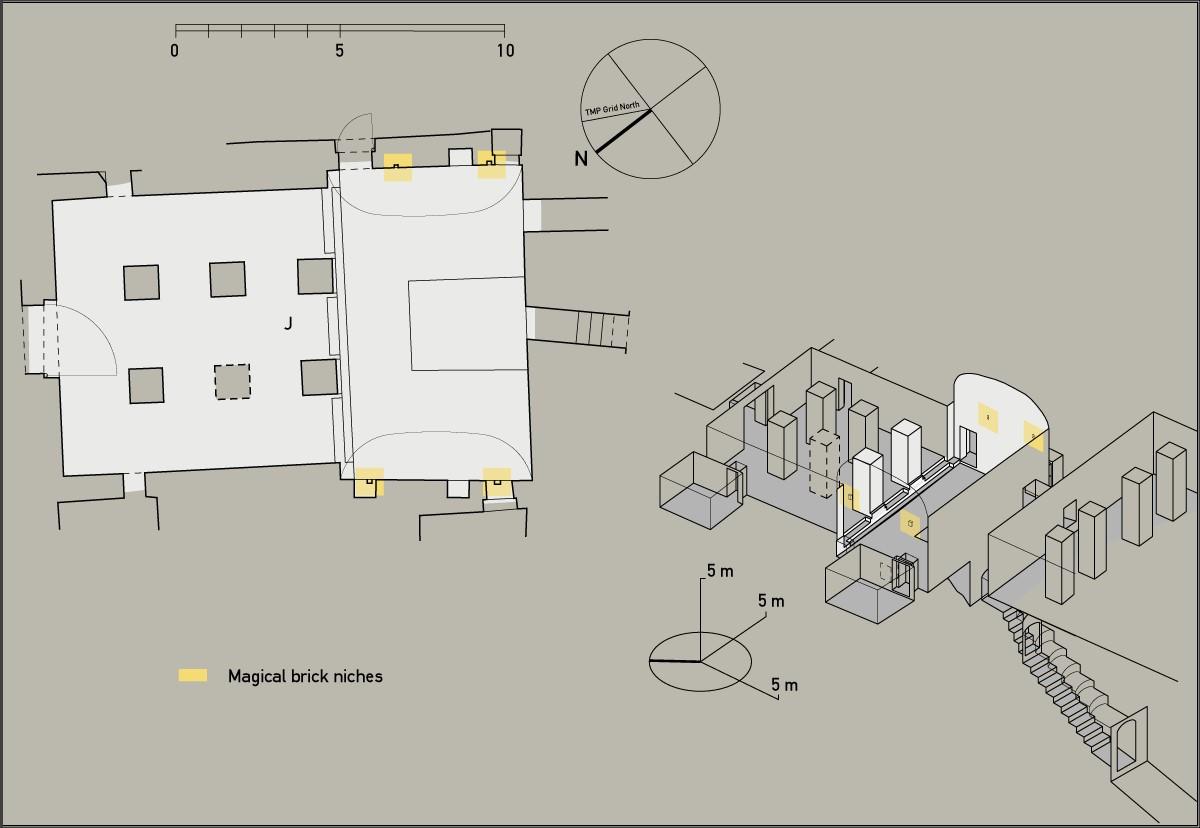
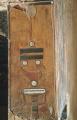
Magical brick niches.
Benches.
Well chamber and its shaft.
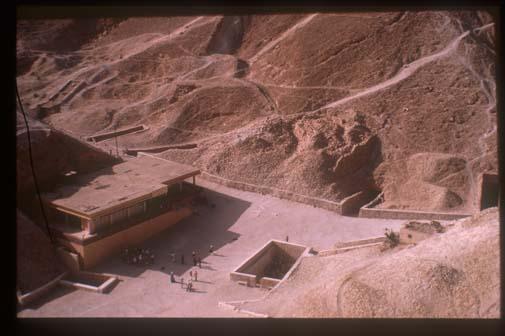
Old rest house, KV 18, KV 17, KV 16, KV 55, KV 62, KV 9, KV 10 and KV 11.
Book of Gates, second division (P)/third hour (H), scene 13: Atum subduing Apophis.
Soul of Pe; Sety I and Horus.
Soul of Nekhen.
Osiris between imyut-emblems.
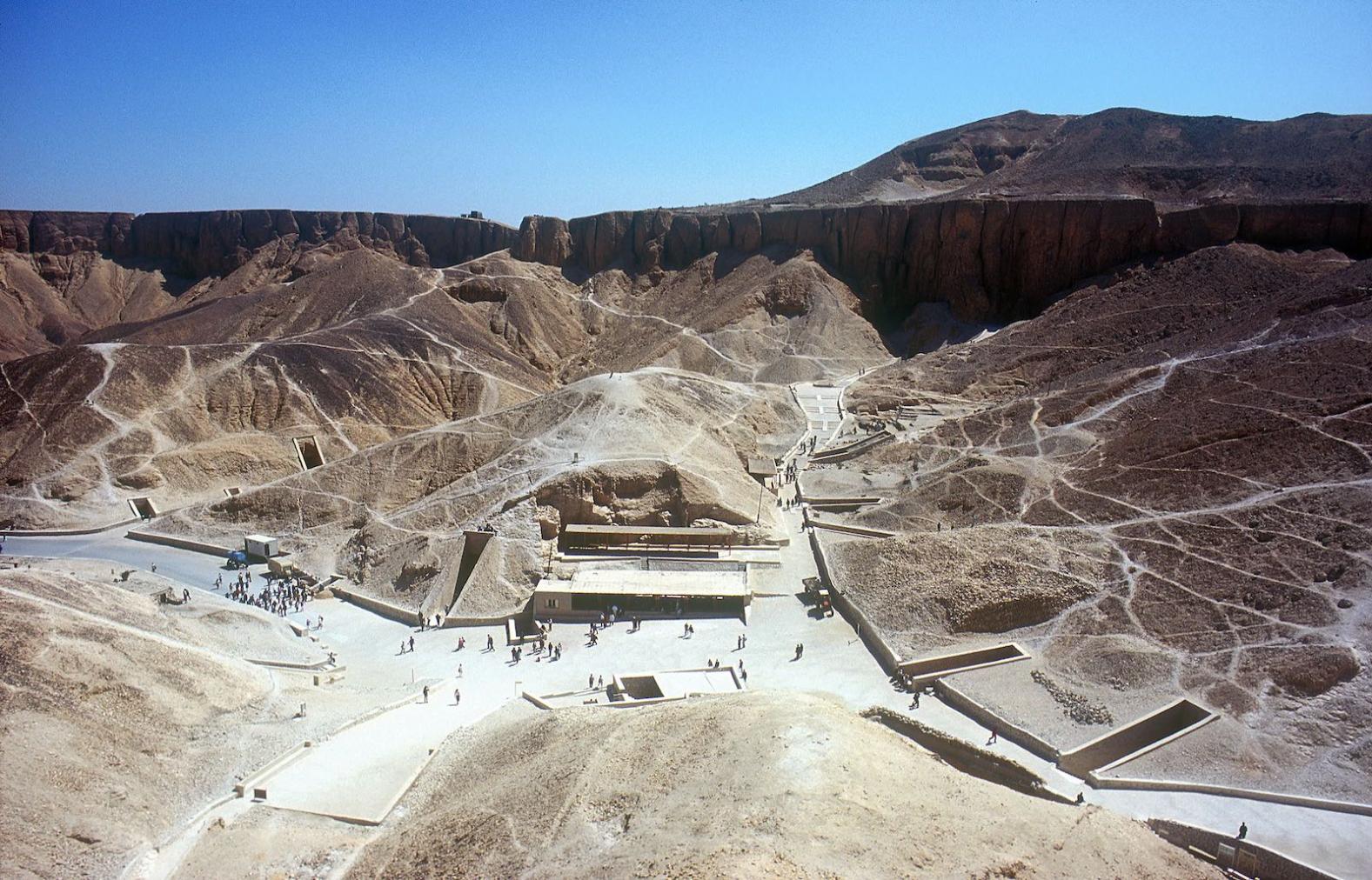
Valley of the Kings, panoramic view from cliffs above KV 09, looking southeast. Visible are entrances to KV 03, KV 07, KV 04, KV 05, KV 06, KV 55, KV 62, KV 18, KV 17, KV 16, KV 10, KV 11, KV 57, and toursit shelter.
Book of Gates, fifth division (P)/sixth hour (H): gods with forked staffs to subdue Apophis.
Book of Gates, second division (P)/third hour (H): solar bark.
Preliminary sketch of Sety I offering incense and libation to Osiris (detail)
Imydwat, second hour (detail)
Astronomical figures; modern reinforcing beams supporting ceiling.
Opening of the Mouth ritual, scene 35 (detail)
Book of Gates, fourth division (P)/fifth hour (H), scene 30: Nubians and Libyans, two of the "four races of mankind" (reconstruction).
Sety I embraced by Hathor as Western Goddess.
Sety I embraced by Isis.
Sety I with Atum.
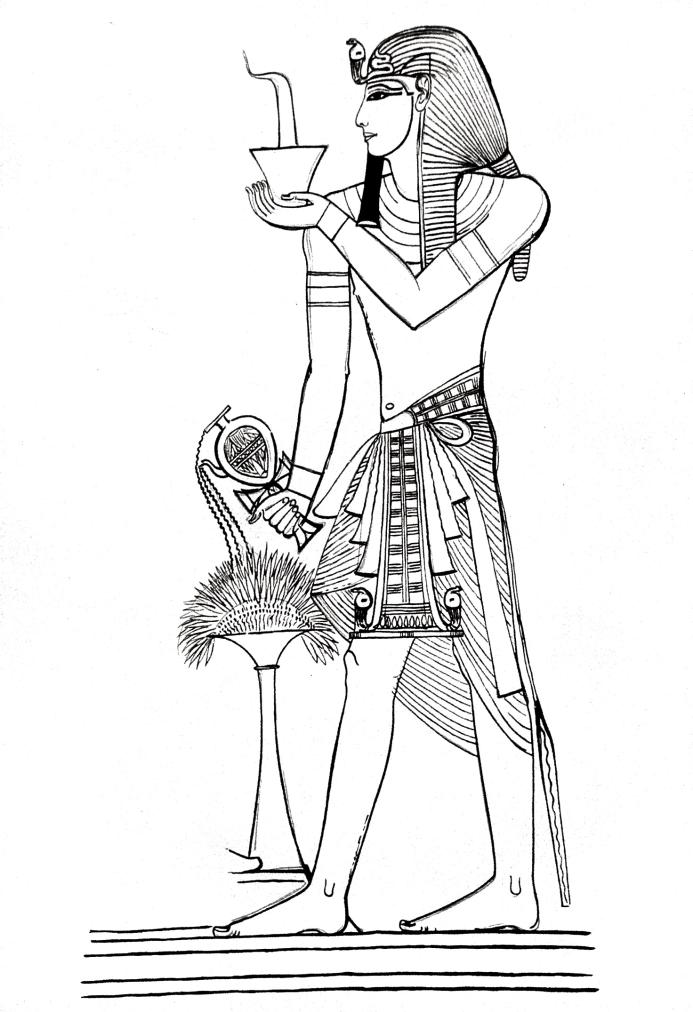
Sety I offering [to Osiris] (reconstruction).
Tomb entrance with modern stairs.
Circumpolar stars, decans, and constellations of the southern sky (reconstruction).
Sety I led by Horus to Osiris and Hathor.
Opening of the Mouth ritual, scene 22: butchering a bull (reconstruction).
Book of Gates, fourth division (P)/fifth hour (H), scene 30: Asiatics, one of the "four races of mankind" (reconstruction).
Book of Gates, fourth division (P)/fifth hour (H), scene 30: Horus and four Egyptians as one of the " four races of mankind" (reconstruction)
Kneeling winged figures of Ma'at protecting the cartouches of Sety I (reconstruction).
Opening of the Mouth ritual: Sety I seated before an offering table.
Southern stars.
Imydwat, second hour (detail).
Imydwat, second hour (detail).
Imydwat, second hour (detail).
Imydwat, sixth hour: mummiform figures labeled "those who are in peace" (detail).
Imydwat, sixth hour (detail).
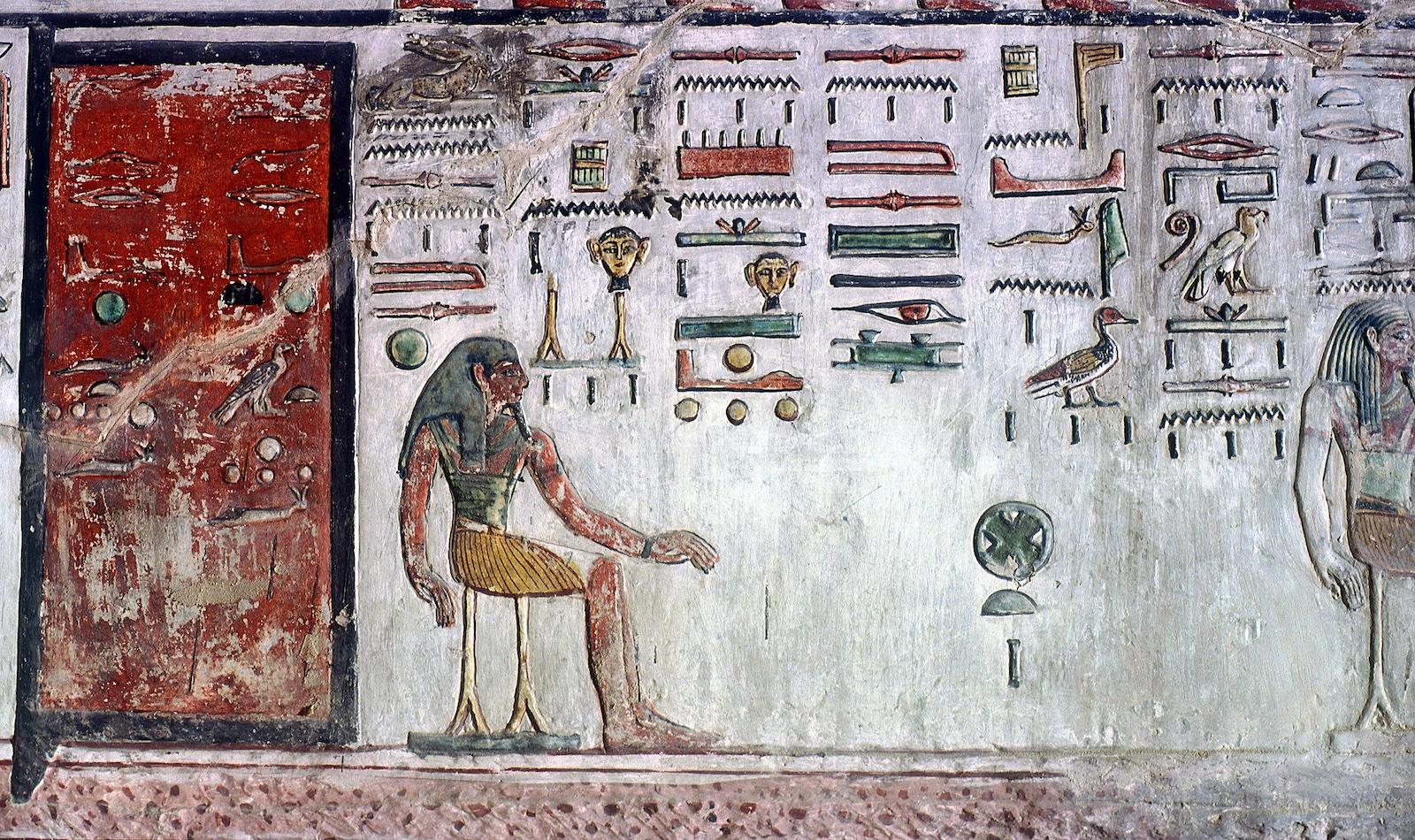
Imydwat, eighth hour: door leaf and gods seated on cloth symbols in cavern named Annihilator of Evildoers.
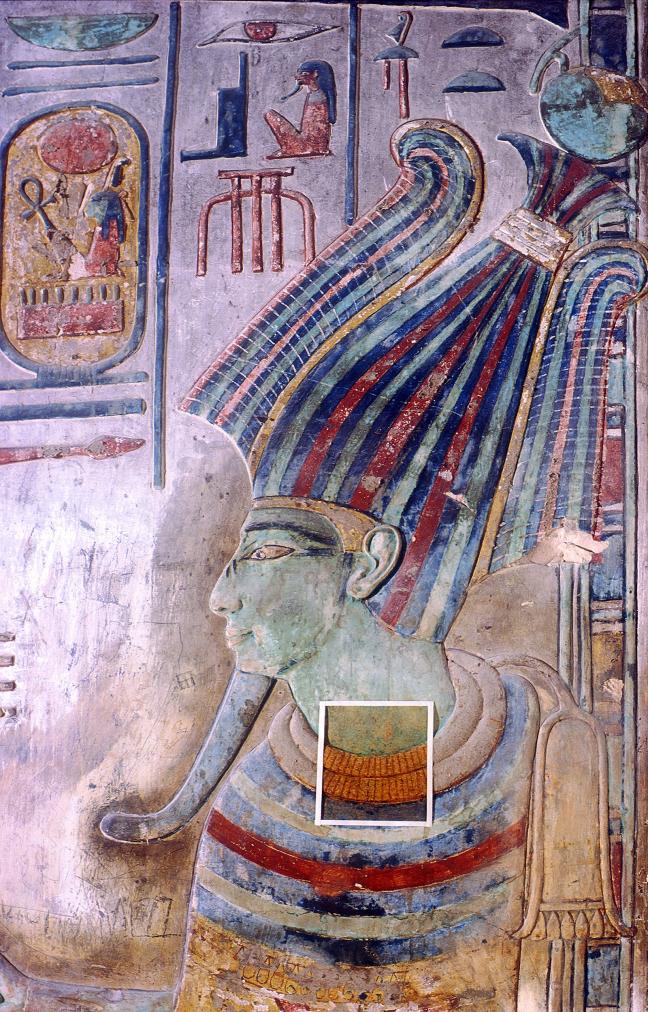
Sety I as Osiris: detail of recent test cleaning (detail).
Imydwat, seventh hour: goddesses with stars on their heads representing hours.
Opening of the Mouth ritual, scene 26.
Sety I offering wine to Isis, showing test cleaning of Isis figure.
Opening of the Mouth ritual, scene 31.
Preliminary sketch of Sety I offering incense and libation to Osiris.
Imydwat, tenth hour: preliminary sketch of solar boat.
Imydwat, eleventh hour: preliminary sketch of goddesses destroying enemies in furnaces.
Book of Gates, fourth division (P)/fifth hour (H), end.
Sety I escorted by Horus to Osiris and Hathor, with area of test cleaning outlined.
Book of Gates, fifth division (P)/sixth hour (H) (detail).
Book of Gates, fifth division (P)/sixth hour (H): mummy on serpent bed (detail).
Book of Gates, fourth division (P)/fifth hour (H), beginning.
Book of Gates, fifth division (P)/sixth hour (H), beginning.
Imydwat, third hour: some hieroglyphs as preliminary sketch and others carved in relief (detail).
Book of Gates, fourth division (P)/fifth hour (H): "four races of mankind."
Book of Gates, third division (P)/fourth hour (H).
Book of Gates, third division (P)/fourth hour (H).
Book of Gates, third division (P)/fourth hour (H).
Book of Gates, third gate, and third division (P)/fourth hour (H).
Book of the Heavenly Cow: Shu and other gods supporting Hathor as a cow, with solar boat (detail); Arabic graffito.
Book of the Heavenly Cow: Shu and other gods supporting Hathor as a cow, with solar boats (detail).
Book of the Heavenly Cow: hieroglyphs [beneath cow's head] (detail).
Book of the Heavenly Cow: god and goddess holding supports of heaven, damaged in an attempt to cut these figures from the wall, and repaired with plaster (detail).
Imydwat, sixth hour, beginning; djed-pillars and tyet-knots.
Pairs of djed-pillars and tyet-knots, symbolic of Osiris and Isis (detail).
Sety I's names flanked by Nekhbet vulture and Wadjet cobra, symbolic of Upper and Lower Egypt.
Imydwat, seventh hour, beginning.
Imydwat, seventh hour, scenes 1, 2, figures 489, 490-493: decapitated enemies before Osiris enclosed by Mehen-serpent.
Imydwat, seventh hour, scene 6, figures 515-516: Apophis serpent slain before solar bark, with loss of color from nineteenth century squeezes. (KV17)
Imydwat, seventh hour, scene 2, figures 490-495: Osiris facing decapitated enemies and a lion-headed Horus, their slayer, with loss of color from nineteenth century squeezes.
Imydwat, seventh hour, scenes 4, 7, 10.
Imydwat, seventh hour, scene 4: ba bird wearing crowns of Upper and Lower Egypt, with loss of color from nineteenth century squeezes (detail).
Osiris and Sety I; Soul of Pe; Kheperi; Soul of Pe; Sety I and Horus; text of Imydwat, abbreviated version.
Astronomical figures; winged Isis; Imydwat, abbreviated version and first hour; Sety I and Ra-Horakhty; Osiris [having his mouth opened by Anubis]. White square showing cleaned wall painting.
Sety I offering wine to Ra-Horakhty.
Book of Gates, second division (P)/third hour (H), scenes 9, 11, 13: gods in shrines, solar bark, Atum subduing Apophis.
Book of Gates, second division (P)/third hour (H), scene 9: gods in shrine (detail).
Kneeling winged Ma'at; star pattern.
Book of Gates, second division (P)/third hour (H), scene 10: gods in the Lake of Fire (detail).
Book of Gates, first division (P)/second hour (H), scene 8: Atum and the "Weary Ones."
[Sety I with] Nefertem and tyet-knot, with Carter's repairs in brick where figure of Sety I used to be.
Graffiti; Sety I with Hathor, Horus, Isis, and Anubis.
Sety I with Anubis, Isis and Horus.
Opening of the Mouth ritual, scenes 29-31.
Opening of the Mouth ritual, scenes 18-20.
Opening of the Mouth ritual, scenes 15 and 16 (detail).
Opening of the Mouth ritual, scenes 11 and 12 (detail).
Opening of the Mouth ritual, scene 10: shadow of dead.
Opening of the Mouth ritual: scenes 45 and 46 (detail).
Opening of the Mouth ritual: Sety I seated at offering table and Iwnmutef priests, with loss of part of figure of king.
Opening of the Mouth ritual: Iwnmutef priest reciting (detail).
Opening of the Mouth ritual: Iwnmutef priest addressing Sety I (detail).
Imydwat, ninth hour; break at bottom of wall into adjacent corridor.
Sety I with Osiris and Ma'at; unfinished cutting in the wall interrupts the sketched decoration of the Imydwat, tenth hour.
Book of Gates, fifth division (P)/sixth hour (H), scene 41: uraeus in Lake of Fire (preliminary sketch).
Book of Gates, fourth division (P)/fifth hour (H), scene 30: two "Asiatics," one of the "four races of mankind," with loss of color from nineteenth century wet squeezes (detail).
Book of Gates, fourth division (P)/fifth hour (H), scene 30: detail of kilt worn by " Asiatic," one of the "four races of mankind."
Sety I: head and cartouches (detail).
Imydwat, fifth hour: Aker figure guarding cavern of Sokar (detail).
Imydwat, fourth hour, figures 284, 283, 280-282: Serqet as cobra, three serpents guarding the paths of Ro-Setau.
Imydwat, fourth hour, figure 285: winged guardian serpent called "the great god."
Book of the Dead, spell 151: preliminary sketch of Anubis jackal on shrine (detail).
Flying vultures and Sety I's names.
Sety I with Ra-Horakhty.
Sety I [before Ra-Horakhty]: Sety's head adorned with unusual wig (detail).
Litany of Ra, opening scene: serpent above sun disk enclosing scarab and ram-headed man.
Litany of Ra, opening scene: scarab inside sun disk (detail).
Litany of Ra, opening scene: crocodile and antelope head (detail).
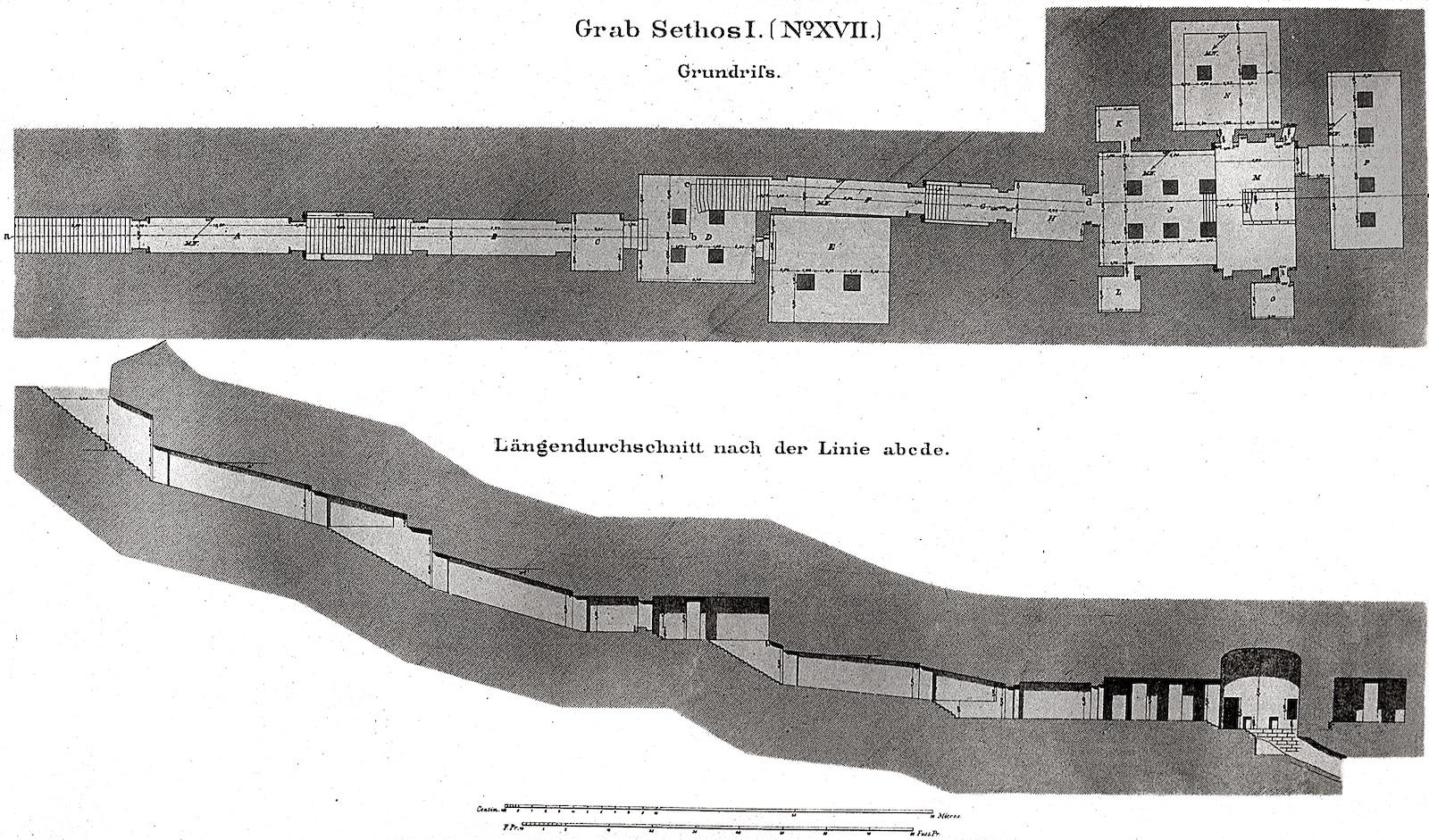
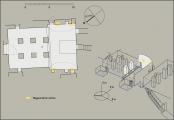
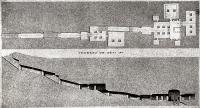
Tomb plan and section.
View of pillared chamber F looking into corridor G (reconstruction).
Book of Gates, fourth division (P)/fifth hour (H), scene 30: Egyptians and "Asiatics," two of the "four races of mankind" (reconstruction).
Book of Gates, fourth division (P)/fifth hour (H), scene 30: Nubians, one of the "four races of mankind" (reconstruction).
Opening of the Mouth ritual, scenes 1-8 (reconstruction).
Opening of the Mouth ritual, scenes 9-16 (reconstruction).
Opening of the Mouth ritual, scenes 17-24 (reconstruction).
Sety I led by Horus to Osiris and Hathor (reconstruction).
Book of Gates, fourth division (P)/fifth hour (H), scene 30: Horus with Egyptians and "Asiatics," two of the "four races of mankind" (reconstruction).
Book of Gates, fourth division (P)/fifth hour (H), scene 30: Nubians and Libyans, two of the "four races of mankind" (reconstruction).
Opening of the Mouth ritual, scenes 1-13 (reconstruction).
Opening of the Mouth ritual, scenes 14-24 (reconstruction).
Opening of the Mouth ritual, scenes 24-34 (reconstruction).
Decans, circumpolar stars, and constellations of the southern sky (reconstruction).
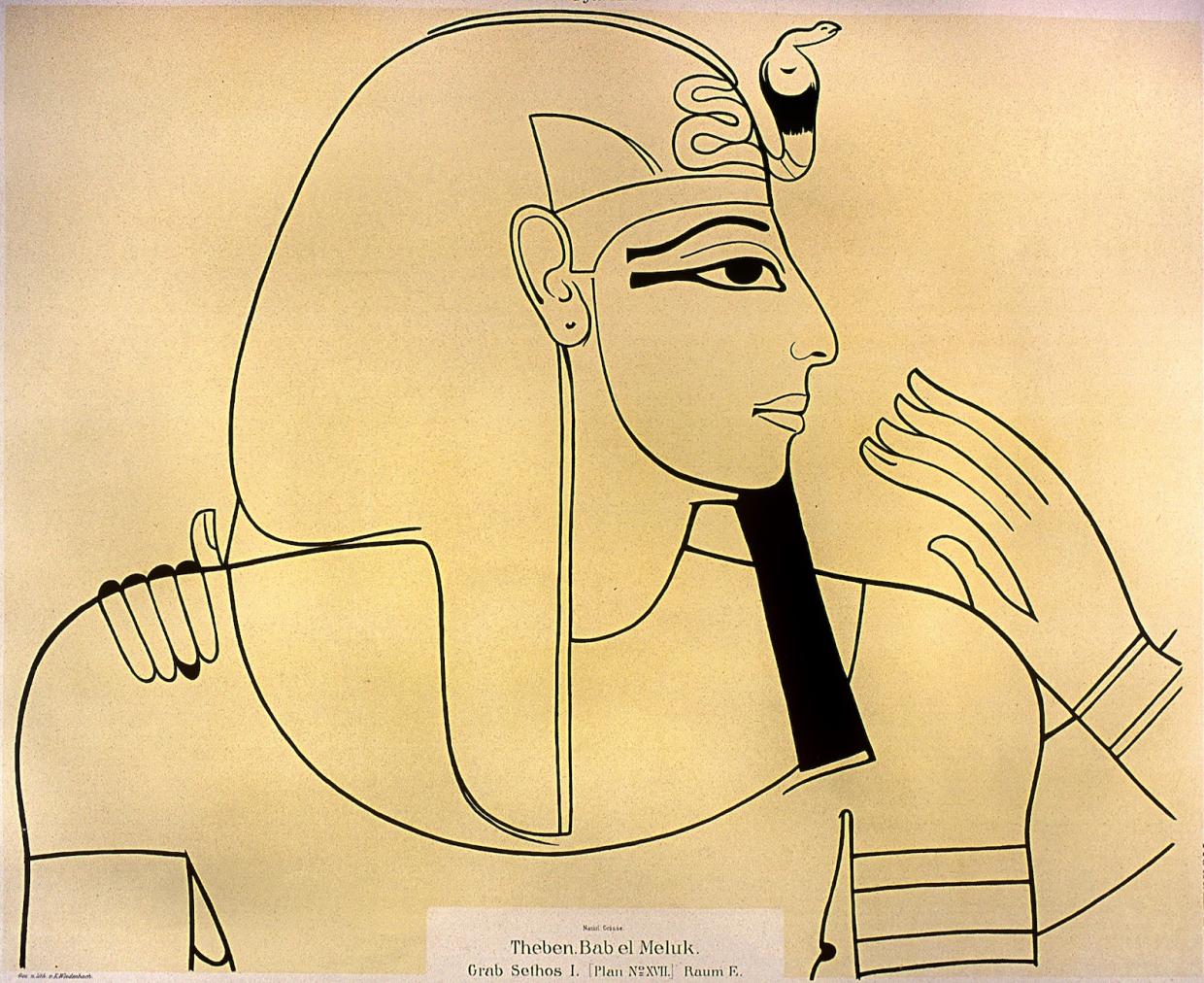
Sety I [with Nefertem]: detail (reconstruction).
Sety I and Ra-Horakhty; Litany of Ra, opening scene (reconstruction).
Horus leading Sety I to Isis. (KV17)
Imydwat, first hour: detail (reconstruction).
Book of Gates, fourth division (P)/fifth hour (H), scene 30: "four races of mankind" (reconstruction).
Osiris and Sety I (original removed, now Berlin Museum 2058) (reconstruction).
Decans, circumpolar stars and constellations of the southern sky (reconstruction).
Book of Gates, fourth division (P)/fifth hour (H), scene 30: Libyans, one of the "four races of mankind."
Opening of the Mouth ritual, opening scene: Sety I before offering table with Iwnmutef priests (reconstruction).
Book of the Heavenly Cow (copy reversed from orientation of the original) (reconstruction).
Neit [embracing Sety I] (position of the near hand of the goddess has been changed and her orientation has been reversed from the original) (reconstruction).
Anubis [with Sety I] (position of the god's forward hand has been altered from the original) (reconstruction).
Opening of the Mouth ritual, scenes 24-27 (reconstruction).
Hathor presenting menat to Sety I (scene removed by Franco-Tuscan expedition and now in the Louvre, Paris) (reconstruction).
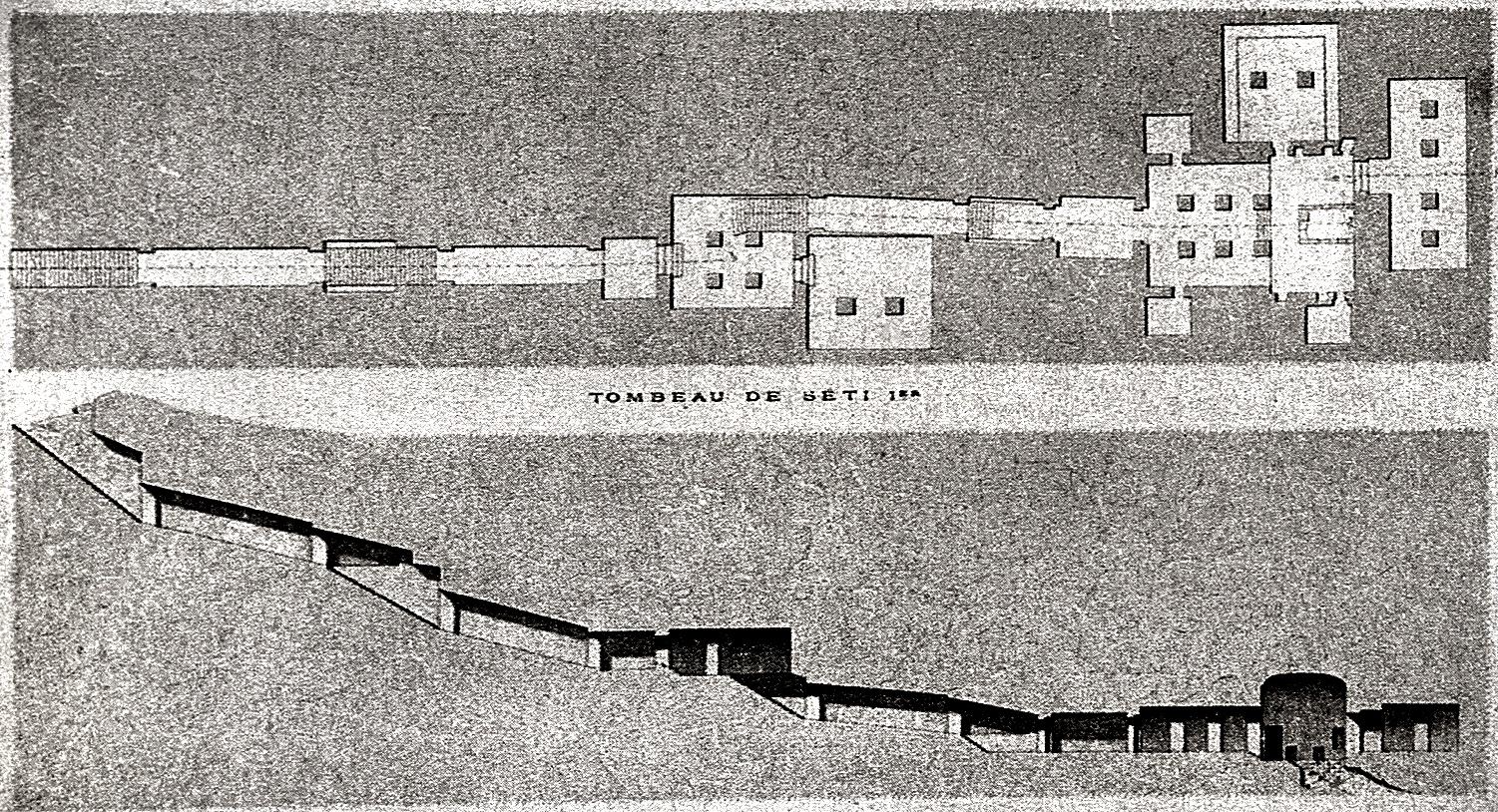
Tomb section and plan.
Opening of the Mouth ritual, opening scene: Sety I seated before offering table and two Iwnmutef priests (reconstruction).
Opening of the Mouth ritual: Iwnmutef priest (reconstruction).
Sety I embraces Osiris as djed-pillar (half of this scene is now missing) (reconstruction).
Wadjet and Nekhbet, the goddesses of Lower and Upper Egypt, as cobras, together with Ma'at (companion image of Ma'at to the right of center was removed by the Franco-Tuscan expedition and is now in Florence; the figures of Wadjet and of Ma'at are now missing as well) (reconstruction).
KV16 and KV17 tomb entrances.
Sety I with Ra-Horakhty. Courtesy of Uni Dia Verlag; Uni Dia Image Nr. 35701.
Litany of Ra, opening scene: serpent above sun disk enclosing scarab and ram-headed man. Courtesy of Uni Dia Verlag; Uni Dia Image Nr. 35702.
Litany of Ra. Courtesy of Uni Dia Verlag; Uni Dia Image Nr. 35703
View of right part of Gate C. Courtesy of Uni Dia Verlag; Uni Dia Image Nr. 35704.
Book of the Dead, spell 151: preliminary sketch of Anubis jackal on shrine (detail) and partial view of Gate D. Courtesy of Uni Dia Verlag; Uni Dia Image Nr. 35705.
Book of the Dead, spell 151: head of Nephthys, partly rendered as preliminary sketch and partly carved as raised relief (detail). Courtesy of Uni Dia Verlag; Uni Dia Image Nr. 35706.
Book of the Dead, spell 151: head of Isis, partly rendered as preliminary sketch and partly carved as raised relief (detail). Courtesy of Uni Dia Verlag; Uni Dia Image Nr. 35707.
Book of Gates, fourth division (P)/fifth hour (H). Courtesy of Uni Dia Verlag; Uni Dia Image Nr. 35708.
Book of Gates, fourth division (P)/fifth hour (H), scene 26: sun god Ra with crew in boat. Courtesy of Uni Dia Verlag; Uni Dia Image Nr. 35709.
Book of Gates, fourth division (P)/fifth hour (H), Egyptians and Asiatics with loss of color from nineteenth century wet squeezes (detail). Courtesy of Uni Dia Verlag; Uni Dia Image Nr. 35710.
Book of Gates, fourth division (P)/fifth hour (H), end. Courtesy of Uni Dia Verlag; Uni Dia Image Nr. 35711.
Detail of Book of Gates, fourth division (P)/fifth hour (H), end. Courtesy of Uni Dia Verlag; Uni Dia Image Nr. 35712.
Book of Gates, fourth division (P)/fifth hour (H): "four races of mankind." Courtesy of Uni Dia Verlag; Uni Dia Image Nr. 35713.
Detail from Book of Gates, fourth division (P)/fifth hour (H), end. Courtesy of Uni Dia Verlag; Uni Dia Image Nr. 35714.
Sety I led by Horus to Osiris and Hathor. Courtesy of Uni Dia Verlag; Uni Dia Image Nr. 35715.
Detail of Book of Gates, fifth division (P)/sixth hour (H). Courtesy of Uni Dia Verlag; Uni Dia Image Nr. 35716.
Book of Gates, fifth division (P)/sixth hour (H), beginning. Courtesy of Uni Dia Verlag; Uni Dia Image Nr. 35717.
Sety I embraced by Hathor as Western Goddess; Sety before Ptah; right pillar 1. Courtesy of Uni Dia Verlag; Uni Dia Image Nr. 35718.
Sety I embraced by Isis, right pillar 2. Courtesy of Uni Dia Verlag; Uni Dia Image Nr. 35719.
Sety I embraced by Nephthys and Sety I embraced by Neith. Courtesy of Uni Dia Verlag; Uni Dia Image Nr. 35720.
Sety I embraced by Neit. Courtesy of Uni Dia Verlag; Uni Dia Image Nr. 35721.
View of incomplete pillars in Side chamber Fa. Courtesy of Uni Dia Verlag; Uni Dia Image Nr. 35722.
Imydwat ninth hour. Courtesy of Uni Dia Verlag; Uni Dia Image Nr. 35723.
Detail of Imydwat ninth hour. Courtesy of Uni Dia Verlag; Uni Dia Image Nr. 35724.
Detail of Imydwat ninth hour. Courtesy of Uni Dia Verlag; Uni Dia Image Nr. 35725.
Imydwat, tenth hour: corrected preliminary sketches. Courtesy of Uni Dia Verlag; Uni Dia Image Nr. 35726.
Detail of Imydwat, tenth hour: corrected preliminary sketches. Courtesy of Uni Dia Verlag; Uni Dia Image Nr. 35727.
Detail of Imydwat, tenth hour: corrected preliminary sketches. Courtesy of Uni Dia Verlag; Uni Dia Image Nr. 35728.
Detail of Imydwat, tenth hour: corrected preliminary sketches. Courtesy of Uni Dia Verlag; Uni Dia Image Nr. 35729.
Detail of Imydwat, tenth hour: corrected preliminary sketches. Courtesy of Uni Dia Verlag; Uni Dia Image Nr. 35730.
Detail of Imydwat, tenth hour: corrected preliminary sketches. Courtesy of Uni Dia Verlag; Uni Dia Image Nr. 35731.
Detail of Imydwat tenth hour, eleventh hour. Courtesy of Uni Dia Verlag; Uni Dia Image Nr. 35732.
Bibliography
Wilkinson, Richard H. and Carl Nicholas Reeves. The Complete Valley of the Kings. London: Thames and Hudson, 1996. Pp. 137-139.