KV 60
Sit-Ra, called In (?)
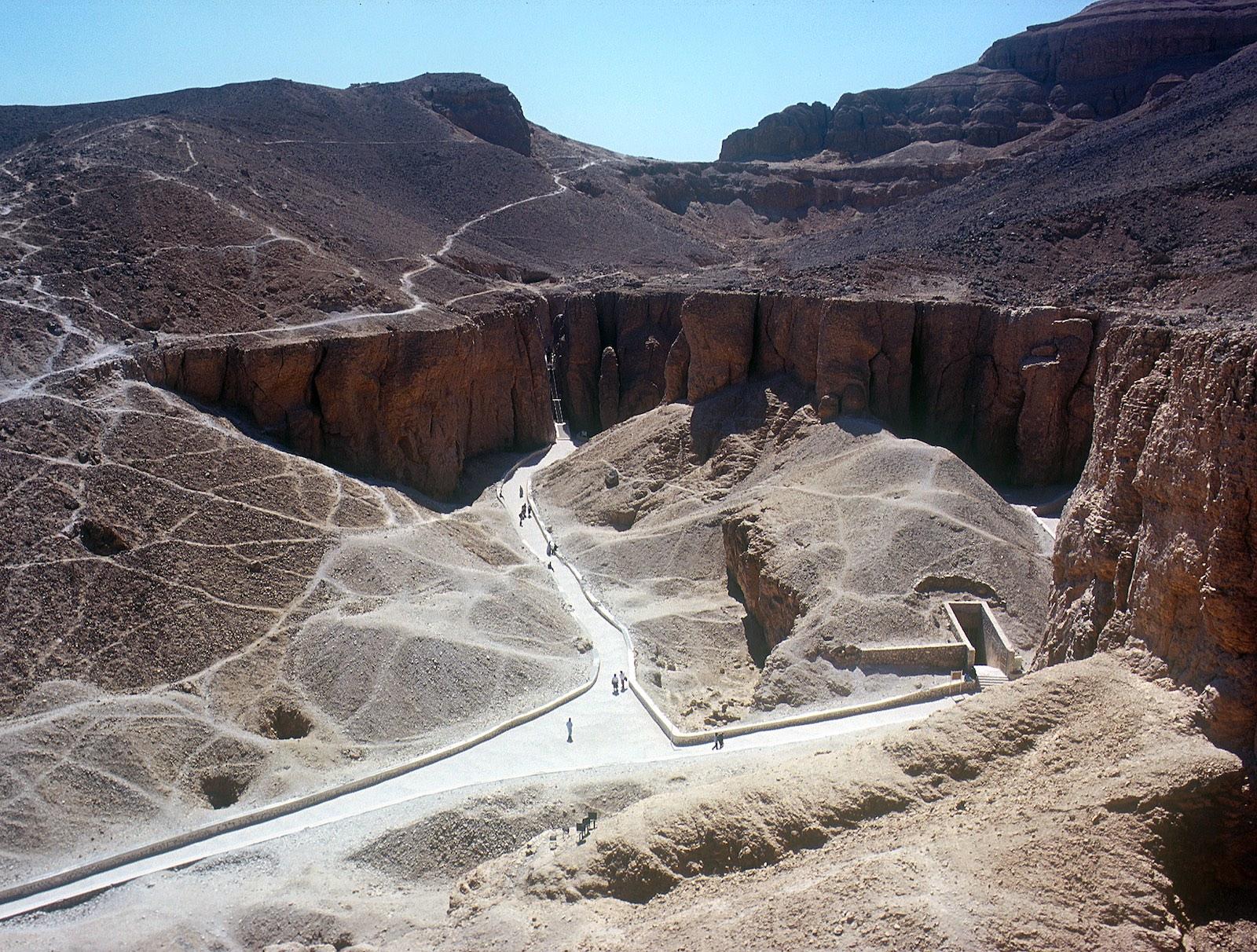
Ancient cutting of entryway to KV 19 surmounted by modern retaining walls; light rectangle in foreground is modern covering of KV 60.

Entryway A
See entire tombRoughly cut steps lead steeply down to gate B from a cleft in the hillside.
Corridor B
See entire tombThere are two roughly cut recesses opposite each other in the right (southeast) and left (northwest) walls, each containing a wadjet eye. The floor in the center third of the chamber is lower than the front or rear.
Gate B
See entire tombThe gate leads into corridor B.
Gate Ba
See entire tombThe gate is located in the right (east) wall of corridor B.
Side chamber Ba
See entire tombThis small, undecorated side chamber narrows towards the left (northeast) end. Piled near the rear (southeast) wall are large limestone blocks. A side of beef was found in the chamber.
Gate J
See entire tombThe square cut gate leads from corridor B into burial chamber J.
Burial chamber J
See entire tombThe low, roughly cut, unfinished chamber is rectangular in plan. The chamber still contains the mummy of an unknown woman.
Chamber plan:
RectangularRelationship to main tomb axis:
ParallelChamber layout:
Flat floor, no pillarsFloor:
One levelCeiling:
Flat
About
About
The tomb is located in the southeast branch off the southeast wadi, immediately beside the entrance of KV 19, south of KV 20, in the eastern cliffs of the Valley. It is a small, undecorated tomb, consisting of an entryway stairway (A), a corridor (B) with recesses and a side chamber (Ba), and a roughly-cut burial chamber (J).
Noteworthy features:
Two female mummies, KV 60A and KV 60B, were found in the tomb and removed to the Egyptian Museum, Tahrir Square. KV 60A was CT scanned and her identity has been suggested to be that of Hatshepsut.
Site History
An inscription on one Coffin bore the name and title, royal nurse, In. In has been thought by some to be Sit-Ra, called In, royal nurse of Hatshepsut. The mummy is now in the Egyptian Museum, Cairo. The other, still unidentified mummy remained in situ. Thomas suggested it might be the mummy of Hatshepsut, relocated by Thutmes III.
Dating
This site was used during the following period(s):
Exploration
Conservation
Conservation History
During Ryan's work on the tomb in 1989, a wooden box was built to hold one mummy, and a metal cover was set over the pit entrance.
Site Condition
The tomb was excavated by Carter and then closed again. It was relocated by Donald Ryan of Pacific Lutheran University.
Hieroglyphs
Sit-Ra
 Daughter of Ra
sAt-Raw
In
 Something sweet?
in(w)
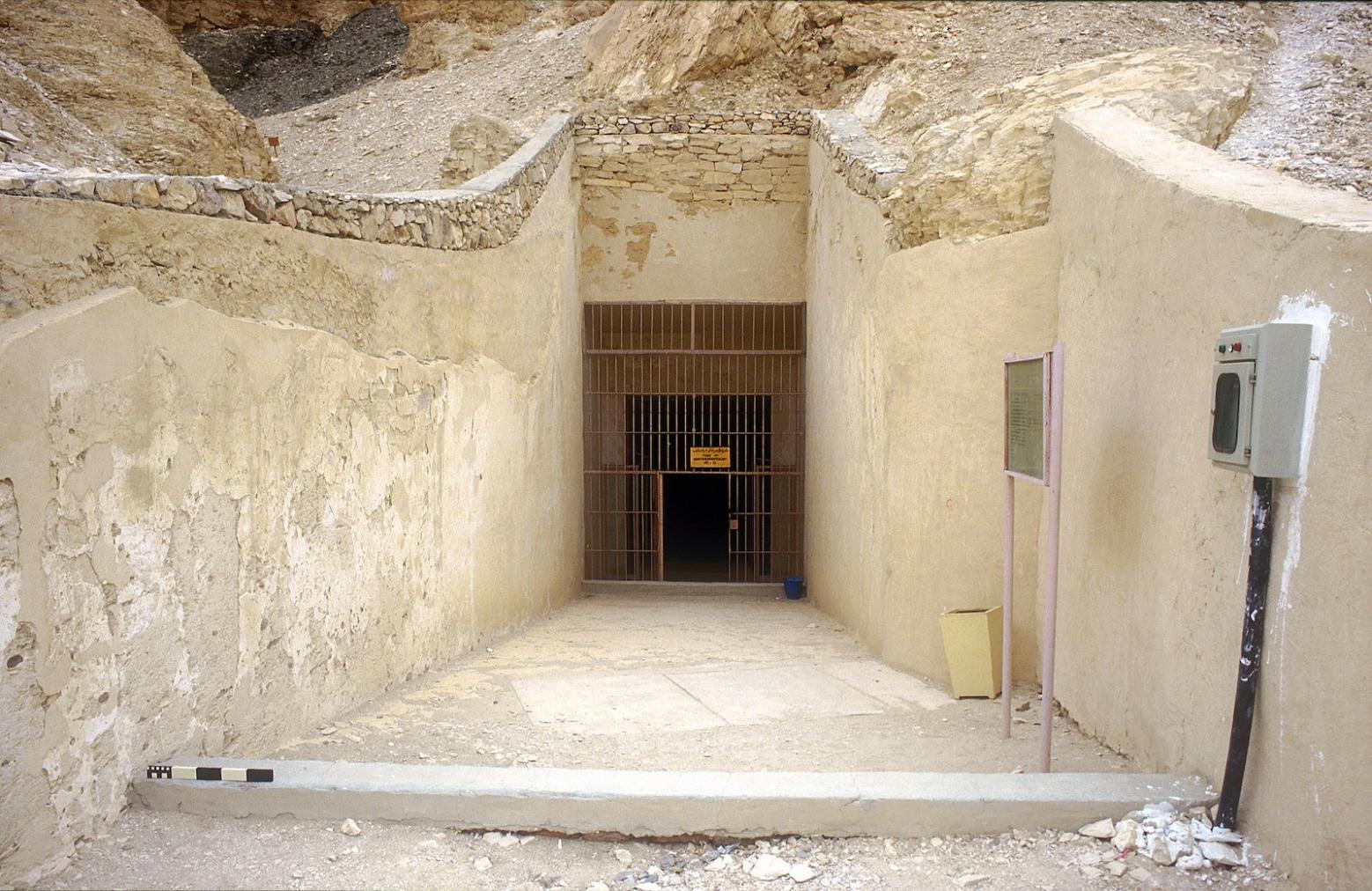
Ancient cutting of entryway to KV 19 surmounted by modern retaining walls; light rectangle in foreground is modern covering of KV 60.
Articles
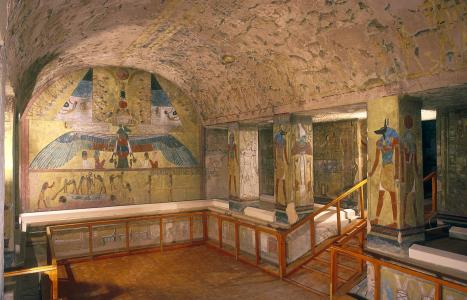
Anatomy of a Tomb: Ancient and Modern Designations for Chambers and Features
Bibliography
Aston, David, Barbara Aston and Donald P. Ryan. Pottery from Tombs in the Valley of the Kings, KV 21, 27, 28, 44, 45, and 60. Cahiers de la céramique égyptienne. Cairo, IFAO. 6 (2000): 11-38.
Carter, Howard. Report of Work Done in Upper Egypt (1902-1903). Annales du Service des Antiquités de l’Égypte 4 (1903): 171-180.
Hawass, Zahi and Sahar N. Saleem. Scanning the Pharaohs: CT Imaging of the New Kingdom Royal Mummies. Cairo: The American University in Cairo Press, 2016: 56-61.
Helck, Wolfgang. Königsgräbertal. Wolfgang Helck, Eberhart Otto and Wolfhart Westendorf (eds.). Lexikon der Ägyptologie. 7 vols. Wiesbaden, 1972-1992. 3: 523.
Mastenbroek, O. Archeologisch nieuws, no. 8: Het Dal der Koningen. De Ibis 19 (1994): 16-20.
Reeves, Carl Nicholas. Valley of the Kings: The Decline of a Royal Necropolis (= Studies in Egyptology). London: KPI, 1990. Pp. 139.
Ryan, Donald P., The Pacific Lutheran University Valley of the Kings Project: A Synopsis of the First (1989) Season. Newsletter of the American Research Center in Egypt 146 (1989): 8-10.
Ryan, Donald P. Exploring the Valley of the Kings. Archaeology 47, 1 (1994): 52-61.
Ryan, Donald P. Some Observations Concerning Uninscribed Tombs in the Valley of the Kings. In: Nicholas Reeves (ed.), After Tut'ankhamun: Research and Excavation in the Royal Necropolis at Thebes. London: KPI, 1992: 21-27.