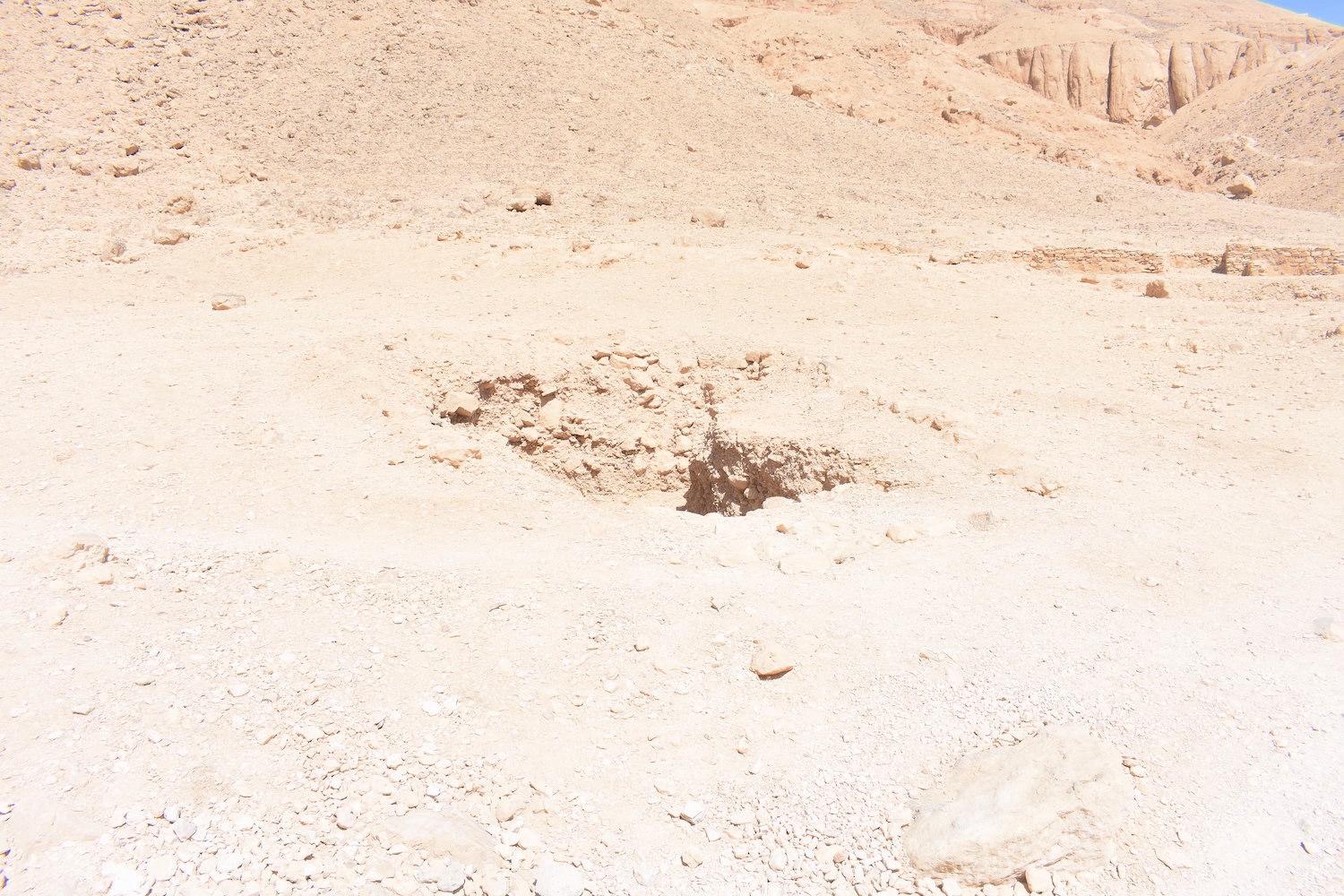
QV 55
Prince Amenherkhepshef

Entryway A
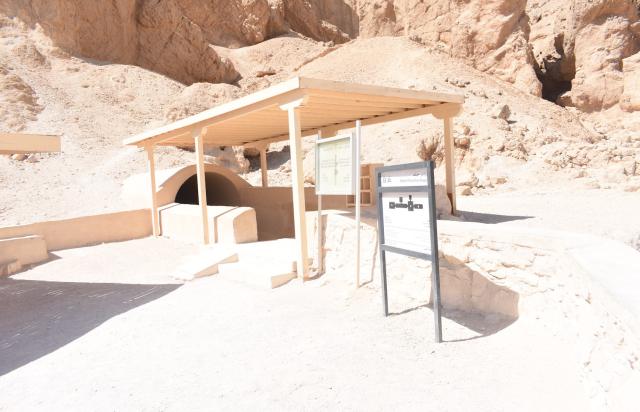
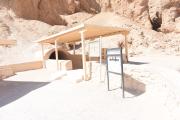
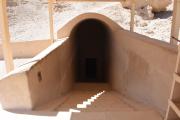
See entire tombAfter the descending stairs, a long entryway Ramp with an Overhang leads into the tomb. This ramp now has modern cement Steps. The Ceiling Recess at the end of the overhang has the old Italian Archaeological expedition sign with the name of Amenhekhepshef and the tomb number.
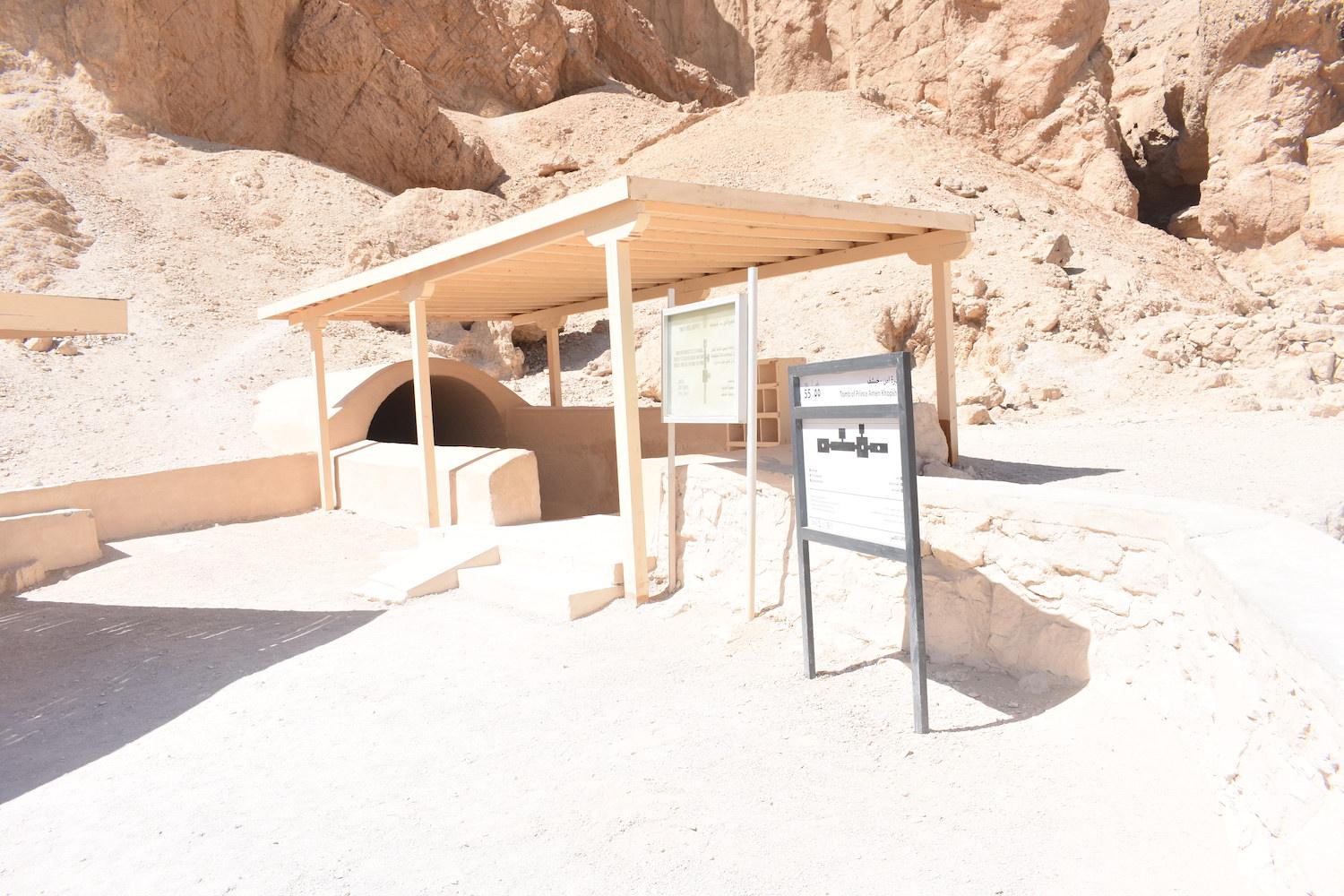
Visitors shelter and entrance of QV55
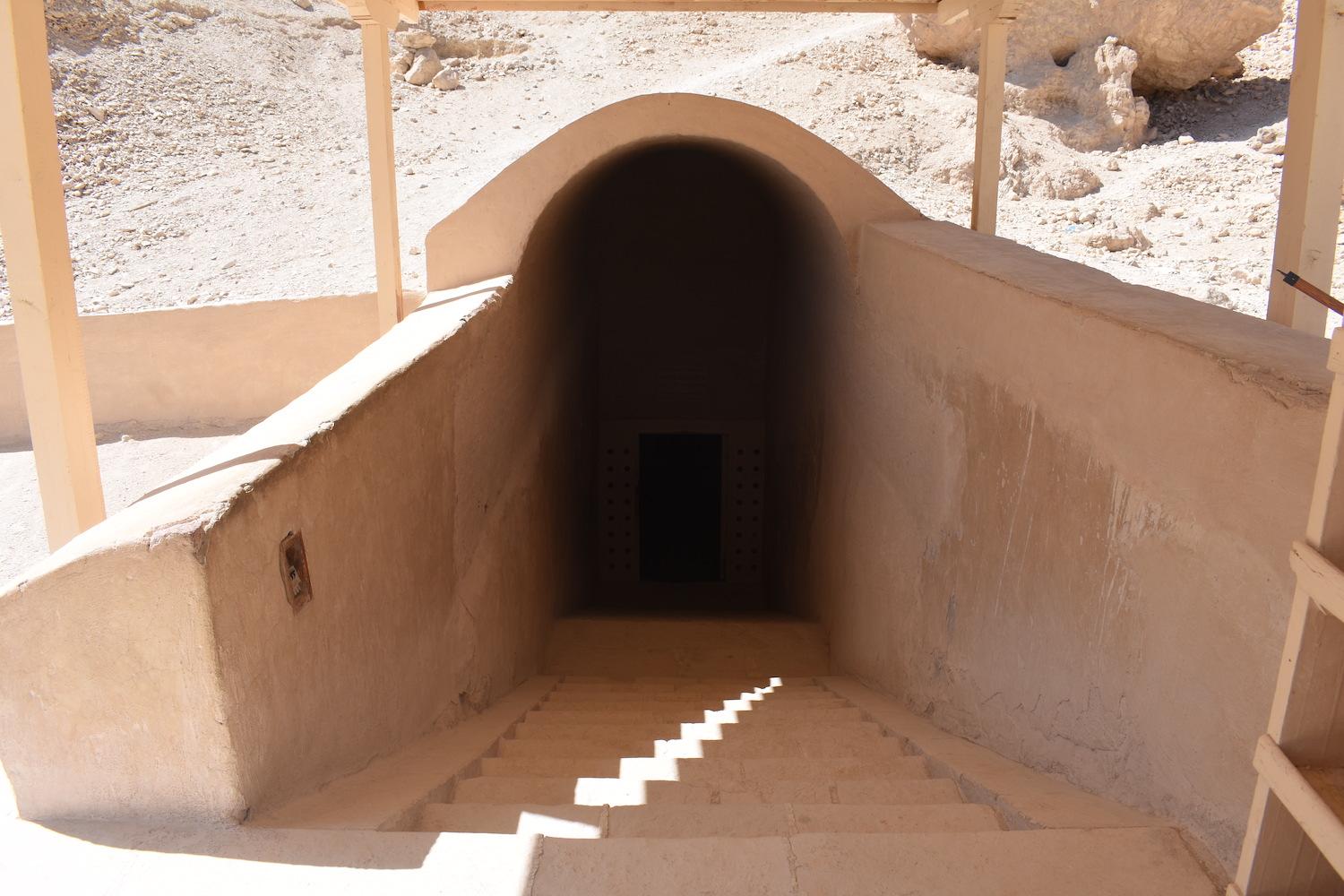
Entrance to QV55
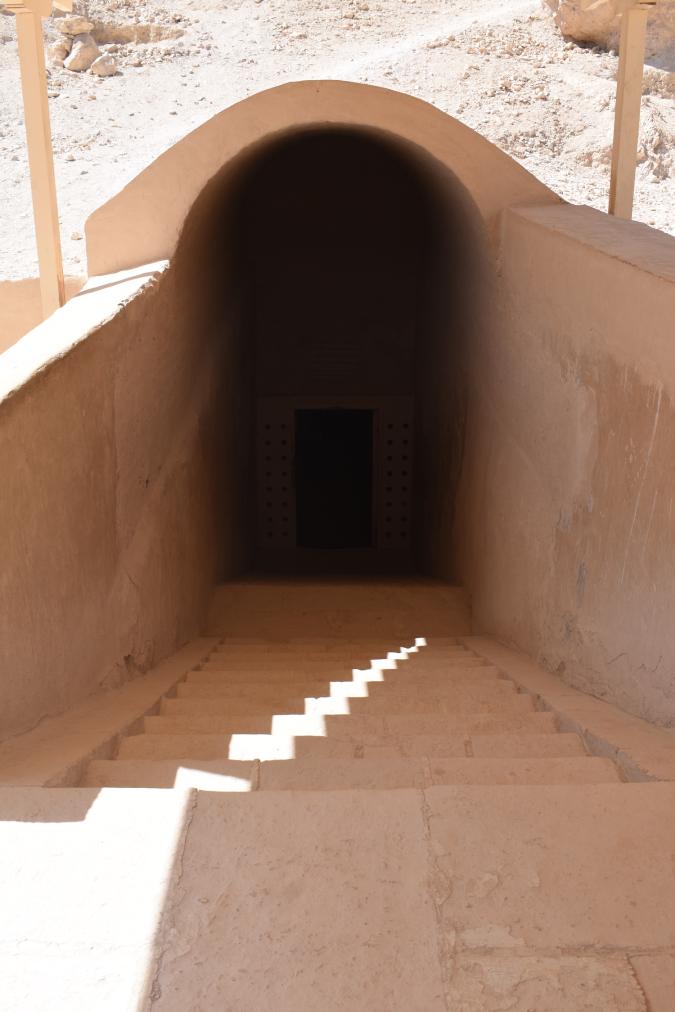
Entrance to QV55
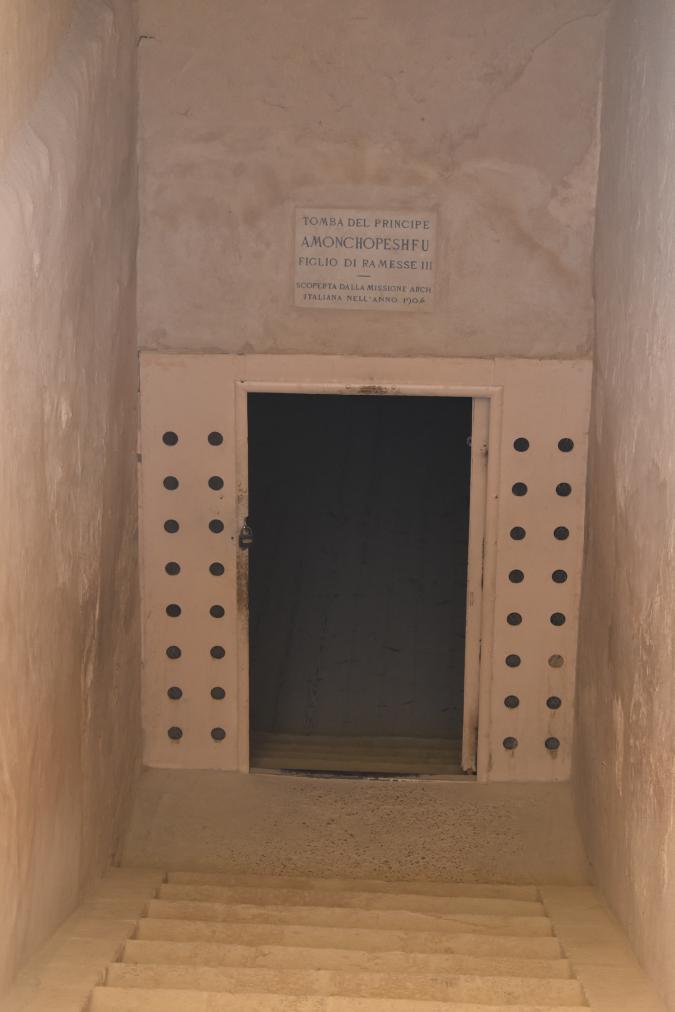
Entrance to QV55
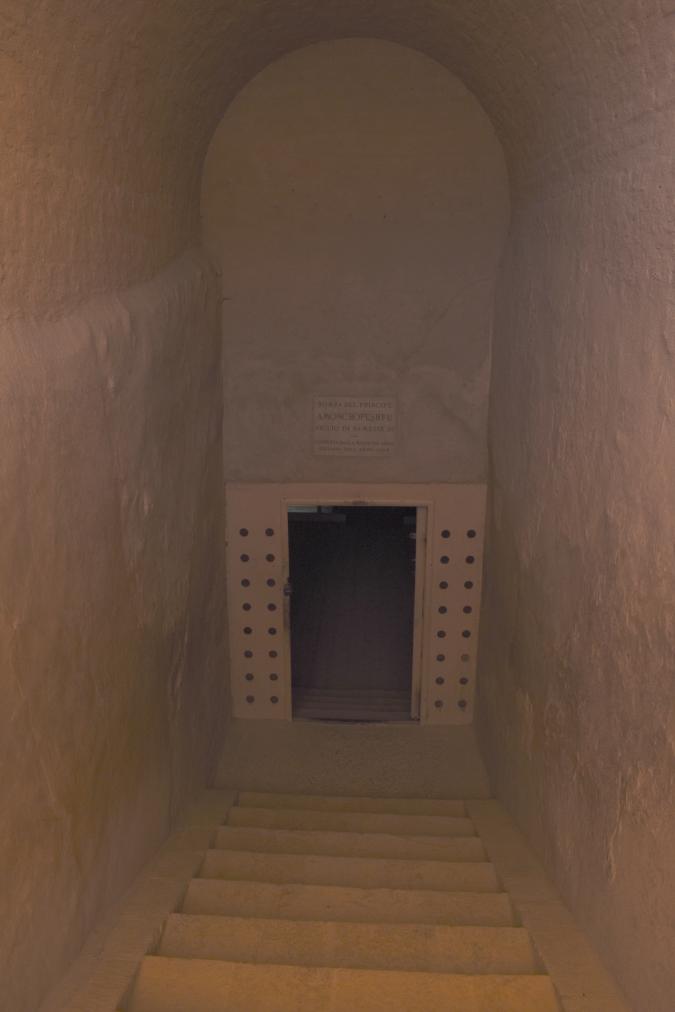
Entrance to QV55
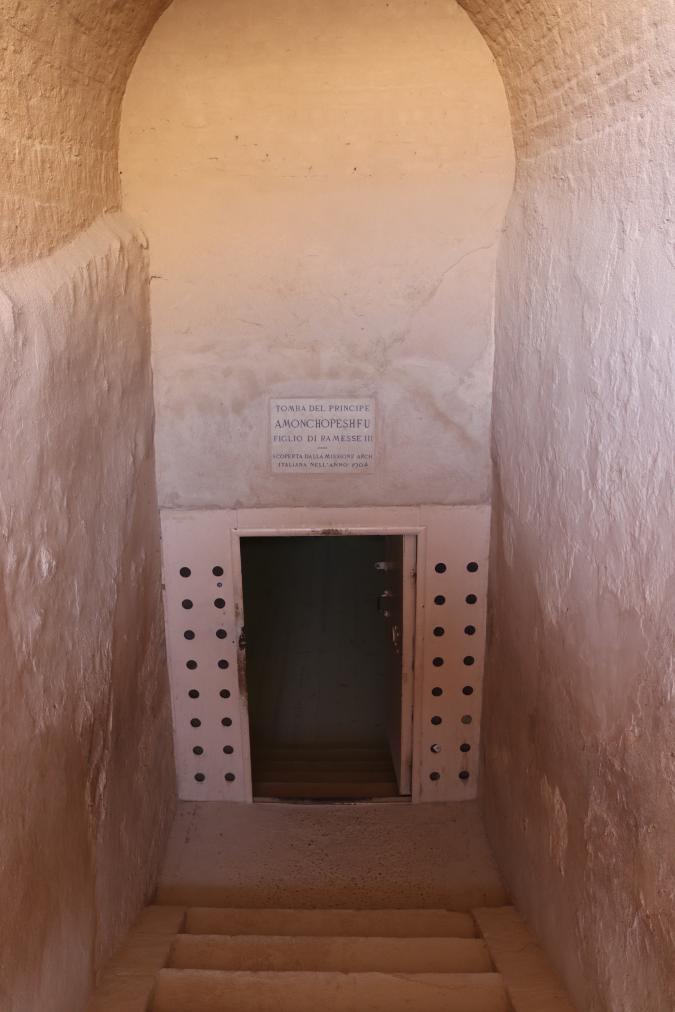
Entryway A
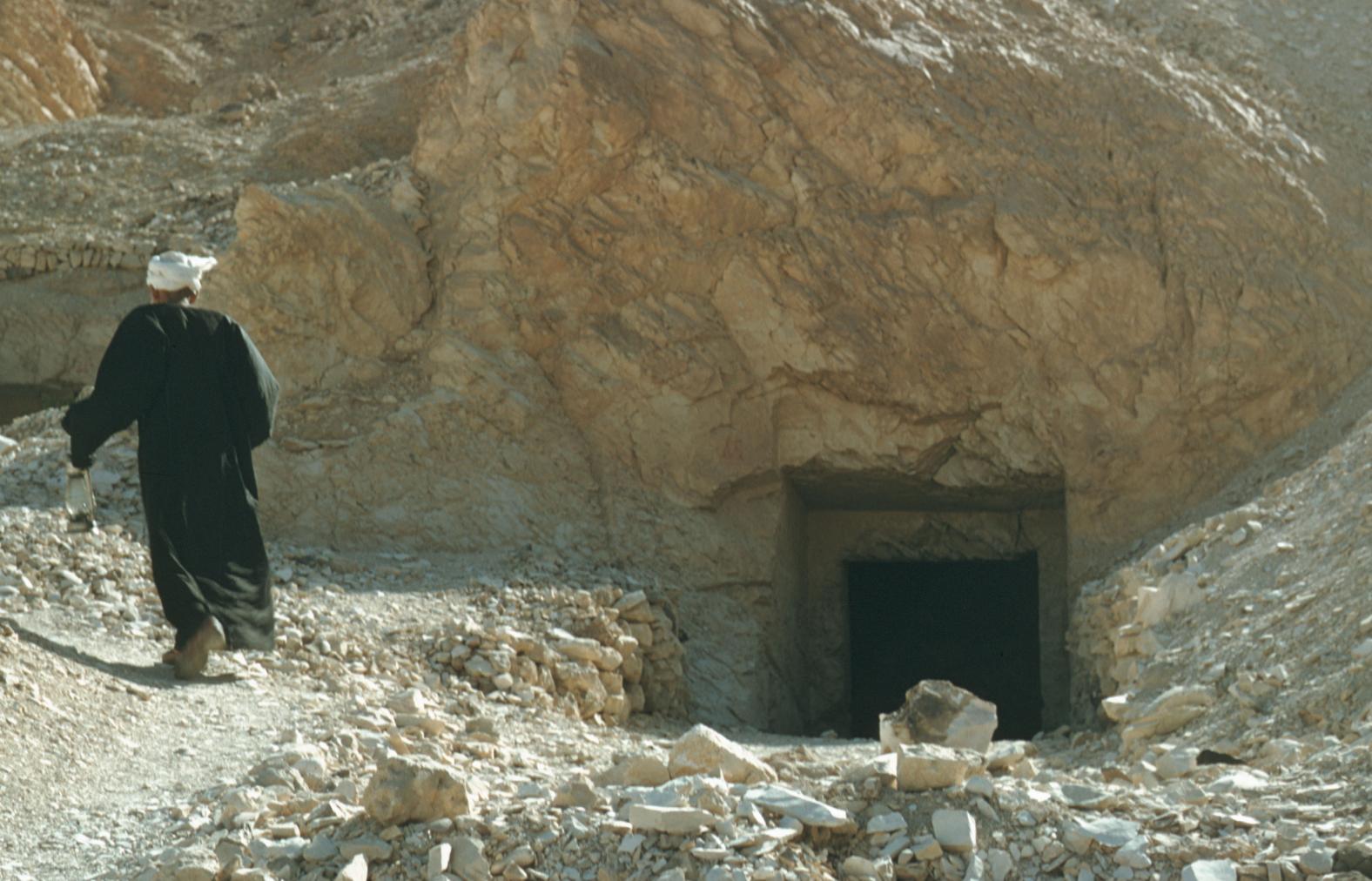
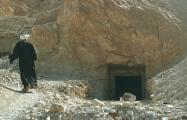
Entrance to QV 55. Courtesy of Uni Dia Verlag; Uni Dia Image Nr. 36621.
Gate B
See entire tombThe door jamb has a slot cut at the top for a lintel beam and has been reconstructed in concrete. The thicknesses are decorated with images of winged Maat figures.
Porter and Moss designation:
Chamber B
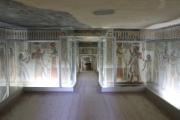
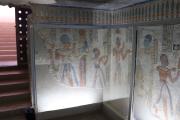
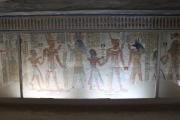
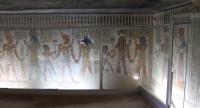
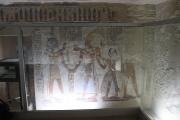
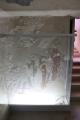
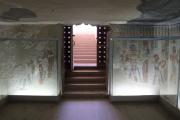
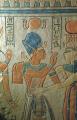
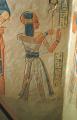
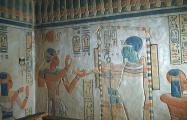
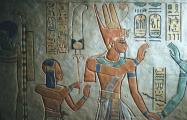
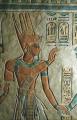
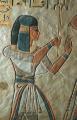
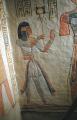
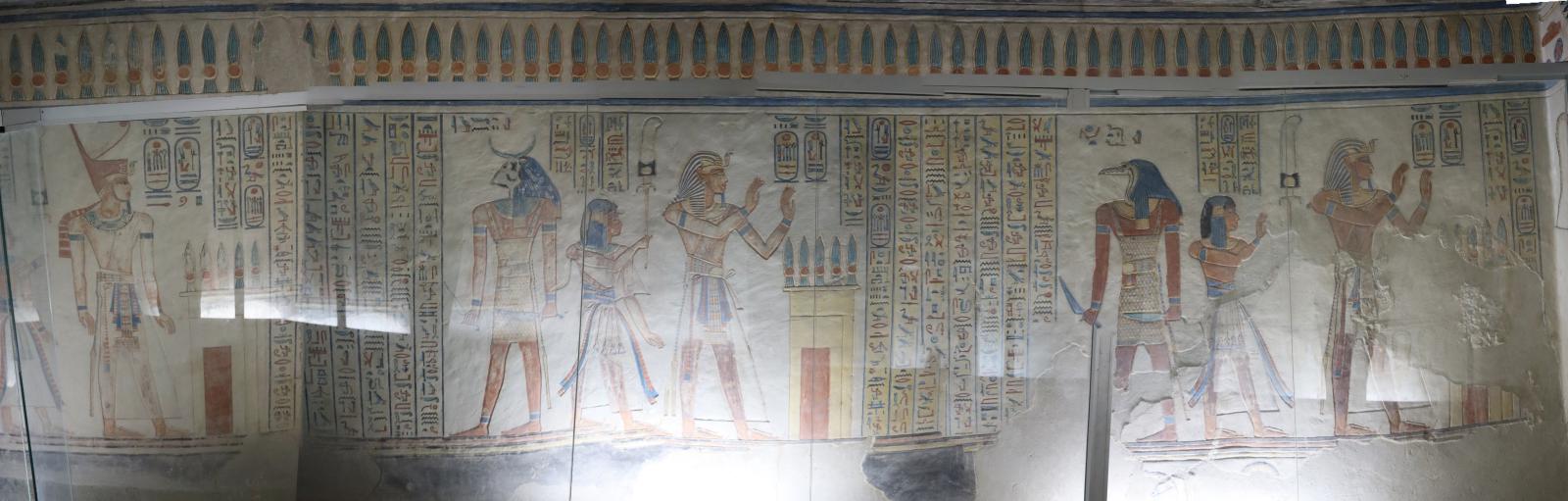
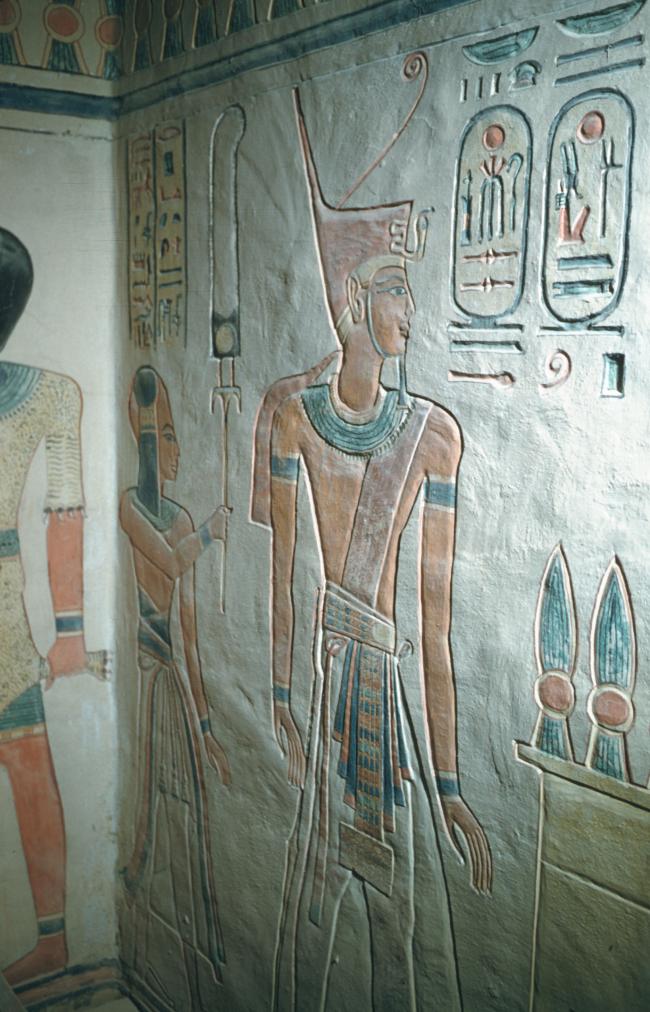
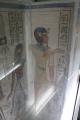
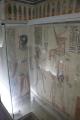
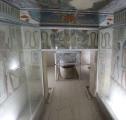
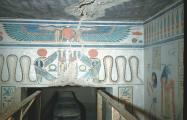
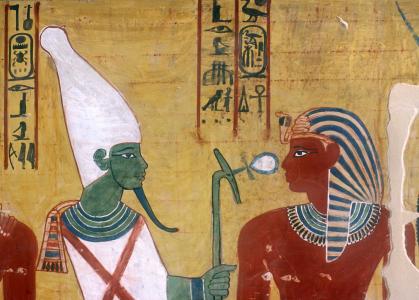
See entire tombThis chamber lies on axis with the tombs entrance. The walls are protected with glass barriers and lit by fluorescent lighting. The chamber is decorated with scenes of the prince and Rameses III offering to various deities. The king is always placed as the dominant figure in the scene, and it is he who actually performs the offerings on behalf of his son. As in QV 42 and QV 44, the prince is shown as a child with the side lock, or Horus lock of youth and carries a long plume.
Porter and Moss designation:
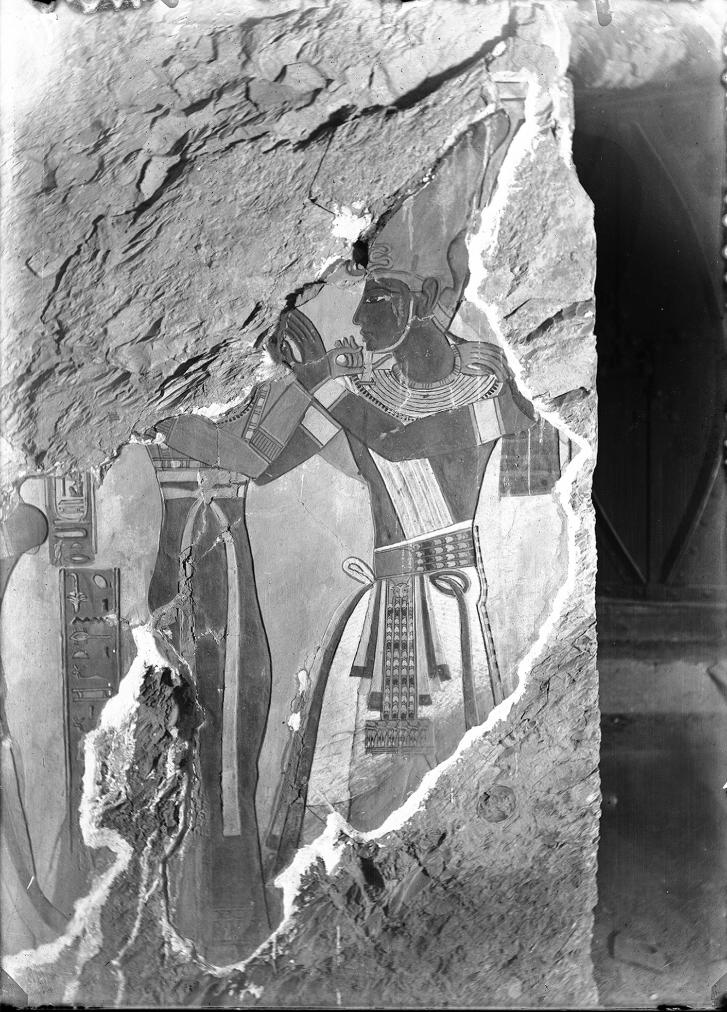
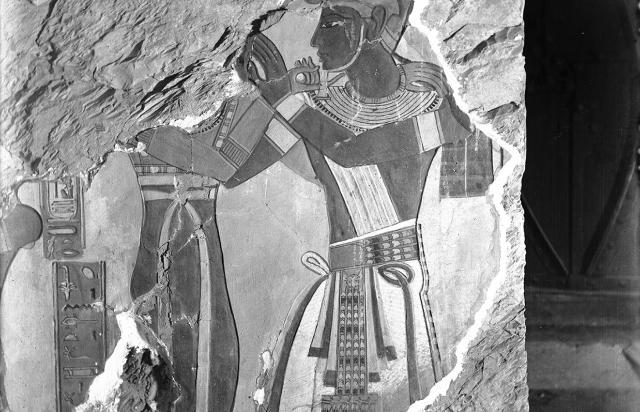
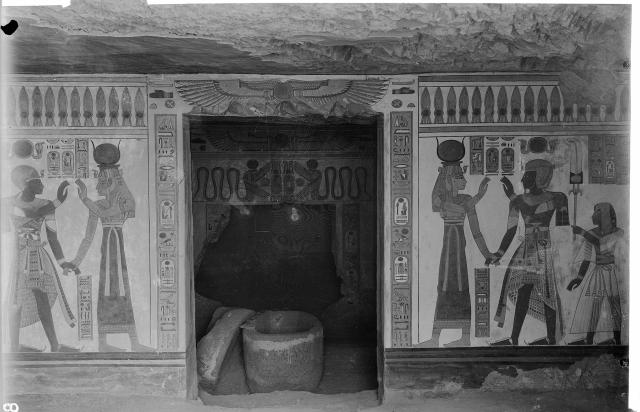
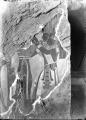
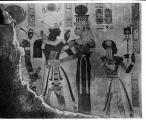
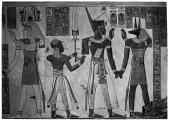
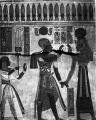
The tomb of Prince Amenherkhepshef (QV 55) photographed during Ernesto Schiaparelli's excavations with a fragmented scene of Rameses III embracing an unidentifiable female deity. Italian Archaeological Expedition excavations. Courtesy of the Egyptian Museum in Turin.
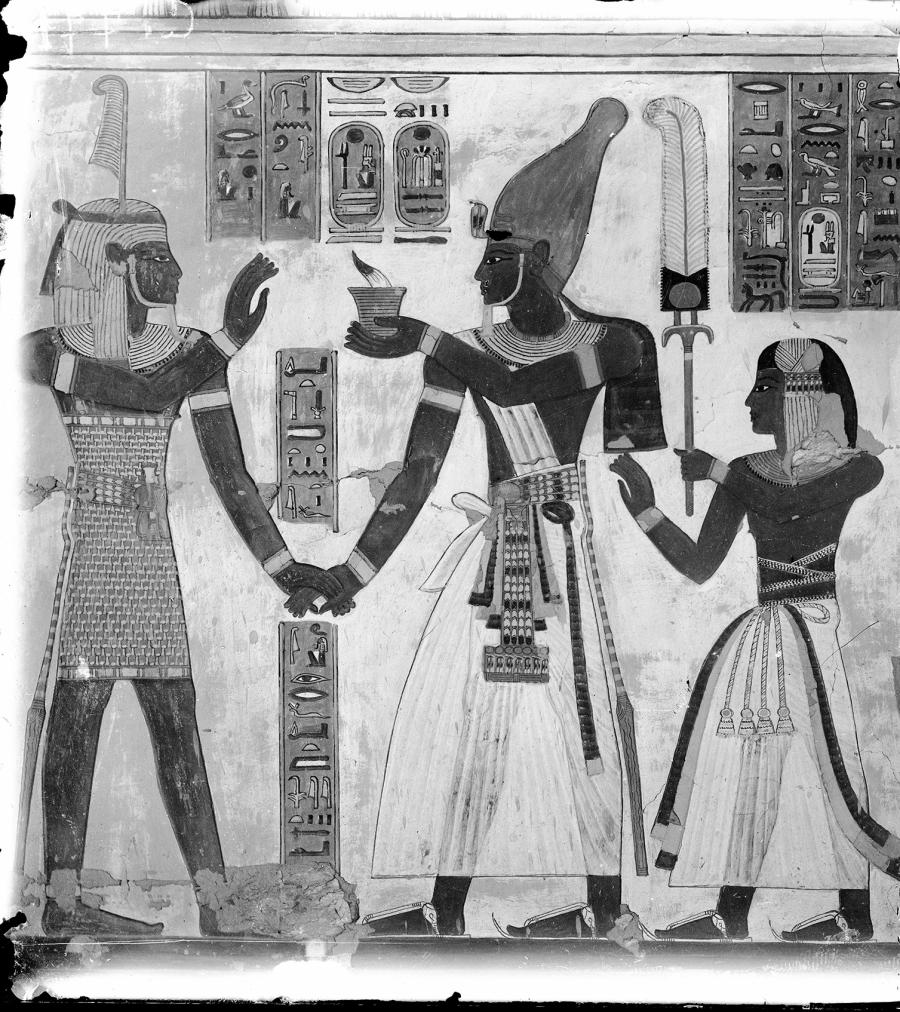
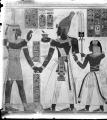
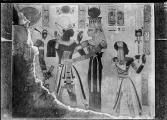
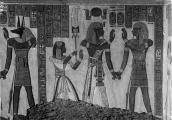
The tomb of Prince Amenherkhepshef (QV 55) photographed during Ernesto Schiaparelli's excavations with the young prince and Rameses III censing before Shu. Italian Archaeological Expedition excavations. Courtesy of the Egyptian Museum in Turin.
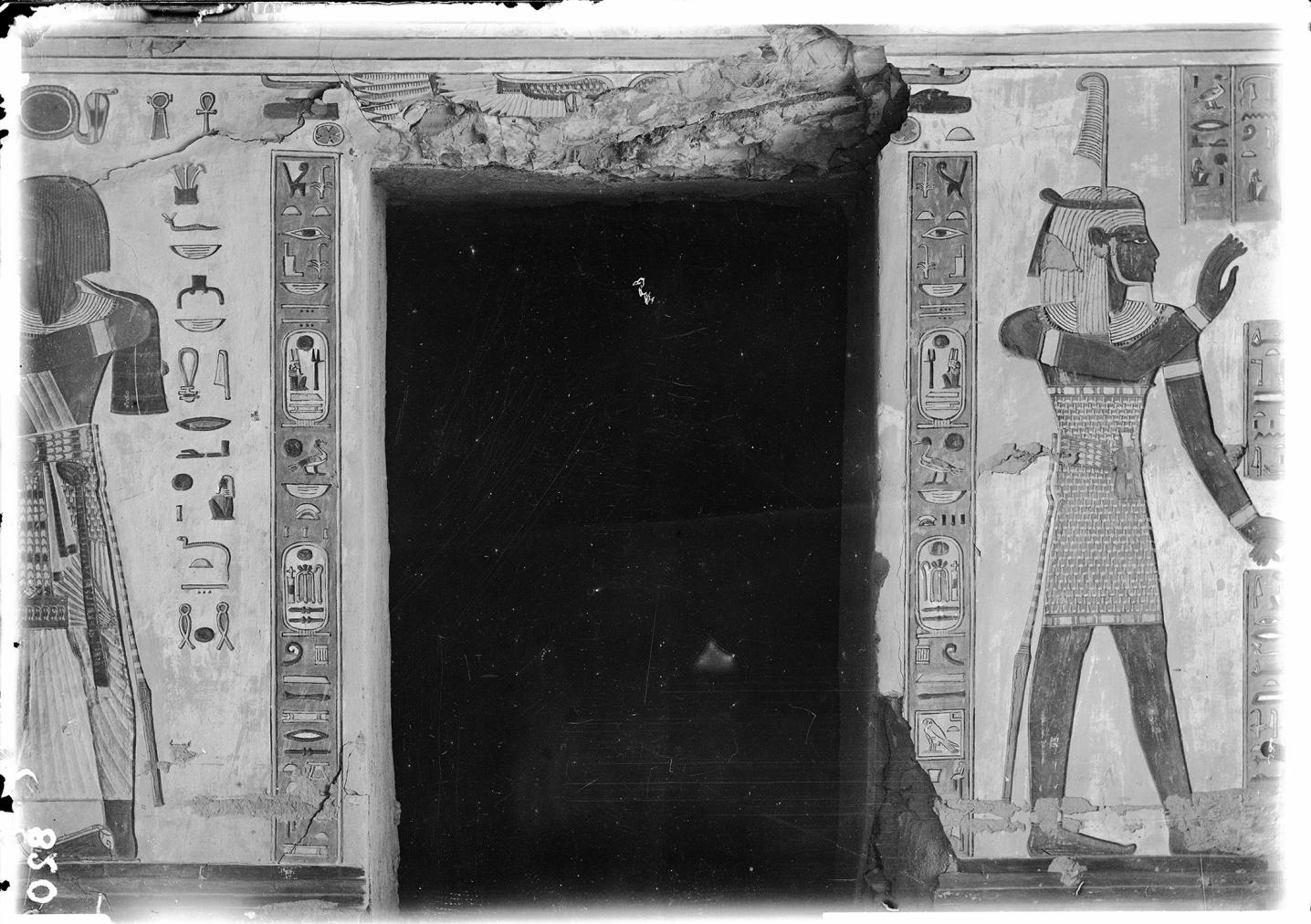
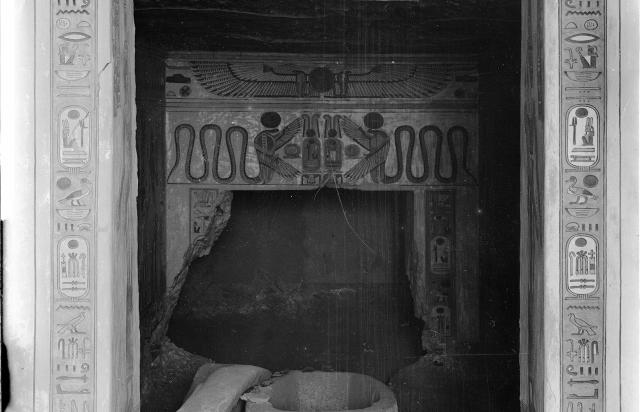
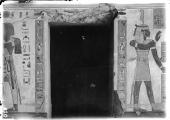
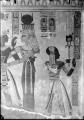
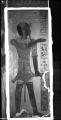
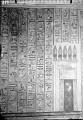
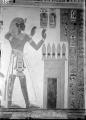
West entrance to the antechamber's lateral annex from the tomb of Prince Amenherkhepshef (QV 55) photographed during Ernesto Schiaparelli's excavations with scenes of Rameses III (left) and the god Shu (right). Italian Archaeological Expedition excavations. Courtesy of the Egyptian Museum in Turin.
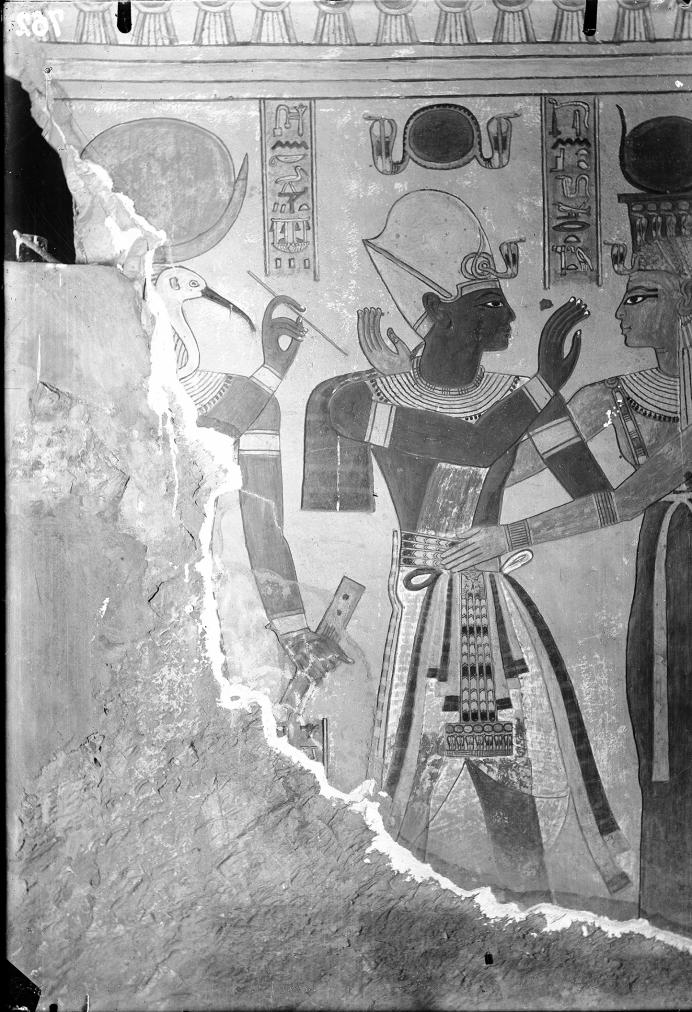
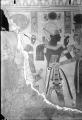
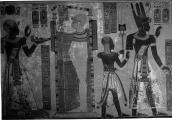
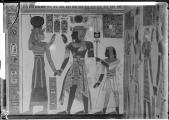
East wall in the antechamber of the tomb of Prince Amenherkhepshef (QV 55) photographed during Ernesto Schiaparelli's excavations that depicts Thoth behind Rameses III embracing Isis. Italian Archaeological Expedition excavations. Courtesy of the Egyptian Museum in Turin.
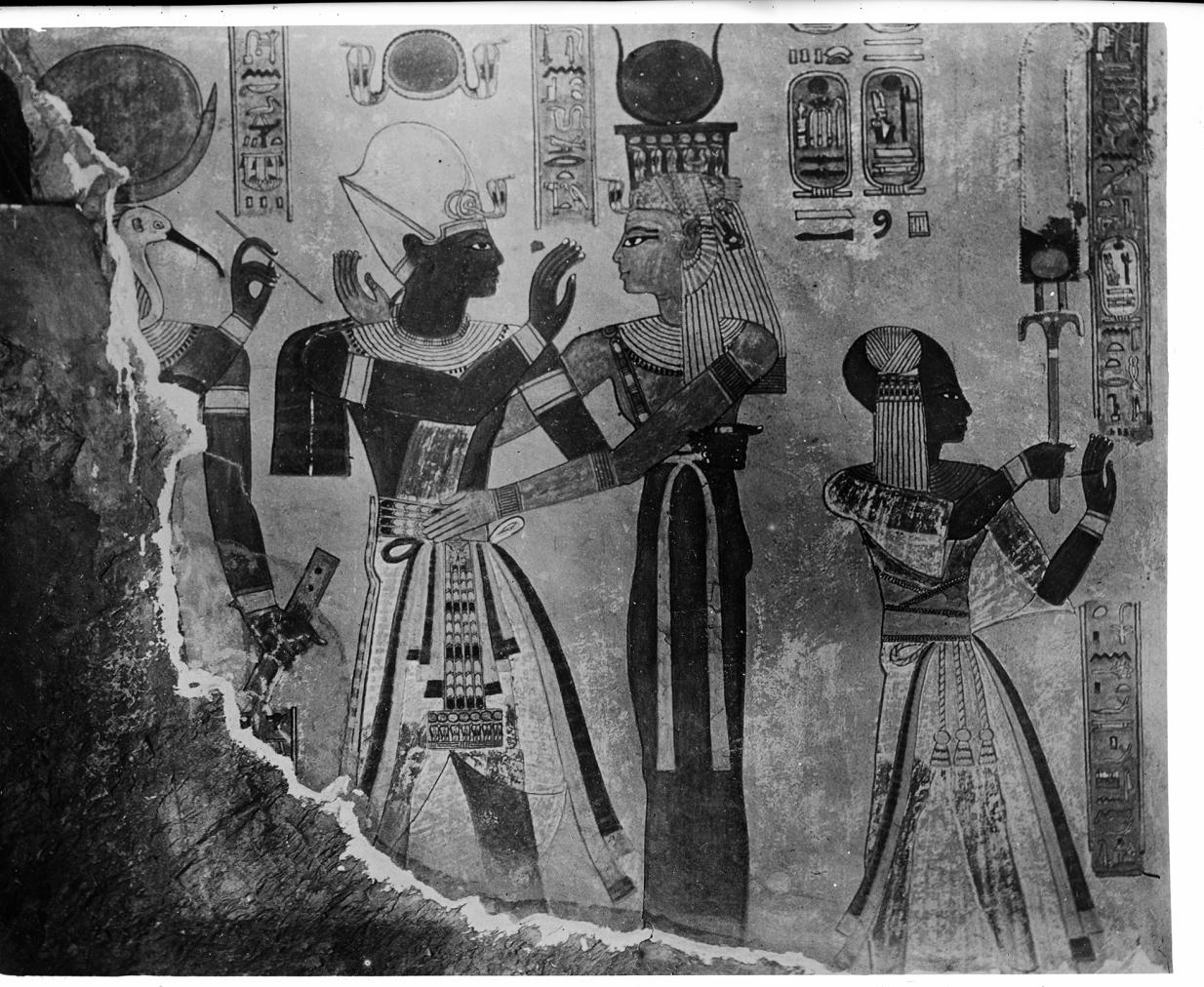
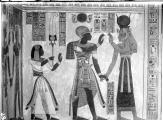
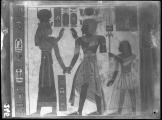
The tomb of Prince Amenherkhepshef (QV 55) photographed during Ernesto Schiaparelli's excavations that depicts Thoth behind Rameses III who embraces the Isis. They are followed by the young prince. Italian Archaeological Expedition excavations. Courtesy of the Egyptian Museum in Turin.
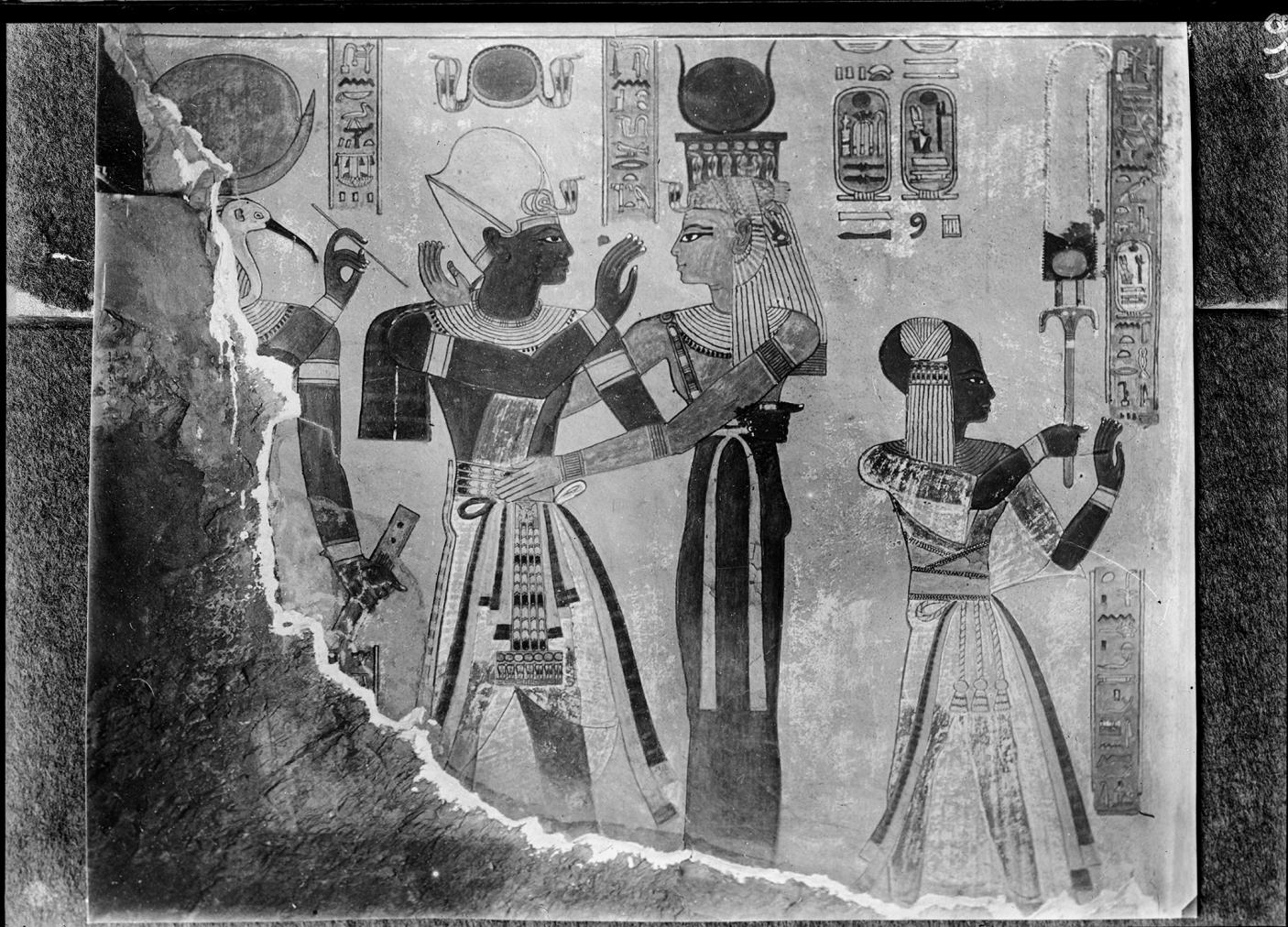
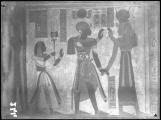
East wall in the antechamber of the tomb of Prince Amenherkhepshef (QV 55) photographed during Ernesto Schiaparelli's excavations that depicts Thoth behind Rameses III who embraces Isis followed by the young prince. Italian Archaeological Expedition excavations. Courtesy of the Egyptian Museum in Turin.
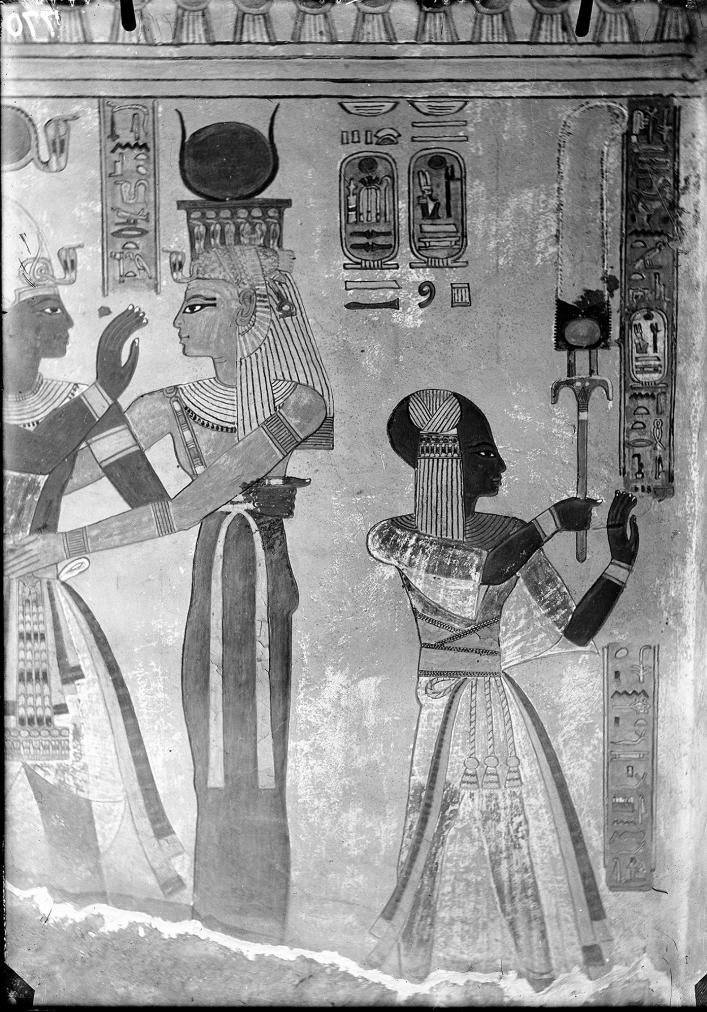
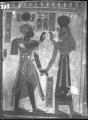
East wall in the antechamber of the tomb of Prince Amenherkhepshef (QV 55) photographed during Ernesto Schiaparelli's excavations that depicts Thoth (not visible here) behind Rameses III who embraces Isis followed by the young prince. Italian Archaeological Expedition excavations. Courtesy of the Egyptian Museum in Turin.
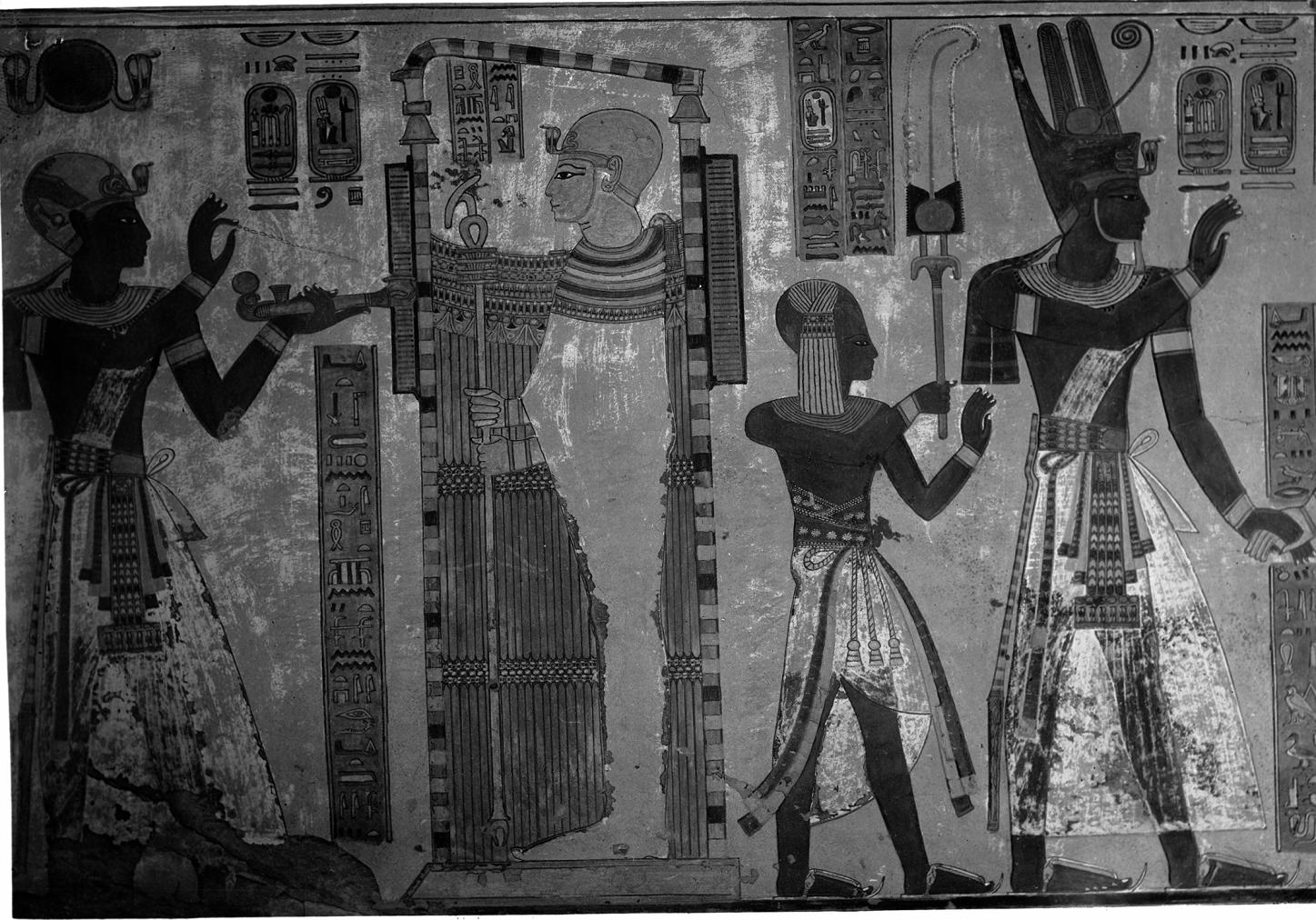
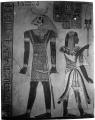
The tomb of Prince Amenherkhepshef (QV 55) photographed during Ernesto Schiaparelli's excavations that depicts Rameses III censing before an enshrined Ptah followed by the young prince and Rameses III. Italian Archaeological Expedition excavations. Courtesy of the Egyptian Museum in Turin.
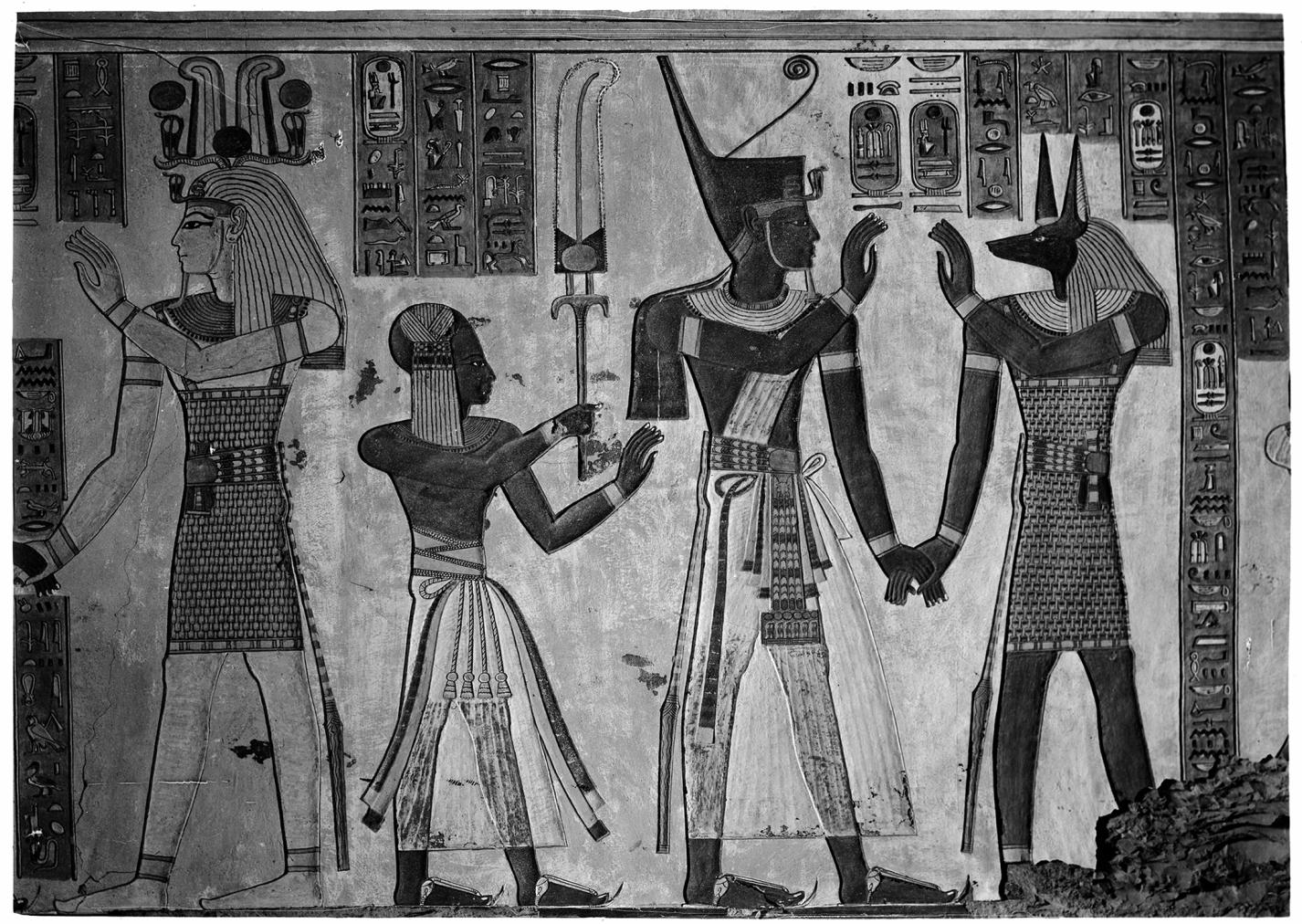
The tomb of Prince Amenherkhepshef (QV 55) photographed during Ernesto Schiaparelli's excavations that depicts the young prince accompanying Rameses III greeting the Ptah-Tatanen and Duamutef. Italian Archaeological Expedition excavations. Courtesy of the Egyptian Museum in Turin.
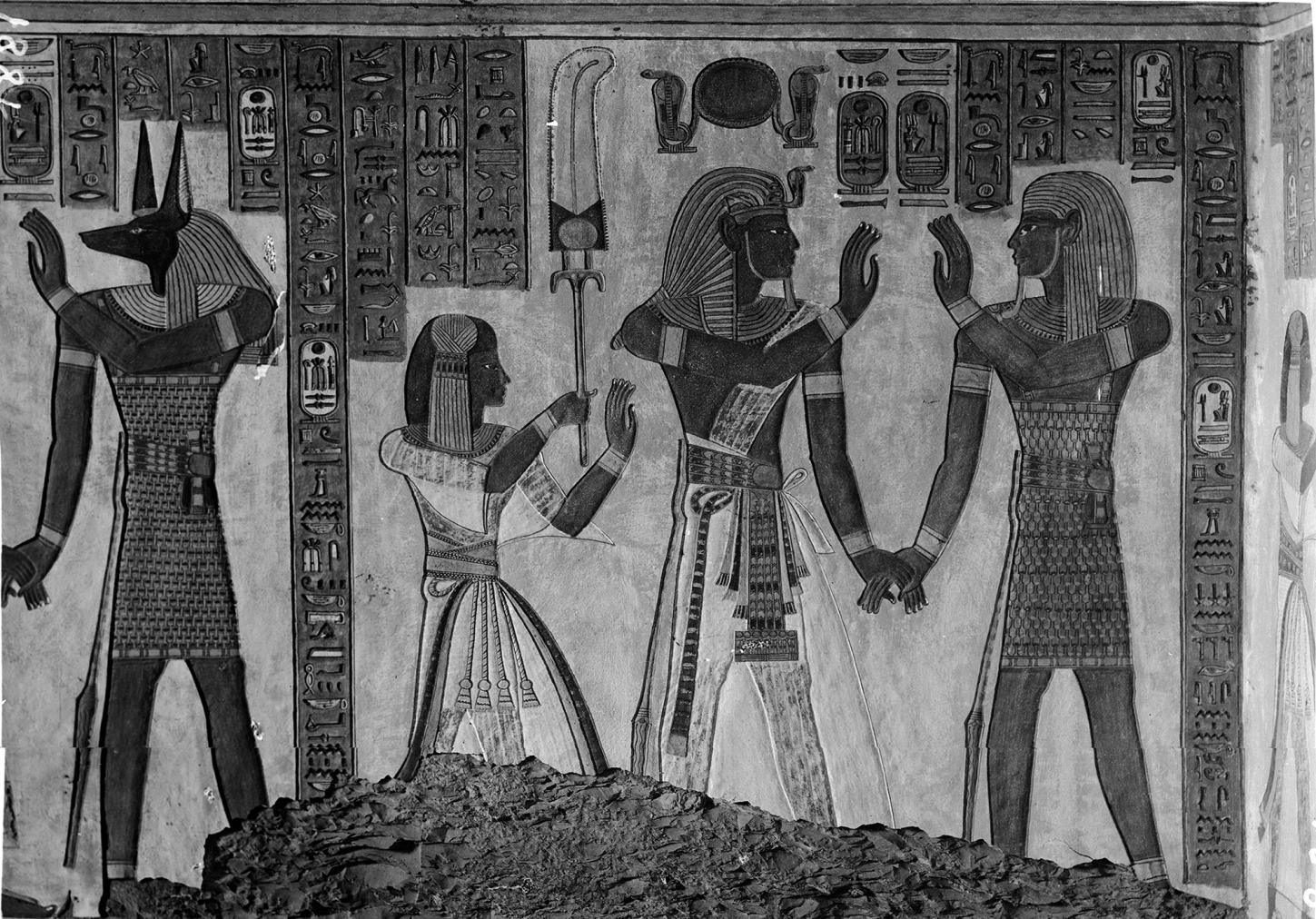
The tomb of Prince Amenherkhepshef (QV 55) photographed during Ernesto Schiaparelli's excavations that depicts the young prince accompanying Rameses III greeting the gods Duamutef and Imsety. Italian Archaeological Expedition excavations. Courtesy of the Egyptian Museum in Turin.
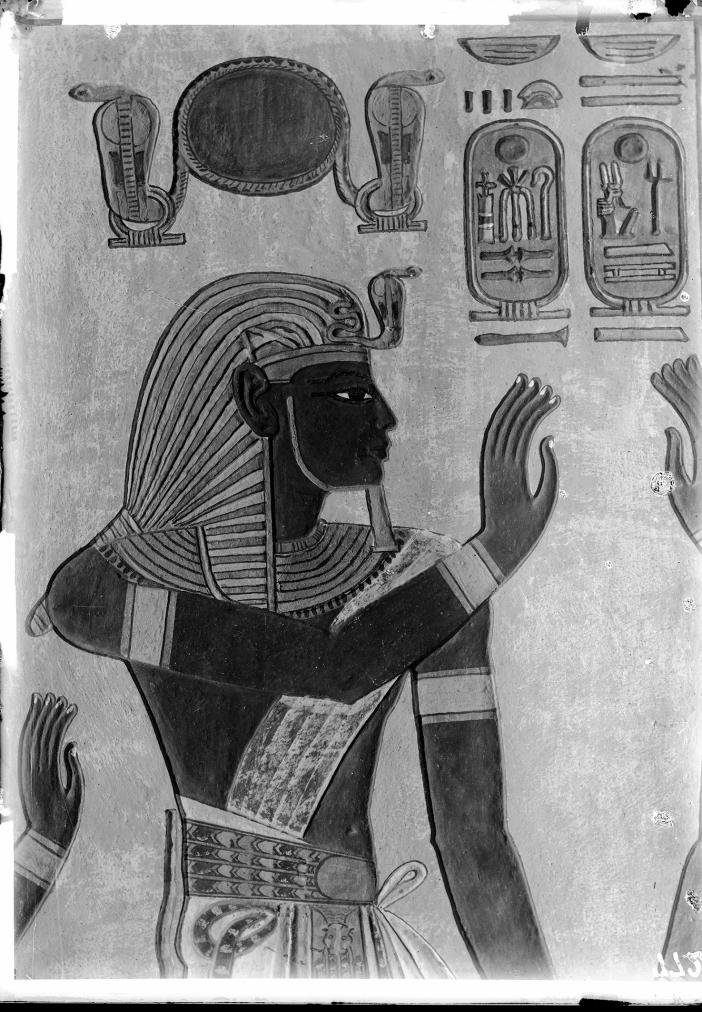
The tomb of Prince Amenherkhepshef (QV55) photographed during Ernesto Schiaparelli's excavations that shows Rameses III greeting the god Imsety. Italian Archaeological Expedition excavations. Courtesy of the Egyptian Museum in Turin.
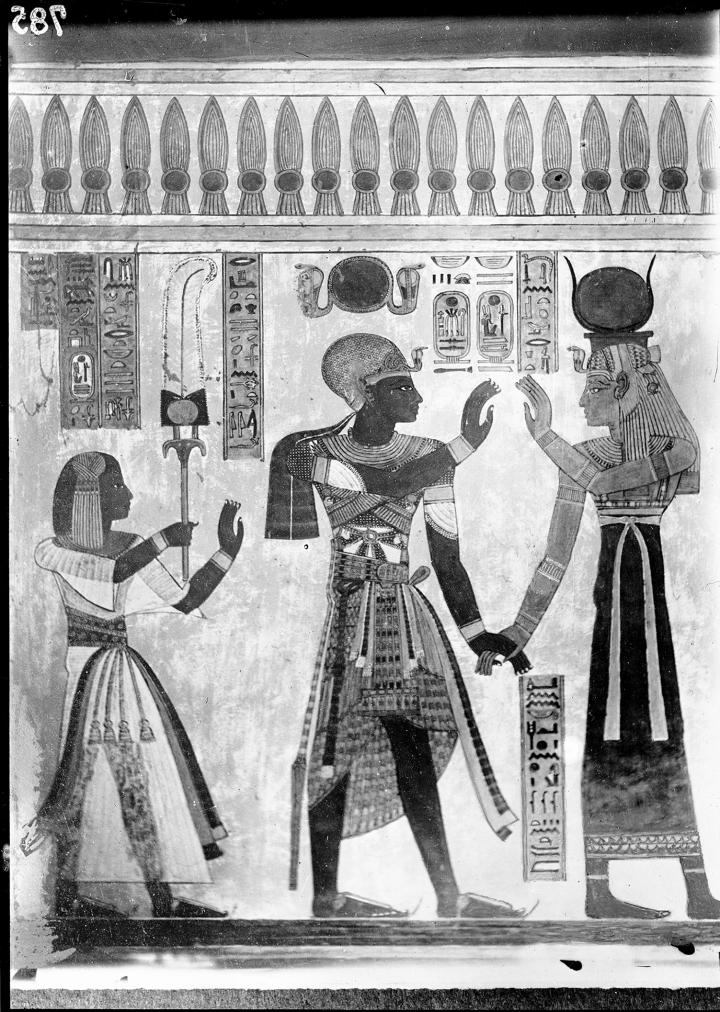
The tomb of Prince Amenherkhepshef (QV 55) photographed during Ernesto Schiaparelli's excavations that depicts the young prince who accompanies Rameses III greeting the goddess Isis. Italian Archaeological Expedition excavations. Courtesy of the Egyptian Museum in Turin.
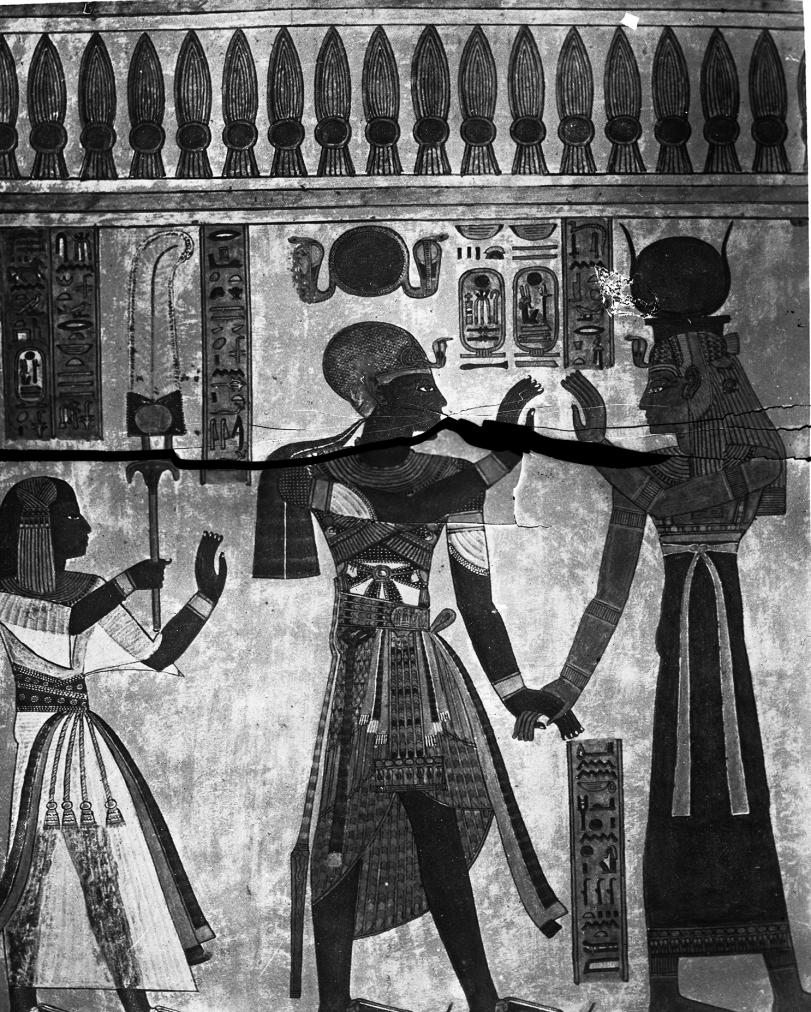
The tomb of Prince Amenherkhepshef (QV 55) photographed during Ernesto Schiaparelli's excavations that depicts the young prince who accompanies Rameses III greeting Isis. Italian Archaeological Expedition excavations. Courtesy of the Egyptian Museum in Turin.
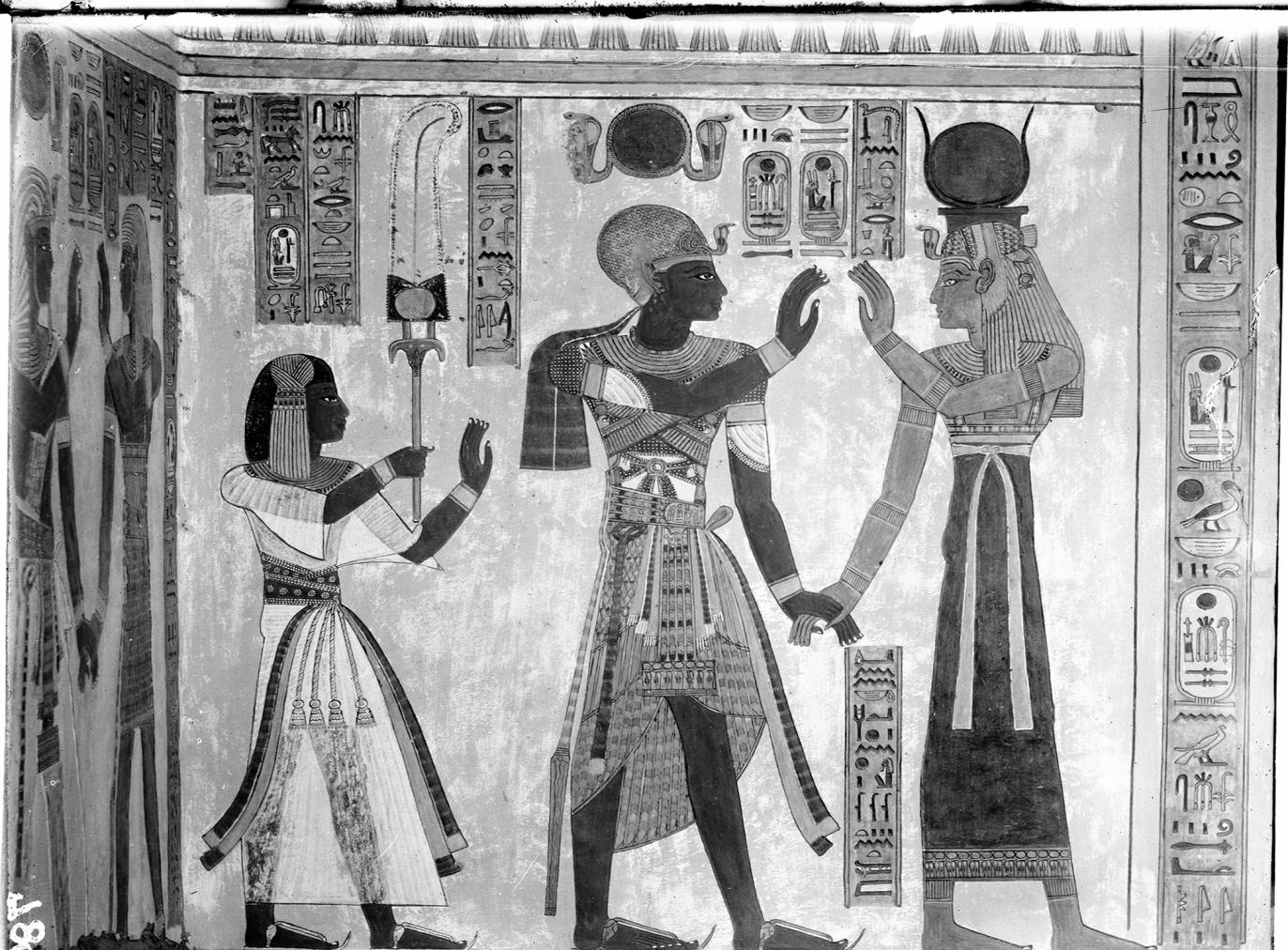
The tomb of Prince Amenherkhepshef (QV 55) photographed during Ernesto Schiaparelli's excavations that depicts the young prince who accompanies Rameses III greeting the goddess Isis. Italian Archaeological Expedition excavations. Courtesy of the Egyptian Museum in Turin.
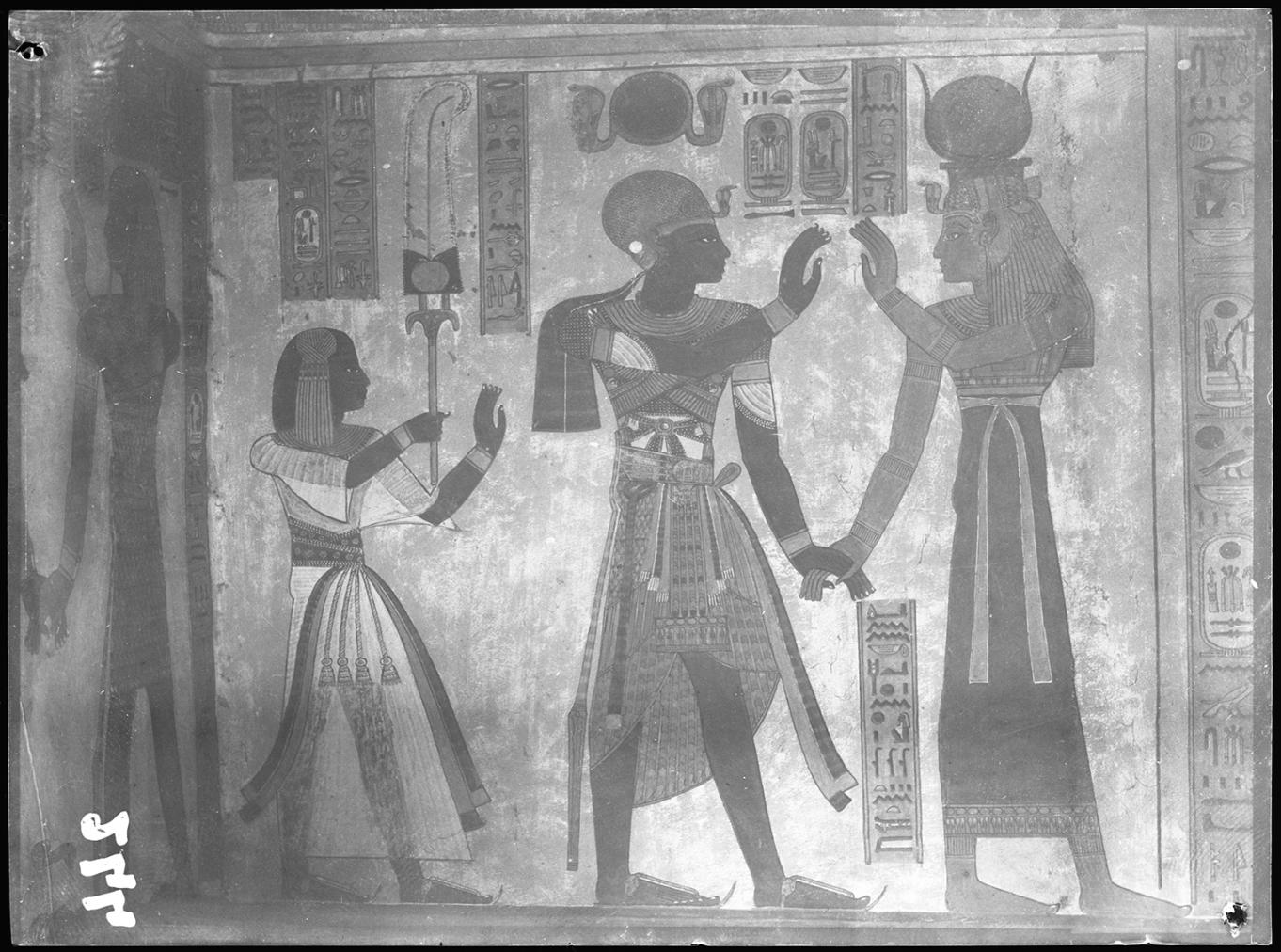
The tomb of Prince Amenherkhepshef (QV 55) photographed during Ernesto Schiaparelli's excavations that depicts the young prince who accompanies Rameses III greeting Isis. Italian Archaeological Expedition excavations. Courtesy of the Egyptian Museum in Turin.
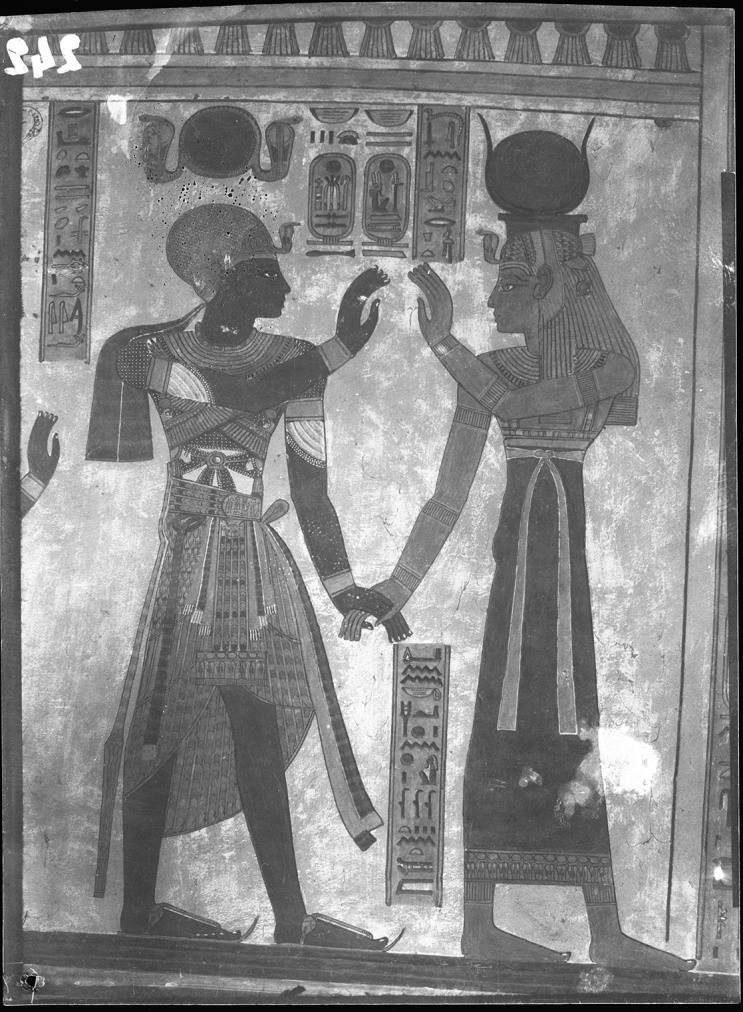
South wall (back) of the east side (left) of the access to the rear annex antechamber of the tomb of Prince Amenherkhepshef (QV 55) photographed during Ernesto Schiaparelli's excavations that depicts the young prince who accompanies Rameses III greeting Isis. Italian Archaeological Expedition excavations. Courtesy of the Egyptian Museum in Turin.
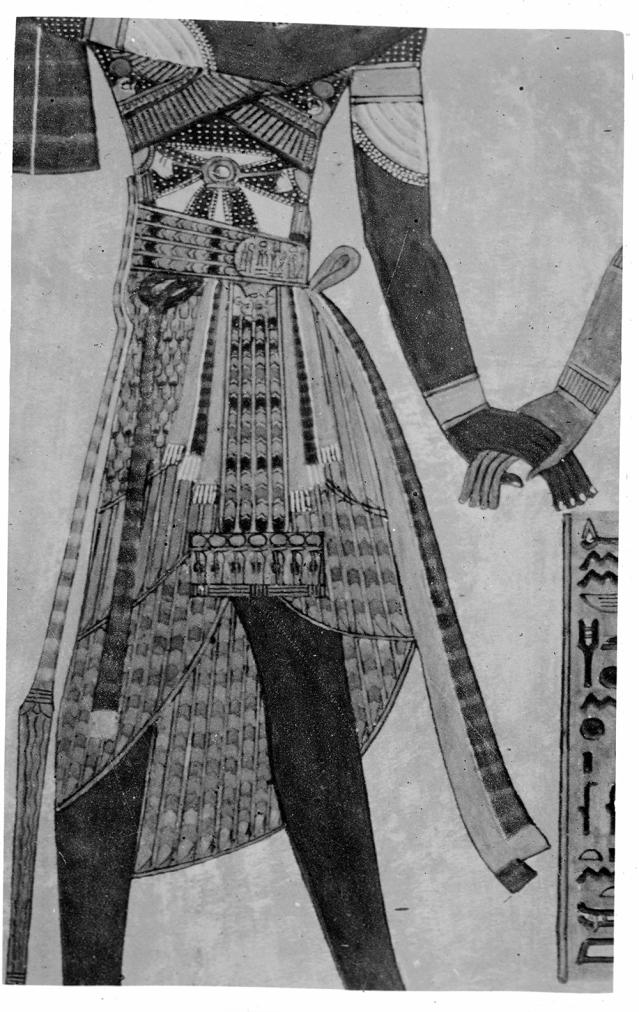
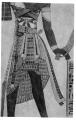
Detail of the elaborate kilt and sporran Rameses III wears while greeting Isis. The tomb of Prince Amenherkhepshef (QV 55) photographed during Ernesto Schiaparelli's excavations. Italian Archaeological Expedition excavations. Courtesy of the Egyptian Museum in Turin.
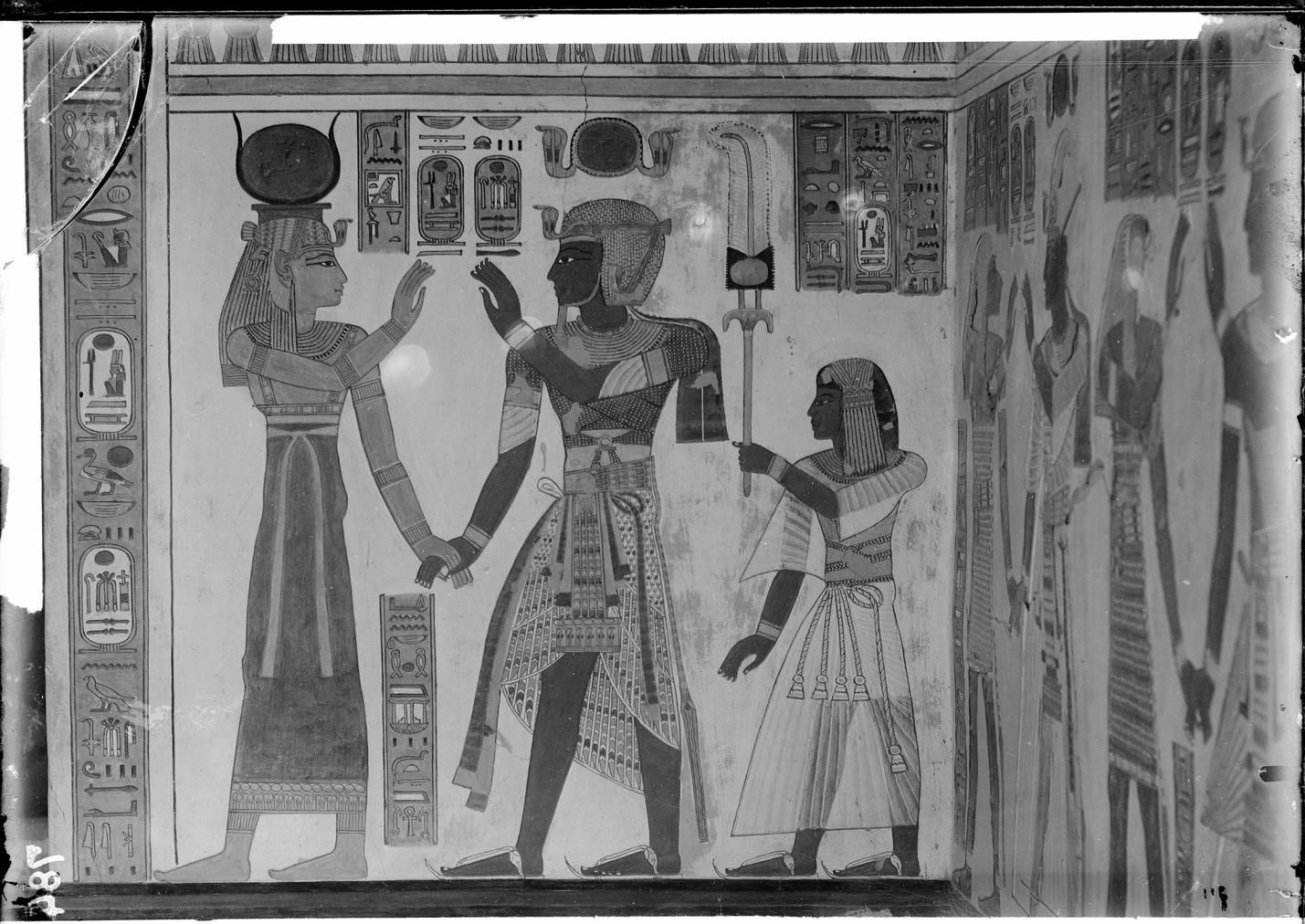
The tomb of Prince Amenherkhepshef (QV 55) photographed during Ernesto Schiaparelli's excavations that depicts the young prince who accompanies Rameses III greeting Hathor. Italian Archaeological Expedition excavations. Courtesy of the Egyptian Museum in Turin.
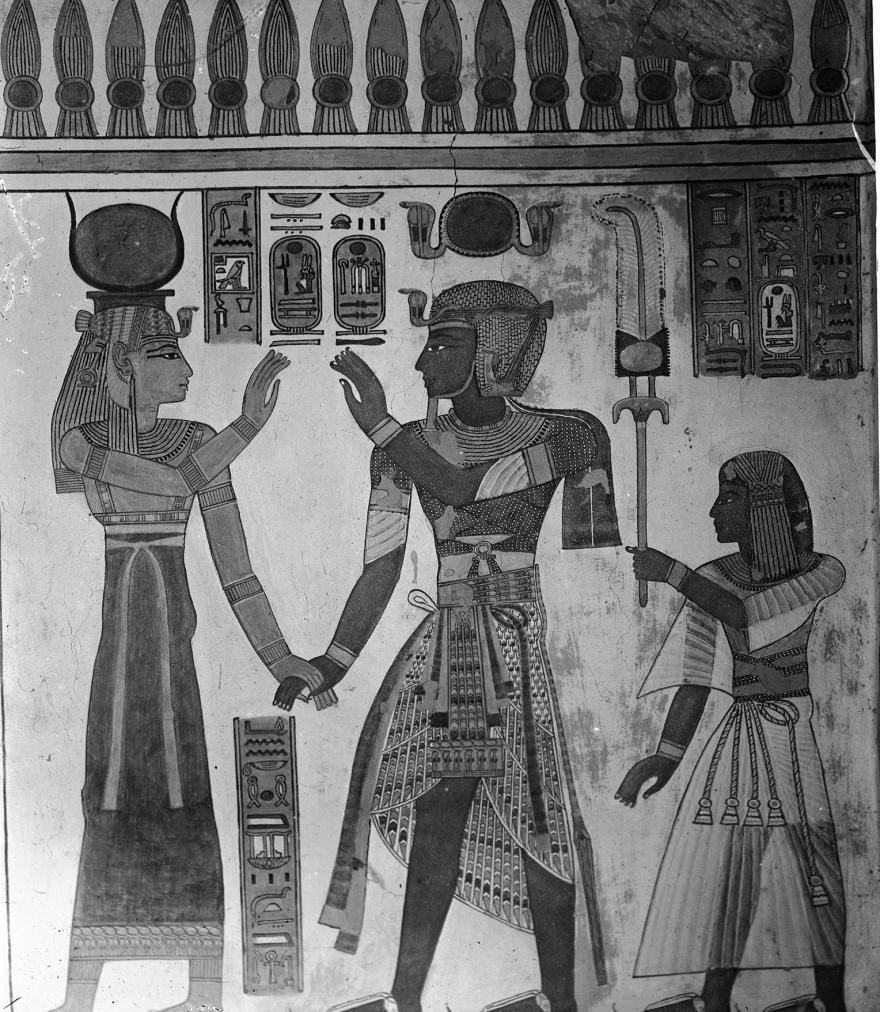
The tomb of Prince Amenherkhepshef (QV 55) photographed during Ernesto Schiaparelli's excavations that depicts the young prince who accompanies Rameses III greeting Hathor. Italian Archaeological Expedition excavations. Courtesy of the Egyptian Museum in Turin.
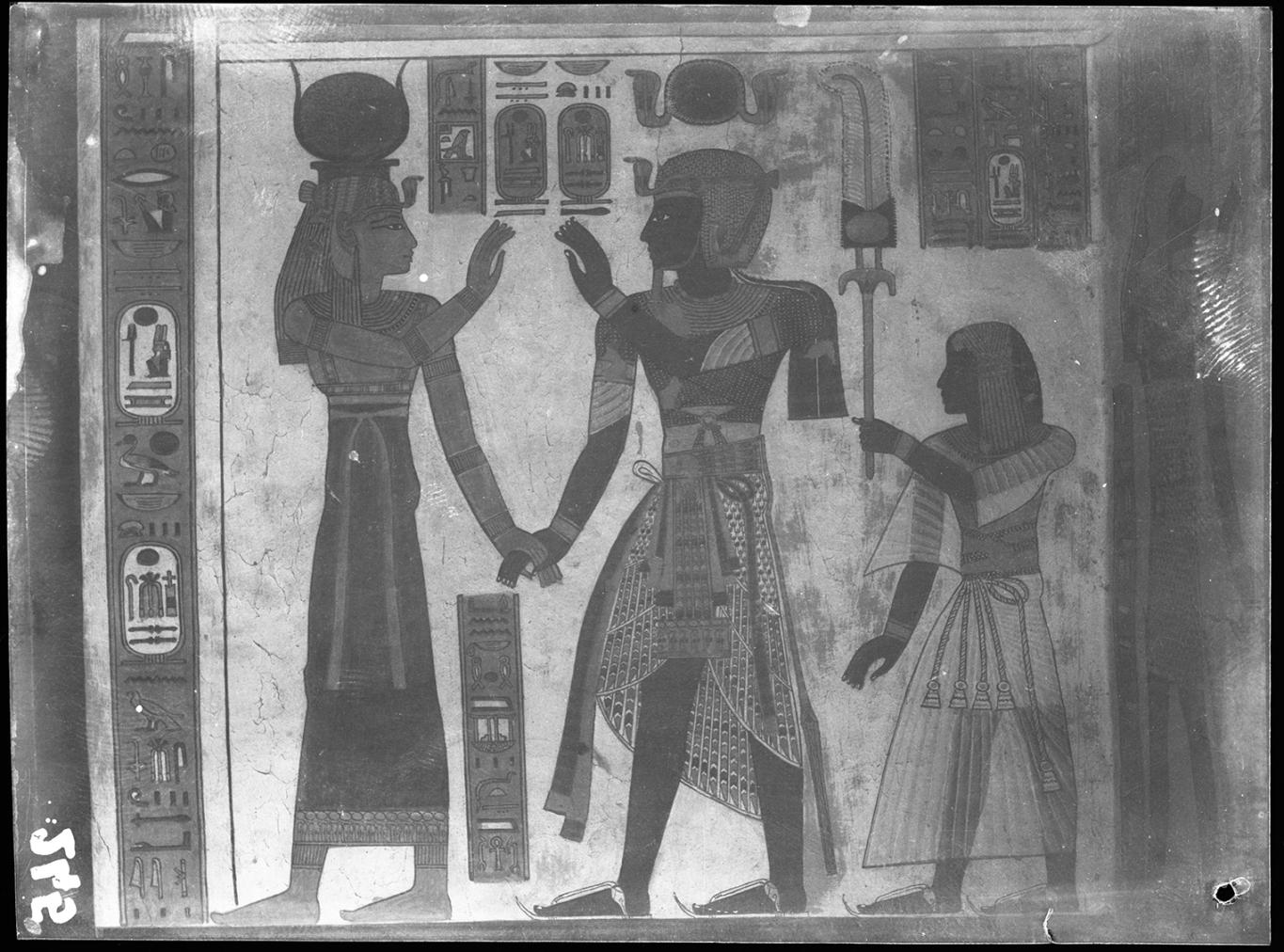
The tomb of Prince Amenherkhepshef (QV 55) photographed during Ernesto Schiaparelli's excavations that depicts the young prince who accompanies Rameses III greeting Hathor. Italian Archaeological Expedition excavations. Courtesy of the Egyptian Museum in Turin.
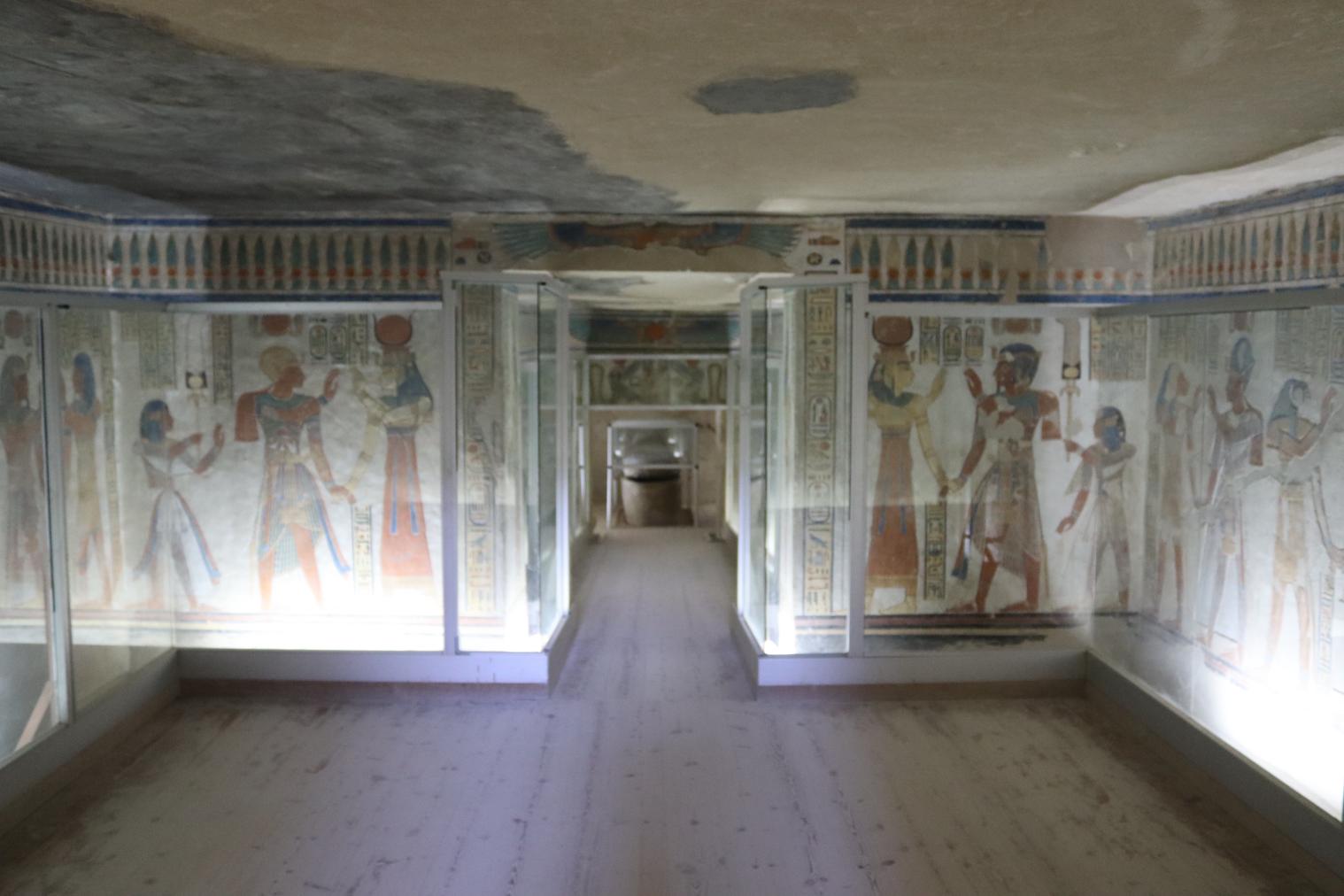
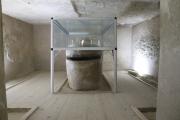
General view of Chamber B with sarcophagus in rear
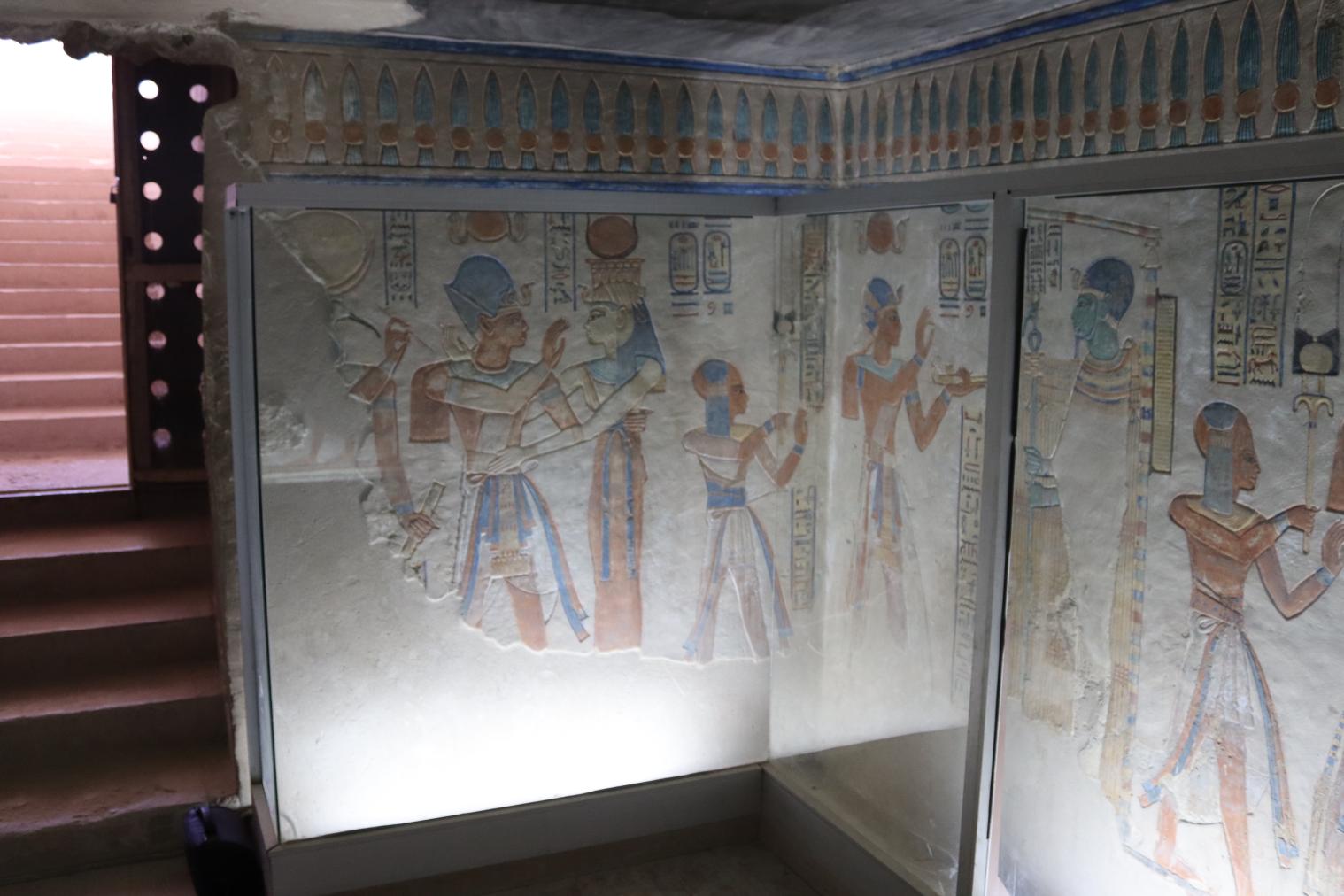
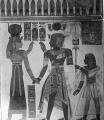
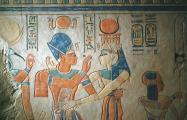
Rameses III embraced by Isis with Thoth (damaged) and Prince carrying plume. Rameses III censing before Ptah in shrine on the right.
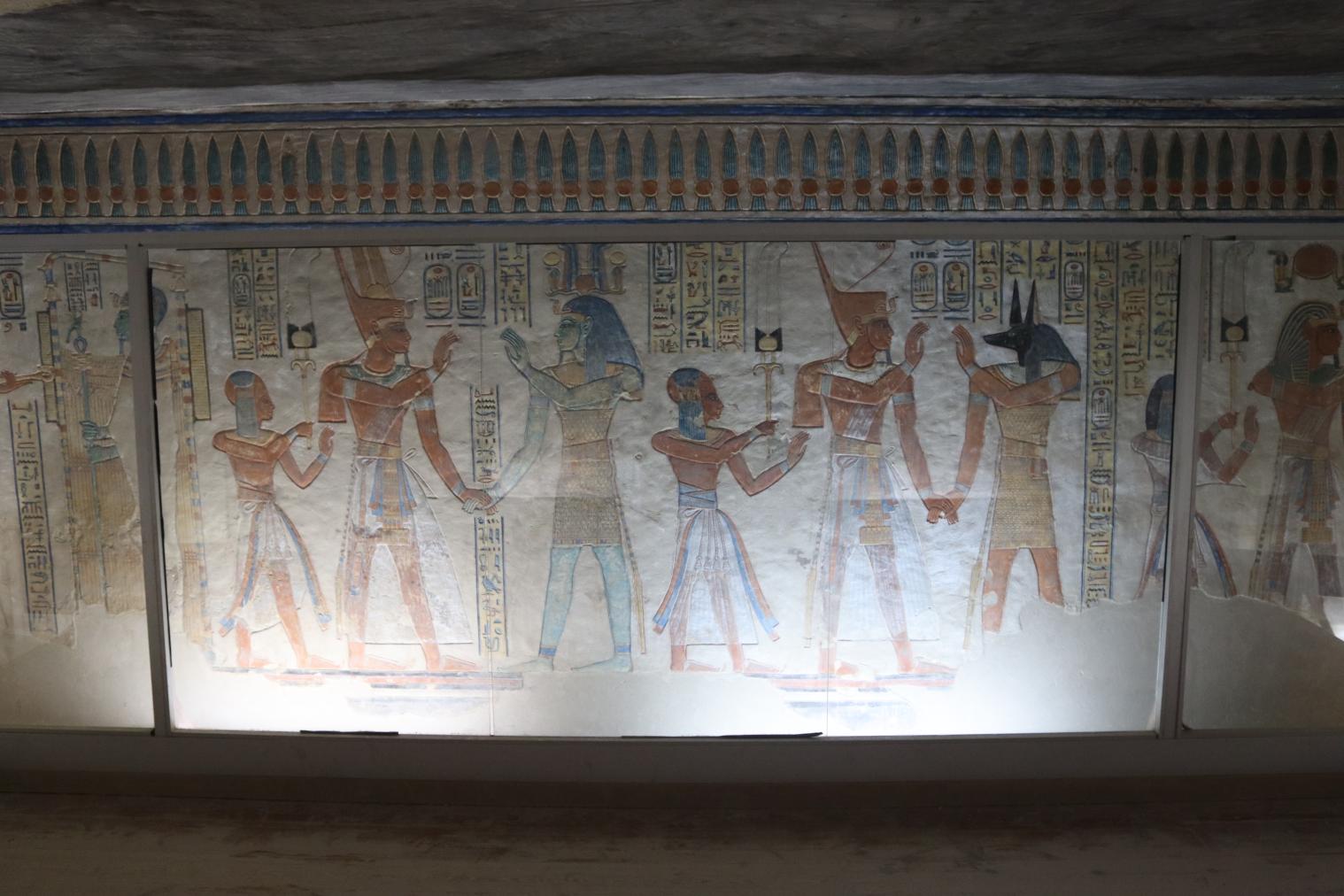
Rameses III and prince before Ptah-Tanen, Rameses III and Prince before Duamutef
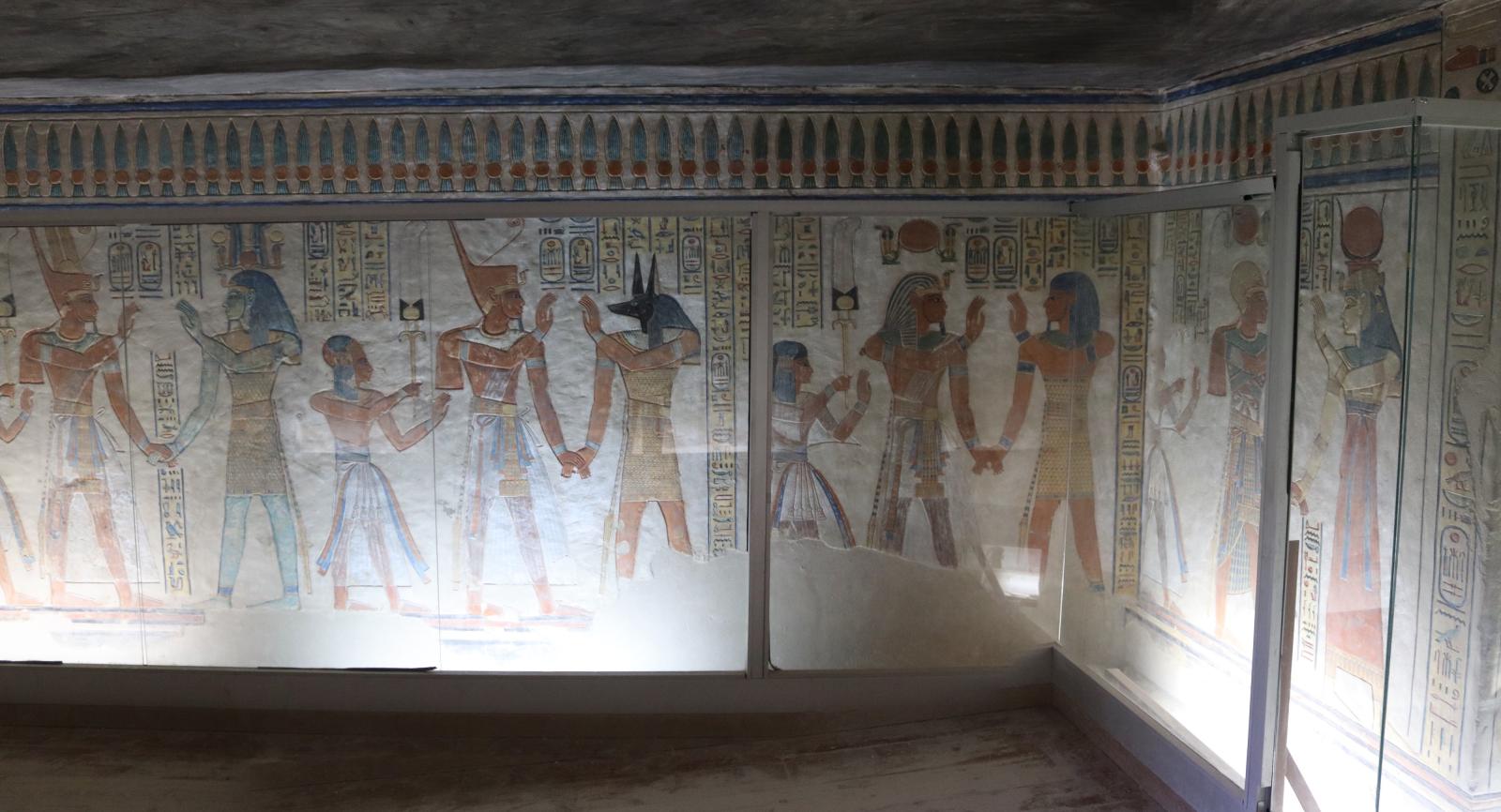
Rameses III and prince before Ptah-Tanen, Rameses III and Prince before Duamutef, Rameses III and Prince before Imsety
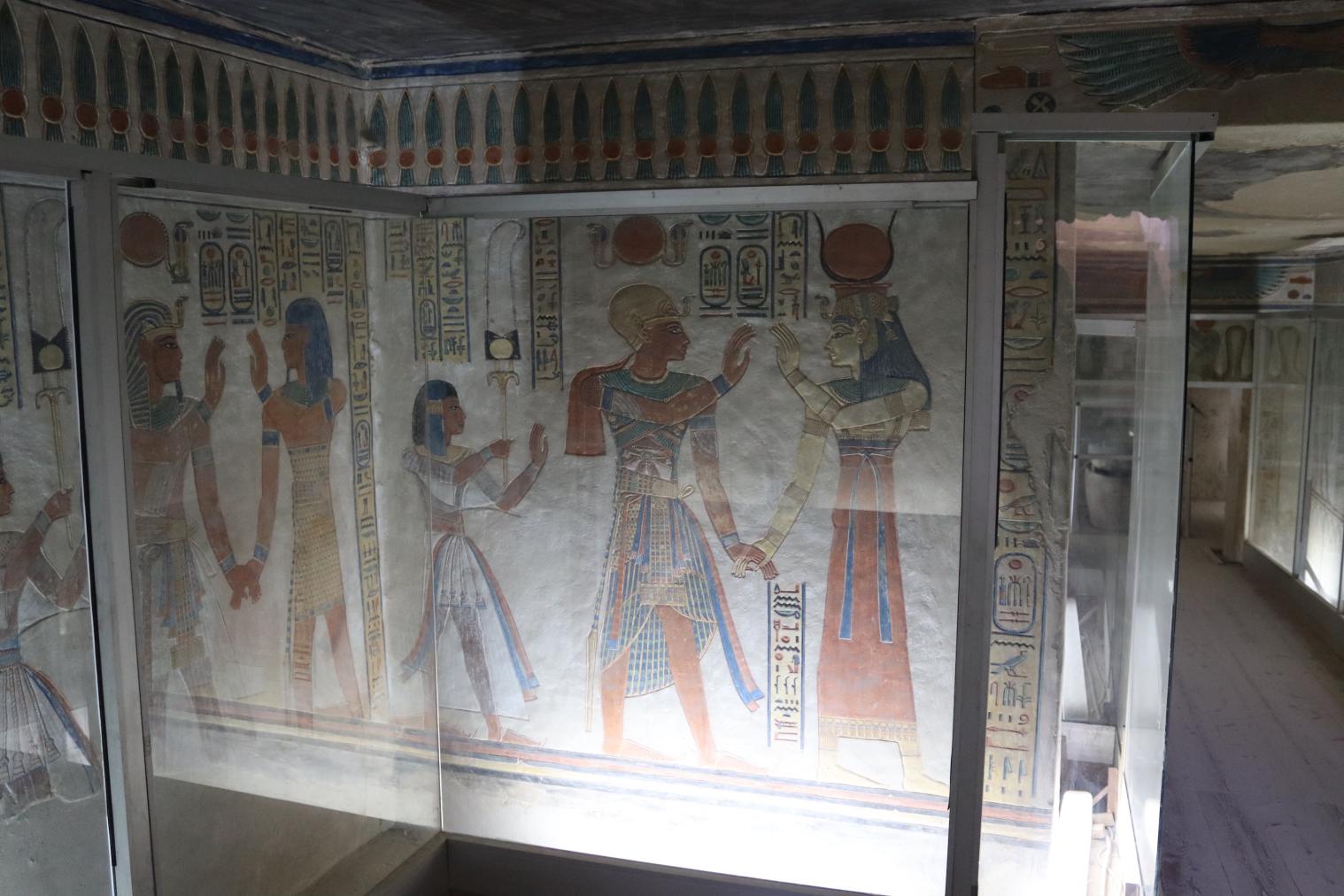
Rameses III and Prince before Isis
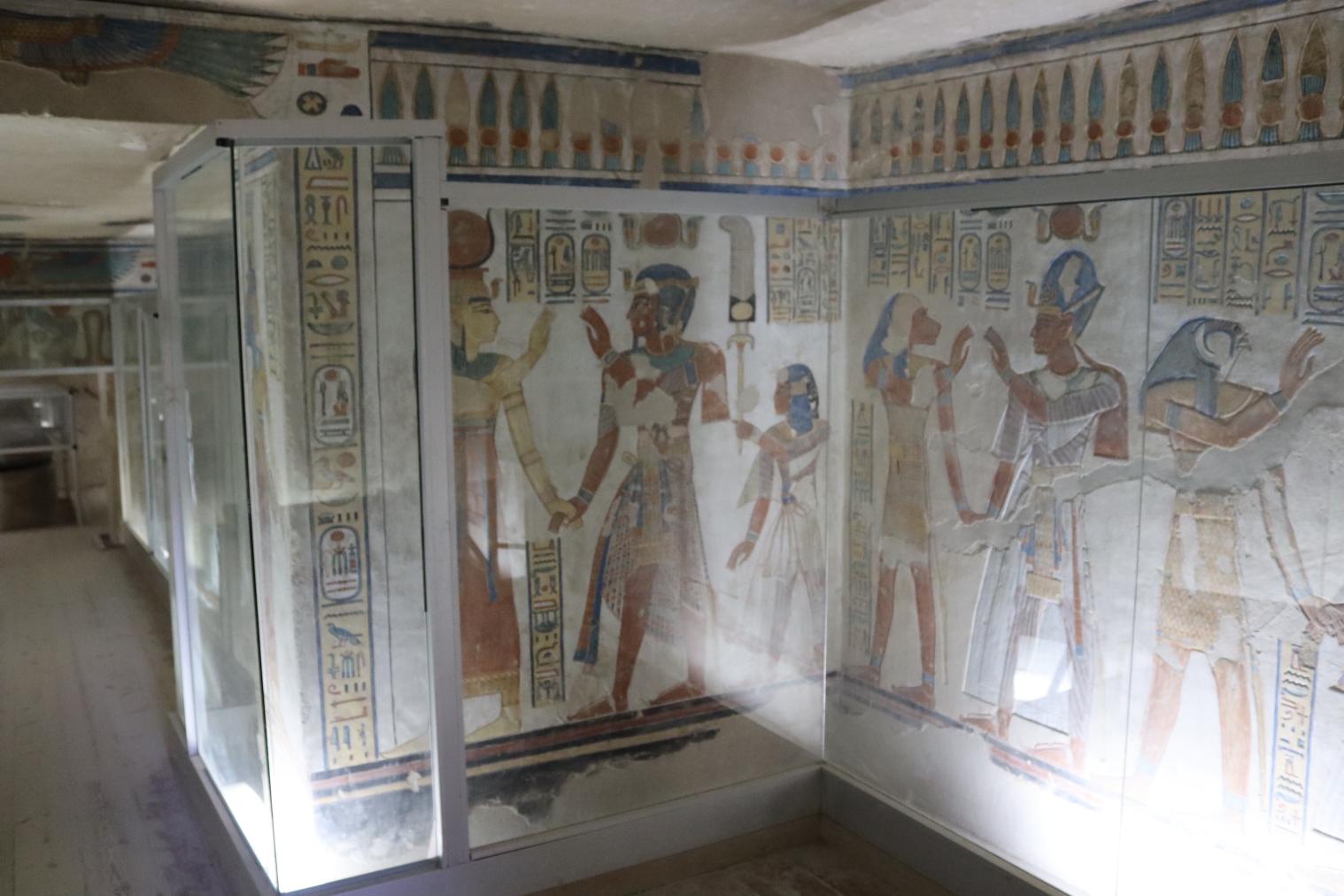
Rameses III and Prince before Hathor
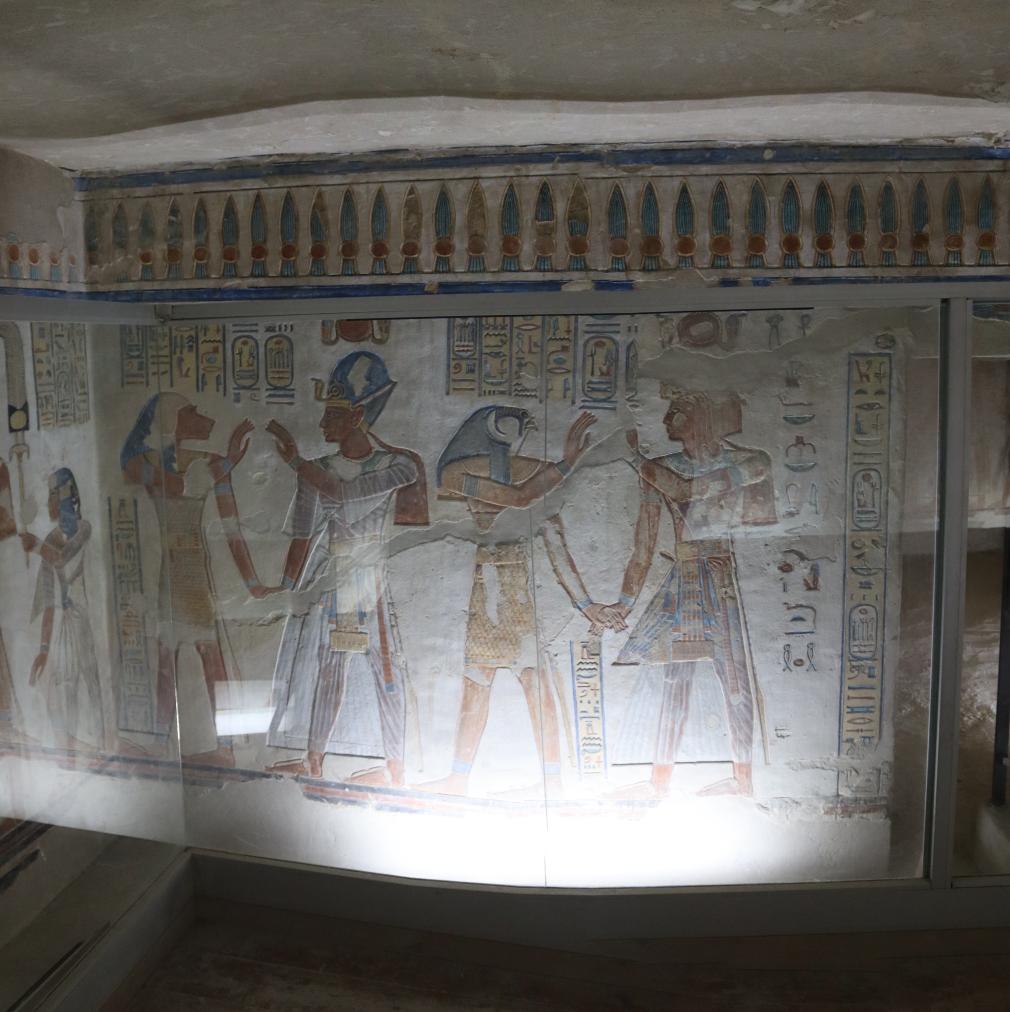
Rameses III before Qebehsenuef and Rameses III before Hapy
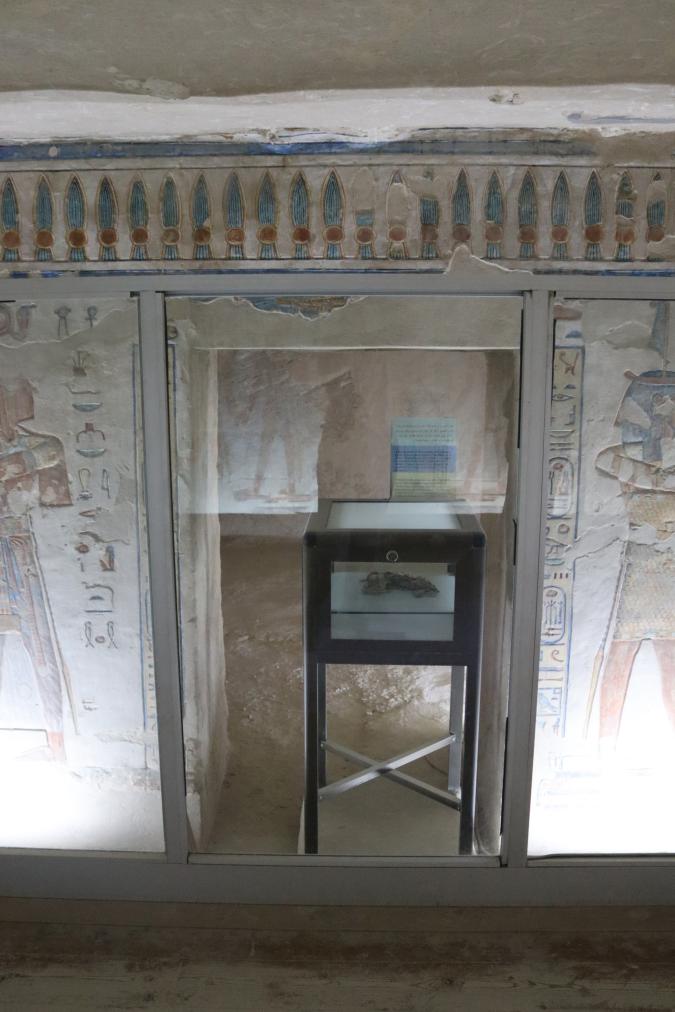
View of Gate Ba with display case holding the mummified fetus from QV 88
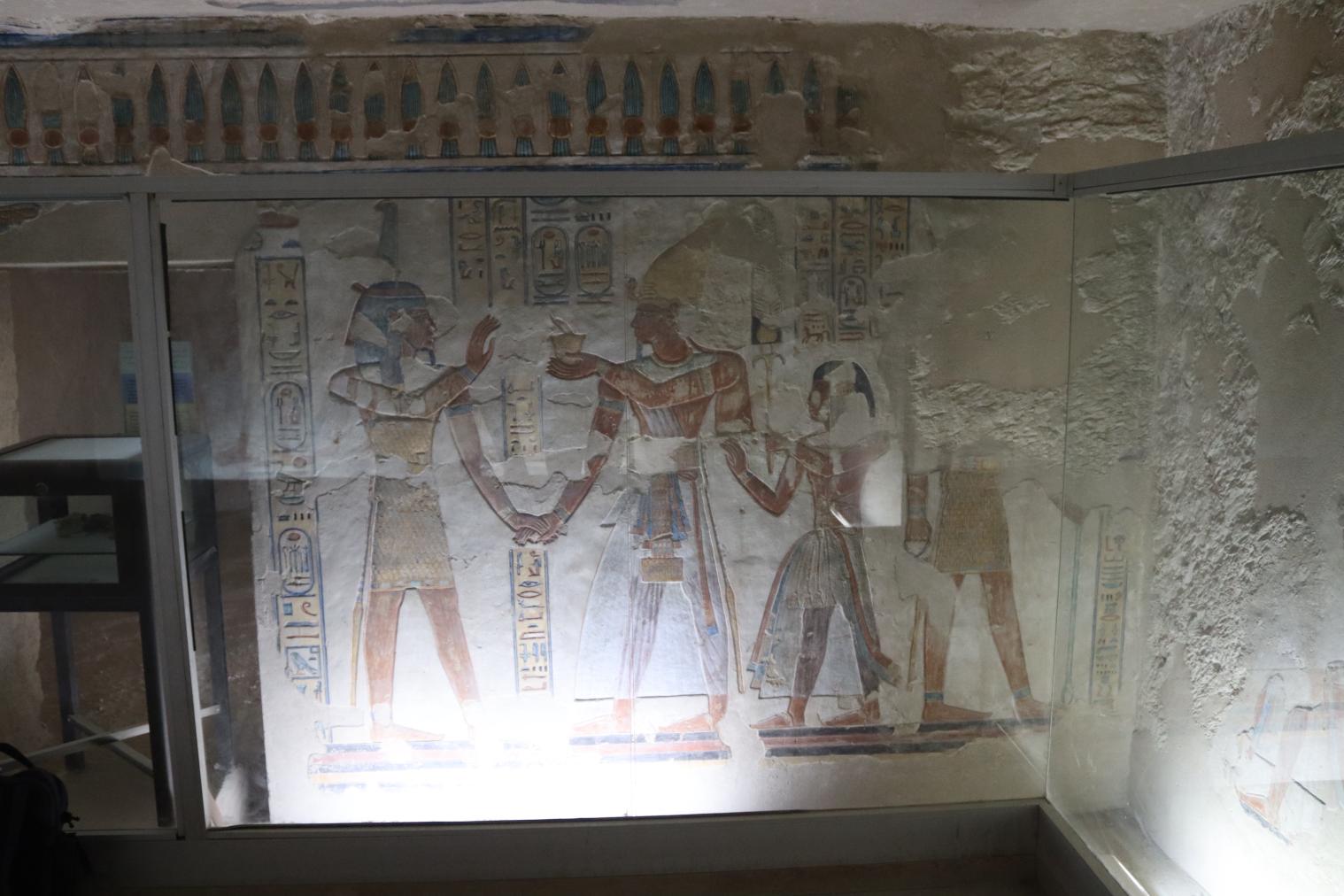
Rameses III and Prince censing before Shu
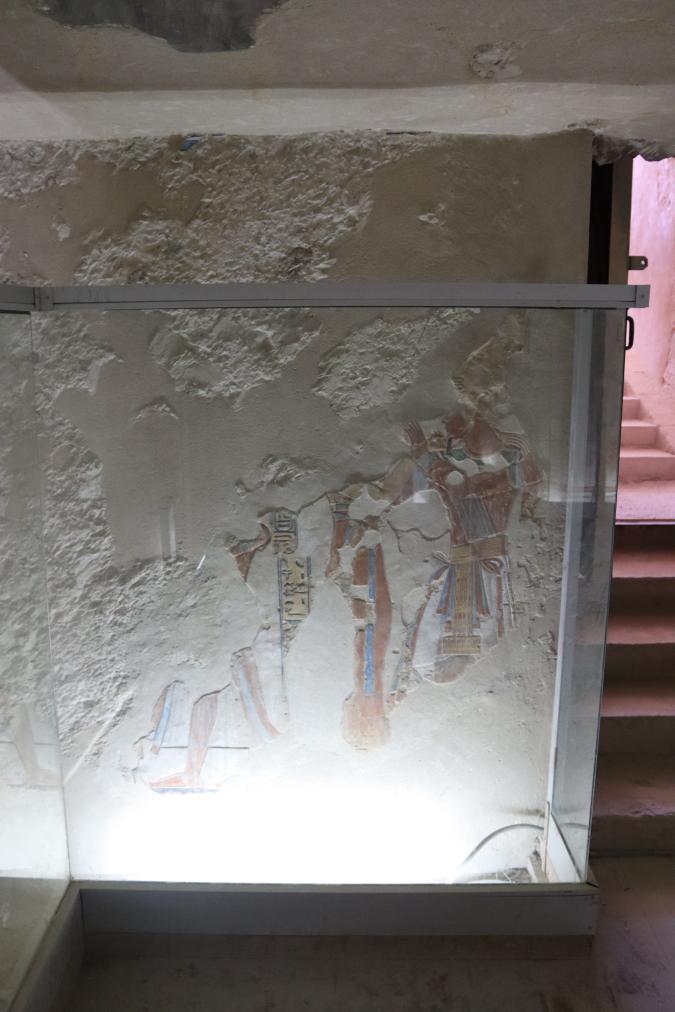
Rameses III and Prince (damaged)
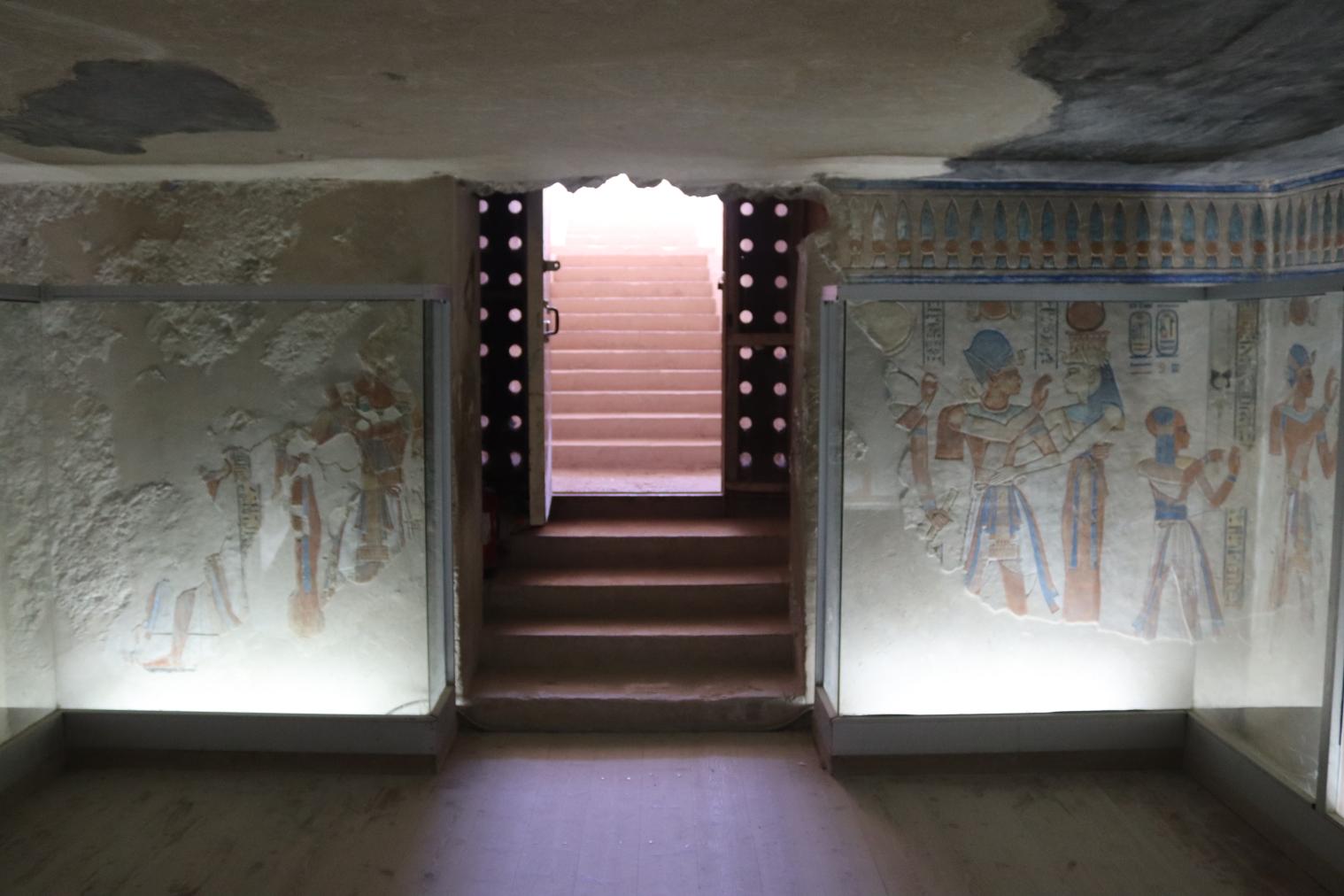
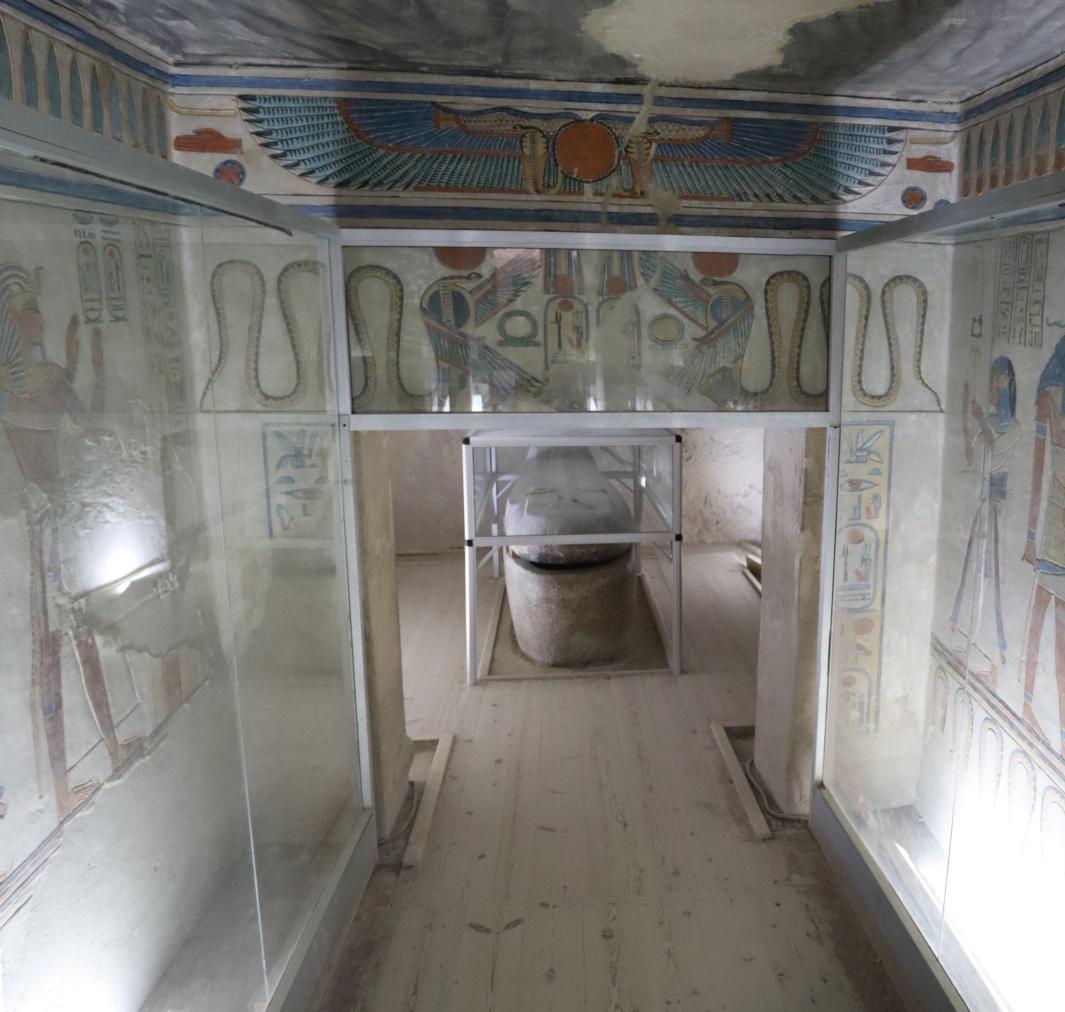
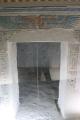
View of the entrance from Chamber B
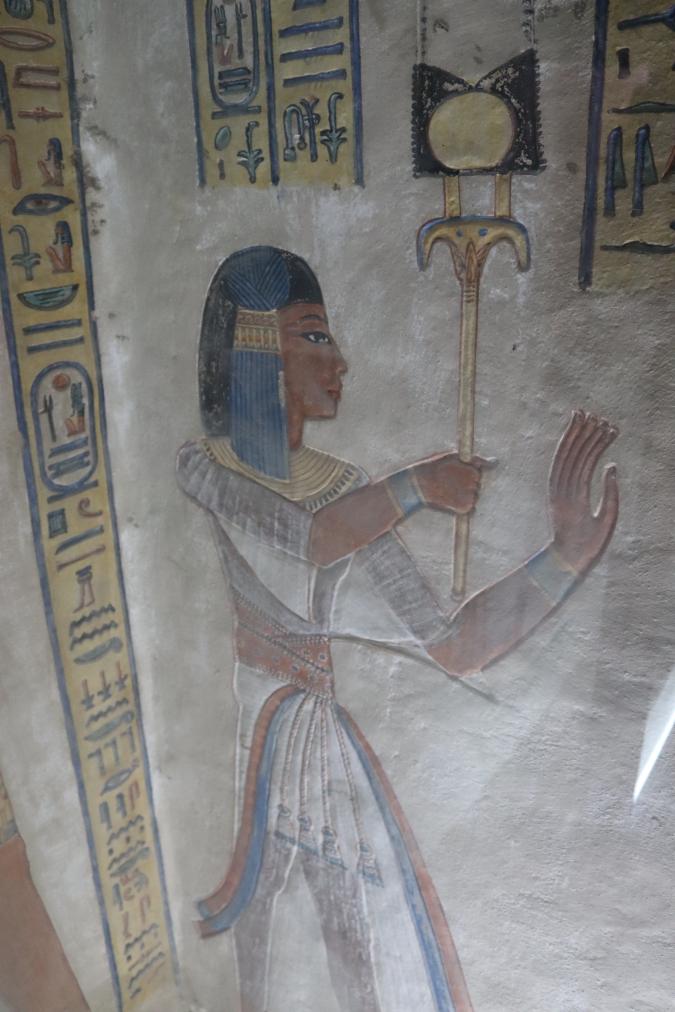
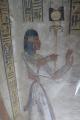
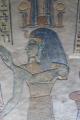
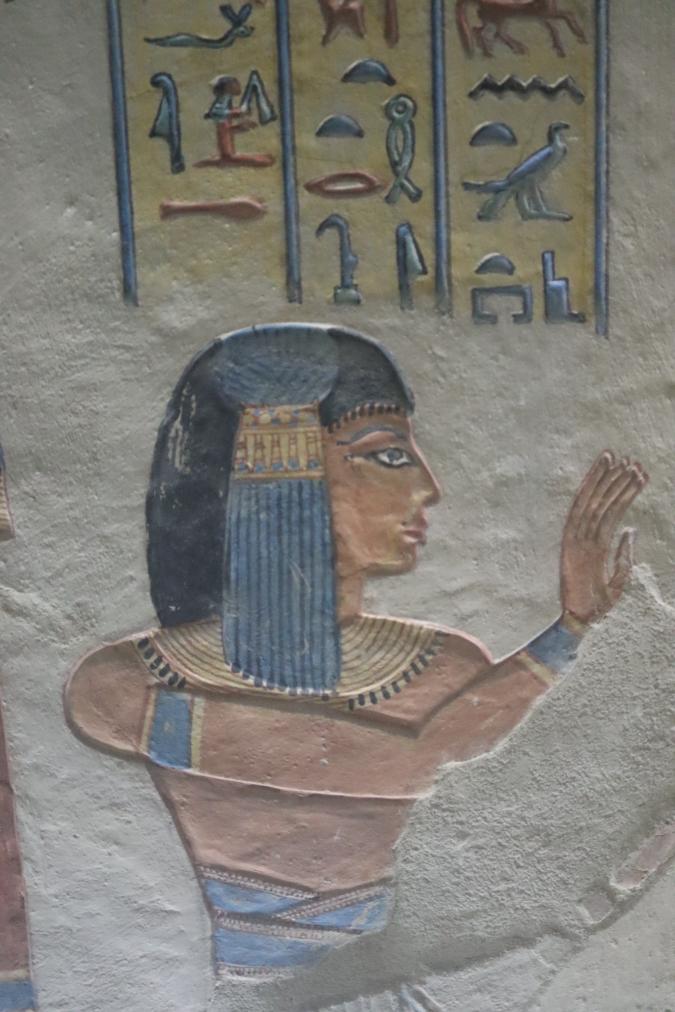
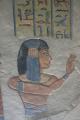
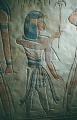
Detail of Prince from Chamber B
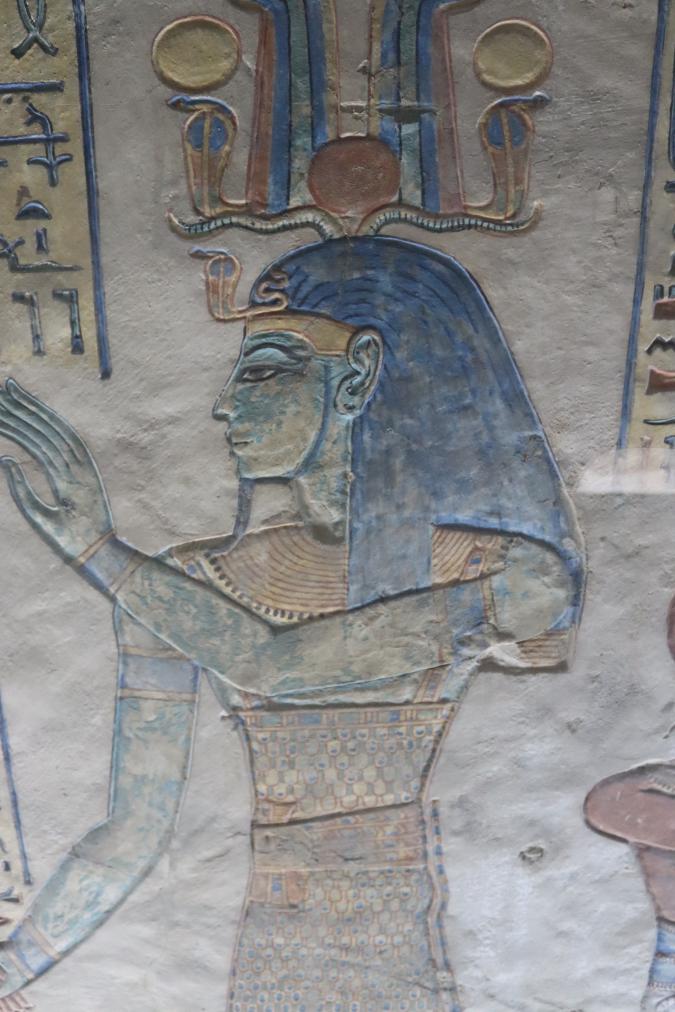
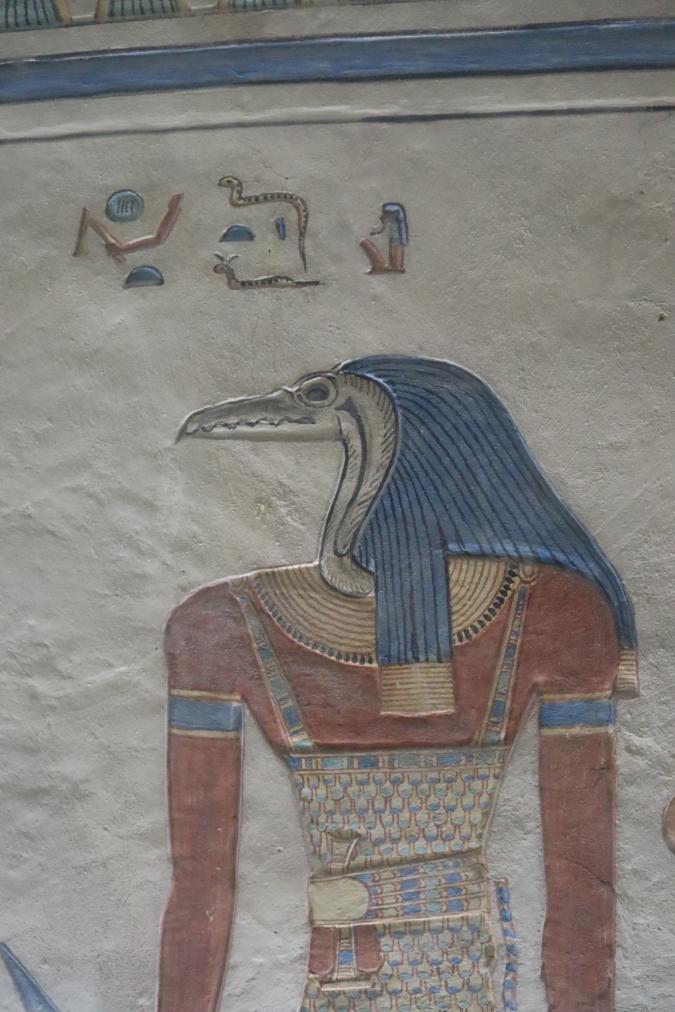
Detail of Ptah-Tanen from Chamber B
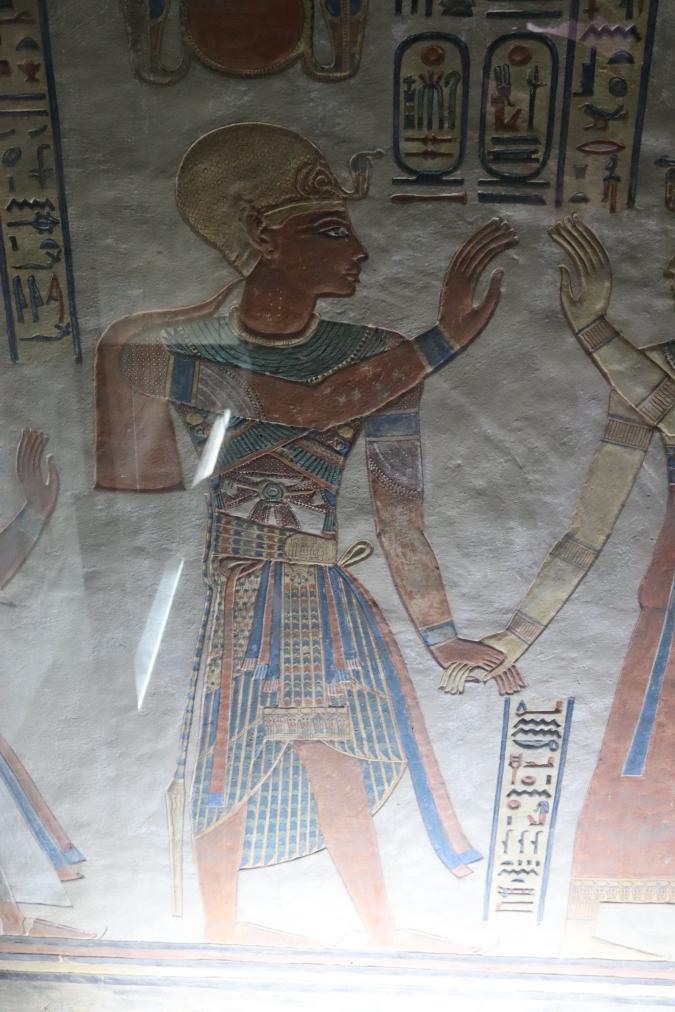
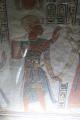
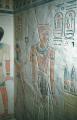
Detail of Rameses III
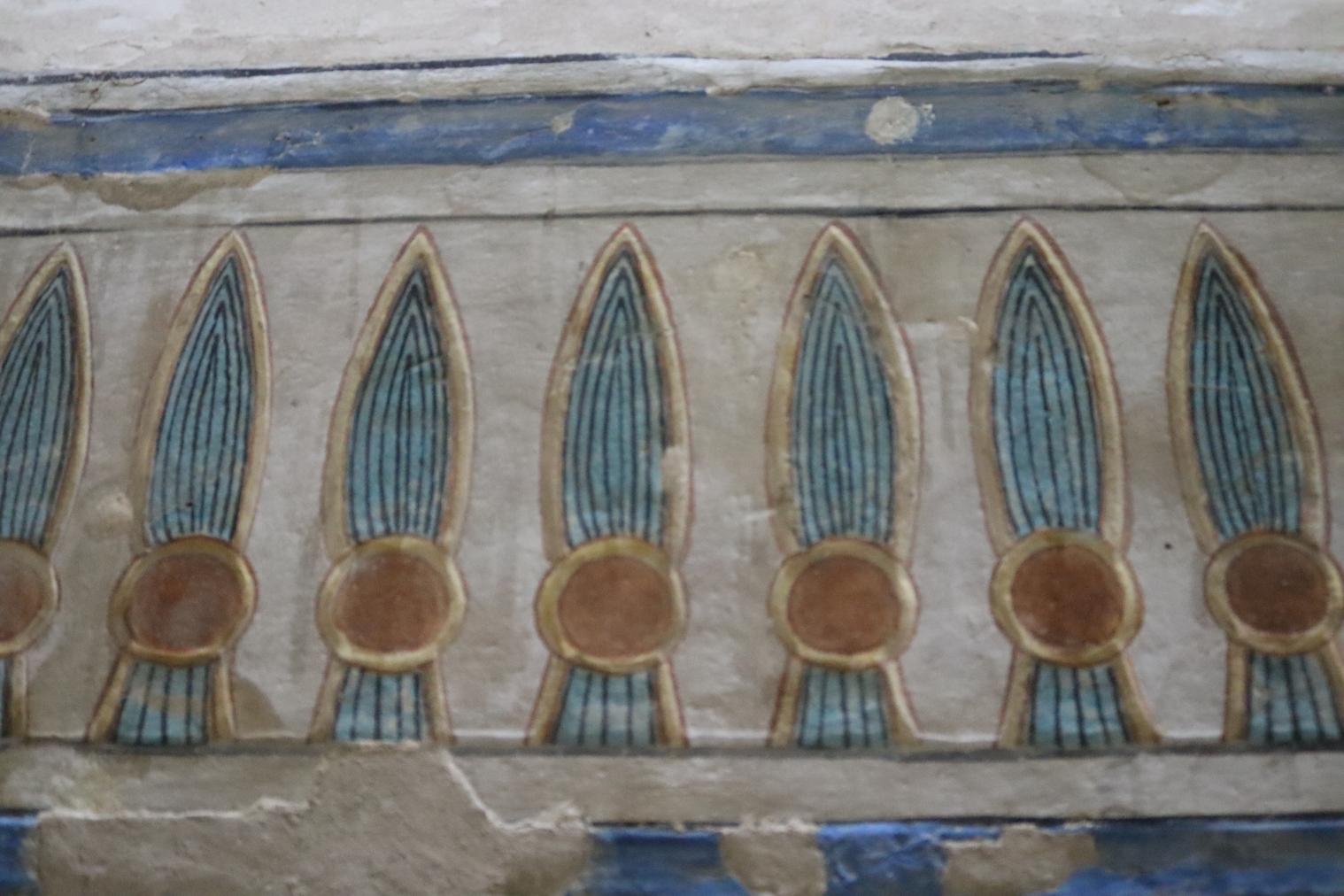
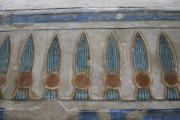
Detail of Kheker Frieze
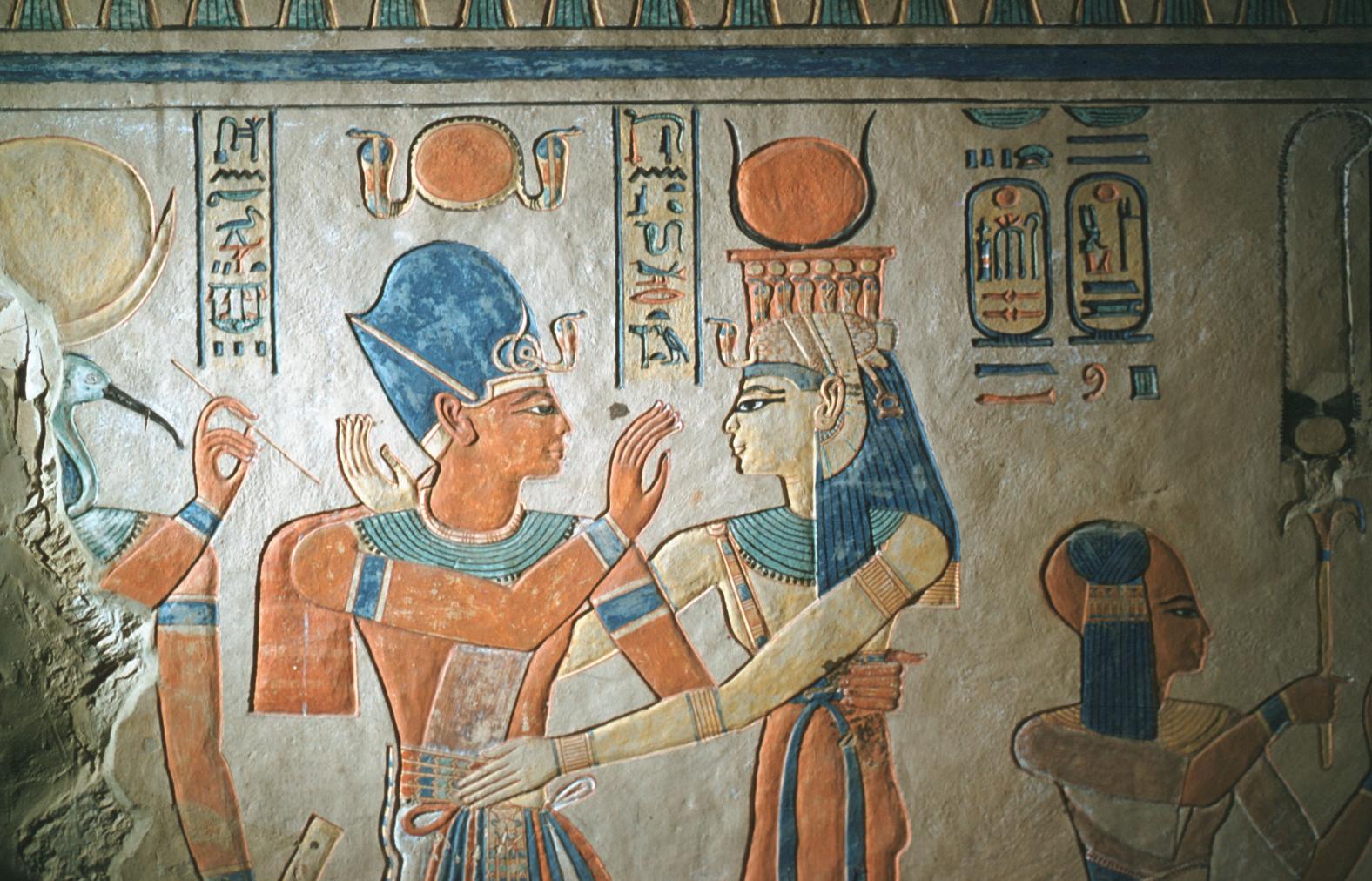
The king embraced by the goddess Isis flanked by the god Thoth, Chamber B, front wall (left part). Courtesy of Uni Dia Verlag; Uni Dia Image Nr. 36622.
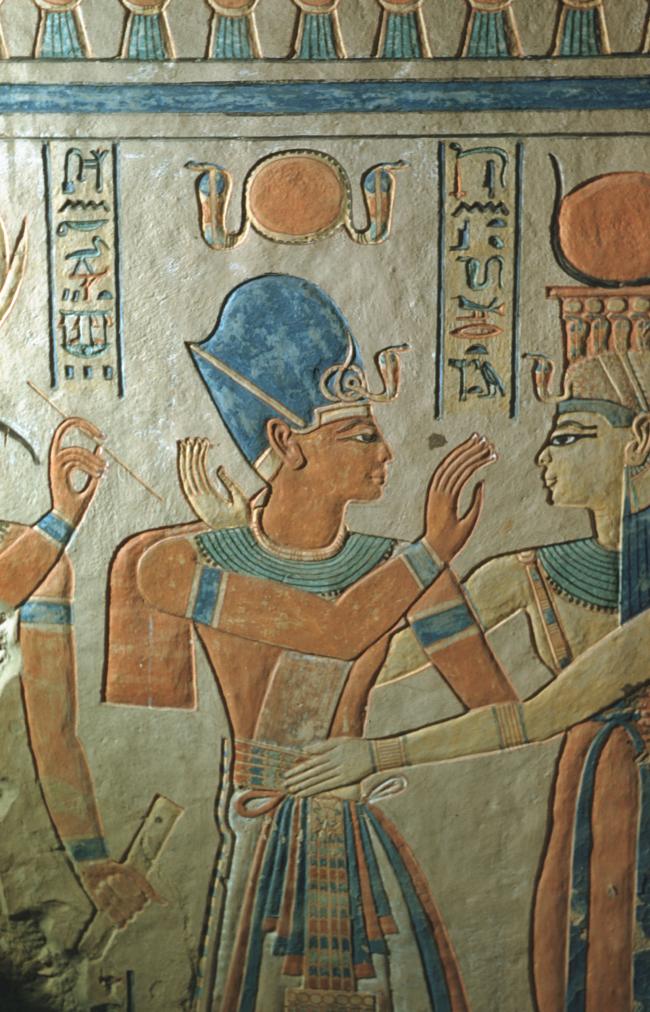
The king embraced by the goddess Isis flanked by the god Thoth, Chamber B, front wall (left part). Courtesy of Uni Dia Verlag; Uni Dia Image Nr. 36623.
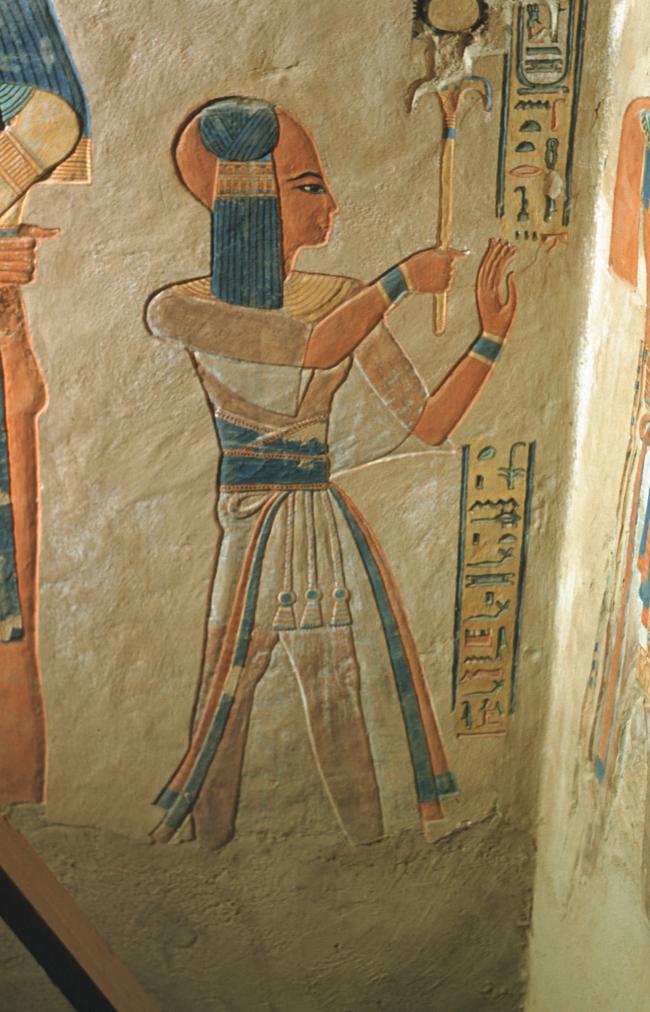
The prince behind the goddess Isis, Chamber B, front wall (left part). Courtesy of Uni Dia Verlag; Uni Dia Image Nr. 36624.
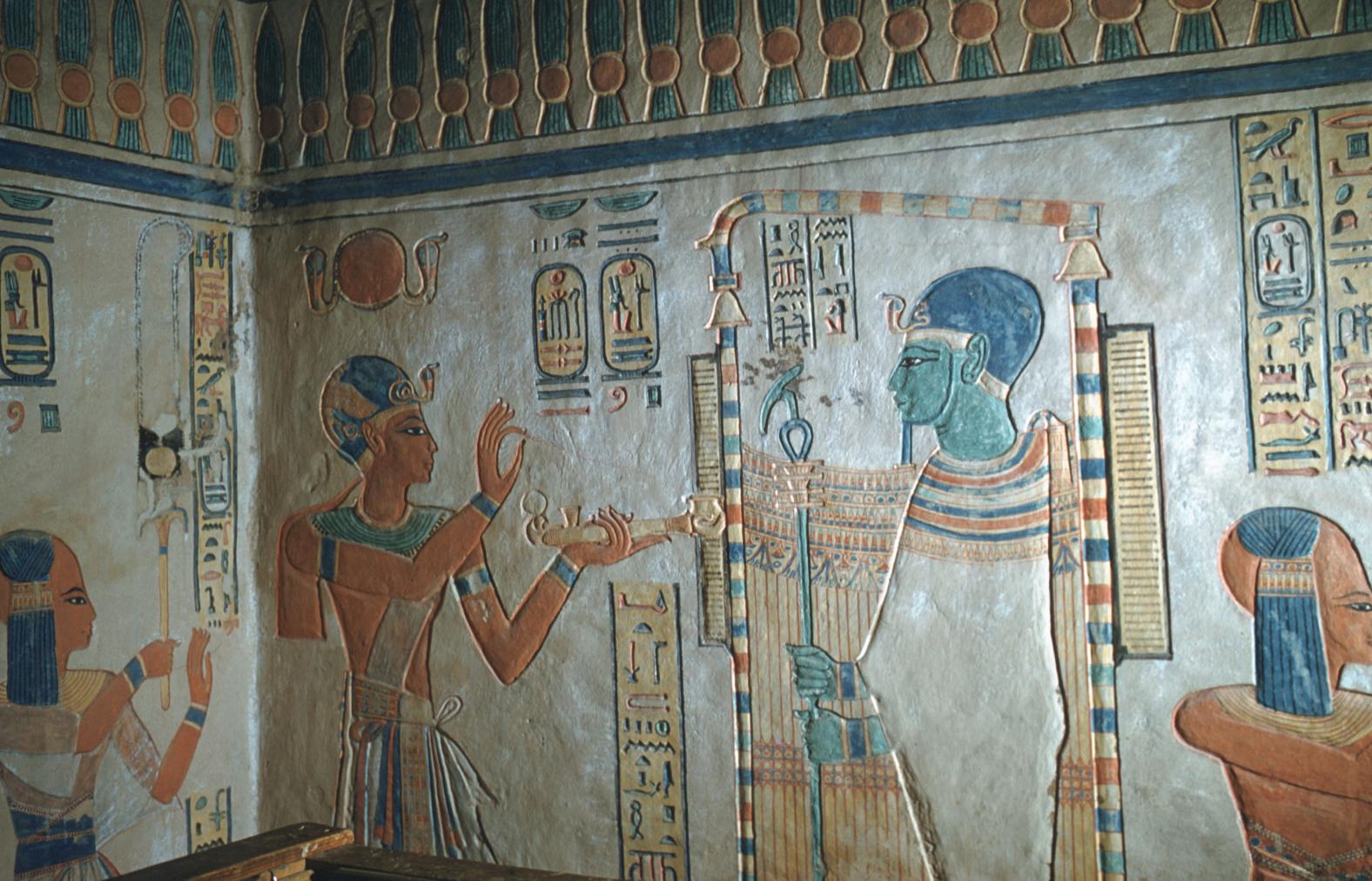
The king censing before the god Ptah, Chamber B, left wall, left part. Courtesy of Uni Dia Verlag; Uni Dia Image Nr. 36625.
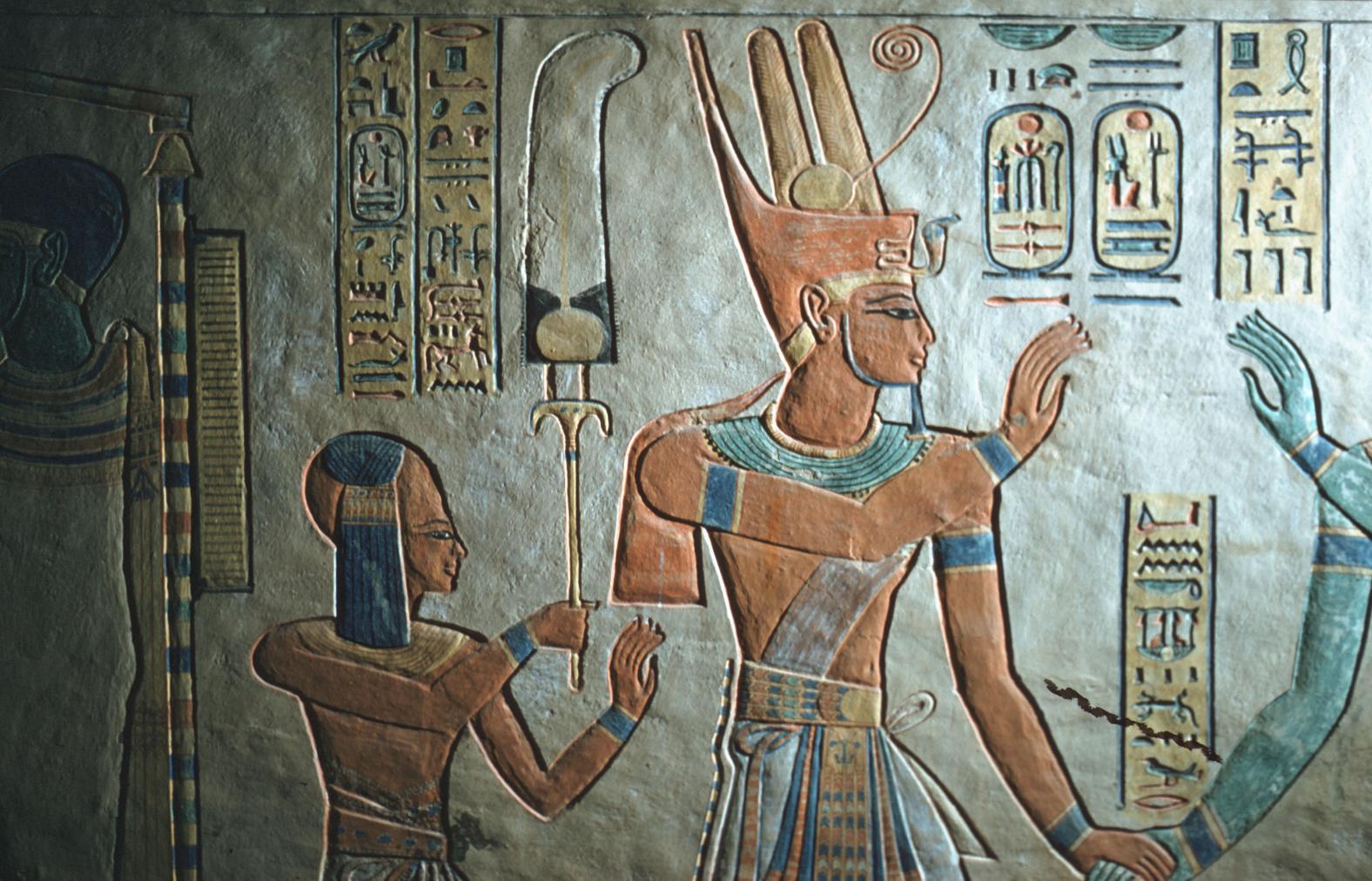
The king followed by the prince received by (Ptah-Tanen), Chamber B, left wall. Courtesy of Uni Dia Verlag; Uni Dia Image Nr. 36626.
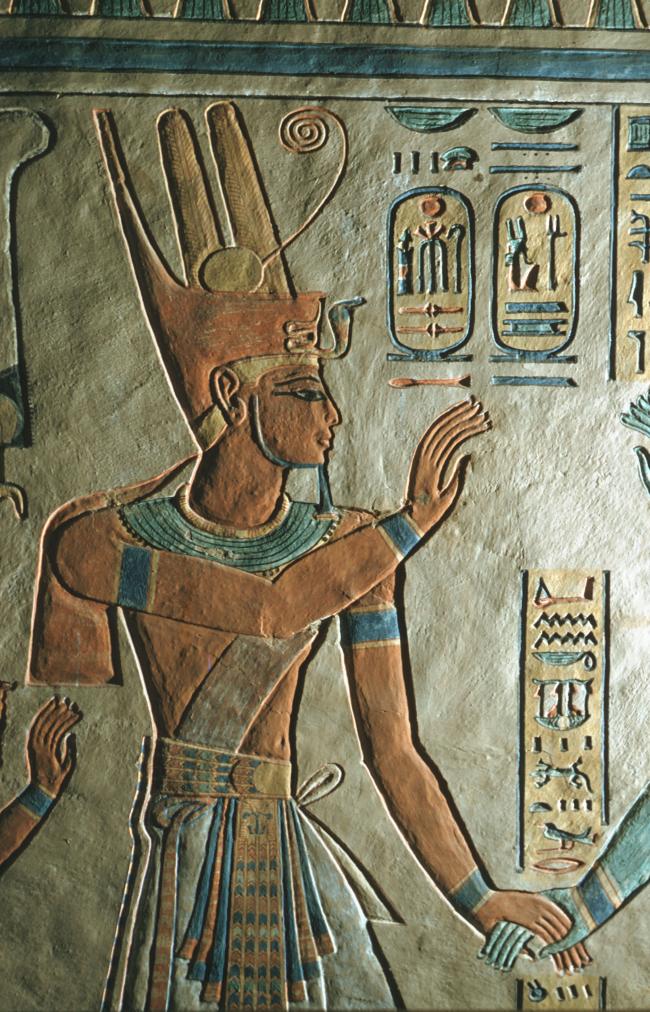
Detail of the king followed by the prince received by the syncretic god Ptah-Tatenen, Chamber B, left wall. Courtesy of Uni Dia Verlag; Uni Dia Image Nr. 36627.
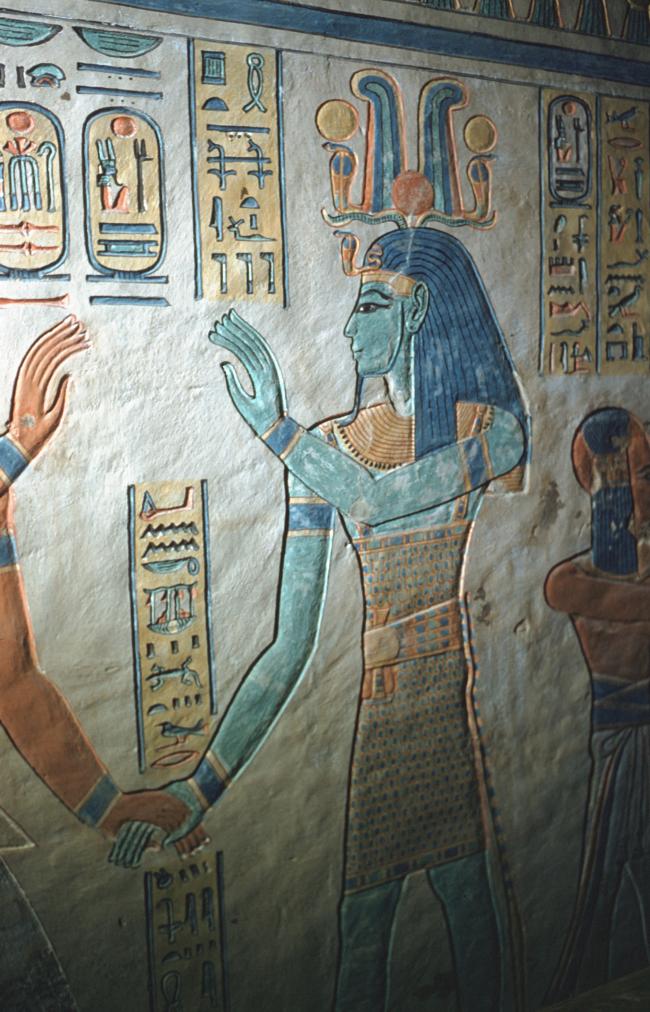
Detail of (the king followed by the prince) received by the syncretic god Ptah-Tatenen, Chamber B, left wall. Courtesy of Uni Dia Verlag; Uni Dia Image Nr. 36628.
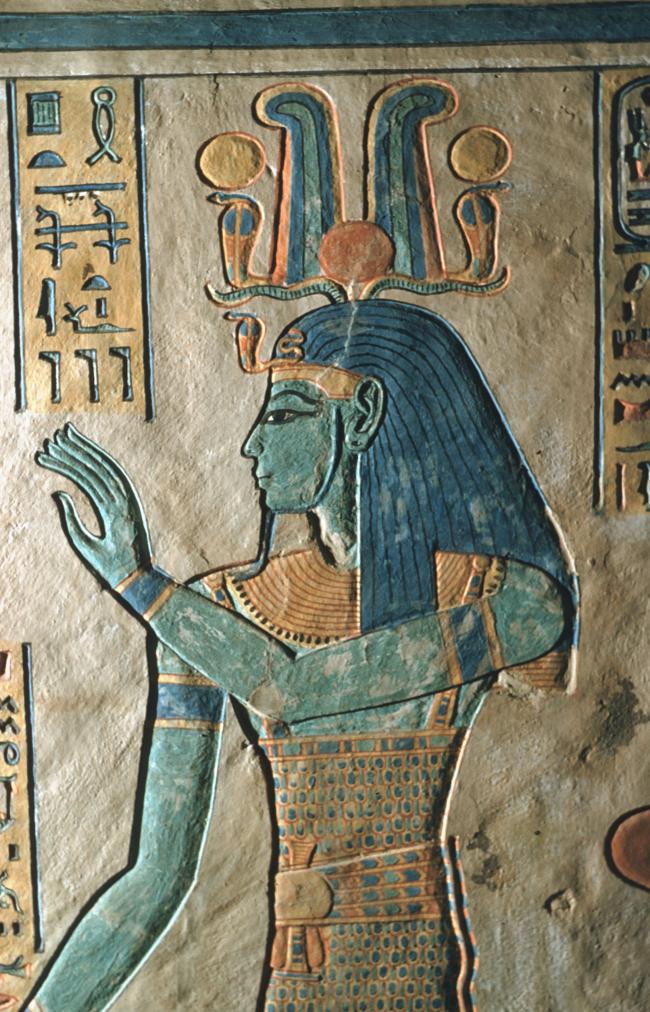
Detail of (the king followed by the prince) received by the syncretic god Ptah-Tatenen, Chamber B, left wall. Courtesy of Uni Dia Verlag; Uni Dia Image Nr. 36629.
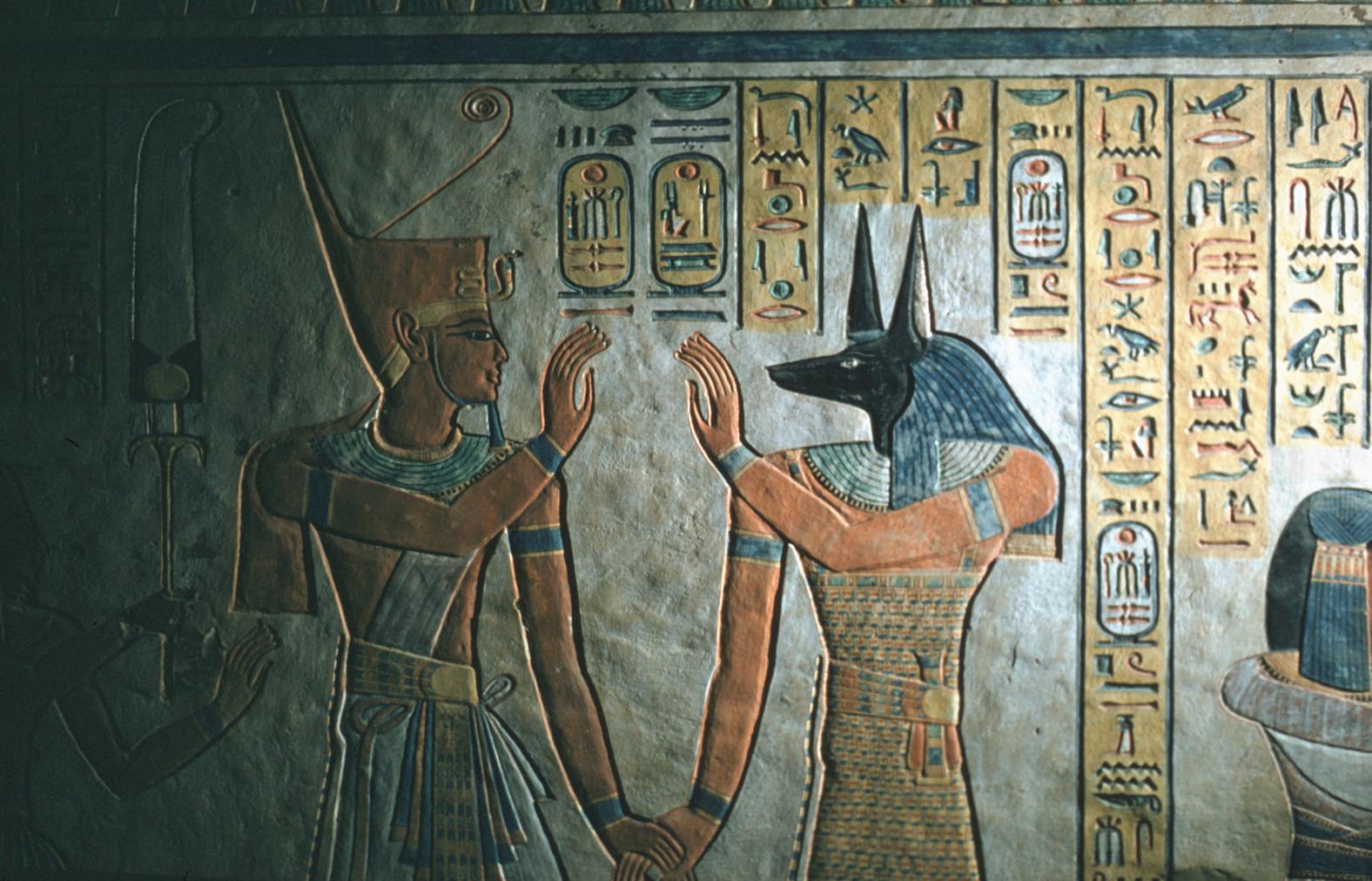
The king (and prince) received by the god Duamutef, Chamber B, left wall. Courtesy of Uni Dia Verlag; Uni Dia Image Nr. 36630.
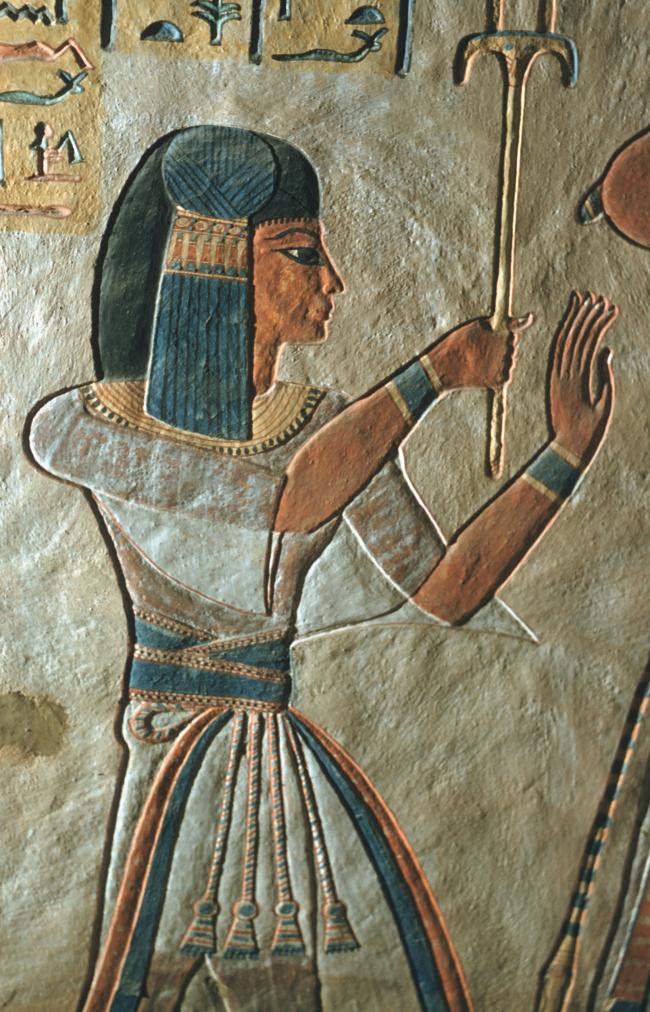
Detail of (the king) and prince (received by the god Duamutef), Chamber B, left wall. Courtesy of Uni Dia Verlag; Uni Dia Image Nr. 36631.
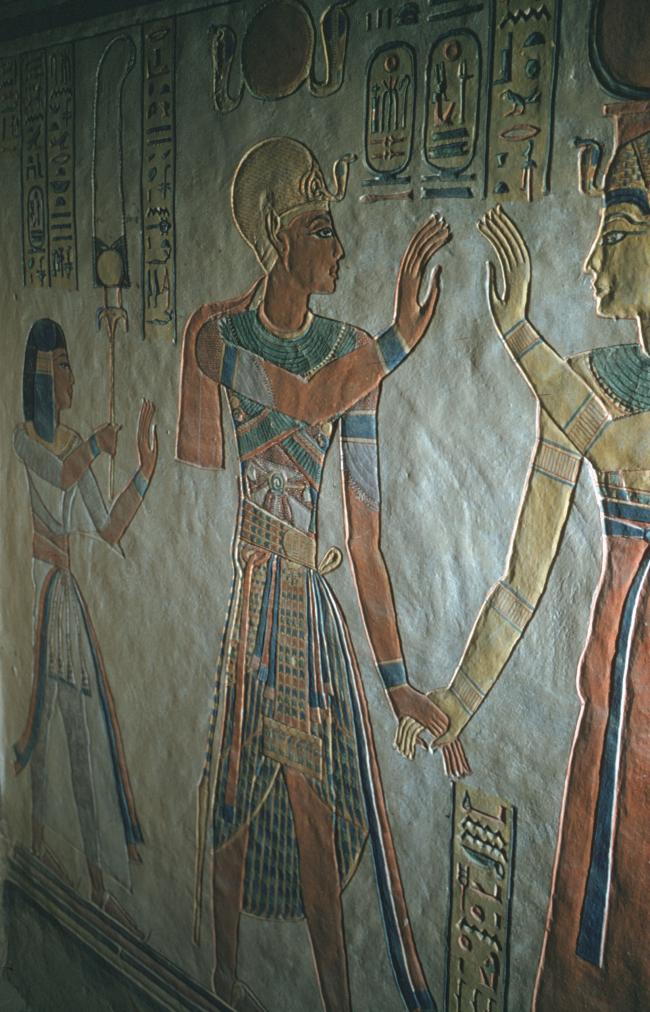
Rameses III and the prince before the goddess Isis, Chamber B, rear wall (left part). Courtesy of Uni Dia Verlag; Uni Dia Image Nr. 36632.
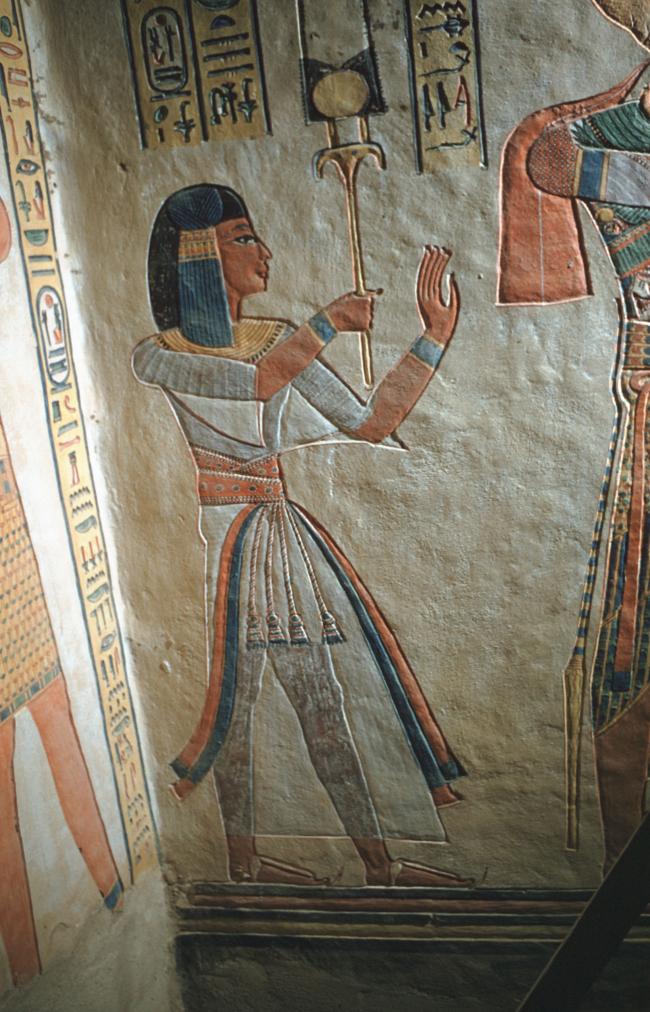
Detail of the prince, Chamber B, rear wall (left part). Courtesy of Uni Dia Verlag; Uni Dia Image Nr. 36633.
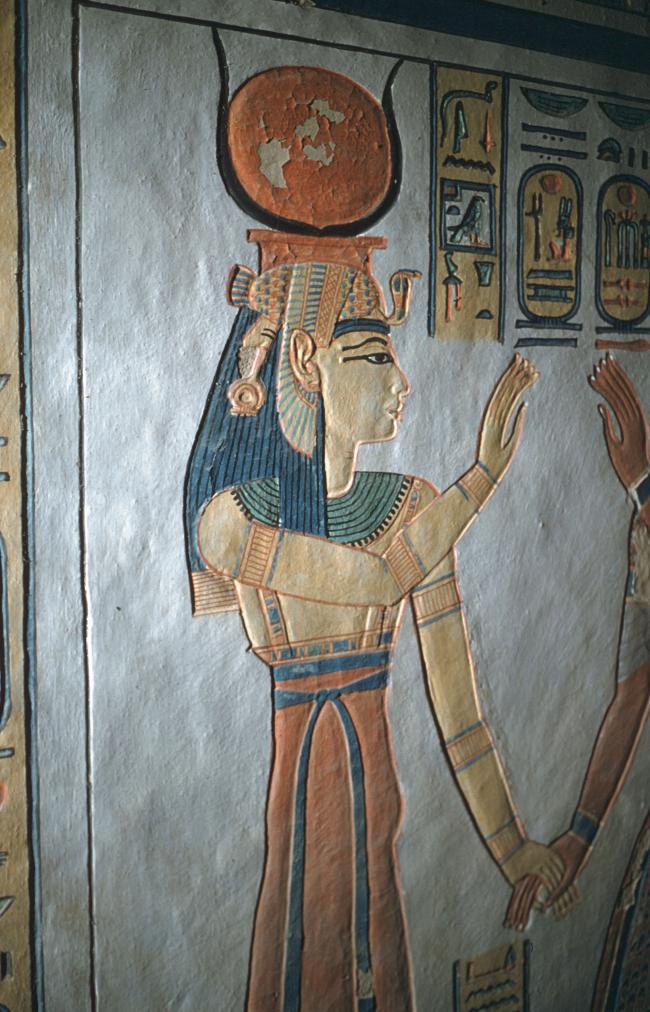
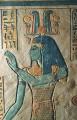
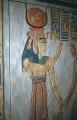
Detail of the goddess Hathor, Chamber B, rear wall (right part). Courtesy of Uni Dia Verlag; Uni Dia Image Nr. 36634.
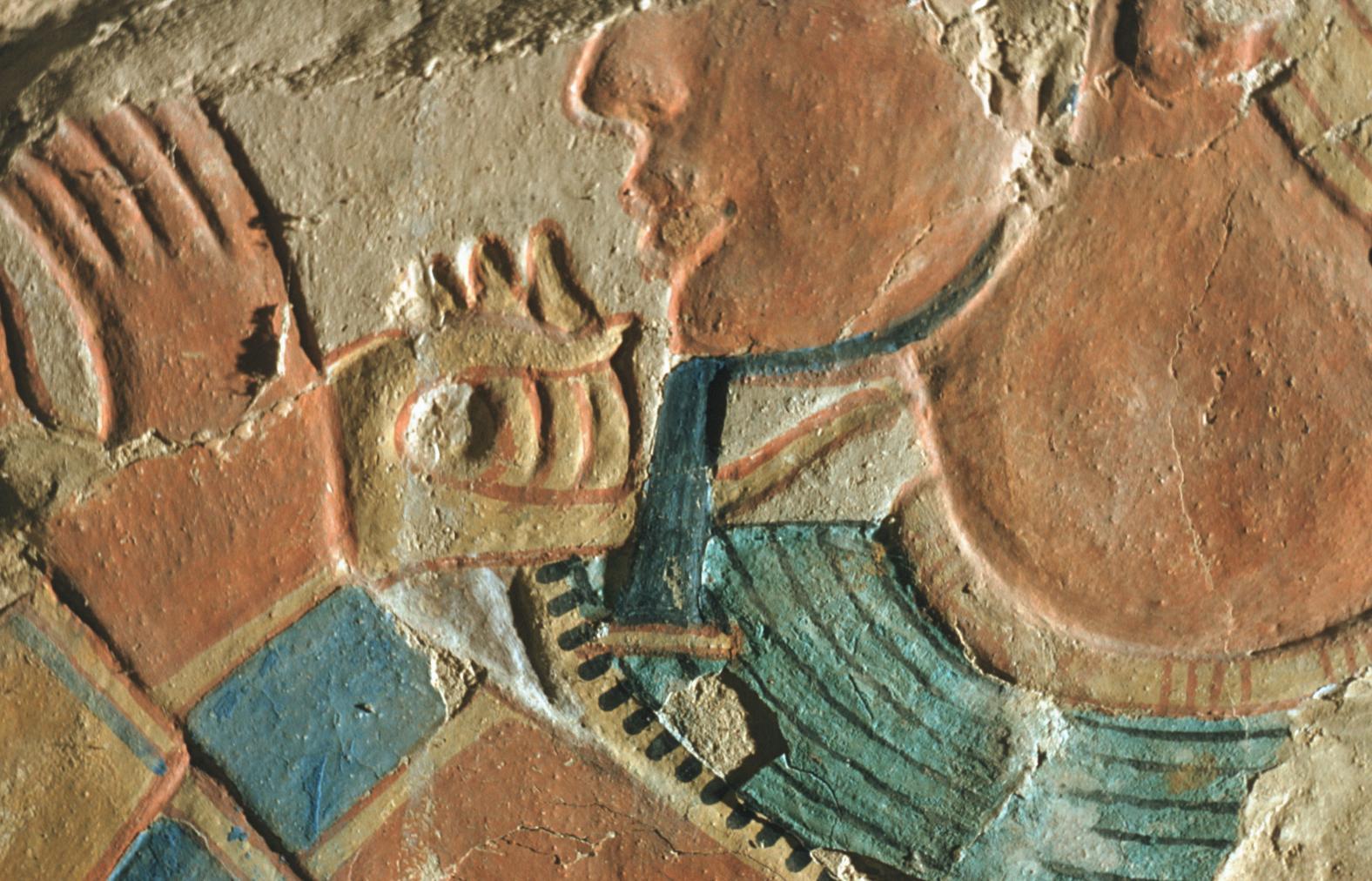
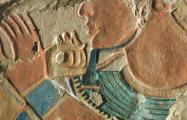
Detail of the king's face and a goddess's hand below his chin, Chamber B, front wall (left part). Courtesy of Uni Dia Verlag; Uni Dia Image Nr. 36641.
Gate Ba
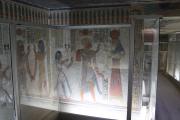
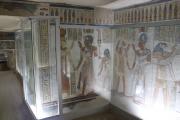
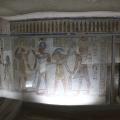
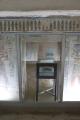
See entire tombThis gate lies in the right (northwest) wall of chamber B and leads to a side chamber. The gate is undecorated. A mummified fetus, found in the tomb of Prince Ahmose (QV 88) by the Italian Archaeological Expedition in 1903, is now on display in this gate behind the glass barrier.
West entrance to the antechamber's lateral annex from the tomb of Prince Amenherkhepshef (QV 55) photographed during Ernesto Schiaparelli's excavations with scenes of Rameses III (left) and the god Shu (right). Italian Archaeological Expedition excavations. Courtesy of the Egyptian Museum in Turin.
View of Gate Ba with display case holding the mummified fetus from QV 88
Side chamber Ba
See entire tombThis side chamber was left unfinished, with only the plaster and a few line drawings of figures on the walls.
Gate C
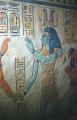
See entire tombThe outer lintel is decorated with a winged sun disk and the reveals contain the titles of Rameses III. The thicknesses have representations of Isis (left) and Nephthys (right) performing the Nini ritual.
Porter and Moss designation:
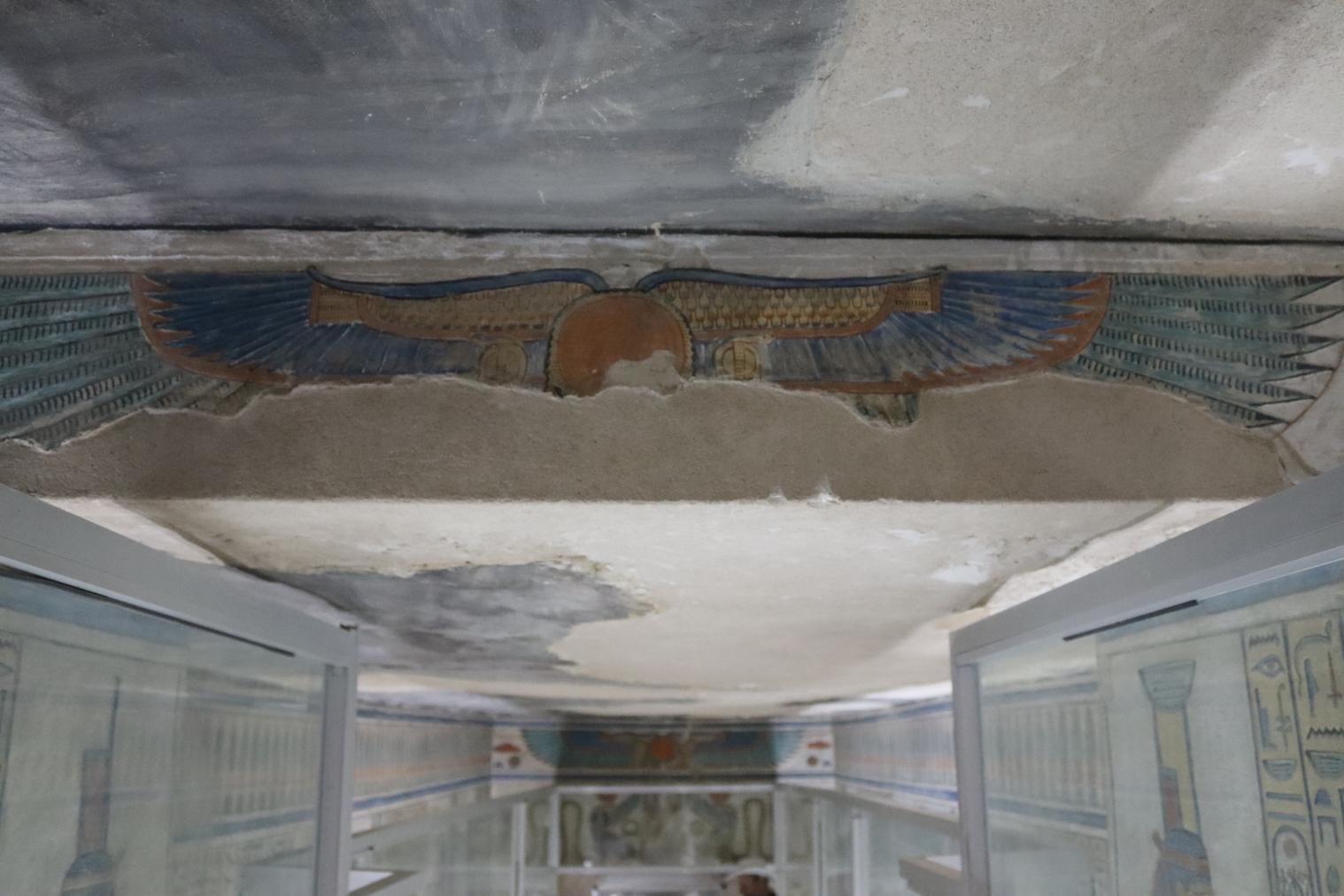
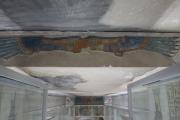
Lintel of Gate C with winged sun disk
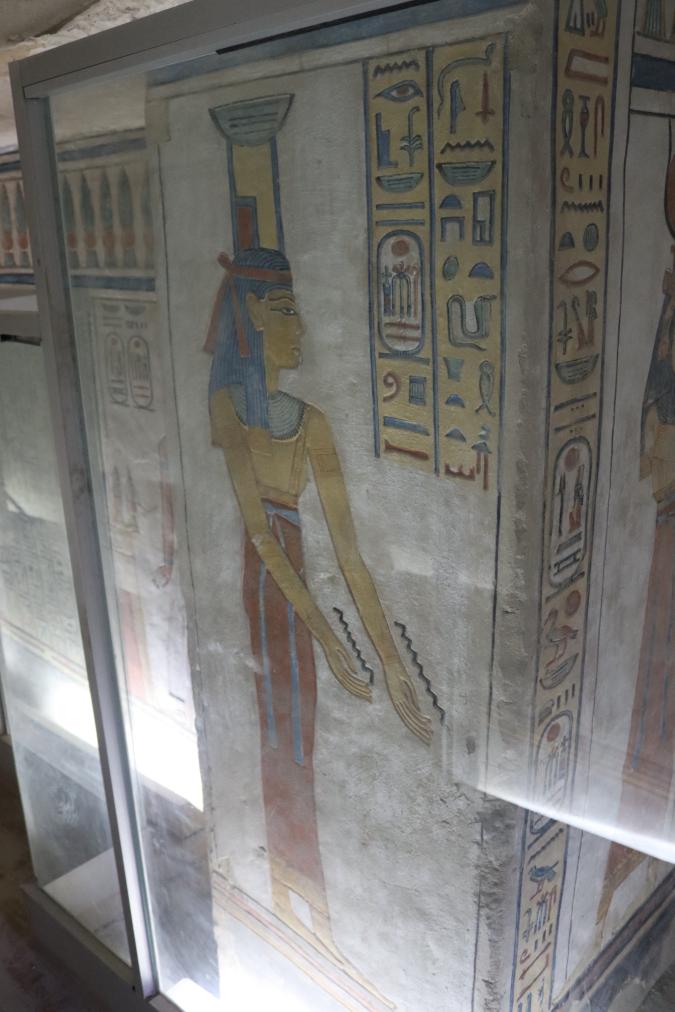
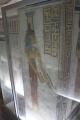
Nephthys performing the nini ritual
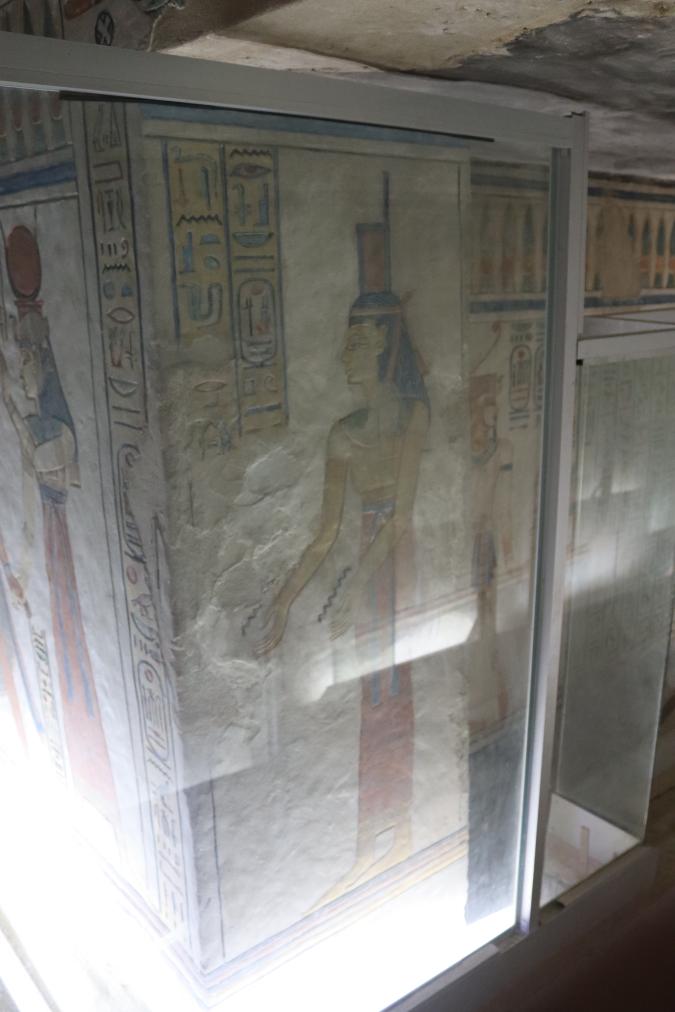
Isis performing the nini ritual
Burial chamber C
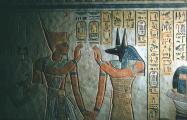
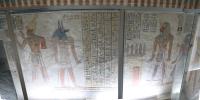
See entire tombGenerally mistaken as a corridor, chamber C in fact served as the burial chamber of QV55. The walls are decorated with four gate guardians (gates 5 to 8) from Spell 145 of the Book of the Dead. Again, the king is the dominant figure and interacts with the deities while the prince stands behind. The sarcophagus was originally found in this chamber and later moved to Chamber D.
Porter and Moss designation:
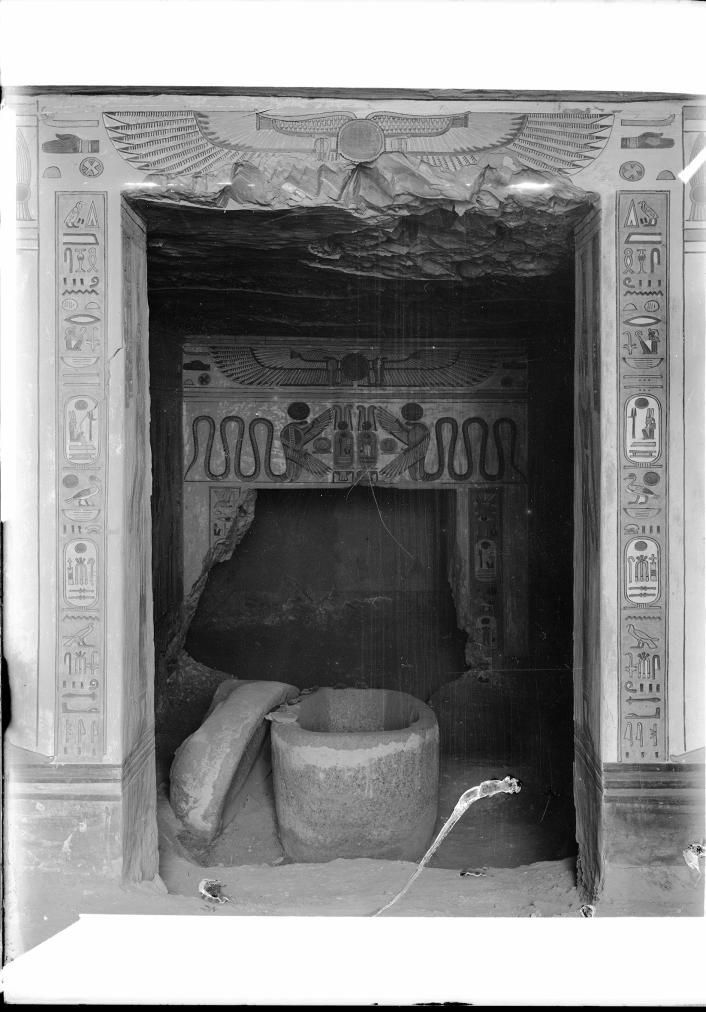
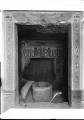
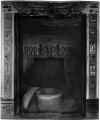
Interior of the tomb of Prince Amenherkhepshef (QV 55) at the time of its discovery with the prince's granite sarcophagus in the burial chamber. Italian Archaeological Expedition excavations. Courtesy of the Egyptian Museum in Turin.
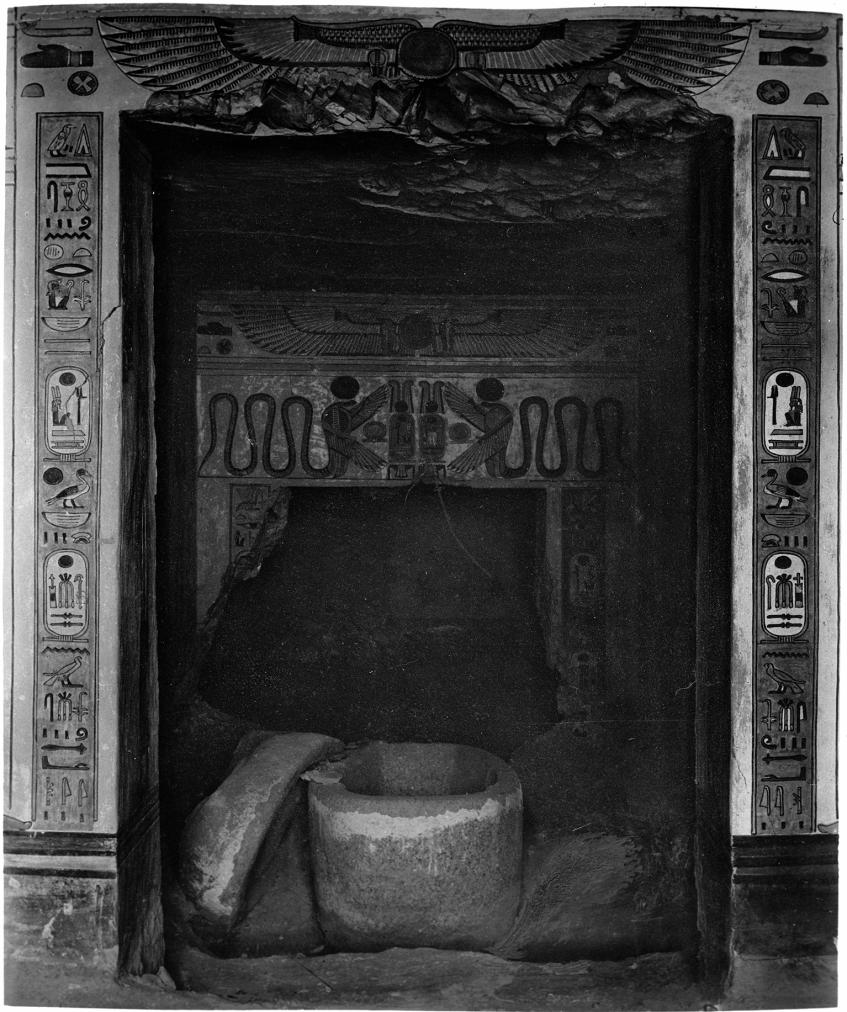
Interior of the tomb of Prince Amenherkhepshef (QV 55) at the time of its discovery with the prince's granite sarcophagus in the burial chamber. Italian Archaeological Expedition excavations. Courtesy of the Egyptian Museum in Turin.
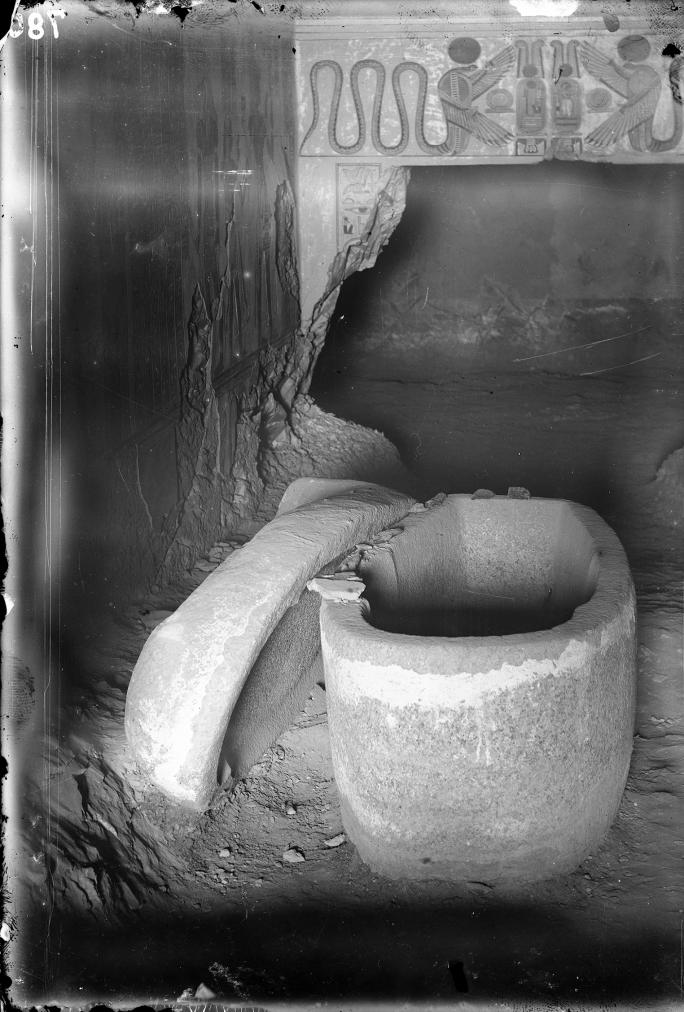
Interior of the tomb of Prince Amenherkhepshef (QV 55) with the prince's granite sarcophagus in the burial chamber at the time of its discovery by Ernesto Schiaparelli. Italian Archaeological Expedition excavations. Courtesy of the Egyptian Museum in Turin.
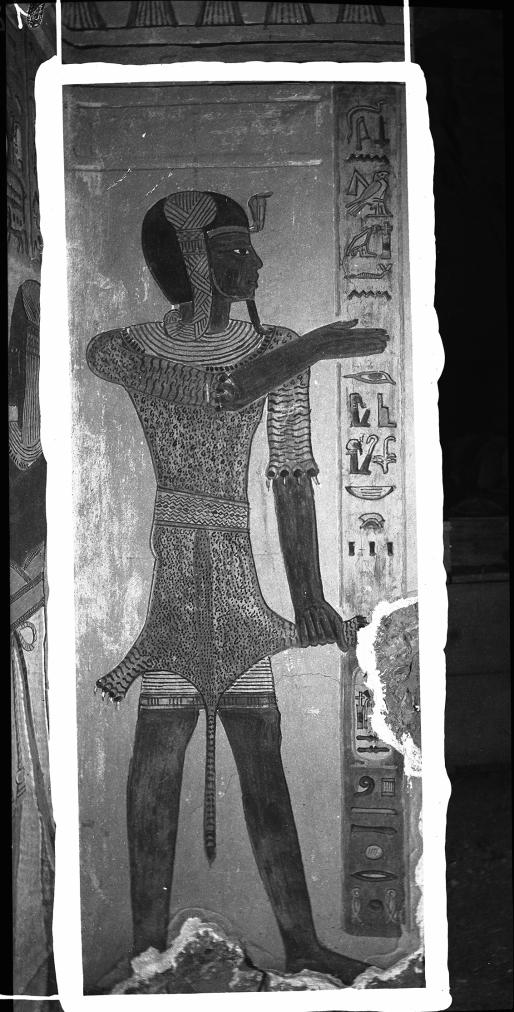
Right wall of the burial chamber's entrance in the tomb of Prince Amenherkhepeshef (QV 55) photographed during Ernesto Schiaparelli's excavations that depicts Horus-Iwnmutef. Italian Archaeological Expedition excavations. Courtesy of the Egyptian Museum in Turin.
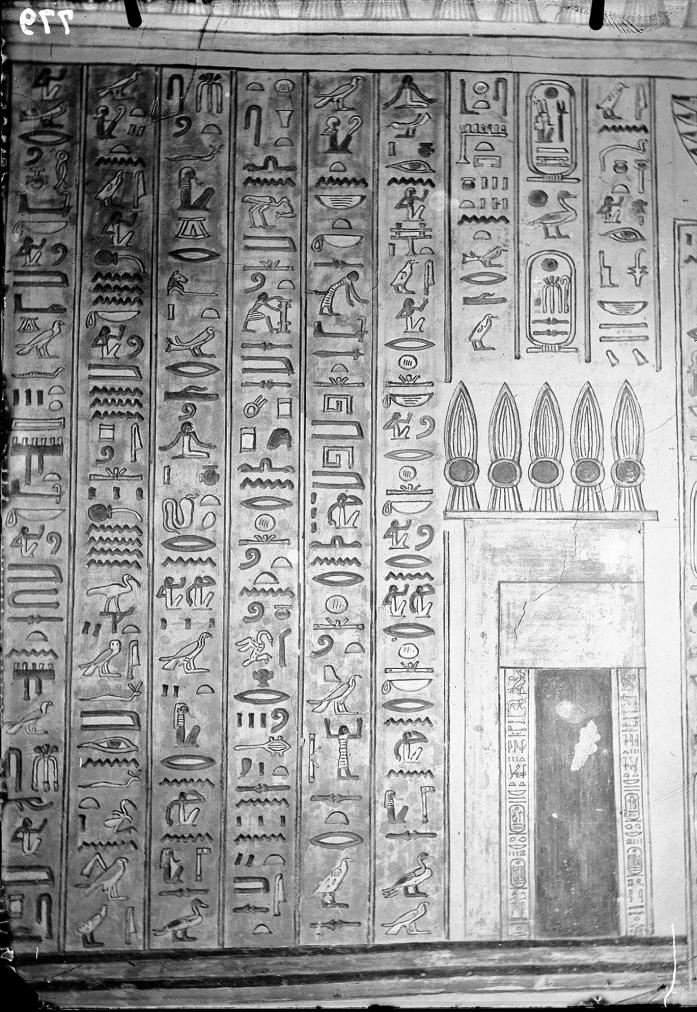
Wall scene with Spells 145-146 of the Book of the Dead beside one of the portals through which the prince must pass to reach the hereafter in the burial chamber of the tomb of Prince Amenherkhepshef (QV 55) photographed during Ernesto Schiaparelli's excavations. Italian Archaeological Expedition excavations. Courtesy of the Egyptian Museum in Turin.
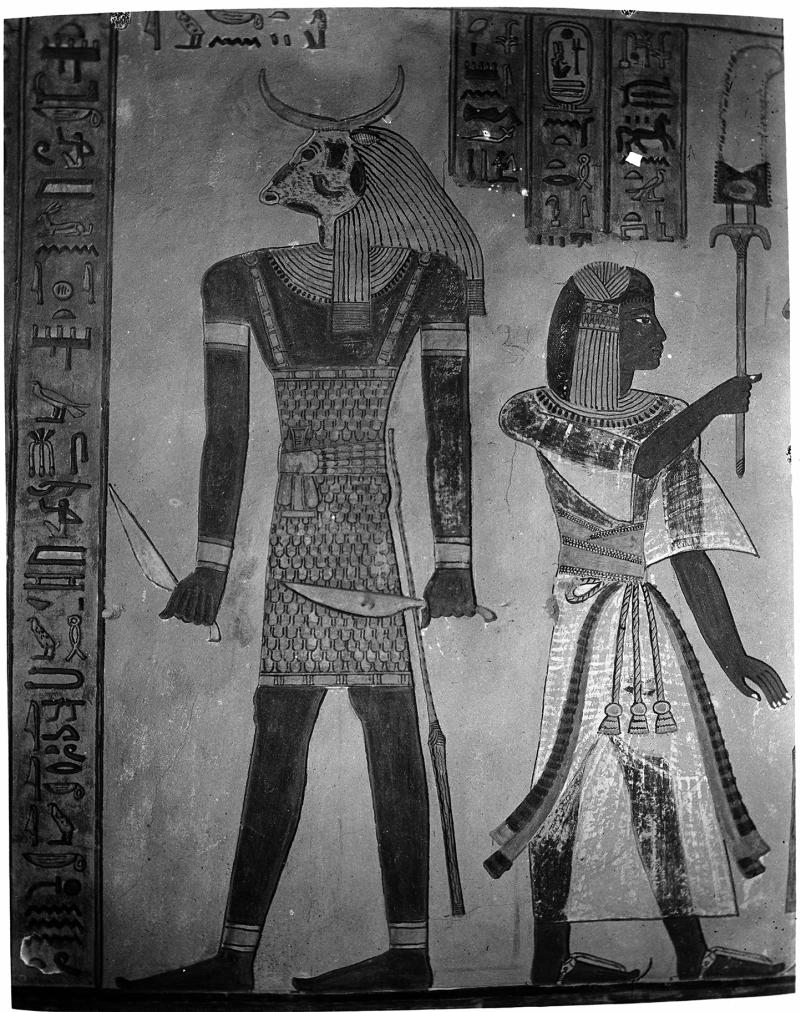
Wall scene in the burial chamber of the tomb of Prince Amenherkhepshef (QV 55) photographed during Ernesto Schiaparelli's excavations that depicts the young prince (left), references to Spell 145 of the Book of the Dead, as well as the fourth portal's bovine-headed guardian with two knives (right). Italian Archaeological Expedition excavations. Courtesy of the Egyptian Museum in Turin.
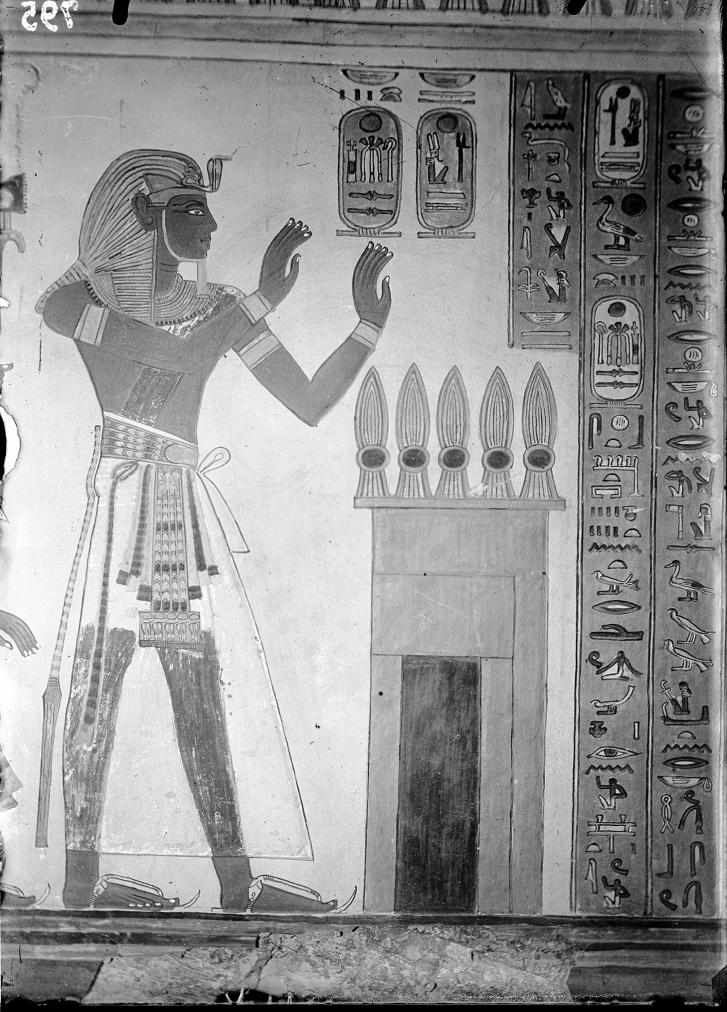
Wall scene from the burial chamber of the tomb of Prince Amenherkhepshef (QV 55) with Spells 145-146 of the Book of the Dead, as well as the young prince (left) accompanied by Rameses III in front of one of the portals photographed during Ernesto Schiaparelli's excavations. Italian Archaeological Expedition excavations. Courtesy of the Egyptian Museum in Turin.
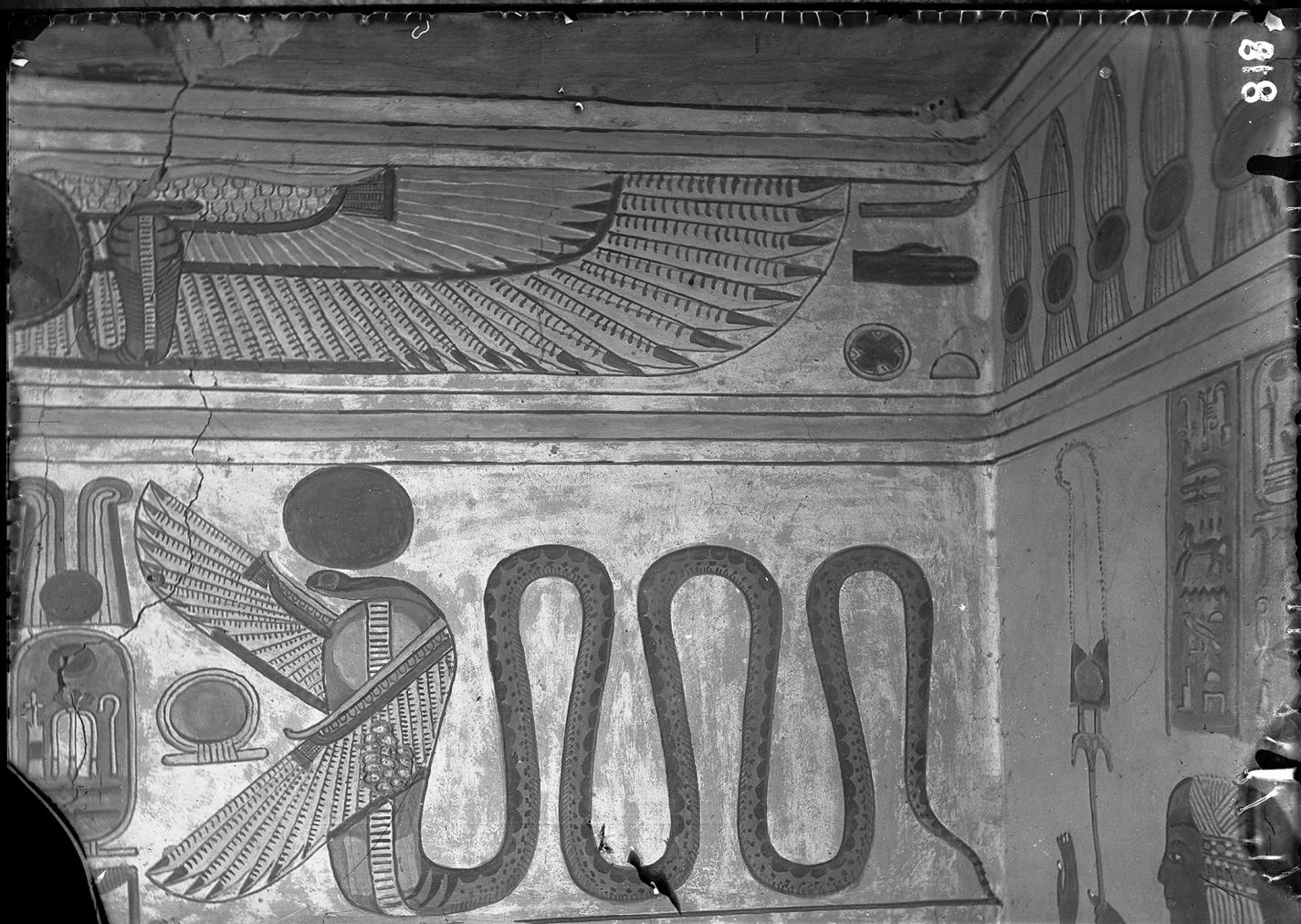
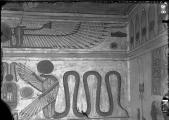
Lintel with winged serpent protecting the cartouche of Rameses III in the tomb of Prince Amenherkhepshef (QV 55) photographed during Ernesto Schiaparelli's excavations. Italian Archaeological Expedition excavations. Courtesy of the Egyptian Museum in Turin.
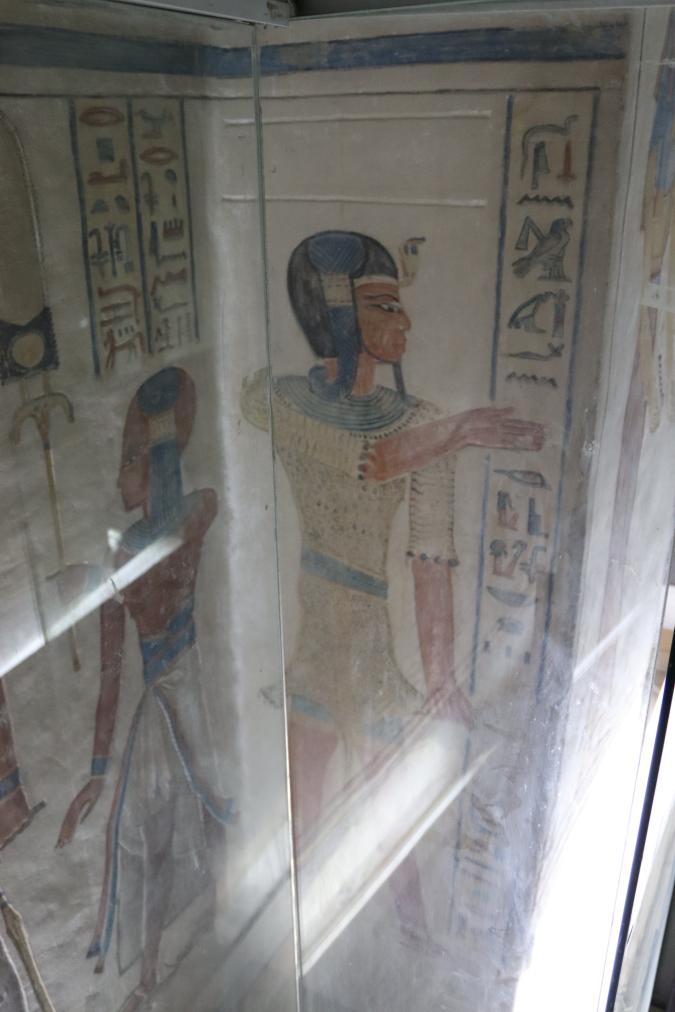
Amenherkhepshef depicted as Horus-Iwnmutef
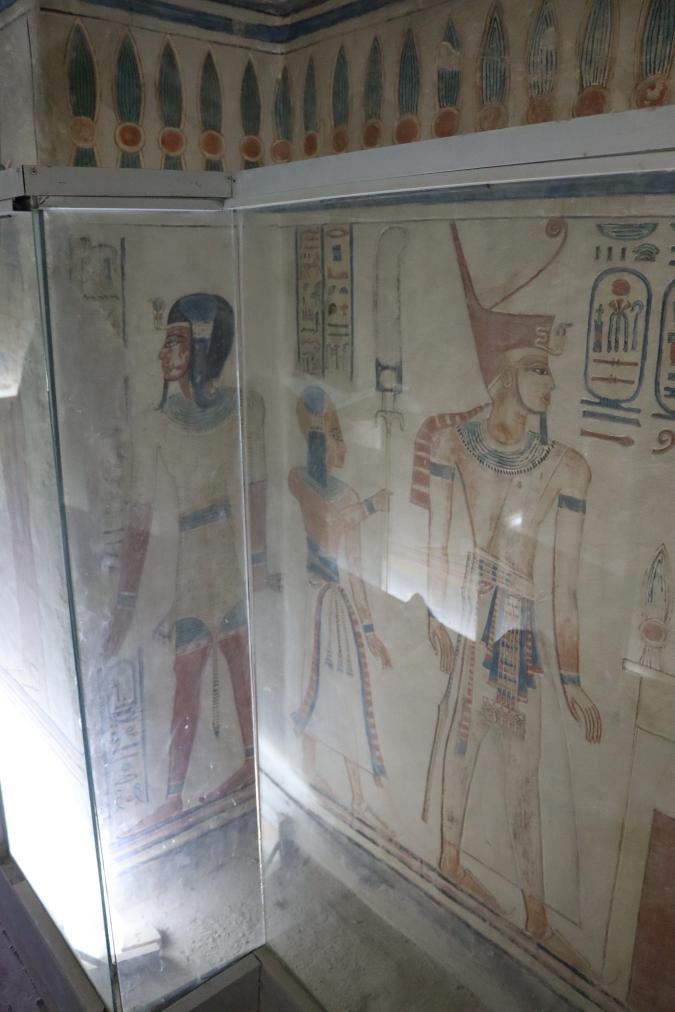
Amenherkhepshef as Horus-Iwnmutef
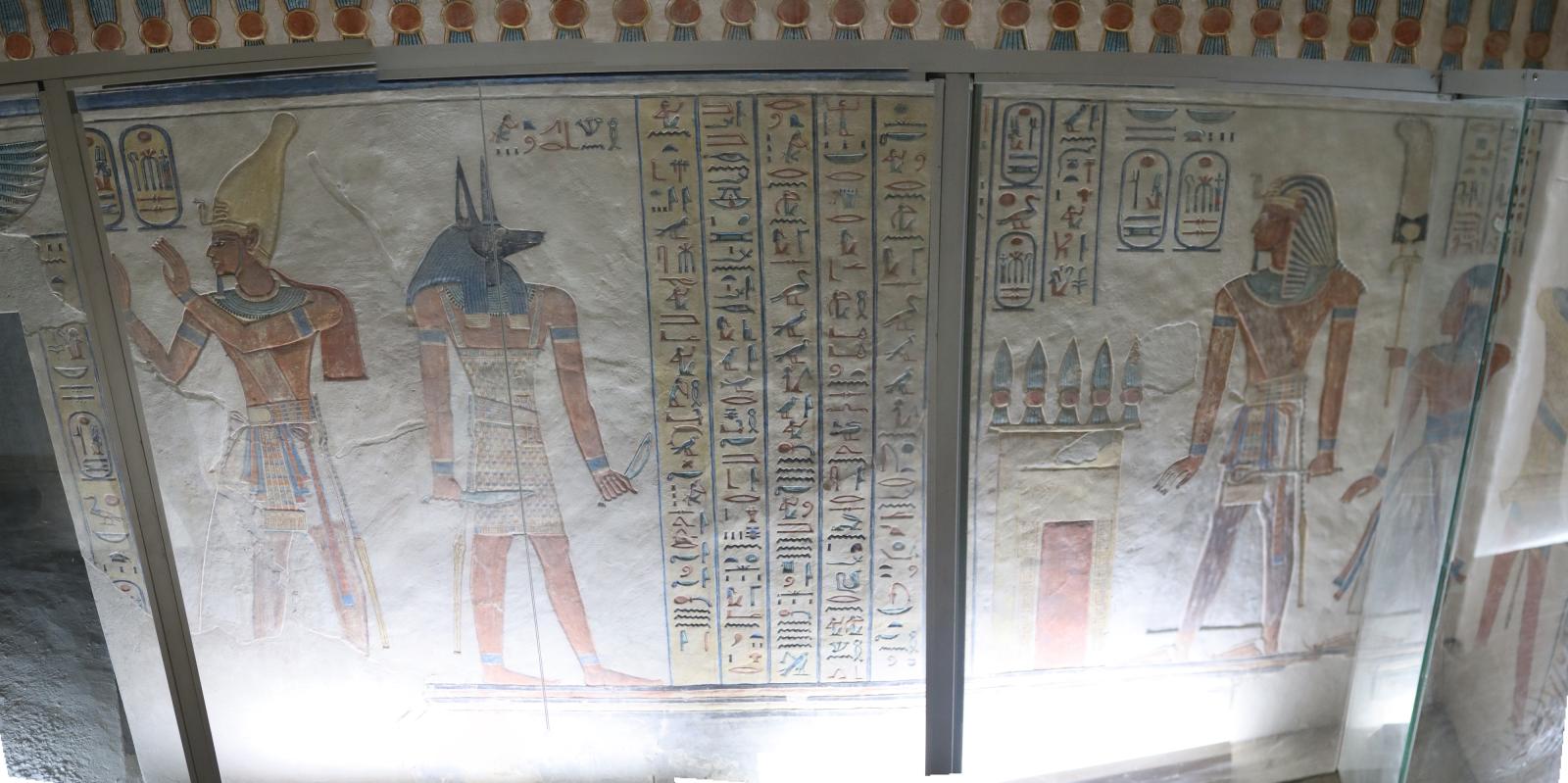
Book of the Dead, Chapter 145, gates 5 and 6
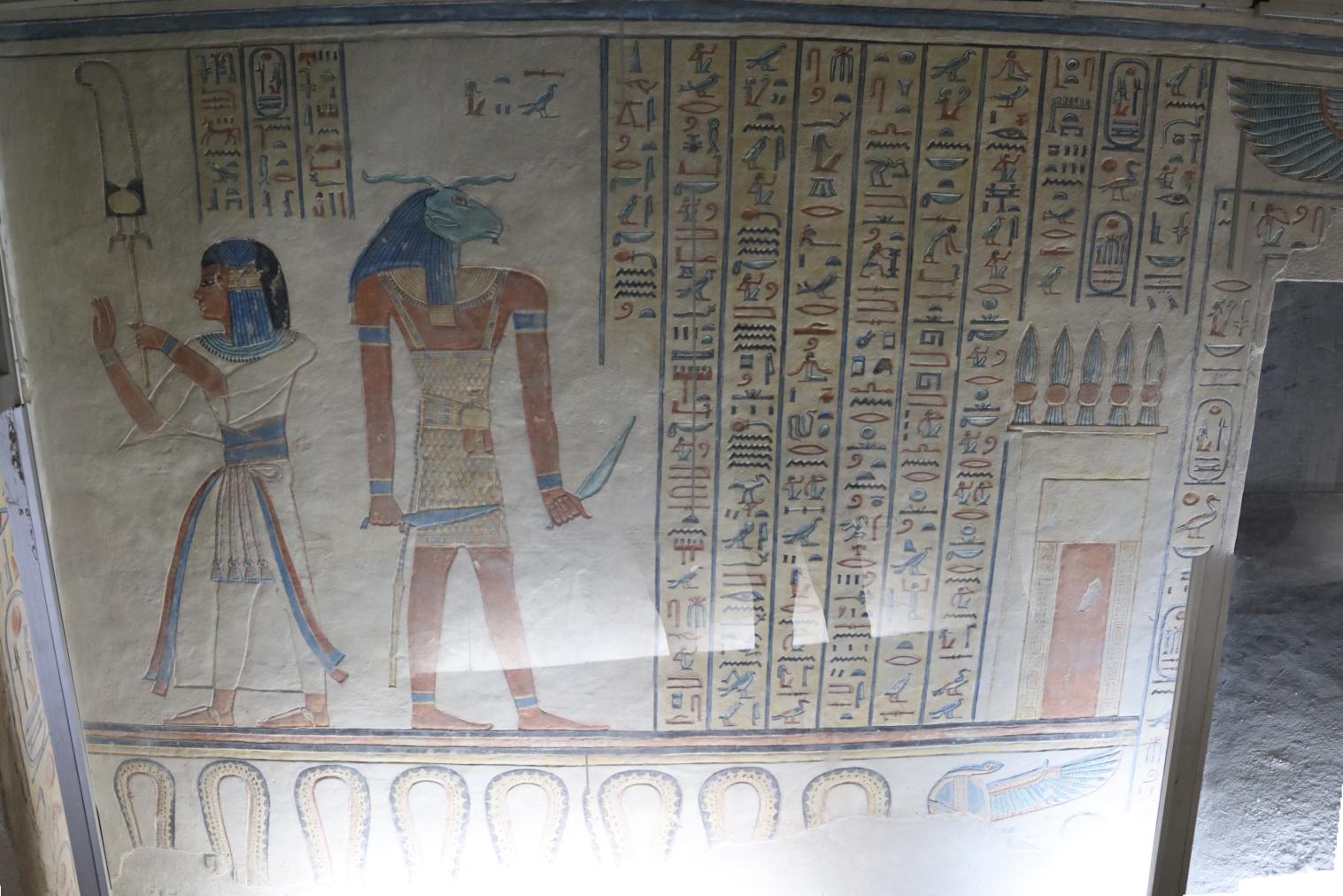
Book of the Dead, Spell 145, gates 5 and 6
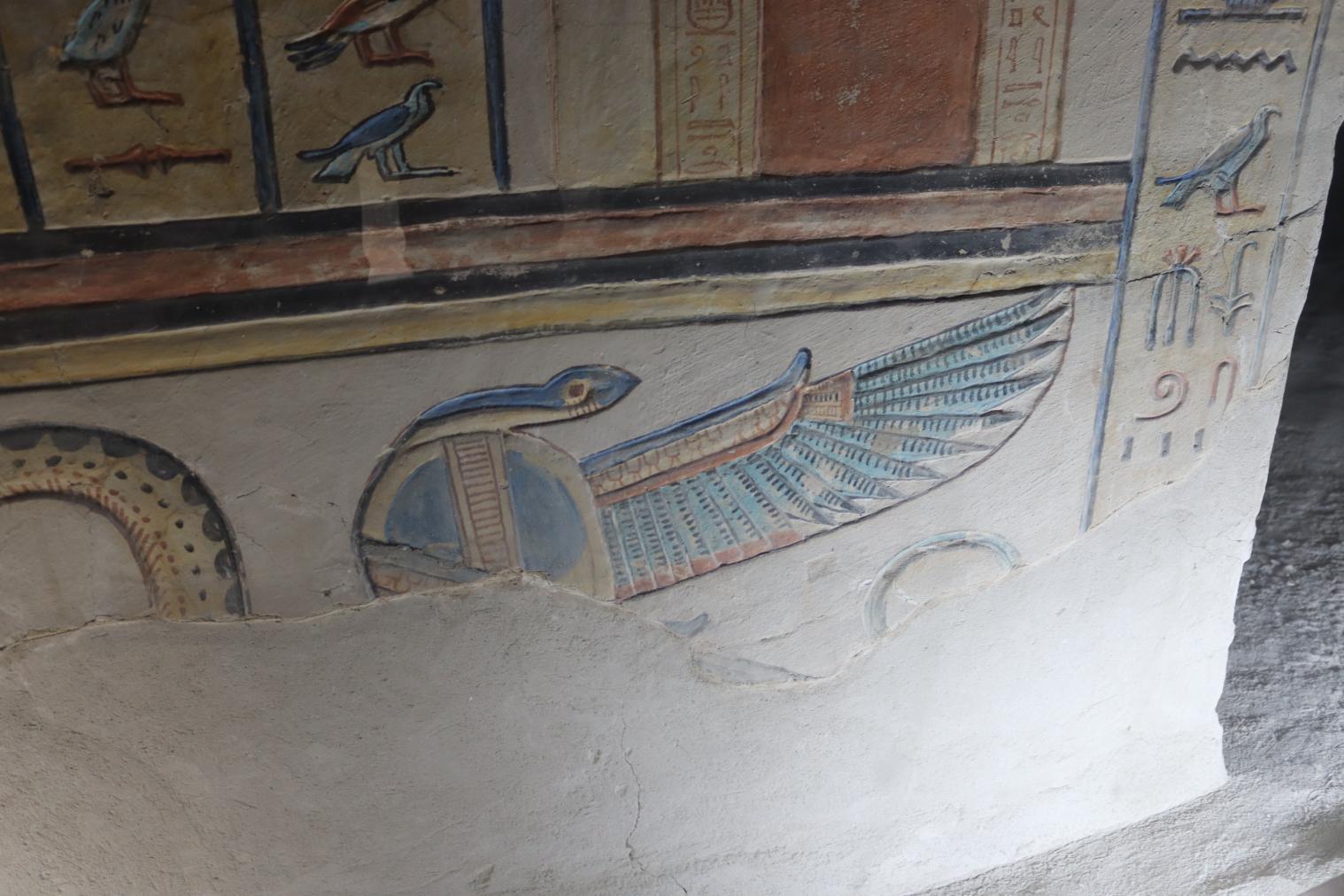
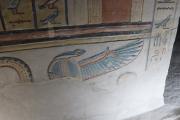
Detail of winged cobra on dado
Book of the Dead, Chapter 145, gates 7 and 8
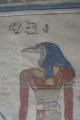
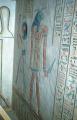
Detail of Deity from Book of the Dead Chapter 145
Detail of Prince
Gate D with winged sun disk and winged Uraei
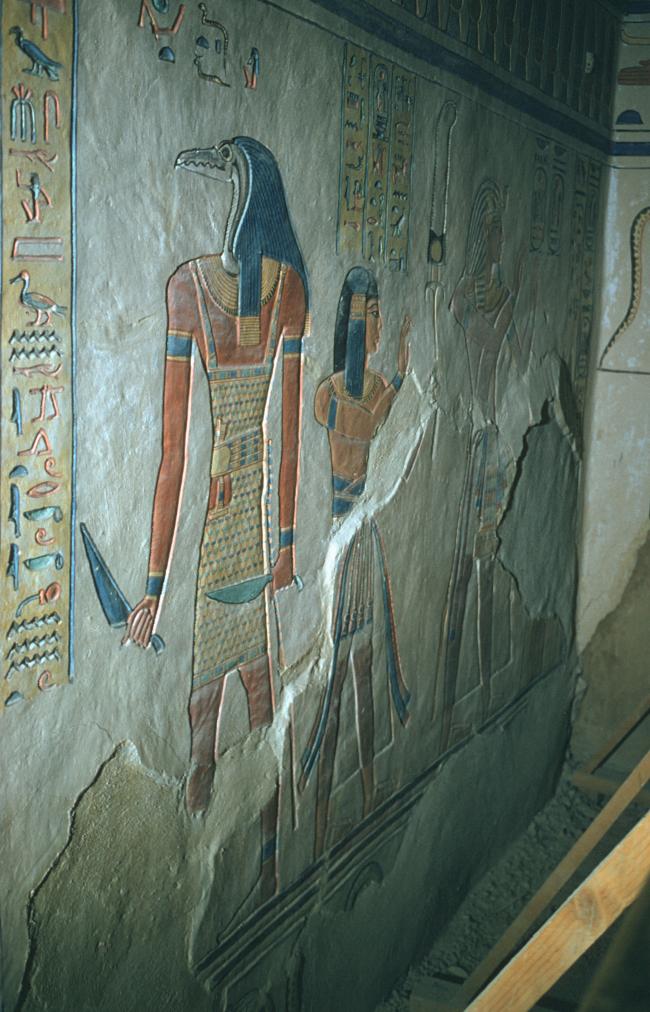
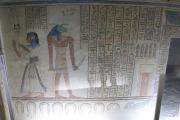
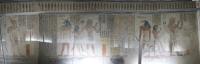
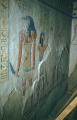
Book of the Dead, Burial chamber C, left wall (right part). Courtesy of Uni Dia Verlag; Uni Dia Image Nr. 36635.
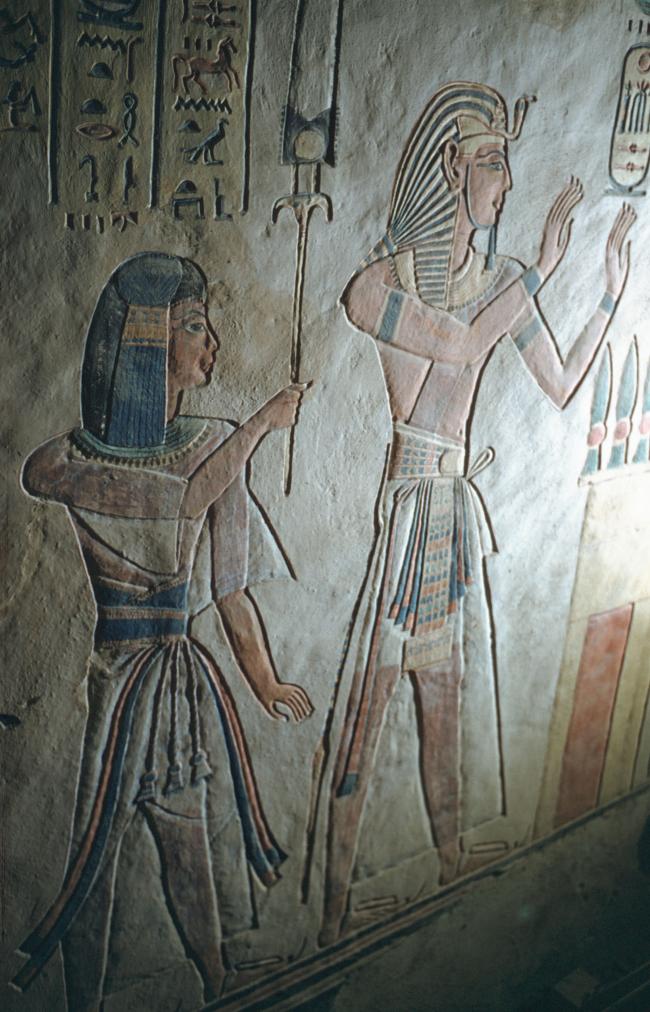
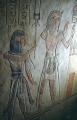
Detail of the king and the prince before a gate, Book of the Dead, Burial chamber C, left wall (center part). Courtesy of Uni Dia Verlag; Uni Dia Image Nr. 36636.
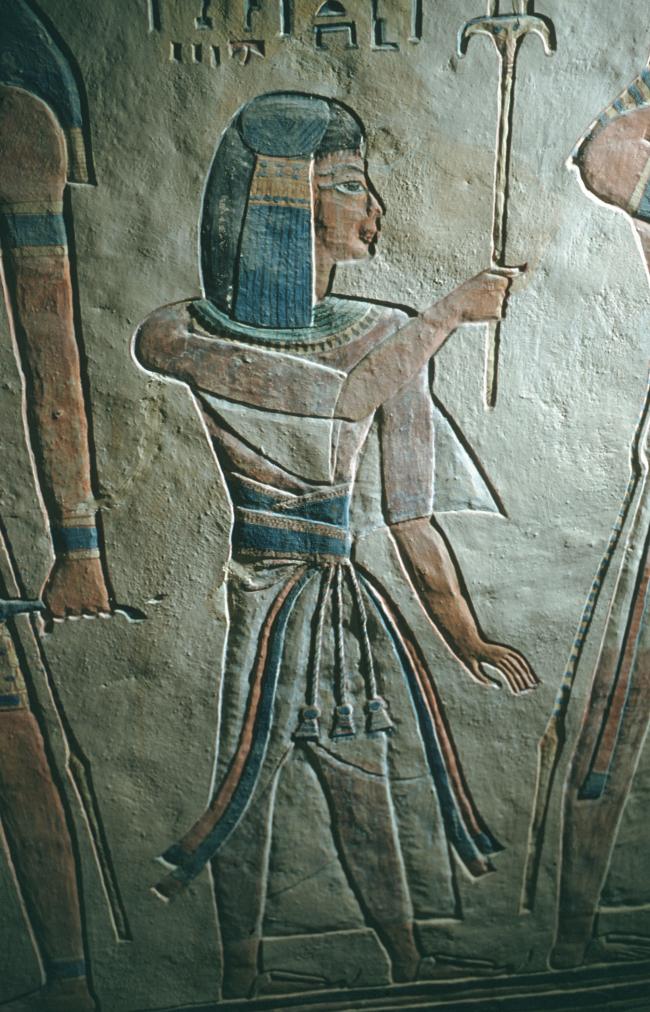
Detail of the prince before a gate, Book of the Dead, Burial chamber C, left wall (center part). Courtesy of Uni Dia Verlag; Uni Dia Image Nr. 36637.
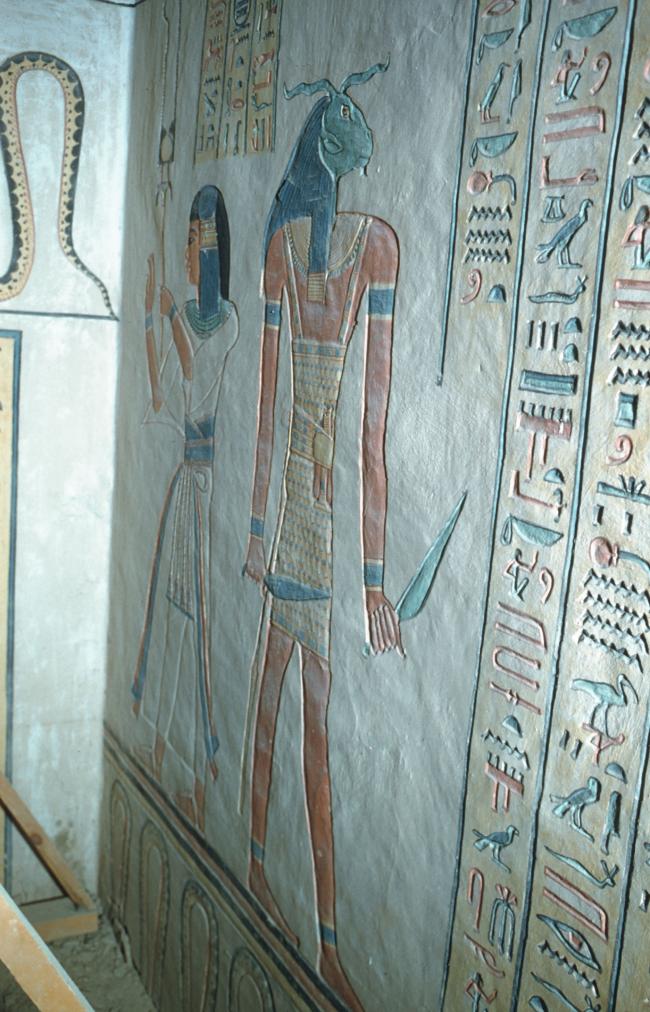
Book of the Dead, Spell 145, Gates 5 and 6, Burial chamber C, right wall (left part). Courtesy of Uni Dia Verlag; Uni Dia Image Nr. 36639.
Book of the Dead, Chapter 145, Gates 7 and 8, Burial chamber C, left wall (left part). Courtesy of Uni Dia Verlag; Uni Dia Image Nr. 36640.
Gate Ca
See entire tombGate Ca lies in the northwest (right) wall of Burial Chamber C and leads to a side chamber. It's lintel is decorated with a winged sun disk and the reveals contain the titles of Rameses III.
Side chamber Ca
See entire tombWhile the cutting of the chamber was completed, it was not decorated.
Gate D
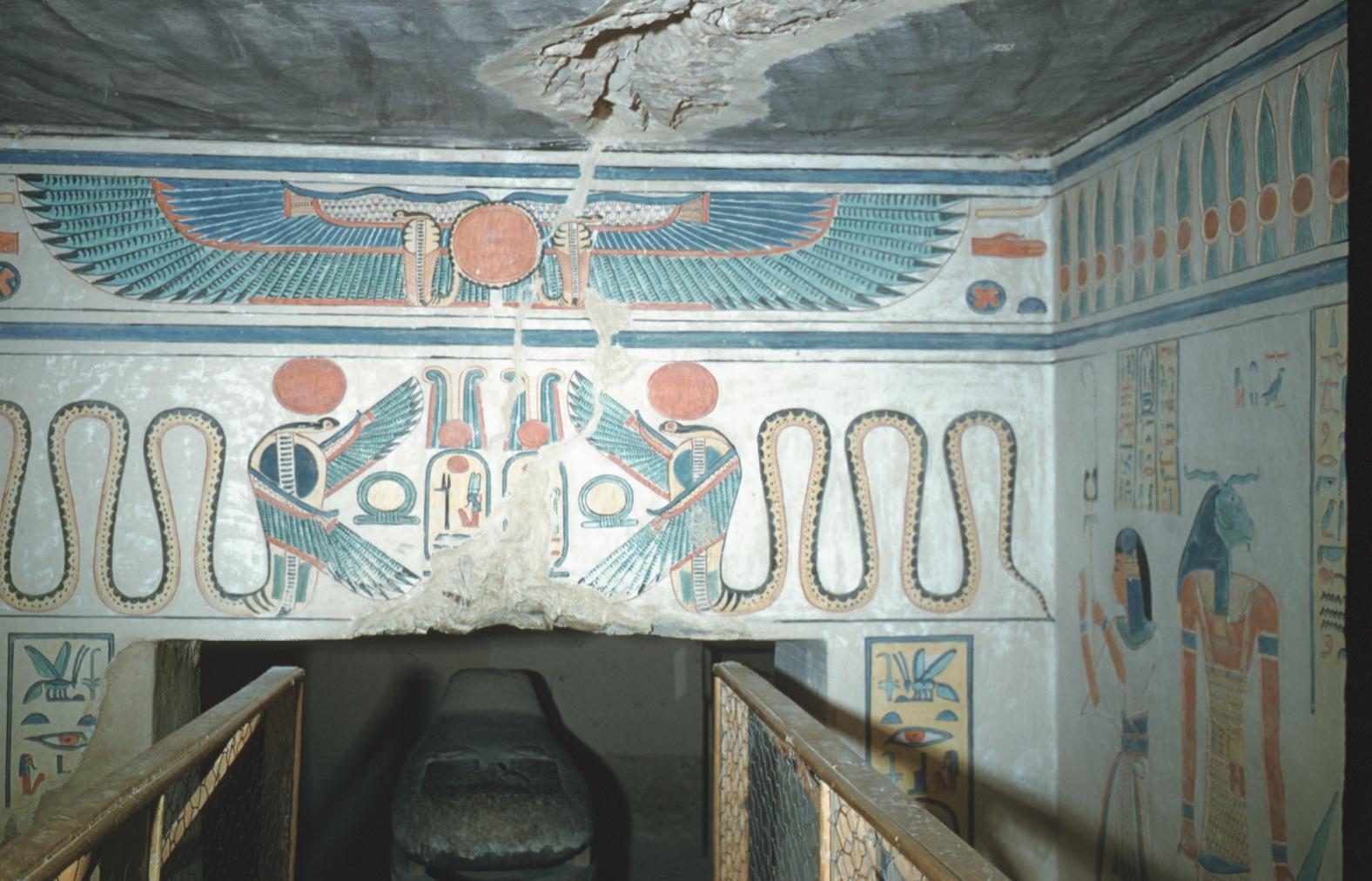
See entire tombThis is the last gate in the tomb. The lintel is decorated with winged ureai and the reveals contain the titles of Rameses III. The right thickness contains an unfinished representation of Nephthys, while the left is undecorated. It would presumably have contained a representation of Isis.
Porter and Moss designation:
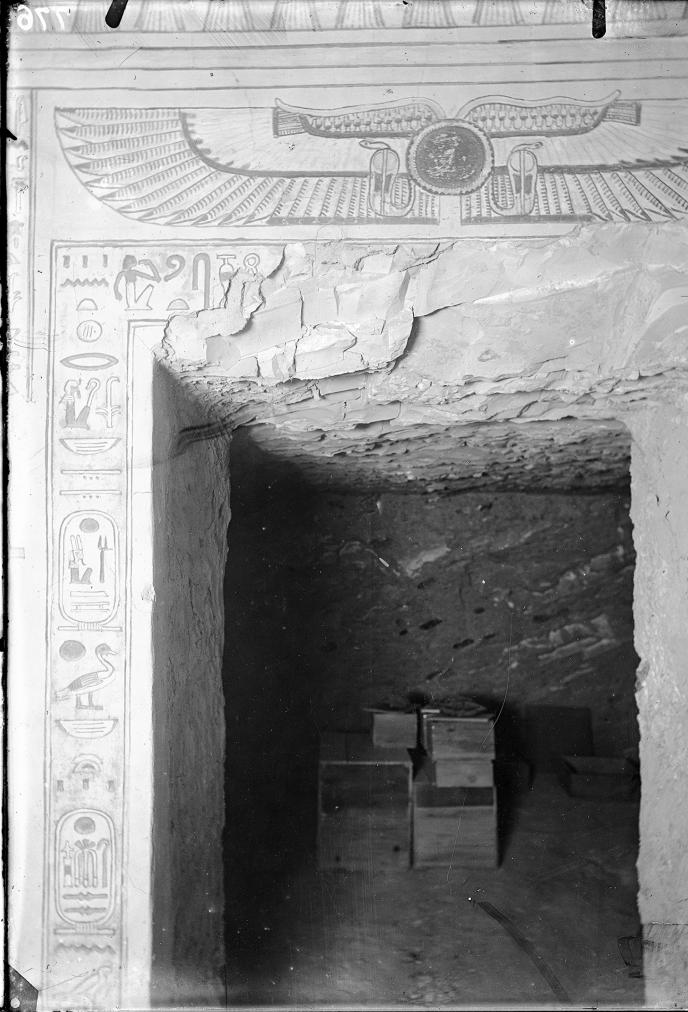
Gate D in the tomb of Prince Amenherkhepshef (QV 55) framed by a winged sun disk and texts. Modern crates from Ernesto Schiaparelli's excavations are visible. Today the room houses the prince's granite sarcophagus. Italian Archaeological Expedition excavations. Courtesy of the Egyptian Museum in Turin.
Gate D with winged sun disk and winged Uraei
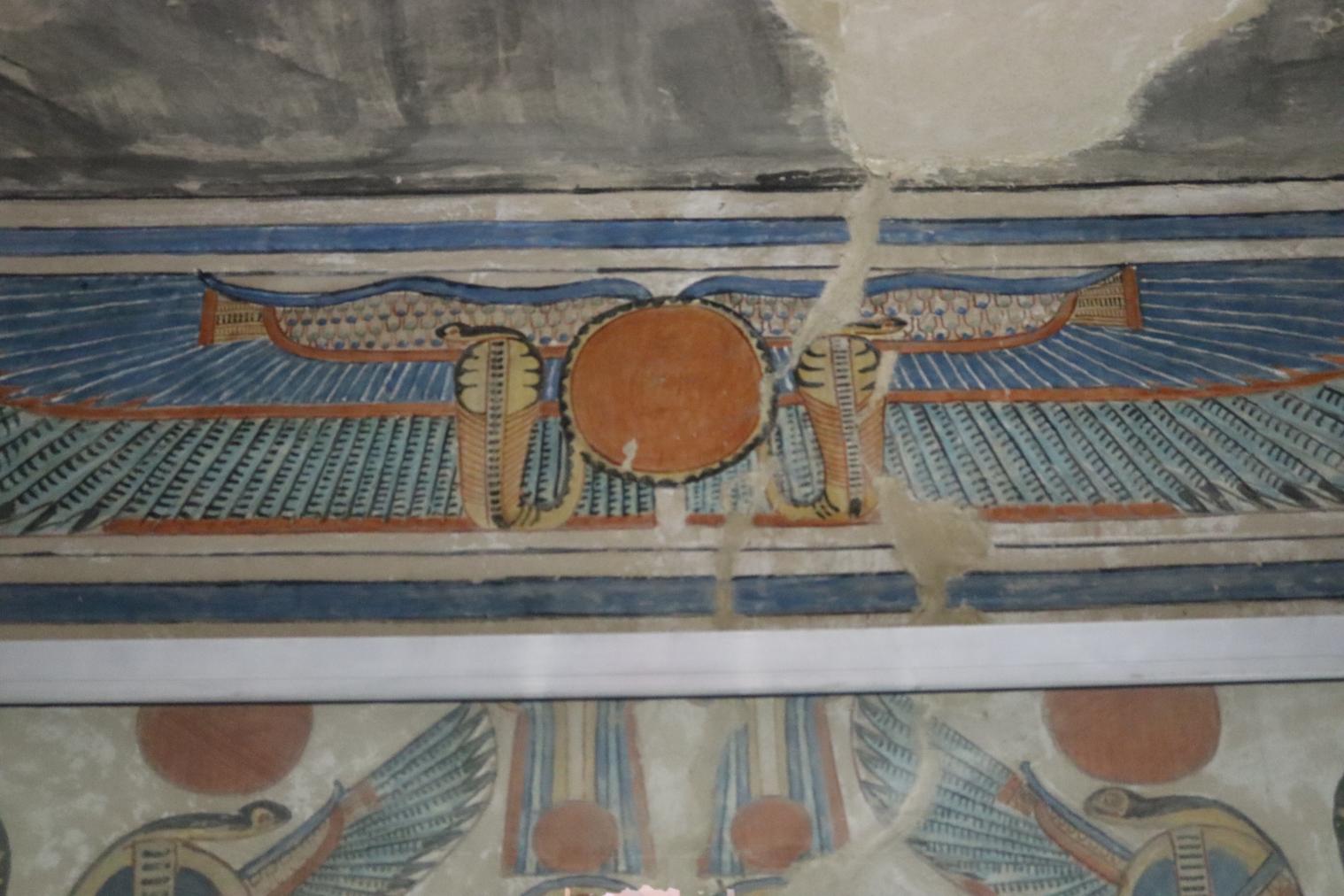
Gate D with winged sun disk and winged Uraei (detail)
Chamber D
See entire tombThis is the last chamber in the tomb. It is undecorated. Here, the Sarcophagus, presumably meant to be used for the prince himself, is now located. However, a sarcophagus with the prince's name was found in the tomb of Bay (KV 13), usurped from Queen Tausert by Amenherkhepshef in the 19th Dynasty and later by Mentuherkhepeshef (son of Rameses VI) during the 20th Dynasty.
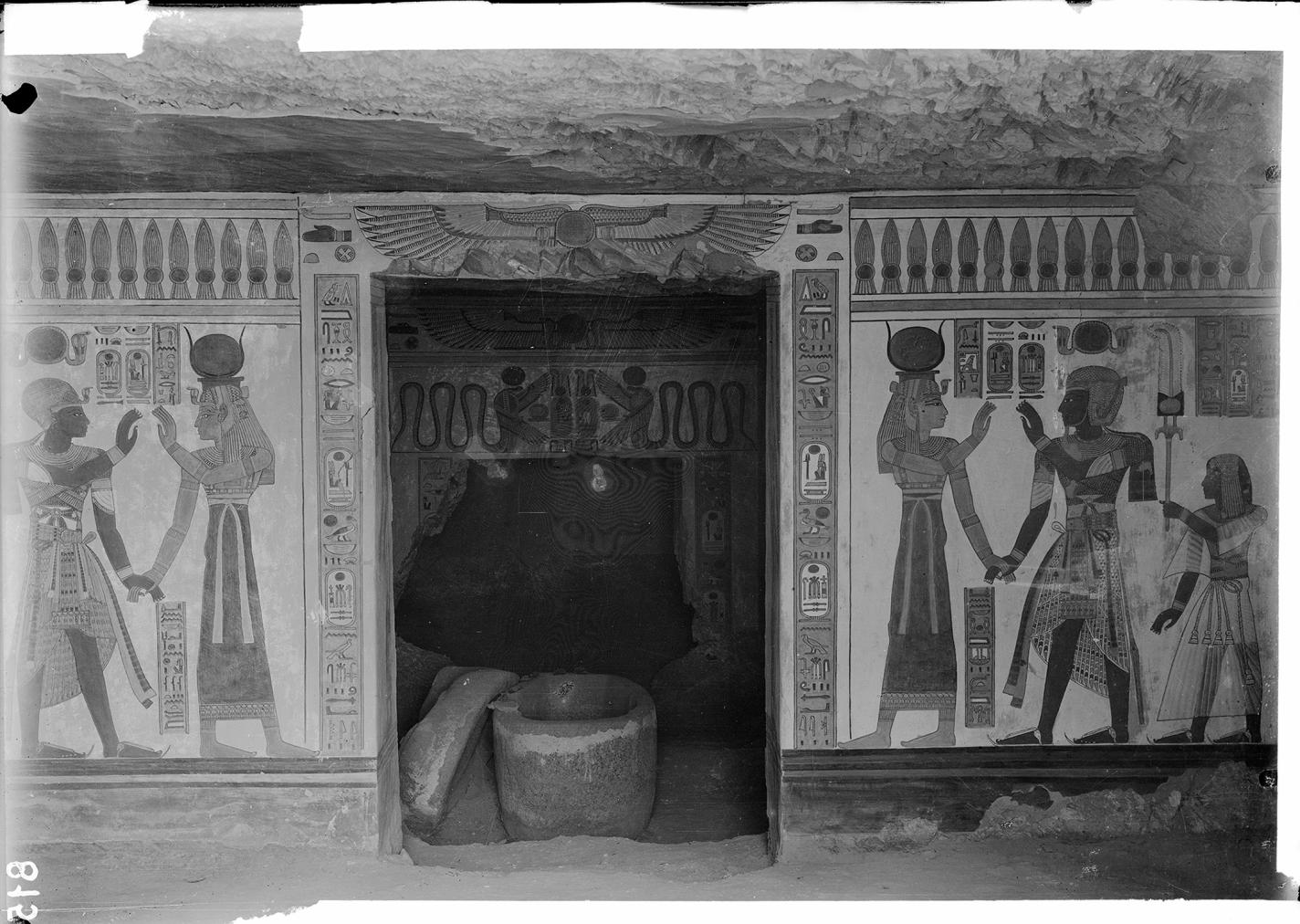
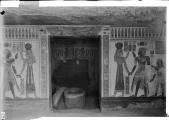
Interior of the tomb of Prince Amenherkhepshef (QV 55) at the time of its discovery with the prince's granite sarcophagus in the burial chamber framed by wall scenes of him and his father Rameses III with the goddesses Isis (left) and Hathor (right). Italian Archaeological Expedition excavations. Courtesy of the Egyptian Museum in Turin.
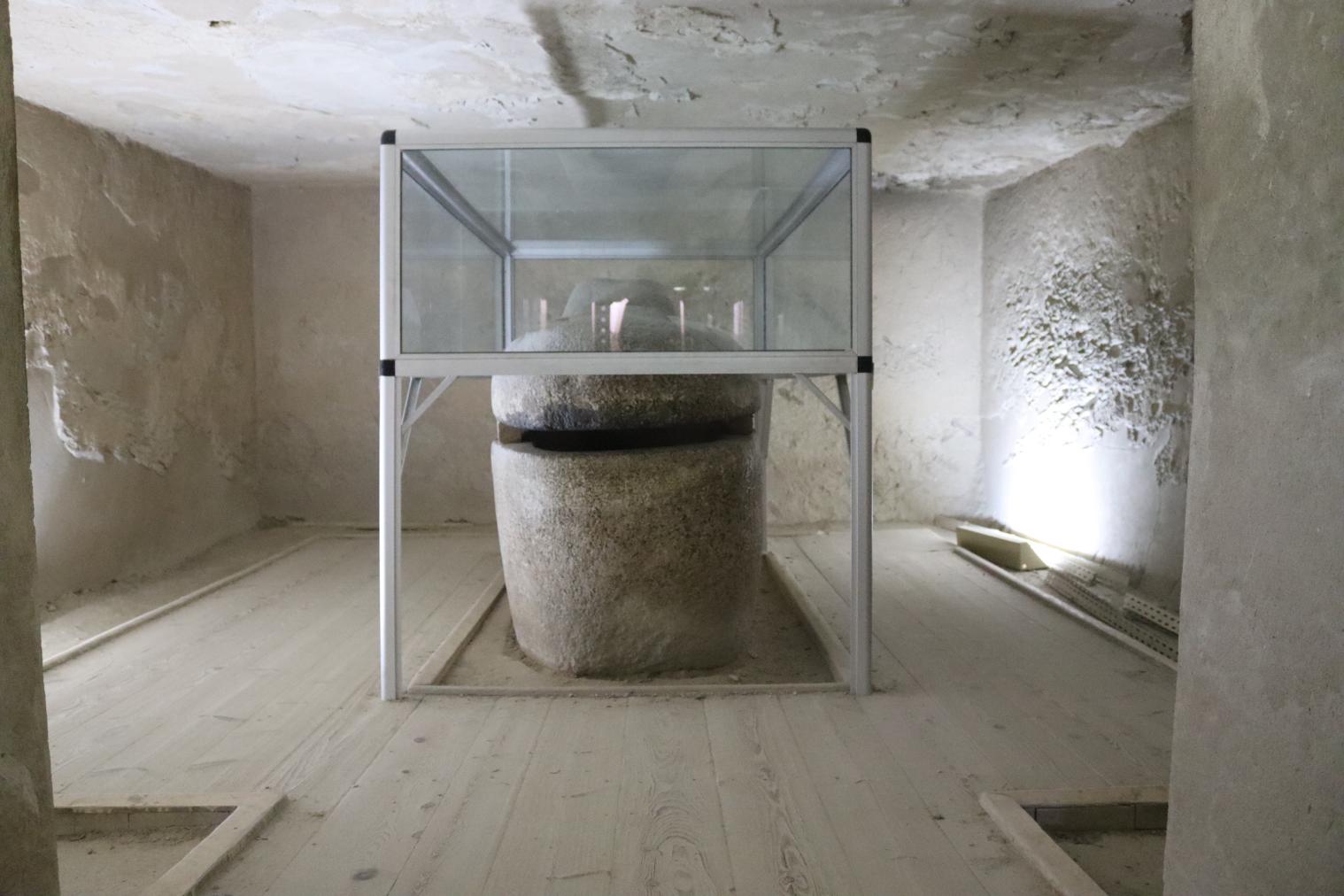
General view of Chamber D with Sarcophagus of Prince
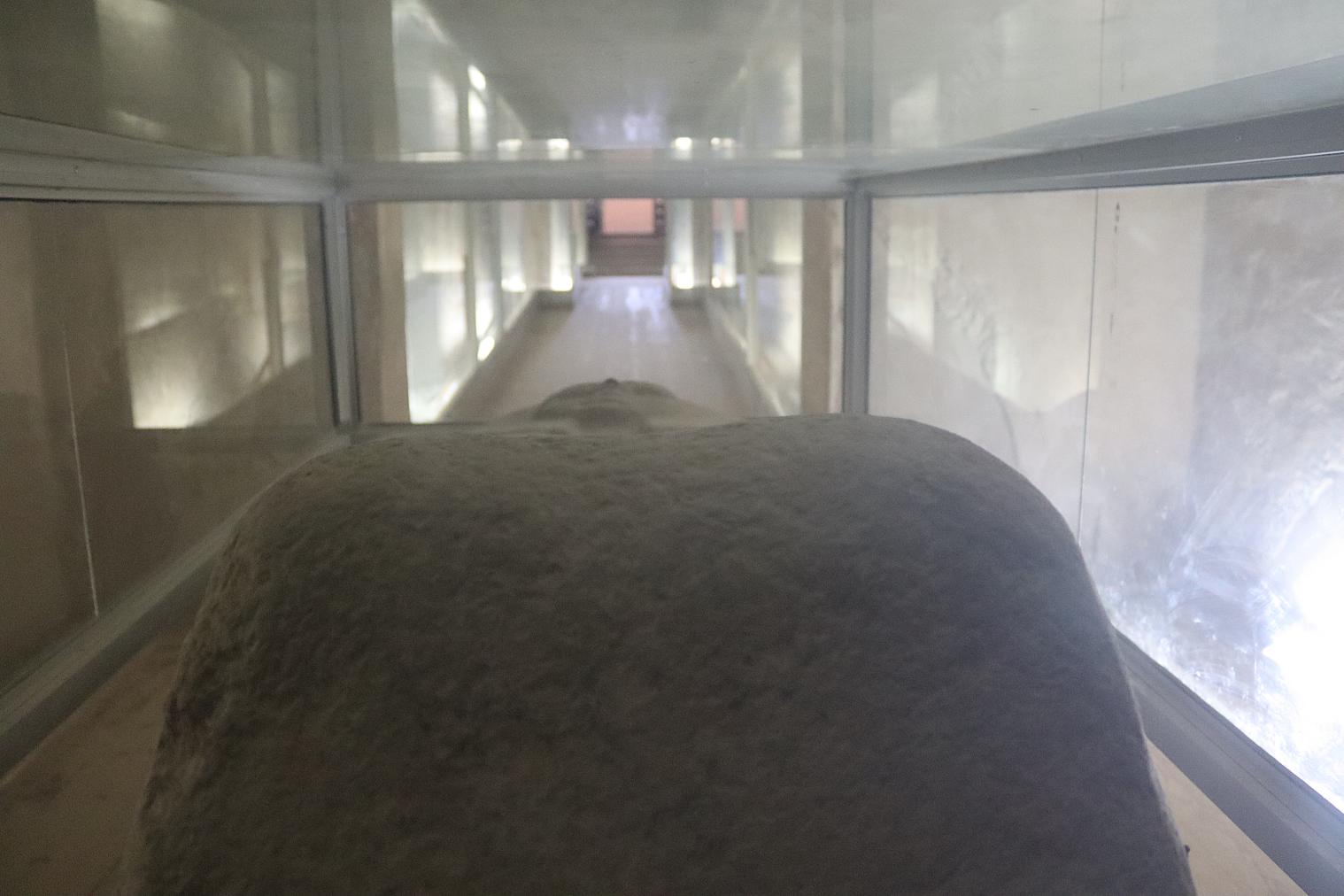
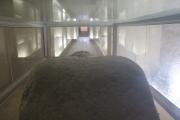
View of tomb from sarcophagus to entrance
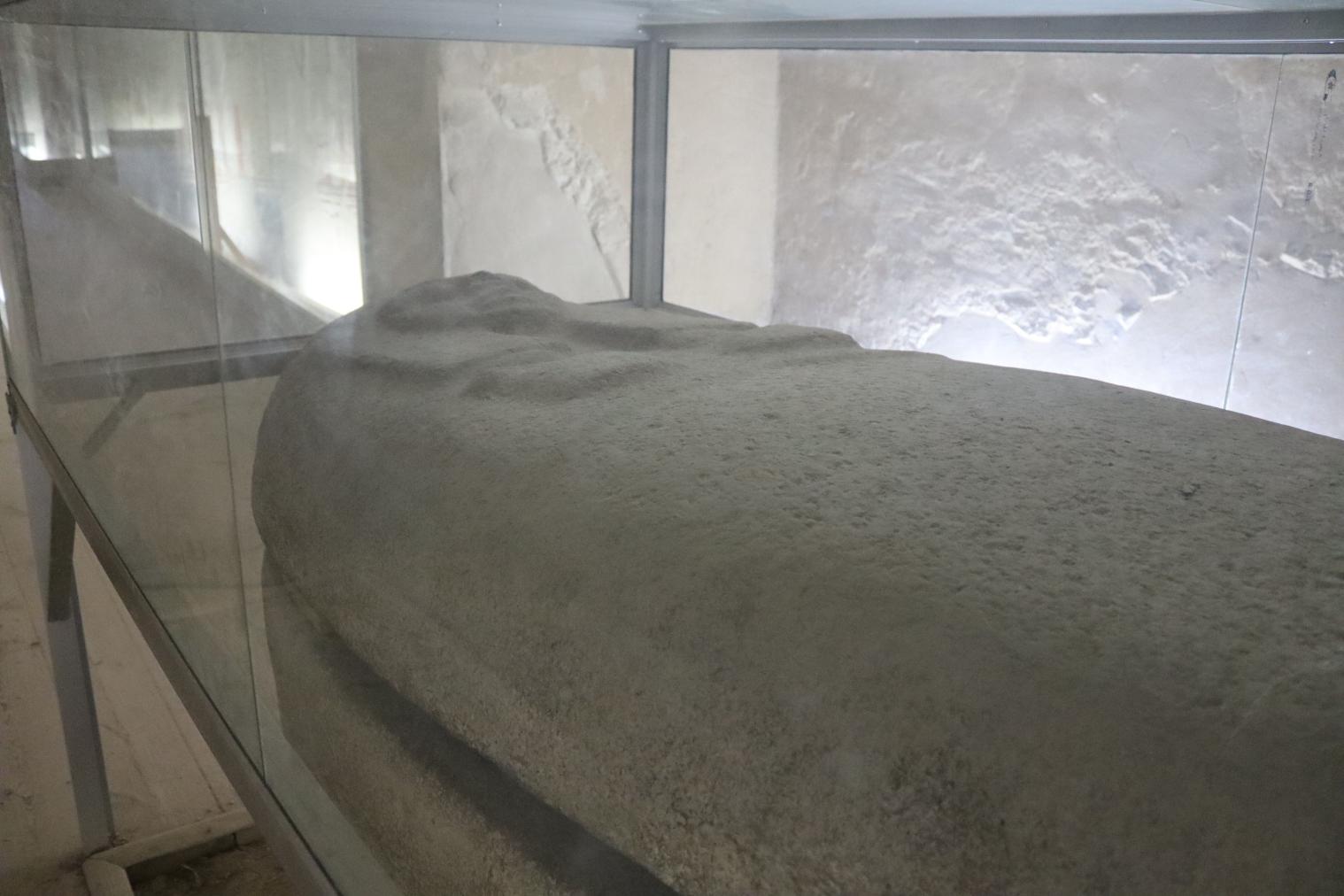
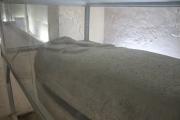
Sarcophagus of Prince
View of Gate D and the granite sarcophagus in Chamber D. Courtesy of Uni Dia Verlag; Uni Dia Image Nr. 36638.
About
About
QV 55 is located at the western end of the main Wadi, and is oriented along a Northeast-Southwest axis, similar to QV 52 and QV 53. A long entry Ramp (A) leads into chamber (B) with a side chamber (Ba) to the north. Chamber (B) is followed by burial chamber (C) with side chamber (Ca) to the north and ends in a low-ceilinged rear chamber (D). This rear chamber (D) contains a granite Sarcophagus. The entry ramp has modern masonry Steps replacing the previous wooden steps. Extensive sunken relief painted plaster survives throughout the tomb. Though once evidently boldly colored, the general appearance is now abraded and the colors appear somewhat faded.
QV 55 belongs to Amenherkhepshef, the ninth on the list of sons of Rameses III at Medinet Habu. There he is given the name of Rameses-Amenherkhepshef and is listed as having died, something which probably occurred before year 30 of the reign of Rameses III. He should not be confused with his predecessor, Amenherkhepshef, son of Rameses II. He was given the titles of 'king's scribe' and 'great commander of the cavalry', as well as the more common "king's son of his body whom he loves'. Nowhere is he given the title 'king's eldest son.' Judging by the location of his tomb, it is believed that he was a son of queen Tyti, whose tomb (QV 52) is in the same area. He may not even have been buried in the QV but in KV 13, where excavations revealed a re-carved sarcophagus of Tausert with his name. A partial stelae showing his image was found at the Sanctuary to Ptah and Meretseger, probably an ex-voto by craftsmen who worked on his tomb, and a relief from Karnak and a fragment of a stela from Deir el-Medina also bear his name.
Ernesto Schiaparelli followed the trace of the ancient dam and found the upper part of the entrance ramp to the tomb in 1904. At its discovery, part of the plastered wall, which originally sealed the entrance, remained in situ. The tomb was empty except for a few funerary objects and an unfinished sarcophagus. The sarcophagus was found in corridor C, but was re-located to Chamber D to allow passage through the narrow space. The Italian mission also constructed surround walls and a vaulted cover over the entrance and installed a heavy metal door. Elizabeth Thomas (1959-60) noted that the entrance had been re-sealed with plaster after thieves had broken through, and Guy Lecuyot suggests that the tomb location was lost during the Third Intermediate Period. The Franco-Egyptian Mission carried out investigations in the tomb in 1988. Currently the tomb is open to visitation, except for side chambers (Ba) and (Ca) that are closed off. Glass barriers, fluorescent lighting, and wooden flooring have been installed. Previously, low wooden barriers were used. There are no barriers around doorway leading into the burial chamber and in chamber D.
Noteworthy features:
QV 55 is attributed to Amenherkhepshef, the ninth on the list of sons of Rameses III at Medinet Habu.
Site History
The tomb was constructed in the 20th Dynasty as recorded on an ostracon dated to Year 28 of Rameses Ill. The tomb appears to have been lost in the Third Intermediate and Graeco-Roman periods and was not reused.
Dating
This site was used during the following period(s):
Exploration
Conservation
Conservation History
According to the GCI-SCA, the paintings have undergone extensive prior treatment, including plaster repairs and cleaning, which may have further contributed to the abraded appearance of the surface. There is also evidence of injection grouting and surface consolidation seen in the large number of stains and drips running down the paintings. Ceiling areas have been the focus of repeat treatments, most recently in 2009-2010 and prior to this in 2005, in response to cracking in repair plaster. The repeat treatments suggest that the method and materials of treatment may not have been effective in solving the problem and that the problem itself may not be fully understood. The Ramp wall repair plaster on the south side is heavily cracked and detached in some areas. The SCA undertook treatment of the wall paintings and installed new infrastructure in chamber (D) in February 2010.
Site Condition
The late discovery of the tomb by Ernesto Schiaparelli explains its generally good condition as it was essentially sealed until the early 20th century. According to the GCI-SCA, the ceilings have suffered substantial losses and historic photographs before their repair show loss occurring along fractures in the heavily jointed rock. A few of these fractures, such as the one that appears on Gate D, extend from the ceiling down the wall. However, at present, the cracks do not appear to be endangering. The few small areas of visible ceiling rock appear to be in good condition. The rock in side chamber (Ba) is heavily jointed and irregular, but there is no sign of recent loss. There is excellent survival of the decoration in this tomb, but there are also large losses, mainly in the ceilings, that have been filled with a modern repair plaster. These plaster fills are slightly recessed from the level of the original painted plaster. There appear to be at least two different major campaigns of plaster repairs in the tomb. Some of these repairs are now cracking, especially in chamber (B), and some loss of this repair plaster from cracks in the ceiling may suggest movement and possible rock instability underneath. However, at present, there is not enough evidence to conclusively determine whether or not cracks indicate real instability or just a failure of the repair plasters themselves. Areas of the decoration that are unprotected by glass barriers are stained brown from the hands of visitors, such as the jambs of doorways at the entrance and gate D. The painted surfaces show preferential loss of areas - namely the blue pigment, as well as the white background, which in some areas are almost completely gone. Overall the painted surfaces also have an abraded appearance with pigment loss. There is evidence of past bat activity. Although the tomb opening is located in a low lying position adjacent to the main Wadi, Christian Leblanc has noted that water did not enter the tomb during the flood in 1994 because the entrance was blocked with sand bags. The survival of painting on the walls to the floor in many areas of the tomb indicate that, if the tomb previously flooded, related damage was minimal.
Hieroglyphs
Prince Amenherkhepshef
 King's Son, Royal Scribe, Great Overseer of Horses of the Place of Ramesses III, Amen(her)khepshef
sA-nswt sS-nswt imy-r ssmt wr n tA st wsr-mAat-ra, imn-(Hr)-xpS.f
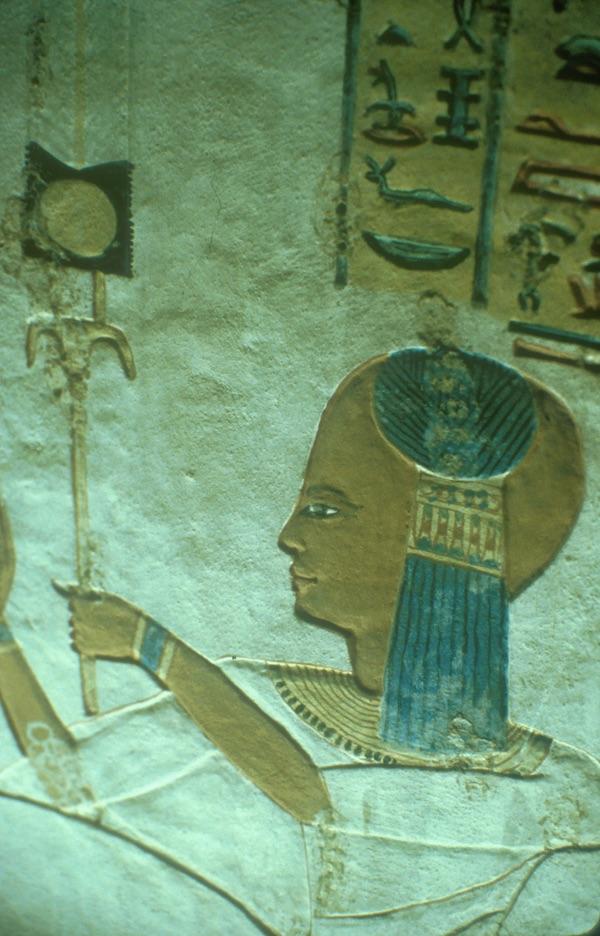
Portrait of Amenherkhepshef carrying a plume and wearing the side-lock of youth.
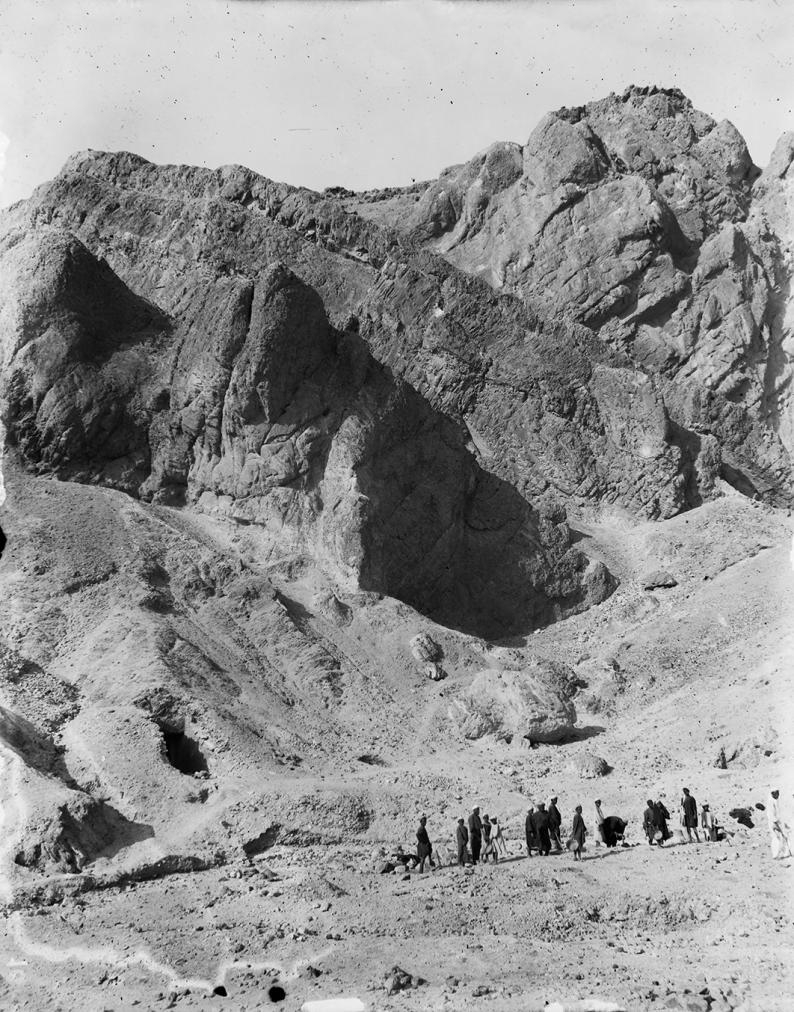
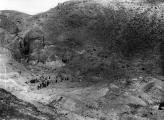
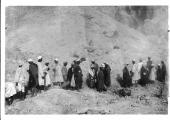
Excavating at the end of the Valley of the Queens in front of the newly discovered tomb of Prince Amenherkhepshef (QV 55), which had not yet received its modern brick structural covering. Italian Archaeological Expedition excavations. Courtesy of the Egyptian Museum in Turin.
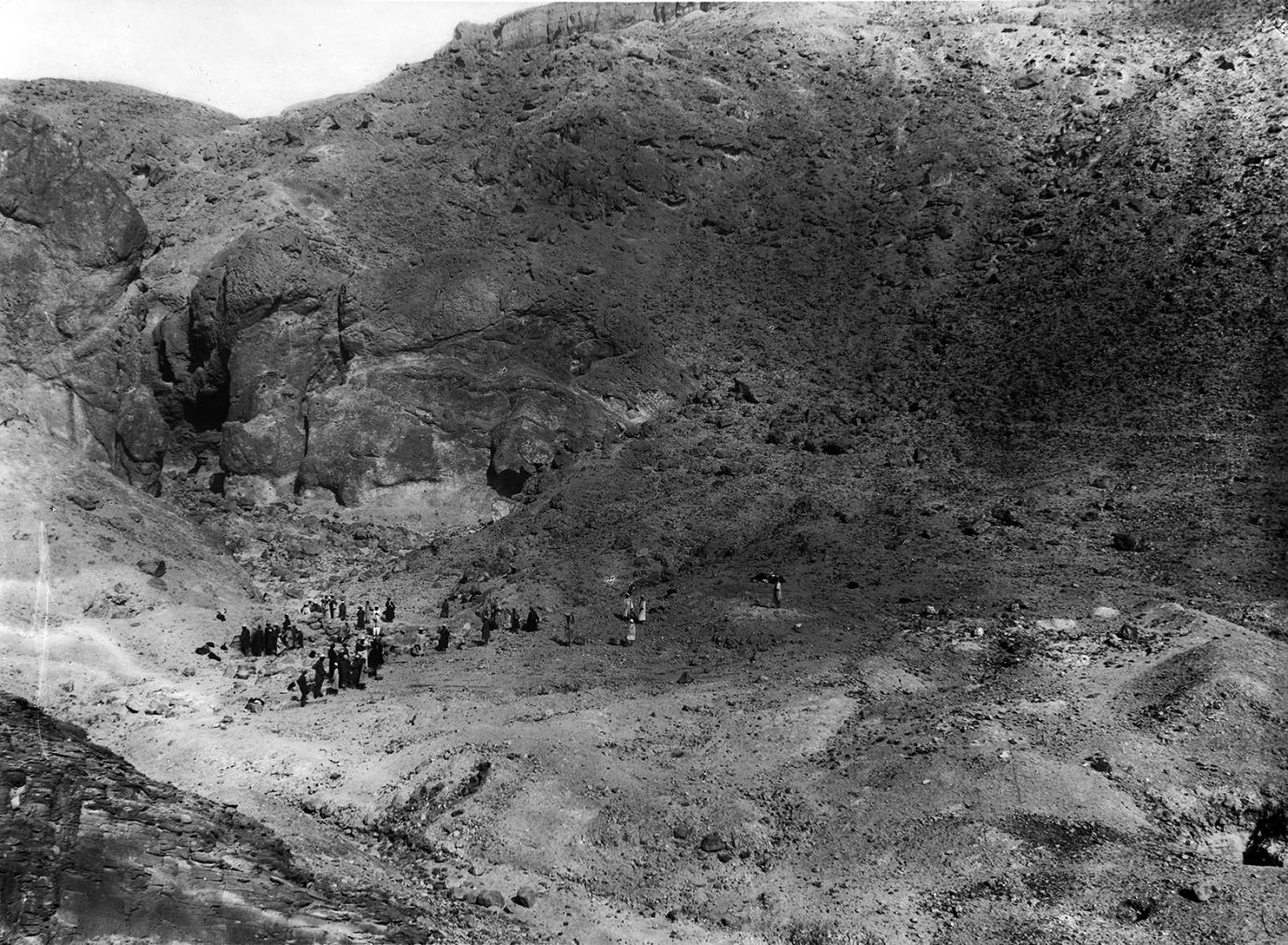
Excavation trials at the end of the Valley of the Queens not far from the tomb of Prince Amenherkhepshef (QV 55). Italian Archaeological Expedition excavations. Courtesy of the Egyptian Museum in Turin.
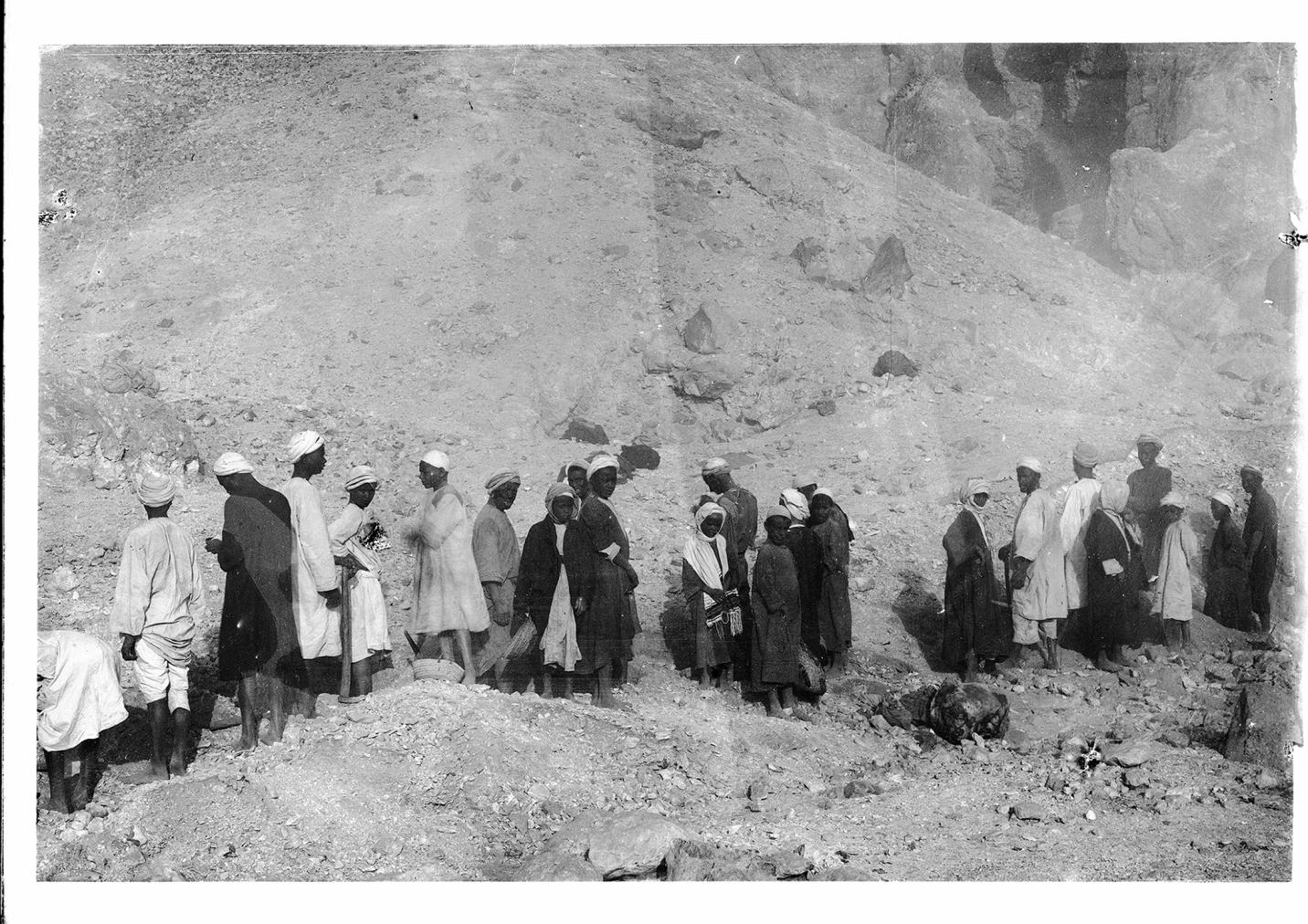
Excavating in the final section of the Valley of the Queens not far from the tomb of Prince Amenherkhepshef (QV 55). Italian Archaeological Expedition excavations. Courtesy of the Egyptian Museum in Turin.
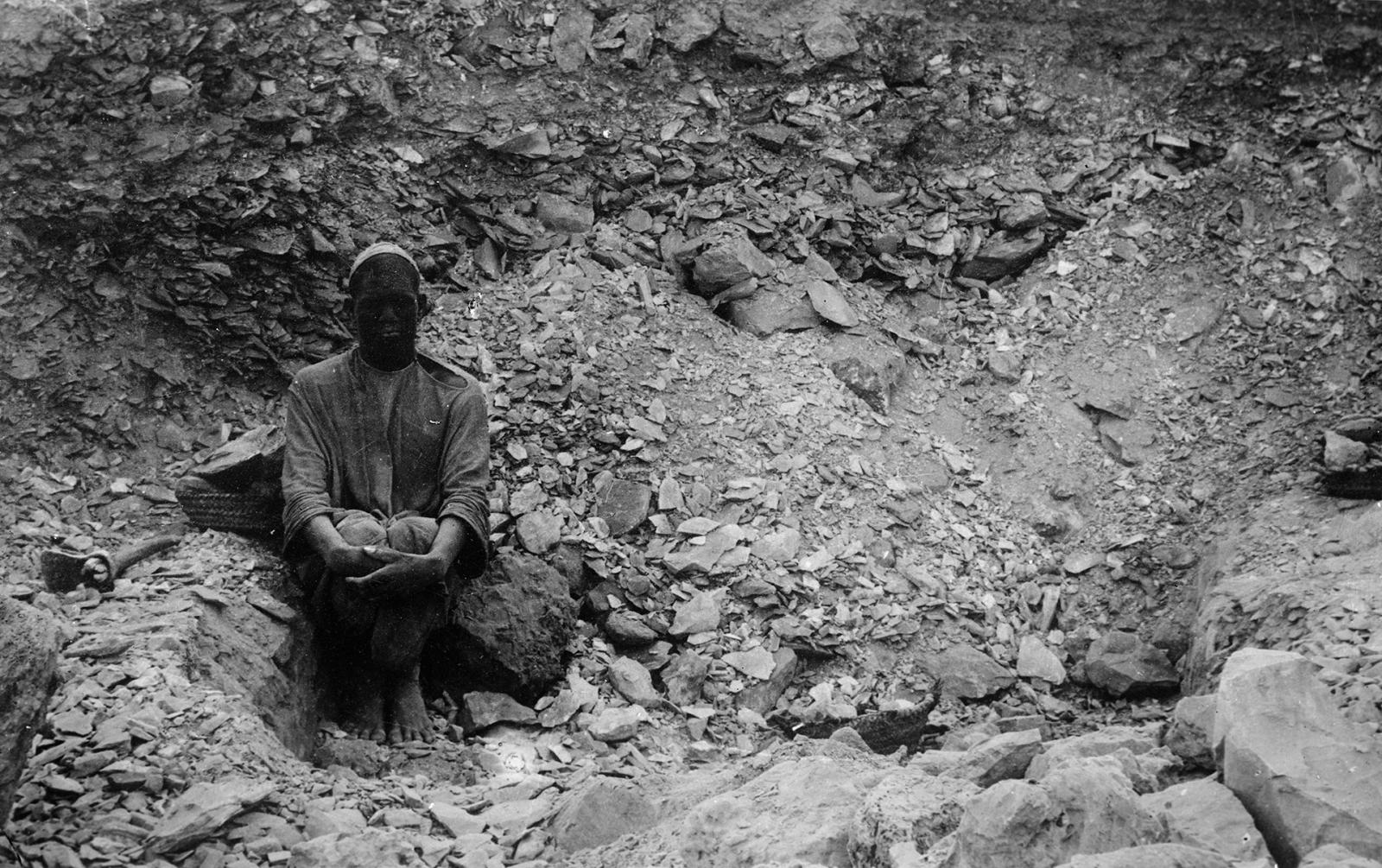
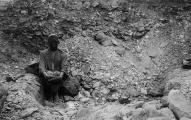
Workman in the area of the Valley of the Queens where the tomb of Prince Amenherkhepshef (QV 55) would later be discovered during Ernesto Schiaparelli's excavations. Italian Archaeological Expedition excavations. Courtesy of the Egyptian Museum in Turin.
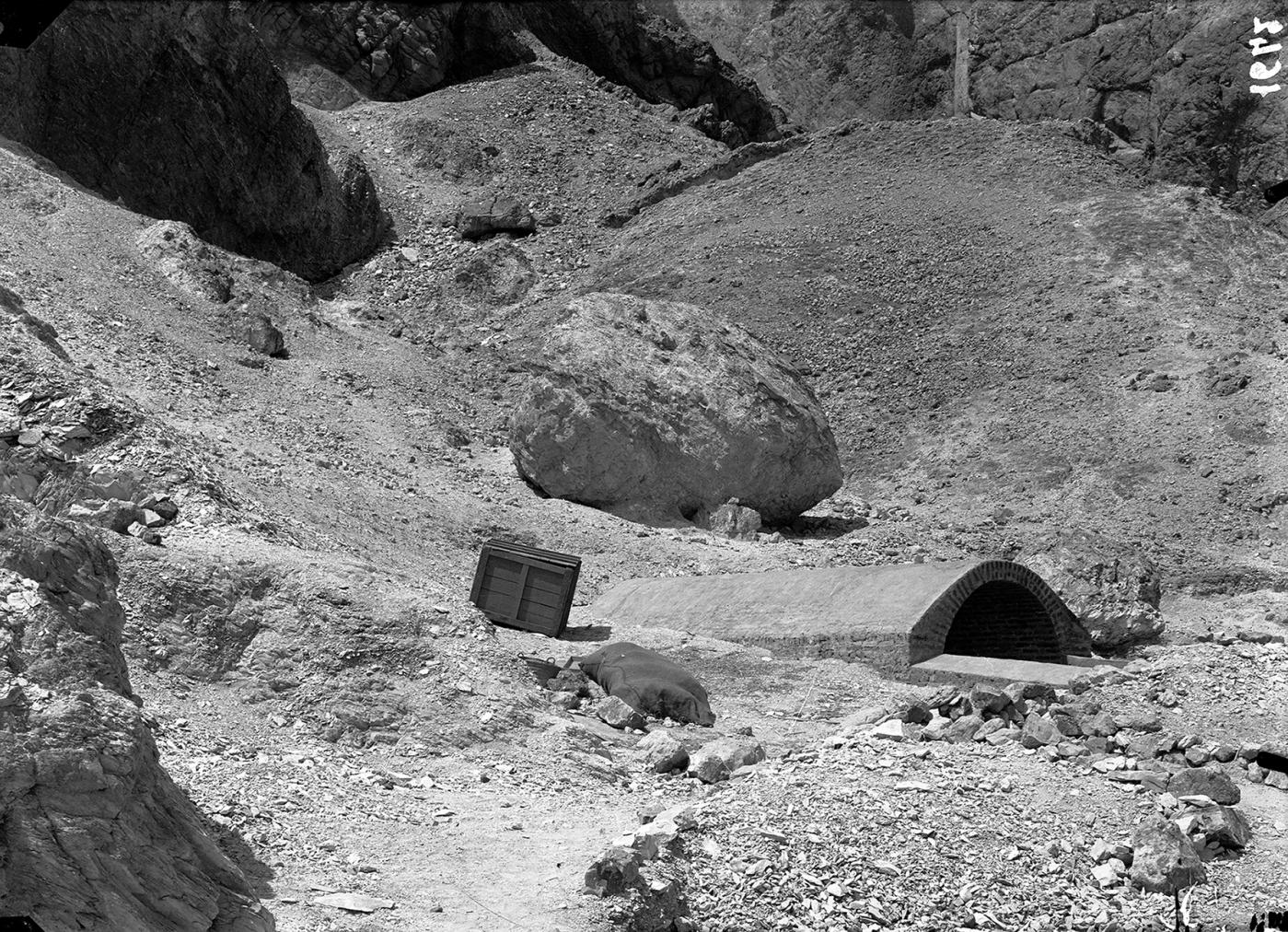
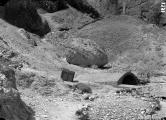
Entrance to the tomb of Prince Amenherkhepshef (QV 55) with a modern mud brick cover built following Ernesto Schiaparelli's excavations. Italian Archaeological Expedition excavations. Courtesy of the Egyptian Museum in Turin.
The tomb of Prince Amenherkhepshef (QV 55) photographed during Ernesto Schiaparelli's excavations with a fragmented scene of Rameses III embracing an unidentifiable female deity. Italian Archaeological Expedition excavations. Courtesy of the Egyptian Museum in Turin.
The tomb of Prince Amenherkhepshef (QV 55) photographed during Ernesto Schiaparelli's excavations with the young prince and Rameses III censing before Shu. Italian Archaeological Expedition excavations. Courtesy of the Egyptian Museum in Turin.
West entrance to the antechamber's lateral annex from the tomb of Prince Amenherkhepshef (QV 55) photographed during Ernesto Schiaparelli's excavations with scenes of Rameses III (left) and the god Shu (right). Italian Archaeological Expedition excavations. Courtesy of the Egyptian Museum in Turin.
East wall in the antechamber of the tomb of Prince Amenherkhepshef (QV 55) photographed during Ernesto Schiaparelli's excavations that depicts Thoth behind Rameses III embracing Isis. Italian Archaeological Expedition excavations. Courtesy of the Egyptian Museum in Turin.
The tomb of Prince Amenherkhepshef (QV 55) photographed during Ernesto Schiaparelli's excavations that depicts Thoth behind Rameses III who embraces the Isis. They are followed by the young prince. Italian Archaeological Expedition excavations. Courtesy of the Egyptian Museum in Turin.
East wall in the antechamber of the tomb of Prince Amenherkhepshef (QV 55) photographed during Ernesto Schiaparelli's excavations that depicts Thoth behind Rameses III who embraces Isis followed by the young prince. Italian Archaeological Expedition excavations. Courtesy of the Egyptian Museum in Turin.
East wall in the antechamber of the tomb of Prince Amenherkhepshef (QV 55) photographed during Ernesto Schiaparelli's excavations that depicts Thoth (not visible here) behind Rameses III who embraces Isis followed by the young prince. Italian Archaeological Expedition excavations. Courtesy of the Egyptian Museum in Turin.
The tomb of Prince Amenherkhepshef (QV 55) photographed during Ernesto Schiaparelli's excavations that depicts Rameses III censing before an enshrined Ptah followed by the young prince and Rameses III. Italian Archaeological Expedition excavations. Courtesy of the Egyptian Museum in Turin.
The tomb of Prince Amenherkhepshef (QV 55) photographed during Ernesto Schiaparelli's excavations that depicts the young prince accompanying Rameses III greeting the Ptah-Tatanen and Duamutef. Italian Archaeological Expedition excavations. Courtesy of the Egyptian Museum in Turin.
The tomb of Prince Amenherkhepshef (QV 55) photographed during Ernesto Schiaparelli's excavations that depicts the young prince accompanying Rameses III greeting the gods Duamutef and Imsety. Italian Archaeological Expedition excavations. Courtesy of the Egyptian Museum in Turin.
The tomb of Prince Amenherkhepshef (QV55) photographed during Ernesto Schiaparelli's excavations that shows Rameses III greeting the god Imsety. Italian Archaeological Expedition excavations. Courtesy of the Egyptian Museum in Turin.
Interior of the tomb of Prince Amenherkhepshef (QV 55) at the time of its discovery with the prince's granite sarcophagus in the burial chamber framed by wall scenes of him and his father Rameses III with the goddesses Isis (left) and Hathor (right). Italian Archaeological Expedition excavations. Courtesy of the Egyptian Museum in Turin.
The tomb of Prince Amenherkhepshef (QV 55) photographed during Ernesto Schiaparelli's excavations that depicts the young prince who accompanies Rameses III greeting the goddess Isis. Italian Archaeological Expedition excavations. Courtesy of the Egyptian Museum in Turin.
The tomb of Prince Amenherkhepshef (QV 55) photographed during Ernesto Schiaparelli's excavations that depicts the young prince who accompanies Rameses III greeting Isis. Italian Archaeological Expedition excavations. Courtesy of the Egyptian Museum in Turin.
South wall (back) of the east side (left) of the access to the rear annex antechamber of the tomb of Prince Amenherkhepshef (QV 55) photographed during Ernesto Schiaparelli's excavations that depicts the young prince who accompanies Rameses III greeting Isis. Italian Archaeological Expedition excavations. Courtesy of the Egyptian Museum in Turin.
Detail of the elaborate kilt and sporran Rameses III wears while greeting Isis. The tomb of Prince Amenherkhepshef (QV 55) photographed during Ernesto Schiaparelli's excavations. Italian Archaeological Expedition excavations. Courtesy of the Egyptian Museum in Turin.
The tomb of Prince Amenherkhepshef (QV 55) photographed during Ernesto Schiaparelli's excavations that depicts the young prince who accompanies Rameses III greeting Hathor. Italian Archaeological Expedition excavations. Courtesy of the Egyptian Museum in Turin.
The tomb of Prince Amenherkhepshef (QV 55) photographed during Ernesto Schiaparelli's excavations that depicts the young prince who accompanies Rameses III greeting Hathor. Italian Archaeological Expedition excavations. Courtesy of the Egyptian Museum in Turin.
The tomb of Prince Amenherkhepshef (QV 55) photographed during Ernesto Schiaparelli's excavations that depicts the young prince who accompanies Rameses III greeting Hathor. Italian Archaeological Expedition excavations. Courtesy of the Egyptian Museum in Turin.
Interior of the tomb of Prince Amenherkhepshef (QV 55) at the time of its discovery with the prince's granite sarcophagus in the burial chamber. Italian Archaeological Expedition excavations. Courtesy of the Egyptian Museum in Turin.
Interior of the tomb of Prince Amenherkhepshef (QV 55) at the time of its discovery with the prince's granite sarcophagus in the burial chamber. Italian Archaeological Expedition excavations. Courtesy of the Egyptian Museum in Turin.
Interior of the tomb of Prince Amenherkhepshef (QV 55) with the prince's granite sarcophagus in the burial chamber at the time of its discovery by Ernesto Schiaparelli. Italian Archaeological Expedition excavations. Courtesy of the Egyptian Museum in Turin.
Right wall of the burial chamber's entrance in the tomb of Prince Amenherkhepeshef (QV 55) photographed during Ernesto Schiaparelli's excavations that depicts Horus-Iwnmutef. Italian Archaeological Expedition excavations. Courtesy of the Egyptian Museum in Turin.
Wall scene with Spells 145-146 of the Book of the Dead beside one of the portals through which the prince must pass to reach the hereafter in the burial chamber of the tomb of Prince Amenherkhepshef (QV 55) photographed during Ernesto Schiaparelli's excavations. Italian Archaeological Expedition excavations. Courtesy of the Egyptian Museum in Turin.
Wall scene in the burial chamber of the tomb of Prince Amenherkhepshef (QV 55) photographed during Ernesto Schiaparelli's excavations that depicts the young prince (left), references to Spell 145 of the Book of the Dead, as well as the fourth portal's bovine-headed guardian with two knives (right). Italian Archaeological Expedition excavations. Courtesy of the Egyptian Museum in Turin.
Wall scene from the burial chamber of the tomb of Prince Amenherkhepshef (QV 55) with Spells 145-146 of the Book of the Dead, as well as the young prince (left) accompanied by Rameses III in front of one of the portals photographed during Ernesto Schiaparelli's excavations. Italian Archaeological Expedition excavations. Courtesy of the Egyptian Museum in Turin.
Lintel with winged serpent protecting the cartouche of Rameses III in the tomb of Prince Amenherkhepshef (QV 55) photographed during Ernesto Schiaparelli's excavations. Italian Archaeological Expedition excavations. Courtesy of the Egyptian Museum in Turin.
Gate D in the tomb of Prince Amenherkhepshef (QV 55) framed by a winged sun disk and texts. Modern crates from Ernesto Schiaparelli's excavations are visible. Today the room houses the prince's granite sarcophagus. Italian Archaeological Expedition excavations. Courtesy of the Egyptian Museum in Turin.

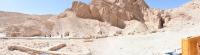
Worker's huts, visitors shelter at QV55, and grotto.

Workers' huts and entrance to QV58 in foreground. Entrance to QV55 and grotto in background.

Entrances QV57, QV58, and QV59 with workers' huts. Grotto in background.

Entrances to QV58, QV59, and QV60 with workers' huts.

Entrances to QV58, QV59, QV60, and QV61 with workers' huts. Visitors shelter at QV66 and QV80 in background.

Entrances to QV 60 and QV61 with workers' huts. Visitors shelter at QV66 and QV80 in background.
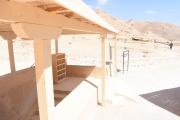
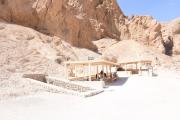
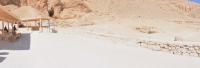
Visitors shelter and entrance of QV55
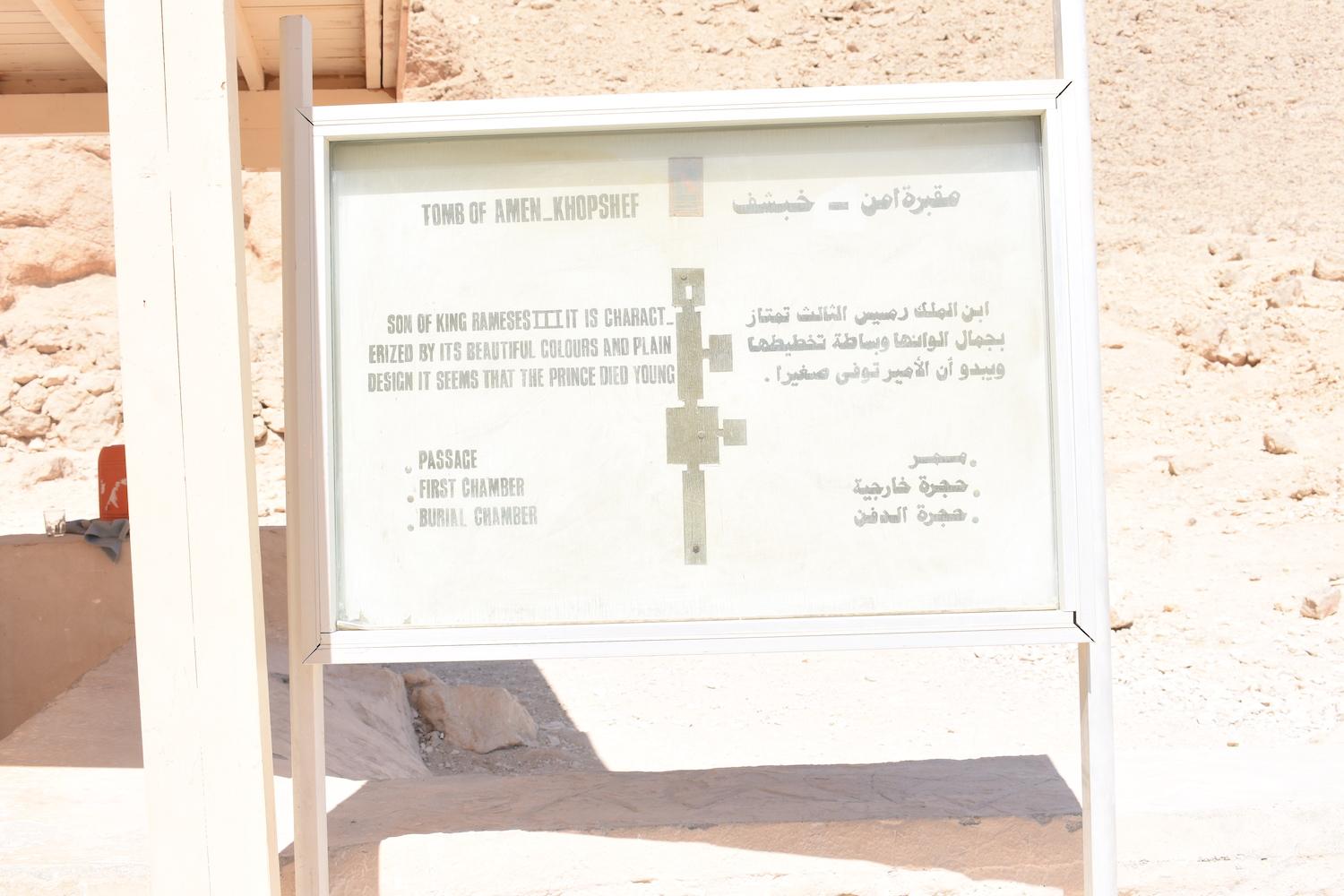
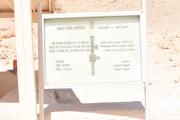
Old signage at QV55
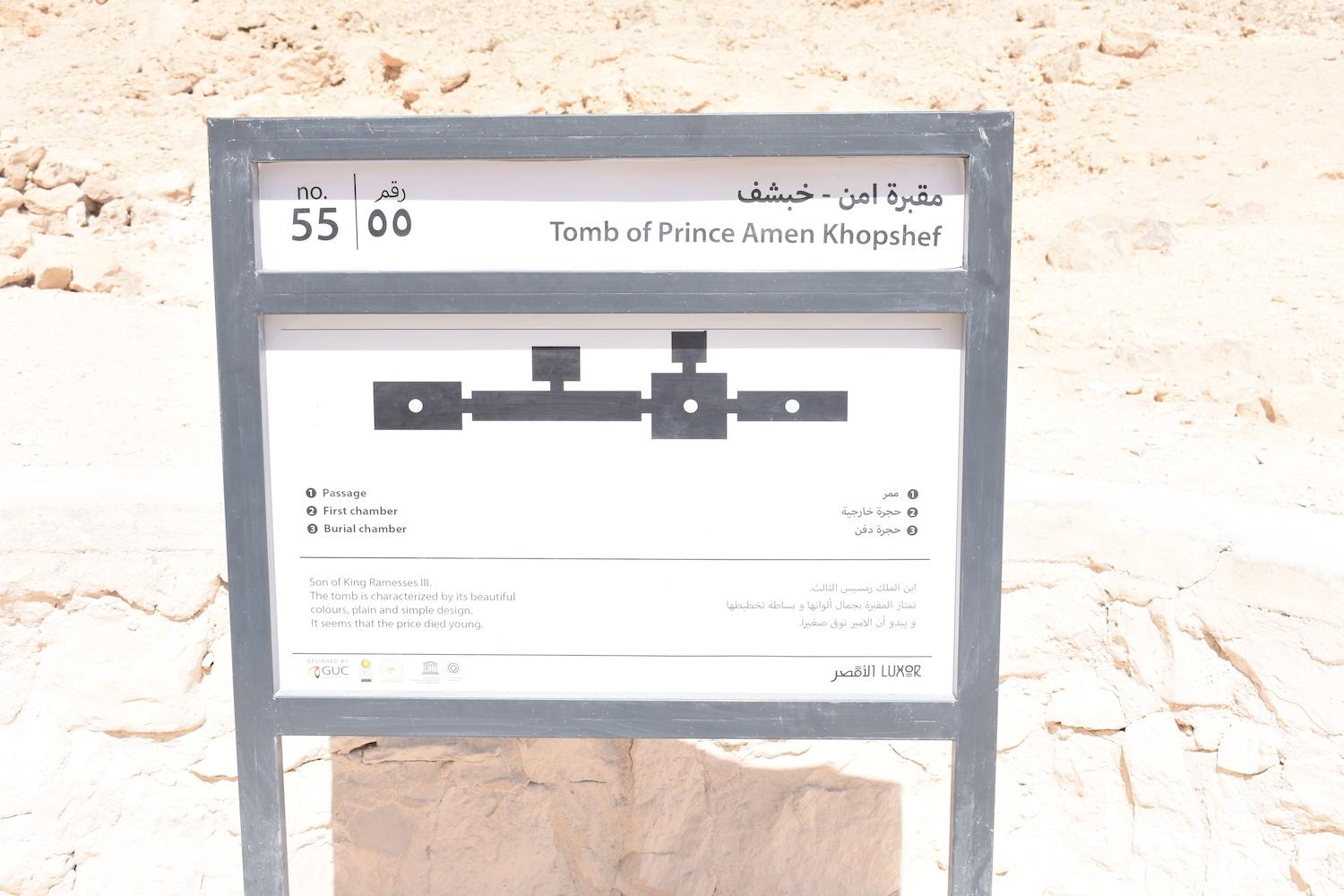
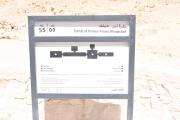
New signage at QV55
Entrance to QV55
Entrance to QV55

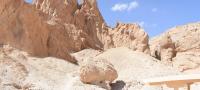
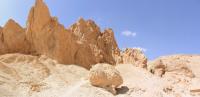
Cliffs above QV55 and area of QV86

Cliffs above QV55 and area of QV86
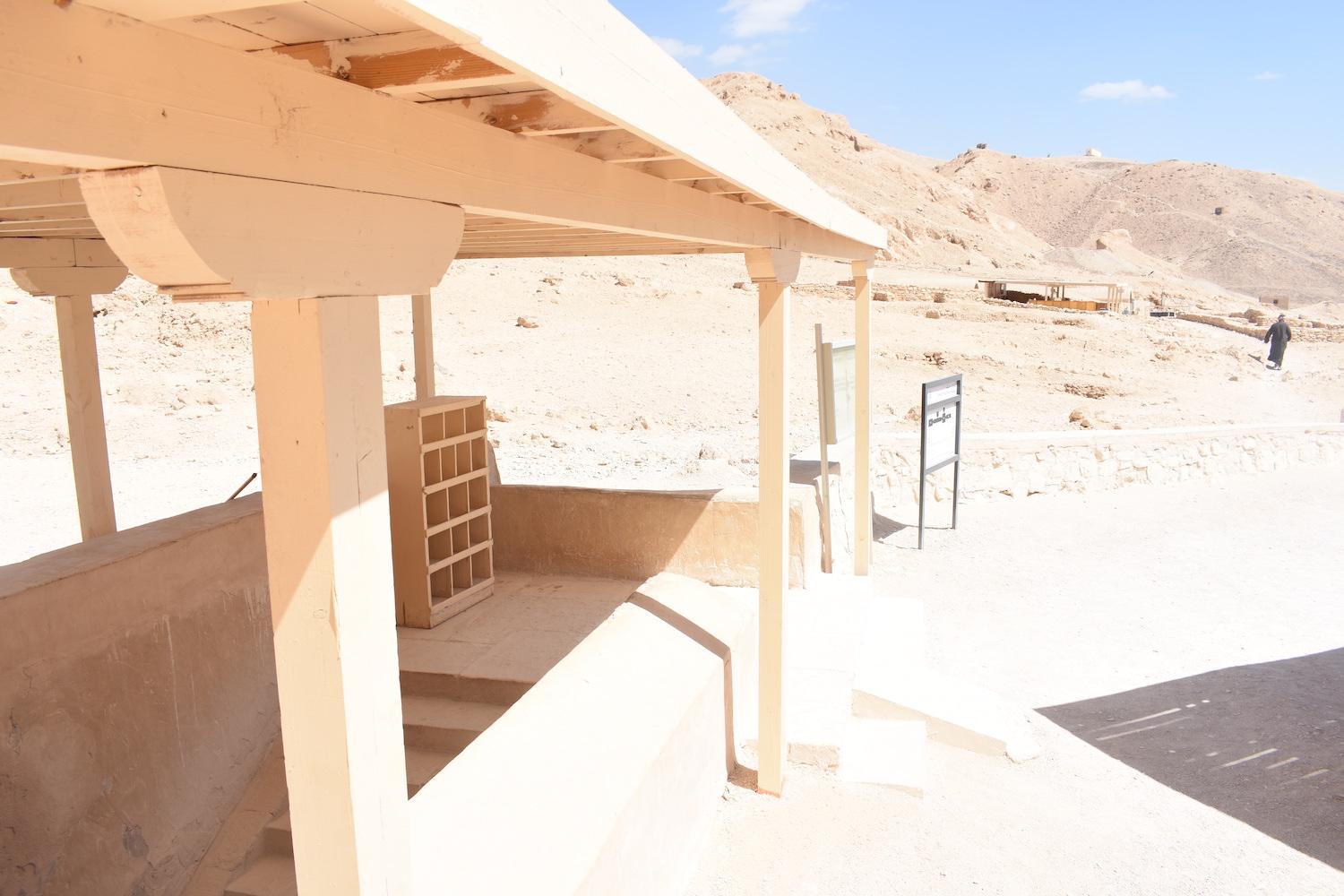
Visitors shelter and entrance of QV55

Cliffs above QV55 and area of QV86

Cliffs above QV55 and area of QV86

Cliffs above QV55 and area of QV86
Entrance to QV55
Entrance to QV55

Visitors shelter at QV55, and ancient damn and grotto in background
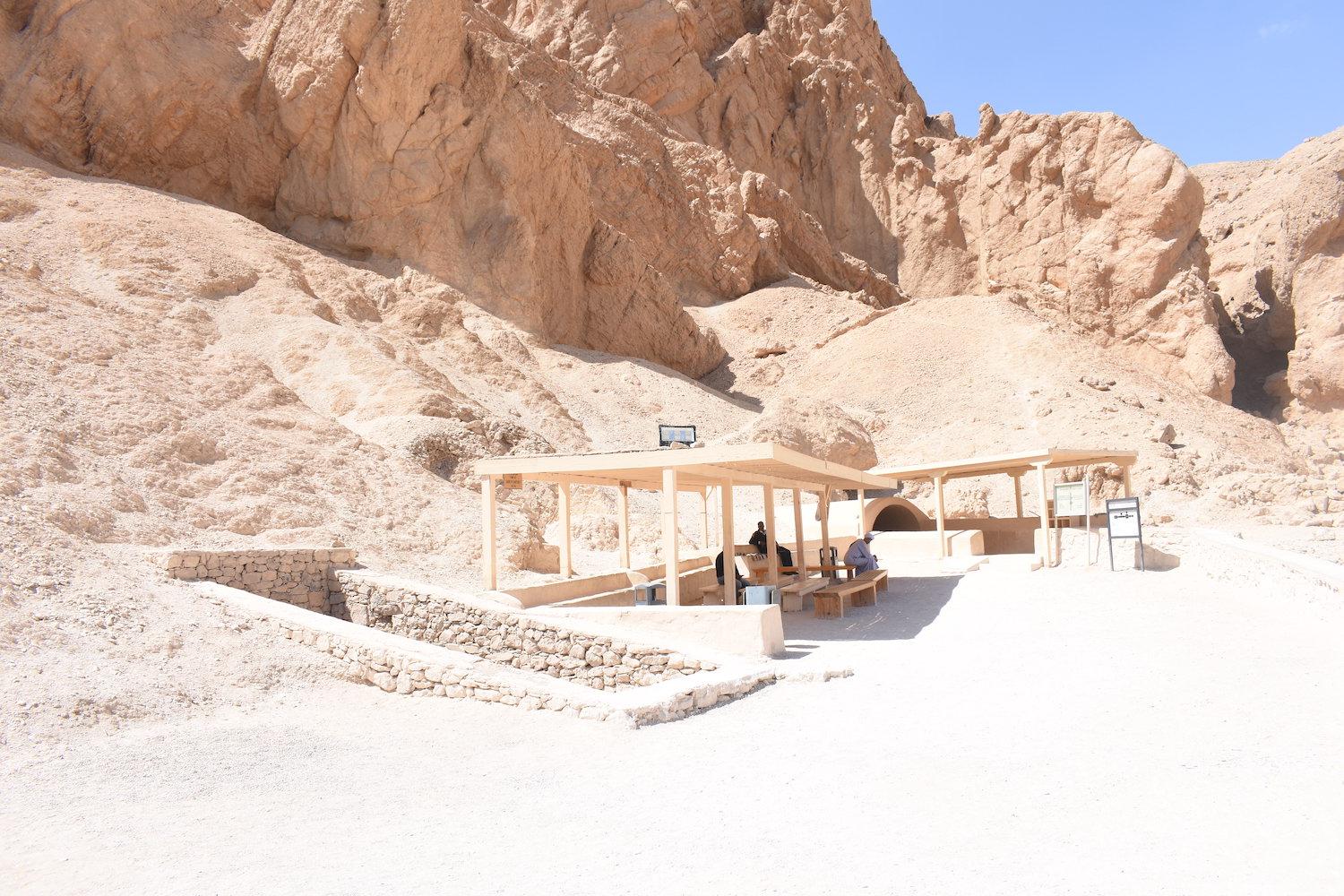
Entrance to QV53, visitors shelter at QV55, and ancient damn and grotto in background

Visitors shelter at QV55 and QV66, workers' huts, and entrances to QV58, QV59, and QV80
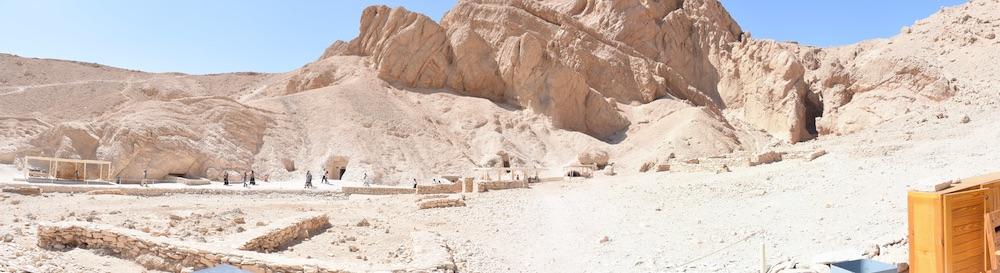
Workers' huts and entrance to QV 58 in foreground. QV55 with visitors shelter and grotto in the background.
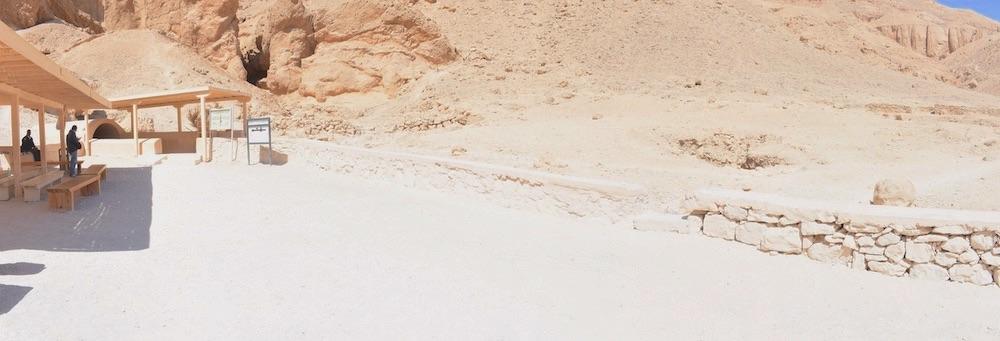
Visitors shelter at QV55. Entrance to QV56 on the right with the grotto in the background
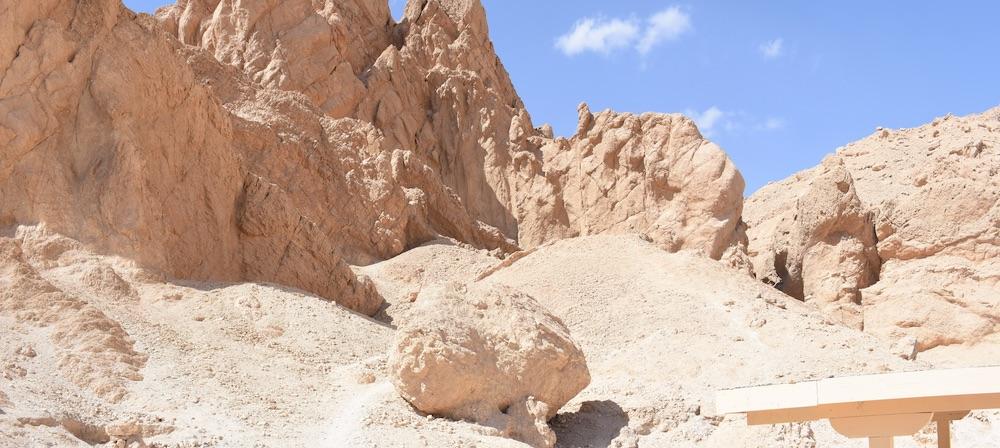
Cliffs above QV55 and area of QV86
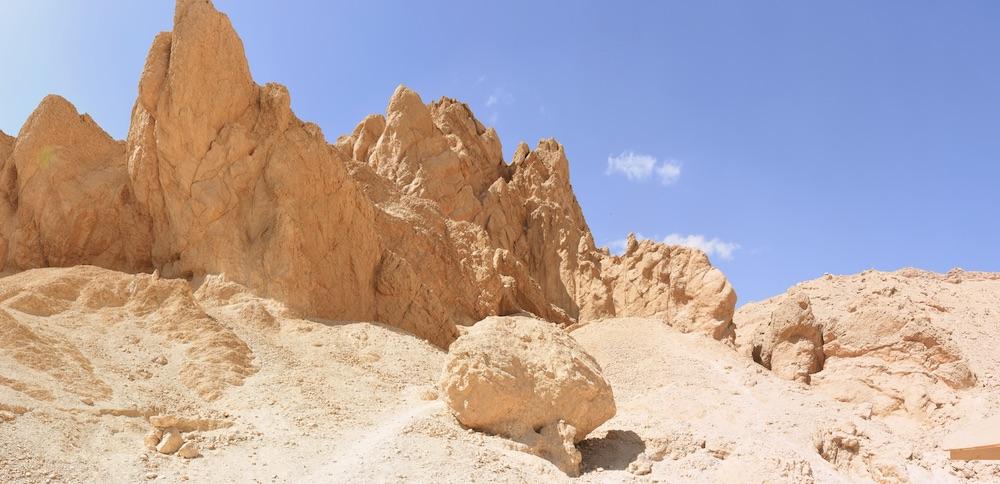
Cliffs above QV55 and area of QV86
Entryway A
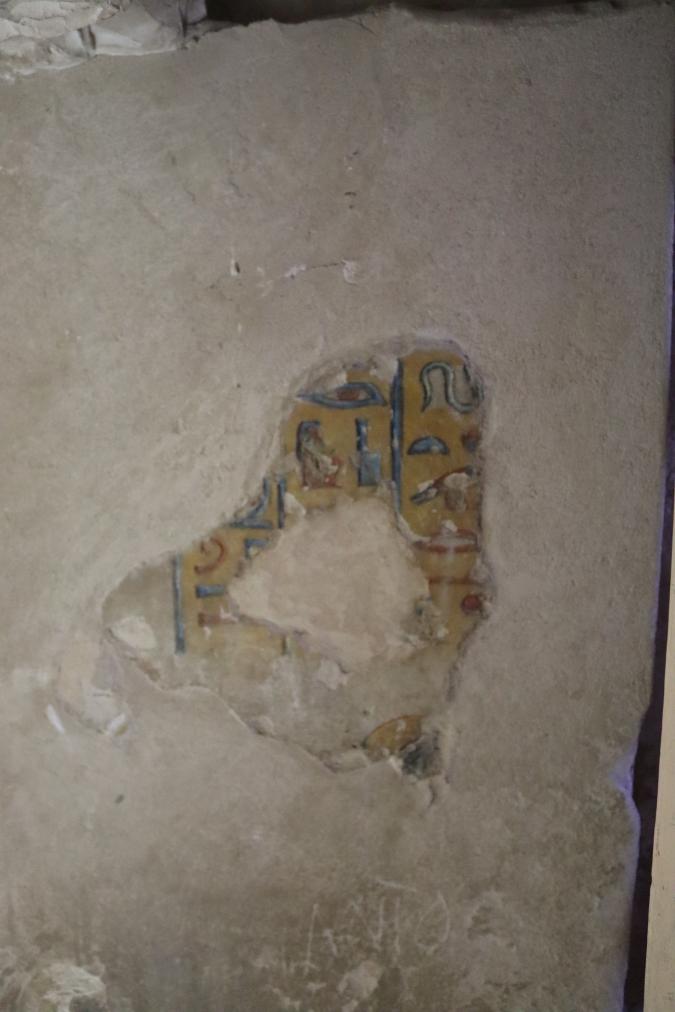
Remains of Text
General view of Chamber B with sarcophagus in rear
Rameses III embraced by Isis with Thoth (damaged) and Prince carrying plume. Rameses III censing before Ptah in shrine on the right.
Rameses III and prince before Ptah-Tanen, Rameses III and Prince before Duamutef
Rameses III and prince before Ptah-Tanen, Rameses III and Prince before Duamutef, Rameses III and Prince before Imsety
Rameses III and Prince before Isis
Rameses III and Prince before Hathor
Rameses III before Qebehsenuef and Rameses III before Hapy
View of Gate Ba with display case holding the mummified fetus from QV 88
Rameses III and Prince censing before Shu
Rameses III and Prince (damaged)
View of the entrance from Chamber B
Detail of Prince from Chamber B
Detail of Ptah-Tanen from Chamber B
Detail of Rameses III
Detail of Kheker Frieze
Lintel of Gate C with winged sun disk
Nephthys performing the nini ritual
Isis performing the nini ritual
Amenherkhepshef depicted as Horus-Iwnmutef
Amenherkhepshef as Horus-Iwnmutef
Book of the Dead, Chapter 145, gates 5 and 6
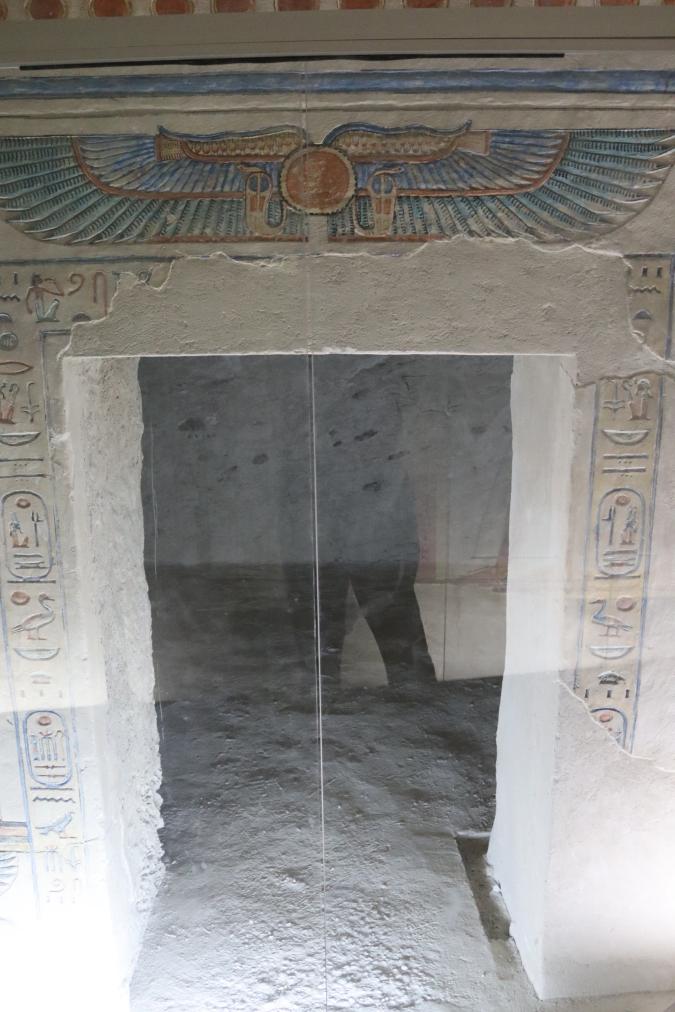
Gate Ca with winged sun disk on lintel
Book of the Dead, Spell 145, gates 5 and 6
Detail of winged cobra on dado
Book of the Dead, Chapter 145, gates 7 and 8
Detail of Deity from Book of the Dead Chapter 145
Detail of Prince
Gate D with winged sun disk and winged Uraei
Gate D with winged sun disk and winged Uraei (detail)
General view of Chamber D with Sarcophagus of Prince
View of tomb from sarcophagus to entrance
Sarcophagus of Prince
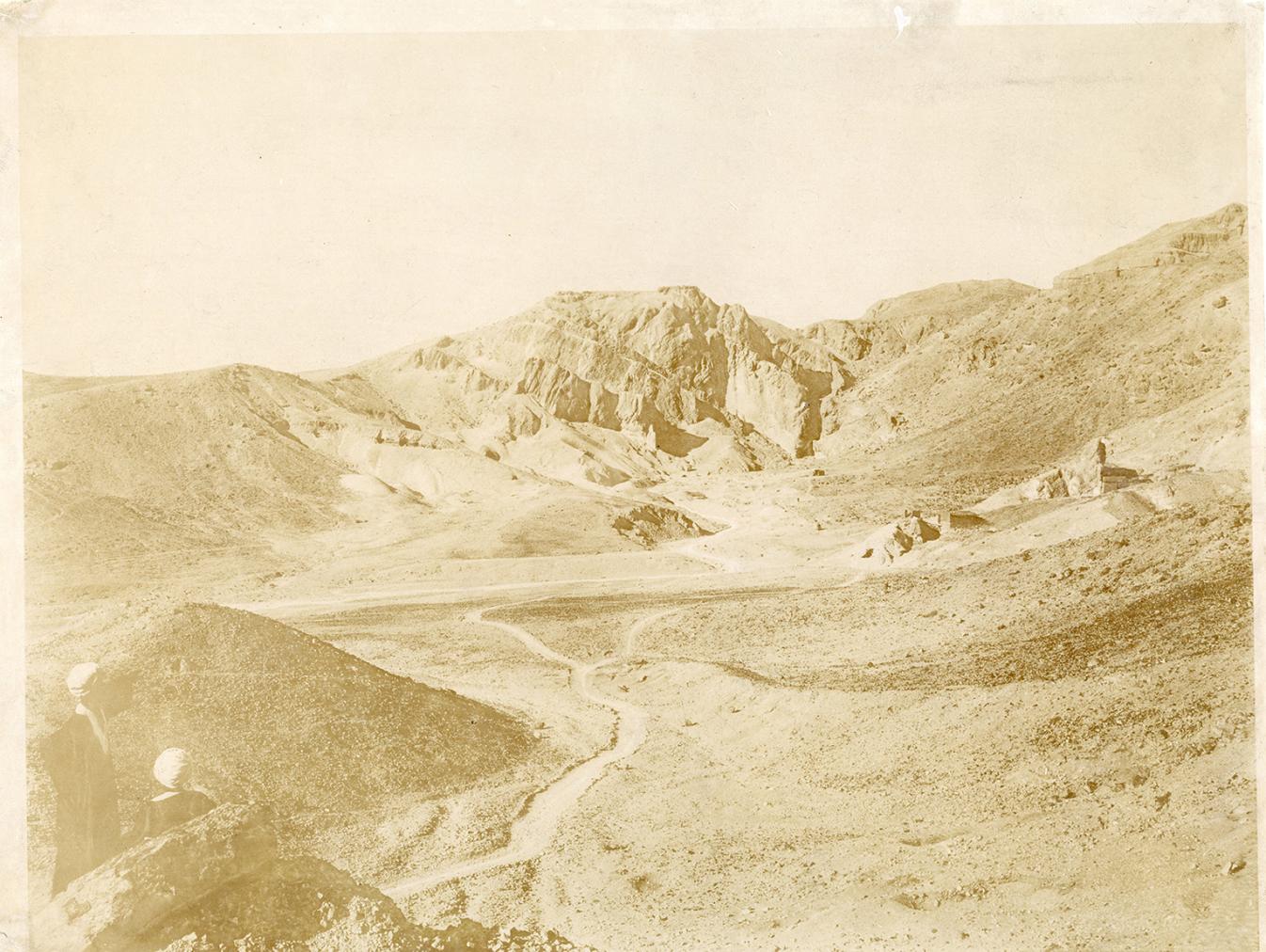
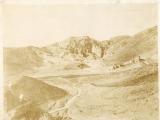
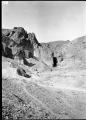
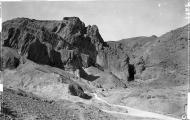
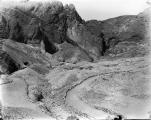
View of the entrance to the Valley of the Queens likely photographed in the early 20th century. At the far end, the construction of the modern entrances to the tombs of Amenherkhepshef (QV 55) and the tomb of Queen Nefertari (QV 66) is visible. Italian Archaeological Expedition excavations, Courtesy of the Egyptian Museum in Turin.
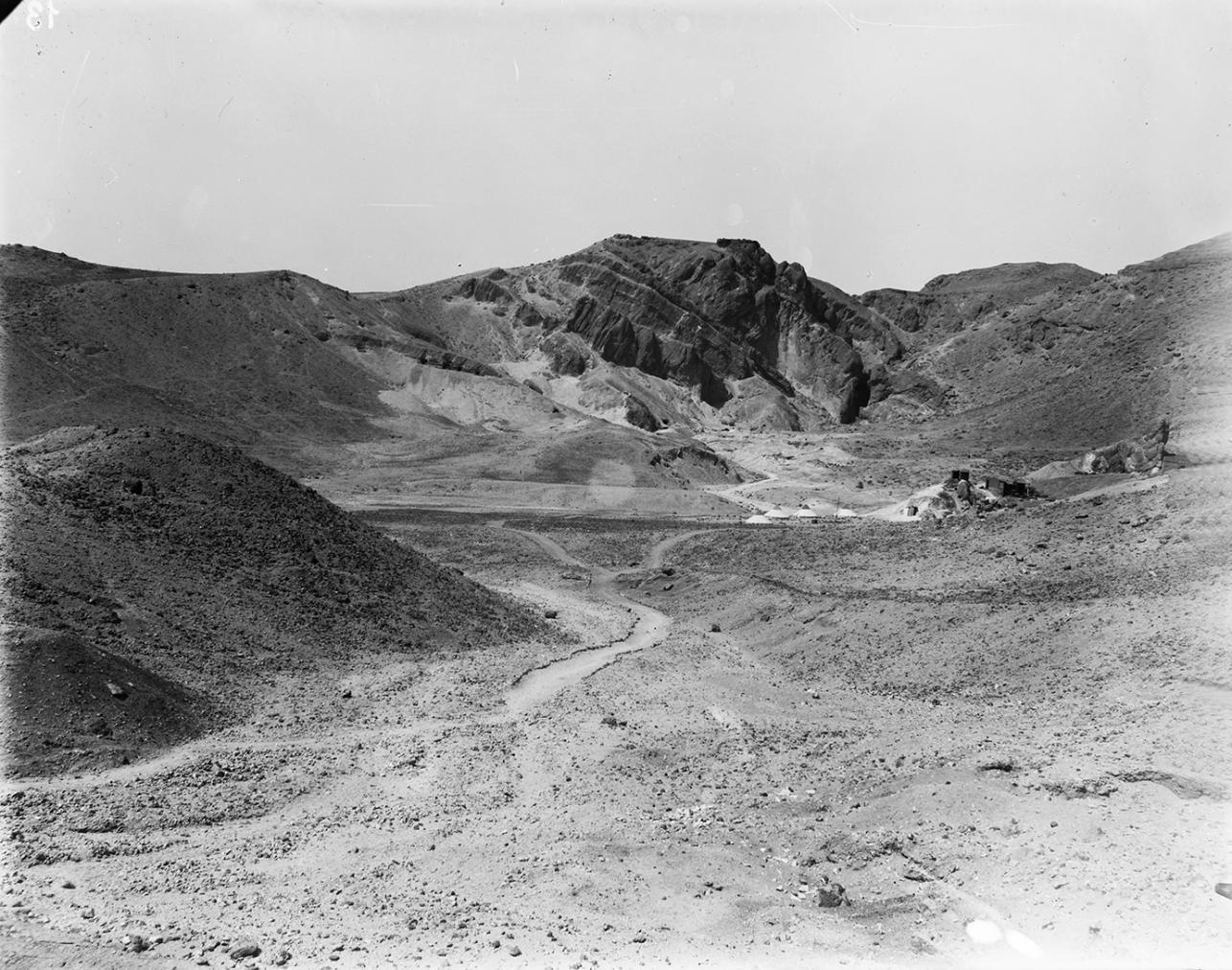
General view of the Valley of the Queens photographed from the path to Dayr al-Madinah. On the right, is the Coptic monastery of Dayr al-Rumi. In the background, is a tent in front of the tomb of Amenherkhepshef (QV 55). Italian Archaeological Expedition excavations. Courtesy of the Egyptian Museum in Turin.
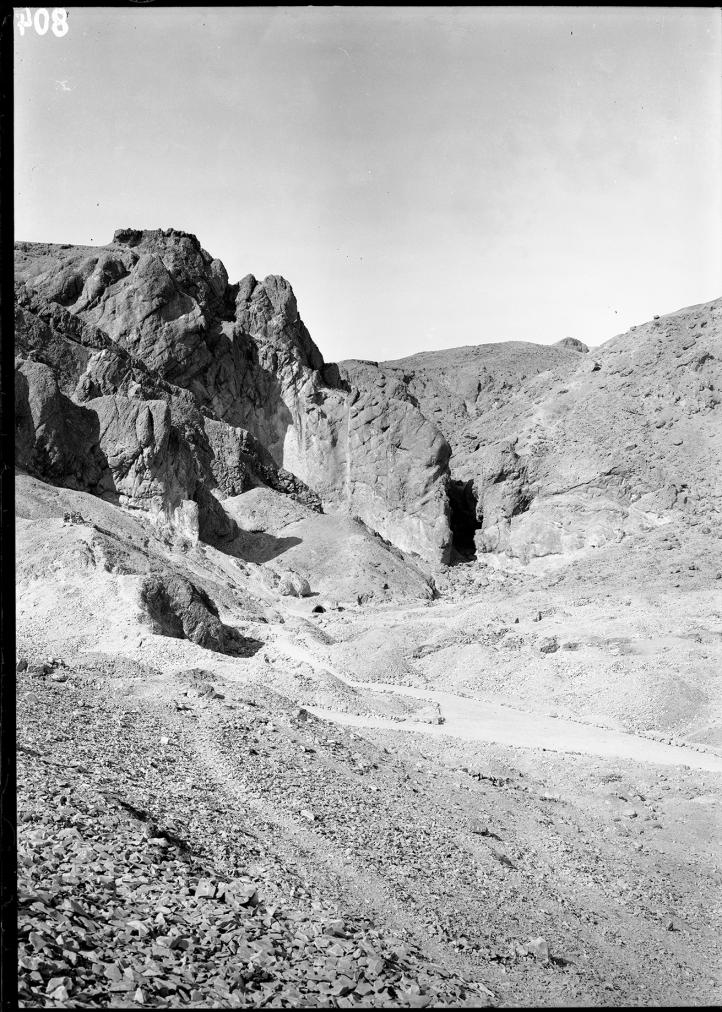
View of the Valley of the Queens photographed during Schiaparelli's excavations. In the center, the modern mud brick access to the tomb of Amenherkhepshef (QV 55) is visible. Italian Archaeological Expedition excavations. Courtesy of the Egyptian Museum in Turin.
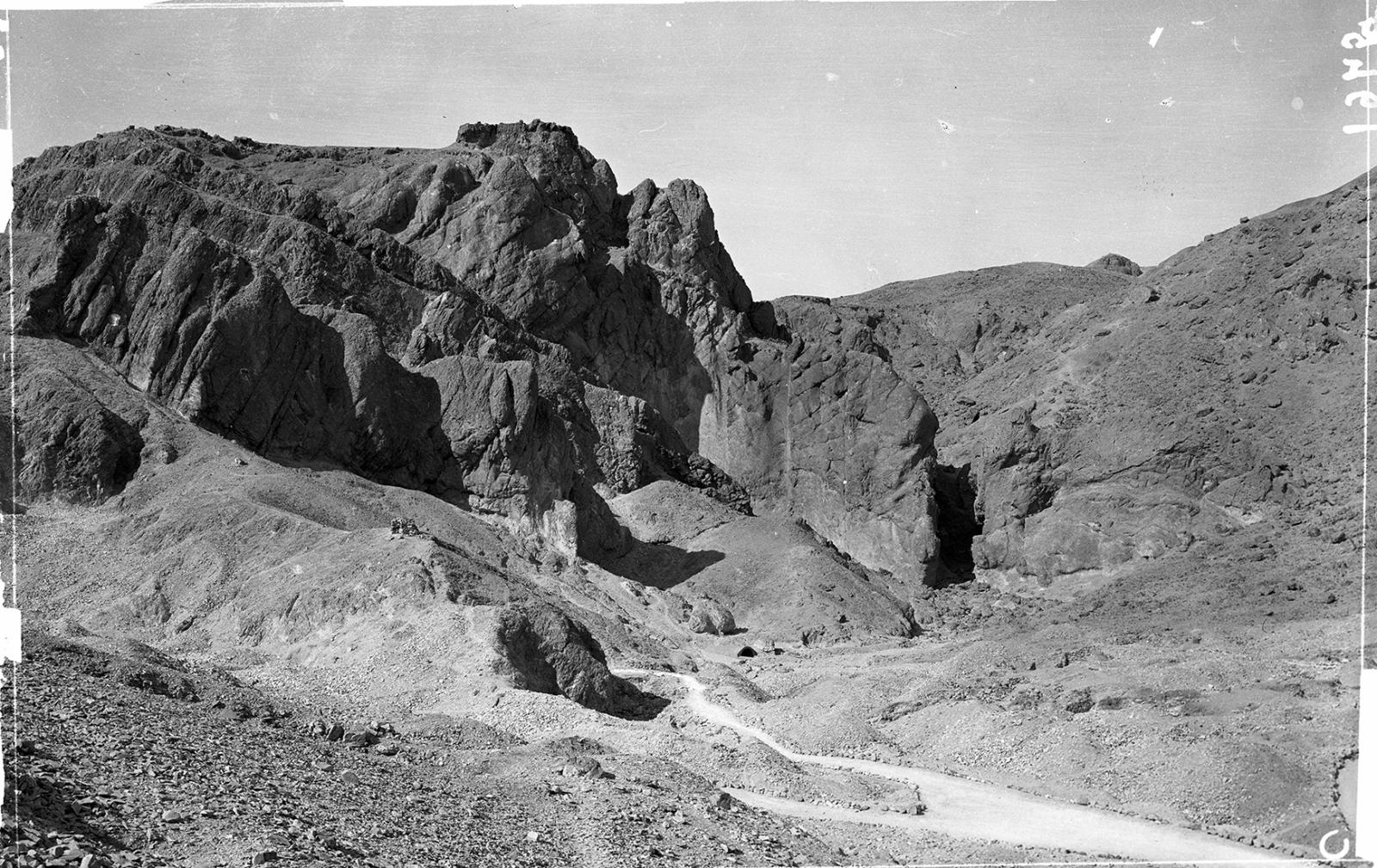
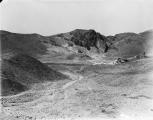
View of the back of the Valley of the Queens photographed during Schiaparelli's excavations. In the center, the modern mud brick access to the tomb of Amenherkhepshef (QV 55) is visible. Italian Archaeological Expedition excavations. Courtesy of the Egyptian Museum in Turin.
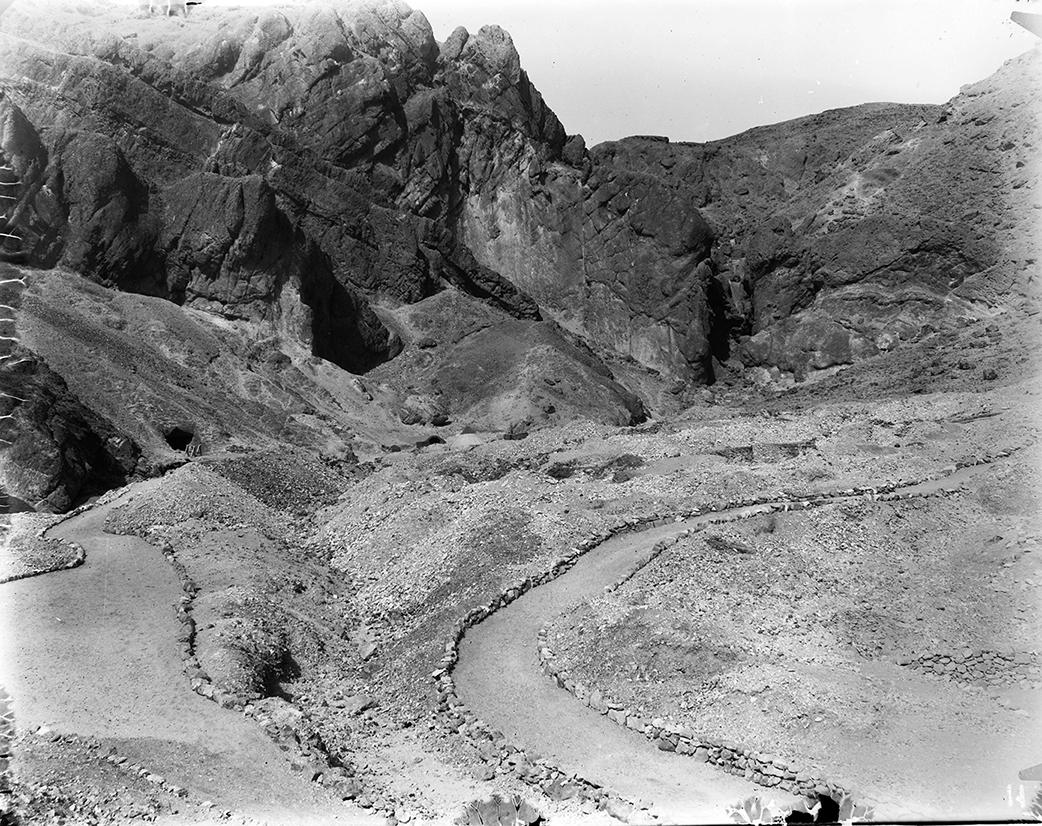
View of the back of the Valley of the Queens photographed during Schiaparelli's excavations. In the center, the modern mud brick access to the tomb of Amenherkhepshef (QV 55) is visible. Italian Archaeological Expedition excavations. Courtesy of the Egyptian Museum in Turin.
Entrance to QV 55. Courtesy of Uni Dia Verlag; Uni Dia Image Nr. 36621.
The king embraced by the goddess Isis flanked by the god Thoth, Chamber B, front wall (left part). Courtesy of Uni Dia Verlag; Uni Dia Image Nr. 36622.
The king embraced by the goddess Isis flanked by the god Thoth, Chamber B, front wall (left part). Courtesy of Uni Dia Verlag; Uni Dia Image Nr. 36623.
The prince behind the goddess Isis, Chamber B, front wall (left part). Courtesy of Uni Dia Verlag; Uni Dia Image Nr. 36624.
The king censing before the god Ptah, Chamber B, left wall, left part. Courtesy of Uni Dia Verlag; Uni Dia Image Nr. 36625.
The king followed by the prince received by (Ptah-Tanen), Chamber B, left wall. Courtesy of Uni Dia Verlag; Uni Dia Image Nr. 36626.
Detail of the king followed by the prince received by the syncretic god Ptah-Tatenen, Chamber B, left wall. Courtesy of Uni Dia Verlag; Uni Dia Image Nr. 36627.
Detail of (the king followed by the prince) received by the syncretic god Ptah-Tatenen, Chamber B, left wall. Courtesy of Uni Dia Verlag; Uni Dia Image Nr. 36628.
Detail of (the king followed by the prince) received by the syncretic god Ptah-Tatenen, Chamber B, left wall. Courtesy of Uni Dia Verlag; Uni Dia Image Nr. 36629.
The king (and prince) received by the god Duamutef, Chamber B, left wall. Courtesy of Uni Dia Verlag; Uni Dia Image Nr. 36630.
Detail of (the king) and prince (received by the god Duamutef), Chamber B, left wall. Courtesy of Uni Dia Verlag; Uni Dia Image Nr. 36631.
Rameses III and the prince before the goddess Isis, Chamber B, rear wall (left part). Courtesy of Uni Dia Verlag; Uni Dia Image Nr. 36632.
Detail of the prince, Chamber B, rear wall (left part). Courtesy of Uni Dia Verlag; Uni Dia Image Nr. 36633.
Detail of the goddess Hathor, Chamber B, rear wall (right part). Courtesy of Uni Dia Verlag; Uni Dia Image Nr. 36634.
Book of the Dead, Burial chamber C, left wall (right part). Courtesy of Uni Dia Verlag; Uni Dia Image Nr. 36635.
Detail of the king and the prince before a gate, Book of the Dead, Burial chamber C, left wall (center part). Courtesy of Uni Dia Verlag; Uni Dia Image Nr. 36636.
Detail of the prince before a gate, Book of the Dead, Burial chamber C, left wall (center part). Courtesy of Uni Dia Verlag; Uni Dia Image Nr. 36637.
View of Gate D and the granite sarcophagus in Chamber D. Courtesy of Uni Dia Verlag; Uni Dia Image Nr. 36638.
Book of the Dead, Spell 145, Gates 5 and 6, Burial chamber C, right wall (left part). Courtesy of Uni Dia Verlag; Uni Dia Image Nr. 36639.
Book of the Dead, Chapter 145, Gates 7 and 8, Burial chamber C, left wall (left part). Courtesy of Uni Dia Verlag; Uni Dia Image Nr. 36640.
Detail of the king's face and a goddess's hand below his chin, Chamber B, front wall (left part). Courtesy of Uni Dia Verlag; Uni Dia Image Nr. 36641.







Articles
Decorating the Tombs
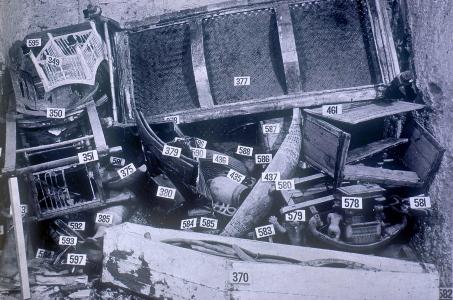
Funerary Equipment
Bibliography
Hassanein, Fathy. Étude comparative de quatre tombes de princes, fils de Ramsès III, de la Vallée des Reines. PhD diss., Lyon: Université Lumière de Lyon-II, 1978.
Kitchen, Kenneth A. Ramesses VII and the Twentieth Dynasty. The Journal of Egyptian Archaeology 58 (1972): 182-94.
Leblanc, Christian, and Alberto Siliotti. Nefertari e la valle delle regine. 2nd ed. Florence: Giunti, 2002.
Leblanc, Christian. Une nouvelle analyse de la double théorie des princes du temple de Ramsès III: à Medinet Habou. Memnonia, 12/13 (2001-2002): 191-218.
Lecuyot, Guy. Étude architecturale. In: Fathy Hassanein, and Monique Nelson (eds.) La tombe du prince Khaemouaset [VdR no 44], Collection scientifique: Vallée des Reines, no. 72. Cairo: Supreme Council of Antiquities, 1997.
Nelson, Monique and Marcel Kurz. Tombes des princes de la Vallée des Reines. Amon-(her)-khepchef (no. 55), Khaemouaset (no. 44), Seth-her-khepchef (no. 43) et pareherounemef (no. 42) avec 107 diapositives. Paris: Corea, 2005.
Pillet, Maurice L. Thèbes: palais et nécropoles. Les villes d'art célèbres. Paris: H. Laurens, 1930.
Porter, Bertha and Rosalind L.B. Moss. Topographical Bibliography of Ancient Egyptian Hieroglyphic Texts, Reliefs, and Paintings, I: The Theban Necropolis, Part 2: Royal Tombs and Smaller Cemeteries. Oxford: Oxford University Press, 1964.
Schiaparelli, Ernesto. Realazione sui lavon della Missione archeologica italiana in Egitto, anni 1903-1920. Explorazione della “Valle delle Regina” nella necropolis di Tebe. Vol. 1. Turin: Casa editrice Giovanni Chiantore, 1923.