

QV 23
Anonymous


Entryway A
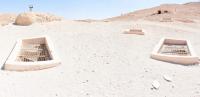
See entire tombShaft entrance has a modern cemented brick surround spanned by a metal grill.

Entrance to QV23
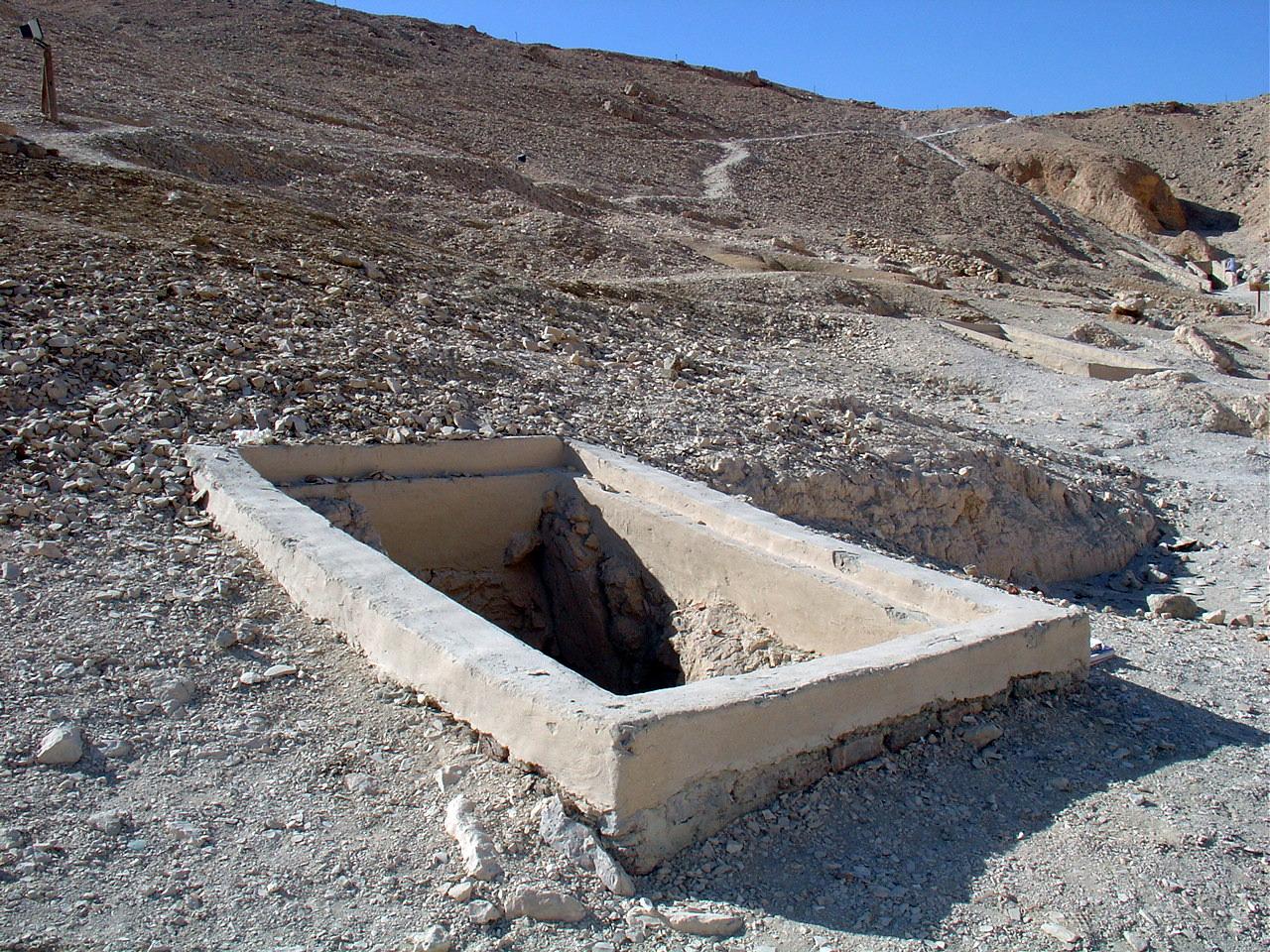
Shaft entrance of QV 23. © Getty Conservation Institute and the Ministry of Tourism and Antiquities.

View down shaft entrance with debris blocking entrance. © Getty Conservation Institute and the Ministry of Tourism and Antiquities.


Chamber B
See entire tombLarge, rectangular roughly cut and undecorated chamber with blackened walls and ceiling surfaces.

View into Chamber C from Chamber B with shaft in the rear to Chamber Ca. © Getty Conservation Institute and the Ministry of Tourism and Antiquities.

Chamber C
See entire tombSmall roughly cut, undecorated side chamber with a rear niche and pit shaft in the southeast corner of chamber C.
View into Chamber C from Chamber B with shaft in the rear to Chamber Ca. © Getty Conservation Institute and the Ministry of Tourism and Antiquities.

View into the rear pit in Chamber C leading to Chamber Ca. © Getty Conservation Institute and the Ministry of Tourism and Antiquities.

Chamber Ca
See entire tombA small roughly cut and undecorated pit chamber that contained several mummies. The dimensions of the chamber are approximate.
View into the rear pit in Chamber C leading to Chamber Ca. © Getty Conservation Institute and the Ministry of Tourism and Antiquities.

View down rear pit into Chamber Ca. © Getty Conservation Institute and the Ministry of Tourism and Antiquities.

About
About
QV 23 lies on a slight slope on the south side of the main Wadi, a few meters south of the principal pathway and near the SCA guard house. It has one main chamber (B) leading to a smaller chamber (C) at its rear. In this chamber (C) is a shaft leading to a lower side chamber (Ca). The main shaft (A) has a modern cemented brick surround spanned by a metal grill.
The tomb was not visited by Elizabeth Thomas. It was last cleared in 1987-88 by the Franco-Egyptian Mission. Archaeological material from this 18th Dynasty tomb suggests it was reused during the Third Intermediate Period.
Site History
The tomb was constructed in the 18th Dynasty and reused in the Third Intermediate Period.
Dating
This site was used during the following period(s):
Exploration
Conservation
Site Condition
According to the GCI-SCA, the tomb generally appears stable. It is cut into both marl and shale. The wall and ceiling surfaces in both upper chambers are blackened. Although this blackening made it difficult to assess the nature of the rock, it appears that the lower part of the main chamber (B) is cut into shale, with the upper part appearing to be marl. Most of rock in the main chamber is fractured. Bats were heard during the GCI-SCA inspection in 2006-2009, and are presumed to be roosting in the lower chamber (Ca). The tomb rock is vulnerable to significant damage in the event of flooding or water infiltration.

Retaining wall of QV49 in foreground. Entrances to QV21, QV22, QV23, QV24, QV25, QV26, QV27, QV29, and old electricity building in background.

Old electricity building and entrances to QV18, QV19, QV22, QV21, QV20, QV23, QV25, and QV26
Entrance to QV23

Entrance to QV23

QV49 and QV50 in the foreground with the southeastern side of the main wadi, southern branch, and entrance to the QV in the background.
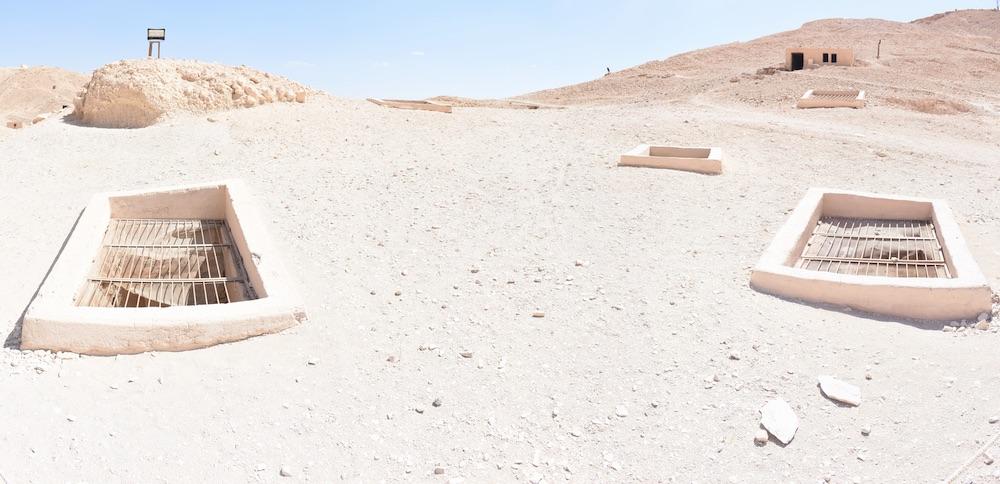
Entrances to QV19, QV20, QV21, QV22, and QV23
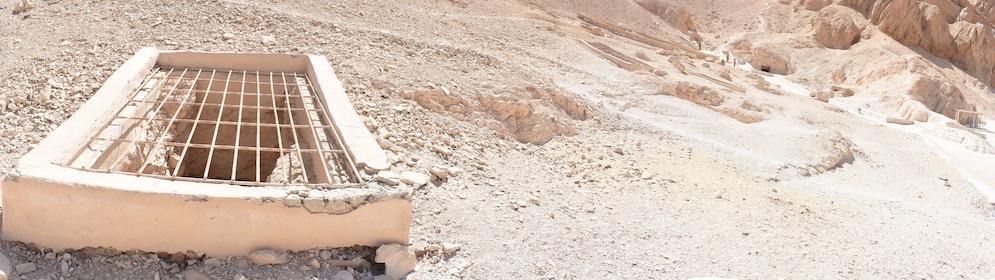
Entrance of QV23 and view of the south branch of the main wadi
Shaft entrance of QV 23. © Getty Conservation Institute and the Ministry of Tourism and Antiquities.
View down shaft entrance with debris blocking entrance. © Getty Conservation Institute and the Ministry of Tourism and Antiquities.
View into Chamber C from Chamber B with shaft in the rear to Chamber Ca. © Getty Conservation Institute and the Ministry of Tourism and Antiquities.
View into the rear pit in Chamber C leading to Chamber Ca. © Getty Conservation Institute and the Ministry of Tourism and Antiquities.
View down rear pit into Chamber Ca. © Getty Conservation Institute and the Ministry of Tourism and Antiquities.




Articles
Tomb Numbering Systems in the Valley of the Queens and the Western Wadis
Geography and Geology of the Valley of the Queens and Western Wadis
Bibliography
Aston, D.A. The Theban West Bank from the Twenty-fifth Dynasty to the Ptolemaic Period. In: Nigel Strudwick, and John H. Taylor (Eds.). The Theban Necropolis: Past, Present and Future. London: British Museum, 2003: 138- 63.
Aston, David. Burial Assemblages of Dynasty 21-25. Chronology – Typology – Developments. Denkschriften der Gesamtakademie 54 = Contributions to the Chronology of the Eastern Mediterranean 21. Wien: Verlag der Österreichischen Akademie der Wissenschaften, 2009.
CNRS mission report: Centre national de la recherche scientifique (France). Rapport d'activité 1987-1988 URA no. 1064, 1987-1988.
Demas, Martha and Neville Agnew (eds). Valley of the Queens. Assessment Report. Los Angeles: The Getty Conservation Institute, 2012, 2016. Two vols.
