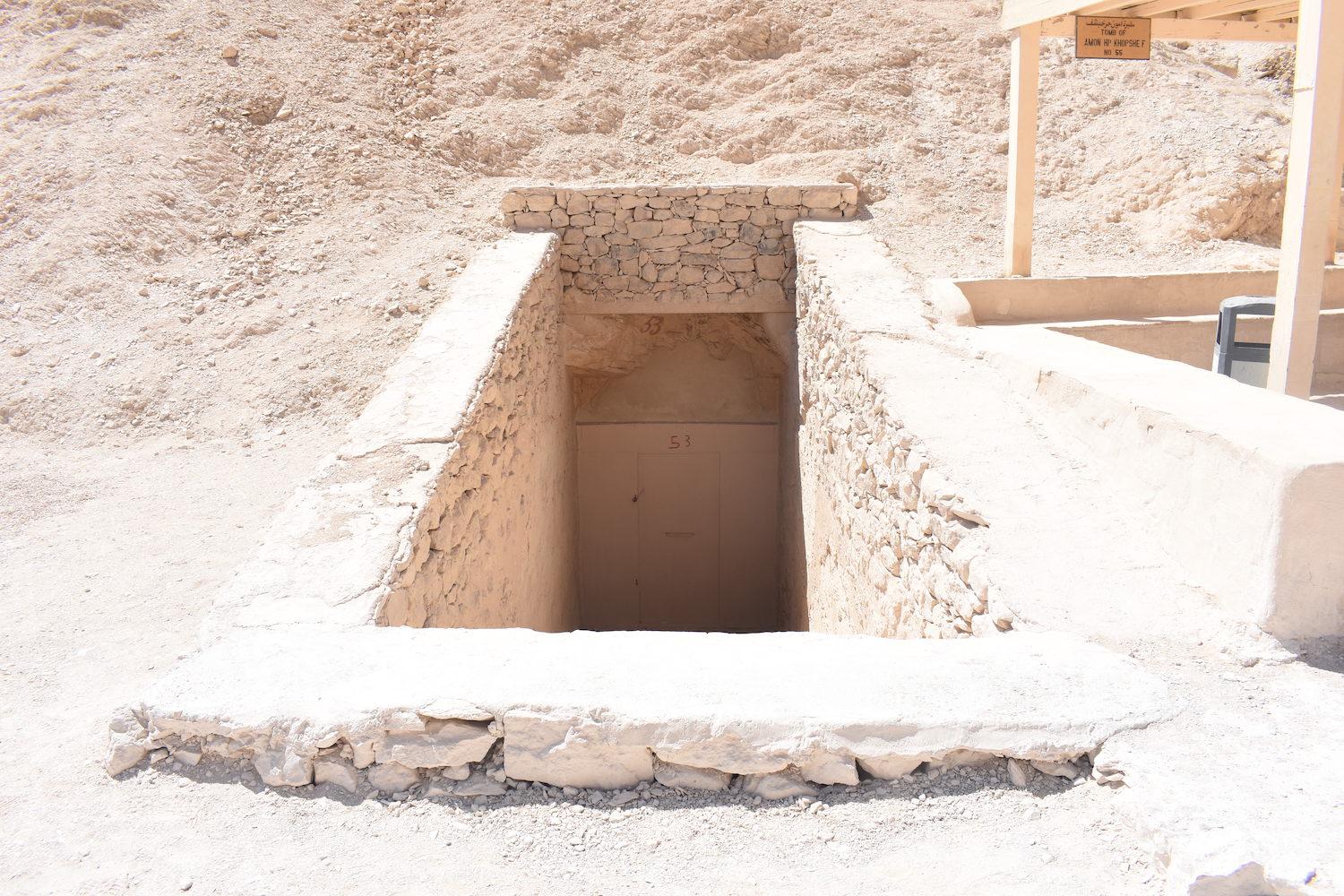
QV 52
Queen Tyti


Entryway A
See entire tomb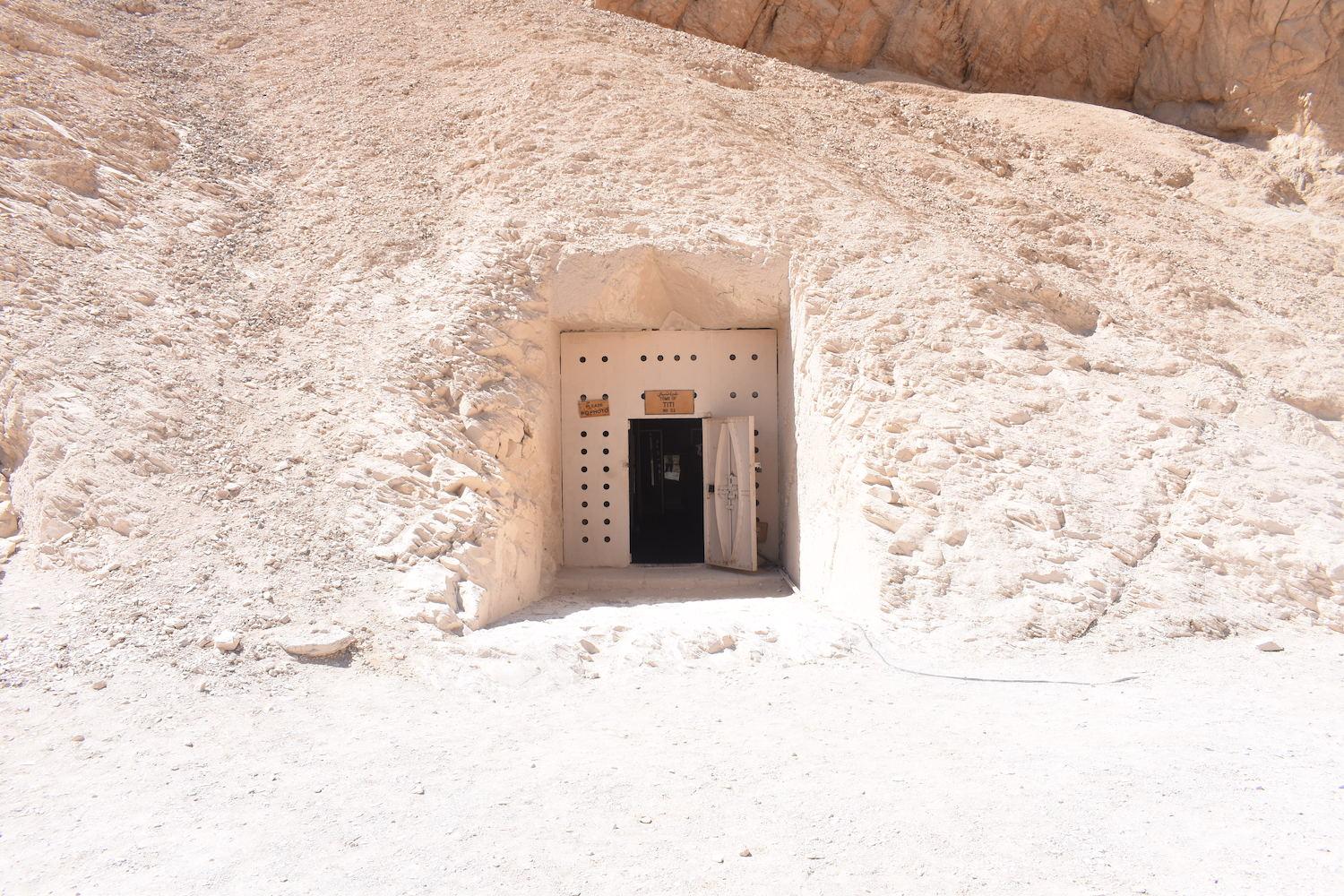
Entrance to QV52
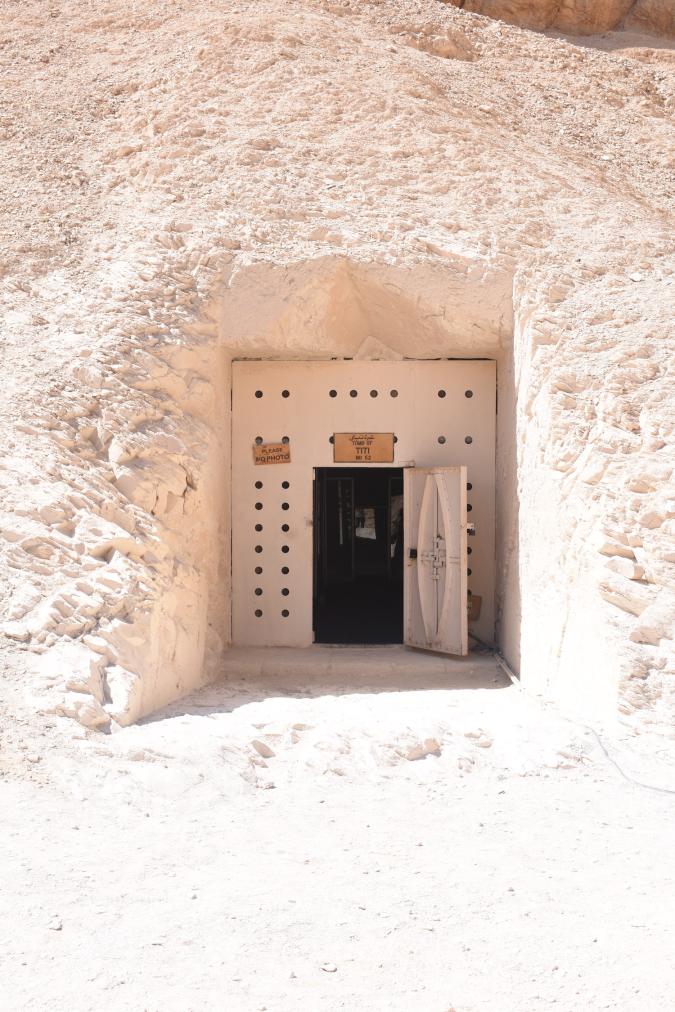
Entrance to QV52
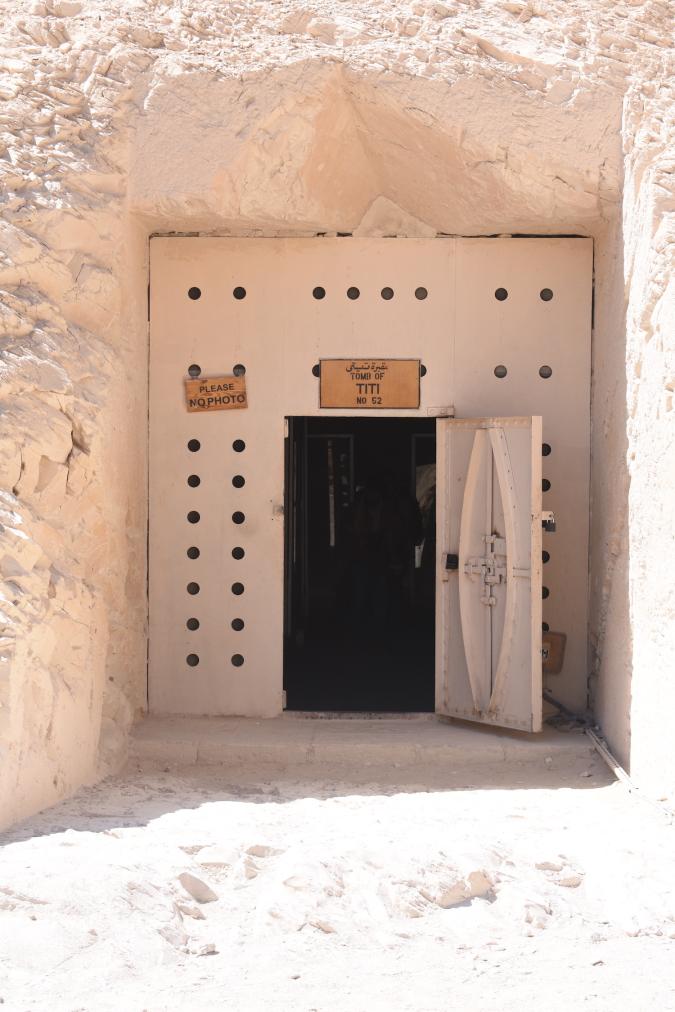
Entrance to QV52
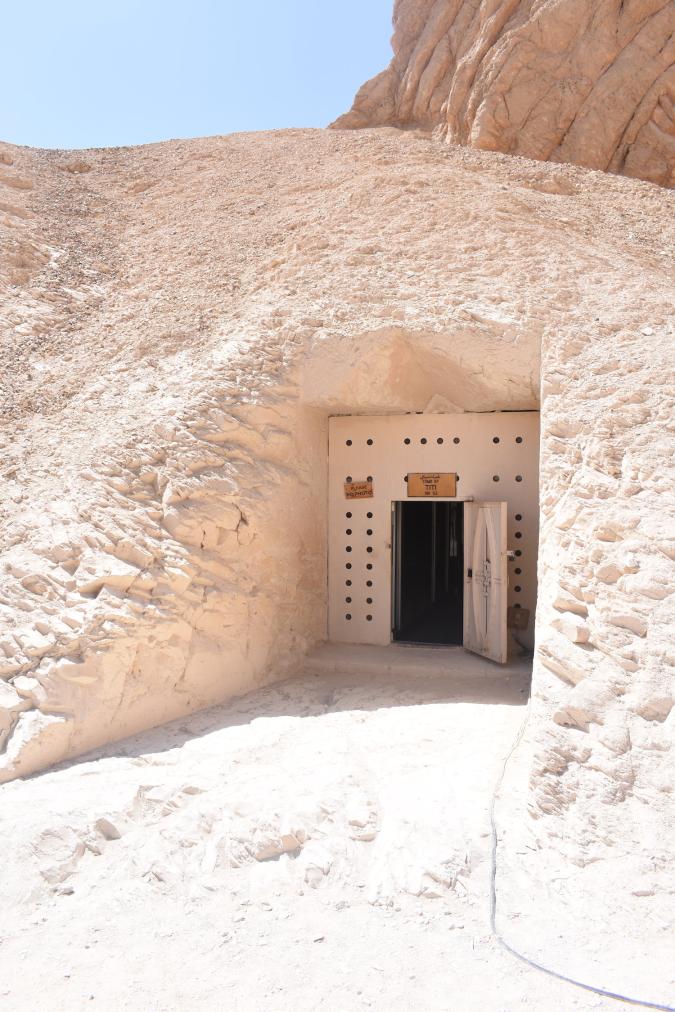
Entrance to QV52
Gate B
See entire tombA modern metal door now stands at the entrance to the tomb and blocks the original gate from view. The reveals and thicknesses contain texts with titles of the queen.
Porter and Moss designation:
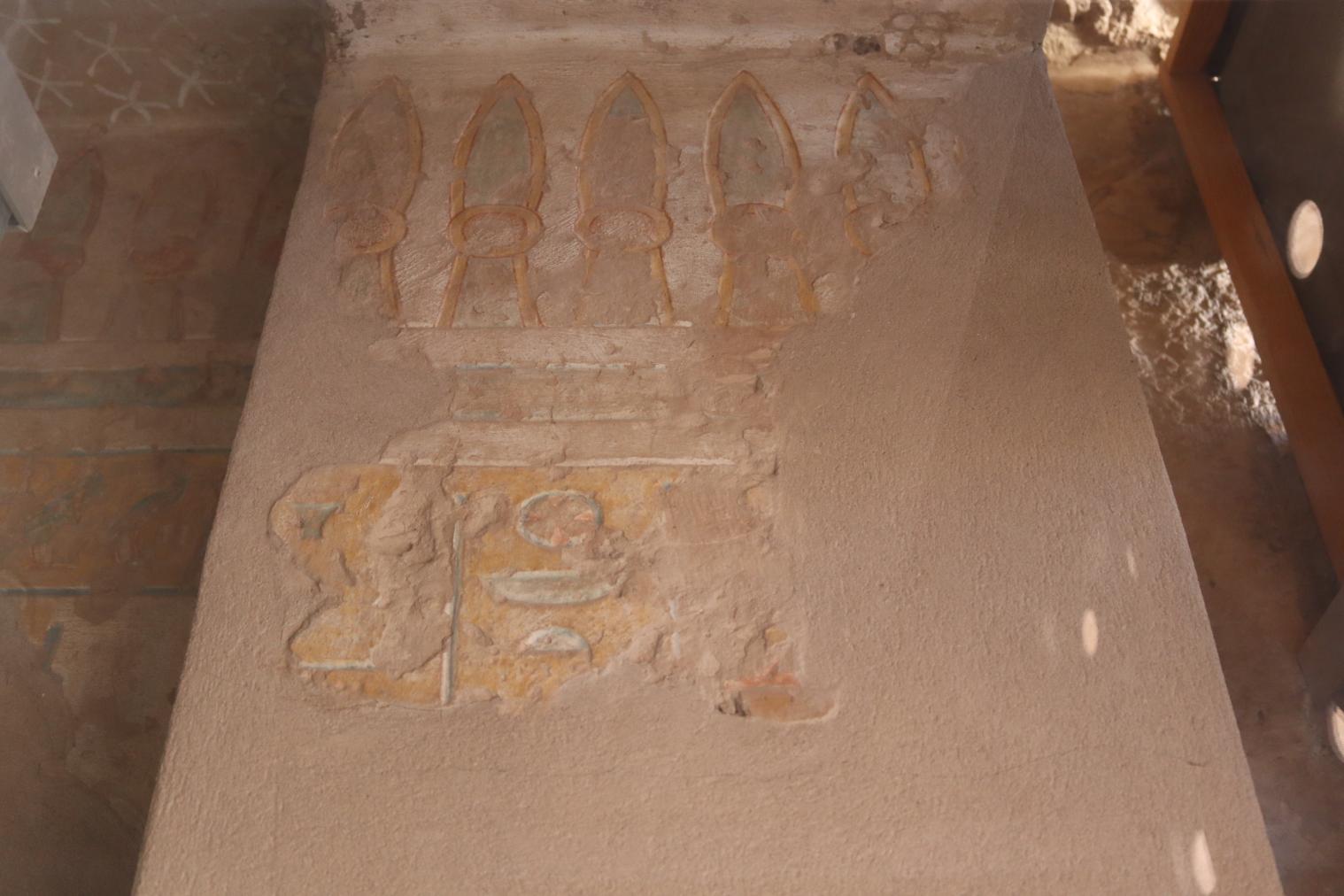
Kheker frieze and remains of titles of Queen
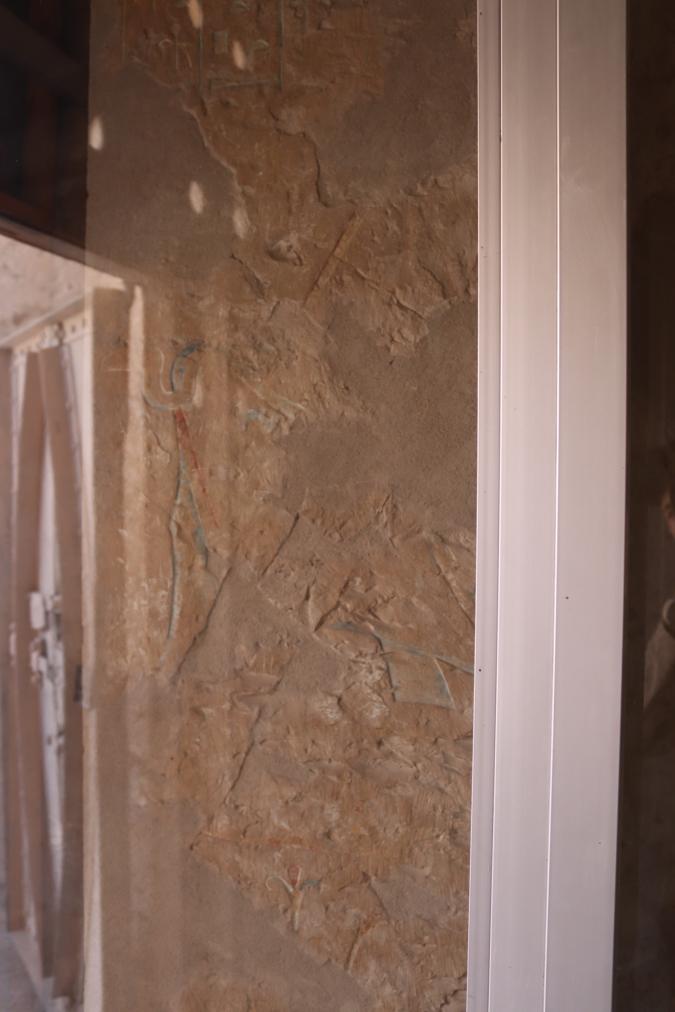
Kheker frieze, remains of titles of Queen, and Nekhbet as vulture
Corridor B
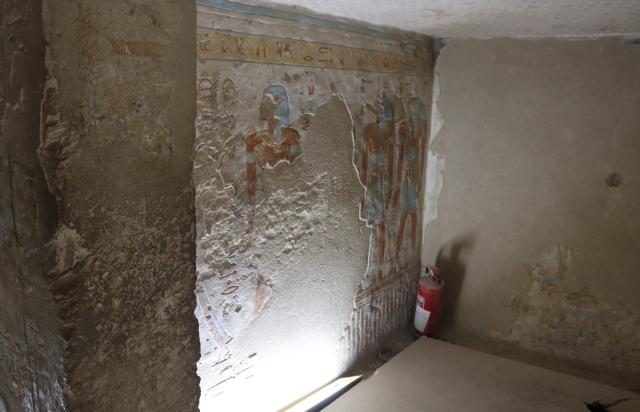
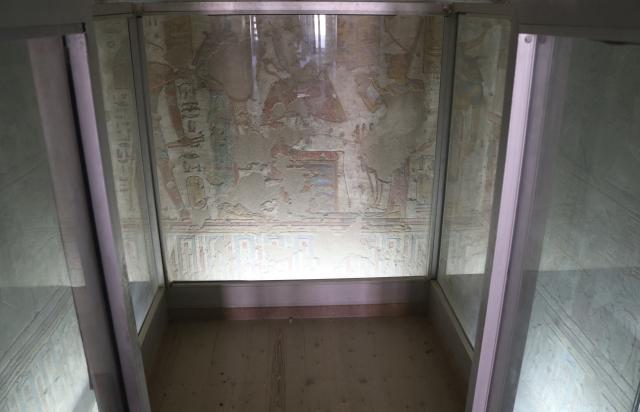
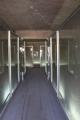
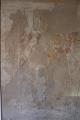
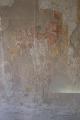
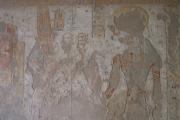
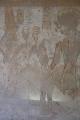
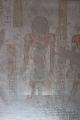
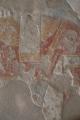
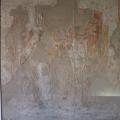
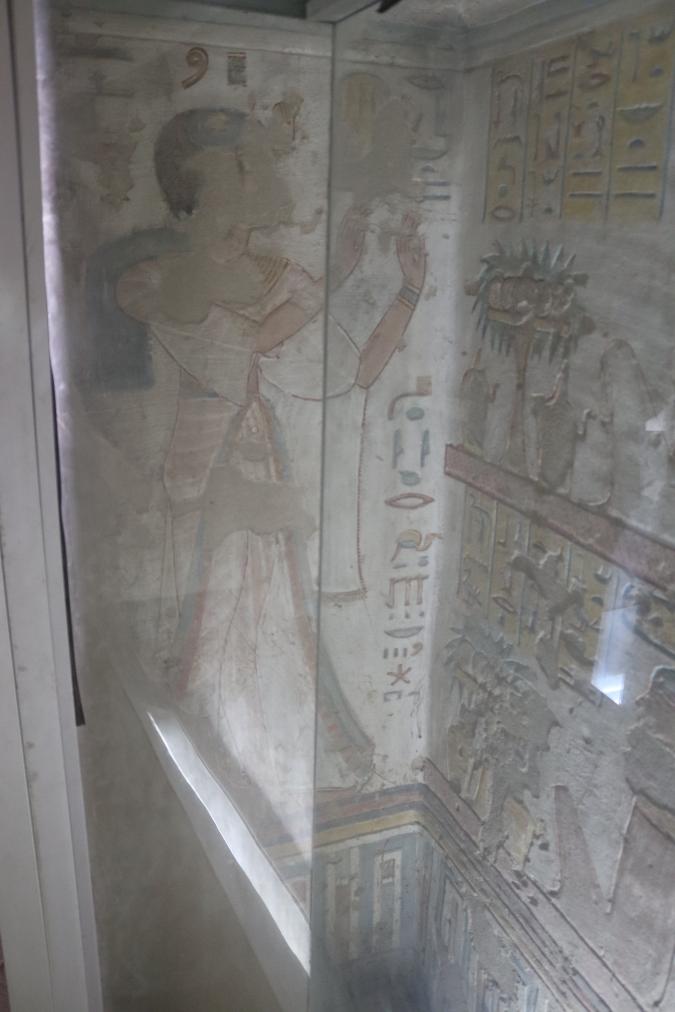
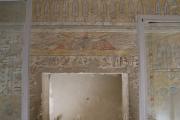
See entire tombThis corridor lies on axis with the tomb's entrance. The ceiling is painted with white stars on a yellow background. The scenes on the walls show the queen in adoration before various deities and a text frieze runs along the upper portion of the walls. These are now protected with glass barriers and lit by fluorescent lighting installed on the floor.
Porter and Moss designation:
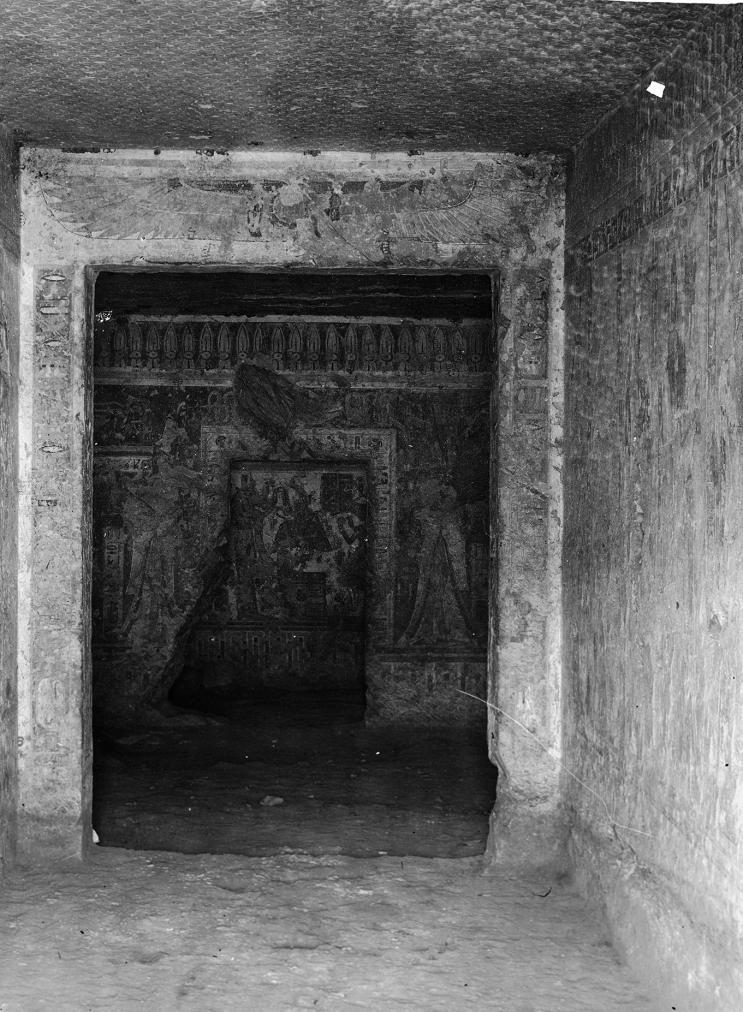
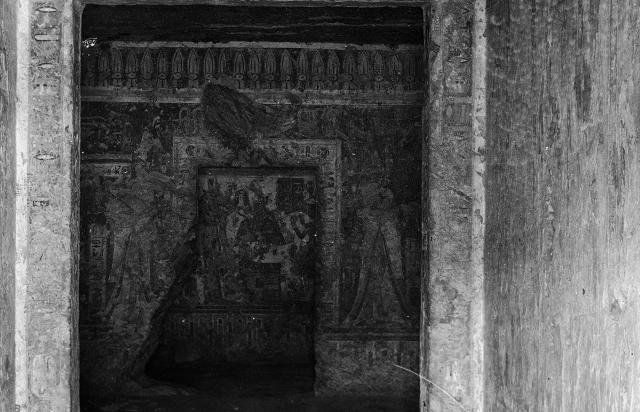
Interior of the tomb of Queen Tyti (QV 52) photographed from the vestibule looking towards the burial chamber. Italian Archaeological Expedition excavations. Courtesy of the Egyptian Museum in Turin.
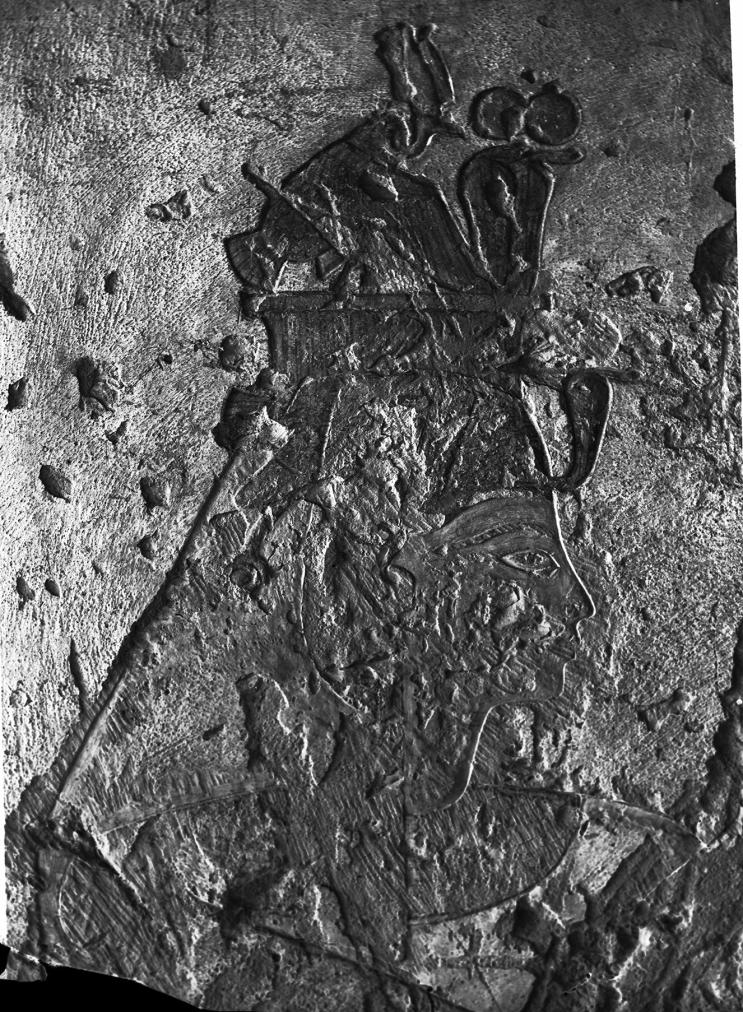
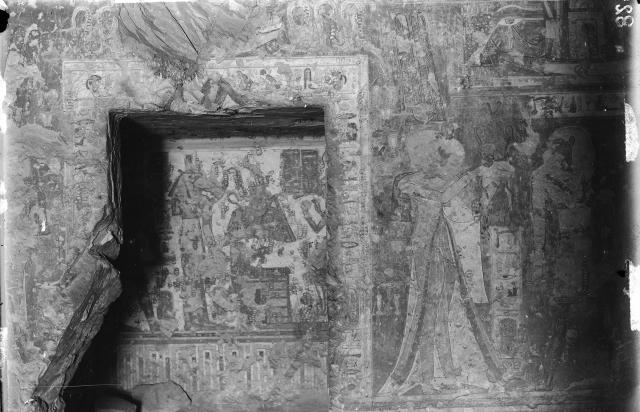
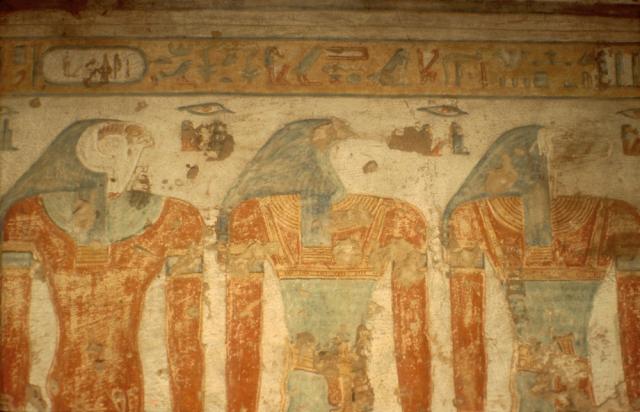
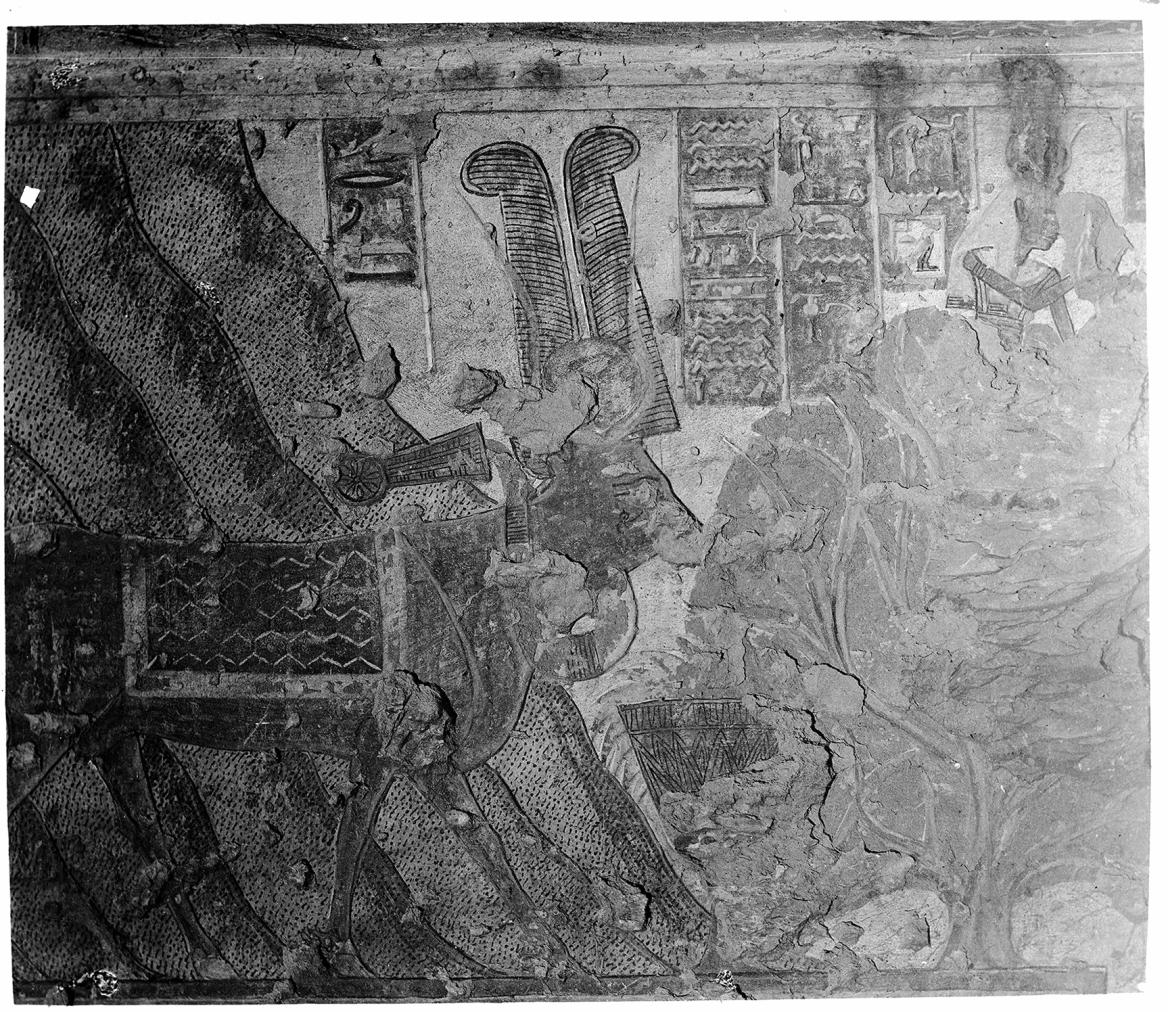
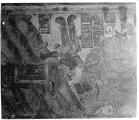
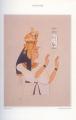
Depiction of Queen Tyti from her tomb (QV 52) worshipping the gods Imsety, Duamutef, and Isis photographed during Ernesto Schiaparelli's excavations. Italian Archaeological Expedition excavations. Courtesy of the Egyptian Museum in Turin.
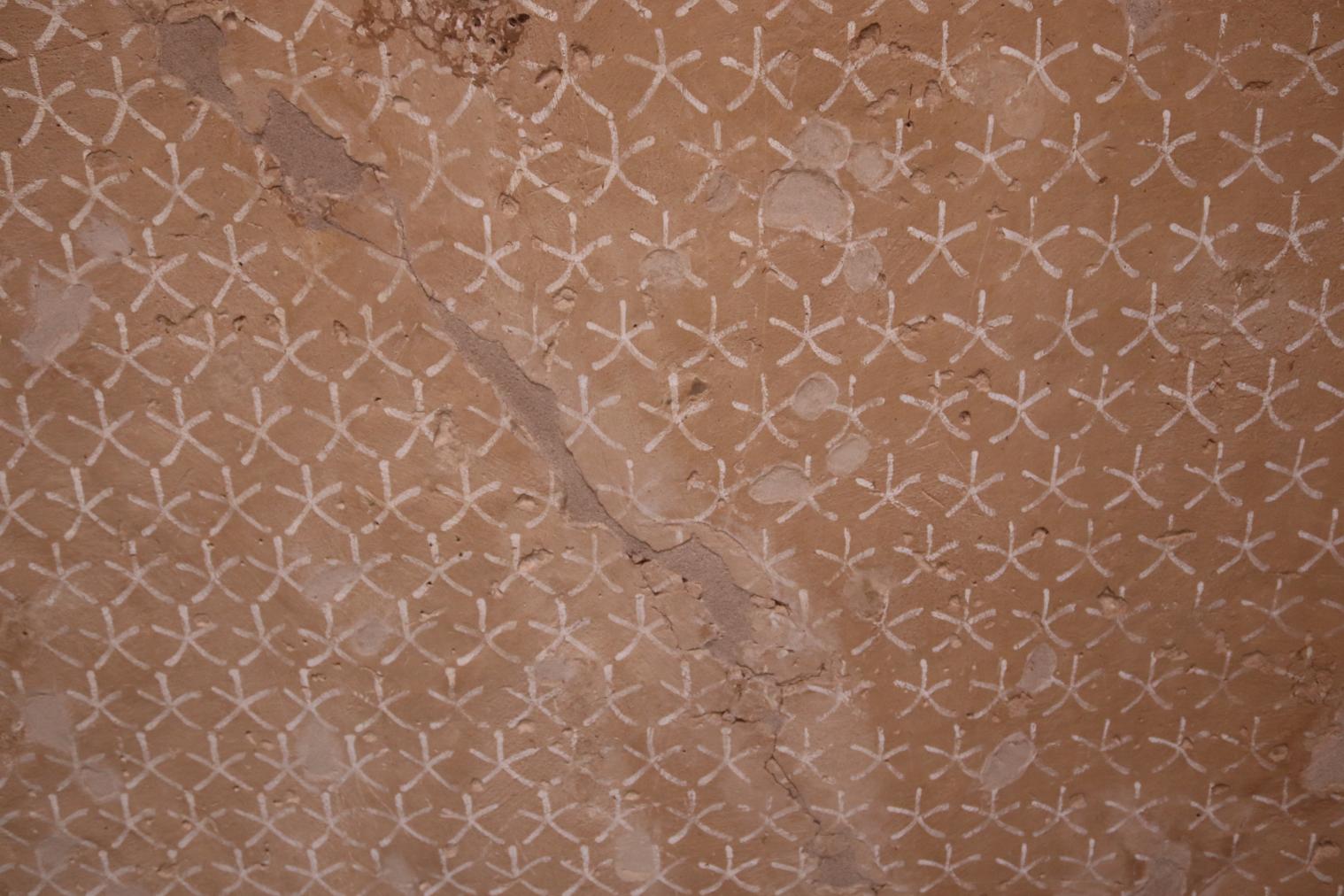
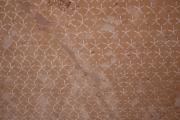
Painted stars
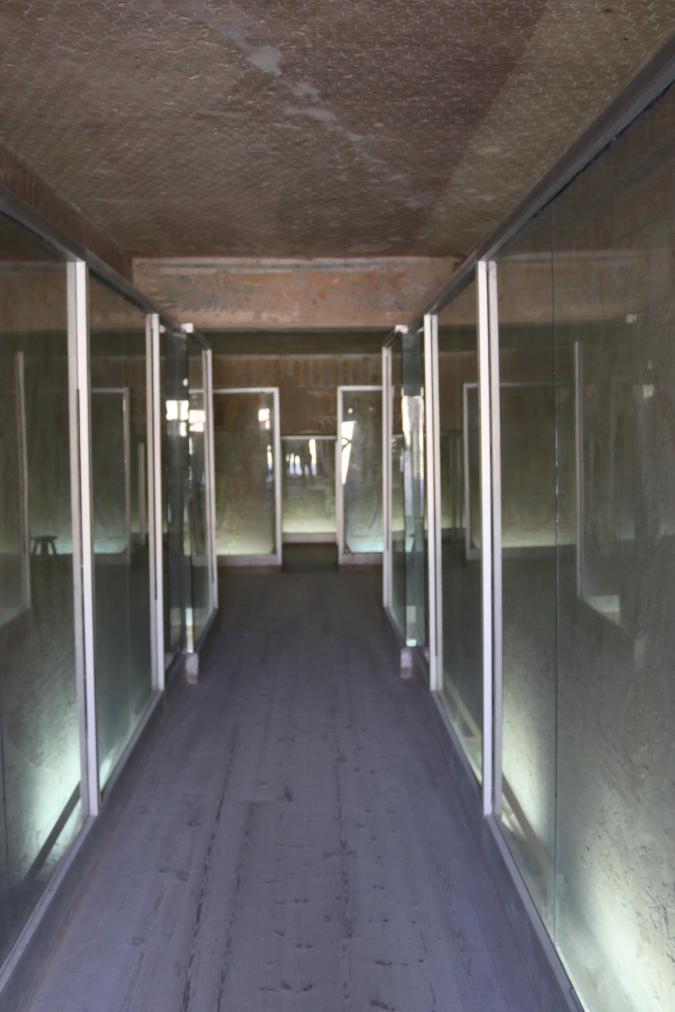
View of Corridor B from entryway
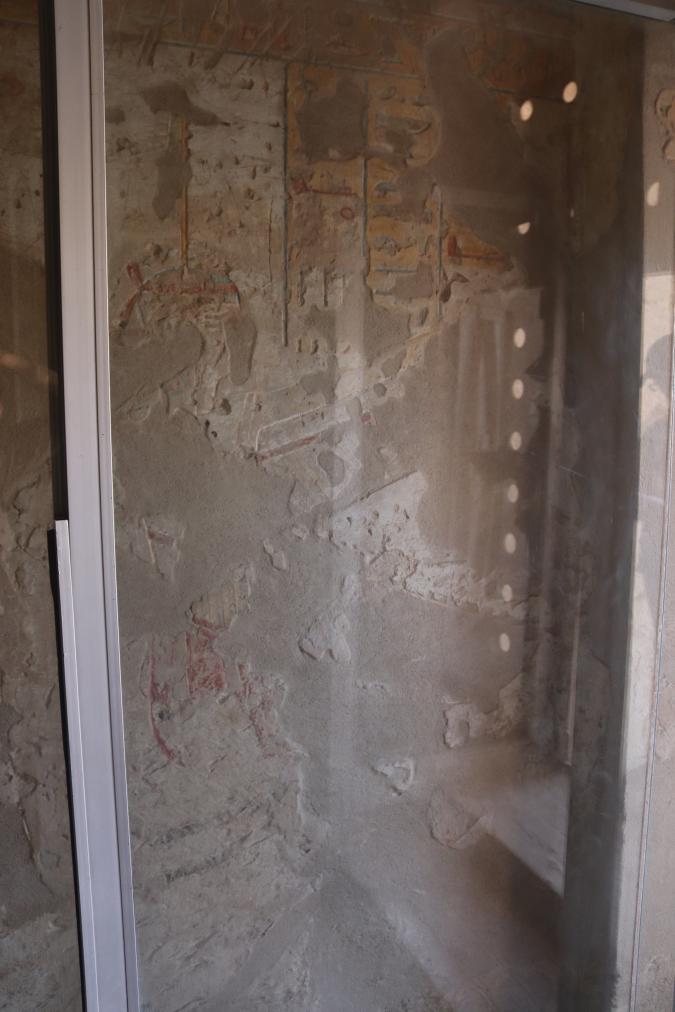
Winged kneeling Ma'at
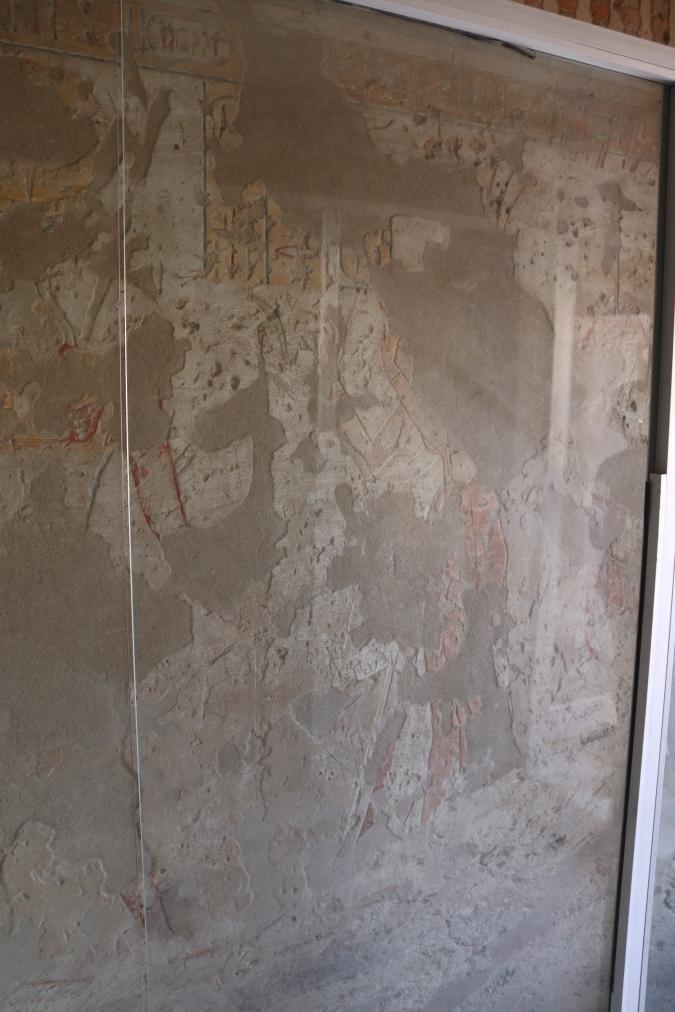
Queen in adoration before Thoth
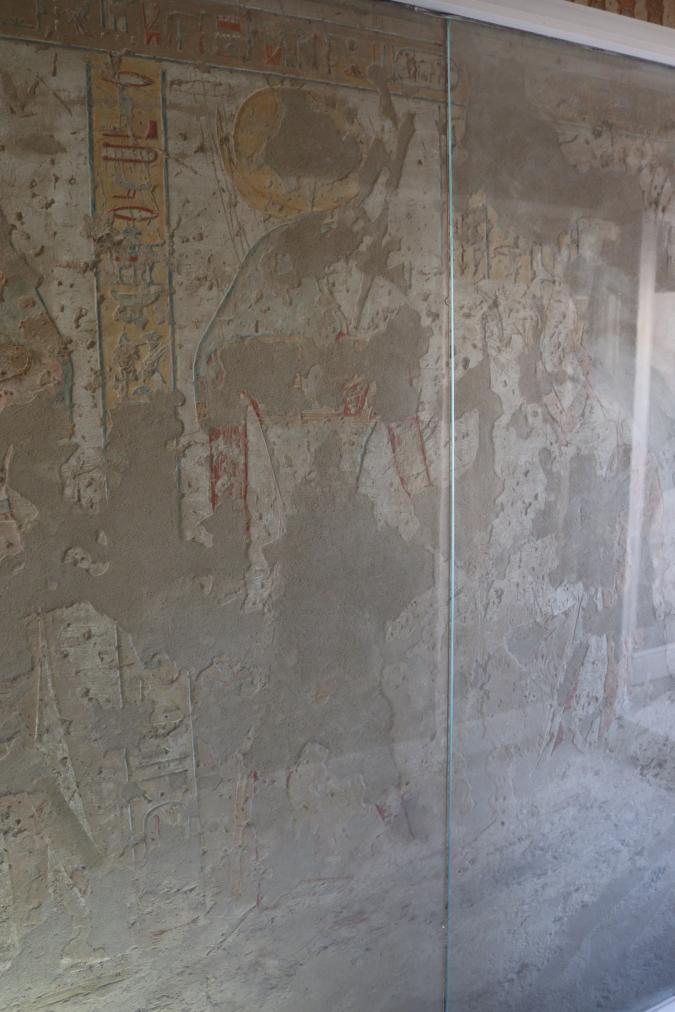
Queen in adoration before Thoth
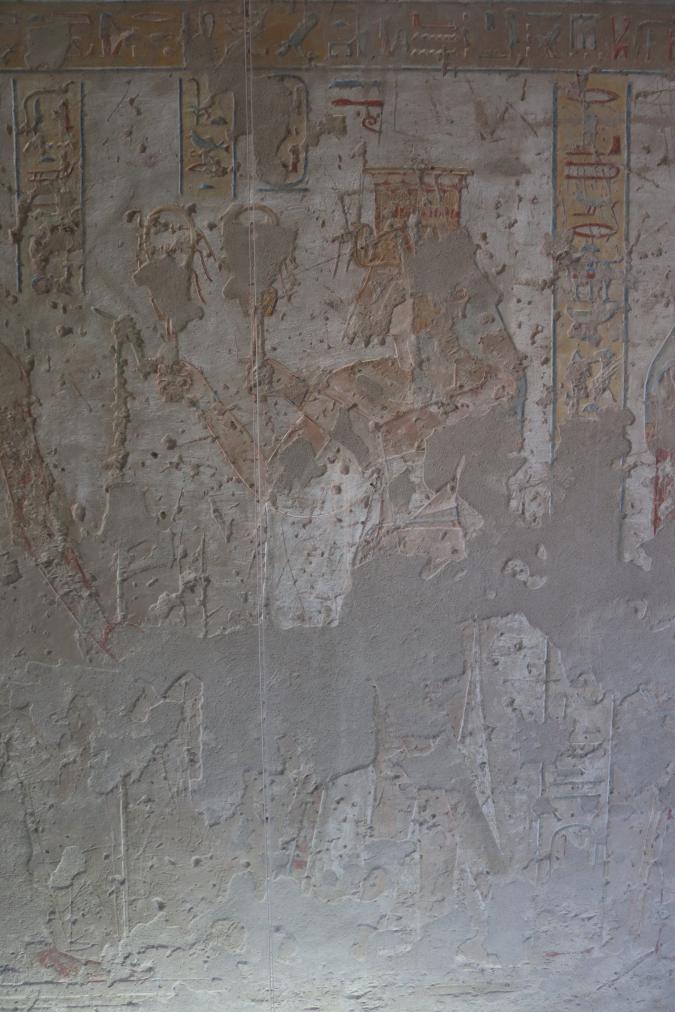
Queen shaking sistra
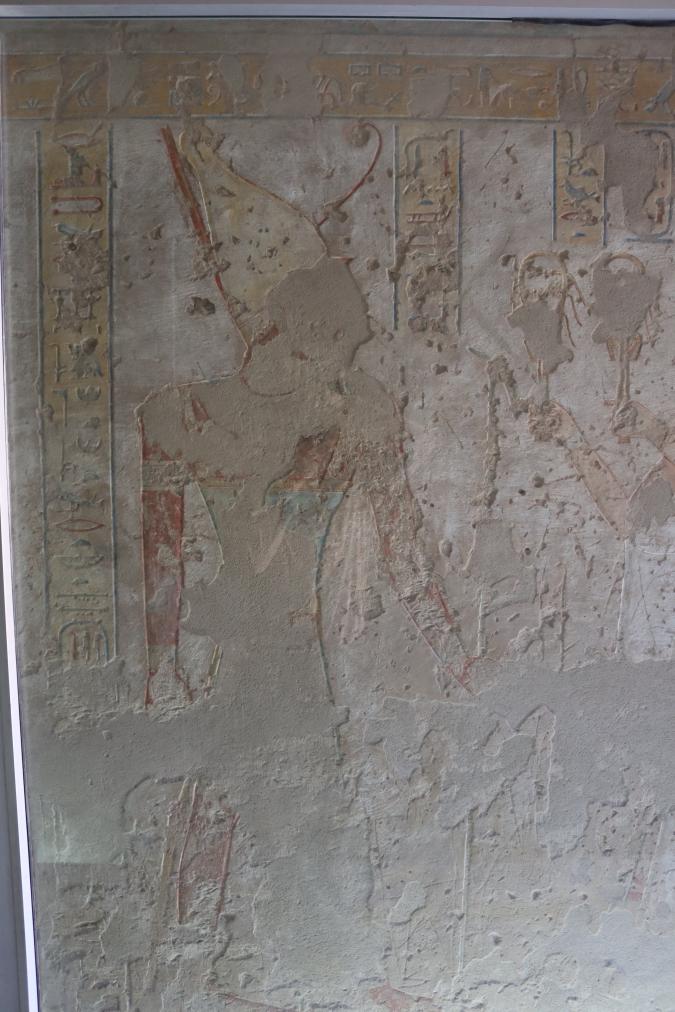
Queen shaking sistra before Atum
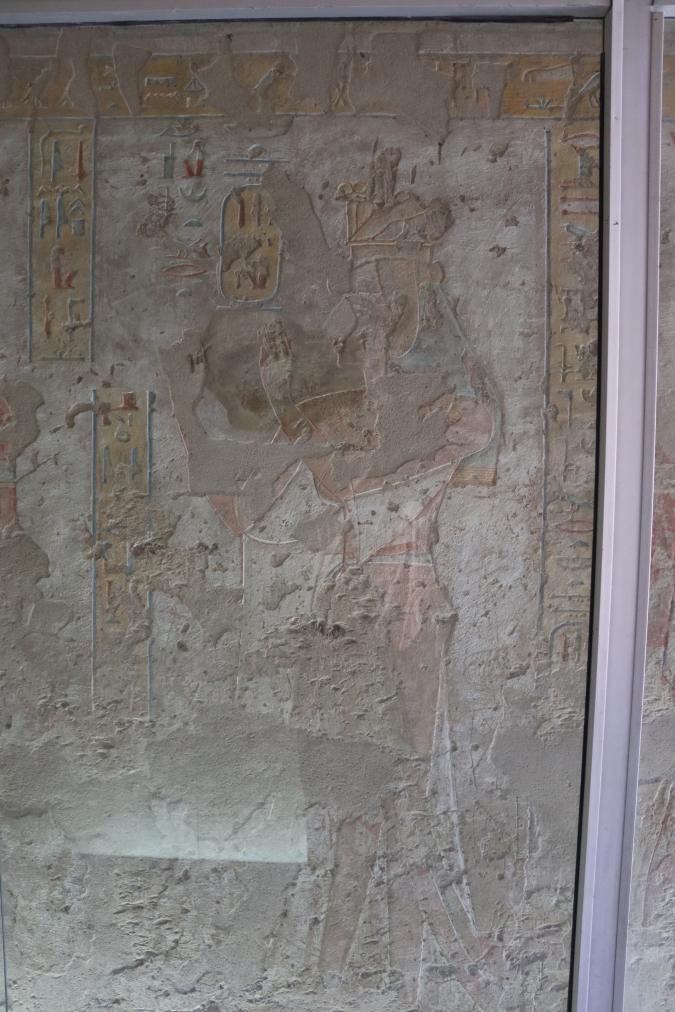
Queen in adoration before Hapy
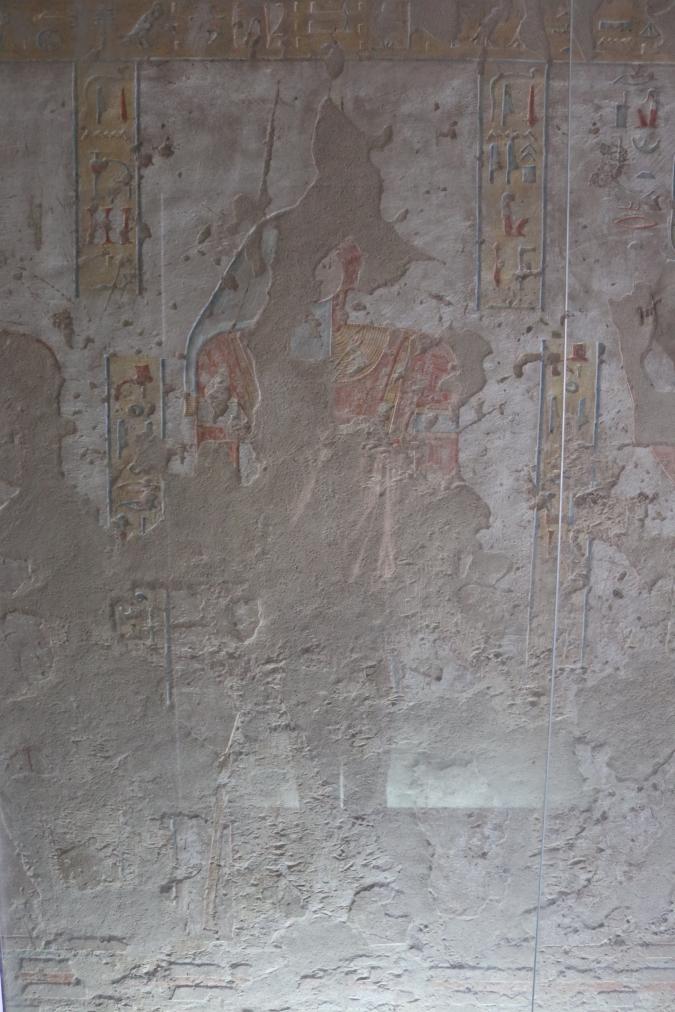
Queen in adoration before Hapy
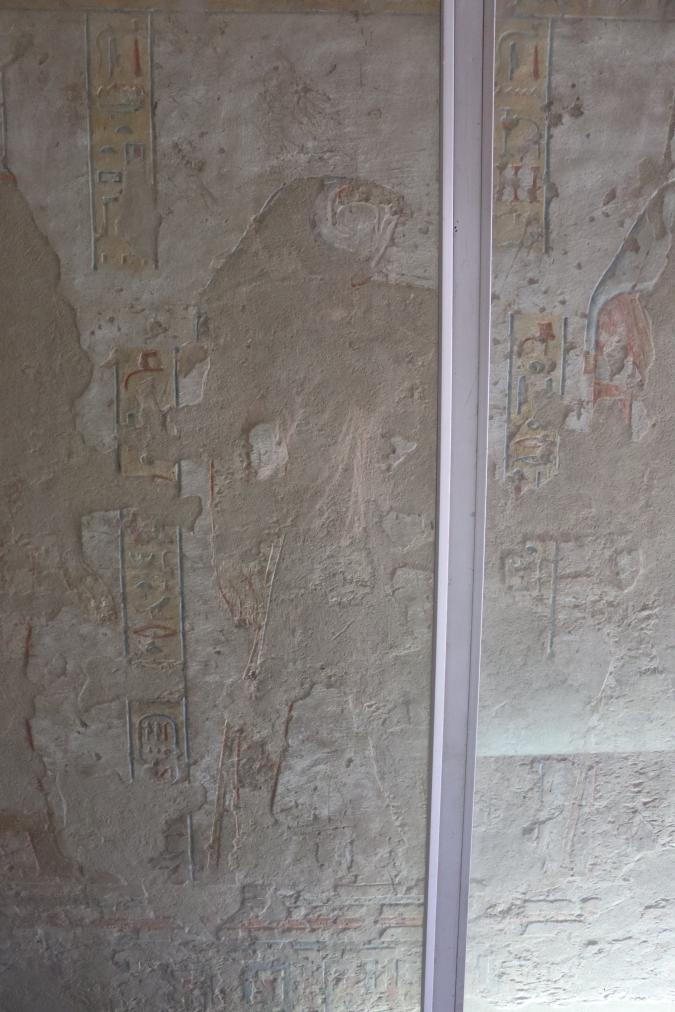
Qebehsenuef
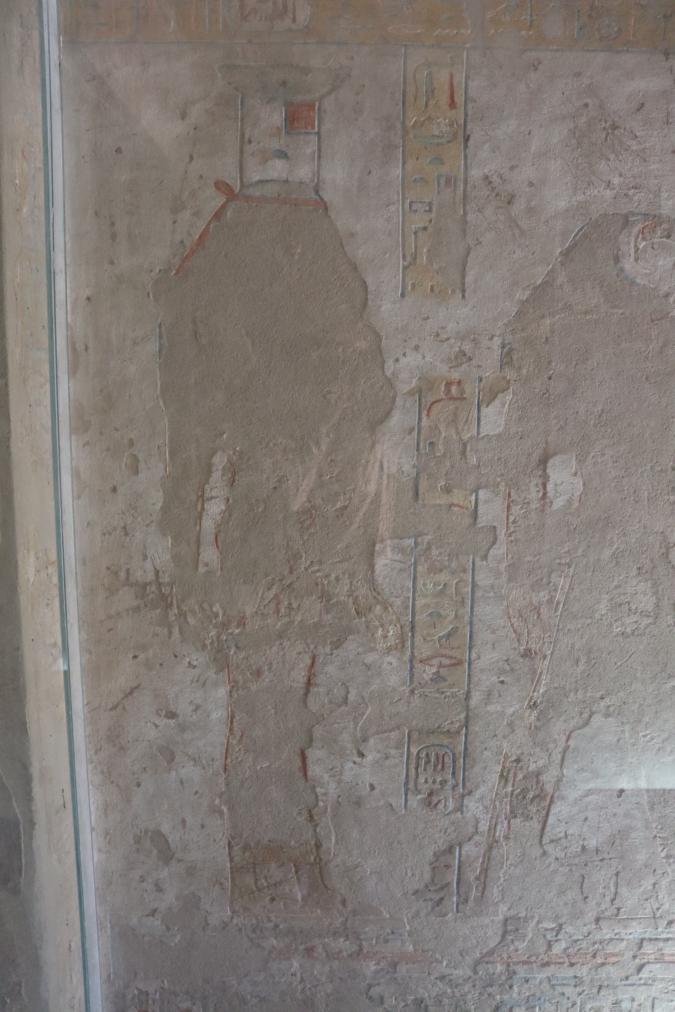
Nephthys
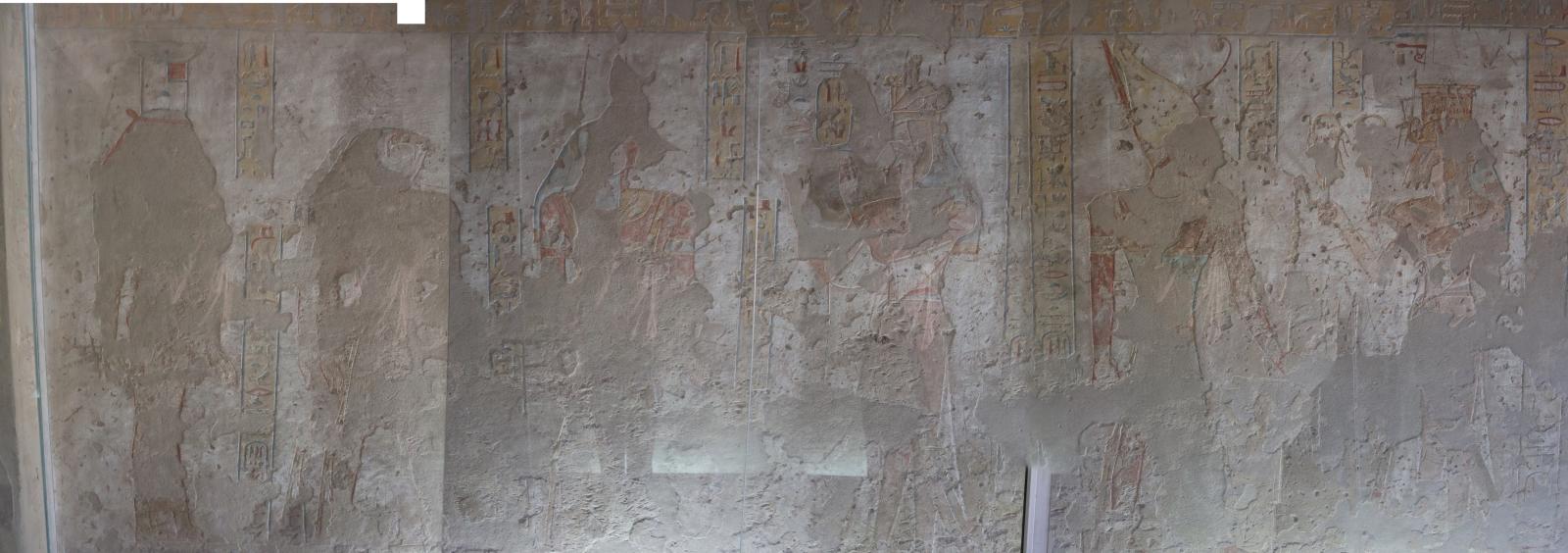
Queen shaking sistra before Atum (right), Queen in adoration before Hapy, Qebehsenuef, and Nephthys (left)
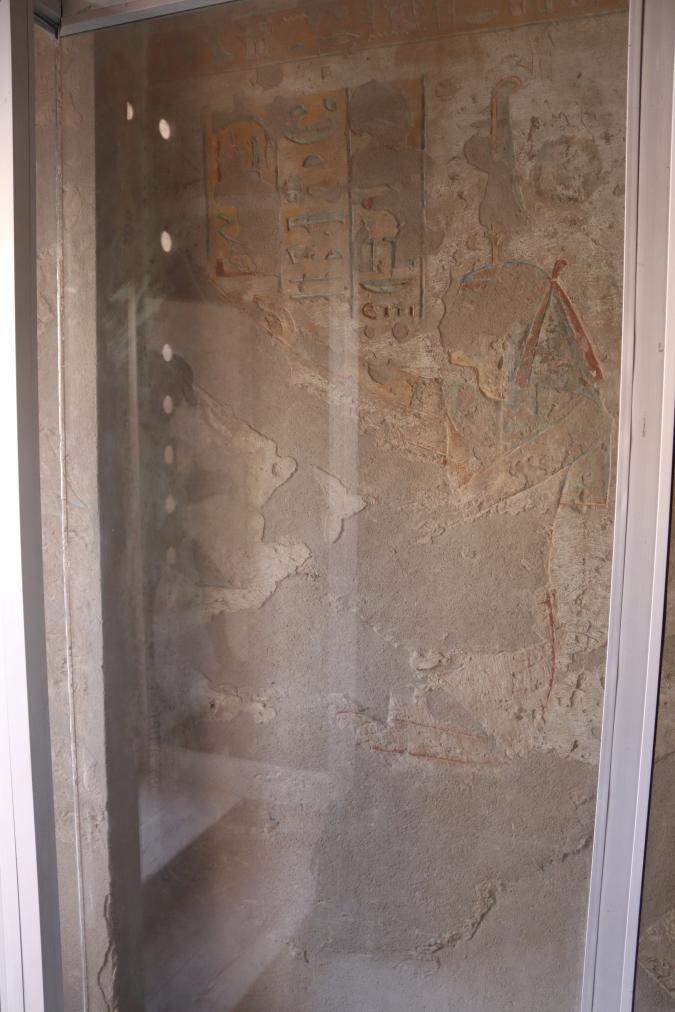
Winged kneeling Ma'at
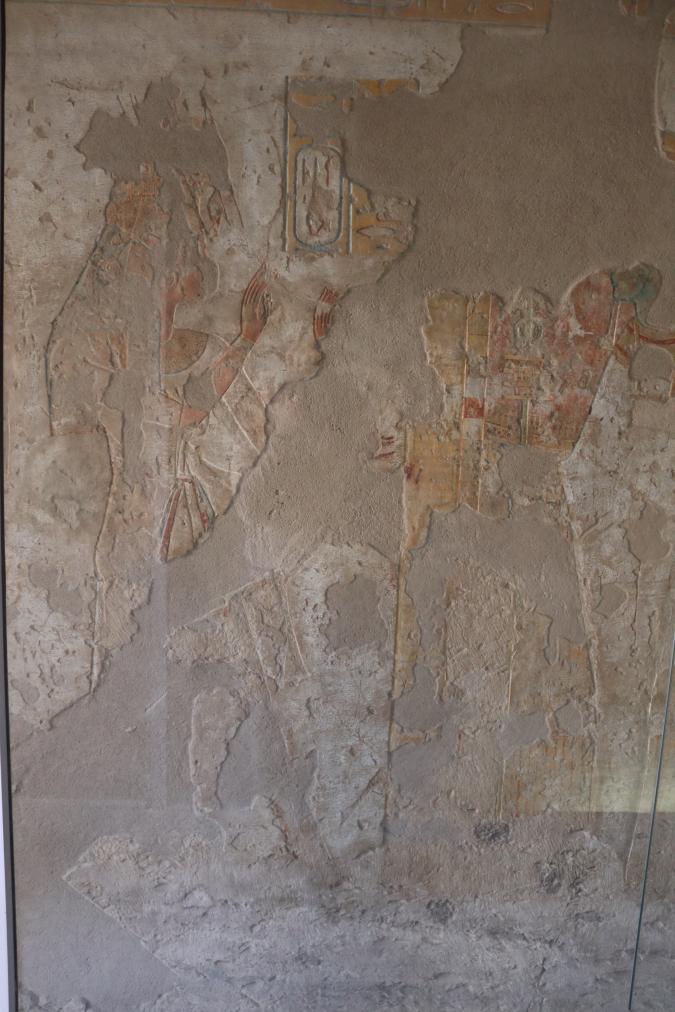
Queen in adoration before Ptah in shrine
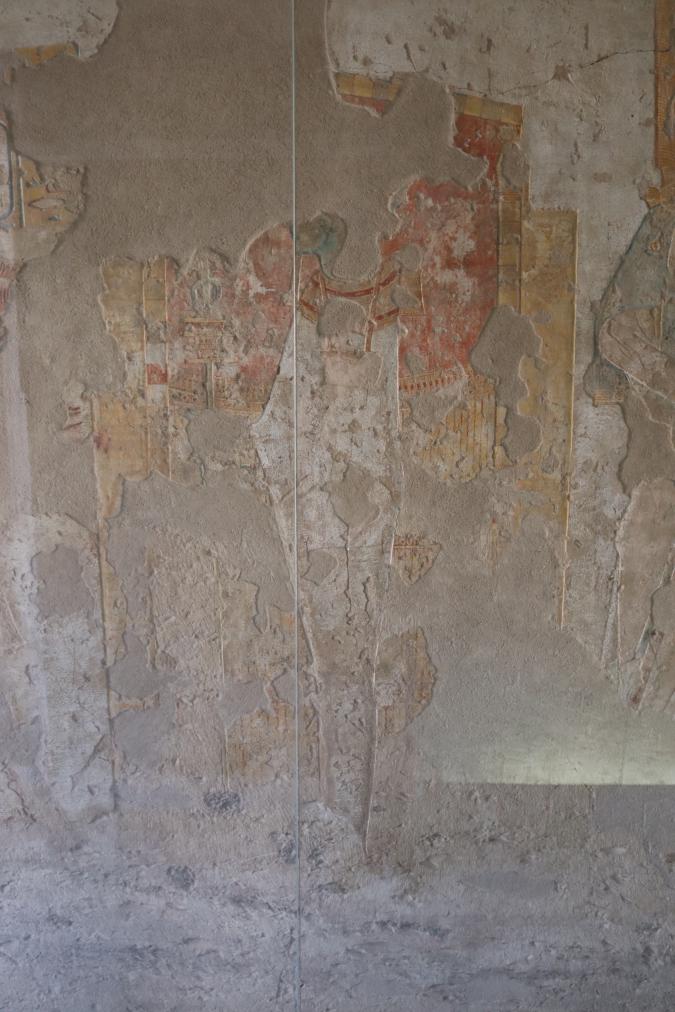
Ptah in shrine
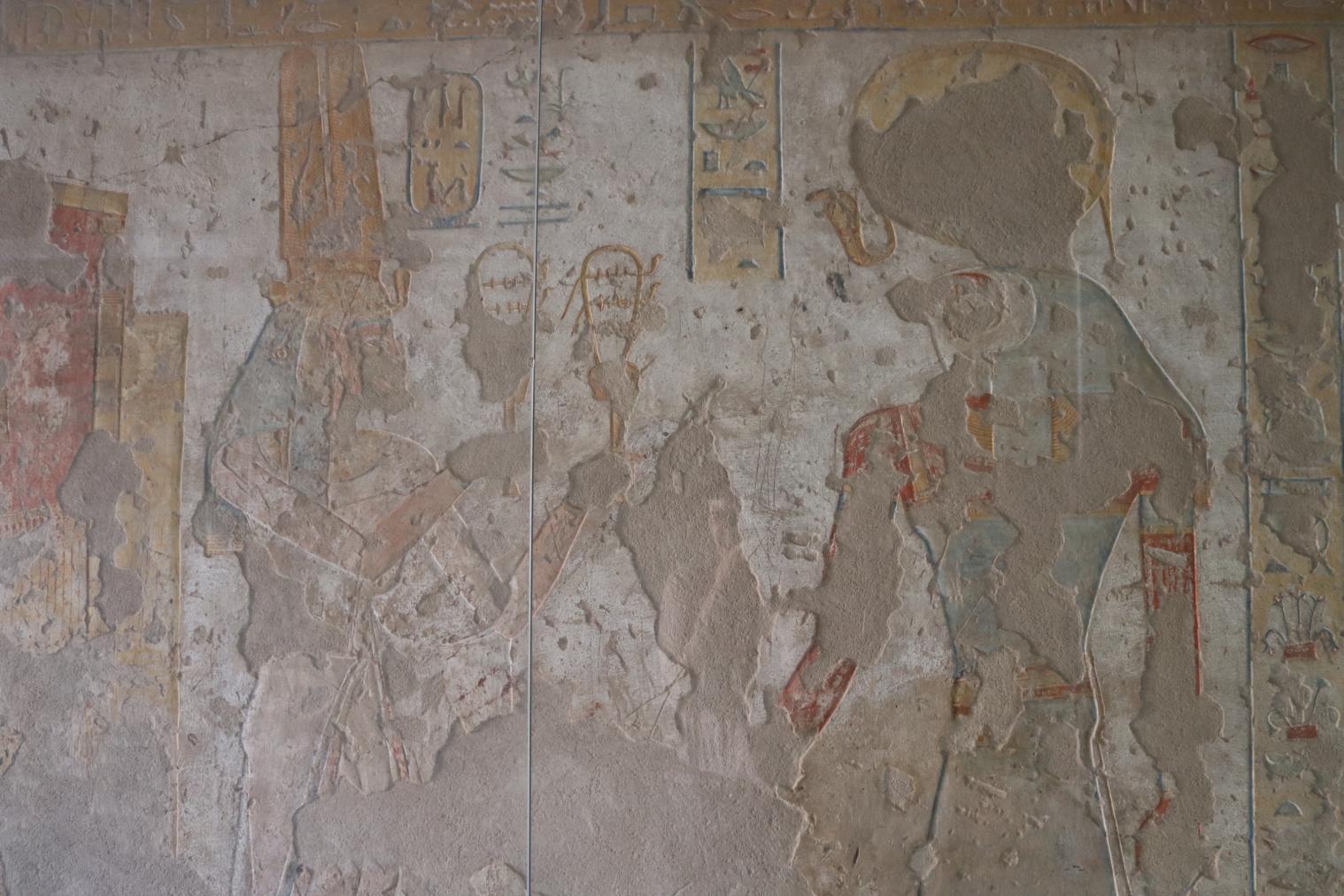
Queen shaking sistra before Re-Horakhty
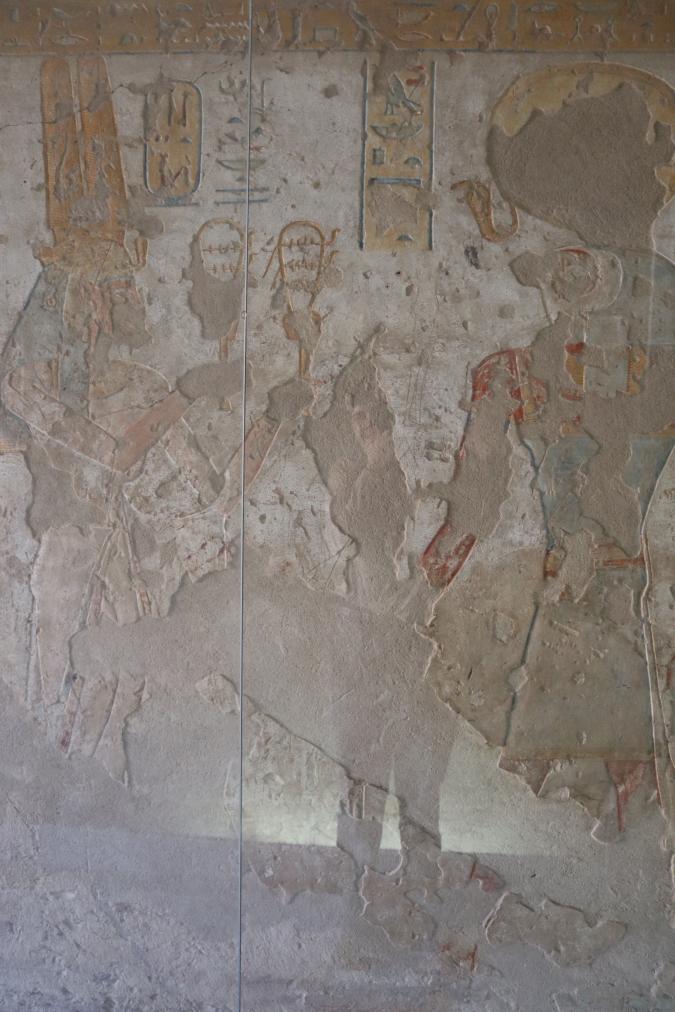
Queen shaking sistra before Re-Horakhty
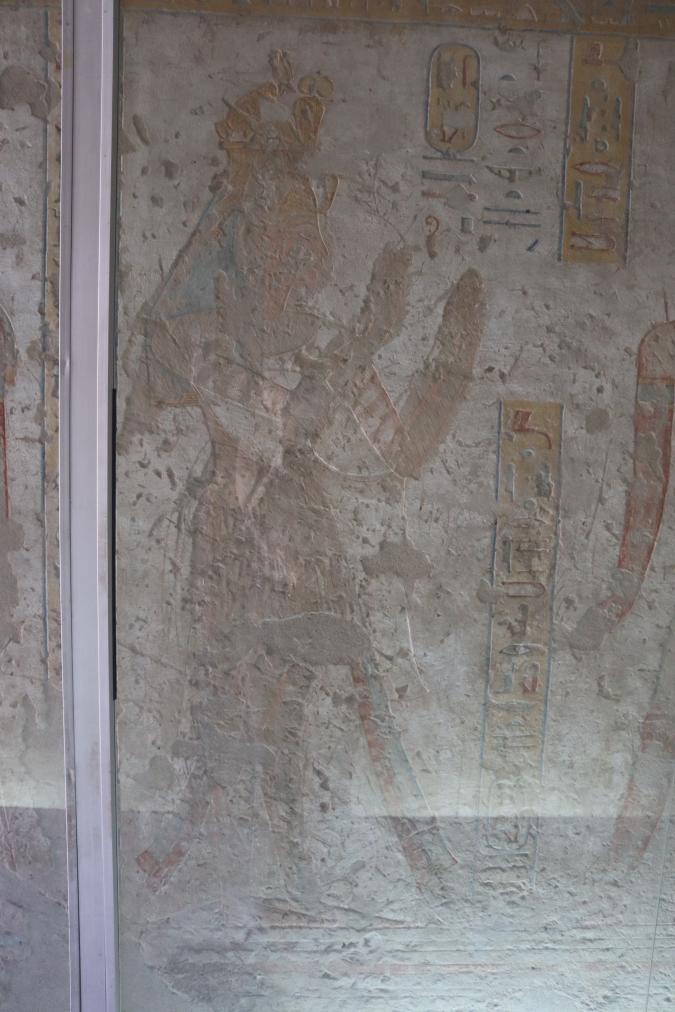
Queen in adoration before Imsety
Queen in adoration before Imsety
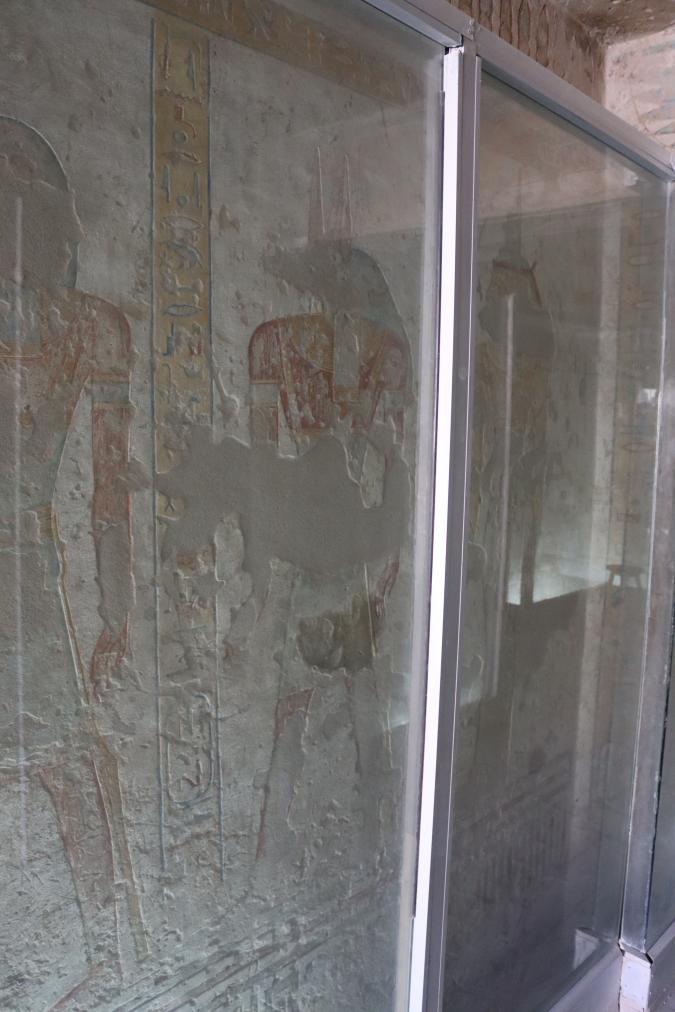
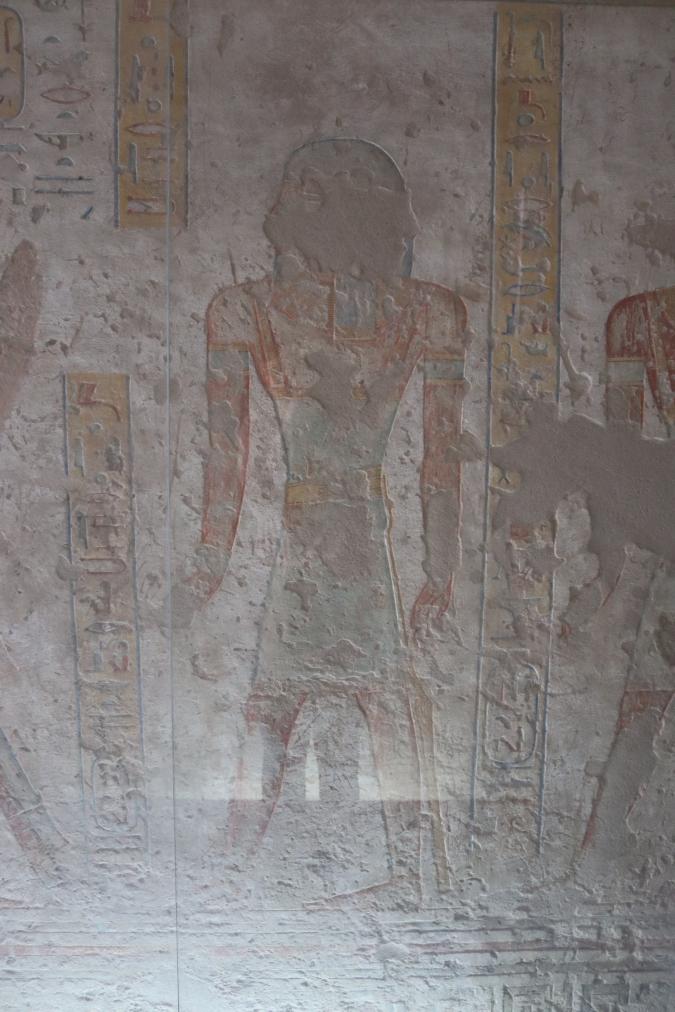
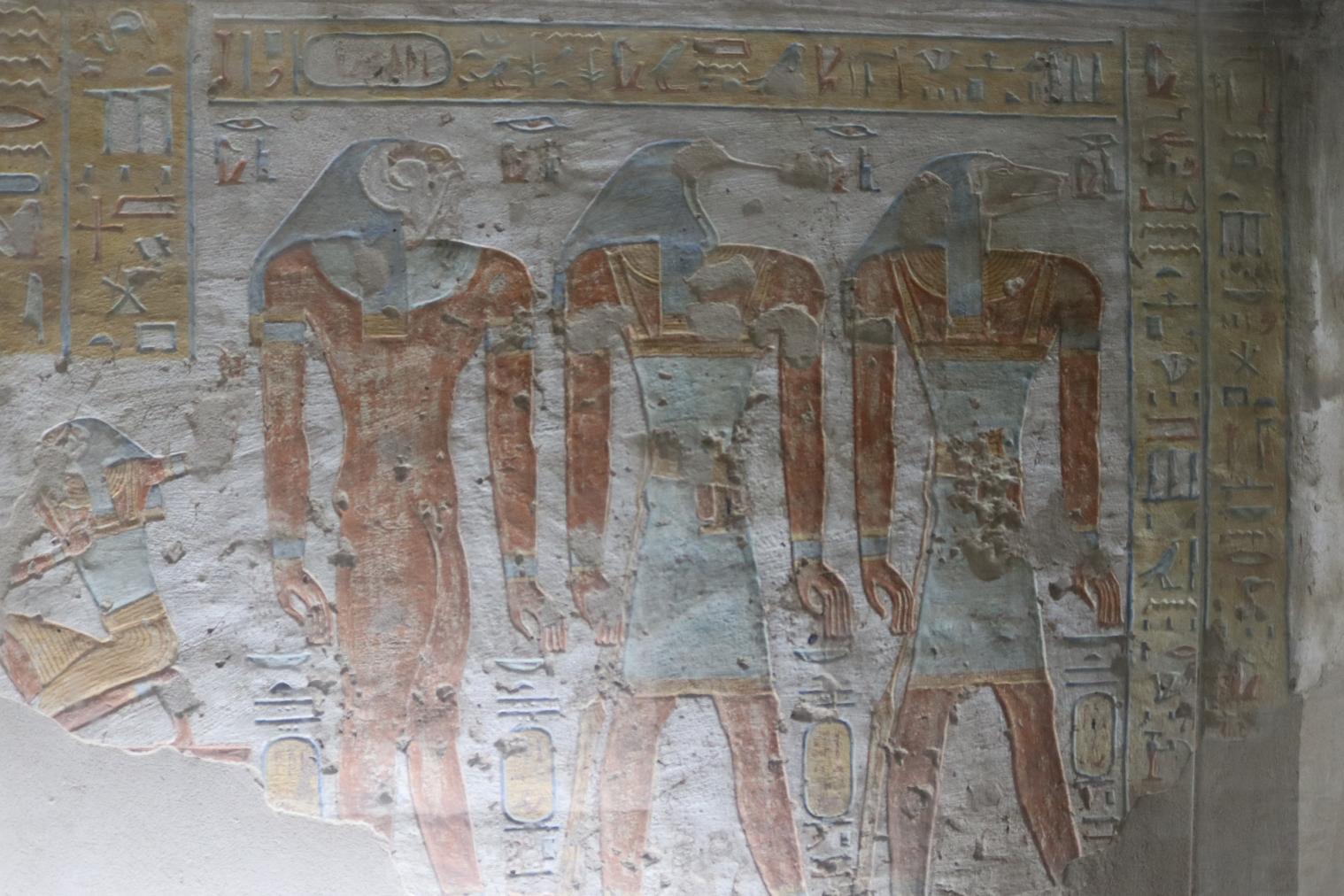
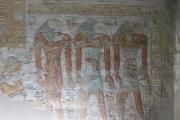
Imsety, Duamutef, and Isis
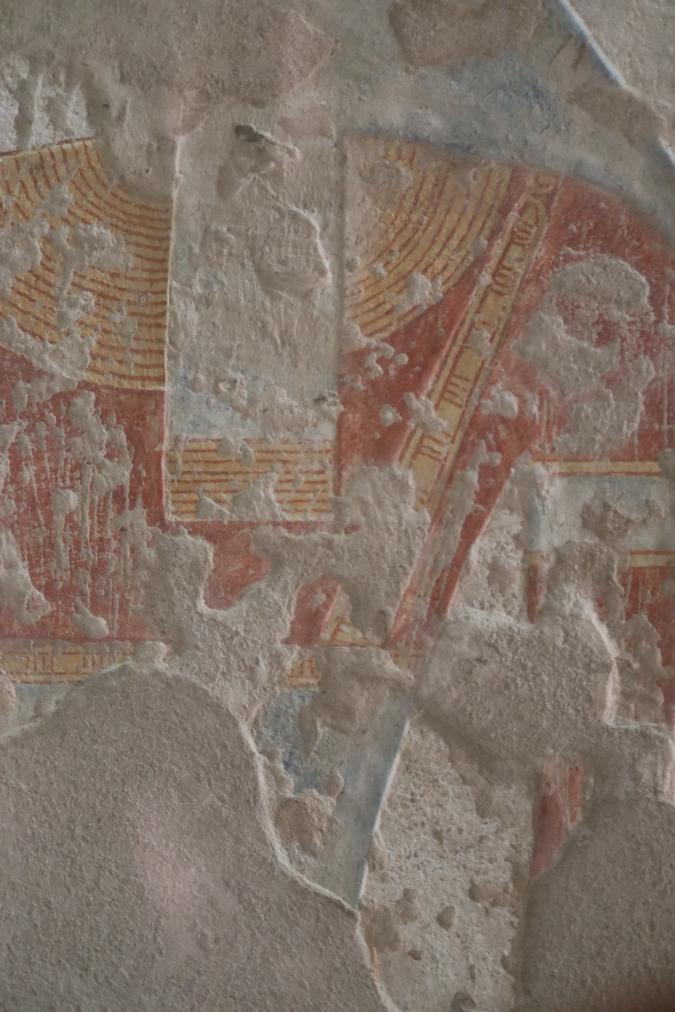
Duamutef (detail)
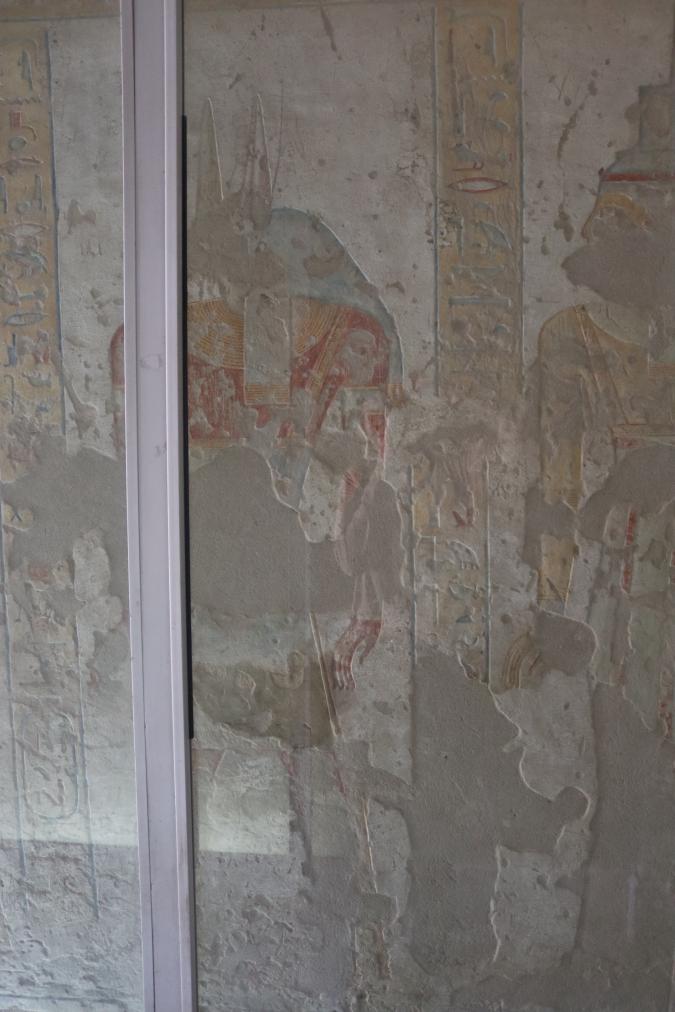
Duamutef and Isis
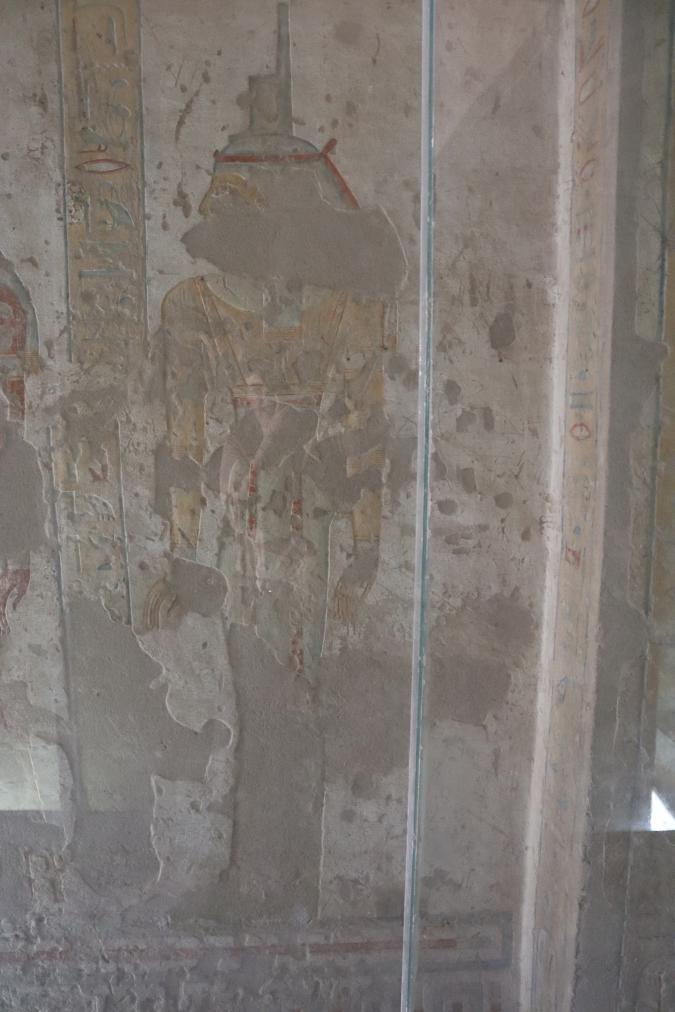
Isis
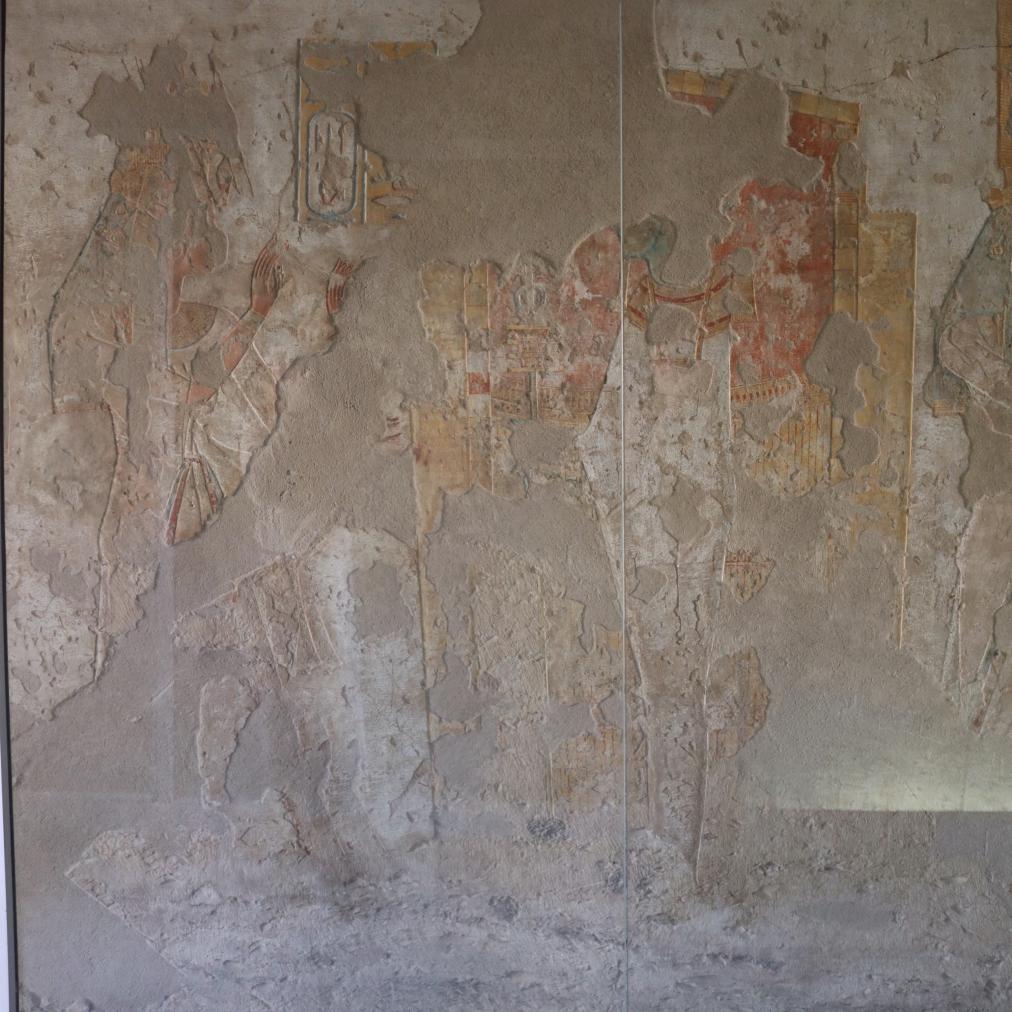
Queen in adoration before Ptah in Shrine
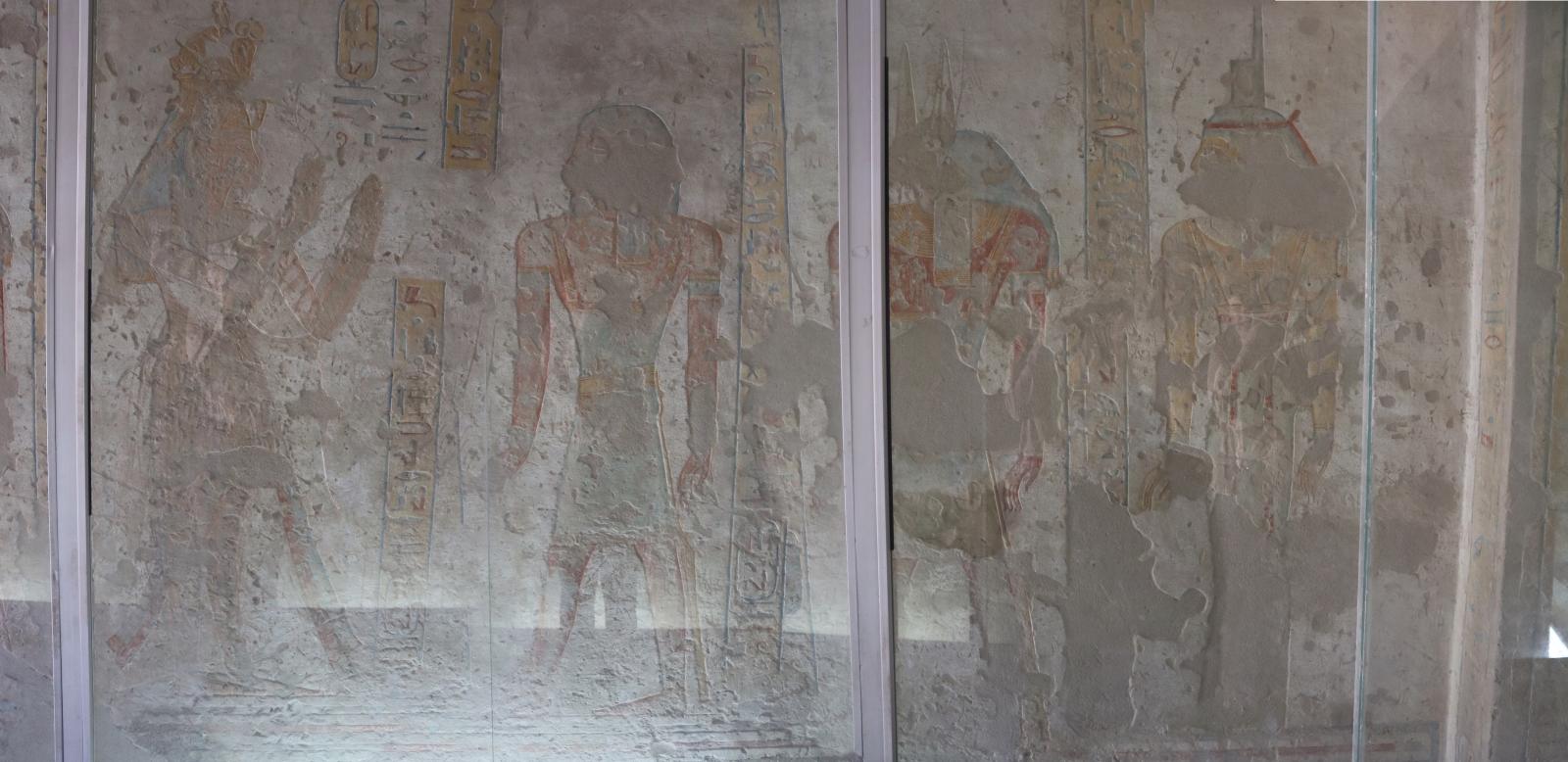
Queen in adoration before Imsety, Duamutef, and Isis
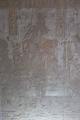
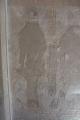
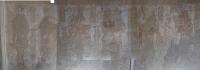
Gate C
See entire tombThis gate provides access to the burial chamber. The lintel is decorated with Behdet as a winged sun disk and the reveals and outer thicknesses contain texts. The figure of Neith is visible on the left inner thickness and Selkis on the right inner thickness.
Porter and Moss designation:
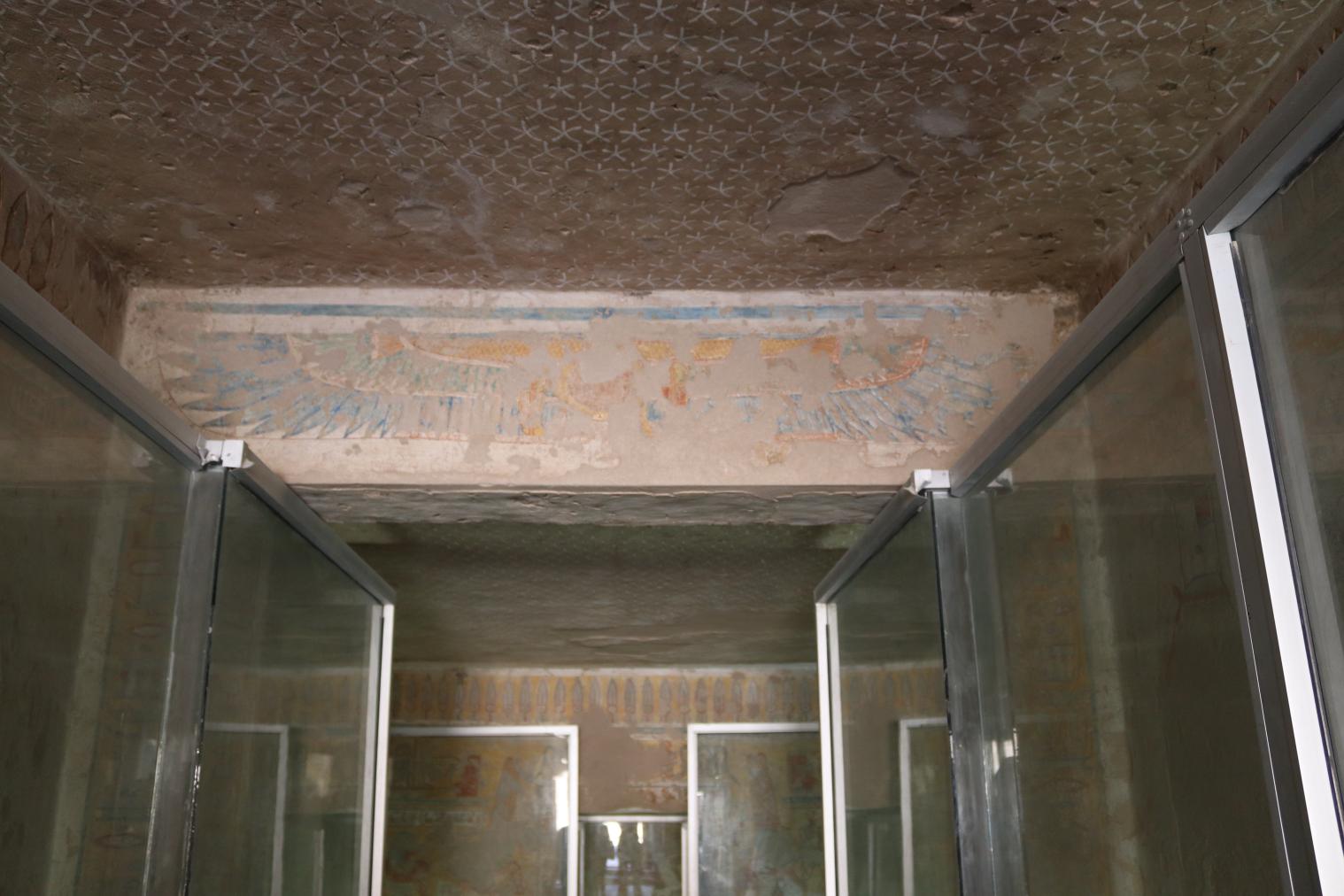
View of Gate C with winged sun disk on lintel and stars on ceiling
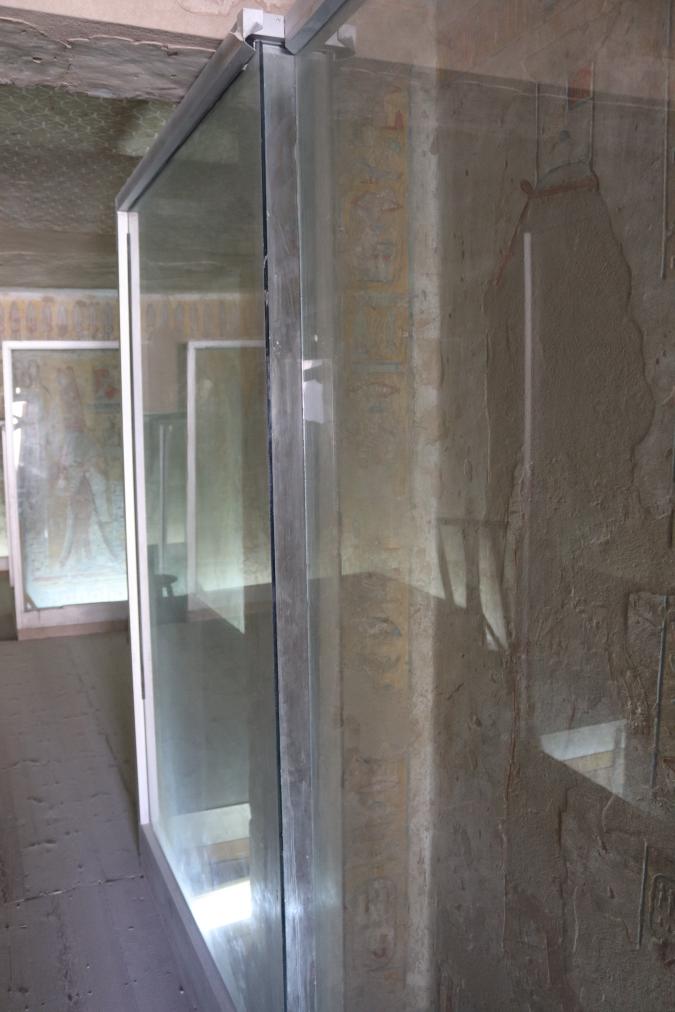
Titles of the Queen
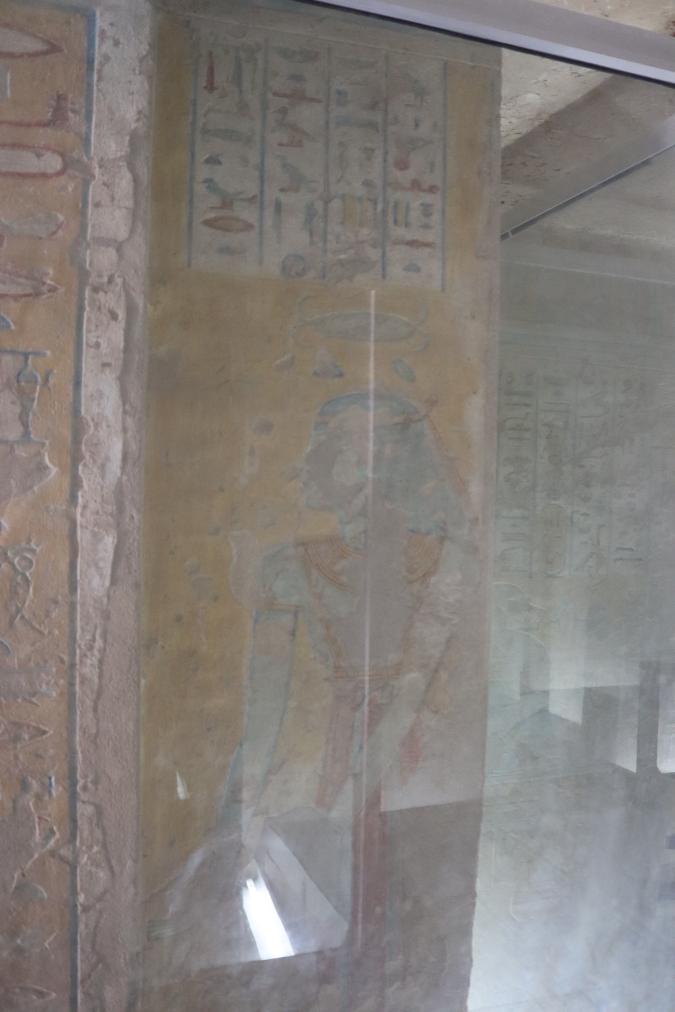
Neith
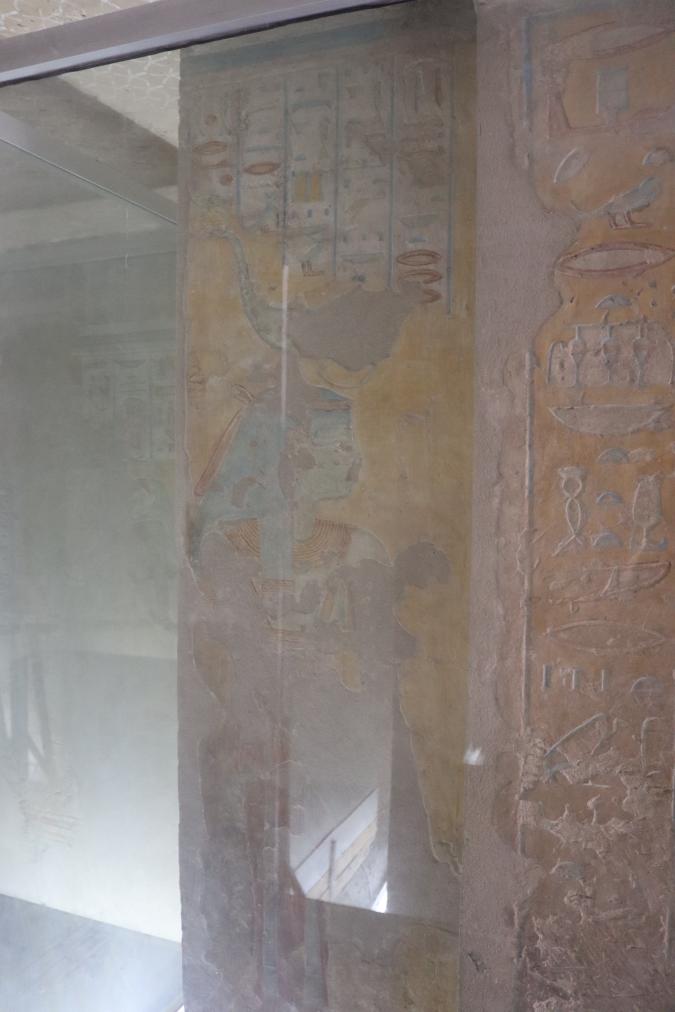
Serqet
Burial chamber C
See entire tombThis square chamber served as the burial chamber. Its has two side chambers, as well as a rear chamber. The ceiling is painted with white stars on a yellow background. A Kheker frieze runs along the upper parts of the walls and a Serekh facade frieze adorns the lower parts. The walls are decorated with spells from the Book of the Dead (145 and 146) and their placement share a striking similarity to those in Ramses III's burial chamber (KV 11), and the burial chambers of Sethherkhepshef (QV 43), Pareherunemef (QV 42), and Khaemwaset (QV 44). The southwest wall contains two scenes that mirror each other and show the queen offering to Hapy and Qebehsenuef (right) and Imsety and Duamutef (left). The walls are protected by glass barriers and lit by fluorescent lighting.
Chamber plan:
SquareRelationship to main tomb axis:
ParallelChamber layout:
Flat floor, no pillarsFloor:
One levelCeiling:
Flat
Porter and Moss designation:
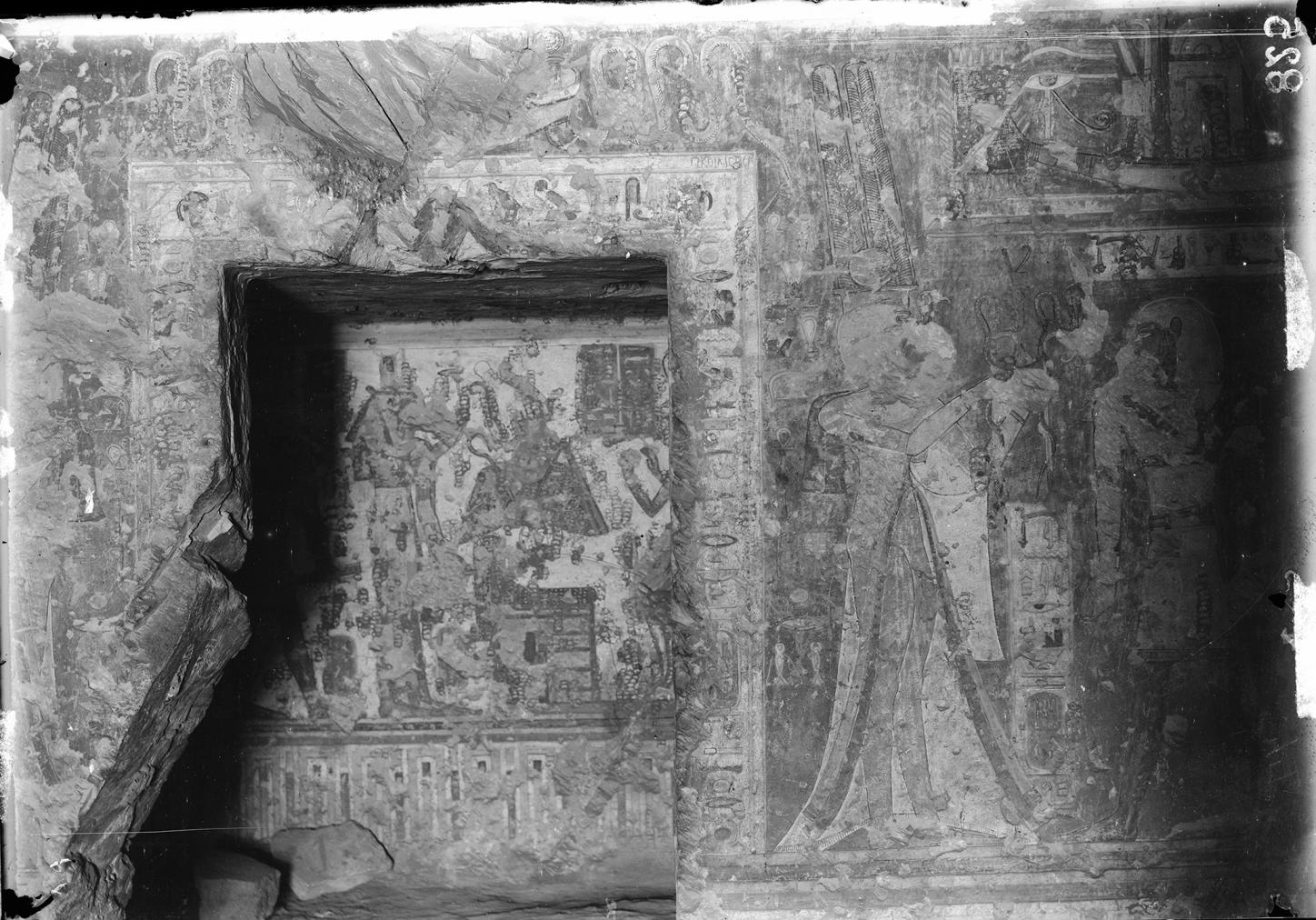
Interior of the tomb of Queen Tyti (QV 52) photographed from the back wall of the burial chamber that leads to the rear annex. Italian Archaeological Expedition excavations. Courtesy of the Egyptian Museum in Turin.
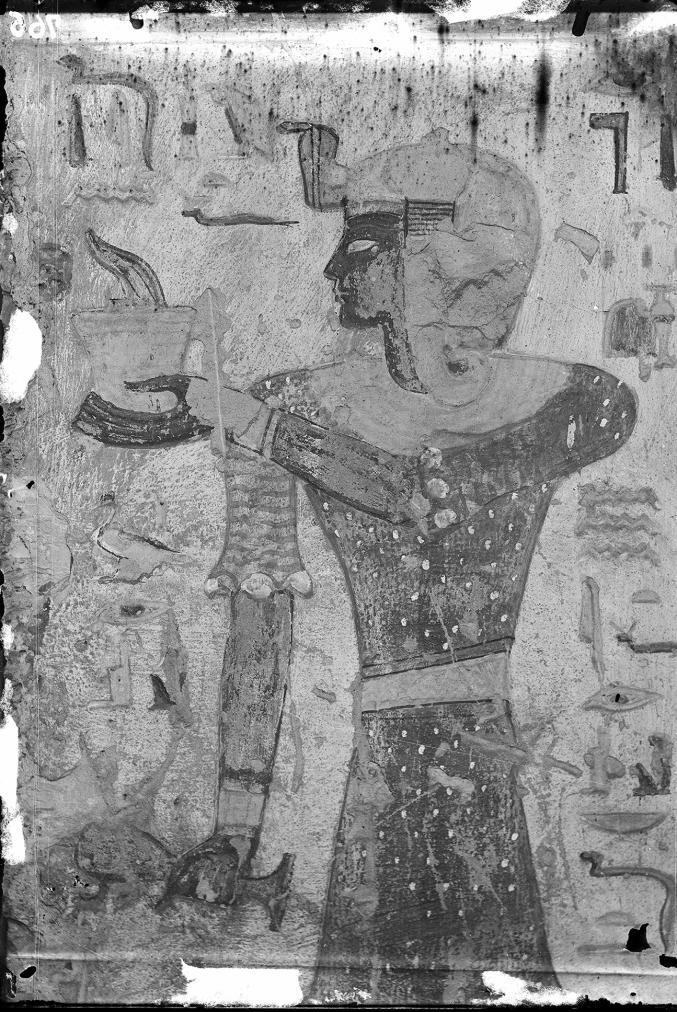
Wall to the left of the burial chamber's entrance from the tomb of Queen Tyti (QV 52) photographed during Ernesto Schiaparelli's excavations that depicts an Iwnmutef priest censing and libating. Italian Archaeological Expedition excavations. Courtesy of the Egyptian Museum in Turin.
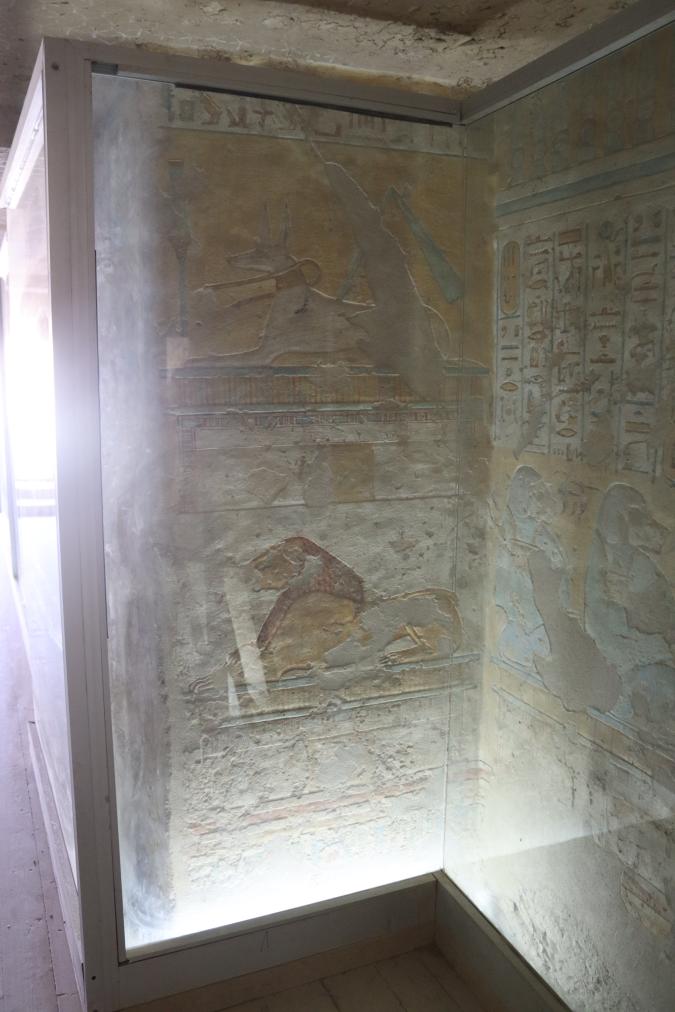
Jackal and lion atop chapels
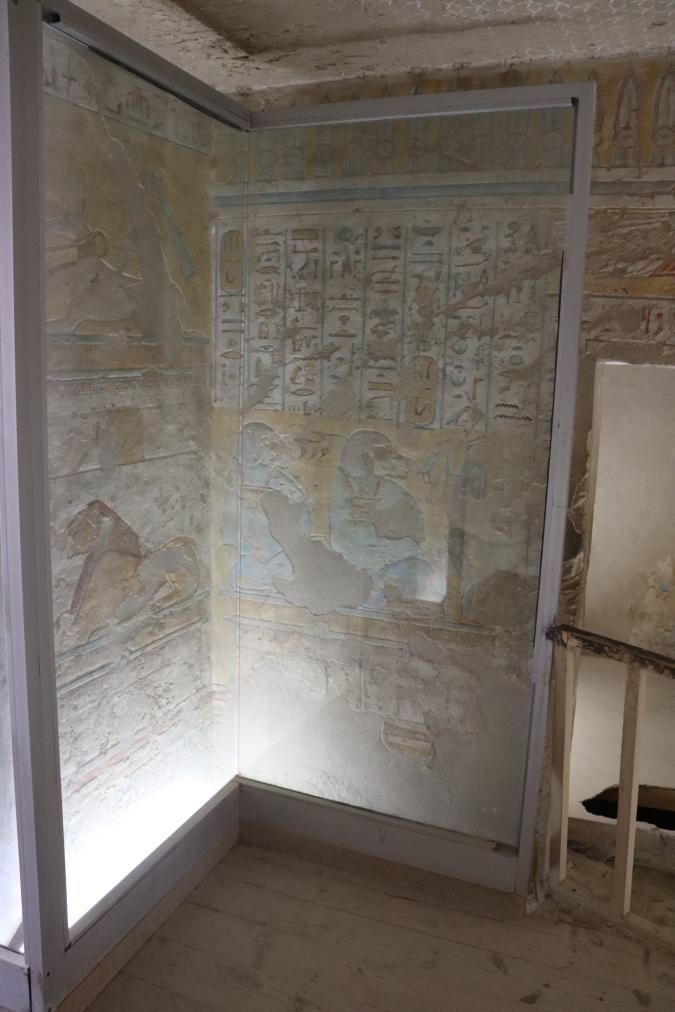
Book of the Dead, Spells 145 and 146
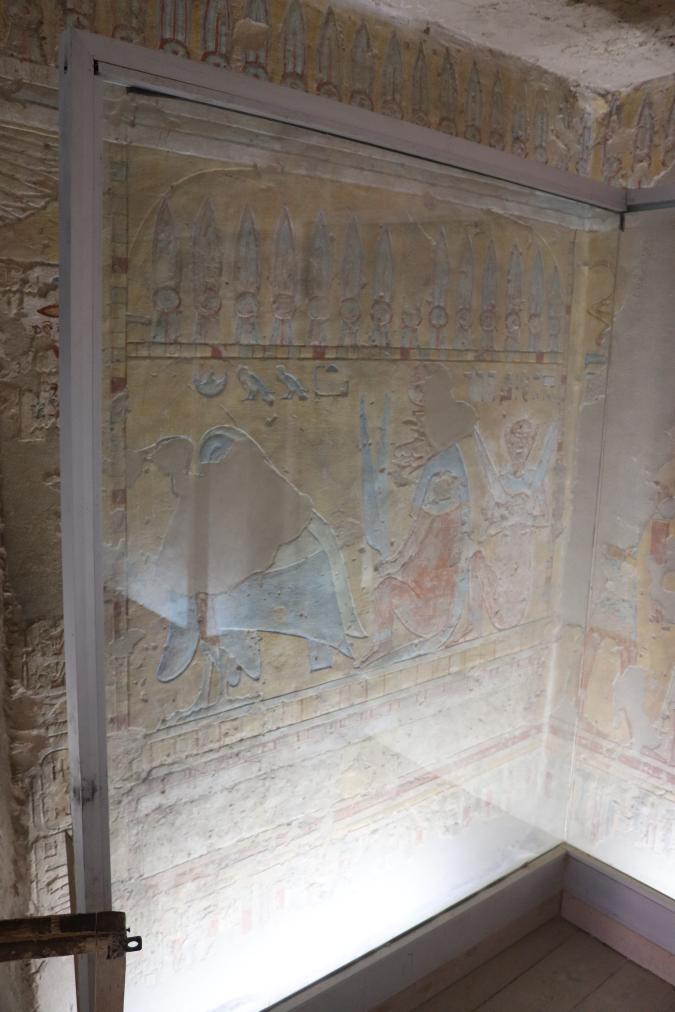
Book of the Dead, Spells 145 and 146
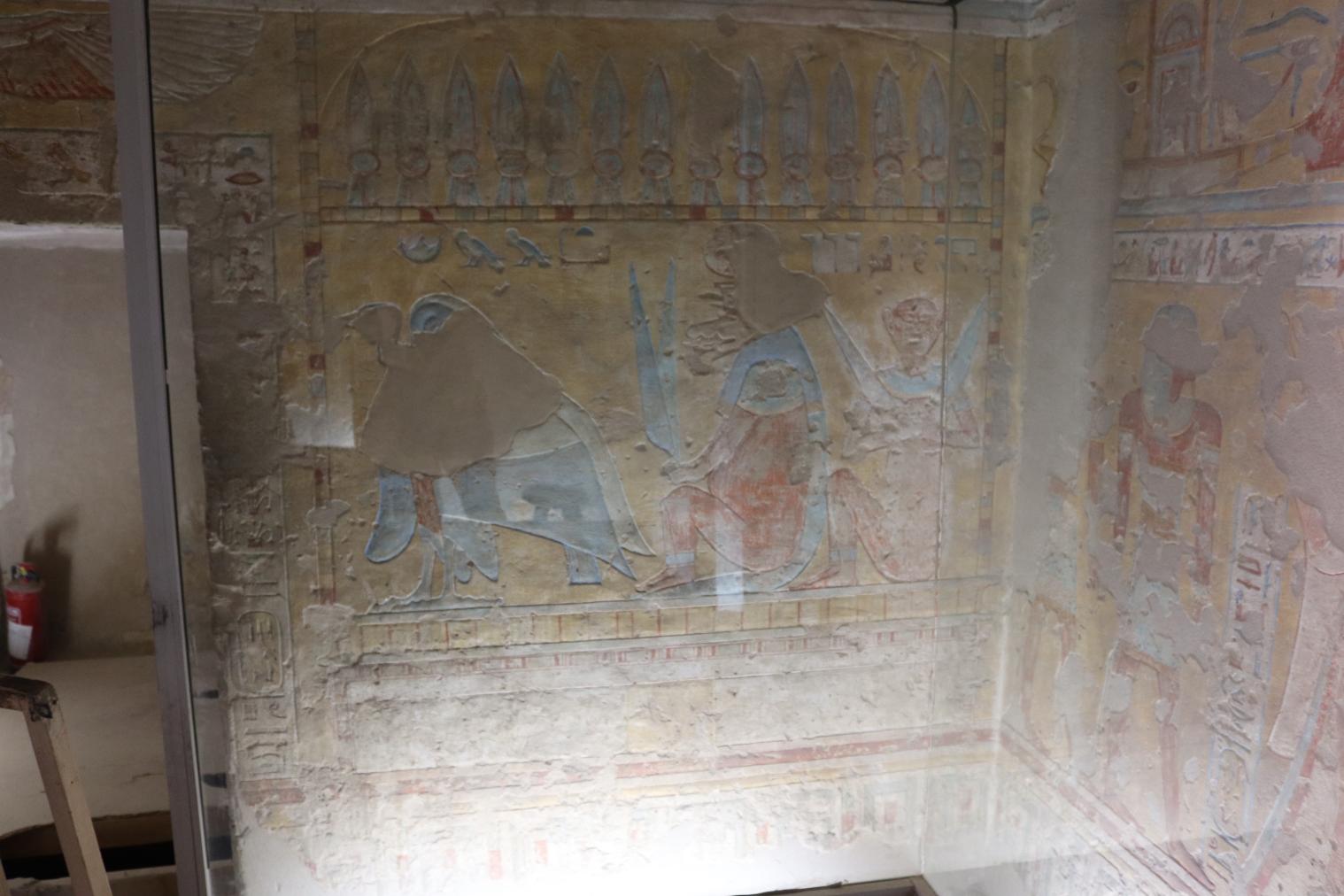
Book of the Dead, Spells 145 and 146
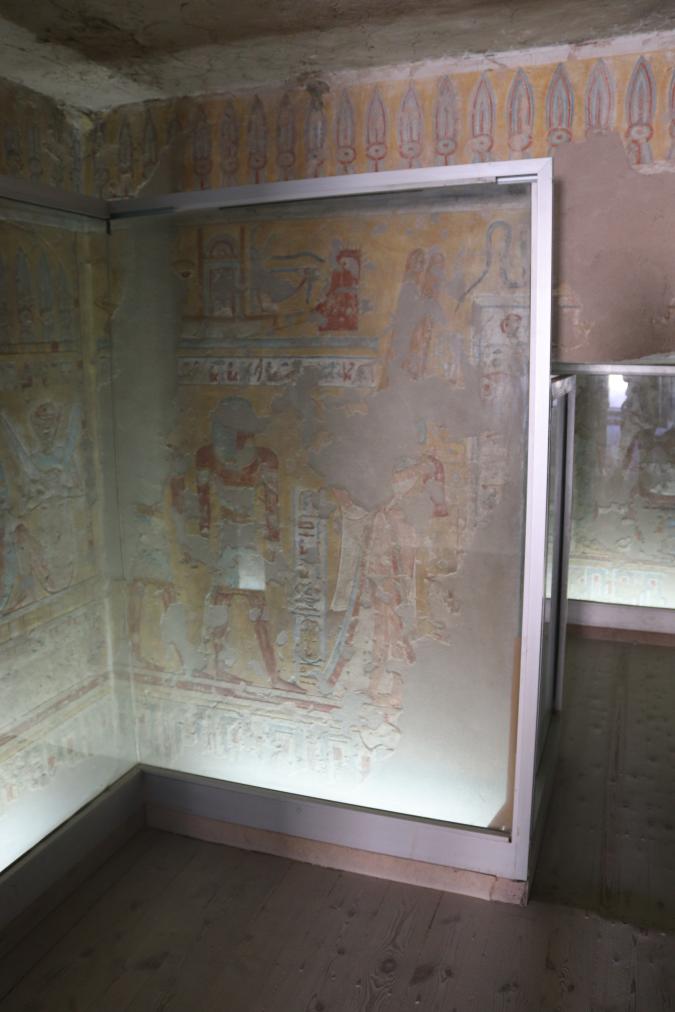
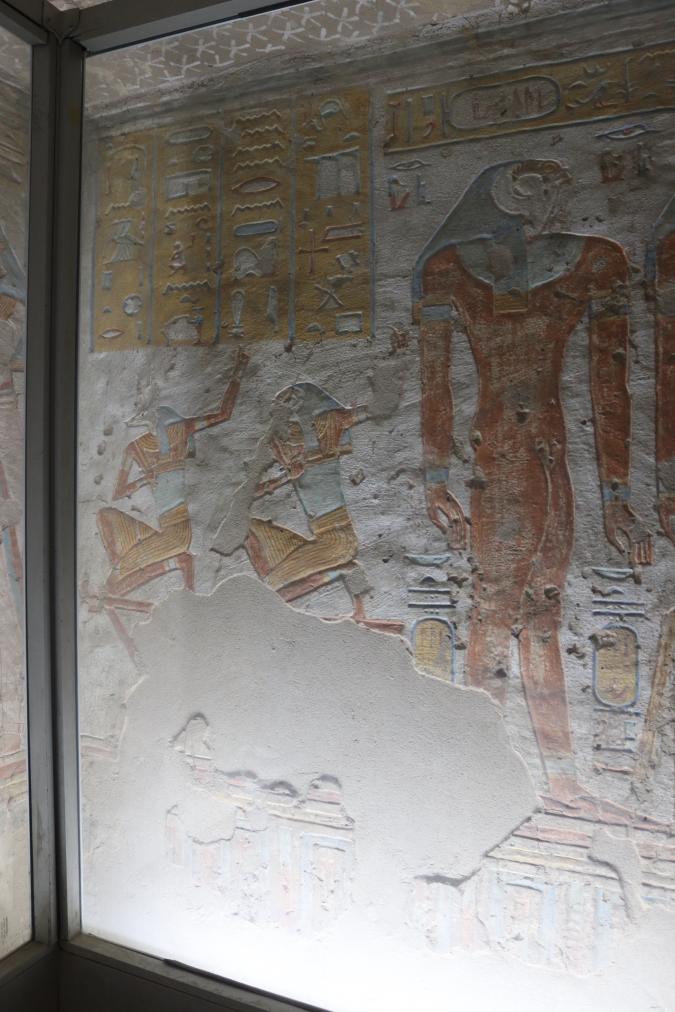
Upper register: solar bark; Lower register: Queen shaking sistra before Imsety and Duamutef
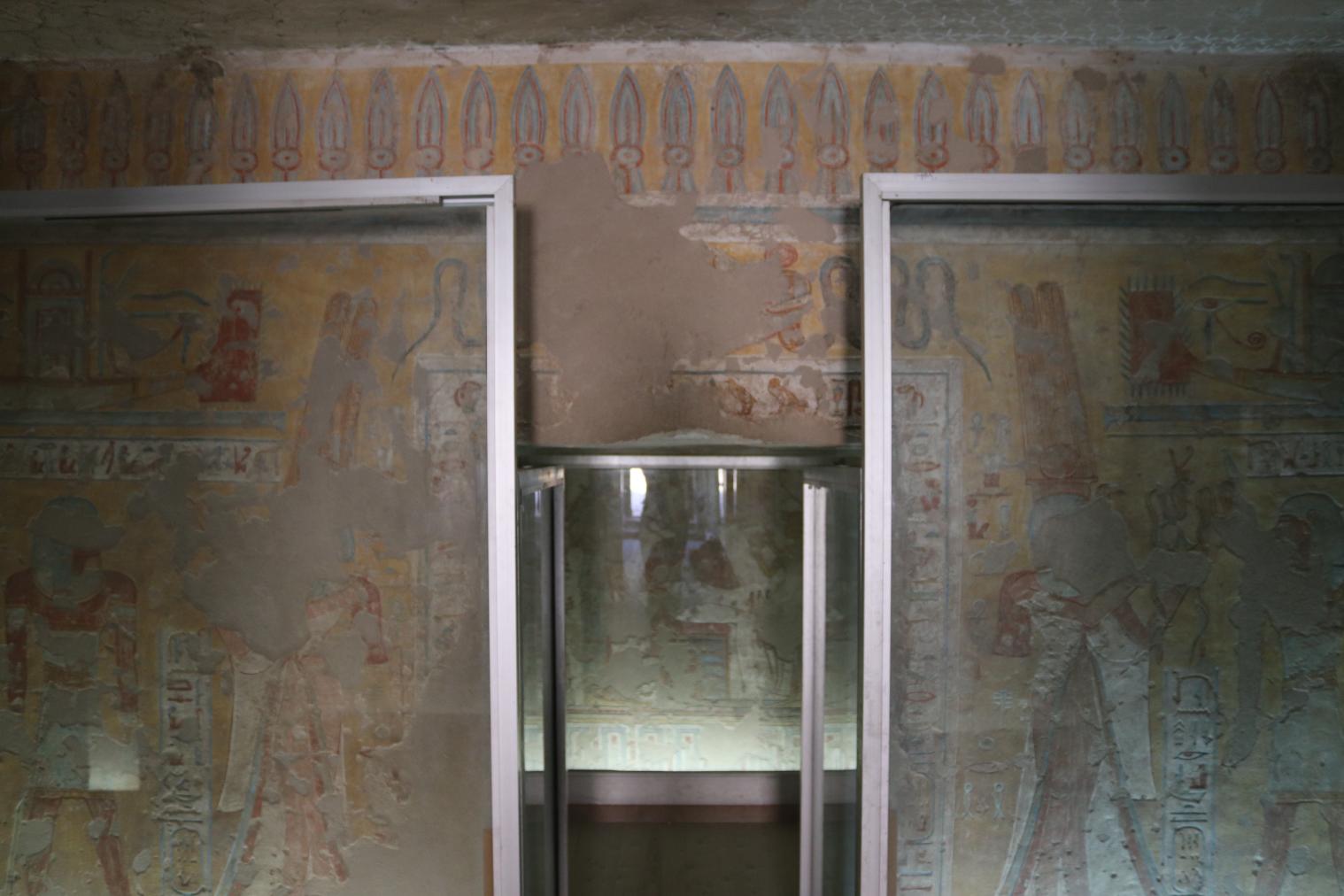
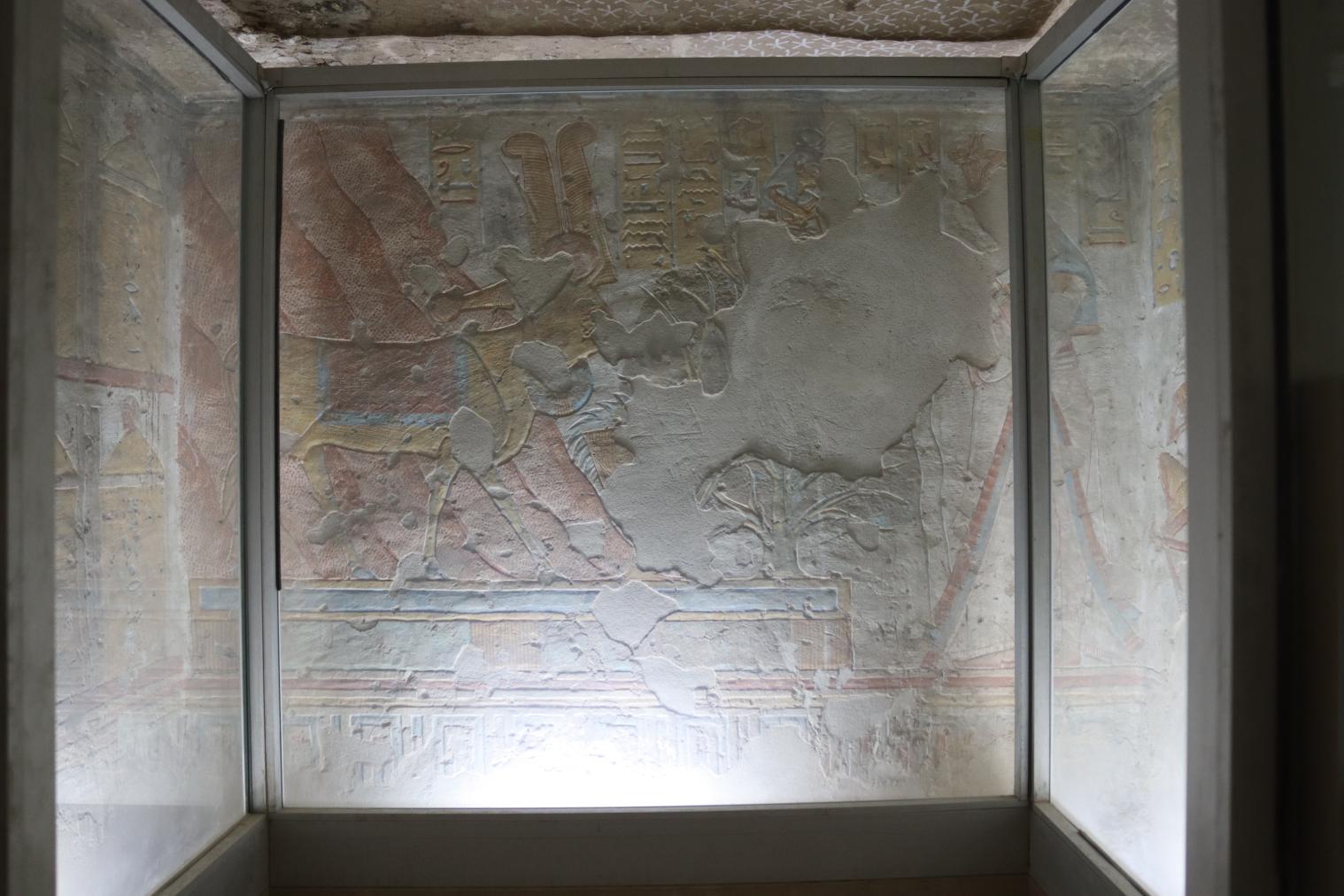
Right upper register: solar bark; right lower register: Queen offering Uraeus scepters to Hapy and Qebehsenuef. Left upper register: solar bark; left lower register: Queen shaking sistra before Imsety and Duamutef. View of Gate D.
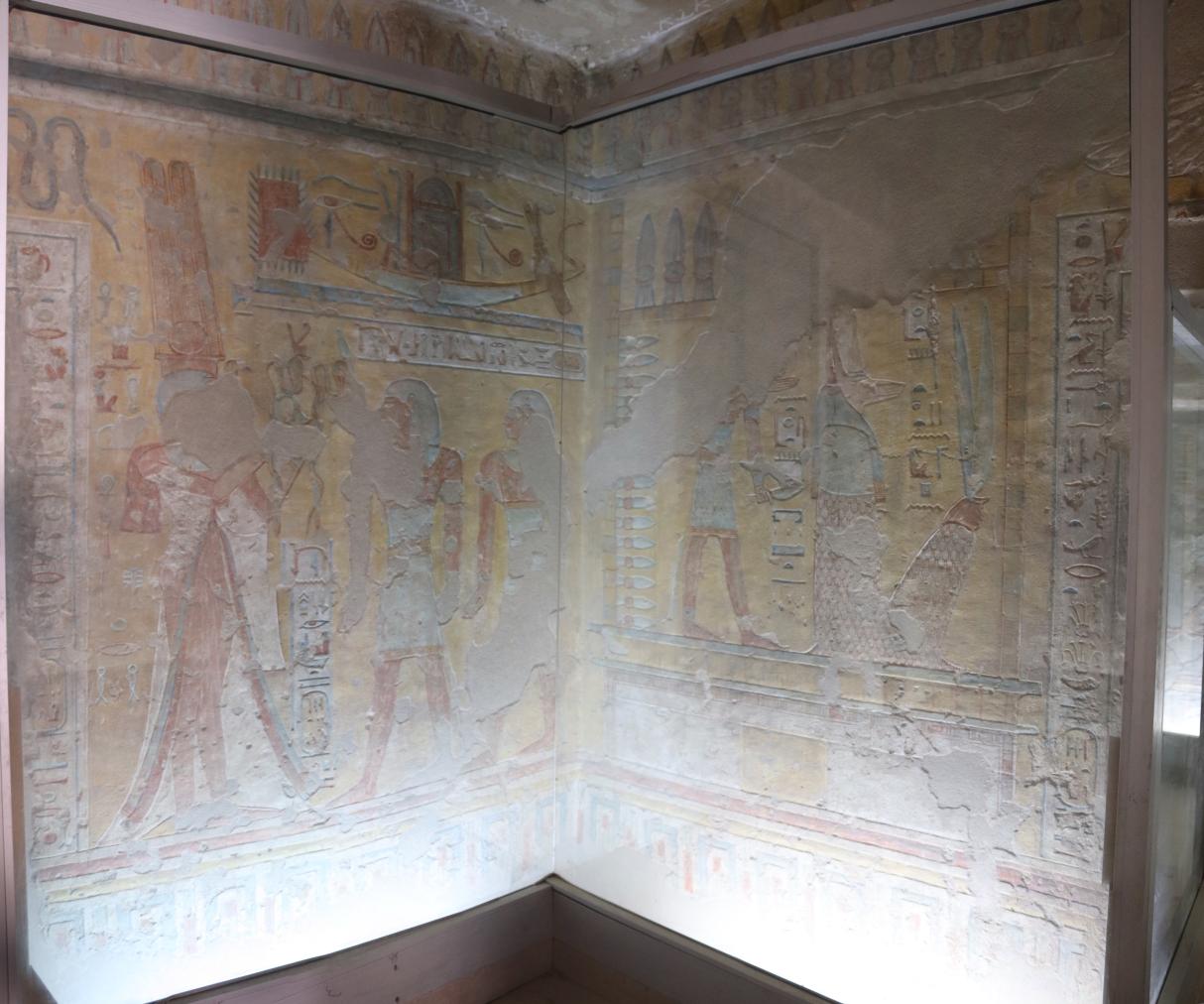
Upper register: solar bark; Lower register: Queen offering Uraeus scepters to Hapy and Qebehsenuef (left), and Book of the Dead, Spells 145 and 146 (right).
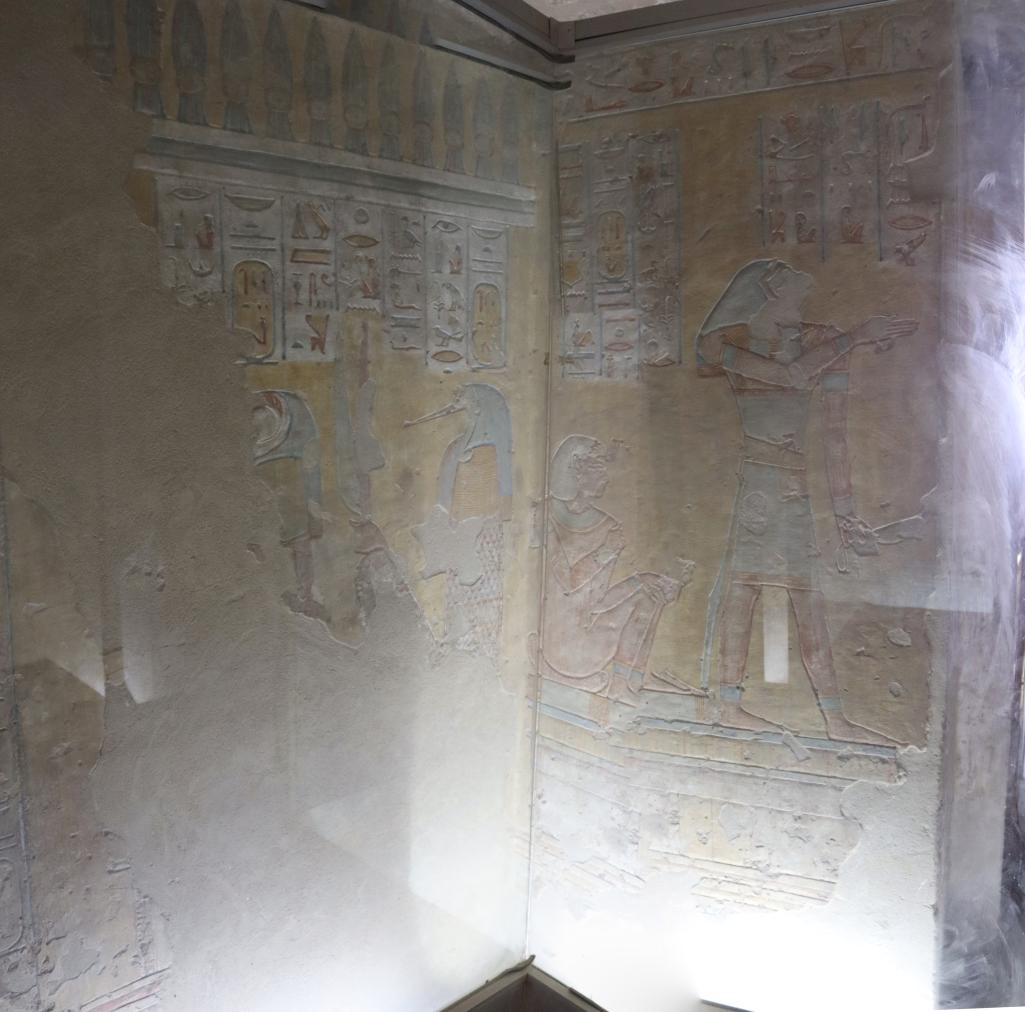
Book of the Dead, spells 145-146 (left) and Nebnerou and Hery-Ma'at (right)
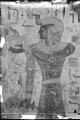
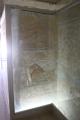
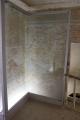
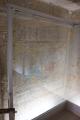
Gate Ca
See entire tombThis gate is cut into the southeast wall of the burial chamber and provides access to a small side chamber. The lintel and reveals are decorated with texts, while the thicknesses contain depictions of Anubis as a jackal. This gate is not protected by glass barriers.
Porter and Moss designation:
Side chamber Ca
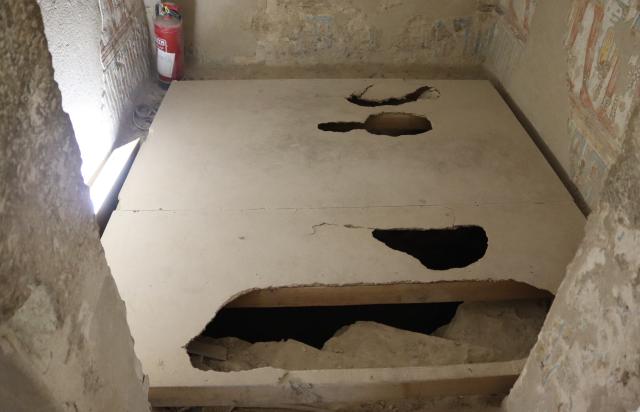
See entire tombThis small side chamber lies to the southeast of the burial chamber. A pit was cut into the floor and leads down to large rough and undecorated chamber. The latter was cut during a period of reuse and has been dated to the Third Intermediate Period. The scenes on the walls of this chamber focus on the Four Sons of Horus and are Osirian in theme. Uniquely, it also contains two images of the queen as a male Iwnmutef priest. The ceiling is painted with stars and a Serekh facade frieze adorns the lower parts of the walls. Although this chamber is not open to visitors and is closed by a wooden fence barrier, it is still visible from the burial chamber.
Porter and Moss designation:
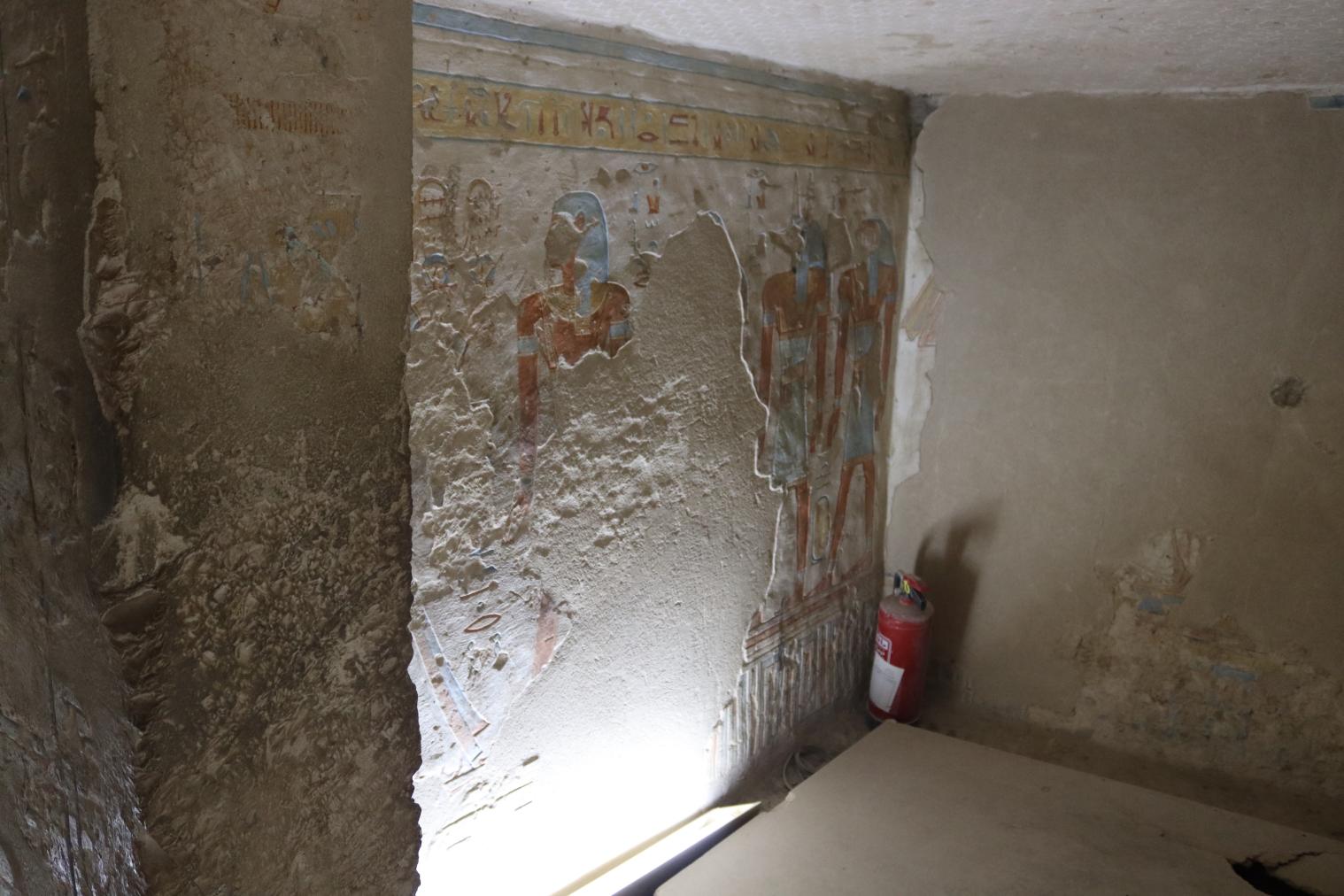
Queen before the Four Sons of Horus
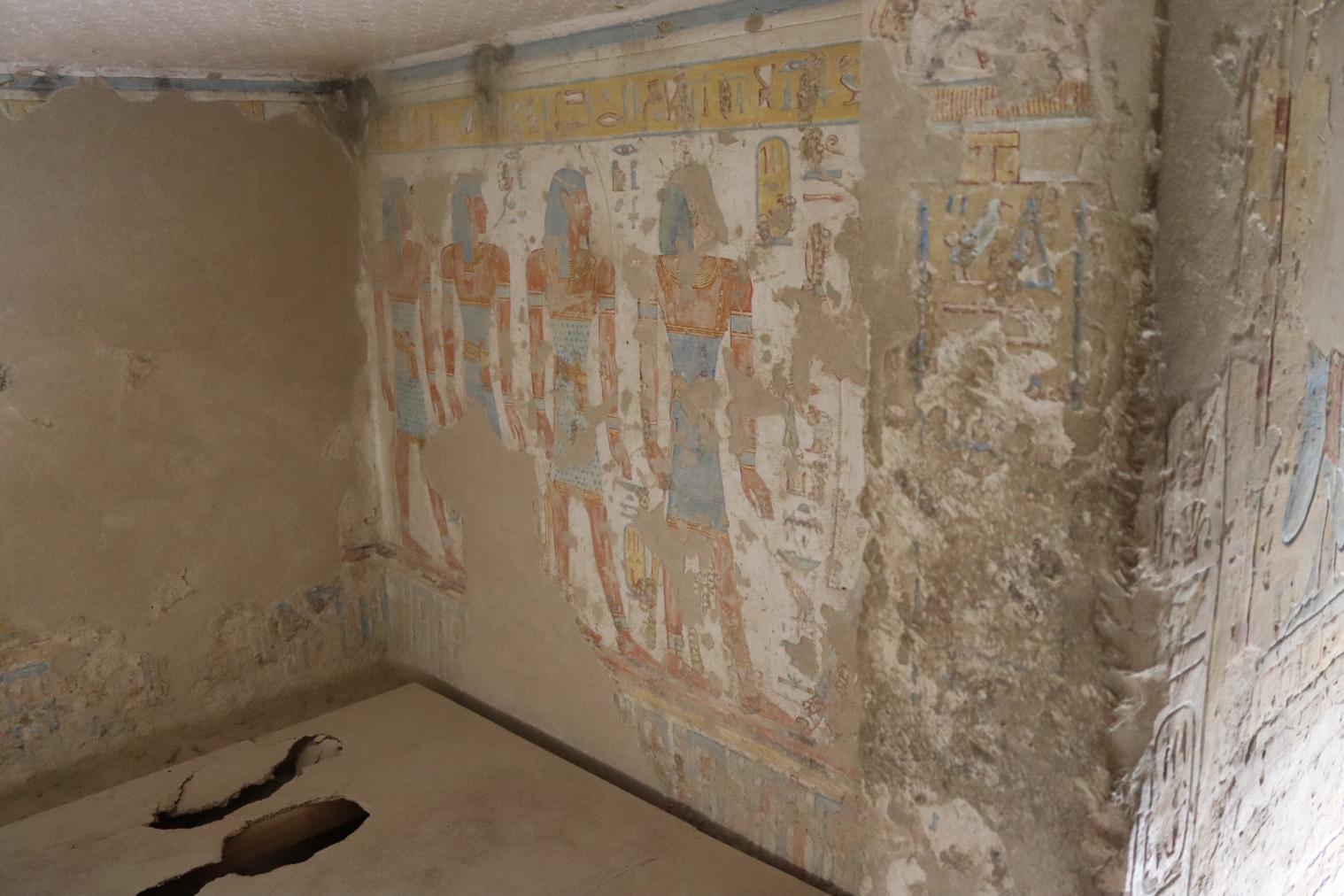
Queen before the Four Sons of Horus
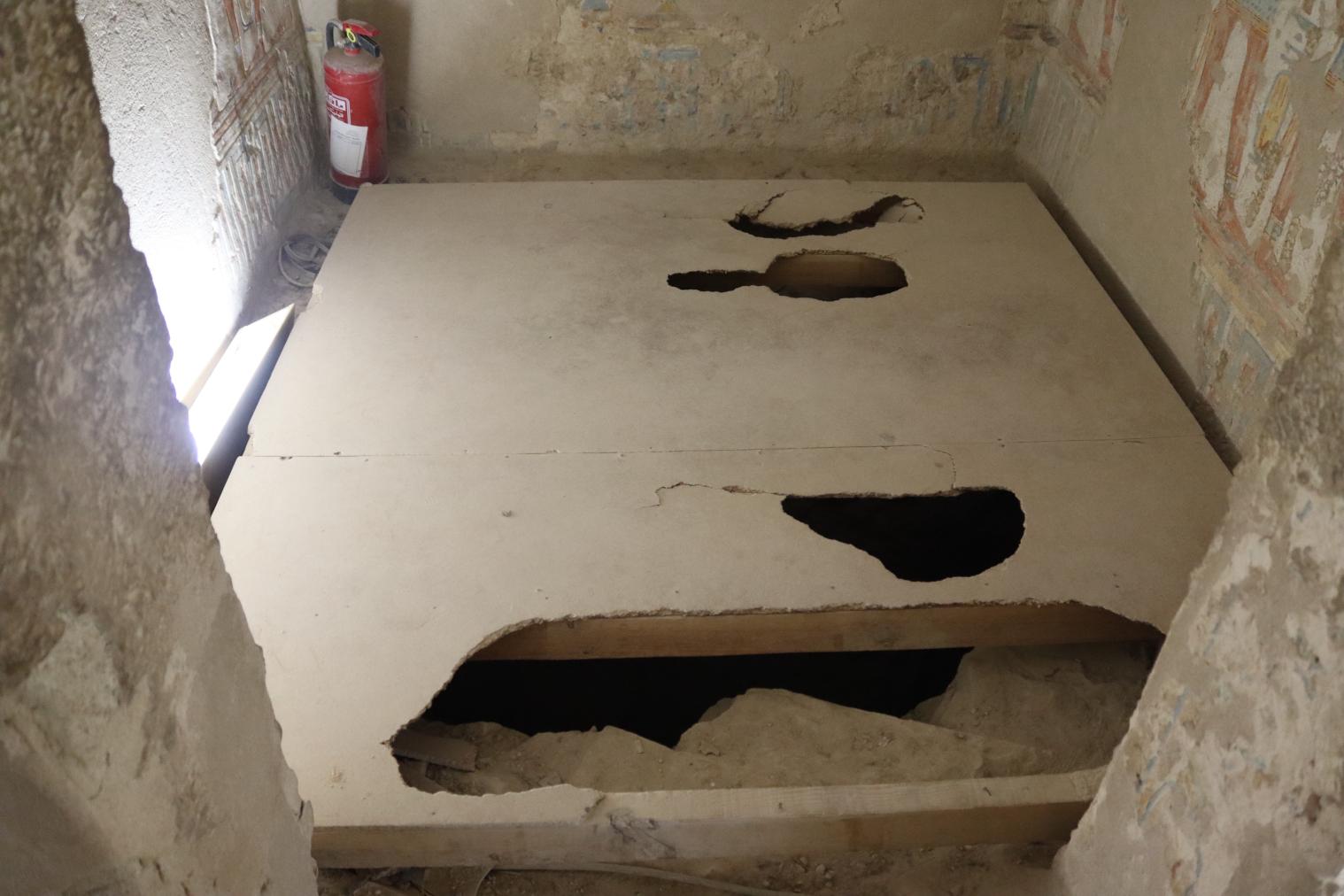
Covered pit in floor leading to Chamber Caa
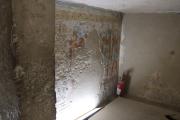
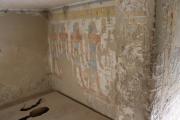
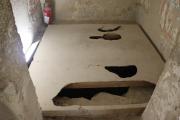
Chamber Caa
See entire tombA rough, undecorated chamber that was cut during a period of reuse. It has been dated to the Third Intermediate Period.
Gate Cb
See entire tombThis gate is cut into the northwest wall of the burial chamber and provides access to a small side chamber. As with Gate Ca, the lintel and reveals are decorated with texts, while the thicknesses contain images of Anubis as a jackal.
Porter and Moss designation:
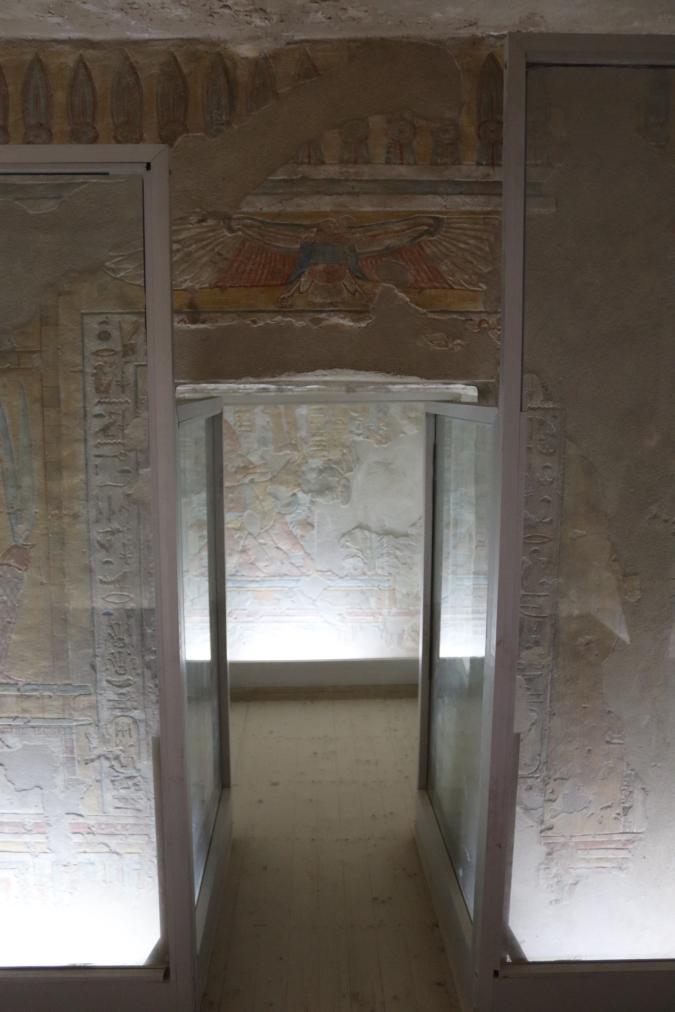
Gate Cb with winged vulture on lintel
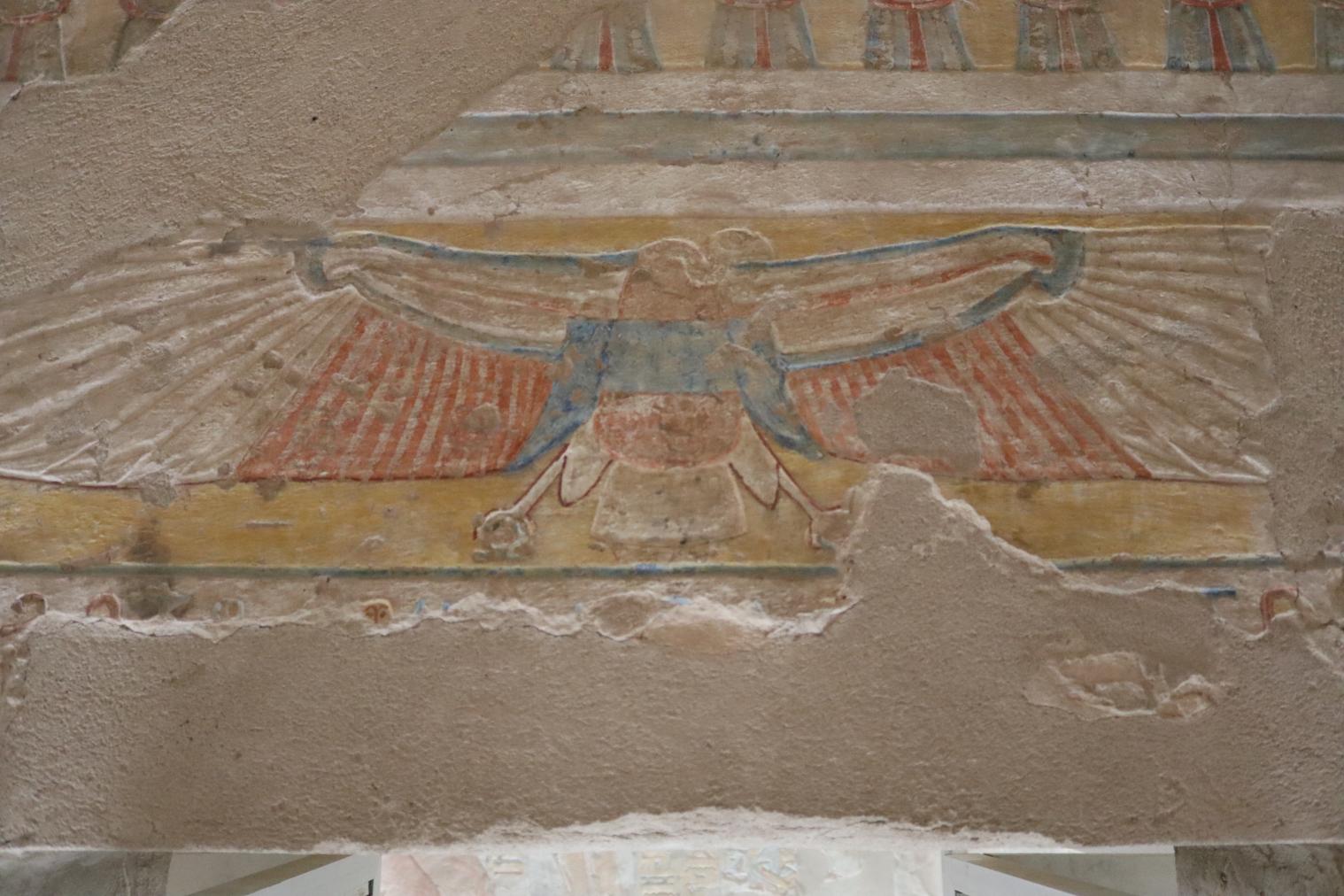
Gate Cb with winged vulture on lintel (detail)
Side chamber Cb
See entire tombThis small side chamber lies to the northwest of the burial chamber. Its iconography focuses on the queen's transformation and rebirth. The principal scene is on the rear wall (northwest) and depicts the queen receiving water from the tree goddess and being received by Hathor as a cow emerging from the western mountain. As with Side Chamber Ca, there are unique portraits of the queen as a male. However, in this chamber she is shown as Horus-Iwnmutef. A Serekh facade frieze adorns the lower parts of the walls and the ceiling is painted with white stars. The walls are protected by glass barriers and lit by fluorescent lighting.
Porter and Moss designation:
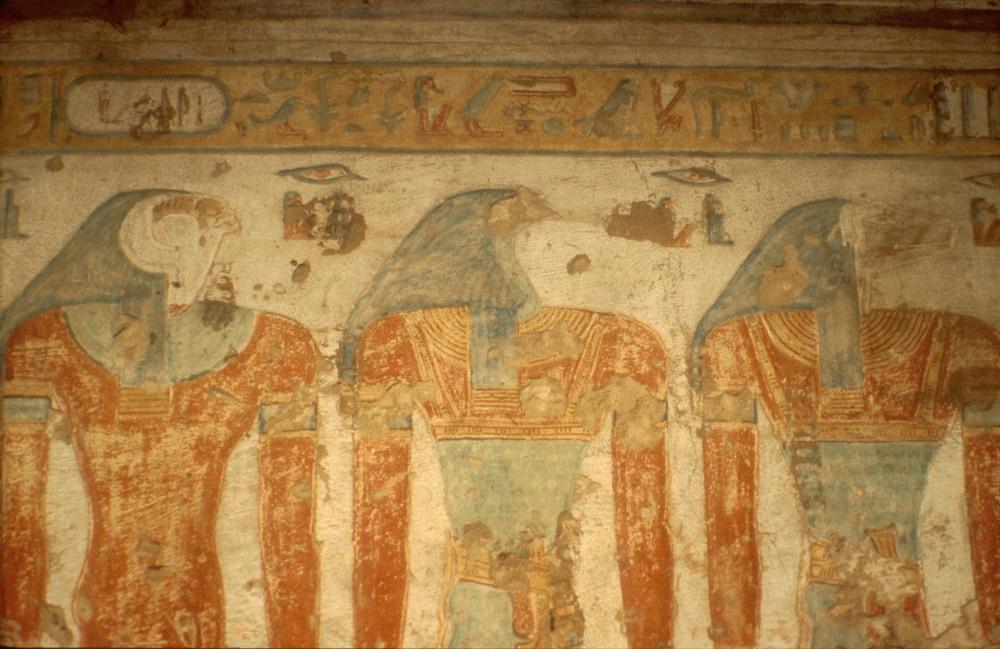
Depiction of three deities in the side chamber of QV52
Eastern annex of the tomb of Queen Tyti (QV 52) photographed during Ernesto Schiaparelli's excavations that depictsHathor in her bovine form (left), as well as in her form as a tree goddess (right). Italian Archaeological Expedition excavations. Courtesy of the Egyptian Museum in Turin.
Hathor emerging from western mountain and Tree goddess offering to Queen
Souls of Pe and Nekhen performing the Henu gesture and guardian deity
Three guardian deities
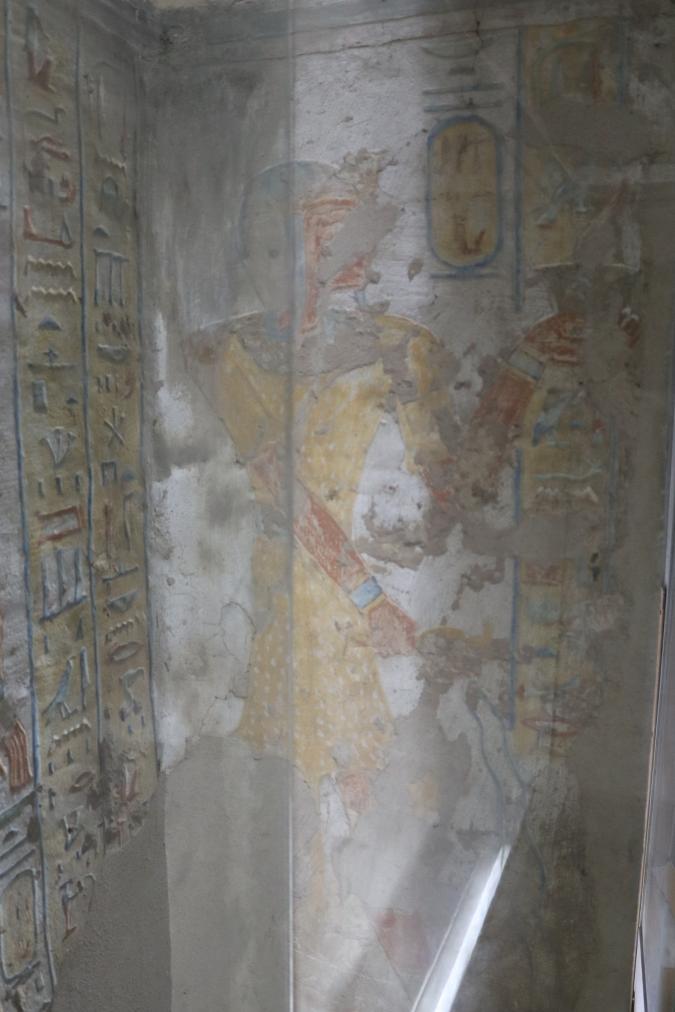
Queen as Horus-Iwnmutef
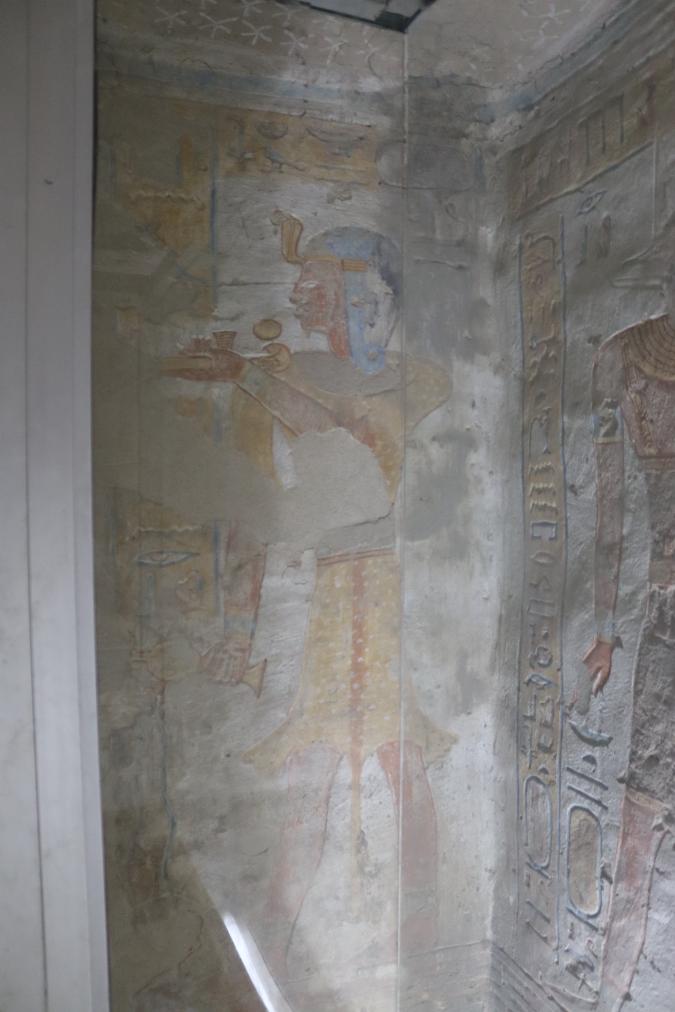
Queen as Horus-Iwnmutef
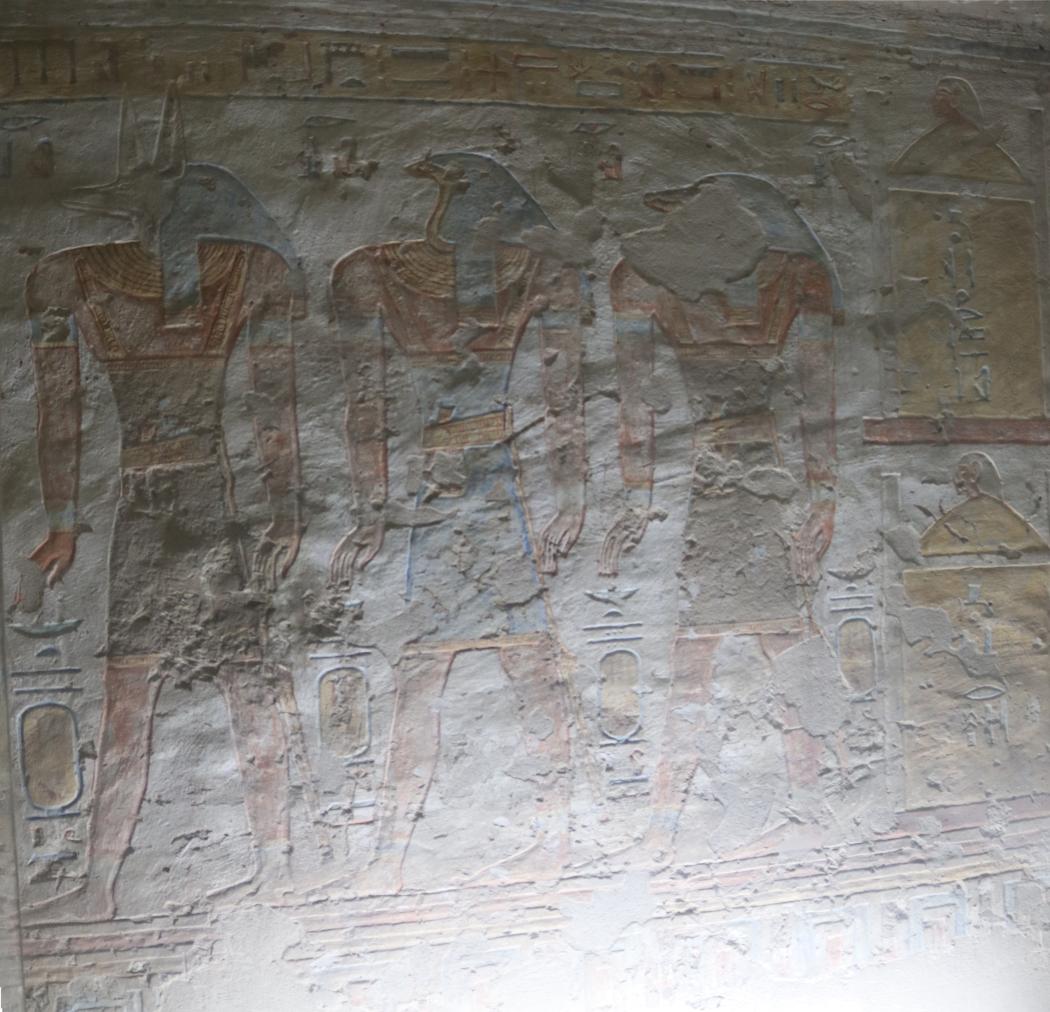
Three guardian deities and canopic chests
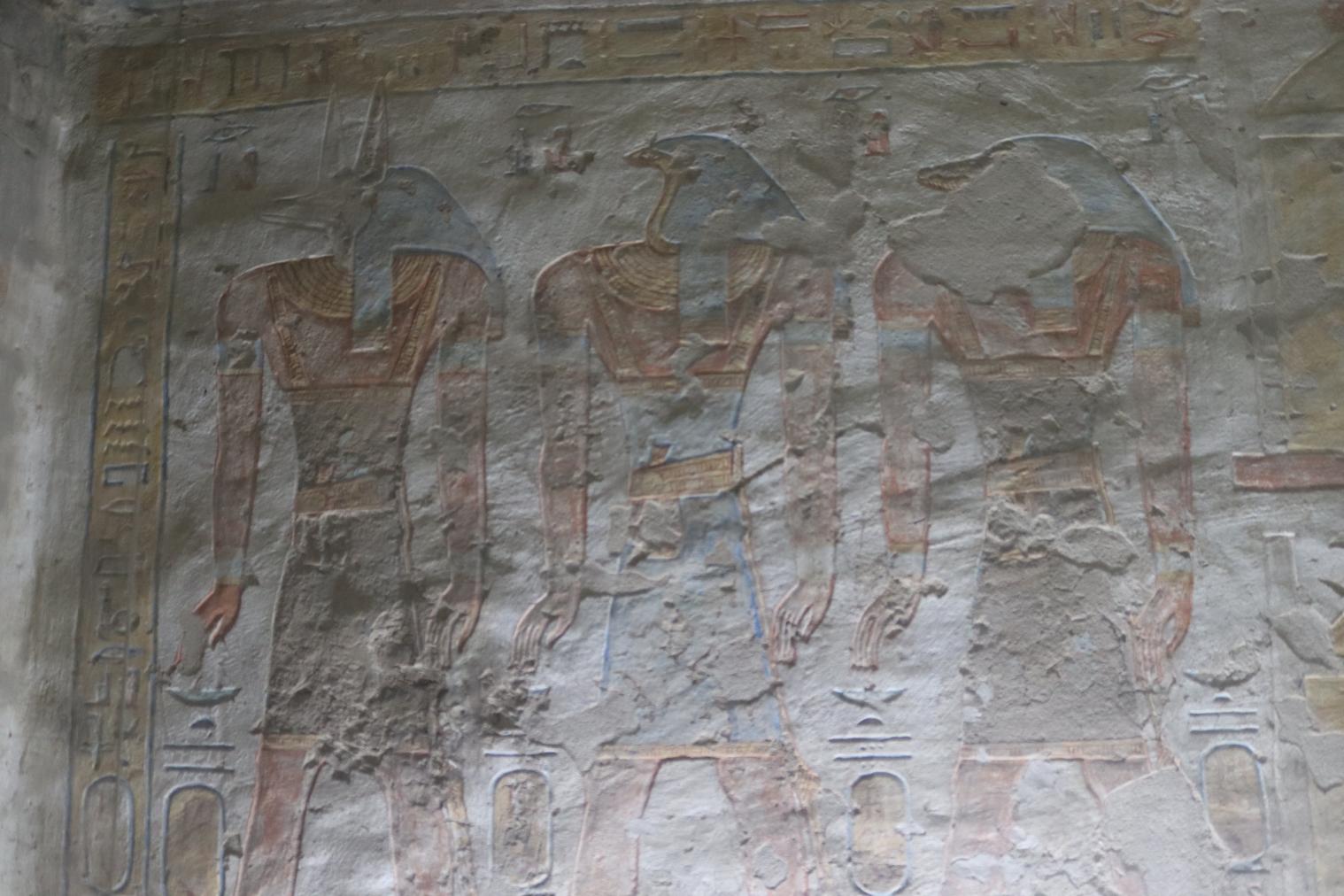
Three guardian deities
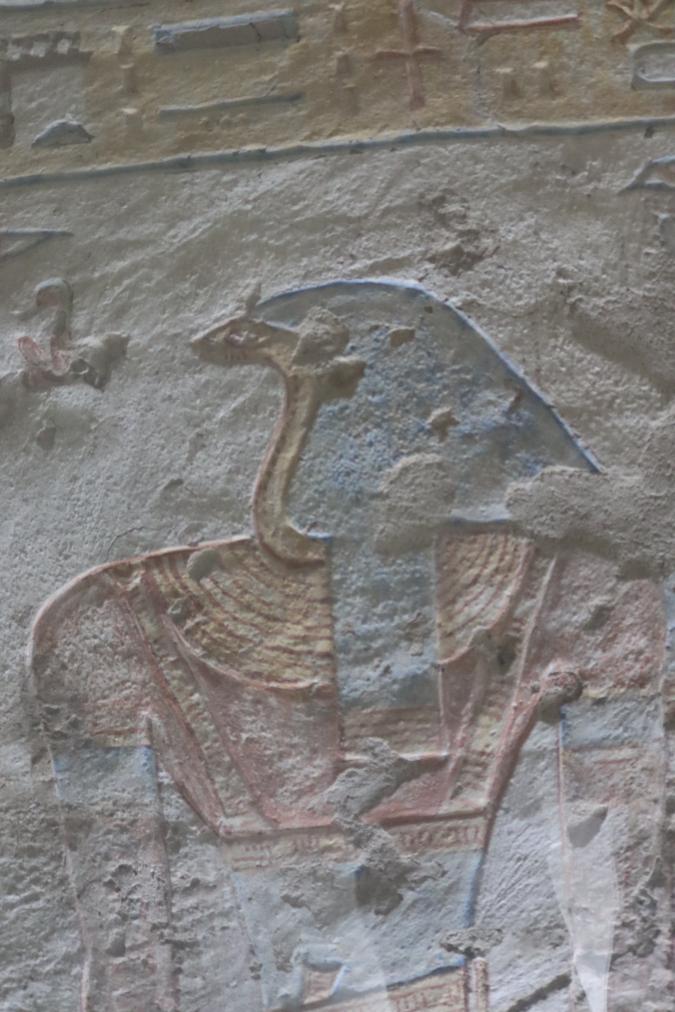
Guardian deity (detail)
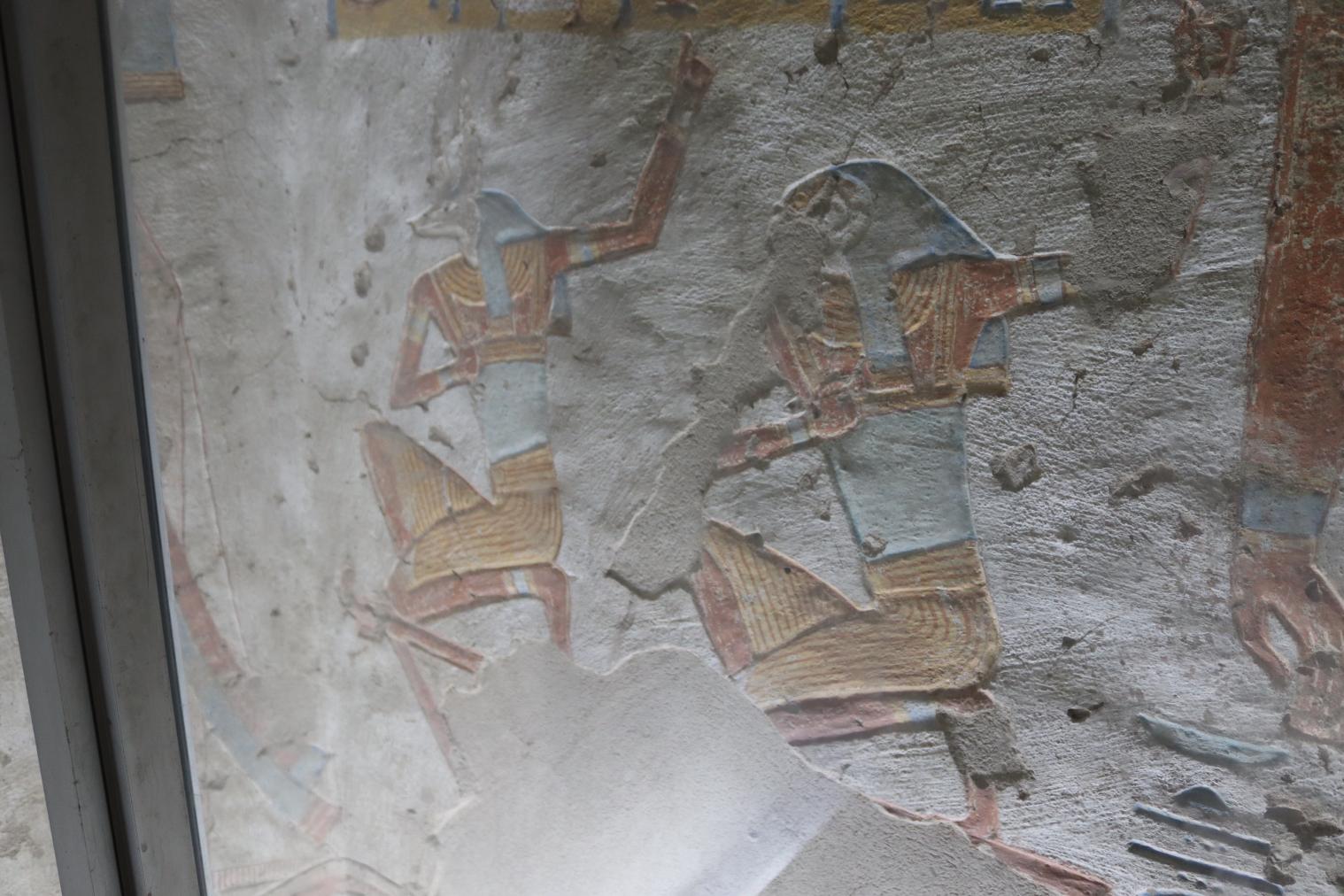
Souls and Pe and Nekhen performing the Henu gesture (detail)
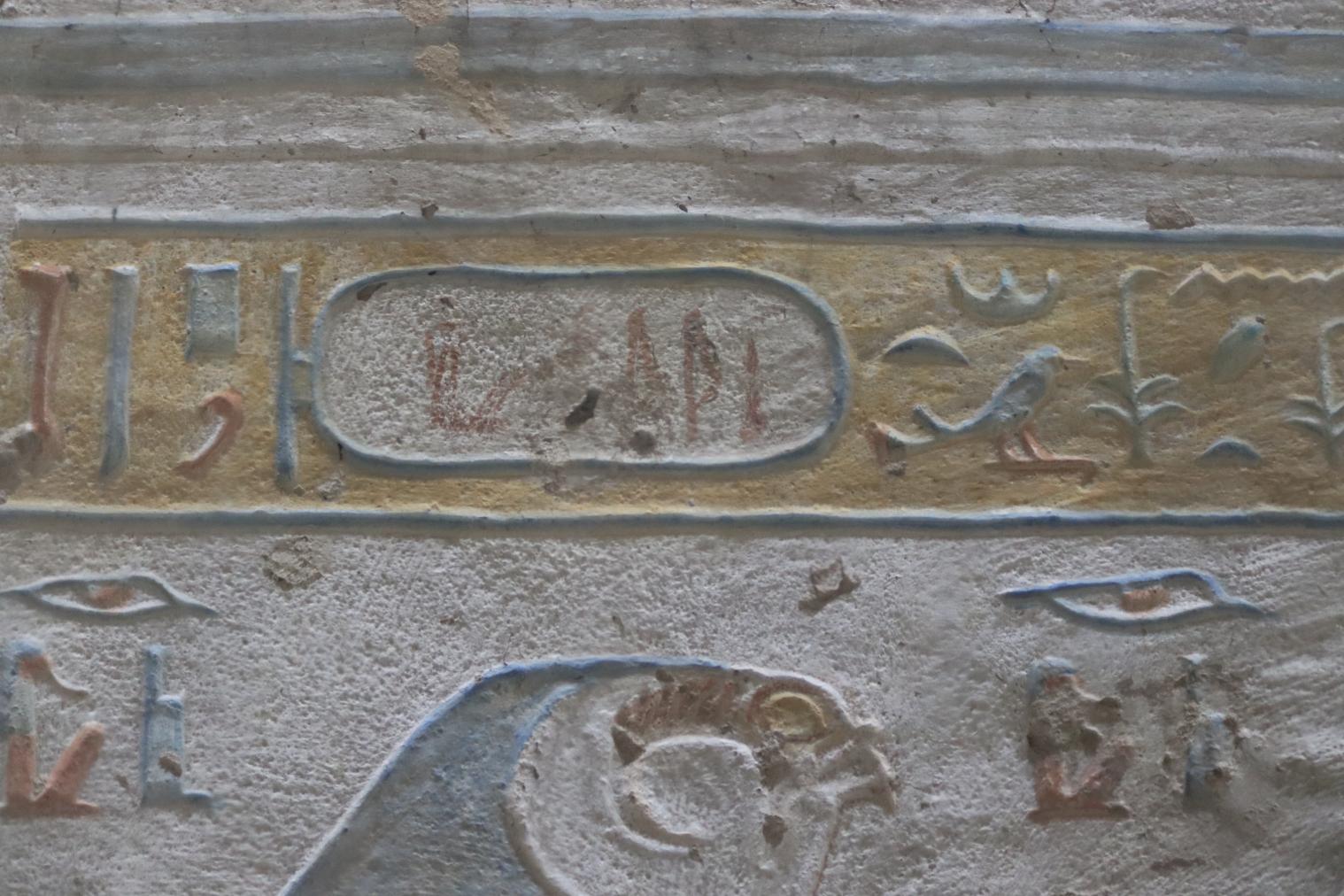
Cartouche of Queen (detail)
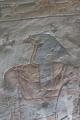
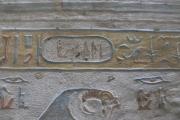
Gate D
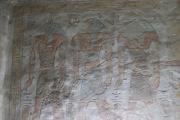
See entire tombThis gate is cut into the southwest wall of the burial chamber and provides access to a rear chamber. The lintel, reveals, and thicknesses are decorated with texts. There is no glass barrier that protects this gate.
Porter and Moss designation:
Chamber D
See entire tombThis chamber lies to the southwest of the burial chamber. The lower parts of the walls are adorned with a Serekh facade frieze. The principal scene in this chamber is on the rear wall (southwest) and depicts Osiris seated and flanked by Nephthys and Thoth on the left and Neith and Selkis on the right. The northwest and southeast walls mirror one another and are divided into two registers. The Four Sons of Horus are in the top register and the bottom register contains several deities. Two portraits of the queen adoring the deities in this chamber are placed on the left and right side of the doorway (northeast) and face outwards. The walls in this chamber are protected by glass barriers and lit by fluorescent lighting.
Porter and Moss designation:
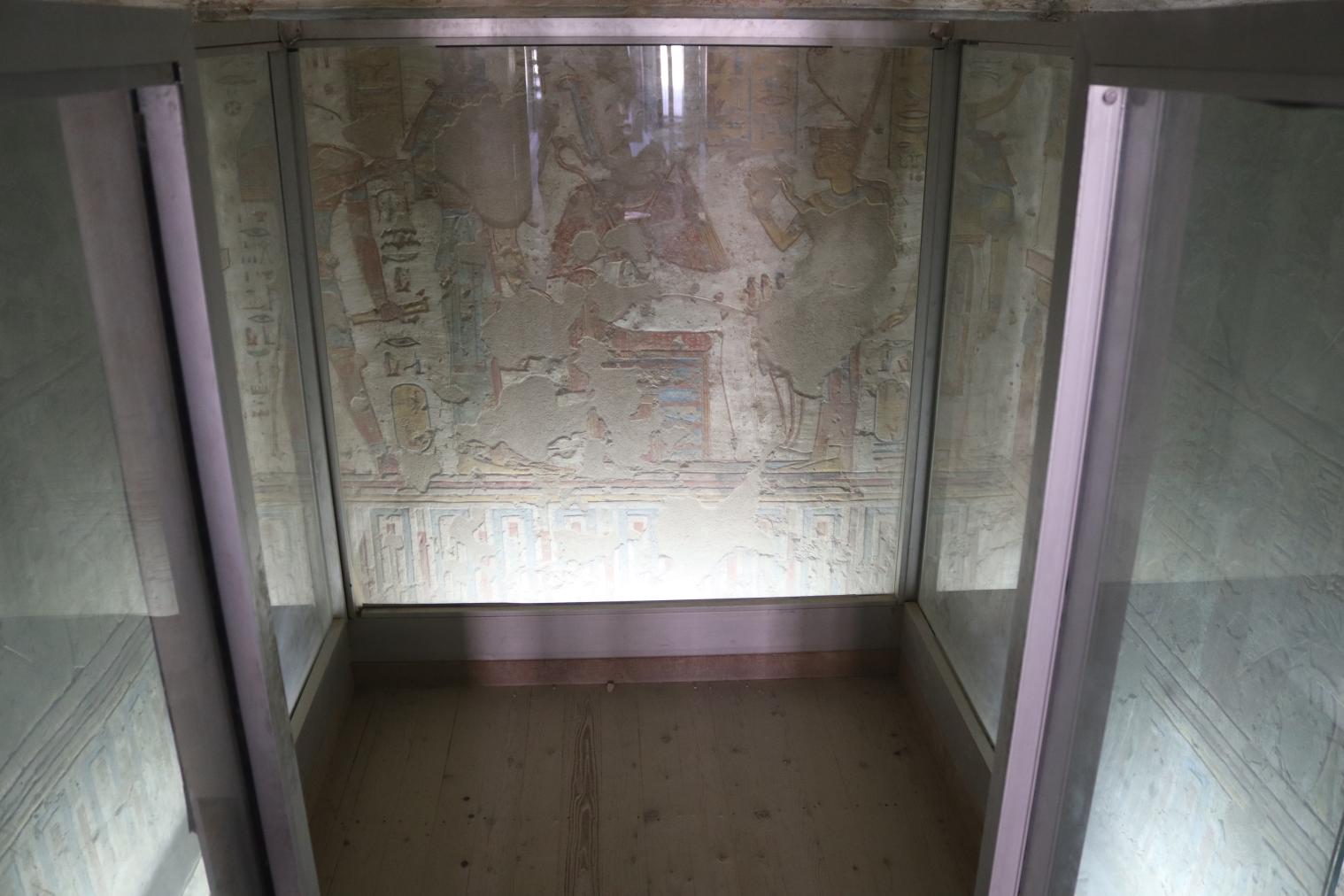
Seated Osiris flanked by Nephthys and Thoth on left and Neith and Serqet on right
Queen
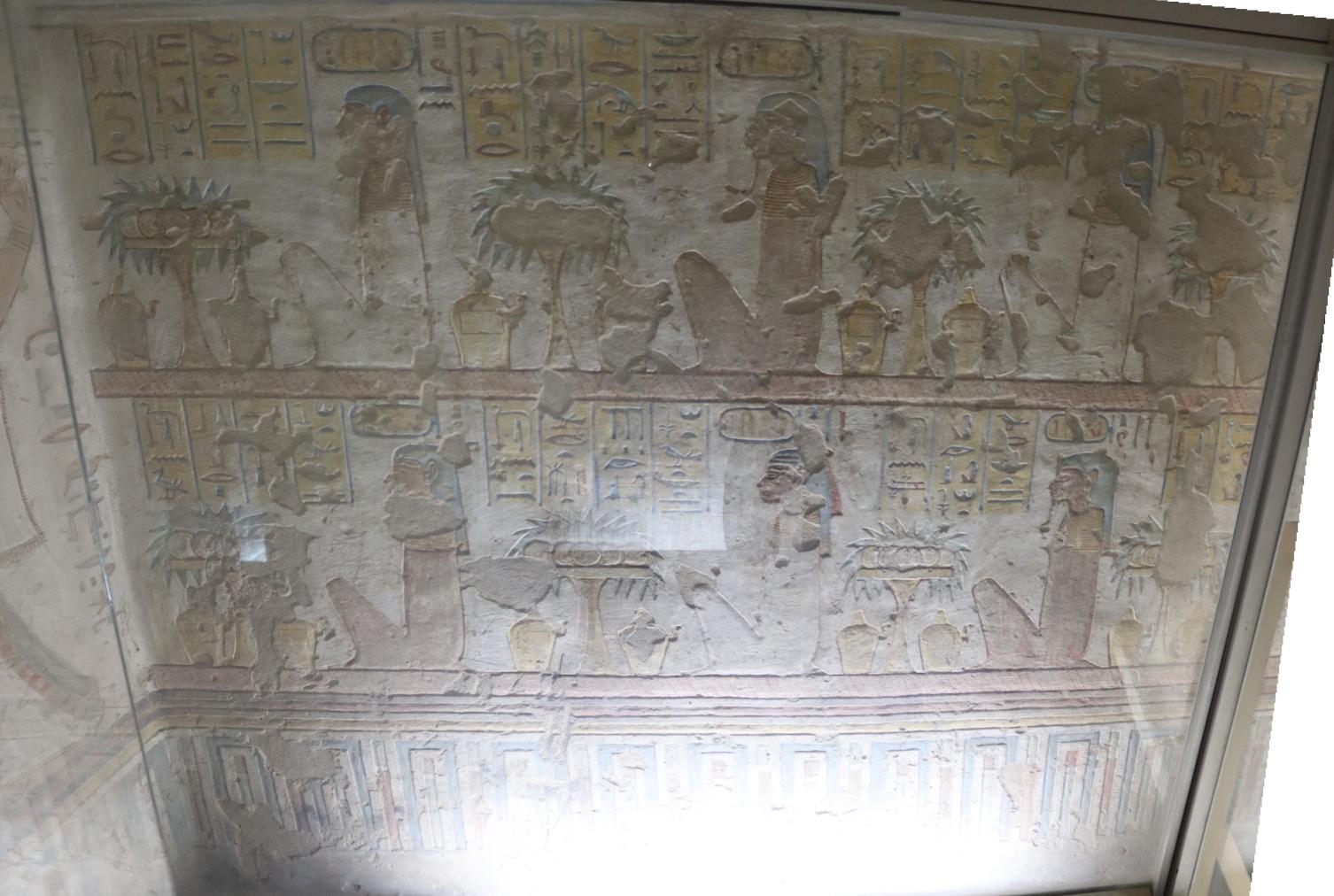
Upper register: Squatting Four sons of Horus; Lower Register: Squatting Geb, Nut, Nefertum, and Hor-Hekenu
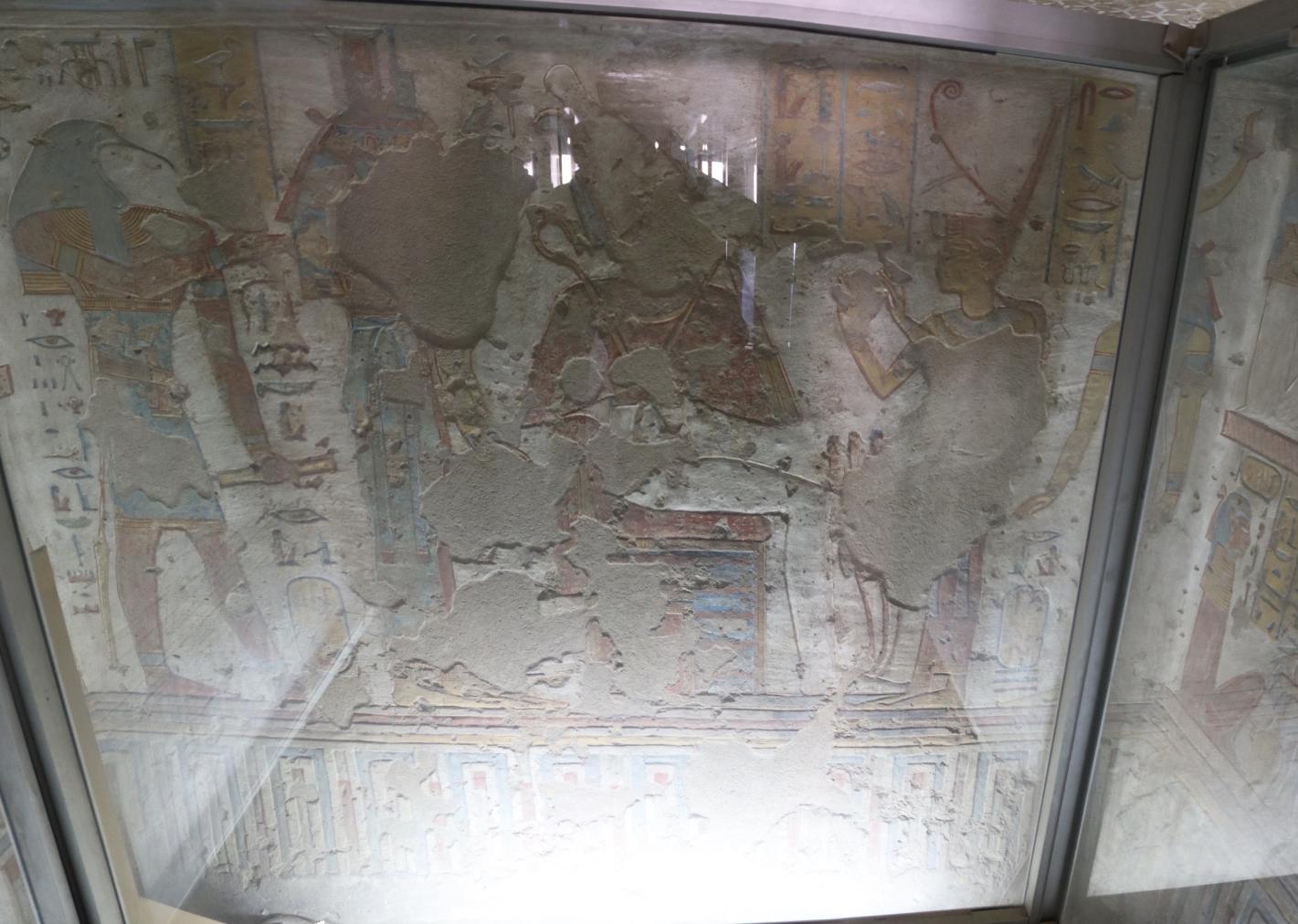
Seated Osiris flanked by Nephthys and Thoth on left and Neith and Selkis on right
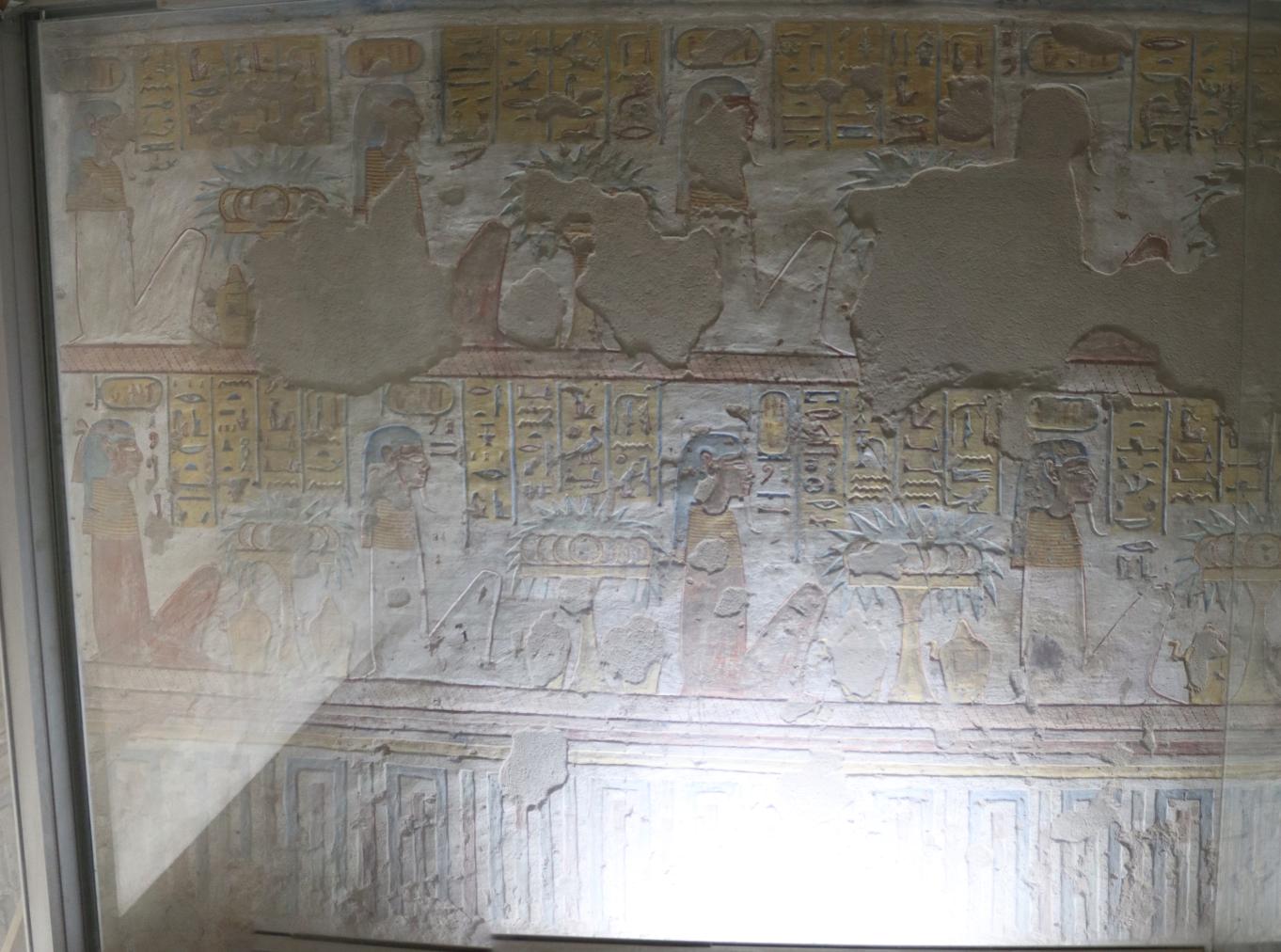
Upper Register: Squatting Four sons of Horus; Lower Register: Squatting Hu, Sia, Shu, and Tefnut
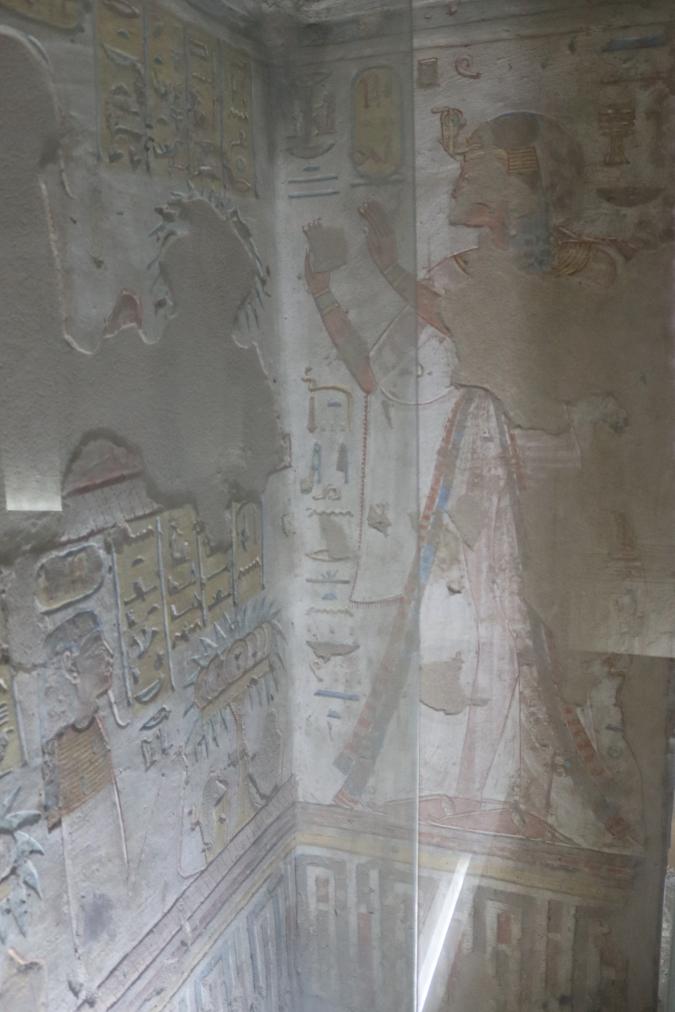
Queen adoring
About
About
QV 52 is situated along the south side of the northwest branch of the main Wadi. The orientation of the tomb along a southwest-northeast axis is distinct from QV 51, but similar to that of QV 53 and QV 55. An entrance Ramp (A) leads through a narrow corridor (B) into the burial chamber (C), which has a small rear chamber (D) on a central axis. Two side chambers (Ca) and (Cb) lie off of the burial chamber (C) on a northwest-southeast axis. A shaft in floor of chamber (Ca) connects to a pit (Caa). The tomb walls were cut flat and straight, unlike many other tombs in QV, and only required filling with packing plaster along rock fissures. In general, only a very thin layer of plaster was necessary to prepare the rock surface for painting.
Christian Leblanc believes that Tyti is the mother of Khaemwaset (QV 44), Amenherkhepshef (QV 55), and Rameses-Meryamen (QV 53), whose tombs have similar decorative programs. Furthermore, she became the Great Royal Wife of Rameses III presumably following the death of his first wife, Isis (QV 51). It has been suggested that she might have instead been the wife of Rameses X. Most recently, Luc Gosselin has suggested that she is the sister-wife of Rameses Ill and in fact the mother of Rameses IV.
QV 52 contained the remains of a Sarcophagus, which had been broken in antiquity, probably when the tomb was plundered. All of the rooms have sunken plaster relief, but with less vibrant colors and greater loss than QV 44 and QV 55. The tomb was reused during the Third Intermediate Period, when pit (Caa) was thought to be added.
The tomb has long been accessible in modern history. Giovanni Battista Belzoni left a graffito with his name and date in the tomb in 1816, probably in the doorway to the burial chamber, but it is now presumably hidden by modern infill plaster. Robert Hay of Linplum considered QV 52 to be "the most perfect" tomb. He visited in 1826 and noted that corridor (B) was full of debris to a height of one third of the walls. Georges Bénédite noted (1893) that the ceiling of the corridor was covered with yellow stars on a white background. He also recorded that the floor of the corridor (B) was significantly inclined toward the rear of the tomb (the height difference was approx. 55 cm), indicating that a substantial amount of debris covered the floor. Although the tomb was well known, it was not cleared until 1903 by Ernesto Schiaparelli and the Italian archaeological expedition. Colin Campbell noted in 1909 that none of the depictions of the queen were preserved. Elizabeth Thomas (1959-60) records that the tomb and decoration appear complete and the general state of preservation to be good. She further noted that several walls were damaged by treasure hunters. Most recently, the Franco-Egyptian Mission excavated (1994) in chambers (C) and (Ca), including lower pit (Caa).
Currently the tomb is open to visitation. Wooden flooring and fluorescent lighting have been installed throughout. Glass barriers line the walls except in side chamber (Ca), which is blocked off by a wooden barrier to prevent access. The entrance is closed by a large steel door with ventilation holes.
Noteworthy features:
The reliefs in QV 52 are well preserved and the tomb is open to visitation.
Site History
The tomb was constructed in the 20th Dynasty. It was reused in the Third Intermediate Period, when chamber Caa was cut into the floor of side chamber Ca, and during the Roman Period.
Dating
This site was used during the following period(s):
Exploration
Conservation
Conservation History
According to the GCI-SCA, the paintings have been previously treated and all areas of loss have been filled with modern plaster repairs. Recessed plaster repairs have been used throughout the tomb and there is evidence of surface consolidation of the painting in areas and grouting. Most recent treatments were undertaken in 2012 by the SCA, to both the ceilings and chamber (C) paintings. The overall appearance of the paintings looks faded and they have also been cleaned, which may have resulted in an abraded appearance of the surface. In particular, loss of fragile areas of blue is especially prominent. Evidence of over-cleaning is noticeable in areas where insect nests and bat residues have been removed.
Site Condition
According to the GCI-SCA, the extent of intact decoration suggests that the tomb is largely stable, though the modern plaster repairs make it difficult to fully assess the underlying rock substrate. In addition to this loss on the south jamb of Gate (D), a few other smaller areas of rock loss can be seen, as well as loss of plaster at the base of the walls. This loss can be seen throughout the tomb to a height of approximately 50cm from the base of the wall. Above the entrance doorway there is a large wedge loss of rock and small open joints to the right of the loss, but no evidence of ongoing instability. There are some large losses of plaster in the ceilings and in some walls, for example in chamber (C) and side chamber (Ca) and one area of loss in the lintel of gate (C), where a small crack in the rock is visible. Other cracks in the ceiling plaster of the corridor (B) and burial chamber (C) may also reflect the condition of the underlying rock and possible areas of plaster detachment. The ceiling plaster of chamber (C) exhibits deterioration at its corners, with cracking and staining. The surface of the painted plaster is generally abraded and looks almost "keyed" with many small losses as if it had been plastered over in antiquity. The plaster surface is also stained brown in areas, presumably from repeated touching by visitors prior to the glass protective barriers being installed. Evidence of past bat activity is observed in the tomb. Past flooding of the tomb may have caused the rock loss in gate (D), and may have contributed to the cracking of the ceiling rock and loss of painted plaster in this area. Loss of plaster at the base of walls could also indicate past flood damage in this tomb. The tomb's location near the main drainage channel makes the risk of flood damage a possibility. However, apart from the loss at the base of the walls, there are no characteristic losses around doorways that can further be suggestive of flood damage, and this tomb was not affected by the 1994 flood. Periods of reuse of the tomb, as well as its long history of access and visitation may be responsible for some of the deterioration now visible. Intentional damage to the paintings accounts for the destruction of heads of figures, most notably the depiction of the queen. Elizabeth Thomas also noted that the tomb was partially destroyed by treasure hunters. More recent losses in the plaster in the low ceilings of rear chambers may be partially attributed to visitor-related damage.
Hieroglyphs
Queen Tyti
 King's Daughter of his body, his beloved, Great Royal Wife, King's Mother, Lady of the Two Lands, Tyti
sAt-nswt-n-Xt.f mr.f Hmt-wrt-nswt mwt-nswt nbt-tAwy tyti
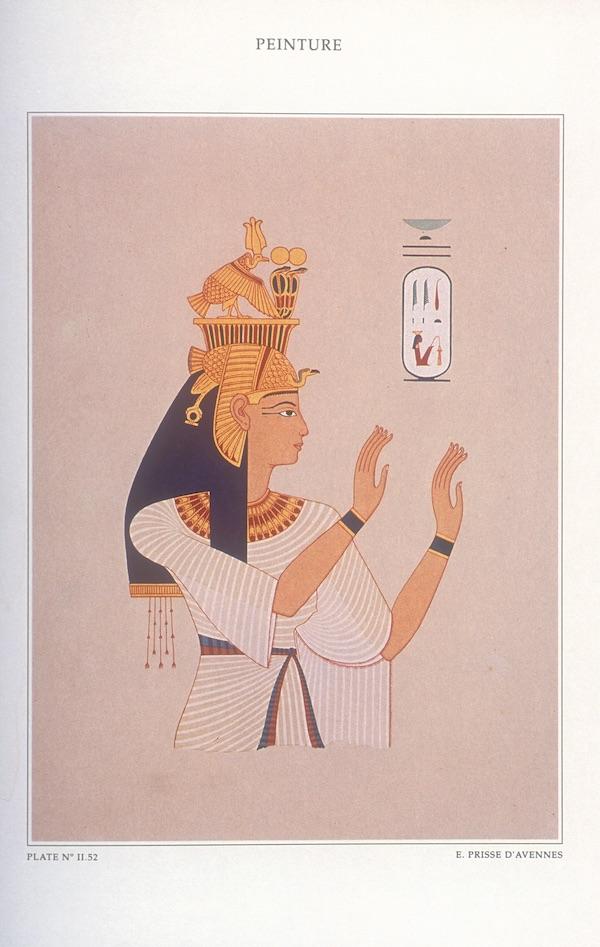
Portrait of Tyti.
Depiction of three deities in the side chamber of QV52
Interior of the tomb of Queen Tyti (QV 52) photographed from the vestibule looking towards the burial chamber. Italian Archaeological Expedition excavations. Courtesy of the Egyptian Museum in Turin.
Interior of the tomb of Queen Tyti (QV 52) photographed from the back wall of the burial chamber that leads to the rear annex. Italian Archaeological Expedition excavations. Courtesy of the Egyptian Museum in Turin.
Wall to the left of the burial chamber's entrance from the tomb of Queen Tyti (QV 52) photographed during Ernesto Schiaparelli's excavations that depicts an Iwnmutef priest censing and libating. Italian Archaeological Expedition excavations. Courtesy of the Egyptian Museum in Turin.
Eastern annex of the tomb of Queen Tyti (QV 52) photographed during Ernesto Schiaparelli's excavations that depictsHathor in her bovine form (left), as well as in her form as a tree goddess (right). Italian Archaeological Expedition excavations. Courtesy of the Egyptian Museum in Turin.
Depiction of Queen Tyti from her tomb (QV 52) worshipping the gods Imsety, Duamutef, and Isis photographed during Ernesto Schiaparelli's excavations. Italian Archaeological Expedition excavations. Courtesy of the Egyptian Museum in Turin.

Entrances to QVU1, QVU2, QV52, QV67, and QV69 in foreground. Visitors shelter at QV66 and grotto in background.

Entrances to QVU1, QV65, and QV67. QV66, visitors shelter, and QV52 in background.
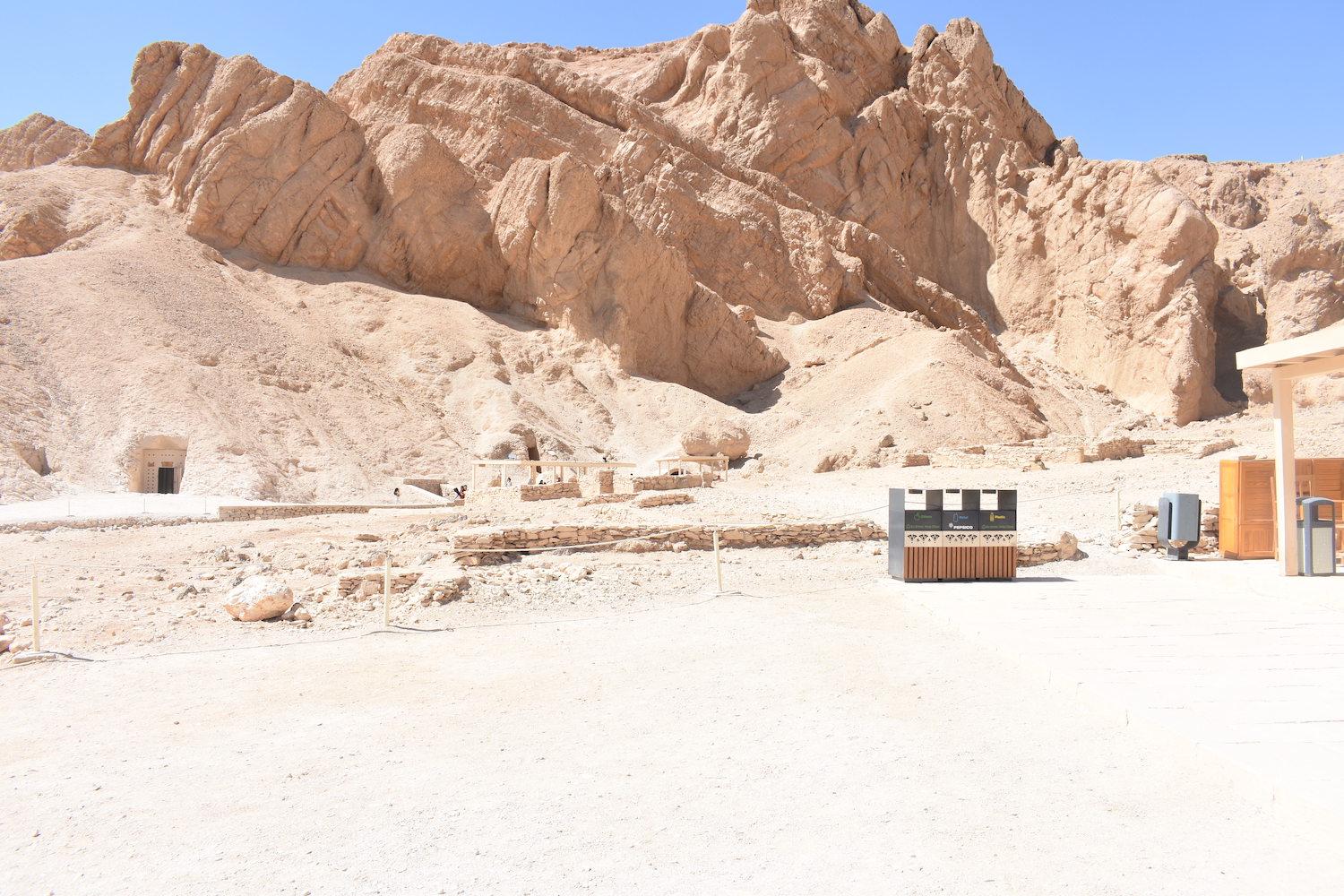
View from QV66 of workers' huts in foreground and QV52, QV55, and grotto in background.

Entrance to QV52 in background, foreground includes entrances to QV58, QV59, QV61, QV60, QV62, and worker's huts.

Entrance to QV51, QV52, QV53, QV55, and unfinished QV85 in background with workers' huts in foreground.

Entrances of QV52, QV53, QV61, and QV62 with workers' huts. Entrance to QV52 visitors shelter at QV55 in the background.
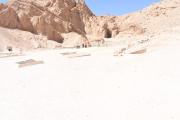
Entrance to QV52

Entrance to QV52 and QV85

Entrance to QV52 and QV85
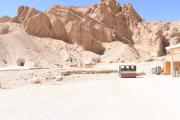
Entrance to QV52
Entrance to QV52

Entrance to QV52 and QV85
Entrance to QV52

General view of the main wadi towards QV66 with entrances to QV51, QV52, QV58, QV59, QV80, QV85, workers’ huts, and visitors shelter at QV66

General view of the main wadi from northwestern side of the main wadi with entrances to QV51, QV52, QV58, QV59, QV80, and QV85. Workers’ huts, visitors shelter at QV66, and lime kiln in the foreground.

View up the main wadi with grotto in the background. View of the visitors shelter and entrances of QV52, QV53, QV55, QV85, and lime kiln.
Kheker frieze and remains of titles of Queen
Kheker frieze, remains of titles of Queen, and Nekhbet as vulture
Painted stars
View of Corridor B from entryway
Winged kneeling Ma'at
Queen in adoration before Thoth
Queen in adoration before Thoth
Queen shaking sistra
Queen shaking sistra before Atum
Queen in adoration before Hapy
Queen in adoration before Hapy
Qebehsenuef
Nephthys
Queen shaking sistra before Atum (right), Queen in adoration before Hapy, Qebehsenuef, and Nephthys (left)
Winged kneeling Ma'at
Queen in adoration before Ptah in shrine
Ptah in shrine
Queen shaking sistra before Re-Horakhty
Queen shaking sistra before Re-Horakhty
Queen in adoration before Imsety
Queen in adoration before Imsety
Imsety, Duamutef, and Isis
Duamutef (detail)
Duamutef and Isis
Isis
Queen in adoration before Ptah in Shrine
Queen in adoration before Imsety, Duamutef, and Isis
View of Gate C with winged sun disk on lintel and stars on ceiling
Titles of the Queen
Neith
Serqet
Jackal and lion atop chapels
Book of the Dead, Spells 145 and 146
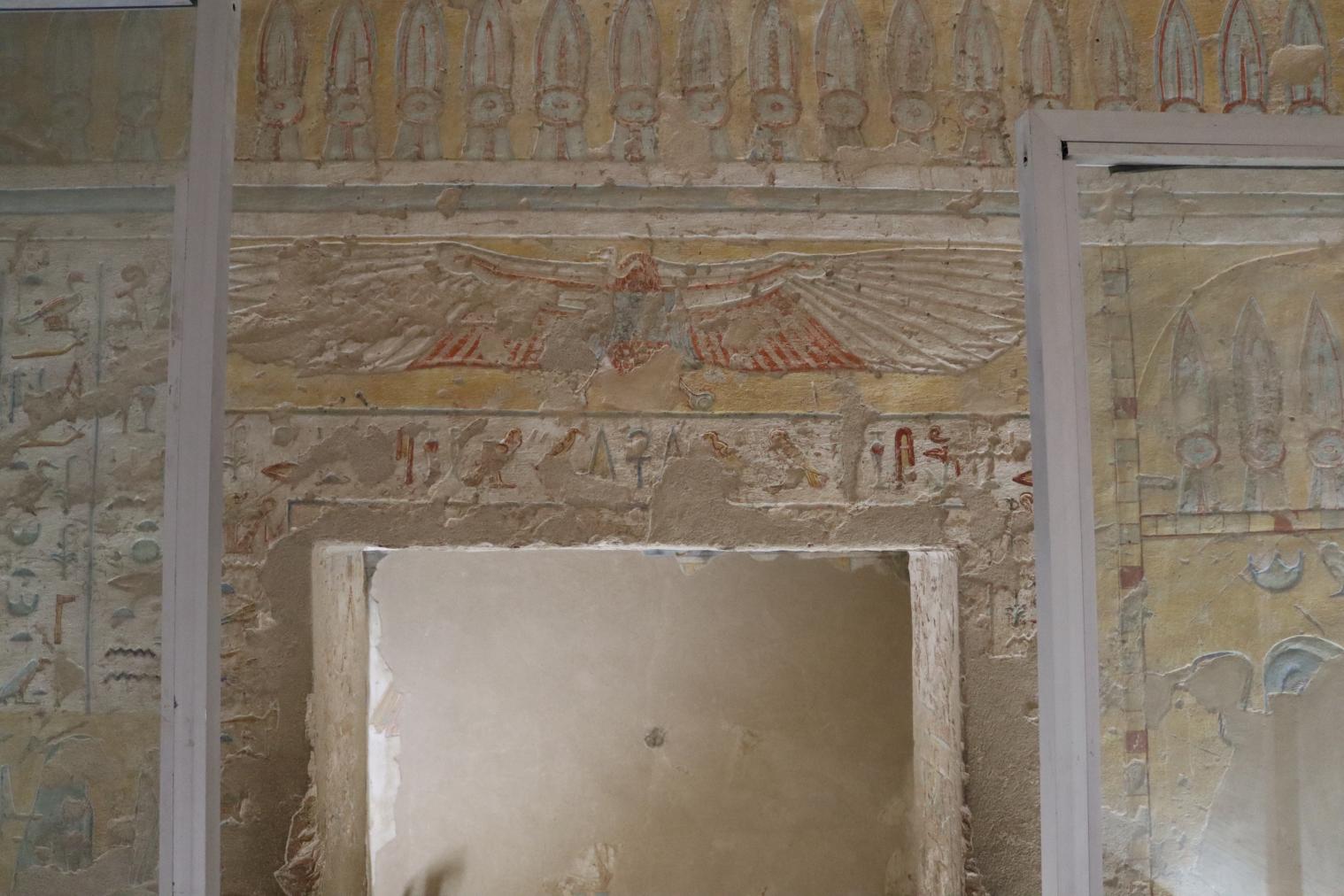
Winged vulture and text on lintel
Book of the Dead, Spells 145 and 146
Book of the Dead, Spells 145 and 146
Upper register: solar bark; Lower register: Queen shaking sistra before Imsety and Duamutef
Right upper register: solar bark; right lower register: Queen offering Uraeus scepters to Hapy and Qebehsenuef. Left upper register: solar bark; left lower register: Queen shaking sistra before Imsety and Duamutef. View of Gate D.
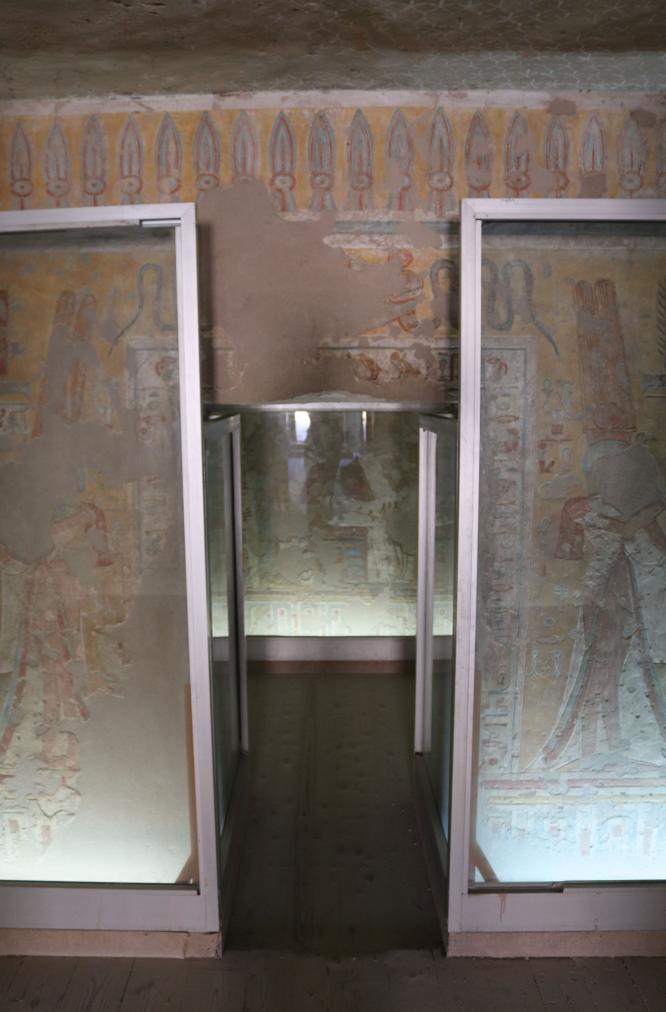
View of Gate D
Upper register: solar bark; Lower register: Queen offering Uraeus scepters to Hapy and Qebehsenuef (left), and Book of the Dead, Spells 145 and 146 (right).
Gate Cb with winged vulture on lintel
Gate Cb with winged vulture on lintel (detail)
Book of the Dead, spells 145-146 (left) and Nebnerou and Hery-Ma'at (right)
Queen before the Four Sons of Horus
Queen before the Four Sons of Horus
Covered pit in floor leading to Chamber Caa
Seated Osiris flanked by Nephthys and Thoth on left and Neith and Serqet on right
Queen
Upper register: Squatting Four sons of Horus; Lower Register: Squatting Geb, Nut, Nefertum, and Hor-Hekenu
Seated Osiris flanked by Nephthys and Thoth on left and Neith and Selkis on right
Upper Register: Squatting Four sons of Horus; Lower Register: Squatting Hu, Sia, Shu, and Tefnut
Queen adoring
Hathor emerging from western mountain and Tree goddess offering to Queen
Souls of Pe and Nekhen performing the Henu gesture and guardian deity
Three guardian deities
Queen as Horus-Iwnmutef
Queen as Horus-Iwnmutef
Three guardian deities and canopic chests
Three guardian deities
Guardian deity (detail)
Souls and Pe and Nekhen performing the Henu gesture (detail)
Cartouche of Queen (detail)
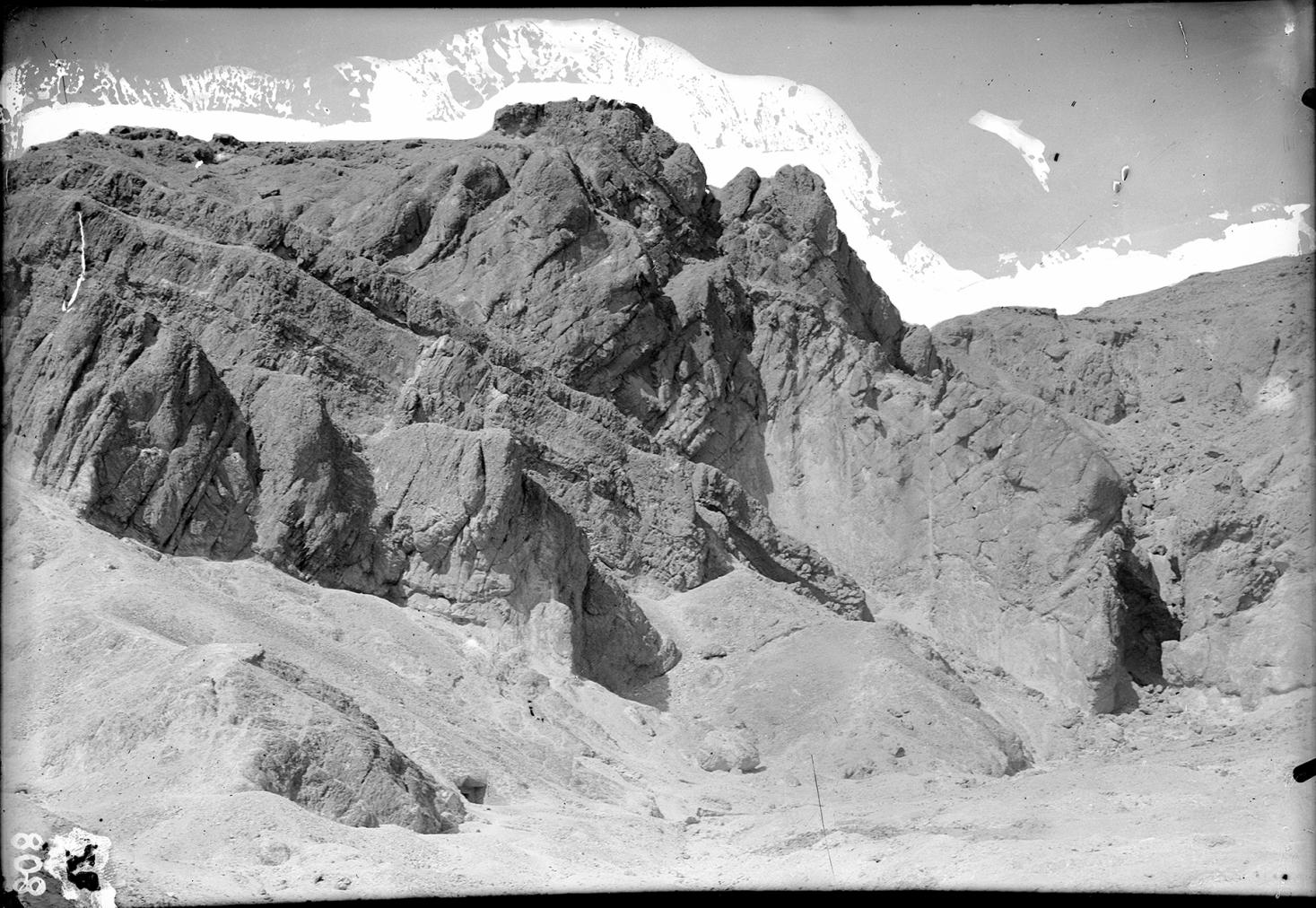
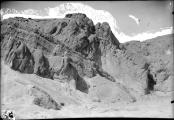
View of the last section of the Valley of the Queens photographed during Schiaparelli's excavations. In the bottom, the entrance to the tomb of Queen Tyti (QV 52) is visible. Italian Archaeological Expedition excavations. Courtesy of the Egyptian Museum in Turin.






Bibliography
Grist, Jehon. The Identity of the Ramesside Queen Tyti. Ph.D. diss., University of California, Berkeley, 1986.
Grist, Jehon. The Identity of the Ramesside Queen Tyti. The Journal of Egyptian Archaeology, 71 (1985): 71-81.
Hay of Linplum, Robert. Hay MSS [Robert Hay of Linplum and his artists made the drawings etc. in Egypt and Nubia between 1824-1838]. British Library Add. MSS 29812-60, 31054.
L'Hôte, Nestor. 1828-9, 1838-9. Nestor L'Hôte MSS: [Egypt in 1828-9, 1838-9]. Paris, Bibliothèque nationale, nouvelles aqcuisitions françaises, nos. 20394-415; 2 volumes in Musée du Louvre E. 25423, a, b.
Leblanc, Christian, and Alberto Siliotti. Nefertari e la valle delle regine. 2nd ed. Florence: Giunti, 2002.
Leblanc, Christian. À la découverte de notre patrimoine: la Vallée des Reines et des enfants royaux. Cairo: Edition lumina, 2008.
Leblanc, Christian. Ta set nefrou: une nécropole de Thèbes-ouest et son histoire, 1: géographie- toponymie: historique de l'exploration scientifique du site. Cairo: Nubar Printing House, 1989.
Leblanc, Christian. Une nouvelle analyse de la double théorie des princes du temple de Ramsès III: à Medinet Habou. Memnonia, 12/13 (2001-2002): 191-218.
Leblanc, Christian. Nefertari, l'aimée-de-Mout: épouses, filles et fils de Ramsès II. Monaco: Éditions de Rocher, 1999.