QV 66
Queen Nefertari-Merymut

Entryway A
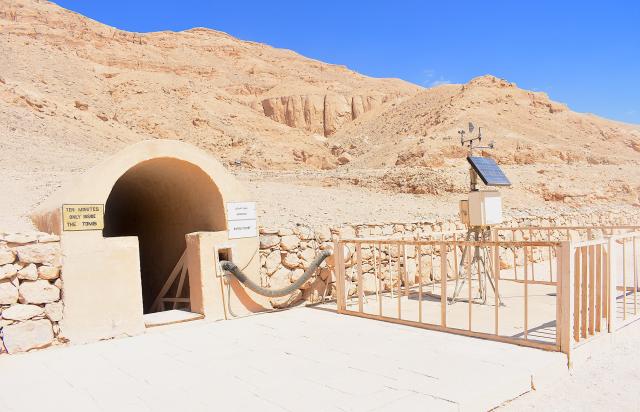
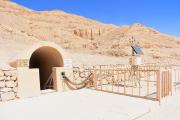
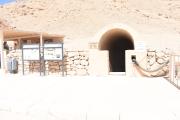
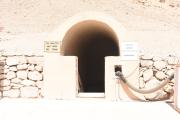
See entire tombThe tomb is entered through a steep Ramp with rock-cut Steps which have been overlaid with modern wood steps both for tourists’ ease of passage and also to protect the worn ancient stone. Handrails were also installed. The entrance is covered by a modern barrel vault made of brick that was built during the Schiaparelli excavations and later extended along the full length of the parapet walls.
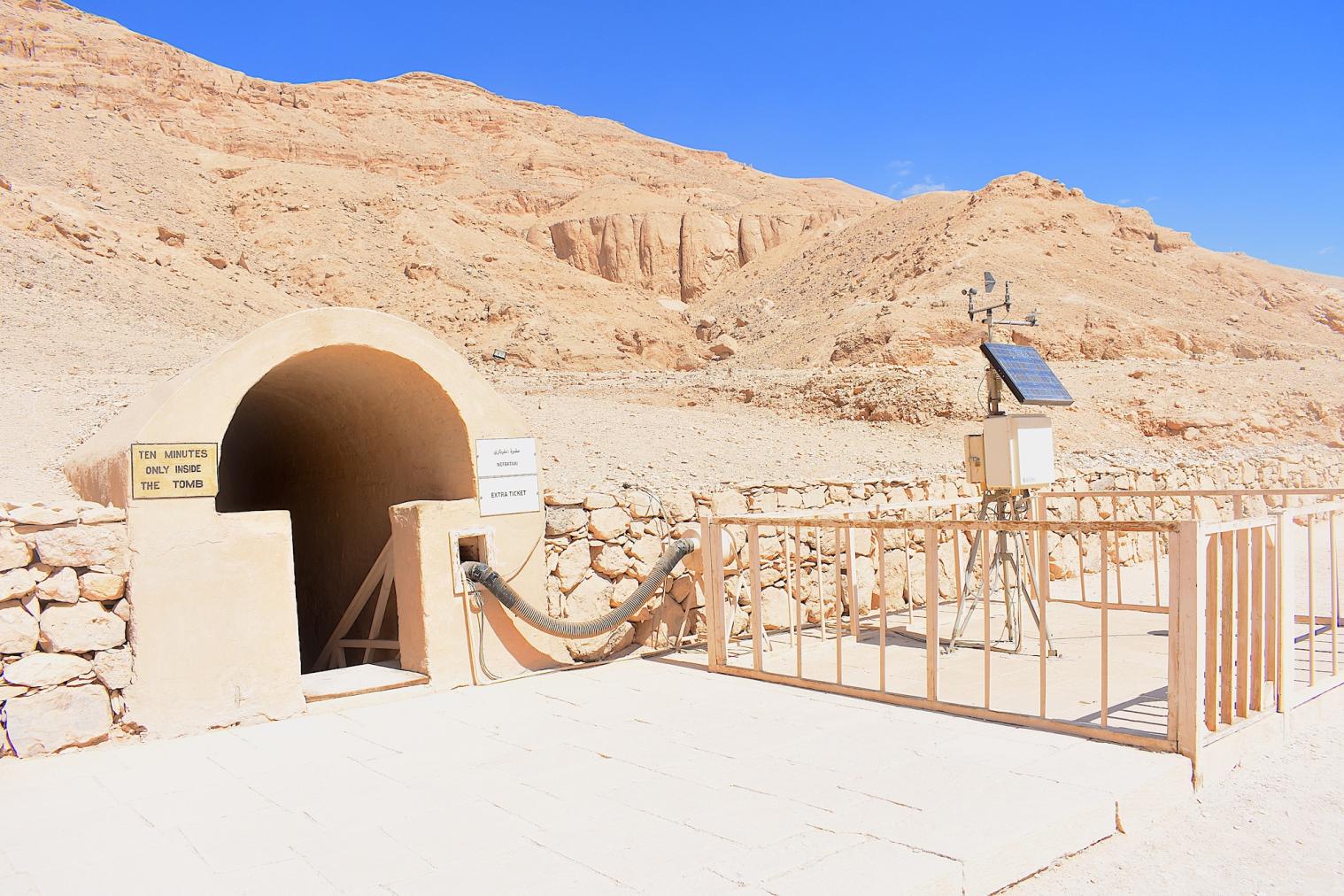
The entrance of QV66.
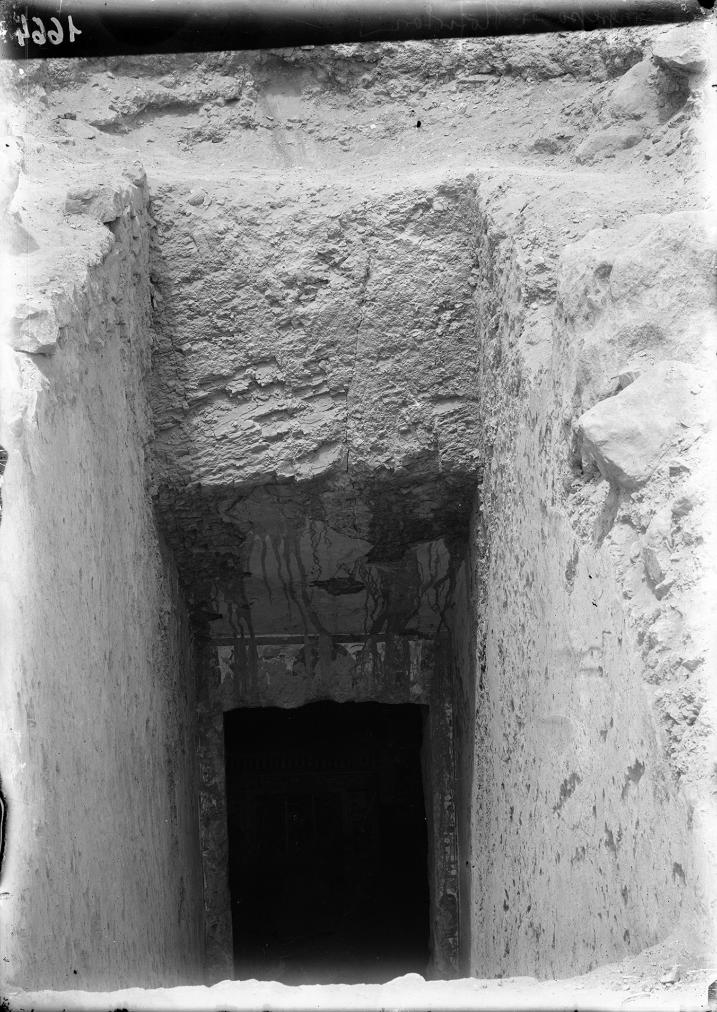
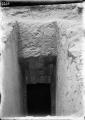
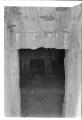
Entrance to the tomb of Queen Nefertari (QV 66), as viewed from its descending passage, at the time of its discovery during Ernesto Schiaparelli's excavations. Italian Archaeological Expedition excavations. Courtesy of the Egyptian Museum in Turin.
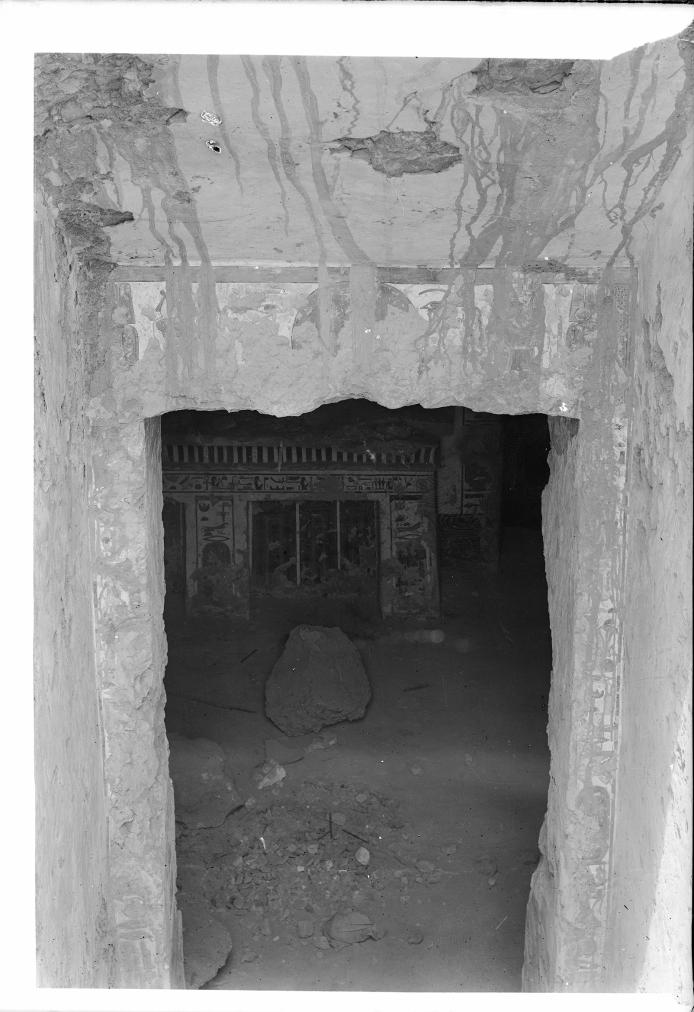
Entrance to the tomb of Queen Nefertari (QV 66), as viewed from its descending passage, at the time of its discovery during Ernesto Schiaparelli's excavations. Italian Archaeological Expedition excavations. Courtesy of the Egyptian Museum in Turin.
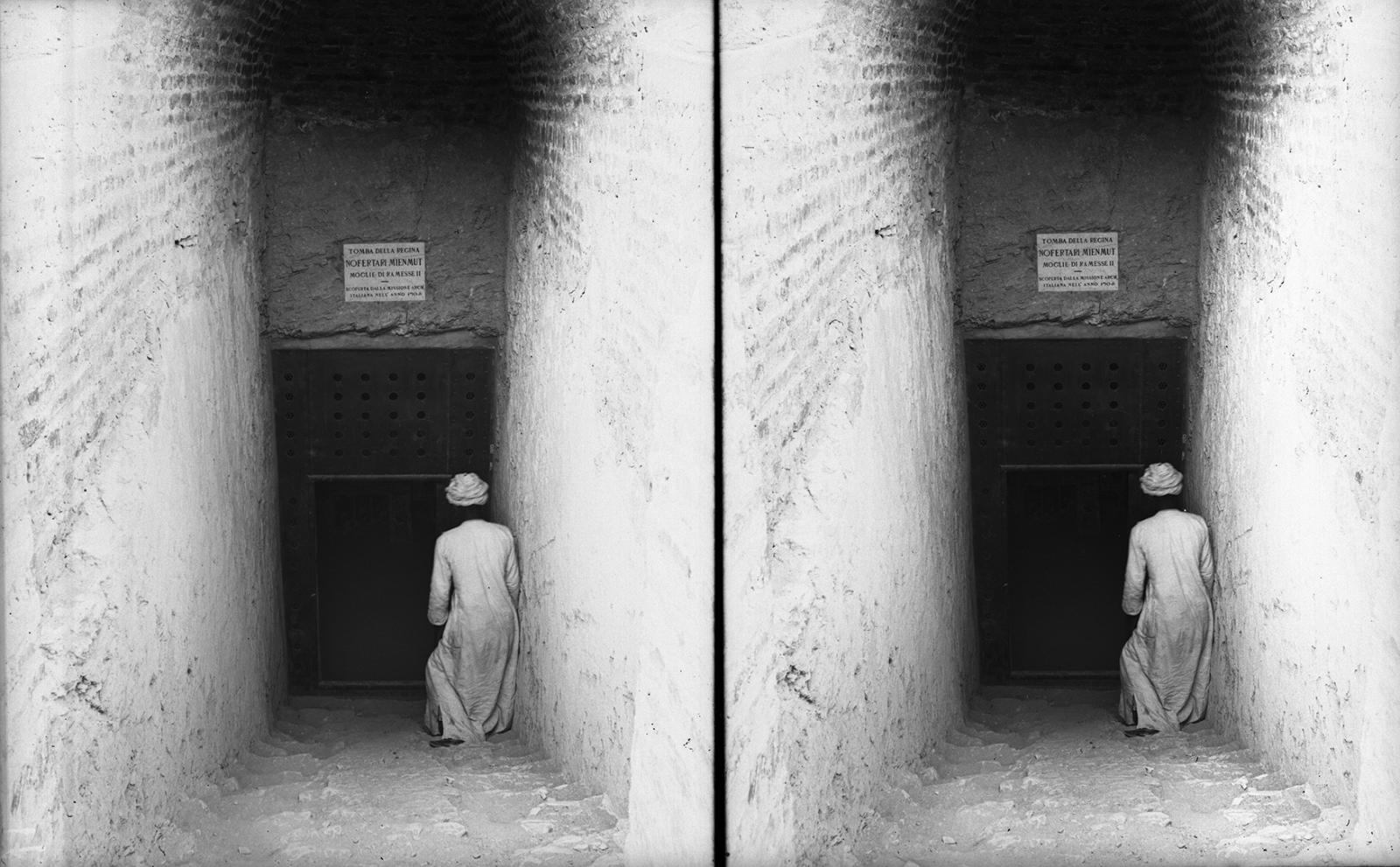
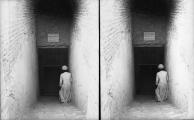
Guardian in the descending passage to the tomb of Queen Nefertari (QV 66) with its then-new, commemorative plaque installed during Ernesto Schiaparelli's excavations. Italian Archaeological Expedition excavations. Courtesy of the Egyptian Museum in Turin.
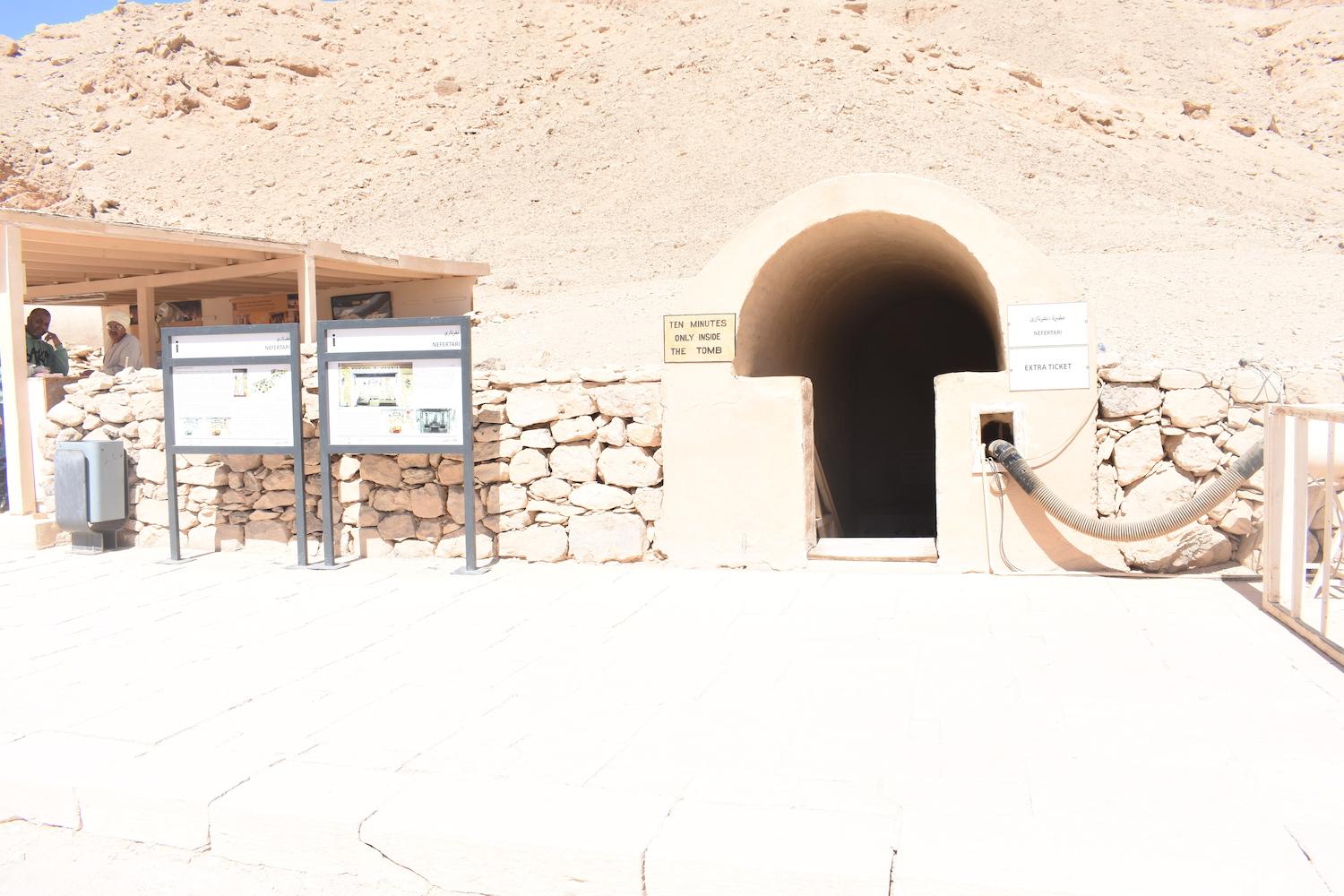
Entrance to QV66 and visitors shelter.
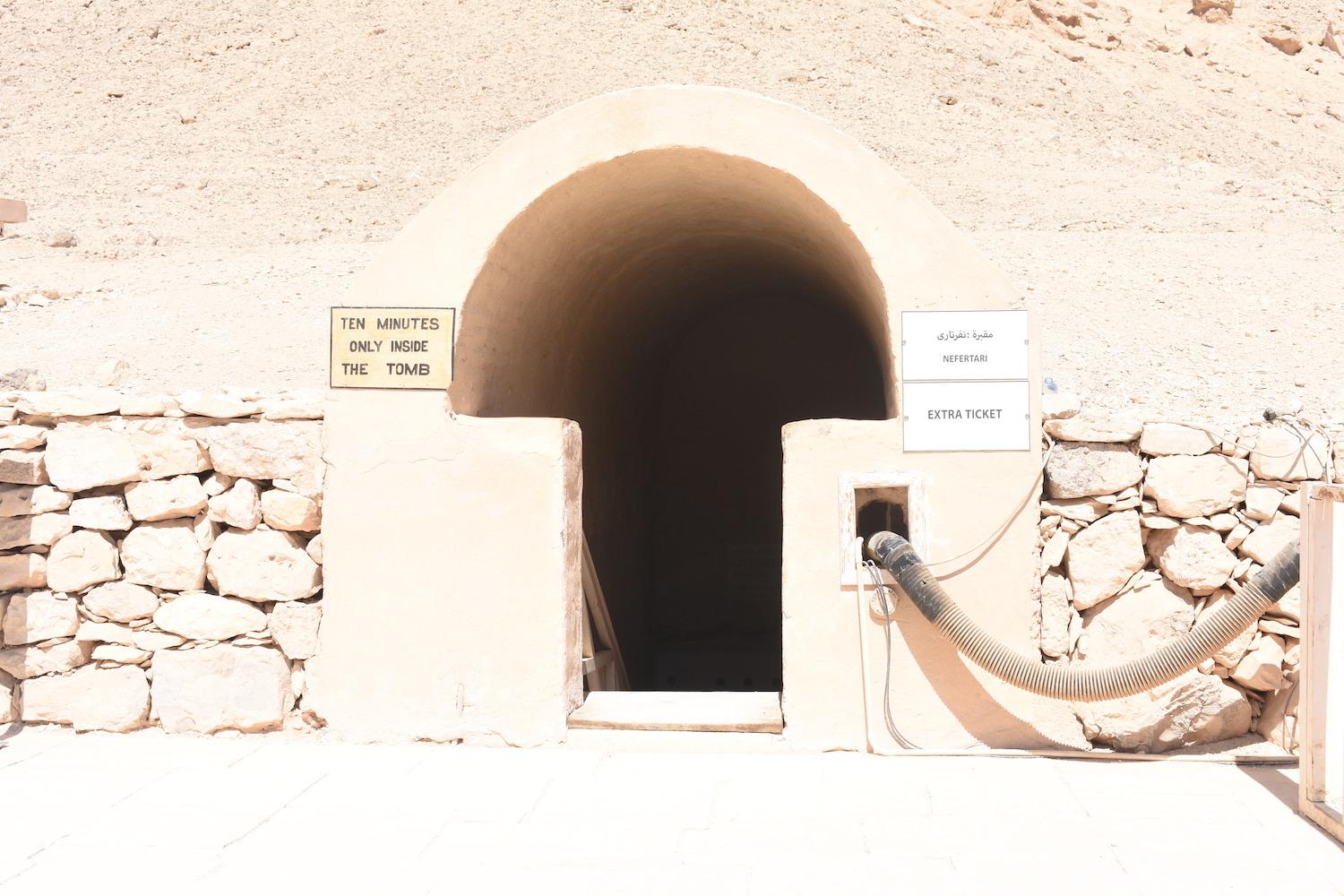
Entrance to QV66.
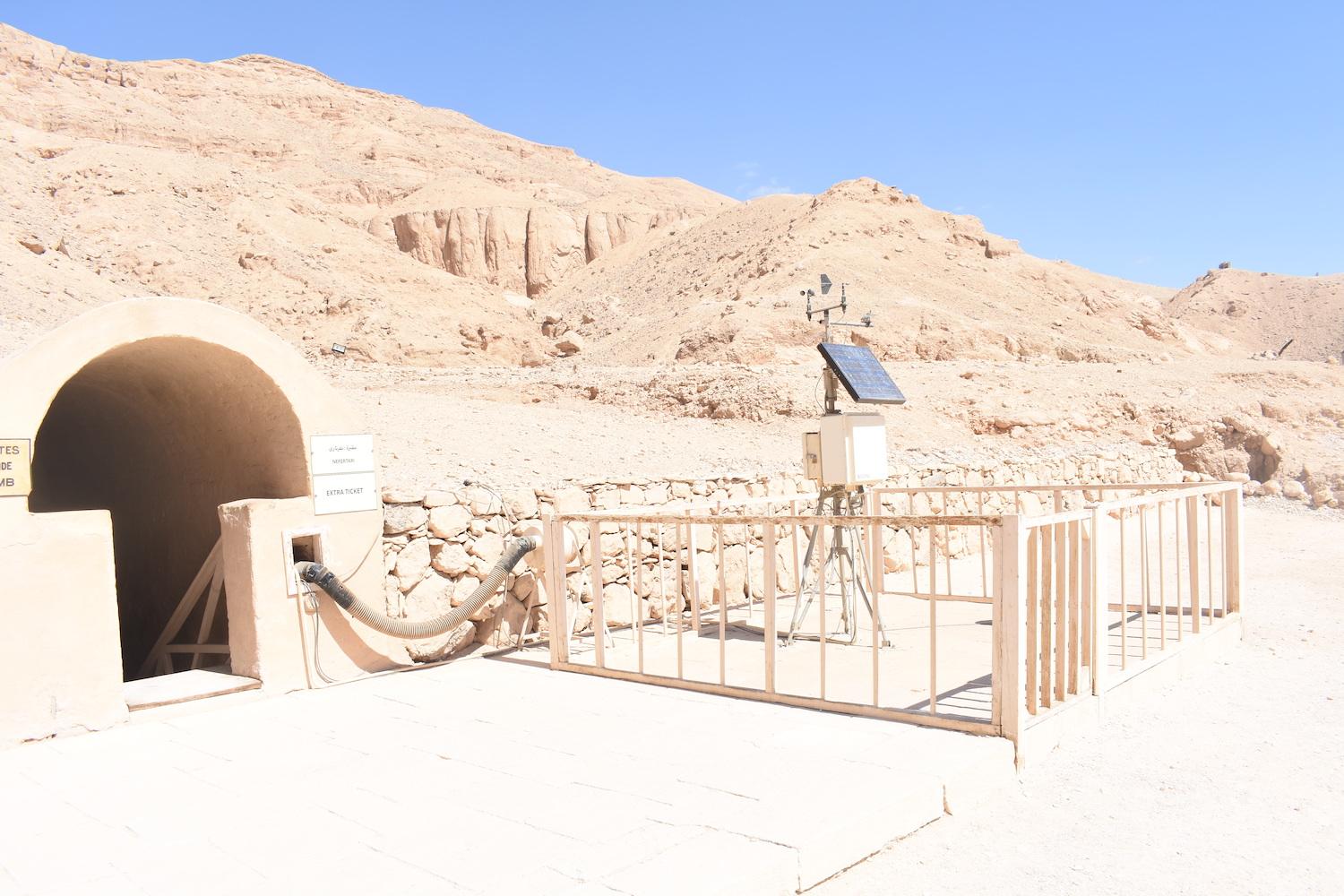
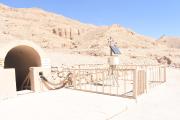
Entrance to QV66 with solar panel and climate control equipment.
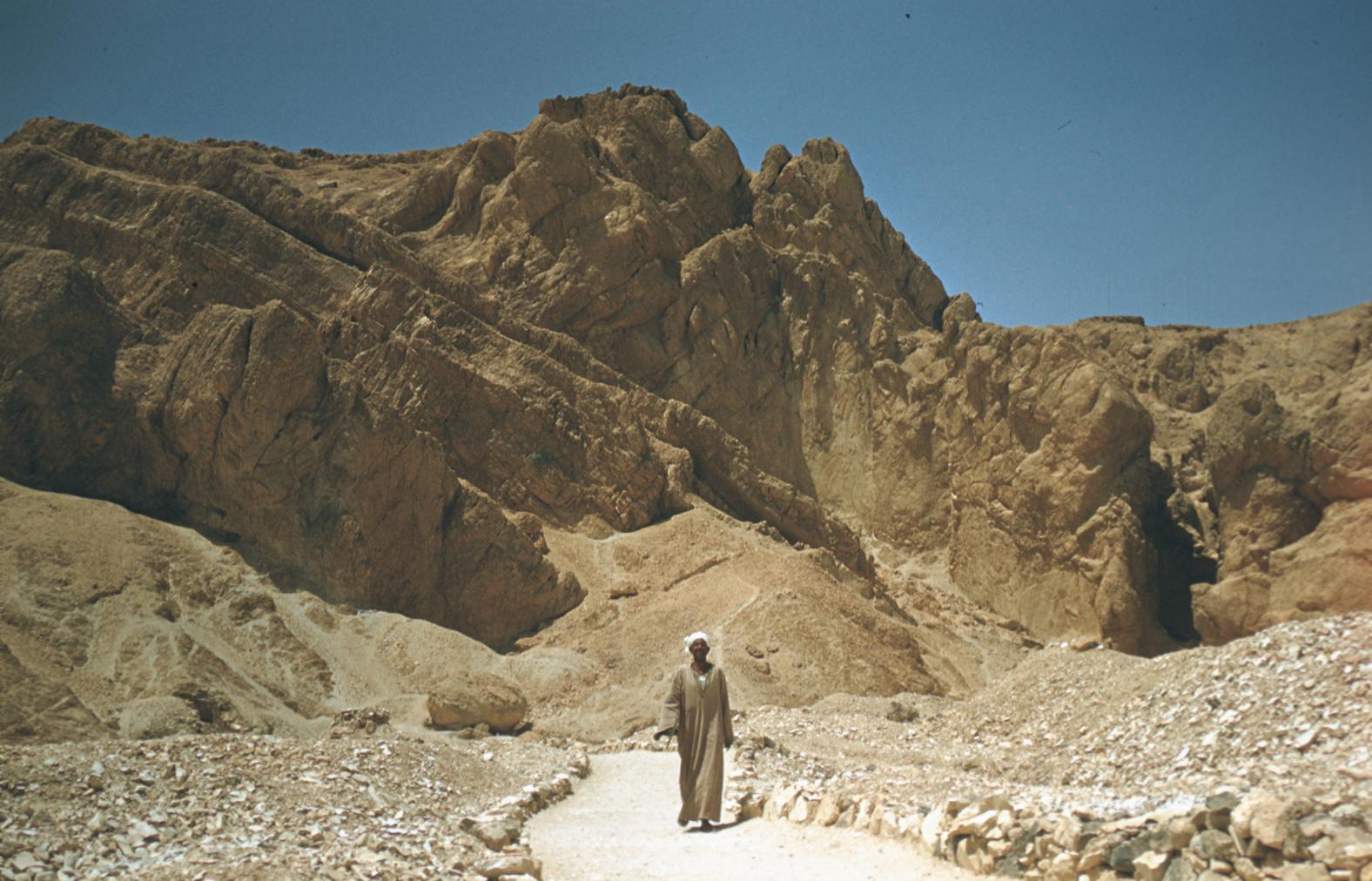
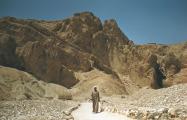
View of the main valley beside QV 66. Courtesy of Uni Dia Verlag; Uni Dia Image Nr. 36801.
Gate B
See entire tombThis gate provides access to the tomb chambers. In antiquity, floods filled the Ramp and Chamber B with debris almost to the ceiling, causing damage to the gateway. A modern metal gateway was installed to seal the tomb after visiting hours have ended.
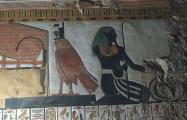
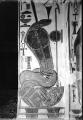
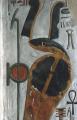
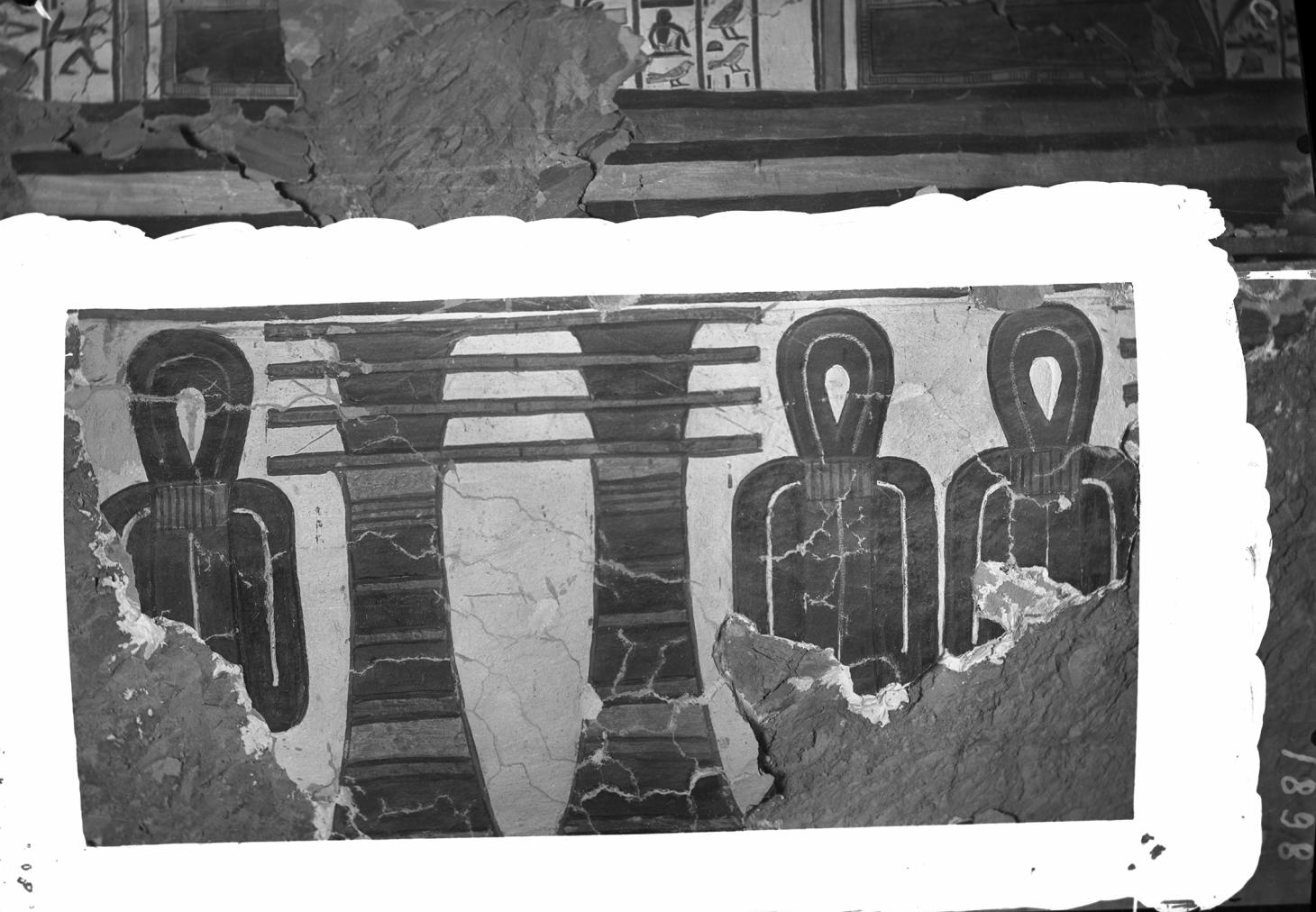
Painted decoration appears on the lintel, soffit, and reveals. Notably, the soffit is decorated with a depiction of the akhet comprised of sloping red mountains painted with red dots to add texture, and a partially damaged yellow disc outlined in red couched between the mountains. Flanking the disc are two kites (birds of prey), also painted red, with their heads facing south toward the tomb entryway. The kite on the left-hand side bears the throne hieroglyph on its head which designates it as the goddess Isis. Presumably, the kite on the right-hand side would be Nephthys, but the headdress associated with her does not survive due to damage. The east and west thicknesses are each decorated with a painting of the goddess Mut as a vulture with a Djed-pillar dado. The frieze at the ceiling displays a coiled winged cobra facing south toward the entrance with the accompanying hieroglyphs “given health and dominion”. The cobra frieze, djed dado, and depiction of Mut as a vulture on the east thickness are severely damaged.
Porter and Moss designation:
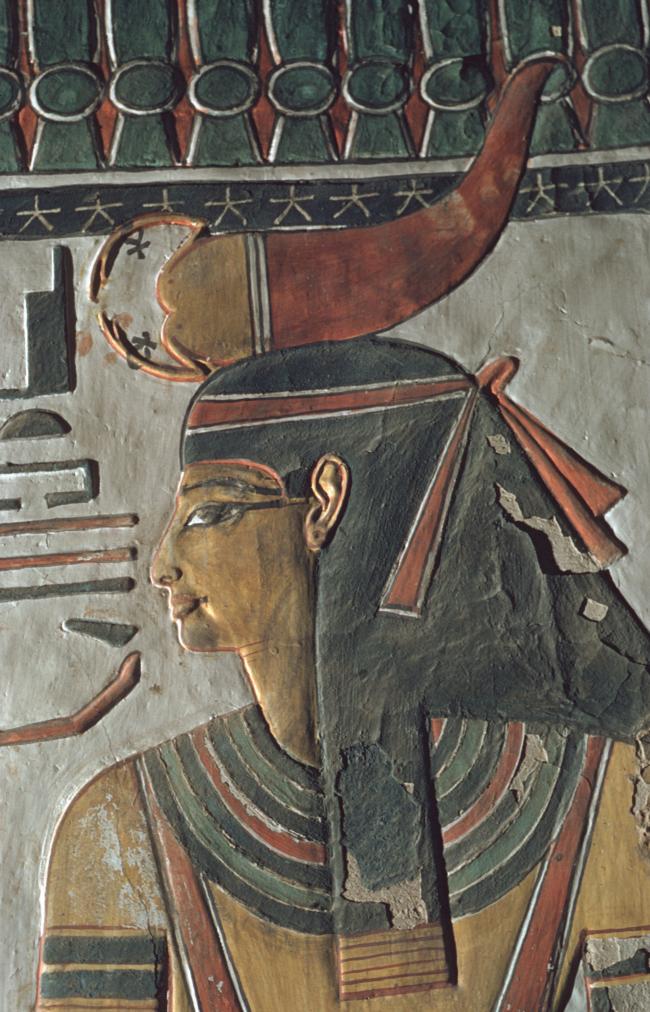
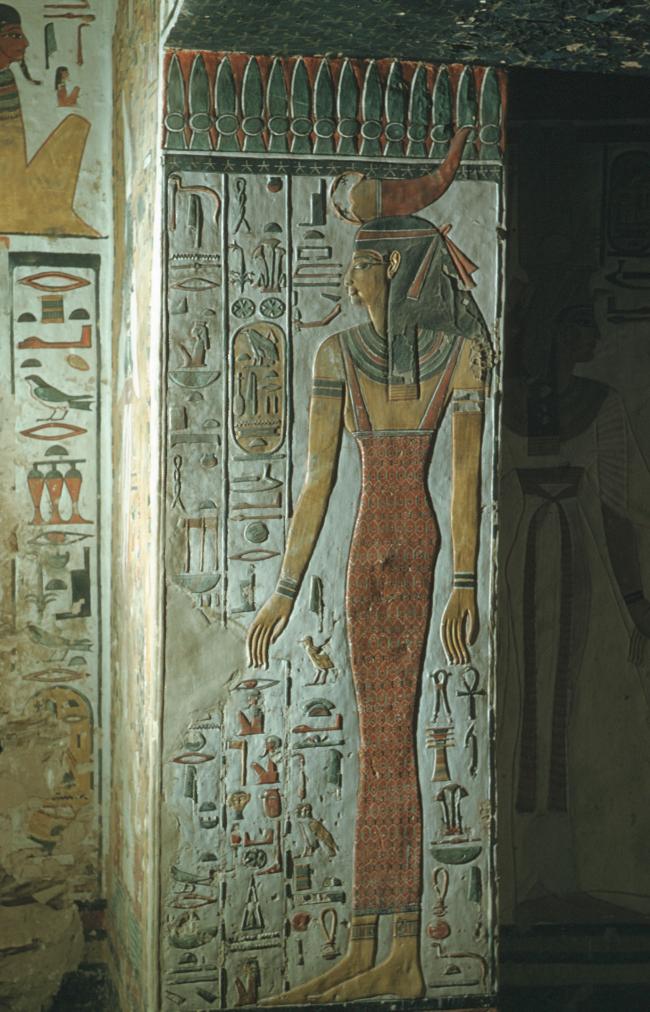
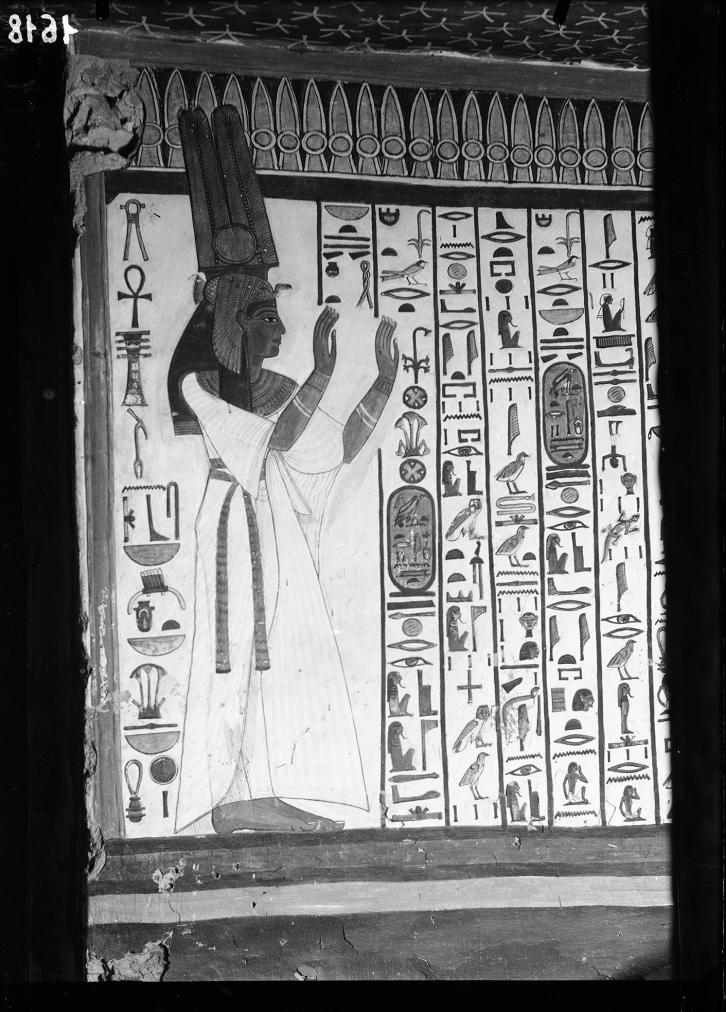
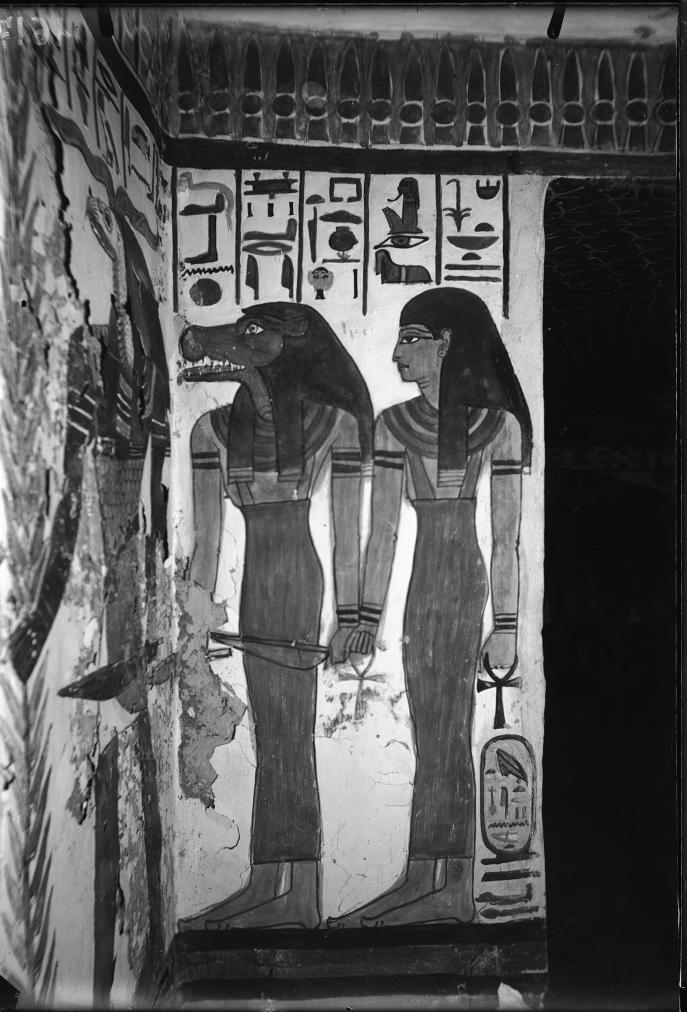
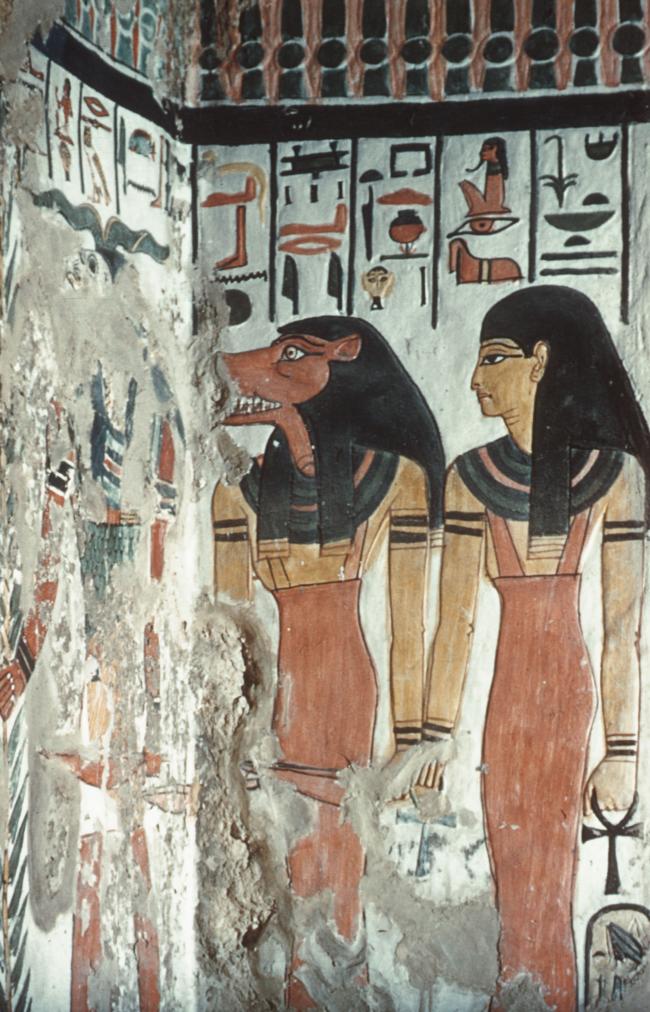
Detail of the goddess Serqet on the left thickness of the gate in the east wall, Chamber B. Courtesy of Uni Dia Verlag. Uni Dia Image Nr. 36815.
Chamber B
See entire tombLarge chamber on axis with the entryway. Rock-cut benches are carved alone the length of the west wall, and along the north wall until Gate C. A large double recess extends the east side of the chamber, leading to Gate Ba. Modern protective wooden walkways and fluorescent lighting were installed.
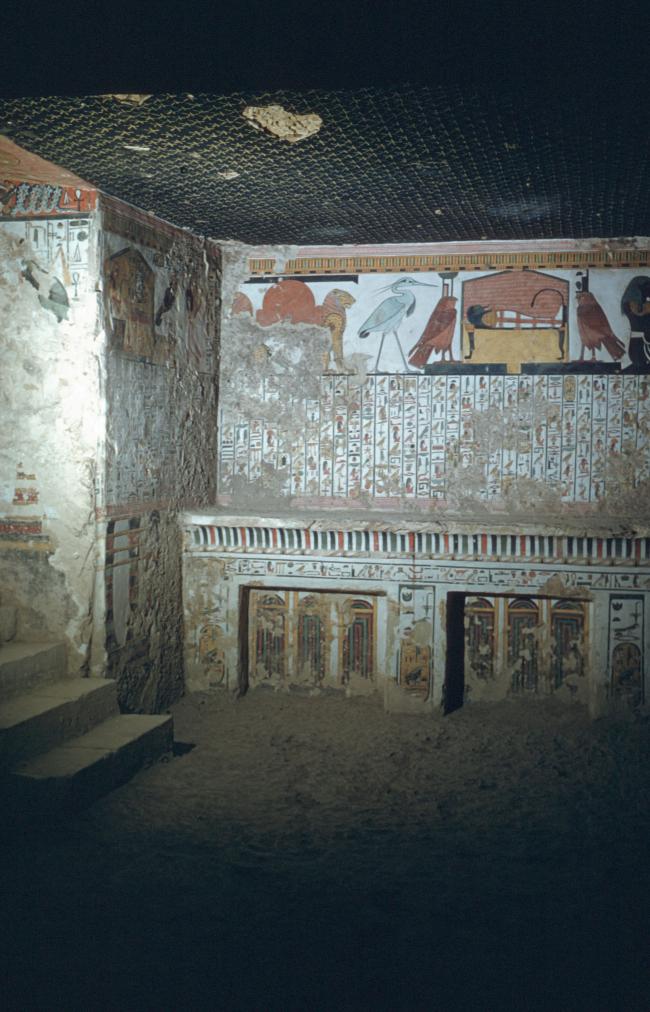
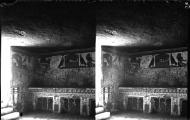
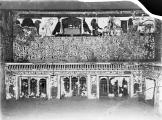
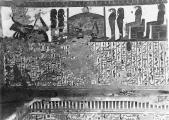
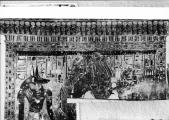
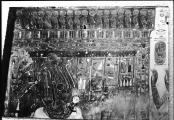
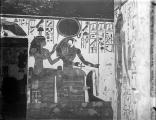
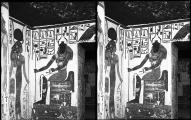
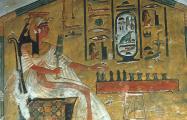
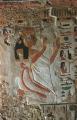
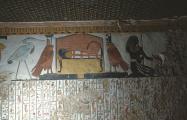
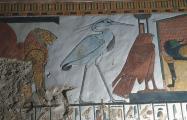
The decoration on the top register of the west half of the south wall contains one of the best-known scenes in the tomb, showing Nefertari seated facing toward the west wall and playing a game of senet within a vaulted kiosk. To the right of this, Nefertari is depicted as a human-headed ba standing on top of the tomb. To the right of this, Nefertari is shown kneeling with her hands raised in a gesture of worship. The object of her veneration is the depiction of the akhet in the leftmost vignette of the west wall top register. The mountains of the horizon are flanked by two lions beneath the pt-sign, meaning “sky”. A depiction of the Benu bird follows the akhet. Much of what is left of the west wall decoration is taken up by a depiction of Nefertari as a mummy on a bier beneath a canopy. The goddesses Isis and Nephthys appear as kites, with Nephthys in her traditional location at the head and Isis in her traditional position at the feet. To the right, a god representing the Nile and painted black kneels facing the severely damaged vignettes on the right side of the wall. These damaged figures are a personification of “the great green” in front of a shrine followed by a seated falcon.
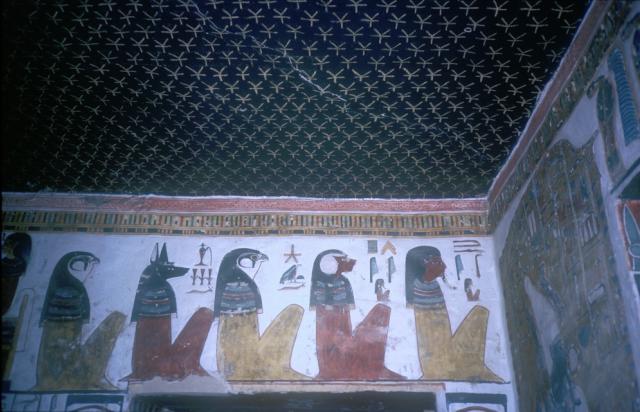
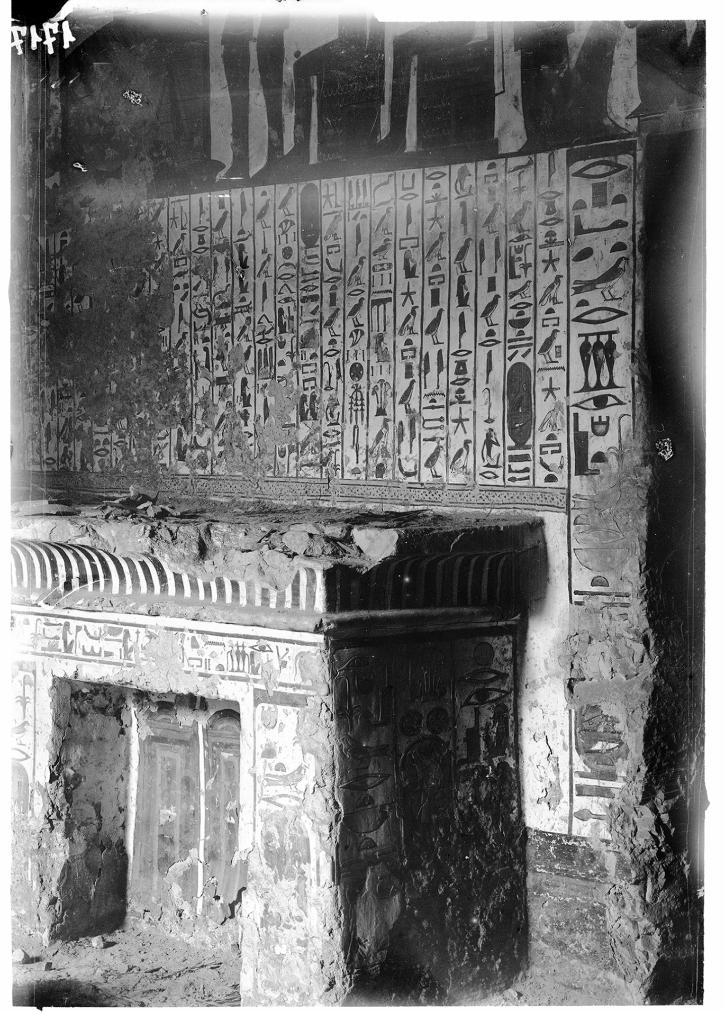
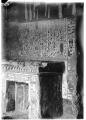
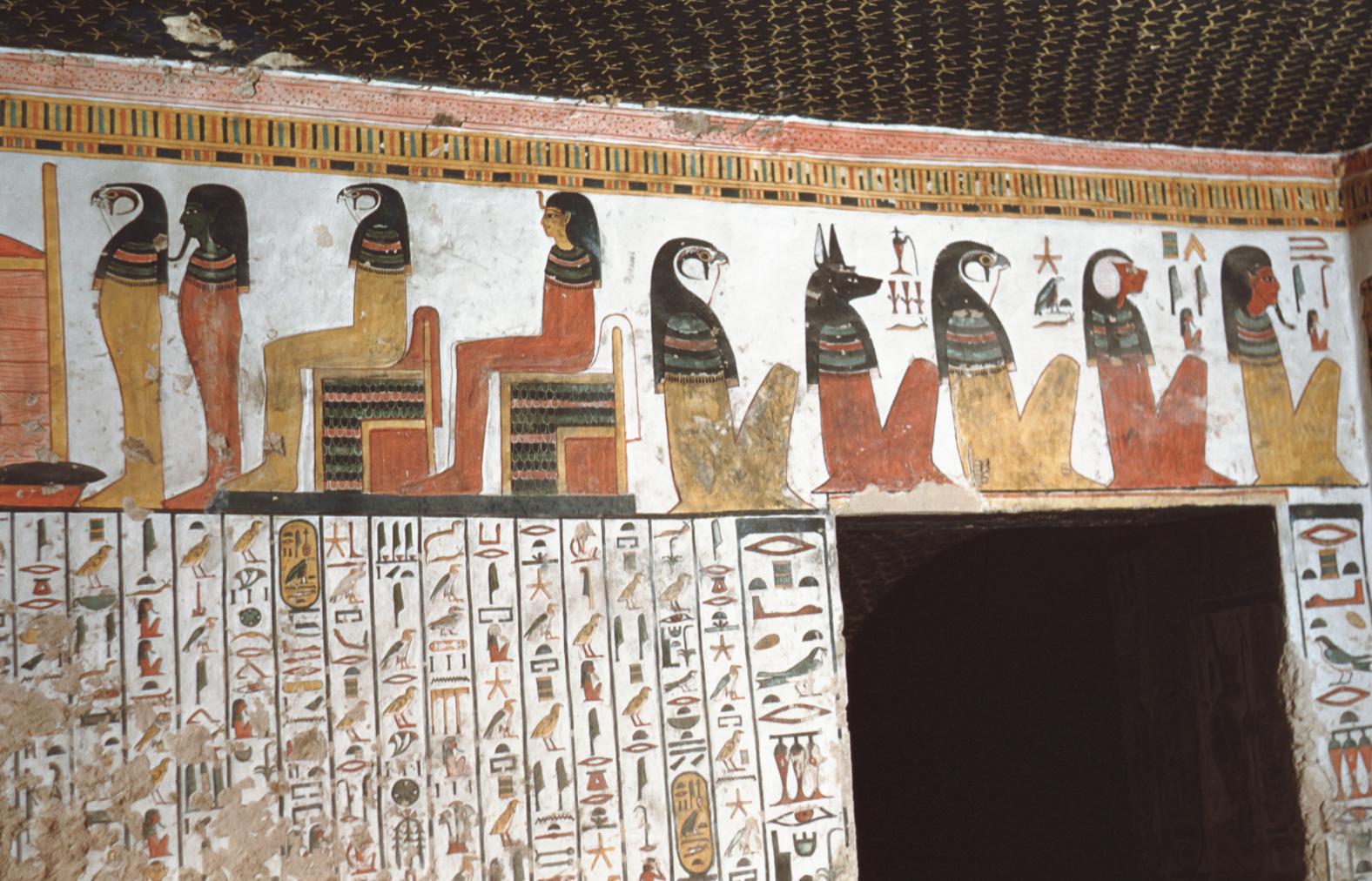
The north wall upper register vignettes are partially damaged on the left side. The leftmost figure is a recumbent celestial cow, followed by the four Sons of Horus who flank in pairs the Canopic chest. Inside the chest is a recumbent jackal. Facing the canopic chest are two seated mummiform gods, one with a falcon head and the other with a human head. Possibly these are Ra and Shu respectively. Finally, on the right part of the register, facing toward the east, are depictions of seated mummiform gods, four of whom are identified by text. The leftmost god, not identified by text, can only be Horus, as the other deities bear the names of the four Sons of Horus. From left to right they are Duamutef (jackal headed), Qebehsenuef (falcon headed), Hapy (baboon headed), and Imsety (human headed). The text that takes up most of the wall space on the west, south (west side), and north walls includes the text from the Book of the Dead Spell 17. On the south wall, west portion, the dado frieze is decorated with both two djed-pillars and a Tyet-knot. However, the Bench stretching across the west and north walls, and whose top is carved and painted to look like a Cavetto cornice, has niches that are decorated with shrines. The piers are decorated with the Cartouche and “great royal wife” title of Nefertari.
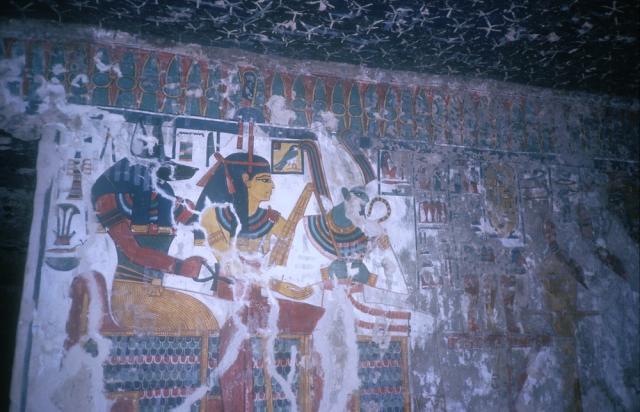
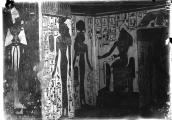
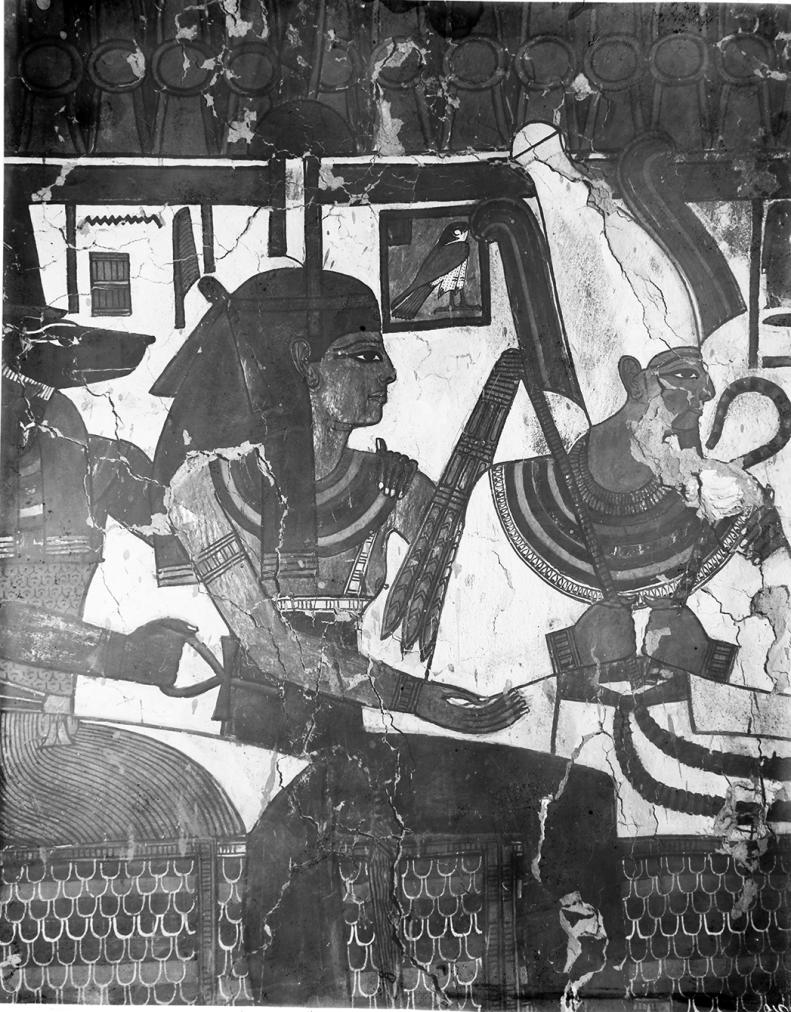
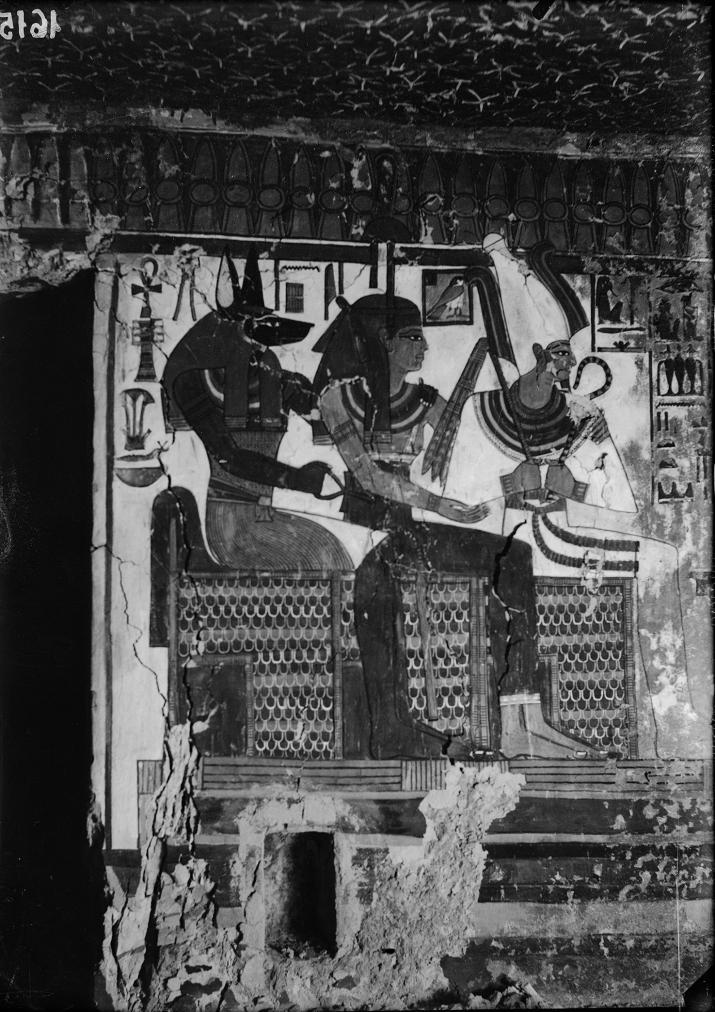
The east portion of Chamber B opens into a double recess which is linked by a narrow gateway into the side chamber (Ba). The east wall proper is decorated on the north side with a depiction of the mummiform Osiris standing within a kiosk, facing south, and flanked by two imyut-fetishes. The decoration on the south side of the east wall continues onto the east side of the south wall, showing Anubis standing behind an enthroned mummiform Osiris, both within an elaborate kiosk. Nefertari is shown on a larger scale, standing on the east side of the south wall and facing Osiris with her hands raised in a gesture of worship. The dado friezes of these areas are bands of black, red, and yellow.
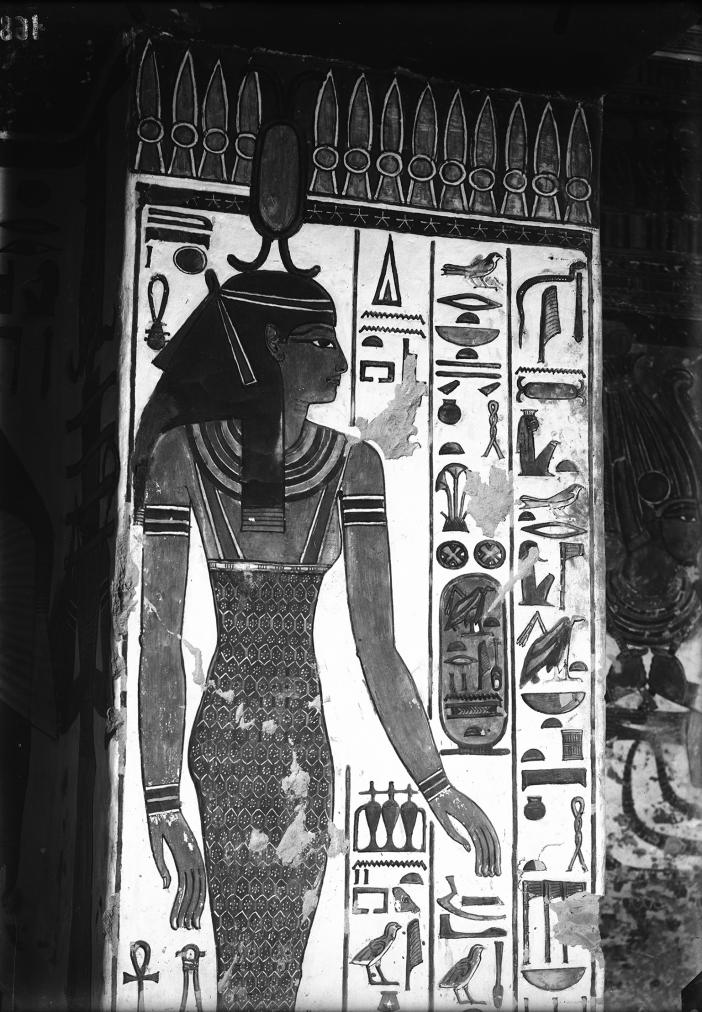
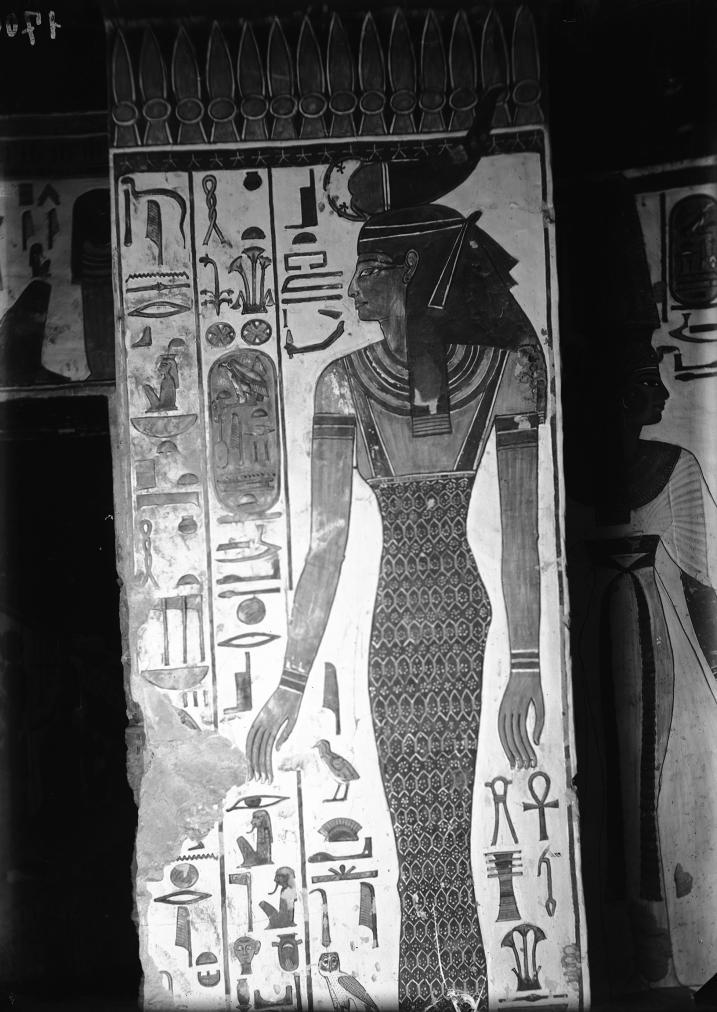
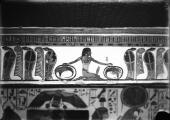
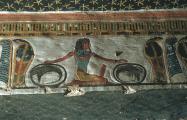
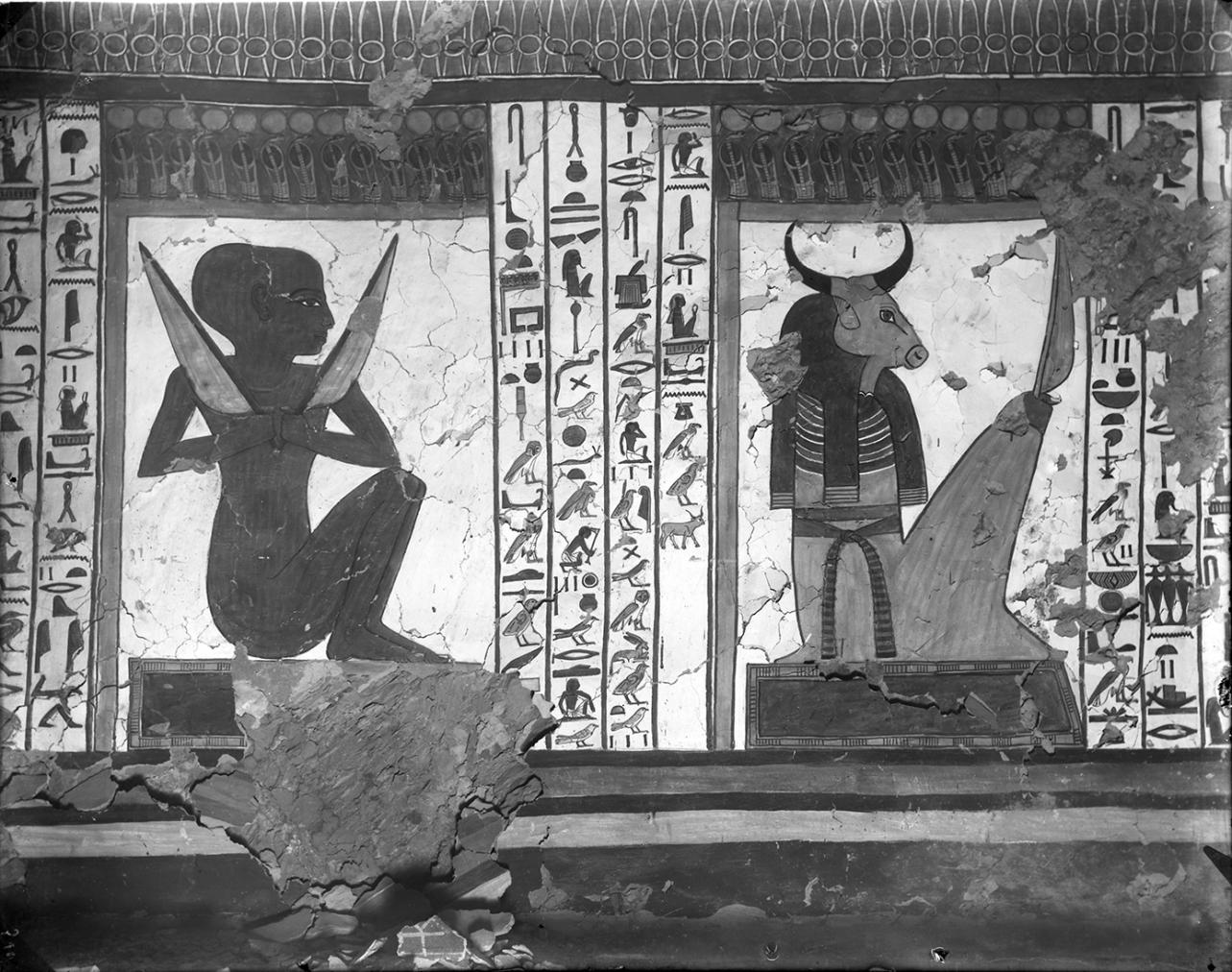
The lintel of the first recess, which takes on the form of a broad gateway, in the east wall is decorated with a seated man in the center who rests each hand upon a circle containing a wedjat eye. On the left side are alternating six uraei and five ostrich feathers; on the right side are alternating five uraei and four ostrich feathers. The south thickness is decorated with a depiction of the goddess Neit, facing toward the west, and the north thickness shows the goddess Serqet. Above each is a Kheker frieze. The text on both walls contains a speech by each respective goddess.
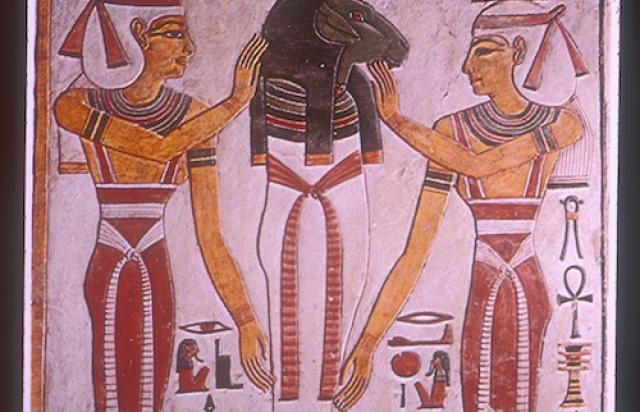
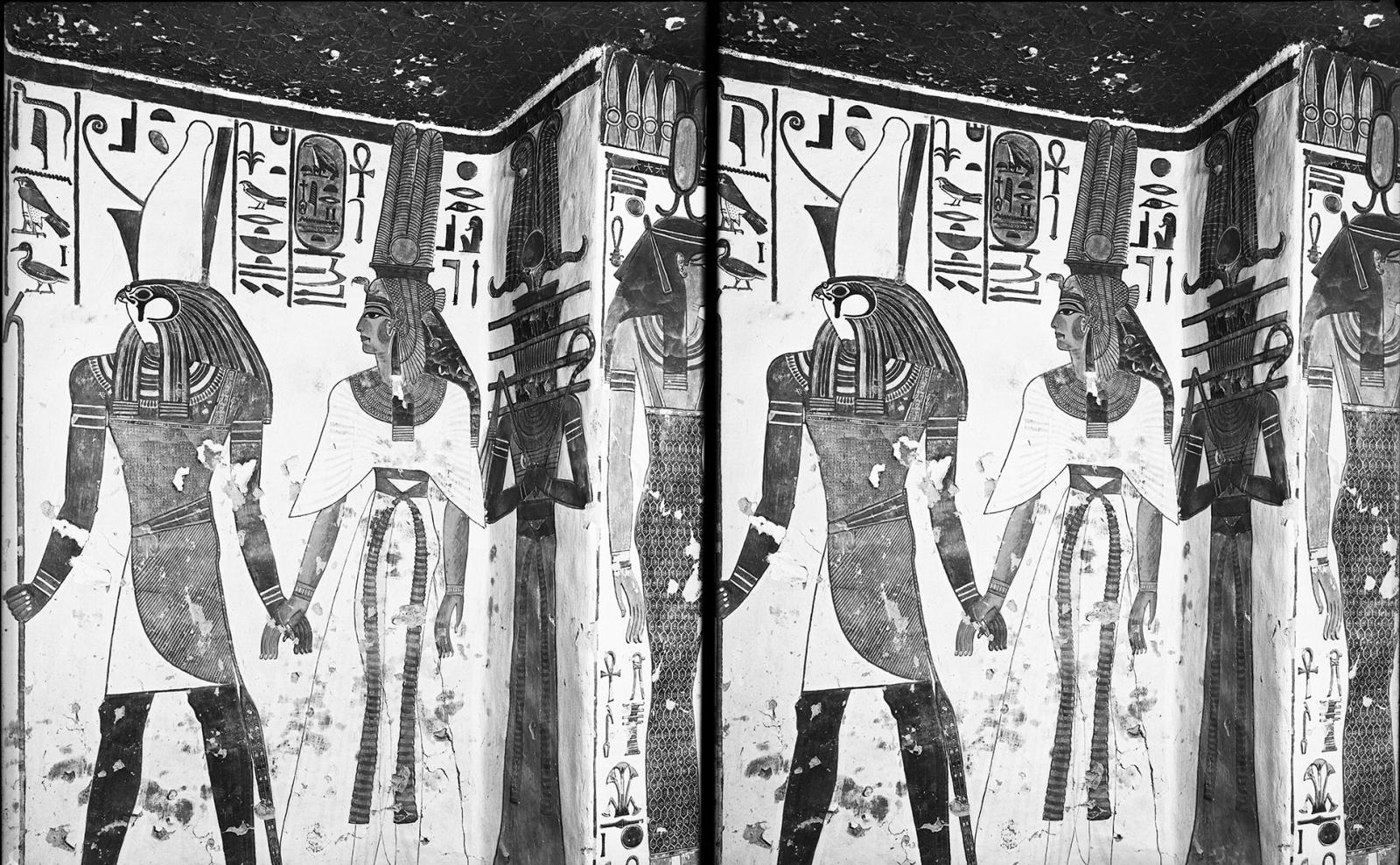
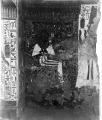
The larger recess west wall on both the north and south sides is decorated with a depiction of Osiris as an anthropomorphized Djed-pillar, composed of human body and djed-pillar head wearing the atef crown. The north wall contains a depiction of Neferari being led by the goddess Isis who is wearing a sun disc and horns headdress and the Menat necklace, regalia more often associated with Hathor. Isis leads Nefertari to the god Kheperi on the north side of the east wall, who sits enthroned with the body of a man and the head of a Scarab beetle. The south wall depicts Horsiese (Horus, son of Isis) leading Nefertari to the south side of the east wall where Ra-Horakhty and Hathor are enthroned facing toward the south. The dado frieze is simply bands of black, red, and yellow, and there is no frieze at the ceiling.
The ceiling throughout the chamber and recesses is decorated with yellow stars on a dark blue background.
Porter and Moss designation:
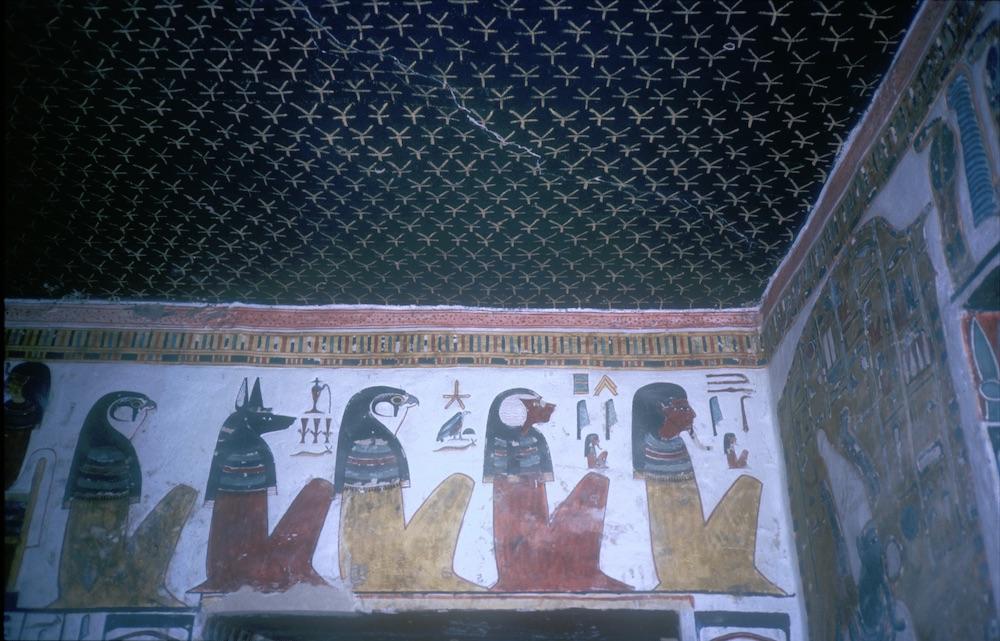
Duamutef, Qebehsenuef, Hapy, and Imsety above Gate C in tomb of Nefertari (QV66)
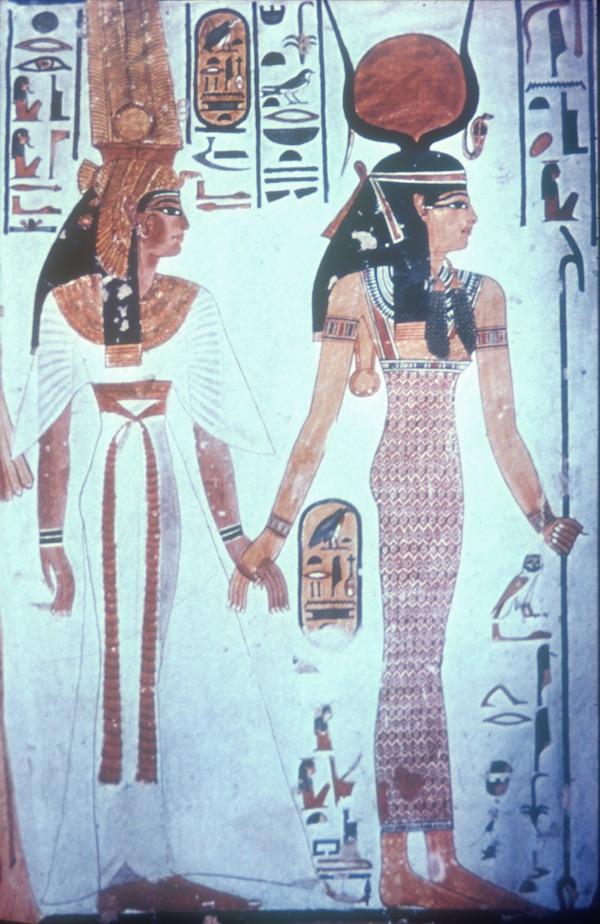
Nefertari led by Isis.
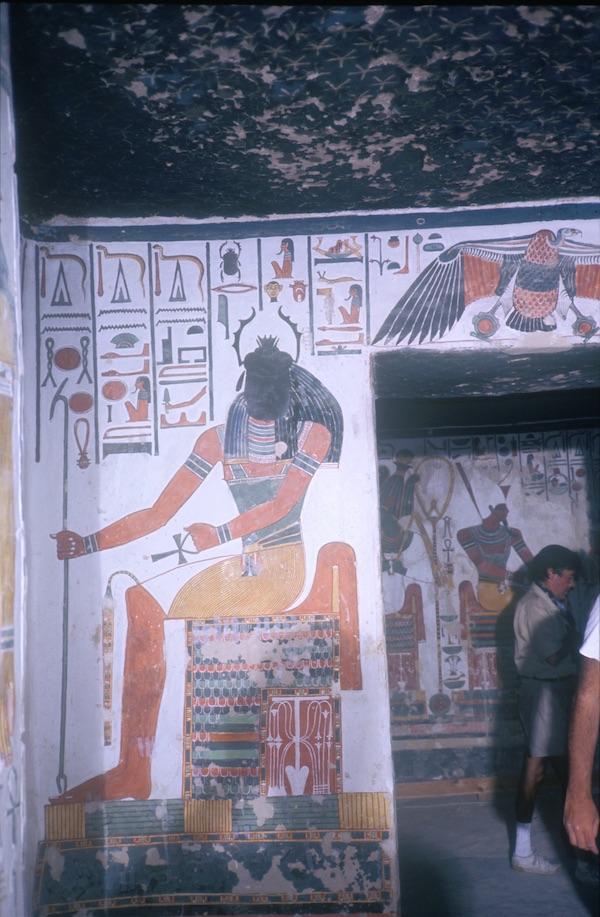
Detail of Khepri seated on throne and holding a was scepter. Stars on ceiling, Nekhbet on lintel.
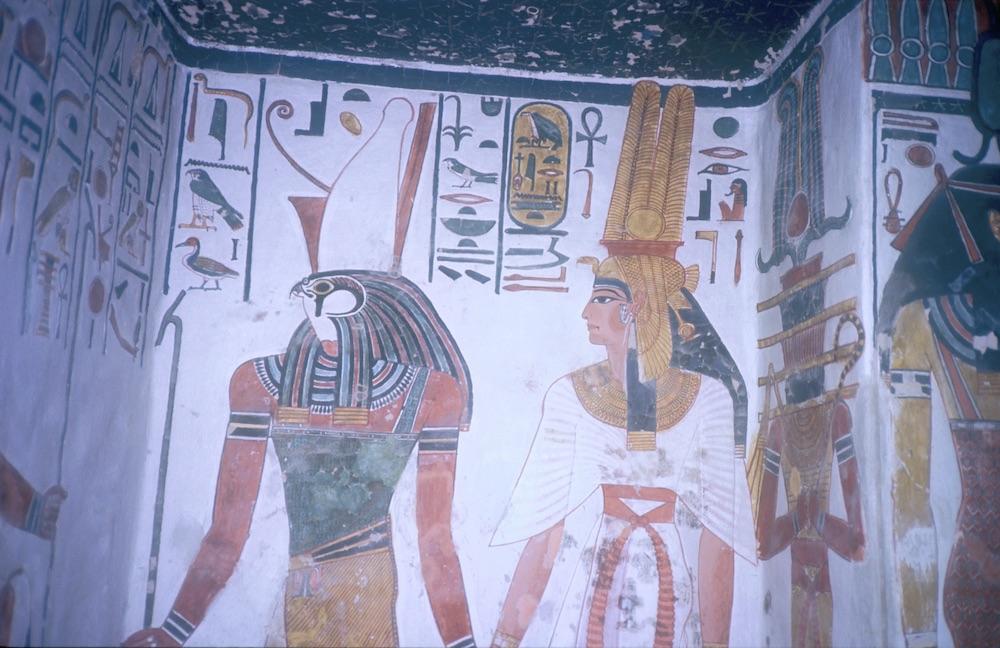
Nefertari being led by Horus and personified Djed Pillar.
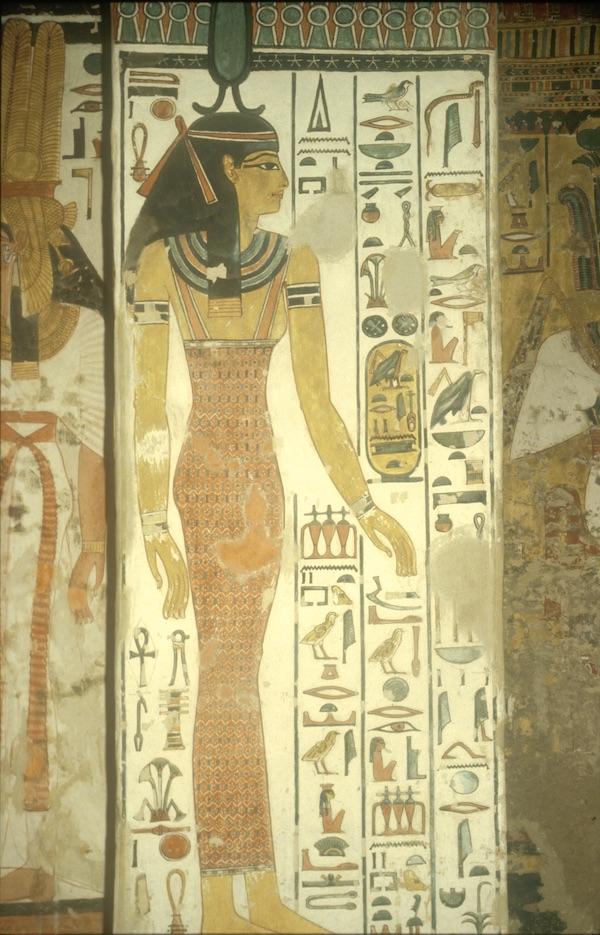
Detail of Neith.
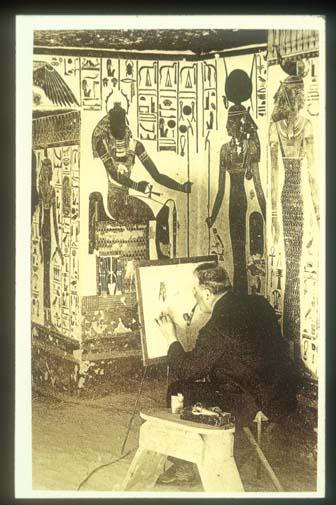
Epigraphy in the tomb of Nefertari (early 20th Century)
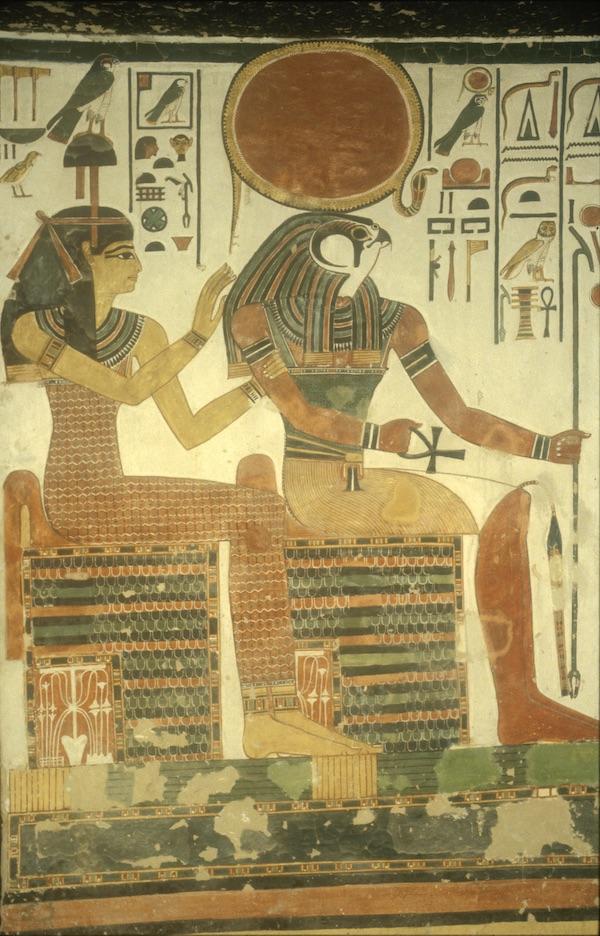
The deities Hathor and Ra-Horakhty seated on thrones in Nefertari's tomb.
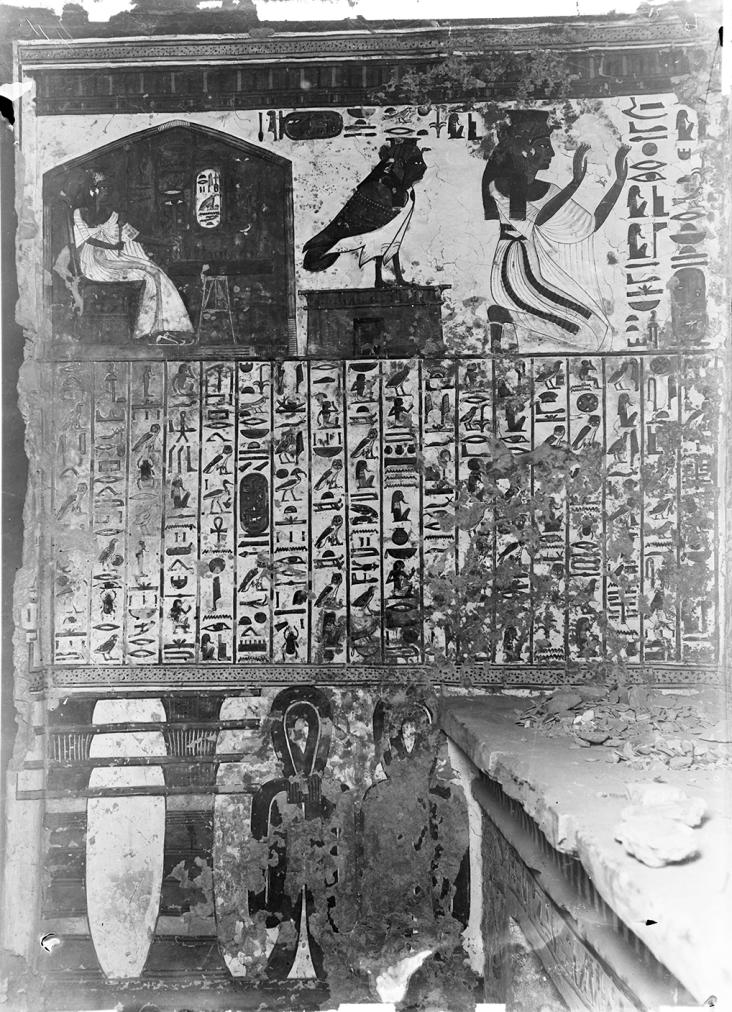
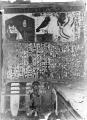
The tomb of Queen Nefertari (QV 66) photographed during excavations. From the top left, the queen plays senet and her ba sits upon a shrine while she is in the act of worship. In the center of the wall are texts from Spell 17 of the Book of the Dead while the dado is comprised of djed-pillars and tyet-knots. Italian Archaeological Expedition excavations. Courtesy of the Egyptian Museum in Turin.
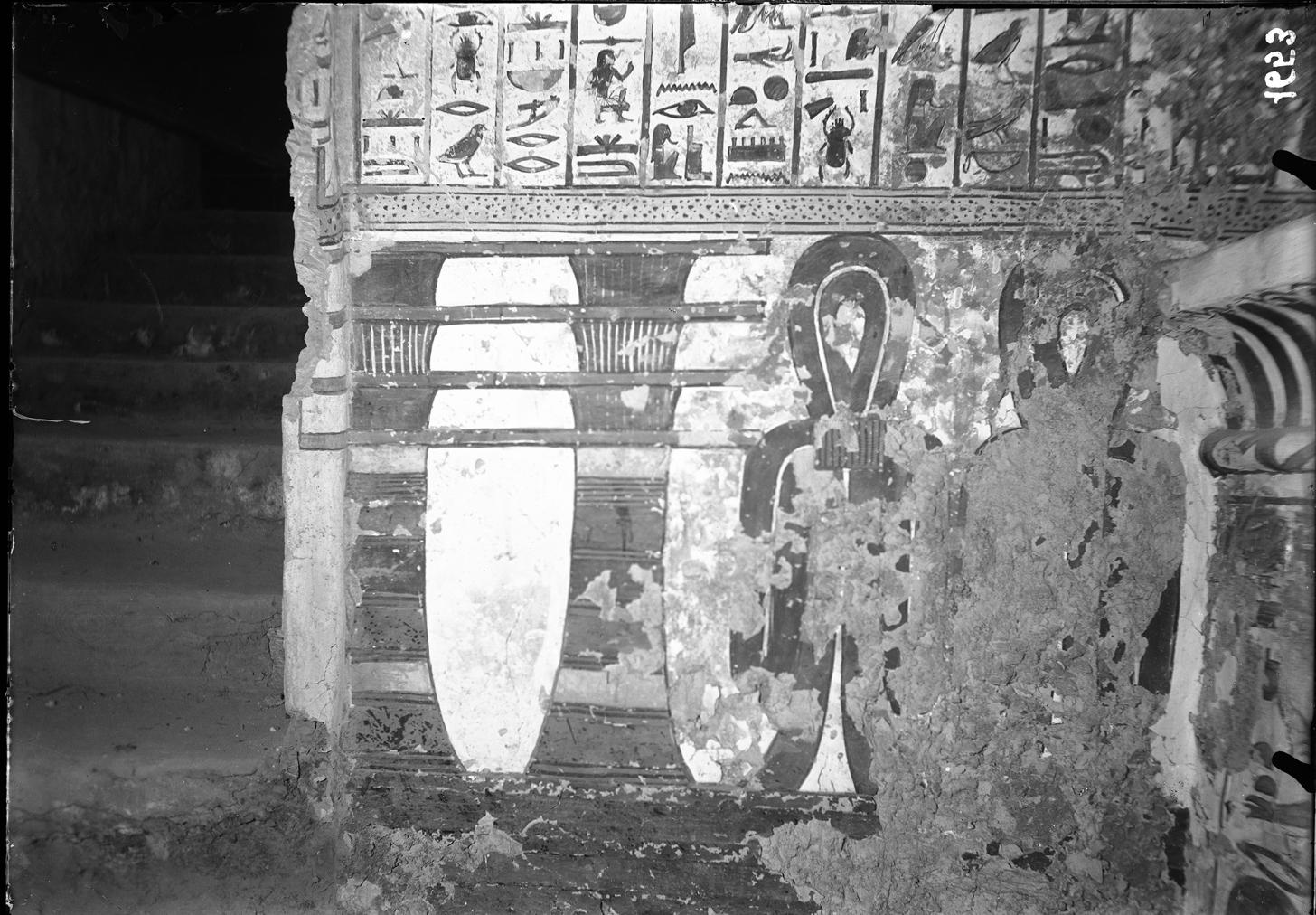
Dado comprised of djed-pillars and tyet-knots in the tomb of Queen Nefertari (QV 66) photographed during excavations. Italian Archaeological Expedition excavations. Courtesy of the Egyptian Museum in Turin.
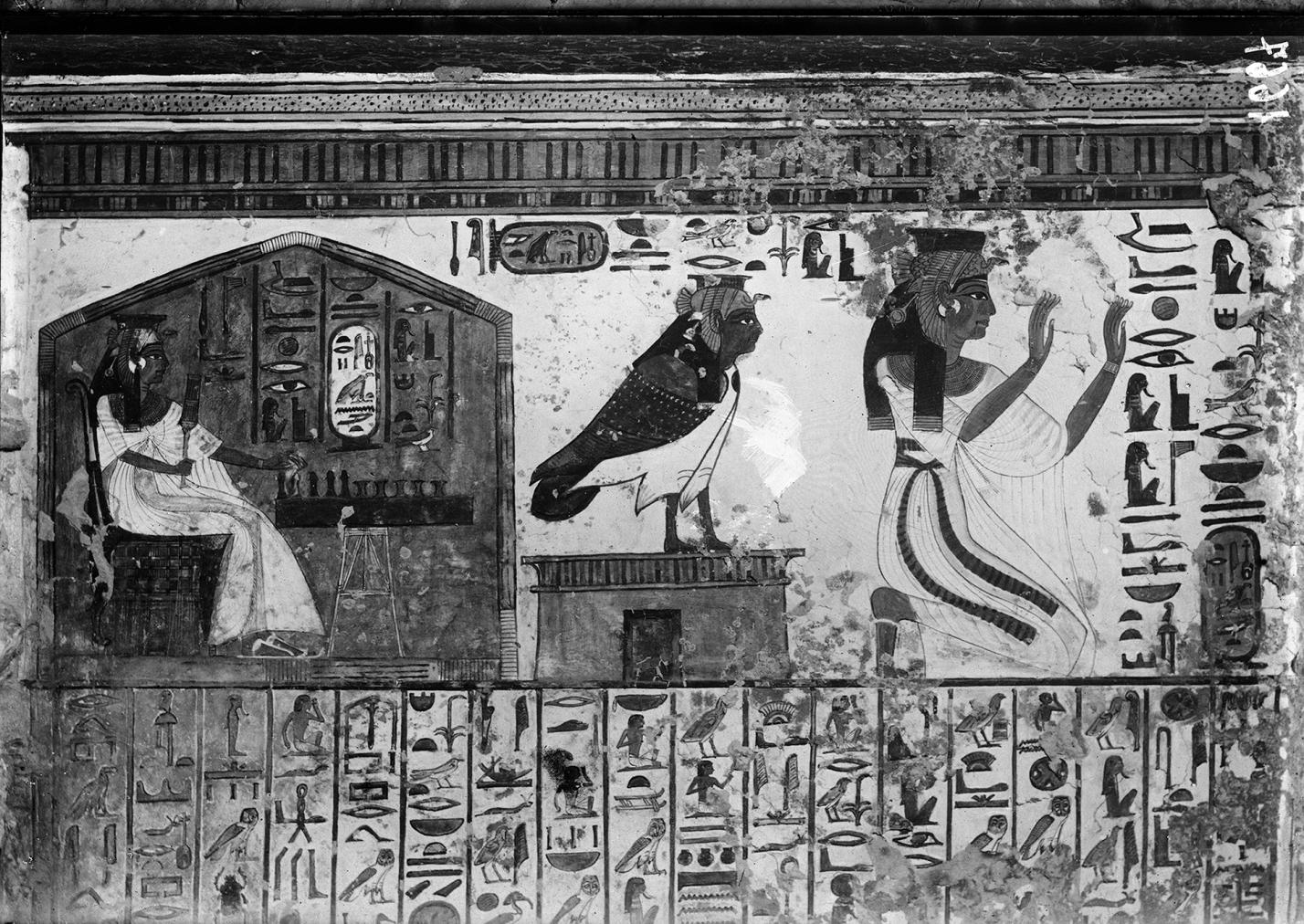
The tomb of Queen Nefertari (QV 66) photographed during excavations. The queen plays senet (left) and her ba sits upon a shrine (middle) while she is in the act of worship (right). Below are texts from Spell 17 of the Book of the Dead. Italian Archaeological Expedition excavations. Courtesy of the Egyptian Museum in Turin.
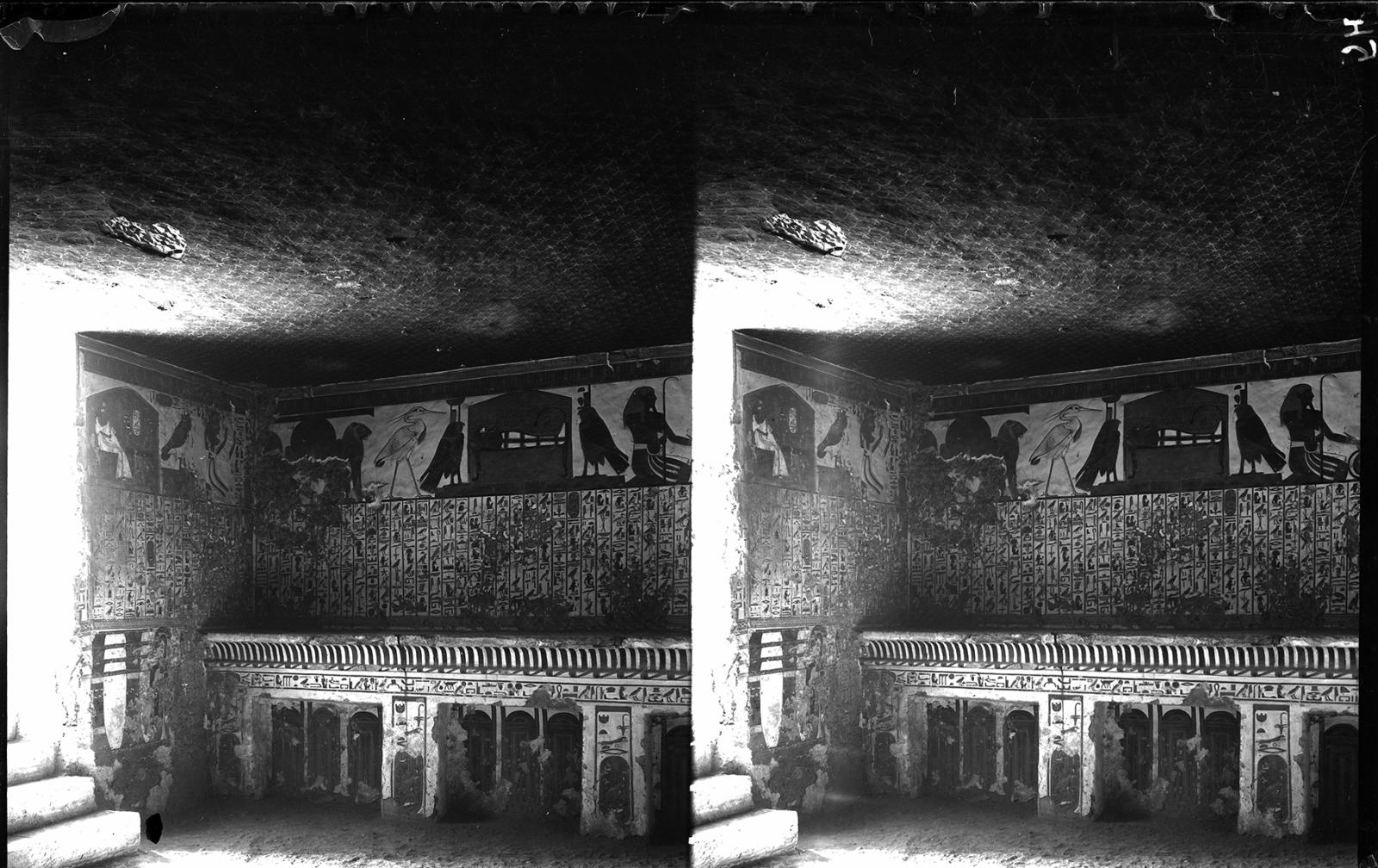
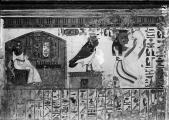
The tomb of Queen Nefertari (QV 66) photographed during excavations. From the left, the queen plays senet and her ba sits upon a shrine (middle) while she is in the act of worship (right). Below are texts from Spell 17 of the Book of the Dead. In the center are the twin lions of the god Aker who protect the horizon, the benu-bird of Re, Queen Nefertari's mummy on a funerary pyre protected by Nephthys and Isis in their kite forms, and finally the god Heh kneeling. A dog-legged area with five niches painted with shrines and framed with a cavetto cornice extends from the lower two sides of the room. The ceiling's stars are visible. Italian Archaeological Expedition excavations. Courtesy of the Egyptian Museum in Turin.
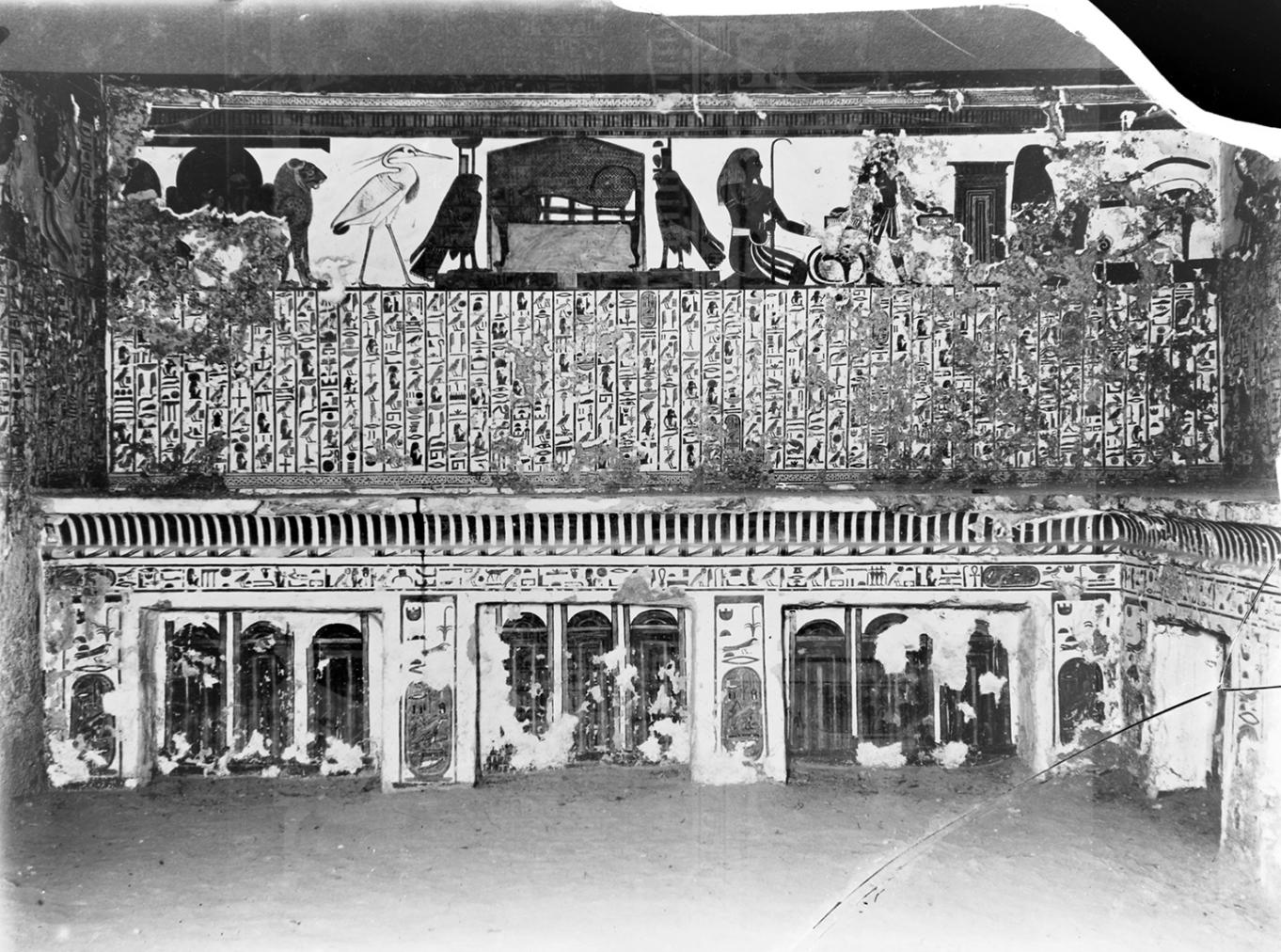
The tomb of Queen Nefertari (QV 66) photographed during excavations. From the left, the twin lions of the god Aker who protect the horizon, the benu-bird of Re, Queen Nefertari's mummy on a funerary pyre protected by Nephthys and Isis in their kite forms, the god Heh kneeling, and additional references to deities from the texts of Spell 17 from the Book of the Dead shown below. A dog-legged area with five niches painted with shrines and framed with a cavetto cornice extends from the lower two sides of the room. The ceiling's stars are visible. Italian Archaeological Expedition excavations. Courtesy of the Egyptian Museum in Turin.
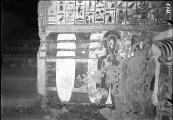
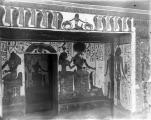
The tomb of Queen Nefertari (QV 66) possibly photographed after excavations. From the left, Hathor in her bovine form, a canopic chest in the form of a shrine with Anubis as a jackal couchant surrounded by the Four Sons of Horus, as well as Ra and Shu seated. Below are texts from Spell 17 of the Book of the Dead. A dog-legged area with five niches painted with shrines and framed with a cavetto cornice extends from the lower two sides of the room. Italian Archaeological Expedition excavations. Courtesy of the Egyptian Museum in Turin.
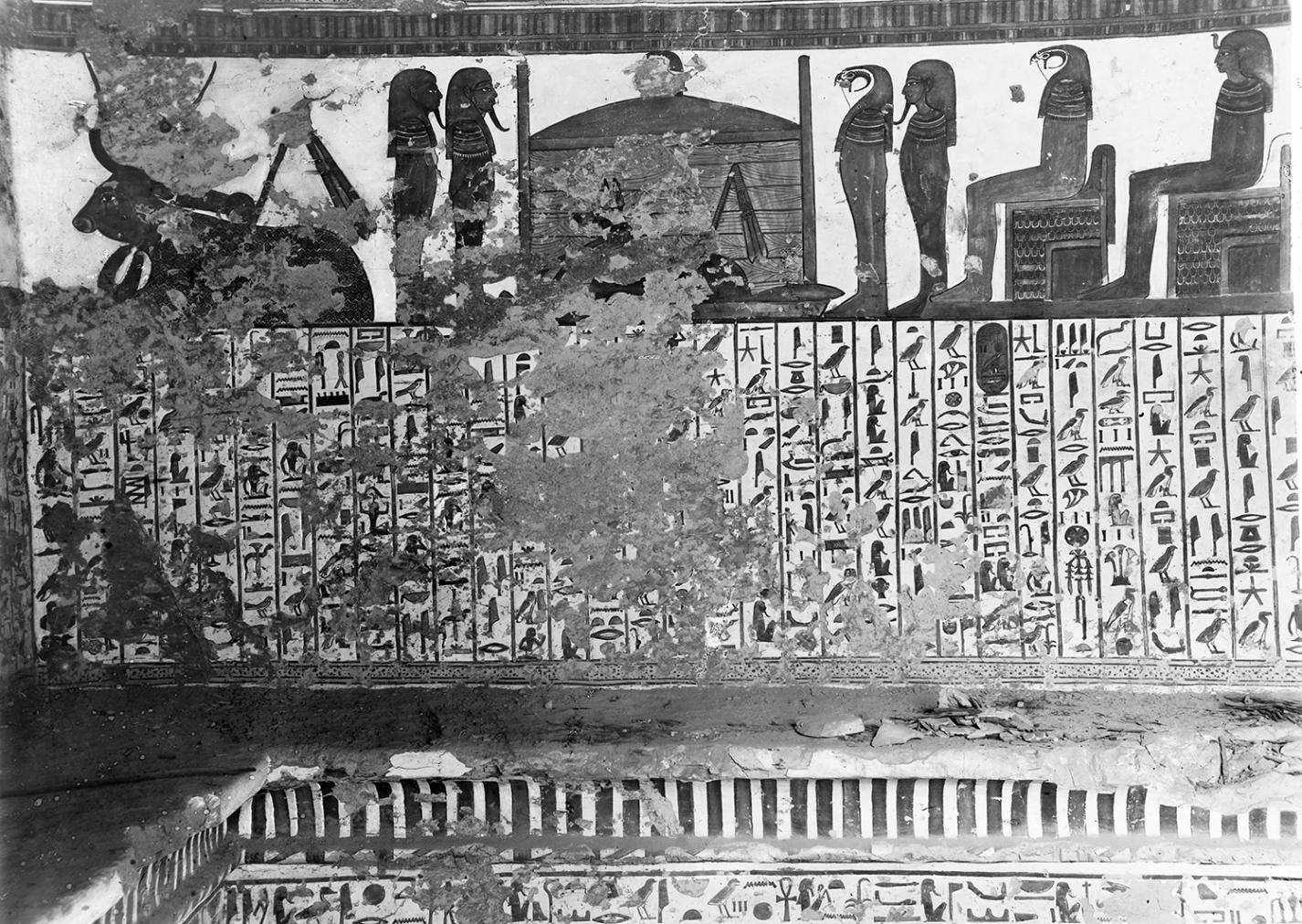
The tomb of Queen Nefertari (QV 66) possibly photographed after excavations. From the left, Hathor in her bovine form, a canopic chest in the form of a shrine with Anubis as a jackal couchant surrounded by the Four Sons of Horus, as well as Ra and Shu seated. Below are texts from Spell 17 of the Book of the Dead. A dog-legged area with five niches painted with shrines and framed with a cavetto cornice extends from the lower two sides of the room. Italian Archaeological Expedition excavations. Courtesy of the Egyptian Museum in Turin.
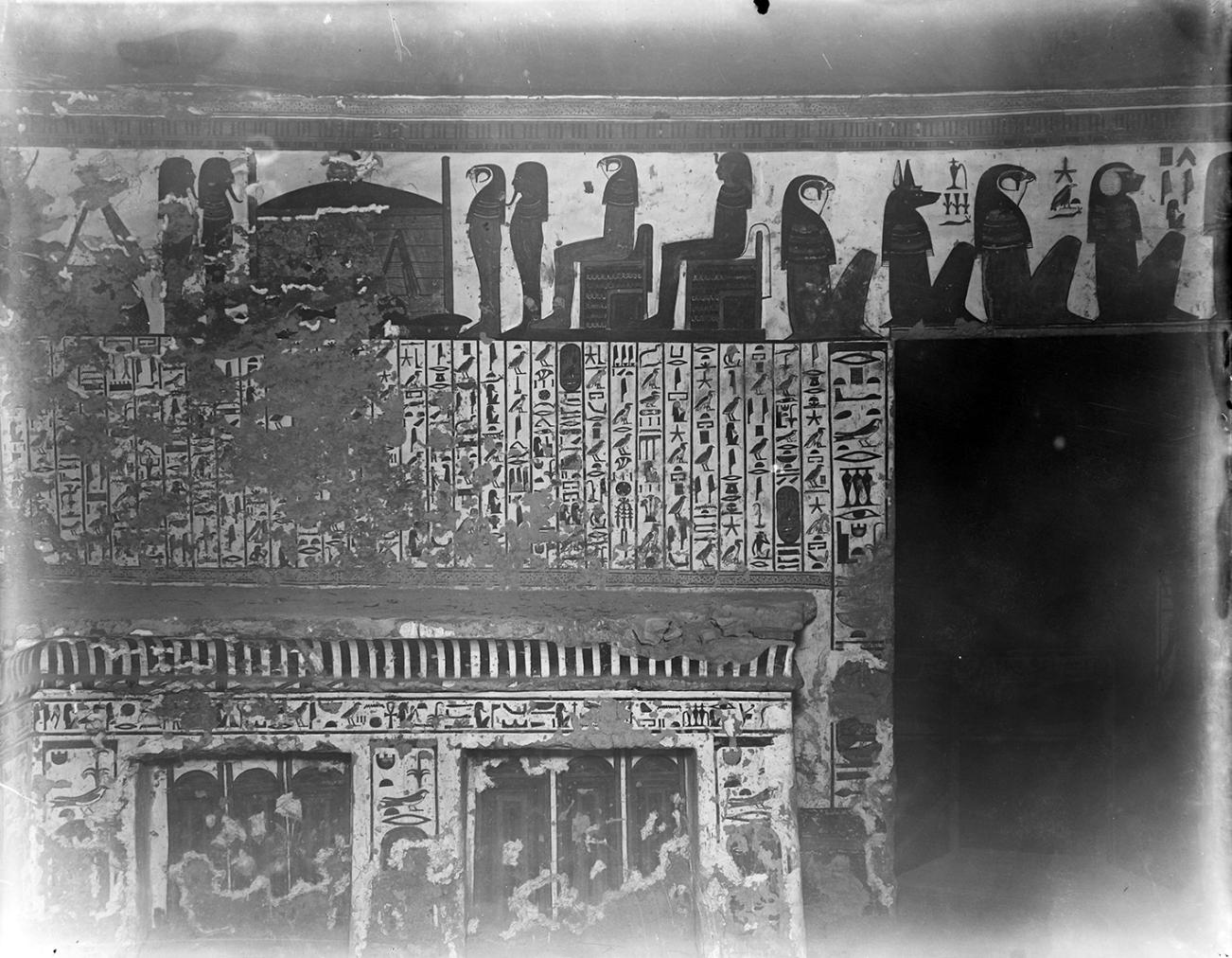
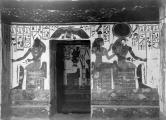
The tomb of Queen Nefertari (QV 66) possibly photographed after excavations. From the left, Hathor in her bovine form, a canopic chest in the form of a shrine with Anubis as a jackal couchant surrounded by the Four Sons of Horus, Ra and Shu enthroned, as well as Horus and his Four Sons seated above the burial chamber's entrance. Below are texts from Spell 17 of the Book of the Dead. A dog-legged area with five niches painted with shrines and framed with a cavetto cornice extends from the lower two sides of the room. Italian Archaeological Expedition excavations. Courtesy of the Egyptian Museum in Turin.
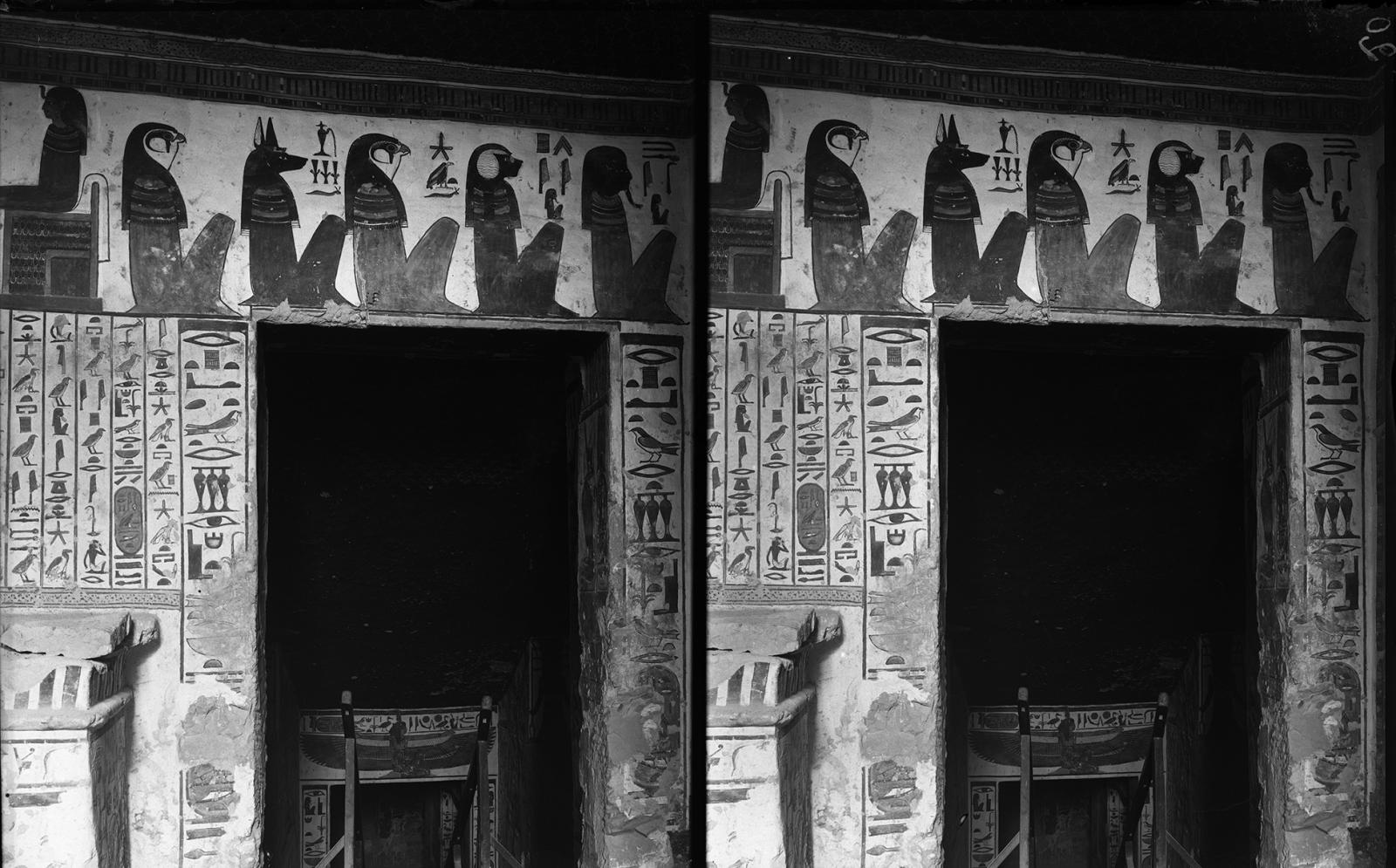
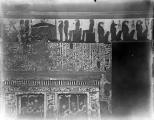
The tomb of Queen Nefertari (QV 66) photographed after excavations. From the left, Horus seated with his Four Sons, Imsety, Hapy, Duamutef, and Qebehsenuef, above Gate C with a modern wooden railing. Italian Archaeological Expedition excavations. Courtesy of the Egyptian Museum in Turin.
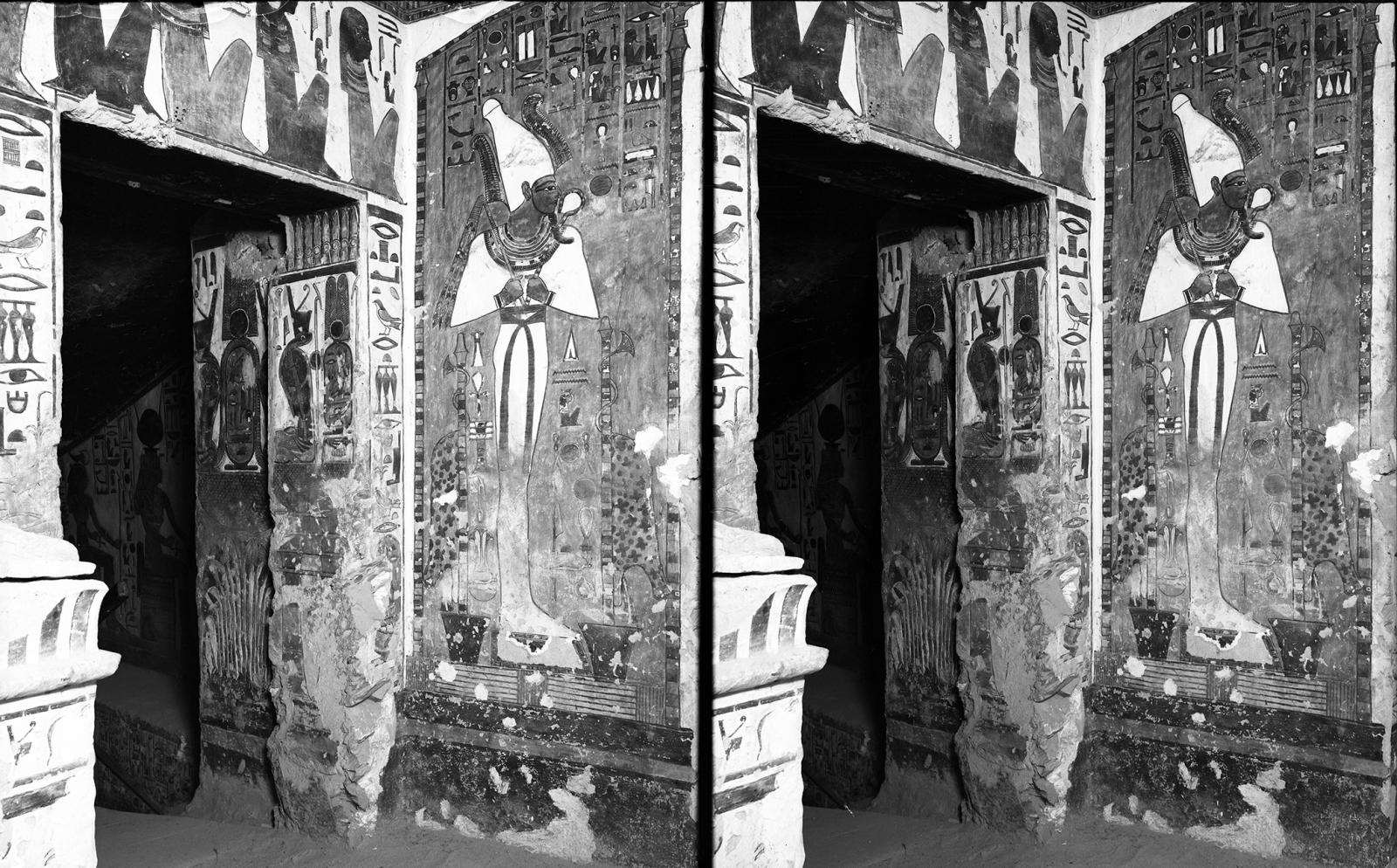
The tomb of Queen Nefertari (QV 66) perhaps photographed after excavations. Above Gate C, with Wadjet as a cobra protecting the royal cartouche of Queen Nefertari, are Horus seated and his Four Sons, Imsety, Hapy, Duamutef, and Qebehsenuef. To the right, an enshrined Osiris flanked by two imiut-fetishes. Italian Archaeological Expedition excavations. Courtesy of the Egyptian Museum in Turin.
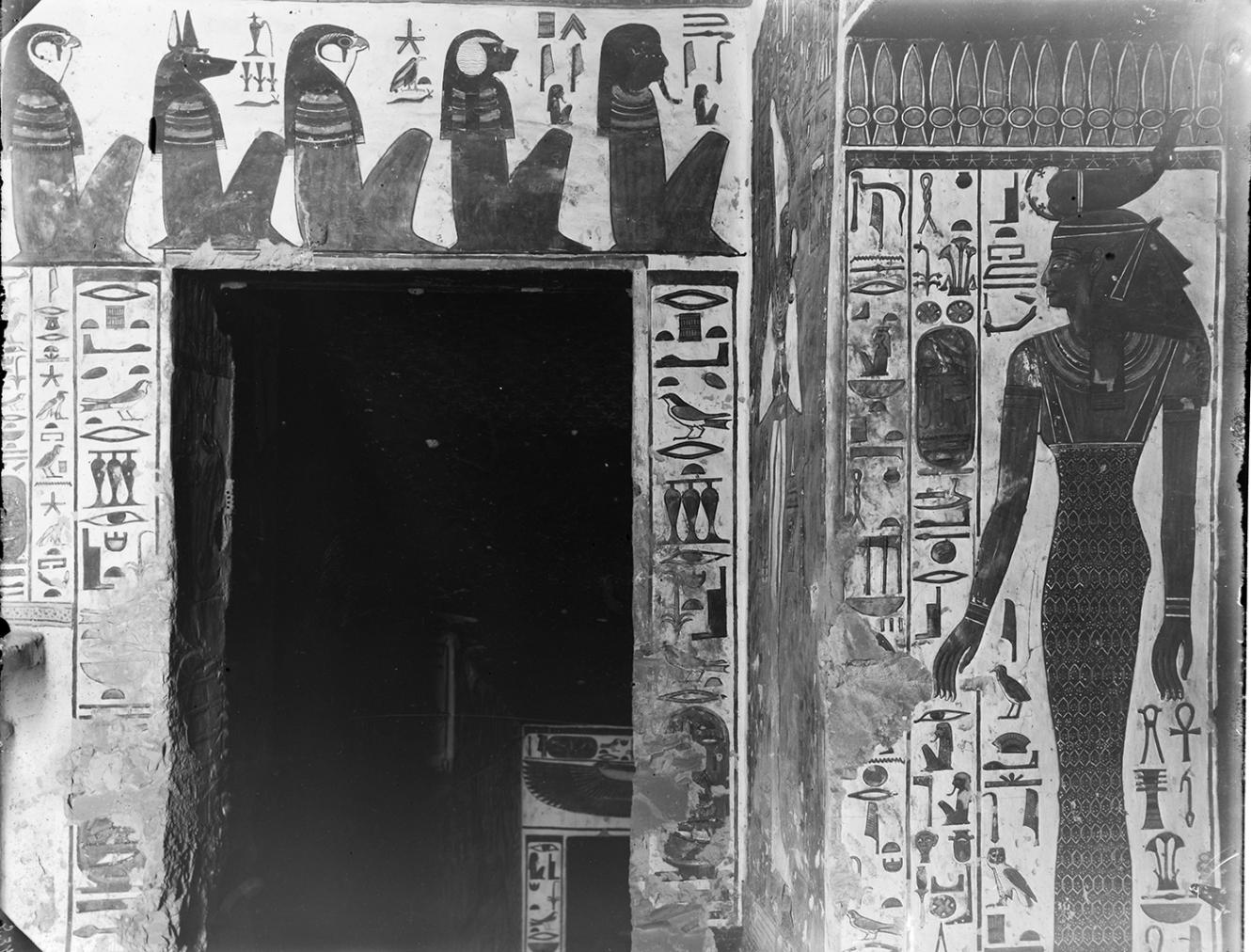
The tomb of Queen Nefertari (QV 66) perhaps photographed after excavations. Above Gate C are Horus seated and his Four Sons, Imsety, Hapy, Duamutef, and Qebehsenuef. An image of the goddess Serqet on the east wall is visible, too. Italian Archaeological Expedition excavations. Courtesy of the Egyptian Museum in Turin.
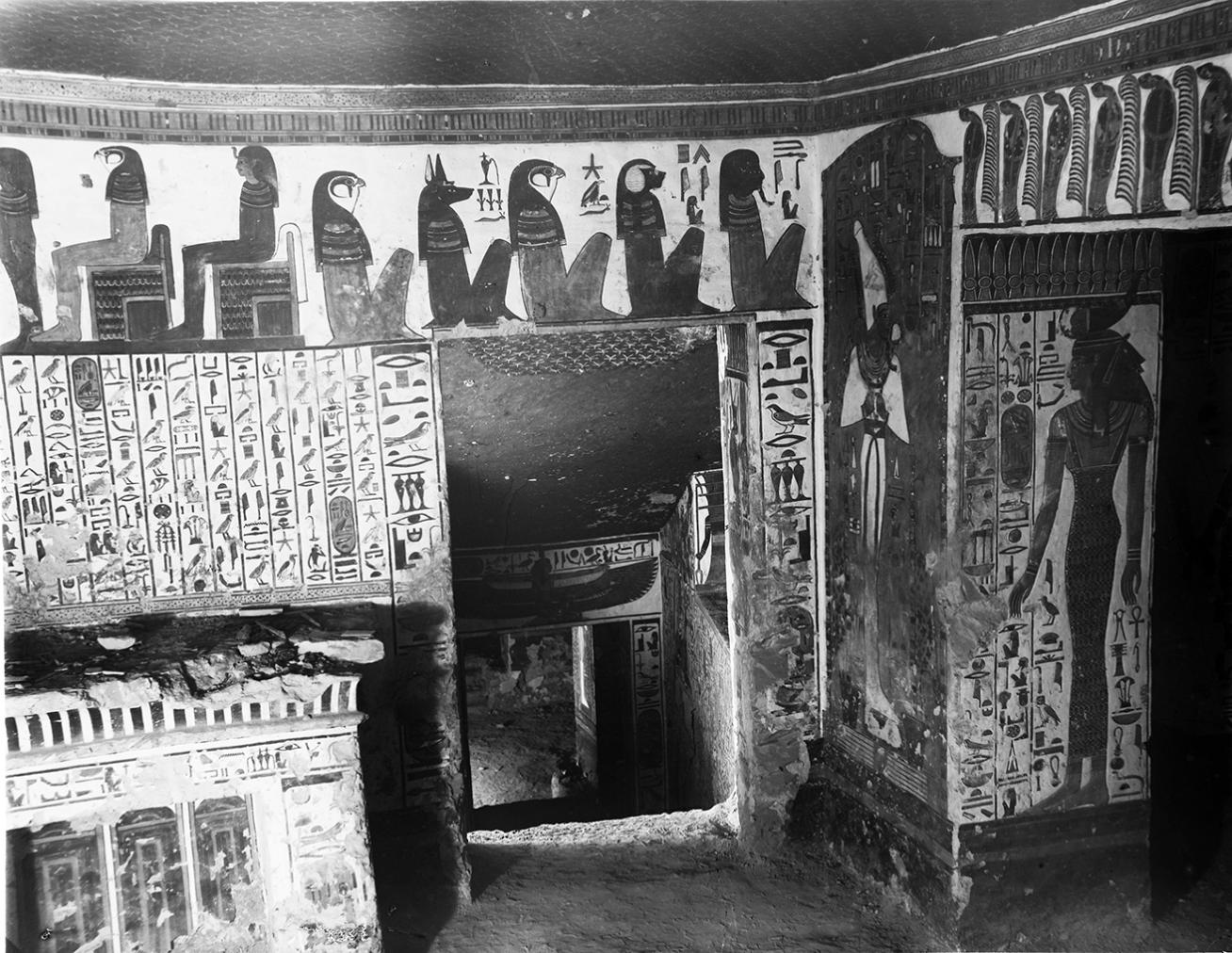
The tomb of Queen Nefertari (QV 66) perhaps photographed after excavations. From the left, Ra and Shu seated. Above Gate C are Horus seated and his Four Sons, Imsety, Hapy, Duamutef, and Qebehsenuef. An enshrined Osiris flanked by two imiut-fetishes, as well as Serqet on the east wall are visible, too. Italian Archaeological Expedition excavations. Courtesy of the Egyptian Museum in Turin.
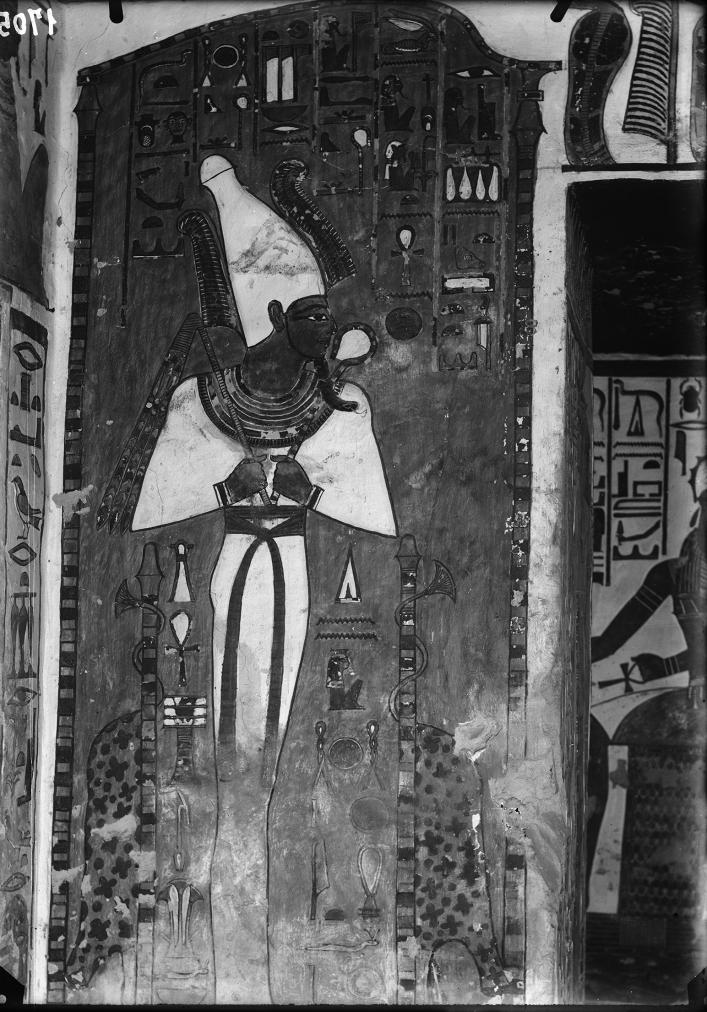
The tomb of Queen Nefertari (QV 66) perhaps photographed after excavations that depicts an enshrined Osiris flanked by two imiut-fetishes. Italian Archaeological Expedition excavations. Courtesy of the Egyptian Museum in Turin.
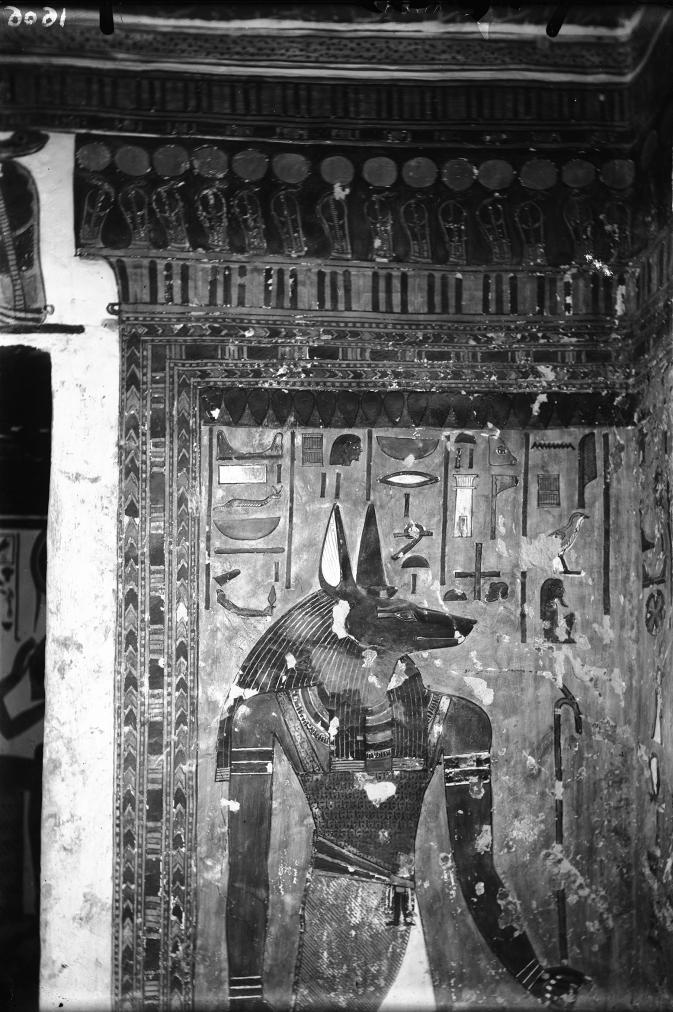
The tomb of Queen Nefertari (QV 66) perhaps photographed after excavations that depicts Anubis enshrined with his epithets. Italian Archaeological Expedition excavations. Courtesy of the Egyptian Museum in Turin.
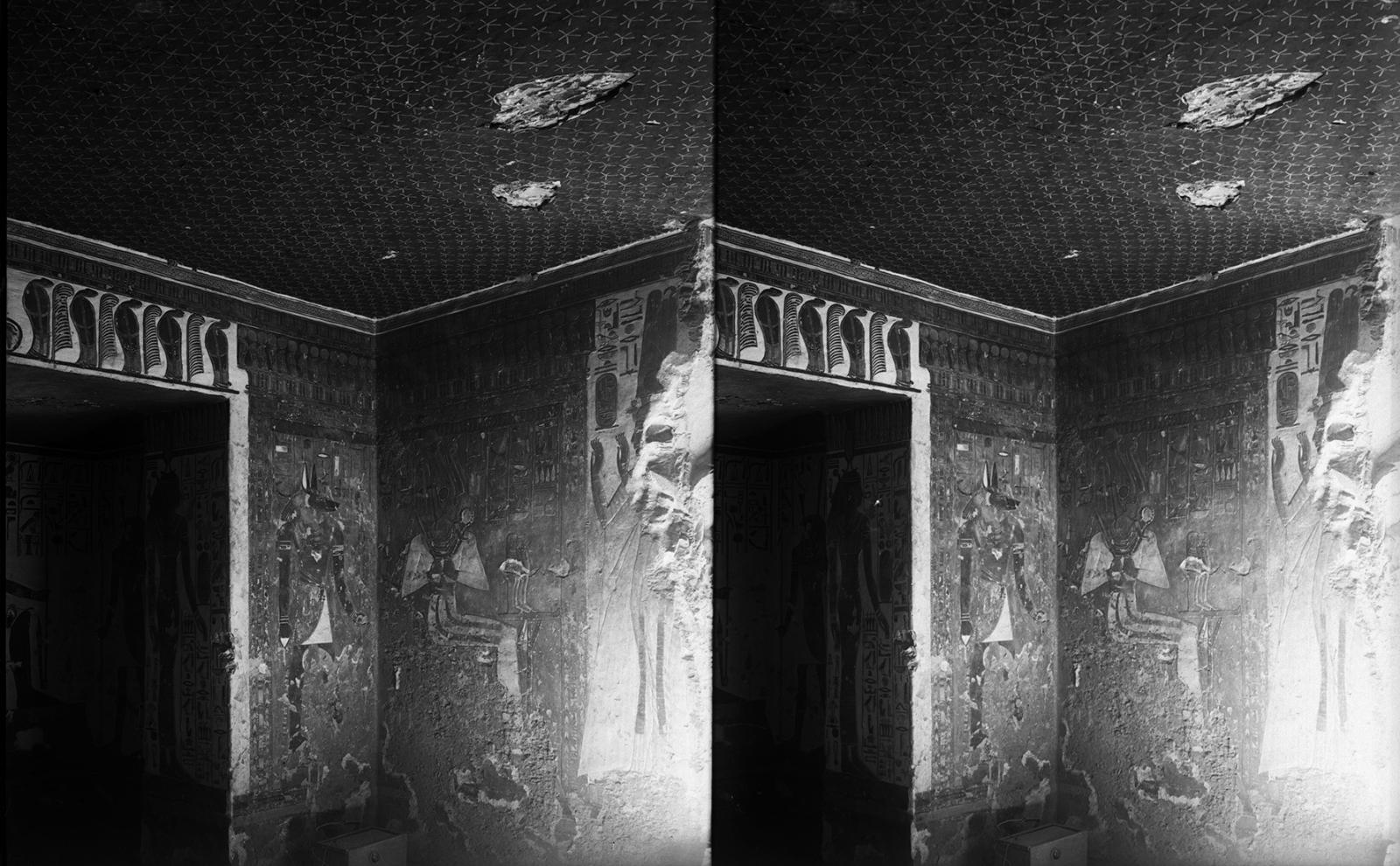
The tomb of Queen Nefertari (QV 66) perhaps photographed after excavations that depicts Anubis enshrined with his epithets, as well as Queen Nefertari who worships Osiris. Italian Archaeological Expedition excavations. Courtesy of the Egyptian Museum in Turin.
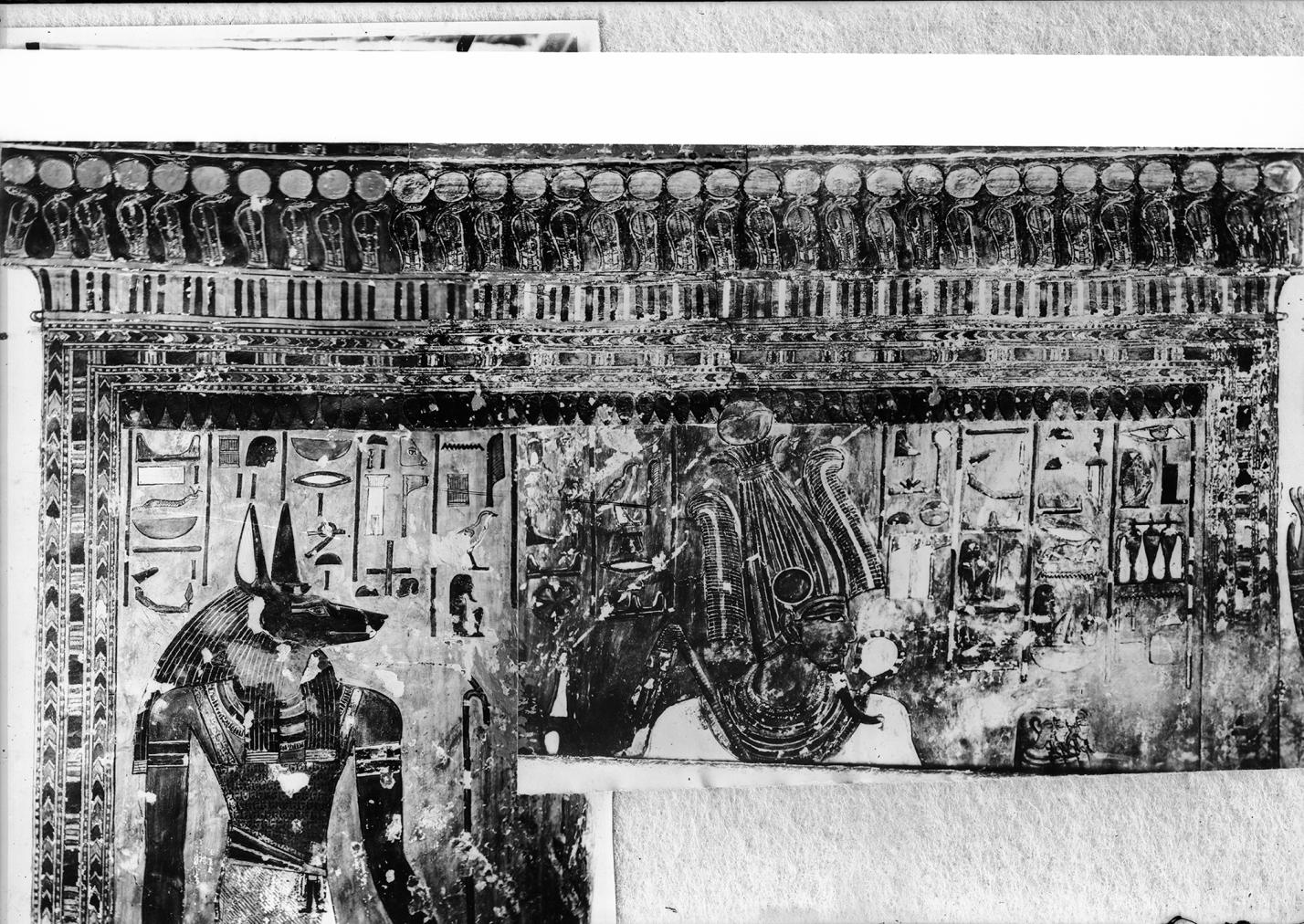
Photographic recomposition of the east wall, south side in the tomb of Queen Nefertari (QV 66) that depicts Anubis enshrined with his epithets, as well as Queen Nefertari who worships Osiris. Italian Archaeological Expedition excavations. Courtesy of the Egyptian Museum in Turin.
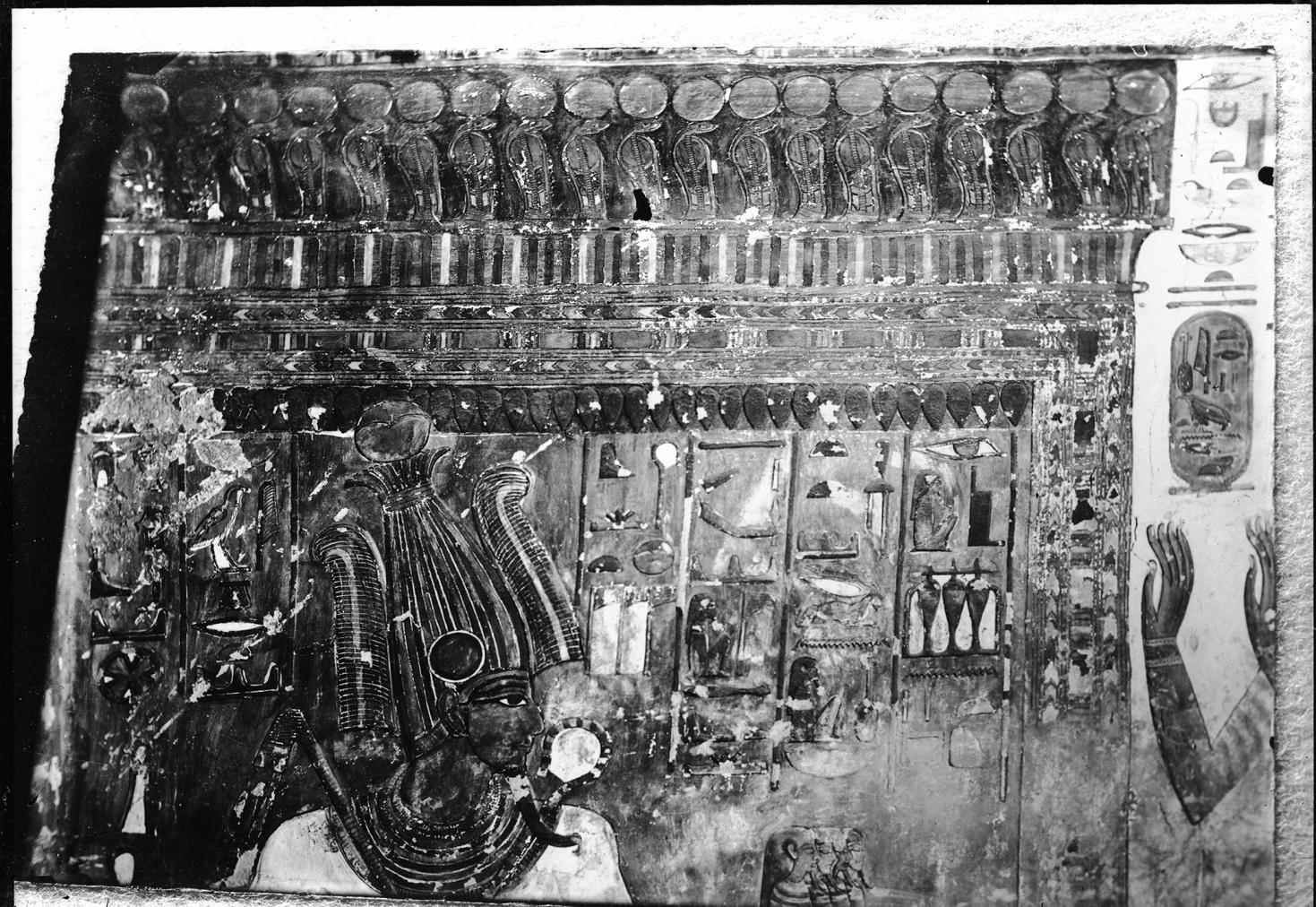
South wall, east side in chamber B in the tomb of Queen Nefertari (QV 66) perhaps photographed after excavations that depicts the queen worshipping an enshrined and seated Osiris. Italian Archaeological Expedition excavations. Courtesy of the Egyptian Museum in Turin.
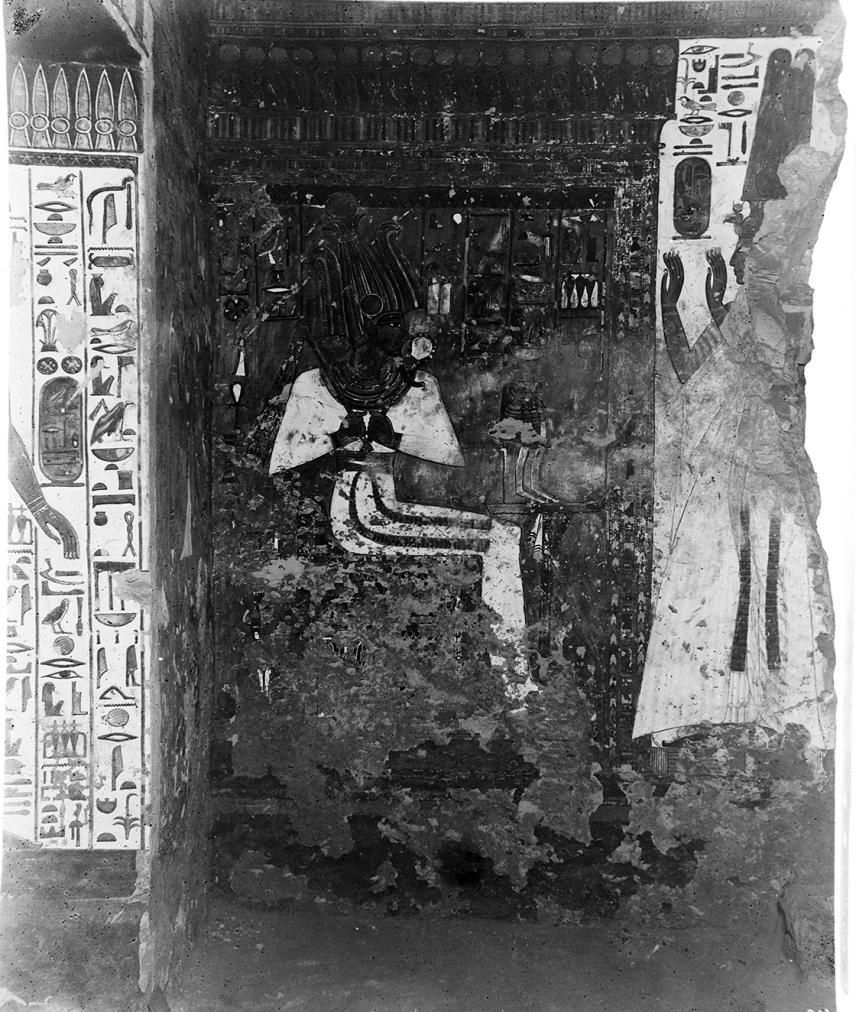
South wall, east side in chamber B in the tomb of Queen Nefertari (QV 66) perhaps photographed after excavations that depicts the queen worshipping an enshrined and seated Osiris. Italian Archaeological Expedition excavations. Courtesy of the Egyptian Museum in Turin.
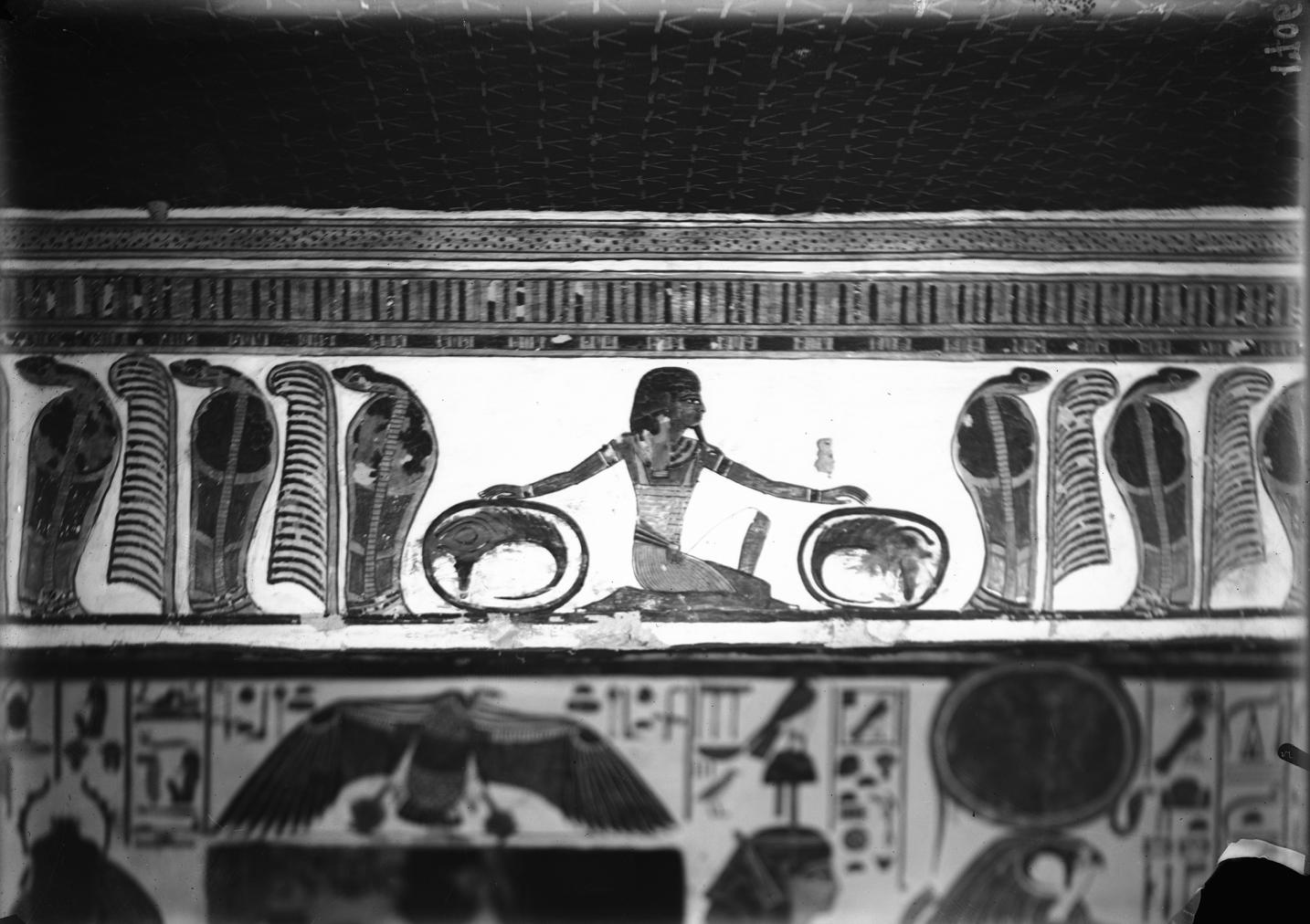
Lintel decoration above the vestibule in chamber B of the tomb of Queen Nefertari (QV 66) perhaps photographed during excavations. A kneeling image of Heh who heals the two wadjet-eyes of Horus is framed by an alternating motif of uraei and blue ostrich feathers. Italian Archaeological Expedition excavations. Courtesy of the Egyptian Museum in Turin.
View of the vestibule in chamber B of the tomb of Queen Nefertari (QV 66) perhaps photographed during excavations. An image of Neith with her epithets topped by a kheker-frieze. Italian Archaeological Expedition excavations. Courtesy of the Egyptian Museum in Turin.
View of the vestibule's west wall, south side in chamber B of the tomb of Queen Nefertari (QV 66) perhaps photographed during excavations. An image of Neith with her epithets topped by a kheker-frieze. An image of Osiris in the form of a djed-pillar fetish followed by the queen led by Horsiese (left). Italian Archaeological Expedition excavations. Courtesy of the Egyptian Museum in Turin.
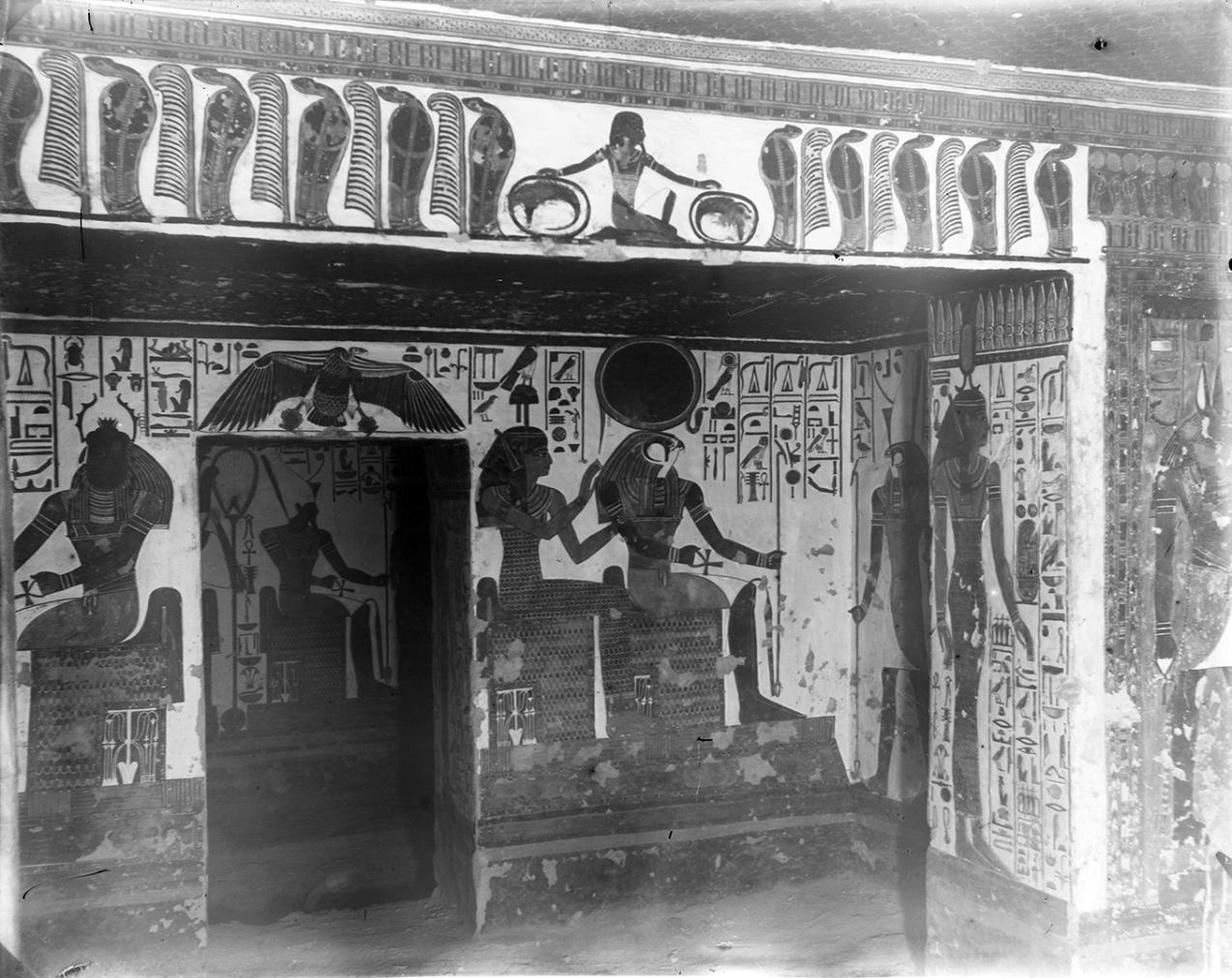
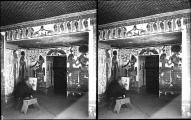
Panoramic view of the vestibule in chamber B of the tomb of Queen Nefertari (QV 66) perhaps photographed during excavations. Italian Archaeological Expedition excavations. Courtesy of the Egyptian Museum in Turin.
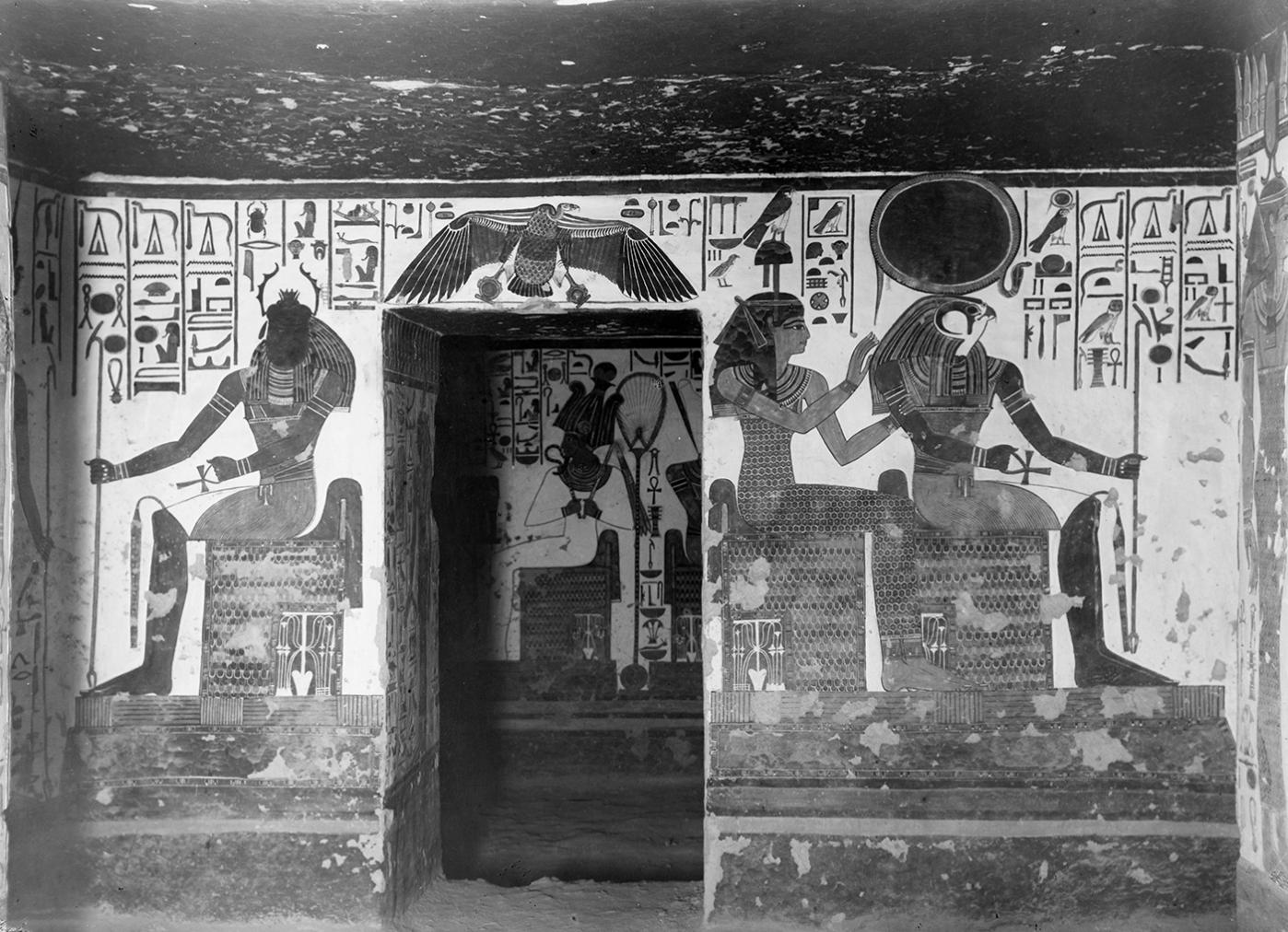
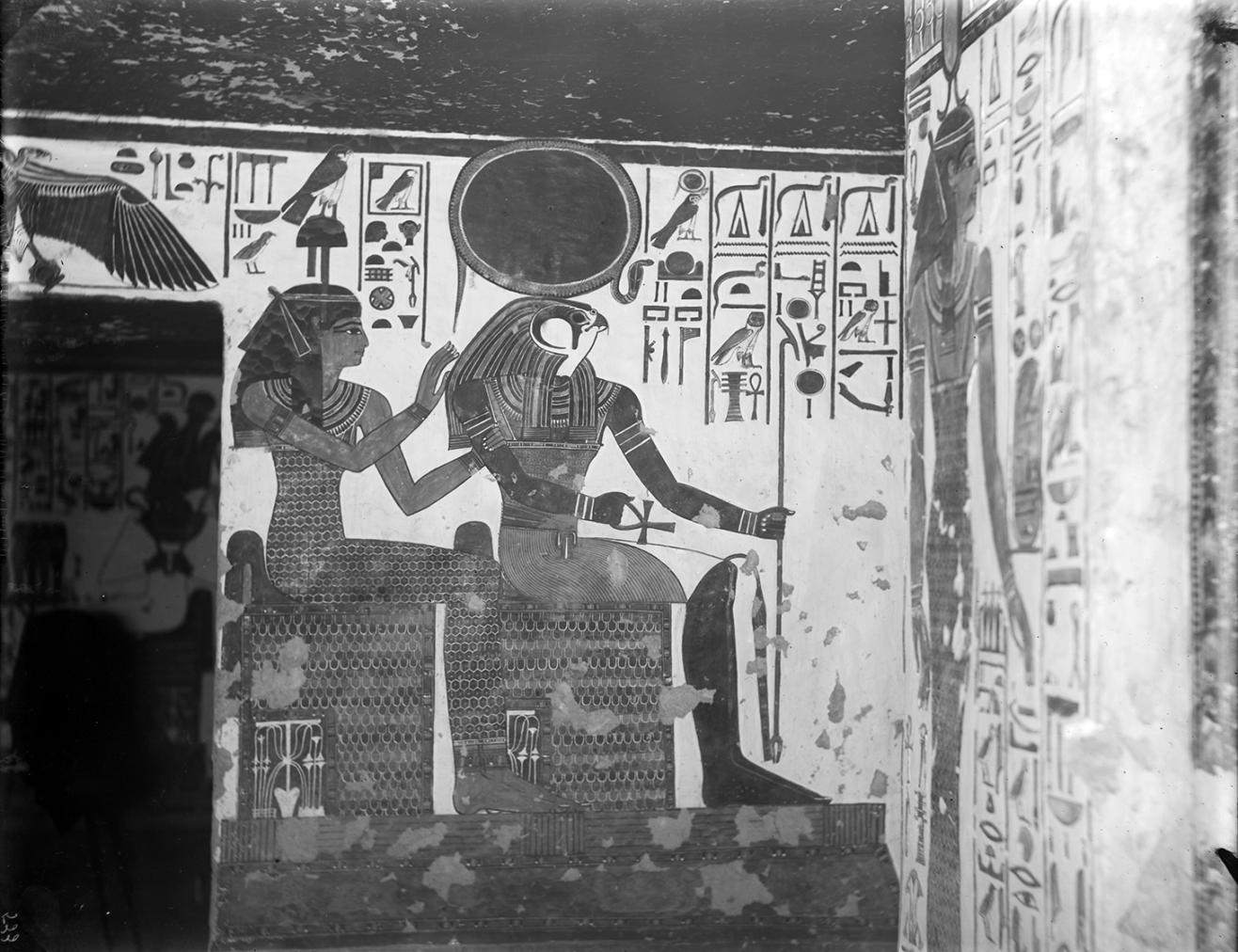
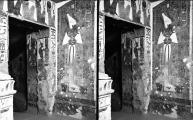
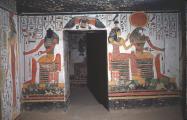
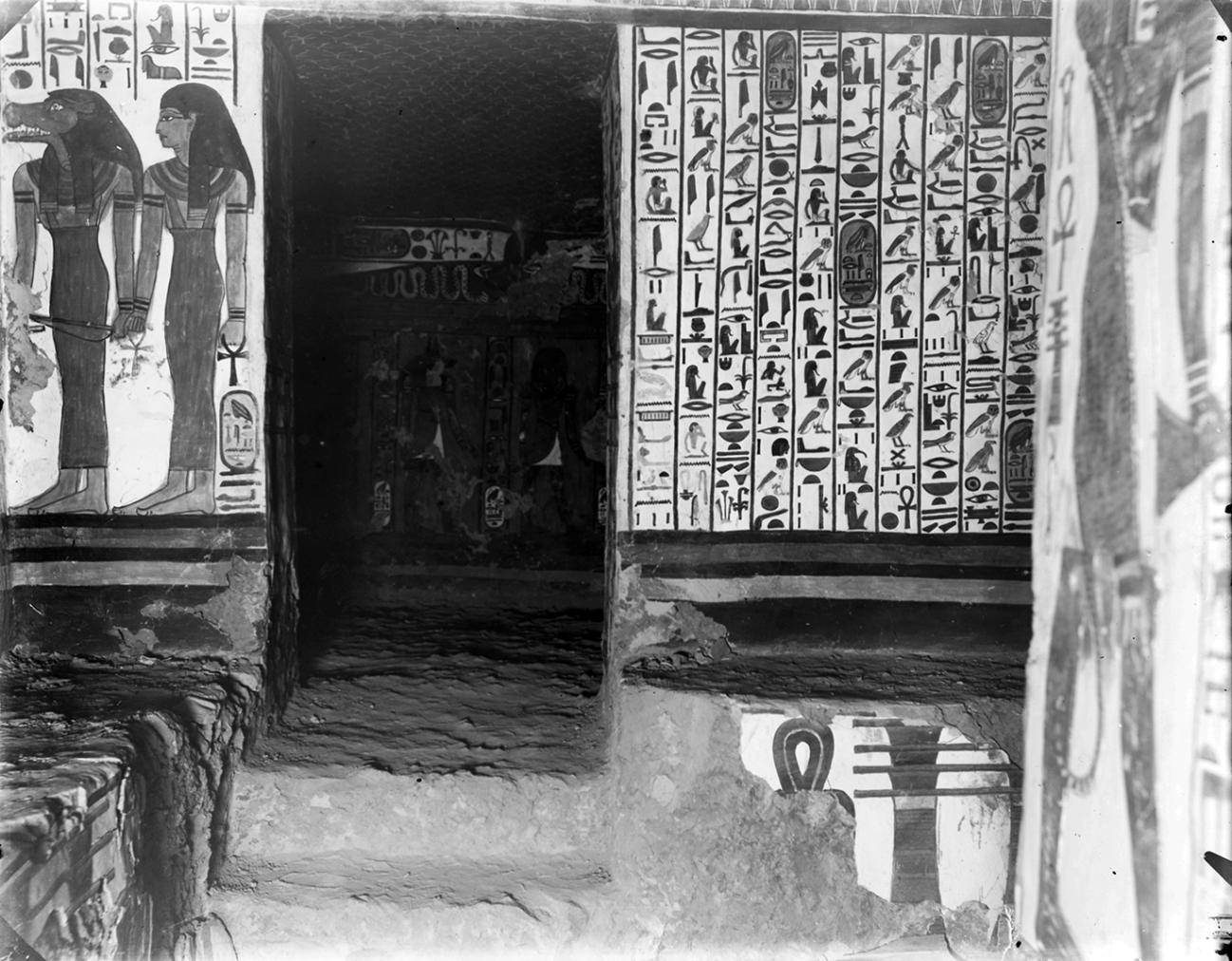
View of the east wall of chamber B's vestibule with access to side chamber Ba in the tomb of Queen Nefertari (QV 66) perhaps photographed during excavations. On the right, a seated dyad statue of Re-Horakhty and Hathor. On the left, Khepri. Italian Archaeological Expedition excavations. Courtesy of the Egyptian Museum in Turin.
View of the east wall of chamber B's vestibule with access to side chamber Ba in the tomb of Queen Nefertari (QV 66) perhaps photographed during excavations. A seated dyad of Re-Horakhty and Hathor with their epithets. Italian Archaeological Expedition excavations. Courtesy of the Egyptian Museum in Turin.
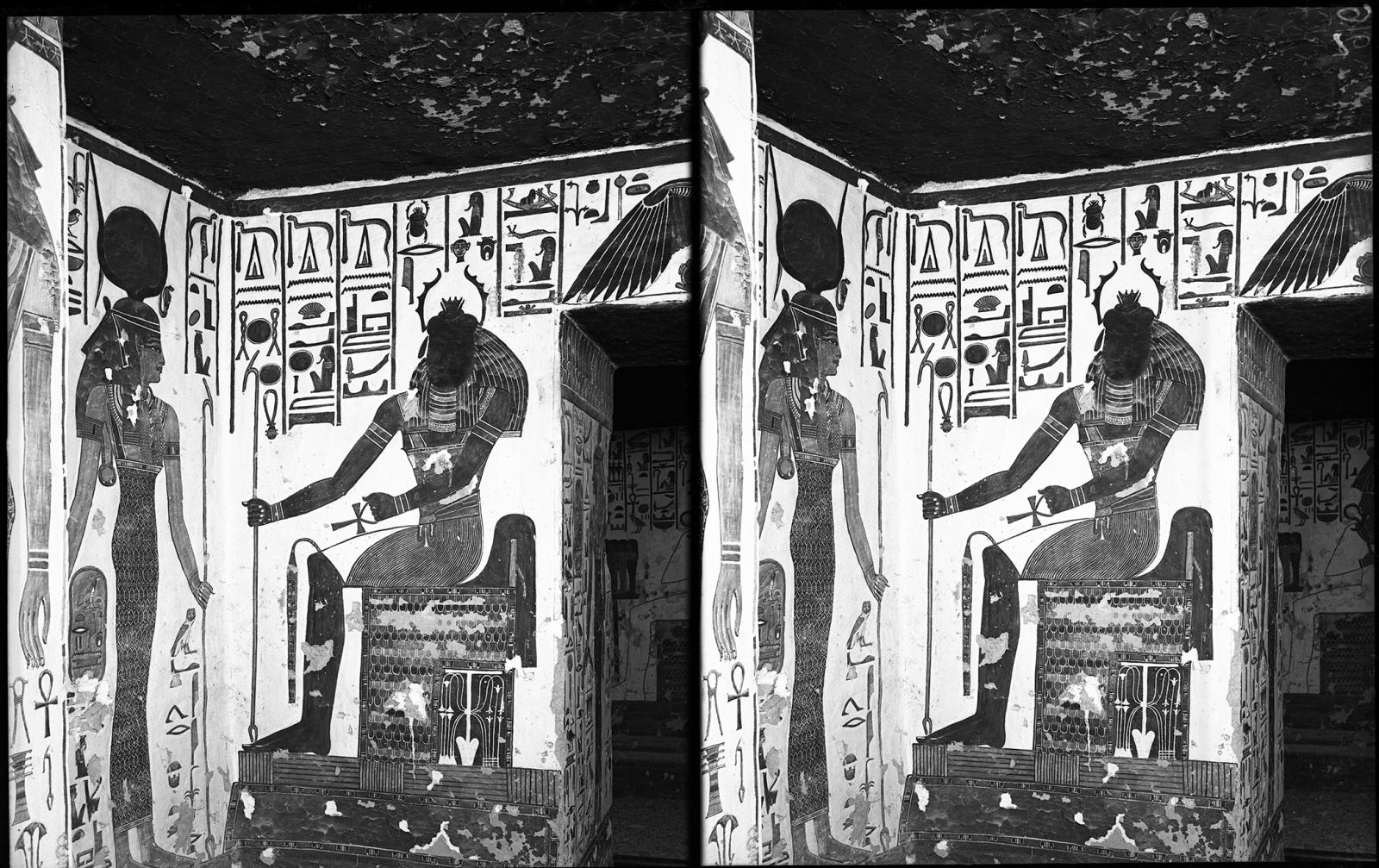
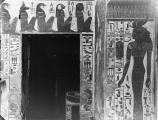
Northeast side of chamber B's vestibule in the tomb of Queen Nefertari (QV 66) perhaps photographed during excavations. A seated Khepri, as well as the queen (not visible) who is led by Isis. Italian Archaeological Expedition excavations. Courtesy of the Egyptian Museum in Turin.
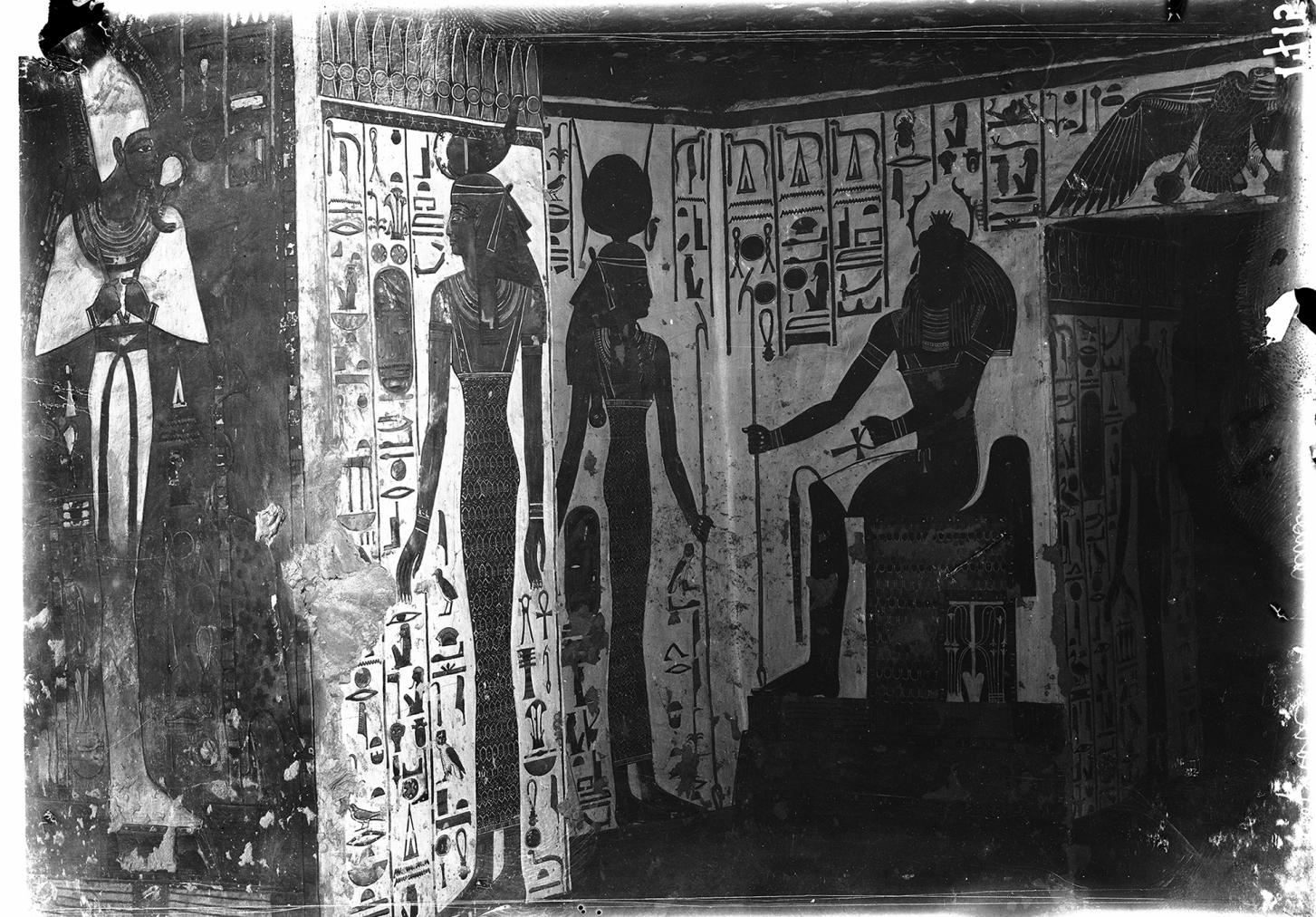
Northeast side of chamber B's vestibule in the tomb of Queen Nefertari (QV 66) perhaps photographed during excavations. A seated Khepri, as well as the queen (not visible) who is led by Isis (middle). Part of chamber B's east wall with an image of Osiris flanked by two imiut-fetishes and Serqet with her epithets are visible, too. Italian Archaeological Expedition excavations. Courtesy of the Egyptian Museum in Turin.
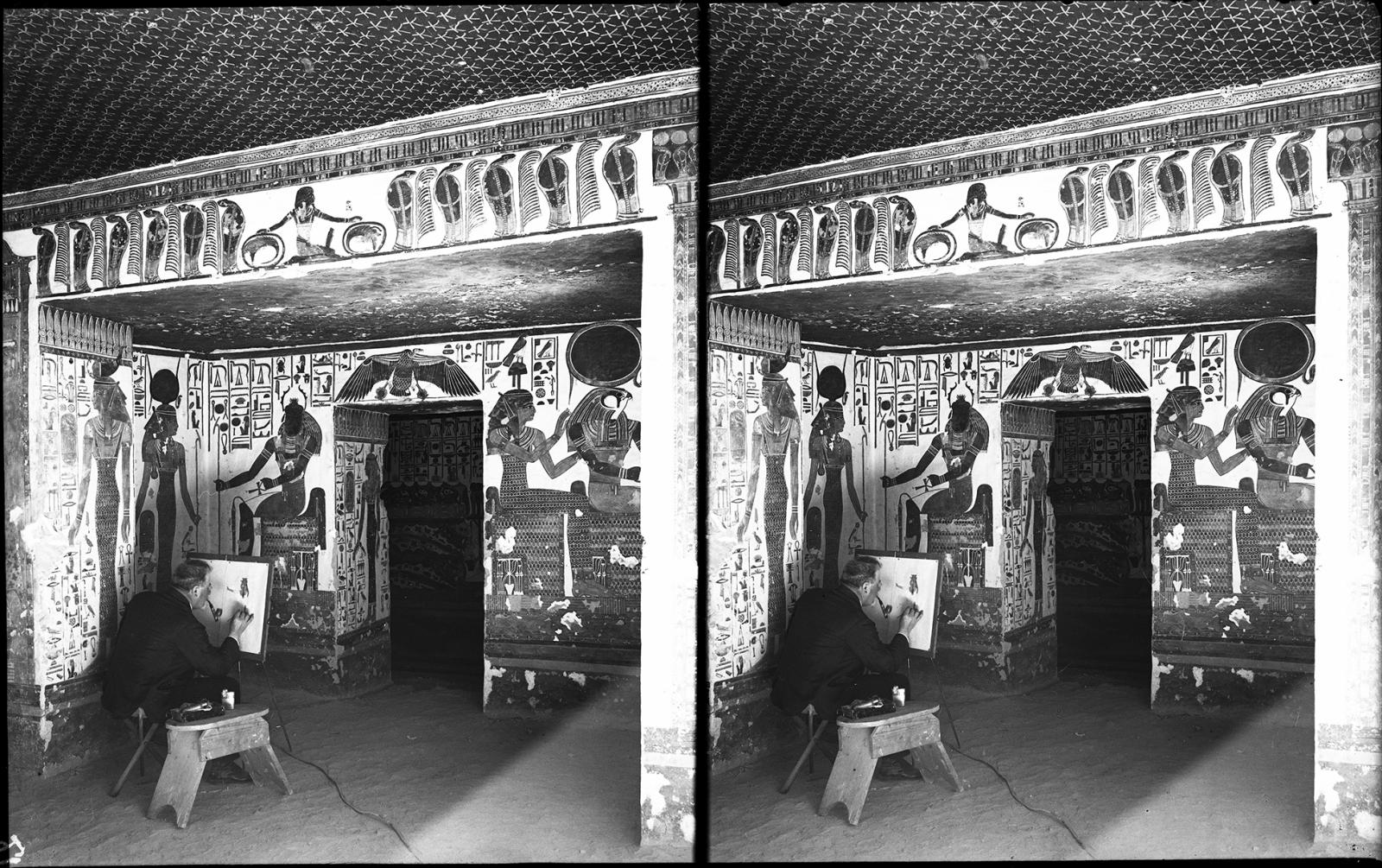
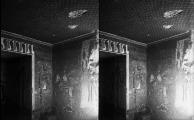
Panoramic view of the northeast corner of chamber B's vestibule in the tomb of Queen Nefertari (QV 66). Italian Archaeological Expedition excavations. Courtesy of the Egyptian Museum in Turin.
Northeast corner of chamber B's vestibule (scene 10) in the tomb of Queen Nefertari (QV 66). Isis accompanies the queen toward a seated Khepri on the adjacent wall. Italian Archaeological Expedition excavation. Courtesy of the Egyptian Museum in Turin.
North side of chamber B's vestibule in the tomb of Queen Nefertari (QV 66) perhaps photographed during excavations. An image of Serqet with her epithets topped by a khekher-frieze. Italian Archaeological Expedition excavations. Courtesy of the Egyptian Museum in Turin.
View of Chamber B, left (west) wall (left part). Courtesy of Uni Dia Verlag. Uni Dia Image Nr. 36802.
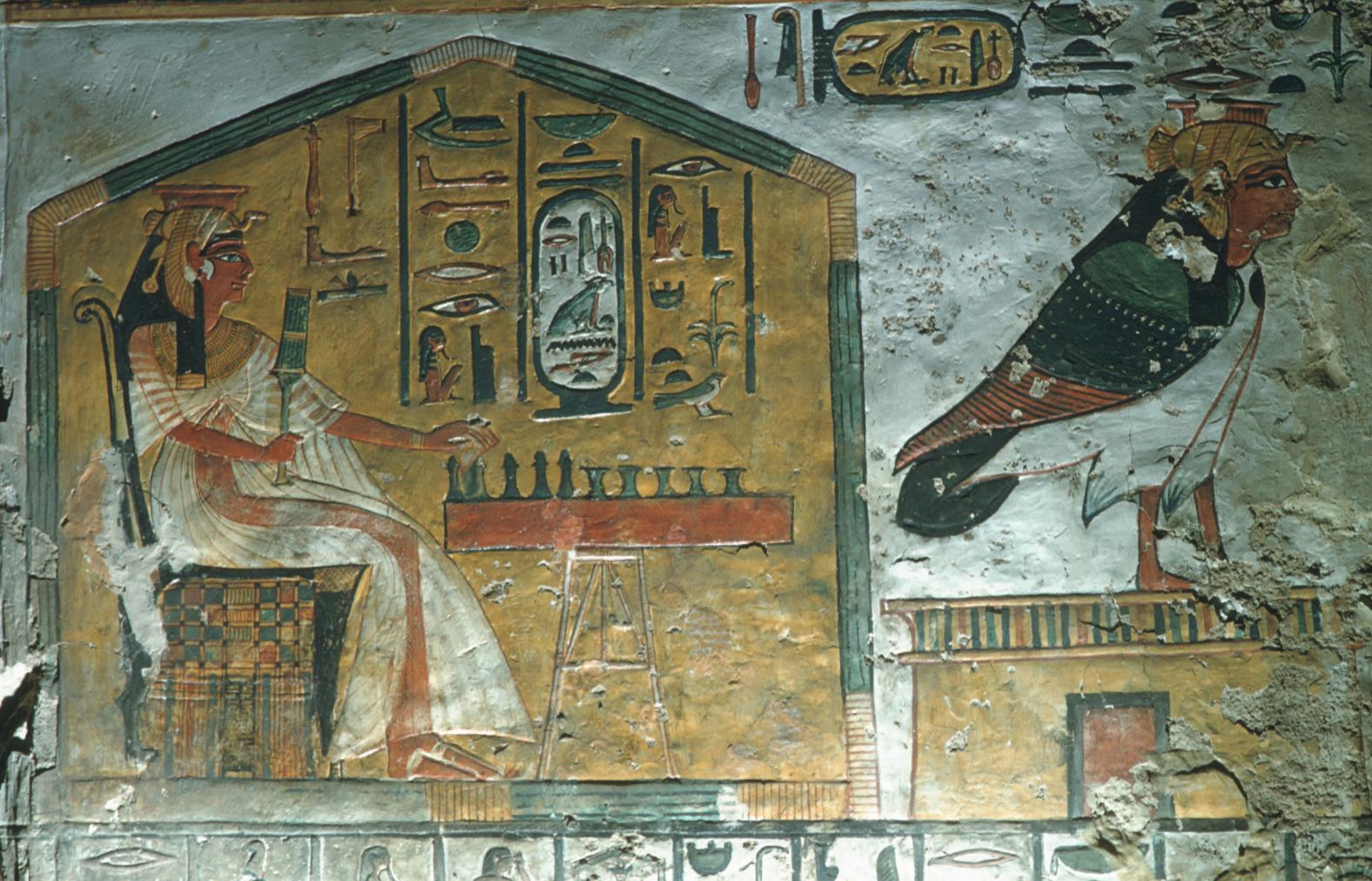
The queen playing senet and as ba-bird, chamber B, south wall (left part). Courtesy of Uni Dia Verlag. Uni Dia Image Nr. 36803.
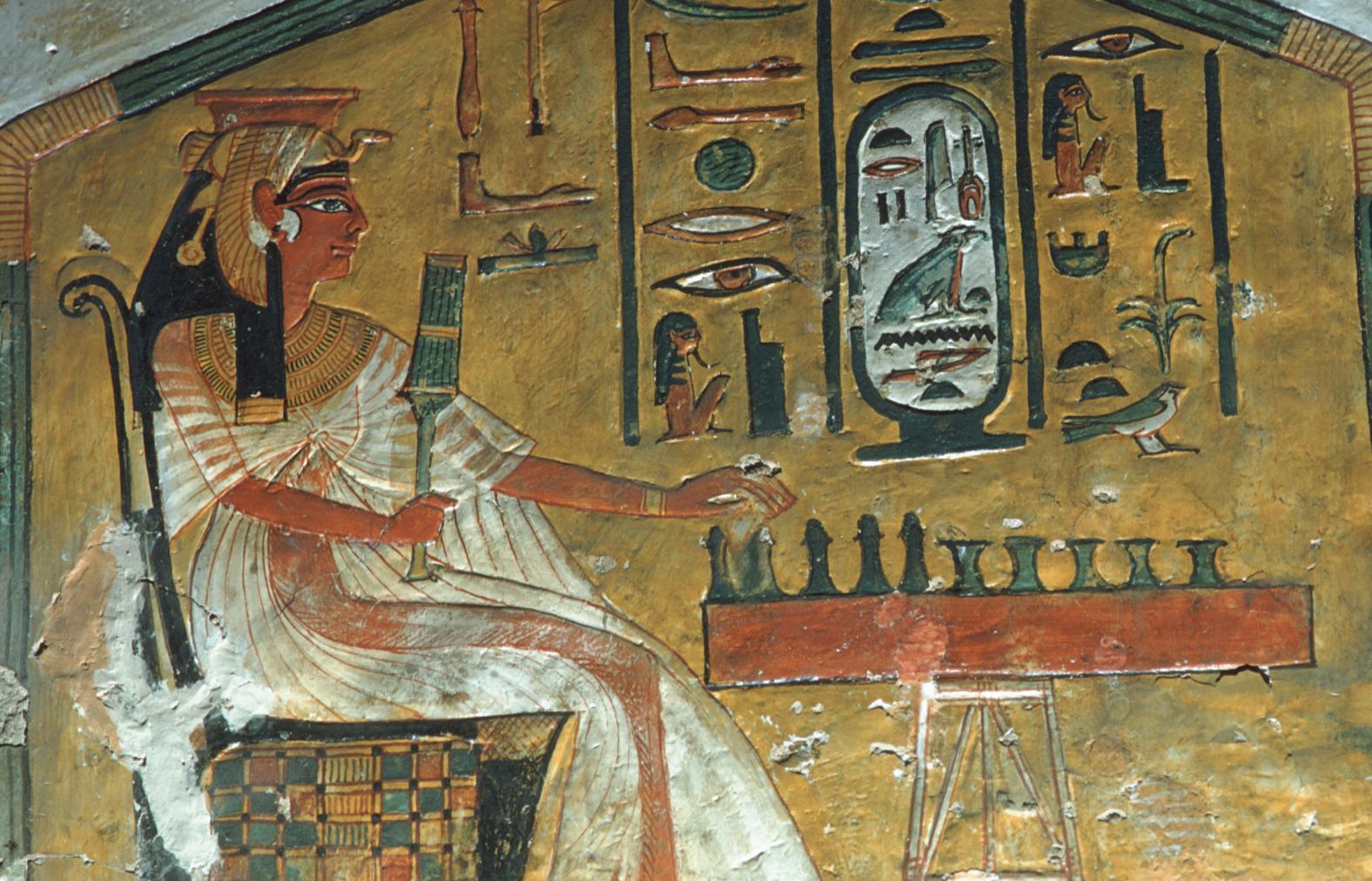
Detail of the queen playing senet, Chamber B, south wall (left part). Courtesy of Uni Dia Verlag. Uni Dia Image Nr. 36804.
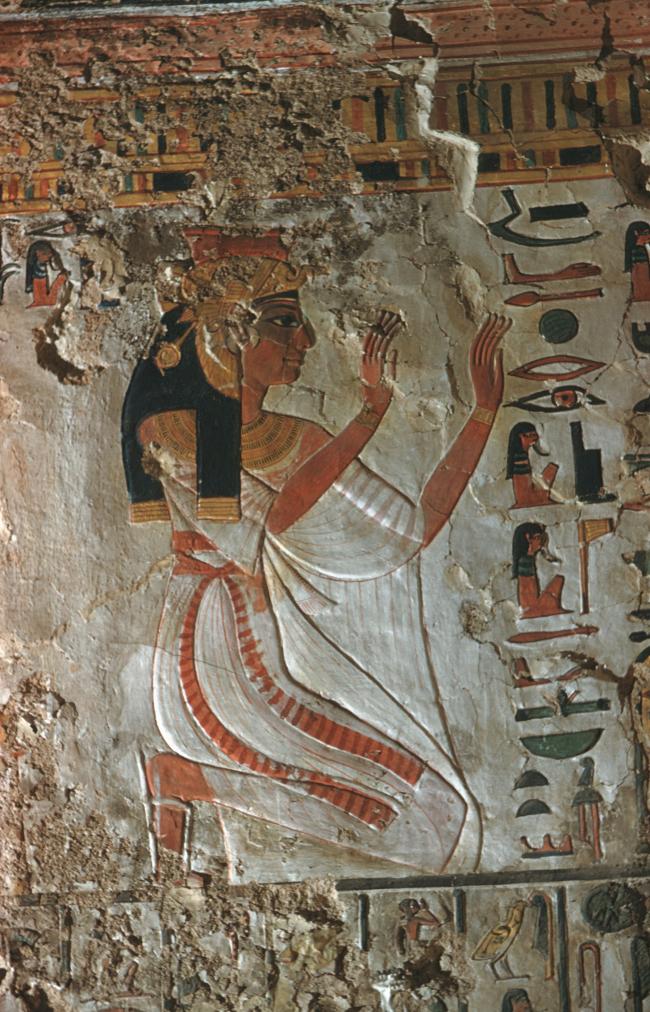
The queen kneels with her hands raised in a gesture of worship, Chamber B, south wall (right part). Courtesy of Uni Dia Verlag. Uni Dia Image Nr. 36805.
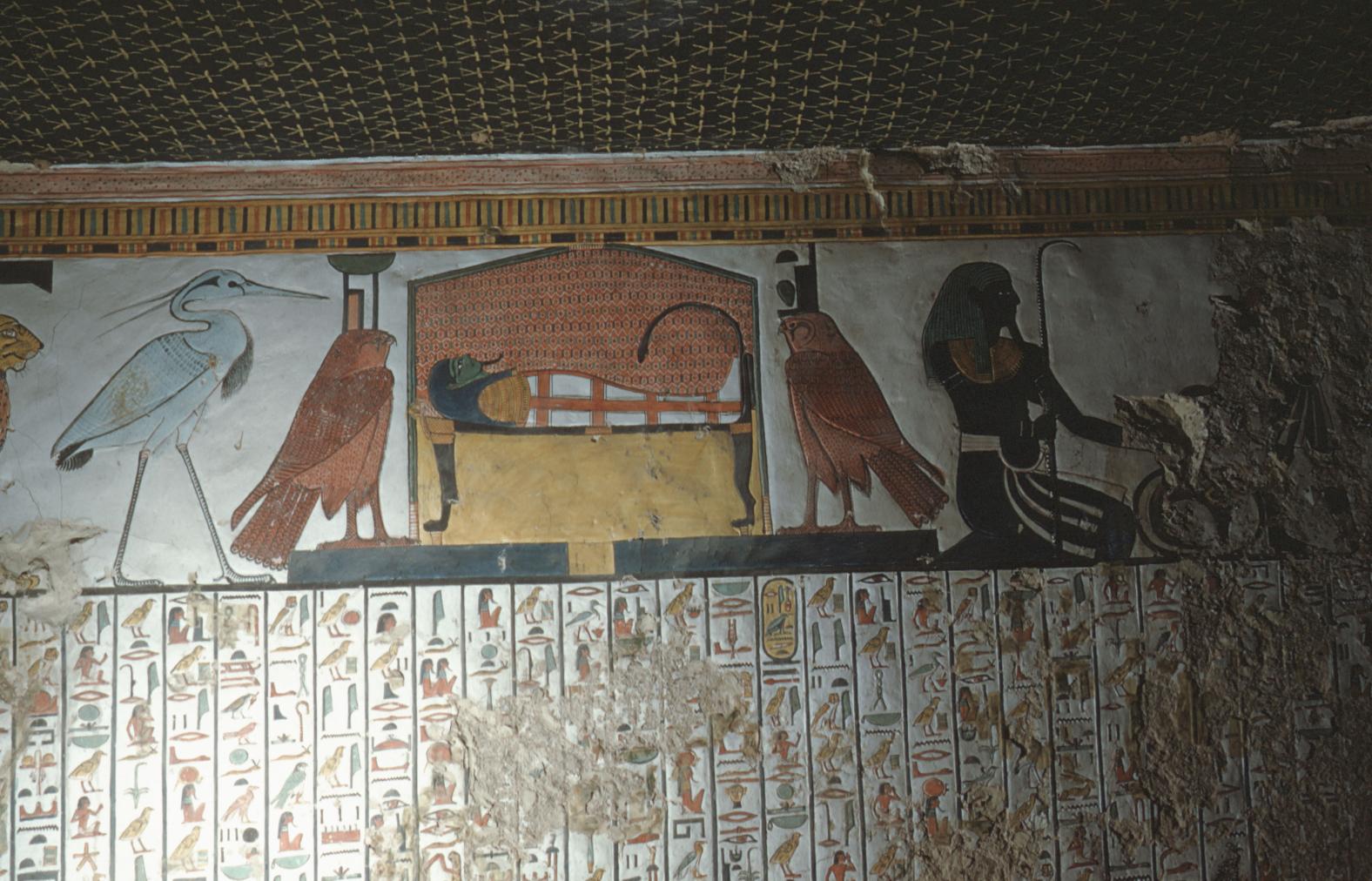
View of Chamber B, left (west) wall. Courtesy of Uni Dia Verlag. Uni Dia Image Nr. 36806.
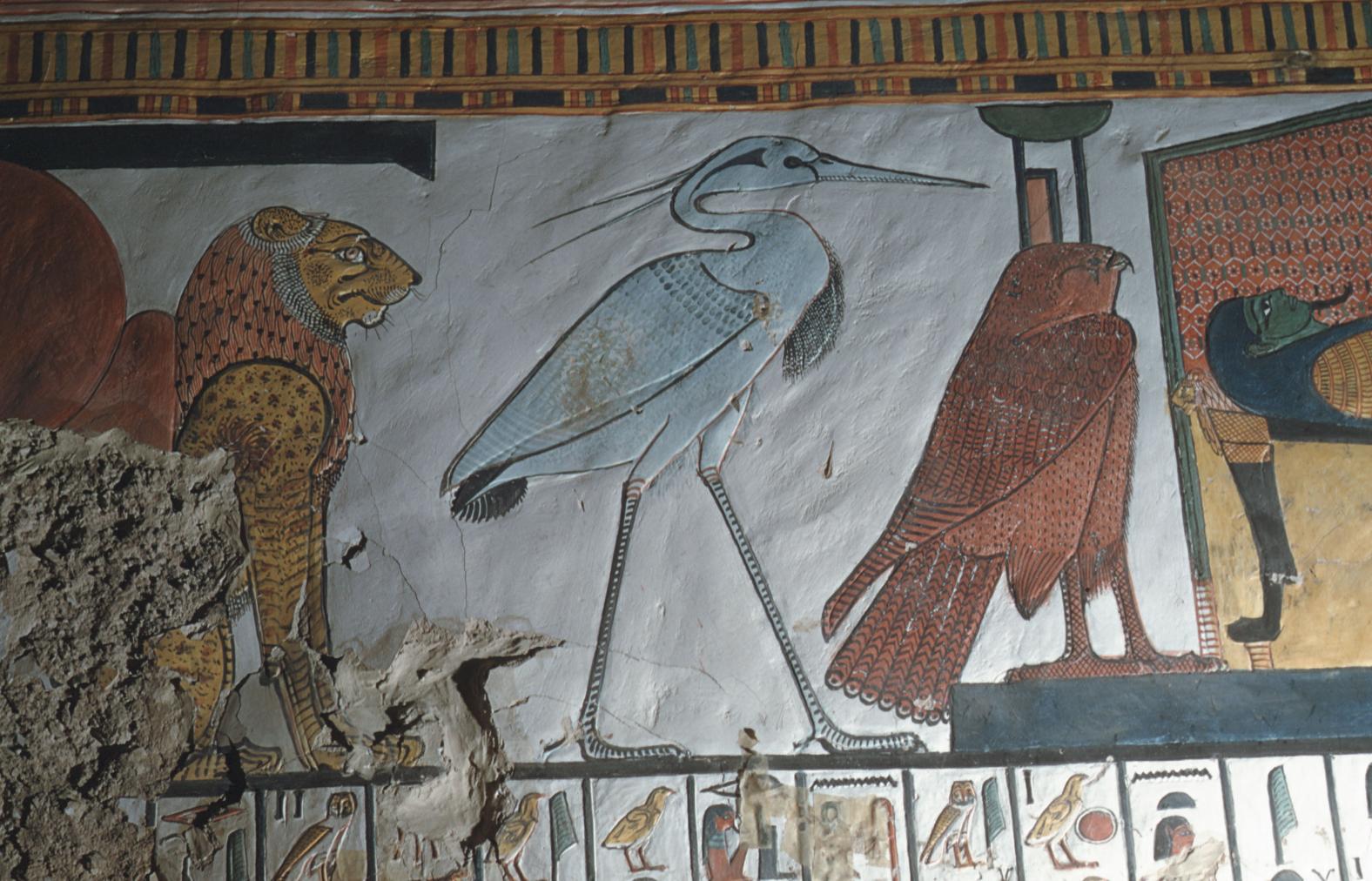
Detail of Chamber B, left (west) wall. Courtesy of Uni Dia Verlag. Uni Dia Image Nr. 36807.
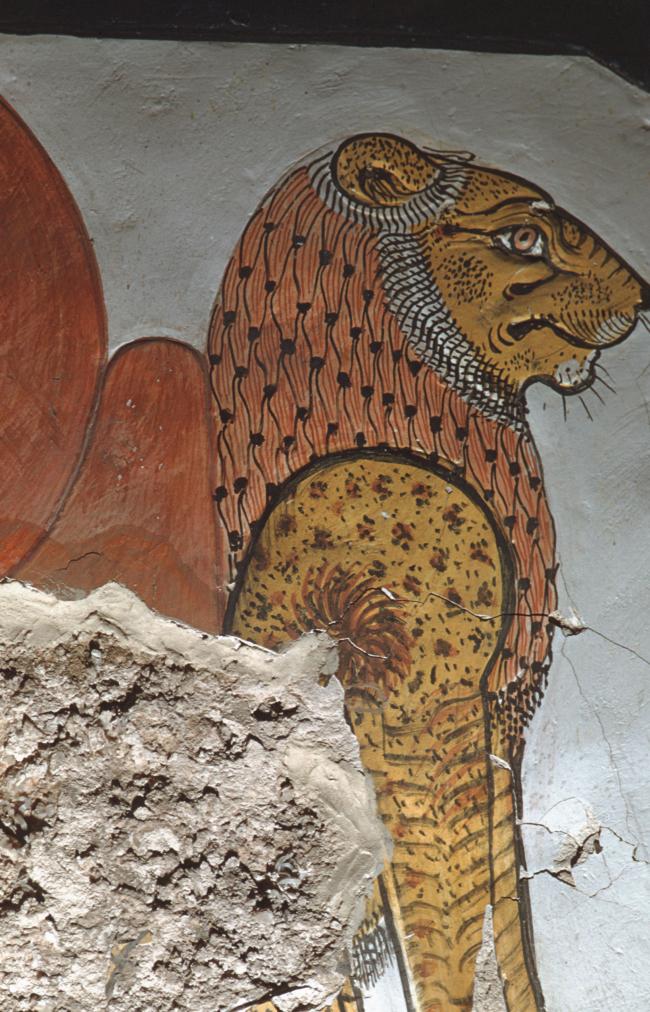
Detail of Akhet lions on the horizon, Chamber B, left (west) wall. Courtesy of Uni Dia Verlag. Uni Dia Image Nr. 36808.
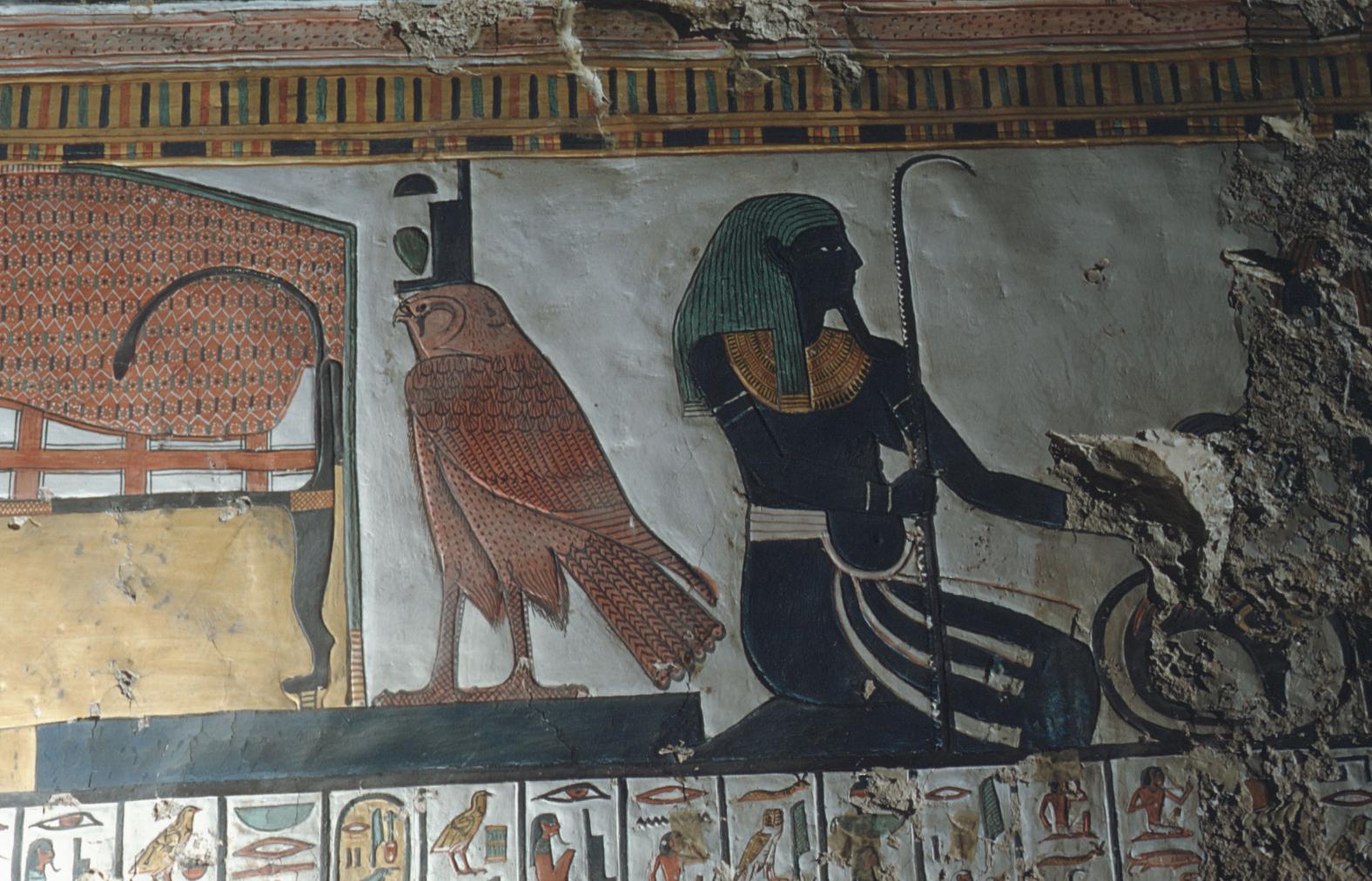
Detail of Chamber B, left (west) wall. Courtesy of Uni Dia Verlag. Uni Dia Image Nr. 36809.
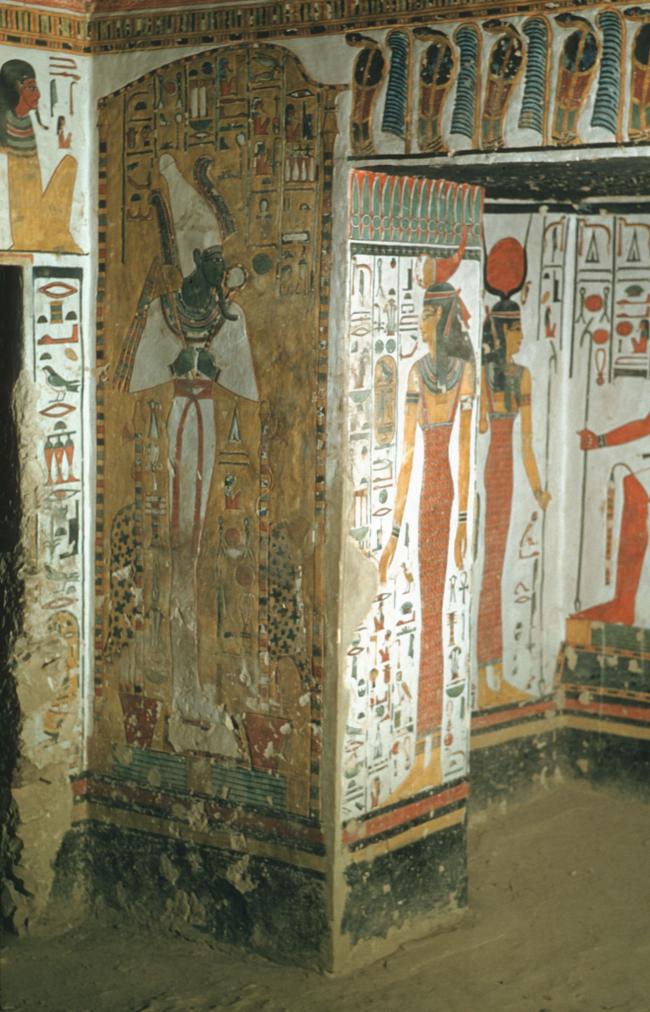
Detail of Osiris, Serqet, and Isis on the east wall, Chamber B. Courtesy of Uni Dia Verlag. Uni Dia Image Nr. 36812.
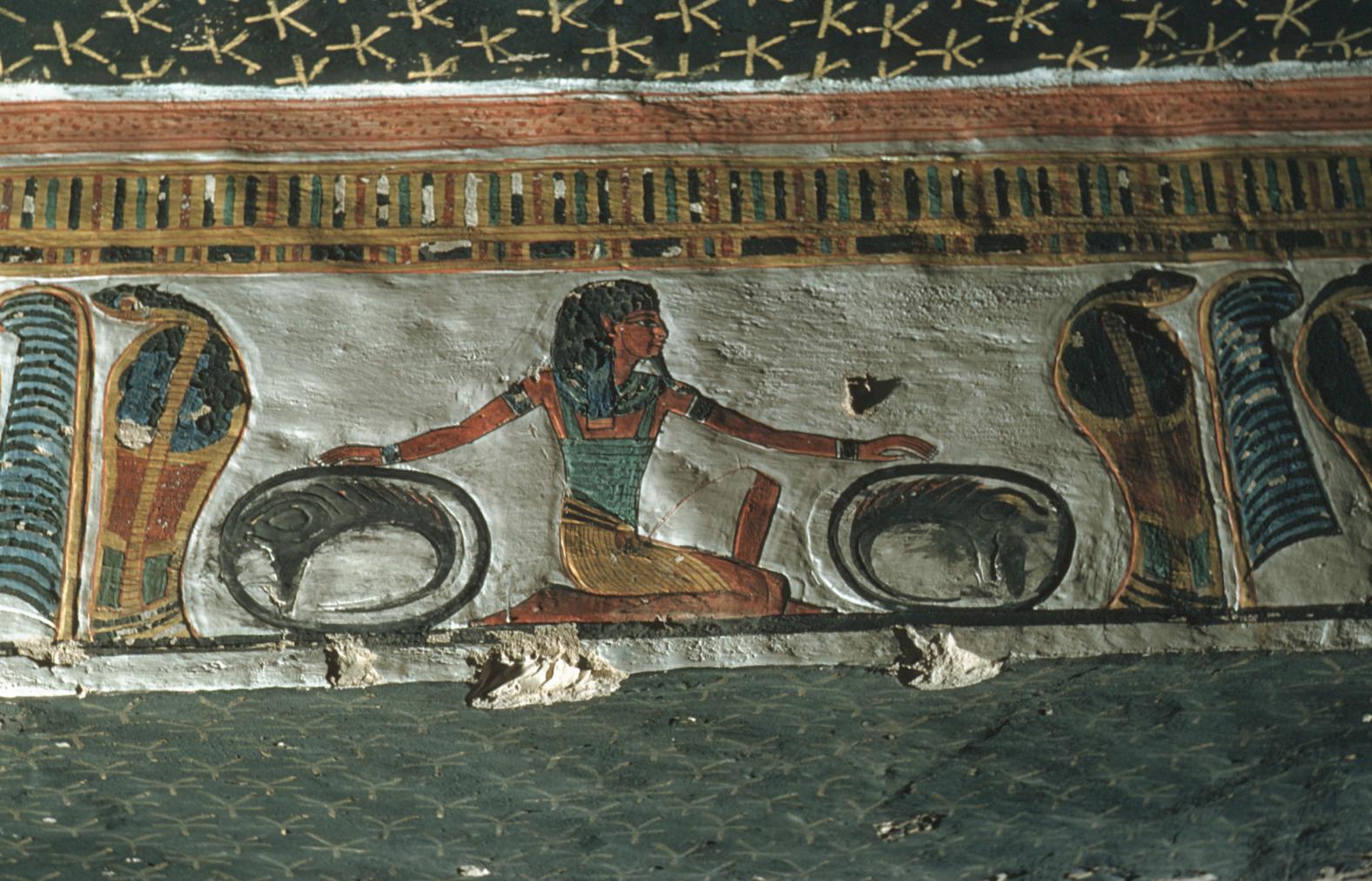
Detail of lintel above the east wall, Chamber B. Courtesy of Uni Dia Verlag. Uni Dia Image Nr. 36813.
Detail of the goddess Serqet on the left thickness of the gate in the east wall, Chamber B. Courtesy of Uni Dia Verlag. Uni Dia Image Nr. 36814.
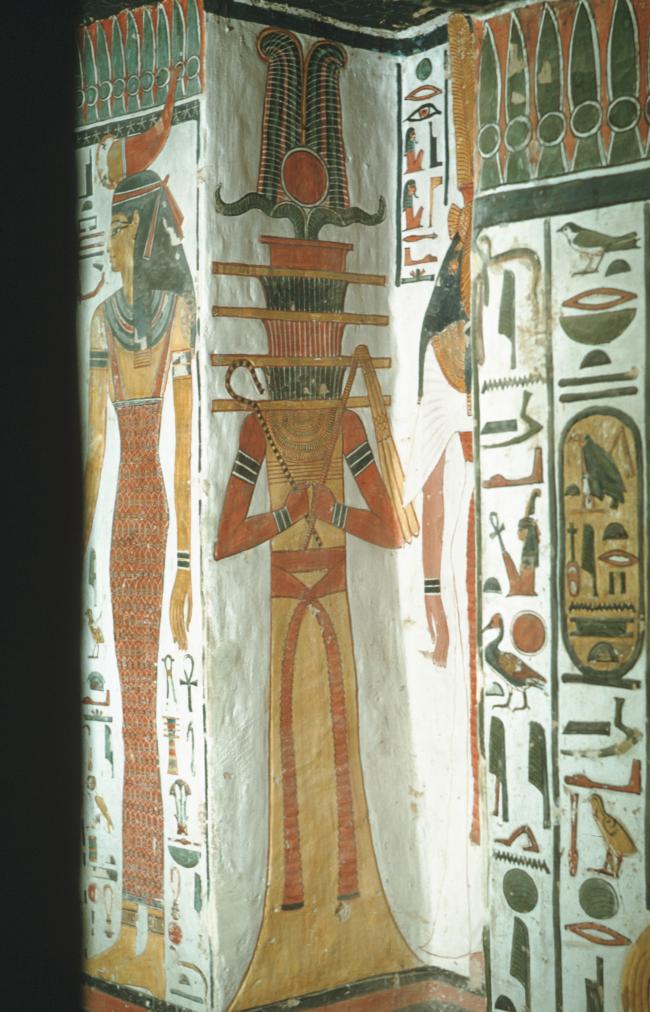
Anthropomorphic djed-pillar on the west wall of the large recess (reveal) of the east side of Chamber B. Courtesy of Uni Dia Verlag. Uni Dia Image Nr. 36816.
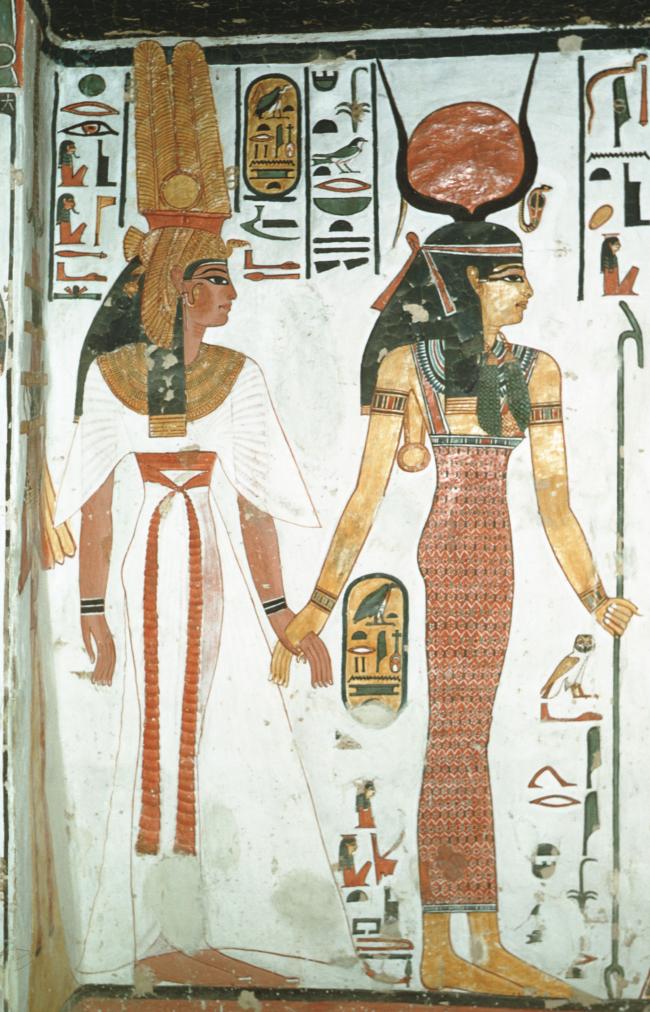
The queen being led by the goddess Isis, north wall of the large recess (North) wall, Chamber B. Courtesy of Uni Dia Verlag. Uni Dia Image Nr. 36817.
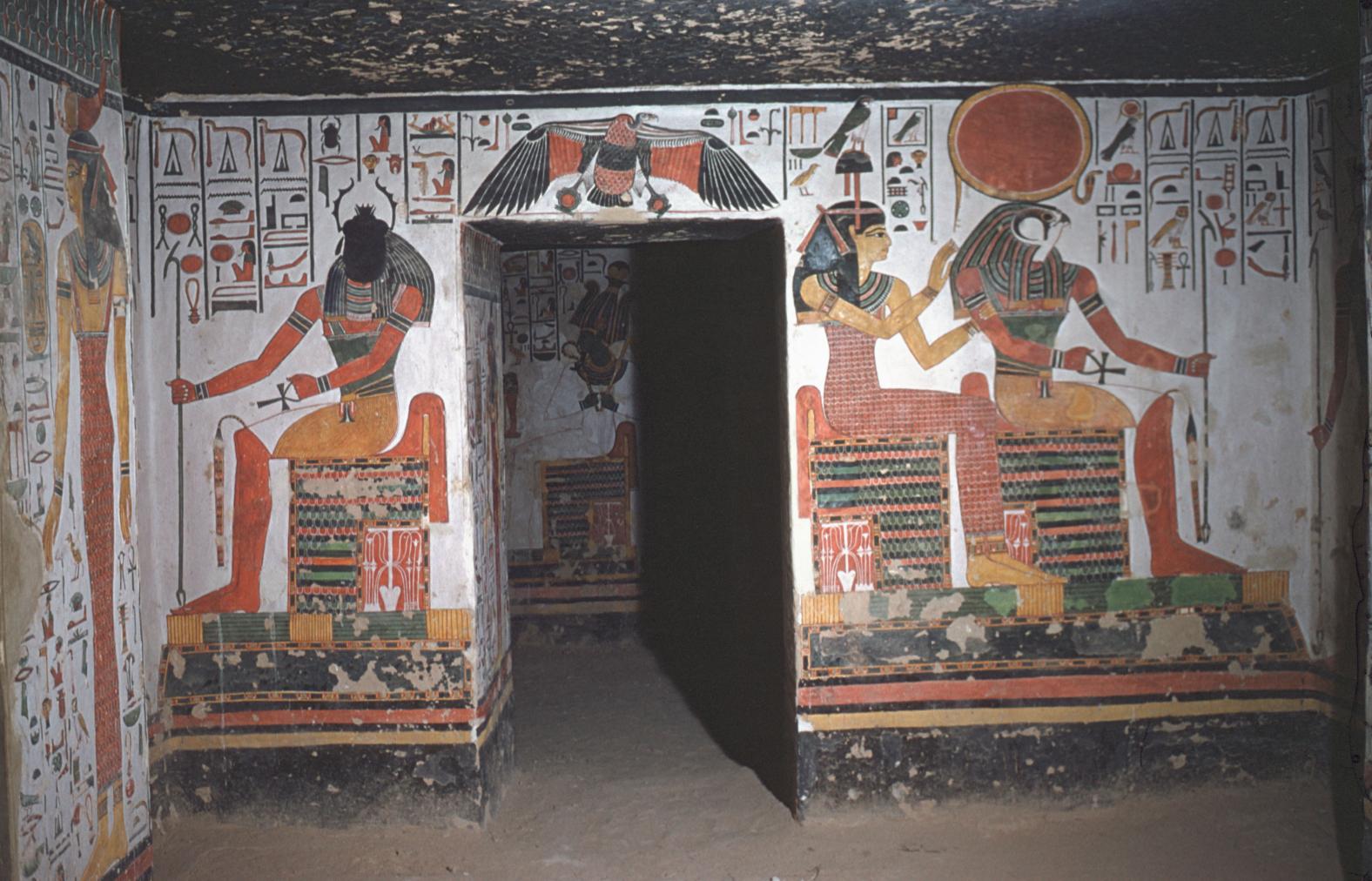
Details of the east wall of the large recess, Chamber B. Courtesy of Uni Dia Verlag. Uni Dia Image Nr. 36818.
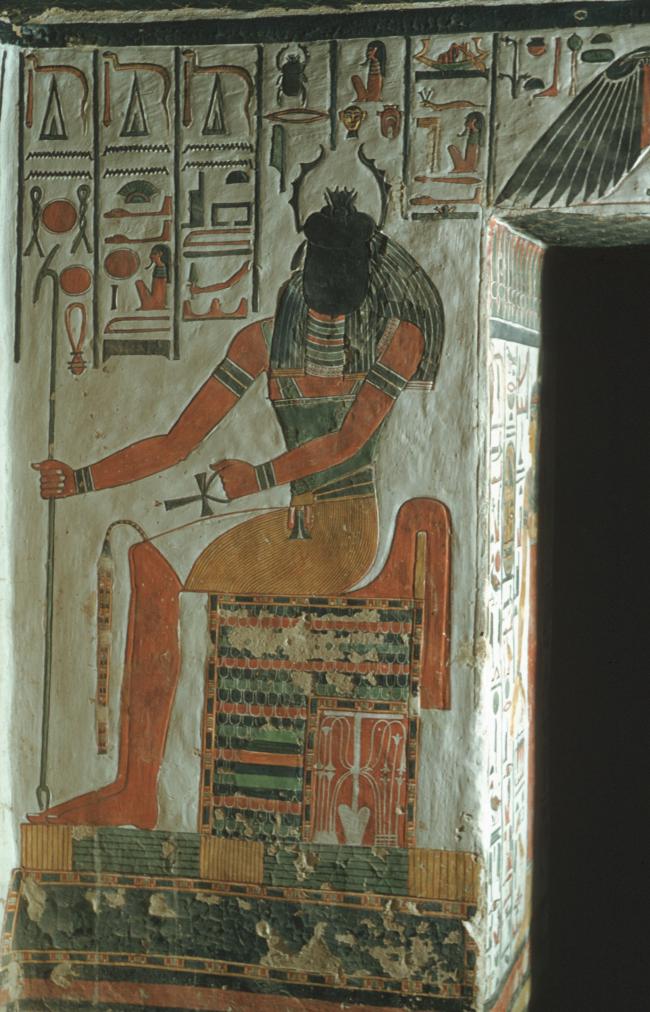
Detail of east wall of the large recess (left part), Chamber B. Courtesy of Uni Dia Verlag. Uni Dia Image Nr. 36819.
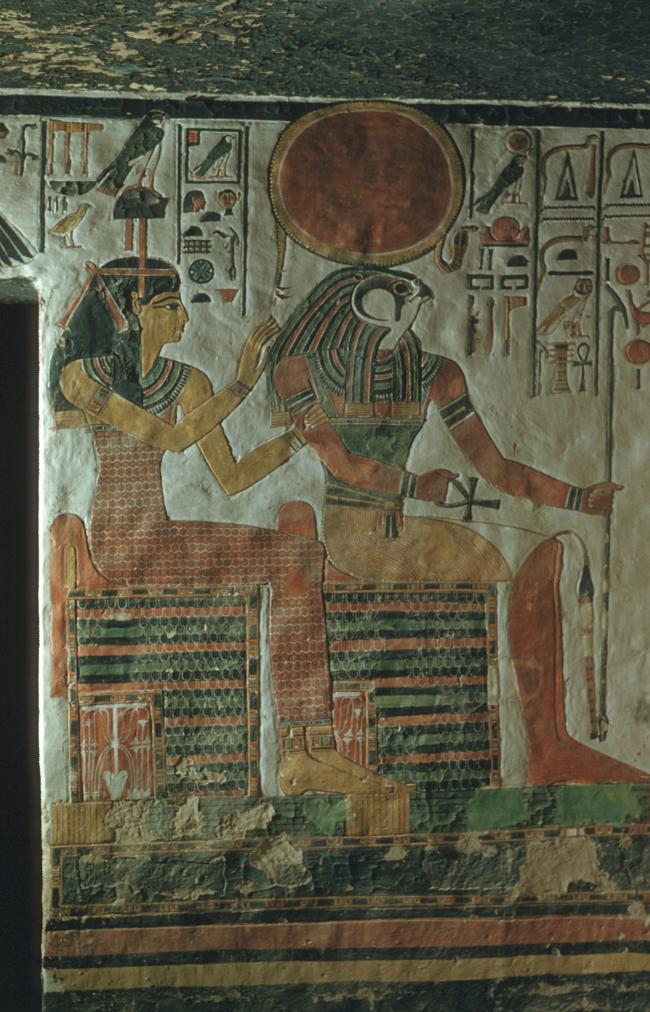
Hathor and Ra-Horakhety, east wall of the large recess (right part), Chamber B. Courtesy of Uni Dia Verlag. Uni Dia Image Nr. 36821.
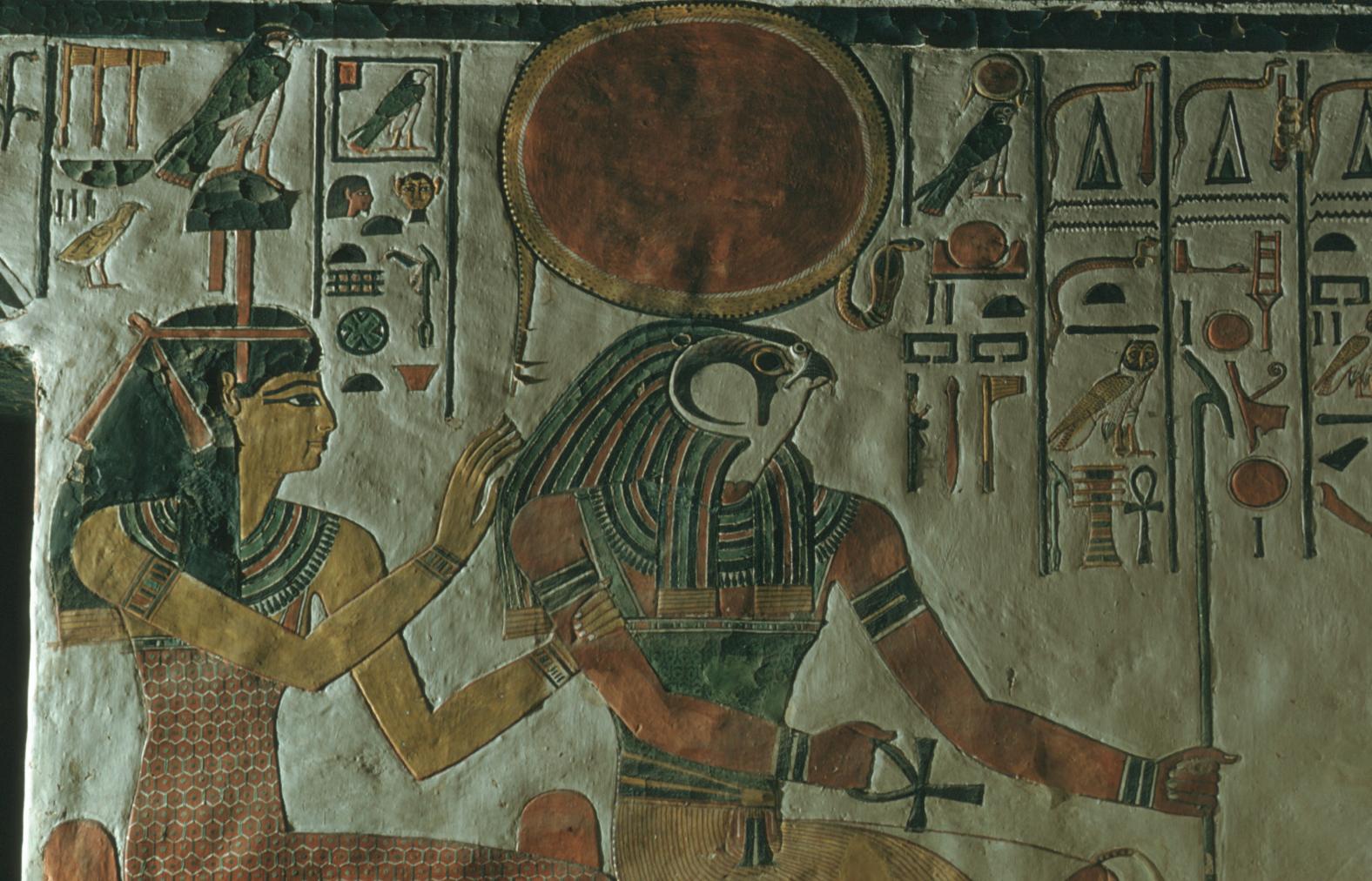
Hathor and Ra-Horakhety, east wall of the large recess (right part), Chamber B. Courtesy of Uni Dia Verlag. Uni Dia Image Nr. 36822.
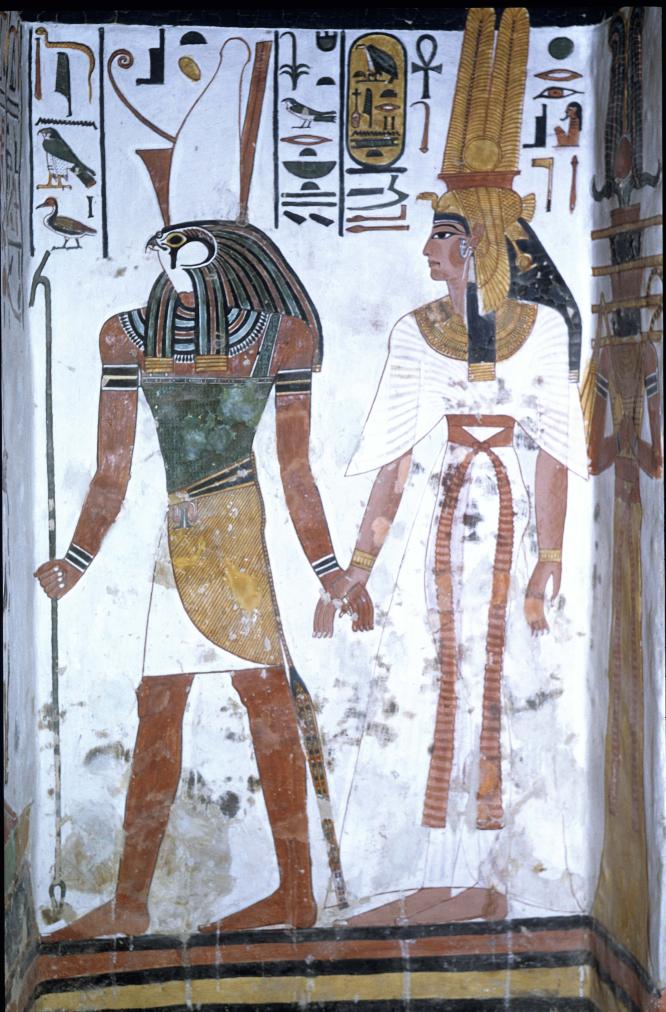
The queen led by the god Horsiese, south wall of the large recess, Chamber B. Courtesy of Uni Dia Verlag. Uni Dia Image Nr. 36823.
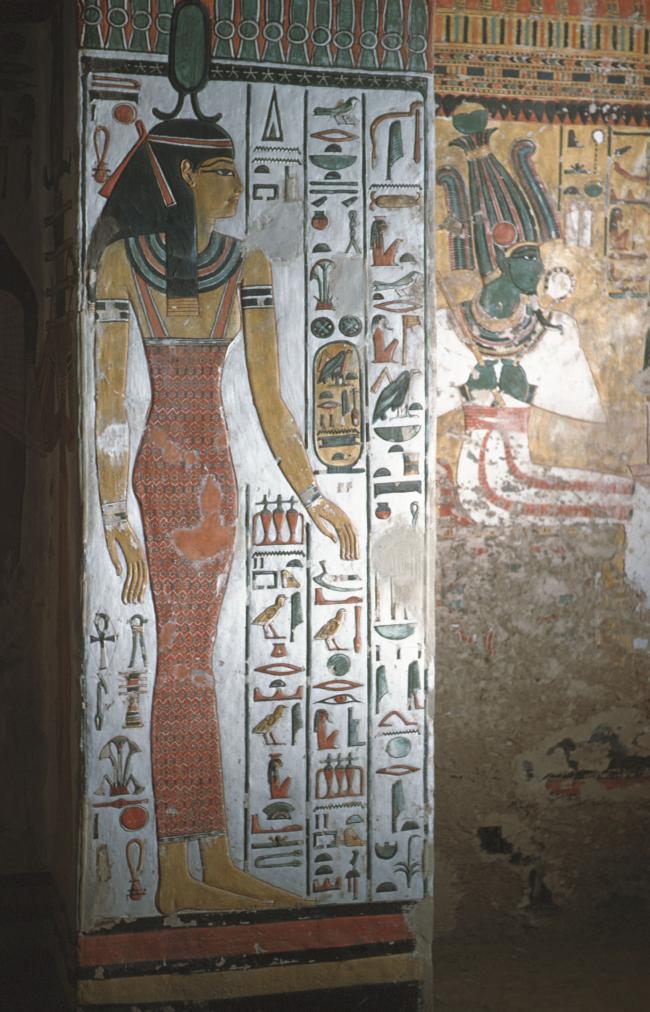
The goddess Neith on the right thickness of the large recess, Chamber B. Courtesy of Uni Dia Verlag. Uni Dia Image Nr. 36824.
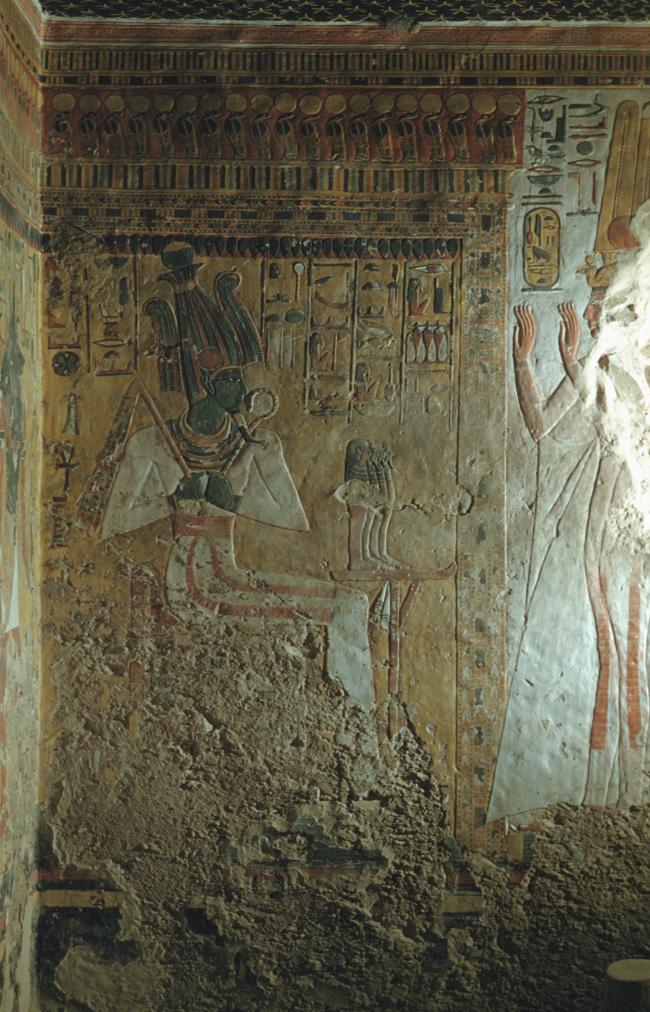
The queen in adoration before the god Osiris and images of the Four Sons of Horus on a standard, front (south) wall, Chamber B. Courtesy of Uni Dia Verlag. Uni Dia Image Nr. 36825.
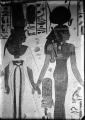
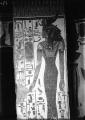
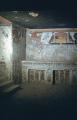
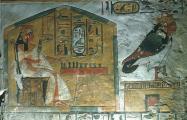
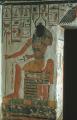
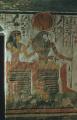
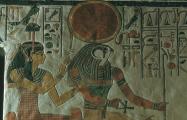
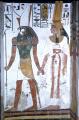
Gate Ba
See entire tombThe gate is perpendicular to the tomb axis. There is some damage to the painted decoration, but otherwise it is largely intact.
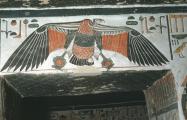
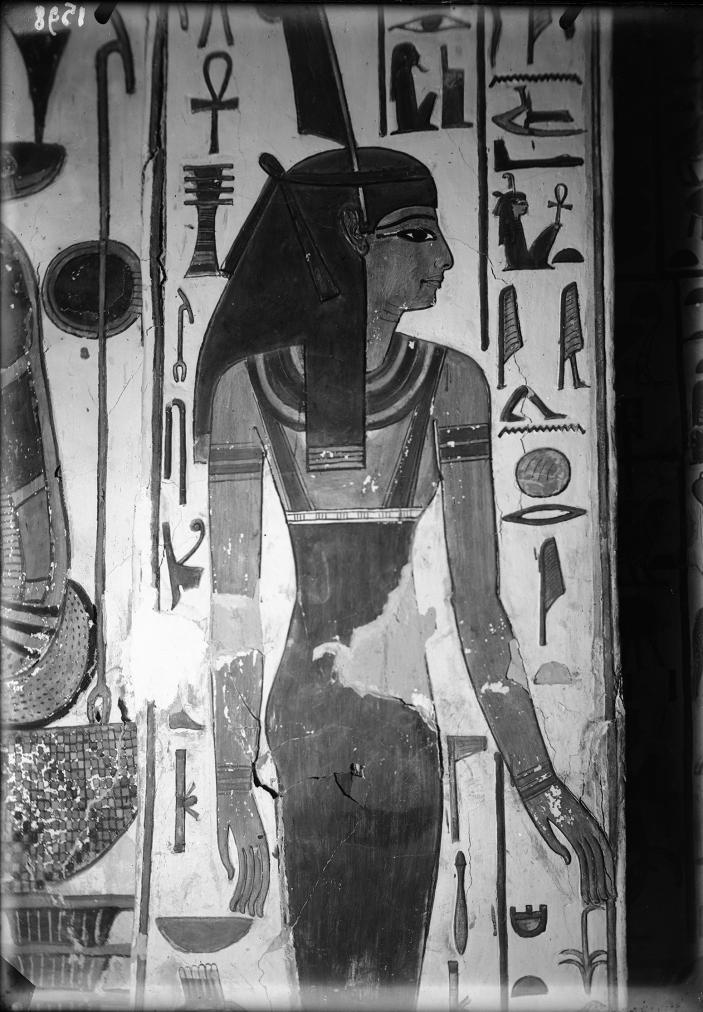
The lintel displays the goddess Nekhbet as a vulture, grasping a shen-sign in each of her talons. Both thicknesses show a depiction of the goddess Ma'at as a woman in a red dress wearing an ostrich feather in her headband. The text in the thicknesses contains a speech made by Ma'at to Nefertari offering her benefic qualities such as health, life, dominion. A Kheker frieze appears at the top of each thickness.
Porter and Moss designation:
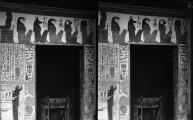
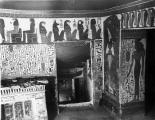
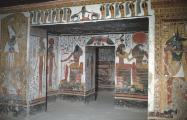
View of the east wall of chamber B's vestibule with access to side chamber Ba in the tomb of Queen Nefertari (QV 66) perhaps photographed during excavations. On the right, a seated dyad statue of Re-Horakhty and Hathor. On the left, Khepri. Italian Archaeological Expedition excavations. Courtesy of the Egyptian Museum in Turin.
View of the east wall of chamber B's vestibule with access to side chamber Ba in the tomb of Queen Nefertari (QV 66) perhaps photographed during excavations. A seated dyad of Re-Horakhty and Hathor with their epithets. Italian Archaeological Expedition excavations. Courtesy of the Egyptian Museum in Turin.
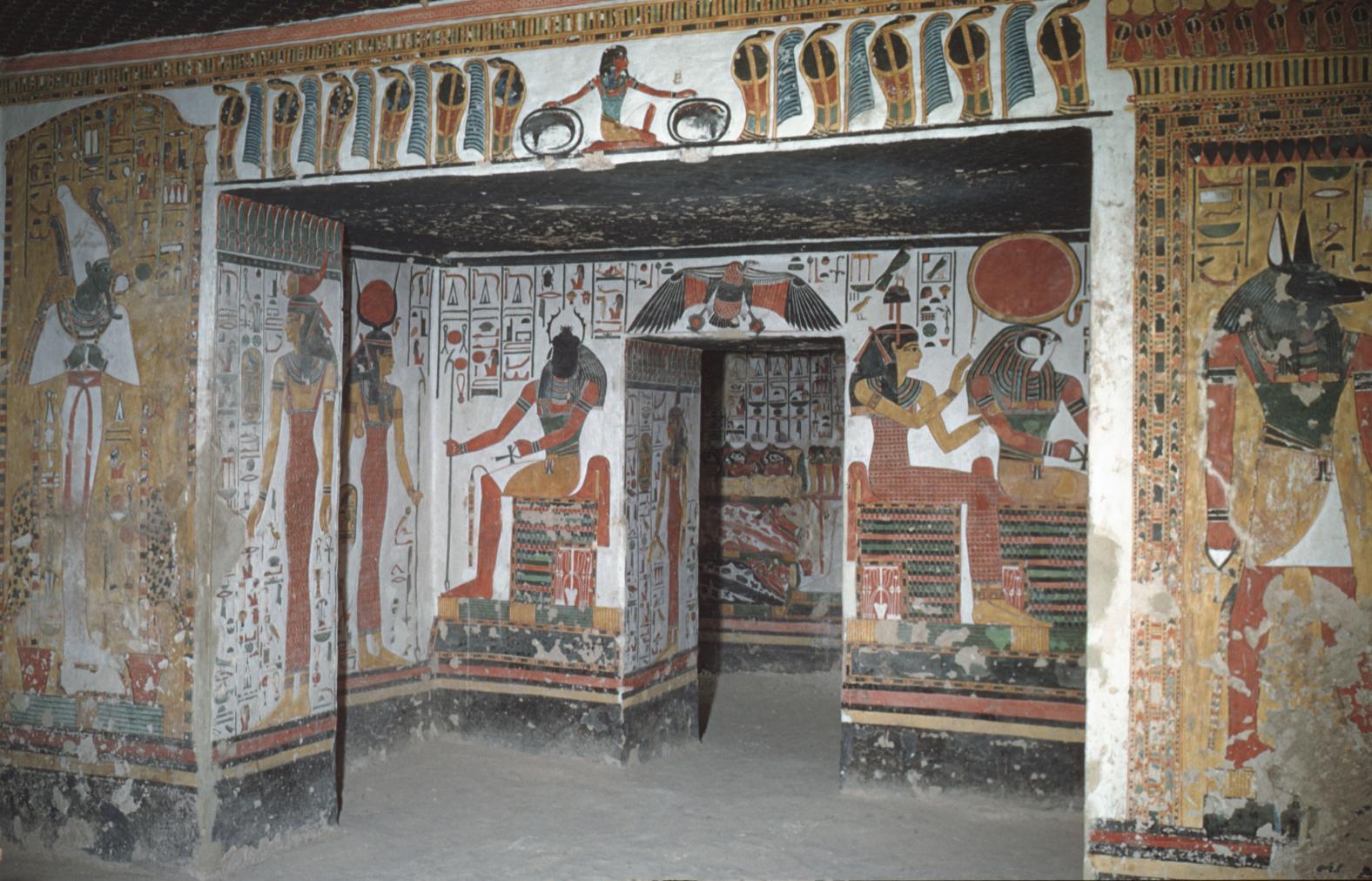
View of the east wall and Gate Ba, Chamber B. Courtesy of Uni Dia Verlag. Uni Dia Image Nr. 36811.
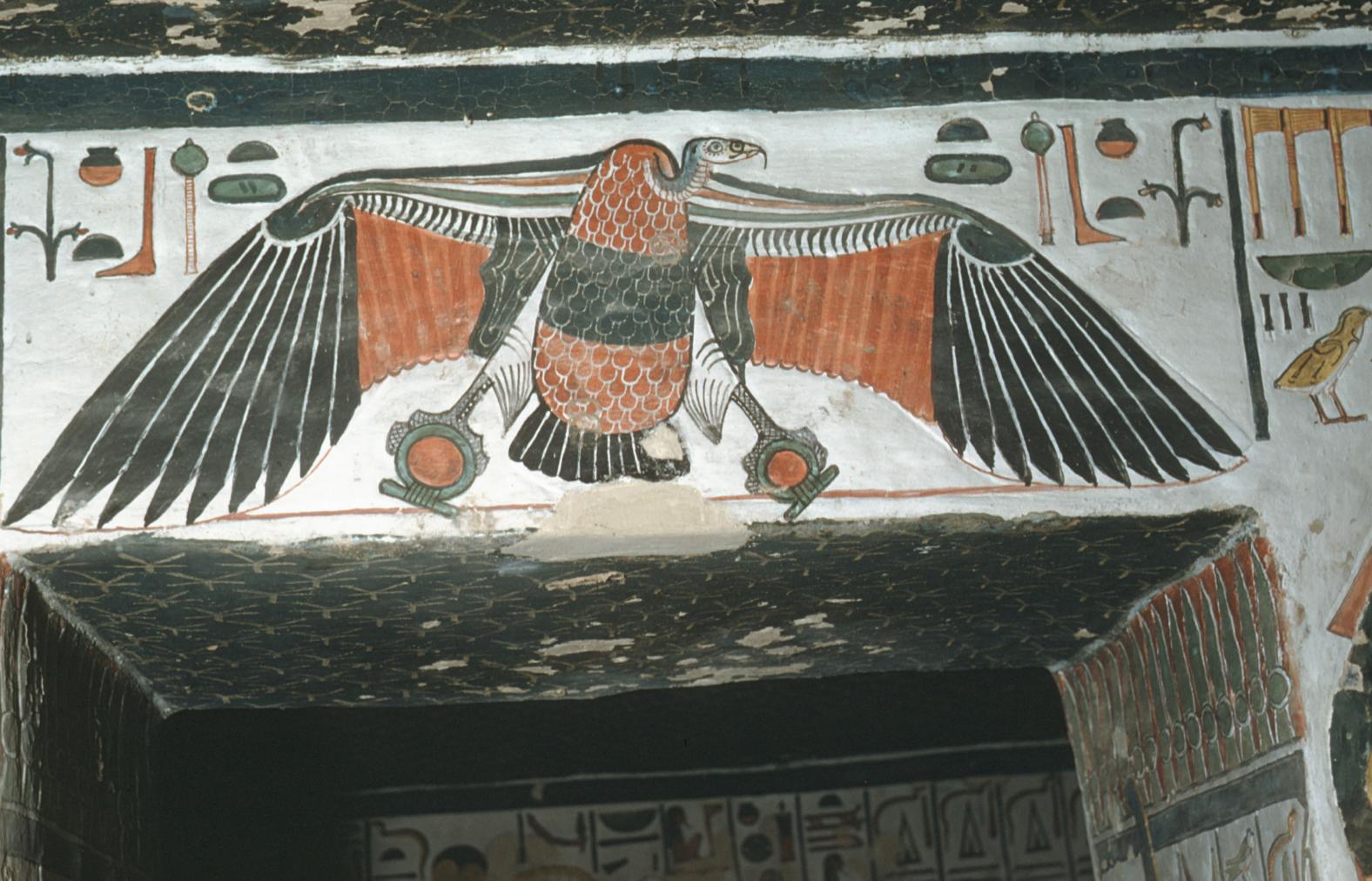
Vulture on the lintel of Gate Ba. Courtesy of Uni Dia Verlag. Uni Dia Image Nr. 36820.
Side chamber Ba
See entire tombThis square-shaped chamber is set perpendicular to the axis of the entrance. There is some damage to the paintings, particularly at the base of the wall, but this damage is minimal. Modern protective wooden walkways and fluorescent lighting were installed.
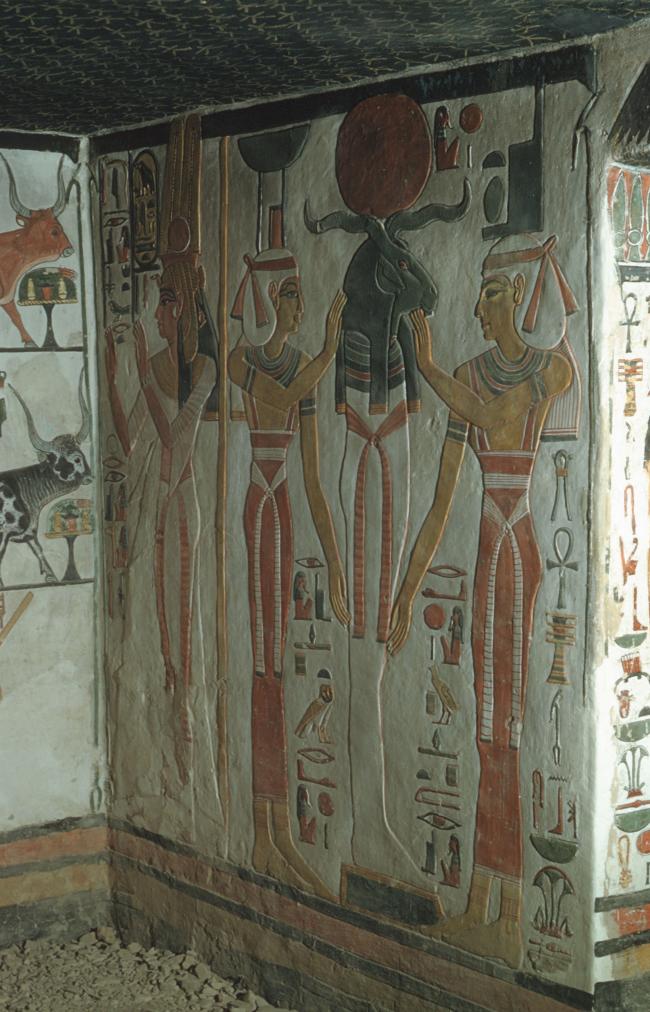
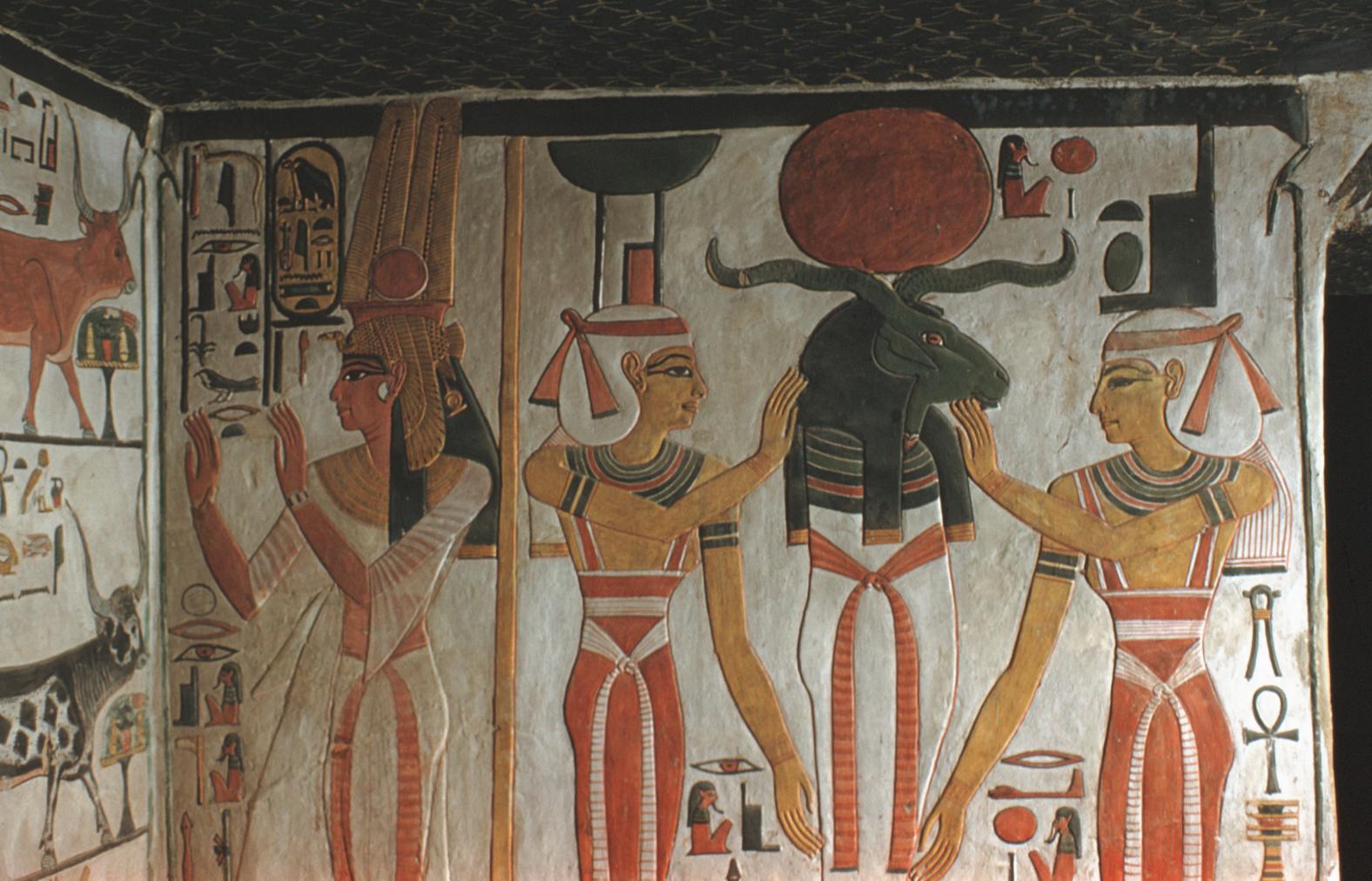
The lintel, like that of Gate Ba’s east wall, is decorated with a representation of Nekhbet as a vulture bearing two shen-signs. The north side of the west wall is decorated with a depiction of Nefertari facing north and offering linen in the form of the hieroglyph for linen to the standing mummiform figure of Ptah who is represented with green skin. Within a kiosk, Ptah is standing on the hieroglyph signifying Ma'at and is holding was, shen, and Djed-pillar staves. Standing behind Ptah outside the kiosk is a djed-pillar. The entire scene is surmounted by the pt hieroglyph for sky, supported on either end by a Was scepter. The south side of the west wall contains a scene of Isis and Nephthys, identified by their head gear, attending a mummiform deity with the head of a green-skinned ram wearing a sun disc who is standing on a Ma'at platform. The god is a conflation of Osiris and Ra. A yellow horizontal line separates this vignette from a south-facing depiction of Nefertari who raises her hands in a gesture of worship, indicating the scene continues onto the south wall.
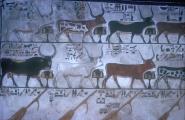
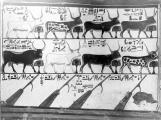
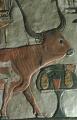
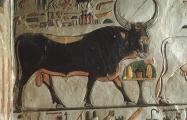
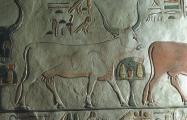
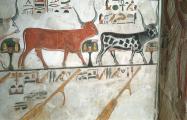
The south wall is divided into three horizontal registers surmounted by the pt hieroglyph for sky, supported on either end by a was scepter. The top two registers each feature a row of cows differently patterned cows facing the west wall. The top register contains four cows and the middle register contains three cows and one bull. The lower register contains four steering oars. Together, this scene is a pictorial representation of Spell 148 of the Book of the Dead, but the text itself is not inscribed on the wall. Instead, the text provides the name of each animal, while the oars are identified according to the cardinal directions.
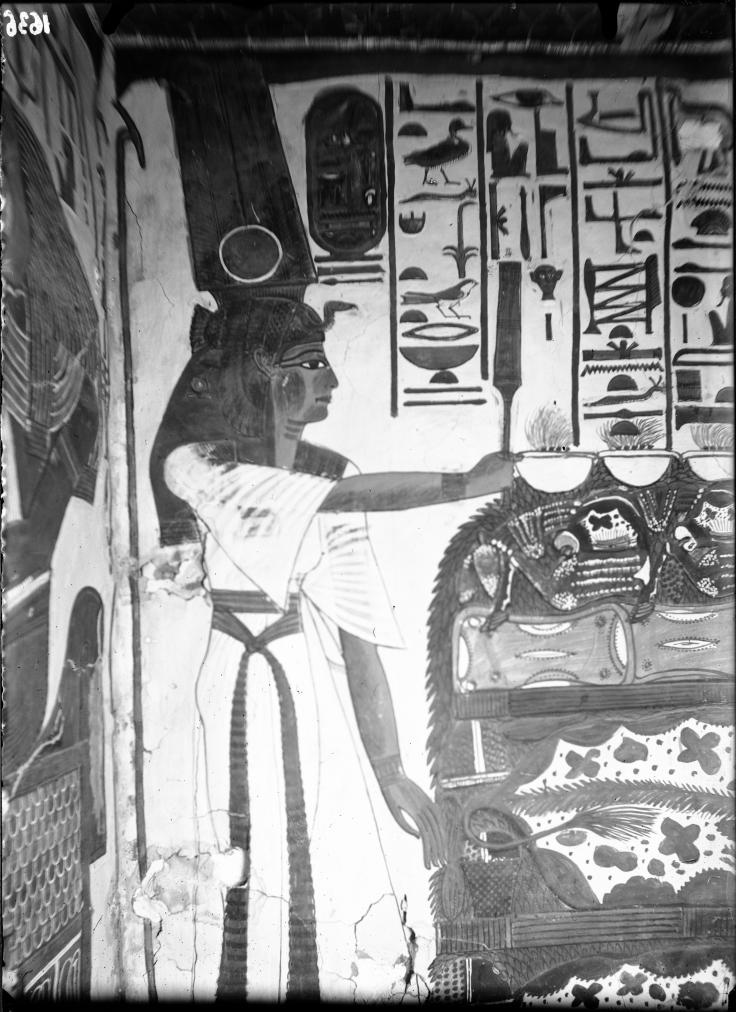
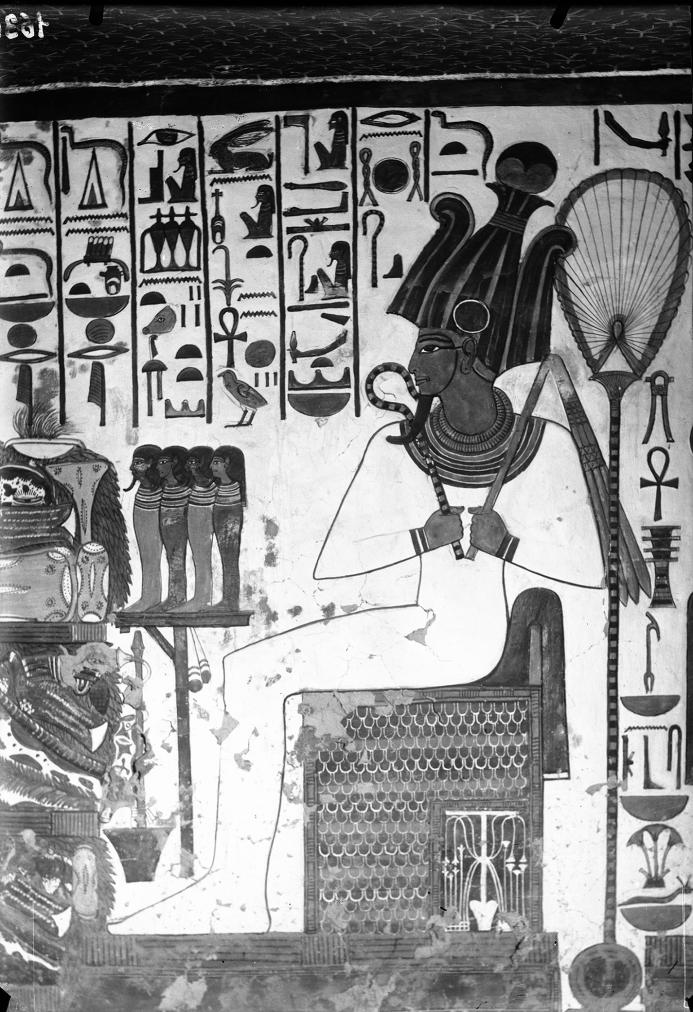
The east wall contains two major scenes, dividing the decoration into two symmetrical parts. On both the far left and far right, Nefertari is shown standing before a large pile of offerings and extending one hand holding aloft the sekhem scepter. The enthroned god on the left is the mummiform, green-skinned Osiris, bearing his traditional insignia of atef crown, crook, and flail. On a table in front of him are the standing mummiform figures of the four Sons of Horus who are all depicted with human heads. The enthroned god on the right side is Atum, appearing as a man with the Double crown of Upper and Lower Egypt, and holding an Ankh and was scepter. A feather fan bifurcates the scene behind each of the gods. The text states that Nefertari is offering to the gods. The entire scene is surmounted by the pt hieroglyph for sky, supported on either end by a was scepter.
The north wall is divided on half with a block of hieroglyphic text on the left side. This text is Spell 94 from the Book of the Dead. To the right of this, Nefertari stands before ibis-headed Thoth who holds an ankh and a was scepter and who is enthroned upon a Ma'at pedestal. Between them is a tall stand on which is placed a scribe’s palette and a frog, which might be a representation of an amulet rather than an actual frog. The entire scene is surmounted by the pt hieroglyph for sky, supported on either end by a Was scepter.
A dado frieze of black, red, and yellow bands appears on all walls. Finally, the ceiling is entirely painted with yellow stars on a dark blue background.
Porter and Moss designation:
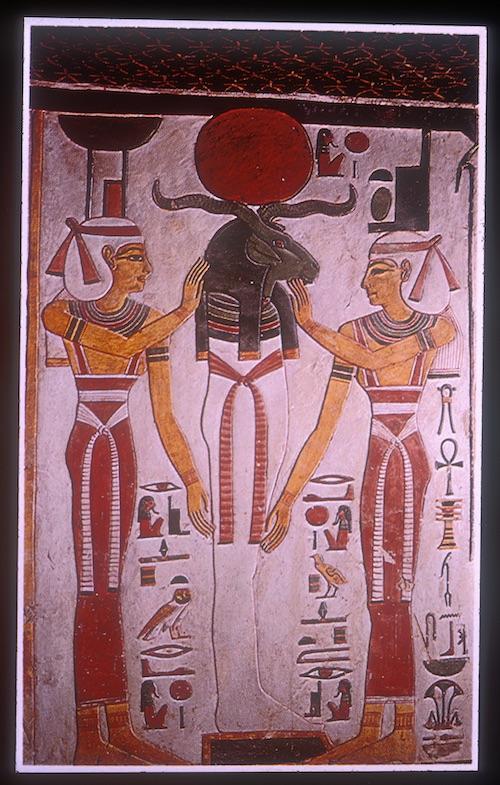
The composite Re and Osiris, cared for by Isis (right) and Nephthys (left), from the Book of the Dead in the tomb of Nefertari.
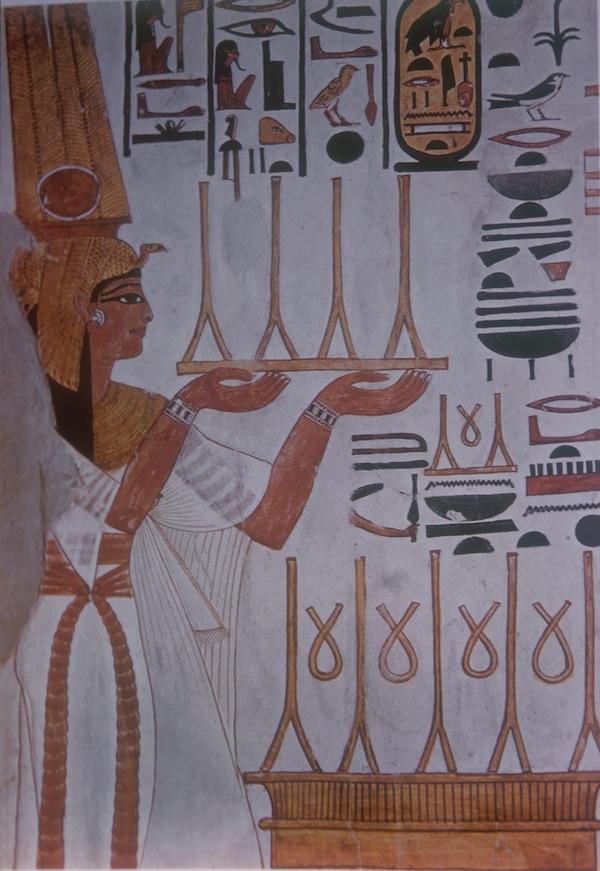
Nefertari presenting linen
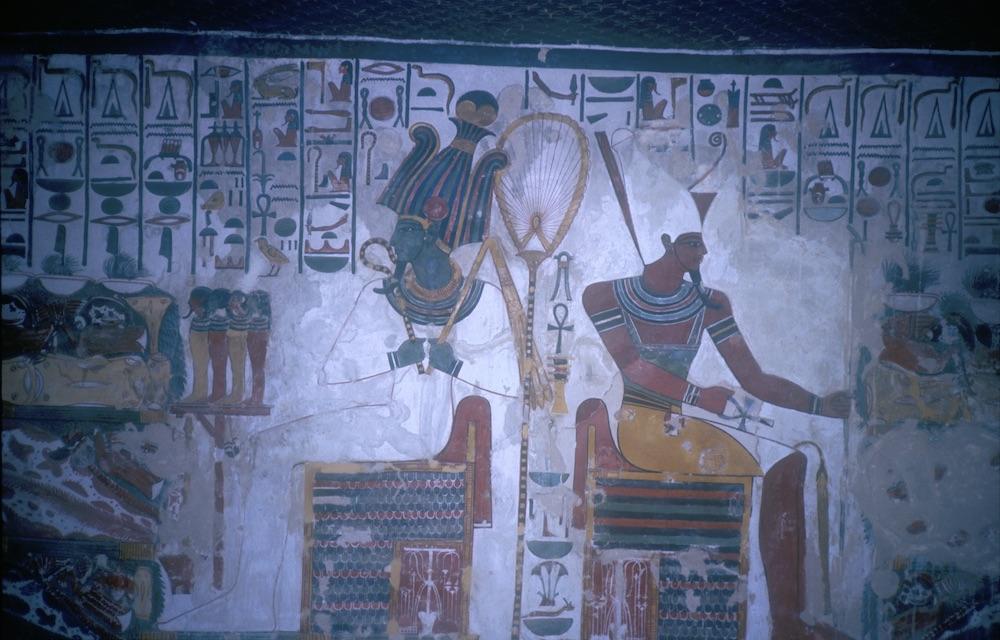
Osiris seated on throne before offerings and four sons of Horus on standard, seated back to back with Rameses II on throne before offerings.
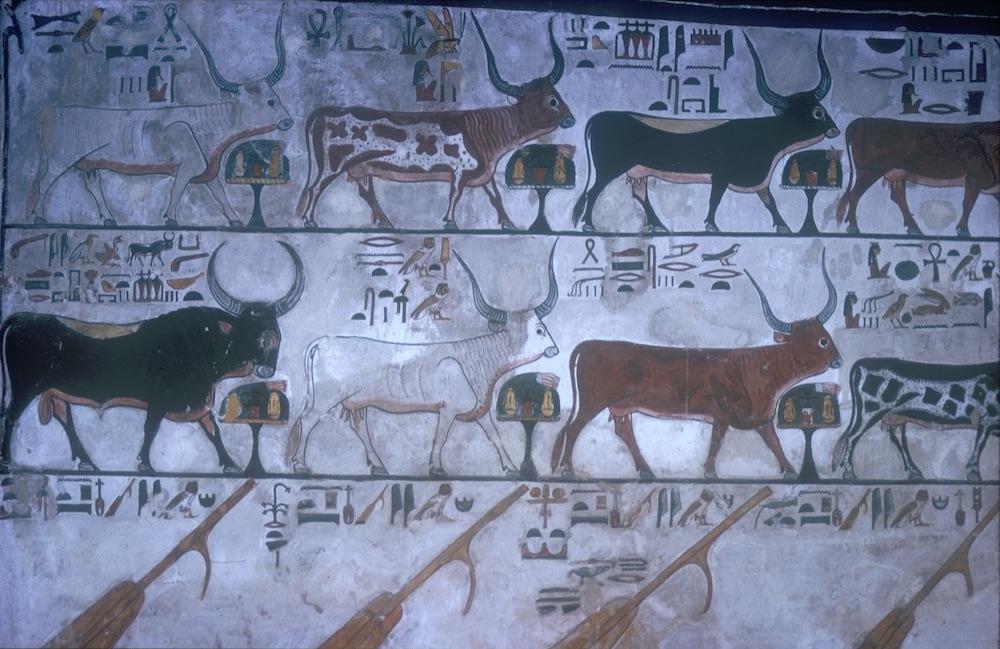
Book of the Dead Spell 148.
View of the east wall of chamber B's vestibule with access to side chamber Ba in the tomb of Queen Nefertari (QV 66) perhaps photographed during excavations. On the right, a seated dyad statue of Re-Horakhty and Hathor. On the left, Khepri. Italian Archaeological Expedition excavations. Courtesy of the Egyptian Museum in Turin.
View of the east wall of chamber B's vestibule with access to side chamber Ba in the tomb of Queen Nefertari (QV 66) perhaps photographed during excavations. A seated dyad of Re-Horakhty and Hathor with their epithets. Italian Archaeological Expedition excavations. Courtesy of the Egyptian Museum in Turin.
View of chamber B's vestibule photographed from side chamber Ba in the tomb of Queen Nefertari (QV 66). In the foreground, images of Serqet and Ma'at with their epithets topped by khekher-friezes are visible, as well as Osiris in the form of a djed-pillar fetish on the south side of its west wall. Italian Archaeological Expedition excavations. Courtesy of the Egyptian Museum in Turin.
View of chamber B's vestibule photographed from side chamber Ba in the tomb of Queen Nefertari (QV 66). In the foreground, images of Serqet and Ma'at with their epithets topped by khekher-friezes are visible, as well as Osiris in the form of a djed-pillar fetish on the south side of its west wall. Italian Archaeological Expedition excavations. Courtesy of the Egyptian Museum in Turin.
West wall, north side of side chamber Ba in the tomb of Queen Nefertari (QV 66) perhaps photographed during excavations. The queen offers and presents linen to an enshrined Ptah. Italian Archaeological Expedition excavations. Courtesy of the Egyptian Museum in Turin.
Detail of the west wall, north side of side chamber Ba in the tomb of Queen Nefertari (QV 66) perhaps photographed during excavations. The queen offers and presents linen to an enshrined Ptah beside a djed-pillar. Italian Archaeological Expedition excavations. Courtesy of the Egyptian Museum in Turin.
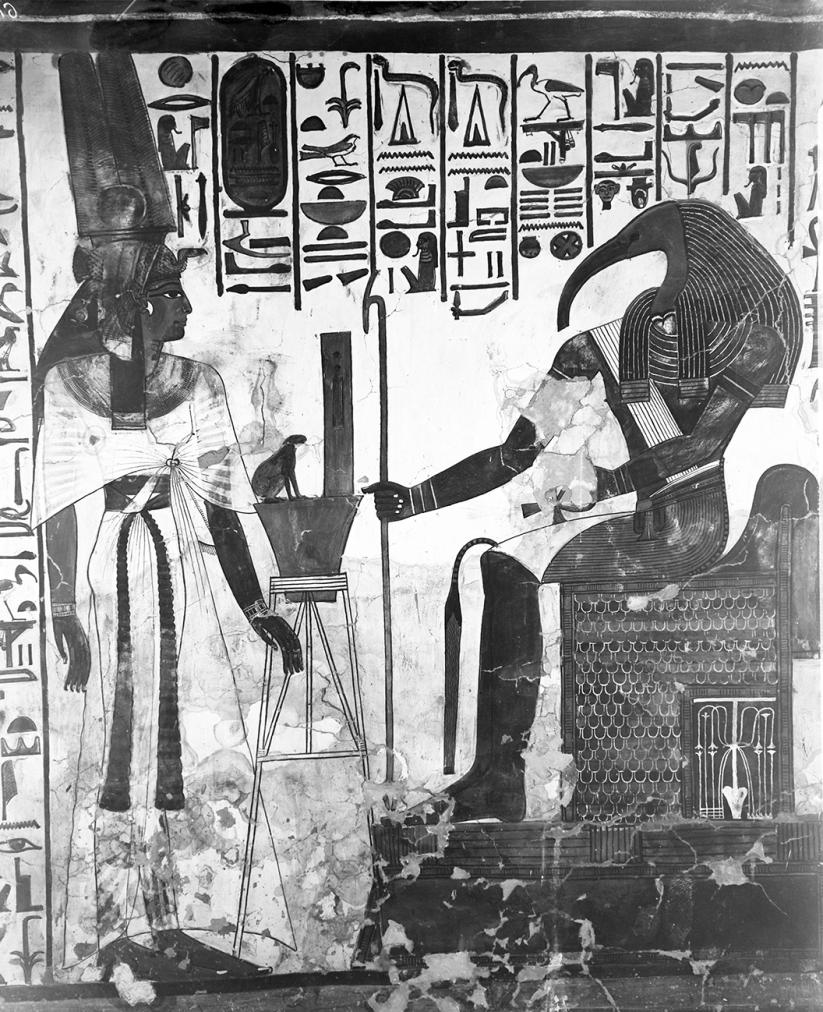
West wall, north side of side chamber Ba in the tomb of Queen Nefertari (QV 66) perhaps photographed during excavations. The queen offers an ex-voto in the form of a frog and a scribal palette to a seated Thoth, which is framed by texts from Spell 94 of the Book of the Dead. Italian Archaeological Expedition excavations. Courtesy of the Egyptian Museum in Turin.
West wall, south side of side chamber Ba in the tomb of Queen Nefertari (QV 66) perhaps photographed during excavations. Re-Osiris is shown mummiform with the head and horns of a wild barbary sheep and sun disc and is protected by Nephthys (left) and Isis (right). Italian Archaeological Expedition excavations. Courtesy of the Egyptian Museum in Turin.
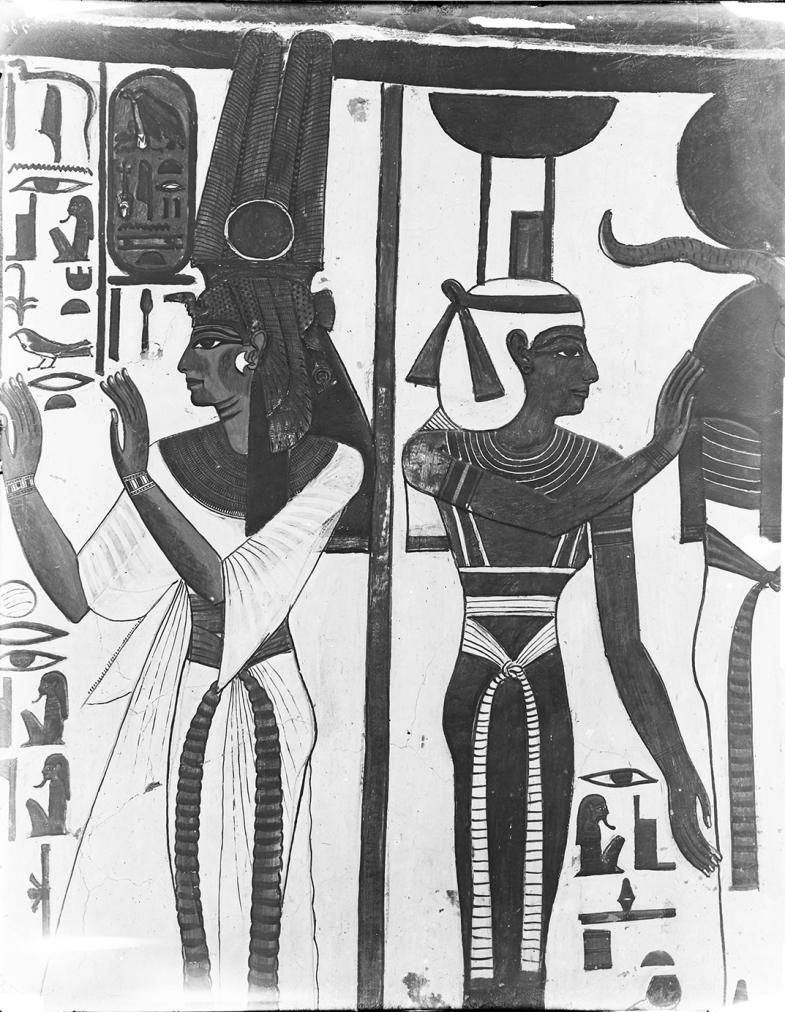
West wall, south side of side chamber Ba in the tomb of Queen Nefertari (QV 66) perhaps photographed during excavations. Re-Osiris is shown mummiform with the head and horns of a wild barbary sheep and sun disc and is protected by Nephthys (left) and Isis (right, not visible here). To the left, Queen Nefertari recites Spell 178 of the Book of the Dead. Italian Archaeological Expedition excavations. Courtesy of the Egyptian Museum in Turin.
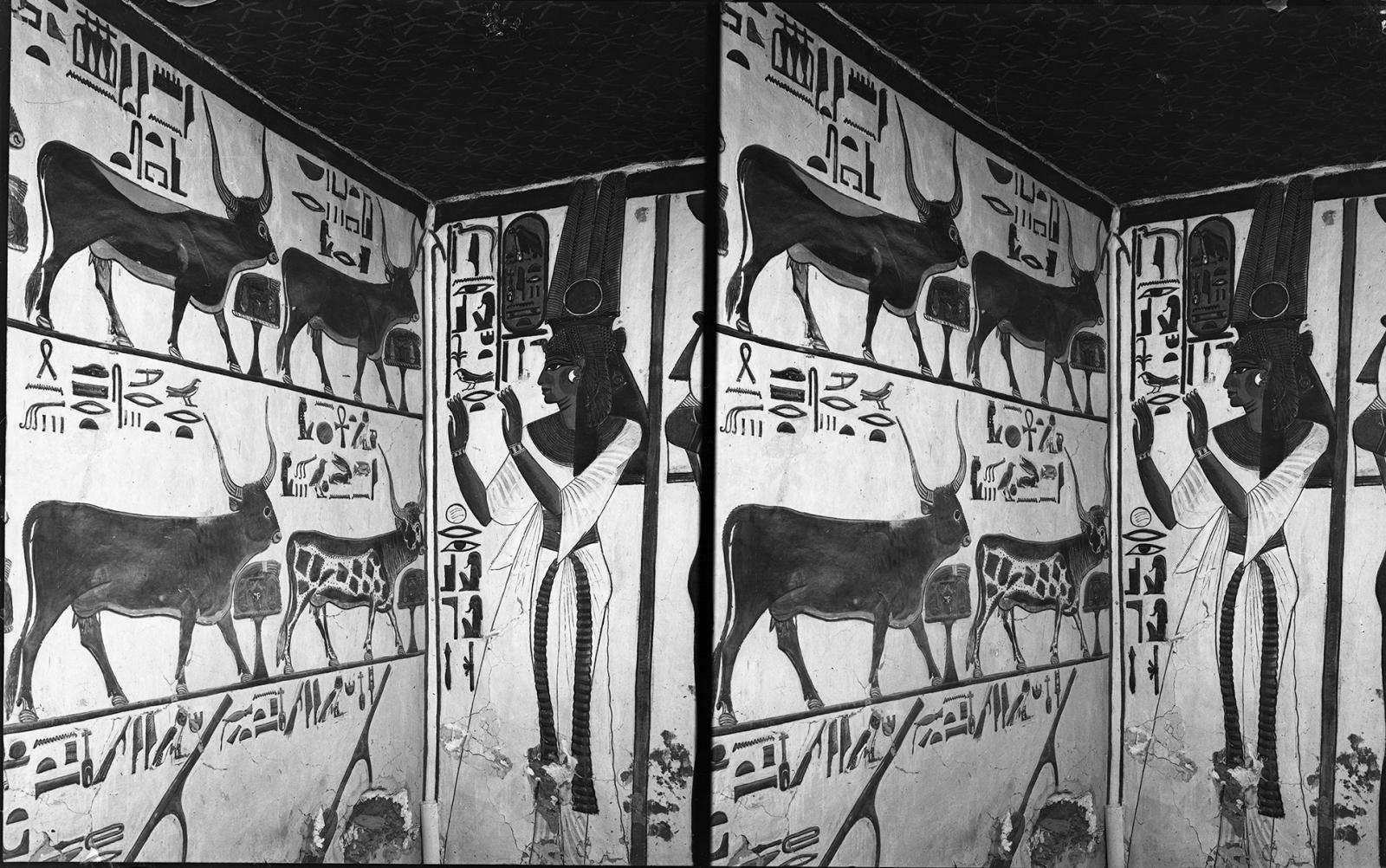
Southwest corner of side chamber Ba in the tomb of Queen Nefertari (QV 66) perhaps photographed during excavations. Queen Nefertai (right) recites Spell 148 of the Book of the Dead in front of different types of bovines with offerings who will nourish her in the hereafter (left). Italian Archaeological Expedition excavations. Courtesy of the Egyptian Museum in Turin.
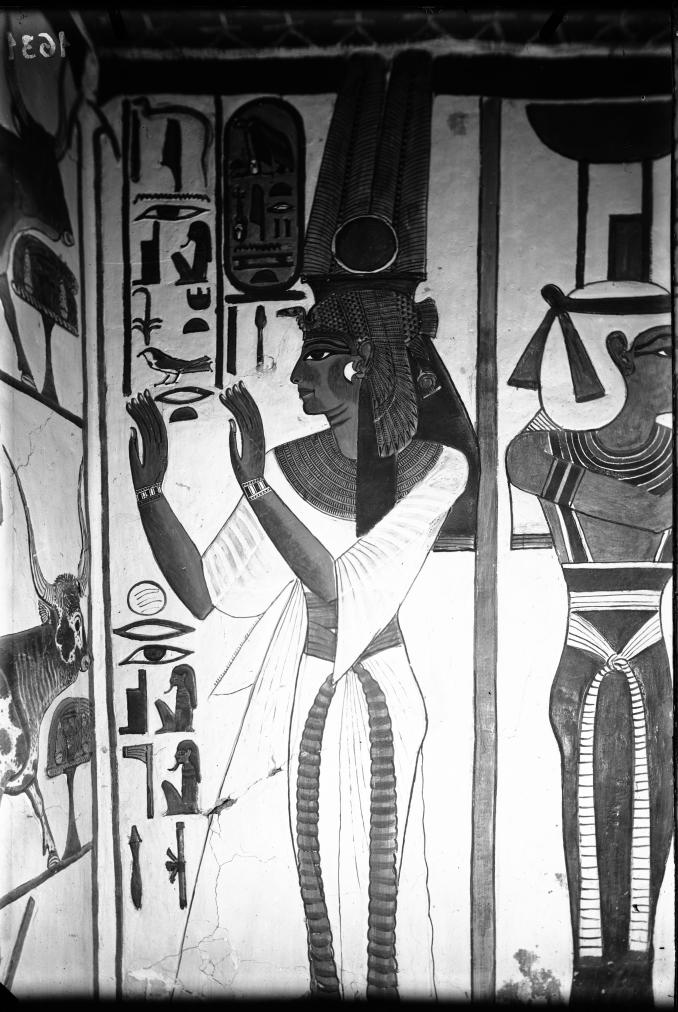
West wall, south side of side chamber Ba in the tomb of Queen Nefertari (QV 66) perhaps photographed during excavations. Re-Osiris is shown mummiform with the head and horns of a wild barbary sheep and sun disc and is protected by Nephthys (left) and Isis (right, not visible here). To the left, Queen Nefertari recites Spell 178 of the Book of the Dead. Italian Archaeological Expedition excavations. Courtesy of the Egyptian Museum in Turin.
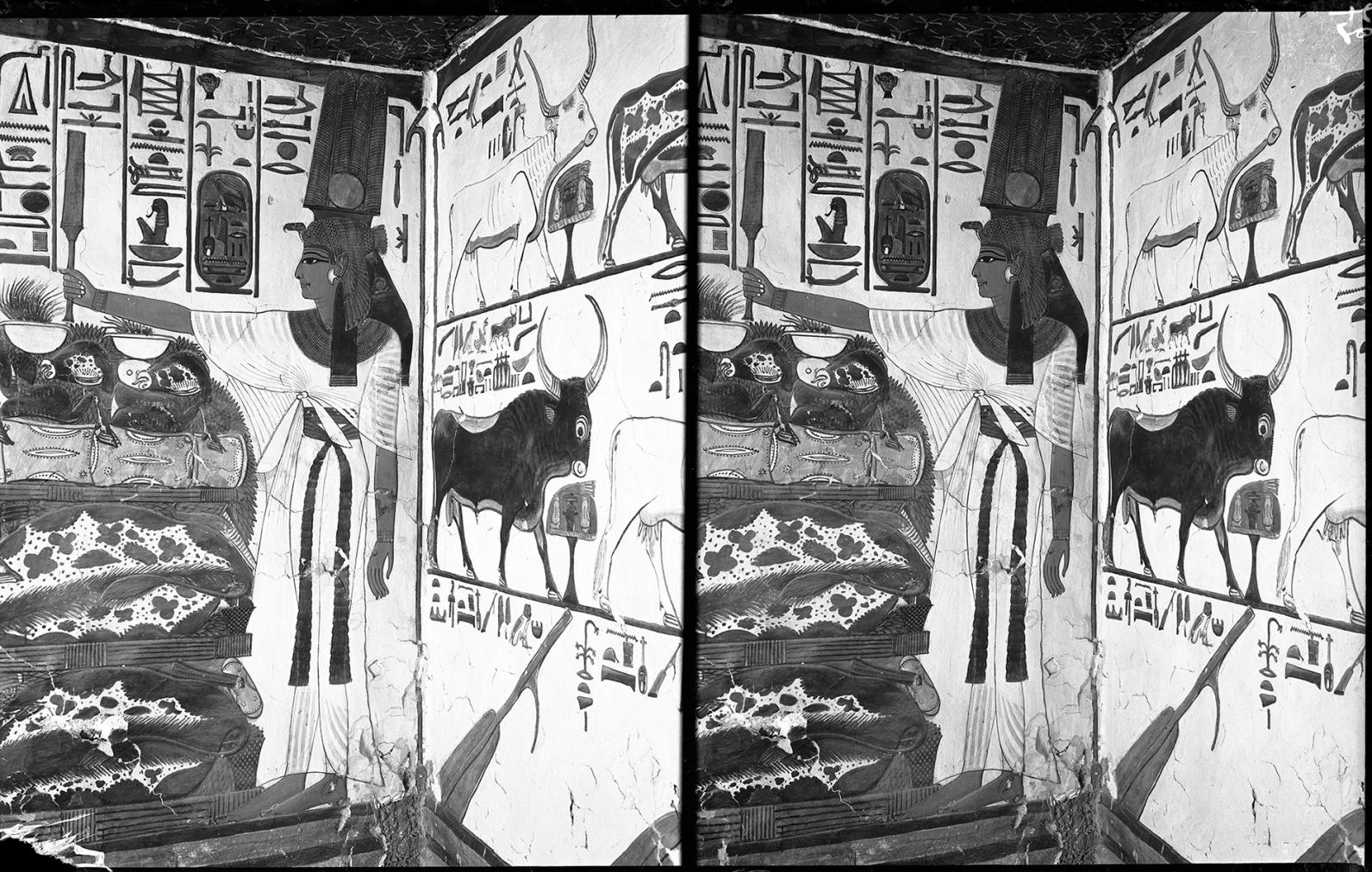
Southeast corner of side chamber Ba in the tomb of Queen Nefertari (QV 66) perhaps photographed during excavations. Bovines (right) with offerings who will nourish the queen in the hereafter are depicted from Spell 148 of the Book of the Dead while Queen Nefertari (left) offers a large offering bundle to Atum. Italian Archaeological Expedition excavations. Courtesy of the Egyptian Museum in Turin.
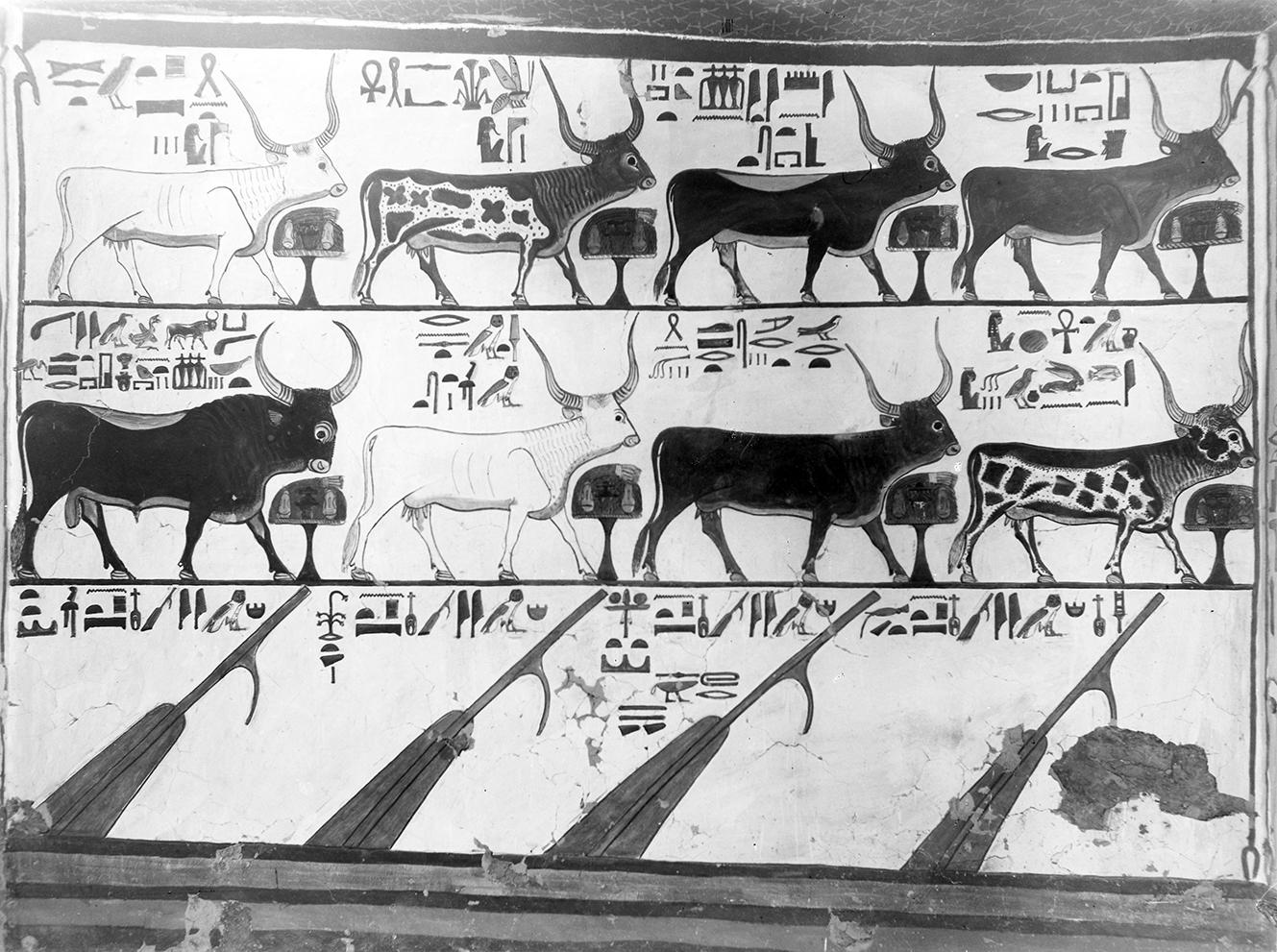
South wall of side chamber Ba in the tomb of Queen Nefertari (QV 66) perhaps photographed during excavations. Seven bovines with offerings who will nourish the queen in the hereafter, as well as four oars from a bark that will help the queen reach the Imperishable Stars in the West, as noted in Spell 178 of the Book of the Dead. Italian Archaeological Expedition excavations. Courtesy of the Egyptian Museum in Turin.
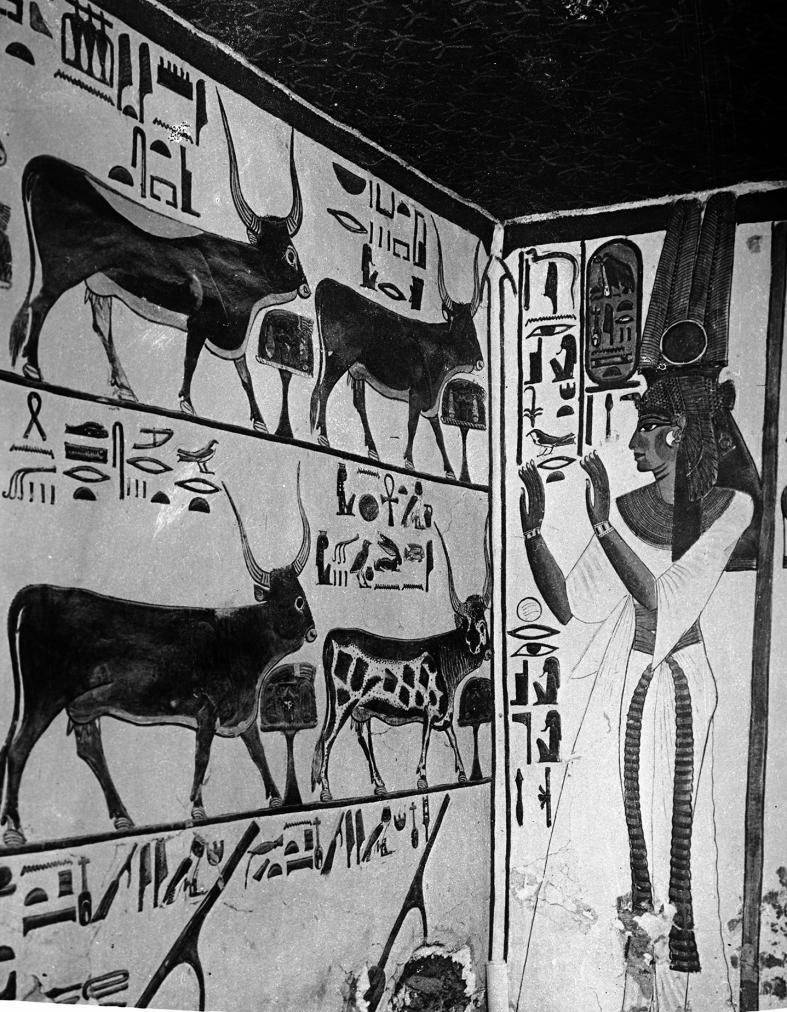
Southwest corner of side chamber Ba in the tomb of Queen Nefertari (QV 66) perhaps photographed during excavations. Queen Nefertai (right) recites Spell 148 of the Book of the Dead in front of different types of bovines with offerings who will nourish her in the hereafter (left). Italian Archaeological Expedition excavations. Courtesy of the Egyptian Museum in Turin.
East wall of side chamber Ba in the tomb of Queen Nefertari (QV 66) perhaps photographed during excavations. Queen Nefertari presents a large offering bundle to Osiris (left, not visible here). Italian Archaeological Expedition excavations. Courtesy of the Egyptian Museum in Turin.
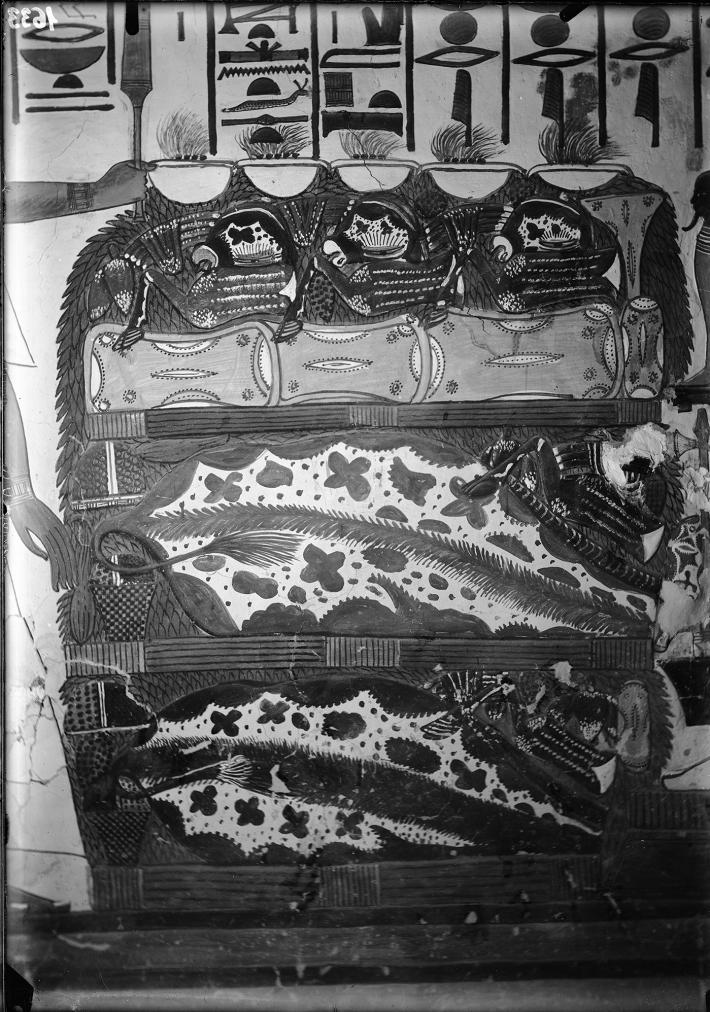
East wall from side chamber Ba in the tomb of Queen Nefertari (QV 66) perhaps photographed during excavations. Queen Nefertari presents a large offering bundle to Osiris (left, not visible here). Italian Archaeological Expedition excavations. Courtesy of the Egyptian Museum in Turin.
East wall from side chamber Ba in the tomb of Queen Nefertari (QV 66) perhaps photographed during excavations. Osiris receives a large bundle of offerings from Queen Nefertari (right, not visible here). Italian Archaeological Expedition excavations. Courtesy of the Egyptian Museum in Turin.
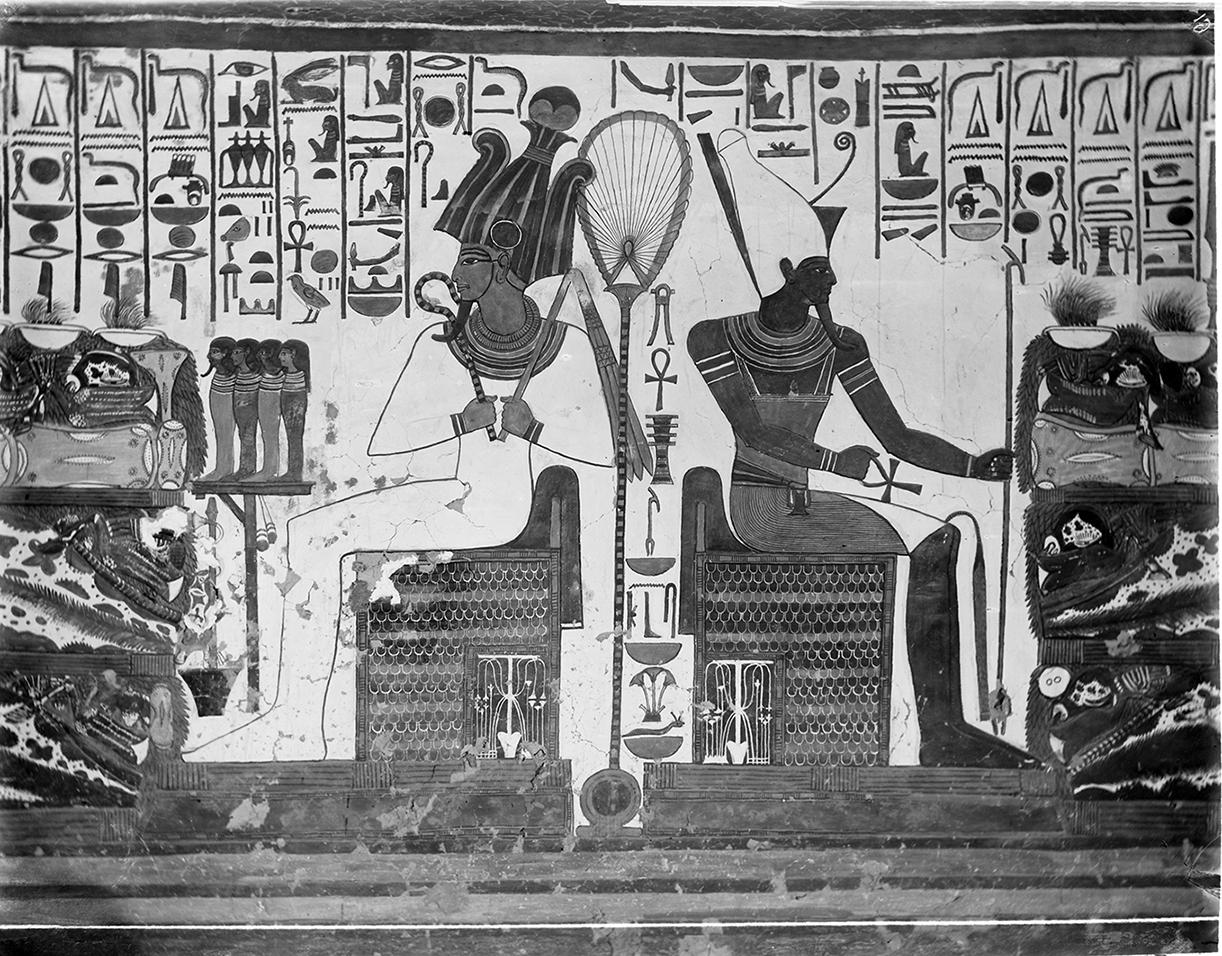
East wall from side chamber Ba in the tomb of Queen Nefertari (QV 66) perhaps photographed during excavations. Osiris and Atum receive large offering bundles from Queen Nefertari (not visible here). Italian Archaeological Expedition excavations. Courtesy of the Egyptian Museum in Turin.
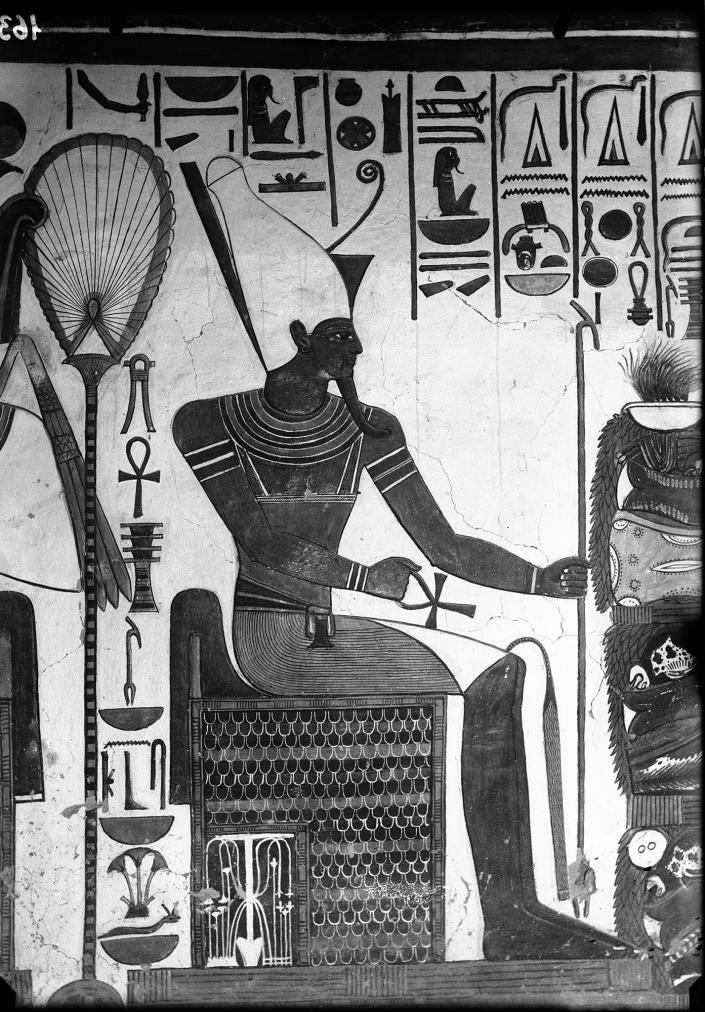
East wall detail from side chamber Ba in the tomb of Queen Nefertari (QV 66) perhaps photographed during excavations. Atum receives a large offering bundle from Queen Nefertari (not visible here). Italian Archaeological Expedition excavations. Courtesy of the Egyptian Museum in Turin.
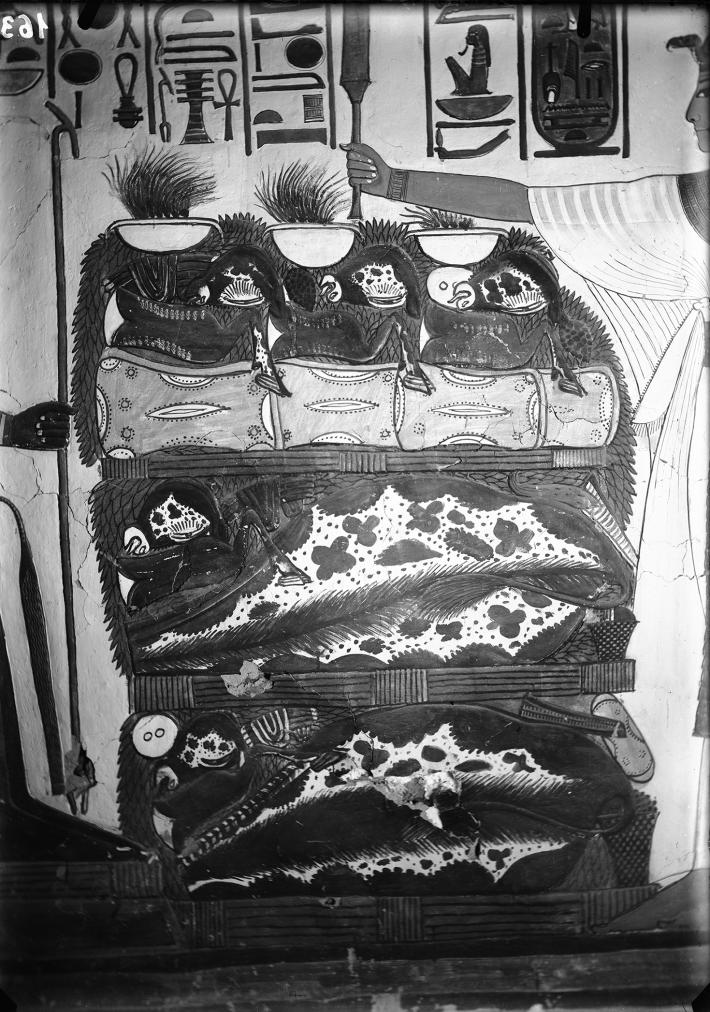
East wall detail from side chamber Ba in the tomb of Queen Nefertari (QV 66) perhaps photographed during excavations. A large offering bundle presented by Queen Nefertari to Atum (both not visible here). Italian Archaeological Expedition excavations. Courtesy of the Egyptian Museum in Turin.
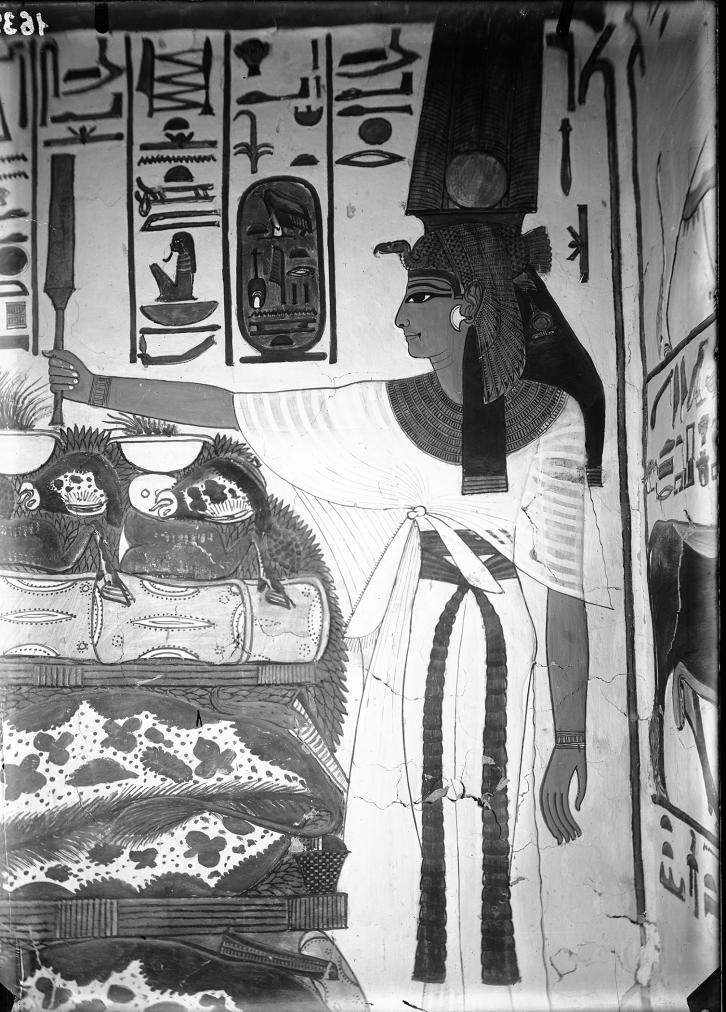
East wall detail from side chamber Ba in the tomb of Queen Nefertari (QV 66) perhaps photographed during excavations. Queen Nefertari presents a large offering bundle to the Atum (right, not visible here). Italian Archaeological Expedition excavations. Courtesy of the Egyptian Museum in Turin.
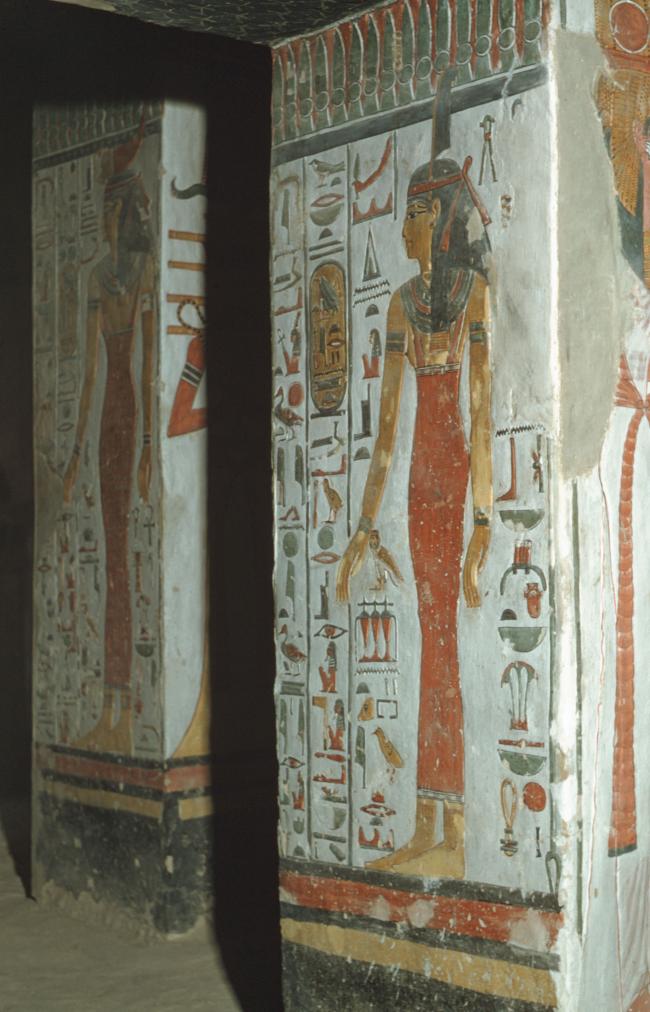
View from Side Chamber Ba, the goddess Ma'at on the left thickness of Gate Ba and the goddess Serqet in the background on the large recess of Chamber B. Courtesy of Uni Dia Verlag. Uni Dia Image Nr. 36826.
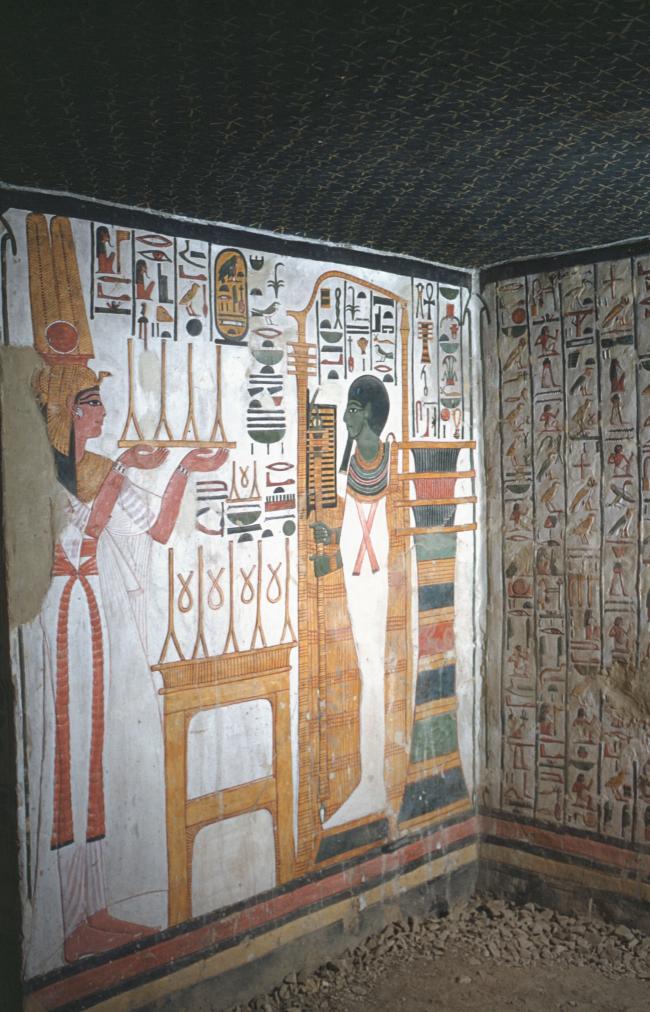
The queen offers linen to the god Ptah, the front (west) wall of Side chamber Ba. Courtesy of Uni Dia Verlag. Uni Dia Image Nr. 36827.
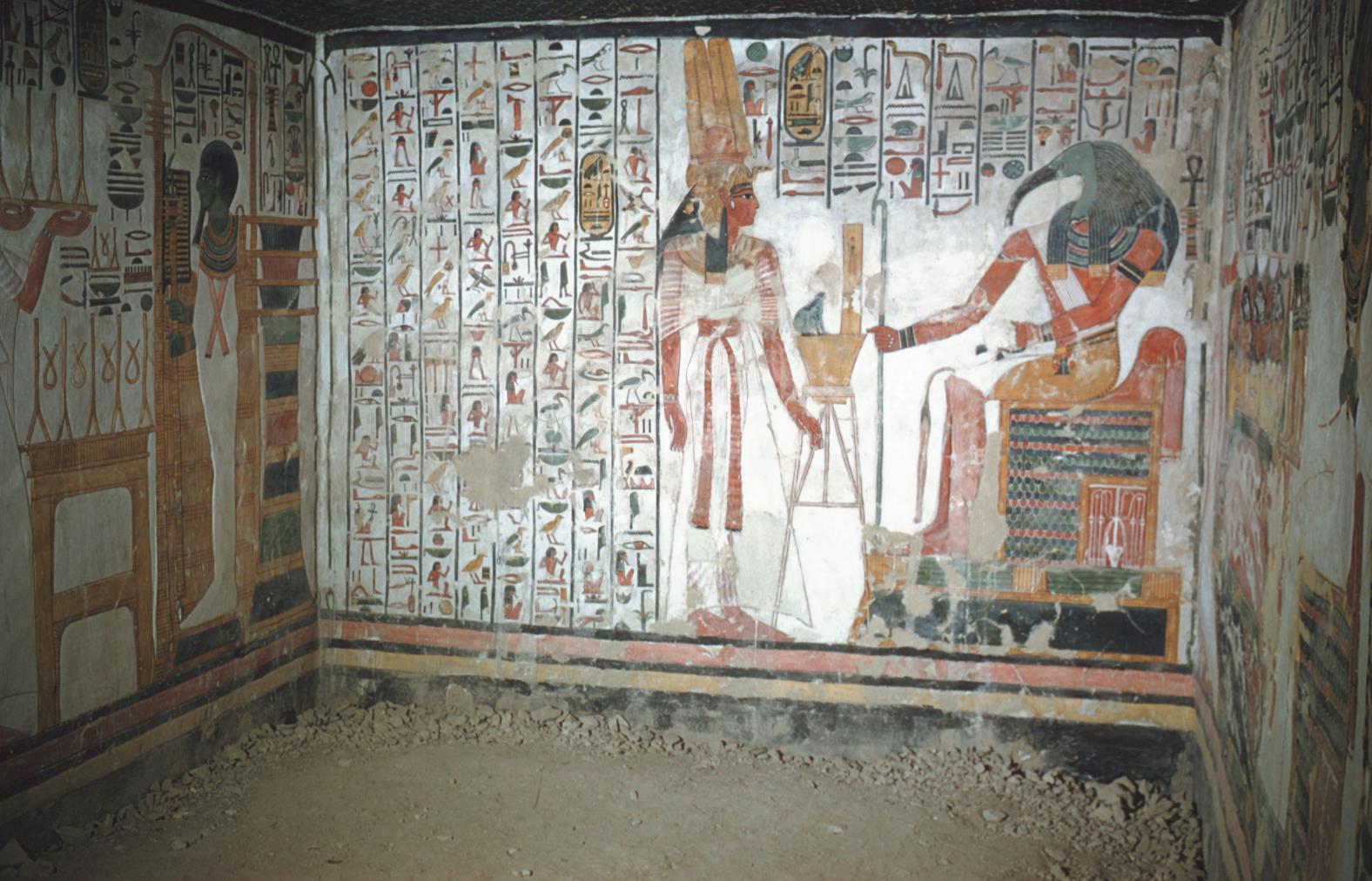
The queen before the god Thoth, left (north) wall of Side chamber Ba. Courtesy of Uni Dia Verlag. Uni Dia Image Nr. 36828.
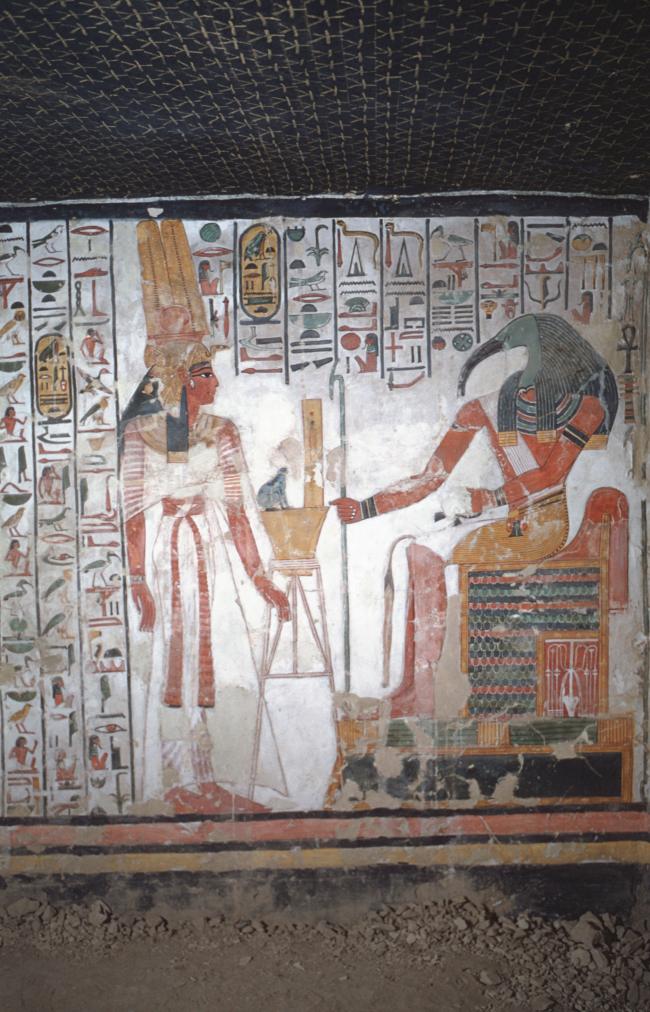
The queen before the god Thoth, left (north) wall of Side chamber Ba. Courtesy of Uni Dia Verlag. Uni Dia Image Nr. 36829.
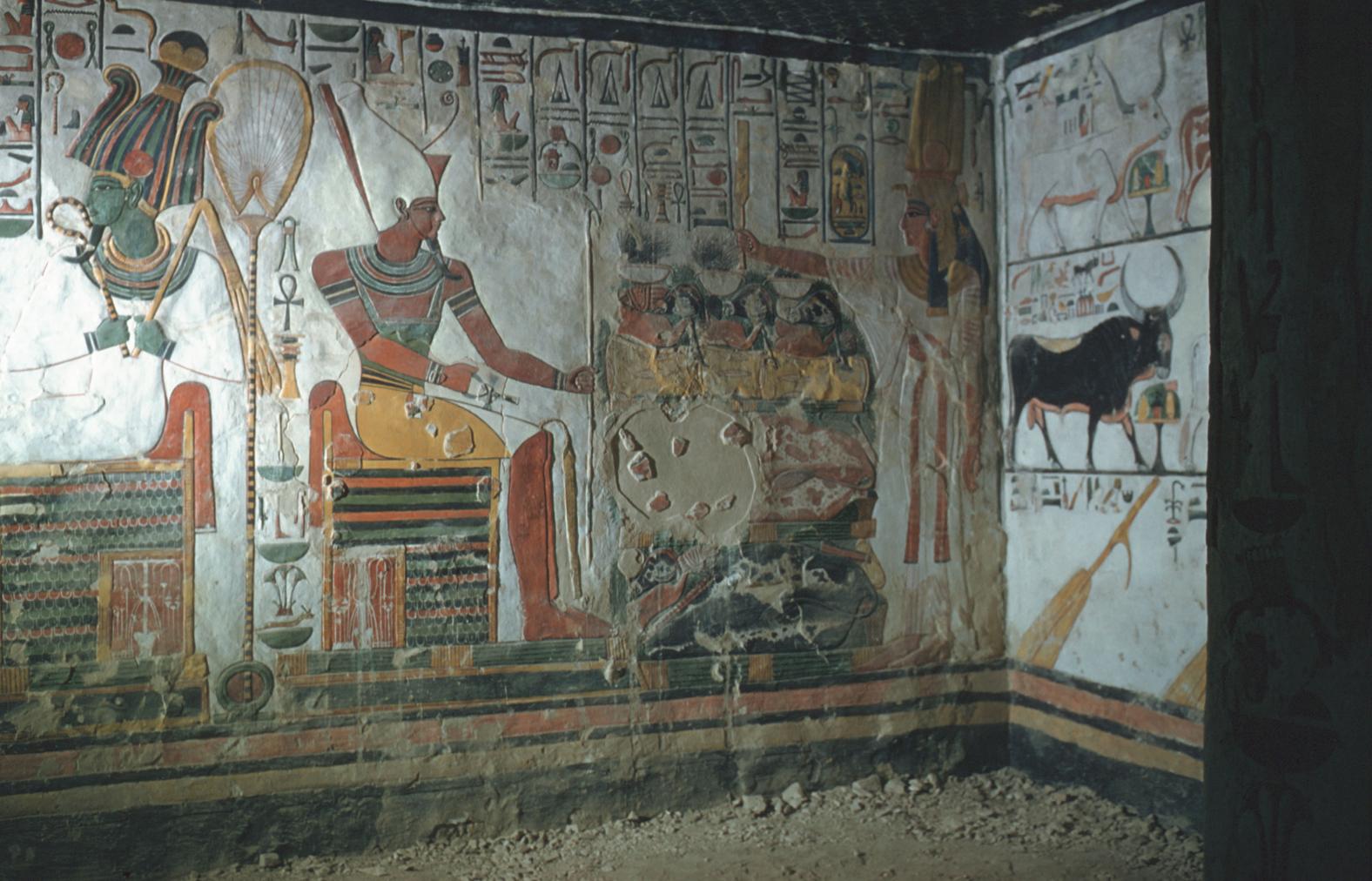
The queen offering to the god Atum, Side chamber Ba, rear (east) wall (right part). Detail of the god Thoth, left (north) wall of Side chamber Ba. Courtesy of Uni Dia Verlag. Uni Dia Image Nr. 36831.
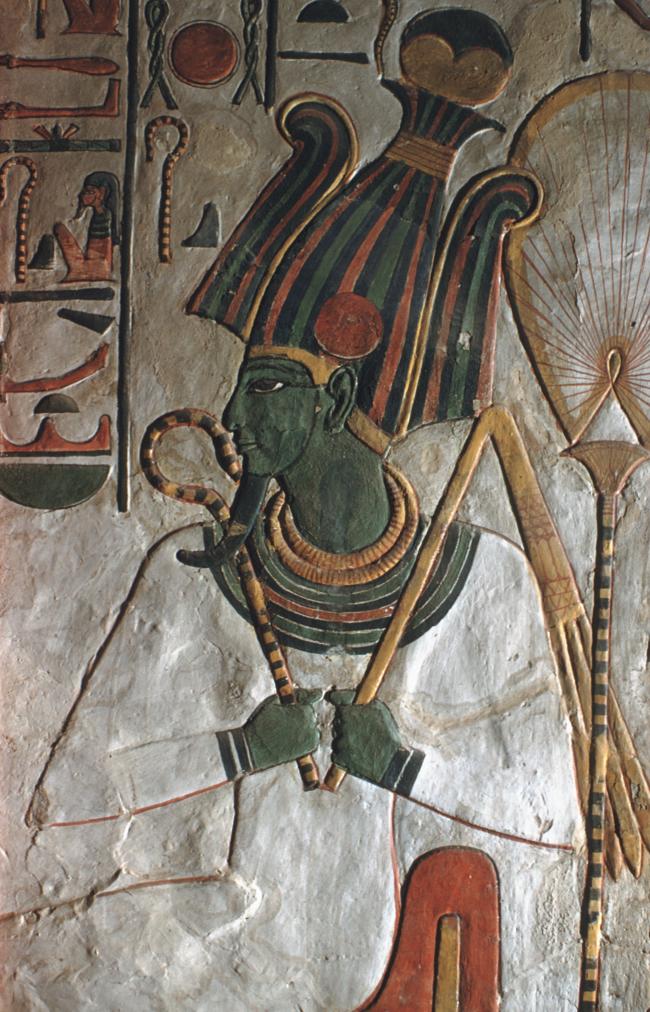
Detail of the god Osiris, Side chamber Ba, rear (east) wall. Courtesy of Uni Dia Verlag. Uni Dia Image Nr. 36832.
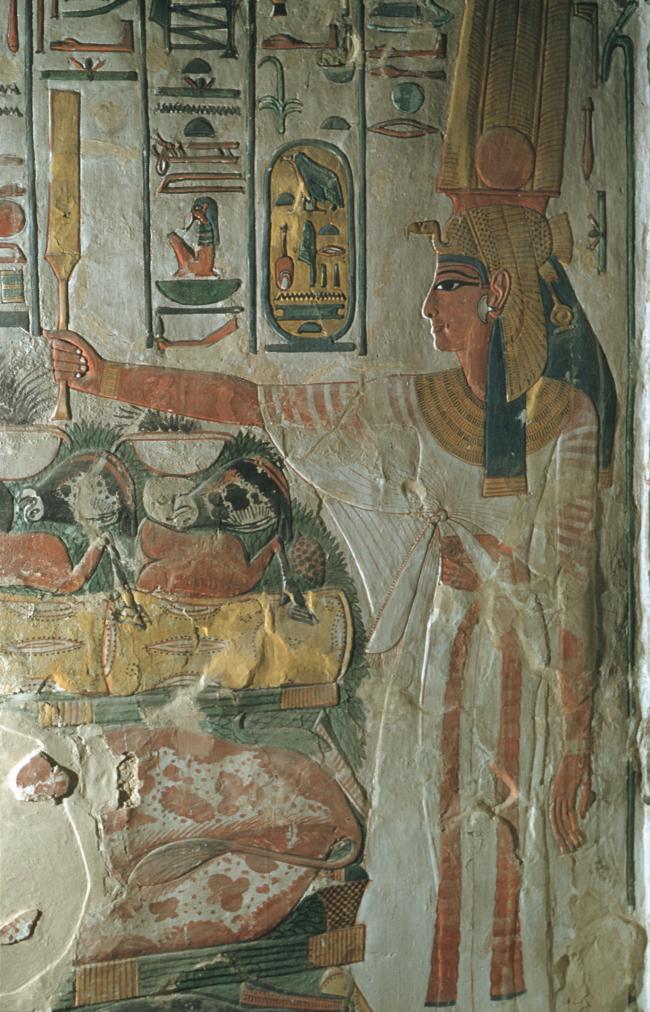
Detail of the queen offering to (the god Atum), Side chamber Ba, rear (east) wall (right part). Courtesy of Uni Dia Verlag. Uni Dia Image Nr. 36833.
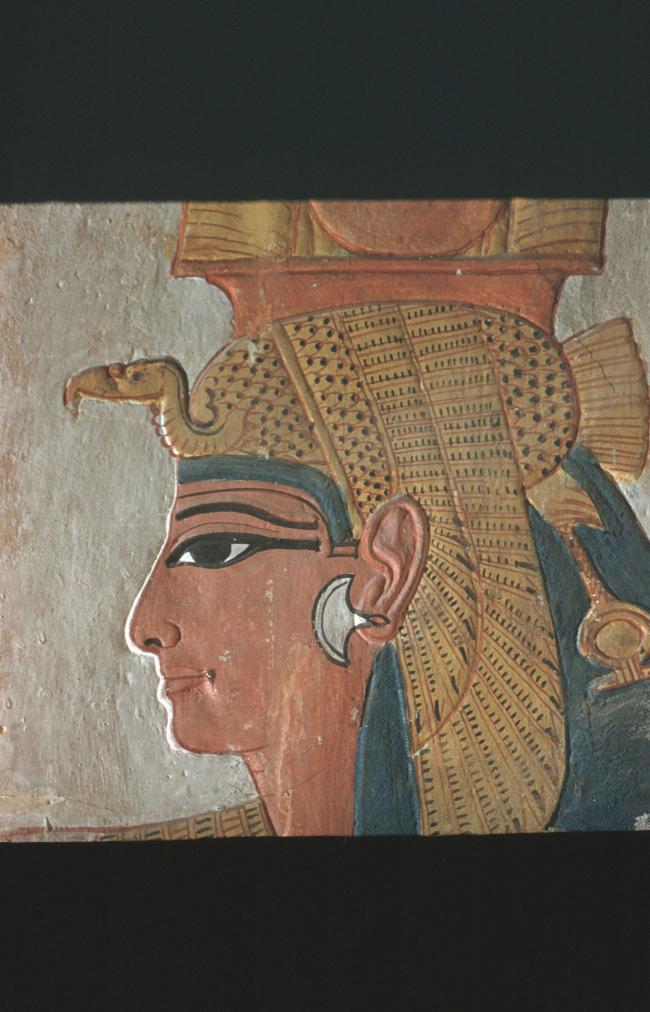
Facial details of the queen offering to (the god Atum), Side chamber Ba, rear (east) wall (right part). Courtesy of Uni Dia Verlag. Uni Dia Image Nr. 36834.
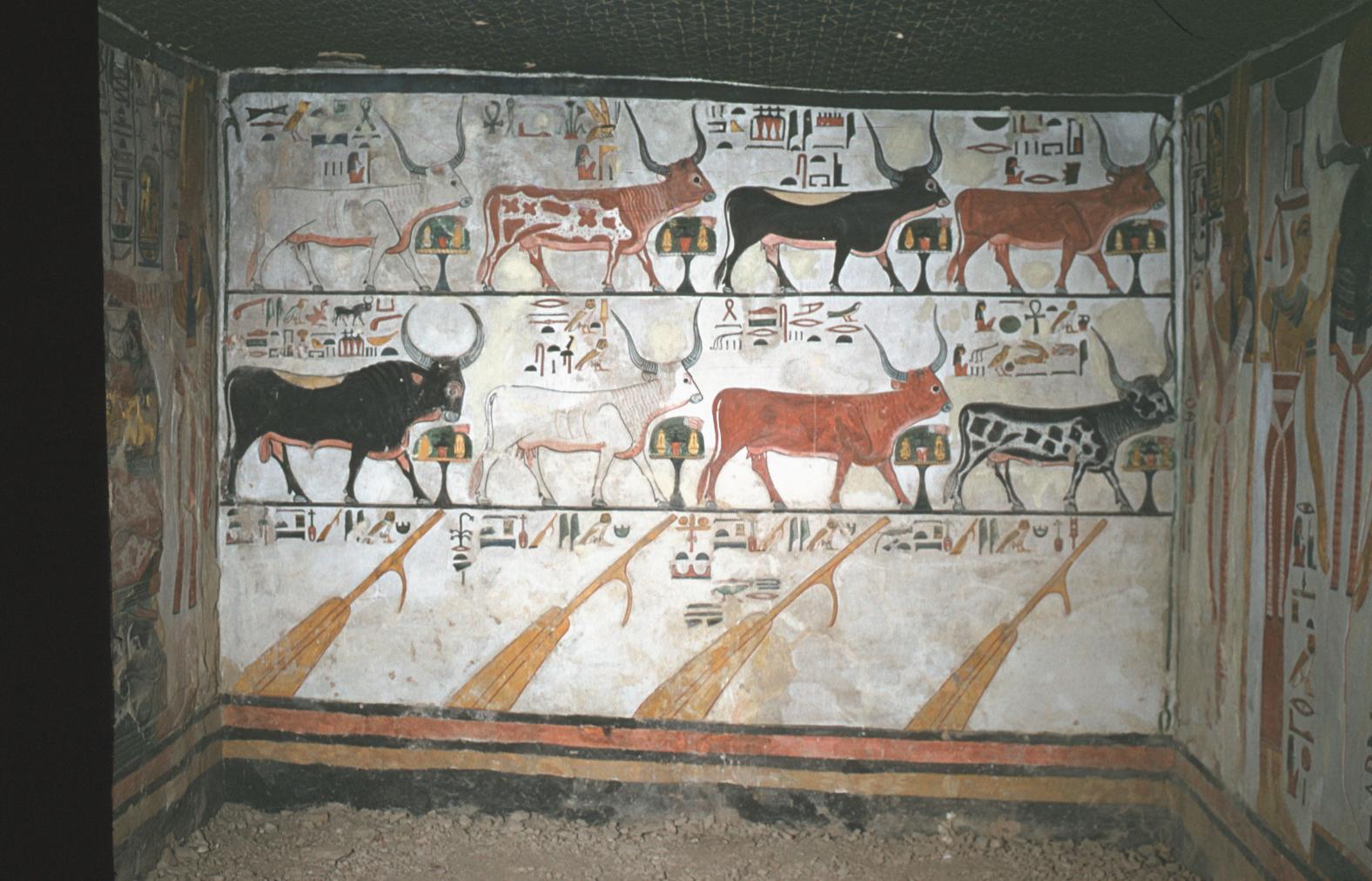
Rows of celestial cows and ceremonial rudders, Side Chamber Ba, left (south) wall. Courtesy of Uni Dia Verlag. Uni Dia Image Nr. 36835.
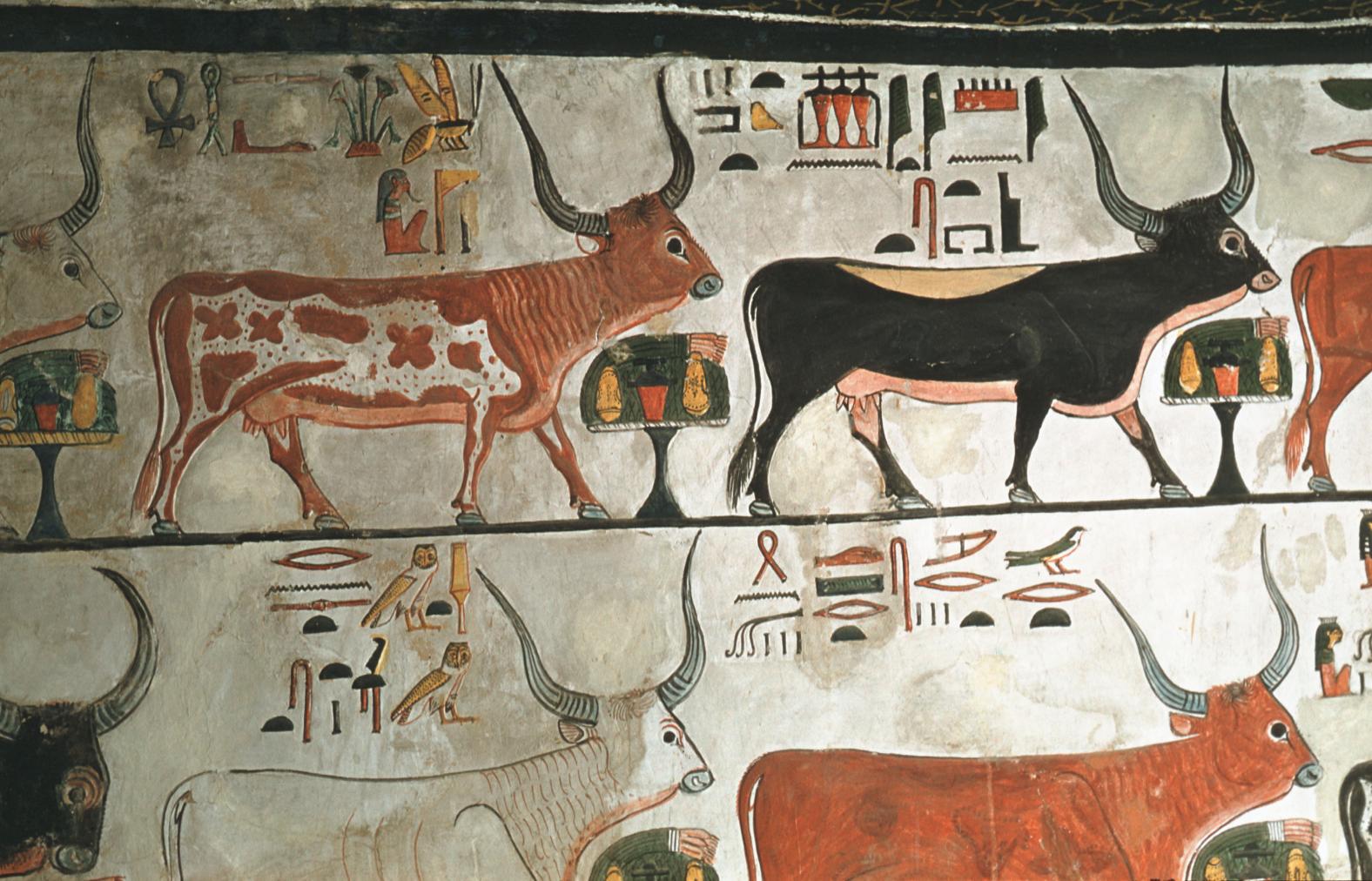
Detail of rows of celestial cows, Side chamber Ba, left (south) wall. Courtesy of Uni Dia Verlag. Uni Dia Image Nr. 36836.
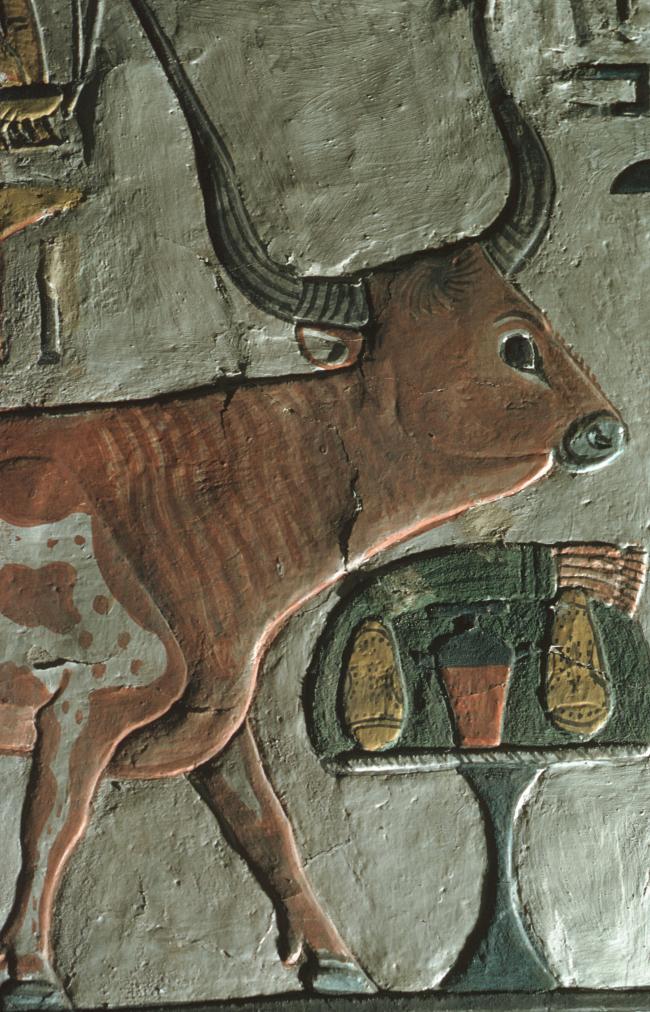
Detail of rows of celestial cows, Side chamber Ba, left (south) wall. Courtesy of Uni Dia Verlag. Uni Dia Image Nr. 36837.
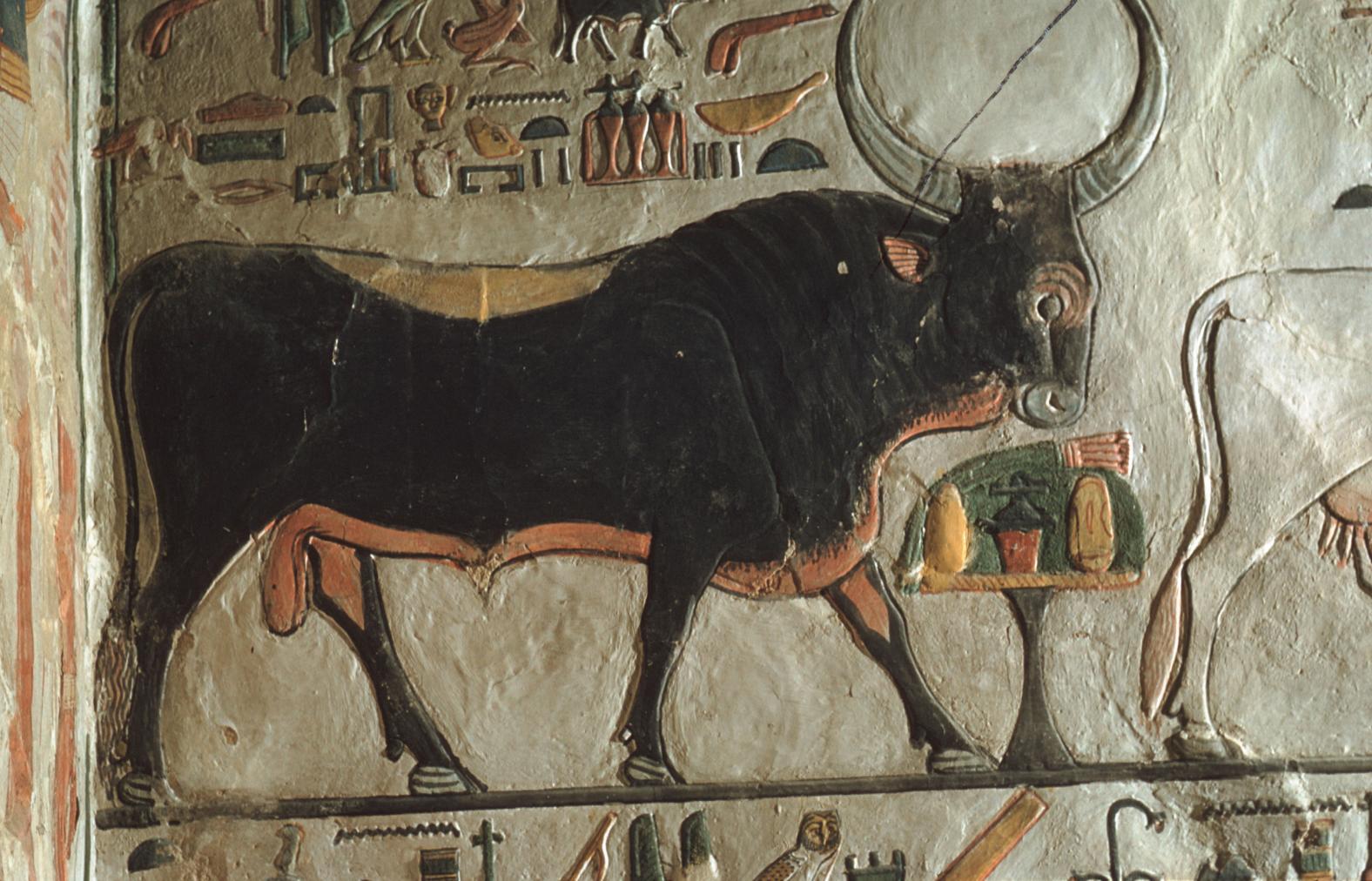
Detail of rows of celestial cows, Side chamber Ba, left (south) wall. Courtesy of Uni Dia Verlag. Uni Dia Image Nr. 36838.
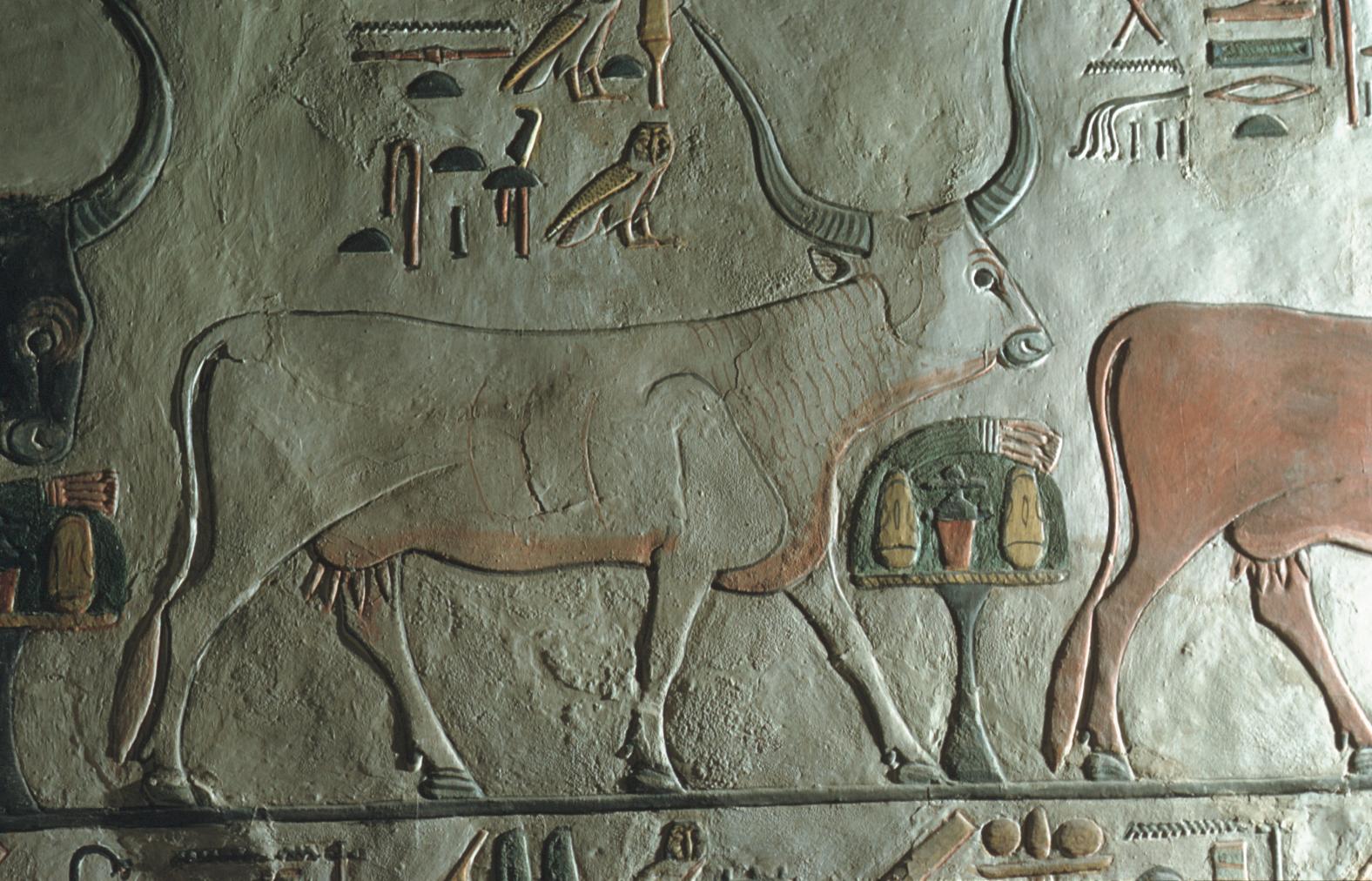
Detail of rows of celestial cows, Side chamber Ba, left (south) wall. Courtesy of Uni Dia Verlag. Uni Dia Image Nr. 36839.
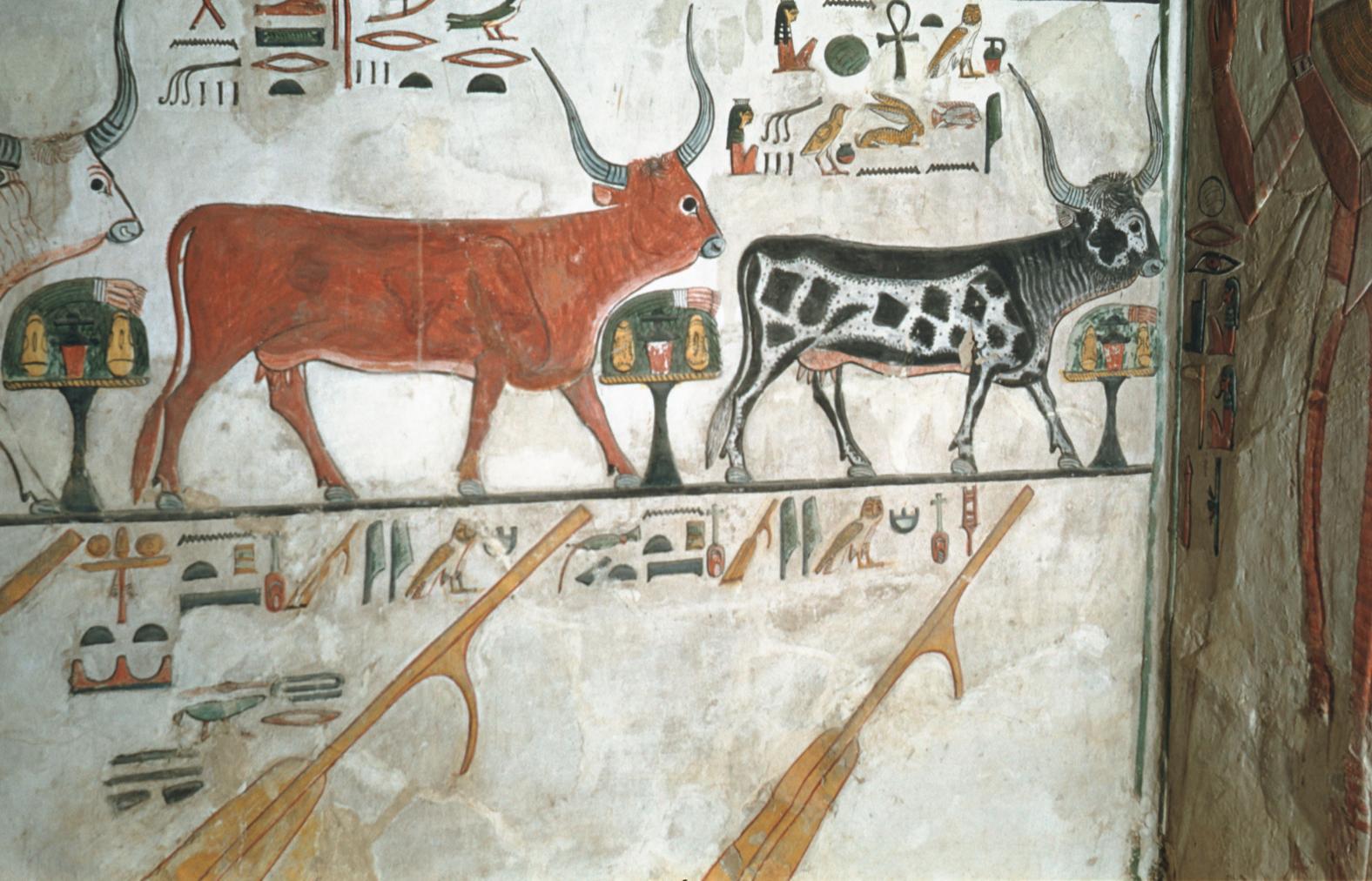
Detail of rows of celestial cows and ceremonial rudders, Side chamber Ba, left (south) wall. Courtesy of Uni Dia Verlag. Uni Dia Image Nr. 36840.
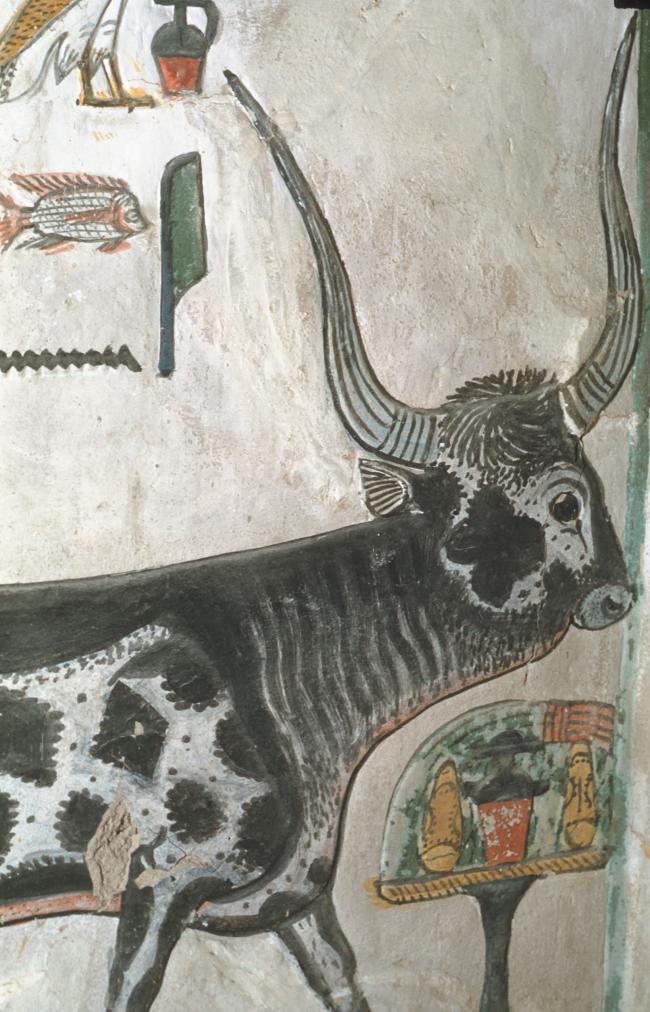
Detail of rows of celestial cows, Side chamber Ba, left (south) wall. Courtesy of Uni Dia Verlag. Uni Dia Image Nr. 36841.
The syncretic god Ra-Osiris tended to by Isis (right) and Nephthys (left) from Book of the Dead vignettes, Side chamber Ba, front (west) wall. Courtesy of Uni Dia Verlag. Uni Dia Image Nr. 36842.
The syncretic god Ra-Osiris tended to by Isis (right) and Nephthys (left) from Book of the Dead vignettes, Side chamber Ba, front (west) wall. Courtesy of Uni Dia Verlag. Uni Dia Image Nr. 36843.
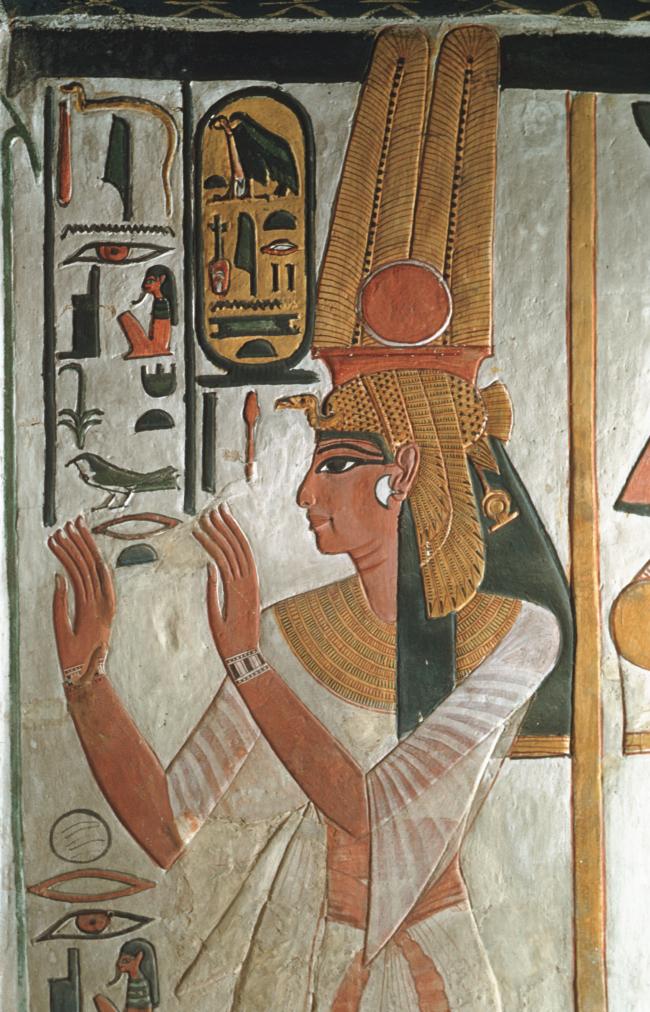
Royal cartouche and detail of the queen, Side chamber Ba. Courtesy of Uni Dia Verlag. Uni Dia Image Nr. 36844.
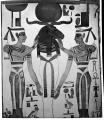
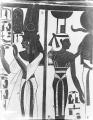
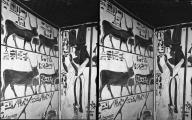
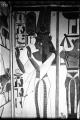
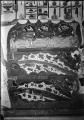
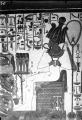
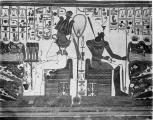
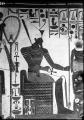
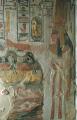
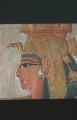
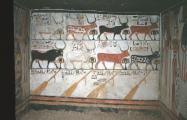
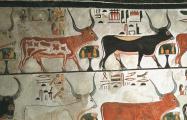
Gate C
See entire tombGate C is situated at the east end of the north wall of Chamber B. The decoration on the reveals and the right-hand thicknesses have significant damage on the lower portion, likely due to flooding that also damaged the decoration in Chamber B.
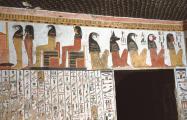
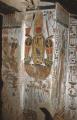
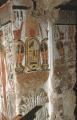
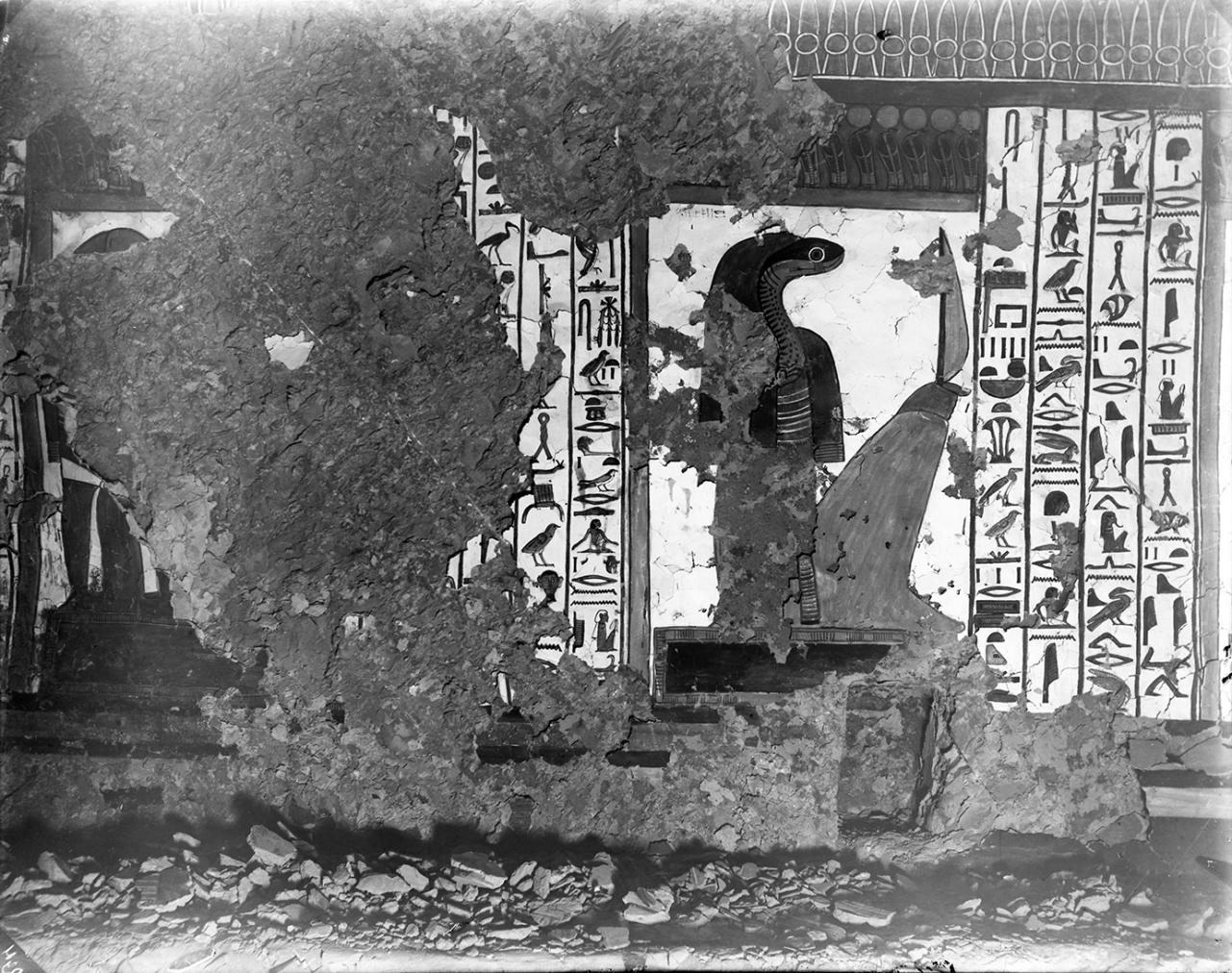
The reveals are decorated with texts and the Cartouche of Nefertari, and the pt hieroglyph surmounts each band of text. The inner and outer thicknesses of the gate have almost identical decoration. On the outer thicknesses, a Kheker frieze is painted at the top of the wall, and immediately below it is a pt hieroglyph. Nefertari’s name appears in a cartouche, flanked by two was scepters, beside a rearing cobra that faces south, both of which rest upon the nb hieroglyph that is supported by two djed-pillars. The cobra on the right outer thickness wears a Red Crown of Lower Egypt, symbolizing the goddess Wadjet. The cobra on the left outer thickness wears the Double crown of Upper and Lower Egypt, and presumably symbolizes Nekhbet.
References to the political geography of Egypt also appears on the inner thicknesses, which, again, are almost identical. The same cobra and cartouche iconography resting upon a nb hieroglyph appears, with the cobras facing toward north. However, instead of djed-pillars, the ensemble is supported by plants. The right inner thickness contains the papyrus plant, signifying Lower Egypt, while the left inner thickness contains a flowering sedge plant, signifying Upper Egypt. The pt hieroglyph surmounts the decoration, but there is no kheker frieze.
The returns, making up the south wall of Corridor C contain standing figures of Neit on the left and Serqet on the right, each identified by their traditional headgear, and each faces toward the gate entrance. The pt hieroglyph occurs beneath a kheker frieze.
Porter and Moss designation:
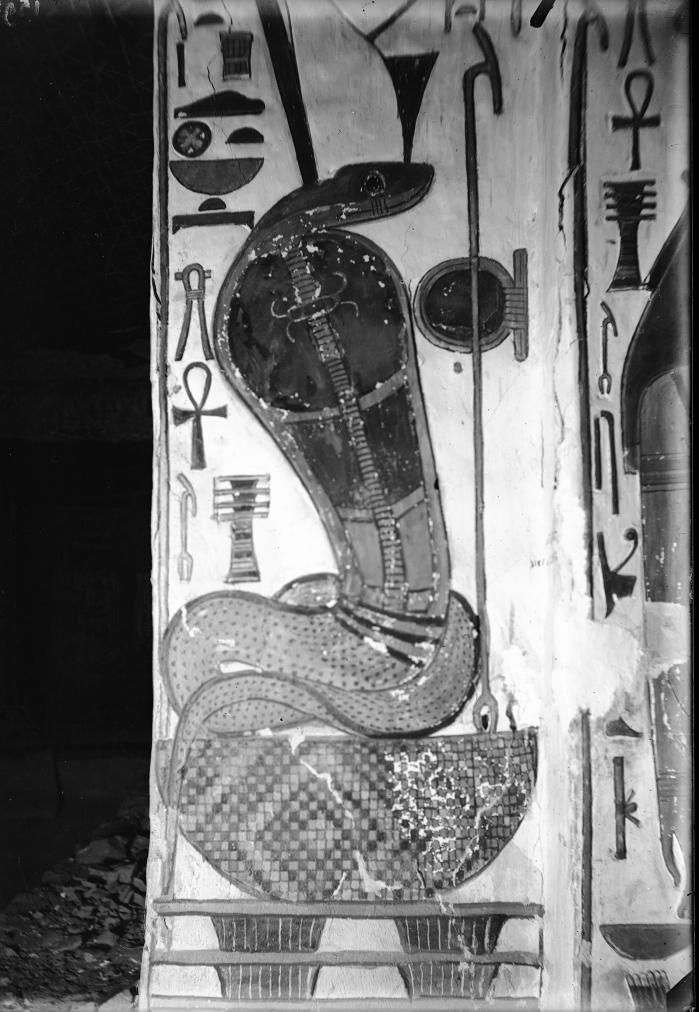
East outer thickness of Gate C in the tomb of Queen Nefertari (QV 66) perhaps photographed during excavations. Wadjet, the heraldic goddess of Lower Egypt, stills upon a neb-sign and two djed-pillars as a rearing cobra with a double crown, was-scepter, and shen-ring. Italian Archaeological Expedition excavations. Courtesy of the Egyptian Museum in Turin.
View of Gate C, rear (north) wall. Courtesy of Uni Dia Verlag. Uni Dia Image Nr. 36810.
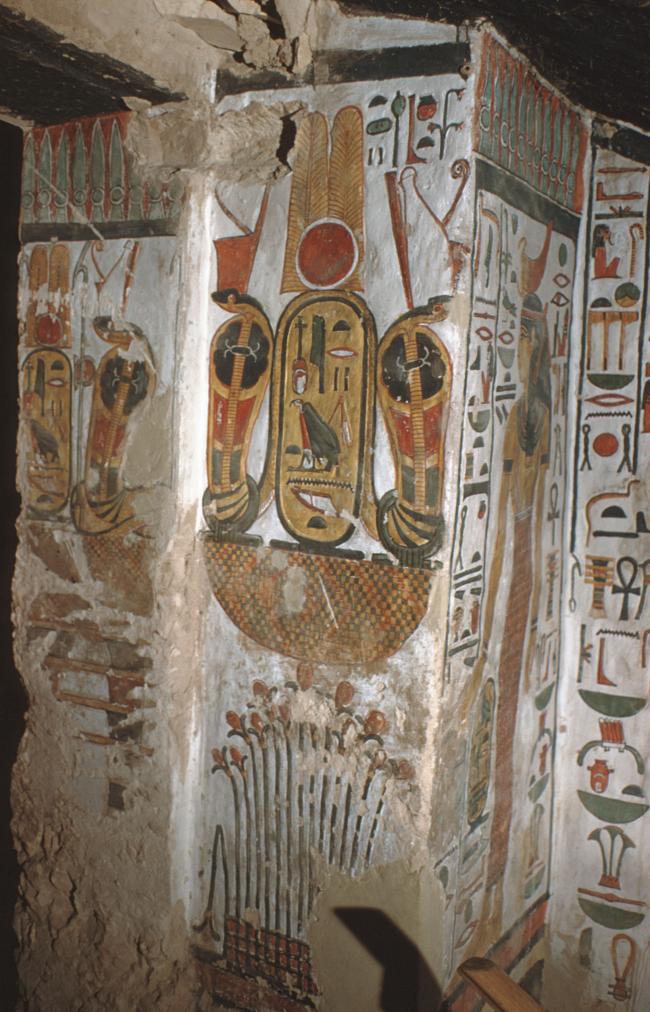
Royal cartouche of the queen flanked by cobras, left thickness of Gate C. Courtesy of Uni Dia Verlag. Uni Dia Image Nr. 36845.
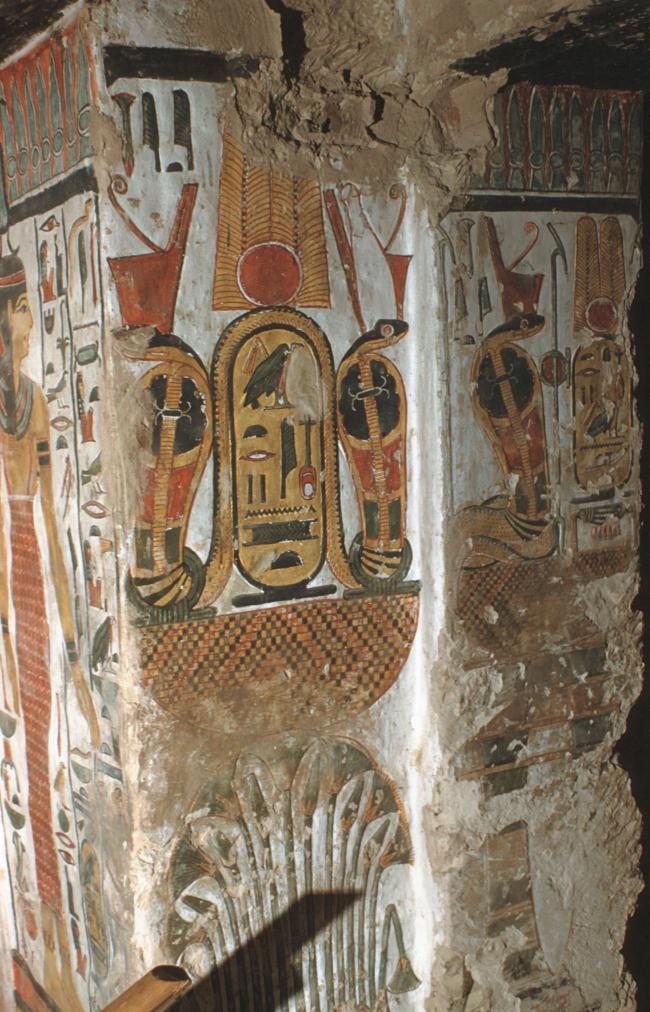
Royal cartouche of the queen flanked by cobras, left thickness of Gate C. Courtesy of Uni Dia Verlag. Uni Dia Image Nr. 36846.
Stairwell C
See entire tombThe stairwell is set along an axis that angles eastward from the main entrance, thereby placing the following chambers along an axis that is parallel to but further east of the main entrance. There is some damage to the painted decoration. The stairs have been overlaid with a modern protective wood stairwell and handrails.
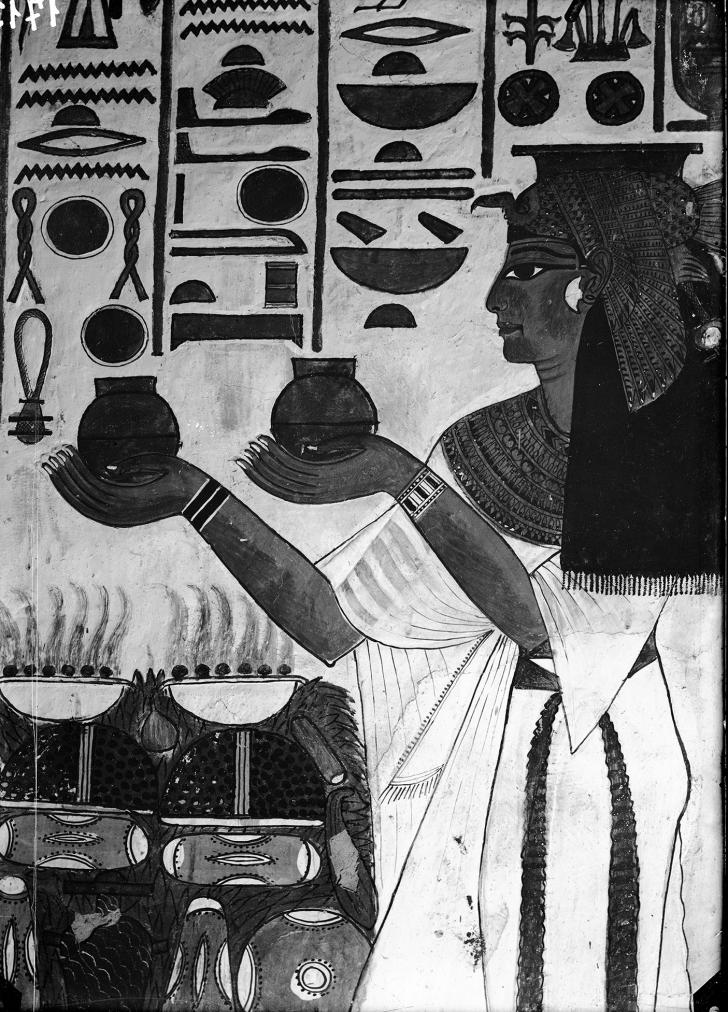
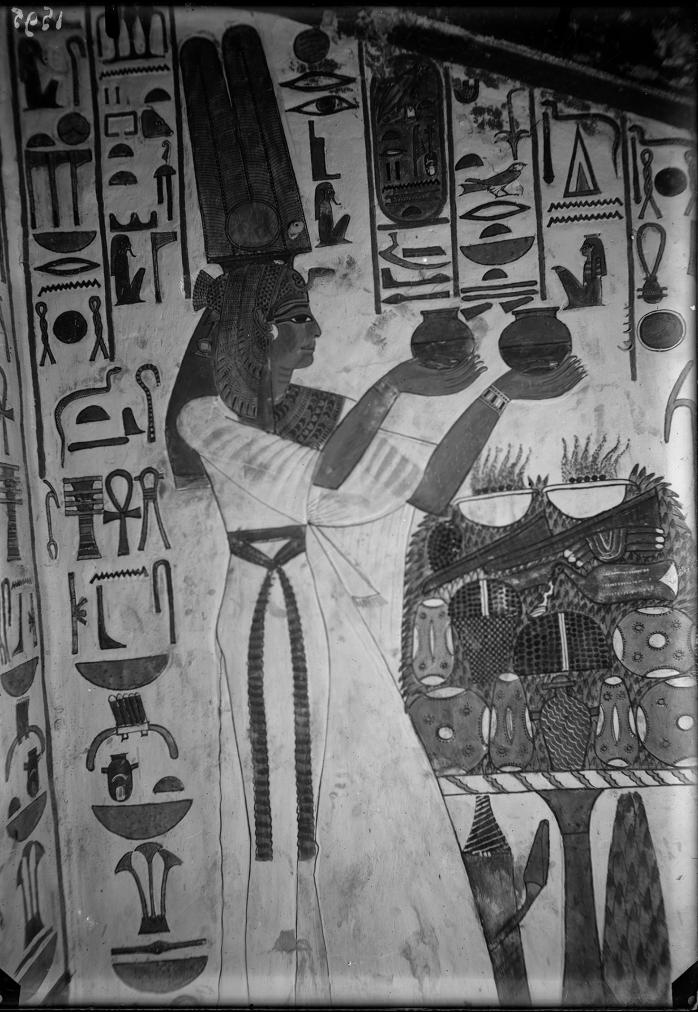
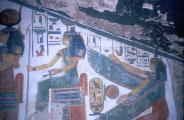
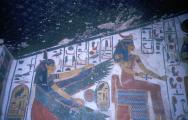
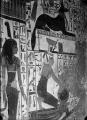
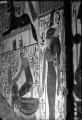
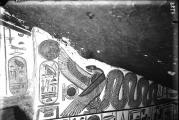
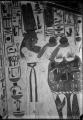
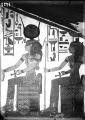
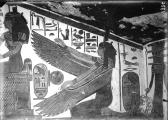
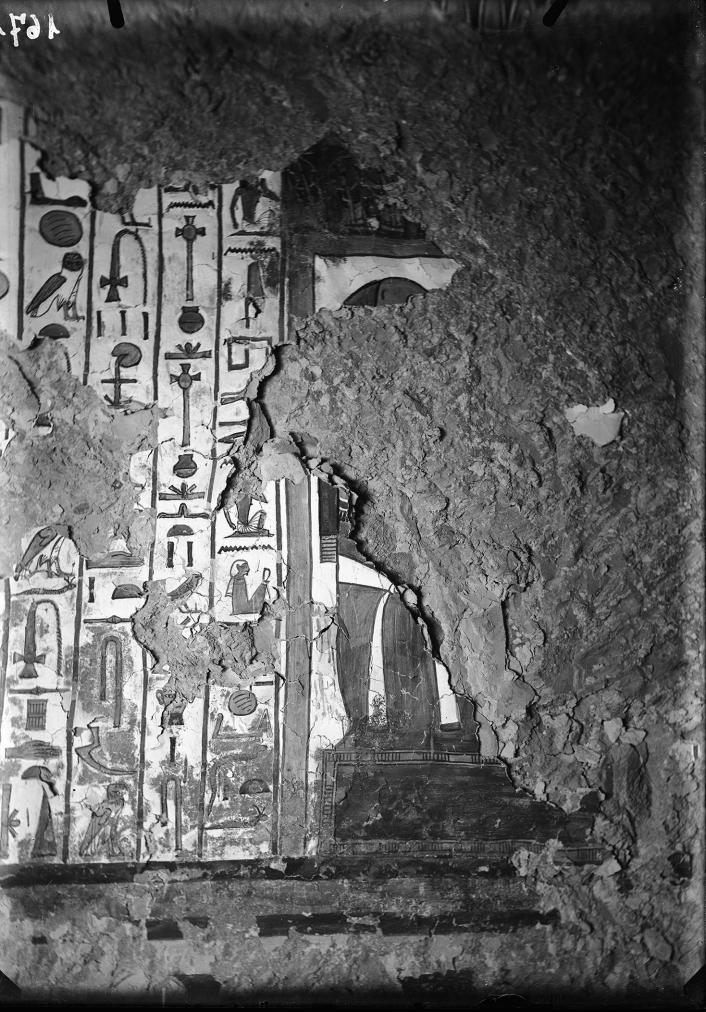
The decoration of the stairwell is separated into two parts, divided into an upper part and lower part by recesses in the walls, and the ceiling slopes at an angle, giving the vignettes a triangular shape that is cleverly filled by figures arranged in various positions. On the upper west wall on the top half, within the recess, Nefertari is shown standing, facing north, before a heavily laden offering table, offering nu pots to the enthroned Isis who wears a sun disc and cow horns and holds an Ankh and Was scepter. Behind Isis sits Nephthys, also enthroned, and also holding an ankh and was scepter. Behind Nephthys is Ma'at, depicted in a kneeling position and stretching her two wings forward to envelop Nefertari’s Cartouche. The top half of the upper part of the east wall, within the recess, is an almost identical scene. Again, Nefertari is shown standing in front of an offering table, facing north, and offering two nu pots, this time to the enthroned Hathor who wears cow horns and sun disc. Like the other goddesses, Hathor holds an ankh and was scepter. Enthroned behind Hathor is Serqet, wearing a scorpion on her head and holding an ankh and was scepter. Ma'at also appears, kneeling behind Serqet and enveloping Nefertari’s cartouche with her outstretched wings. The north wall of the recesses each contain an anthropomorphized Djed-pillar, holding a was scepter in each hand. The large blocks of text on the bottom portion of the wall concerns Nefertari’s afterlife, but is not composed of any spells from the Book of the Dead.
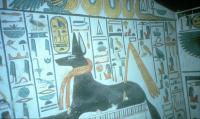
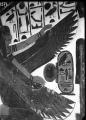
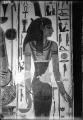
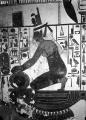
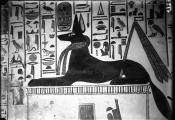
The decoration of the lower west and east walls are arranged in three registers, and all figures face south. On the west wall, the upper register displays a winged cobra with many coils, enveloping Nefertari’s cartouche with its wings. In the middle register, Anubis in jackal form reclines on top of a shrine. The text contains an address by Anubis to Nefertari. In the bottom register, Isis appears kneeling on top of the hieroglyph for gold and rests her hands on top of a large shen sign. The text contains an address by Isis to Nefertari. On the east wall, the decoration is almost identical, but badly damaged on the bottom register. The only pictorial difference is Nephthys is the goddess kneeling on the gold sign, resting her hands on a shen sign. The text contains an address by Nephthys to Nefertari. The dado is made up of black, red, and yellow bands.
Lastly, the ceiling is painted with yellow stars on a dark blue background.
Porter and Moss designation:
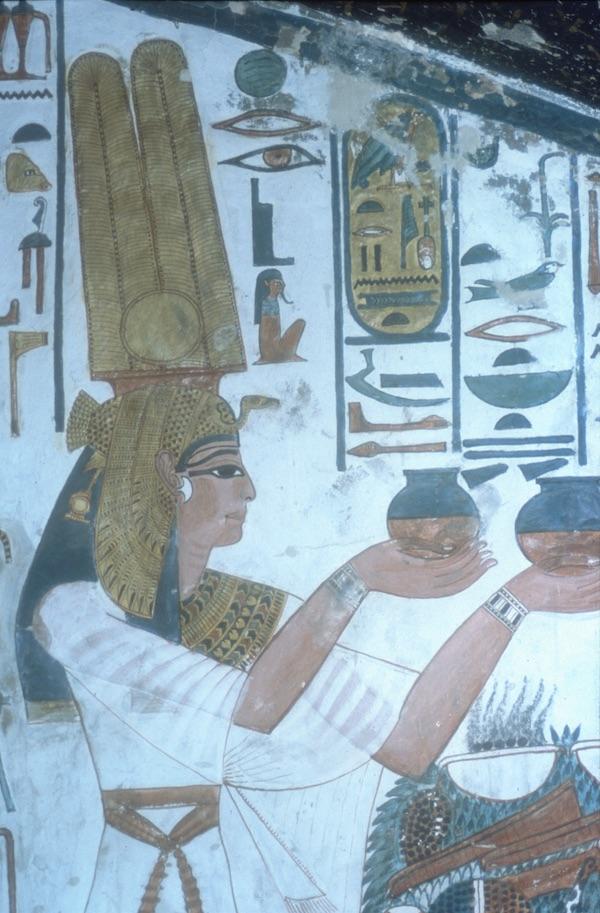
Nefertari presenting nu jars before offerings.
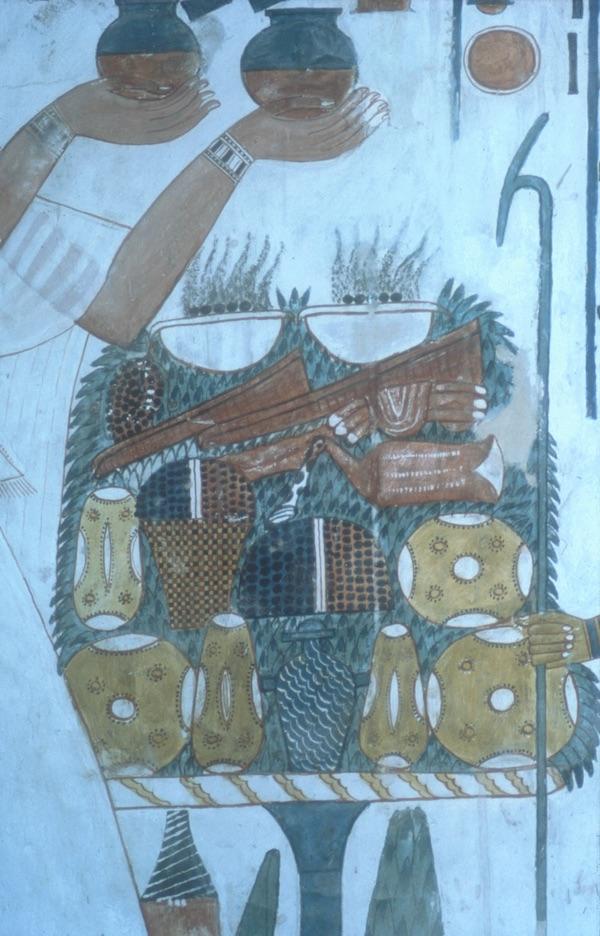
Nefertari presenting nu jars before offering table.
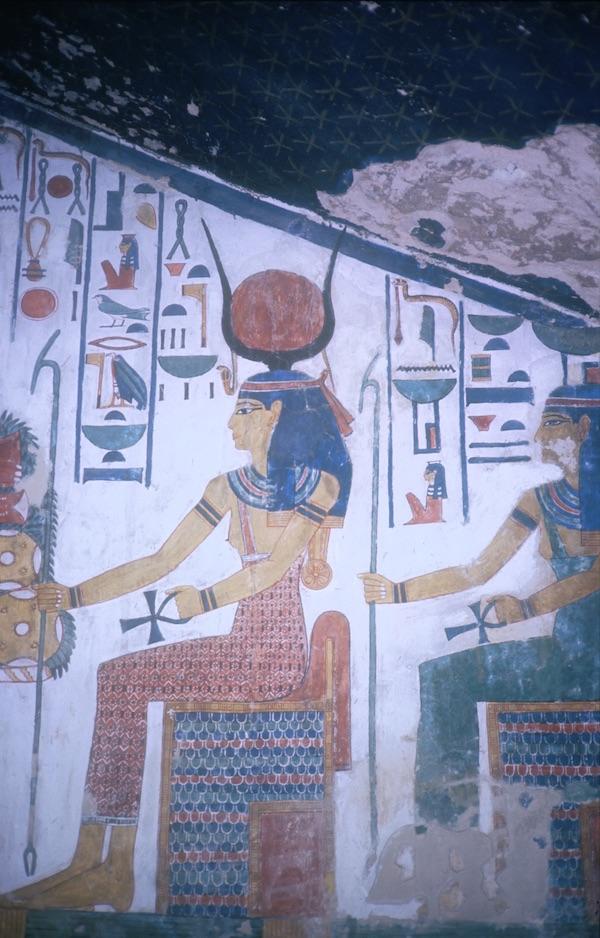
Isis and Nephthys seated on thrones before [Nefertari presenting offerings and nu jars].
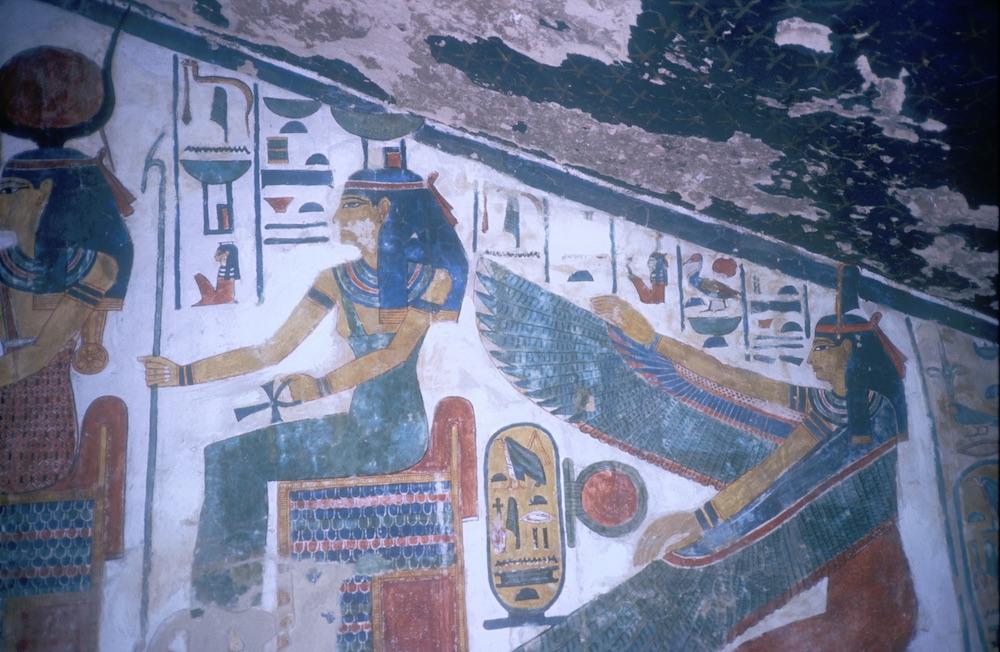
Isis and Nephthys seated on thrones, Ma'at with protective wings, before [Nefertari presenting offerings and nu jars].
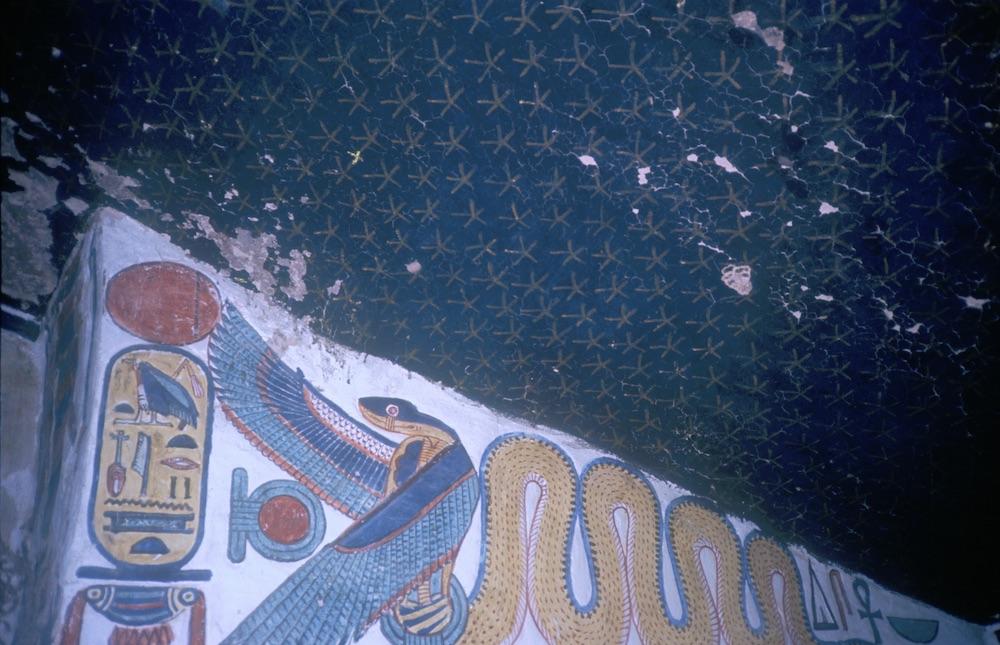
Winged cobra protecting the cartouches of Nefertari, star pattern on ceiling.
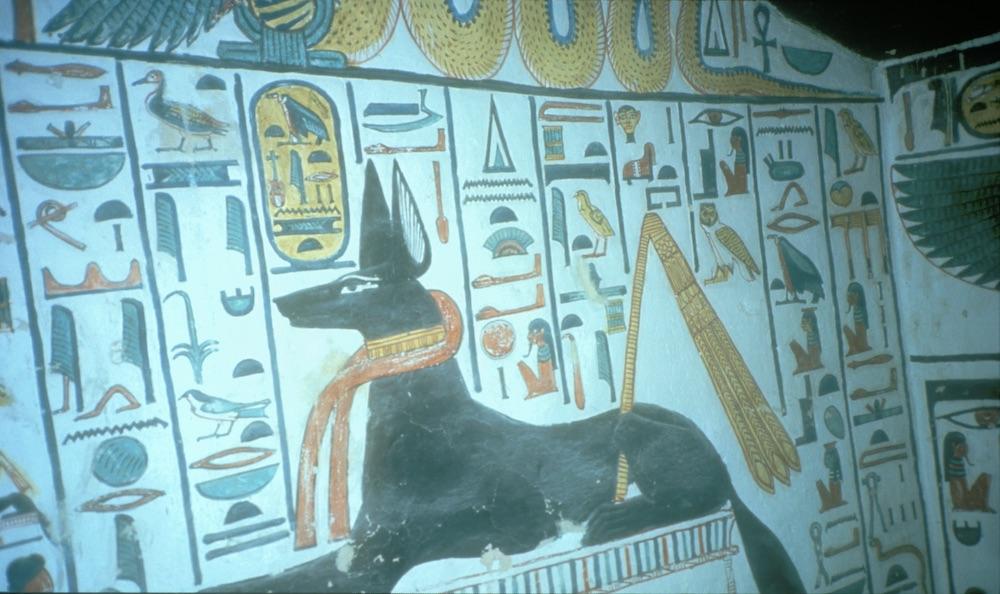
Anubis as a jackal on shrine with flail.
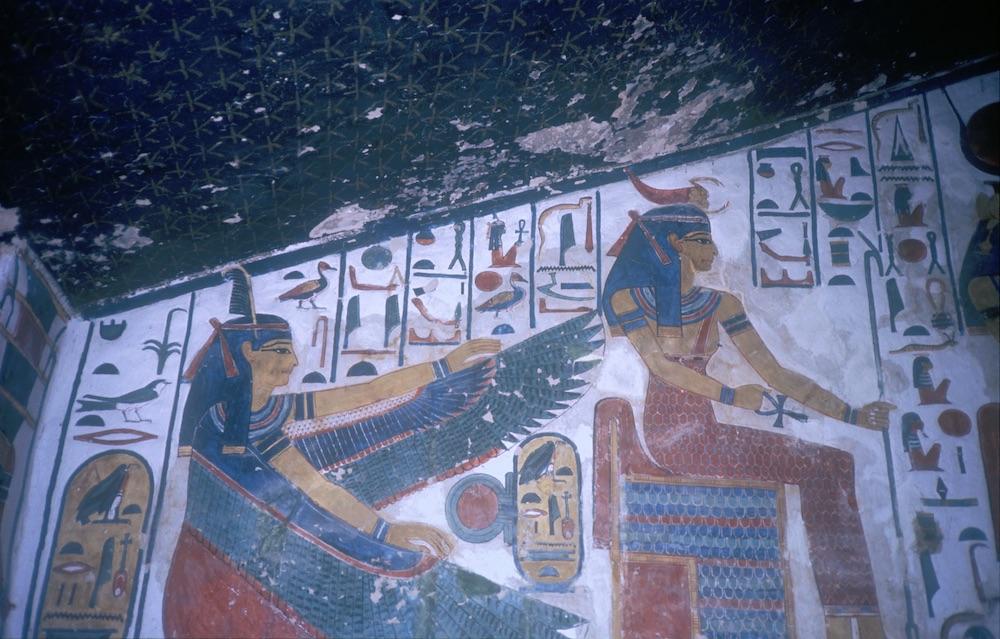
Winged Ma'at with offering text and cartouche; star pattern on ceiling.
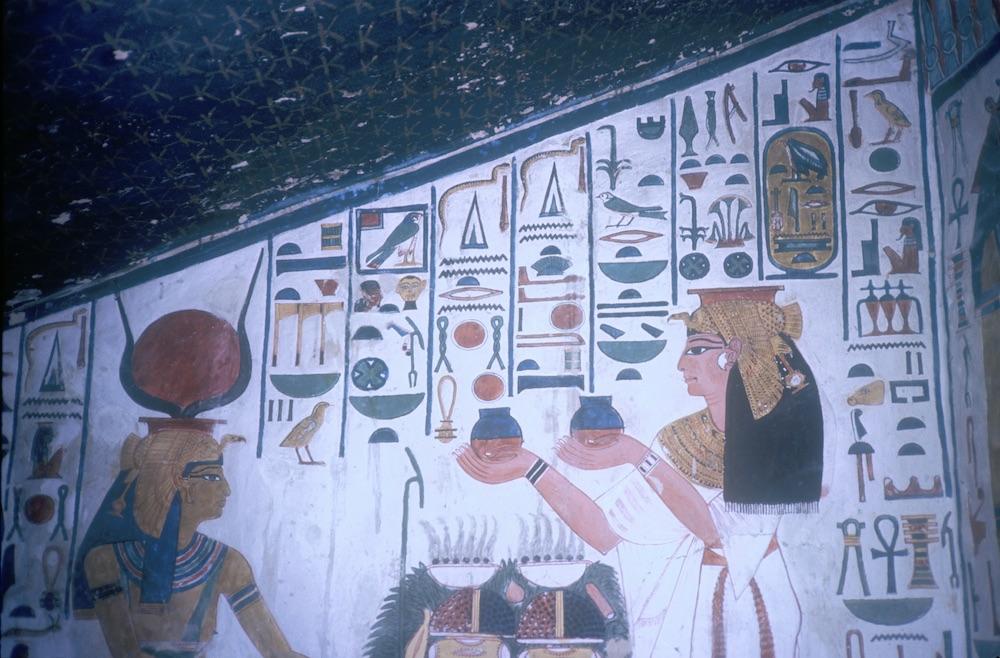
Nefertari presenting nu jars to Hathor seated on throne; star pattern on ceiling.
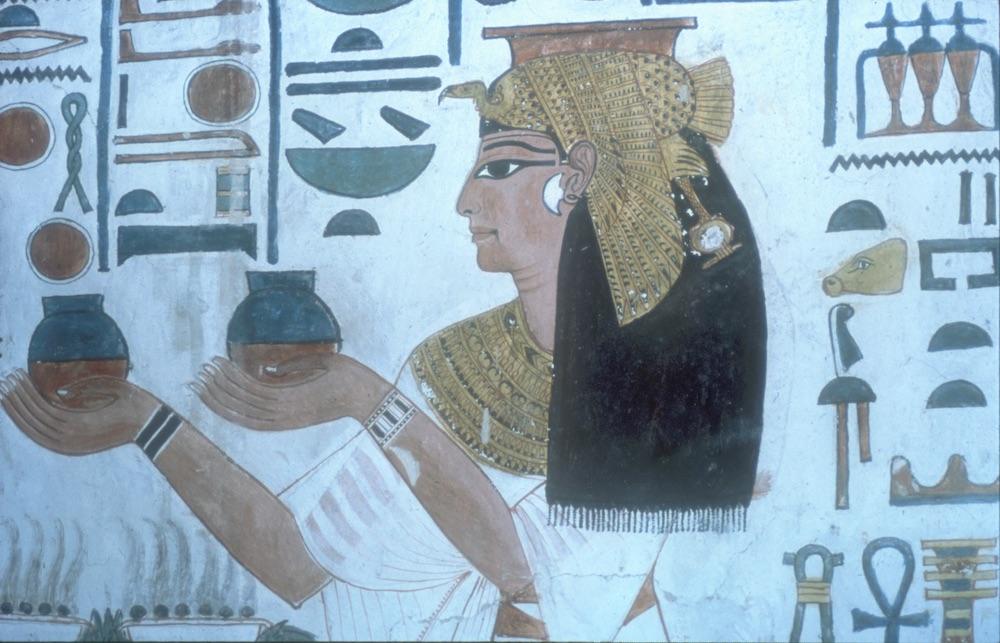
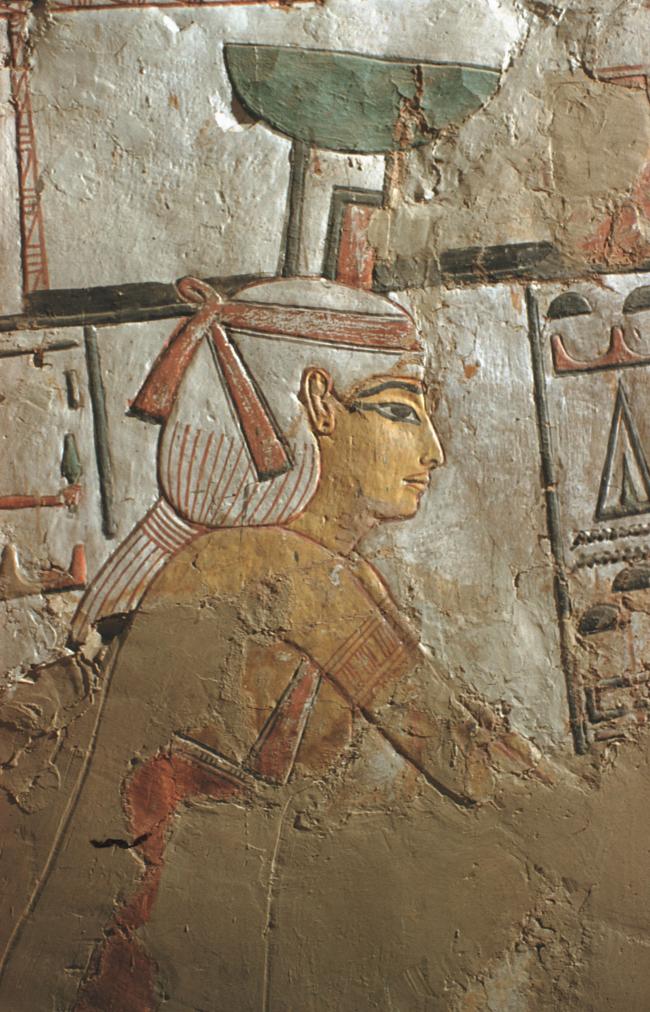
Nefertari wearing mut crown offering nu jars (detail).
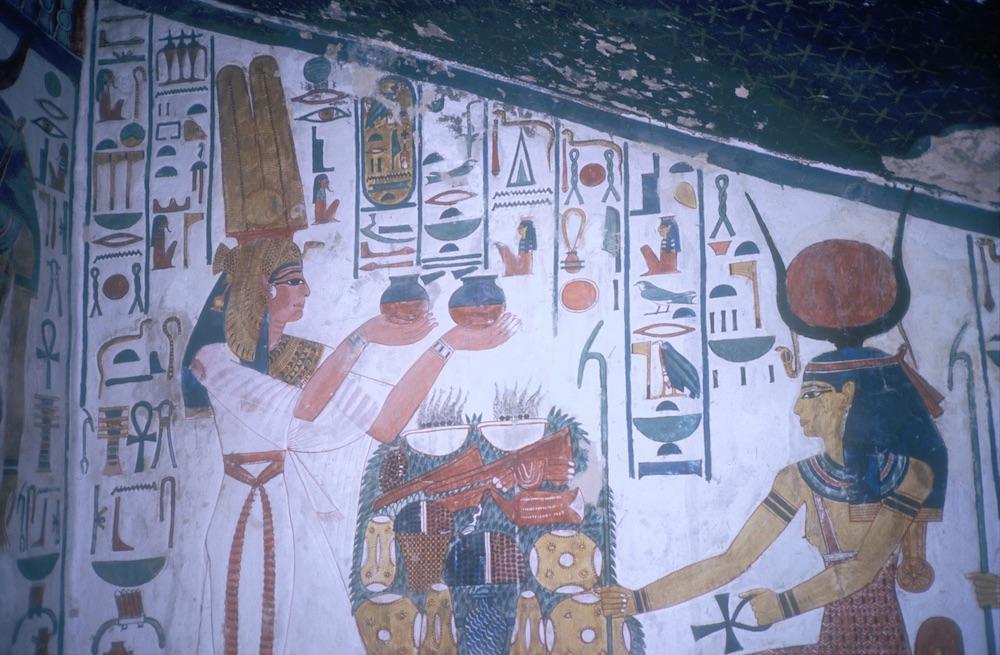
Nefertari presenting nu jars to Isis seated on throne and holding a Was scepter
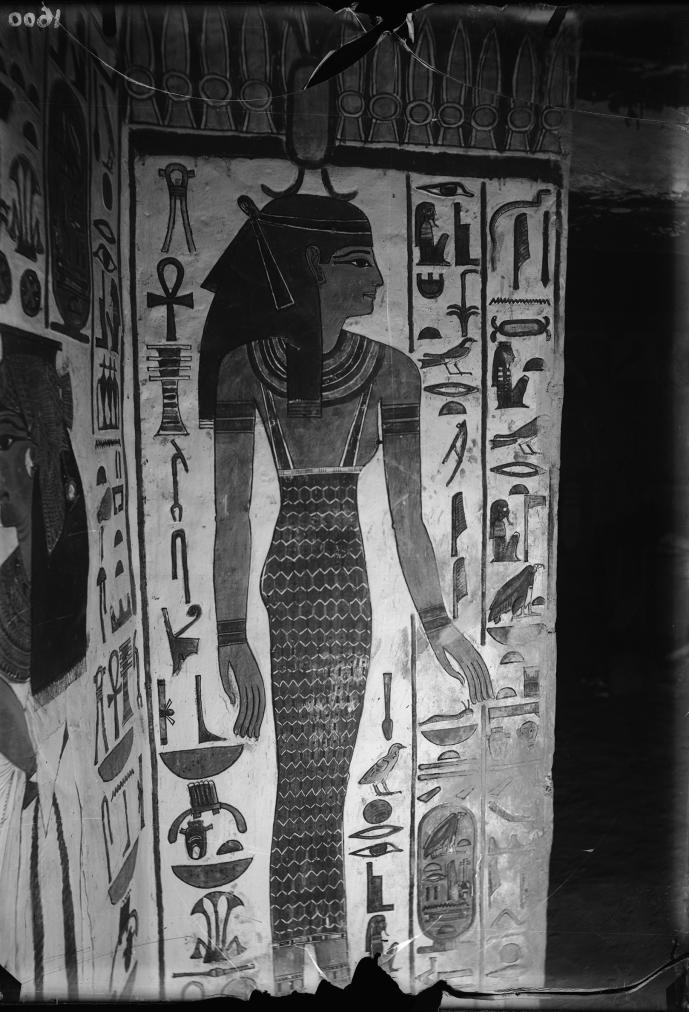
East wall of stairwell C in the tomb of Queen Nefertari (QV 66). An image of Neith with her epithets topped by a kheker-frieze. Italian Archaeological Expedition excavations. Courtesy of the Egyptian Museum in Turin.
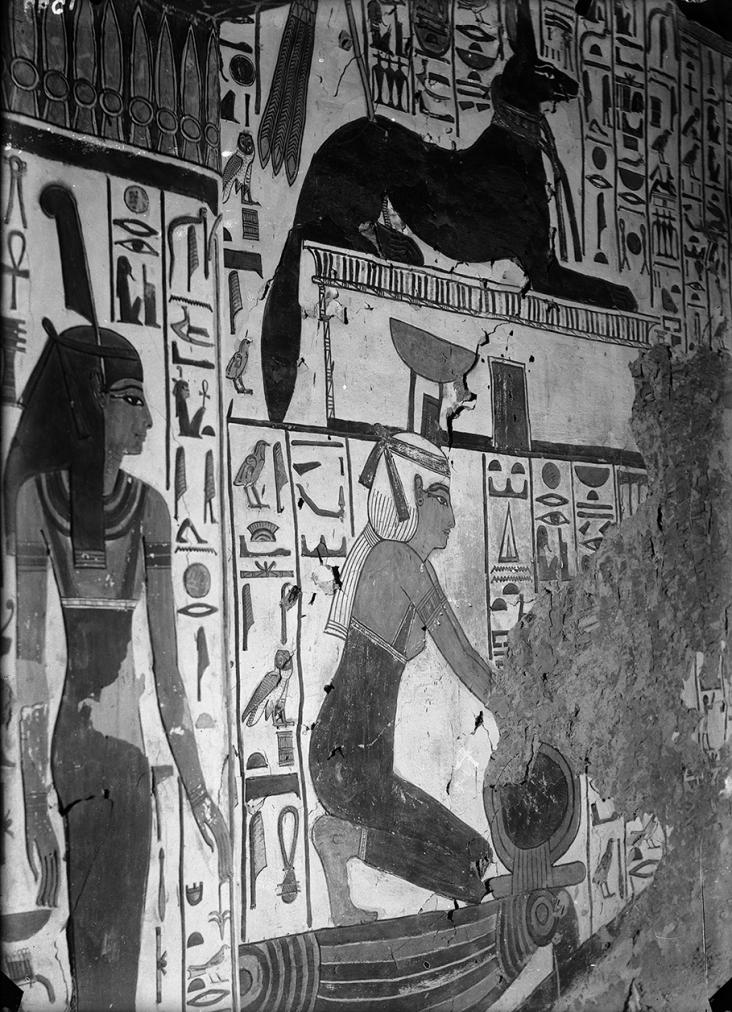
East wall of stairwell C in the tomb of Queen Nefertari (QV66). Ma'at (right) and her epithets topped by a khekher-frieze beside Nephthys who kneels on a nebu-sign and holds a shen-ring (middle), as well as Anubis in his jackal form upon a shrine (upper left). Italian Archaeological Expedition excavations. Courtesy of the Egyptian Museum in Turin.
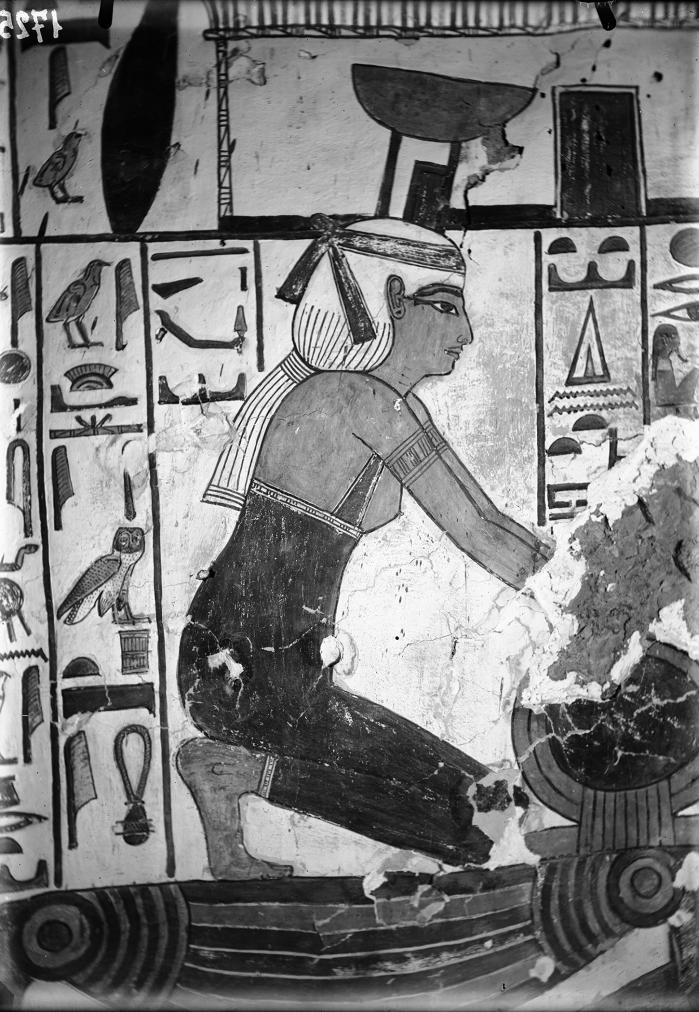
East wall detail of Stairwell C in the tomb of Queen Nefertari (QV66). Nephthys knees on a nebu-sign and holds a shen-ring. Italian Archaeological Expedition excavations. Courtesy of the Egyptian Museum in Turin.
East wall detail of Stairwell C in the tomb of Queen Nefertari (QV 66) perhaps photographed during excavations. Queen Nefertari presents a large offering bundle and nw-jars to a series of deities. Italian Archaeological Expedition excavations. Courtesy of the Egyptian Museum in Turin.
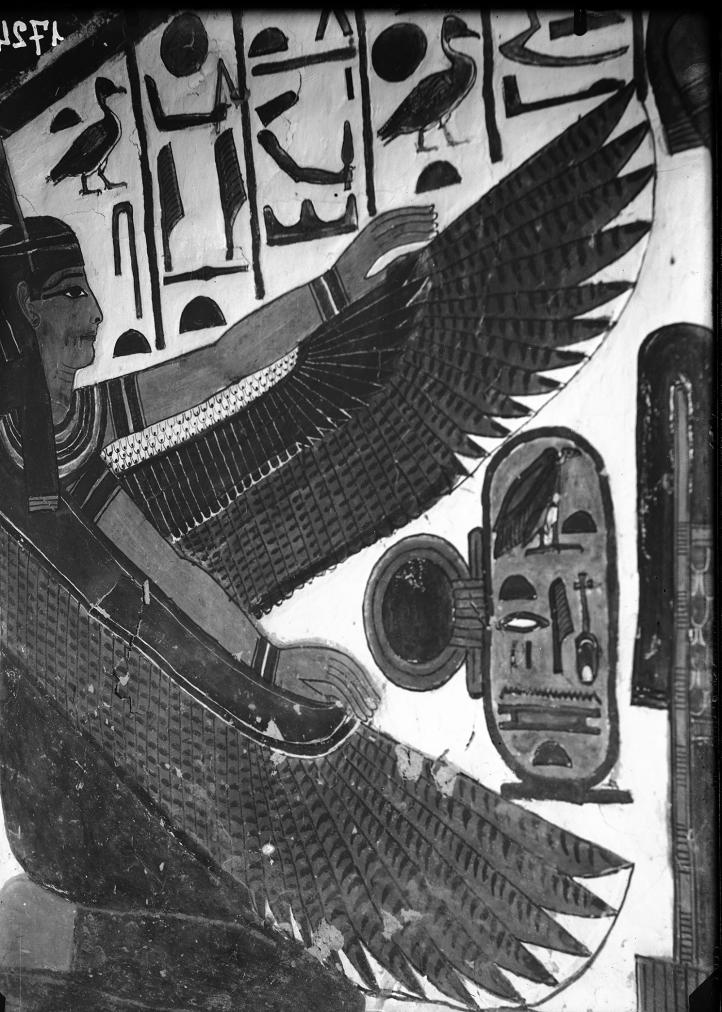
East wall detail of Stairwell C in the tomb of Queen Nefertari (QV 66) perhaps photographed during excavations. A winged image of Ma'at, as well as other deities, receive a large offering bundle and nw-jars from Queen Nefertari (not visible here). Italian Archaeological Expedition excavations. Courtesy of the Egyptian Museum in Turin.
East wall of Stairwell C in the tomb of Queen Nefertari (QV 66). Wadjet (right), the heraldic goddess of Lower Egypt, stills upon a neb-sign and two djed-pillars as a rearing cobra with a double crown, was-scepter, and shen-ring is partially visible beside Ma'at (left) with their epithets. Italian Archaeological Expedition excavations. Courtesy of the Egyptian Museum in Turin.
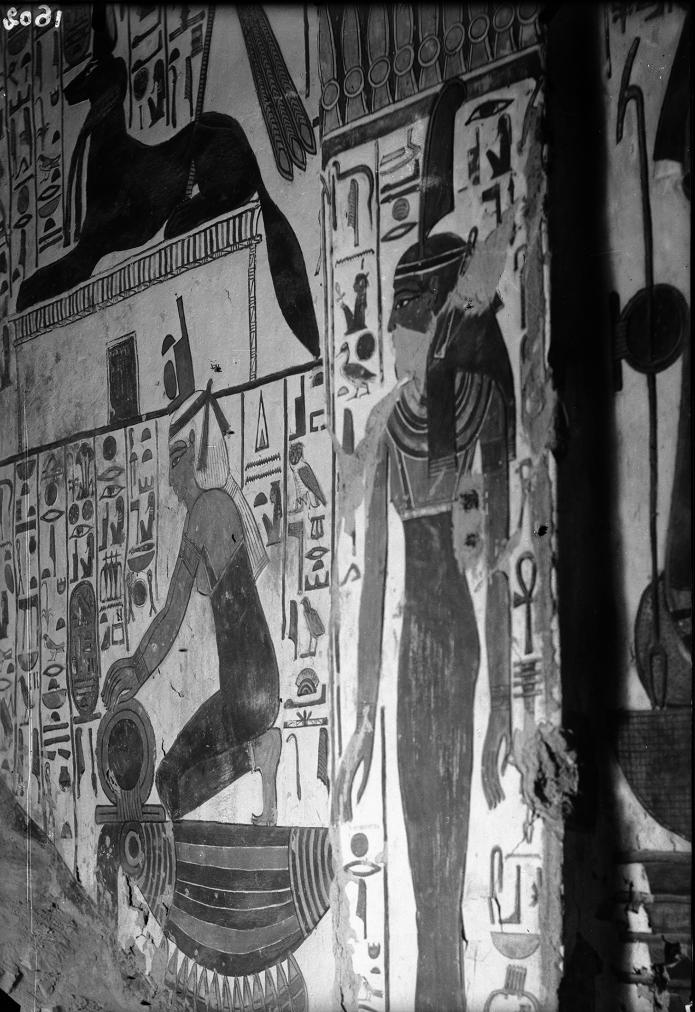
East wall of stairwell C in the tomb of Queen Nefertari (QV66). Ma'at (right) and her epithets topped by a khekher-frieze beside Isis who knees on a nebu-sign and holds a shen-ring (middle), as well as Anubis in his jackal form upon a shrine (upper left). Italian Archaeological Expedition excavations. Courtesy of the Egyptian Museum in Turin.
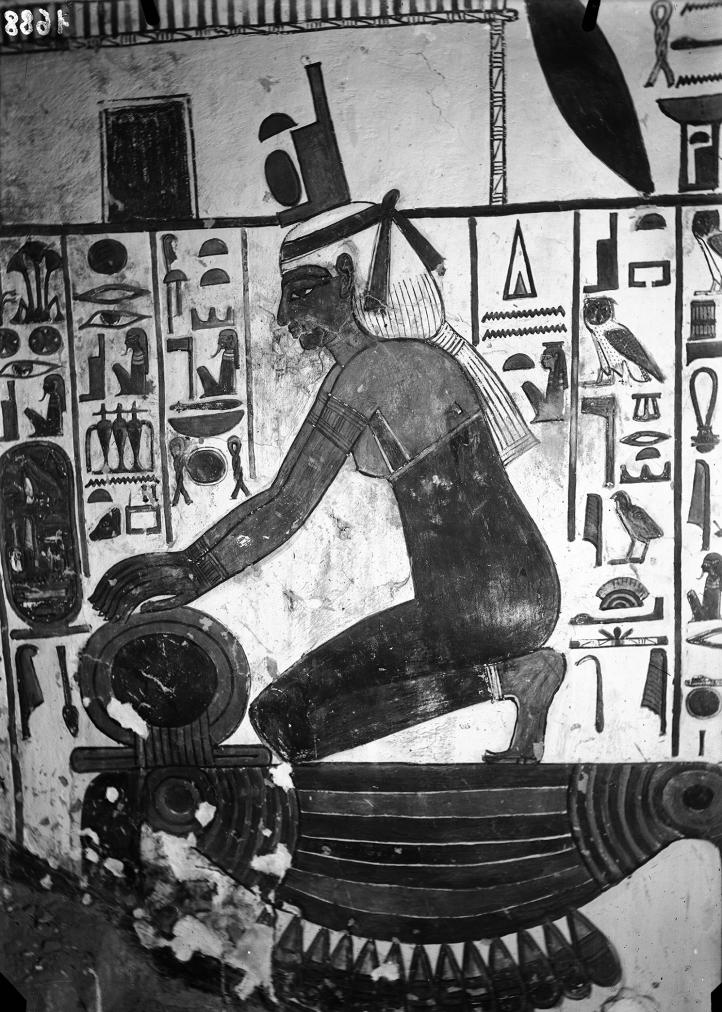
East wall of stairwell C in the tomb of Queen Nefertari (QV66). Isis kneels on a nebu-sign and holds a shen-ring. Italian Archaeological Expedition excavations. Courtesy of the Egyptian Museum in Turin.
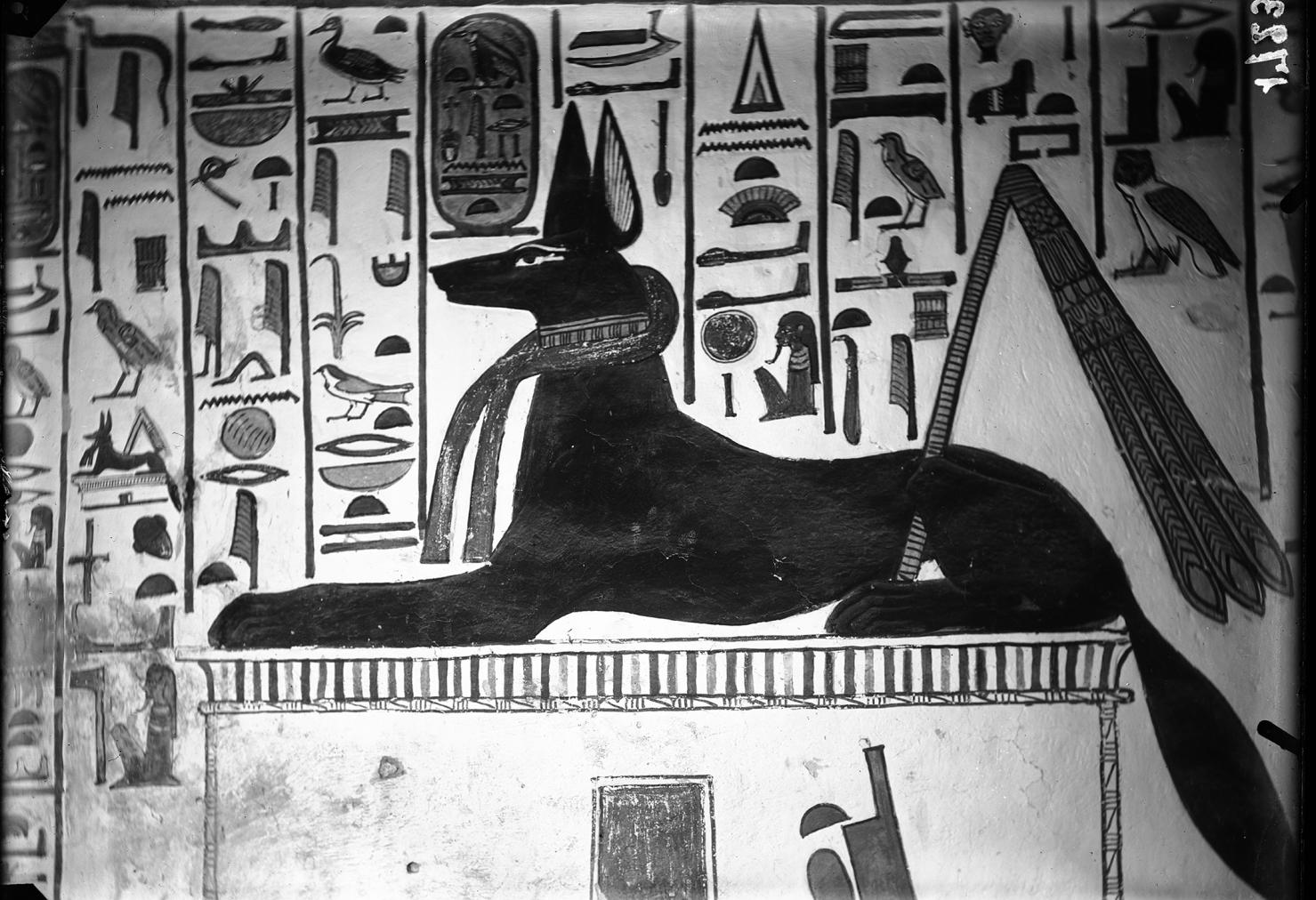
East wall of stairwell C in the tomb of Queen Nefertari (QV66). Anubis in his jackal form upon a shrine recites benevolent words to the queen. Italian Archaeological Expedition excavations. Courtesy of the Egyptian Museum in Turin.
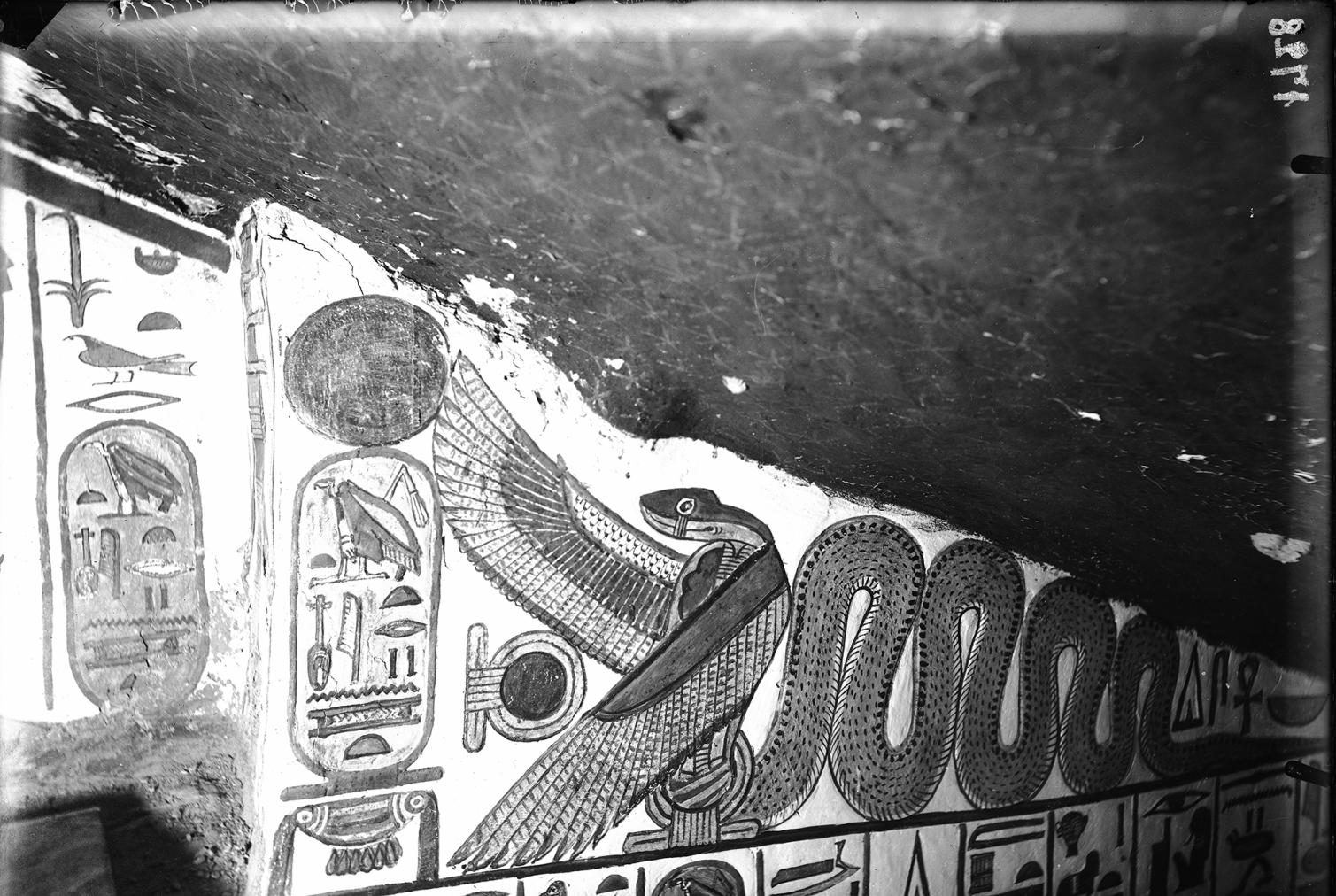
West wall of stairwell C in the tomb of Queen Nefertari (QV 66) perhaps photographed during excavations. A winged cobra protects the queen's cartouche framed by sun disc and nebu-sign. Italian Archaeological Expedition excavations. Courtesy of the Egyptian Museum in Turin.
West wall of stairwell C in the tomb of Queen Nefertari (QV 66) perhaps photographed during excavations. Queen Nefertari (right) presents nw-jars beside an offering table in front of a seated dyad statue of Isis and Nephthys (left, not visible here). Italian Archaeological Expedition excavations. Courtesy of the Egyptian Museum in Turin.
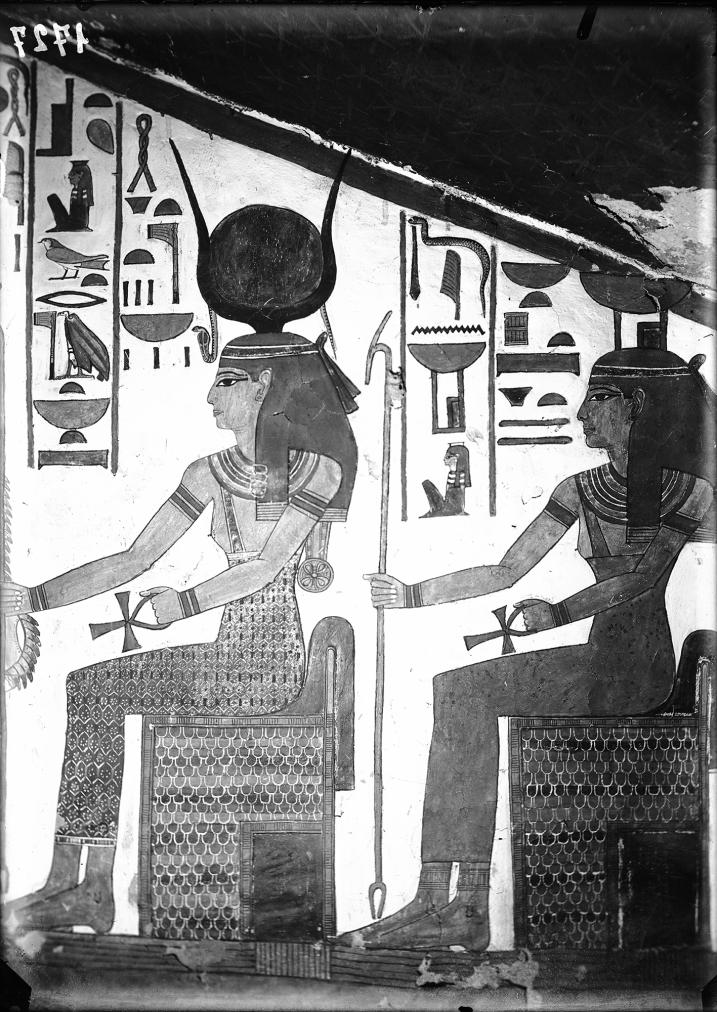
West wall of stairwell C in the tomb of Queen Nefertari (QV 66) perhaps photographed during excavations. Queen Nefertari (right, not visible here) presents nw-jars beside an offering table in front of a seated dyad statue of Isis and Nephthys. Italian Archaeological Expedition excavations. Courtesy of the Egyptian Museum in Turin.
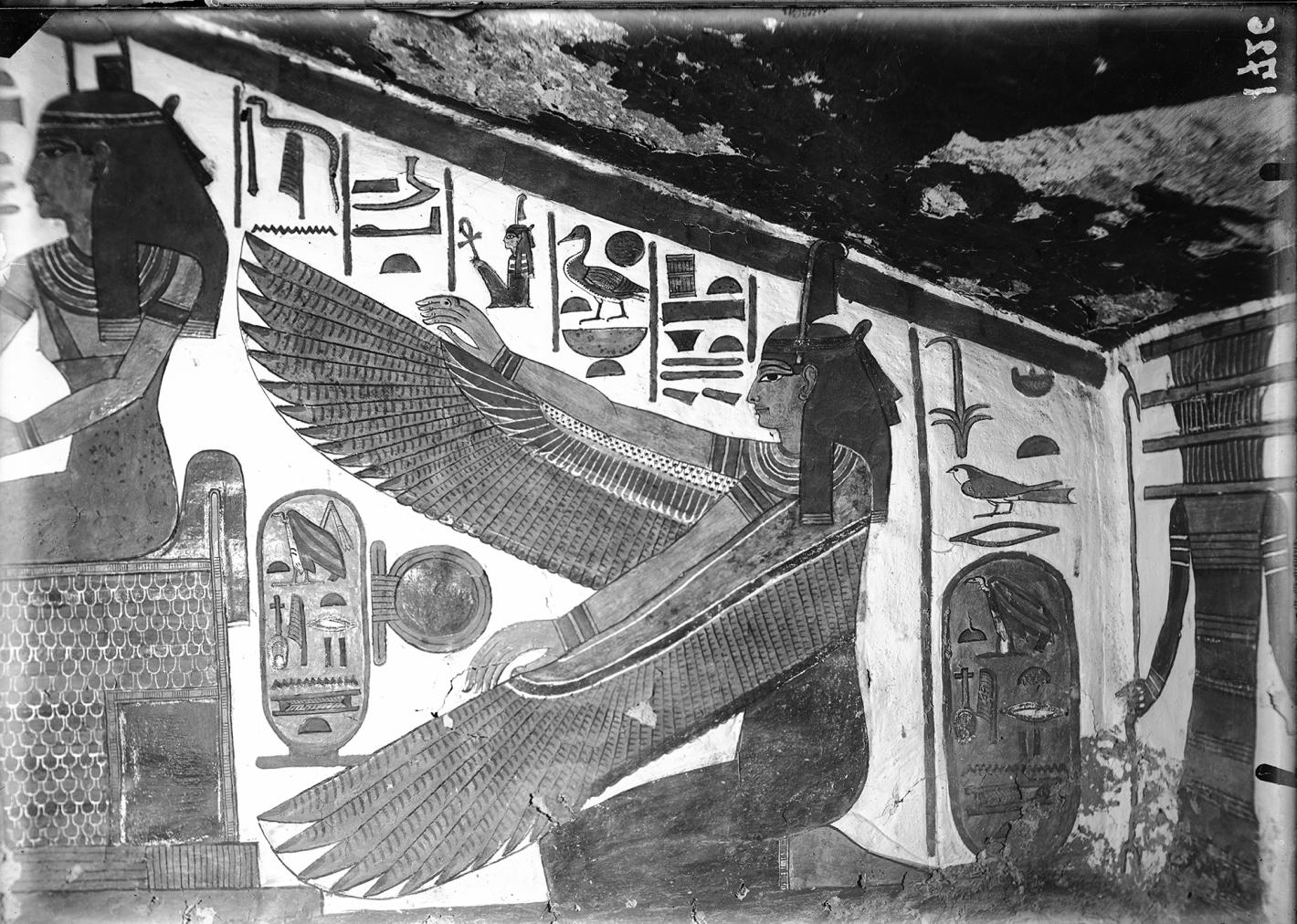
West wall of stairwell C in the tomb of Queen Nefertari (QV 66) perhaps photographed during excavations. A personified djed-pillar with was-scepters (right) and a winged image of Ma'at who kneels and protects a seated dyad of Isis and Nephthys (far left). Italian Archaeological Expedition excavations. Courtesy of the Egyptian Museum in Turin.
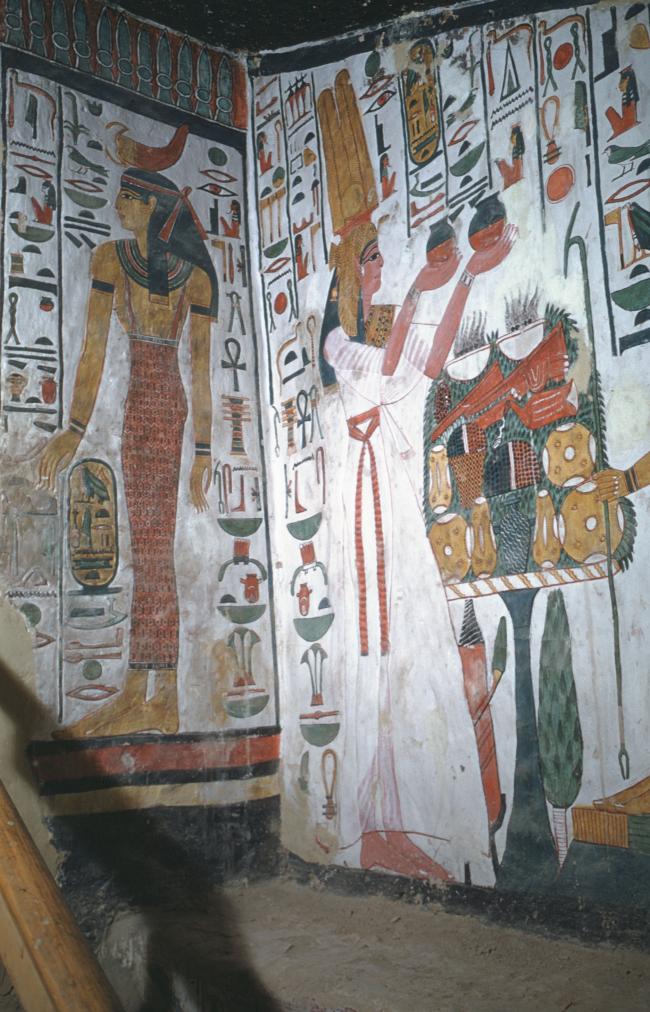
The goddess Serqet (front, south wall, right part) and the queen offering jars to (Isis), Stairwell C left (west) wall. Courtesy of Uni Dia Verlag. Uni Dia Image Nr. 36847.
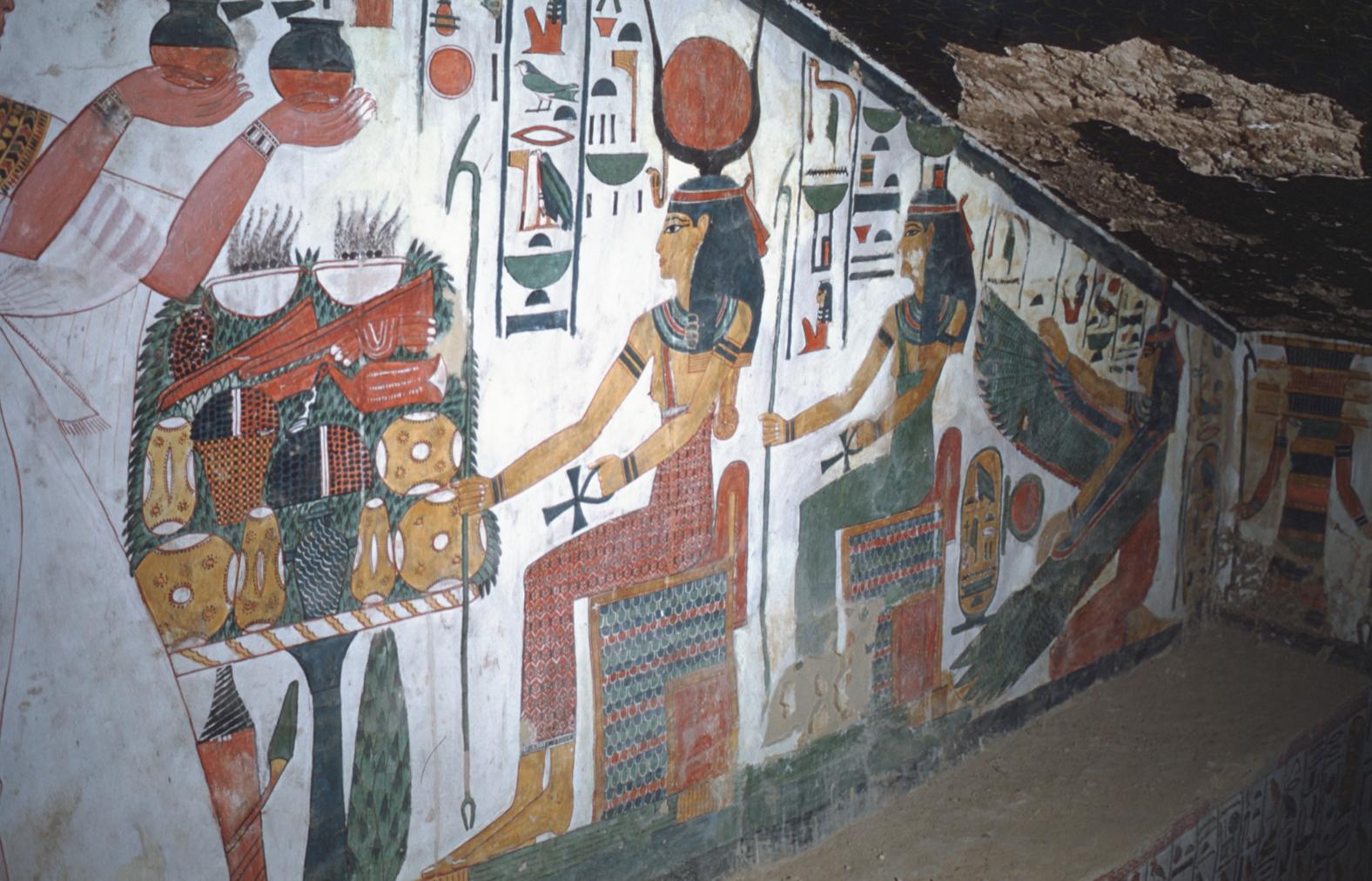
The queen offering to the goddesses Isis and Nepthys, and Ma'at with wings, Stairwell C, left (west) wall, upper part. Courtesy of Uni Dia Verlag. Uni Dia Image Nr. 36848.
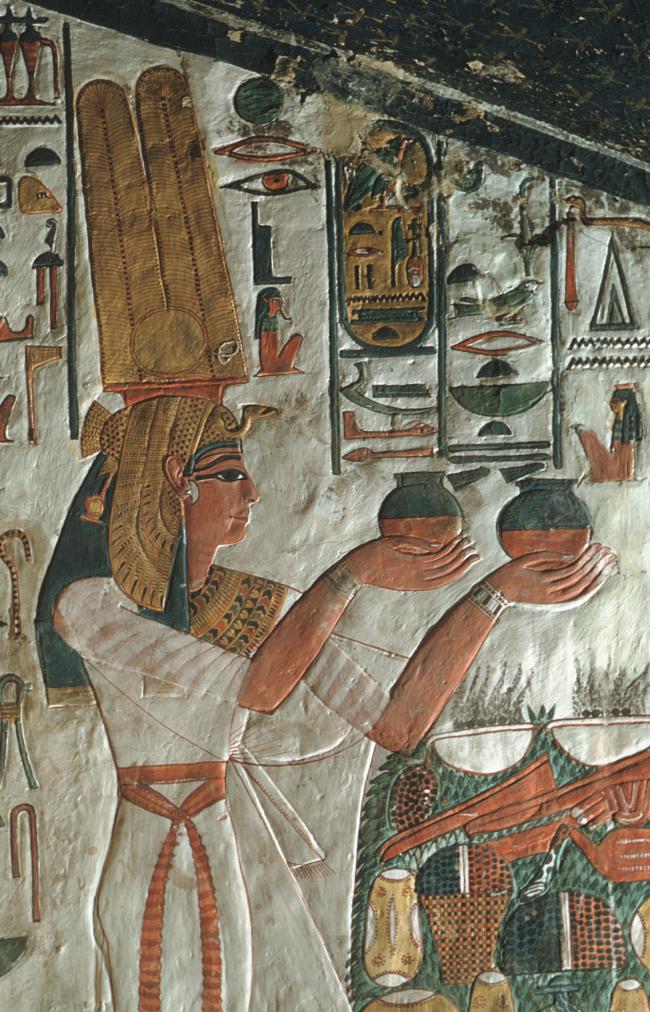
Detail of the queen offering to (the goddesses Isis and Nepthys), Stairwell C, left (west) wall, upper part. Courtesy of Uni Dia Verlag. Uni Dia Image Nr. 36849.
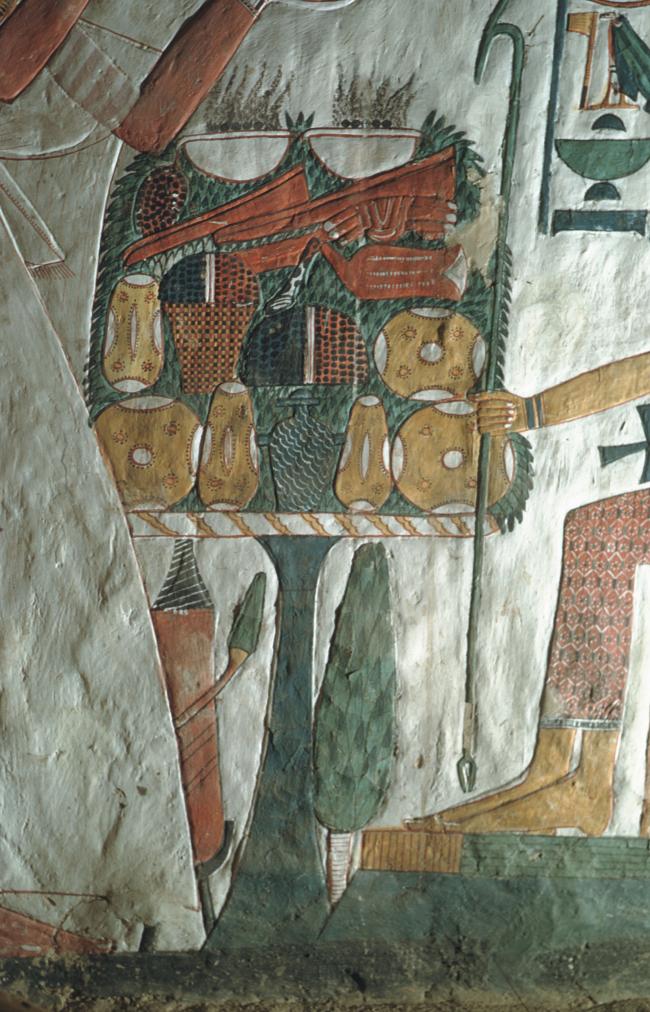
Detail of an offering table, Stairwell C, left (west) wall, upper part. Courtesy of Uni Dia Verlag. Uni Dia Image Nr. 36850.
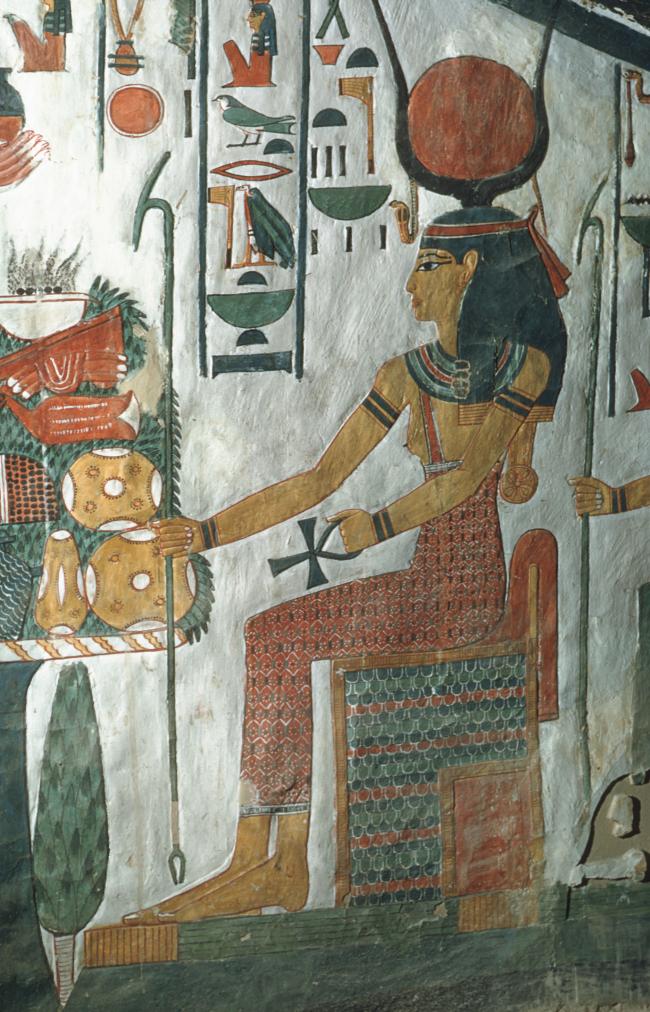
The goddess Isis before offering table, Stairwell C, left (west) wall, upper part. Courtesy of Uni Dia Verlag. Uni Dia Image Nr. 36851.
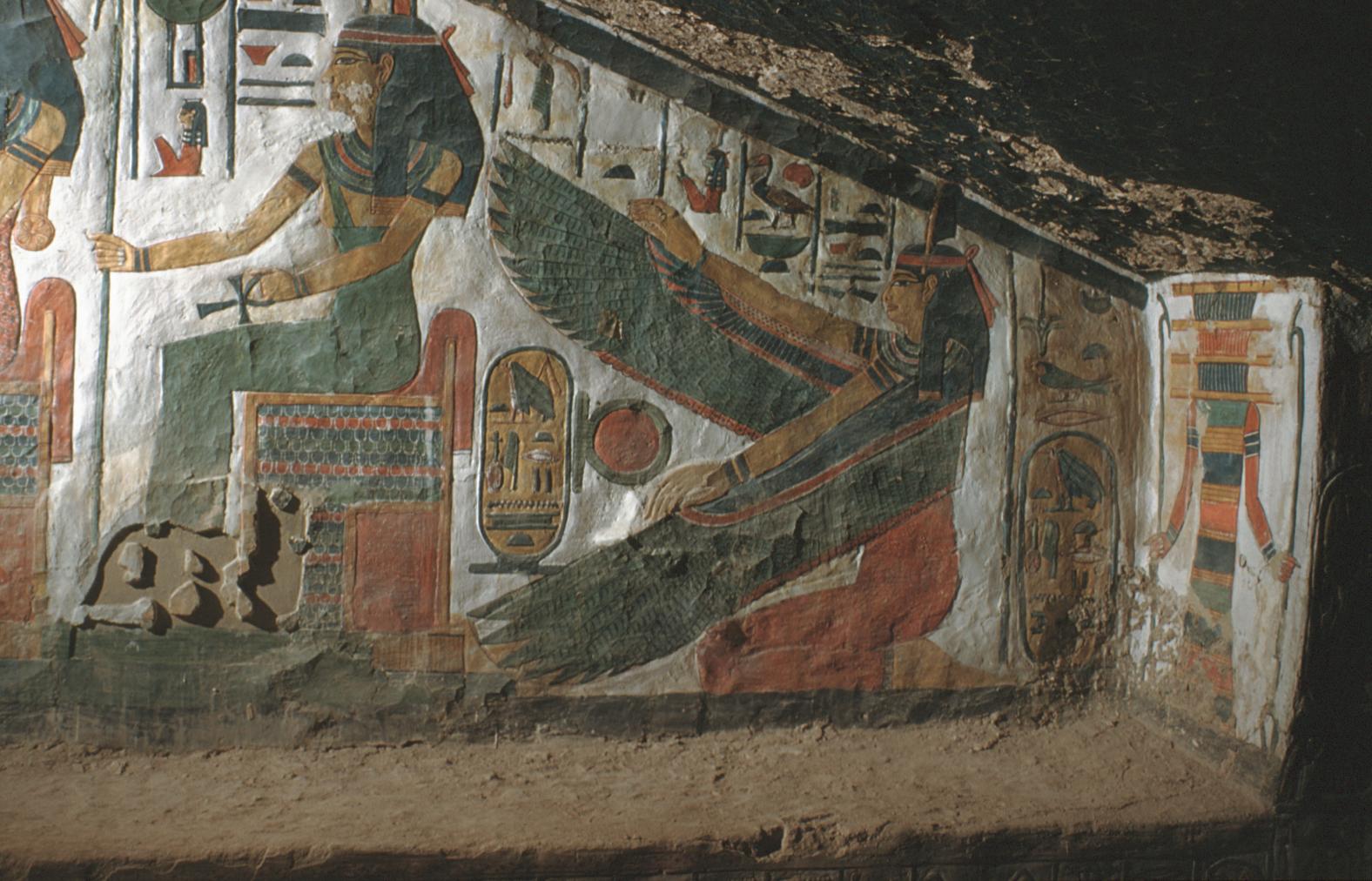
The goddess Ma'at with wings and an anthropomorphic djed-pillar, Stairwell C, northwest corner, upper part. Courtesy of Uni Dia Verlag. Uni Dia Image Nr. 36852.
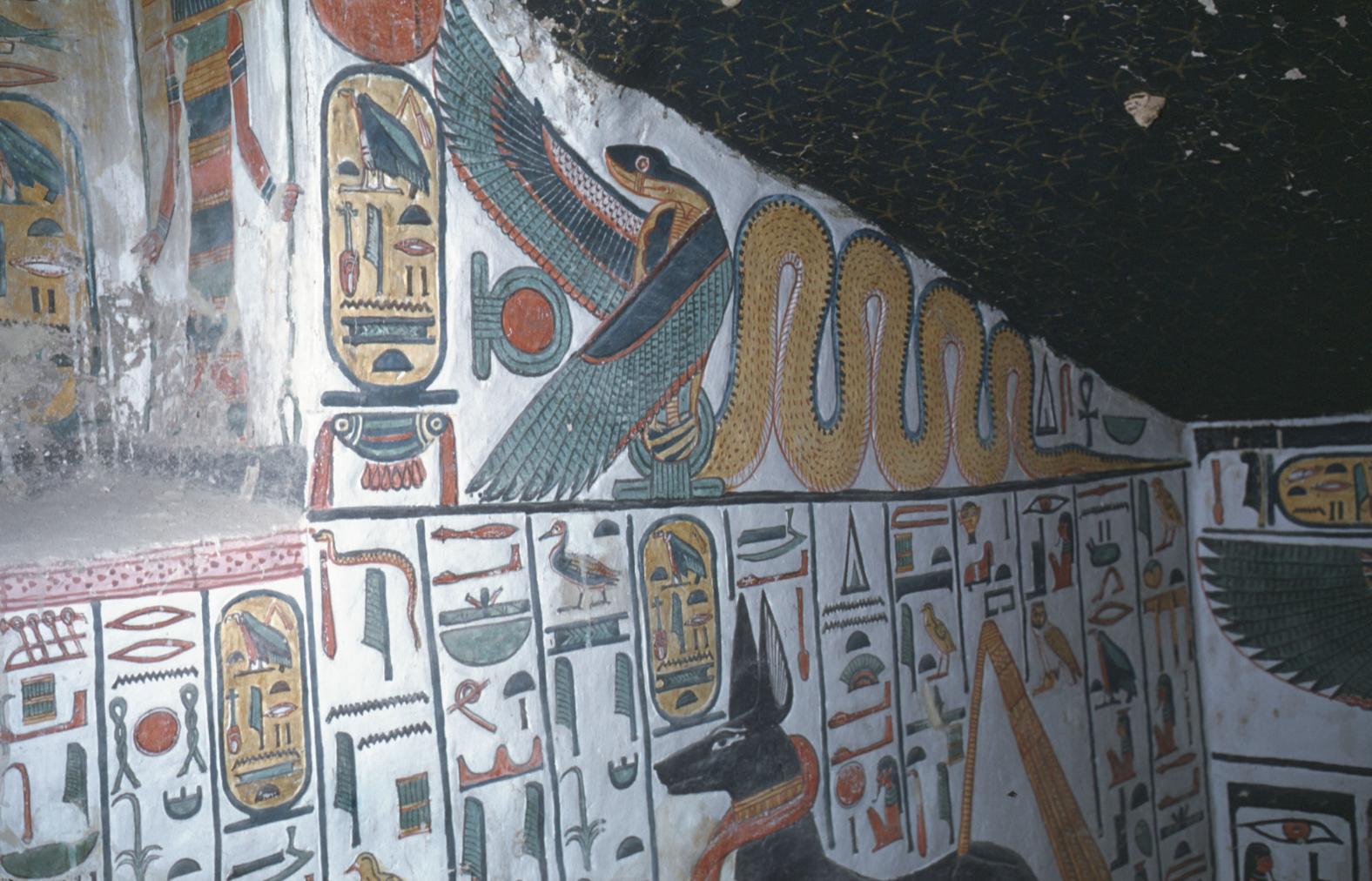
Detail of the winged cobra and jackal on Stairwell C, left (west) wall, lower part. Courtesy of Uni Dia Verlag. Uni Dia Image Nr. 36853.
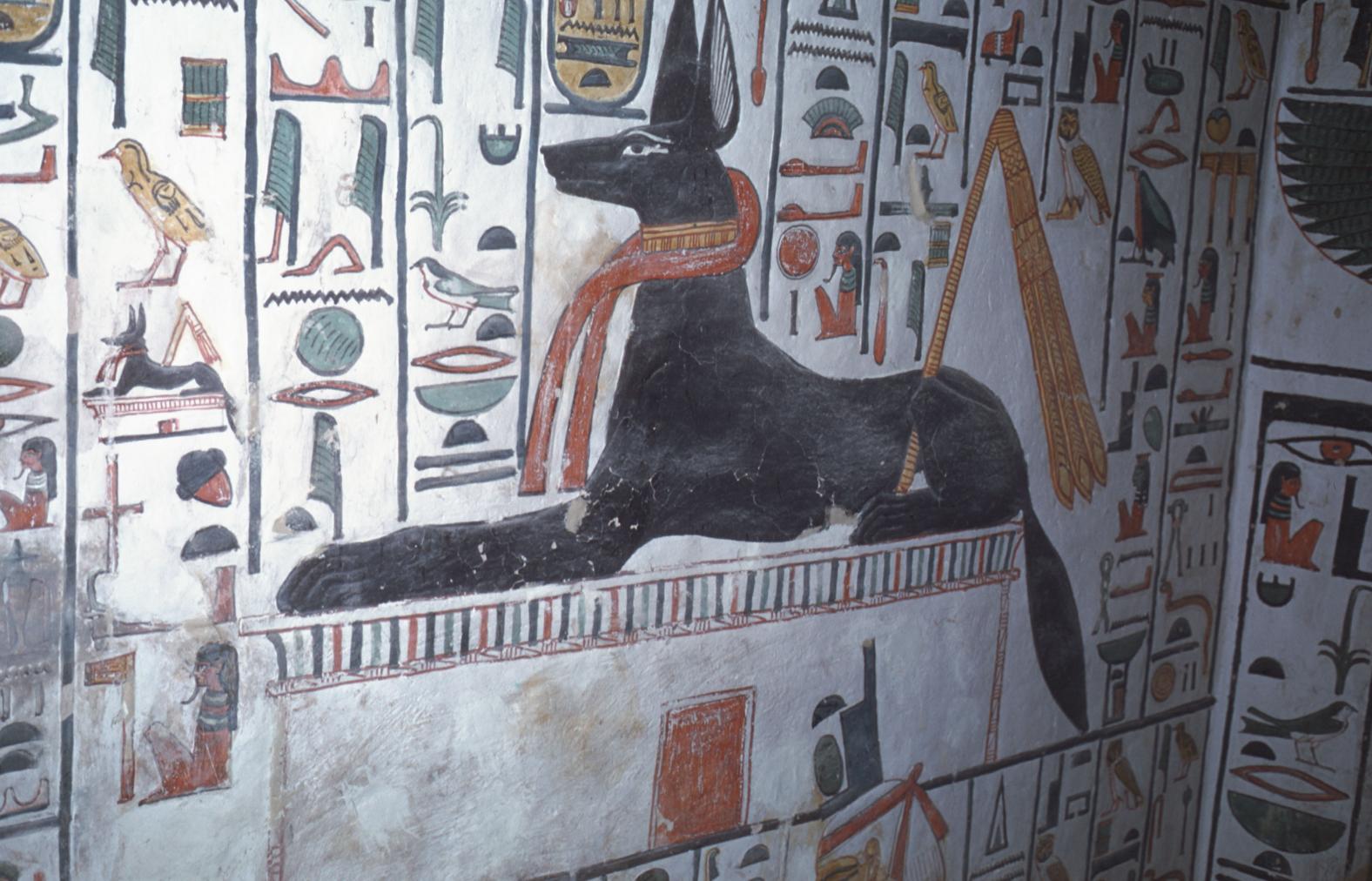
Detail of the god Anubis as a jackal atop his shrine, Stairwell C, left (west) wall, lower part. Courtesy of Uni Dia Verlag. Uni Dia Image Nr. 36854.
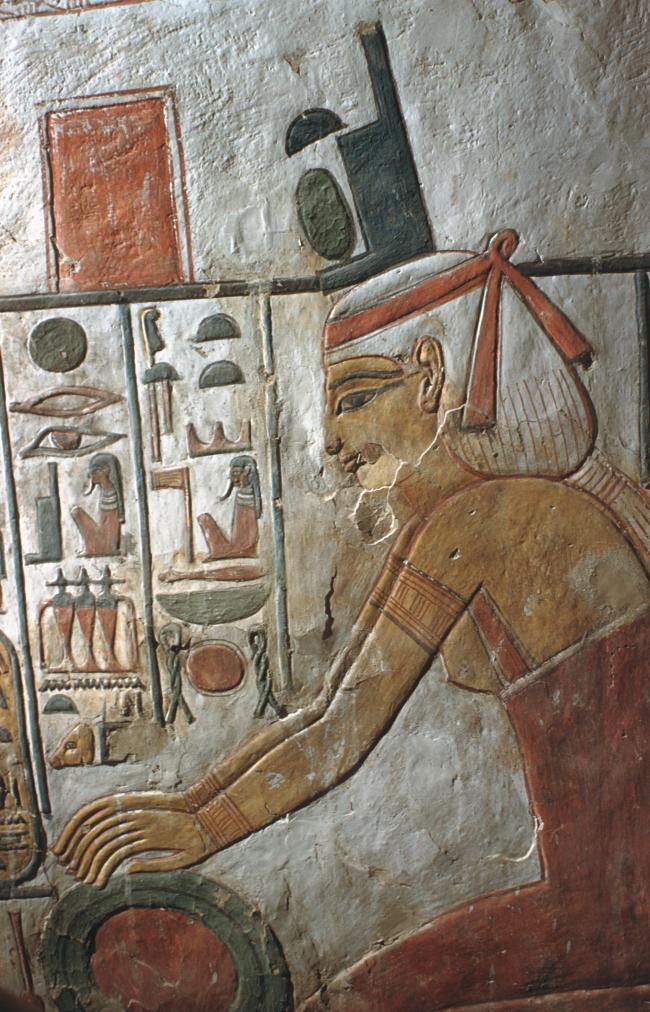
Detail of the goddess Isis kneeling below a reclining image of the god Anubis as a jackal upon his shrine, Stairwell C, left (west) wall. Courtesy of Uni Dia Verlag. Uni Dia Image Nr. 36855.
Detail of the goddess Nephthys kneeling below an image of the god Anubis as a jackal upon his shrine, Stairwell C, right (east) wall, lower part. Courtesy of Uni Dia Verlag. Uni Dia Image Nr. 36856.
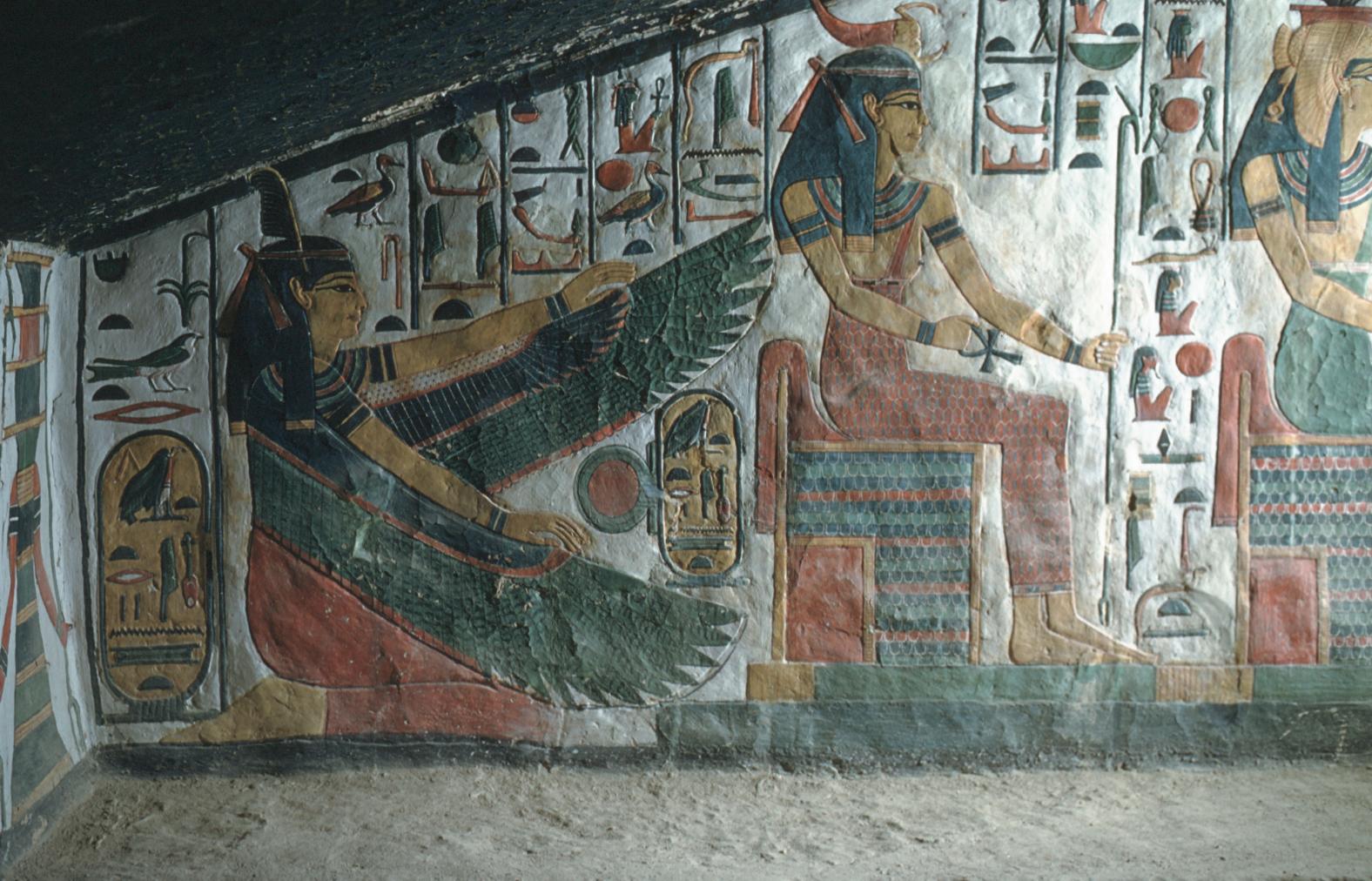
The goddesses Hathor, Serqet, and winged Ma'at, Stairwell C, right (east) wall, upper part. Courtesy of Uni Dia Verlag. Uni Dia Image Nr. 36857.
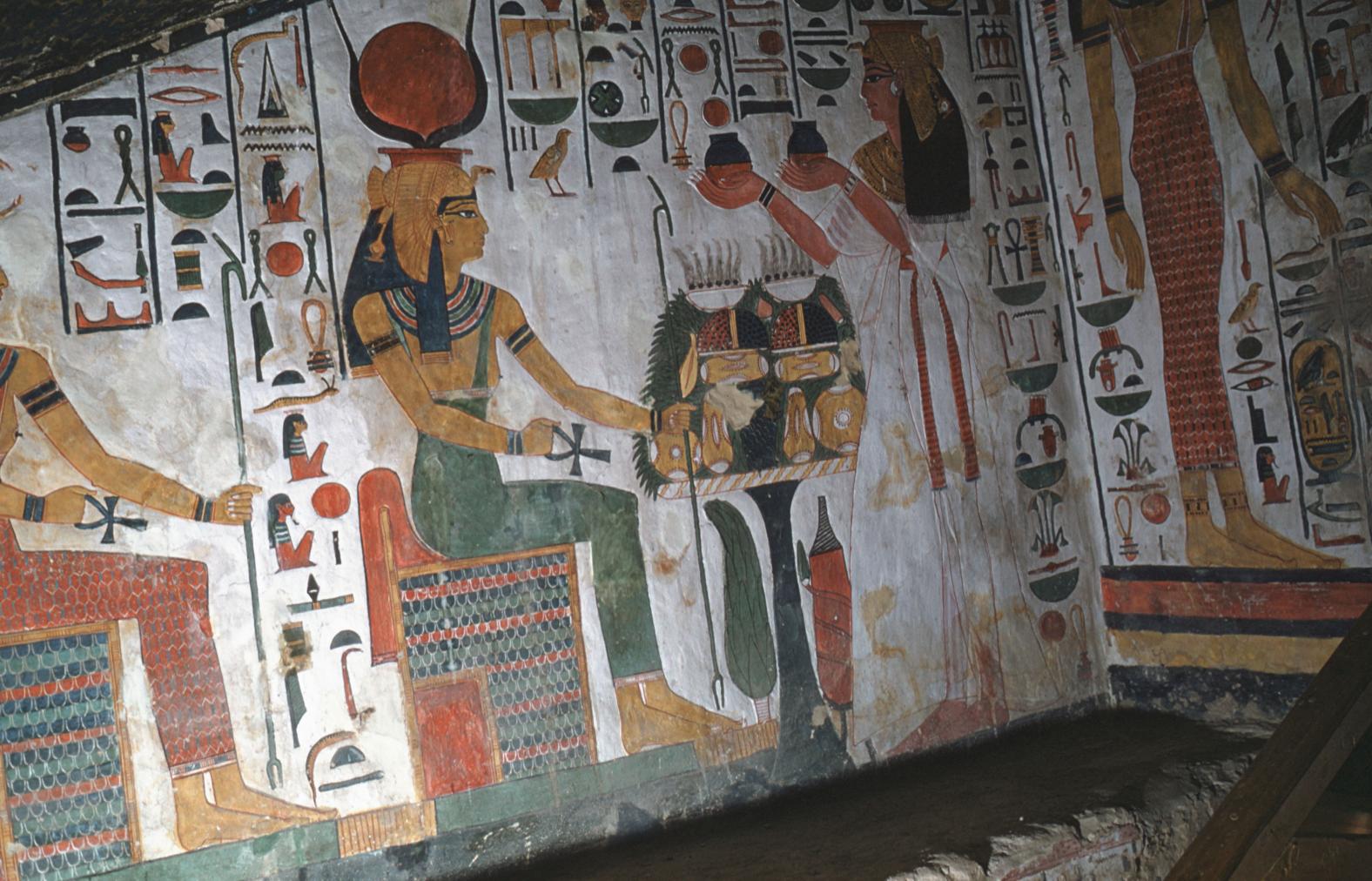
The queen offering to the goddesses Hathor (and Serqet), Stairwell C, right (east) wall, upper part. Courtesy of Uni Dia Verlag. Uni Dia Image Nr. 36858.
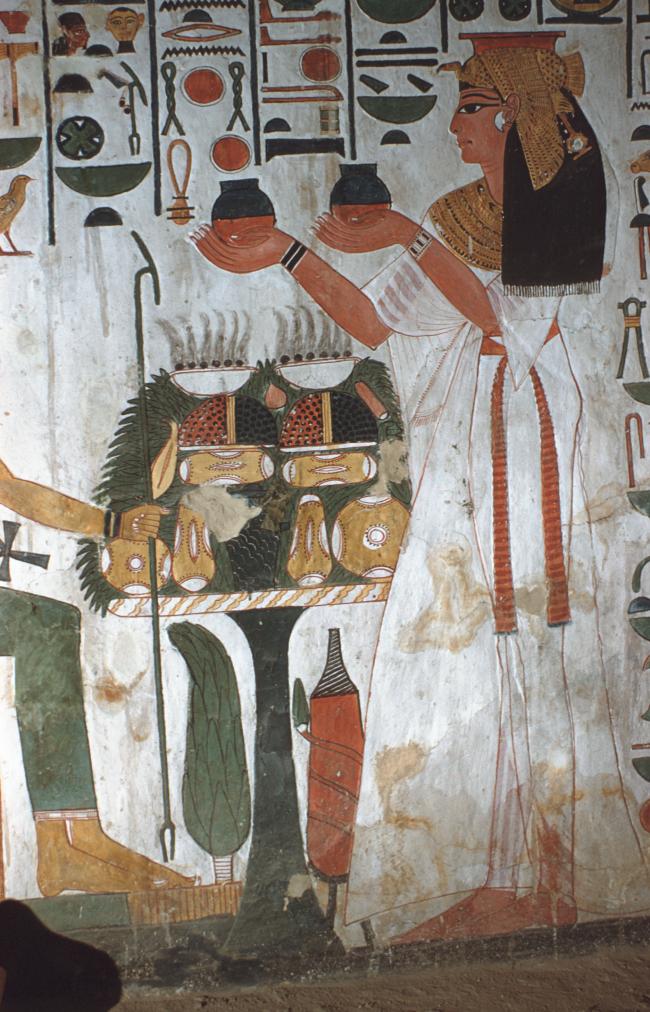
The queen offering to (the goddesses Hathor and Serqet), Stairwell C, right (east) wall, upper part. Courtesy of Uni Dia Verlag. Uni Dia Image Nr. 36859.
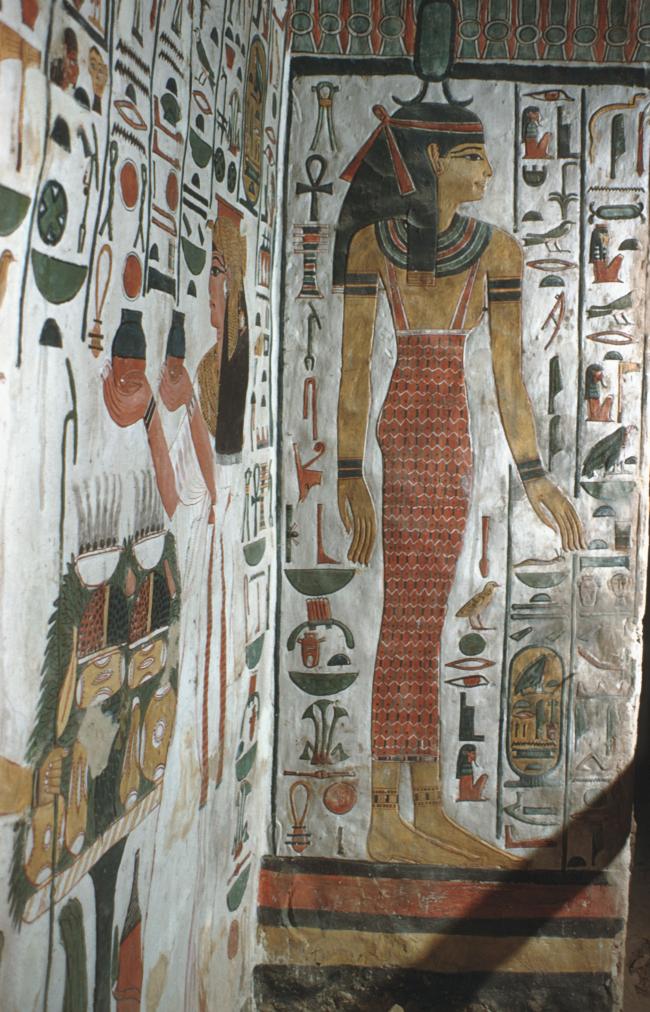
The goddess Neith, Stairwell C, front (south) wall (left part). Courtesy of Uni Dia Verlag. Uni Dia Image Nr. 36860.
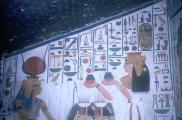
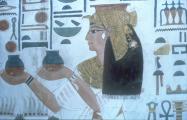
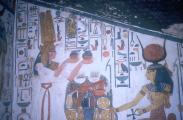
Gate D
See entire tombThe gate is on the off center axis of the stairwell rather than the tomb entryway. There is some damage to the decoration. The walkway from the stairwell continues through the gate into the burial chamber (D).
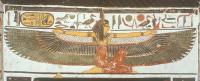
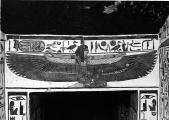
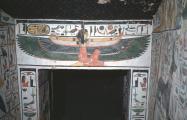
The lintel is decorated with a depiction of Ma'at, kneeling with her wings outstretched at her sides. The titles and Cartouche of Nefertari fill the space above Ma'at, below a pt sign. Similarly, the reveals also contain Nefertari’s cartouche and titles, surmounted by a pt sign. The soffit is decorated with yellow stars on a dark blue background. The outer and inner thicknesses each have a Kheker frieze at the ceiling and a pt sign just below it. Ma'at, standing facing the south, appears on both outer thicknesses. The text around her indicates she is greeting Nefertari in the afterworld. The inner thicknesses each contain a rearing cobra resting on the nb sign that is supported by two djed-pillars. Each cobra is “holding” a Was scepter and shen sign, while in the space above each cobra’s coils is decorated with an Ankh, Djed-pillar, and was scepter. The cobra on the left inner thickness is Nekhbet and wears the atef crown of Osiris, while the cobra on the right inner thickness is Wadjet and wears the Double crown of Upper and Lower Egypt. The dado frieze is made up of black, red, and yellow bands.
Porter and Moss designation:
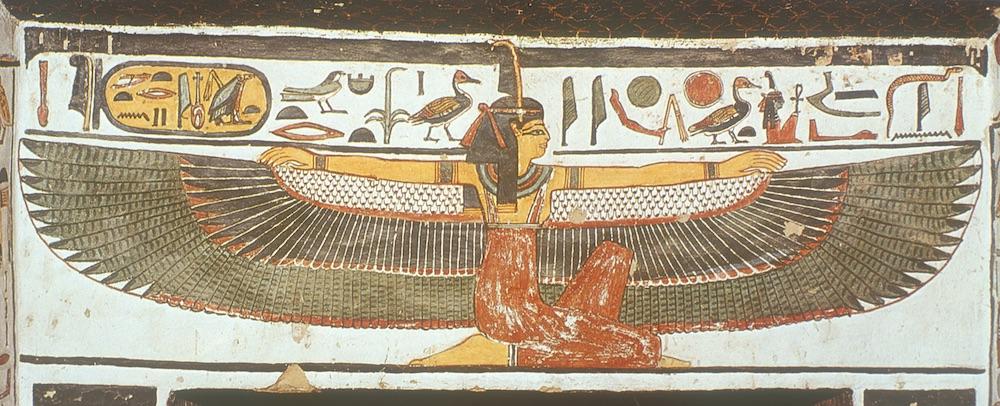
The winged Ma'at in the tomb of Nefertari, with the hieroglyphic sign of her name (an ostrich feather) on her wig. She protectively surrounds the deceased as the daughter of Re.
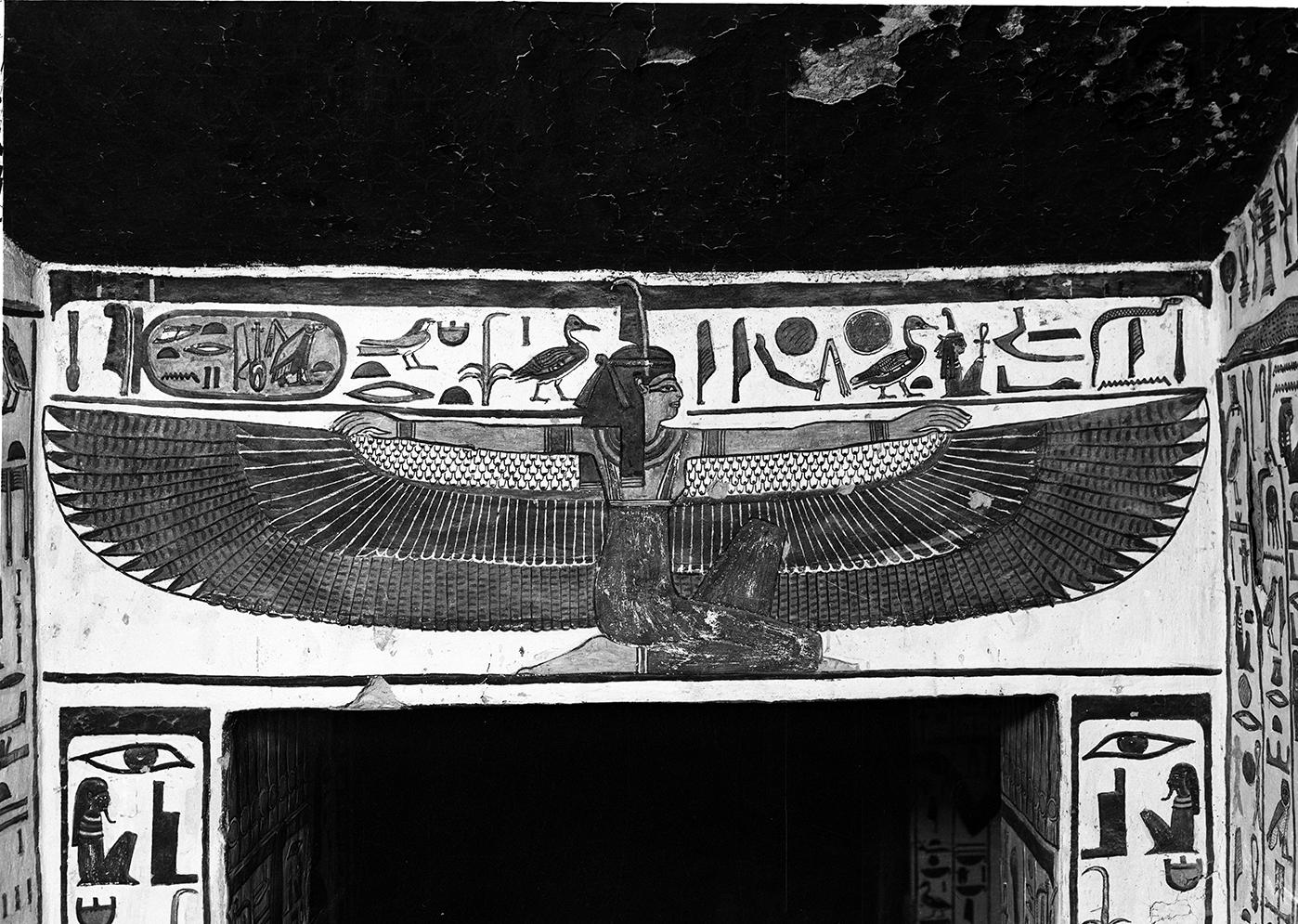
Lintel of Gate D in the tomb of Queen Nefertari (QV 66) perhaps photographed during excavations. A winged image of Ma'at, as well as painted inscriptions on the upper lintel and doorjambs. Italian Archaeological Expedition excavations. Courtesy of the Egyptian Museum in Turin.
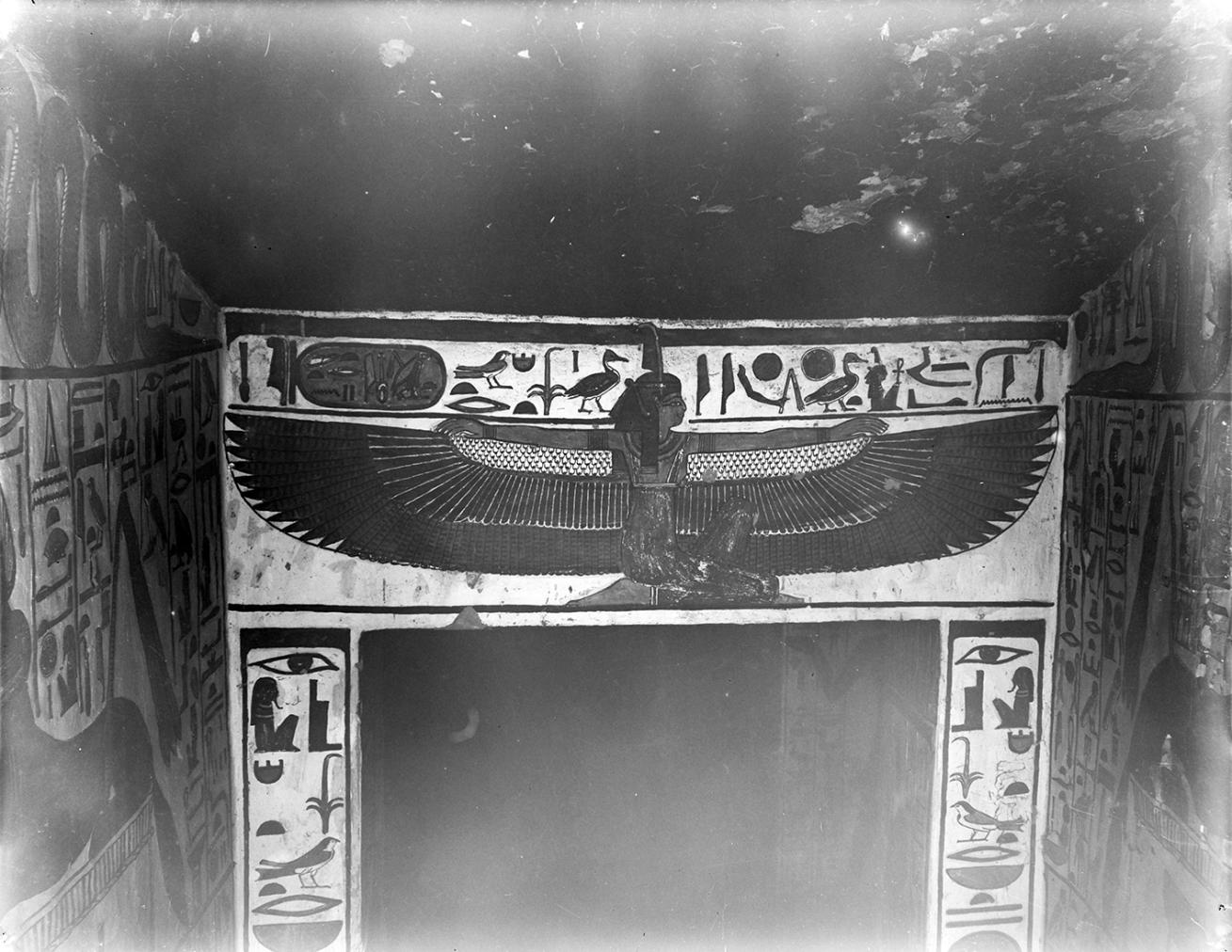
Lintel of Gate D in the tomb of Queen Nefertari (QV 66) perhaps photographed during excavations. A winged image of Ma'at, as well as painted inscriptions on the upper lintel and doorjambs. Italian Archaeological Expedition excavations. Courtesy of the Egyptian Museum in Turin.
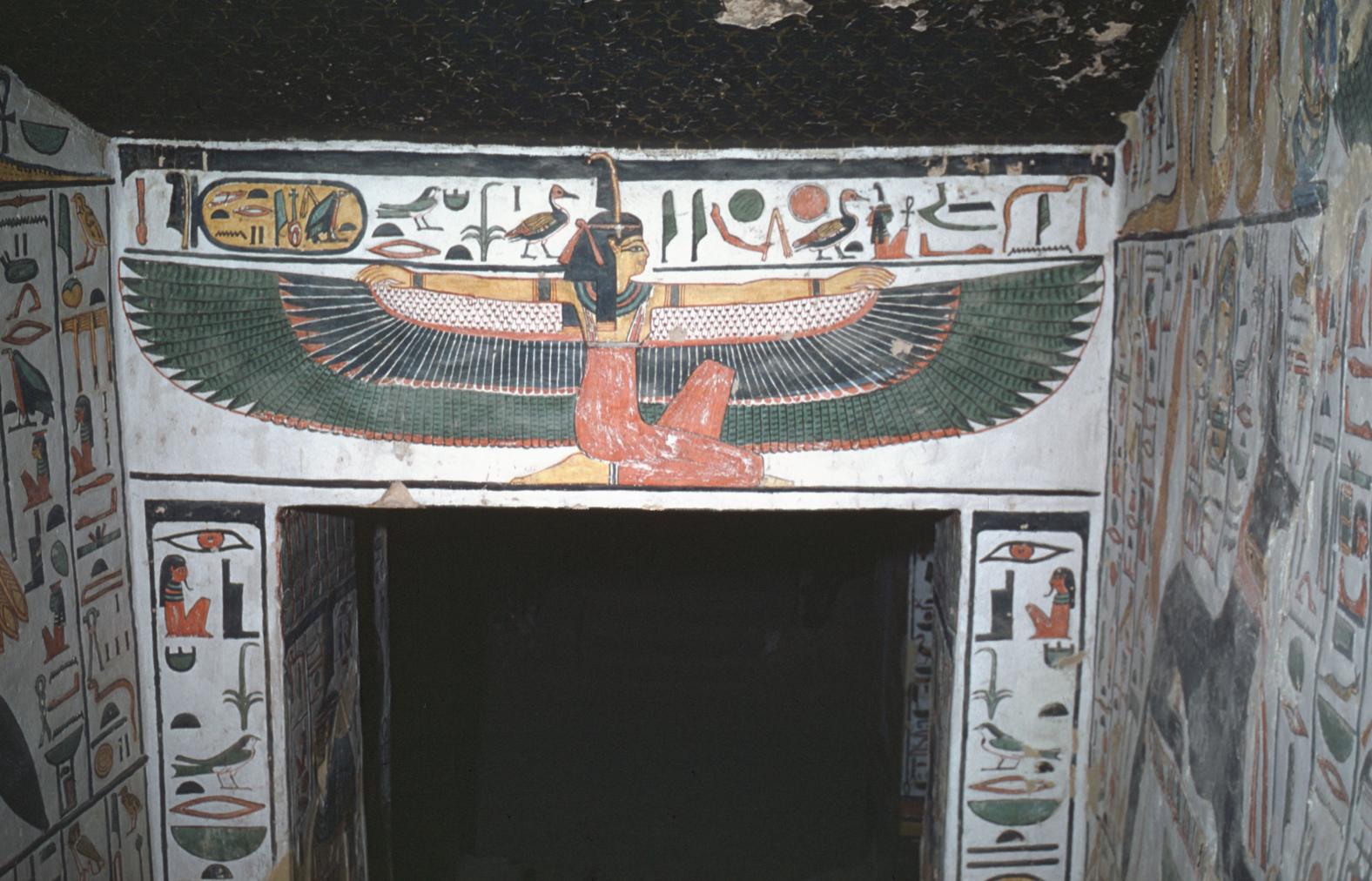
The goddess Ma'at with wings on a lintel, Gate D. Courtesy of Uni Dia Verlag. Uni Dia Image Nr. 36861.
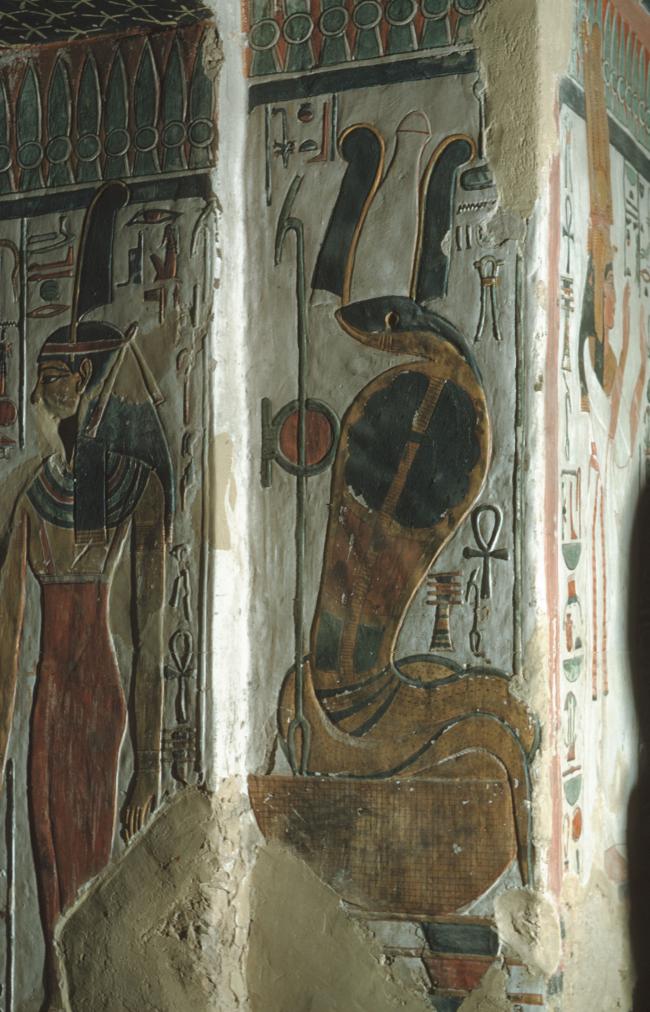
View of rearing cobra on the left inner and outer thickness of Gate D. Courtesy of Uni Dia Verlag. Uni Dia Image Nr. 36863.
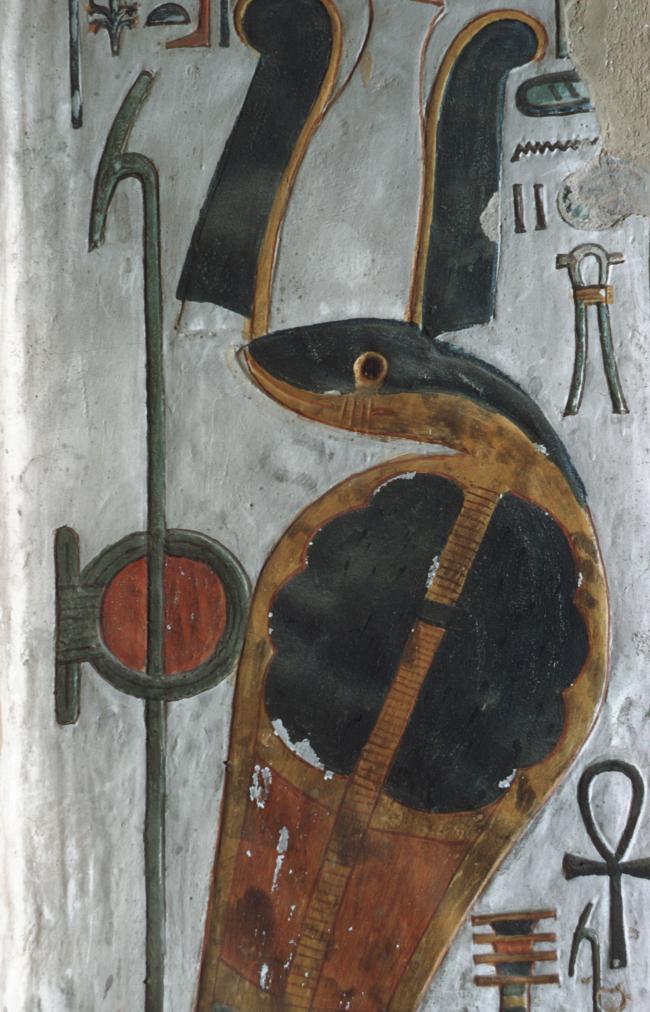
View of rearing cobra on the left inner thickness of Gate D. Courtesy of Uni Dia Verlag. Uni Dia Image Nr. 36864.
Burial chamber D
See entire tombA large slightly rectangular chamber parallel to the axis of the entrance, but off-center. The interior of the chamber is divided in three sections, with the center portion sunken and accessed by three Steps in the south and north sections of the chamber. Steps also ascend to the side chambers; two steps reach side chambers Da and Dc while one step reaches side chamber Db. Benches line the walls with breaks in the gates and canopic niche cut into the middle of the west wall. The Sarcophagus had been placed in the center of the room. Four rectilinear pillars support the roof of the chamber, one on each side of the steps. The decoration is damaged. A modern wooden floor and low barriers were installed, as well as fluorescent lighting.
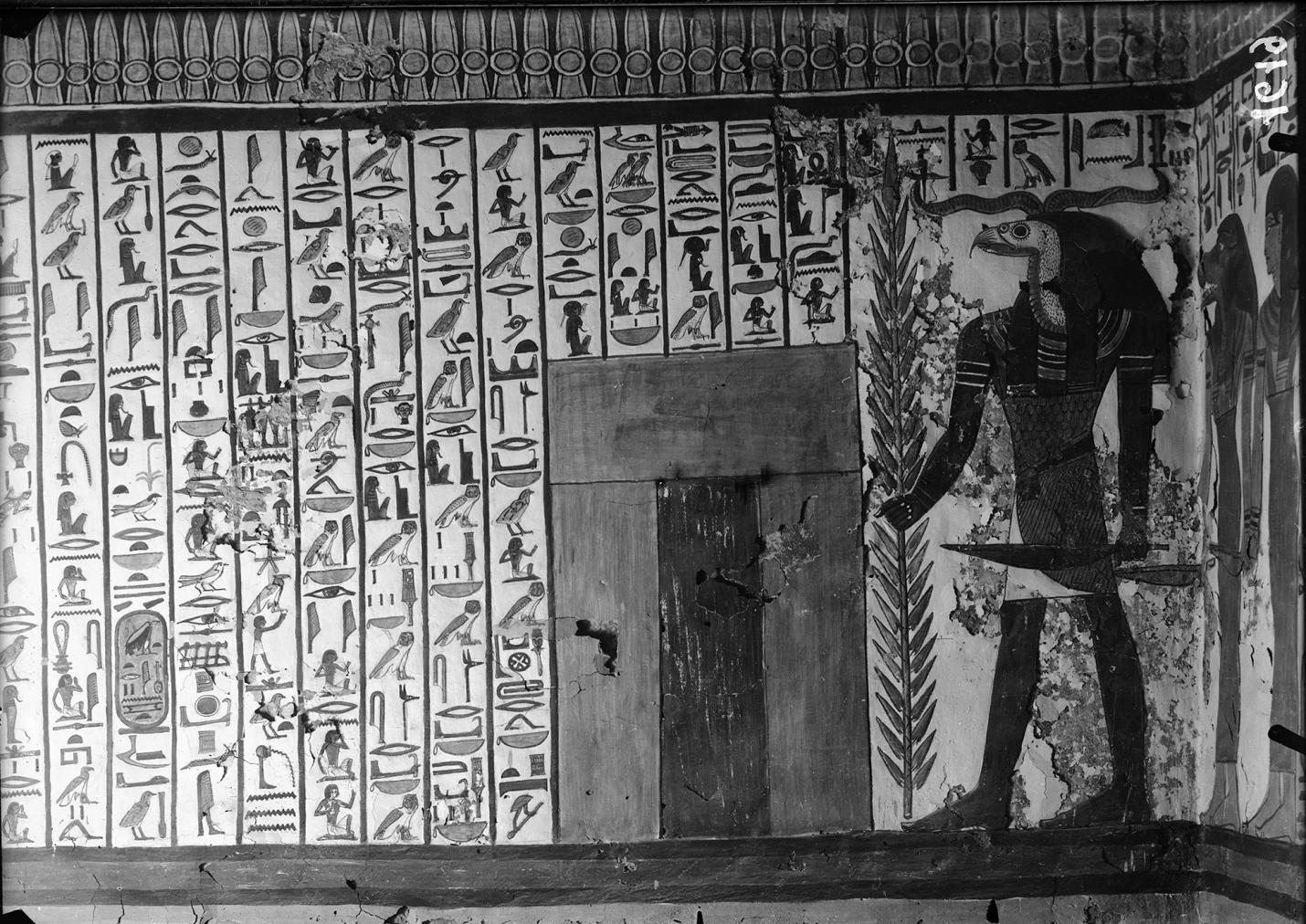
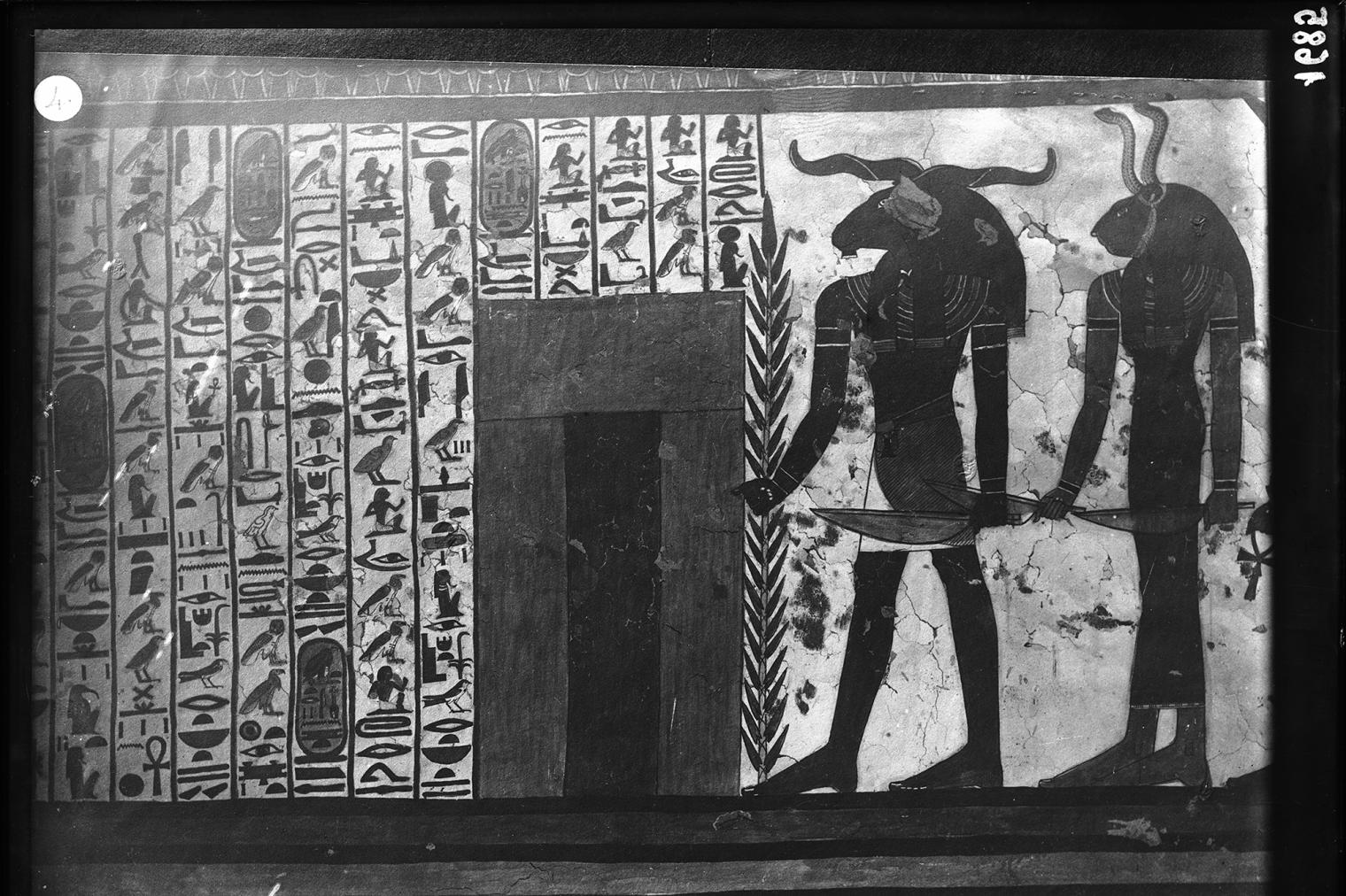
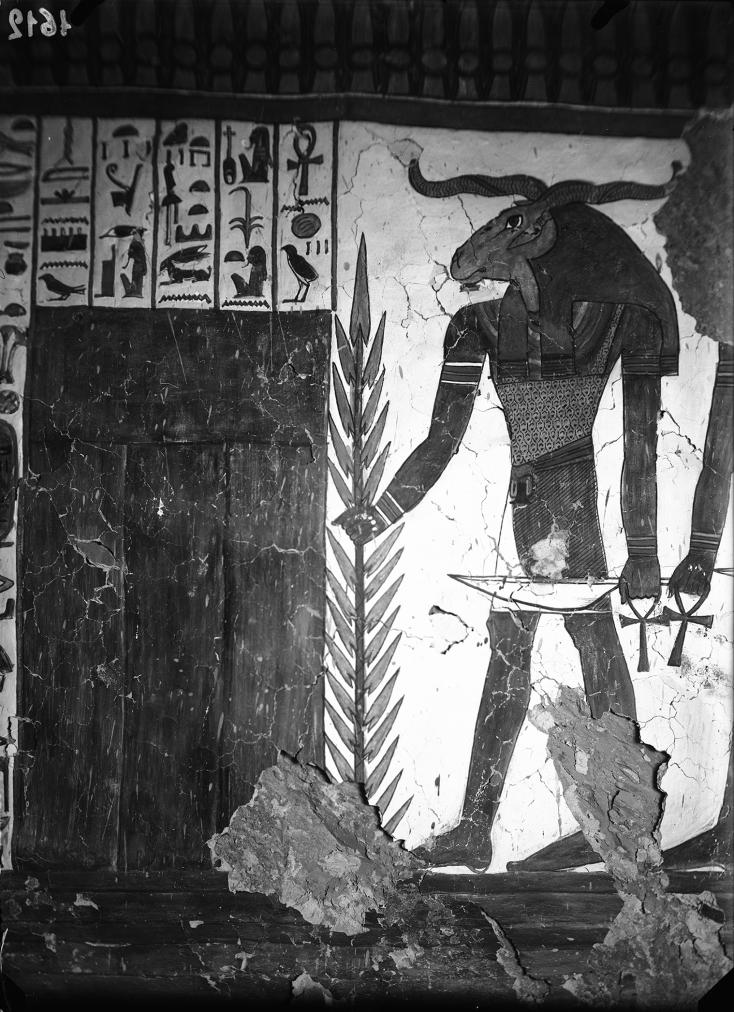
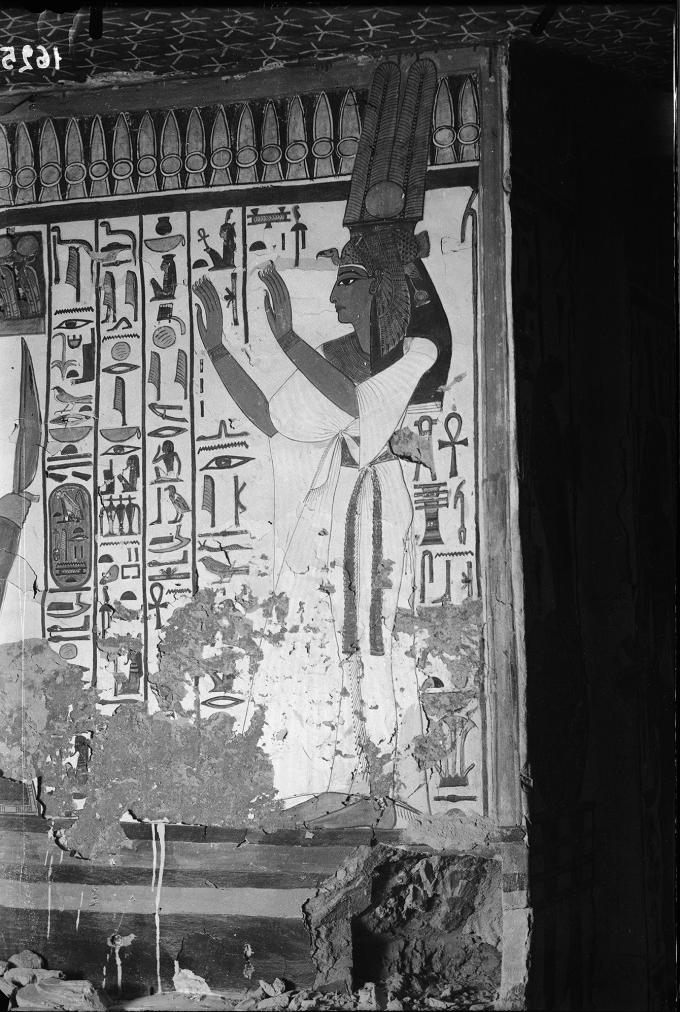
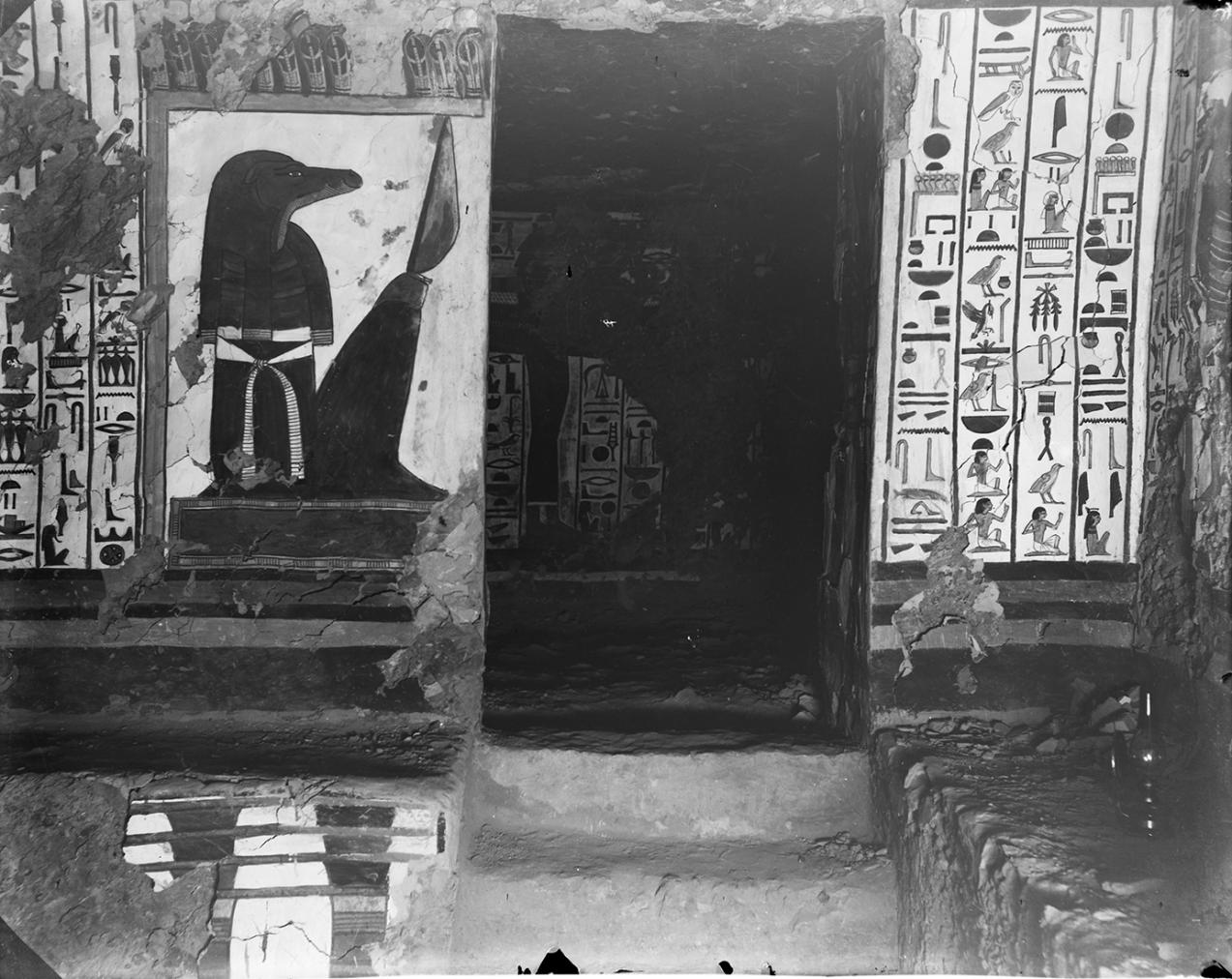
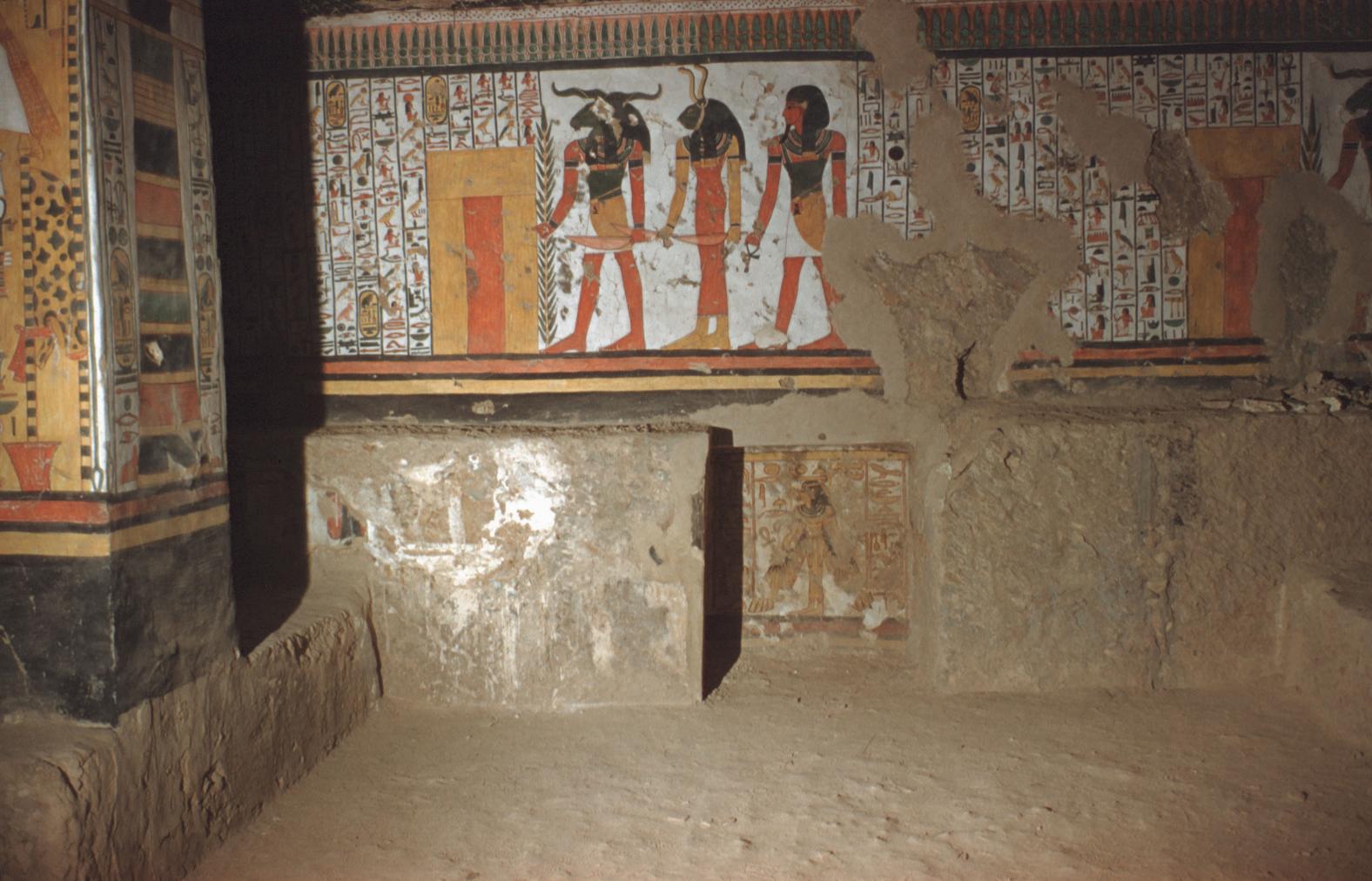
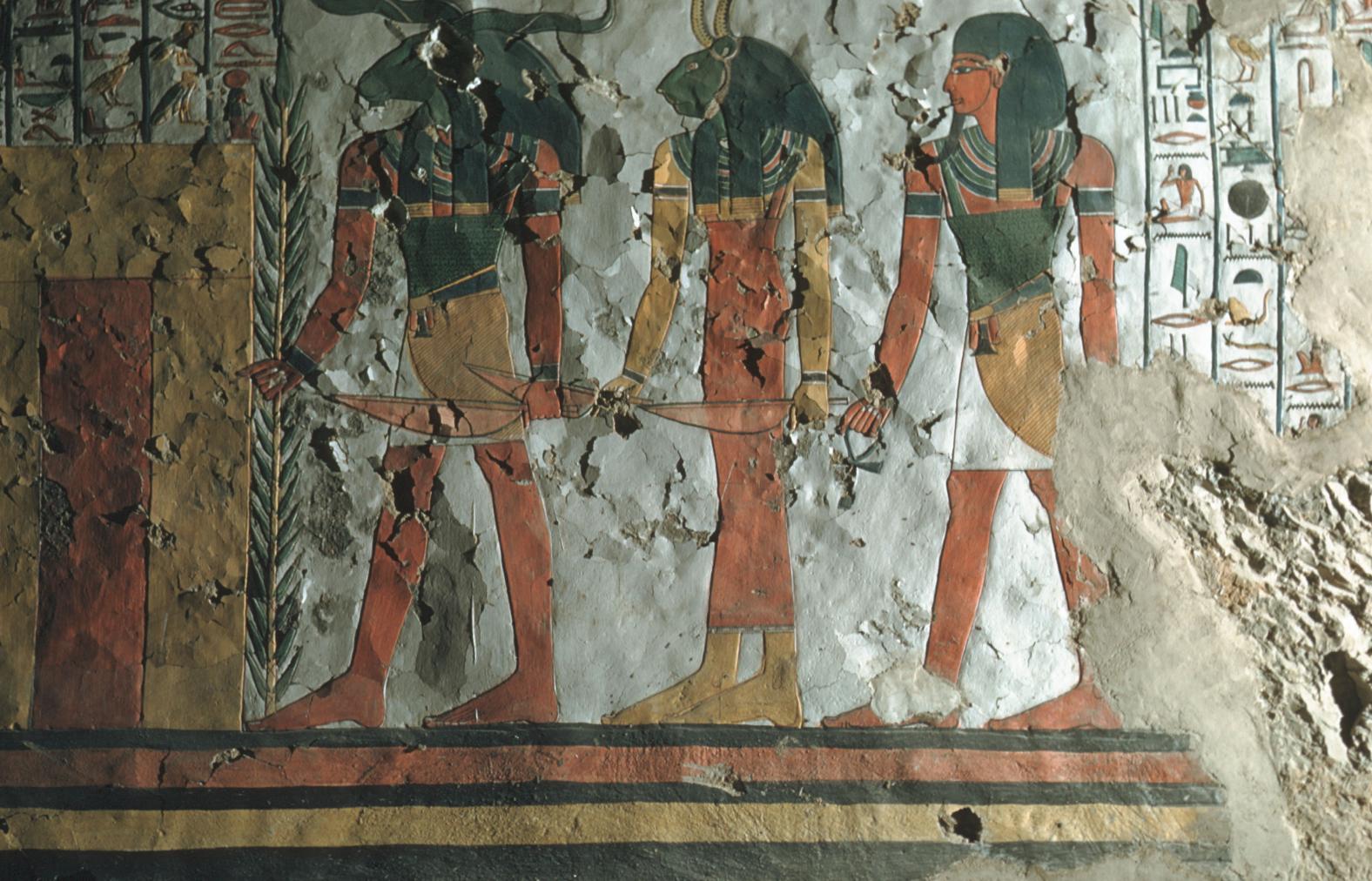
In many areas of the chamber the decoration is badly damaged. The south wall on the west side depicts Queen Nefertari on the left part of the wall and on a large scale with her hands raised in adoration. On the right part of the wall is a depiction of a gate painted yellow with a red door. This is the first gate appearing in the Book of the Dead Spell 144, the text of which is inscribed on all the walls of the west half of the chamber. Her journey through this portion of the afterlife begins on the southwest wall and runs clockwise around the chamber, terminating at side chamber Db. The figure of a ram-headed male deity, the doorkeeper, stands behind the first gate, holding a branch of leaves and a knife. On the far left side of the west wall, the previous vignette continues with two attendants: a hippopotamus-headed female deity and a human-headed female deity face south and each holds an Ankh. Spell 144 continues onto the west wall to the right of gate Da. The second gate is depicted, followed again by the ram-headed doorkeeper, and then by a lioness-headed goddess with two snakes extending from the top of her head, and a human-headed male deity. The right half of the west wall is mostly damaged, but it shows the third gate and its ram-headed doorkeeper, followed by the fragmentary image of a male deity. The fourth gate should appear on the rightmost portion of the west wall, but it does not survive. However, its attending deities appear on the left side of the north wall. A second antelope-headed male deity with green skin appears behind the doorkeeper, followed by a human-headed male deity. The fifth gate, appearing on the right side of the west half of the north wall is followed by just a ram-headed doorkeeper.
The Book of the Dead Spell 146 begins on the east side of the south wall. Again, Nefertari is shown at the far right facing east with her hands raised in adoration. Almost all of the bottom half of the wall is damaged, but the preserved parts show the presence of two gates, each with a Uraeus frieze. Inside the first gate in the center of the wall is a seated mummiform vulture-headed deity. The second gate is inhabited by a seated mouse-headed mummiform deity. Spell 146 continues onto the east wall, containing six gates. The wall is much better preserved on the south half. The gate (gate three) on the far right of the wall to the left of gate Dc contains a crocodile-headed mummiform deity seated on a Ma'at sign platform and has a knife extending from its knees. The fourth gate contains a bull-headed mummiform deity seated on a Ma'at sign platform and has a knife extending from its knees. The fifth contains a nude female child deity seated on a Ma'at sign platform and she holds two knives crossed over her chest. The final three gates on the left side of the east wall are severely damaged, with only the uraeus frieze surviving of gates seven and eight, and nothing survives of gate nine. Enough of gate six survives to reveal it contains a snake-headed mummiform deity seated on a Ma'at sign platform and has a knife extending from its knees.
The right part of the east side of the north wall contains the last, tenth gate, and the mummiform deity has the head of a crocodile and is seated on a Ma'at sign platform. To the left of this is the culminating scene where Nefertari greets Osiris. Nefertari appears in the center of the wall facing west with her hands raised in adoration. Before her is a table holding mummiform figures of the four Sons of Horus. Enthroned on a Ma'at sign behind this table are the three gods Osiris, who is mummiform and holding the crook and flail, Hathor of the West, and Anubis.
On the west wall, cut into the Bench at the base of the decorated wall, is a niche that may have been used to house Nefertari’s Canopic chest. The south wall of this niche is decorated with mummiform figures, two are the Sons of Horus, Imsety and Qebehsenuef, who is depicted with a human head, followed by Anubis. On the north side of the shrine wall, the mummiform figures are comprised of the other two Sons of Horus, Hapy and Duamutef, followed by Anubis. The rear (west) wall contains a figure of Nut with her wings lowered at her sides.
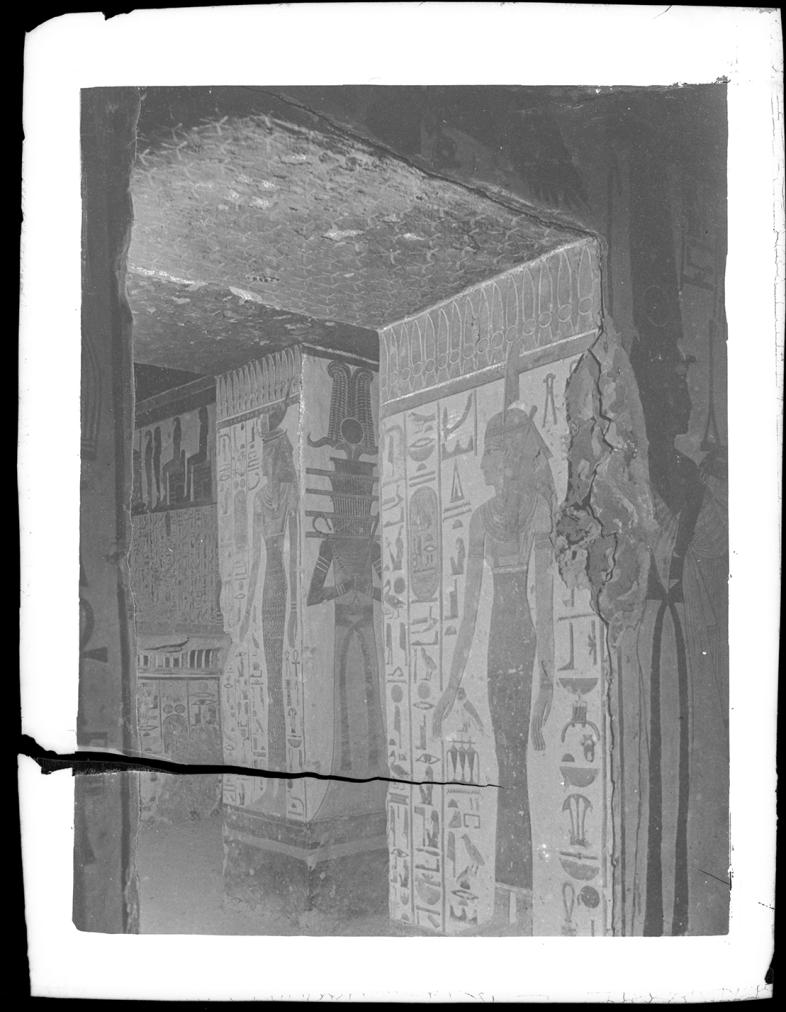
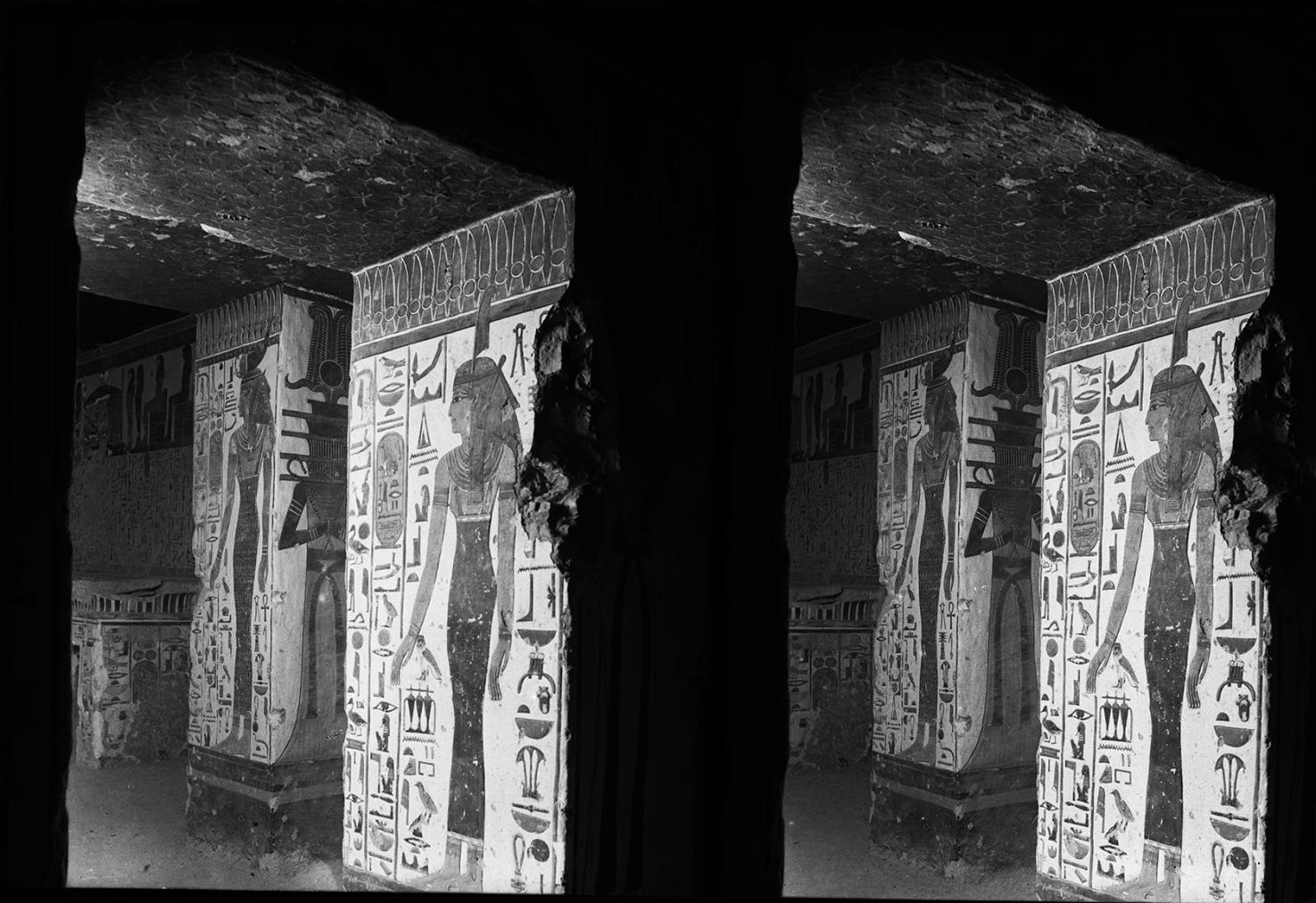
Four rock-cut pillars support the roof around the sarcophagus part of the chamber. The southwest pillar: on the front (south) is an image of a priest facing east with one arm outstretched. On the right (east) is a depiction of Osiris within a shrine, mummiform and holding the crook and flail, facing south. He is flanked by two imyut-fetishes. The left (west) side shows Nefertari before the goddess Hathor. The rear (north) has a depiction of a Djed-pillar, flanked by the titles and Cartouche of Nefertari.
The southeast pillar: on the front (south) is an image of a priest facing west with one arm outstretched, bent at the elbow. On the left (west) is a depiction of Osiris within a shrine, mummiform and holding the crook and flail, facing south. He is flanked by two imyut-fetishes. The right (east) side shows Nefertari before the goddess Isis. The rear (north) has a depiction of a djed-pillar, flanked by the titles and cartouche of Nefertari.
The northwest pillar: The front (south) has a depiction of a djed-pillar, flanked by the titles and cartouche of Nefertari. On the right (east) is a depiction of Osiris within a shrine, mummiform and holding the crook and flail, facing south. He is flanked by two imyut-fetishes. The left (west) side shows Nefertari before the goddess Isis. The rear (north) side shows Nefertari before the goddess Hathor of the West.
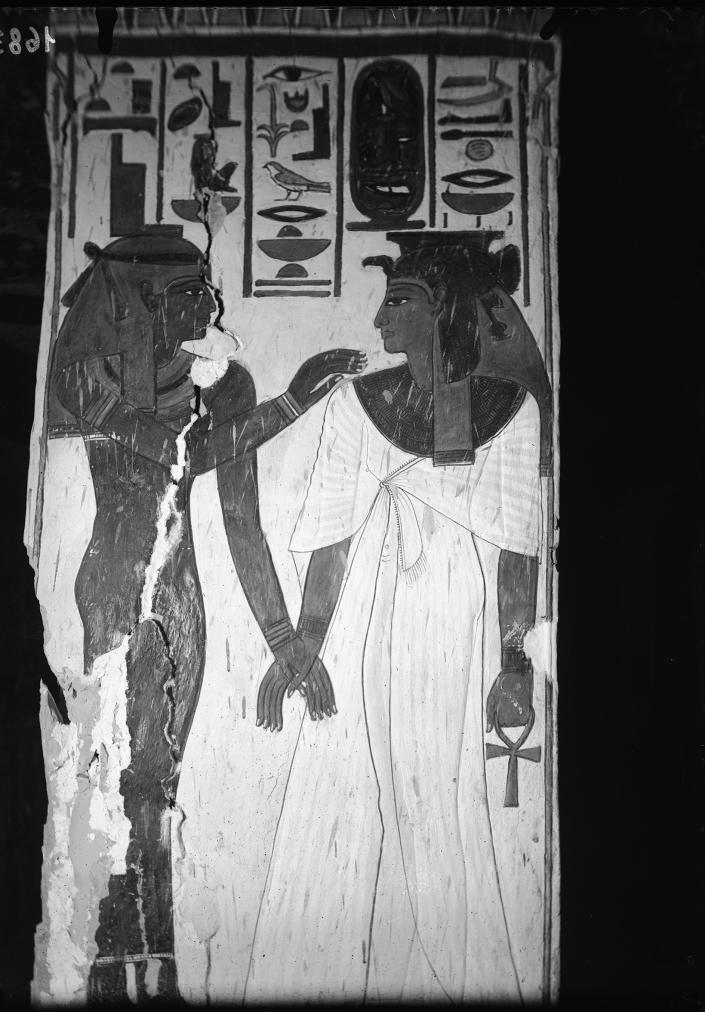
The northeast pillar: The front (south) has a depiction of a djed-pillar, flanked by the titles and cartouche of Nefertari. On the left (west) is a depiction of Osiris within a shrine, mummiform and holding the crook and flail, facing south. He is flanked by two imyut-fetishes. The rear (north) side shows Nefertari before the goddess Isis. The right (east) side shows Nefertari before the god Anubis.
Very little of the decoration on the bottom surfaces of the benches survives. Namely, the east and south walls contain remnants of the frieze, which consist of two djed-pillars alternating with the Tyet-knot. Some text remains on the west surface of the bench on the east side of the burial chamber. On all walls and pillars there is a Kheker frieze, with the exception of the rear decoration on the south pillars and front decoration on the north pillars. The ceiling is decorated with yellow stars on a dark blue background. On all walls above the benches the dado frieze is made up of black, red, and yellow bands.
Porter and Moss designation:
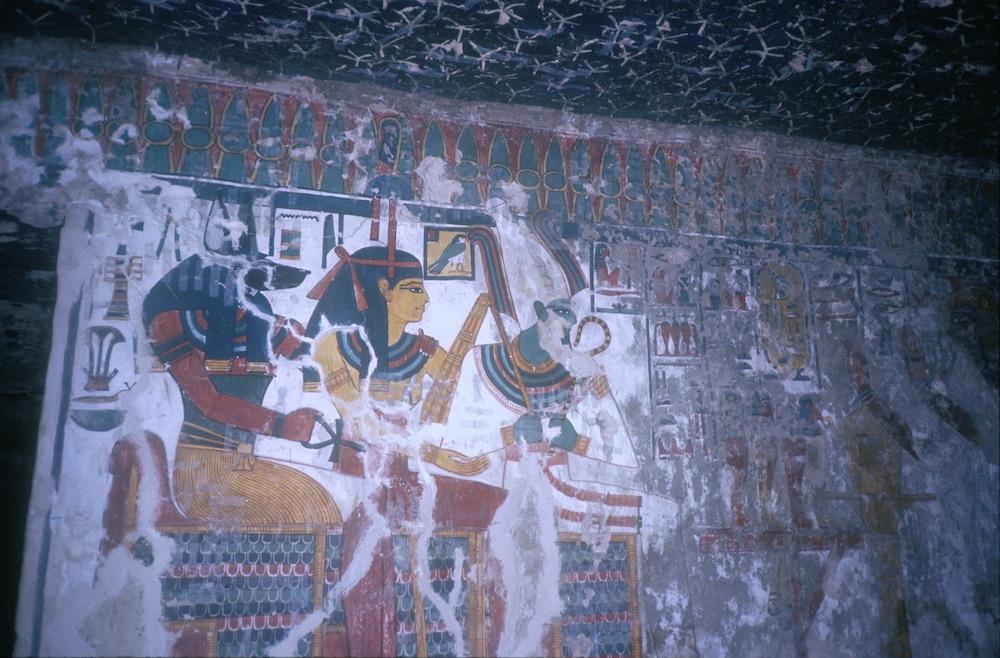
Osiris, Hathor, and Anubis seated on thrones giving life to [Nefertari].
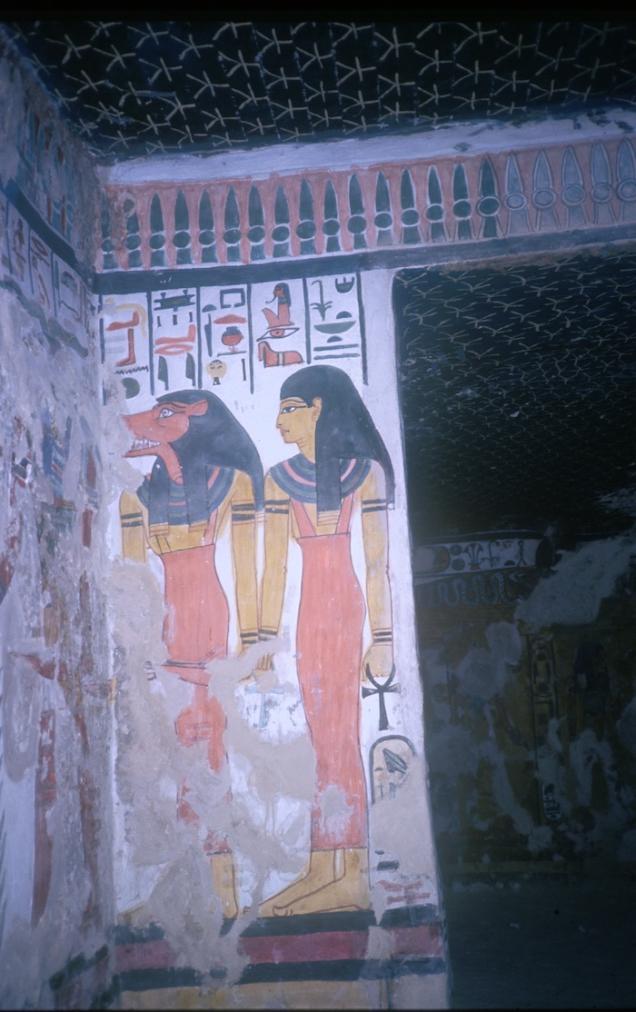
Nefertari being led by Taweret.
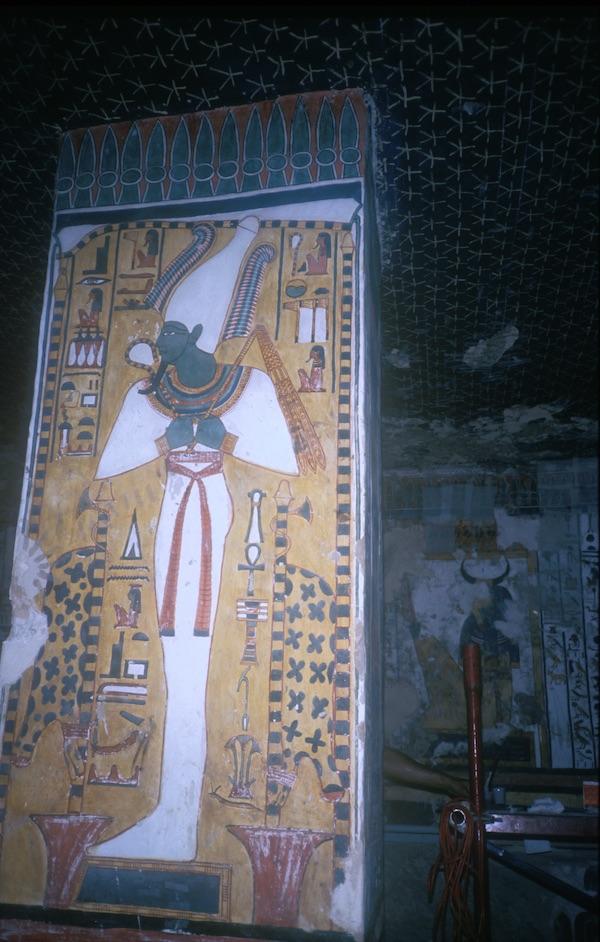
Pillar showing Osiris flanked by imiut fetishes.
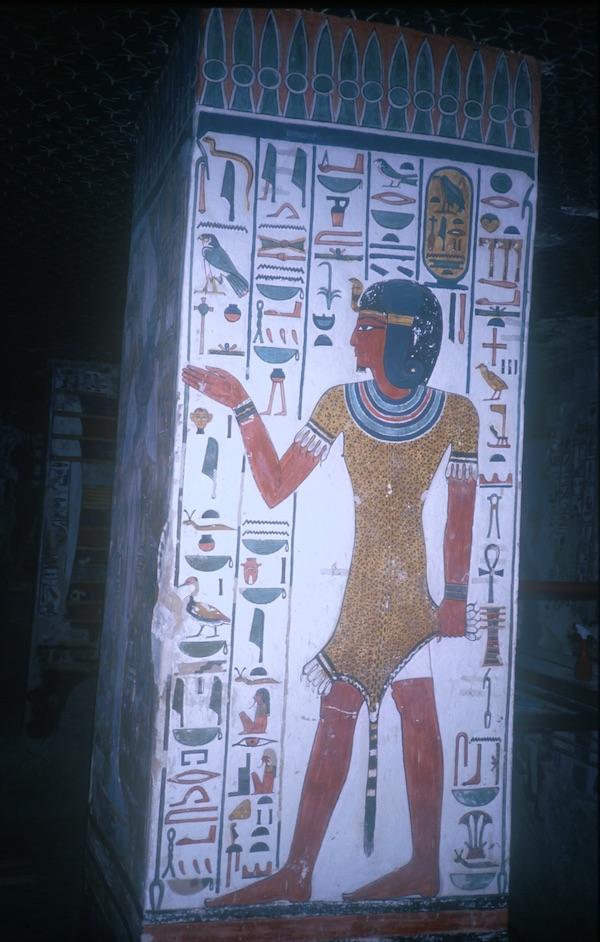
Pillar with image of an Iwnmutef-priest
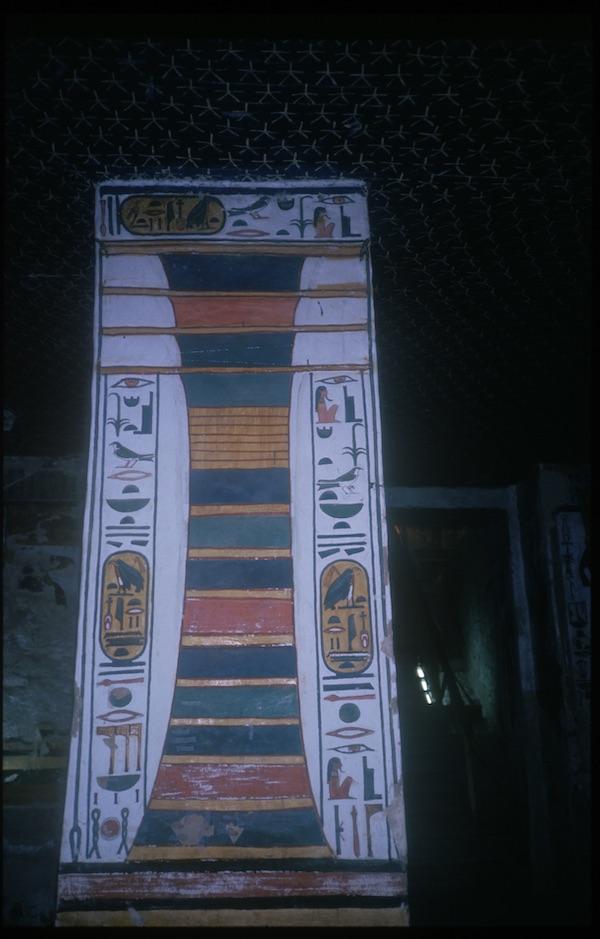
Pillar with depiction of Djed pillar.
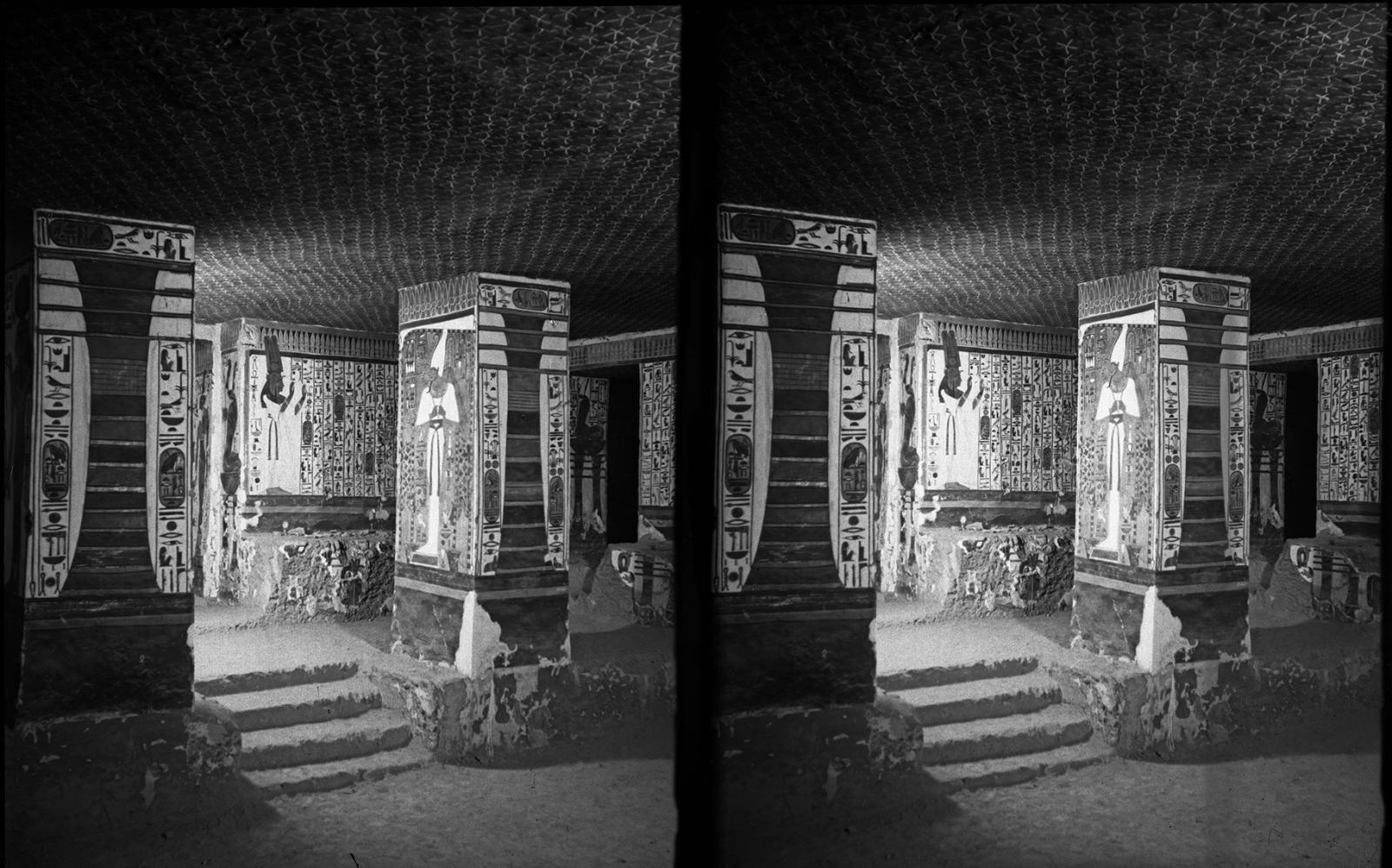
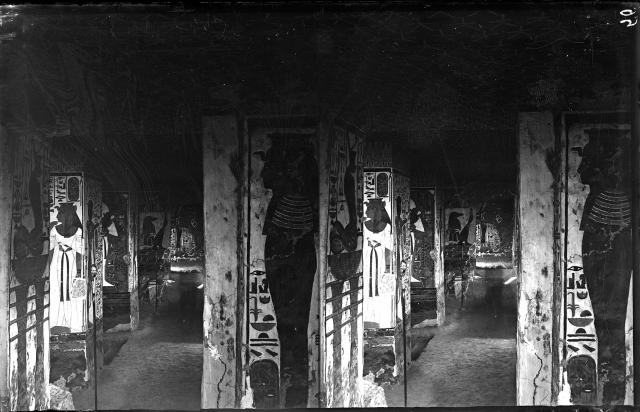
Panoramic view of burial chamber D in the tomb of Queen Nefertari (QV 66) perhaps photographed during excavations. Side chamber Da is visible (right), as well as two of its rectangular pillars with elaborately painted scenes and texts. Italian Archaeological Expedition excavations. Courtesy of the Egyptian Museum in Turin.
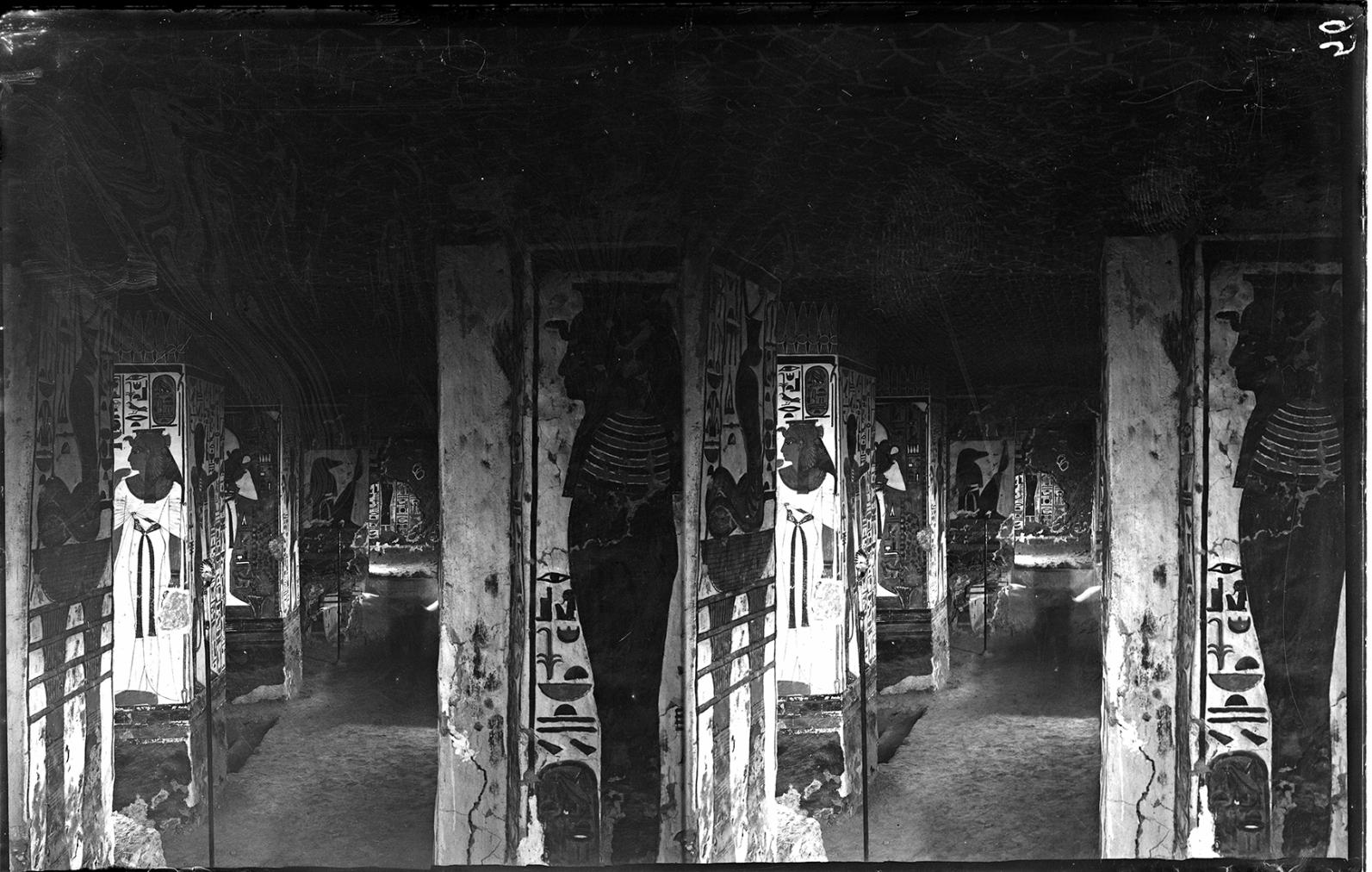
Cross-sectional view of the burial chamber photographed from side chamber Da of the tomb of Queen Nefertari (QV 66) perhaps during excavations. The southern pillars elaborately decorated scenes and texts are visible, as well as the east wall of side chamber Dc. Italian Archaeological Expedition excavations. Courtesy of the Egyptian Museum in Turin.
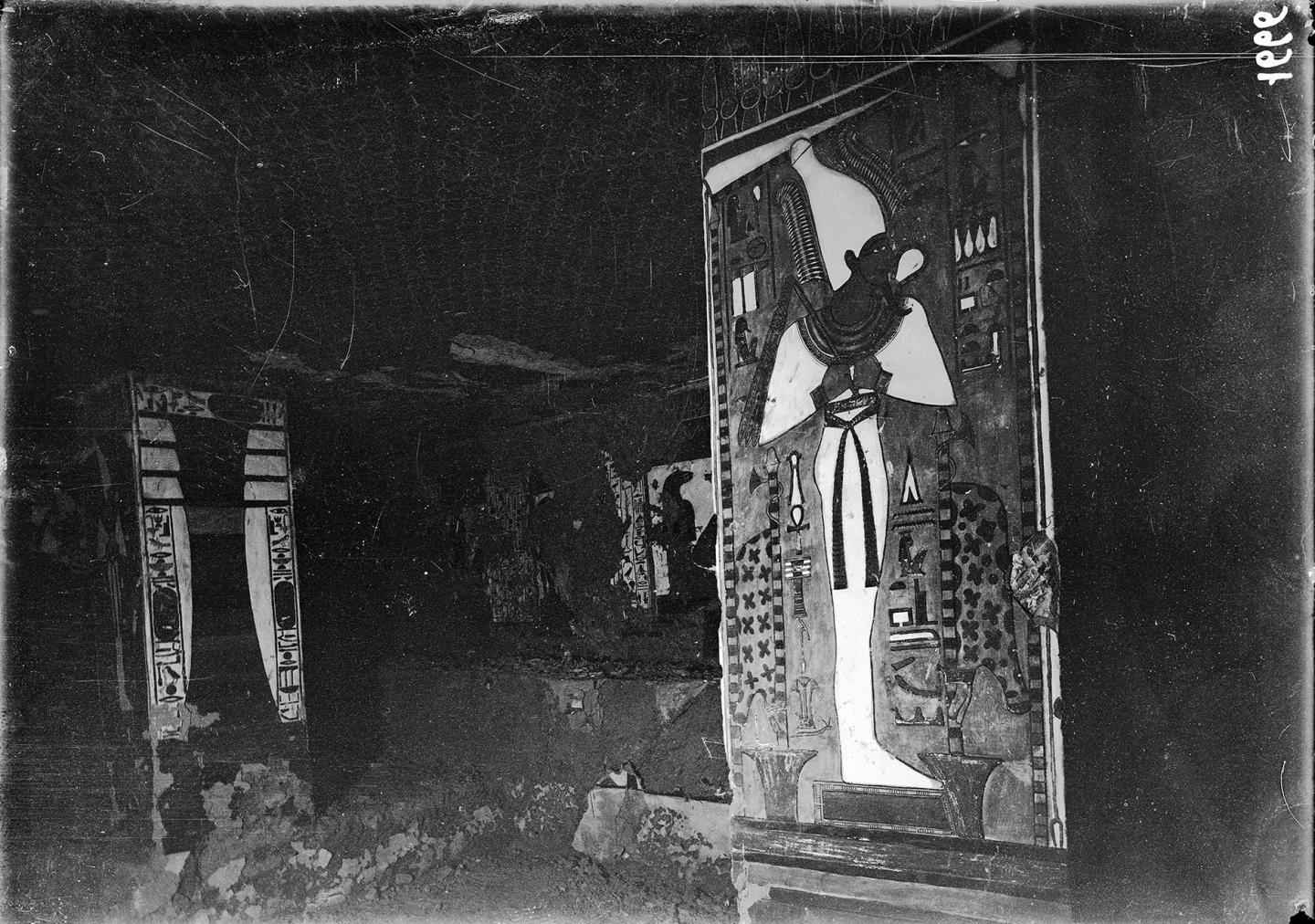
Panoramic view of the burial chamber in the tomb of Queen Nefertari (QV 66) perhaps photographed during excavations. Pillar with a depiction of an enshrined Osiris flanked by two imiut-fetishes, as well as his epithets, is visible in the foreground. Italian Archaeological Expedition excavations. Courtesy of the Egyptian Museum in Turin.
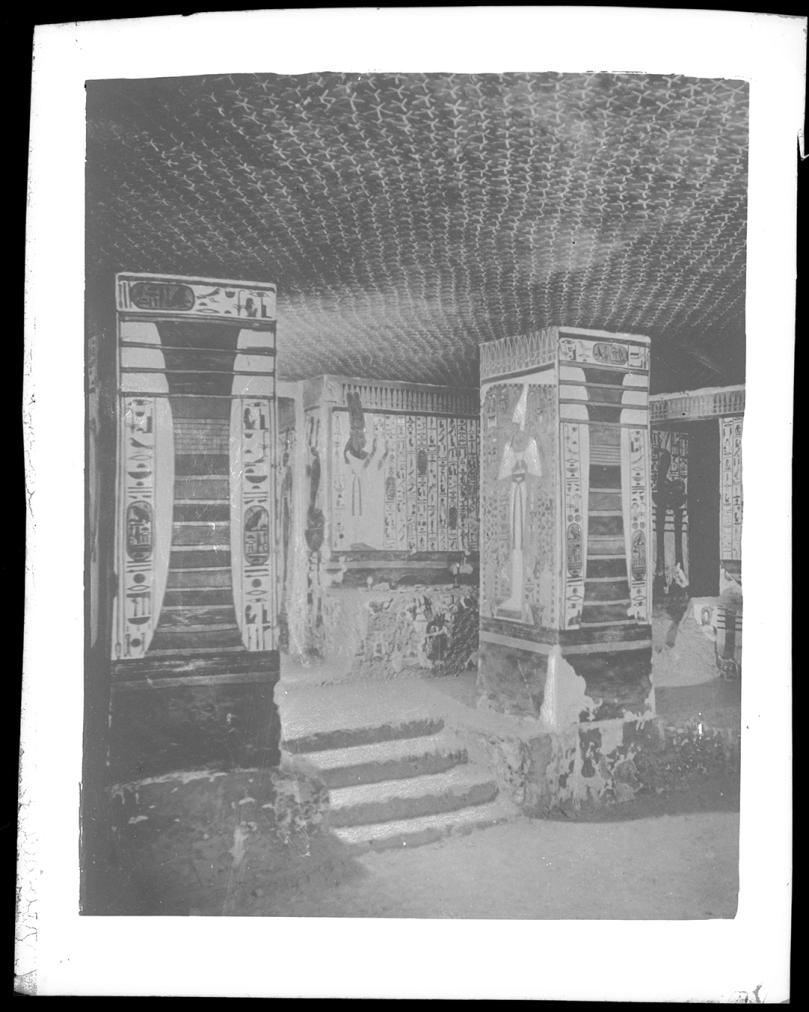
Panoramic view of the burial chamber of the tomb of Queen Nefertari (QV 66) perhaps photographed during excavations. Side chamber Da is visible (right), as well as two of its rectangular pillars with elaborately painted scenes and texts. Italian Archaeological Expedition excavations. Courtesy of the Egyptian Museum in Turin.
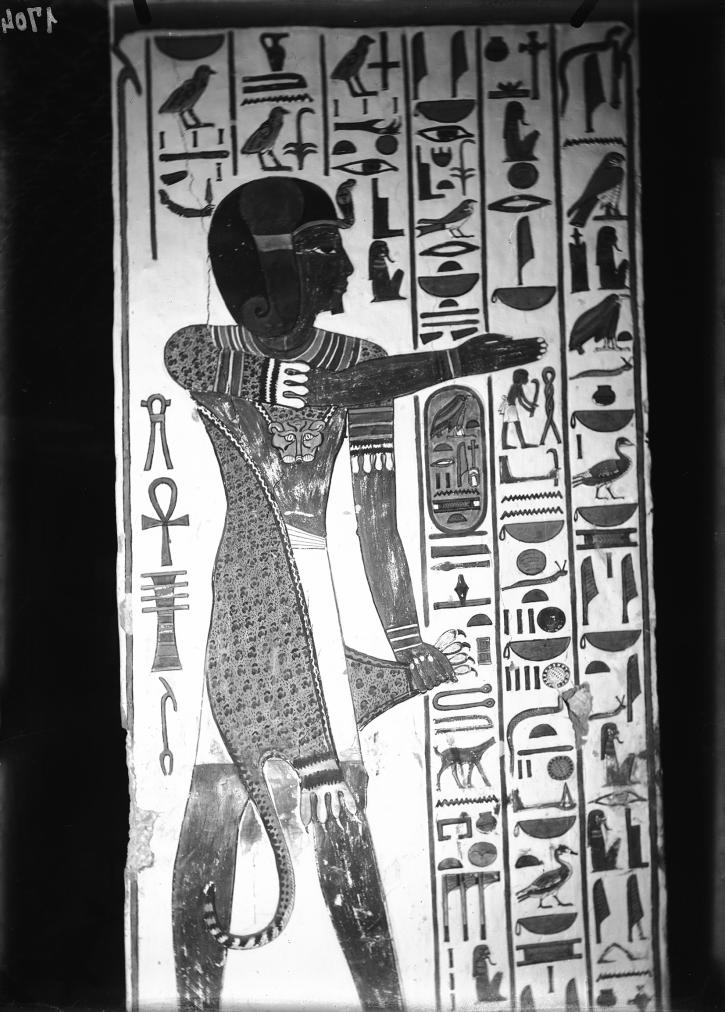
View of Pillar in the burial chamber of the tomb of Queen Nefertari (QV 66) perhaps photographed during excavations. An image of an Iwnmutef-priest, in leopard skin and sidelock of youth, raises his arm toward the central part of the burial chamber with an address to Osiris. Italian Archaeological Expedition excavations. Courtesy of the Egyptian Museum in Turin.
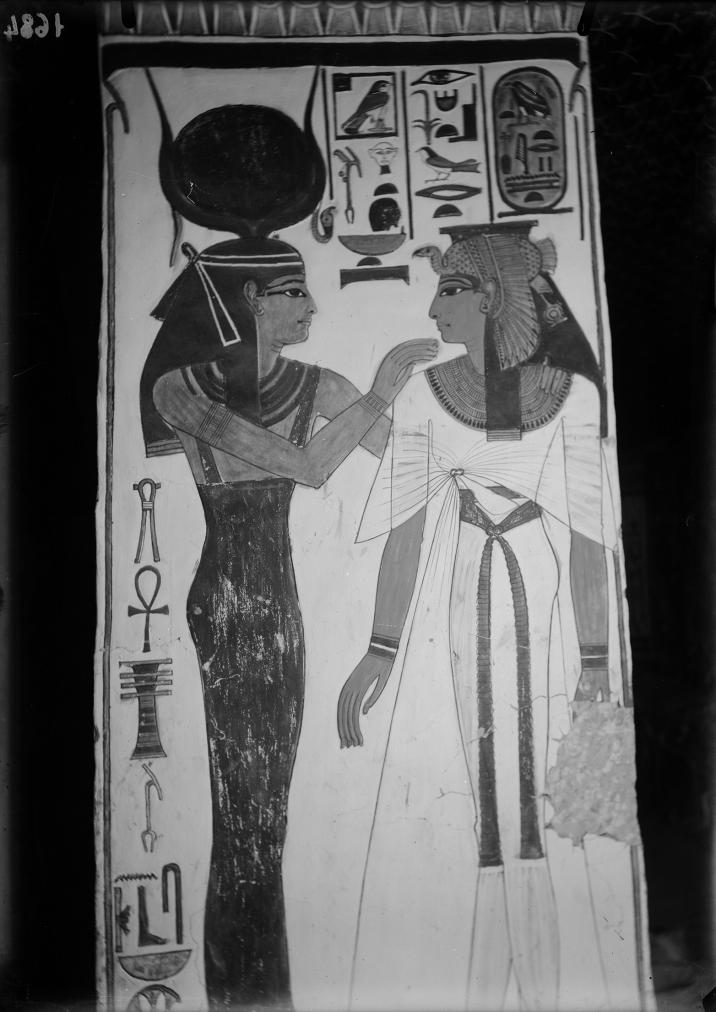
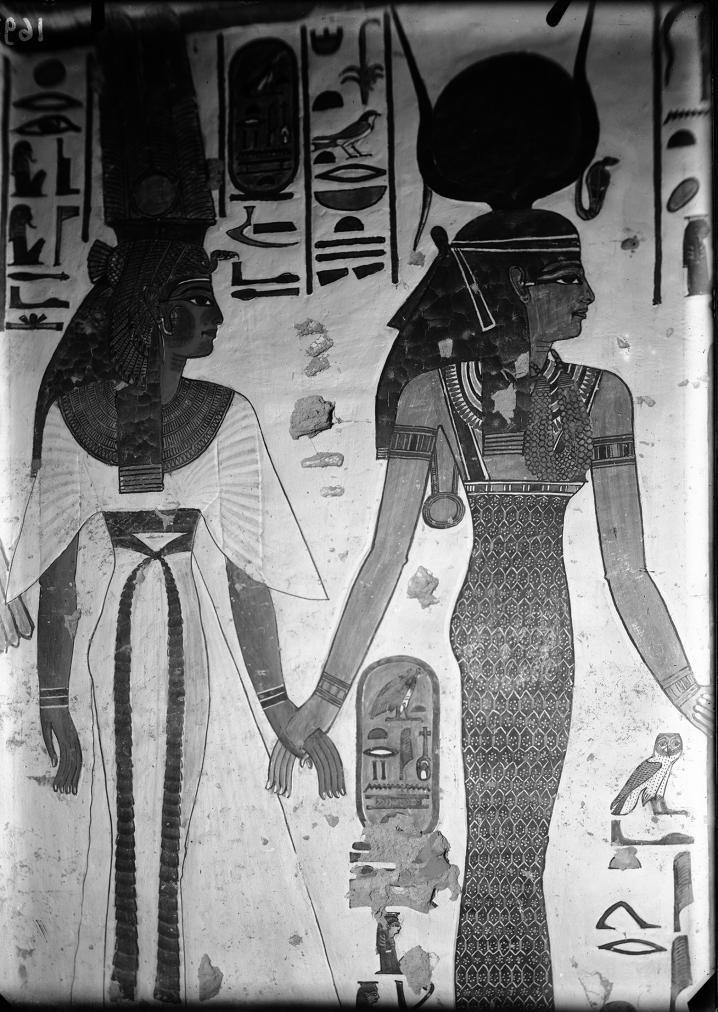
View of Pillar in the burial chamber of the tomb of Queen Nefertari (QV 66) perhaps photographed during excavations. Hathor (left) embraces Queen Nefertari (right) who wears a tripartite wig with a modius, vulture headdress, wesekh-collar around her neck, and an elaborate linen gown tied at the waist. Italian Archaeological Expedition excavations. Courtesy of the Egyptian Museum in Turin.
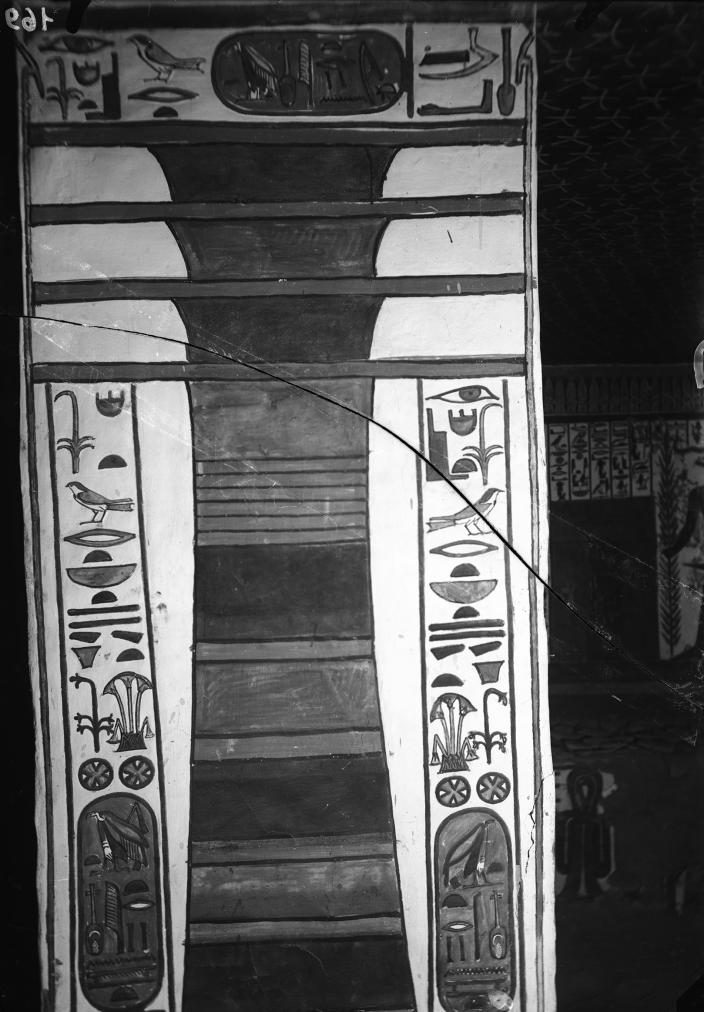
View of Pillar in the burial chamber of the tomb of Queen Nefertari (QV 66) perhaps photographed during excavations. A large djed-pillar is framed by the queen's cartouche and titles as 'Great king's wife' and 'Lady of the Two Lands of Upper and Lower Egypt'. Italian Archaeological Expedition excavations. Courtesy of the Egyptian Museum in Turin.
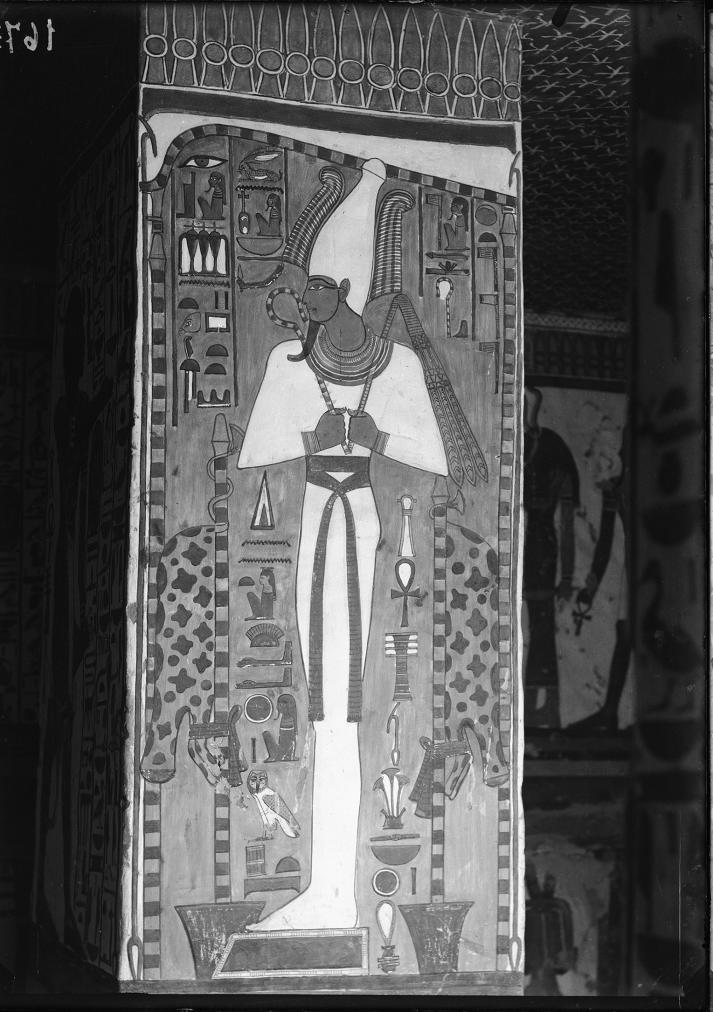
View of Pillar in the burial chamber of the tomb of Queen Nefertari (QV 66) perhaps photographed during excavations. An image of an enshrined Osiris flanked by two imiut-fetishes and topped by a khekher-frieze. Italian Archaeological Expedition excavations. Courtesy of the Egyptian Museum in Turin.
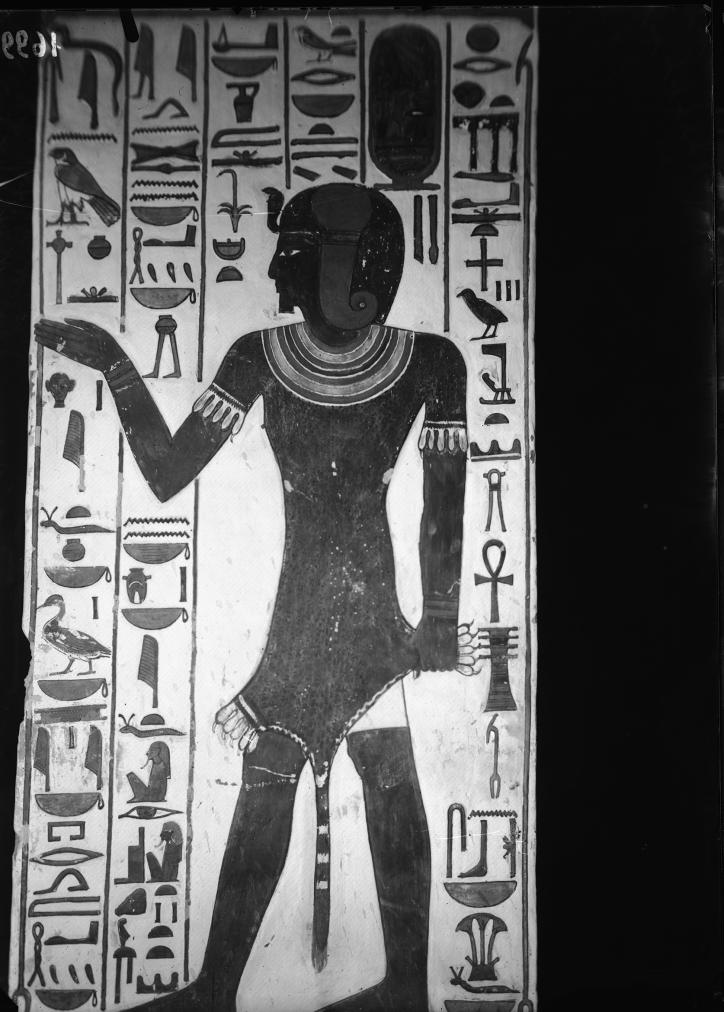
View of Pillar in the burial chamber of the tomb of Queen Nefertari (QV 66) perhaps photographed during excavations. An image of Horentodes, in leopard skin and sidelock of youth, raises his arm toward the central part of the burial chamber with an address to Osiris. Italian Archaeological Expedition excavations. Courtesy of the Egyptian Museum in Turin.
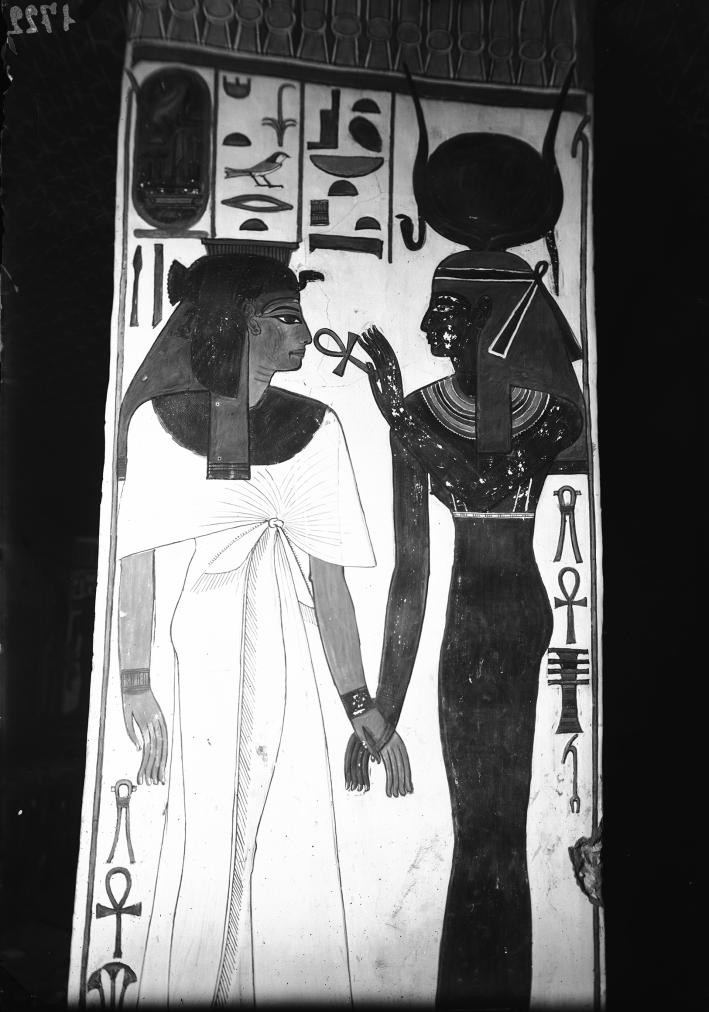
View of Pillar C in the burial chamber of the tomb of Queen Nefertari (QV 66) perhaps photographed during excavations. Isis (right) gives an ankh ('eternal life') to Queen Nefertari (left) who wears a tripartite wig with a modius, vulture headdress, wesekh-collar around her neck, and an elaborate linen gown tied. Italian Archaeological Expedition excavations. Courtesy of the Egyptian Museum in Turin.
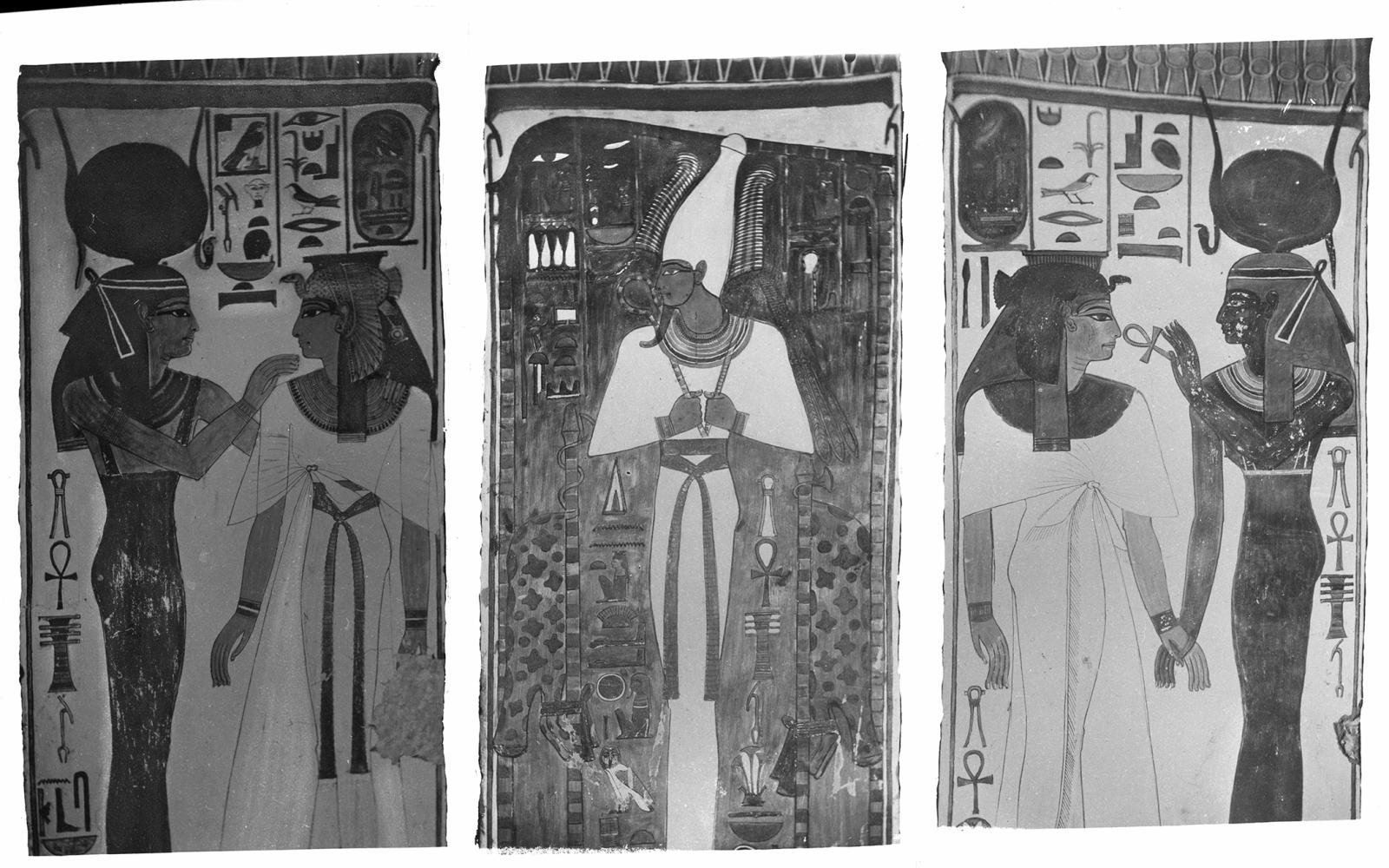
Collage of three sides of the two of the rectangular pillars in the burial chamber of the tomb of Queen Nefertari (QV 66) perhaps photographed during excavations. To the left is an image of Hathor who embraces Queen Nefertari (right) wearing a tripartite wig with a modius, vulture headdress, wesekh-collar around her neck, and an elaborate linen gown tied at the waste. In the middle is an image of an enshrined Osiris flanked by two imiut-fetishes and topped by a khekher-frieze. To the right is an image of Isis who gives an ankh ('eternal life') to Queen Nefertari (left) who wears a tripartite wig with a modius, vulture headdress, wesekh-collar around her neck, and an elaborate linen gown tied. Italian Archaeological Expedition excavations. Courtesy of the Egyptian Museum in Turin.
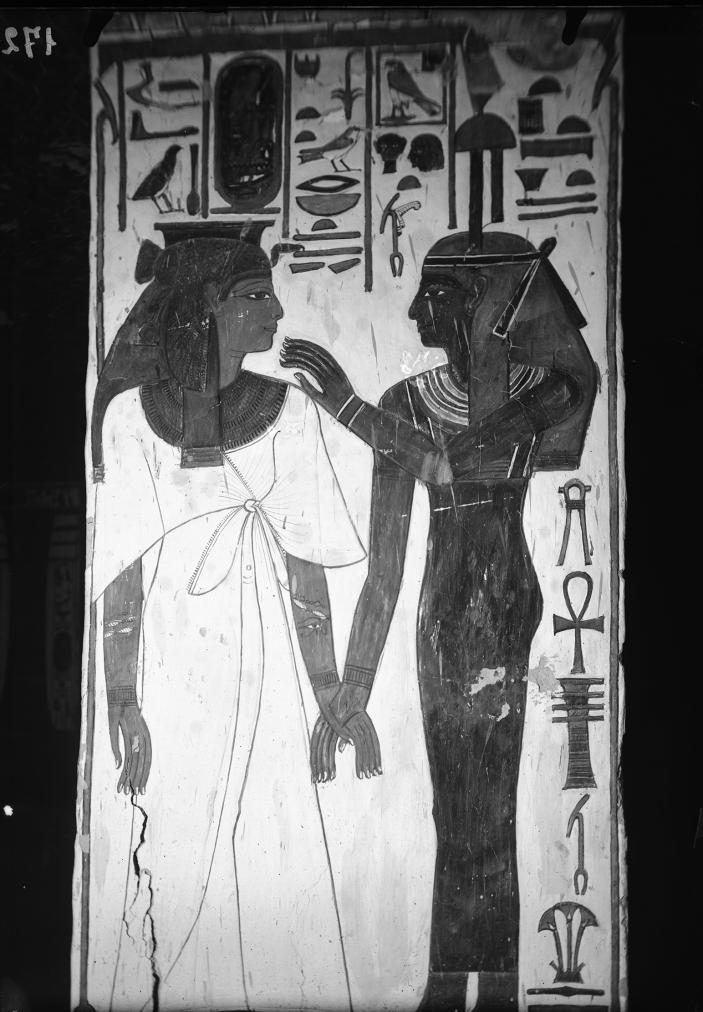
View of Pillar in the burial chamber of the tomb of Queen Nefertari (QV 66) perhaps photographed during excavations. Isis (left) embraces Queen Nefertari (right) who wears a tripartite wig with a modius, vulture headdress, wesekh-collar around her neck, and an elaborate linen gown. Italian Archaeological Expedition excavations. Courtesy of the Egyptian Museum in Turin.
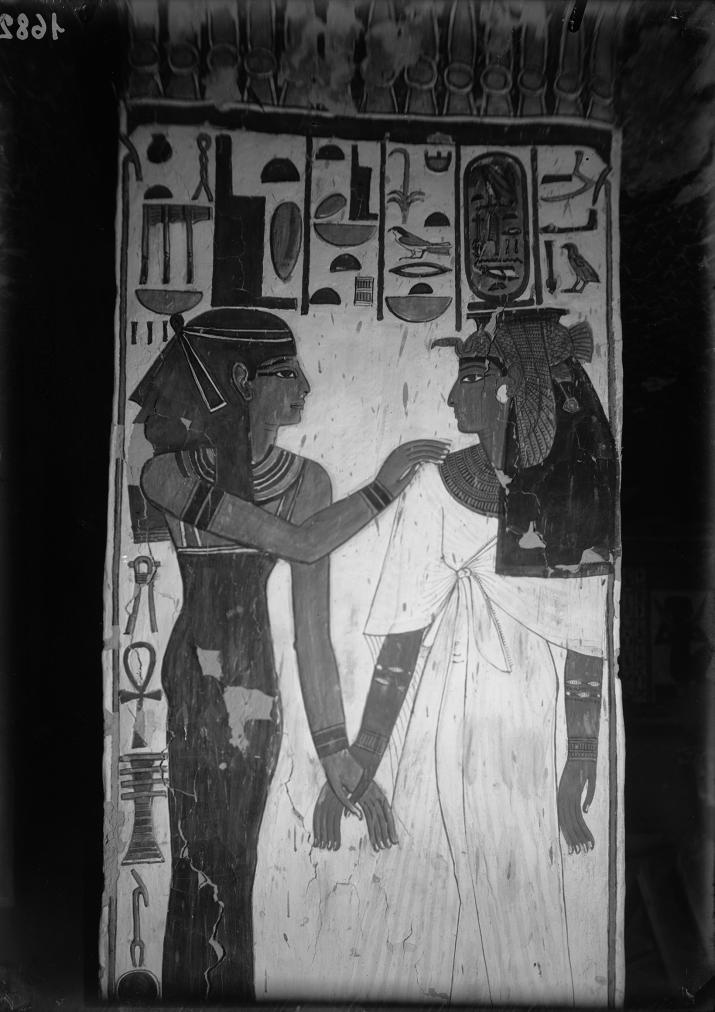
View of Pillar in the burial chamber of the tomb of Queen Nefertari (QV 66) perhaps photographed during excavations. Hathor (right) embraces Queen Nefertari (left) who wears a tripartite wig with a modius, vulture headdress, wesekh-collar around her neck, and an elaborate linen gown. Italian Archaeological Expedition excavations. Courtesy of the Egyptian Museum in Turin.
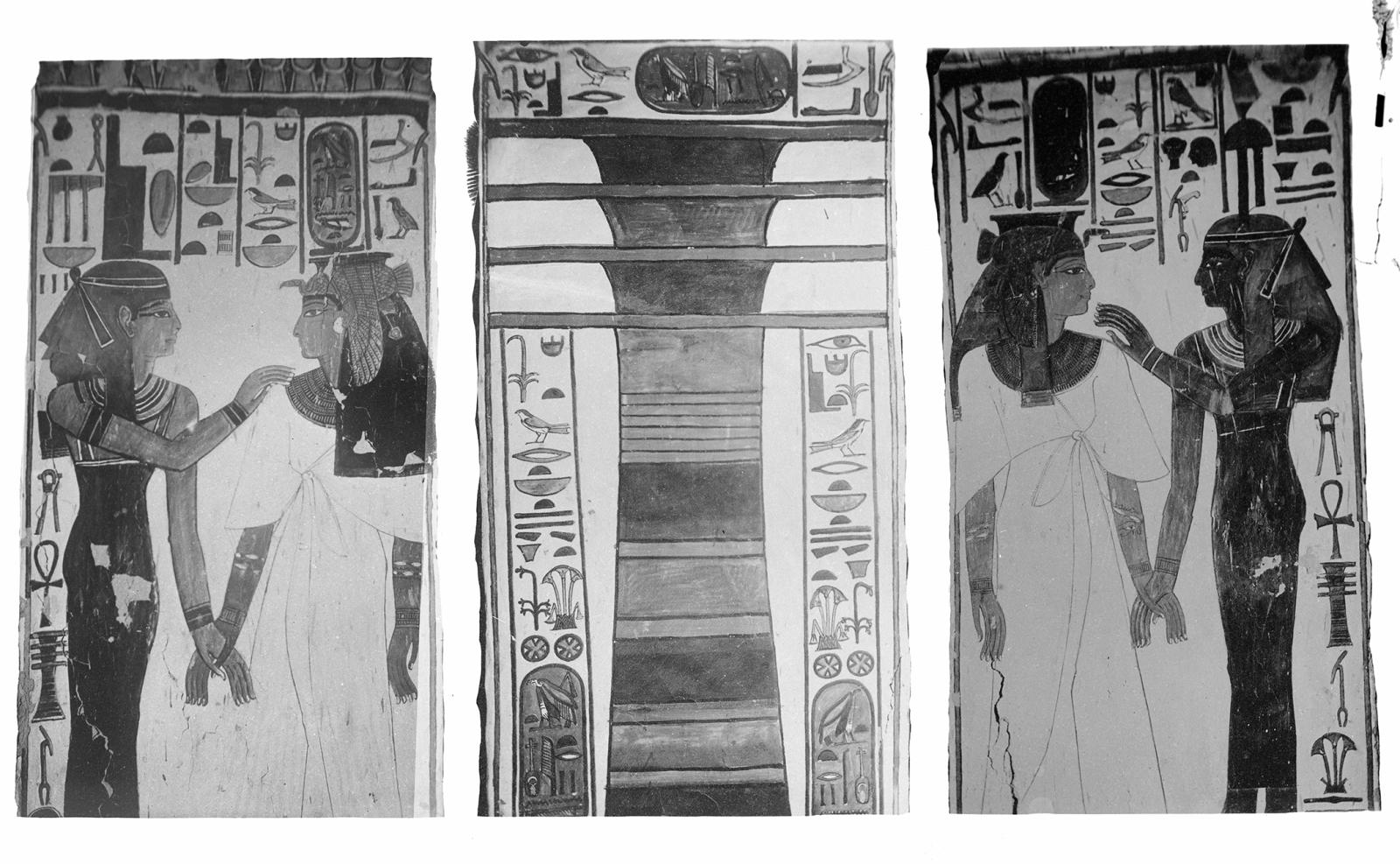
Collage of three sides of the two rectangular pillars in the burial chamber of the tomb of Queen Nefertari (QV 66) perhaps photographed during excavations. To the left, an image of Isis who embraces the queen in a tripartite wig with a modius, vulture headdress, wesekh-collar around her neck, and an elaborate linen gown. In the center, a large djed-pillar is framed by the queen's cartouche and titles. To the right, an image of Hathor who embraces the queen in a tripartite wig with a modius, vulture headdress, wesekh-collar around her neck, and an elaborate linen gown. Italian Archaeological Expedition excavations. Courtesy of the Egyptian Museum in Turin.
View of Pillar in the burial chamber of the tomb of Queen Nefertari (QV 66) perhaps photographed during excavations. Isis (left) embraces a deified image of Queen Nefertari (right) who holds an ankh, wears a tripartite wig with a modius, vulture headdress, wesekh-collar around her neck, and an elaborate linen gown. Italian Archaeological Expedition excavations. Courtesy of the Egyptian Museum in Turin.
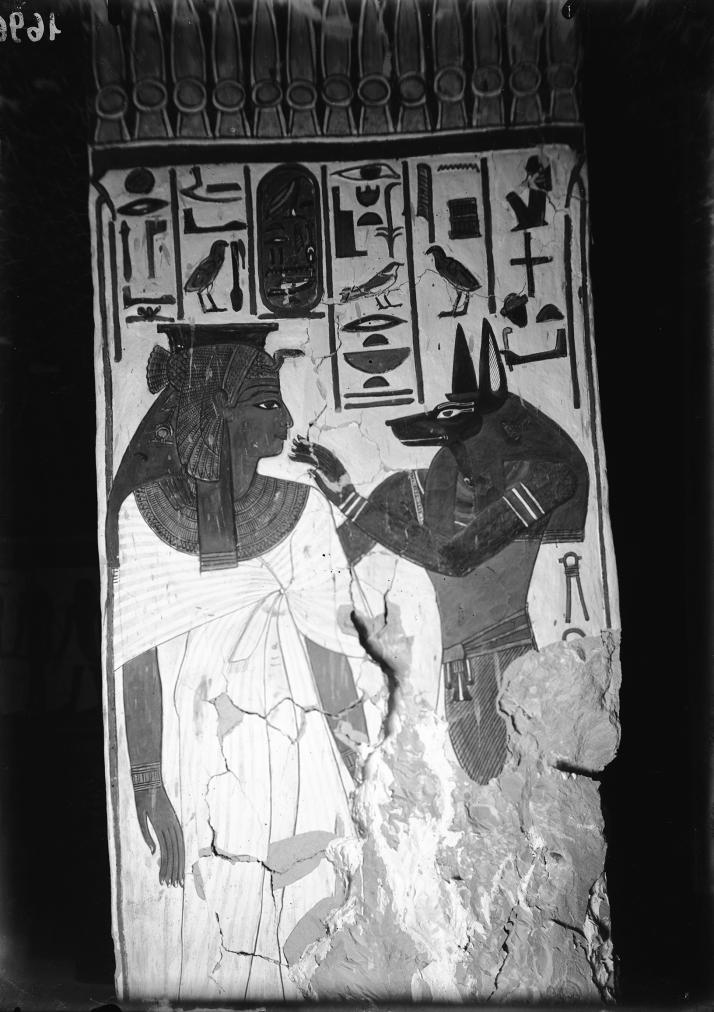
View of Pillar in the burial chamber of the tomb of Queen Nefertari (QV 66) perhaps photographed during excavations. Anubis (right) embraces Queen Nefertari (right) who wears a tripartite wig with a modius, vulture headdress, wesekh-collar around her neck, and an elaborate linen gown. Italian Archaeological Expedition excavations. Courtesy of the Egyptian Museum in Turin.
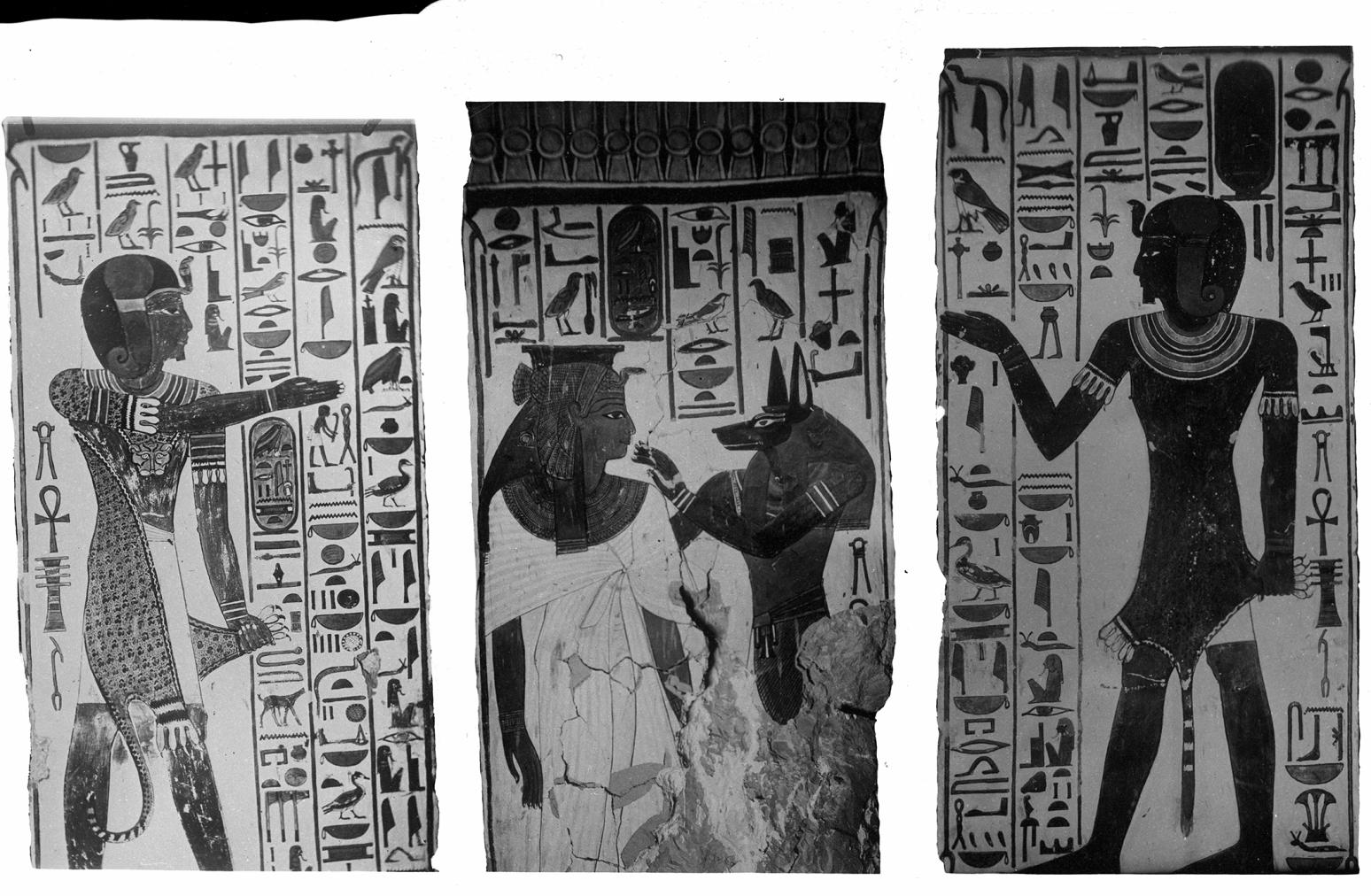
Collage of three sides of three of the rectangular pillars in the burial chamber of the tomb of Queen Nefertari (QV 66) perhaps photographed during excavations. To the left, an image of an Iwnmutef-priest, in leopard skin and sidelock of youth, who raises his arm toward the central part of the burial chamber with an address to Osiris. In the center, an image of Anubis (right) who embraces the queen in a tripartite wig with a modius, vulture headdress, wesekh-collar around her neck, and an elaborate linen gown. To the right, an image of Horentodes, in leopard skin and sidelock of youth, who raises his arm toward the central part of the burial chamber with an address to Osiris. Italian Archaeological Expedition excavations. Courtesy of the Egyptian Museum in Turin.
South wall, west side in the burial chamber of the tomb of Queen Nefertari (QV 66). Queen Nefertari, who wears a tripartite wig, modius with a sun disc and two ostrich feathers, vulture headdress, wesekh-collar around her neck, and an elaborate linen gown tied at the waist, faces west in adoration toward texts from Spell 144 of the Book of the Dead framed by a khekher-frieze. Italian Archaeological Expedition excavations. Courtesy of the Egyptian Museum in Turin.
South wall, west side in the burial chamber of the tomb of Queen Nefertari (QV 66) perhaps photographed during excavations. Texts from Spell 144 of the Book of the Dead, as well as the first portal guarded by three deities through which the queen must pass to reach the hereafter. Italian Archaeological Expedition excavations. Courtesy of the Egyptian Museum in Turin.
South wall, west side in the burial chamber of the tomb of Queen Nefertari (QV 66) perhaps photographed during excavations. Texts from Spell 144 of the Book of the Dead, as well as the first portal guarded by three deities through which the queen must pass to reach the hereafter. The entrance to the western annex (right) is also visible. Italian Archaeological Expedition excavations. Courtesy of the Egyptian Museum in Turin.
In the center, a view of the stairs that lead to side chamber Da in the burial chamber of the tomb of Queen Nefertari (QV 66) perhaps photographed during excavations, which is flanked by scenes from Spell 144 of the Book of the Dead with multiple portals guarded by deities that the queen must pass through to reach the hereafter. Italian Archaeological Expedition excavations. Courtesy of the Egyptian Museum in Turin.
West wall in the burial chamber of the tomb of Queen Nefertari (QV 66) perhaps photographed during excavations. A continuation of Spell 144 of the Book of the Dead with the second portal guarded by an additional three deities (the last not visible here) that the queen must pass through to reach the hereafter. Italian Archaeological Expedition excavations. Courtesy of the Egyptian Museum in Turin.
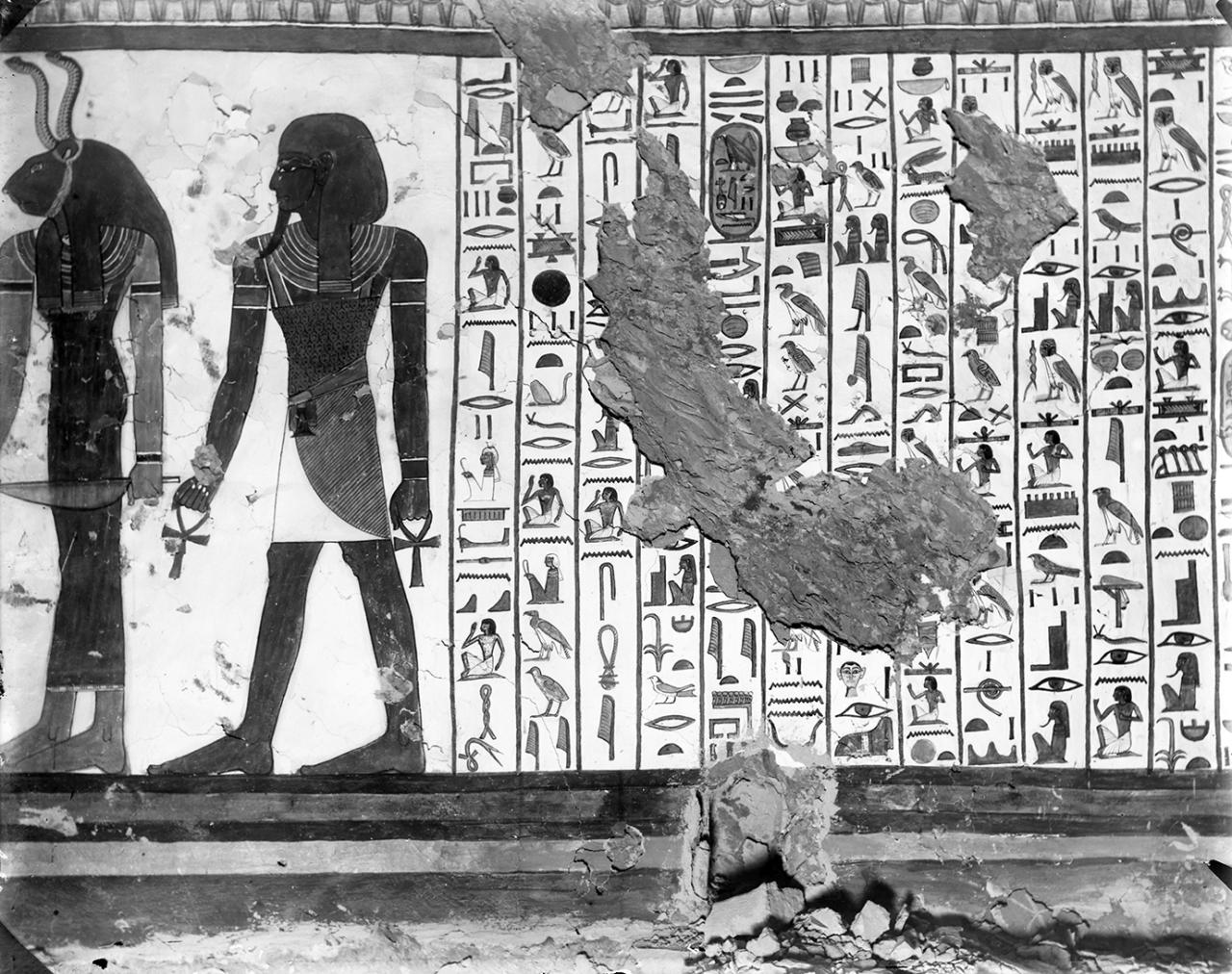
West wall in the burial chamber of the tomb of Queen Nefertari (QV 66) perhaps photographed during excavations. A continuation of Spell 144 of the Book of the Dead with the second portal guarded by an additional three deities (the last two visible here) that the queen must pass through to reach the hereafter. Italian Archaeological Expedition excavations. Courtesy of the Egyptian Museum in Turin.
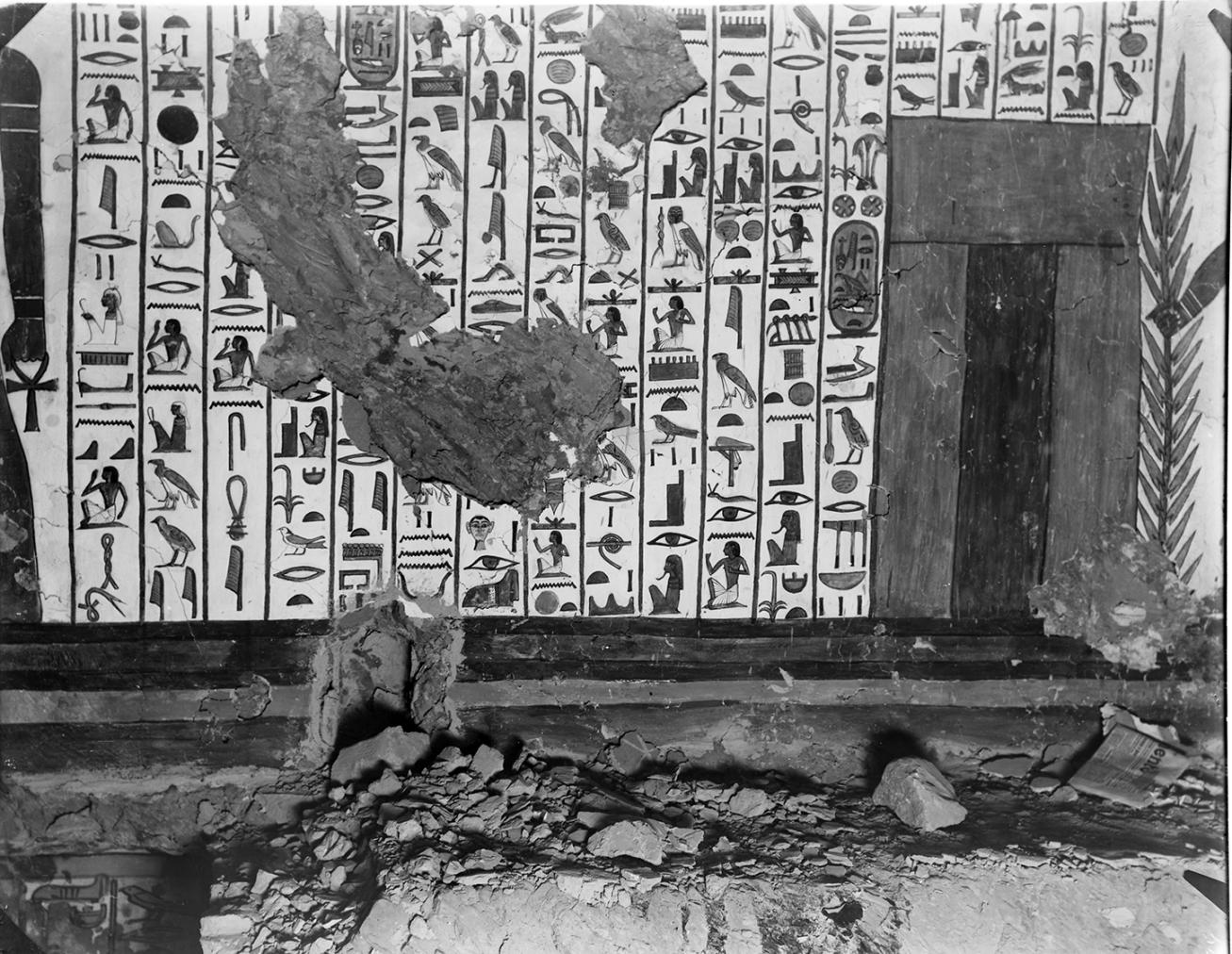
West wall in the burial chamber of the tomb of Queen Nefertari (QV 66) perhaps photographed during excavations. Texts from Spell 144 of the Book of the Dead with the second portal guarded by an additional three deities (not visible here) that the queen must pass through to reach the hereafter. Italian Archaeological Expedition excavations. Courtesy of the Egyptian Museum in Turin.
West wall in the burial chamber of the tomb of Queen Nefertari (QV 66) perhaps photographed during excavations. Texts from Spell 144 of the Book of the Dead with the second portal guarded by an additional three deities (the first only visible here) that the queen must pass through to reach the hereafter. Italian Archaeological Expedition excavations. Courtesy of the Egyptian Museum in Turin.
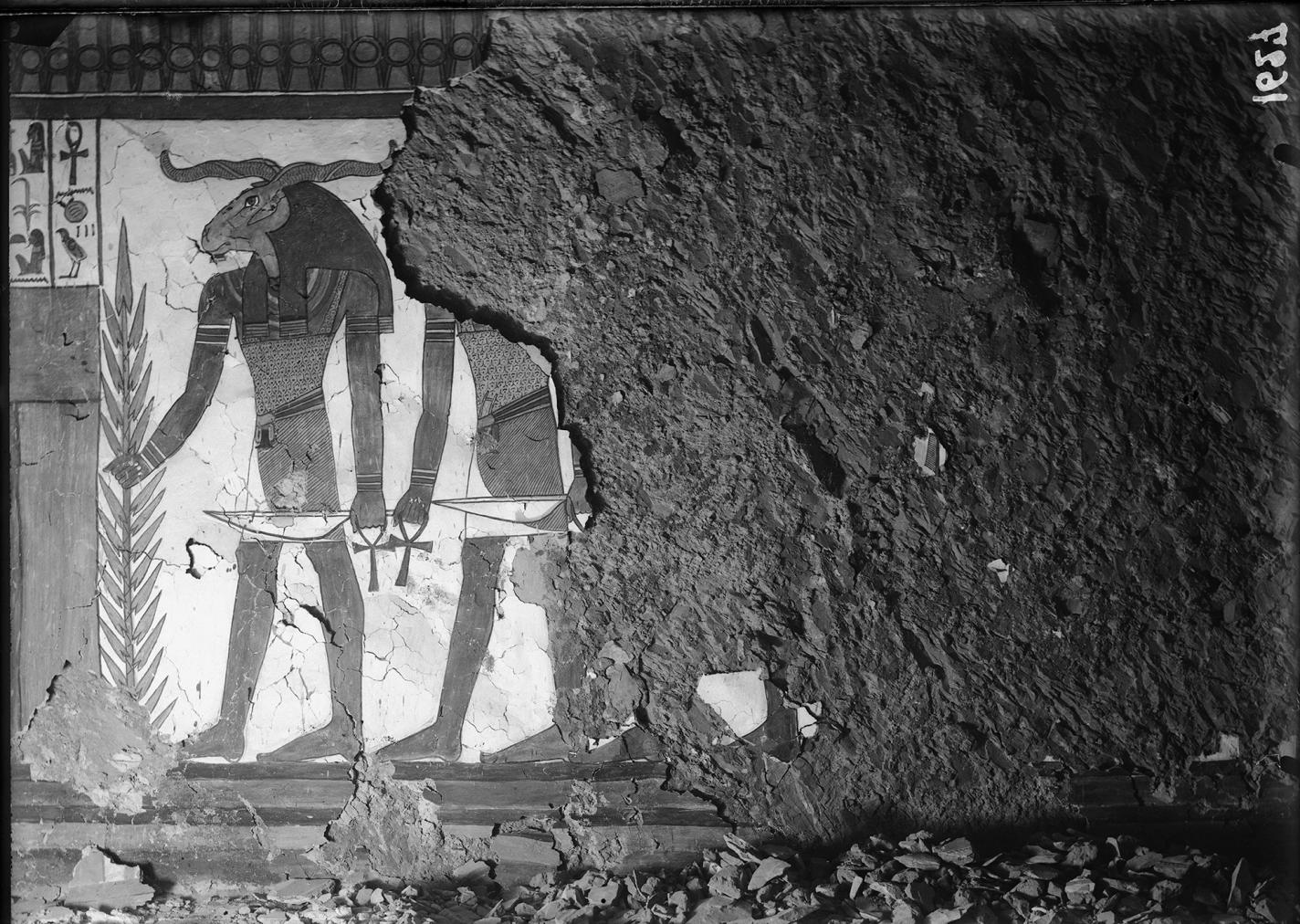
West wall in the burial chamber of the tomb of Queen Nefertari (QV 66) perhaps photographed during excavations. Texts from Spell 144 of the Book of the Dead with the third portal guarded by an additional three deities (the first only visible here) that the queen must pass through to reach the hereafter. A large section of the plaster is damaged. Italian Archaeological Expedition excavations. Courtesy of the Egyptian Museum in Turin.
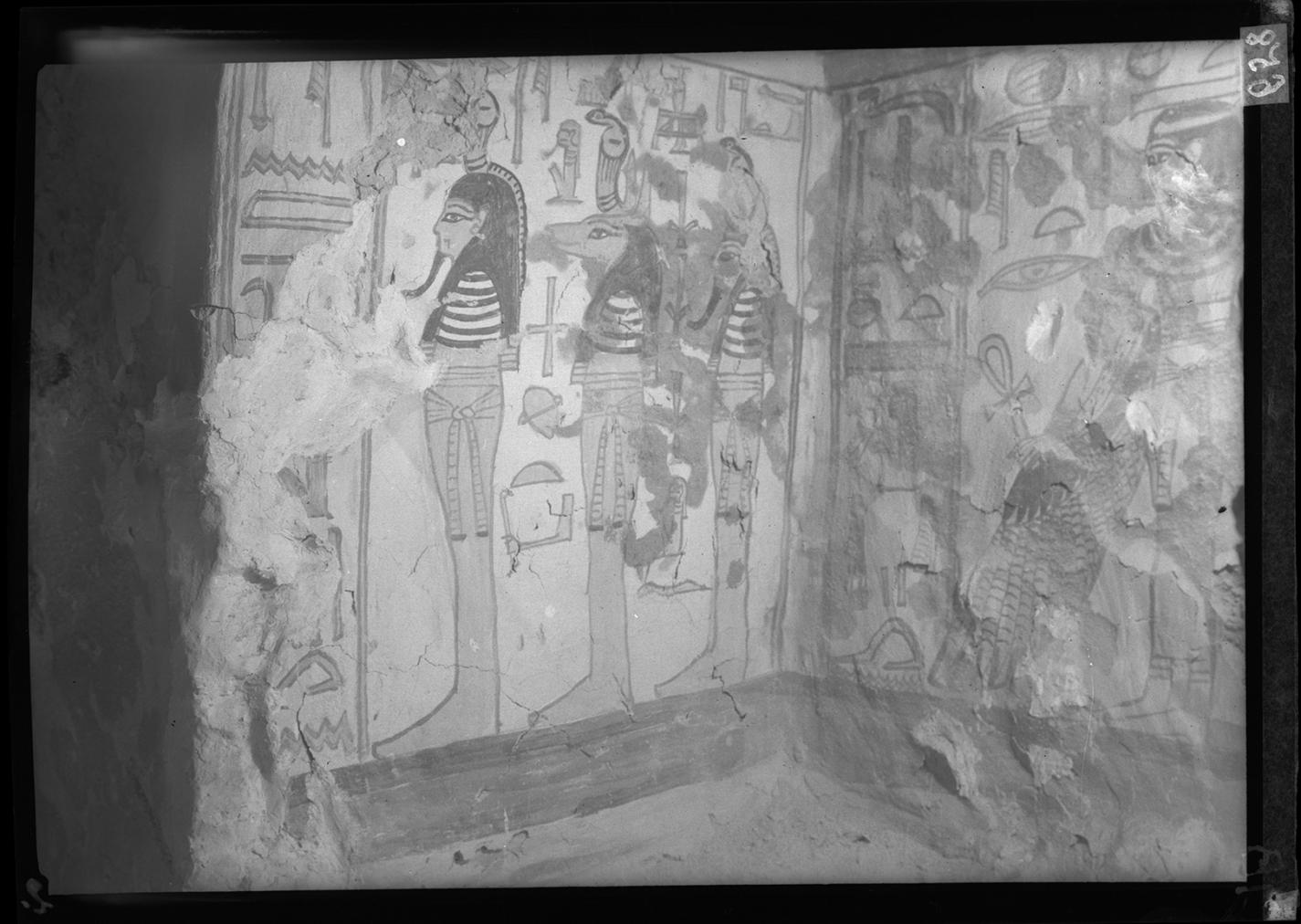
Small niche in the middle of the west wall in the burial chamber of the tomb of Queen Nefertari (QV 66) perhaps photographed during excavations. Mummiform images of Imsety, Anubis, and Qebehsenuef (left), as well as a winged image of Nut (right). This photograph was developed on the reverse side of the film. Italian Archaeological Expedition excavations. Courtesy of the Egyptian Museum in Turin.
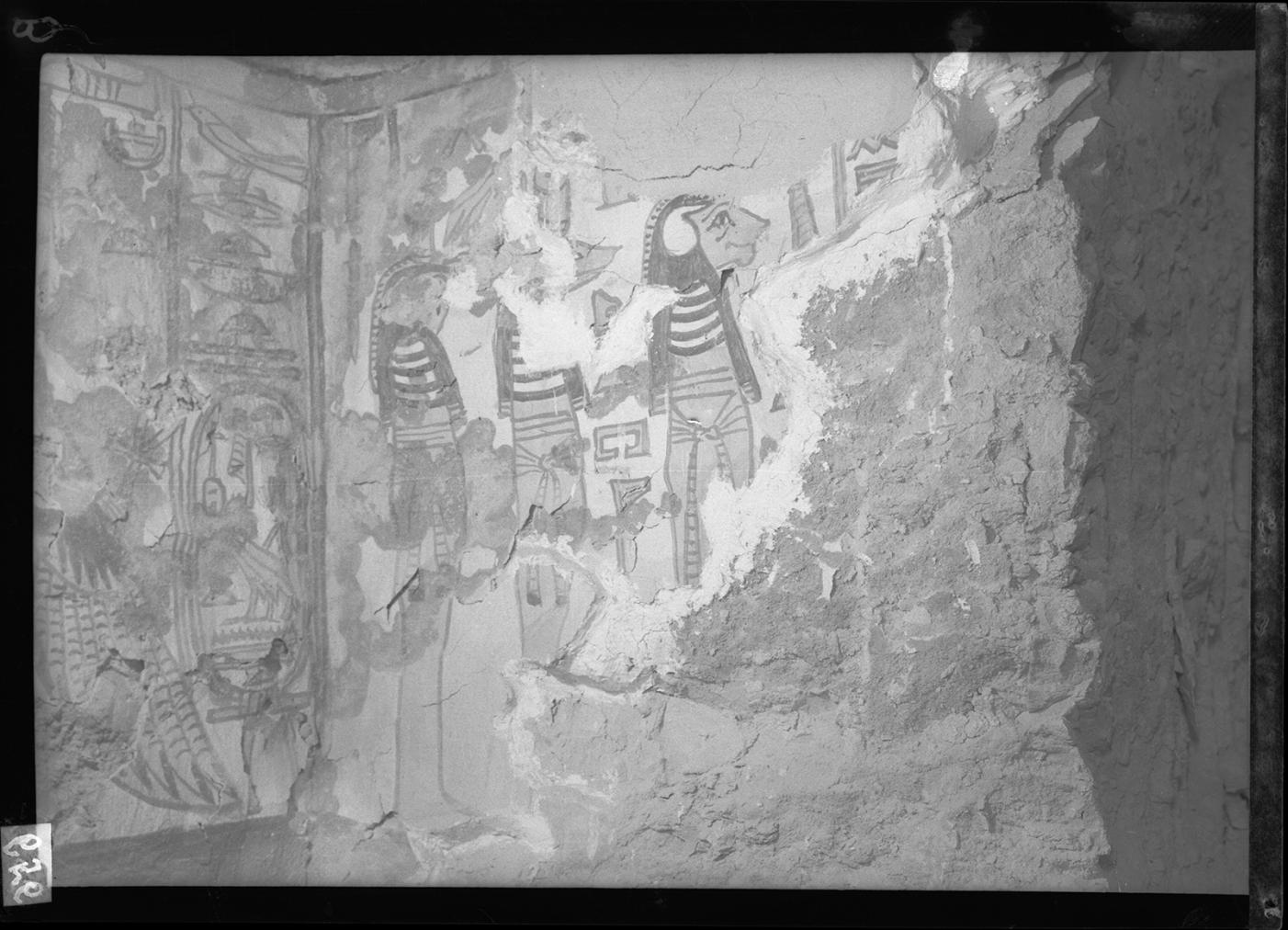
Small niche in the middle of the west wall in the burial chamber of the tomb of Queen Nefertari (QV 66) perhaps photographed during excavations. Mummiform images of Hapy, Anubis, and Duamutef (right), as well as a winged image of Nut (left). This photograph was developed on the reverse side of the film. Italian Archaeological Expedition excavations. Courtesy of the Egyptian Museum in Turin.
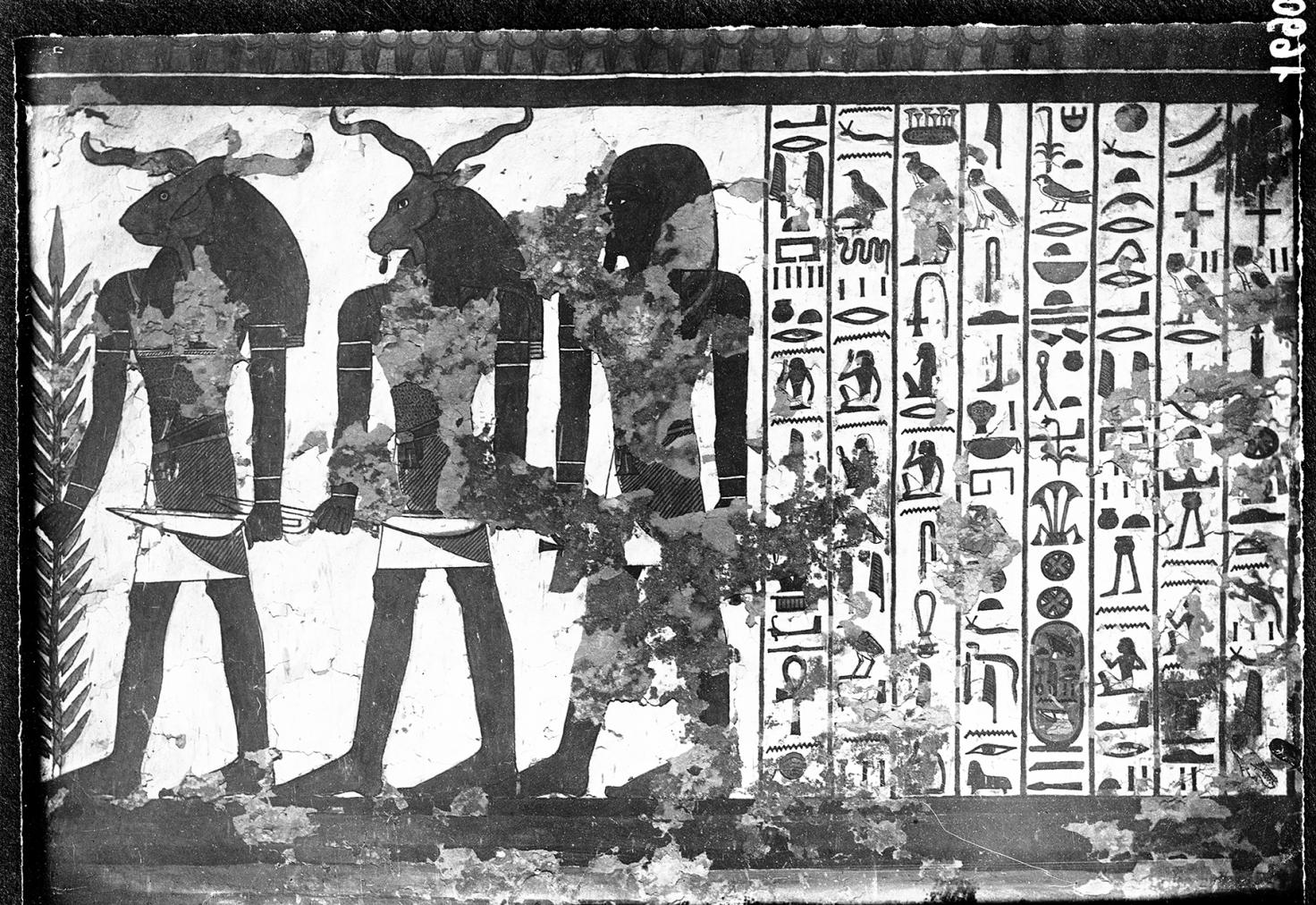
North wall in the burial chamber of the tomb of Queen Nefertari (QV 66) perhaps photographed during excavations. Texts from Spell 144 of the Book of the Dead with the fourth portal guarded by an additional three deities that the queen must pass through to reach the hereafter. Italian Archaeological Expedition excavations. Courtesy of the Egyptian Museum in Turin.
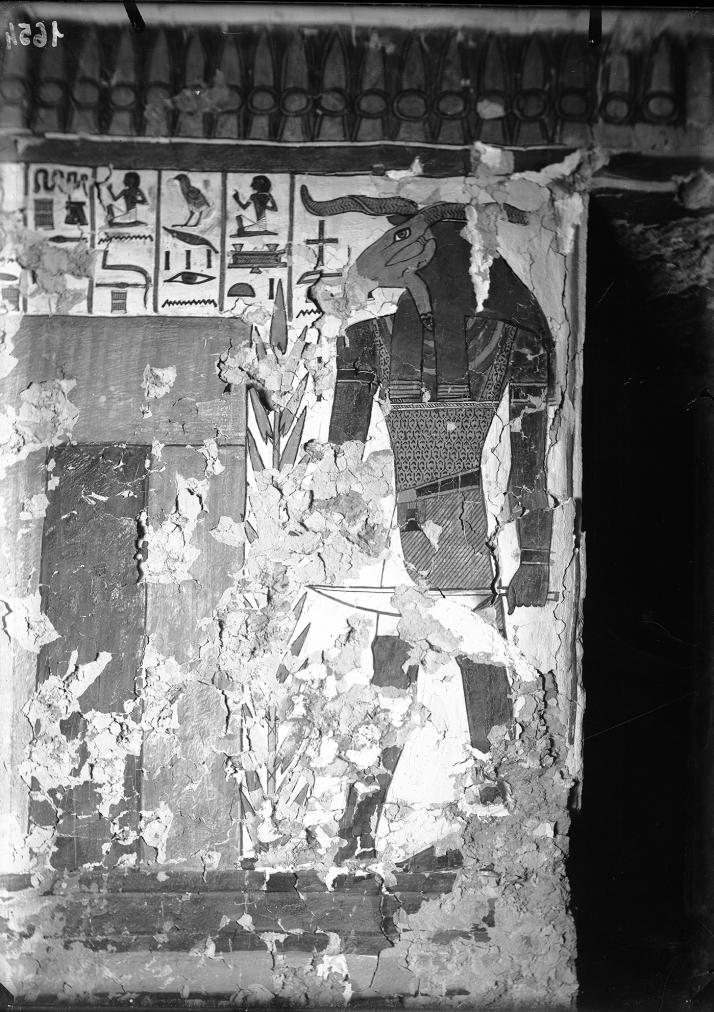
North wall in the burial chamber of the tomb of Queen Nefertari (QV 66) perhaps photographed during excavations. Texts from Spell 144 of the Book of the Dead with the fifth (and last) portal guarded by an additional three deities that the queen must pass through to reach the hereafter. Italian Archaeological Expedition excavations. Courtesy of the Egyptian Museum in Turin.
South wall, east side of the burial chamber in the tomb of Queen Nefertari (QV 66) perhaps photographed during excavations. Queen Nefertari (right) faces east in adoration toward texts from Spell 146 of the Book of the Dead, as well as an image of a seated vulture-headed deity with a knife (far left) who guards the first portal that she must pass through to reach the hereafter. Italian Archaeological Expedition excavations. Courtesy of the Egyptian Museum in Turin.
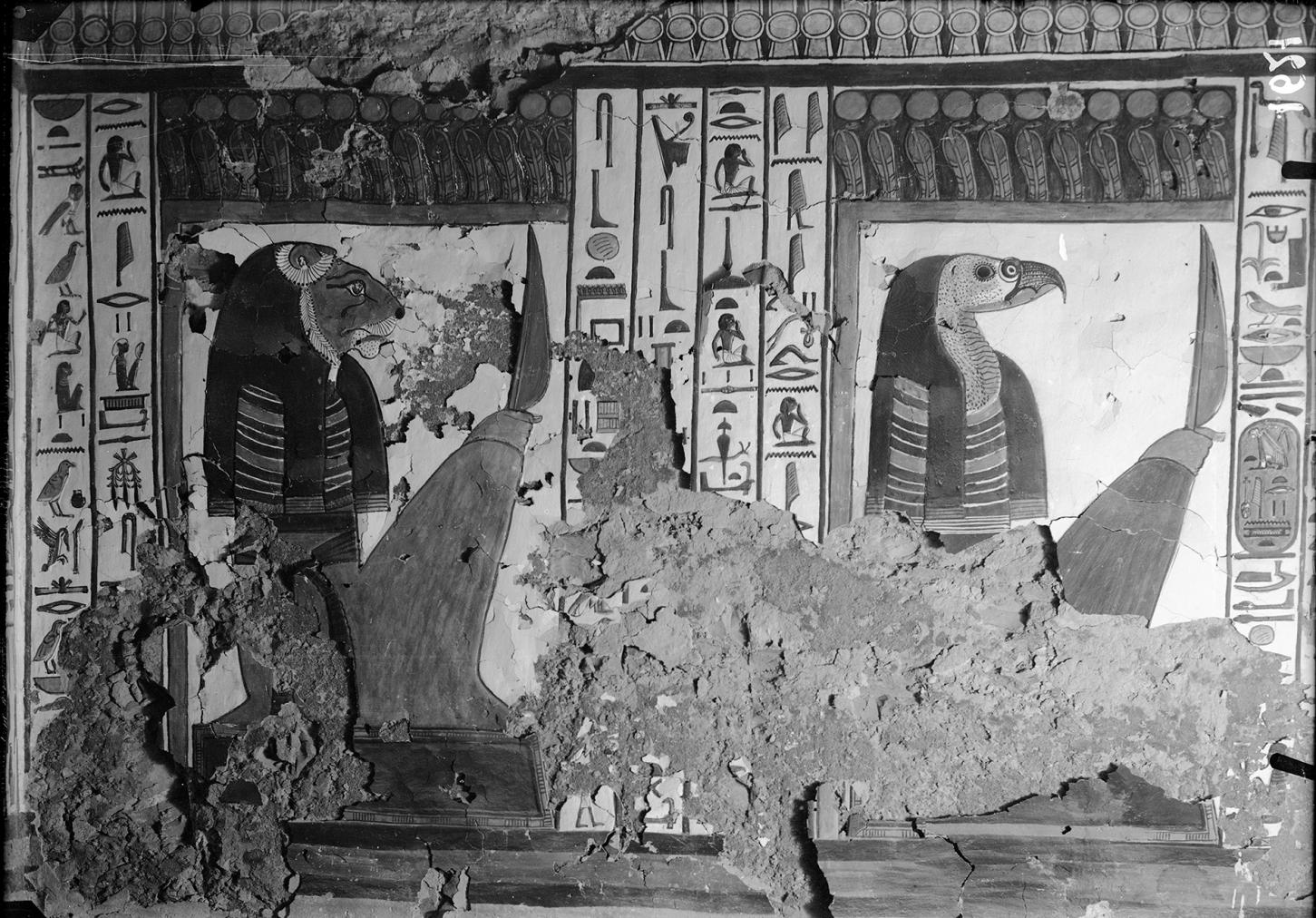
South wall, east side detail of the burial chamber in the tomb of Queen Nefertari (QV 66) perhaps photographed during excavations. The first and second portals guarded by a vulture-headed deity and a lion-headed deity that the queen must pass through to reach the hereafter. Italian Archaeological Expedition excavations. Courtesy of the Egyptian Museum in Turin.
East wall of the burial chamber in the tomb of Queen Nefertari (QV 66) perhaps photographed during excavations. A crocodile-headed deity that guards the third portal through which the queen must pass to reach the hereafter. Italian Archaeological Expedition excavations. Courtesy of the Egyptian Museum in Turin.
East wall of the burial chamber in the tomb of Queen Nefertari (QV 66) with a decorative frieze of djed-pillars and tyet-knots perhaps photographed during excavations. Part of the plaster has collapsed in recent decades. Italian Archaeological Expedition excavations. Courtesy of the Egyptian Museum in Turin.
East wall of the burial chamber in the tomb of Queen Nefertari (QV 66) perhaps photographed during excavations. Two deities, one bull-headed and one human-headed, that guard the fourth and fifth portals through which the queen must pass to reach the hereafter. Italian Archaeological Expedition excavations. Courtesy of the Egyptian Museum in Turin.
East wall of the burial chamber in the tomb of Queen Nefertari (QV 66) perhaps photographed during excavations. Two deities, one serpent-headed and one deteriorated, that guard the sixth and seven portals through which the queen must pass to reach the hereafter. Italian Archaeological Expedition excavations. Courtesy of the Egyptian Museum in Turin.
East wall of the burial chamber in the tomb of Queen Nefertari (QV 66) perhaps photographed during excavations. A deity (deteriotated) that guards the seven portal through which the queen must pass to reach the hereafter. Italian Archaeological Expedition excavations. Courtesy of the Egyptian Museum in Turin.
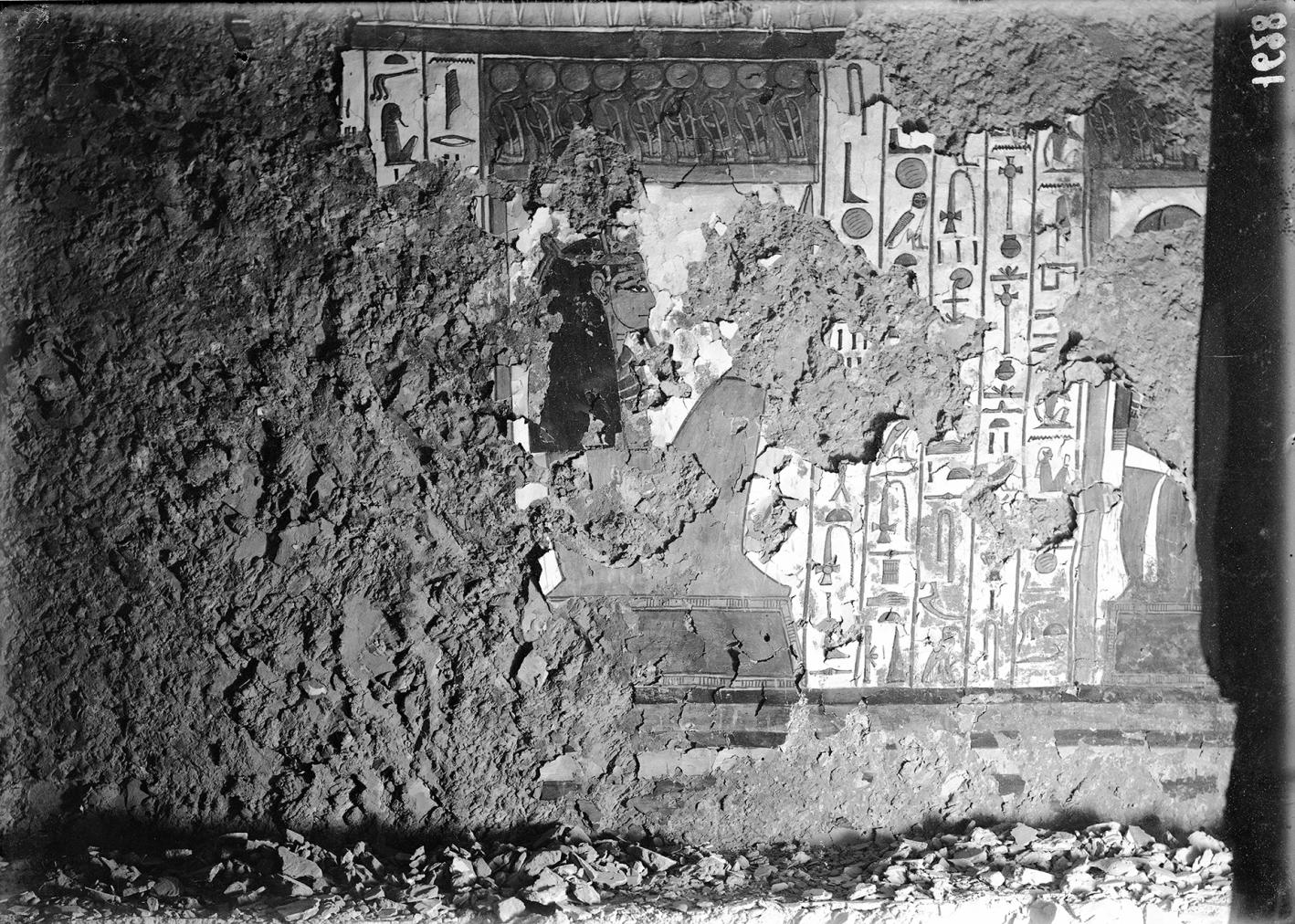
East wall of the burial chamber in the tomb of Queen Nefertari (QV 66) perhaps photographed during excavations. A human deity that guards the eight portal through which the queen must pass to reach the hereafter (center). The plaster depiction of a deity and the nine portal has collapsed (left). Italian Archaeological Expedition excavations. Courtesy of the Egyptian Museum in Turin.
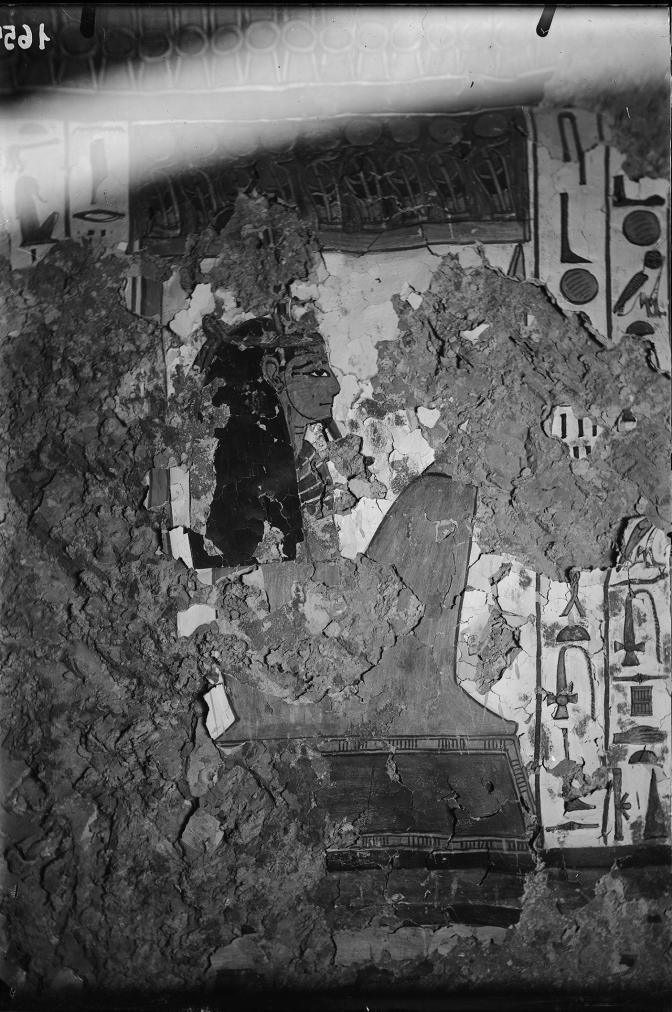
East wall of the burial chamber in the tomb of Queen Nefertari (QV 66) perhaps photographed during excavations. A human deity that guards the eight portal through which the queen must pass to reach the hereafter (center). Italian Archaeological Expedition excavations. Courtesy of the Egyptian Museum in Turin.
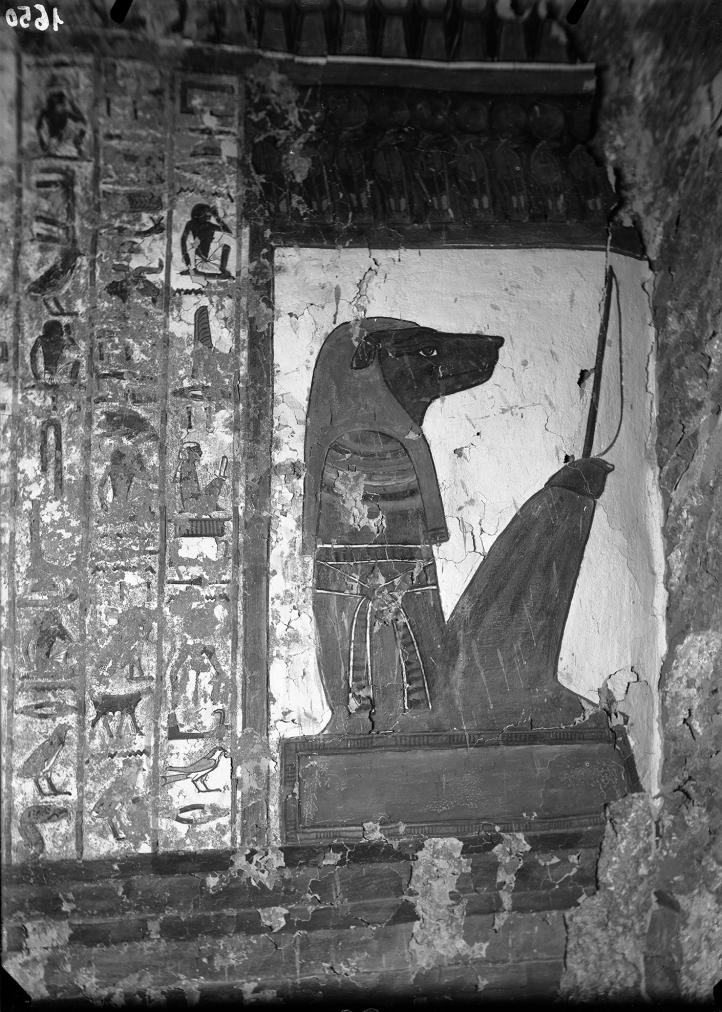
East wall of the burial chamber in the tomb of Queen Nefertari (QV 66) perhaps photographed during excavations. A canine-headed deity that guards the tenth portal through which the queen must pass to reach the hereafter (center). Italian Archaeological Expedition excavations. Courtesy of the Egyptian Museum in Turin.
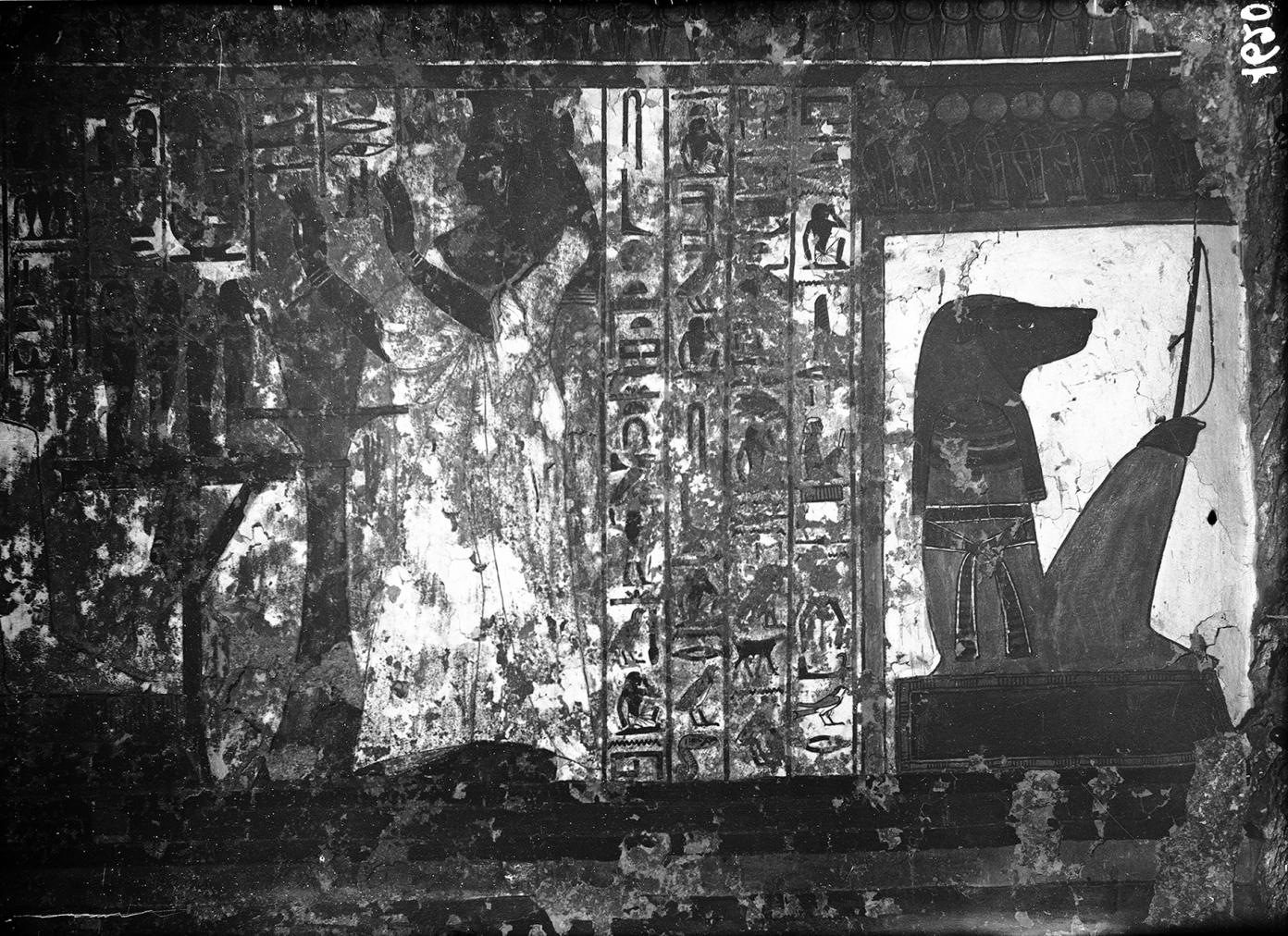
East wall of the burial chamber in the tomb of Queen Nefertari (QV 66) perhaps photographed during excavations. A canine-headed deity that guards the tenth portal through which the queen must pass to reach the hereafter (right). Queen Nefertari worships in front of seated Osiris, Hathor, and Anubis (left). Italian Archaeological Expedition excavations. Courtesy of the Egyptian Museum in Turin.
East wall of the burial chamber in the tomb of Queen Nefertari (QV 66) perhaps photographed during excavations. Detail of seated Osiris, Hathor, and Anubis that Queen Nefertari worships. Italian Archaeological Expedition excavations. Courtesy of the Egyptian Museum in Turin.
East wall of the burial chamber in the tomb of Queen Nefertari (QV 66) perhaps photographed during excavations. Detail of seated Osiris, Hathor, and Anubis that Queen Nefertari worships. Italian Archaeological Expedition excavations. Courtesy of the Egyptian Museum in Turin.
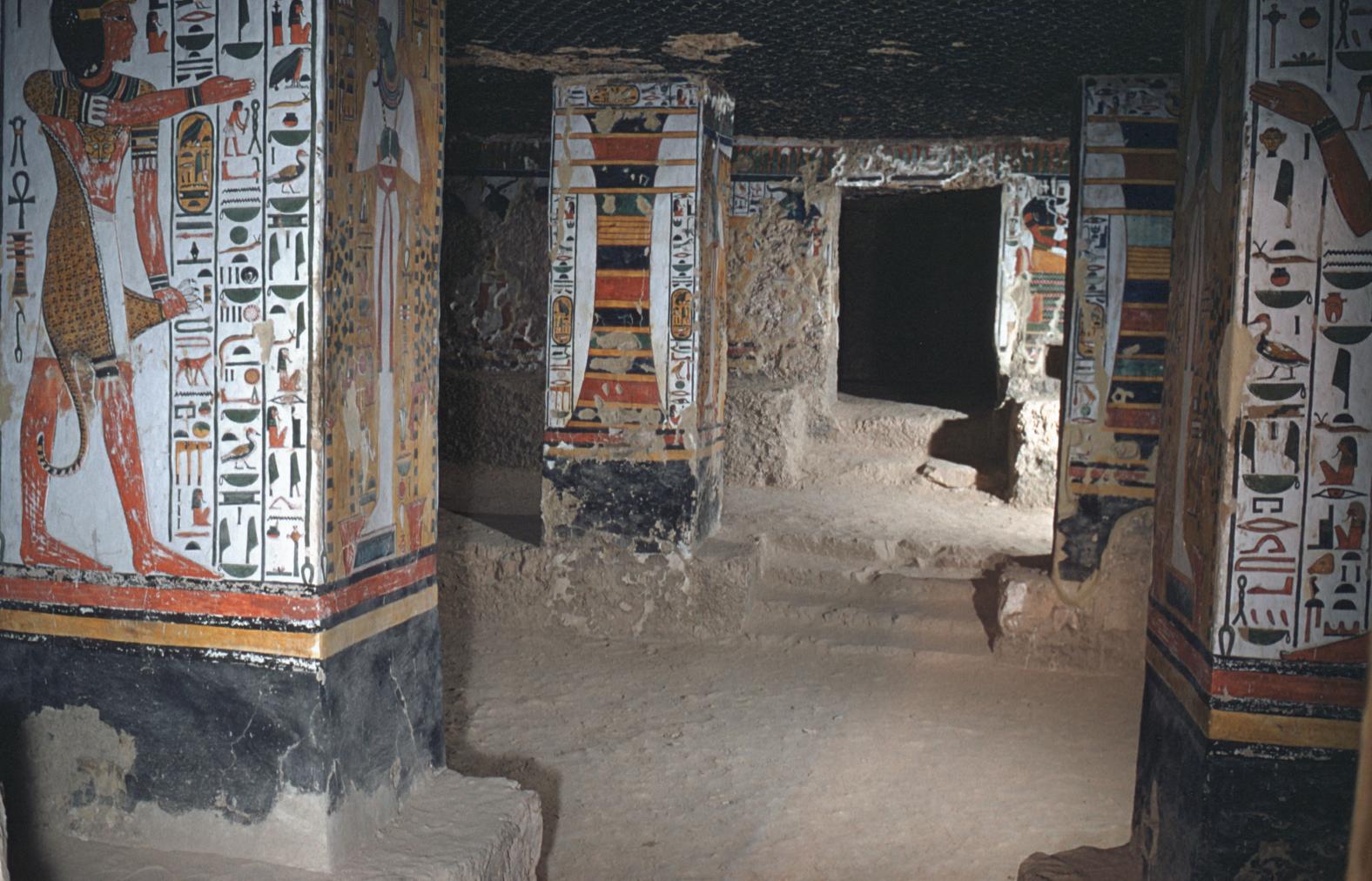
View of Burial chamber D. Courtesy of Uni Dia Verlag. Uni Dia Image Nr. 36862.
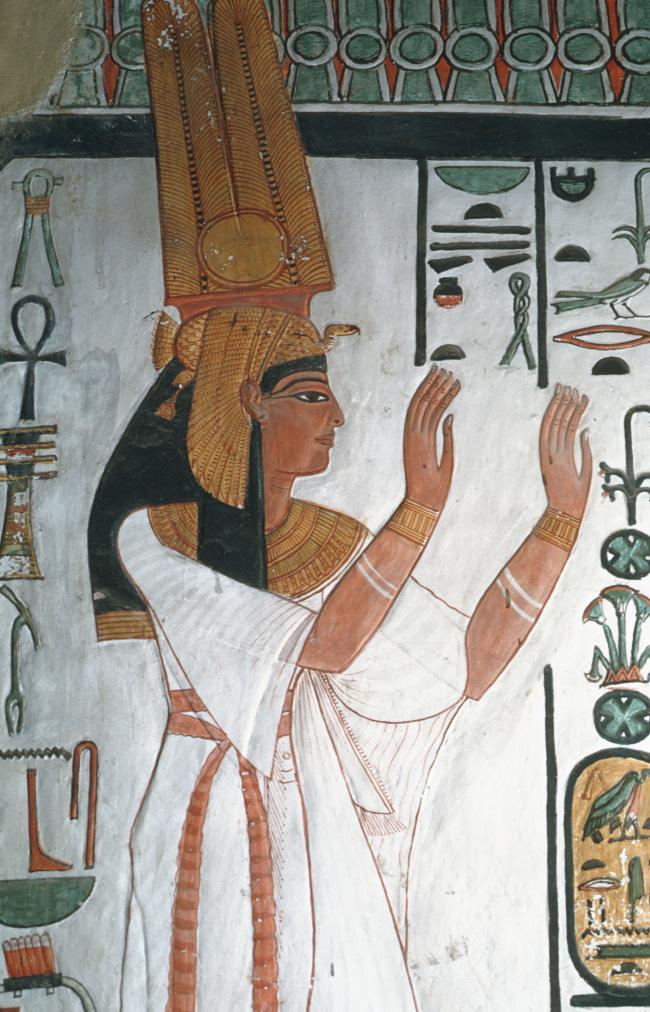
The queen before (a gate and daemon from a Book of the Dead vignette), Burial chamber D, front (south) wall (right part). Courtesy of Uni Dia Verlag. Uni Dia Image Nr. 36865.
The goddess Taweret and an image of the queen in her deified form, Burial chamber D, left (west) wall (left part). Courtesy of Uni Dia Verlag. Uni Dia Image Nr. 36866.
View of Book of the Dead Spell 144, Burial chamber D, left (west) wall. Courtesy of Uni Dia Verlag. Uni Dia Image Nr. 36868.
Details of Book of the Dead Spell 144, Burial chamber D, left (west) wall. Courtesy of Uni Dia Verlag. Uni Dia Image Nr. 36869.
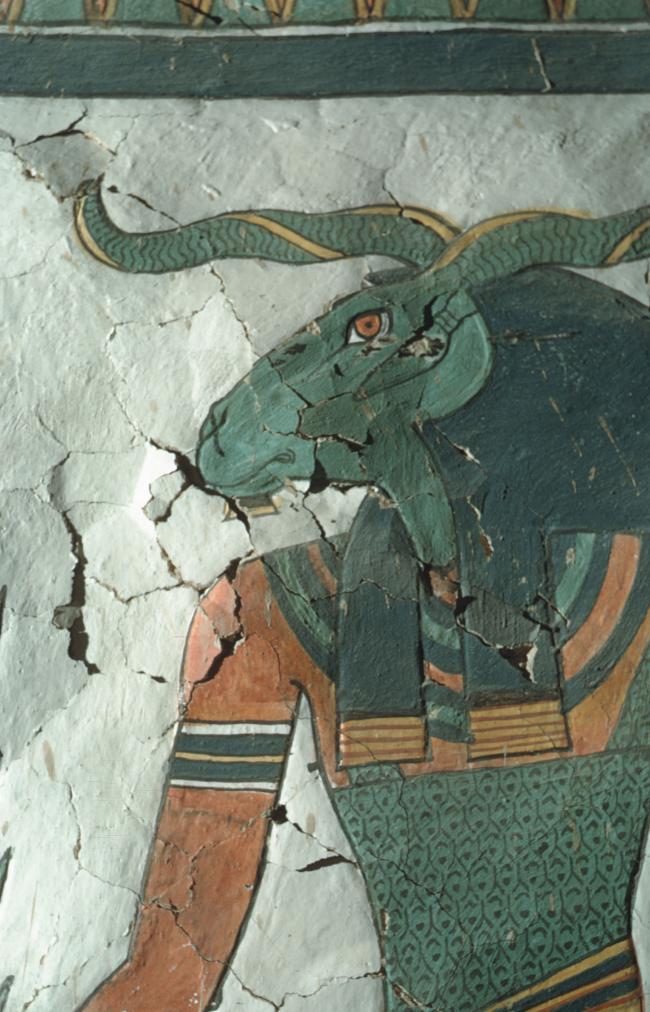
Details of a ram-headed daemon from Book of the Dead Spell 144, Burial chamber D, left (west) wall. Courtesy of Uni Dia Verlag. Uni Dia Image Nr. 36870.
Detail of snake-headed daemon, Burial chamber D, right (east) wall. Courtesy of Uni Dia Verlag. Uni Dia Image Nr. 36871.
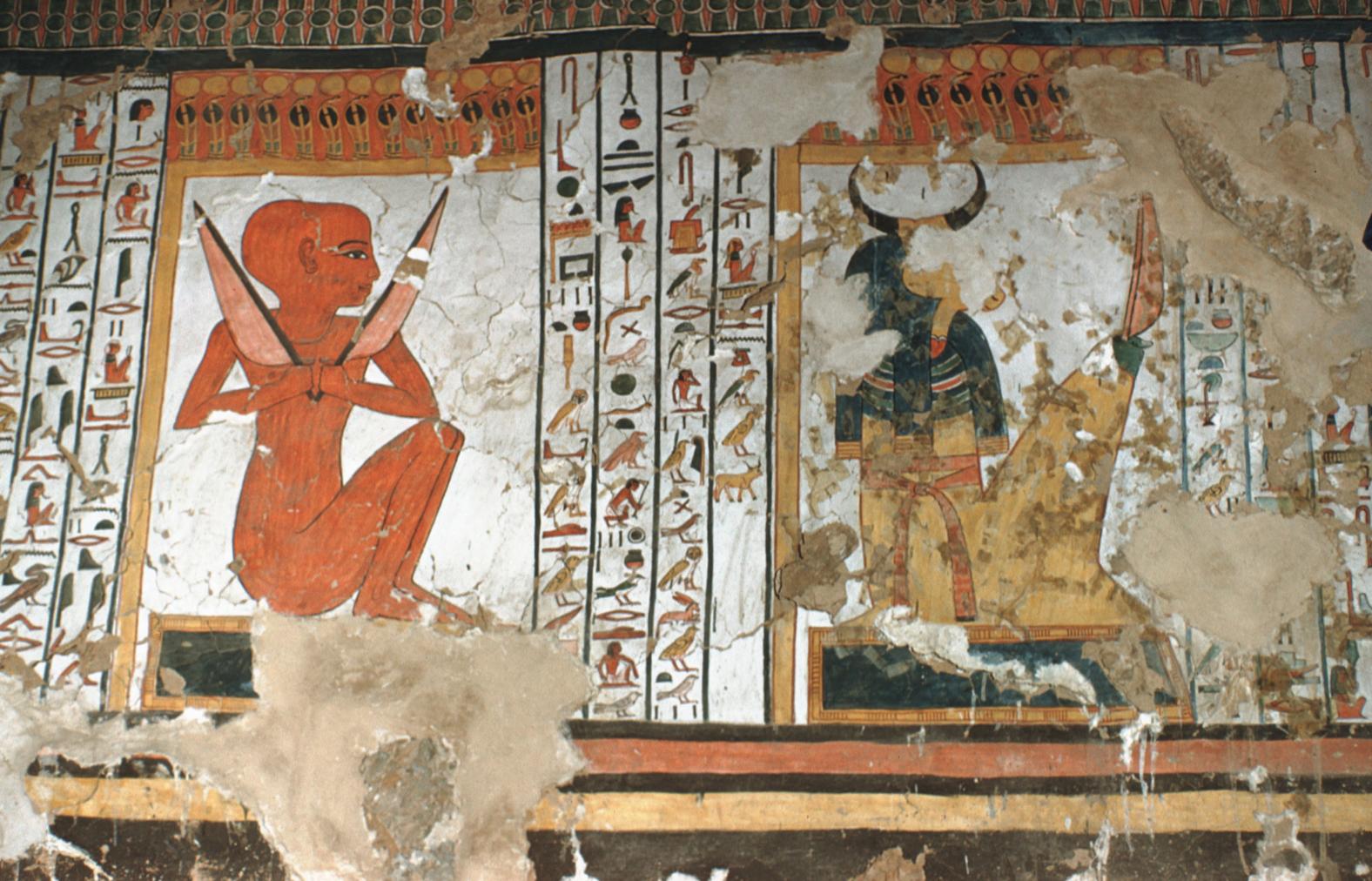
Bovine-headed and child daemons seated in gates and holding knives, Burial chamber D, right (East) wall (center part). Courtesy of Uni Dia Verlag. Uni Dia Image Nr. 36872.
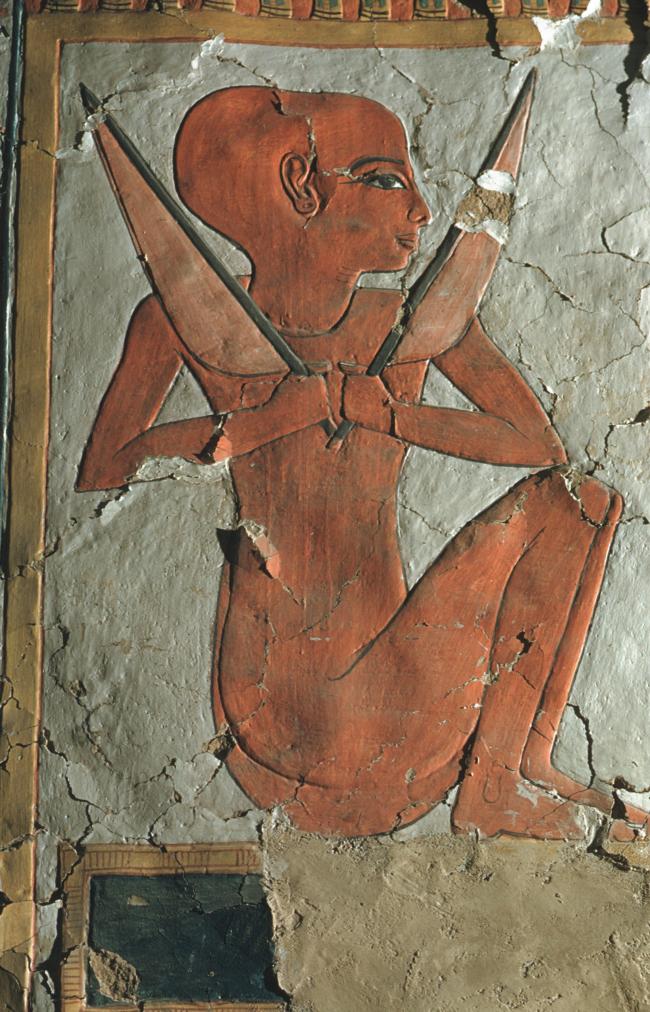
Detail of child daemon seated in gates and holding knives, Burial chamber D, right (east) wall (center part). Courtesy of Uni Dia Verlag. Uni Dia Image Nr. 36873.
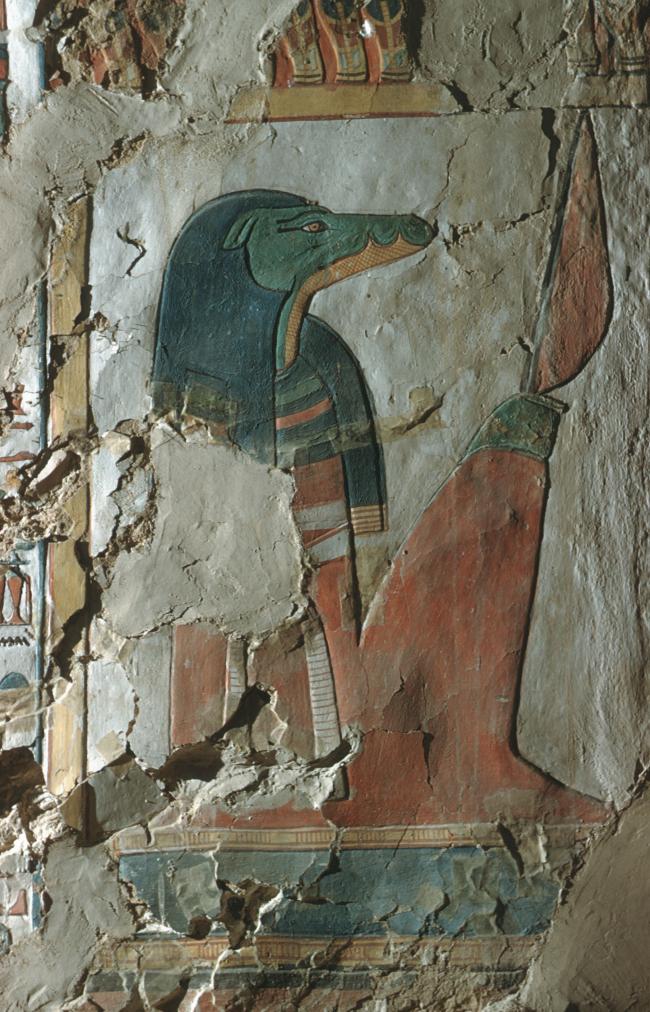
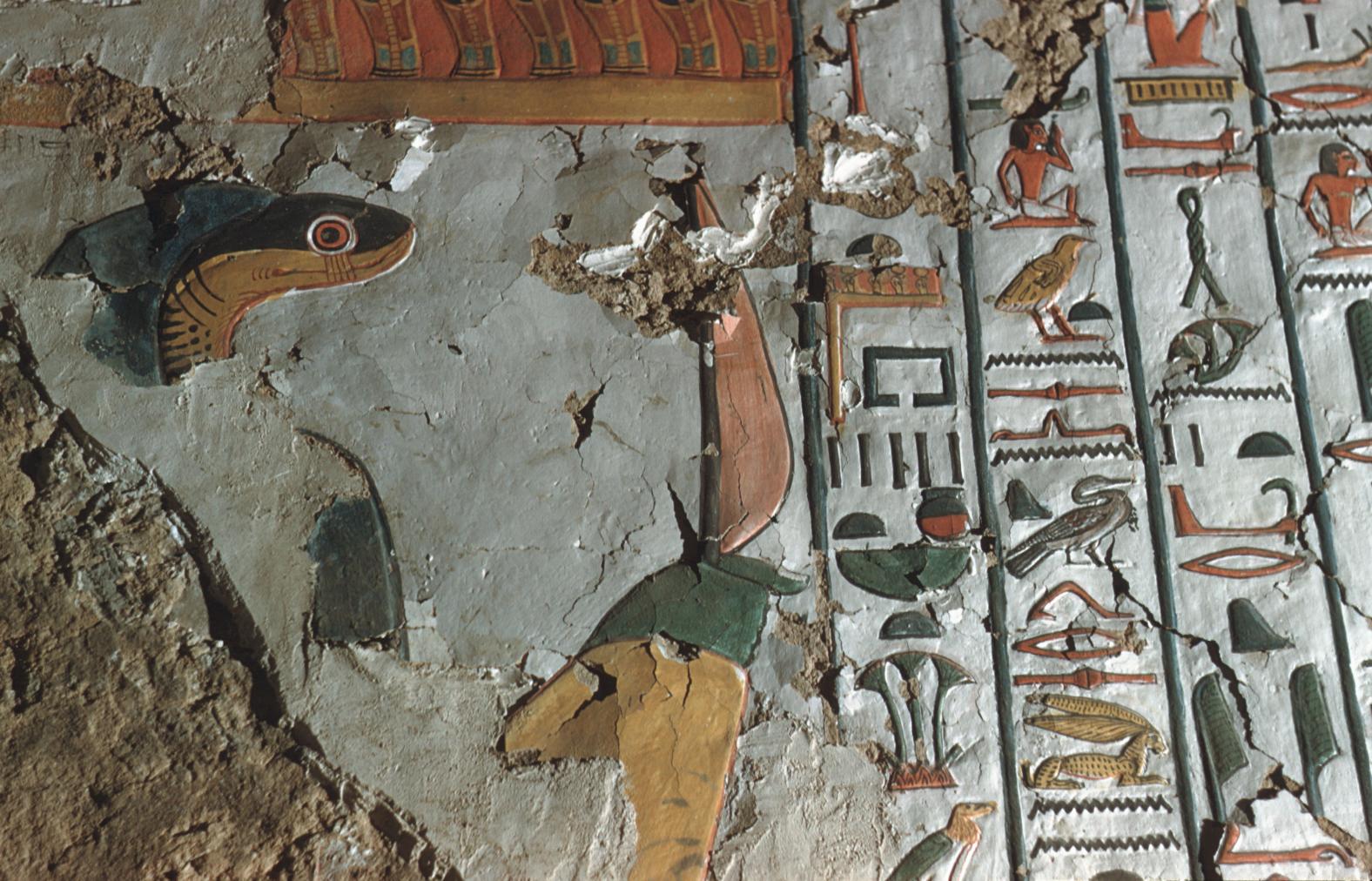
Detail of crocodile-headed daemon seated in gates and holding knives, Burial chamber D, right (east) wall (center part). Courtesy of Uni Dia Verlag. Uni Dia Image Nr. 36874.
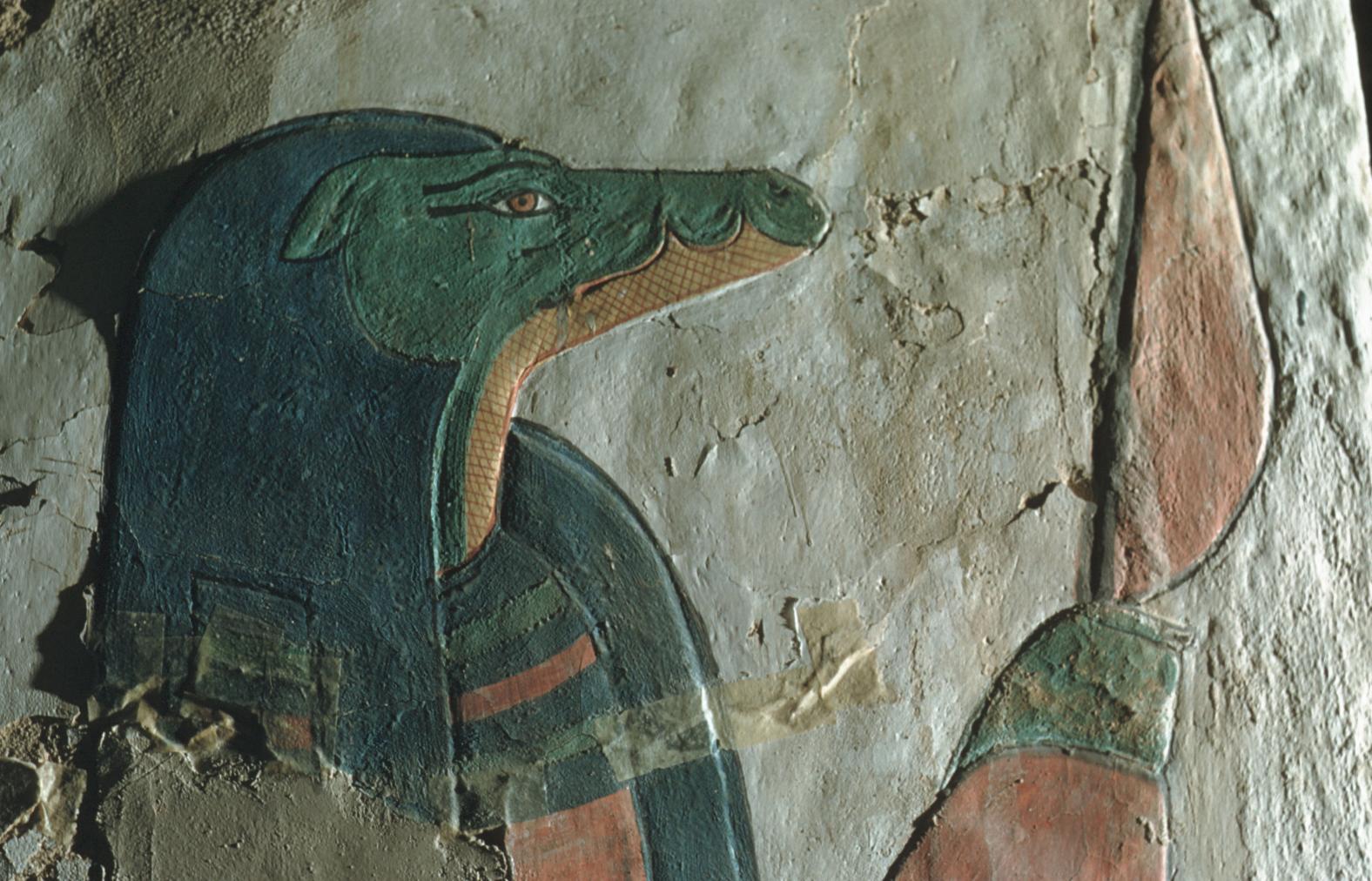
Detail of crocodile-headed daemon seated in gates and holding knives, Burial chamber D, right (east) wall (center part). Courtesy of Uni Dia Verlag. Uni Dia Image Nr. 36875.
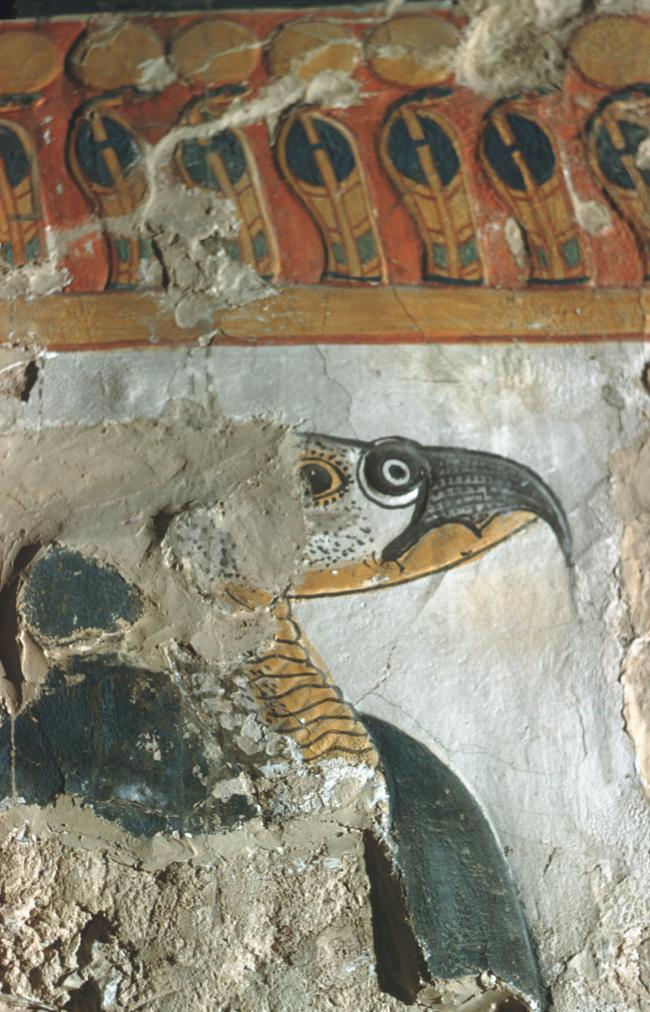
Detail of vulture-headed daemon, Burial chamber D, right (east) wall (center part). Courtesy of Uni Dia Verlag. Uni Dia Image Nr. 36876.
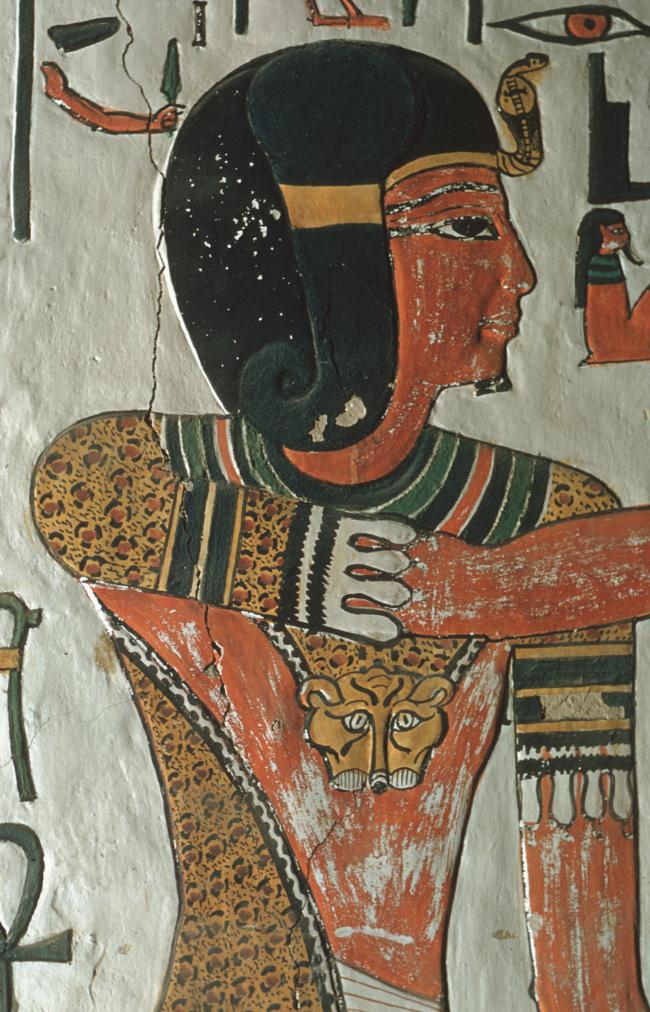
Detail of the god Horsiese, Burial chamber D, left southern pillar. Courtesy of Uni Dia Verlag. Uni Dia Image Nr. 36882.
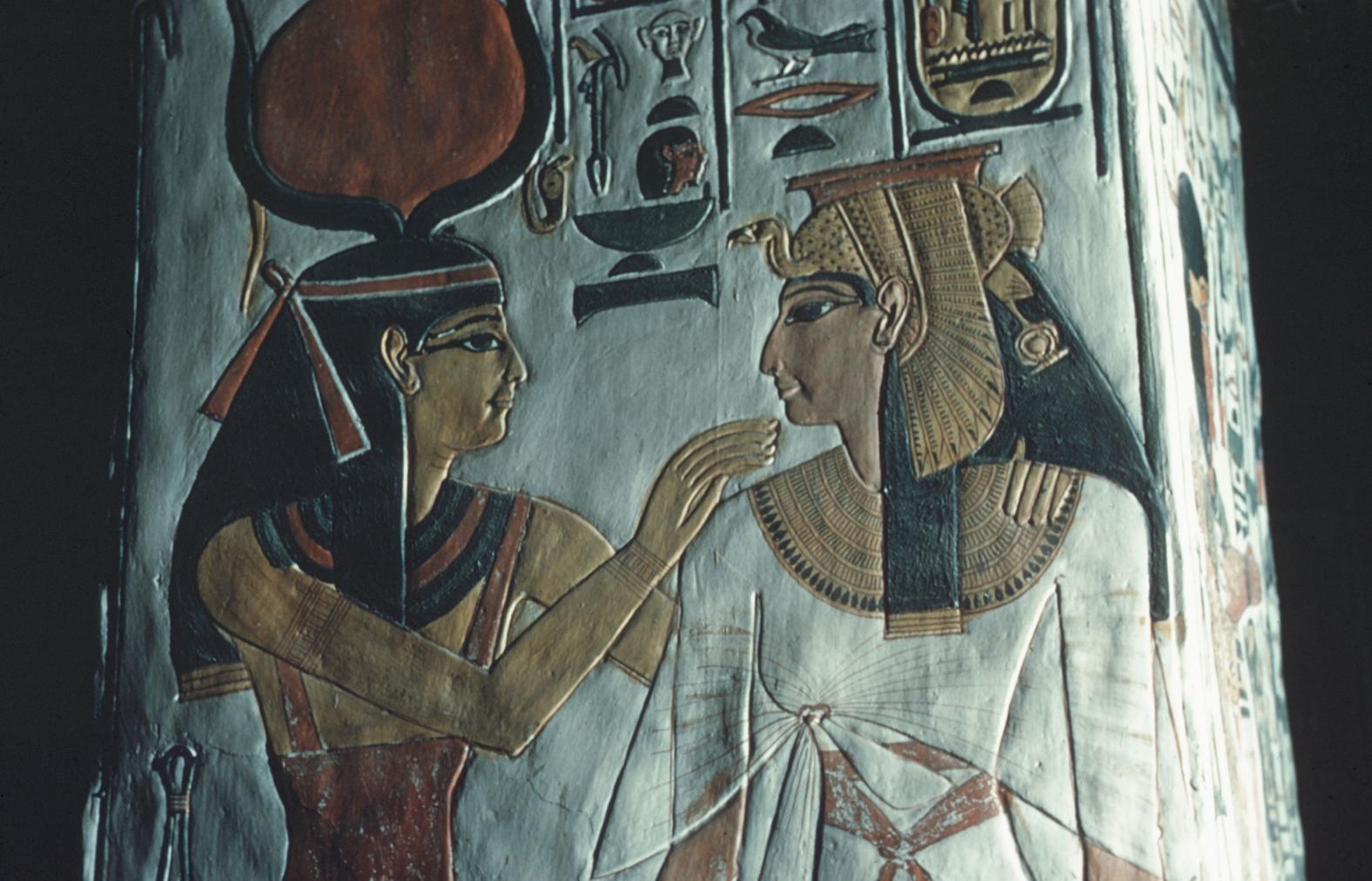
Detail of the queen embraced by the goddess Hathor (right face), Burial chamber D, left southern pillar. Courtesy of Uni Dia Verlag. Uni Dia Image Nr. 36883.
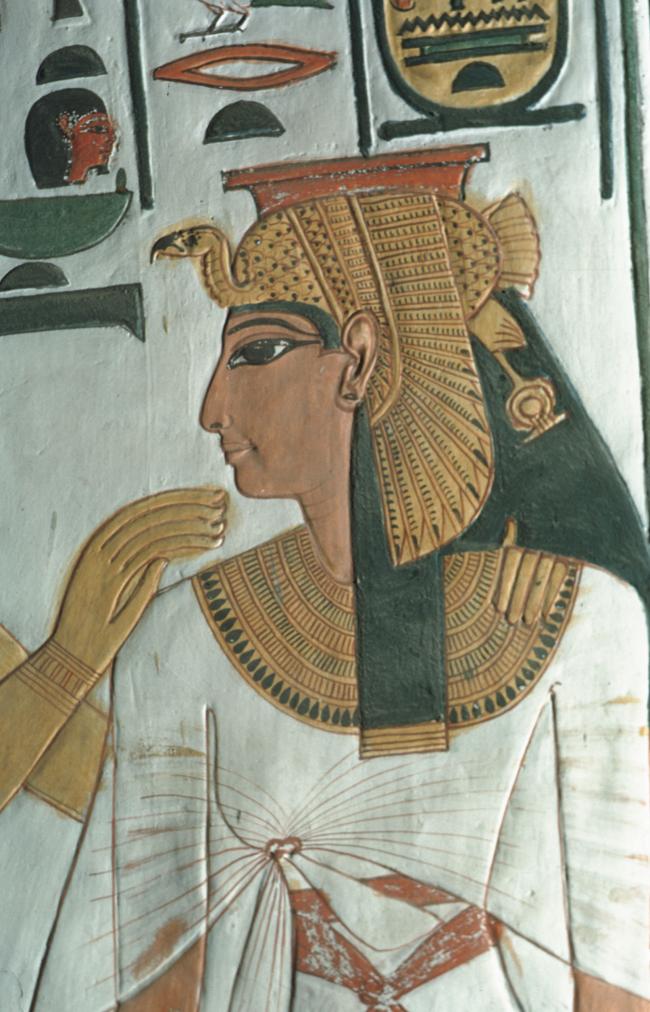
Detail of the queen (embraced by the goddess Hathor), Burial chamber D, left southern pillar. Courtesy of Uni Dia Verlag. Uni Dia Image Nr. 36884.
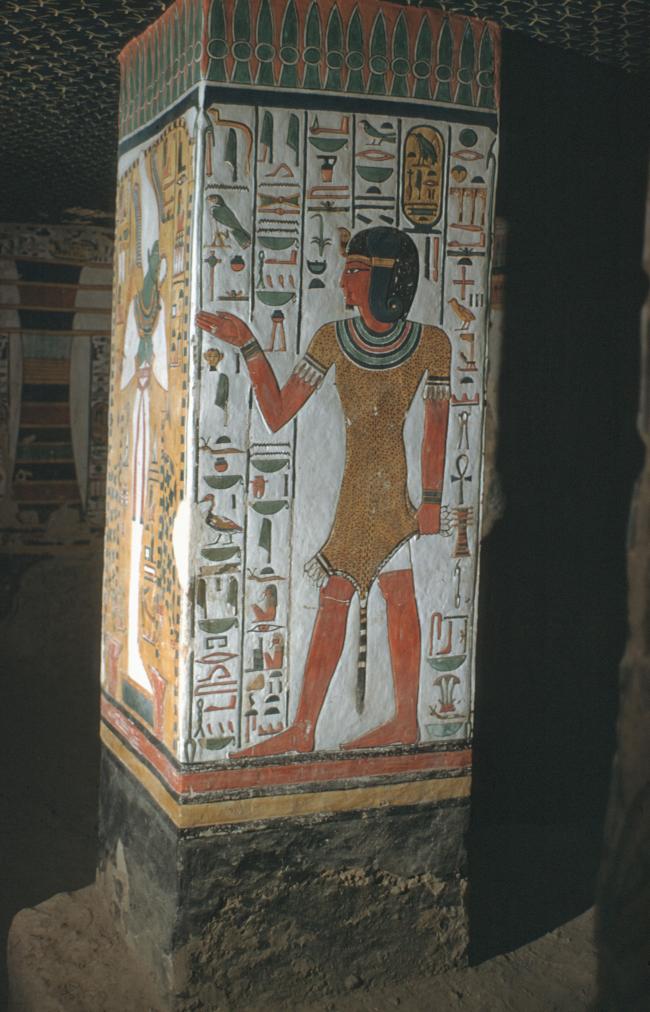
The god Horsiese (front face) and Osiris (left face), Burial chamber D, right southern pillar. Courtesy of Uni Dia Verlag. Uni Dia Image Nr. 36885.
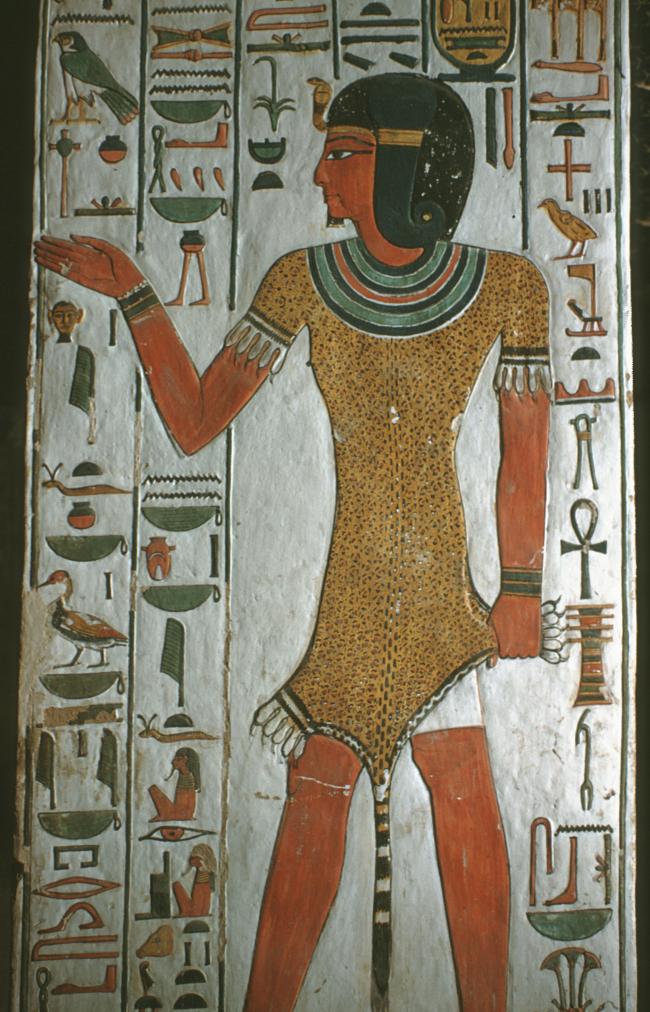
Detail of the god Horsiese (front face), Burial chamber D, right southern pillar. Courtesy of Uni Dia Verlag. Uni Dia Image Nr. 36886.
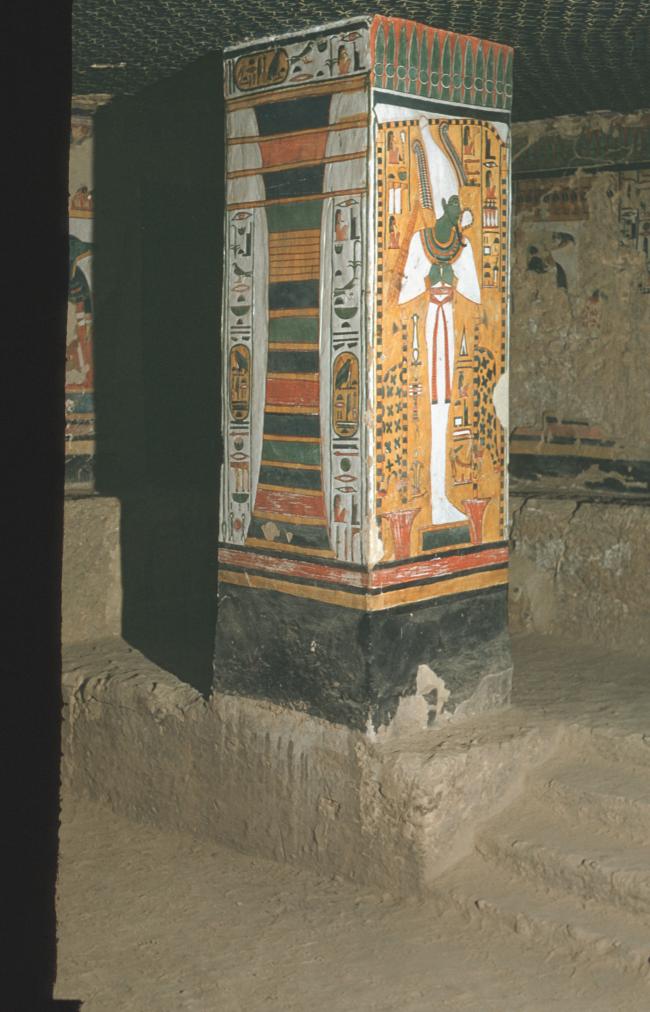
Djed-pillar (front face) and the god Osiris (right face), Burial chamber D, left northern pillar. Courtesy of Uni Dia Verlag. Uni Dia Image Nr. 36887.
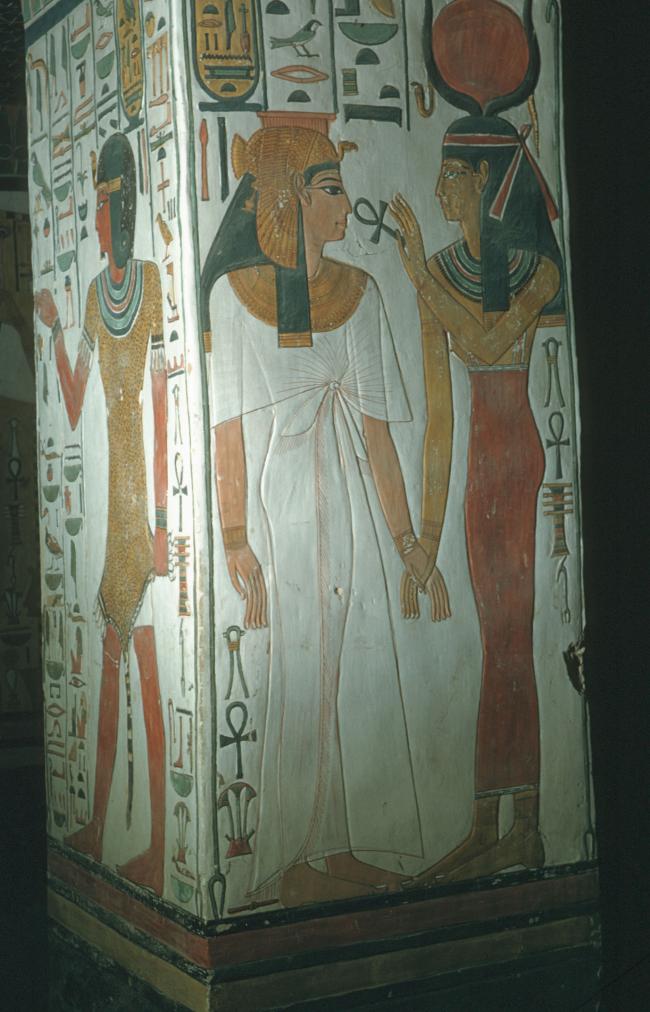
The queen given eternal life (ankh) by the goddess Isis (right face), Burial chamber D, right southern pillar. Courtesy of Uni Dia Verlag. Uni Dia Image Nr. 36888.
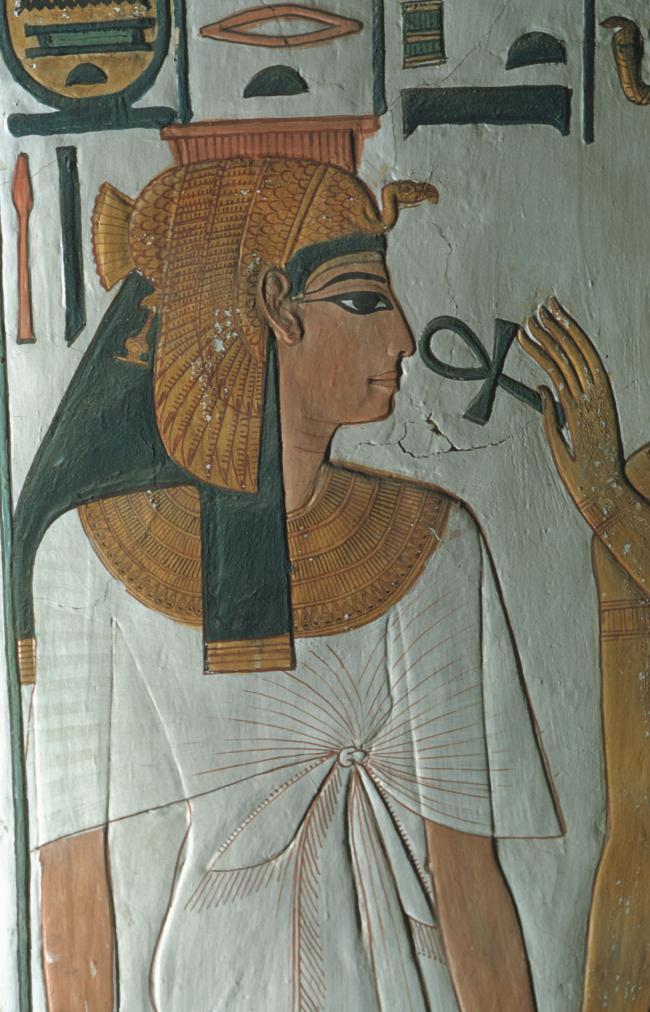
Detail of the queen given eternal life (ankh) by the goddess Isis (right face), Burial chamber D, right southern pillar. Courtesy of Uni Dia Verlag. Uni Dia Image Nr. 36889.
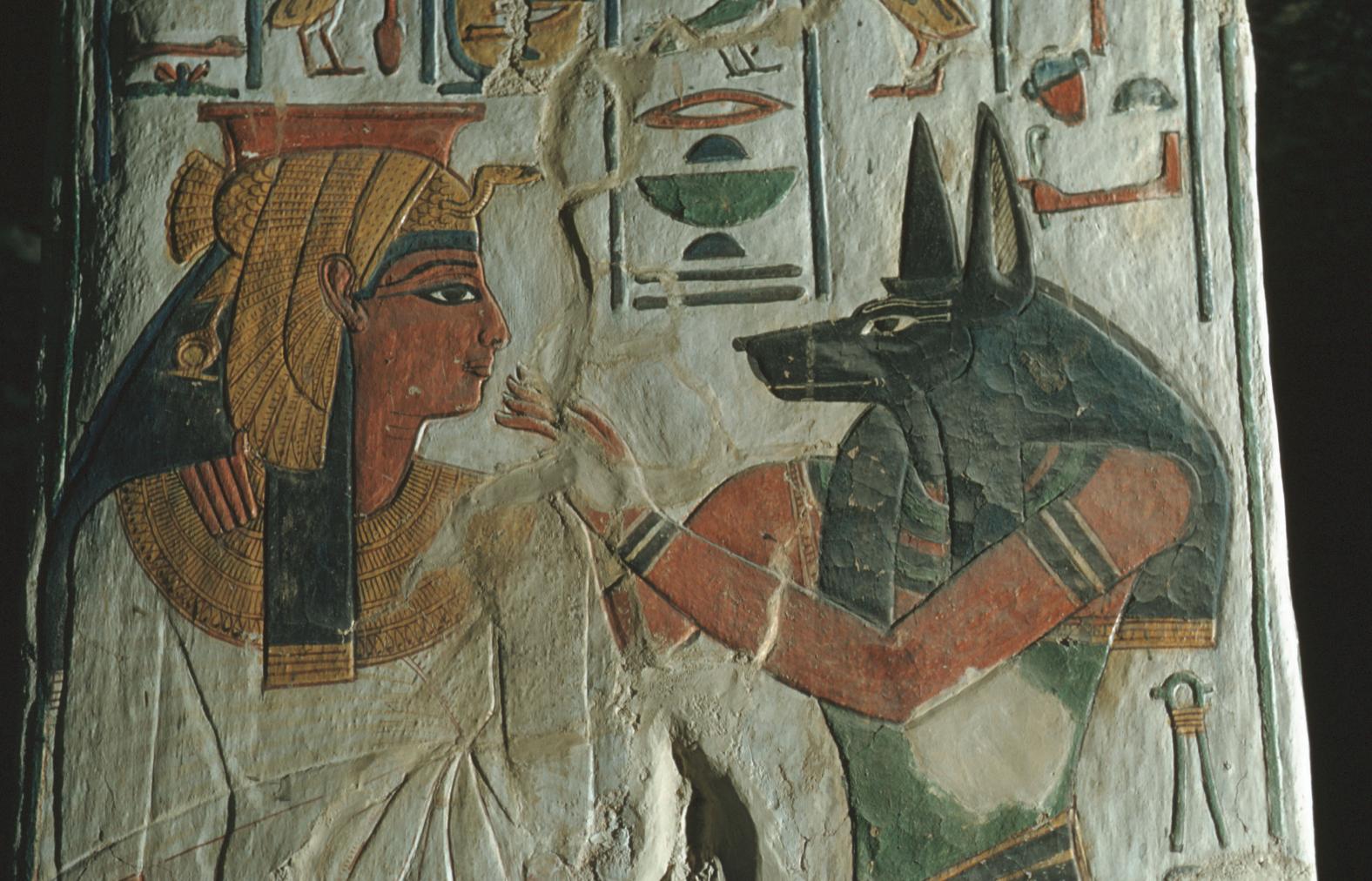
Detail of the queen embraced by the god Anubis (right face), Burial chamber D, right northern pillar. Courtesy of Uni Dia Verlag. Uni Dia Image Nr. 36890.
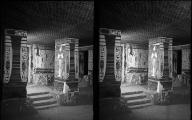
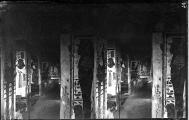
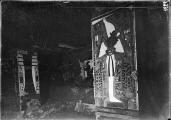
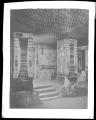
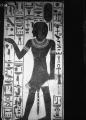
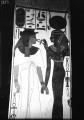
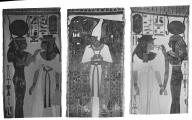
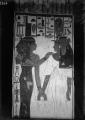
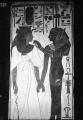
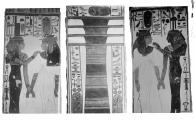
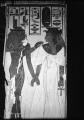
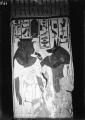
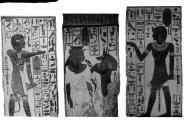
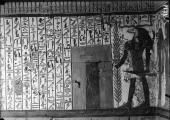
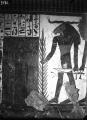
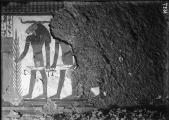
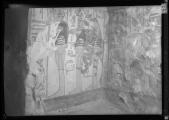
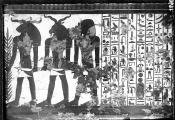
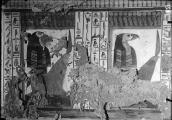
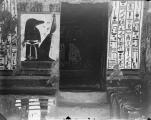
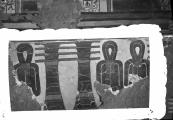
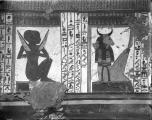
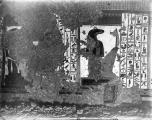
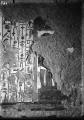
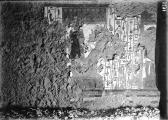
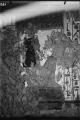
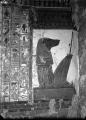
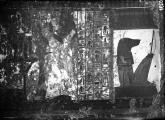
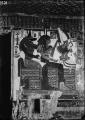
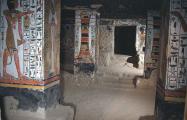
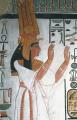
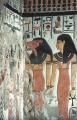
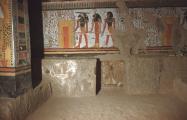
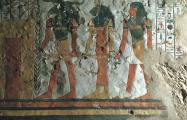
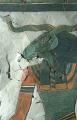
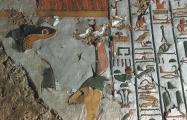
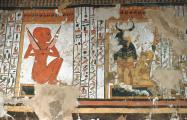
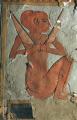
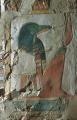
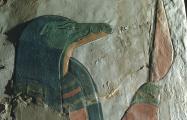
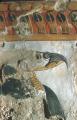
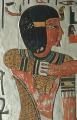
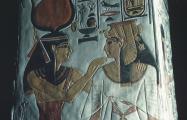
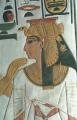
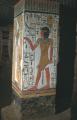
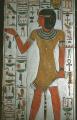
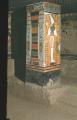
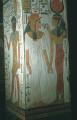
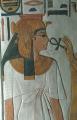
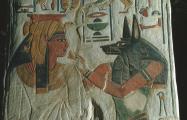
Gate Da
See entire tombThe gate is set in the south end of the west wall of the Burial Chamber (D). There is damage to the wall paintings.
The decoration on the left outer thickness displays a rearing cobra resting on a nb sign supported by two djed pillars. The cobra, Wadjet, is facing toward the burial chamber and incorrectly wearing the Double crown of Upper and Lower Egypt. An almost identical painting appears on the right outer thickness, but the cobra, Nekhbet, is incorrectly wearing the Red Crown of Lower Egypt. A pt sign surmounts the paintings on both outer thicknesses. The inner thicknesses are inscribed with the Cartouche and titles of Nefertari, and surmounted by a pt sign. The return on the left side features an anthropomorphized Djed-pillar holding a Was scepter in each hand and surmounted by a pt sign. The right-hand return, which is significantly damaged on the bottom, depicts Nefertari in mummiform facing north, accompanied by a was scepter situated in front of her. The scene is surmounted by a pt sign. forming the east wall of The soffit, which is on level with chamber Da, is decorated with yellow stars on a dark blue background. The dado frieze is made up of bands of black, red, and yellow.
In the center, a view of the stairs that lead to side chamber Da in the burial chamber of the tomb of Queen Nefertari (QV 66) perhaps photographed during excavations, which is flanked by scenes from Spell 144 of the Book of the Dead with multiple portals guarded by deities that the queen must pass through to reach the hereafter. Italian Archaeological Expedition excavations. Courtesy of the Egyptian Museum in Turin.
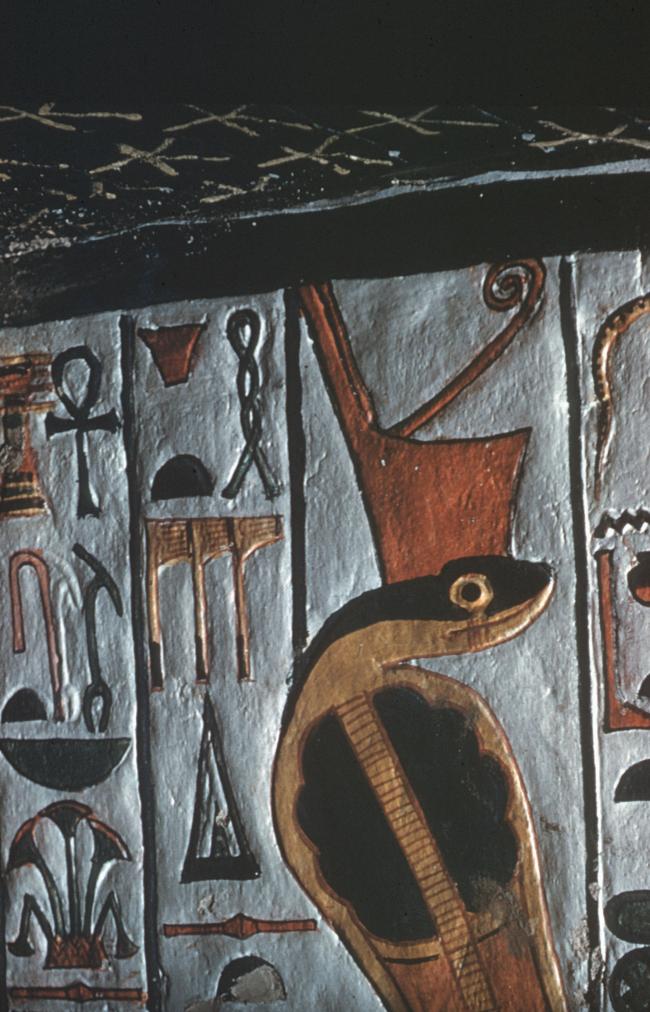
Detail of a rearing cobra on the right thickness of Gate Da. Courtesy of Uni Dia Verlag. Uni Dia Image Nr. 36867.
Side chamber Da
See entire tombThis small, square-shaped room is set in the south end of the west wall and perpendicular to the main axis of the tomb. The decoration is largely damaged, particularly on the south and west walls. A modern wooden walkway and barrier rails were installed together with fluorescent lighting.
The right and left side east walls serve as the returns for Gate Da. The return on the left side features an anthropomorphized Djed-pillar holding a Was scepter in each hand and surmounted by a pt sign. The right-hand return, which is significantly damaged on the bottom, depicts Nefertari in mummiform facing north, accompanied by a was scepter situated in front of her, also surmounted by a pt sign. The south wall is the most damaged in the chamber, but, compared with a mirror image on the north wall, reveals three seated mummiform deities with Ankh signs extending from their knees. The leftmost figure is Imsety, followed by Duamutef, two of the Sons of Horus. The rightmost figure is Isis. The north wall is arranged similarly, with Hapy in the rightmost position, followed by Qebehsenuef, the other two of the four Sons of Horus. Nephthys takes the leftmost position. The inscription is a welcoming address to Nefertari. The rear (west) wall is also significantly damaged. The decoration is arranged in four vertical registers, each separated by a column of hieroglyphic text, all within a yellow rectangular background. Above the yellow background is a curved roof that is filled with two coiled winged cobras facing each other. Each register contains a god: ibis-headed Thoth appears on both the far right and left. The other god on the left is Anubis, facing to the right; the other god on the right is Imsety, also facing right. The ceiling is painted with yellow stars on a dark blue background, while the top of each wall is the pt sign. The dado frieze is made up of black, red, and yellow bands.
Porter and Moss designation:
Cross-sectional view of the burial chamber photographed from side chamber Da of the tomb of Queen Nefertari (QV 66) perhaps during excavations. The southern pillars elaborately decorated scenes and texts are visible, as well as the east wall of side chamber Dc. Italian Archaeological Expedition excavations. Courtesy of the Egyptian Museum in Turin.
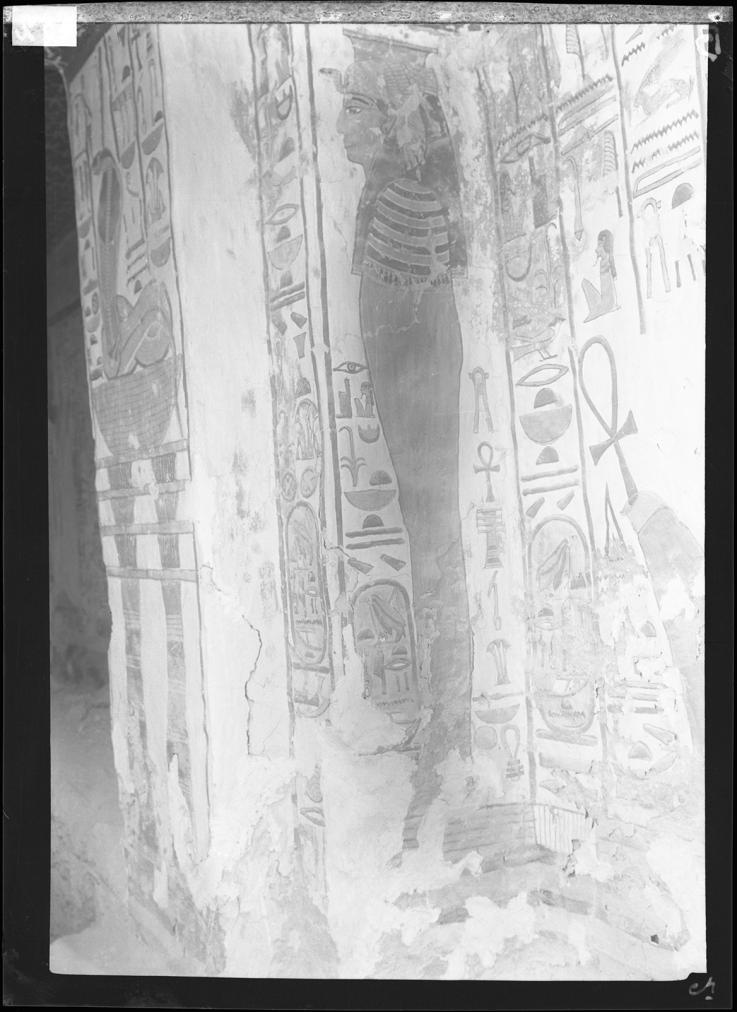
Side chamber Da in the tomb of Queen Nefertari (QV 66) perhaps photographed during excavations. Queen Nefertari wears a tripartite wig, modius, vulture headdress, a wesekh-collar, and is mummiform as an 'Osiris' (see text). Italian Archaeological Expedition excavations. Courtesy of the Egyptian Museum in Turin.
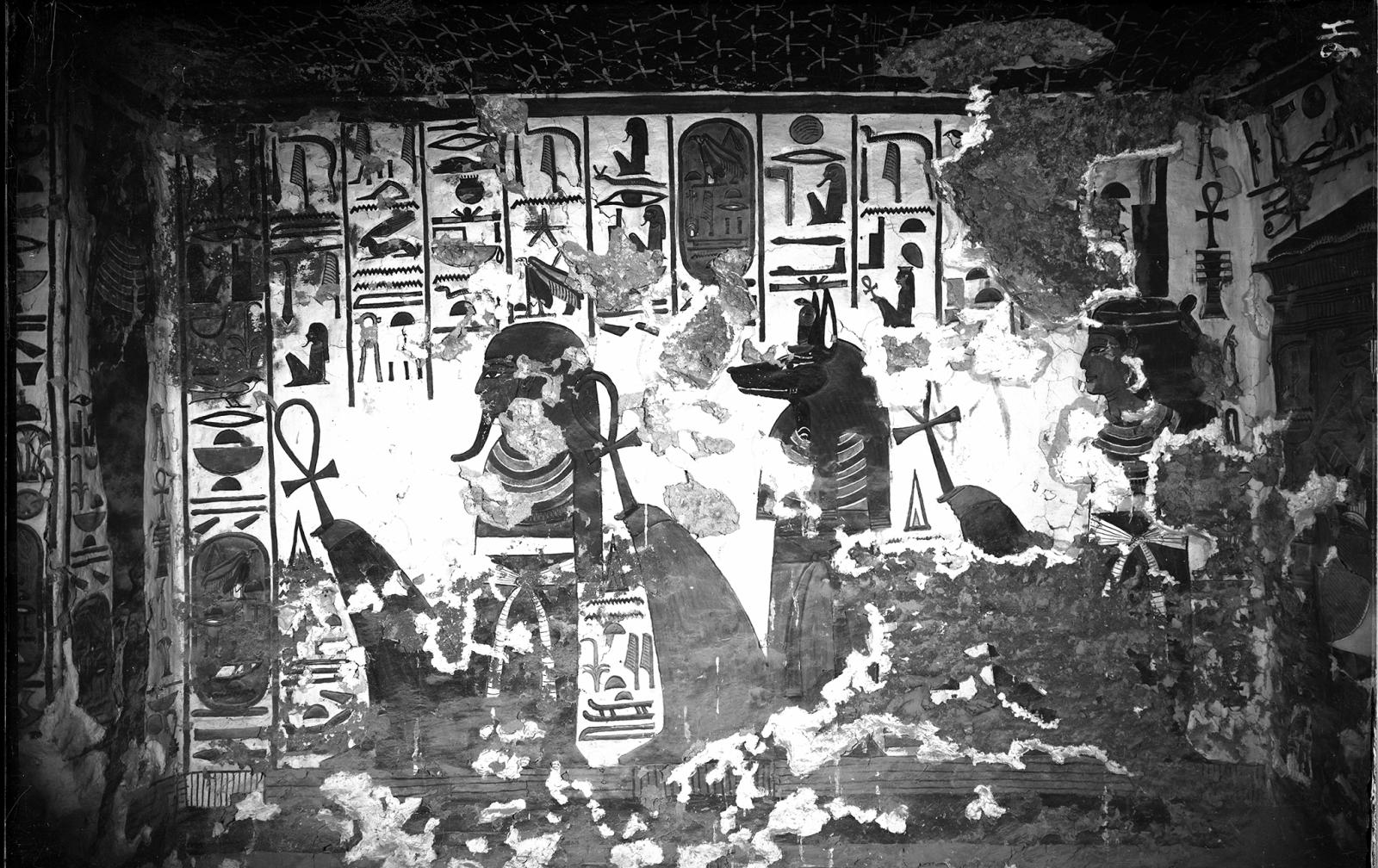
South wall of side chamber Da in the tomb of Queen Nefertari (QV 66) perhaps created during excavations. Seated images of Two of the Four Sons of Horus, Imsety and Duamutef, as well as Isis, framed by invocations to the queen. Italian Archaeological Expedition excavations. Courtesy of the Egyptian Museum in Turin.
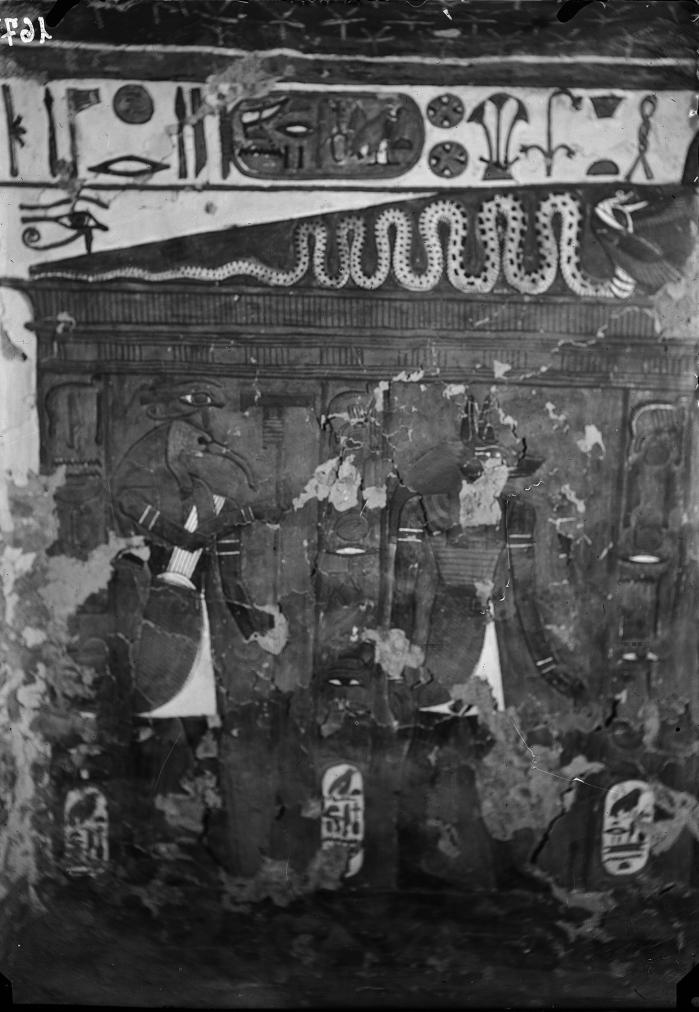
Back west wall of side chamber Da in the tomb of Queen Nefertari (QV 66) perhaps photographed during excavations. A sanctuary topped with serpents with two adjacent scenes: Thoth and Anubis (left), and Imsety and Thoth again (right). Italian Archaeological Expedition excavations. Courtesy of the Egyptian Museum in Turin.
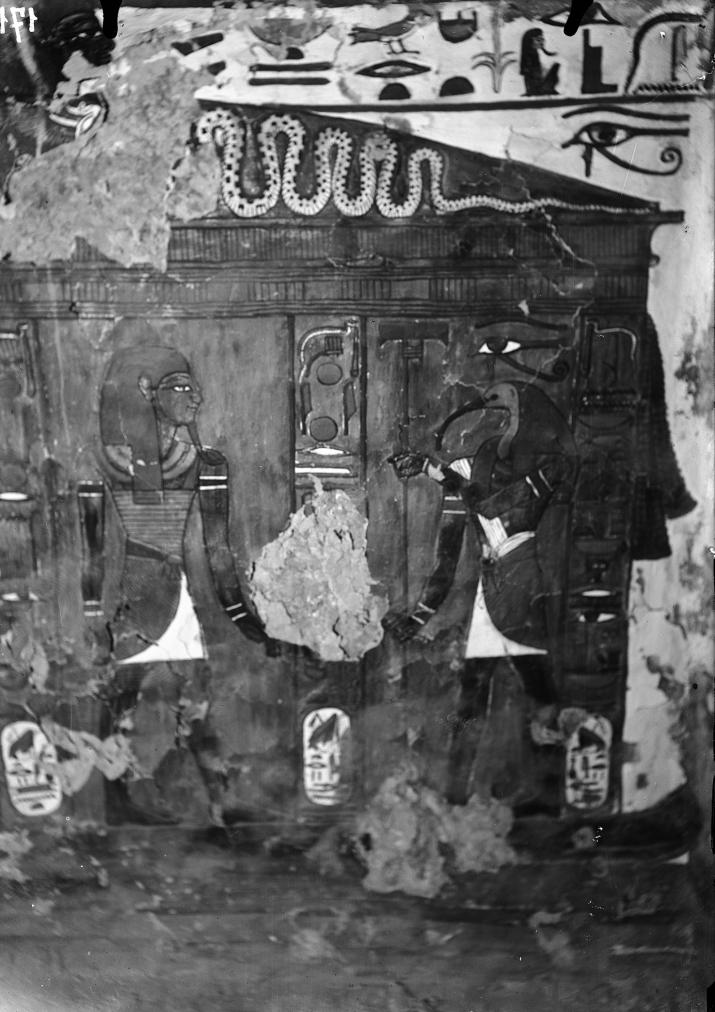
Back west wall of side chamber Da in the tomb of Queen Nefertari (QV 66) perhaps photographed during excavations. A sanctuary topped with serpents with two adjacent scenes: Thoth and Anubis (left), and Imsety and Thoth again (right). Italian Archaeological Expedition excavations. Courtesy of the Egyptian Museum in Turin.
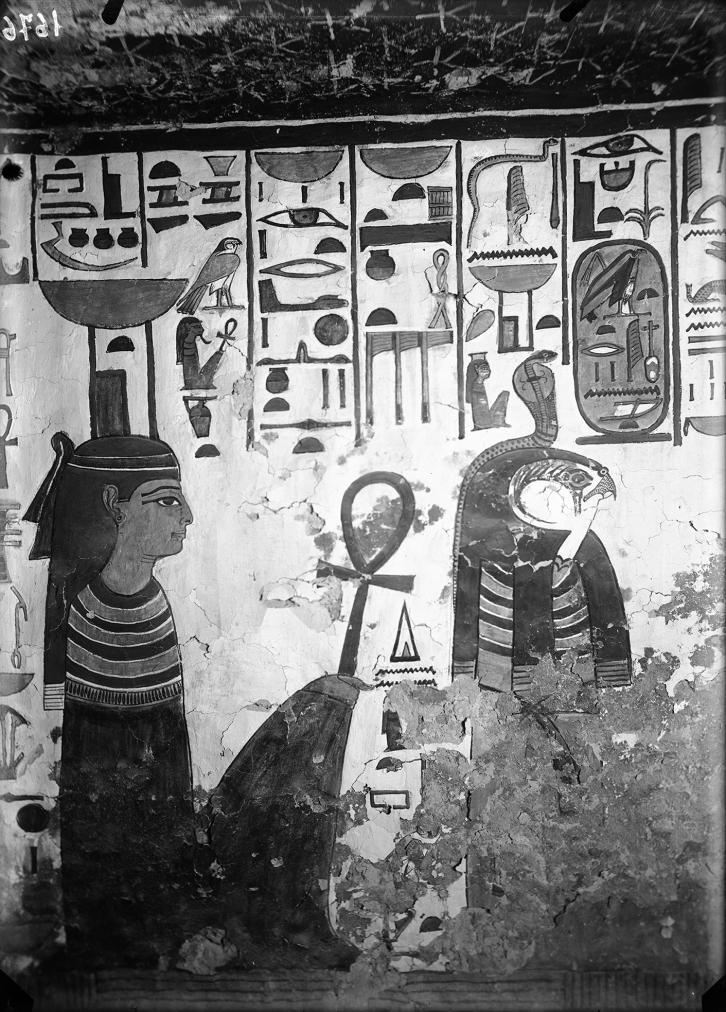
North wall of side chamber Da in the tomb of Queen Nefertari (QV 66) perhaps photographed during excavations. Seated images of Qebehsenuef, Nephthys, and Hapy (not visible here). Italian Archaeological Expedition excavations. Courtesy of the Egyptian Museum in Turin.
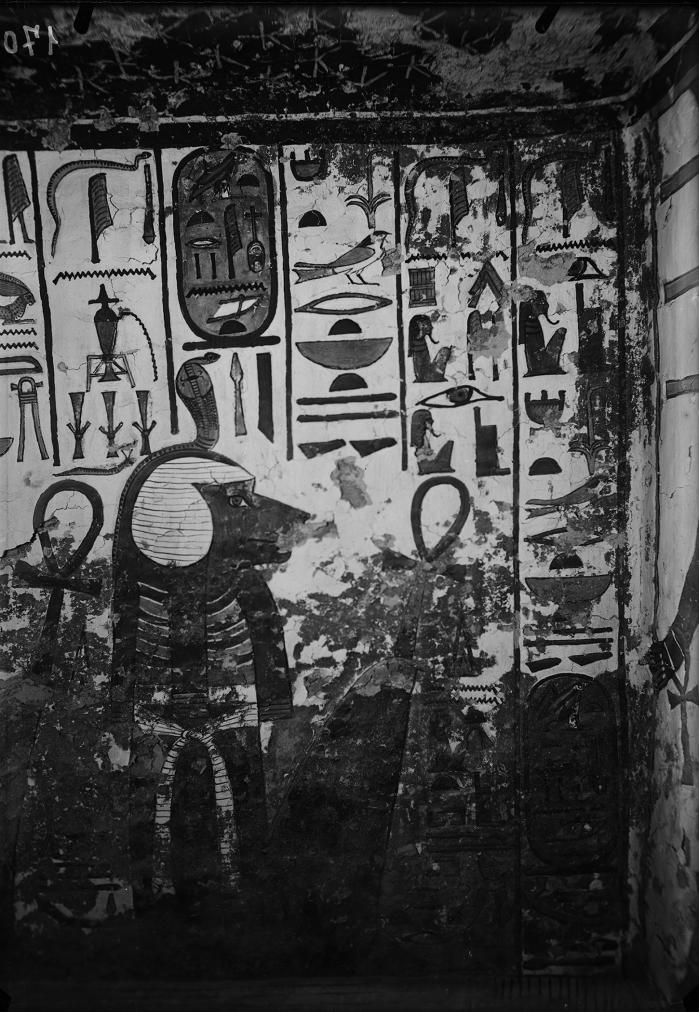
North wall of side chamber Da in the tomb of Queen Nefertari (QV 66) perhaps photographed during excavations. Seated images of Hapy, as well as Qebehsenuef and Nephthys (not visible here). Italian Archaeological Expedition excavations. Courtesy of the Egyptian Museum in Turin.
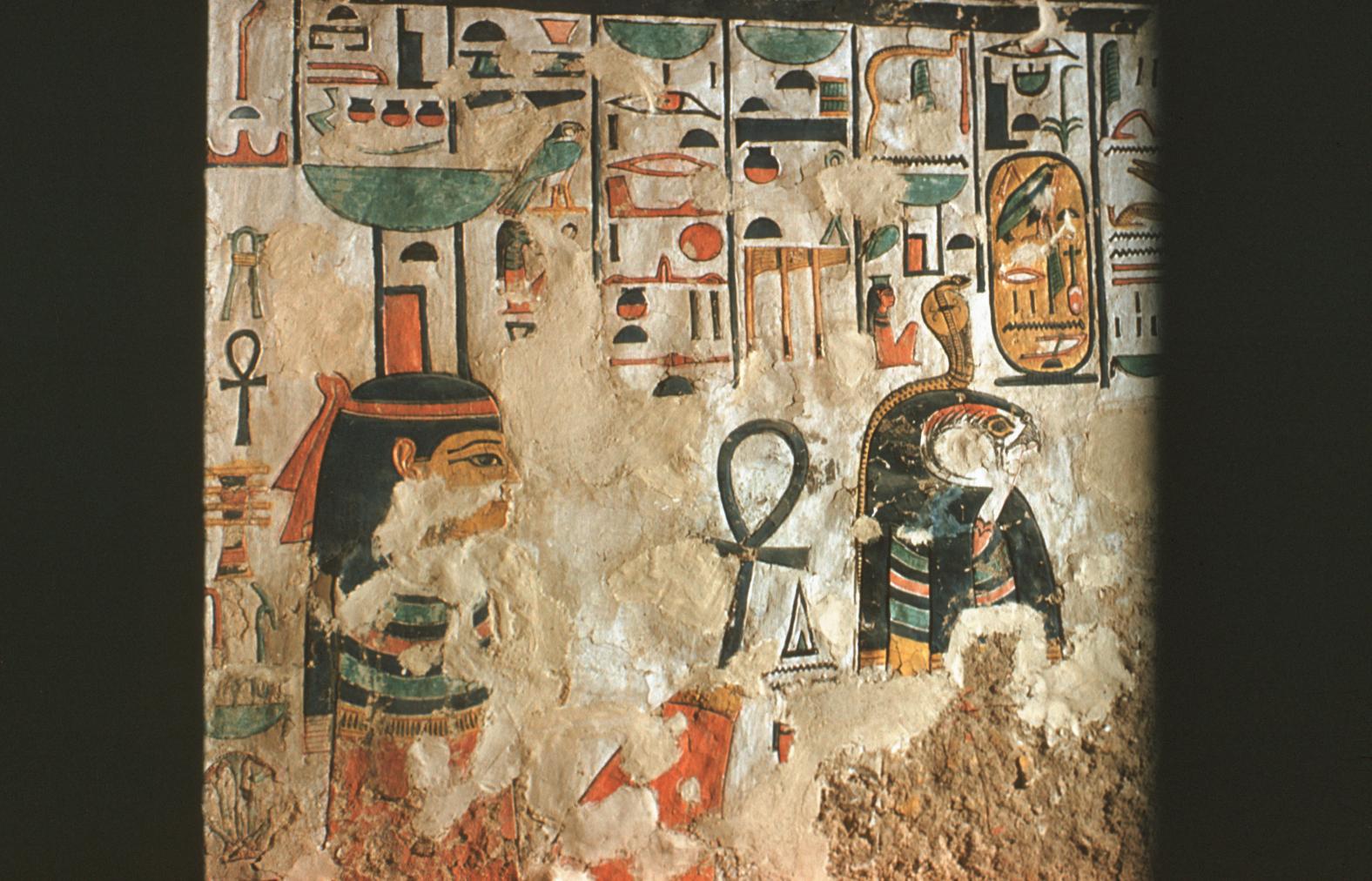
The gods Qebehsenuef and Nephthys seated and mummiform, Side Chamber Da, right (north) wall. Courtesy of Uni Dia Verlag. Uni Dia Image Nr. 36880.
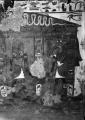
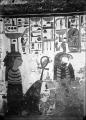
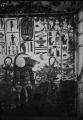
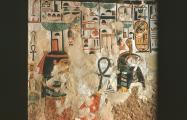
Gate Db
See entire tombThe gate is set in the rear (north) wall of the Burial Chamber (D). There is severe damage to the wall paintings.
The surviving decoration on the right thickness displays two rearing cobras, Nekhbet and Wadjet, flanking the Cartouche of Nefertari and resting on a nb sign which itself rests on the hieroglyph for gold. Wadjet is facing north and wearing the red crown of Lower Egypt, while Nekhbet faces south and wears the atef crown of Osiris. An almost identical painting appears on the left thickness. Wadjet faces south, wearing the Red Crown of Lower Egypt, and Nekhbet is wearing the Double crown of Upper and Lower Egypt.
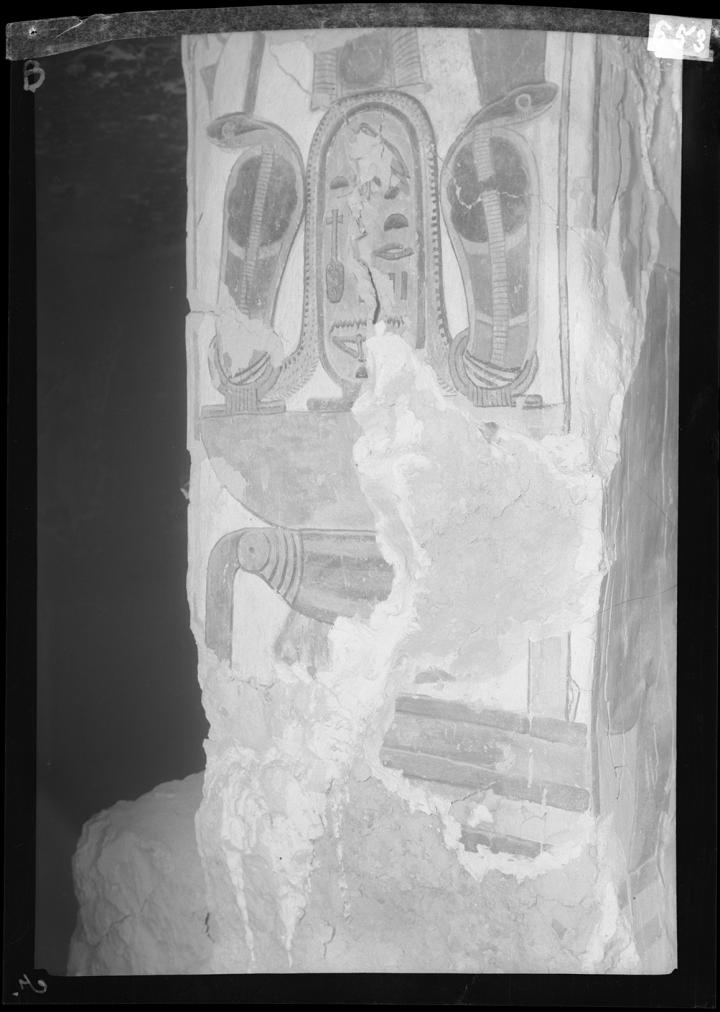
Gate Db in the tomb of Queen Nefertari (QV 66) perhaps photographed during excavations. The queen's cartouche on nb- and nbw-signs is flanked by images of Wadjet and Nekhbet as serpents, and is topped by a sun disc with two ostrich feathers. Courtesy of the Egyptian Museum in Turin.
Side chamber Db
See entire tombA rectangular chamber at the rear of the tomb parallel to the main tomb axis. The room is mostly damaged with very few decorations surviving. The room has a modern wooden walkway and barriers, as well as fluorescent lighting.
Decoration mostly survives on the returns of Gate Db. On the right-hand return is a depiction of Isis. Only Nefertari’s Cartouche is found on the north wall. The east wall contains a procession of deities including Serqet, Anubis, and other deities that are not preserved. On the left return is a depiction of a Djed-pillar flanked by two tyet-knots.
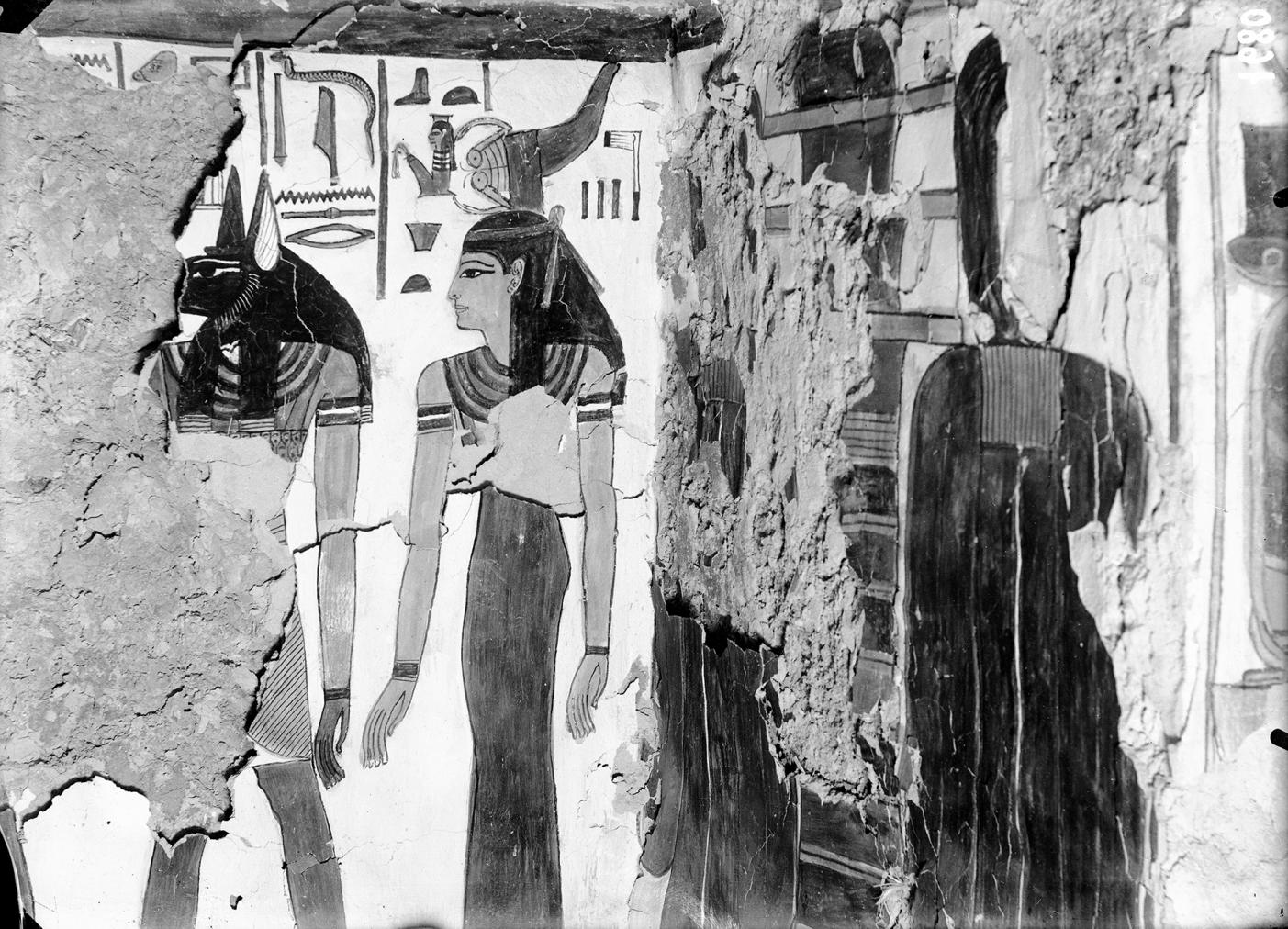
Southeast corner of side chamber Db in the tomb of Queen Nefertari (QV 66) perhaps photographed during excavations. On the south wall, a large djed-pillar is depicted between two tyet-knots (right). On the east wall, Serqet and Anubis among other figures that should have continued had the wall not collapsed (left). In recent times, the plaster with Anubis has collapsed. Italian Archaeological Expedition excavations. Courtesy of the Egyptian Museum in Turin.
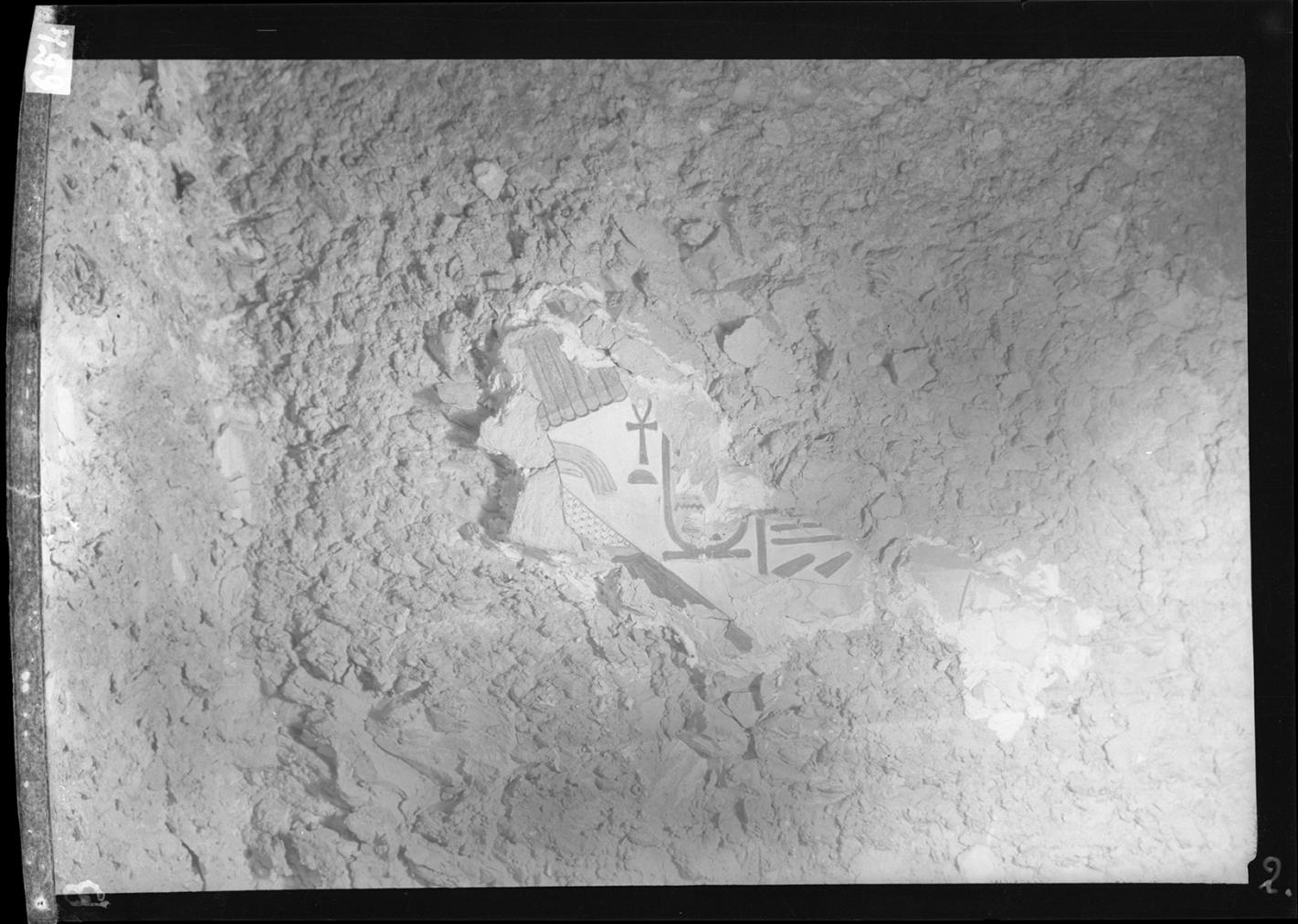
Small fragment of painted plaster from a collapsed wall in the tomb of Queen Nefertari (QV 66) perhaps photographed during excavations. Part of a figure, as well as, the queen's cartouche and titles remain slightly visible. Italian Archaeological Expedition excavations. Courtesy of the Egyptian Museum in Turin.
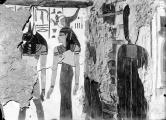
Gate Dc
See entire tombThe gate is set in the south end of the east wall of the Burial Chamber (D). There is damage to the wall paintings.
The decoration on the right outer thickness displays a rearing cobra resting on a nb sign supported by two djed-pillars. The cobra, Wadjet, is facing toward the burial chamber and wearing the Double crown of Upper and Lower Egypt. An almost identical painting appears on the left outer thickness, but the cobra, Nekhbet, is wearing the atef crown of Osiris. Each cobra is “holding” a shen sign and Was scepter. A pt sign surmounts the paintings on both outer thicknesses. The inner thicknesses are inscribed with the Cartouche and titles of Nefertari, and surmounted by a pt sign. The heavily damaged return on the right side features an anthropomorphized Djed-pillar holding the crook and flail insignia of Osiris and surmounted by a pt sign. The soffit, which is on level with chamber Dc, is decorated with yellow stars on a dark blue background. The dado frieze is made up of bands of black, red, and yellow.
Cross-sectional view of the burial chamber photographed from side chamber Da of the tomb of Queen Nefertari (QV 66) perhaps during excavations. The southern pillars elaborately decorated scenes and texts are visible, as well as the east wall of side chamber Dc. Italian Archaeological Expedition excavations. Courtesy of the Egyptian Museum in Turin.
East wall of the burial chamber in the tomb of Queen Nefertari (QV 66) perhaps photographed during excavations. A crocodile-headed deity that guards the third portal through which the queen must pass to reach the hereafter. Italian Archaeological Expedition excavations. Courtesy of the Egyptian Museum in Turin.
Side chamber Dc
See entire tombA square chamber situated on the south end of the east wall of Chamber D, perpendicular to the main tomb axis. The room is mostly damaged with very few decorations surviving. The room has a modern wooden walkway and barriers, as well as fluorescent lighting.
The right and left sides of the west wall serve as the returns for Gate Dc. The return on the right side features an anthropomorphized Djed-pillar holding the crook and flail insignia of Osiris and surmounted by a pt sign. The left-hand return depicts an anthropomorphized djed-pillar also surmounted by a pt sign. The north wall is mostly damaged, but on the left side, the figure of Nefertari is depicted with her hands raised in a gesture of adoration. She stands before an offering table and Hathor who is in the form of a cow as “Mistress of the West”. The east wall is also mostly damaged, but the standing figure of Ma'at with her arms and wings outstretched at her sides. The south wall is the most-preserved. On the right side, Nefertari is shown again, raising her hands in a gesture of adoration. She stands before an offering table which is placed in front of the enthroned figured of Anubis and Isis. The pt sign decorates the top of each wall. The ceiling is decorated with yellow stars on a dark blue background, and the dado frieze is made up of black, red, and yellow bands.
Porter and Moss designation:
Cross-sectional view of the burial chamber photographed from side chamber Da of the tomb of Queen Nefertari (QV 66) perhaps during excavations. The southern pillars elaborately decorated scenes and texts are visible, as well as the east wall of side chamber Dc. Italian Archaeological Expedition excavations. Courtesy of the Egyptian Museum in Turin.
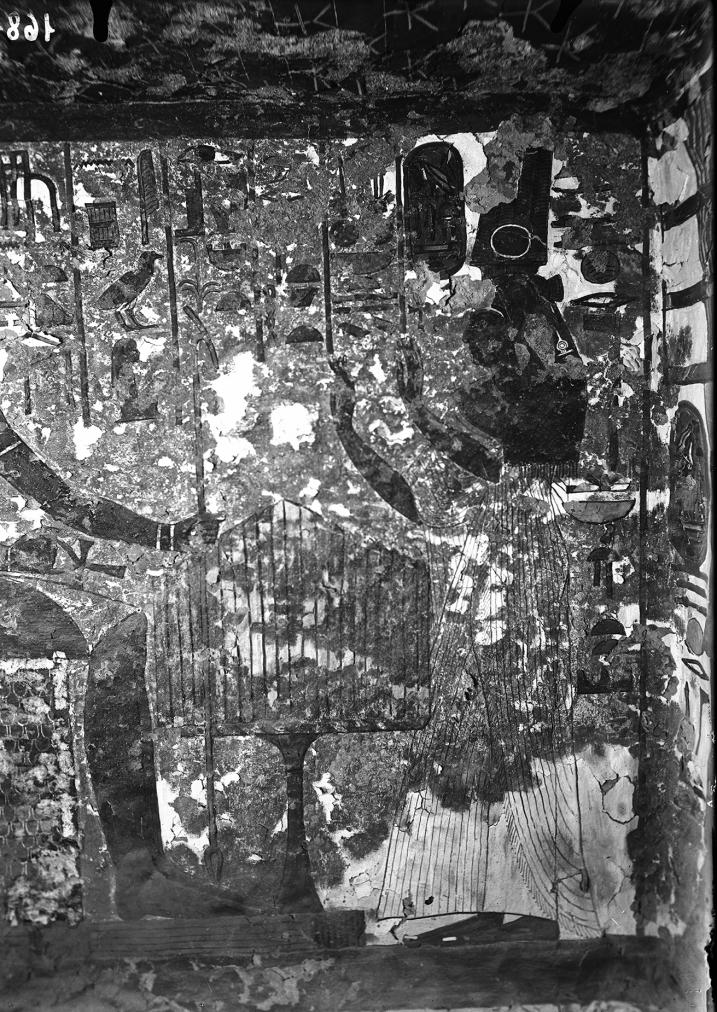
South wall of the side chamber Dc in the tomb of Queen Nefertari (QV 66) perhaps photographed during excavations. Queen Nefertari (right) presents offerings to seated Anubis and Isis (left, partially visible). Italian Archaeological Expedition excavations. Courtesy of the Egyptian Museum in Turin.
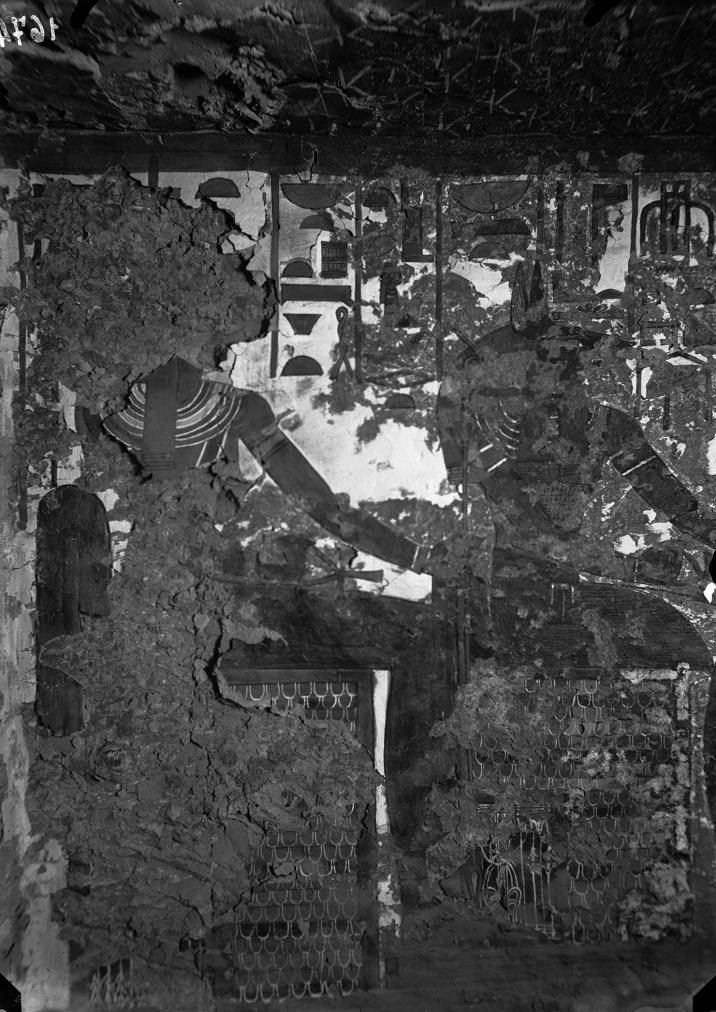
South wall of side chamber Dc in the tomb of Queen Nefertari (QV 66) perhaps photographed during excavations. Detail of seated Anubis and Isis in front of which Queen Nefertari presents offerings (not visible here). Italian Archaeological Expedition excavations. Courtesy of the Egyptian Museum in Turin.
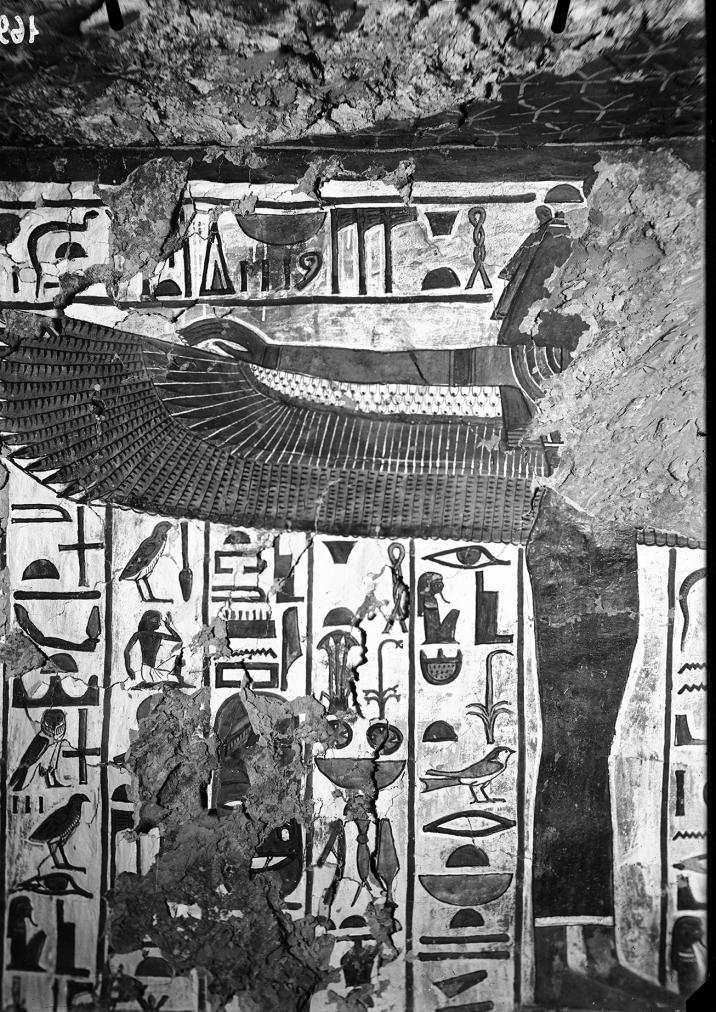
East back wall of side chamber Dc in the tomb of Queen Nefertari (QV 66) perhaps photographed during excavations. A standing image of Ma'at with outstretched wings framed by her epithets and invocations and titles of Queen Nefertari. Italian Archaeological Expedition excavations. Courtesy of the Egyptian Museum in Turin.
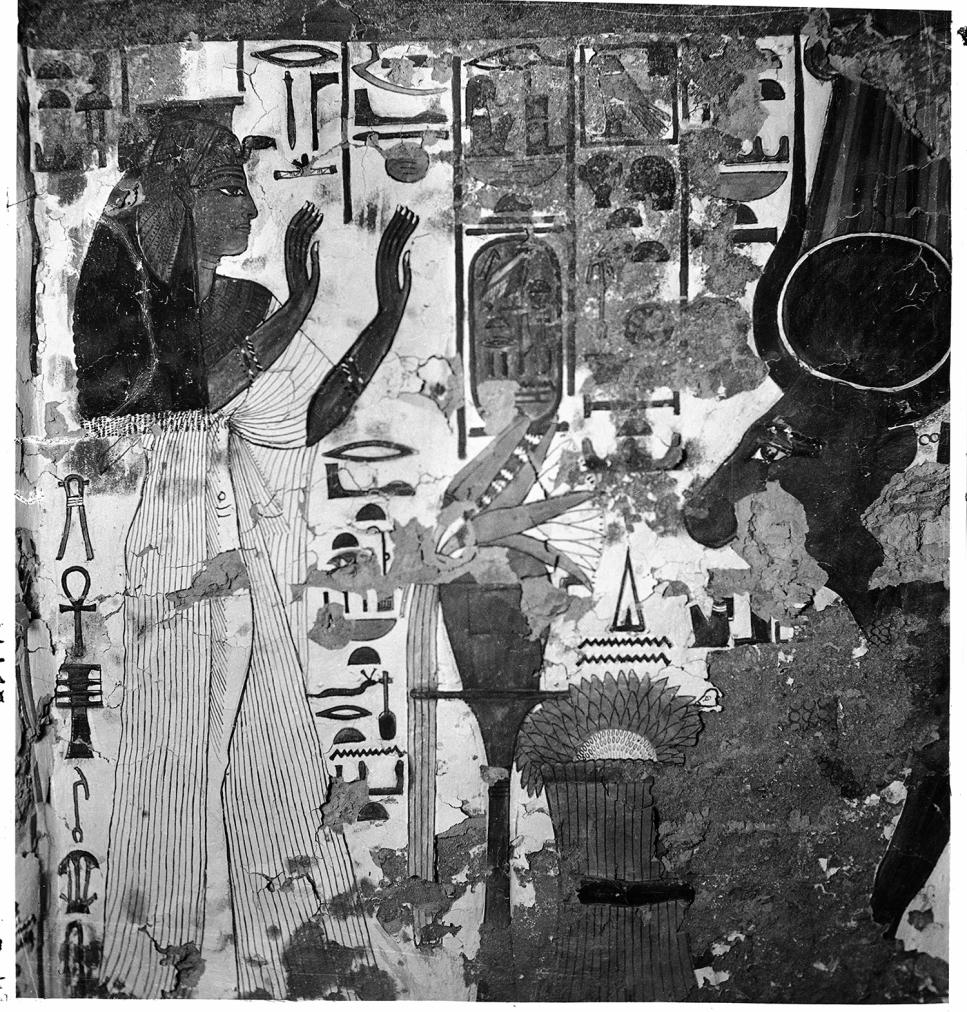
North wall of side chamber Dc in the tomb of Queen Nefertari (QV 66) perhaps photographed during excavations. Queen Nefertari offers and worships Hathor in her bovine form. Italian Archaeological Expedition excavations. Courtesy of the Egyptian Museum in Turin.
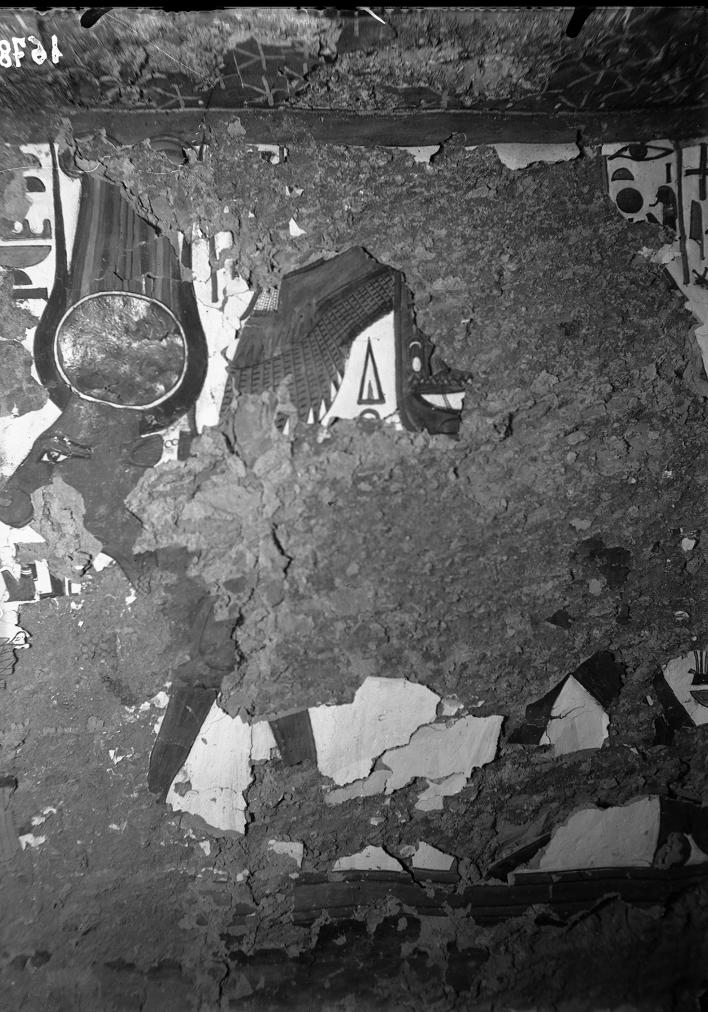
North wall of side chamber Dc in the tomb of Queen Nefertari (QV 66) perhaps photographed during excavations. Detail of Hathor in her bovine form in front of which Queen Nefertari offers and worships. Italian Archaeological Expedition excavations. Courtesy of the Egyptian Museum in Turin.
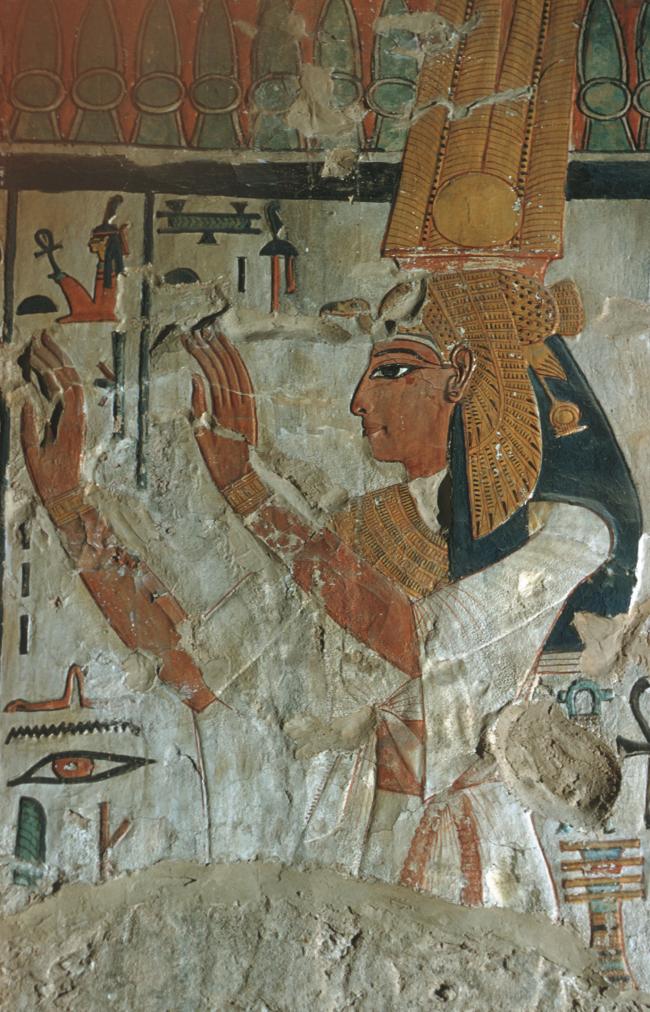
The queen worshipping two seated deities, Side Chamber Dc, front (south) wall (left part). Courtesy of Uni Dia Verlag. Uni Dia Image Nr. 36877.
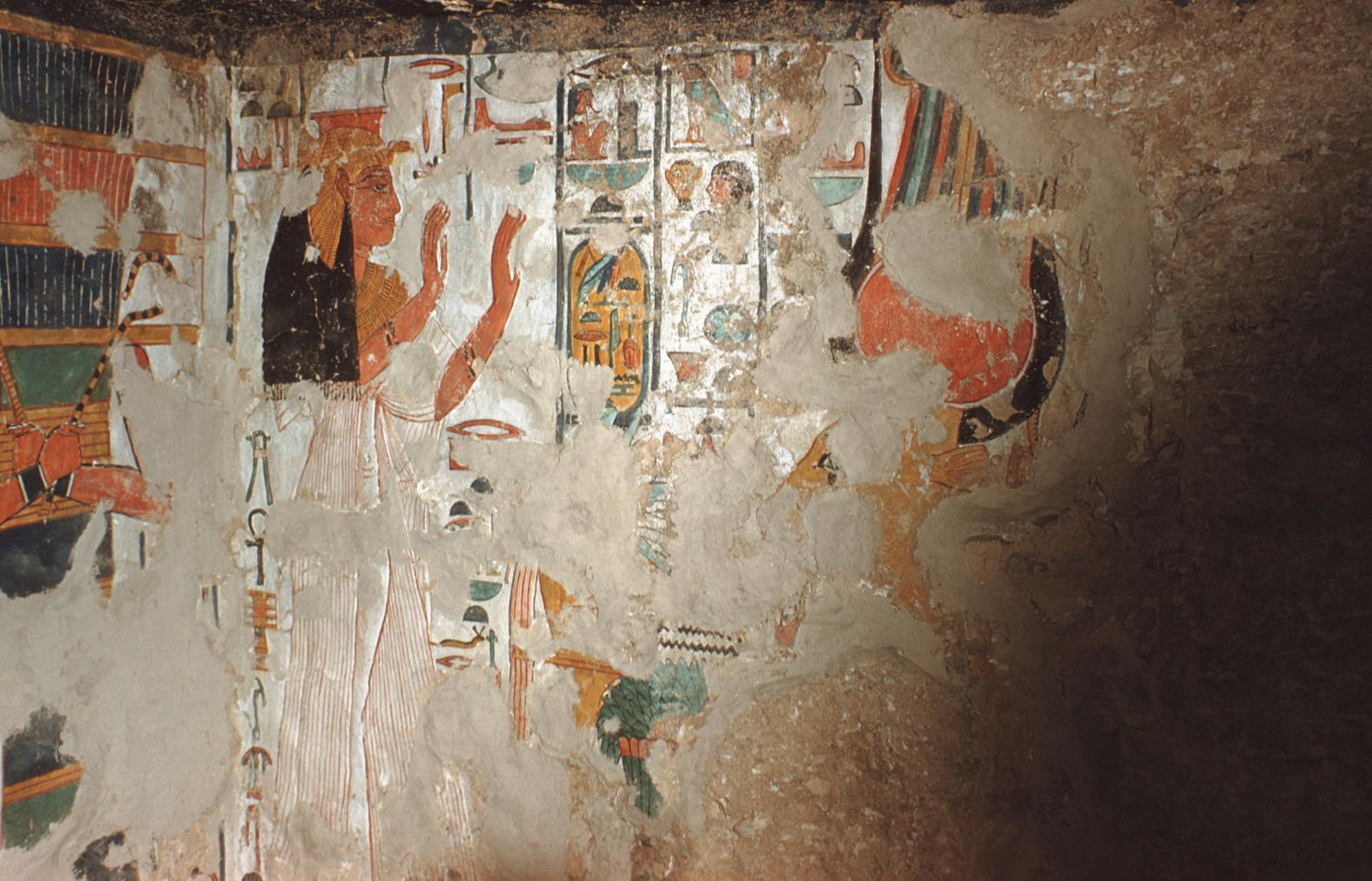
The queen in adoration before the goddess Hathor in her cow form, Side Chamber Dc, left (south) wall. Courtesy of Uni Dia Verlag. Uni Dia Image Nr. 36878.
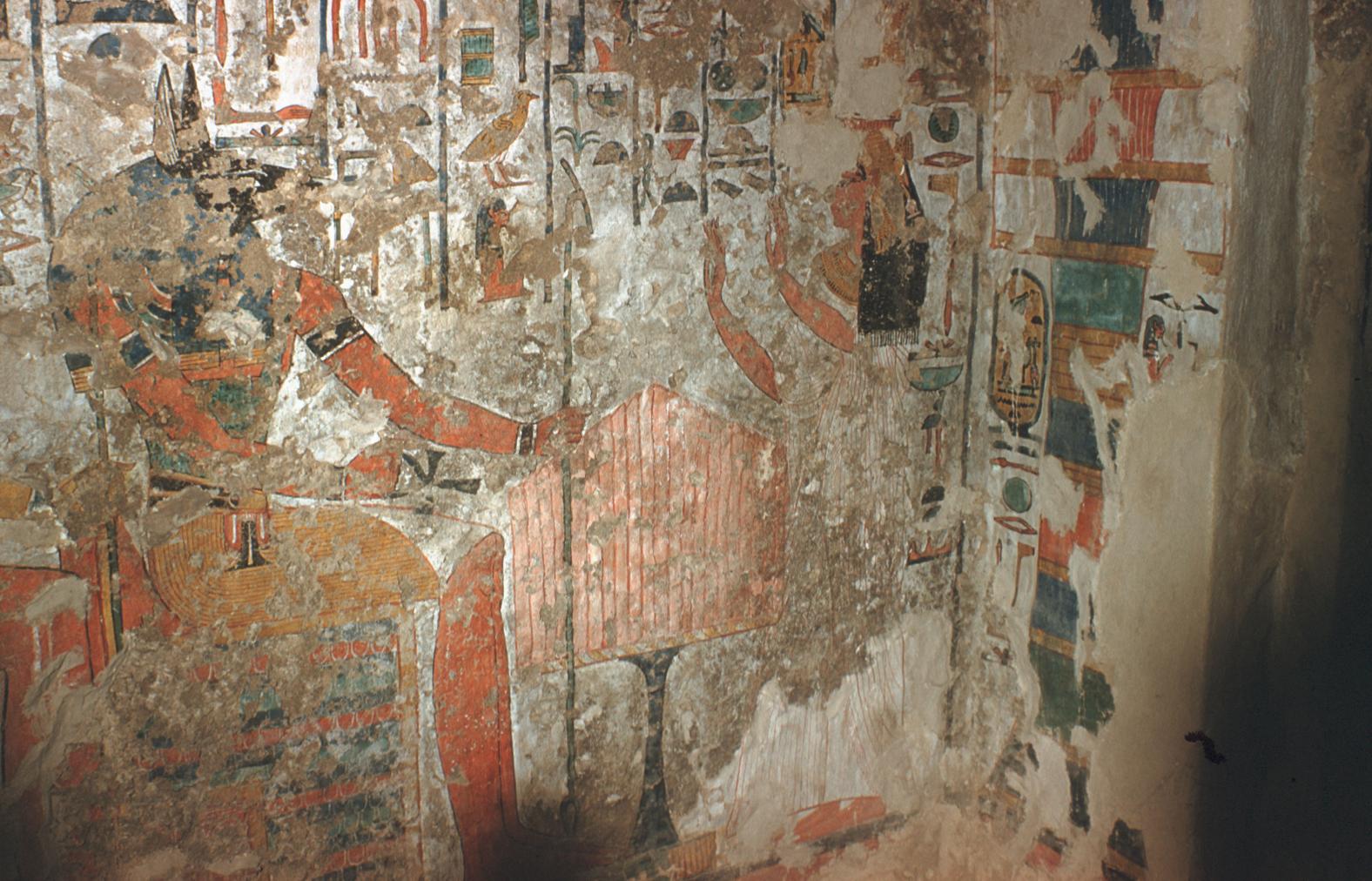
The queen worshipping the gods Anubis (and Isis), Side Chamber Dc, left (south) wall. Courtesy of Uni Dia Verlag. Uni Dia Image Nr. 36879.
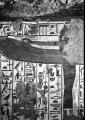
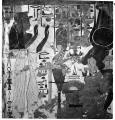
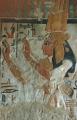
About
About
Of all the QV tombs, by far the most beautifully decorated and most famous is QV 66, the tomb of Queen Nefertari. It was discovered by Ernesto Schiaparelli in 1904. Nefertari married Rameses II before he ascended the throne and, after his coronation, became his 'Great Royal Wife', 'God’s Wife', 'Mother of Pharaoh', 'Hereditary Noblewoman', 'Mistress of Upper and Lower Egypt', and 'She for Whom the Sun Shines'. She died in the 26th year of the king’s 67-year-long reign.
By any standard, Nefertari was a highly regarded and powerful woman. Her husband built a temple for her adjacent to his own at Abu Simbel in Nubia, and she and the king’s mother shared a shrine in his West Bank temple complex, the Ramesseum. Not surprisingly, her tomb in the Valley of the Queens is one of its largest and most beautifully decorated. Indeed, the outstanding quality and preservation of the wall painting puts QV 66 in a class by itself. A good example may be seen in Chamber B, the Antechamber, where a scene shows Nefertari playing a game of senet. Equally well executed, on the chamber’s left wall, are a sitting lion, Benu bird, and the Queen’s mummy, behind which hangs an intricately woven cloth.
On the right wall, the seated figures of Hathor and Re-Horakhty have their titles written in elaborately detailed hieroglyphs. Side-chamber Ba has beautifully executed texts from Chapters 94 and 148 of the Book of the Dead, accompanied by mounds of food offerings, figures of the Queen and deities, and a procession of eight sacred cattle, each chosen for its special markings.
The burial chamber is also decorated with scenes from the Book of the Dead, with Chapter 144 appearing on the right half (south and west) of the tomb, and Chapter 146 appearing on the left half (south and east). In these scenes, Nefertari is passing through a series of gates guarded by one or three deities. One of these deities is an unusual nude female child who holds two knives across her chest. Nefertari greets Osiris on the rear wall. The decoration of rear chamber (Db) is almost entirely damaged, but side chambers Da and Dc are fully decorated with scenes of Nefertari as a mummy and several gods including the Sons of Horus, Hathor as a cow, and a striking partially damaged painting of Ma'at with outstretched wings on side chamber Dc's east wall.
The tomb has been accessible since 1906, following its discovery and excavation by the Italian Archaeological Mission between 1903 and 1905. A protective brick entryway was constructed during that mission and modified at a later date, prior to the 1990s. The tomb has been photographed by several archaeological missions as recently as 2009. Throughout its modern history, it has also been closed to visitors on multiple occasions for documentation projects, conservation treatments, and condition assessments.
Most recently, the tomb was open to visitors under restricted conditions in an effort to preserve its fragile painted plaster surfaces. These measures included the installation of wooden walkways and a metal door at Gate B to seal the tomb outside visiting hours, though glass barriers—used in other tombs in the Valley of the Queens—were not installed. The tomb has since been closed once again due to the need for urgent conservation work.
Noteworthy features:
The elegantly decorated and well-preserved Burial Chamber (Chamber D) is made even more impressive by its unusually large 8 x 10 meter size.
Site History
There is no evidence of later reuse of this tomb. However, the lack of a Sarcophagus and other funerary objects suggests that it was looted in antiquity and “no trace of the wall that must have sealed it [the entrance] could be found” (Thomas) when the tomb was discovered. At this time, Schiaparelli noted that “[t]he rubble, which had fallen upon [it] and had filled the stairs, had also entered in the first chamber [chamber (B)], where it piled up near the entrance, near the left wall and near the one in the back, almost touching the ceiling. The other chambers were almost empty; but their floor was evenly coated with a thick layer of soil, brought in by rain waters, which must have infiltrated the tomb repeatedly”.
Dating
This site was used during the following period(s):
Exploration
Conservation
Conservation History
The Getty Conservation Institute worked for several years to stabilise the plaster walls of QV 66 in order to avert further deterioration. While the results of this conservation effort were impressive, they may not be permanent. The Getty ultimately recommended that the tomb be closed to visitors, as the heat and moisture generated by visitors in the tomb’s small chambers can cause rapid fluctuations in temperature and humidity, weakening the painted plaster surfaces.
This recommendation was followed for several years; however, pressure from tourism and the need for revenue from ticket sales eventually led to the tomb being reopened with limited access. More recently, the tomb has been closed once again due to the need for urgent conservation work.
Site Condition
Unfortunately, the survival of Nefertari’s tomb is not assured. The Valley of the Queens is located in an area of poor-quality limestone, and when tombs were dug there, it was impossible for ancient artists to achieve the flat, smooth walls they preferred as the canvas for their paintings. Instead, they covered the friable, rough-cut bedrock walls with a thick layer of mud plaster and applied the painted decoration to them. The plaster’s weight and tendency to separate from the bedrock, made worse whenever the Valley was subjected to heavy rains and high humidity, has caused it to buckle in many tombs and, lacking support, it has fallen to the floor. That is why many QV tombs today show no evidence of decoration. No active rock stability problems have been identified. The stability of the wall paintings since the end of the GCI-EAO conservation program confirms that this is the case. However, the rock of much of the tomb ceiling is covered by decorated plaster and therefore it is not possible to discern whether faulting, such as seen in adjacent QV 80, occurs. There are several small, non-threatening fractures along joints in doorway (N) and along the Bench of burial chamber (D) in various locations on all four sides, and in the west jamb of doorway (Gate Db). The only other visible fractures of bedrock are located in the ceiling at the bottom of Ramp (A). Ancient flood damage was documented by Schiaparelli in 1904. He reported that rubble had filled the ramp and had also entered the first chamber (B), filling it almost to the ceiling; the other chambers were said to be empty and the floors evenly coated with a thick layer of soil brought in by the rain waters over time (Schiaparelli 1923, 53-55). This may also account for why the tomb remained unknown, after it had been looted, until Schiaparelli’s mission. There are some areas of salt-related disruption that affect the rock and painted plaster, including micro-fracturing and scaling of rock surfaces. Salt-related deterioration is more extensive toward the rear and deeper into the tomb, particularly in chamber (Db) and doorway (Gate Db), and generally in the north half of burial chamber (D) and side chambers (Da) and (Dc). The problems in these areas are both localized and relatively small-scale. They do not affect the majority of the surviving painting. A mouse was sighted and there is evidence of droppings throughout the tomb.
Hieroglyphs
Queen Nefertari Merytmut
 Great Royal Wife, God's Wife, King's Mother, Lady of the Two lands, Mistress of the North and South, Beautiful Companion, Beloved of the Goddess Mut
Hmt-wrt-nswt Hmt-nTr mwt-nswt nbt-tAwy Hnwt-Smaw-mhw nfrt-iry mrt-n-mwt
The composite Re and Osiris, cared for by Isis (right) and Nephthys (left), from the Book of the Dead in the tomb of Nefertari.
The winged Ma'at in the tomb of Nefertari, with the hieroglyphic sign of her name (an ostrich feather) on her wig. She protectively surrounds the deceased as the daughter of Re.
Duamutef, Qebehsenuef, Hapy, and Imsety above Gate C in tomb of Nefertari (QV66)
Nefertari led by Isis.
Detail of Khepri seated on throne and holding a was scepter. Stars on ceiling, Nekhbet on lintel.
Nefertari being led by Horus and personified Djed Pillar.
Detail of Neith.
Nefertari presenting linen
Osiris seated on throne before offerings and four sons of Horus on standard, seated back to back with Rameses II on throne before offerings.
Book of the Dead Spell 148.
Nefertari presenting nu jars before offerings.
Nefertari presenting nu jars before offering table.
Isis and Nephthys seated on thrones before [Nefertari presenting offerings and nu jars].
Isis and Nephthys seated on thrones, Ma'at with protective wings, before [Nefertari presenting offerings and nu jars].
Winged cobra protecting the cartouches of Nefertari, star pattern on ceiling.
Anubis as a jackal on shrine with flail.
Winged Ma'at with offering text and cartouche; star pattern on ceiling.
Nefertari presenting nu jars to Hathor seated on throne; star pattern on ceiling.
Nefertari wearing mut crown offering nu jars (detail).
Osiris, Hathor, and Anubis seated on thrones giving life to [Nefertari].
Nefertari being led by Taweret.
Pillar showing Osiris flanked by imiut fetishes.
Pillar with image of an Iwnmutef-priest
Pillar with depiction of Djed pillar.
Nefertari presenting nu jars to Isis seated on throne and holding a Was scepter
Epigraphy in the tomb of Nefertari (early 20th Century)
The deities Hathor and Ra-Horakhty seated on thrones in Nefertari's tomb.
The entrance of QV66.
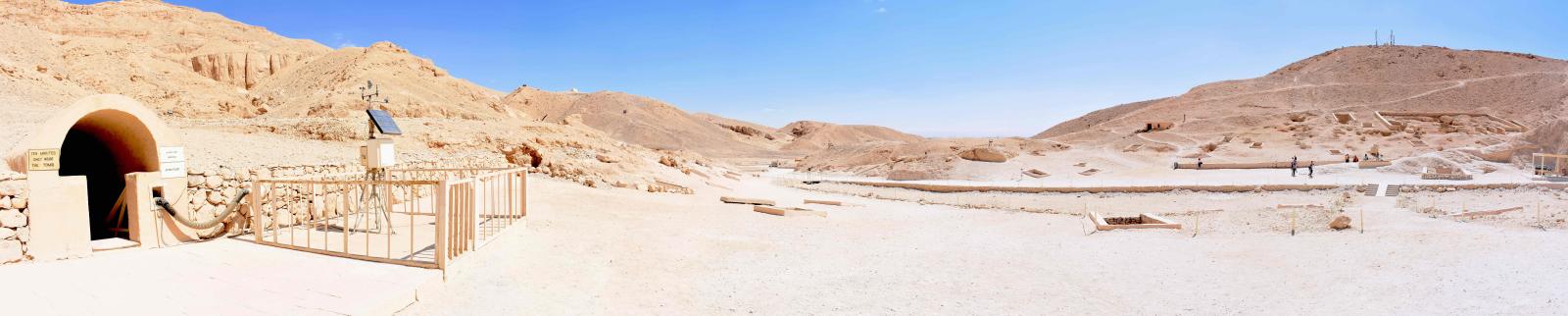
View of the main valley from the tomb of Queen Nefertari, QV 66 (entrance left).
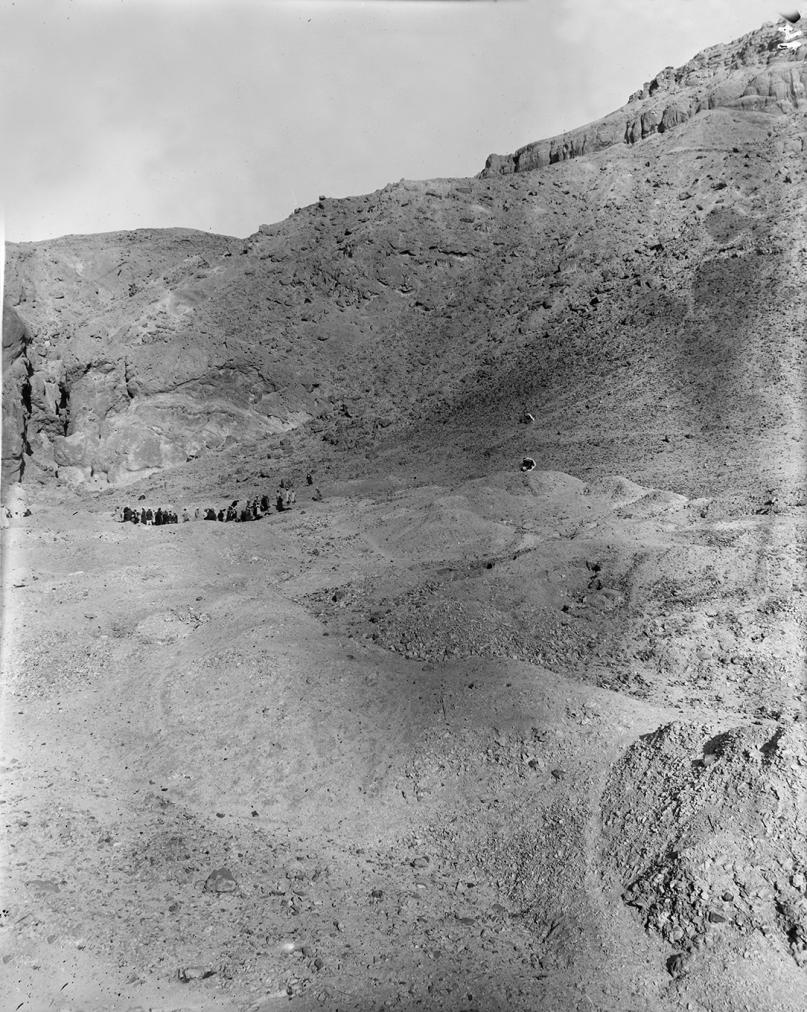
Excavations under Ernesto Schiaparelli taking place in the left side of the Valley of the Queens that led to his discovery of the tomb of Queen Nefertari (QV 66). Italian Archaeological Expedition excavation. Courtesy of the Egyptian Museum in Turin.
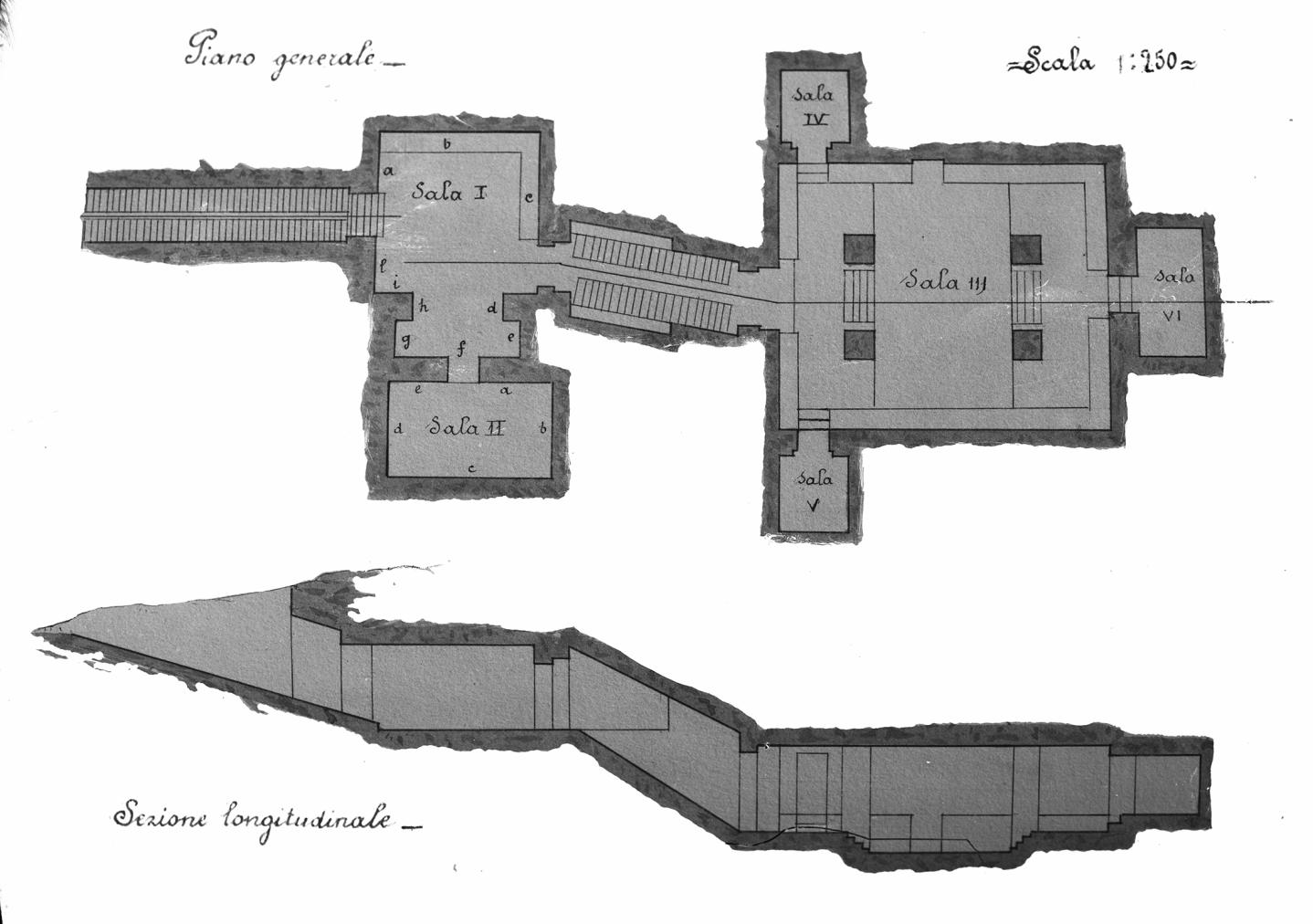
Floorplan and longitudinal section of the tomb of Queen Nefertari (QV 66) drawn in scale 1:250 by Francesco Ballerini (1877-1910) who worked on excavations conducted by Ernesto Schiaparelli in the Valley of the Queens. Italian Archaeological Expedition excavations. Courtesy of the Egyptian Museum in Turin.
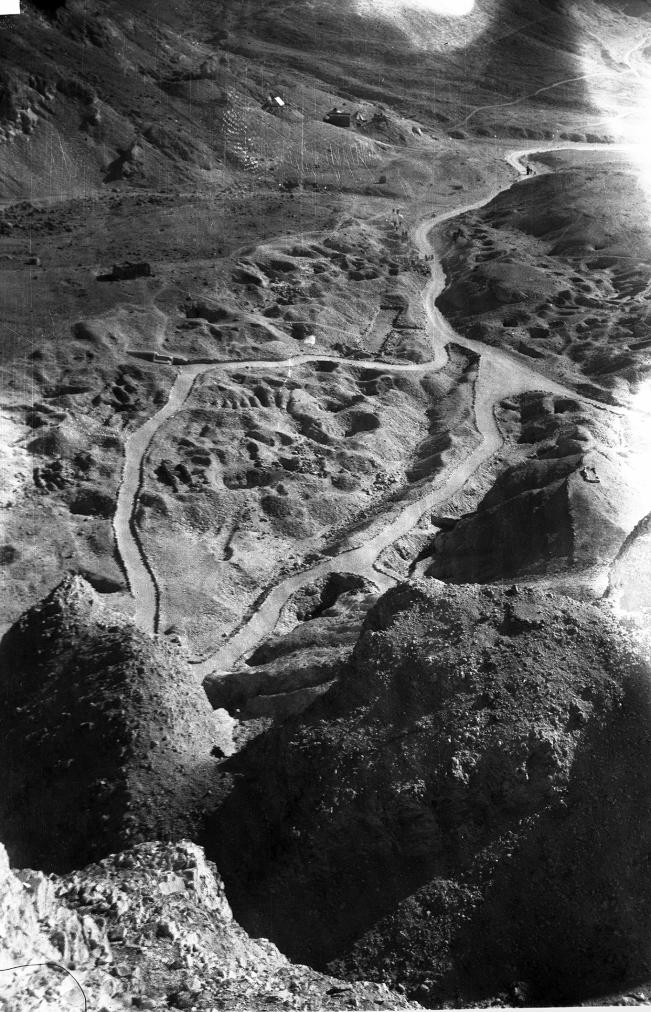
Aerial view from the backside of the Valley of the Queens photographed during Giulio Farina's excavations. In the center, the entrance (with a modern mud brick structure) to the tomb of Queen Nefertari (QV 66) is visible, as well as the Italian Archaeological Expedition's camp. Italian Archaeological Expedition excavations. Courtesy of the Egyptian Museum in Turin.
Entrance to the tomb of Queen Nefertari (QV 66), as viewed from its descending passage, at the time of its discovery during Ernesto Schiaparelli's excavations. Italian Archaeological Expedition excavations. Courtesy of the Egyptian Museum in Turin.
Entrance to the tomb of Queen Nefertari (QV 66), as viewed from its descending passage, at the time of its discovery during Ernesto Schiaparelli's excavations. Italian Archaeological Expedition excavations. Courtesy of the Egyptian Museum in Turin.
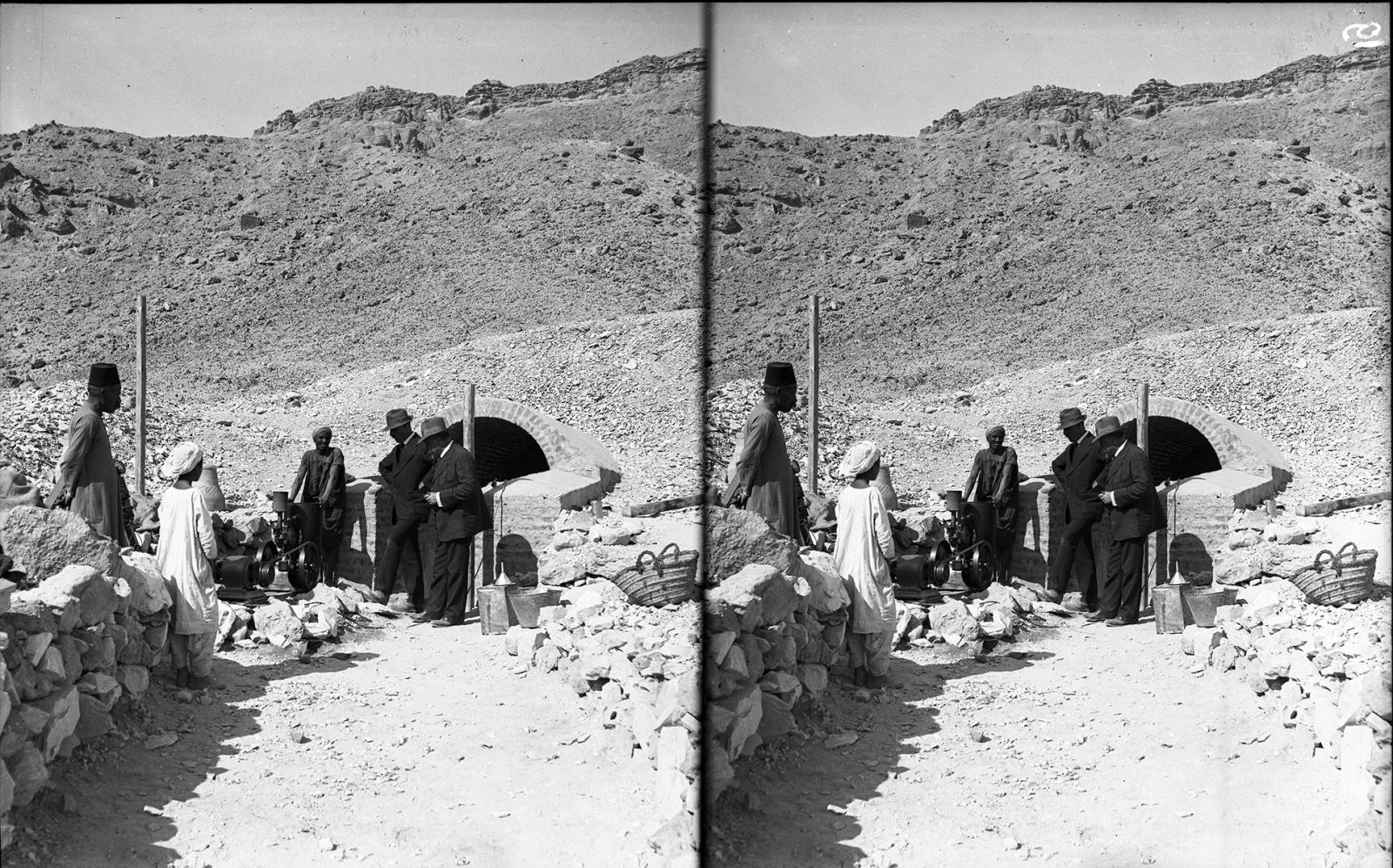
Entrance to the tomb of Queen Nefertari (QV 55) with a modern brick structure covering its descending passage. Ernesto Schiaparelli or Giulio Farina with Howard Carter, as well as three workmen activate a generator to illuminate the tomb. Italian Archaeological Expedition excavations. Courtesy of the Egyptian Museum in Turin.
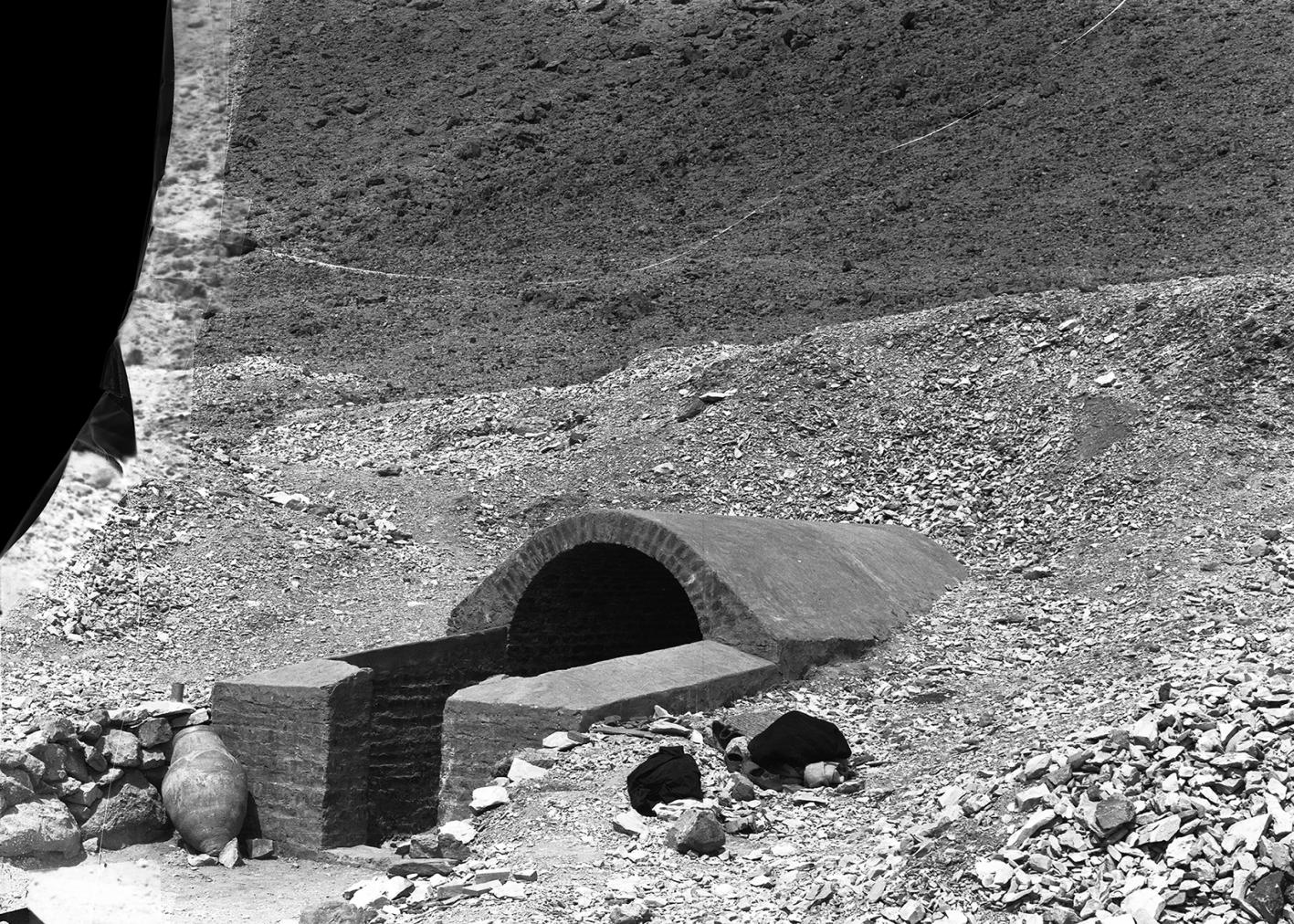
Entrance to the tomb of Queen Nefertari (QV 66) with a modern mud brick structure over its descending passage during Ernesto Schiaparelli or Giulio Farina's excavations. Italian Archaeological Expedition excavations. Courtesy of the Egyptian Museum in Turin.
Guardian in the descending passage to the tomb of Queen Nefertari (QV 66) with its then-new, commemorative plaque installed during Ernesto Schiaparelli's excavations. Italian Archaeological Expedition excavations. Courtesy of the Egyptian Museum in Turin.
The tomb of Queen Nefertari (QV 66) photographed during excavations. From the top left, the queen plays senet and her ba sits upon a shrine while she is in the act of worship. In the center of the wall are texts from Spell 17 of the Book of the Dead while the dado is comprised of djed-pillars and tyet-knots. Italian Archaeological Expedition excavations. Courtesy of the Egyptian Museum in Turin.
Dado comprised of djed-pillars and tyet-knots in the tomb of Queen Nefertari (QV 66) photographed during excavations. Italian Archaeological Expedition excavations. Courtesy of the Egyptian Museum in Turin.
The tomb of Queen Nefertari (QV 66) photographed during excavations. The queen plays senet (left) and her ba sits upon a shrine (middle) while she is in the act of worship (right). Below are texts from Spell 17 of the Book of the Dead. Italian Archaeological Expedition excavations. Courtesy of the Egyptian Museum in Turin.
The tomb of Queen Nefertari (QV 66) photographed during excavations. From the left, the queen plays senet and her ba sits upon a shrine (middle) while she is in the act of worship (right). Below are texts from Spell 17 of the Book of the Dead. In the center are the twin lions of the god Aker who protect the horizon, the benu-bird of Re, Queen Nefertari's mummy on a funerary pyre protected by Nephthys and Isis in their kite forms, and finally the god Heh kneeling. A dog-legged area with five niches painted with shrines and framed with a cavetto cornice extends from the lower two sides of the room. The ceiling's stars are visible. Italian Archaeological Expedition excavations. Courtesy of the Egyptian Museum in Turin.
The tomb of Queen Nefertari (QV 66) photographed during excavations. From the left, the twin lions of the god Aker who protect the horizon, the benu-bird of Re, Queen Nefertari's mummy on a funerary pyre protected by Nephthys and Isis in their kite forms, the god Heh kneeling, and additional references to deities from the texts of Spell 17 from the Book of the Dead shown below. A dog-legged area with five niches painted with shrines and framed with a cavetto cornice extends from the lower two sides of the room. The ceiling's stars are visible. Italian Archaeological Expedition excavations. Courtesy of the Egyptian Museum in Turin.
The tomb of Queen Nefertari (QV 66) possibly photographed after excavations. From the left, Hathor in her bovine form, a canopic chest in the form of a shrine with Anubis as a jackal couchant surrounded by the Four Sons of Horus, as well as Ra and Shu seated. Below are texts from Spell 17 of the Book of the Dead. A dog-legged area with five niches painted with shrines and framed with a cavetto cornice extends from the lower two sides of the room. Italian Archaeological Expedition excavations. Courtesy of the Egyptian Museum in Turin.
The tomb of Queen Nefertari (QV 66) possibly photographed after excavations. From the left, Hathor in her bovine form, a canopic chest in the form of a shrine with Anubis as a jackal couchant surrounded by the Four Sons of Horus, as well as Ra and Shu seated. Below are texts from Spell 17 of the Book of the Dead. A dog-legged area with five niches painted with shrines and framed with a cavetto cornice extends from the lower two sides of the room. Italian Archaeological Expedition excavations. Courtesy of the Egyptian Museum in Turin.
The tomb of Queen Nefertari (QV 66) possibly photographed after excavations. From the left, Hathor in her bovine form, a canopic chest in the form of a shrine with Anubis as a jackal couchant surrounded by the Four Sons of Horus, Ra and Shu enthroned, as well as Horus and his Four Sons seated above the burial chamber's entrance. Below are texts from Spell 17 of the Book of the Dead. A dog-legged area with five niches painted with shrines and framed with a cavetto cornice extends from the lower two sides of the room. Italian Archaeological Expedition excavations. Courtesy of the Egyptian Museum in Turin.
The tomb of Queen Nefertari (QV 66) photographed after excavations. From the left, Horus seated with his Four Sons, Imsety, Hapy, Duamutef, and Qebehsenuef, above Gate C with a modern wooden railing. Italian Archaeological Expedition excavations. Courtesy of the Egyptian Museum in Turin.
The tomb of Queen Nefertari (QV 66) perhaps photographed after excavations. Above Gate C, with Wadjet as a cobra protecting the royal cartouche of Queen Nefertari, are Horus seated and his Four Sons, Imsety, Hapy, Duamutef, and Qebehsenuef. To the right, an enshrined Osiris flanked by two imiut-fetishes. Italian Archaeological Expedition excavations. Courtesy of the Egyptian Museum in Turin.
The tomb of Queen Nefertari (QV 66) perhaps photographed after excavations. Above Gate C are Horus seated and his Four Sons, Imsety, Hapy, Duamutef, and Qebehsenuef. An image of the goddess Serqet on the east wall is visible, too. Italian Archaeological Expedition excavations. Courtesy of the Egyptian Museum in Turin.
The tomb of Queen Nefertari (QV 66) perhaps photographed after excavations. From the left, Ra and Shu seated. Above Gate C are Horus seated and his Four Sons, Imsety, Hapy, Duamutef, and Qebehsenuef. An enshrined Osiris flanked by two imiut-fetishes, as well as Serqet on the east wall are visible, too. Italian Archaeological Expedition excavations. Courtesy of the Egyptian Museum in Turin.
The tomb of Queen Nefertari (QV 66) perhaps photographed after excavations that depicts an enshrined Osiris flanked by two imiut-fetishes. Italian Archaeological Expedition excavations. Courtesy of the Egyptian Museum in Turin.
The tomb of Queen Nefertari (QV 66) perhaps photographed after excavations that depicts Anubis enshrined with his epithets. Italian Archaeological Expedition excavations. Courtesy of the Egyptian Museum in Turin.
The tomb of Queen Nefertari (QV 66) perhaps photographed after excavations that depicts Anubis enshrined with his epithets, as well as Queen Nefertari who worships Osiris. Italian Archaeological Expedition excavations. Courtesy of the Egyptian Museum in Turin.
Photographic recomposition of the east wall, south side in the tomb of Queen Nefertari (QV 66) that depicts Anubis enshrined with his epithets, as well as Queen Nefertari who worships Osiris. Italian Archaeological Expedition excavations. Courtesy of the Egyptian Museum in Turin.
South wall, east side in chamber B in the tomb of Queen Nefertari (QV 66) perhaps photographed after excavations that depicts the queen worshipping an enshrined and seated Osiris. Italian Archaeological Expedition excavations. Courtesy of the Egyptian Museum in Turin.
South wall, east side in chamber B in the tomb of Queen Nefertari (QV 66) perhaps photographed after excavations that depicts the queen worshipping an enshrined and seated Osiris. Italian Archaeological Expedition excavations. Courtesy of the Egyptian Museum in Turin.
Lintel decoration above the vestibule in chamber B of the tomb of Queen Nefertari (QV 66) perhaps photographed during excavations. A kneeling image of Heh who heals the two wadjet-eyes of Horus is framed by an alternating motif of uraei and blue ostrich feathers. Italian Archaeological Expedition excavations. Courtesy of the Egyptian Museum in Turin.
View of the vestibule in chamber B of the tomb of Queen Nefertari (QV 66) perhaps photographed during excavations. An image of Neith with her epithets topped by a kheker-frieze. Italian Archaeological Expedition excavations. Courtesy of the Egyptian Museum in Turin.
View of the vestibule's west wall, south side in chamber B of the tomb of Queen Nefertari (QV 66) perhaps photographed during excavations. An image of Neith with her epithets topped by a kheker-frieze. An image of Osiris in the form of a djed-pillar fetish followed by the queen led by Horsiese (left). Italian Archaeological Expedition excavations. Courtesy of the Egyptian Museum in Turin.
Panoramic view of the vestibule in chamber B of the tomb of Queen Nefertari (QV 66) perhaps photographed during excavations. Italian Archaeological Expedition excavations. Courtesy of the Egyptian Museum in Turin.
View of the east wall of chamber B's vestibule with access to side chamber Ba in the tomb of Queen Nefertari (QV 66) perhaps photographed during excavations. On the right, a seated dyad statue of Re-Horakhty and Hathor. On the left, Khepri. Italian Archaeological Expedition excavations. Courtesy of the Egyptian Museum in Turin.
View of the east wall of chamber B's vestibule with access to side chamber Ba in the tomb of Queen Nefertari (QV 66) perhaps photographed during excavations. A seated dyad of Re-Horakhty and Hathor with their epithets. Italian Archaeological Expedition excavations. Courtesy of the Egyptian Museum in Turin.
Northeast side of chamber B's vestibule in the tomb of Queen Nefertari (QV 66) perhaps photographed during excavations. A seated Khepri, as well as the queen (not visible) who is led by Isis. Italian Archaeological Expedition excavations. Courtesy of the Egyptian Museum in Turin.
Northeast side of chamber B's vestibule in the tomb of Queen Nefertari (QV 66) perhaps photographed during excavations. A seated Khepri, as well as the queen (not visible) who is led by Isis (middle). Part of chamber B's east wall with an image of Osiris flanked by two imiut-fetishes and Serqet with her epithets are visible, too. Italian Archaeological Expedition excavations. Courtesy of the Egyptian Museum in Turin.
Panoramic view of the northeast corner of chamber B's vestibule in the tomb of Queen Nefertari (QV 66). Italian Archaeological Expedition excavations. Courtesy of the Egyptian Museum in Turin.
Northeast corner of chamber B's vestibule (scene 10) in the tomb of Queen Nefertari (QV 66). Isis accompanies the queen toward a seated Khepri on the adjacent wall. Italian Archaeological Expedition excavation. Courtesy of the Egyptian Museum in Turin.
North side of chamber B's vestibule in the tomb of Queen Nefertari (QV 66) perhaps photographed during excavations. An image of Serqet with her epithets topped by a khekher-frieze. Italian Archaeological Expedition excavations. Courtesy of the Egyptian Museum in Turin.
View of chamber B's vestibule photographed from side chamber Ba in the tomb of Queen Nefertari (QV 66). In the foreground, images of Serqet and Ma'at with their epithets topped by khekher-friezes are visible, as well as Osiris in the form of a djed-pillar fetish on the south side of its west wall. Italian Archaeological Expedition excavations. Courtesy of the Egyptian Museum in Turin.
View of chamber B's vestibule photographed from side chamber Ba in the tomb of Queen Nefertari (QV 66). In the foreground, images of Serqet and Ma'at with their epithets topped by khekher-friezes are visible, as well as Osiris in the form of a djed-pillar fetish on the south side of its west wall. Italian Archaeological Expedition excavations. Courtesy of the Egyptian Museum in Turin.
West wall, north side of side chamber Ba in the tomb of Queen Nefertari (QV 66) perhaps photographed during excavations. The queen offers and presents linen to an enshrined Ptah. Italian Archaeological Expedition excavations. Courtesy of the Egyptian Museum in Turin.
Detail of the west wall, north side of side chamber Ba in the tomb of Queen Nefertari (QV 66) perhaps photographed during excavations. The queen offers and presents linen to an enshrined Ptah beside a djed-pillar. Italian Archaeological Expedition excavations. Courtesy of the Egyptian Museum in Turin.
West wall, north side of side chamber Ba in the tomb of Queen Nefertari (QV 66) perhaps photographed during excavations. The queen offers an ex-voto in the form of a frog and a scribal palette to a seated Thoth, which is framed by texts from Spell 94 of the Book of the Dead. Italian Archaeological Expedition excavations. Courtesy of the Egyptian Museum in Turin.
West wall, south side of side chamber Ba in the tomb of Queen Nefertari (QV 66) perhaps photographed during excavations. Re-Osiris is shown mummiform with the head and horns of a wild barbary sheep and sun disc and is protected by Nephthys (left) and Isis (right). Italian Archaeological Expedition excavations. Courtesy of the Egyptian Museum in Turin.
West wall, south side of side chamber Ba in the tomb of Queen Nefertari (QV 66) perhaps photographed during excavations. Re-Osiris is shown mummiform with the head and horns of a wild barbary sheep and sun disc and is protected by Nephthys (left) and Isis (right, not visible here). To the left, Queen Nefertari recites Spell 178 of the Book of the Dead. Italian Archaeological Expedition excavations. Courtesy of the Egyptian Museum in Turin.
Southwest corner of side chamber Ba in the tomb of Queen Nefertari (QV 66) perhaps photographed during excavations. Queen Nefertai (right) recites Spell 148 of the Book of the Dead in front of different types of bovines with offerings who will nourish her in the hereafter (left). Italian Archaeological Expedition excavations. Courtesy of the Egyptian Museum in Turin.
West wall, south side of side chamber Ba in the tomb of Queen Nefertari (QV 66) perhaps photographed during excavations. Re-Osiris is shown mummiform with the head and horns of a wild barbary sheep and sun disc and is protected by Nephthys (left) and Isis (right, not visible here). To the left, Queen Nefertari recites Spell 178 of the Book of the Dead. Italian Archaeological Expedition excavations. Courtesy of the Egyptian Museum in Turin.
Southeast corner of side chamber Ba in the tomb of Queen Nefertari (QV 66) perhaps photographed during excavations. Bovines (right) with offerings who will nourish the queen in the hereafter are depicted from Spell 148 of the Book of the Dead while Queen Nefertari (left) offers a large offering bundle to Atum. Italian Archaeological Expedition excavations. Courtesy of the Egyptian Museum in Turin.
South wall of side chamber Ba in the tomb of Queen Nefertari (QV 66) perhaps photographed during excavations. Seven bovines with offerings who will nourish the queen in the hereafter, as well as four oars from a bark that will help the queen reach the Imperishable Stars in the West, as noted in Spell 178 of the Book of the Dead. Italian Archaeological Expedition excavations. Courtesy of the Egyptian Museum in Turin.
Southwest corner of side chamber Ba in the tomb of Queen Nefertari (QV 66) perhaps photographed during excavations. Queen Nefertai (right) recites Spell 148 of the Book of the Dead in front of different types of bovines with offerings who will nourish her in the hereafter (left). Italian Archaeological Expedition excavations. Courtesy of the Egyptian Museum in Turin.
East wall of side chamber Ba in the tomb of Queen Nefertari (QV 66) perhaps photographed during excavations. Queen Nefertari presents a large offering bundle to Osiris (left, not visible here). Italian Archaeological Expedition excavations. Courtesy of the Egyptian Museum in Turin.
East wall from side chamber Ba in the tomb of Queen Nefertari (QV 66) perhaps photographed during excavations. Queen Nefertari presents a large offering bundle to Osiris (left, not visible here). Italian Archaeological Expedition excavations. Courtesy of the Egyptian Museum in Turin.
East wall from side chamber Ba in the tomb of Queen Nefertari (QV 66) perhaps photographed during excavations. Osiris receives a large bundle of offerings from Queen Nefertari (right, not visible here). Italian Archaeological Expedition excavations. Courtesy of the Egyptian Museum in Turin.
East wall from side chamber Ba in the tomb of Queen Nefertari (QV 66) perhaps photographed during excavations. Osiris and Atum receive large offering bundles from Queen Nefertari (not visible here). Italian Archaeological Expedition excavations. Courtesy of the Egyptian Museum in Turin.
East wall detail from side chamber Ba in the tomb of Queen Nefertari (QV 66) perhaps photographed during excavations. Atum receives a large offering bundle from Queen Nefertari (not visible here). Italian Archaeological Expedition excavations. Courtesy of the Egyptian Museum in Turin.
East wall detail from side chamber Ba in the tomb of Queen Nefertari (QV 66) perhaps photographed during excavations. A large offering bundle presented by Queen Nefertari to Atum (both not visible here). Italian Archaeological Expedition excavations. Courtesy of the Egyptian Museum in Turin.
East wall detail from side chamber Ba in the tomb of Queen Nefertari (QV 66) perhaps photographed during excavations. Queen Nefertari presents a large offering bundle to the Atum (right, not visible here). Italian Archaeological Expedition excavations. Courtesy of the Egyptian Museum in Turin.
East wall of stairwell C in the tomb of Queen Nefertari (QV 66). An image of Neith with her epithets topped by a kheker-frieze. Italian Archaeological Expedition excavations. Courtesy of the Egyptian Museum in Turin.
East wall of stairwell C in the tomb of Queen Nefertari (QV66). Ma'at (right) and her epithets topped by a khekher-frieze beside Nephthys who kneels on a nebu-sign and holds a shen-ring (middle), as well as Anubis in his jackal form upon a shrine (upper left). Italian Archaeological Expedition excavations. Courtesy of the Egyptian Museum in Turin.
East wall detail of Stairwell C in the tomb of Queen Nefertari (QV66). Nephthys knees on a nebu-sign and holds a shen-ring. Italian Archaeological Expedition excavations. Courtesy of the Egyptian Museum in Turin.
East wall detail of Stairwell C in the tomb of Queen Nefertari (QV 66) perhaps photographed during excavations. Queen Nefertari presents a large offering bundle and nw-jars to a series of deities. Italian Archaeological Expedition excavations. Courtesy of the Egyptian Museum in Turin.
East wall detail of Stairwell C in the tomb of Queen Nefertari (QV 66) perhaps photographed during excavations. A winged image of Ma'at, as well as other deities, receive a large offering bundle and nw-jars from Queen Nefertari (not visible here). Italian Archaeological Expedition excavations. Courtesy of the Egyptian Museum in Turin.
East outer thickness of Gate C in the tomb of Queen Nefertari (QV 66) perhaps photographed during excavations. Wadjet, the heraldic goddess of Lower Egypt, stills upon a neb-sign and two djed-pillars as a rearing cobra with a double crown, was-scepter, and shen-ring. Italian Archaeological Expedition excavations. Courtesy of the Egyptian Museum in Turin.
East wall of Stairwell C in the tomb of Queen Nefertari (QV 66). Wadjet (right), the heraldic goddess of Lower Egypt, stills upon a neb-sign and two djed-pillars as a rearing cobra with a double crown, was-scepter, and shen-ring is partially visible beside Ma'at (left) with their epithets. Italian Archaeological Expedition excavations. Courtesy of the Egyptian Museum in Turin.
Lintel of Gate D in the tomb of Queen Nefertari (QV 66) perhaps photographed during excavations. A winged image of Ma'at, as well as painted inscriptions on the upper lintel and doorjambs. Italian Archaeological Expedition excavations. Courtesy of the Egyptian Museum in Turin.
Lintel of Gate D in the tomb of Queen Nefertari (QV 66) perhaps photographed during excavations. A winged image of Ma'at, as well as painted inscriptions on the upper lintel and doorjambs. Italian Archaeological Expedition excavations. Courtesy of the Egyptian Museum in Turin.
East wall of stairwell C in the tomb of Queen Nefertari (QV66). Ma'at (right) and her epithets topped by a khekher-frieze beside Isis who knees on a nebu-sign and holds a shen-ring (middle), as well as Anubis in his jackal form upon a shrine (upper left). Italian Archaeological Expedition excavations. Courtesy of the Egyptian Museum in Turin.
East wall of stairwell C in the tomb of Queen Nefertari (QV66). Isis kneels on a nebu-sign and holds a shen-ring. Italian Archaeological Expedition excavations. Courtesy of the Egyptian Museum in Turin.
East wall of stairwell C in the tomb of Queen Nefertari (QV66). Anubis in his jackal form upon a shrine recites benevolent words to the queen. Italian Archaeological Expedition excavations. Courtesy of the Egyptian Museum in Turin.
West wall of stairwell C in the tomb of Queen Nefertari (QV 66) perhaps photographed during excavations. A winged cobra protects the queen's cartouche framed by sun disc and nebu-sign. Italian Archaeological Expedition excavations. Courtesy of the Egyptian Museum in Turin.
West wall of stairwell C in the tomb of Queen Nefertari (QV 66) perhaps photographed during excavations. Queen Nefertari (right) presents nw-jars beside an offering table in front of a seated dyad statue of Isis and Nephthys (left, not visible here). Italian Archaeological Expedition excavations. Courtesy of the Egyptian Museum in Turin.
West wall of stairwell C in the tomb of Queen Nefertari (QV 66) perhaps photographed during excavations. Queen Nefertari (right, not visible here) presents nw-jars beside an offering table in front of a seated dyad statue of Isis and Nephthys. Italian Archaeological Expedition excavations. Courtesy of the Egyptian Museum in Turin.
West wall of stairwell C in the tomb of Queen Nefertari (QV 66) perhaps photographed during excavations. A personified djed-pillar with was-scepters (right) and a winged image of Ma'at who kneels and protects a seated dyad of Isis and Nephthys (far left). Italian Archaeological Expedition excavations. Courtesy of the Egyptian Museum in Turin.
Panoramic view of burial chamber D in the tomb of Queen Nefertari (QV 66) perhaps photographed during excavations. Side chamber Da is visible (right), as well as two of its rectangular pillars with elaborately painted scenes and texts. Italian Archaeological Expedition excavations. Courtesy of the Egyptian Museum in Turin.
Cross-sectional view of the burial chamber photographed from side chamber Da of the tomb of Queen Nefertari (QV 66) perhaps during excavations. The southern pillars elaborately decorated scenes and texts are visible, as well as the east wall of side chamber Dc. Italian Archaeological Expedition excavations. Courtesy of the Egyptian Museum in Turin.
Panoramic view of the burial chamber in the tomb of Queen Nefertari (QV 66) perhaps photographed during excavations. Pillar with a depiction of an enshrined Osiris flanked by two imiut-fetishes, as well as his epithets, is visible in the foreground. Italian Archaeological Expedition excavations. Courtesy of the Egyptian Museum in Turin.
Panoramic view of the burial chamber of the tomb of Queen Nefertari (QV 66) perhaps photographed during excavations. Side chamber Da is visible (right), as well as two of its rectangular pillars with elaborately painted scenes and texts. Italian Archaeological Expedition excavations. Courtesy of the Egyptian Museum in Turin.
View of Pillar in the burial chamber of the tomb of Queen Nefertari (QV 66) perhaps photographed during excavations. An image of an Iwnmutef-priest, in leopard skin and sidelock of youth, raises his arm toward the central part of the burial chamber with an address to Osiris. Italian Archaeological Expedition excavations. Courtesy of the Egyptian Museum in Turin.
View of Pillar in the burial chamber of the tomb of Queen Nefertari (QV 66) perhaps photographed during excavations. Hathor (left) embraces Queen Nefertari (right) who wears a tripartite wig with a modius, vulture headdress, wesekh-collar around her neck, and an elaborate linen gown tied at the waist. Italian Archaeological Expedition excavations. Courtesy of the Egyptian Museum in Turin.
View of Pillar in the burial chamber of the tomb of Queen Nefertari (QV 66) perhaps photographed during excavations. A large djed-pillar is framed by the queen's cartouche and titles as 'Great king's wife' and 'Lady of the Two Lands of Upper and Lower Egypt'. Italian Archaeological Expedition excavations. Courtesy of the Egyptian Museum in Turin.
View of Pillar in the burial chamber of the tomb of Queen Nefertari (QV 66) perhaps photographed during excavations. An image of an enshrined Osiris flanked by two imiut-fetishes and topped by a khekher-frieze. Italian Archaeological Expedition excavations. Courtesy of the Egyptian Museum in Turin.
View of Pillar in the burial chamber of the tomb of Queen Nefertari (QV 66) perhaps photographed during excavations. An image of Horentodes, in leopard skin and sidelock of youth, raises his arm toward the central part of the burial chamber with an address to Osiris. Italian Archaeological Expedition excavations. Courtesy of the Egyptian Museum in Turin.
View of Pillar C in the burial chamber of the tomb of Queen Nefertari (QV 66) perhaps photographed during excavations. Isis (right) gives an ankh ('eternal life') to Queen Nefertari (left) who wears a tripartite wig with a modius, vulture headdress, wesekh-collar around her neck, and an elaborate linen gown tied. Italian Archaeological Expedition excavations. Courtesy of the Egyptian Museum in Turin.
Collage of three sides of the two of the rectangular pillars in the burial chamber of the tomb of Queen Nefertari (QV 66) perhaps photographed during excavations. To the left is an image of Hathor who embraces Queen Nefertari (right) wearing a tripartite wig with a modius, vulture headdress, wesekh-collar around her neck, and an elaborate linen gown tied at the waste. In the middle is an image of an enshrined Osiris flanked by two imiut-fetishes and topped by a khekher-frieze. To the right is an image of Isis who gives an ankh ('eternal life') to Queen Nefertari (left) who wears a tripartite wig with a modius, vulture headdress, wesekh-collar around her neck, and an elaborate linen gown tied. Italian Archaeological Expedition excavations. Courtesy of the Egyptian Museum in Turin.
View of Pillar in the burial chamber of the tomb of Queen Nefertari (QV 66) perhaps photographed during excavations. Isis (left) embraces Queen Nefertari (right) who wears a tripartite wig with a modius, vulture headdress, wesekh-collar around her neck, and an elaborate linen gown. Italian Archaeological Expedition excavations. Courtesy of the Egyptian Museum in Turin.
View of Pillar in the burial chamber of the tomb of Queen Nefertari (QV 66) perhaps photographed during excavations. Hathor (right) embraces Queen Nefertari (left) who wears a tripartite wig with a modius, vulture headdress, wesekh-collar around her neck, and an elaborate linen gown. Italian Archaeological Expedition excavations. Courtesy of the Egyptian Museum in Turin.
Collage of three sides of the two rectangular pillars in the burial chamber of the tomb of Queen Nefertari (QV 66) perhaps photographed during excavations. To the left, an image of Isis who embraces the queen in a tripartite wig with a modius, vulture headdress, wesekh-collar around her neck, and an elaborate linen gown. In the center, a large djed-pillar is framed by the queen's cartouche and titles. To the right, an image of Hathor who embraces the queen in a tripartite wig with a modius, vulture headdress, wesekh-collar around her neck, and an elaborate linen gown. Italian Archaeological Expedition excavations. Courtesy of the Egyptian Museum in Turin.
View of Pillar in the burial chamber of the tomb of Queen Nefertari (QV 66) perhaps photographed during excavations. Isis (left) embraces a deified image of Queen Nefertari (right) who holds an ankh, wears a tripartite wig with a modius, vulture headdress, wesekh-collar around her neck, and an elaborate linen gown. Italian Archaeological Expedition excavations. Courtesy of the Egyptian Museum in Turin.
View of Pillar in the burial chamber of the tomb of Queen Nefertari (QV 66) perhaps photographed during excavations. Anubis (right) embraces Queen Nefertari (right) who wears a tripartite wig with a modius, vulture headdress, wesekh-collar around her neck, and an elaborate linen gown. Italian Archaeological Expedition excavations. Courtesy of the Egyptian Museum in Turin.
Collage of three sides of three of the rectangular pillars in the burial chamber of the tomb of Queen Nefertari (QV 66) perhaps photographed during excavations. To the left, an image of an Iwnmutef-priest, in leopard skin and sidelock of youth, who raises his arm toward the central part of the burial chamber with an address to Osiris. In the center, an image of Anubis (right) who embraces the queen in a tripartite wig with a modius, vulture headdress, wesekh-collar around her neck, and an elaborate linen gown. To the right, an image of Horentodes, in leopard skin and sidelock of youth, who raises his arm toward the central part of the burial chamber with an address to Osiris. Italian Archaeological Expedition excavations. Courtesy of the Egyptian Museum in Turin.
South wall, west side in the burial chamber of the tomb of Queen Nefertari (QV 66). Queen Nefertari, who wears a tripartite wig, modius with a sun disc and two ostrich feathers, vulture headdress, wesekh-collar around her neck, and an elaborate linen gown tied at the waist, faces west in adoration toward texts from Spell 144 of the Book of the Dead framed by a khekher-frieze. Italian Archaeological Expedition excavations. Courtesy of the Egyptian Museum in Turin.
South wall, west side in the burial chamber of the tomb of Queen Nefertari (QV 66) perhaps photographed during excavations. Texts from Spell 144 of the Book of the Dead, as well as the first portal guarded by three deities through which the queen must pass to reach the hereafter. Italian Archaeological Expedition excavations. Courtesy of the Egyptian Museum in Turin.
South wall, west side in the burial chamber of the tomb of Queen Nefertari (QV 66) perhaps photographed during excavations. Texts from Spell 144 of the Book of the Dead, as well as the first portal guarded by three deities through which the queen must pass to reach the hereafter. The entrance to the western annex (right) is also visible. Italian Archaeological Expedition excavations. Courtesy of the Egyptian Museum in Turin.
In the center, a view of the stairs that lead to side chamber Da in the burial chamber of the tomb of Queen Nefertari (QV 66) perhaps photographed during excavations, which is flanked by scenes from Spell 144 of the Book of the Dead with multiple portals guarded by deities that the queen must pass through to reach the hereafter. Italian Archaeological Expedition excavations. Courtesy of the Egyptian Museum in Turin.
West wall in the burial chamber of the tomb of Queen Nefertari (QV 66) perhaps photographed during excavations. A continuation of Spell 144 of the Book of the Dead with the second portal guarded by an additional three deities (the last not visible here) that the queen must pass through to reach the hereafter. Italian Archaeological Expedition excavations. Courtesy of the Egyptian Museum in Turin.
West wall in the burial chamber of the tomb of Queen Nefertari (QV 66) perhaps photographed during excavations. A continuation of Spell 144 of the Book of the Dead with the second portal guarded by an additional three deities (the last two visible here) that the queen must pass through to reach the hereafter. Italian Archaeological Expedition excavations. Courtesy of the Egyptian Museum in Turin.
West wall in the burial chamber of the tomb of Queen Nefertari (QV 66) perhaps photographed during excavations. Texts from Spell 144 of the Book of the Dead with the second portal guarded by an additional three deities (not visible here) that the queen must pass through to reach the hereafter. Italian Archaeological Expedition excavations. Courtesy of the Egyptian Museum in Turin.
West wall in the burial chamber of the tomb of Queen Nefertari (QV 66) perhaps photographed during excavations. Texts from Spell 144 of the Book of the Dead with the second portal guarded by an additional three deities (the first only visible here) that the queen must pass through to reach the hereafter. Italian Archaeological Expedition excavations. Courtesy of the Egyptian Museum in Turin.
West wall in the burial chamber of the tomb of Queen Nefertari (QV 66) perhaps photographed during excavations. Texts from Spell 144 of the Book of the Dead with the third portal guarded by an additional three deities (the first only visible here) that the queen must pass through to reach the hereafter. A large section of the plaster is damaged. Italian Archaeological Expedition excavations. Courtesy of the Egyptian Museum in Turin.
Small niche in the middle of the west wall in the burial chamber of the tomb of Queen Nefertari (QV 66) perhaps photographed during excavations. Mummiform images of Imsety, Anubis, and Qebehsenuef (left), as well as a winged image of Nut (right). This photograph was developed on the reverse side of the film. Italian Archaeological Expedition excavations. Courtesy of the Egyptian Museum in Turin.
Small niche in the middle of the west wall in the burial chamber of the tomb of Queen Nefertari (QV 66) perhaps photographed during excavations. Mummiform images of Hapy, Anubis, and Duamutef (right), as well as a winged image of Nut (left). This photograph was developed on the reverse side of the film. Italian Archaeological Expedition excavations. Courtesy of the Egyptian Museum in Turin.
North wall in the burial chamber of the tomb of Queen Nefertari (QV 66) perhaps photographed during excavations. Texts from Spell 144 of the Book of the Dead with the fourth portal guarded by an additional three deities that the queen must pass through to reach the hereafter. Italian Archaeological Expedition excavations. Courtesy of the Egyptian Museum in Turin.
North wall in the burial chamber of the tomb of Queen Nefertari (QV 66) perhaps photographed during excavations. Texts from Spell 144 of the Book of the Dead with the fifth (and last) portal guarded by an additional three deities that the queen must pass through to reach the hereafter. Italian Archaeological Expedition excavations. Courtesy of the Egyptian Museum in Turin.
South wall, east side of the burial chamber in the tomb of Queen Nefertari (QV 66) perhaps photographed during excavations. Queen Nefertari (right) faces east in adoration toward texts from Spell 146 of the Book of the Dead, as well as an image of a seated vulture-headed deity with a knife (far left) who guards the first portal that she must pass through to reach the hereafter. Italian Archaeological Expedition excavations. Courtesy of the Egyptian Museum in Turin.
South wall, east side detail of the burial chamber in the tomb of Queen Nefertari (QV 66) perhaps photographed during excavations. The first and second portals guarded by a vulture-headed deity and a lion-headed deity that the queen must pass through to reach the hereafter. Italian Archaeological Expedition excavations. Courtesy of the Egyptian Museum in Turin.

Entrances to QV76, QV77, QV78, and view of visitors shelter and main path with bridge to QV66 and QV80.

Area of Entrances to QV67, QV68, QV69, QV70, QV71, QV72, QV73, QV74, QV75, QV82, QV83, QV96, QVU1, and QVU2. Bridge and signage for QV66 in foreground.
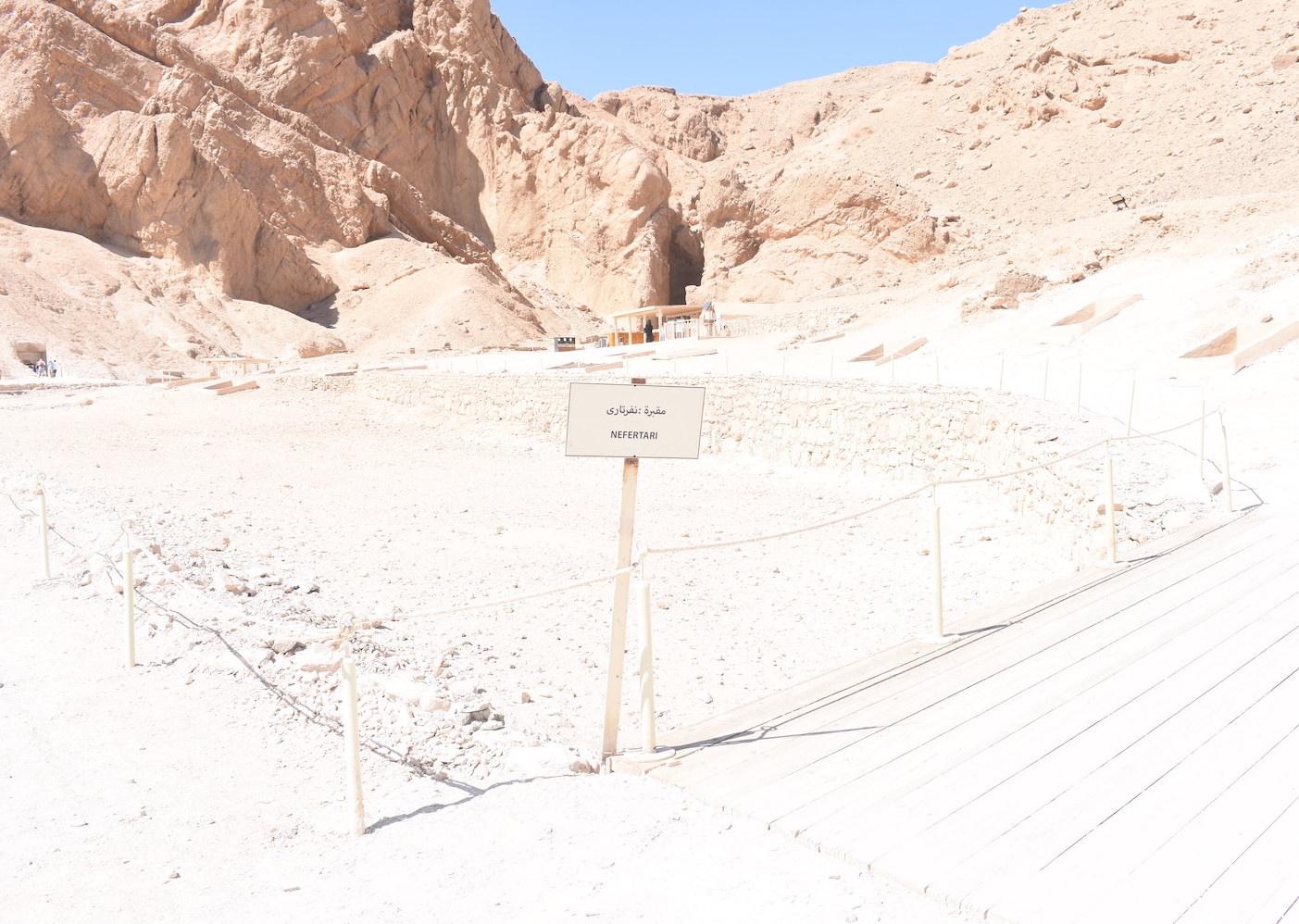
Bridge leading to QV66 with entrances to QV64, QV65, QV67, QV69, QVU1, QVU2, QV70, QV71, QV72, QV73, QV74, QV82, and QV96 in background.

Bridge leading to QV66, with entrances to QV72, QV73, QV74, QV75, QV82, QV83, and QV96 in background.

Entrances of QV65, QV67, QV69, QVU1, QVU2, QV70, QV71, QV72, QV73, and QV96. Grotto and QV66 with visitors shelter.

Entrances to QVU1, QVU2, QV52, QV67, and QV69 in foreground. Visitors shelter at QV66 and grotto in background.

Entrances to QVU1, QV65, and QV67. QV66, visitors shelter, and QV52 in background.
Entrance to QV66 and visitors shelter.
Entrance to QV66.
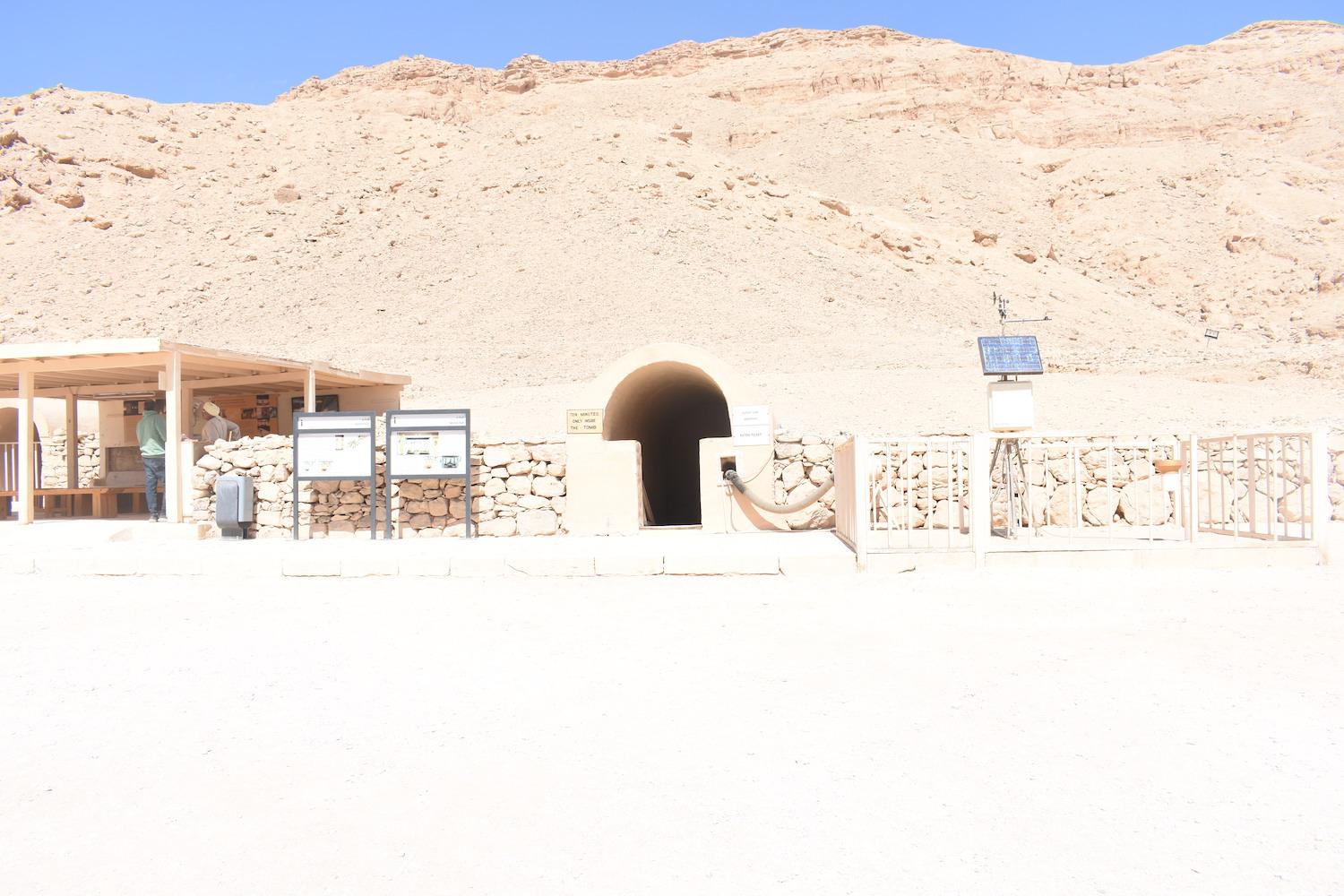
Entrance to QV66 and visitors shelter.
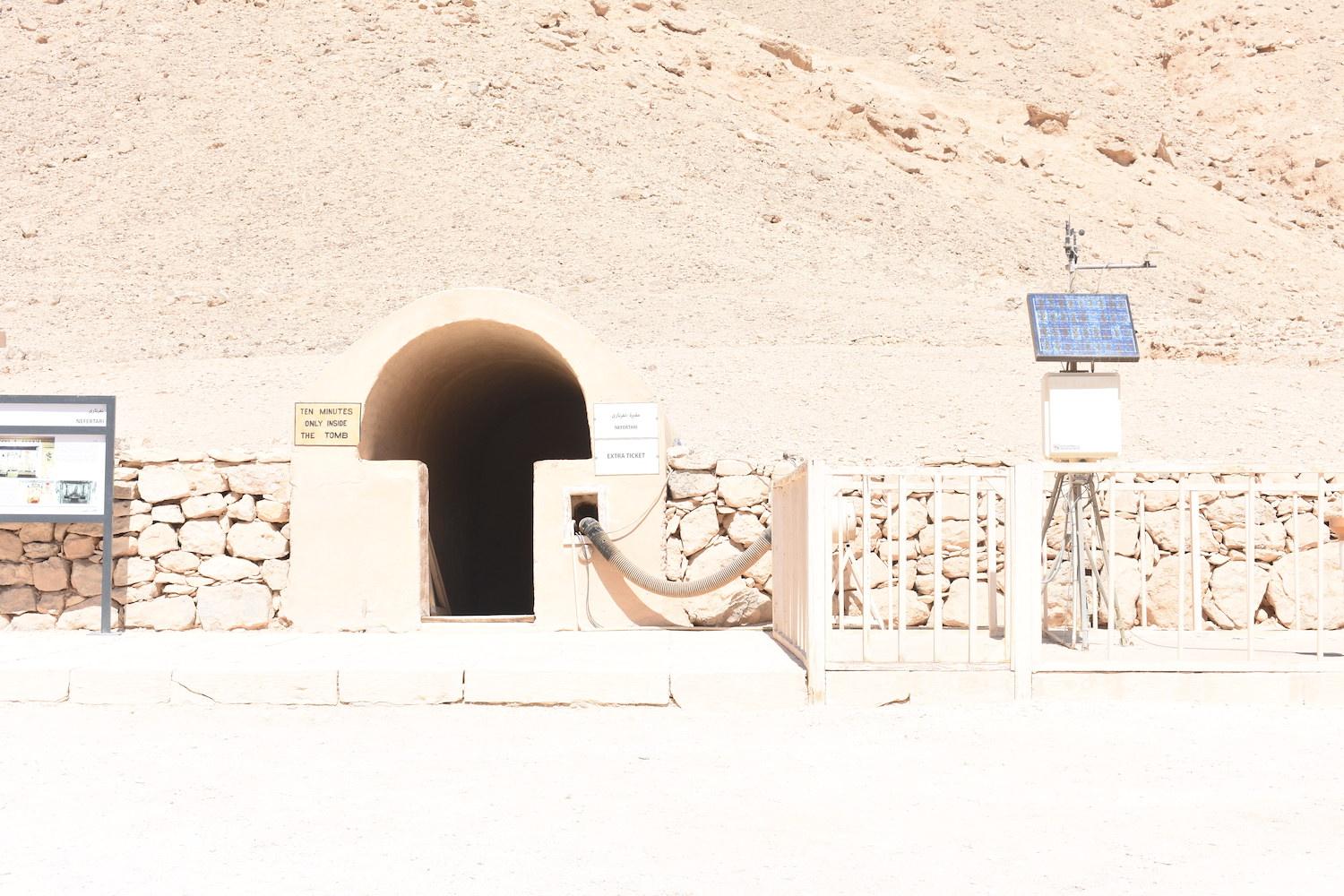
Entrance to QV66.
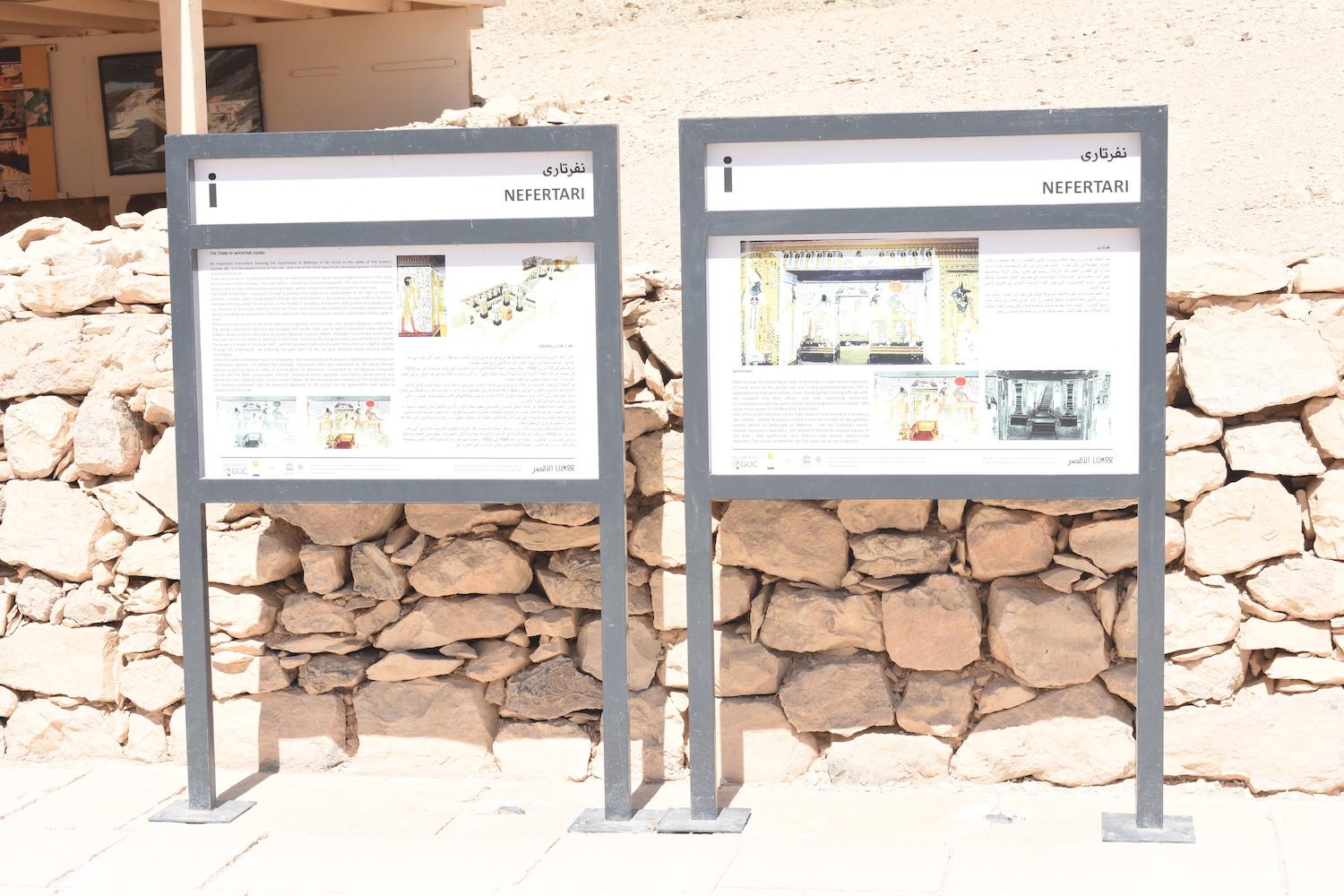
Signage in front of QV66.
Entrance to QV66 with solar panel and climate control equipment.
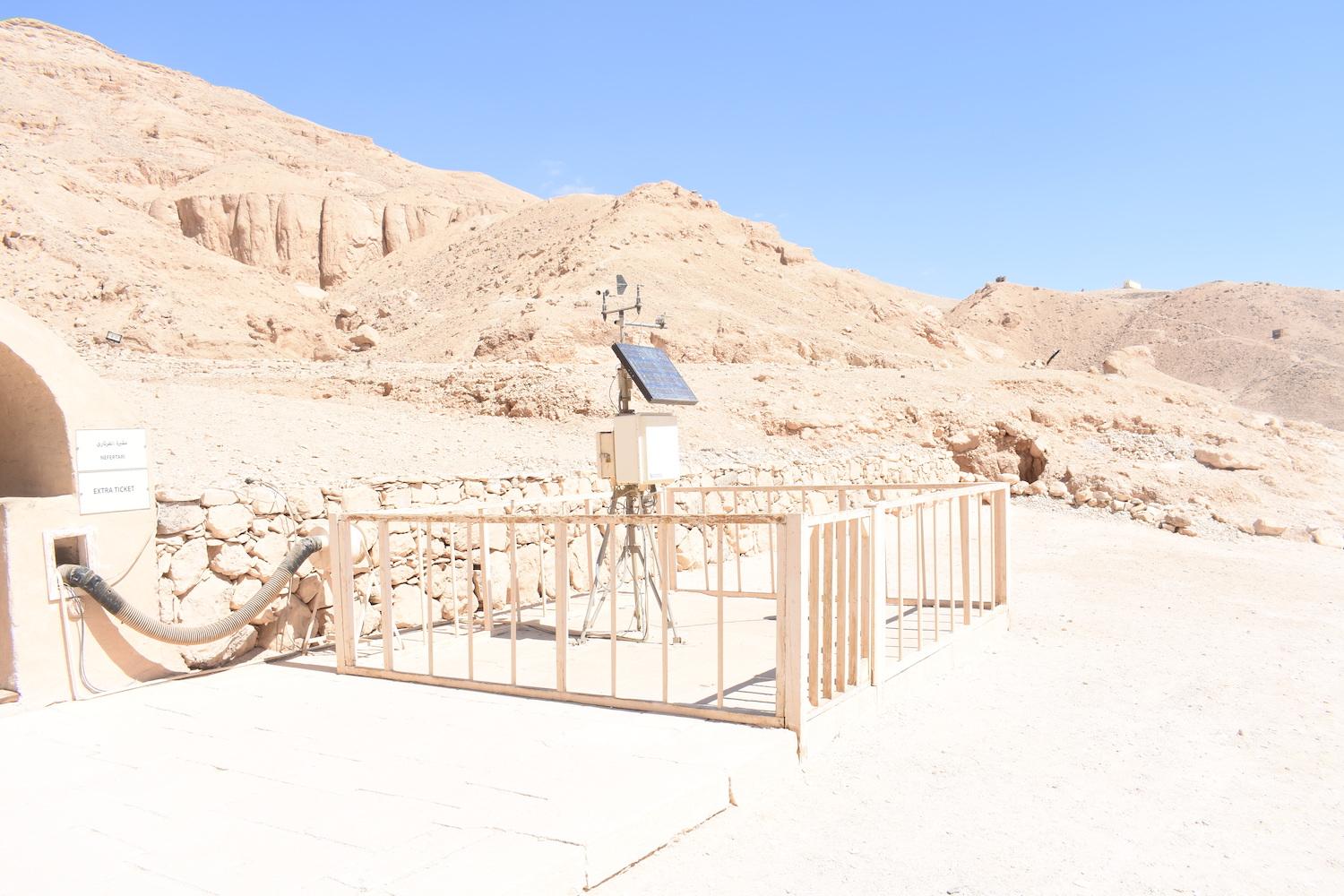
Climate control equipment and solar panel outside QV66.
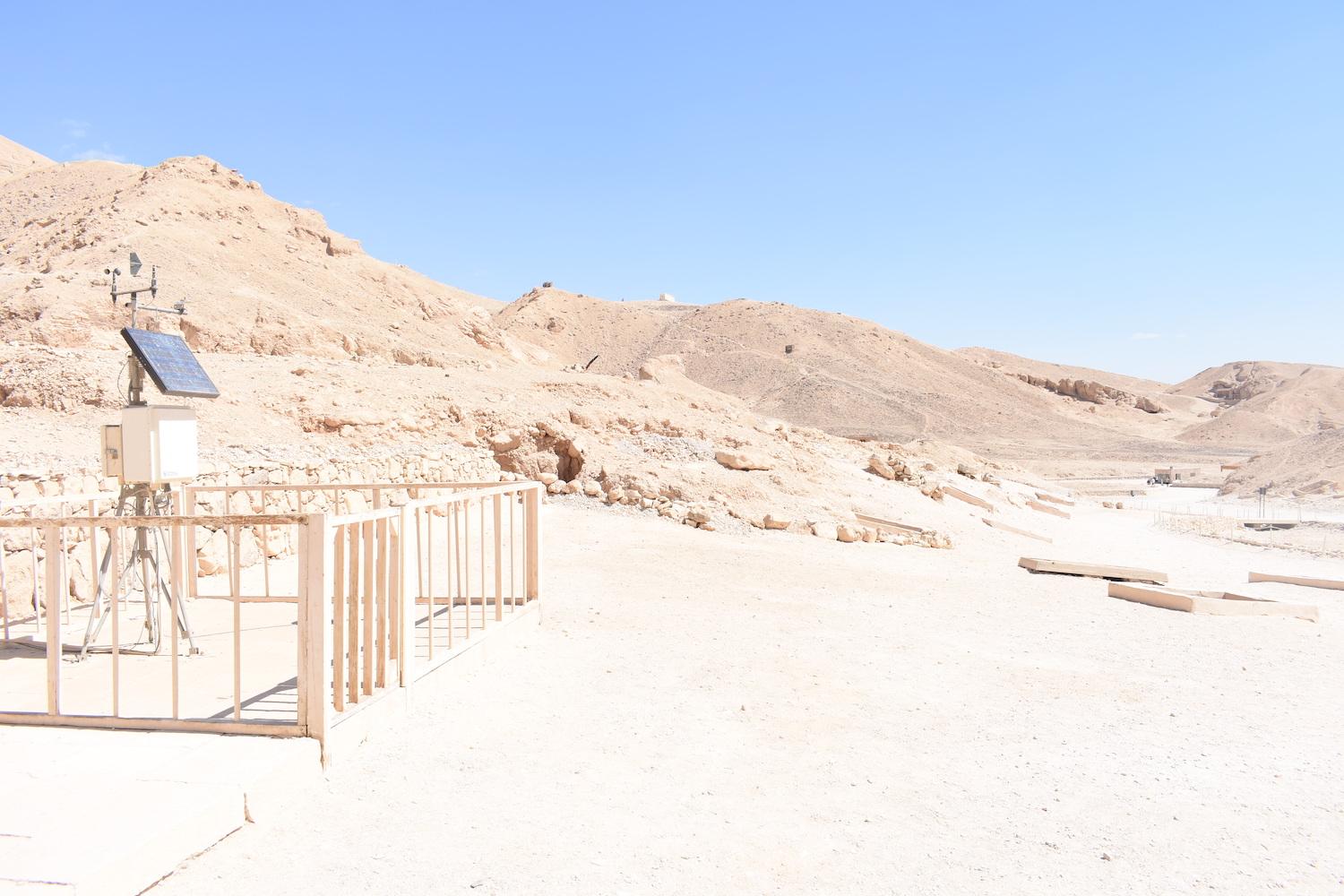
Climate control equipment and solar panel outside QV66. View of the main wadi with security checkpoint and shrine to Ptah and Meretseger in background.
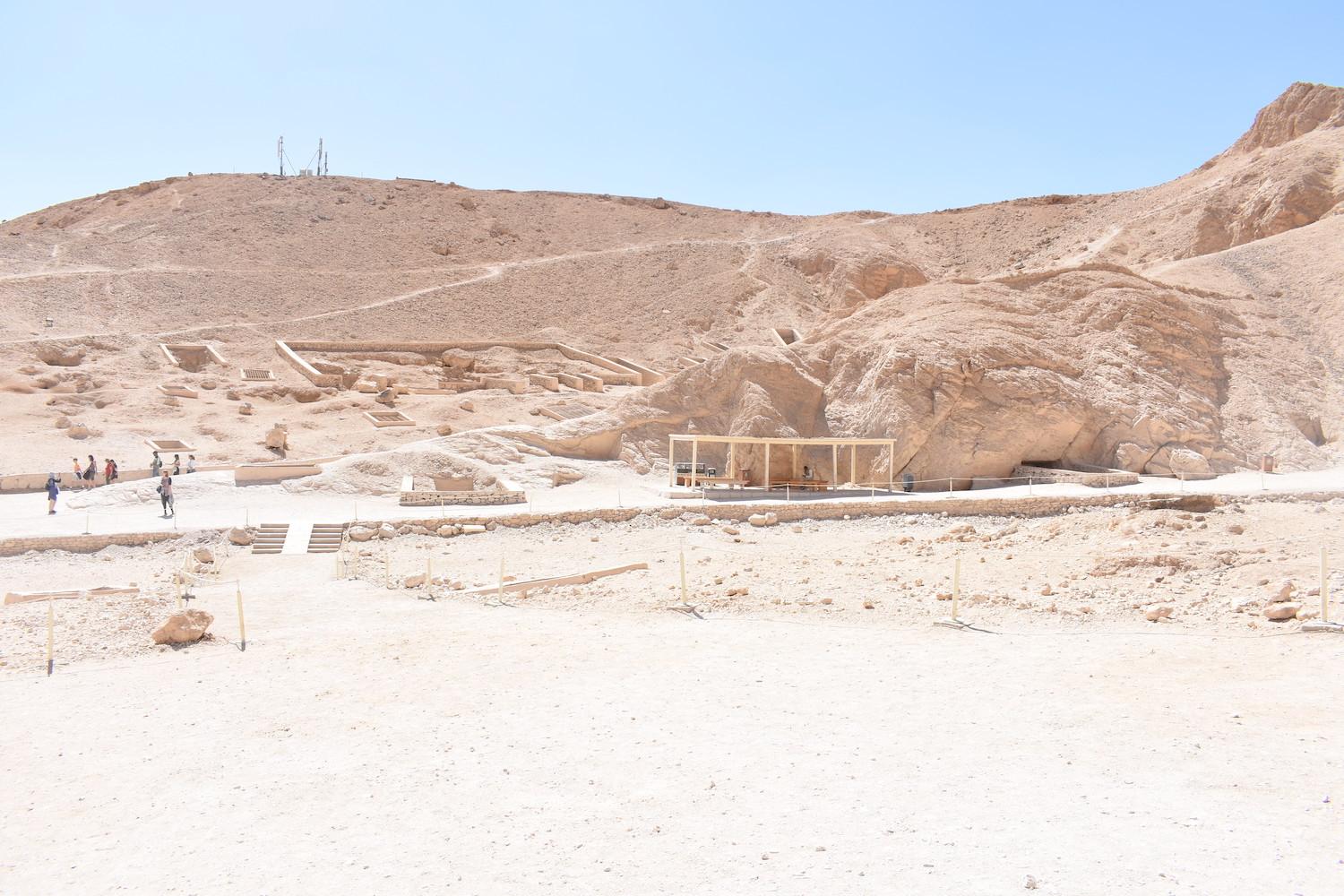
View of main wadi and southern branch from QV66.
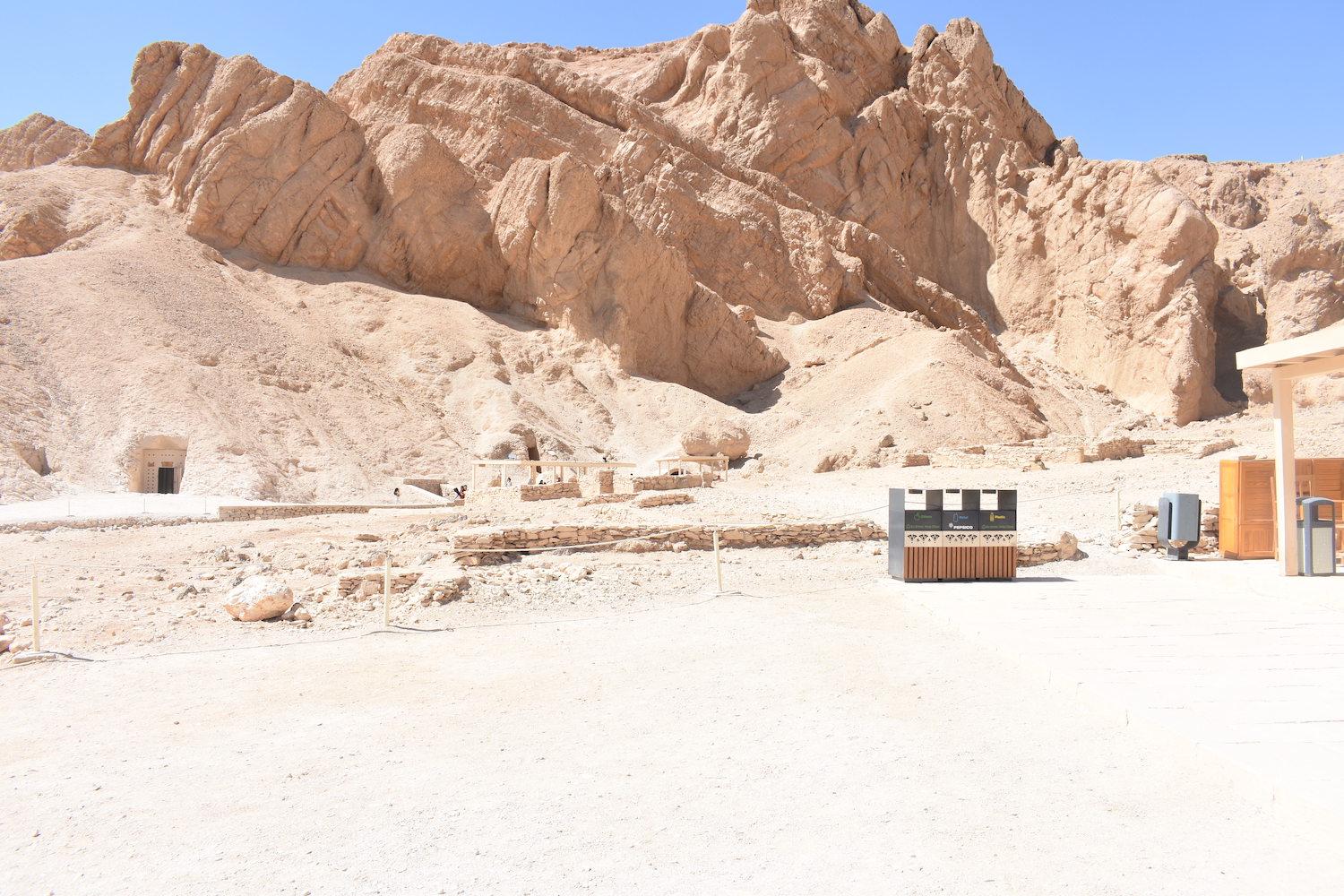
View from QV66 of workers' huts in foreground and QV52, QV55, and grotto in background.
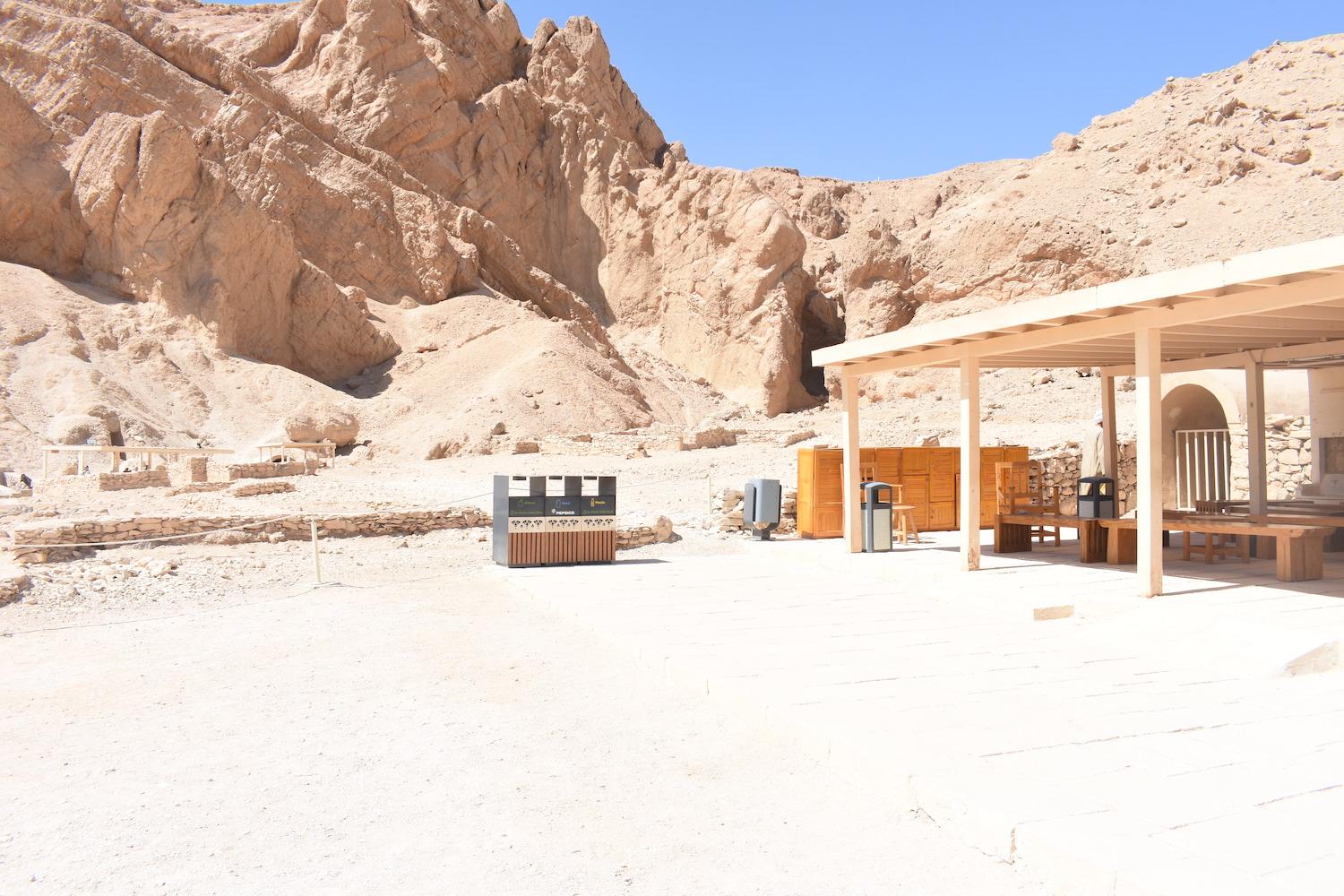
View of the visitors shelter at QV66 with worker's huts and grotto in background.
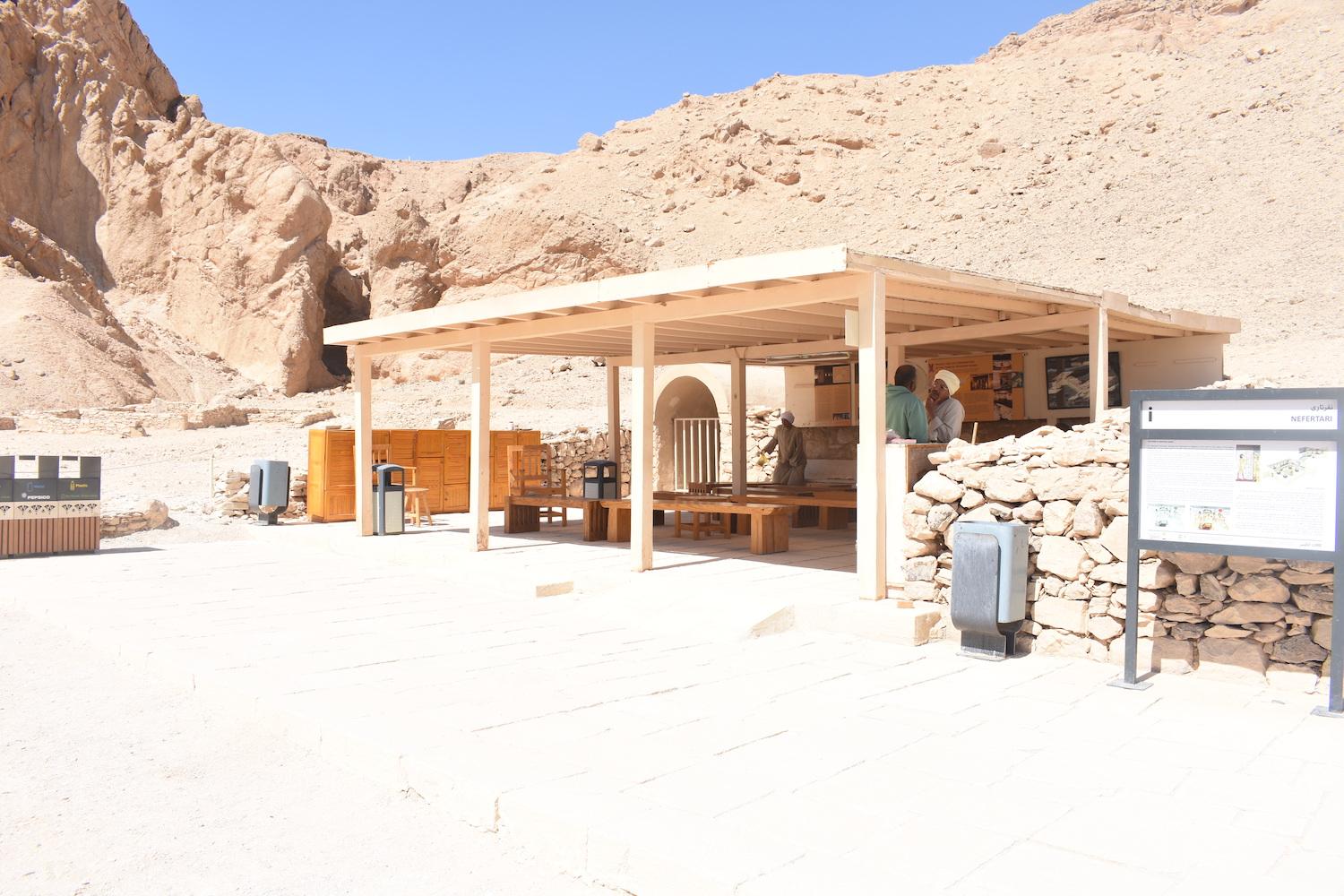
Visitors' shelter at QV66 with entrance to QV80 in the background.

Recycling facilities in QV next to the visitor shelter at QV66. Workers' huts in background.

Entrance to QV58, QV59, and worker's huts. Visitors shelter at QV66 in background.

Lime kiln and workers' huts. Entrances to QV80 and QV66 in background.

Visitors shelter at QV55 and QV66, workers' huts, and entrances to QV58, QV59, and QV80

Entrances to QV67, QV69, QVU1, QVU2, QV70, QV71, QV96, QV73, QV72, QV74, QV82, and QV75

Entrances to QV20 and QV21 in foreground, with QV96, QV73, QV72, QV74, QV82, QV75 and QV83 in background
View of the northeastern side of the main wadi. Entrances to QV76, QV77, QV78, QV79, and QV80
View of the northeastern side of the main wadi with entrances to QVU1, QVU2, QV63, QV64, QV65, QV67, QV69, QV70, QV71, QV72, QV73, QV74, QV96, and QV66 with visitors shelter.

General view of the main wadi towards QV66 with entrances to QV51, QV52, QV58, QV59, QV80, QV85, workers’ huts, and visitors shelter at QV66

General view of the main wadi from northwestern side of the main wadi with entrances to QV51, QV52, QV58, QV59, QV80, and QV85. Workers’ huts, visitors shelter at QV66, and lime kiln in the foreground.

Visitors shelter between QV50 and QV51 with grotto in the background
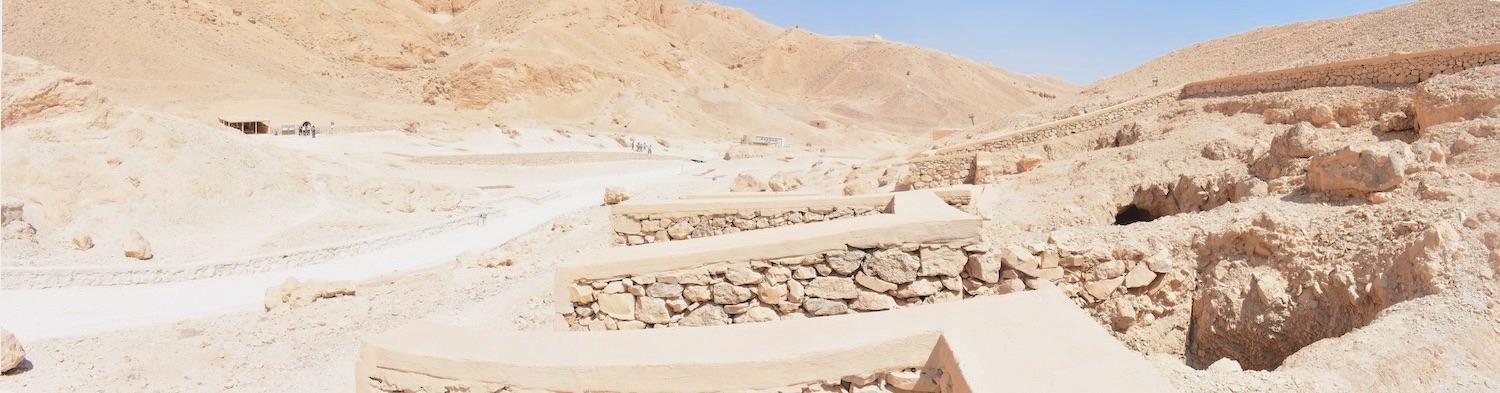
Entrances to QV34 and QV36 and visitors shelter at QV66 in background
East wall of the burial chamber in the tomb of Queen Nefertari (QV 66) perhaps photographed during excavations. A crocodile-headed deity that guards the third portal through which the queen must pass to reach the hereafter. Italian Archaeological Expedition excavations. Courtesy of the Egyptian Museum in Turin.
East wall of the burial chamber in the tomb of Queen Nefertari (QV 66) with a decorative frieze of djed-pillars and tyet-knots perhaps photographed during excavations. Part of the plaster has collapsed in recent decades. Italian Archaeological Expedition excavations. Courtesy of the Egyptian Museum in Turin.
East wall of the burial chamber in the tomb of Queen Nefertari (QV 66) perhaps photographed during excavations. Two deities, one bull-headed and one human-headed, that guard the fourth and fifth portals through which the queen must pass to reach the hereafter. Italian Archaeological Expedition excavations. Courtesy of the Egyptian Museum in Turin.
East wall of the burial chamber in the tomb of Queen Nefertari (QV 66) perhaps photographed during excavations. Two deities, one serpent-headed and one deteriorated, that guard the sixth and seven portals through which the queen must pass to reach the hereafter. Italian Archaeological Expedition excavations. Courtesy of the Egyptian Museum in Turin.
East wall of the burial chamber in the tomb of Queen Nefertari (QV 66) perhaps photographed during excavations. A deity (deteriotated) that guards the seven portal through which the queen must pass to reach the hereafter. Italian Archaeological Expedition excavations. Courtesy of the Egyptian Museum in Turin.
East wall of the burial chamber in the tomb of Queen Nefertari (QV 66) perhaps photographed during excavations. A human deity that guards the eight portal through which the queen must pass to reach the hereafter (center). The plaster depiction of a deity and the nine portal has collapsed (left). Italian Archaeological Expedition excavations. Courtesy of the Egyptian Museum in Turin.
East wall of the burial chamber in the tomb of Queen Nefertari (QV 66) perhaps photographed during excavations. A human deity that guards the eight portal through which the queen must pass to reach the hereafter (center). Italian Archaeological Expedition excavations. Courtesy of the Egyptian Museum in Turin.
East wall of the burial chamber in the tomb of Queen Nefertari (QV 66) perhaps photographed during excavations. A canine-headed deity that guards the tenth portal through which the queen must pass to reach the hereafter (center). Italian Archaeological Expedition excavations. Courtesy of the Egyptian Museum in Turin.
East wall of the burial chamber in the tomb of Queen Nefertari (QV 66) perhaps photographed during excavations. A canine-headed deity that guards the tenth portal through which the queen must pass to reach the hereafter (right). Queen Nefertari worships in front of seated Osiris, Hathor, and Anubis (left). Italian Archaeological Expedition excavations. Courtesy of the Egyptian Museum in Turin.
East wall of the burial chamber in the tomb of Queen Nefertari (QV 66) perhaps photographed during excavations. Detail of seated Osiris, Hathor, and Anubis that Queen Nefertari worships. Italian Archaeological Expedition excavations. Courtesy of the Egyptian Museum in Turin.
East wall of the burial chamber in the tomb of Queen Nefertari (QV 66) perhaps photographed during excavations. Detail of seated Osiris, Hathor, and Anubis that Queen Nefertari worships. Italian Archaeological Expedition excavations. Courtesy of the Egyptian Museum in Turin.
South wall of the side chamber Dc in the tomb of Queen Nefertari (QV 66) perhaps photographed during excavations. Queen Nefertari (right) presents offerings to seated Anubis and Isis (left, partially visible). Italian Archaeological Expedition excavations. Courtesy of the Egyptian Museum in Turin.
South wall of side chamber Dc in the tomb of Queen Nefertari (QV 66) perhaps photographed during excavations. Detail of seated Anubis and Isis in front of which Queen Nefertari presents offerings (not visible here). Italian Archaeological Expedition excavations. Courtesy of the Egyptian Museum in Turin.
East back wall of side chamber Dc in the tomb of Queen Nefertari (QV 66) perhaps photographed during excavations. A standing image of Ma'at with outstretched wings framed by her epithets and invocations and titles of Queen Nefertari. Italian Archaeological Expedition excavations. Courtesy of the Egyptian Museum in Turin.
North wall of side chamber Dc in the tomb of Queen Nefertari (QV 66) perhaps photographed during excavations. Queen Nefertari offers and worships Hathor in her bovine form. Italian Archaeological Expedition excavations. Courtesy of the Egyptian Museum in Turin.
North wall of side chamber Dc in the tomb of Queen Nefertari (QV 66) perhaps photographed during excavations. Detail of Hathor in her bovine form in front of which Queen Nefertari offers and worships. Italian Archaeological Expedition excavations. Courtesy of the Egyptian Museum in Turin.
Side chamber Da in the tomb of Queen Nefertari (QV 66) perhaps photographed during excavations. Queen Nefertari wears a tripartite wig, modius, vulture headdress, a wesekh-collar, and is mummiform as an 'Osiris' (see text). Italian Archaeological Expedition excavations. Courtesy of the Egyptian Museum in Turin.
South wall of side chamber Da in the tomb of Queen Nefertari (QV 66) perhaps created during excavations. Seated images of Two of the Four Sons of Horus, Imsety and Duamutef, as well as Isis, framed by invocations to the queen. Italian Archaeological Expedition excavations. Courtesy of the Egyptian Museum in Turin.
Back west wall of side chamber Da in the tomb of Queen Nefertari (QV 66) perhaps photographed during excavations. A sanctuary topped with serpents with two adjacent scenes: Thoth and Anubis (left), and Imsety and Thoth again (right). Italian Archaeological Expedition excavations. Courtesy of the Egyptian Museum in Turin.
Back west wall of side chamber Da in the tomb of Queen Nefertari (QV 66) perhaps photographed during excavations. A sanctuary topped with serpents with two adjacent scenes: Thoth and Anubis (left), and Imsety and Thoth again (right). Italian Archaeological Expedition excavations. Courtesy of the Egyptian Museum in Turin.
North wall of side chamber Da in the tomb of Queen Nefertari (QV 66) perhaps photographed during excavations. Seated images of Qebehsenuef, Nephthys, and Hapy (not visible here). Italian Archaeological Expedition excavations. Courtesy of the Egyptian Museum in Turin.
North wall of side chamber Da in the tomb of Queen Nefertari (QV 66) perhaps photographed during excavations. Seated images of Hapy, as well as Qebehsenuef and Nephthys (not visible here). Italian Archaeological Expedition excavations. Courtesy of the Egyptian Museum in Turin.
Gate Db in the tomb of Queen Nefertari (QV 66) perhaps photographed during excavations. The queen's cartouche on nb- and nbw-signs is flanked by images of Wadjet and Nekhbet as serpents, and is topped by a sun disc with two ostrich feathers. Courtesy of the Egyptian Museum in Turin.
Southeast corner of side chamber Db in the tomb of Queen Nefertari (QV 66) perhaps photographed during excavations. On the south wall, a large djed-pillar is depicted between two tyet-knots (right). On the east wall, Serqet and Anubis among other figures that should have continued had the wall not collapsed (left). In recent times, the plaster with Anubis has collapsed. Italian Archaeological Expedition excavations. Courtesy of the Egyptian Museum in Turin.
Small fragment of painted plaster from a collapsed wall in the tomb of Queen Nefertari (QV 66) perhaps photographed during excavations. Part of a figure, as well as, the queen's cartouche and titles remain slightly visible. Italian Archaeological Expedition excavations. Courtesy of the Egyptian Museum in Turin.
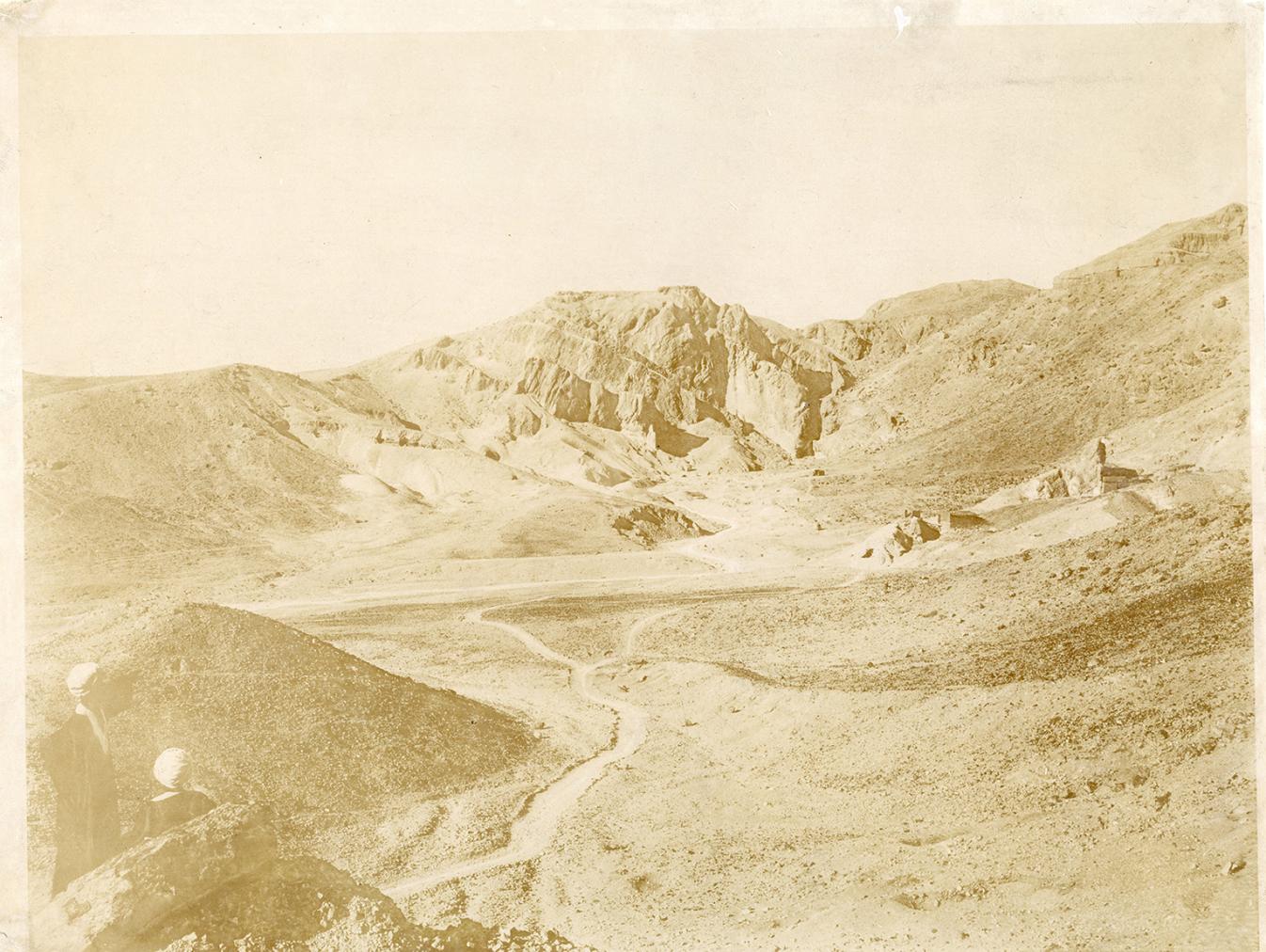
View of the entrance to the Valley of the Queens likely photographed in the early 20th century. At the far end, the construction of the modern entrances to the tombs of Amenherkhepshef (QV 55) and the tomb of Queen Nefertari (QV 66) is visible. Italian Archaeological Expedition excavations, Courtesy of the Egyptian Museum in Turin.
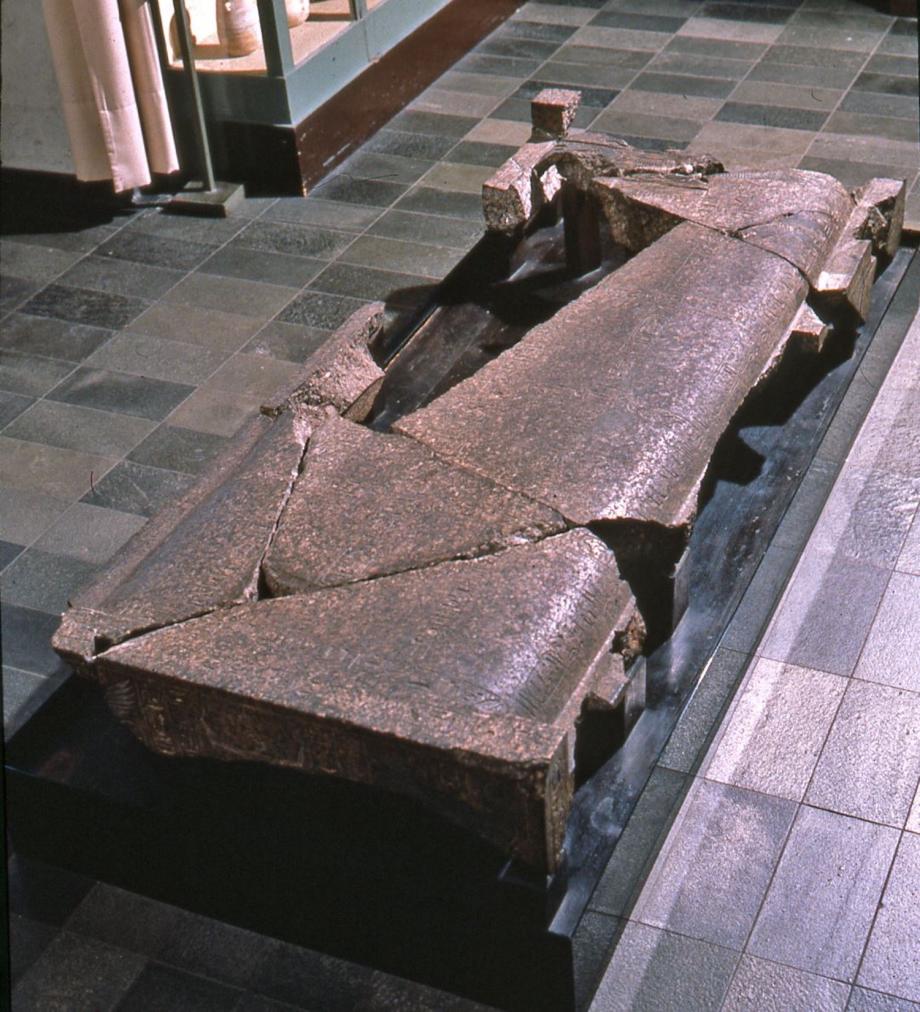
Red granite sarcophagus lid of Queen Nefertari (QV 66). Courtesy of the Egyptian Museum in Turin (S.5153).
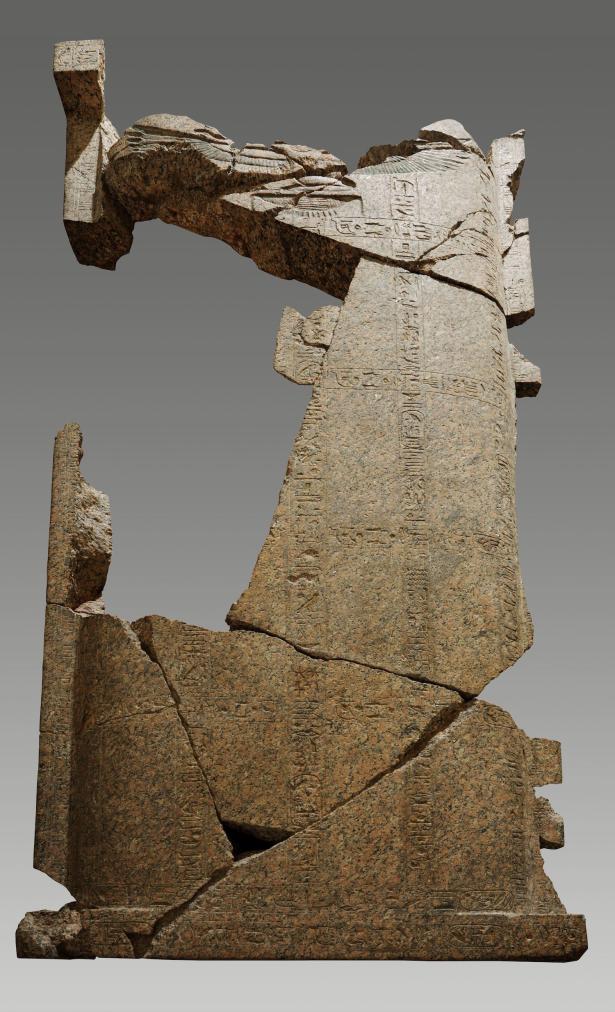
Red granite sarcophagus lid of Queen Nefertari (QV 66). Courtesy of the Egyptian Museum in Turin (S.5153).
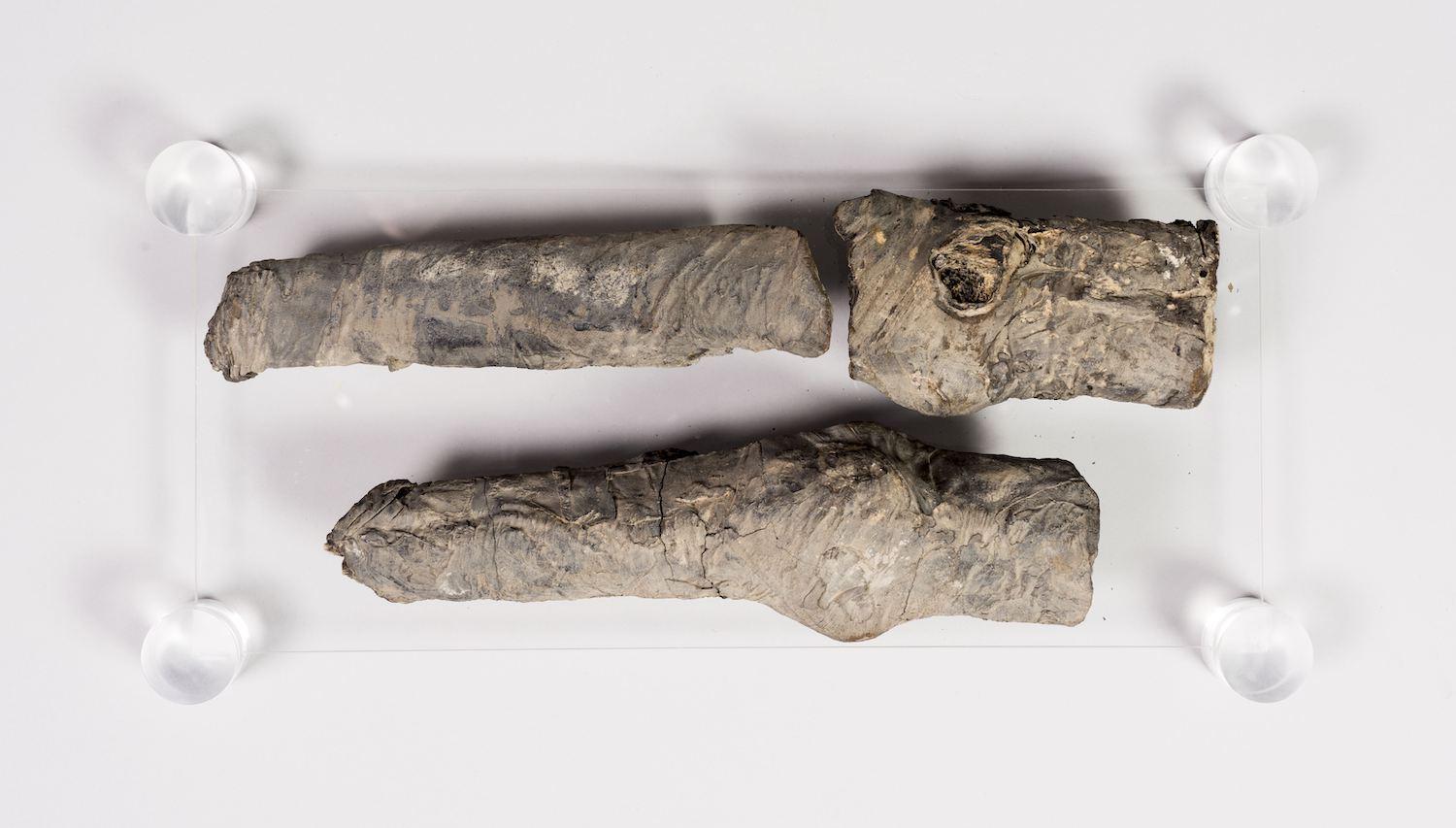
Knees from mummified human remains discovered in the tomb of Queen Nefertari (QV 66). Courtesy of the Egyptian Museum in Turin (S.5154).
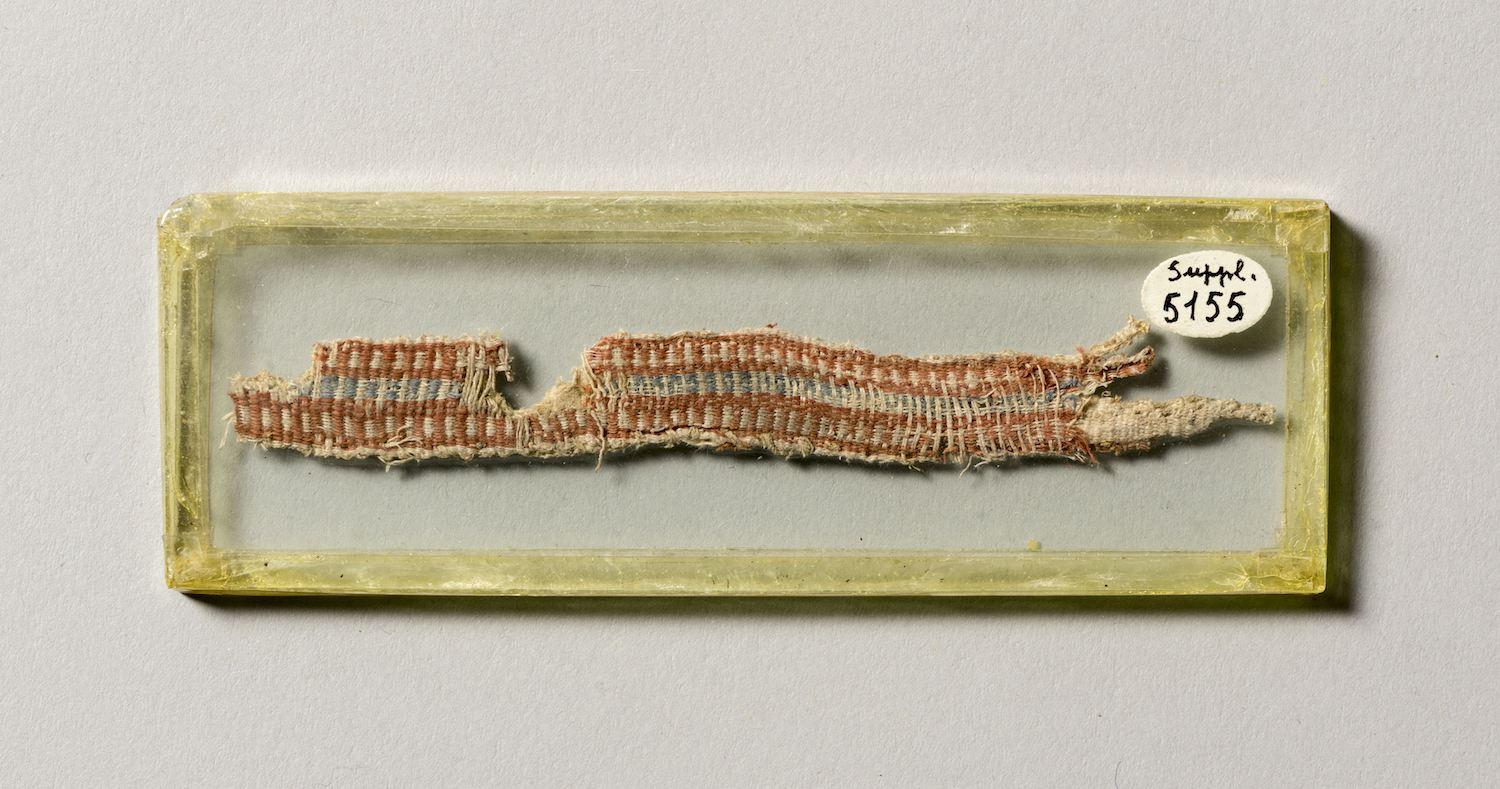
Dyed and woven fragment of a funerary cloth discovered in the tomb of Queen Nefertari (QV 66). Courtesy of the Egyptian Museum in Turin (S.5155).
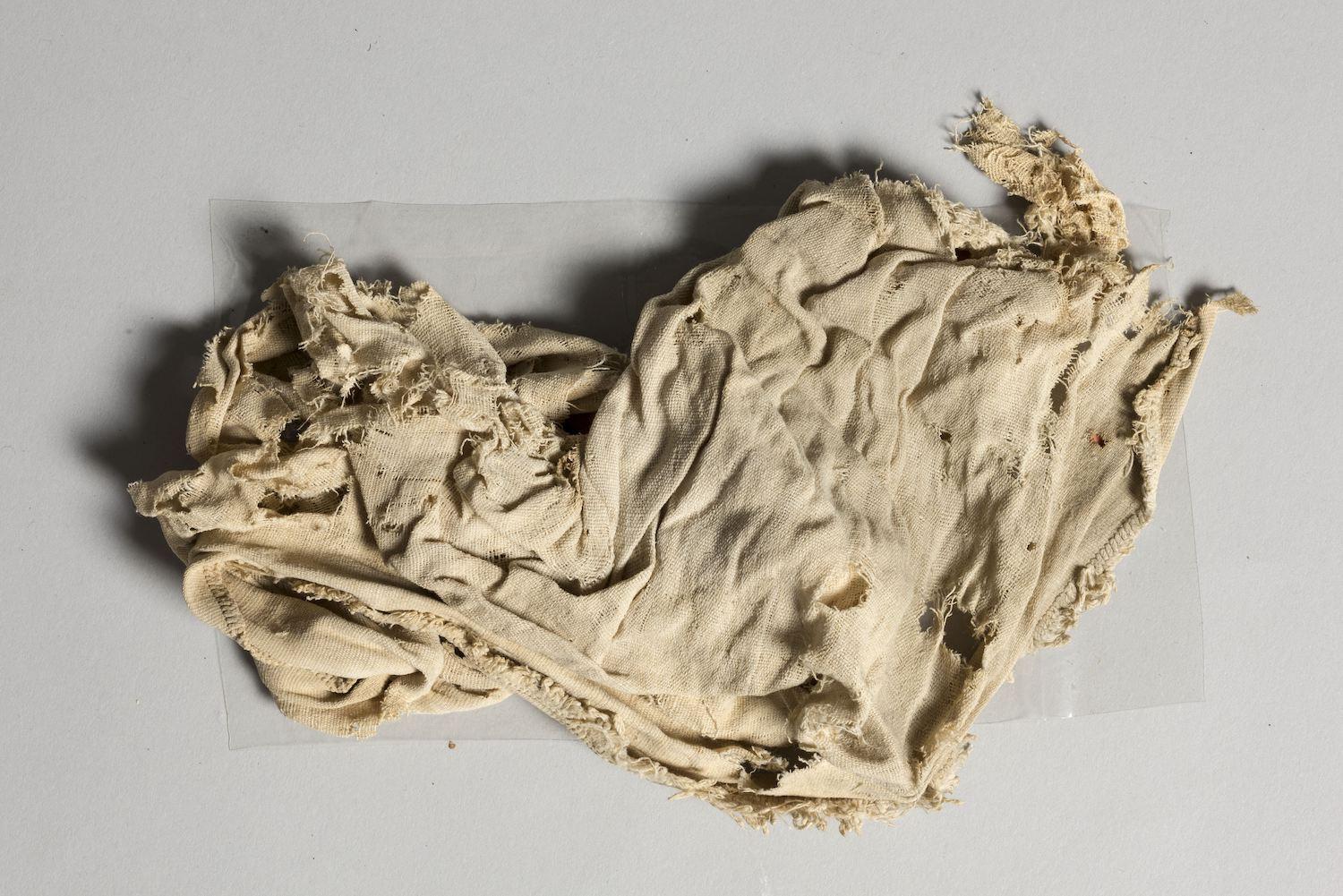
Woven fragment from a linen funerary cloth discovered in the tomb of Queen Nefertari (QV 66). Courtesy of the Egyptian Museum in Turin (S.5156).
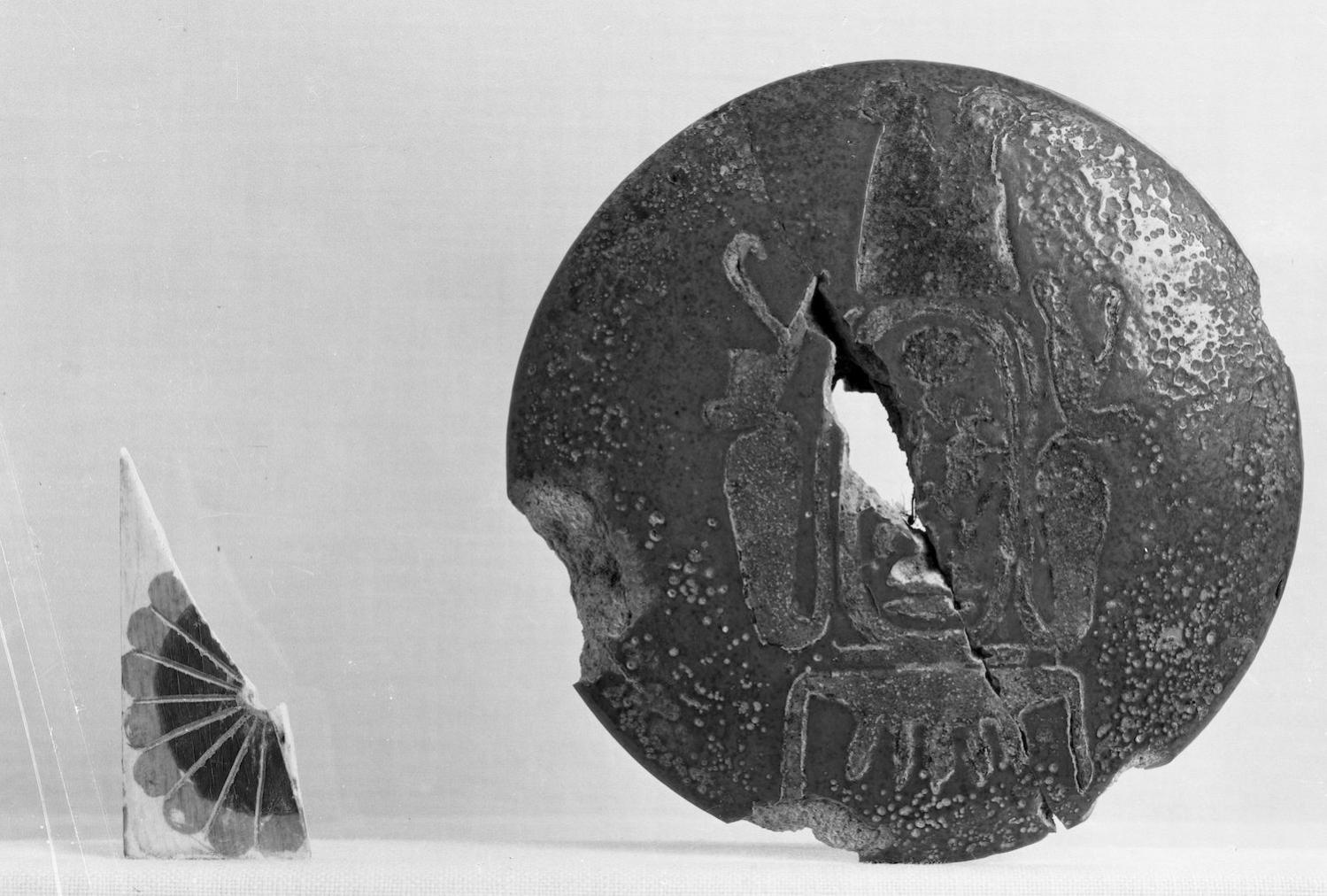
Plaster coffin fragment with a rosette and knob with the cartouche of King Ay discovered in the tomb of Queen Nefertari (QV 66). Courtesy of the Egyptian Museum in Turin (S.5158).
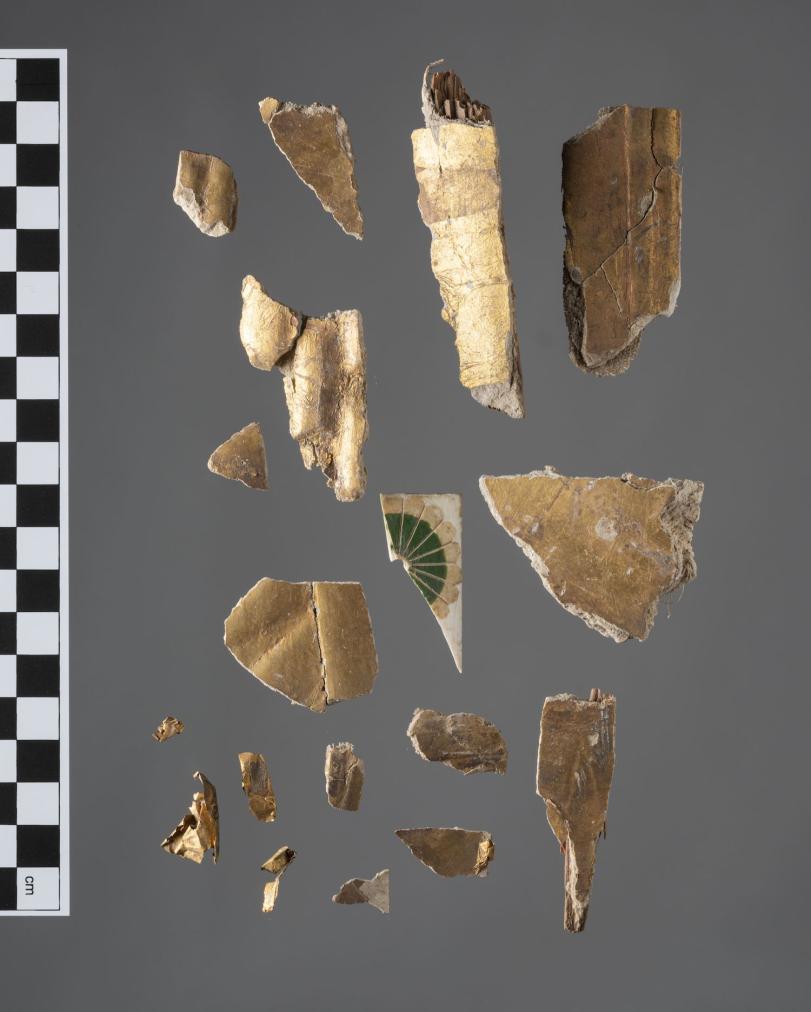
Gilt plaster and wooden coffin fragments discovered in the tomb of Queen Nefertari (QV 66). Courtesy of the Egyptian Museum in Turin (S.5158/01).
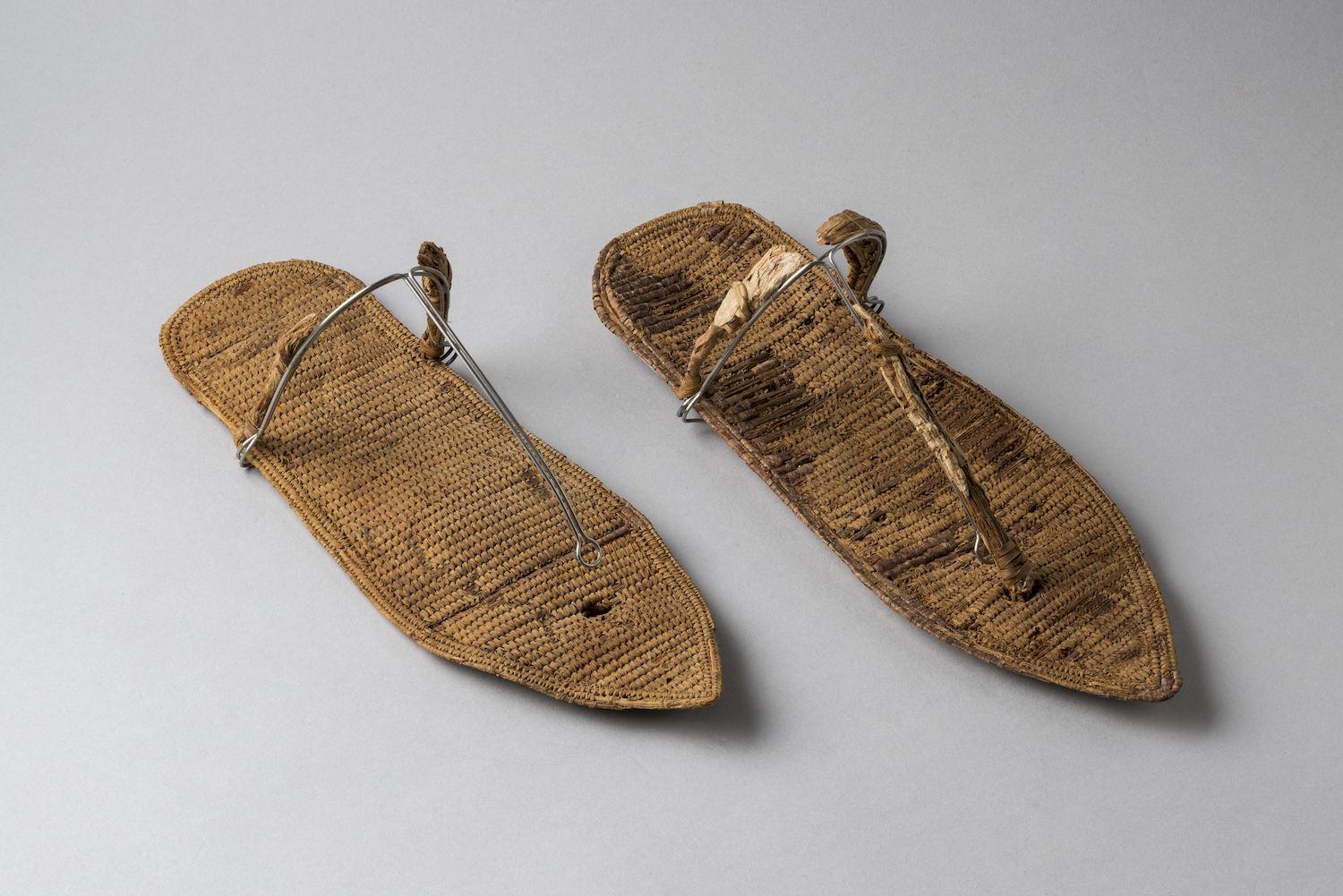
Sandals woven from plant fibers discovered in the tomb of Queen Nefertari (QV 66). Courtesy of the Egyptian Museum in Turin (S.5160/01).
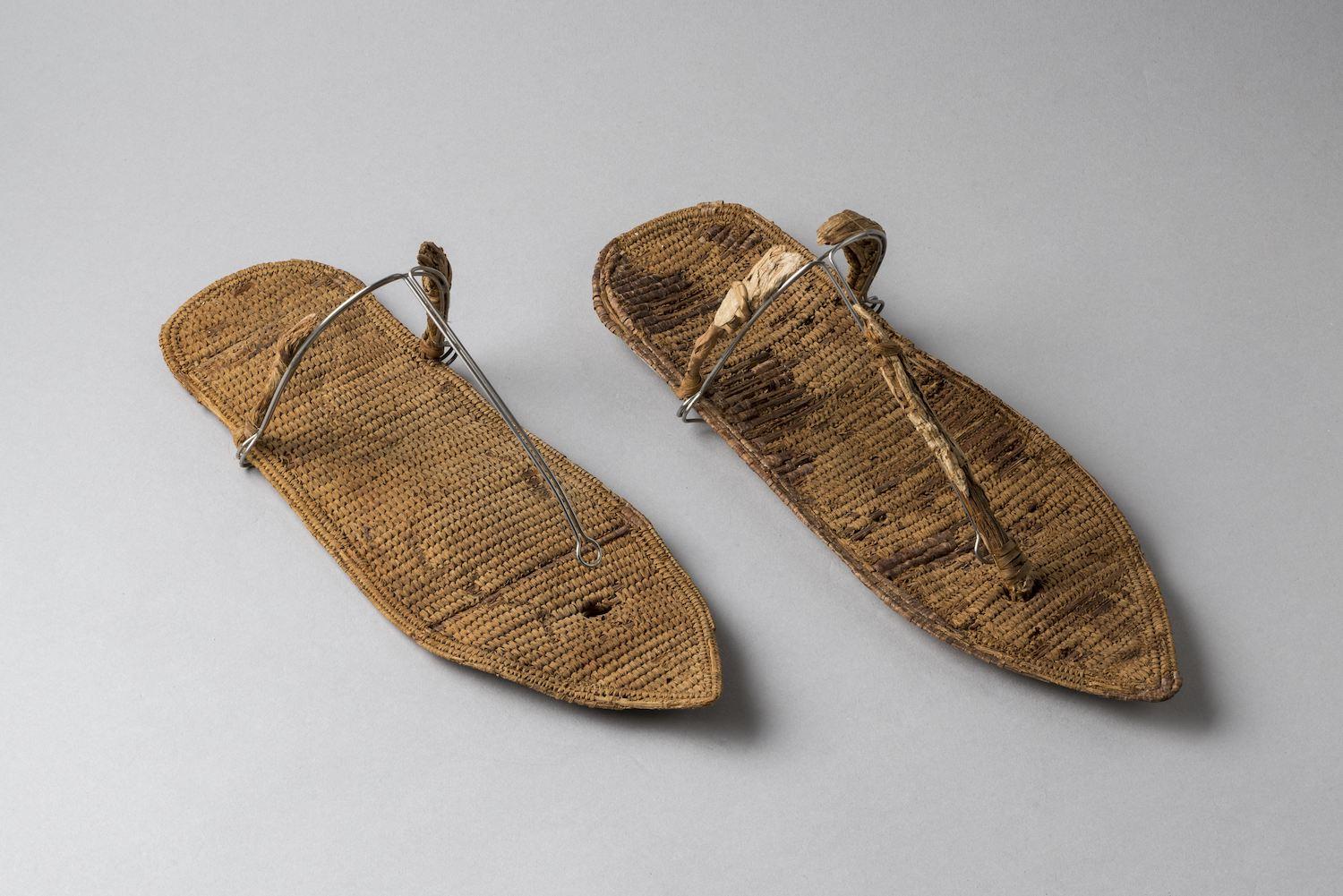
Sandals woven from plant fibers discovered in the tomb of Queen Nefertari (QV 66). Courtesy of the Egyptian Museum in Turin (S.5160/02).
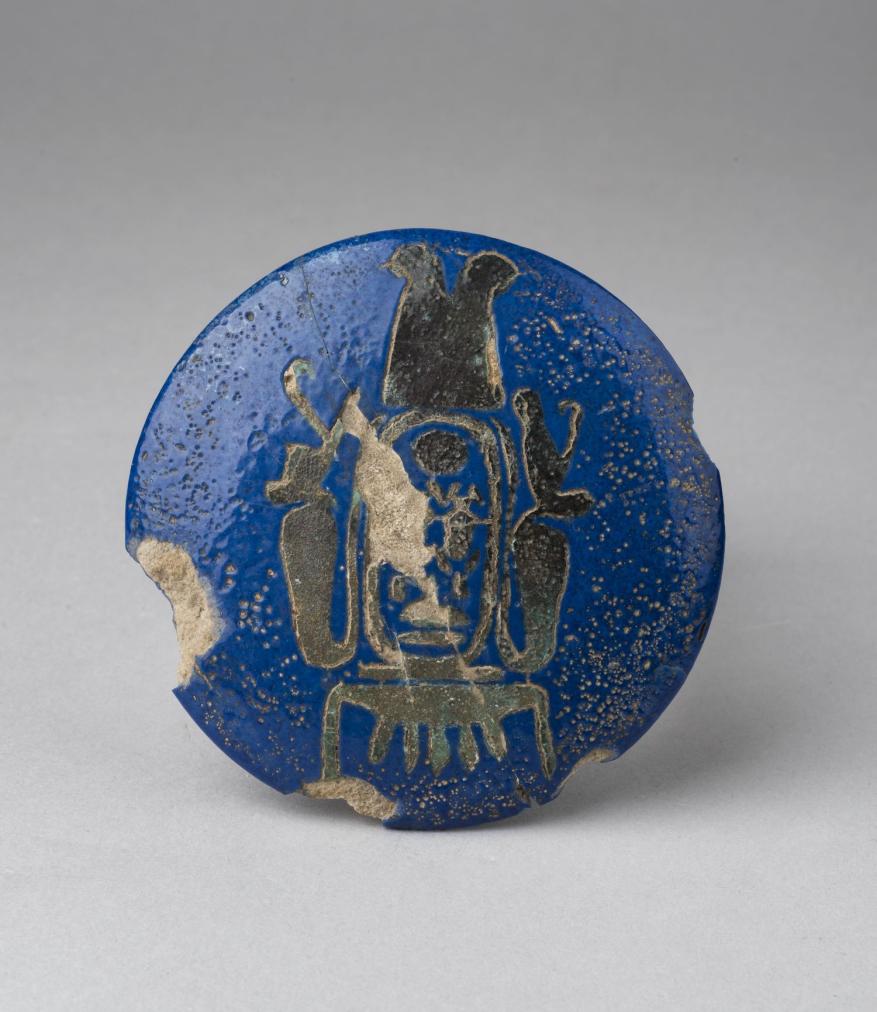
Glazed faience knob with cartouche of King Ay discovered in the tomb of Queen Nefertari (QV 66). Courtesy of the Egyptian Museum in Turin (S.5162).
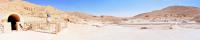
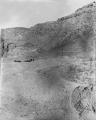
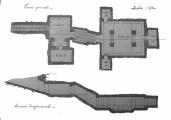
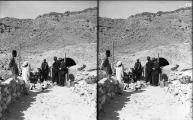
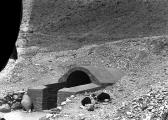


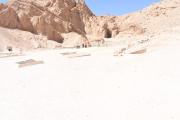

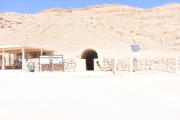
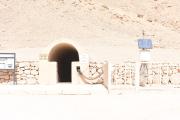
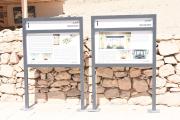
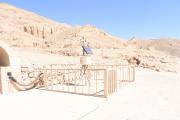
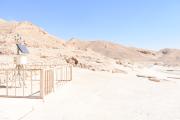
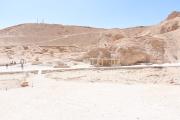
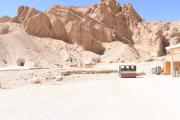
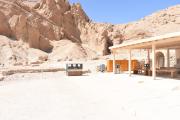
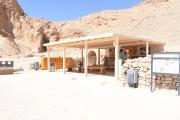


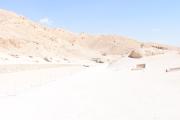



Bibliography
Harlé, Diane. La tombe de la reine Nofretari, ornée de peintures aux couleurs chatoyantes (Thèbes). Archéologia, 100 (1976): 35-50.
Leblanc, Christian, and Alberto Siliotti. Nefertari e la valle delle regine. 2nd ed. Florence: Giunti, 2002.
Leblanc, Christian, and David M. Hawke. Nefertere no. 66 = Nefertari (66). 48 slides, 1 booklet Selected Theban tombs series. Paris: Corea Editions, 1993.
Leblanc, Christian. La tombe de Nerfertari [VdR 66]. Coll. Les plus secrètes des tombes thébaine de l’ancienne Egypte. Descriptions de la tombe et commentaire de 48 diapositives. Cartes, plans, dessins de M. Kurz. Photographies de I. Soliman. Paris: Corea, 1993.
Leblanc, Christian. Ta set nefrou: une nécropole de Thèbes-ouest et son histoire, 1: géographie- toponymie: historique de l'exploration scientifique du site. Cairo: Nubar Printing House, 1989.
Leblanc, Christian. The Tomb of Nefertari. In: Kent R. Weeks (ed.), The Treasures of the Valley of the Kings: Tombs and Temples of the Theban West Bank in Luxor. Cairo: The American University in Cairo Press, 2001: 294-311.
Leblanc, Christian. Nefertari, l'aimée-de-Mout: épouses, filles et fils de Ramsès II. Monaco: Éditions de Rocher, 1999.
Llagostera, Esteban. Exhibición de la reproducción fotográfica de la tumba de la reina Nefertari (QV 66), en el Museo arqueológico nacional de Madrid. Boletín de la Asociación española de orientalistas, 41 (2005): 91-105.
Mahir Taha, Mahmud. Queen Nefertari: The Most Beautiful of Them. Cairo: Egyptian Ministry of Culture, 2001.